World

US, Iran chief negotiators to start nuclear talks in Qatar

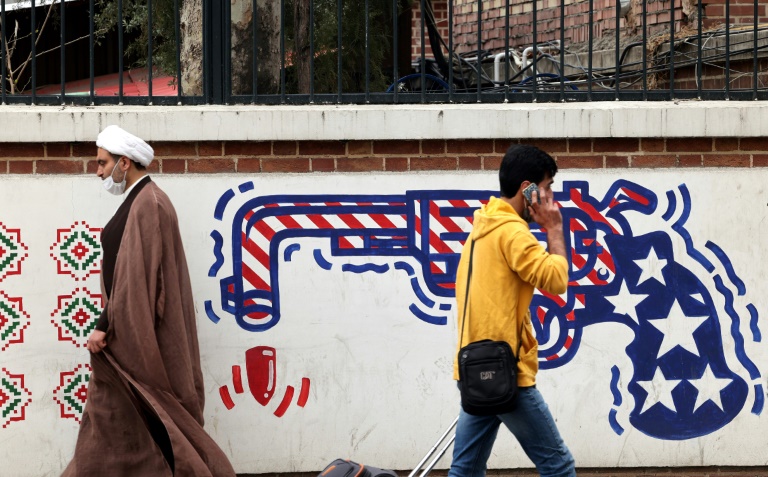
Chief negotiators from the United States and Iran were due to start indirect talks in Qatar on Tuesday, bidding to remove obstacles that have stalled attempts to revive a landmark nuclear deal.

US special envoy Robert Malley and Iran’s Ali Bagheri have landed in Doha and met officials after more than a year of European Union-mediated talks in Vienna on a return to the 2015 agreement.

The Doha talks come just two weeks before US President Joe Biden visits the region for the first time since taking office, when efforts to curb Iran’s nuclear ambitions will be high on the agenda.

They are the start of a process to “unblock” the long-running Vienna talks, European Union foreign affairs spokesman Peter Stano said.

“We managed to unblock the process and we are going to move forward, and as a first step at this stage we have these proximity talks,” he said in Brussels.

The deal has been hanging by a thread since 2018, when then US president Donald Trump unilaterally withdrew from it and began reimposing harsh economic sanctions on America’s arch-enemy.

US President Joe Biden’s administration has sought to return to the agreement, saying it would be the best path ahead with the Islamic republic, although it has voiced growing pessimism in recent weeks.

The talks in Doha will take place indirectly, with the delegations in separate rooms and communicating via intermediaries. The US and Iran do not have diplomatic relations.

Earlier Malley met Qatar’s Deputy Prime Minister and Foreign Minister Mohammed bin Abdulrahman Al Thani to discuss “joint diplomatic efforts to address issues with Iran”, the US embassy in Doha tweeted.

Bagheri met Qatar’s foreign ministry secretary-general, Ahmad bin Hassen Al Hammadi, Qatar’s foreign ministry said.

“Indirect messages have been exchanged between the parties involved,” a diplomat in the region told AFP.

– ‘Moment of reckoning’ –

Sheikh Mohammed also discussed the Iran talks with his French counterpart Catherine Colonna in a phone call on Tuesday, the official Qatar News Agency said.

Qatar hopes the “indirect talks will be culminated in positive results that contribute to the revival of the nuclear deal signed in 2015”, the foreign ministry said.

EU foreign policy chief Josep Borrell said during a visit to Tehran on Saturday that the Iran-US talks would be held in a Gulf country to avoid confusion with the broader talks in Vienna.

Qatar, which has better relations with Iran than most Gulf Arab monarchies, also hosted US-Taliban talks before the withdrawal of American troops from Afghanistan last year.

The Vienna talks began in April 2021 but hit a snag in March following differences between Tehran and Washington, notably over Iran’s demand that its Islamic Revolutionary Guard Corps be removed from a US terror list.

Alex Vatanka, director of the Iran program at the Washington-based Middle East Institute think tank, called Doha a “moment of reckoning” for the nuclear process.

“The Iranians and the Americans both seem to believe the talks in Doha represent a sink-or-swim moment for US-Iran nuclear negotiations,” he wrote in an analysis.

The timing appears good, with Iran likely to want a deal before US congressional elections in November, where Biden’s Democrats are predicted to lose seats and could lose interest in the nuclear talks, Vatanka said.

High oil prices and the lack of spare capacity were also an opportunity for Iran to push for relief from its crippling economic sanctions, he added.

Ali Vaez, Iran project director at the International Crisis Group think tank, tweeted: “Having the two key protagonists in one place is a necessary ingredient for diplomacy to succeed.

“But a breakthrough is far from assured.”
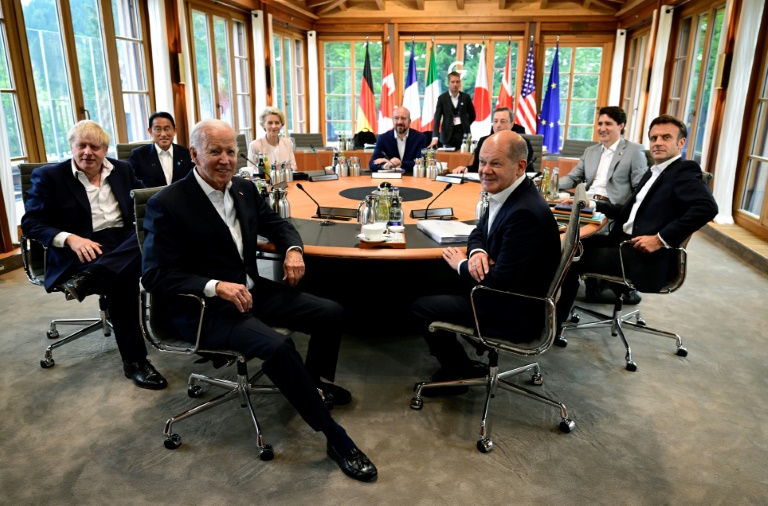
G7 takes aim at China over 'market-distorting' practices

G7 leaders on Tuesday condemned China’s “non-transparent and market-distorting” international trade practices in an end-of-summit statement billed as “unprecedented” by the United States.

The statement, which also pledged to reduce “strategic dependencies” on China, came hours before the leaders join a larger group of their counterparts at a NATO summit in Madrid.

There, the 30-member alliance was also poised to toughen its stance against Beijing in an update of its “strategic concept”.

The United States has long cast a wary eye at China over its trade practices, which Washington believes are designed to accord an unfair advantage to Chinese companies over foreign firms.

Russia’s invasion of Ukraine and Beijing’s refusal to distance itself from Vladimir Putin has prompted other countries, including export giant Germany, to also reconsider their economic reliance on the Asian giant.

Beijing’s increasingly strident claims over much of the South China Sea has also sparked alarm over its military ambitions.

In their closing statement following a three-day summit in the Bavarian Alps, the G7 leaders signalled that they would seek to extricate themselves from economic dependence on China. 

They vowed to “foster diversification and resilience to economic coercion, and to reduce strategic dependencies”.

A US official called the collective statement “unprecedented in the context of the G7” in acknowledging “the harms caused by China’s non-transparent, market distorting, industrial directives”. 

The leaders also voiced concern about human rights violations in China, urging Beijing to respect fundamental freedoms. 

They stressed that the situation in Tibet, and in Xinjiang, where there is “forced labour”, “is of major concern to us”.

The statement also urged China to “honour its commitments” under the Sino-British Joint Declaration, in which Beijing agreed Hong Kong could keep some freedoms and autonomy for 50 years under a “One Country, Two Systems” model.

It pressed Beijing to get Russia to withdraw from Ukraine.

– ‘Serious danger’ –

German Chancellor and summit host Olaf Scholz underlined the “ambivalence” in the West’s relationship with China.

But he said in an interview with Welt daily it was now “very clear that we need to diversify our supply chains and exports”.

That means also “having an eye on the entire Asian zone, because many countries have risen, not just China”.

After several years of detente and cooperation as China caught up economically with the West, Beijing has since taken a more assertive tone on the world stage.

Western allies acknowledge that the world’s biggest challenges, including climate change, cannot be solved without Beijing’s cooperation, but have become more cautious about China’s actions and aims.

The export powerhouse has over recent years offered billions in investments and loans to build roads, rail and bridges in poorer countries around the world.

While greeted enthusiastically in the beginning, some receiving countries have later found themselves mired in debt.

Scholz recently warned that China’s years-long lending spree in poorer countries, particularly in Africa, poses a “serious danger” that could plunge the world into the next financial crisis.

Critics have also accused Beijing of seeking to buy influence in the south.

To offer an alternative to the world’s poorest, the G7 on Sunday pledged $600 billion for global infrastructure programmes.

European Commission President Ursula von der Leyen said the huge programme showed partners in the developing world “that they have a choice”. 

Beyond economic aid, Western allies are also poised for the first time to pivot their military strategy to address the challenges posed by China as they gather in Madrid for a NATO summit. 

The update of the “strategic concept” is the alliance’s first in a decade.

Red Bull announce 'milestone' move into hypercar market

Red Bull announced on Tuesday its first foray into the exclusive world of the hypercar with a limited production run of 50 starting in 2025.

The RB17 road car will carry a price tag of £5 million (5.79 million euros), before tax, a statement reported, with the project overseen by Andrew Newey, the Chief Technical Officer who designed Red Bull’s four Formula One world championship winning cars.

Production on the two-seater hybrid V8 engine producing over 1100bhp will be at Red Bull’s Milton Keynes site.

Red Bull team principal Christian Horner said the RB17 “marks an important milestone in the evolution” of their Advanced Technologies arm which for the first time is producing a car with the energy drinks giant’s logo on the bonnet.

Newey said the RB17 “distills everything we know about creating championship-winning Formula 1 cars into a package that delivers extreme levels of performance in a two-seat track car”.

He added: “Driven by our passion for performance at every level, the RB17 pushes design and technical boundaries far beyond what has been previously available to enthusiasts and collectors.”

Red Bull are joining a club which was valued at USD 13.7 billion in 2019 and which counts among its members pitlane rivals Ferrari, McLaren, and Aston Martin, whose Valkyrie supercar was designed by Newey.

Hypercars are a rare breed, with only around a dozen marques, their natural habitat the wealthier corners of the earth with Europe’s place as the leading sales region due to be challenged by Asia Pacific according to industry forecasts.

Russia demands Ukraine surrender as G7 vows to make Moscow pay

Russia vowed on Tuesday its assault on Ukraine would continue until Kyiv surrenders, as world leaders warned that Moscow would pay for its aggression.

The G7 group of the world’s most powerful democracies met in Germany to send a message that they remain united behind Ukraine’s embattled government.

And, ahead of a key meeting of the NATO allies, US President Joe Biden and fellow leaders pledged military aid for Kyiv and economic pain for Moscow.

But President Vladimir Putin’s Kremlin was unmoved, warning that Ukraine’s forces’ only option was to lay down their arms in the face of the Russian invasion.

“The Ukrainian side can stop everything before the end of today,” Kremlin spokesman Dmitry Peskov said.

“An order for the nationalist units to lay down their arms is necessary,” he said, adding that Kyiv had to fulfil a list of Moscow’s demands.

– ‘Everything burned’ –

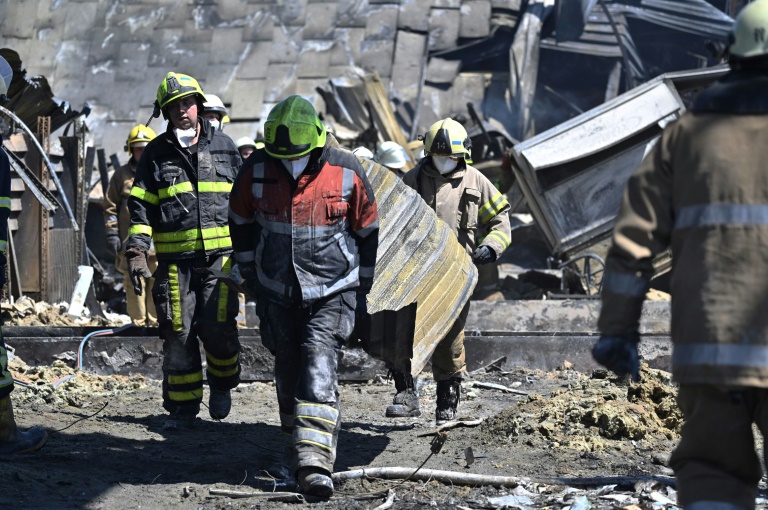
The consequences of Russia’s four-month-old invasion were on display in the central Ukrainian city of Kremenchuk, where shaken civilians recounted Monday’s missile strike on a shopping mall.

“Everything burned, really everything, like a spark to a touchpaper. I heard people screaming. It was horror,” witness Polina Puchintseva told AFP.

All that was left of the shopping centre — scene of at least 18 deaths — was charred debris, chunks of blackened walls and green lettering from a smashed store front.

Russia claims its missile salvo was aimed at an arms depot — but none of the civilians who talked to AFP knew of any weapons store in the neighbourhood.

And, outside Russia, the latest carnage sparked only Ukrainian fury and western solidarity.

“Indiscriminate attacks on innocent civilians constitute a war crime,” the G7 leaders said in a statement, condemning the “abominable attack”.

Ukraine’s President Volodymyr Zelensky declared on his social media channels: “Only total insane terrorists, who should have no place on Earth, can strike missiles at civilian objects.

“Russia must be recognised as a state sponsor of terrorism. The world can and therefore must stop Russian terror,” he added.

At their summit in the German Alps, the G7 leaders did not go so far as to brand Putin a terrorist — but they vowed that Russia, already under tough sanctions, would face more economic pain.

“The G7 stands united in its support for Ukraine,” German Chancellor Olaf Scholz told reporters. 

“We will continue to keep up and drive up the economic and political costs of this war for President Putin and his regime.”

– Oil price cap? –

Over the three days of their summit, the G7 had announced several new measures to put the squeeze on Putin, including a plan to work towards a price cap on Russian oil.

The group also agreed to impose an import ban on Russian gold. At the same time, the G7 powers heaped financial support on Ukraine, with aid now reaching $29.5 billion.

British Prime Minister Boris Johnson said the West was “to give the Ukrainians the strategic endurance they need to try to shift the dial, to try to change the dynamic of the position”.

After the summit, with G7 leaders who are also in NATO heading on to Madrid, US National Security Advisor Jake Sullivan said Biden would announce new long-term military deployments across Europe.

The Madrid NATO summit will also try to overcome Turkey’s objections to Sweden and Finland joining the military alliance, and Biden is to talk to Turkey’s President Recep Tayyip Erdogan.

French President Emmanuel Macron urged NATO allies to show they were united.

“The message that should come out of Madrid is a message of unity and strength for member countries, as well as for those that wish to join and whose applications we are supporting,” Macron said.

Sweden and Finland, traditionally non-aligned militarily, asked to join NATO after Putin’s February 24 invasion of Ukraine, but Turkey accuses them of harbouring wanted Kurdish militants.

“We are a 70-year-old member of NATO. Turkey is not a country that randomly joined NATO,” Erdogan said, before setting off for Madrid and talks with his NATO, Swedish and Finnish counterparts.

“We will see what point they have reached… We do not want empty words. We want results.”

Meanwhile, with fierce artillery duels continuing in the eastern Donbas region, Ukrainian intelligence said 17 Ukrainians, mostly servicemen, had been freed in the sides’ latest prisoner exchange.

The United Nations said that 6.2 million people are now estimated to have been displaced within Ukraine, in addition to 5.26 million who have fled abroad.

“Ukraine now faces a brutality which we haven’t seen in Europe since the Second World War,” NATO Secretary General Jens Stoltenberg said as leaders began to gather in the Spanish capital.

– An oligarch’s doubts –

Billionaire Russian industrialist Oleg Deripaska admitted in a rare Moscow press conference that the operation in Ukraine may have gone too far.

“Is it in Russia’s interest to destroy Ukraine? Of course not. That would be a colossal mistake,” he said.

After failing to capture Kyiv following their invasion in February, Russian troops have focused their campaign on seizing a swathe of eastern Ukraine, and have been gaining ground.

burs-dc/gil

US likely to avoid recession, but rates need to climb: Fed official

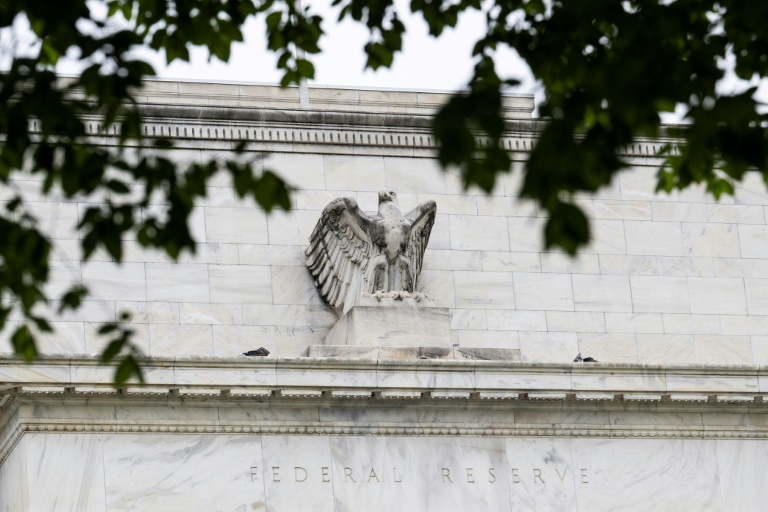
The US economy will slow this year as intended and is expected to avoid a downturn, but the Federal Reserve will have to raise borrowing rates quickly, a top central bank official said Tuesday.

“Recession is not my base case right now. I think the economy is strong,” New York Fed President John Williams said on CNBC.

But he said policymakers need to hike rates “expeditiously” to tamp down inflationary pressures and get the key policy interest rate to 3.0-3.5 percent by later this year.

With American families struggling in the face of soaring gas and food prices, the Fed has shifted into high gear, implementing the biggest rate hike in nearly 30 years earlier this month to try to cool the economy and rein in inflation.

The Fed since March has raised the benchmark borrowing rate 1.5 percentage points, from zero where it had been since the start of the Covid-19 pandemic, and is expected to announce another three-quarter-point increase at its July policy meeting, with further hikes coming.

That has raised fears the campaign to quell the highest inflation in four decades will tumble the world’s largest economy into recession.

But Williams echoed the cautiously optimistic view of Fed chief Jerome Powell, saying there is a path forward that avoids a contraction.

“I’m expecting growth to slow this year quite a bit relative to what we had last year,” with GDP expanding by 1.0 to 1.5 percent, he said.

“It’s not a recession, it’s a slowdown that we need to see in the economy to reduce the inflationary pressures and bring inflation down.”

The Russian invasion of Ukraine has been a major factor contributing to rising food and oil prices worldwide, and Williams noted that the main risks to the US economy “are coming from abroad.”

He said it was “perfectly reasonable” to expect the Fed to raise the policy rate to 3.5-4.0 percent next year, but that the final path will depend on the economic data.

“We need to raise interest rates quite a bit this year and into next year,” he said. “We’ve got to get interest rates higher and we have to do that expeditiously.”

Stocks bounce as China eases quarantine measures

Stock markets climbed Tuesday and oil prices rallied further as China slashed the quarantine time for visitors, fuelling hopes of recovery for the world’s second largest economy.

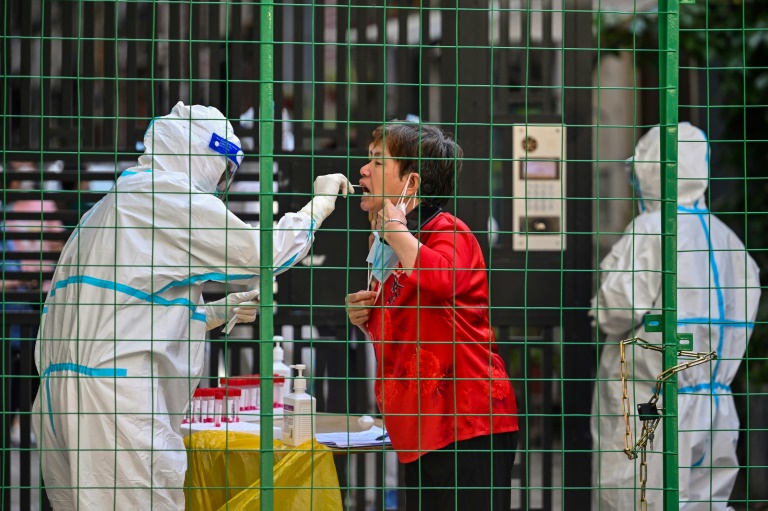
The news came as Beijing and Shanghai appeared to have contained a Covid outbreak that had forced officials to impose lockdowns that compounded global supply chain snarls, further pushing up inflation.

Authorities said inbound travellers would have to quarantine for only 10 days instead of three weeks.

The news boosted share prices, already striving to rebound from recent sharp losses triggered by fears of a global recession.

“The Covid crisis appears to be rapidly retreating in China,” noted Susannah Streeter, senior investment and markets analyst at Hargreaves Lansdown.

“The prospects of rapid recovery for the world’s second largest economy is helping lift miners, as metals prices rise in expectation of a surge in demand in the commodity-hungry economy.”

At the same time, G7 leaders meeting in Germany condemned China’s “non-transparent and market-distorting” international trade practices in an end-of-summit statement that hit out directly at Beijing for the first time.

Traders also digested comments from European Central Bank President Christine Lagarde, who said the ECB would go “as far as necessary” to fight inflation that is set to remain “undesirably high”.

Ben Laidler, a global markets strategist at online trading platform eToro, said current economic weakness had been largely factored in by dealers.

“Much is already discounted by markets, which may be in ‘bad news is good news’ mode, as a slowdown cools inflation and interest rate fears,” he said.

Global equity markets are recovering ground as investors believe central banks could decide to raise interest rates by more modest amounts than previously thought.

The US Federal Reserve and its peers are hiking borrowing costs in an attempt to cool inflation, which has soared around the world to the highest levels in decades.

However, such action has increased the prospect of a global recession, causing economists to think that future rate hikes could be less steep than in recent months.

“Wall Street seems to be close to figuring out how high central banks may take rates over in the short-term and that is supportive for long-term investors to scale into positions,” said market analyst Edward Moya at OANDA trading platform. 

Wall Street stocks opened higher, with the Dow adding 0.6 percent.

Europe’s main indices were higher in afternoon trading, with London and Paris both rising 1.1 percent, while Frankfurt added 0.8 percent.

Asian markets closed higher.

– Oil jumps as G7 targets Russia –

Oil prices, a major driver of the soaring inflation, rose on fears of further supply tightening, in addition to prospects for higher Chinese demand.

This comes after G7 leaders agreed to work on a price cap for Russian oil, a US official said Tuesday, as part of efforts to cut the Kremlin’s revenues.

International sanctions placed on Russia following its invasion of Ukraine are taking their toll.

Moody’s ratings agency has confirmed that Russia defaulted on its foreign debt for the first time in a century, after bond holders did not receive $100 million in interest payments.

– Key figures at around 1330 GMT –

London – FTSE 100: UP 1.1 percent at 7,336.93 points

Frankfurt – DAX: UP 0.8 percent at 13,292.26

Paris – CAC 40: UP 1.1 percent at 6,115.94

EURO STOXX 50: UP 0.6 percent at 3,519.16

New York – Dow: UP 0.6 percent at 31,636.49

Tokyo – Nikkei 225: UP 0.7 percent at 27,049.47 (close)

Hong Kong – Hang Seng Index: UP 0.9 percent at 22,418.97 (close)

Shanghai – Composite: UP 0.9 percent at 3,409.21 (close)

Brent North Sea crude: UP 1.4 percent at $112.57 per barrel

West Texas Intermediate: UP 1.1 percent at $110.77 per barrel

Euro/dollar: DOWN at $1.0533 from $1.0583 Monday

Pound/dollar: DOWN at $1.2219 from $1.2268

Euro/pound: DOWN at 86.20 pence from 86.24 pence

Dollar/yen: UP at 136.19 yen from 135.48 yen

burs-rl/lth

About 50 migrants dead in 'horrific' truck tragedy in Texas

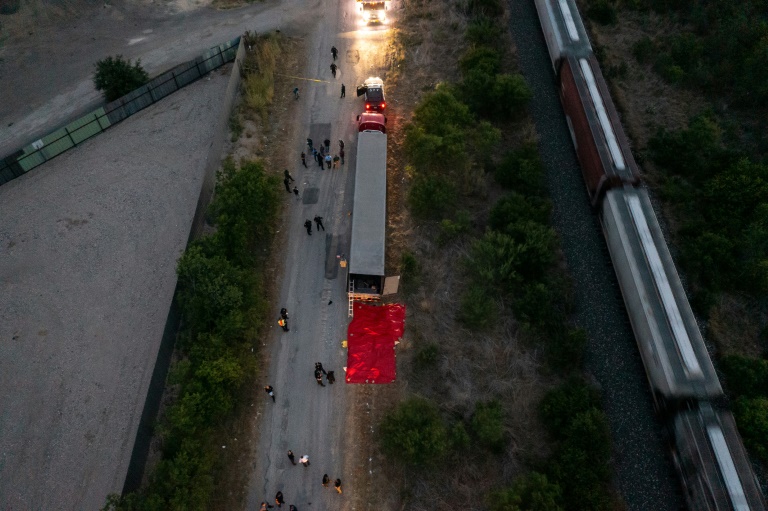
US police Tuesday were investigating the grim discovery of about 50 bodies in and around a trailer truck abandoned in sweltering heat near the Texas city of San Antonio, with victims identified as from Mexico, Guatemala and Honduras.

The shocking finding was one of the worst disasters involving migrants in the United States in recent years — and came five years after a similar deadly incident in the same Texas city, a few hours from the Mexican border.

The White House — facing intense pressure over its immigration policies — called the tragedy “absolutely horrific and heartbreaking,” and said President Joe Biden, flying to a NATO summit in Madrid, has been briefed on the incident.

San Antonio Fire Chief Charles Hood told reporters that at least 46 victims had died and 16 people had been transported to the hospital alive and conscious — 12 adults and four children.

Early Tuesday, Mexican President Andres Manuel Lopez Obrador said the toll had reached 50, mostly from Latin American nations including Mexico.

“It’s a tremendous misfortune… so far there are 50 dead: 22 from Mexico, seven from Guatemala, two from Honduras and 19 still without information about their nationality,” the Mexican leader said at a morning press conference.

US officials said three people were in custody over the incident.

Hood, the fire chief, said survivors had suffered heat stroke and heat exhaustion, and that there were no signs of water in the truck.

“It was a refrigerated tractor-trailer but there was no visible working A/C unit on that rig,” Hood said.

– ‘Desperation of migrants’ –

San Antonio, which lies about 250 kilometers (150 miles) from the border, is a major transit route for people smugglers.

It has also been gripped by a record-breaking heat wave, and temperatures in the area hit 103 degrees Fahrenheit (39.5 degrees Celsius) on Monday.

The US Customs and Border Protection agency director, Chris Magnus said he was “horrified” at the deaths near San Antonio.

“This speaks to the desperation of migrants who would put their lives in the hands of callous human smugglers who show no regard for human life,” he added on Twitter.

The vehicle was found near Highway I-35, a major US artery that stretches to the Mexican border.

According to San Antonio police chief William McManus, authorities were first alerted by an emergency call at about 5:50 pm local time (2250 GMT).

“A worker who works in one of the buildings up here behind me heard a cry for help,” he told reporters. 

“(He) came out to investigate, found a trailer with the doors partially open, opened them up to take a look, and found a number of deceased individuals inside.”

– Migration politics –

Texas Governor Greg Abbott, a Republican who advocates a tough line on immigration, quickly hit out at Biden over the disaster — blaming the Democrat’s “deadly open border policies.”

“These deaths are on Biden,” Abbott tweeted. “They show the deadly consequences of his refusal to enforce the law.”

San Antonio was the site of a similar migrant tragedy in 2017, when 10 people suffocated to death in a sweltering trailer with broken air conditioning and clogged ventilation holes.

The truck driver later pleaded guilty to charges related to the deaths.

In Geneva, the United Nations’ human rights office said it was “deeply disturbed” by the incident.

“This is not the first such tragedy, and it illustrates again the critical need for regular safe pathways for migration as well as for accountability for those persons whose conduct has directly led to such loss of life,” said spokeswoman Ravina Shamdasani.

Taliban to hold grand council to chart Afghan progress

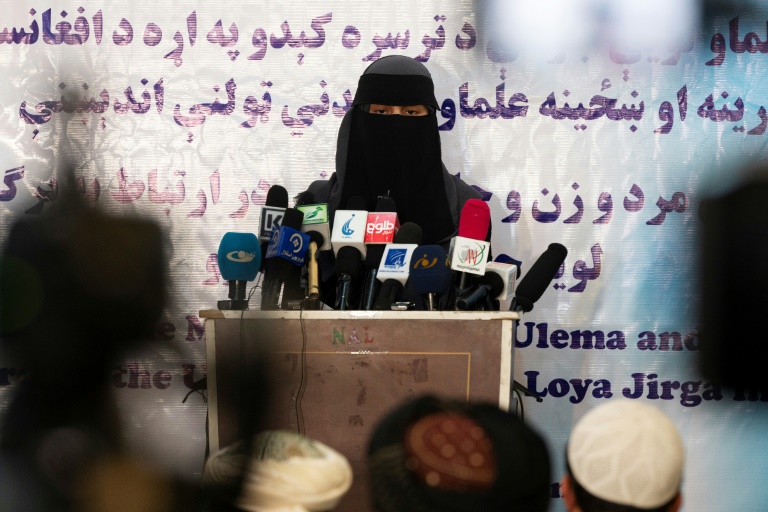
Hundreds of religious leaders and “people of influence” from around Afghanistan have been summoned to the capital to attend a three-day grand council in support of the country’s Taliban rule.

Officials are providing scant details of the men-only meeting starting Wednesday, a week after a powerful earthquake struck the east of the country killing over 1,000 people and leaving tens of thousands homeless.

A Taliban source told AFP that criticism of the regime would be allowed and thorny issues such as the education of girls, which has divided opinion in the movement, would be discussed.

“The meeting will seek views of scholars on the performance of the Islamic Emirate,” a Taliban source told AFP, referring to the group’s name for the country.

“The participants will be allowed to point out anything which has dented the IEA image — they can even make complaints.”

The meeting is described locally as a “jirga”, a traditional gathering of influential people that discuss problems and settle differences by consensus.

Even before the quake, the Taliban were struggling to administer a country that had long been in the grip of economic malaise, utterly dependent on foreign aid that dried up with the overthrow of the Western-backed government in August. 

Taliban officials insist their rule is nationally popular, but they have re-introduced a harsh version of Islam that characterised their first stint in power — specifically clamping down on the rights of women.

– Barred from education –

Secondary school girls are barred from education, while women have been dismissed from government jobs, forbidden from travelling alone, and ordered to dress in clothing that covers everything but their faces.

“As per my information, the participants of the meeting will hold a detailed discussion on school education,” the Taliban source said.

A letter from the prime minister’s office seen by AFP said each district in Afghanistan should provide three delegates to the council.

It said they must have a good religious education, credentials for jihad — fighting for Islam — and a reputation in their respective fields.

“Two of them will be religious scholars and the other a person of influence,” the letter said.

Afghanistan has over 400 administrative districts, meaning the gathering will be the biggest leadership collective since the Taliban returned to power in August last year.

The Afghan Women’s Peace and Freedom Organization said the male-only gathering could not be representative.

“There should be Afghan women,” official Halima Nasiri told AFP after a press conference by the group.

“If there are no Afghan women in the loya jirga (grand gathering), then no doubt, their decisions would be unjust and unacceptable for Afghan women and girls.”

Afghan media is abuzz with speculation that Taliban supreme leader Hibatullah Akhundzada — who has not been filmed or photographed in public since the group returned to power — may attend the gathering.

Only a handful of unverified audio recordings of his speeches have been released since August from Kandahar, the Taliban’s birthplace and spiritual heart.

The Taliban have become increasingly sensitive to criticism and on Tuesday government spokesman Bilal Karimi dismissed as “false information and propaganda” a Gallup global survey that said Afghans were the saddest people in the world, with the least enjoyment from life.

“A majority of Afghans feel safe and happy since the Taliban takeover,” he tweeted.

Gallup said the country’s score on the Positive Experience Index was not only a new low for Afghanistan, but also a new low for any country surveyed over the past 16 years.

“The percentage of Afghans who said they felt enjoyment, smiled or laughed, learned something interesting, or felt well-rested the previous day all dropped to new record lows,” it said.

German court gives 101-year-old ex Nazi guard five years in jail

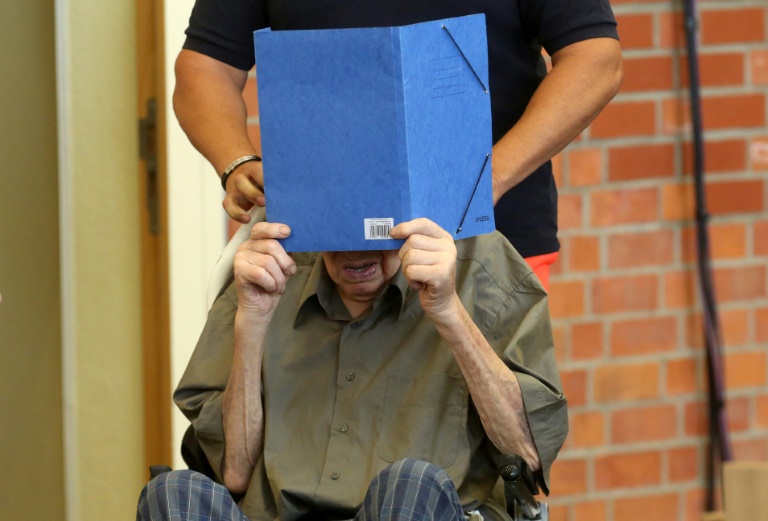
A German court on Tuesday handed a five-year jail sentence to a 101-year-old former Nazi concentration camp guard, the oldest person so far to go on trial for complicity in war crimes during the Holocaust.

Josef Schuetz was found guilty of being an accessory to murder in at least 3,500 cases while working as a prison guard at the Sachsenhausen camp in Oranienburg, north of Berlin, between 1942 and 1945.

He is highly unlikely to be put behind bars given his age.

The pensioner, who now lives in Brandenburg state, had pleaded innocent, saying he did “absolutely nothing” and had not even worked at the camp.

“I don’t know why I am here,” he said at the close of his trial on Monday.

But presiding judge Udo Lechtermann said he was convinced Schuetz had worked at Sachsenhausen and had “supported” the atrocities committed there.

“For three years, you watched prisoners being tortured and killed before your eyes,” Lechtermann said.

“Due to your position on the watchtower of the concentration camp, you constantly had the smoke of the crematorium in your nose,” he said.

“Anyone who tried to escape from the camp was shot. So every guard was actively involved in these murders.”

More than 200,000 people, including Jews, Roma, regime opponents and gay people, were detained at the Sachsenhausen camp between 1936 and 1945.

Tens of thousands of inmates died from forced labour, murder, medical experiments, hunger or disease before the camp was liberated by Soviet troops, according to the Sachsenhausen Memorial and Museum. 

– Contradictory statements –

Schuetz, who was 21 when he began working at the camp, remained blank-faced as the court announced his sentence.

“I am ready,” he said when he entered the courtroom earlier in a wheelchair, dressed in a grey shirt and striped trousers.

Schuetz was not detained during the trial, which began in 2021 but was postponed several times because of his health. 

His lawyer, Stefan Waterkamp, told AFP he would appeal — meaning the sentence will not be enforced until 2023 at the earliest.

Thomas Walther, the lawyer who represented 11 of the 16 civil parties in the trial, said the sentencing had met their expectations and “justice has been served”.

But Antoine Grumbach, 80, whose father died in Sachsenhausen, said he could “never forgive” Schuetz as “any human being facing atrocities has a duty to oppose them”.

During the trial, Schuetz had made several inconsistent statements about his past, complaining that his head was getting “mixed up”.

At one point, the centenarian said he had worked as an agricultural labourer in Germany for most of World War II, a claim contradicted by several historical documents bearing his name, date and place of birth.

– ‘Warning to perpetrators’ –

After the war, Schuetz was transferred to a prison camp in Russia before returning to Germany, where he worked as a farmer and a locksmith. 

More than seven decades after World War II, German prosecutors are racing to bring the last surviving Nazi perpetrators to justice.

The 2011 conviction of former guard John Demjanjuk, on the basis that he served as part of Hitler’s killing machine, set a legal precedent and paved the way for several of these justice cases.

Since then, courts have handed down several guilty verdicts on those grounds rather than for murders or atrocities directly linked to the individual accused.

Among those brought to late justice were Oskar Groening, an accountant at Auschwitz, and Reinhold Hanning, a former SS guard at Auschwitz.

Both were convicted at the age of 94 of complicity in mass murder but died before they could be imprisoned.

However, Schuetz’s five-year sentence is the longest so far handed to a defendant in such a case.

Guillaume Mouralis, a research professor at France’s National Centre for Scientific Research (CNRS), told AFP the verdict was “a warning to the perpetrators of mass crimes: whatever their level of responsibility, there is still legal liability.” 

Macron seeks allies as new French parliament opens

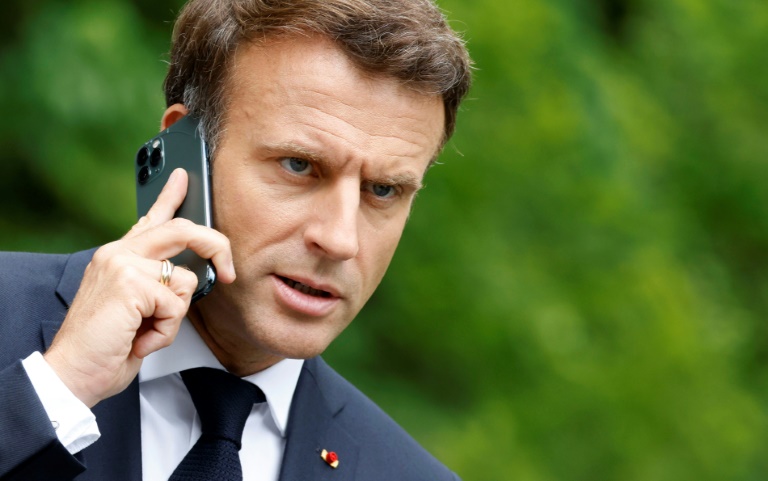
France’s new lower house of parliament meets for the first time Tuesday with centrist allies of President Emmanuel Macron little closer to building a stable majority after suffering an upset in elections earlier this month.

The legislative poll brought surges for the far right and hard left and opposition forces have made clear that they will not be lured into a lasting arrangement to support Macron’s government, which is 37 seats short of an overall majority.

Prime Minister Elisabeth Borne and other senior Macron backers have been trying to win over individual right-wing and moderate left parliamentarians to bolster their ranks. “The phones are running hot,” one MP told AFP.

Olivier Marleix, head of the conservative Republicans group seen as most compatible with Macron, met Borne on Tuesday. “We’ve told her again there is no question of any kind of coalition,” he said.

But he added that the prime minister “really showed that she wanted to listen to us. That’s quite a good sign.

“We’re here to try and find solutions,” he added.

“There will be some draft laws where I think we should be able to work together,” including one to boost households’ purchasing power in the face of food and energy inflation.

“It’s not in the interest of parties who have just been elected” to make a long-term deal to support the government, said Marc Lazar, a professor at Paris’s Institute of Political Studies (Sciences Po).

– First woman speaker –

The first days of the new National Assembly will be taken up with elections for the speaker and other senior parliamentary officials and committee chiefs.

Pro-Macron candidate Yael Braun-Pivet is expected to be the first woman in French history to claim the speaker’s chair in a series of votes starting at 3:00 pm (1300 GMT).

Also Tuesday, parties with at least 15 members will be able to form official groups, which enjoy more influence and speaking time.

One key question is whether Thursday’s vote to head the Finance Committee — with its extensive powers to scrutinise government spending — will be won by an MP from the far-right National Rally (RN).

Led by Macron’s defeated presidential opponent Marine Le Pen, the RN would usually have a claim on the post as the largest single opposition party.

It faces a stiff challenge from the NUPES left alliance — encompassing Greens, Communists, Socialists and the hard-left France Unbowed (LFI) — who agreed Tuesday on a joint candidate after some internal jostling.

– Confidence vote? –

Next week could see exchanges heat up in the chamber, as government chief Borne delivers a speech setting out her policy priorities.

It is not yet clear whether Borne will call the traditional vote of confidence following her appearance — which is not strictly required under France’s Fifth Republic constitution.

Macron told AFP at the weekend that he had “decided to confirm (his) confidence in Elisabeth Borne” and asked her to continue talks to find either allies for the government in parliament or at least backing for crucial confidence and budget votes.

The president has ruled out both tax increases and higher public borrowing in any compromise deals with other parties.

After Macron promised a “new government of action… in the first few days of July” once he returns from this week’s G7 and NATO meetings in Germany and Belgium, some observers see the compressed calendar as ambitious.

“In all other European countries, when they’re in talks to form a government, it can take months” rather than the days Macron has allowed, political scientist Lazar said.

Even as the government projects business almost as usual, hard-left LFI especially has vowed to try to prevent key proposals, such as the flagship reform to raise the legal retirement age from 62 to 65.

Party deputy chief Adrien Quatennens said Sunday there was “no possible agreement” with Macron, saying cooperation would “make no sense”.

“We haven’t heard (Macron) move or back down one iota on pension reform” or other controversial policies, he added.

burs-tgb/sjw/jj

Close Bitnami banner
Bitnami