World

US, Iran chief negotiators to start nuclear talks in Qatar

Chief negotiators from the United States and Iran were due to hold indirect talks in Qatar on Tuesday, bidding to overcome obstacles that have stalled attempts to revive a nuclear deal.

US special envoy Robert Malley and Iran’s Ali Bagheri headed to Doha after more than a year of European Union-mediated talks in Vienna on a return to the 2015 agreement.

The talks in the Qatari capital are the start of a process to “unblock” the Vienna talks, European Union foreign affairs spokesman Peter Stano said, adding they would start on Tuesday.

“We managed to unblock the process and we are going to move forward, and as a first step at this stage we have these proximity talks,” he said in Brussels.

“That means indirect talks between Iran and the United States on finding the way how to move forward.”

The deal aimed at curbing Iran’s nuclear ambitions has been hanging by a thread since 2018, when then US president Donald Trump unilaterally withdrew from it and began reimposing harsh economic sanctions on America’s arch-enemy.

US President Joe Biden’s administration has sought to return to the agreement, saying it would be the best path ahead with the Islamic republic, although it has voiced growing pessimism in recent weeks.

The talks in Doha will take place indirectly, with the delegations in separate rooms and communicating via intermediaries. The US and Iran do not have diplomatic relations.

Earlier Malley met Qatar’s Deputy Prime Minister and Foreign Minister Mohammed bin Abdulrahman Al Thani to discuss “joint diplomatic efforts to address issues with Iran”, the US embassy in Doha tweeted.

– Diplomatic hub –

Bagheri and his delegation have arrived in Doha, Iran’s IRNA state news agency reported.

Sheikh Mohammed also discussed the Iran talks with his French counterpart Catherine Colonna in a phone call on Tuesday, the official Qatar News Agency said.

Qatar’s foreign ministry said in a statement that it hopes the “indirect talks will be culminated in positive results that contribute to the revival of the nuclear deal signed in 2015”.

EU foreign policy chief Josep Borrell said during a visit to Tehran on Saturday that the Iran-US talks would be held in a Gulf country to avoid confusion with the broader talks in Vienna.

Qatar, which has better relations with Iran than most Gulf Arab monarchies, has sought a role as a diplomatic hub.

It also hosted talks between the United States and the Taliban before the withdrawal of American troops from Afghanistan in August last year.

The Vienna talks began in April last year but hit a snag in March following differences between Tehran and Washington, notably over Iran’s demand that its Islamic Revolutionary Guard Corps be removed from a US terror list.

“I always say that the time is not really on our side, so we should really move forward very quickly,” Stano said, referring to the Qatar meetings.

“But again, it’s not up to the European Union or (Borrell) as a coordinator to determine the tempo because everything depends on the willingness of the participants to find the necessary way forward.” 
7 million in 'desperate need' after Bangladesh floods

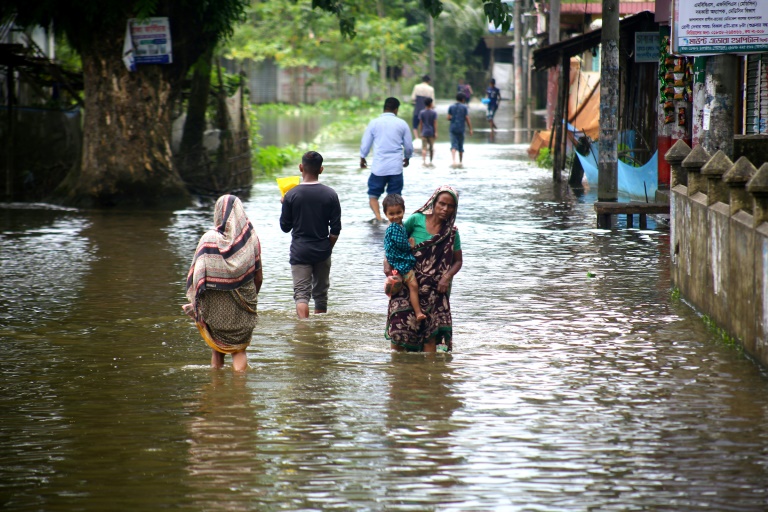
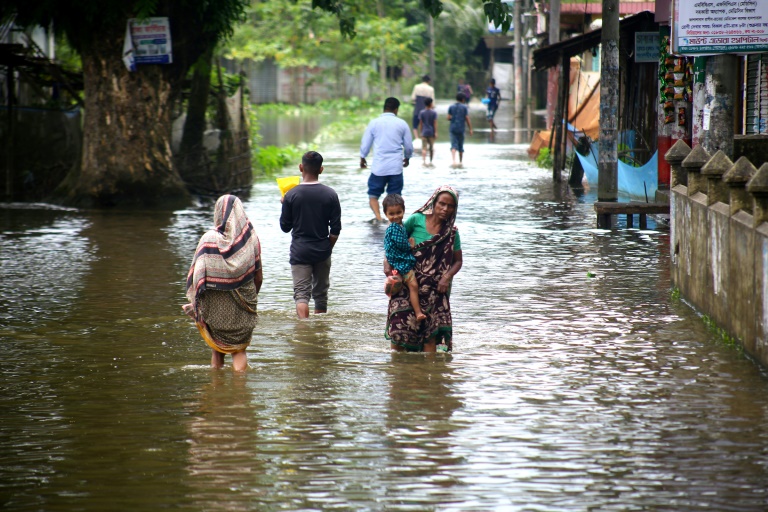
More than seven million Bangladeshis are still in “desperate” need of shelter and aid after deadly floods earlier this month, the Red Cross said Tuesday.

At least 101 people were killed in the country’s northeast when rivers swelled to record levels and inundated rural villages, after some of the heaviest rains in a century. 

“The scale of devastation this time is so much more” than earlier floods, said Sanjeev Kafley of the International Federation of Red Cross and Red Crescent Societies (IFRC).

An estimated 7.2 million people were in “desperate need of shelter and emergency relief items” in the worst-hit Sylhet region, the IFRC said in a statement. 

The government has sent food rations and other emergency humanitarian aid to those hit by the floods, said Nitai Dey Sarker of Bangladesh’s disaster management authority.

He added that once flood waters receded further, relief workers would send corrugated iron as building material for those who had lost their homes.

Sarker said the situation had improved around Bangladesh in recent days, but many in the northeast fear more floods to come, with two-thirds of the monsoon season still ahead of them.

“We are still stuck up in the flood shelter and yet to head back home to calculate the damage,” Abdul Hakim, a farmer from Sylhet, told AFP.

“The water levels in the rivers are rising again and that is very worrying,” he added.

The government said nearly 200,000 people were sheltering in schools and colleges that had been closed to accommodate those forced to flee their homes.

7 million in 'desperate need' after Bangladesh floods

More than seven million Bangladeshis are still in “desperate” need of shelter and aid after deadly floods earlier this month, the Red Cross said Tuesday.

At least 101 people were killed in the country’s northeast when rivers swelled to record levels and inundated rural villages, after some of the heaviest rains in a century. 

“The scale of devastation this time is so much more” than earlier floods, said Sanjeev Kafley of the International Federation of Red Cross and Red Crescent Societies (IFRC).

An estimated 7.2 million people were in “desperate need of shelter and emergency relief items” in the worst-hit Sylhet region, the IFRC said in a statement. 

The government has sent food rations and other emergency humanitarian aid to those hit by the floods, said Nitai Dey Sarker of Bangladesh’s disaster management authority.

He added that once flood waters receded further, relief workers would send corrugated iron as building material for those who had lost their homes.

Sarker said the situation had improved around Bangladesh in recent days, but many in the northeast fear more floods to come, with two-thirds of the monsoon season still ahead of them.

“We are still stuck up in the flood shelter and yet to head back home to calculate the damage,” Abdul Hakim, a farmer from Sylhet, told AFP.

“The water levels in the rivers are rising again and that is very worrying,” he added.

The government said nearly 200,000 people were sheltering in schools and colleges that had been closed to accommodate those forced to flee their homes.

Stocks bounce as China eases quarantine measures

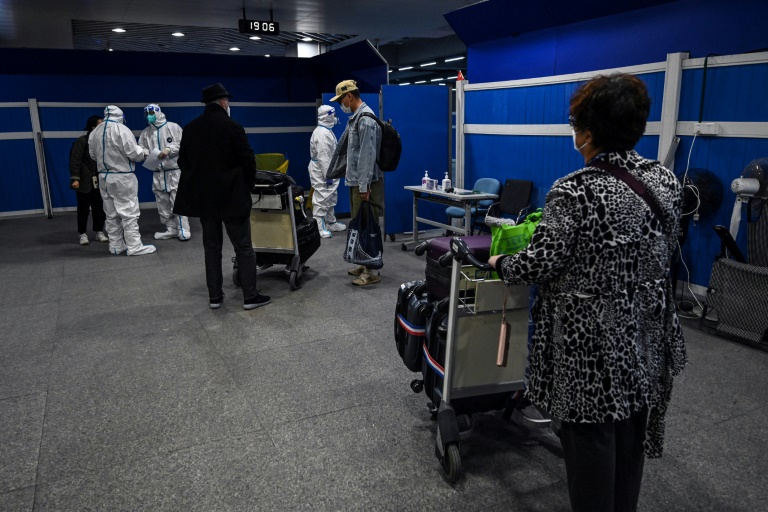
Stock markets jumped Tuesday and oil prices rallied further as China slashed the quarantine time for visitors, fuelling hopes of recovery for the world’s second largest economy.

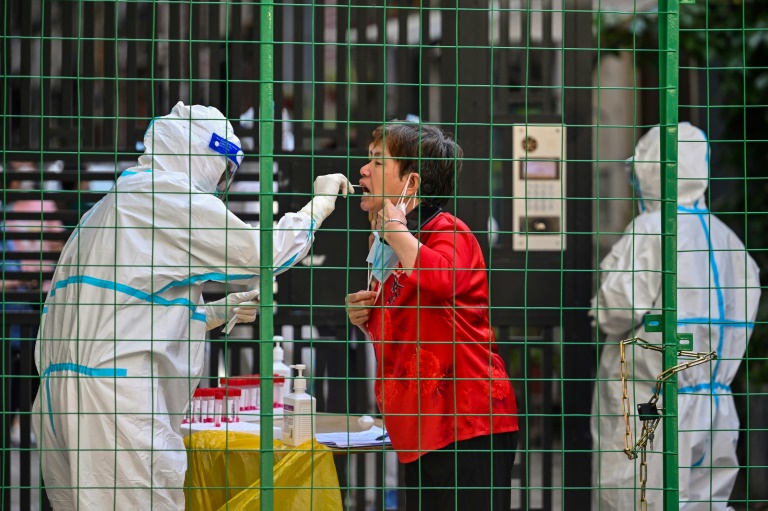
The news came as Beijing and Shanghai appeared to have contained a Covid outbreak that had forced officials to impose lockdowns that compounded global supply chain snarls, further pushing up inflation.

Authorities said inbound travellers would have to quarantine for only 10 days instead of three weeks.

The news boosted share prices, already striving to rebound from recent sharp losses triggered by fears of a global recession.

“The Covid crisis appears to be rapidly retreating in China,” noted Susannah Streeter, senior investment and markets analyst at Hargreaves Lansdown.

“The prospects of rapid recovery for the world’s second largest economy is helping lift miners, as metals prices rise in expectation of a surge in demand in the commodity-hungry economy.”

At the same time, G7 leaders will condemn China’s “distorting” international trade practices in an end-of-summit statement Tuesday, a senior US official said.

“You’ll see leaders release a collective statement, which is unprecedented in the context of the G7, acknowledging the harms caused by China’s non-transparent, market distorting, industrial directives,” the official told reporters.

Traders digested comments also from European Central Bank boss Christine Lagarde, who said the ECB would go “as far as necessary” to fight inflation that is set to remain “undesirably high”.

Ben Laidler, a global markets strategist at online trading platform eToro, said current economic weakness had been largely factored in by dealers.

“Much is already discounted by markets, which may be in ‘bad news is good news’ mode, as a slowdown cools inflation and interest rate fears,” he said.

Global equity markets are recovering ground as investors believe central banks could decide to raise interest rates by more modest amounts than previously thought.

The US Federal Reserve and its peers are hiking borrowing costs in an attempt to cool inflation, which has soared around the world to the highest levels in decades.

However, such action has increased the prospect of a global recession, causing economists to think that future rate hikes could be less steep than in recent months.

– Oil jumps as G7 targets Russia –

Oil prices, a major driver of the soaring inflation, jumped around two percent Tuesday on fears of further supply tightening, in addition to prospects for higher Chinese demand.

This comes after G7 leaders agreed to work on a price cap for Russian oil, a US official said Tuesday, as part of efforts to cut the Kremlin’s revenues.

International sanctions placed on Russia following its invasion of Ukraine are taking their toll.

Moody’s ratings agency has confirmed that Russia defaulted on its foreign debt for the first time in a century, after bond holders did not receive $100 million in interest payments.

– Key figures at around 1030 GMT –

London – FTSE 100: UP 1.2 percent at 7,246.58 points

Frankfurt – DAX: UP 0.8 percent at 13,286.57

Paris – CAC 40: UP 1.2 percent at 6,121.49

EURO STOXX 50: UP 0.9 percent at 3,569.57

Tokyo – Nikkei 225: UP 0.7 percent at 27,049.47 (close)

Hong Kong – Hang Seng Index: UP 0.9 percent at 22,418.97 (close)

Shanghai – Composite: UP 0.9 percent at 3,409.21 (close)

New York – Dow: DOWN 0.2 percent at 31,438.26 (close)

Brent North Sea crude: UP 2.3 percent at $117.74 per barrel

West Texas Intermediate: UP 1.8 percent at $111.55 per barrel

Euro/dollar: UP at $1.0590 from $1.0583 Monday

Pound/dollar: FLAT at $1.2268

Euro/pound: UP at 86.33 pence from 86.24 pence

Dollar/yen: UP at 136.01 yen from 135.48 yen

46 migrants found dead in trailer truck in Texas

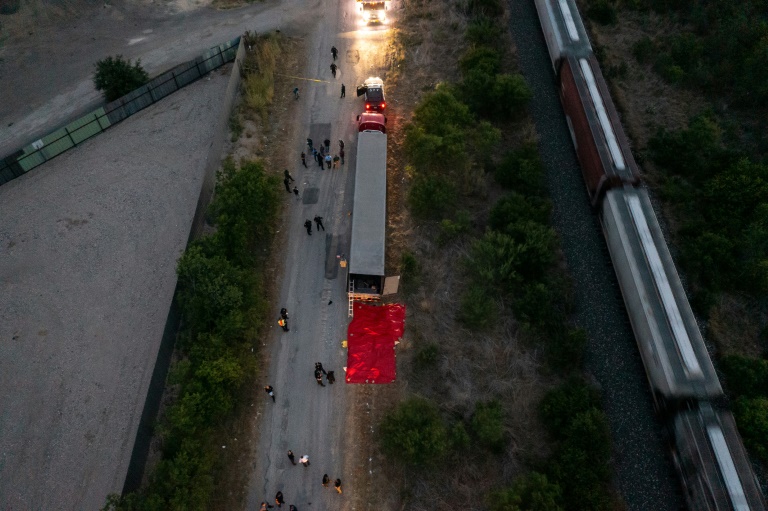
At least 46 migrants were found dead Monday in and around a large trailer truck that was abandoned on the roadside on the outskirts of the Texas city of San Antonio.

The grim discovery was one of the worst disasters involving migrants in the United States in recent years — and came five years after a similar deadly incident in the same central Texas city, a few hours from the Mexican border.

“At this time we have processed approximately 46 bodies that have been triaged and tagged and declared deceased,” San Antonio Fire Chief Charles Hood told reporters.

He said that 16 people had been transported to the hospital alive and conscious — 12 adults and four children.

There were no initial details on the age or nationalities of the deceased.

“The patients that we saw were hot to the touch, they were suffering from heat stroke, heat exhaustion, no signs of water in the vehicle, it was a refrigerated tractor-trailer but there was no visible working A/C unit on that rig,” Hood said.

Officials said three people were in custody over the incident.

“Tonight we are dealing with a horrific human tragedy,” San Antonio Mayor Ron Nirenberg told a press conference.

“So I would urge you all to think compassionately and pray for the deceased, the ailing, the families,” he said.

“And we hope that those responsible for putting these people in such inhumane conditions are prosecuted to the fullest extent of the law.” 

– ‘Alleged human smuggling’ –

San Antonio, which lies about 250 kilometers (150 miles) from the border, is a major transit route for people smugglers.

It has also been gripped by a record-breaking recent heat wave, and temperatures in the area hit 103 degrees Fahrenheit (39.5 degrees Celsius) on Monday. 

The vehicle was found on a road near Highway I-35, a major US artery that stretches all the way to the border with Mexico.

A large-scale emergency operation was underway at the scene involving police, firefighters and ambulances.

According to San Antonio police chief William McManus, authorities were first alerted by an emergency call at about 5:50 pm local time (2250 GMT).

“A worker who works in one of the buildings up here behind me heard a cry for help,” he told reporters. 

“(He) came out to investigate, found a trailer with the doors partially open, opened them up to take a look, and found a number of deceased individuals inside.”

He said the probe had been turned over to the federal Department of Homeland Security (DHS).

In a statement, the DHS said it had initiated an investigation after receiving the call from San Antonio police “regarding an alleged human smuggling event”.

Dozens of emergency responders who had worked at the scene underwent a stress debriefing following the operation.

“We’re not supposed to open up a truck and see stacks of bodies in there, none of us come to work imagining that,” Hood said.

– ‘A better life’ –

Texas Governor Greg Abbott, a Republican who advocates a tough line on immigration, hit out at President Joe Biden over the disaster — blaming the Democrat’s “deadly open border policies.”

“These deaths are on Biden,” Abbott tweeted. “They show the deadly consequences of his refusal to enforce the law.”

Beto O’Rourke, the Democratic party’s candidate to run against Abbott in November, called for “urgent action” following the incident.

“Dismantle human smuggling rings and replace them with expanded avenues for legal migration that reflect our values and meet our country’s needs,” he said.

Mexico’s foreign minister, Marcelo Ebrard, called the incident a “tragedy” and said the Mexican consul was headed to the site. 

Ebrard said the nationalities of the victims were not yet known, but that two Guatemalans were among the survivors.

San Antonio was the site of a similar migrant tragedy in 2017, when 10 people suffocated to death in a sweltering trailer with broken air conditioning and clogged ventilation holes as they traveled into the United States.

Dozens more had been hospitalized with heat stroke and dehydration — with the truck believed to have been holding as many as 200 people, most of whom fled when it stopped in a parking lot. The truck driver later pleaded guilty to charges related to the deaths.

After news broke of Monday’s discovery, the archbishop of San Antonio, Gustavo Garcia-Siller tweeted “Lord have mercy on them. They hoped for a better life.”

“Once again, the lack of courage to deal with immigration reform is killing and destroying lives.”

In Geneva, the United Nations’ human rights office said it was “deeply disturbed” by the incident.

“This is not the first such tragedy, and it illustrates again the critical need for regular safe pathways for migration as well as for accountability for those persons whose conduct has directly led to such loss of life,” said spokeswoman Ravina Shamdasani.

Moody's says Russia defaulted on debt

Moody’s ratings agency has confirmed that Russia defaulted on its foreign debt for the first time in a century, after bond holders did not receive $100 million in interest payments.

The historic default follows a series of unprecedented Western sanctions that have increasingly isolated Russia from the global financial system following its invasion of Ukraine.

Russia lost the last avenue to service its foreign-currency loans after the United States removed an exemption last month that allowed US investors to receive Moscow’s payments.

“On 27 June, holders of Russia’s sovereign debt had not received coupon payments on two eurobonds worth $100 million by the time the 30-calendar-day grace period expired, which we consider an event of default under our definition,” Moody’s said.

Moscow said on Monday there were “no grounds to call this situation a default”, as the payments had not reached creditors due to the “the actions of third parties”.

The Russian authorities insist they have the funds to honour the country’s debt, calling the predicament a “farce” and accusing the West of pushing an “artificial” default.

Moody’s warned that more defaults “are likely”.

Moody’s released an “issuer comment” instead of a formal default declaration, as sanctions bar credit ratings agencies from covering Russia’s sovereign debt.

– ‘Limited’ impact –

The sanctions have included freezing the Russian government’s stockpile of $300 billion in foreign currency reserves held abroad, making it more complicated for Moscow to settle its foreign debts.

After the United States closed the last payment loophole last month, Russia said it would pay debt in rubles that could be converted into foreign currency, using a Russian financial institution as a paying agent.

But Moody’s said it “would likely treat payments in rubles as a default for bonds that do not allow for such redenomination in the contractual terms”.

Noting that Moody’s no longer covers Russia, Kremlin spokesman Dmitry Peskov said: “Does this mean that Moody’s restarted the ratings process? The agency must surely explain itself.”

The country last defaulted on its foreign debt in 1918, when Bolshevik revolution leader Vladimir Ilich Lenin refused to recognise the massive debts of the deposed tsar’s regime.

Russia defaulted on domestic debt in 1998 when, due to a drop in commodity prices, it faced a financial squeeze that prevented it from propping up the ruble and paying off debts that accumulated during the first war in Chechnya.

The International Monetary Fund’s number two official, Gita Gopinath, said in March that a Russian default would have “limited” impact on the global financial system.

Indonesian zoo breeds dozens of endangered baby Komodo dragons

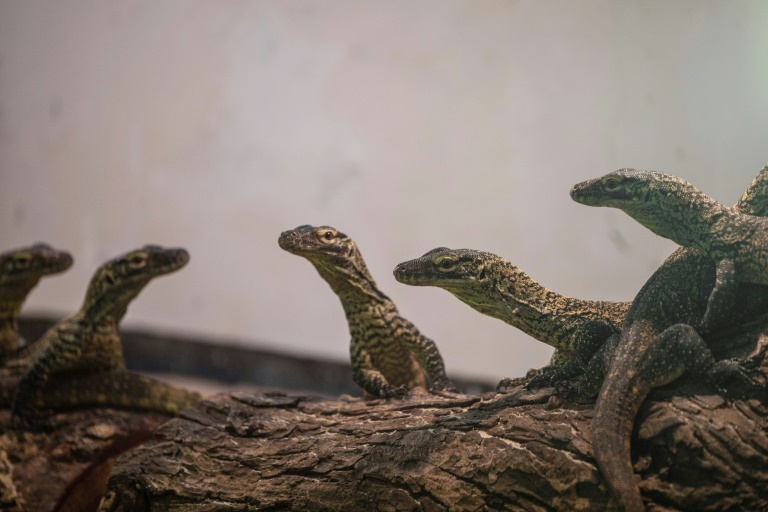
An Indonesian zoo has welcomed dozens of new baby Komodo dragons hatched in captivity in recent months as part of a breeding programme, its director said Tuesday, offering hope for efforts to conserve the endangered species.

The world’s largest living lizards are found only in Indonesia’s World Heritage-listed Komodo National Park and neighbouring Flores, and just 3,458 adult and baby species are left in the wild according to estimates.

The fearsome reptiles, which can grow to three metres (10 feet) in length and weigh up to 90 kilograms (200 pounds), are threatened by human activity and climate change destroying their habitat.

But a breeding programme in Indonesia’s second-largest city of Surabaya is trying to change that, successfully breeding 29 dragons in incubators between February and March.

“We have habitats that mirror the Komodo’s natural habitat, including its humidity and temperature,” zoo director Chairul Anwar told AFP. 

The newborns were hatched from two female Komodo dragons after their eggs were placed in incubators to prevent them from being eaten by their mothers or other Komodo dragons.

Female Komodos can fertilise an egg without the need for a male dragon.

The zoo started the programme in the 1990s as part of the effort to conserve the species in a city located more than 700 kilometres (434 miles) away from the dragon’s natural habitat. 

After the spate of births this year, Surabaya Zoo now houses 134 Komodo dragons, the largest population group outside of its habitat in the cluster of islands east of Bali, Anwar said. 

In a report last year, the International Union for the Conservation of Nature warned the endangered species’ habitat was expected to shrink by 30 percent in the next 45 years due to rising sea levels.

Anwar said the dragons will not be released back into the wild on Komodo or Flores until conditions improve.

“Komodo Island is still working to rejuvenate the forests,” which feed the dragon’s declining natural prey such as deer, he said.

China halves quarantine time for overseas travellers

China on Tuesday reduced the length of mandatory quarantine for inbound travellers, in the biggest relaxation of entry restrictions after sticking to a rigid zero Covid policy throughout the pandemic.

The new guideline cuts the length of mandatory quarantine for overseas travellers to seven days plus three more of home monitoring — a drastic drop from about 21 days of quarantine and home monitoring combined.

China closed off its international borders in March 2020 and the number of international flights is still tightly restricted in an effort to tamp down “imported” virus cases as the pandemic rages elsewhere.

Overseas arrivals have faced weeks of strict monitoring and costly quarantine in hotels and designated centres, as well as soaring ticket prices for the slashed number of flights.

Under the latest Covid prevention and control policy guidelines announced by the National Heath Commission and the State Council, inbound travellers entering China will now be required to quarantine centrally for just seven days, with daily tests.

The new policy is “absolutely not a loosening of (Covid) prevention and control” but “optimising and adjusting” existing measures, health official Lei Zhenglong said at a Tuesday briefing.

Since April, a growing number of “pilot” cities have already slashed mandatory centralised quarantine for overseas travellers to 10 days, with Beijing reducing quarantine as well last month.

However, scarce international flights are frequently subject to cancellations, as Beijing operates a “circuit breaker” system where routes are temporarily cancelled if enough positive passengers are discovered on board.

The announcement on the easing of measures rallied most Asian markets as investors hoped the move could provide a boost for Beijing’s Covid-slumped economy.

The cities of Beijing and Shanghai also reported no Covid cases on Tuesday, suggesting they had largely contained outbreaks that forced tens of millions to stay home and snarled up global supply chain chains.

Several local health authorities contacted by AFP on Tuesday, including Beijing and Guangzhou, said they had not received instructions yet to reduce their quarantine for international arrivals.

– Signs of opening up –

China’s staunch adherence to its zero Covid policy is in stark contrast to the rest of the world, which has largely removed most restrictions despite the spread of the highly infectious but less life-threatening Omicron variant.

Earlier this month, Beijing marginally relaxed visa restrictions to allow foreigners to visit direct family members and foreign permanent residents in China.

And aviation regulation officials have said they are negotiating with more countries to gradually increase the number of flights to China. 

Some international students from countries including India and Pakistan have been allowed to return to China for the first time since the pandemic in recent weeks.

However, most analysts believe the resumption of inbound tourism and normal travel remains far off.

“I think it’s (reducing quarantine) a policy change in the right direction, but it’s not enough,” said Huang Yanzhong, senior fellow for global health at the Council on Foreign Relations in New York.

Given the shorter incubation period of the Omicron variant, it was “no longer necessary to have a long quarantine period,” he said.

“I hope they will open the door wider and make travelling easier, because that is in China’s national interest.”

A twice-in-a-decade Communist Party congress where the new top leadership will be announced is set to take place in the autumn, when authorities will be keen to suppress any resurgent domestic outbreaks.

Chinese President Xi Jinping has repeatedly emphasised the correctness of zero Covid, despite the mounting costs to China’s stagnant economy.

He vowed in May to “fight against any speech that distorts, questions or rejects China’s Covid-control policy”.

China has also tightly restricted the international travel of its own citizens, who have been barred from making “non-urgent, unnecessary” trips since late 2021 with most passport renewals all but halted.

Life in the abyss, a spectacular and fragile struggle for survival

Cloaked in darkness and mystery, the creatures of the deep oceans exist in a world of unlikely profusion, surviving on scant food and under pressure that would crush human lungs.

This extremely hostile environment, which will come under the spotlight at a major United Nations oceans summit in Lisbon this week, has caused its inhabitants to develop a prodigious array of alien characteristics and idiosyncratic survival techniques.

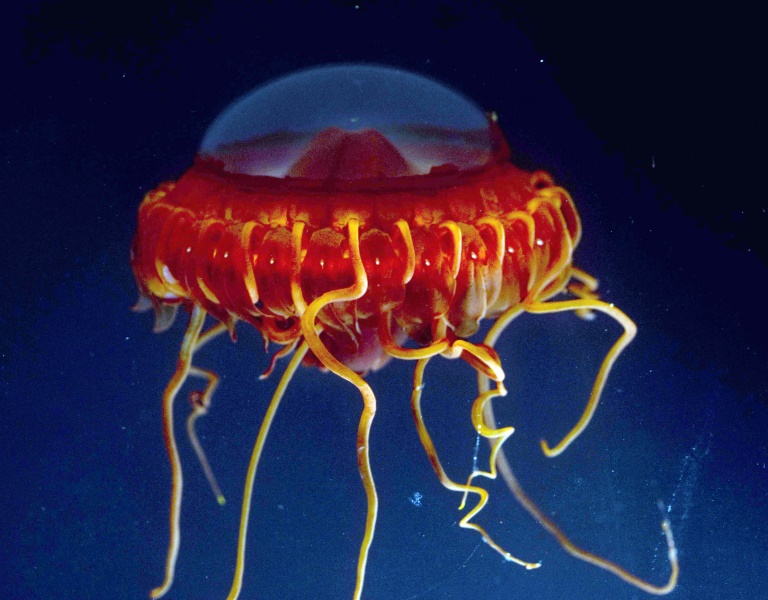
A vast assortment of animals populate the sunless depths, from the colossal squid, which wrapped its tentacles around the imaginations of sailors and storytellers, to beings with huge cloudy eyes, or whose bodies are as transparent as glass. 

And the angler fish, with its devilish looks illuminated by a built-in headlamp, showing that the deep dark is alive with lights.

– ‘Incredible’ creatures – 

Until the middle of the 19th century, scientists believed that life was impossible beyond a few hundred metres.

“They imagined that there was nothing, because of the absence of light, the pressure, the cold, and the lack of food,” Nadine Le Bris, a professor at Sorbonne University, told AFP. 

Between 200 and 1,000 metres (650 to 3,300 feet), the light fades until it vanishes completely, and with it plants; at 2,000 metres the pressure is 200 times that of the atmosphere.  

From the abyssal plains to the cavernous trenches plunging deeper than Everest is high, aquatic existence continues in spectacular diversity. 

“When people think of the deep sea they often think of the seafloor,” said Karen Osborn of the Smithsonian’s Natural History Museum. 

“But all that water in between is full of incredible animals. There is a ton of life.”

These open water inhabitants face a formidable challenge: they have nowhere to hide. 

“There’s no seaweed to hide in, no caves or mud to dig into,” said Osborn. 

“There are predators coming at them from below, from above, from all around.” 

– Masters of disguise – 

One tactic is to become invisible. 

Some creatures are red, making them difficult to distinguish in an environment where red light no longer filters through. 

Others render themselves transparent. 

Take the transparent gossamer worm, which ranges in size from a few millimetres to around a metre long and shimmies through the water by fluttering its frilly limbs. 

“They look like a fern frond,” said Osborn.

“They’re beautiful animals and they shoot yellow bioluminescent light out of the tips of their arms. What could be better than that.”

Bioluminescence is particularly common among fish, squid, and types of jellyfish, according to the US National Oceanic and Atmospheric Administration, which says around 80 percent of animals living between 200 and 1,000 metres produce their own light.    

This chemical process might be helpful for defence, reproduction or to find food — but no one knows for sure why so many creatures have evolved it, says NOAA. 

– “Sea snow” –

With no plants around and animals scattered in the vastness doing their utmost to disappear, creatures in the ocean depths often have a hard time finding a live meal.  

“If you happen to get lucky and hit a patch of your food, bingo! But you may not see another one for three weeks,” said Osborn.  

Another option is to feast on the dead.  

Organic particles from the surface waters — disintegrated bodies of animals and plants, mingling with fecal matter — drift down in what is known as “marine snow”. 

This cadaverous confetti forms part of a process that sequesters carbon dioxide in the ocean depths.

It is also a lifeline for many deep sea animals, including the blood red vampire squid which, contrary to its reputation, peacefully hoovers up marine snow.

When giants like dead whales sink to the seabed, they are swiftly reduced to bone by scavengers. 

– Final frontier –

With most of the oceans still unexplored, it is often said that we know more about the surface of Mars than we do about the seafloor on our own planet. 

But unlike outer space, scientists keep finding life even under the most hostile of conditions. 

Like the searing hydrothermal vents at the cracks between oceanic plates that spew chemical compounds such as hydrogen sulphide. 

Microorganisms use this to create organic matter via “chemosynthesis”, like plants use the sun for photosynthesis, which in turn feeds “exuberant” ecosystems, said Pierre-Marie Sarradin, head of the Deep Ecosystems department at the French research agency Ifremer. 

These hydrothermal springs were totally unknown until the 1970s. 

Scientists have so far identified some 250,000 marine species, though there could still be at least a million to be discovered.

Could there be an elusive sea monster lurking in the depths? Despite measuring more than 10 metres in length the colossal squid has only very rarely been seen.

“I don’t think we’re going to find a megalodon,” said Osborn, referring to the giant ancestor of the shark.

Humans may not have explored much of the deep seas, but they have left their mark, via global heating, overfishing and pollution. 

Oceans are acidifying as they absorb more and more CO2, there is a growing prevalence of “dead zones” without oxygen, while microplastics have been found in crustaceans at a depth of nearly 11 kilometres in the Mariana Trench. 

Food reaches the bottom in smaller quantities. 

Nadine Le Bris said species that “already live at the limits in terms of oxygen or temperature”, are already “disturbed”.

Life in the abyss, a spectacular and fragile struggle for survival

Cloaked in darkness and mystery, the creatures of the deep oceans exist in a world of unlikely profusion, surviving on scant food and under pressure that would crush human lungs.

This extremely hostile environment, which will come under the spotlight at a major United Nations oceans summit in Lisbon this week, has caused its inhabitants to develop a prodigious array of alien characteristics and idiosyncratic survival techniques.

A vast assortment of animals populate the sunless depths, from the colossal squid, which wrapped its tentacles around the imaginations of sailors and storytellers, to beings with huge cloudy eyes, or whose bodies are as transparent as glass. 

And the angler fish, with its devilish looks illuminated by a built-in headlamp, showing that the deep dark is alive with lights.

– ‘Incredible’ creatures – 

Until the middle of the 19th century, scientists believed that life was impossible beyond a few hundred metres.

“They imagined that there was nothing, because of the absence of light, the pressure, the cold, and the lack of food,” Nadine Le Bris, a professor at Sorbonne University, told AFP. 

Between 200 and 1,000 metres (650 to 3,300 feet), the light fades until it vanishes completely, and with it plants; at 2,000 metres the pressure is 200 times that of the atmosphere.  

From the abyssal plains to the cavernous trenches plunging deeper than Everest is high, aquatic existence continues in spectacular diversity. 

“When people think of the deep sea they often think of the seafloor,” said Karen Osborn of the Smithsonian’s Natural History Museum. 

“But all that water in between is full of incredible animals. There is a ton of life.”

These open water inhabitants face a formidable challenge: they have nowhere to hide. 

“There’s no seaweed to hide in, no caves or mud to dig into,” said Osborn. 

“There are predators coming at them from below, from above, from all around.” 

– Masters of disguise – 

One tactic is to become invisible. 

Some creatures are red, making them difficult to distinguish in an environment where red light no longer filters through. 

Others render themselves transparent. 

Take the transparent gossamer worm, which ranges in size from a few millimetres to around a metre long and shimmies through the water by fluttering its frilly limbs. 

“They look like a fern frond,” said Osborn.

“They’re beautiful animals and they shoot yellow bioluminescent light out of the tips of their arms. What could be better than that.”

Bioluminescence is particularly common among fish, squid, and types of jellyfish, according to the US National Oceanic and Atmospheric Administration, which says around 80 percent of animals living between 200 and 1,000 metres produce their own light.    

This chemical process might be helpful for defence, reproduction or to find food — but no one knows for sure why so many creatures have evolved it, says NOAA. 

– “Sea snow” –

With no plants around and animals scattered in the vastness doing their utmost to disappear, creatures in the ocean depths often have a hard time finding a live meal.  

“If you happen to get lucky and hit a patch of your food, bingo! But you may not see another one for three weeks,” said Osborn.  

Another option is to feast on the dead.  

Organic particles from the surface waters — disintegrated bodies of animals and plants, mingling with fecal matter — drift down in what is known as “marine snow”. 

This cadaverous confetti forms part of a process that sequesters carbon dioxide in the ocean depths.

It is also a lifeline for many deep sea animals, including the blood red vampire squid which, contrary to its reputation, peacefully hoovers up marine snow.

When giants like dead whales sink to the seabed, they are swiftly reduced to bone by scavengers. 

– Final frontier –

With most of the oceans still unexplored, it is often said that we know more about the surface of Mars than we do about the seafloor on our own planet. 

But unlike outer space, scientists keep finding life even under the most hostile of conditions. 

Like the searing hydrothermal vents at the cracks between oceanic plates that spew chemical compounds such as hydrogen sulphide. 

Microorganisms use this to create organic matter via “chemosynthesis”, like plants use the sun for photosynthesis, which in turn feeds “exuberant” ecosystems, said Pierre-Marie Sarradin, head of the Deep Ecosystems department at the French research agency Ifremer. 

These hydrothermal springs were totally unknown until the 1970s. 

Scientists have so far identified some 250,000 marine species, though there could still be at least a million to be discovered.

Could there be an elusive sea monster lurking in the depths? Despite measuring more than 10 metres in length the colossal squid has only very rarely been seen.

“I don’t think we’re going to find a megalodon,” said Osborn, referring to the giant ancestor of the shark.

Humans may not have explored much of the deep seas, but they have left their mark, via global heating, overfishing and pollution. 

Oceans are acidifying as they absorb more and more CO2, there is a growing prevalence of “dead zones” without oxygen, while microplastics have been found in crustaceans at a depth of nearly 11 kilometres in the Mariana Trench. 

Food reaches the bottom in smaller quantities. 

Nadine Le Bris said species that “already live at the limits in terms of oxygen or temperature”, are already “disturbed”.

Close Bitnami banner
Bitnami