World

Afghan quake relief focus shifts to long term

International and local relief organisations are shifting their focus from the immediate to longer term for areas of Afghanistan hit by last week’s killer earthquake, officials said Monday.

The 5.9-magnitude quake early last Wednesday hit hardest in impoverished Paktika province in the east, killing more than 1,000 people and leaving tens of thousands homeless.

While aid and shelter have reached almost all areas affected, the longer-term prospects look bleak and assistance limited in a country already in the grip of a humanitarian crisis made worse since the Taliban’s return to power in August.

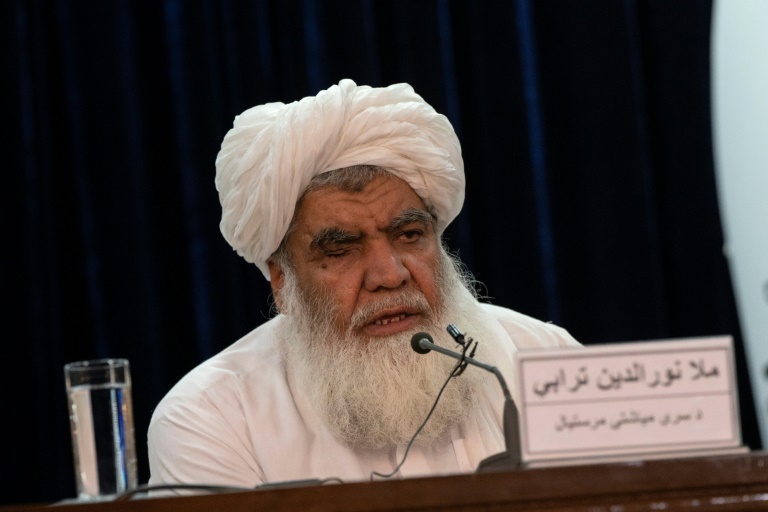
“Our teams have observed that currently, there is not so much of a need for food or non-food items,” Nooruddin Turabi, deputy president of the Afghan Red Crescent Society, told a news conference in Kabul.

He said the most pressing need was for cash to enable those affected to buy basic materials to rebuild their lives.

“We will discuss (with partners) a long-term plan. Currently, enough first aid has been delivered — whether it is tents, shelter, food or other items.”

The United Nations Development Programme (UNDP) said it believed women would be at the centre of rebuilding communities hardest hit by the quake.

“When it comes to reconstruction of the local economy… we will make sure that women are at the core of that,” said Abdallah Al Dardari, the UNDP resident representative.

– ‘Testing ground’ –

Afghanistan’s Taliban rulers have been criticised for reintroducing a hardline version of Islamic rule that imposes severe restrictions on women — including their right to education, work and travel.

“This will be a testing ground on how we are moving forward with this women’s economic empowerment,” Al Dardari told AFP.

“We are determined, there is no way around that — and we believe, in fact, from the early signs from the ground, it will be women, who are actually today keeping those local communities alive.”

The World Health Organization (WHO) said it was sending trauma teams to Paktika to help survivors deal with the psychological effects of the earthquake.

Hardly a family in rural Gayan district escaped untouched by the tragedy, and there are multiple reports of households with more than a dozen members being killed.

“The exact numbers of casualties and houses/premises destruction are still not fully identified and not yet confirmed,” the WHO said in its latest bulletin.

“Challenges remain in accessibility… traffic and road conditions in the affected areas have delayed the delivery of supplies.”

Doctors Without Borders (MSF) said that having dealt with the immediate needs of those injured in the quake, focus was now on the weeks and months ahead.

“Now health needs are turning to dehydration and diarrhoea caused by a lack of safe water,” said Jose Mas, MSF emergency coordinator. 
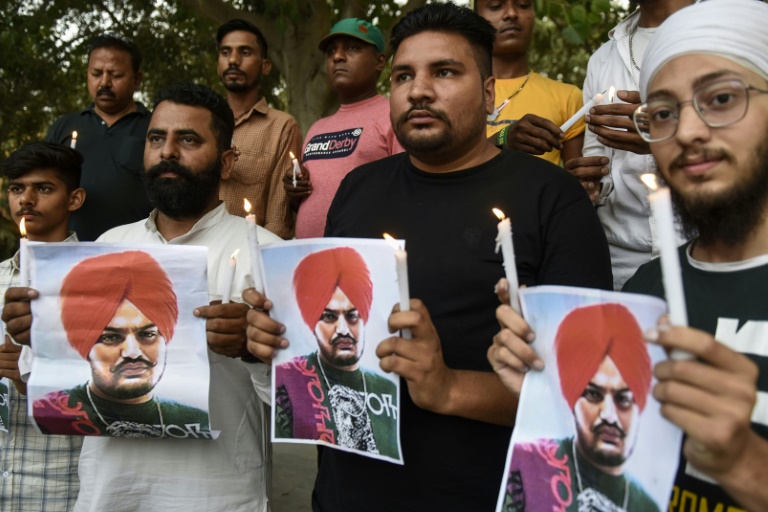
Murdered rapper's song pulled from YouTube in India

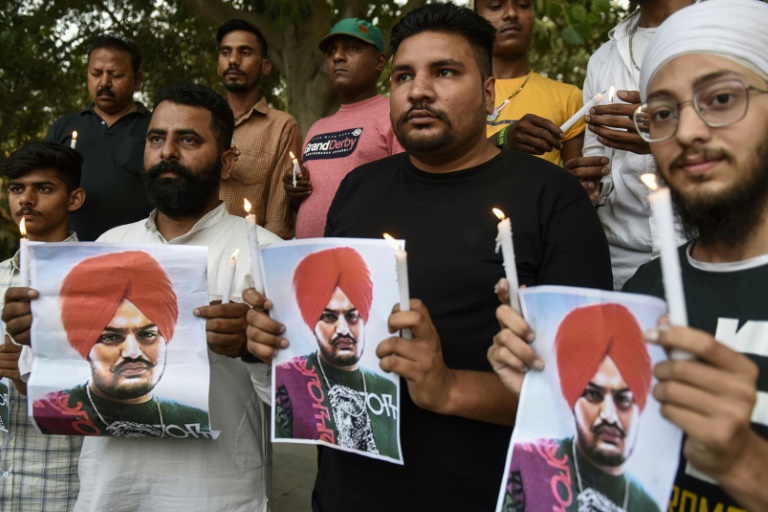
YouTube has removed a viral music video in India released posthumously by murdered Sikh rapper Sidhu Moose Wala following a complaint by the government.

The song “SYL” talks about the Sutlej-Yamuna Link (SYL) canal which has been at the centre of a long-running water dispute between the late Sikh rapper’s home state of Punjab and neighbouring Haryana.

The track, released posthumously on Thursday, also touches on other sensitive topics such as deadly riots targeting the Sikh community that broke out in India in 1984 and the storming of an important Sikh temple in Amritsar by the army the same year.

It had garnered nearly 30 million views and 3.3 million likes on the singer’s YouTube page before it was pulled down over the weekend. 

“This content is not available on this country domain due to a legal complaint from the government,” said a message posted on the song link.

The song is still available in other countries.

In an email to AFP, a YouTube spokesperson said it had only removed the song in “keeping with local laws and our Terms of Service after a thorough review”.

The government did not immediately respond to enquiries.

Moose Wala’s family termed the removal of the song “unjust” and appealed to the government to take back the complaint, local media reports said.

“They can ban the song but they cannot take Sidhu out of the hearts of the people. We will discuss legal options with lawyers,” uncle Chamkaur Singh was quoted as saying by the Hindustan Times daily.

Moose Wala — also known by his birth name Shubhdeep Singh Sidhu — was shot dead in his car in the northern state of Punjab last month.

The 28-year-old was a popular musician both in India and among Punjabi communities abroad, especially in Canada and Britain.

His death sparked anger and outrage from fans from across the world.

Last week, Indian police arrested three men accused of murdering Moose Wala and seized a cache of weaponry including a grenade launcher.

The men had allegedly acted at the behest of Canada-based gangster Goldy Brar and his accomplice Lawrence Bishnoi who is currently in jail in India.

Moose Wala rose to fame with catchy songs that attacked rival rappers and politicians, portraying himself as a man who fought for his community’s pride, delivered justice and gunned down enemies.

He was criticised for promoting gun culture through his music videos, in which he regularly posed with firearms.

His murder also put the spotlight on organised crime in Punjab, a major transit route for drugs entering India from Afghanistan and Pakistan.

Many observers link the narcotics trade — mostly heroin and opium — to an uptick in gang-related violence and the use of illegal arms in the state.

Murdered rapper's song pulled from YouTube in India

YouTube has removed a viral music video in India released posthumously by murdered Sikh rapper Sidhu Moose Wala following a complaint by the government.

The song “SYL” talks about the Sutlej-Yamuna Link (SYL) canal which has been at the centre of a long-running water dispute between the late Sikh rapper’s home state of Punjab and neighbouring Haryana.

The track, released posthumously on Thursday, also touches on other sensitive topics such as deadly riots targeting the Sikh community that broke out in India in 1984 and the storming of an important Sikh temple in Amritsar by the army the same year.

It had garnered nearly 30 million views and 3.3 million likes on the singer’s YouTube page before it was pulled down over the weekend. 

“This content is not available on this country domain due to a legal complaint from the government,” said a message posted on the song link.

The song is still available in other countries.

In an email to AFP, a YouTube spokesperson said it had only removed the song in “keeping with local laws and our Terms of Service after a thorough review”.

The government did not immediately respond to enquiries.

Moose Wala’s family termed the removal of the song “unjust” and appealed to the government to take back the complaint, local media reports said.

“They can ban the song but they cannot take Sidhu out of the hearts of the people. We will discuss legal options with lawyers,” uncle Chamkaur Singh was quoted as saying by the Hindustan Times daily.

Moose Wala — also known by his birth name Shubhdeep Singh Sidhu — was shot dead in his car in the northern state of Punjab last month.

The 28-year-old was a popular musician both in India and among Punjabi communities abroad, especially in Canada and Britain.

His death sparked anger and outrage from fans from across the world.

Last week, Indian police arrested three men accused of murdering Moose Wala and seized a cache of weaponry including a grenade launcher.

The men had allegedly acted at the behest of Canada-based gangster Goldy Brar and his accomplice Lawrence Bishnoi who is currently in jail in India.

Moose Wala rose to fame with catchy songs that attacked rival rappers and politicians, portraying himself as a man who fought for his community’s pride, delivered justice and gunned down enemies.

He was criticised for promoting gun culture through his music videos, in which he regularly posed with firearms.

His murder also put the spotlight on organised crime in Punjab, a major transit route for drugs entering India from Afghanistan and Pakistan.

Many observers link the narcotics trade — mostly heroin and opium — to an uptick in gang-related violence and the use of illegal arms in the state.

Vietnam halts scuba diving off popular island to protect coral

Vietnam has banned swimming and scuba diving at a popular central tourist spot in an attempt to revive its damaged coral reef, officials said Monday.

The communist nation boasts more than 3,200 kilometres of coastline with crystal clear waters, vibrant sea life and sandy beaches that are a huge tourism draw.

Coral reefs across Southeast Asia have been badly hit by global warming, with scientists warning their degradation could have devasting environmental and economic knock-on effects.

Recent photos taken off Hon Mun island — about 14 kilometres from the city of Nha Trang and popular with divers thanks to its diverse ecosystem — showed the reef bleached and damaged.

“The Nha Trang bay management authority decided to halt swimming and scuba diving activities in areas around Hon Mun island,” officials said.

In a statement they said the ban was to “evaluate the condition of sensitive area so that an appropriate plan to enact the sea conservation area” could be made.

Effective from Monday, the ban would last “until further notice”, they added.

Around 60 percent of the coastal bed in the area was covered by living coral in 2020, according to state media, but more recent findings showed that had shrunk to less than 50 percent.

Previously local authorities blamed the shrinking ecosystem on climate change, noting that powerful storms in 2019 and 2021 had damaged the coral.

They also blamed illegal fishing, dredging, construction of industrial parks and waste disposal.

Divers expressed anger over the decision to close the waters.

“Swimming and diving activities were the least influence on the coral reefs, compared to other activities,” diver Nguyen Son, from Ho Chi Minh City, told AFP.

“The ecosystem (around Hon Mun) should have recovered after two years of pandemic,” said diver Trinh Ngoc Sang.

“Without proper management, the fishing vessels came in and destroyed the sea bed,” he told AFP, recalling the sight of rubbish and dead coral during a recent dive.

“It would take dozens of years for the coral reefs to be restored, so they want to close it throughout?”

The United Nations Intergovernmental Panel on Climate Change has warned that 4.5 million people in Southeast Asia and the Indian Ocean region could be affected by damaged coral reefs.

The reefs support about 25 percent of marine biodiversity.

Vietnam’s decision follows a similar move in Thailand, which restricted access to Maya Bay — immortalised in the Leonardo DiCaprio film “The Beach” — to give the local ecosystem a chance to recover.

G7 to pledge fresh support for Ukraine as war rages

Leaders of the G7 were on Monday expected to announce new economic measures to tighten the screws on Moscow, as Ukrainian President Volodymyr Zelensky appealed for more help in fending off Russia’s invasion.

US President Joe Biden and his counterparts from the Group of Seven wealthy democracies are holding a three-day summit in the Bavarian Alps that has been dominated by the war in Ukraine and its global fallout.

Zelensky joined the leaders of the United States, Germany, Britain, France, Italy, Japan and Canada via video link. He was expected to ask for more heavy weapons and tougher sanctions against Moscow.

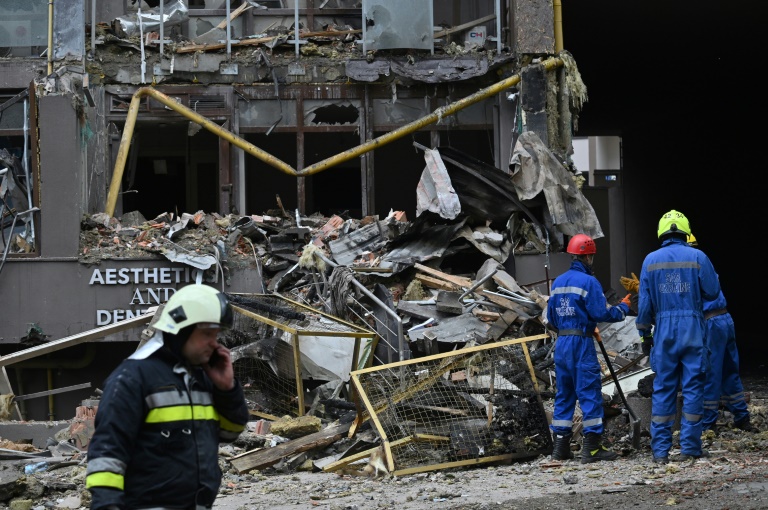
The high-level talks come a day after Kyiv suffered the first Russian onslaught on the capital in three weeks, Ukraine said, with a missile attack hitting a residential building and leaving one person dead. 

Two women were also killed by Russian bombardments on the northeastern Kharkiv region over the past 24 hours, the local governor said on Monday.

Among the new action being weighed by G7 leaders was a price cap on Russian oil imports and fresh sanctions on Russia’s defence sector, the White House said on Monday.

In his evening address late on Sunday, Zelensky renewed his calls for more weapons and air defence systems.

“Delays in the transfer of weapons to our state, any restrictions, are actually an invitation for Russia to strike again and again.”

The G7 summit, held at the luxury Elmau Castle, runs until Tuesday. It will be followed by a meeting of NATO countries in Spain which Zelensky is likewise expected to dial into.

European Commission President Ursula von der Leyen, attending the G7 gathering, stressed the message of unity among Kyiv’s allies.

“We will support Ukraine for as long as necessary,” she told reporters on Sunday.

Last week, the European Union showed its support by granting Kyiv candidate status.

– Oil, tariffs –

G7 members kicked off their gathering on Sunday by announcing a plan to ban on imports of Russian gold, the latest in a series of sanctions aimed at punishing President Vladimir Putin for his February 24 invasion.

But as the war drags on, its impact on other countries has intensified, with soaring food and energy prices driving up global inflation and fanning fears of recession.

British Prime Minister Boris Johnson warned his fellow G7 leaders not to give in to “fatigue” and said Ukraine would need long-term help.

A senior US official on Monday said the G7 had made progress on talks to set a price cap on Russian oil. 

The move would have the twin goals of starving the Kremlin of a key revenue stream for its war machine while forcing down the price of Russian oil in the hopes of reining in inflation, the official said.

European Council President Charles Michel however said on Sunday that all 27 member states would have to agree to such a price cap, which would require tweaking existing sanctions.

Biden and his G7 counterparts will further announce new sanctions targeting Russia’s defence industry at the summit, the US official told reporters.

The leaders also share the view that money collected from higher trade tariffs imposed on Russian exports should be funnelled as aid to Ukraine “to ensure that Russia pays for the cost of its war”, the official added.

– Food shortages –

Downing Street for its part said Johnson would call for “urgent action” to get Ukraine’s vital cereal exports moving again, which have been held up by Russia’s blockade of key ports.

With millions of tonnes of grain trapped in silos, concerns are growing that African nations highly reliant on Ukrainian exports could face famine.

Non-G7 countries Argentina, Indonesia, India, Senegal and South Africa have been invited to join the G7 summit from Monday.

Indonesian President Joko Widodo, who will host a G20 summit in November, has said he plans to use the trip to also visit Ukraine and Russia in the coming days to ask Putin and Zelensky to open a dialogue for peace.

Indonesia, like most major emerging economies, has tried to maintain a neutral position, and Widodo has not bowed to Western pressure to exclude Putin from the November meeting.

– ‘Intimidate Ukrainians’ –

On the ground in Ukraine, Kyiv mayor Vitali Klitschko said Sunday’s missile attack on the city was a Russian attempt to “intimidate Ukrainians” ahead of the NATO meeting.

Tearful residents recounted the moment the missiles struck.

“I woke up at the first explosion, went to the balcony and saw missiles falling and heard a huge explosion — everything vibrated,” 38-year-old Yuri told AFP, declining to give his surname.

Russia denied it had hit a civilian target, however, saying its forces had struck the Artyom weapons factory in the neighbourhood.

Biden condemned the strikes on Kyiv as “barbarism”.

German Chancellor and G7 host Olaf Scholz said the attack showed again “that it is right to stand together and support Ukrainians”.

– ‘Fully occupied’ –

After failing to capture Kyiv early on, Russian troops shifted their focus to the eastern Donbas region, which has been partially under the control of pro-Moscow separatists since 2014.

The Russians made a strategic breakthrough on Saturday when they took the industrial hub of Severodonetsk, the scene of weeks of fierce battles that have left it largely destroyed.

Severodonetsk’s mayor said it had been “fully occupied” by Russian troops after Ukrainian forces retreated to better defend the neighbouring city of Lysychansk.

Its capture would give Russia control of the entire Lugansk region in the Donbas.

Japan swelters as heatwave prompts power crunch warning

Japan’s government warned Monday of a power crunch as extreme heat hits the country, with temperature records toppling and Tokyo’s rainy season declared over at the earliest date on record.

Temperatures of 35 degrees Celsius (95 degrees Fahrenheit) were forecast in Tokyo throughout Monday, and the mercury is not expected to drop below 34 until Sunday, according to the Japan Meteorological Agency (JMA).

The power warning was initially issued for late Monday afternoon, and was subsequently extended to cover the same time on Tuesday, because solar generation dips as the sun sets.

“We ask the public to reduce energy consumption during the early evening hours when the reserve ratio falls,” Yoshihiko Isozaki, deputy chief cabinet secretary, told a regular press briefing.

But he warned that residents should do what was needed to stay cool and avoid heatstroke.

Much of Japan would normally be experiencing rainy season at this time of year, but the JMA on Monday declared the season over in the Kanto region, home to Tokyo, and neighbouring Koshin area.

It was the earliest end to the season since records began in 1951 and a full 22 days earlier than usual.

The agency also declared an end to rainy season in central Japan’s Tokai and part of southern Kyushu, saying this year’s rainy season in these areas and Kanto-Koshin was the shortest on record.

On Sunday, Isesaki city in Gunma prefecture north of Tokyo logged the hottest temperature ever seen in Japan in June, at 40.2C.

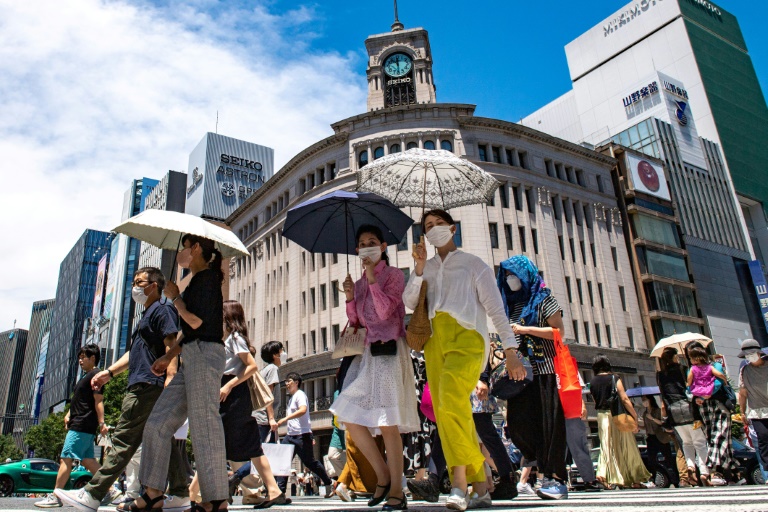
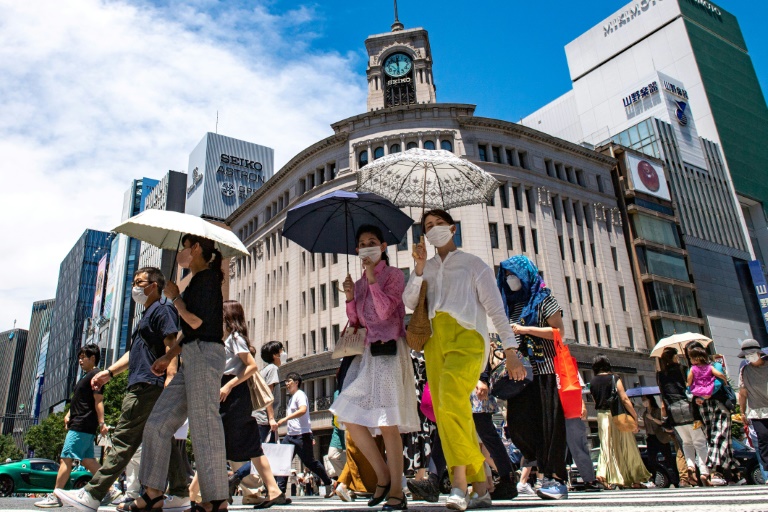
Asako Naruse, 58, was out sightseeing in Ginza alongside pedestrians carrying parasols for shade.

“Every year, July and August are this hot, but it’s the first time I’ve felt such heat in June,” she told AFP.

“I’m from northern Japan, so these temperatures seem really extreme.”

Scientists say record-breaking heatwaves are linked to climate change, which makes extreme weather more common. 

The Earth has already warmed 1.1C since preindustrial times and 2011-2020 was the warmest decade on record.

Japan has committed to achieving carbon neutrality by 2050, but it faces criticism for its continued reliance on coal.

Japan swelters as heatwave prompts power crunch warning

Japan’s government warned Monday of a power crunch as extreme heat hits the country, with temperature records toppling and Tokyo’s rainy season declared over at the earliest date on record.

Temperatures of 35 degrees Celsius (95 degrees Fahrenheit) were forecast in Tokyo throughout Monday, and the mercury is not expected to drop below 34 until Sunday, according to the Japan Meteorological Agency (JMA).

The power warning was initially issued for late Monday afternoon, and was subsequently extended to cover the same time on Tuesday, because solar generation dips as the sun sets.

“We ask the public to reduce energy consumption during the early evening hours when the reserve ratio falls,” Yoshihiko Isozaki, deputy chief cabinet secretary, told a regular press briefing.

But he warned that residents should do what was needed to stay cool and avoid heatstroke.

Much of Japan would normally be experiencing rainy season at this time of year, but the JMA on Monday declared the season over in the Kanto region, home to Tokyo, and neighbouring Koshin area.

It was the earliest end to the season since records began in 1951 and a full 22 days earlier than usual.

The agency also declared an end to rainy season in central Japan’s Tokai and part of southern Kyushu, saying this year’s rainy season in these areas and Kanto-Koshin was the shortest on record.

On Sunday, Isesaki city in Gunma prefecture north of Tokyo logged the hottest temperature ever seen in Japan in June, at 40.2C.

Asako Naruse, 58, was out sightseeing in Ginza alongside pedestrians carrying parasols for shade.

“Every year, July and August are this hot, but it’s the first time I’ve felt such heat in June,” she told AFP.

“I’m from northern Japan, so these temperatures seem really extreme.”

Scientists say record-breaking heatwaves are linked to climate change, which makes extreme weather more common. 

The Earth has already warmed 1.1C since preindustrial times and 2011-2020 was the warmest decade on record.

Japan has committed to achieving carbon neutrality by 2050, but it faces criticism for its continued reliance on coal.

Markets extend rally as rate hike fears subside

Asian and European markets rallied again Monday, building on last week’s advances and following a strong performance on Wall Street as speculation that inflation may have peaked tempered expectations about central bank interest rate hikes.

With prices surging at a pace not seen in a generation, finance chiefs have been forced to lift borrowing costs and wind back their ultra-loose monetary policies in recent months, sending a chill across trading floors.

But a string of weak data has led many investors to believe that inflation may have plateaued or is about to, giving room for banks to be less hawkish.

The prospect that rates will not go as high as initially expected helped send Wall Street stocks higher Friday, with the S&P 500 and Nasdaq ending up more than three percent.

And Asia continued last week’s rally.

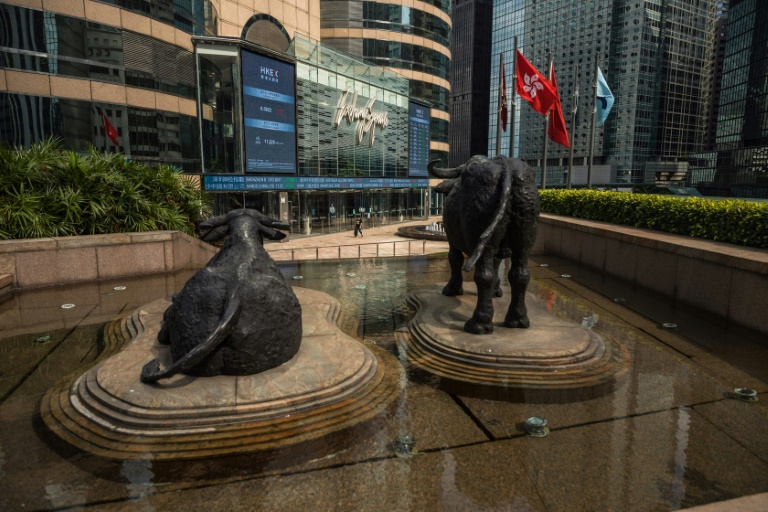
Hong Kong led gainers, climbing more than two percent thanks to a strong performance in Chinese tech firms. Indications that China’s crackdown on the sector could be coming to an end added to the upbeat mood in the city.

Tokyo, Shanghai, Seoul, Singapore, Sydney, Manila, Bangkok, Mumbai and Wellington were also well up.

London, Paris and Frankfurt were all up in early trade.

“Market conviction that perhaps the Fed won’t now hike rates as aggressively as previously feared and/or that rate cuts before the end of 2023 are now an even more realistic prospect if recession-like conditions lay ahead, have had a big hand in last week’s improvement in risk sentiment,” said National Australia Bank’s Ray Attrill.

He added that the rally had helped pare about two-thirds of the losses suffered in a painful sell-off from June 9 to 16.

While Fed chiefs continue to flag further big interest rate hikes in the pipeline, expectations for a prolonged period of increases have waned, which has in turn taken some heat out of the dollar.

Bitcoin has also won some support, after falling to as low as $17,600 last week for the first time since December 2020.

“There’s a feeling that things aren’t as bad as we thought they were going to be,” Carol Pepper, of Pepper International, told Bloomberg Radio.

“There’s a hope that perhaps we’ve oversold, perhaps there’s not going to be a recession,” she said.

But others warned that while the markets were enjoying a moment of calm, they were not out of the woods yet.

“Over the last week, equity markets have snapped back from oversold territory, which brought a sense of relief to investors,” said Bank of Singapore’s Eli Lee. 

“It is unsurprising in bear markets to see relief rallies, which can be unpredictable in magnitude and duration. However, we continue to see a fragile environment for risk assets over the next 12 months.”

Traders are keeping an eye on the G7 summit in Germany, which is set to be dominated by Russia’s war in Ukraine.

The leaders agreed money collected from higher trade tariffs imposed on Russian exports should be funnelled as aid to Ukraine, the White House said.

– Key figures at around 0810 GMT –

Tokyo – Nikkei 225: UP 1.4 percent at 26,871.27 (close)

Hong Kong – Hang Seng Index: UP 2.4 percent at 22,229.52 (close)

Shanghai – Composite: UP 0.9 percent at 3,379.19 (close)

London – FTSE 100: UP 0.9 percent at 7,270.69

Dollar/yen: DOWN at 135.06 yen from 135.17 yen late Friday

Pound/dollar: UP at $1.2315 from $1.2280

Euro/dollar: UP at $1.0587 from $1.0559

Euro/pound: UP at 85.97 pence from 85.95 pence

West Texas Intermediate: UP 0.2 percent at $107.80 per barrel

Brent North Sea crude: UP 0.6 percent at $113.72 per barrel

New York – Dow: UP 2.7 percent at 31,500.68 (close)

Rival camps dig in for fight after US abortion ruling

Elected leaders across the US political divide rallied Sunday for a long fight ahead on abortion — state by state and in Congress — with total bans in force or expected soon in half of the country.

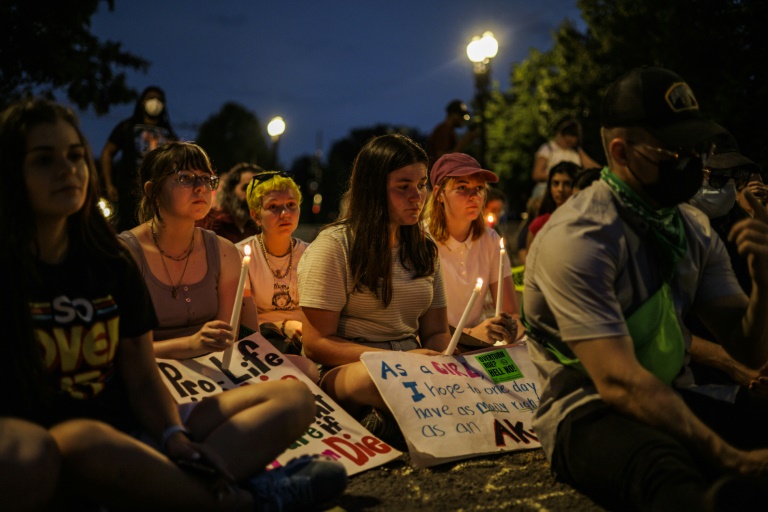
Two days after the US Supreme Court scrapped half-century constitutional protections for the procedure, abortion rights defenders kept up their mobilization, with several hundred gathered outside the high court during a candlelight vigil in Washington Sunday.

Dozens of arrests and some instances of vandalism were reported during a weekend of mostly peaceful protests that turned disorderly in places — as the country grapples with a new level of division: between states where abortion is or will soon be illegal, and those that still allow it.

Conservative-led US state legislatures have moved swiftly, with at least eight imposing immediate bans on abortion — many with exceptions only if a woman’s life is in danger — and a similar number to follow suit within weeks.

In a first glimpse of the legal battles ahead, the nation’s largest abortion provider Planned Parenthood filed suit in Utah seeking to block the state’s ban.

And Democratic governors in Michigan and Wisconsin have stepped in to try to keep abortion legal in their Midwestern states.

Defending the ban now in effect in South Dakota, which makes no exception for victims of rape or incest, Republican Governor Kristi Noem called the Supreme Court’s ruling “wonderful news in the defense of life.”

Speaking on ABC’s “This Week,” Noem also voiced support for legislation banning “telemedicine abortions” in which a doctor prescribes pills to end a pregnancy — set to become a key resource in many places where abortion is illegal.

Governor Asa Hutchinson of Arkansas likewise argued that “forcing someone to carry a child to term” in order to save an unborn baby was an “appropriate” use of government power.

States should now focus on helping mothers and newborns by expanding services including adoption, he said on NBC’s “Meet the Press.”

But the Republican also opposed calls to go further with a federal abortion ban — an ultimate goal of many on the religious right — or restrictions on contraception, which he said is “not going to be touched” in Arkansas.

Fears that the Supreme Court’s strong conservative majority — made possible by Donald Trump — will now seek to target other rights like same-sex marriage and contraception have fueled the nationwide mobilization since Friday.

– ‘Appalling’ –

President Joe Biden has condemned the Supreme Court’s ruling as a “tragic error” — but with power now resting with often anti-abortion state legislatures, he has also acknowledged his hands are largely tied.

The president’s main hope is for voters to turn out in defense of abortion rights in November’s midterm elections — and in the meantime, Biden’s Democrats have vowed to defend women’s reproductive rights every way they can.

In Wisconsin, where an 1849 law banning abortion except to save the life of the mother may go into effect, Governor Tony Evers vowed to offer clemency to any doctors who face prosecution, according to local media.

And Michigan’s Governor Gretchen Whitmer promised to “fight like hell,” saying a temporary injunction has been filed to keep abortion legal in her state.

Congresswoman Alexandria Ocasio-Cortez warned nightmare scenarios may soon come true — as women are forced to continue with unwanted pregnancies, travel long distances to states where abortion remains legal, or undergo clandestine abortions.

“Forcing women to carry pregnancies against their will will kill them. It will kill them,” the progressive lawmaker told NBC, urging Biden to explore opening health care clinics on federal lands in conservative states in order to help people access abortion services.

A CBS poll released Sunday showed that a solid majority — 59 percent — of Americans and 67 percent of women disapproved of the court’s ruling.

While thousands of people rallied peacefully through the weekend — most of them in protest, but many others celebrating — there were isolated incidents of violence. Police fired tear gas on protesters in Arizona and a pickup truck drove through a group of protesters in Iowa.

In the Virginia city of Lynchburg, police were investigating a case of vandalism Saturday at an anti-abortion pregnancy center — which was spray-painted with graffiti and had its windows smashed.

And in Colorado, police were probing a suspected arson attack Saturday at a similar anti-abortion center in the town of Longmont, which was painted with graffiti reading: “If abortions aren’t safe, neither are you.”

Ecuador to cut fuel prices that sparked protests

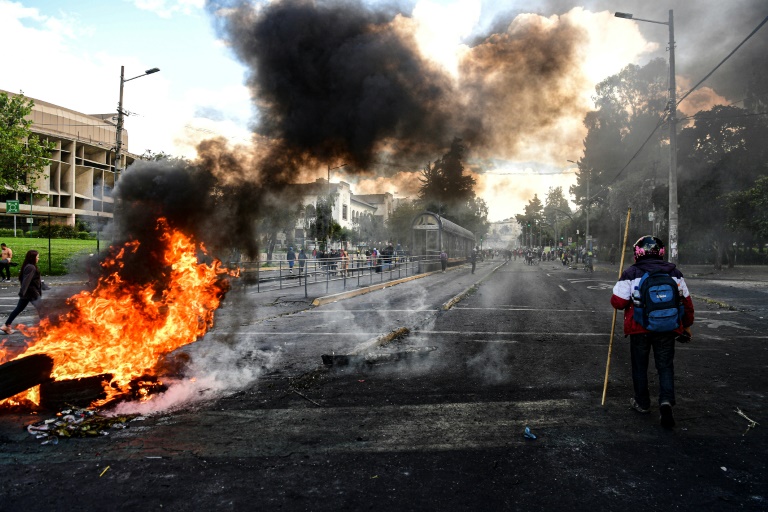
President Guillermo Lasso announced Sunday that Ecuador will cut fuel prices, which had sparked weeks of demonstrations, though not by as much as protesters have demanded.

“I have decided to reduce the price of gasoline by 10 cents per gallon and diesel also by 10 cents per gallon,” he said in a television and radio address.

The powerful Confederation of Indigenous Nationalities of Ecuador (Conaie), which since June 13 has been blocking roads and occupying oil wells in different parts of the country, had demanded a reduction in prices by an additional 30 cents and 35 cents, respectively.

Earlier on Sunday, the country’s energy ministry warned that oil production had reached a “critical” level and could be halted entirely within 48 hours if the protests and roadblocks continued.

The protests, which are also against rising living costs, have crippled transportation in Ecuador, with roadblocks set up in 19 of the oil-rich country’s 24 provinces.

“Oil production is at a critical level,” the ministry said in a statement.

“If this situation continues, the country’s oil production will be suspended in less than 48 hours as vandalism, the seizure of oil wells and road closures have prevented the transport of equipment and diesel needed to keep operations going.”

“Today, the figures show a decrease of more than 50 percent” in production, which was at roughly 520,000 barrels per day before the protests, it said.

Ecuador’s economy is highly dependent on oil revenues, with 65 percent of output exported in the first four months of 2022.

– Impeachment debate –

Late on Sunday, the country’s parliament suspended seven hours of debate over whether to impeach Lasso, with proceedings set to resume on Tuesday. At least 20 members of parliament are still due to speak.

The president’s impeachment would require 92 of the 137 possible votes in the National Assembly, where the opposition holds a fragmented majority. MPs will have a maximum of 72 hours to vote following the end of the debate. 

An estimated 14,000 protesters have taken part in the nationwide demonstrations, most of them in Quito.

Shortages are already being reported in the capital, where prices have soared.

Violence between police and demonstrators has reportedly left five dead, while about 500 people have been injured.

Earlier in the day, Production Minister Julio Jose Prado said that public-private economic losses from the protests totaled $500 million.

“Each additional day of downtime represents $40 to $50 million lost,” he said on Sunday.

Overall losses since the protests began include 8.5 million liters of milk worth $13 million as well as $90 million in agricultural goods and livestock.

The tourism industry has seen cancellations rise to 80 percent, with losses amounting to at least $50 million.

Additionally, “in the flower farm sector, 12 days of shutdown resulted in $30 million in losses and damage to trucks and farms,” Prado said.

Close Bitnami banner
Bitnami