World

Menswear regains its muscle at Paris Fashion Week

Menswear proved to be in reinvigorated form as Paris Fashion Week ended on Sunday, with spectacle, innovation and the return of big-name designers to the catwalk.   

The week concluded with the surprising return of fabled French designer Hedi Slimane, formerly of Dior and Saint Laurent and now with Celine. Two years ago, he had announced he was done with the official fashion calendar.

Slimane became hugely influential as a stylist and photographer for musicians such as David Bowie, Mick Jagger, The Libertines and Daft Punk in the early 2000s.

But he has not presented a live show since February 2020, having dismissed them as “obsolete”, preferring to present collections with videos shot in luxurious French locales.

He gave no explanation for his reappearance on the catwalk but returns amid a sense of a renaissance in menswear. Fashionistas mobbed the gates to the Palais de Tokyo in central Paris on Sunday.  

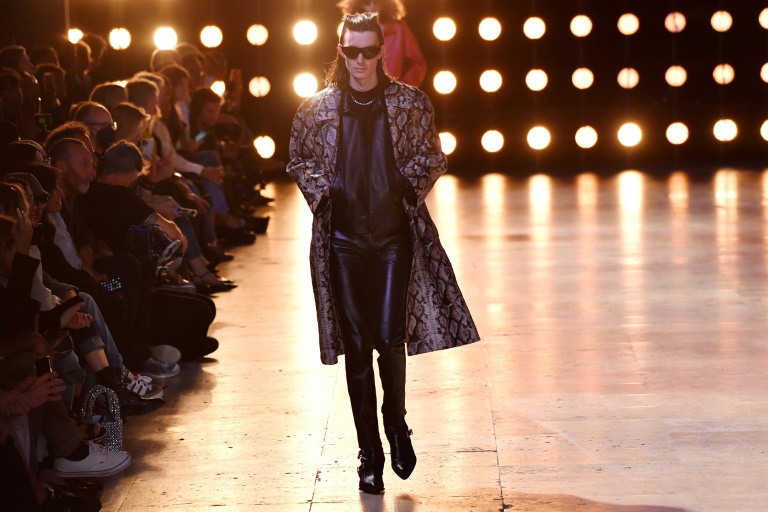
Slimane’s new collection harked back to the indie-rock vibes that made his name — skinny black trousers, even skinnier ties, golden suits and leather jackets, and lots of dark sunglasses. 

– ‘A boom’ –

The past few seasons have often seen men’s and women’s shows merging into one — with London Fashion Week doing away with the distinction altogether. 

But this week in Paris seemed to reaffirm the divide, with houses wanting to boost their focus on menswear at a time when demand is rising.  

US designer Matthew Williams presented his first-ever standalone menswear show for Givenchy this week.

“It’s good to give space to men and women, to each and everyone their platform to tell a story,” Williams told fashion site WWD. “There’s more room for more looks.”

His show was grounded in real-life styles from his native California, he said, with a lot of utilitarian knee-length shorts, cargo trousers and relaxed knitwear — much of it in monochrome with a few splashes of pastel colours. 

“Commercially, menswear is a market that has developed a lot with a particularly strong dynamic in Asia that has created a boom for pret-a-porter men’s designers,” said Serge Carreira, fashion expert at Sciences Po University. 

– ‘More accessible’ –

Also marking her first menswear show was France’s Marine Serre, one of the biggest names to emerge in recent years. 

The 30-year-old has made sustainability and inclusivity central to her brand, and that was evident at her sports-themed show in a stadium outside Paris on Saturday. 

Many pieces were upcycled from old scarves and linen — that had been turned into everything from speedos to flags and leotards. 

The models came in all shapes and sizes, from children to older people, alongside celebrities such as ex-footballer Djibril Cisse and Paralympic gold medallist Alexis Hanquinquant, as well as Madonna’s daughter Lourdes Leon in one of the house’s trademark moon-patterned bodysuits. 

“Thirty percent of our sales have been for menswear in the last collections — we’re not at 50/50 but we do quite a bit of men’s and we have no intention of doing less,” Serre told AFP after the show.

“Upcycling is quite rare in men’s but the locker-room lends itself very well to it,” she added. 

“These are shapes that are less complex: it’s easier and we can have better prices that mean it is more accessible for everyone to wear upcycled pieces.” 

Meanwhile, familiar names also made a mark this week. 

Dior took inspiration from the childhood Normandy home of the label’s founder, with a flower-filled garden runway and some straw hats and chic outdoor loungewear among the outfits. 

Hermes was also in a relaxed, pastel-infused mood, which designer Veronique Nichanian told AFP was inspired by “lightness, comfort, fun and colours that pop.”
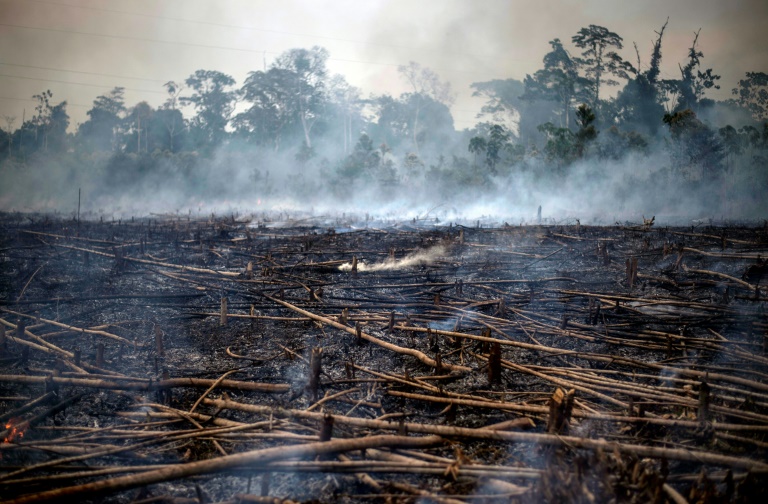
Funeral held in Brazil for slain British journalist

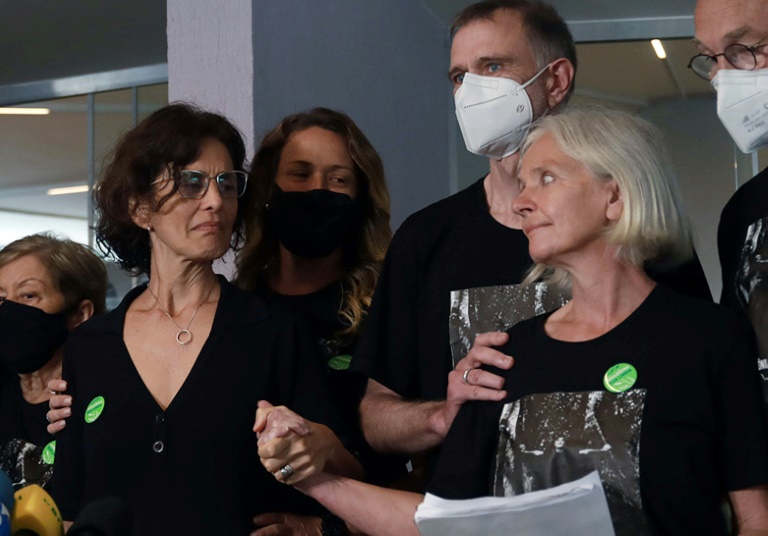
Grieving family and friends paid their last respects Sunday to British journalist Dom Phillips, who was murdered in the Amazon earlier this month along with an Indigenous expert.

Phillips, 57, and Bruno Pereira, 41, were shot dead while returning from an expedition in a remote region of the rainforest that is plagued by drug trafficking, illegal gold mining and fishing.

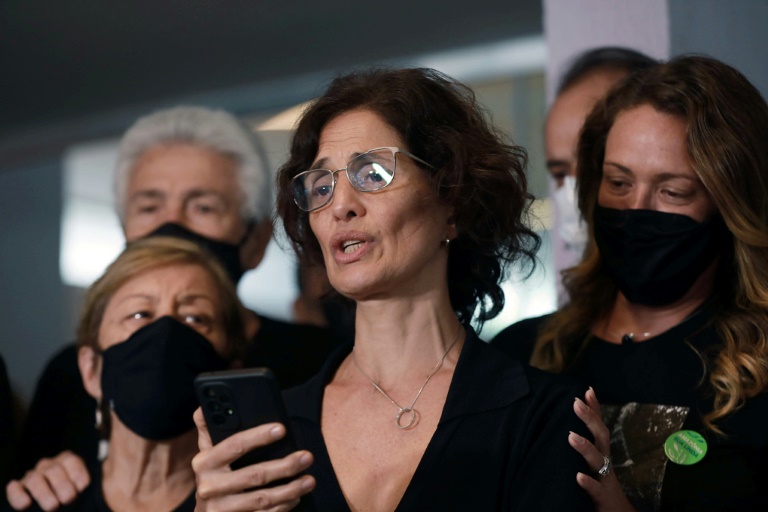
“Dom will be cremated in the country he loved, Brazil, which he had chosen as home,” his widow, Brazilian Alessandra Sampaio, told reporters through tears after his funeral at the Parque da Colina cemetery outside Rio de Janeiro.

“Dom was a very special person, not only for defending what he believed in as a professional, but also for having a huge heart and a great love for humanity,” Sampaio said. 

“Let’s celebrate the sweet memory of Dom and his presence in our lives.”

The journalist’s sister Sian Phillips said he was killed “because he was trying to tell the world what was happening to the Amazon and its people.”

Three suspects have been arrested in the crime, including a fisherman who confessed to burying the bodies and led investigators to the scene.

Sampaio said the family will pay close attention to the investigation into the murder of her husband and his colleague, thanking all the Indigenous people who helped look for the two men before their remains were found.

The disappearance of Phillips and Pereira on June 5 sparked an international outcry. 

Activists have blamed the killings on President Jair Bolsonaro for allowing commercial exploitation of the Amazon at the cost of the environment and law and order.

Phillips, the author of dozens of articles on the Amazon and a long-time contributor to The Guardian newspaper and other major news organizations, was traveling to the Javari Valley as part of research for an upcoming book.

Pereira was serving as his guide, and had previously traveled with him in 2018 to the area.

An outspoken defender of Indigenous rights, Pereira had received multiple death threats before the double murder.

He was laid to rest Friday in his home state of Pernambuco, in northeastern Brazil, to solemn funeral Indigenous hymns performed by members of a tribe he spent his life and work defending.

So far, three suspects are in custody over the killings. A fourth turned himself in last week, but police said his version of events was not credible. 

Police have said five other people who helped hide the bodies have been identified.

Long road ahead to hammer out UN biodiversity blueprint

Delegates from almost 200 nations have made little progress towards hammering out a blueprint for a global pact to protect nature from human activity, after almost a week of difficult talks in Nairobi.

The meetings wrapping up Sunday were aimed at ironing out differences among the UN Convention on Biological Diversity’s (CBD) 196 members, with barely six months before a crucial COP15 summit in December.

The ambitious goal is to draw up a draft text outlining a global framework to “live in harmony with nature” by 2050, with key targets to be met by 2030.

Many hope the landmark deal, when finalised, will be as ambitious in its goals to protect life on Earth as the Paris agreement was for climate change.

A closing media release from the CBD said delegates had “achieved consensus on several targets”.

Elizabeth Maruma Mrema, the CBD’s executive secretary, acknowledged at the closing news conference that progress had been “limited”.

But she added: “We cannot afford to fail.”

“There’s a lot of work — lot more that what we thought,” said Basile van Havre, co-chair of the CBD. But he added: “That work is doable.”

– ‘Security issue for humanity’ –

“Most of the time was spent on technical bickering, with major decisions left unresolved and postponed for the COP,” Brian O’Donnell, director of the Campaign for Nature, told AFP earlier.

“It is now critically important that environment ministers and heads of state engage, take ownership and rescue this process.”

Delegates in Nairobi spent hours discussing formulations or seeking to introduce new elements, instead of reconciling differing viewpoints and refining rather than overhauling the text.

One delegate on Saturday night spoke of feeling “desperate”. Another described the Nairobi round as “a step” and voiced hope for further informal meetings before December.

“We need to continue with the dialogue with the intention to simplify and reduce the brackets (on the disputed issues) and alternatives,” said Vinod Mathur, head of India’s National Biodiversity Authority.

For that to happen, warned Francis Ogwal of Uganda, one of the two co-chairs of the Kenya negotiations, “there has to be a very big shift of mind in the way we are negotiating”.

Proposals include a global commitment to set aside at least 30 percent of both land and oceans as protected zones by the end of the decade, as well as efforts to cut plastic and agricultural pollution.  

But time is running out.

One million species are threatened with extinction and tropical forests are disappearing, while intensive agriculture is depleting the soil and pollution is affecting even the most remote areas of the planet.

“It’s not any longer an ecological issue only… It is increasingly an issue that affects our economy, our society, our health, our wellbeing,” Marco Lambertini, director general of WWF International, told a press conference.

“It is a security issue for humanity.”

– ‘Crucial’ to fix food system –

Lambertini accused some countries of using a “delaying tactic”, pointing the finger at Brazil in particular. Behind the scenes, Argentina and South Africa were also getting blamed.

One of the main stumbling blocks concerns agriculture, particularly targets for a reduction in pesticides and fertilisers.

The European Union wants to see the pesticide issue specifically mentioned in the text, but “there is little support” for that position, said one delegate.

Delegates from the Global South have highlighted the need to produce more, with much of the planet undergoing a major food security crisis, and reject any reference to agroecology, the use of ecological principles in farming.  

“Agriculture is currently responsible for 70 percent of biodiversity loss,” said Guido Broekhoven of WWF International, adding that it was “absolutely crucial” to fix a system where 30 percent of food goes to waste.

Countries are also divided on the issue of the funding needed to implement the biodiversity goals.

Brazil, backed by 22 countries including Argentina, South Africa, Cameroon, Egypt and Indonesia, renewed calls for rich countries to provide at least $100 billion a year until 2030 to help developing countries preserve their rich biodiversity. 

The African bloc is also asking for a fund dedicated to biodiversity, according to one country delegate.

Although leaders of 93 countries committed in September 2020 to ending the biodiversity crisis, the issue is struggling to gain as much traction on the international political agenda as climate change.

“There is also a need to see where our political leaders want us to be,” said Canada’s van Havre.

“We’re looking to see who’s going to step up to pick up that ball.”

Police crack down on Istanbul Pride march, detain over 200

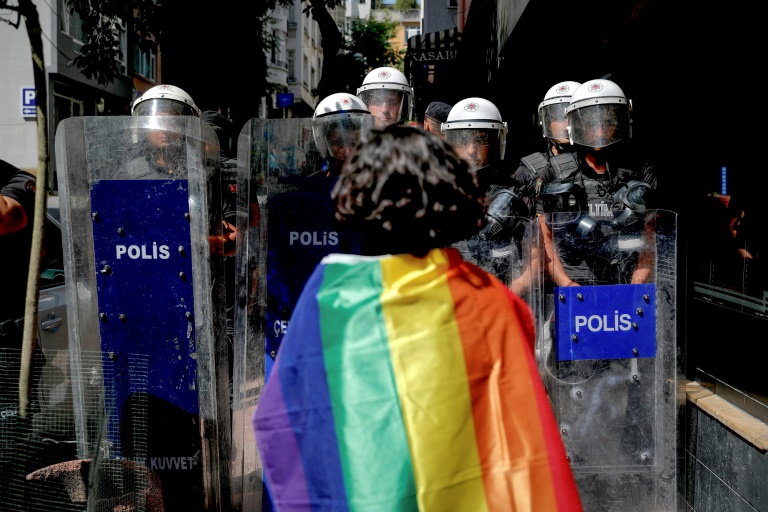
Turkish police on Sunday broke up a banned Pride march in Istanbul, detaining more than 200 demonstrators, organisers said. 

The governor’s office had forbidden the march around Taksim Square in the heart of Istanbul, but protesters gathered nearby under heavy police presence earlier than scheduled.

Police detained protesters, loading them on to buses. AFP journalists saw four busloads of detained people.

Organisers tweeted that more than 200 Pride participants and LGBTQ activists had been detained and that police had refused detainees access to their lawyers. 

Although more than a dozen of them were released later in the day, many were still in police custody at 2000 GMT. 

AFP’s chief photographer Bulent Kilic, who was taken away handcuffed from the back, was released later on Sunday after presenting a statement to the police, his lawyer said. 

Hundreds of protesters carrying rainbow flags had pressed ahead with the rally in defiance of police. 

“The future is queer,” they chanted. “We are here. We are queer. We are not going anywhere.”

Kaos GL Association, which campaigns to promote the human rights of LGBTQ people against discrimination, said on Twitter that police had detained 12 other people in the western city of Izmir and that one of them was later released. 

Police prevented the press from filming the Istanbul arrests, according to AFP journalists.

– ‘We are banned’ –

“All those detained solely for their participation in Pride must be released immediately and unconditionally,” Milena Buyum of Amnesty International said. 

Diren, a 22-year-old university student, condemned the hate crimes targeting LGBTQ people. 

“We are banned, prevented, discriminated and even killed at every second of our lives. Today, it’s a very special day for us to defend our rights and to say that we do exist,” Diren told AFP. 

“Police violence is aimed to stop us but it is not possible. You will be unable to stop the queers.”

Erol Onderoglu of media rights group Reporters Without Borders (RSF) denounced the arrest of photographer Kilic on Twitter.

“The police seem to have made it a habit” of detaining him, he wrote, recalling that journalists’ organisations had protested what they said was Kilic’s violent detention last year.

On Friday, Council of Europe Commissioner for Human Rights, Dunja Mijatovic, had urged Turkish authorities to let the demonstration go ahead and to ensure the safety of the marchers. 

“The human rights of LGBTI people in Turkey need to be effectively protected,” she said in a statement.

Although homosexuality has been legal throughout the period of the modern Turkish republic, LGBTQ individuals say there is regular harassment and abuse.

Istanbul Pride had taken place every year since 2003.

The last march to go ahead without a ban was in 2014 and drew tens of thousands of participants in one of the biggest LGBTQ events in the majority Muslim region.

After 2014, the march was banned each year, officially for security reasons.

In 2020, streaming giant Netflix cancelled the production of a series in Turkey featuring a gay character after failing to obtain government permission for filming. 

The same year, French sports brand Decathlon faced boycott calls in Turkey for posting messages of support for LGBTQ people.

Rival camps dig in for fight after US abortion ruling

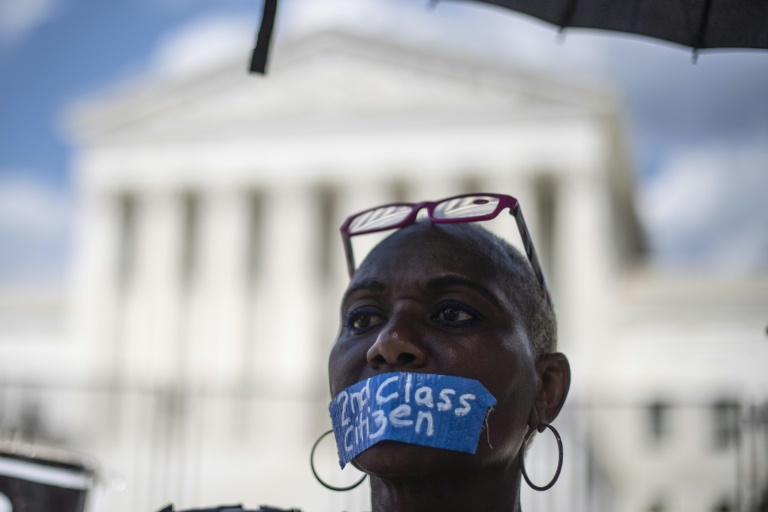
Elected leaders across the US political divide rallied Sunday for a long fight ahead on abortion — state by state and in Congress — with total bans in force or expected soon in half of the vast country.

Two days after the US Supreme Court scrapped half-century constitutional protections for the procedure, abortion rights defenders kept up their mobilization, with a candlelight vigil planned outside the high court in Washington Sunday night.

Dozens of arrests and some instances of vandalism were reported during a weekend of mostly peaceful protests that turned disorderly in places — as the country grapples with a new level of division: between states where abortion is or will soon be illegal, and those that still allow it.

Conservative-led US state legislatures have moved swiftly, with at least eight imposing immediate bans on abortion — many with exceptions only if a woman’s life is in danger — and a similar number to follow suit within weeks.

In a first glimpse of the legal battles ahead, the nation’s largest abortion provider Planned Parenthood filed suit in Utah seeking to block the state’s ban.

And Democratic governors in Michigan and Wisconsin have stepped in to try to keep abortion legal in their Midwestern states.

Defending the ban now in effect in South Dakota, which makes no exception for victims of rape or incest, Republican Governor Kristi Noem called the Supreme Court’s ruling “wonderful news in the defense of life.”

Speaking on ABC’s “This Week,” Noem also voiced support for legislation banning “telemedicine abortions” in which a doctor prescribes pills to end a pregnancy — set to become a key resource in many places where abortion is illegal.

Governor Asa Hutchinson of Arkansas likewise argued that “forcing someone to carry a child to term” in order to save an unborn baby was an “appropriate” use of government power.

States now should now focus on helping mothers and newborns by expanding services including adoption, he said on NBC’s “Meet the Press.”

But the Republican also opposed calls to go further with a federal abortion ban — an ultimate goal of many on the religious right — or restrictions on contraception, which he said is “not going to be touched” in Arkansas.

Fears that the Supreme Court’s strong conservative majority — made possible by Donald Trump — will now seek to target other rights like same-sex marriage and contraception have fueled the nationwide mobilization since Friday.

– ‘Appalling’ –

President Joe Biden has condemned the Supreme Court’s ruling as a “tragic error” — but with power now resting with often anti-abortion state legislatures, he has also acknowledged his hands are largely tied.

The president’s main hope is for voters to turn out in defense of abortion rights in November’s midterm elections — and in the meantime, Biden’s Democrats have vowed to defend women’s reproductive rights every way they can.

In Wisconsin, where an 1849 law banning abortion except to save the life of the mother may go into effect, Governor Tony Evers vowed to offer clemency to any doctors who face prosecution, according to local media.

And Michigan’s Governor Gretchen Whitmer promised to “fight like hell,” saying a temporary injunction has been filed to keep abortion legal in her state.

Congresswoman Alexandria Ocasio-Cortez warned nightmare scenarios may soon come true — as women are forced to continue with unwanted pregnancies, travel long distances to states where abortion remains legal, or undergo clandestine abortions.

“Forcing women to carry pregnancies against their will will kill them. It will kill them,” the progressive lawmaker told NBC, urging Biden to explore opening health care clinics on federal lands in conservative states in order to help people access abortion services.

A CBS poll released Sunday showed that a solid majority — 59 percent — of Americans and 67 percent of women disapproved of the court’s ruling.

While thousands of people rallied peacefully through the weekend — most of them in protest, but many others celebrating — there were isolated incidents of violence, as police fired tear gas on protesters in Arizona and a pickup truck drove through a group of protesters in Iowa.

In the Virginia city of Lynchburg, police were investigating a case of vandalism Saturday at an anti-abortion pregnancy center — which was spray-painted with graffiti and had its windows smashed.

And in Colorado, police were probing a suspected arson attack Saturday at a similar anti-abortion center in the town of Longmont, which was painted with graffiti reading: “If abortions aren’t safe, neither are you.”

Police break up Istanbul Pride march, detain over 200

Turkish police on Sunday broke up a banned Pride march in Istanbul, detaining more than 200 demonstrators and an AFP photographer, journalists and organisers reported. 

The governor’s office had forbidden the march around Taksim Square in the heart of Istanbul, but protesters gathered nearby under heavy police presence earlier than scheduled.

Police detained protesters, loading them on to buses. AFP journalists saw four busloads of detained people, including AFP’s chief photographer Bulent Kilic. 

Kilic, who was taken away handcuffed from the back, was being held in police custody. He was also detained during last year’s Pride march.

Hundreds of protesters carrying rainbow flags had pressed ahead with the rally in defiance of police. 

“The future is queer,” they chanted. “We are here. We are queer. We are not going anywhere.”

Organisers tweeted that more than 200 Pride participants and LGBTQ activists had been detained and police had refused detainees access to their lawyers.

Kaos GL Association, which campaigns to promote the human rights of LGBTQ people against discrimination, said on Twitter that police had detained 12 other people in the western city of Izmir.

Police prevented the press from filming the Istanbul arrests, according to AFP journalists.

– ‘All must be released’ –

“All those detained solely for their participation in Pride must be released immediately and unconditionally,” Milena Buyum of Amnesty International said. 

Diren, a 22-year-old university student, condemned the hate crimes targeting LGBTQ people. 

“We are banned, prevented, discriminated and even killed at every second of our lives. Today, it’s a very special day for us to defend our rights and to say that we do exist,” Diren told AFP. 

“Police violence is aimed to stop us but it is not possible. You will be unable to stop the queers.”

Erol Onderoglu of media rights group Reporters Without Borders (RSF) denounced the arrest of photographer Kilic on Twitter.

“The police seem to have made it a habit” of detaining him, he wrote, recalling that journalists’ organisations had protested what they said Kilic’s violent detention last year.

On Friday, Council of Europe Commissioner for Human Rights, Dunja Mijatovic, had urged Turkish authorities to let the march go ahead and to ensure the safety of the marchers. 

“The human rights of LGBTI people in Turkey need to be effectively protected,” she said in a statement.

Although homosexuality has been legal throughout the period of the modern Turkish republic, LGBTQ individuals say there is regular harassment and abuse.

Istanbul Pride had taken place every year since 2003.

The last march to go ahead without a ban was in 2014 and drew tens of thousands of participants in one of the biggest LGBTQ events in the majority Muslim region.

After 2014, the march was banned each year, officially for security reasons.

In 2020, streaming giant Netflix cancelled the production of a series in Turkey featuring a gay character after failing to obtain government permission for filming. 

The same year, French sports brand Decathlon faced boycott calls in Turkey for posting messages of support for LGBTQ people.

War in Ukraine: Latest developments

Here are the latest developments in the war in Ukraine:

– Kyiv strikes –

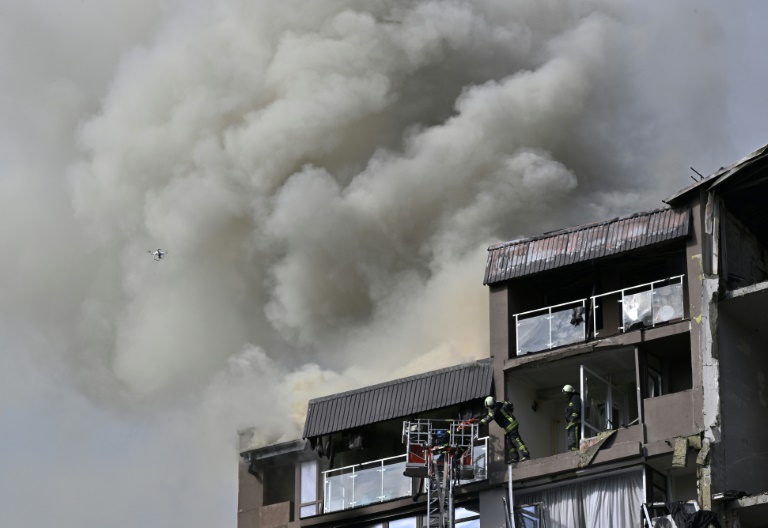
Russian strikes hit a residential building in Kyiv in the first attack on the capital in almost three weeks, Ukraine says.

One person died and four people, including a seven-year-old girl, were taken to hospital following the early morning strikes, says city mayor Vitali Klitschko.

The top three floors of a building in the Shevchenkivsky neighbourhood were completely destroyed and several fires broke out, spewing thick smoke.

– Russia says it targeted missile factory –

Russia says its strike on Kyiv hit a weapons factory, dismissing as “fake” reports that it struck a residential area of the Ukrainian capital.

The Artyom factory “was the target, as military infrastructure”, the Russian defence ministry says, adding that it had already been targeted in April.

– Russia claims strikes in north and west –

Russia says its forces carried out strikes against three military training centres in northern and western Ukraine, including one near the Polish border.

“High-precision weapons of Russia’s aerospace forces and Kalibr missiles” were used, Russian defence ministry spokesman Igor Konashenkov says. 

Among the targets was a military training centre for Ukrainian forces in the Starychi district of the Lviv region, around 30 kilometres (19 miles) from the border with NATO member Poland.

The other two training centres were in the central Zhytomyr and northern Chernigiv regions.

Konashenkov did not say when or from where the missiles were fired.

But Kyiv on Saturday said Russia had carried out strikes from Ukraine’s northern neighbour Belarus. Moscow did not comment on the claim.

– Britain warns against settling conflict now –

In talks with French President Emmanuel Macron, British Prime Minister Boris Johnson warns “any attempt to settle” the Ukraine conflict now risks prolonging instability and emboldening Russian leader Vladimir Putin.

On the sidelines of the G7 summit, both leaders “agreed this is a critical moment for the course of the conflict, and there is an opportunity to turn the tide in the war”, Downing Street says.

But Johnson cautions that “any attempt to settle the conflict now will only cause enduring instability”.

– Allies won’t ‘splinter’ –

World powers agree to ban gold exports from Russia, kicking off a G7 meeting aimed at taking new steps to deplete Moscow’s war chest and bolster Ukraine’s defences.

US President Joe Biden and his counterparts from the world’s most industrialised nations are gathering at Elmau Castle in the German Alps, before talks with NATO partners in Madrid.

“We have to stay together,” Biden tells German Chancellor Olaf Scholz, the host of the three-day gathering.

Putin had been hoping “that somehow NATO and the G7 would splinter”, Biden says. “But we haven’t and we’re not going to.”

– Arms for Ukraine –

Following strikes on Kyiv, the Ukrainian government calls for G7 leaders meeting in Germany to provide more weapons — and impose further sanctions against Moscow.

“G7 summit must respond with more sanctions on Russia and more heavy arms for Ukraine. Russia’s sick imperialism must be defeated,” Foreign Minister Dmytro Kuleba tweets.

– Canada deploys warships –

Canada deploys two warships to the Baltic Sea and North Atlantic, joining a pair of frigates already in the region, to reinforce NATO’s eastern flank in response to Russia’s invasion of Ukraine.

Her Majesty’s Canadian Ships (HMCS) Kingston and Summerside set sail for a four-month deployment as part of “deterrence measures in Central and Eastern Europe” launched in 2014 after Moscow annexed Crimea, the Canadian navy says in a statement.

– G7 leaders mock Putin –

World leaders mock Putin’s tough-man image at a G7 lunch in Germany, joking about whether they should strip down to shirtsleeves — or even less.

“Jackets on? Jackets off? Do we take our coats off?” Britain’s Johnson asks as he sits down at the table in Bavaria’s picturesque Elmau Castle, where Scholz was hosting the summit of seven powerful democracies.

Canada’s Prime Minister Justin Trudeau suggests they wait for the official picture before disrobing.

burs/lcm/imm

Violence at Spanish enclave sparks fear of worse to come

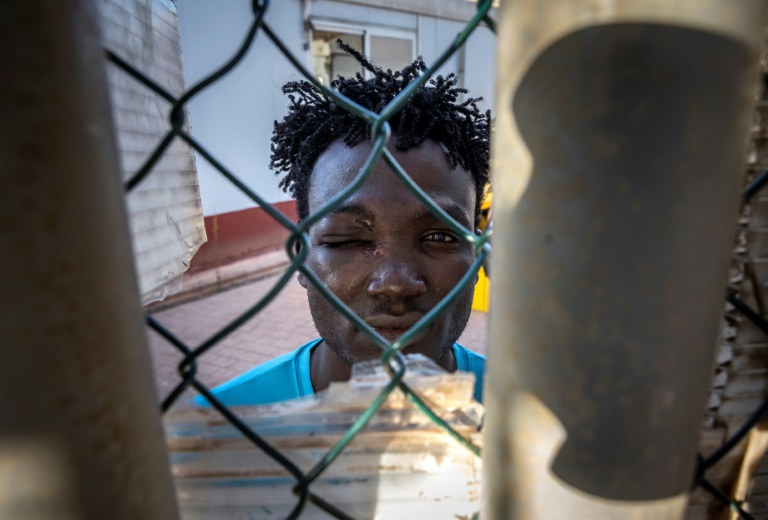
A massive attempt by migrants to storm the barrier between Morocco and the Spanish enclave of Melilla resulted in “unprecedented violence” that killed at least 23 sub-Saharan Africans and has sparked fears of worse to come.

“It was like a war, we were holding rocks, little rocks, to fight the Moroccan military, who beat us by any means, with sticks,” said a 20-year-old Sudanese migrant at a detention centre inside Melilla.

“I climbed up the fence but a Moroccan guard hit my hands. I fell unconscious on the Spanish side, where I was beaten up by Spanish forces,” said another. 

They were among 2,000 migrants who on Friday stormed the heavily fortified border between the Moroccan region of Nador and the enclave of Melilla. 

At least 23 migrants died and 140 police officers were wounded, according to Moroccan authorities — the heaviest toll in years of such attempts.

Many of the migrants, often from war-torn zones such as Sudan’s Darfur region, have spent months or even years under precarious, dangerous conditions in the nearby forest of Gourougou, braving beatings and arrests in multiple attempts to reach better lives in Spain.

But observers said the latest attempt was unprecedented in the level of violence.

“It’s the first time that we see this level of violence by migrants themselves against security forces,” said Omar Naji from the Nador office of the AMDH rights group.

The violence has heightened fears among Moroccans in the area.

“We’re terrorised by what happened,” said Issame Ouaaid, 24, from the border district of Barrio Chino.

“It’s the first time that we’ve seen migrants carrying iron rods to fight with the police.”

– Migrants treated ‘very harshly’ –

Naji linked the level of violence to a recent mending of ties between Spain and Morocco, leading to renewed cooperation against migrants and stricter enforcement.

Morocco, the only African country sharing a land border with the EU, is a key conduit for migrants fleeing war and poverty.

But the kingdom has also been accused — by Spain — of using migration flows as a tool to exert political pressure.

In May 2021, some 10,000 migrants surged across the border into Spain’s other enclave, Ceuta, as Moroccan border guards looked the other way, in what was widely seen as a punitive gesture by Rabat in a political row over the disputed territory of Western Sahara.

The two countries’ resumption of ties earlier this year after a convergence on Western Sahara has led to “an intensification of pressures” against migrants living rough in the forested hills near the border, Naji said.

Recent months have seen a fall in the numbers of migrants reaching Spanish territory, according to Madrid. 

“The Moroccan authorities treat migrants very harshly, raiding their camps,” Naji said.

“There’s no doubt that this pressure has generated the unprecedented violence we’re seeing.”

– Ceuta bid foiled –

Before Friday’s incident, Spanish media reported several clashes between migrants and security forces, who had chased away residents of camps and transferred some away from the border region.

For Othmane Ba, president of an association for sub-Saharan African migrants in Morocco, “the difficult conditions these migrants are facing condition them psychologically for violence”.

A majority of migrants arriving in Morocco are originally from Sudan, particularly the Darfur region where a new spike in violence has left 125 people dead and 50,000 displaced.

On their way to Morocco, many pass through Libya, notorious for rights abuses by armed groups against migrants.

Once they arrive in Morocco, many are willing to risk their lives to reach Europe.

“There are people here who have been waiting for two or three years” to get across, Naji said.

Moroccan authorities said Sunday they had foiled a plot by migrants to cross the border into Ceuta, making 59 arrests.

But, Naji said, “Morocco can’t totally close its borders and play the role of police force for Europe. That policy can only lead to more violence.”

isb-fs-kao-agr/par/hc

Iraqi PM visits Saudi Arabia and Iran to discuss regional stability

Iraq’s prime minister met with leaders in rivals Saudi Arabia and Iran on Sunday, discussing regional stability as part of Baghdad’s efforts to mediate between the two Middle East heavyweights.

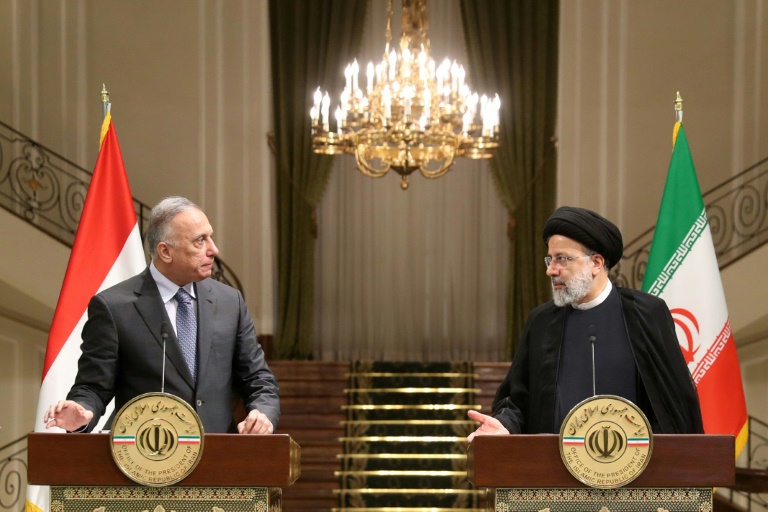
Mustafa al-Kadhemi visited Iranian President Ebrahim Raisi in Tehran, after earlier meeting with Saudi Arabia’s de facto leader Crown Prince Mohammed bin Salman in the Saudi city of Jeddah — pushing forward a bid to reconcile the foes that have had no diplomatic ties since 2016.

Raisi appeared to welcome the mediation bid, saying: “We stressed the need for regional leaders to negotiate with one another to resolve the region’s problems.”

Iran and Iraq “believe that peace and tranquillity in the region depend on the role of all regional leaders,” he added in a news conference with Kadhemi.

Raisi welcomed an April ceasefire in Yemen — where Tehran and Riyadh back opposing sides in the seven-year civil war.

But he criticised all forms of rapprochement with Israel, amid hints that an upcoming visit by US President Joe Biden to Riyadh could herald improved relations between the kingdom and the Jewish state.

“The normalisation of relations with the Zionist regime or the presence of strangers in the region will not resolve any problems in the region, but rather aggravate them,” Raisi said.

Israel established diplomatic ties with the UAE, Bahrain and Morocco in 2020 as part of the US-brokered Abraham Accords. 

Kadhemi said that he and Raisi had “agreed on the need to… preserve regional calm and fight food insecurity”.

Iran and Saudi Arabia support rival sides in several conflict zones around the region. 

– ‘Reconciliation is near’ –

Iraq has over the past year hosted five rounds of talks between Riyadh and Tehran, with the last session held in April.

Kadhemi said at the time he believed that “reconciliation is near” between the rivals, a further reflection of shifting political alignments across the region.

During Kadhemi’s meeting Sunday with Prince Mohammed, the two addressed “bilateral relations and opportunities for joint cooperation”, the official Saudi Press Agency reported. 

“They exchanged points of view on a number of issues that would contribute to supporting and strengthening regional security and stability,” it added. 

On Saturday, an Iraqi cabinet source said that Kadhemi’s trip “comes in the context of talks that Riyadh and Tehran recently held in Baghdad”. 

The source said those talks “represented a road map for mending relations and returning to the right course of strengthening bilateral relations” between Saudi Arabia and Iran. 

Sunni Muslim Saudi Arabia and Shiite-majority Iran have had no diplomatic ties for six years, since Iranian protesters attacked Saudi diplomatic missions in Iran after the kingdom executed Shiite cleric Nimr al-Nimr. 

Riyadh responded by cutting relations with Tehran. 

In early March, Prince Mohammed said his country and Iran were “neighbours forever”, and that it was “better for both of us to work it out and to look for ways in which we can coexist”.

Riyadh also has concerns about Tehran’s nuclear ambitions, while Iran has always denied wanting a nuclear arsenal.

After his arrival in the kingdom, Kadhemi performed the minor pilgrimage, known as umra, in the holy city of Mecca, according to pictures released by his office.

Wake held in Brazil for slain British journalist

Grieving family and friends paid their last respects Sunday to British journalist Dom Phillips who was murdered in the Amazon earlier this month along with his local guide.

Phillips, 57, and Bruno Pereira, 41, an expert in Indigenous affairs, were shot while returning from an expedition in a remote region of the rainforest that is plagued by drug trafficking, illegal gold mining and fishing.

“Dom will be cremated in the country he loved, Brazil, which he had chosen as home,” his widow, Brazilian Alessandra Sampaio, told reporters through tears after a wake for Phillips was held at the Parque da Colina cemetery outside Rio de Janeiro.

“Dom was a very special person, not only for defending what he believed in as a professional, but also for having a huge heart and a great love for humanity,” Sampaio said. 

“Let’s celebrate the sweet memory of Dom and his presence in our lives.”

She said the family will pay close attention to the investigation into the murder of her husband and his colleague and demand justice.

Three suspects have been arrested in the crime, including a fisherman who confessed to burying the bodies and led investigators to the scene.

The disappearance of Phillips and Pereira on June 5 sparked an international outcry. Activists have blamed the killings on President Jair Bolsonaro for allowing commercial exploitation of the Amazon at the cost of the environment and law and order.

Pereira, an outspoken defender of Indigenous rights, had received multiple death threats before the double murder.

He was laid to rest Friday in his home state of Pernambuco, in northeastern Brazil, to solemn funeral Indigenous hymns performed by members of a tribe he spent his life and work defending.

Close Bitnami banner
Bitnami