World

Summer travel misery ahead as industry workers in revolt

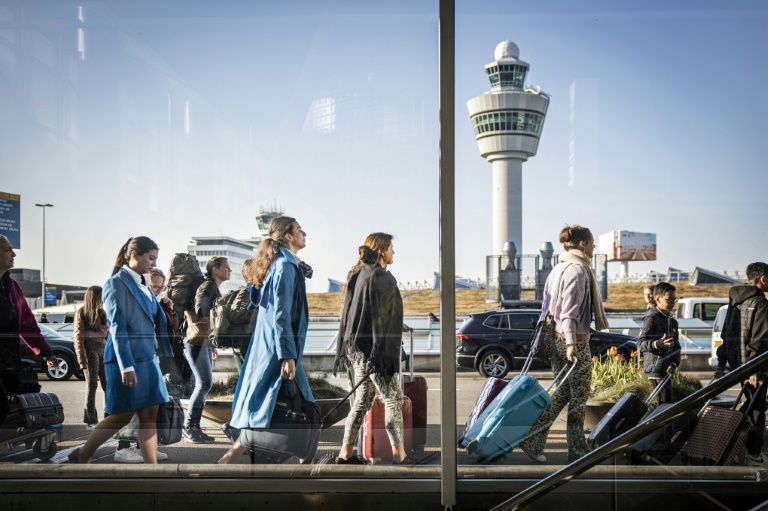
A spiral of worker strikes in Europe’s crucial aviation sector and cancelled flights at a time when millions of travellers are looking to escape for the summer, threaten the sector’s tentative recovery.

Airports and airlines are buckling under the pressure of demand pent up during the pandemic that has been unleashed on understaffed and stretched operations across Europe.

– Cabin crew –

A coordinated strike by Ryanair flight attendants in five European countries has thrown a spotlight on volatile labour relations at low cost airlines. 

“It’s June and colleagues are already exhausted,” said Damien Mourgues, SNPNC trade union representative at Ryanair. 

“Our basic salary is 854 euros ($900) with variables of 8.50 euros per hour” flown, he said. 

In Spain, “we have a basic salary of only 950 euros” and “when you don’t fly, you earn 950 euros, that’s all,” complained Pier Luigi Copellon, a steward based in Barcelona for 14 years. 

At France’s Transavia and Spain’s Volotea the prospect of summer strikes is a growing possibility. 

At Brussels Airlines, which is on strike on Friday, “a crew member works between 50-60 hours over five days on average,” said Claudia de Coster, a cabin purser and a representative of Belgium’s Setca-FGTB union. 

– Airport security officers –

Frontline airport security is suffering more than any other aviation workforce from understaffing as traffic picks up. 

Baggage and passenger screening  officers at inspection points are being forced to manage massive footfall with fewer hands on deck than before. 

“We end up with two or three instead of five per security checkpoint,” said Said Abdou, a Securitas employee at Paris Orly airport and a representative of the CGT union. 

“The pace is so fast. Securitas had hired 17 people recently, they did a day and they didn’t come back — it was too hard,” he said. 

Eight of his colleagues suffered burn-out, he said, because they were refused leave this summer. 

Said Abdou earns 1,500 euros after taxes and deductions, paid 13 times a year, and an individual performance bonus of 500 euros per year after 18 years of service. 

On Monday, a strike by security staff at Brussels’ Zaventem airport led to the cancellation of all the day’s flights. 

– Baggage handlers –

“Among the baggage handlers, there are those who put the luggage on the carousel, those who are squatting in the aircraft hold to pack it up, it’s very tiring,” said Luc Atlan, an organiser in the airport branch of France’s Unsa union. 

Baggage handling companies, which depend on major contracts from the likes of Air France, massively reduced staff at the height of the pandemic. 

The sudden rise in the rate of growth leads to “working under pressure. And with the lack of personnel you go fast and you get hurt. There’s going to be an increasing rate of absences”, said Atlan. 

– Chaperones –

They are less prominent than other front-line workers in the aviation ecosystem, but vital to the smooth running of the airport.

The people charged with accompanying people with reduced mobility are no less essential to the travelling public. 

“We have a lot of delays, a lot of mistakes,” said Ali Khiati, a member of the SUD union’s aviation section. 

“There are people waiting for an hour on the plane,” forcing the plane to remain grounded. 

“When you arrive after an hour, you are shouted at by the captain, by the customers, even though you only got the order five minutes previously,” said Khiati.

“I feel the summer will be catastrophic,” he said, adding that he had never seen anything like it in his 18-year career. 

“A week ago, 21 people in the same day missed their plane. There were 16 who were leaving for Algiers, we put them in a (waiting area) — but there was so much work that the dispatcher forgot about them,” he said . 
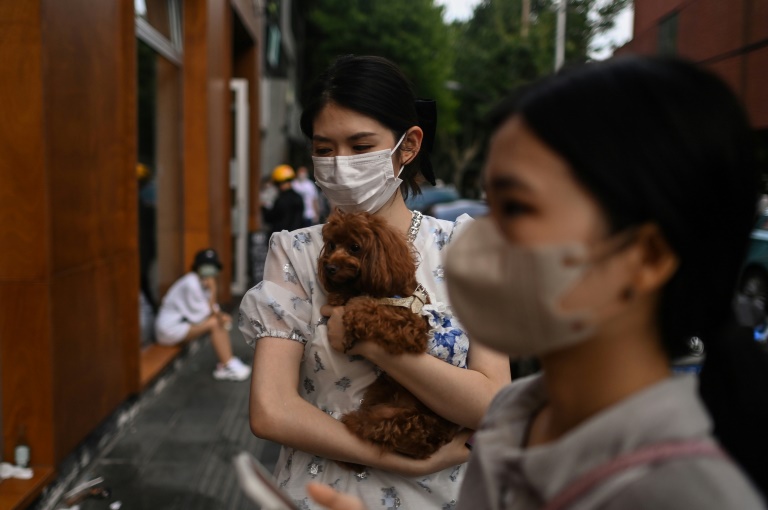
Shanghai reports zero Covid cases for first time since outbreak

China reported zero new Covid-19 infections in Shanghai for the first time since March on Saturday, as the country’s latest outbreak subsides after months of virus-spurred lockdowns and restrictions.

China is the last major economy still committed to a zero-Covid strategy, stamping out new cases with a combination of targeted lockdowns, mass testing and lengthy quarantines.

The economic hub of Shanghai was forced into a months-long lockdown during a Covid surge this spring driven by the fast-spreading Omicron variant, while the capital Beijing shuttered schools and offices for weeks over a separate outbreak.

Infections narrowed to a trickle in recent days, with Shanghai on Saturday reporting zero locally-transmitted cases for the first time since the start of the outbreak in early March.

“There were no new domestic Covid-19 confirmed cases and no new domestic asymptomatic infections in Shanghai on June 24, 2022,” the city said in a statement.

The lockdown on Shanghai’s 25 million residents was virtually lifted in early June, but the metropolis has struggled to return to normal as individual neighborhoods have reimposed restrictions in response to new infections.

Millions of people in the city were temporarily locked down again two weeks ago after the government ordered a new mass testing campaign.

In Beijing, restrictions first imposed in May were eased as cases declined, but tightened again this month after a nightlife-linked infection cluster emerged.

After days of mass testing and localised lockdowns, the “Heaven Supermarket infection chain” — named for the popular bar visited by patients — has been effectively blocked, Beijing authorities said last week.

The city’s education bureau said Saturday that all elementary and middle school students could return to their classrooms for in-person schooling on Monday, after the bar cluster delayed school reopenings.

All school staff, students and parents must do a Covid PCR test before returning to school, and are urged to “limit going out and avoid gatherings,” the education bureau said in an official social media post.

Beijing reported two new local infections on Saturday.

China insists the zero-Covid policy is necessary to prevent a healthcare calamity, with officials pointing to unevenly distributed medical resources and low vaccination rates among the elderly as major concerns.

But the strategy has hammered the world’s second-largest economy and heavy-handed enforcement also triggered rare protests, while the extreme isolation of foreign businesses and middle-class families has tipped them into making exit plans.

Ukraine farm animals burned alive in Russian bombing

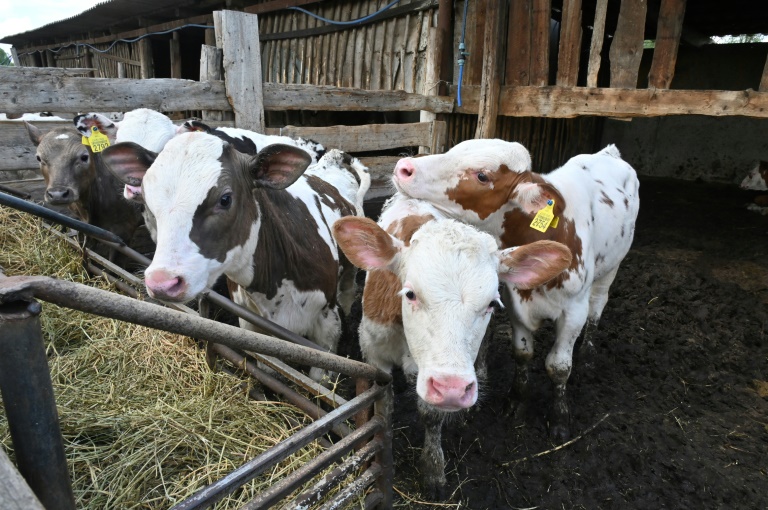
At a farm in northern Ukraine, a spooked-looking heifer has been limping since one of her hind legs was shredded by shrapnel in a Russian attack that has been mirrored on farms across the country since the war began.

The four-month-old survived bombardments that killed around a third of animals on the meat and dairy facility in Mala Rogan, a village around 25 kilometres (15 miles) south of Ukraine’s second city Kharkiv.

It was a “nightmare” recalls owner Lyubov Zlobina, 62, who says she is “haunted by the howls of cows burned alive” during the attacks on March 26.

“I cling on to this little miracle,” she said, referring to the injured heifer, the distant thuds of shelling echoing in the background.

“I gave her antibiotics twice but sadly the wound is still oozing and she isn’t putting on weight,” she added.

“If we could take out the shard, maybe she would recover. For surgery, we’d have to take her very far away and we can’t,” said Zlobina visibly upset.

In the first weeks of the war, Mala Rogan was captured by Russian forces. They have since been beat back, leaving behind a battle-scarred hellscape.

Zlobina’s husband, who served in the Soviet army in Afghanistan, showed AFP journalists several videos taken during the attacks.

“We were running in every direction out of the shed,” Mykolai Zlobin, 57, recalled, describing how hay in the shed burst into flames. A cow that was giving birth had its head severed.

They had to knock down a segment of wall with a tractor to get the trapped cows out, all while explosions were falling around the panicked herd. 

“I tried to save a few piglets but their mothers were protecting them under their bellies,” said Zlobina. The hens, she said, clucked and pecked through the attack as if nothing was happening.

Yulia Koval, a 38-year-old farm employee said part of a roof fell in while she was trying to hurry calves from a farm building.

“We could have not done it because everything around was falling apart. But we didn’t have time to think it over, she says. We just wanted to save them, that’s all.”

Animals with serious injuries have since had to be put down.

– ‘Attacking the cattle’ –

The shed now is a burnt out, rusted skeleton. Animals graze and mull about in fields surrounding the farm, which, unlike much farmland in eastern Ukraine does not appear to have been mined.

For the youngest and most vulnerable animals, a hastily-constructed shelter offers some protection but a more robust alternative will have be found for the winter.

Farms and agricultural land across Ukraine have been devastated by the war. Local media routinely report huge losses caused by Russian shelling.

Government figures suggest that 15 percent of the country’s livestock have been killed since Russia invaded on February 24. 

The NGO Open Cages Ukraine said in a June report that it expects the number of farm animals killed during the conflict to be around 300,000 by the year’s end.

Also roaming the two-hectare farm in Mala Rogan are exhausted and starving stray dogs, abandoned by their owners who fled Russia’s advance to towns and cities in eastern Ukraine. 

“Look at this injured ewe with her three lambs,” Zlobina says, pointing at her as she tries to hide.

“She was attacked not even 24 hours ago.” 

“At first, the dogs ate the bodies of abandoned Russian soldiers and we sometimes found a foot or a hand on our land. Now they are attacking the cattle,” she said.

18 migrants die in mass attempt to enter Spain's Melilla

At least 18 African migrants died when a huge crowd tried to cross into the Spanish enclave of Melilla in northern Morocco, according to an update from Moroccan authorities.

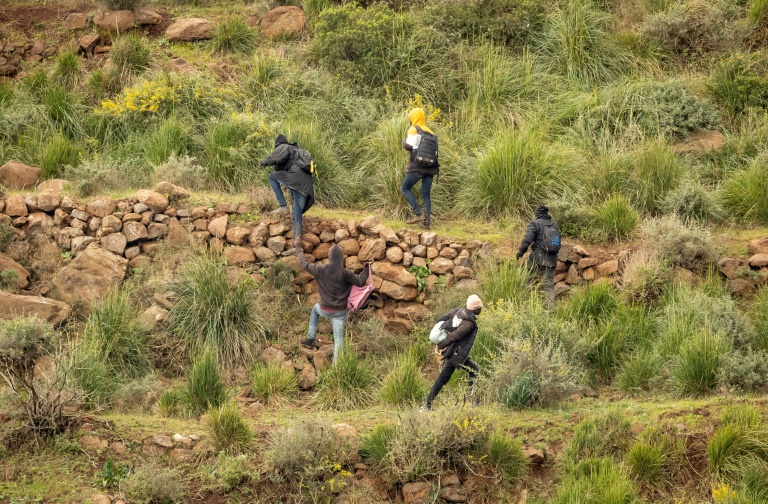
Around 2,000 migrants approached Melilla at dawn Friday and more than 500 managed to enter a border control area after cutting a fence with shears, the Spanish government’s local delegation said in a statement.

Moroccan officials said late Friday that 13 migrants had died of injuries sustained in the incursion, in addition to five who were confirmed dead earlier in the day.

“Some fell from the top of the barrier” separating the two sides, a Moroccan official said, adding that 140 security personnel and 76 migrants were injured during the attempt to cross.

The Spanish Civil Guard, which monitors the other side of the fence, said it had no information on the tragedy and referred enquiries to Morocco.

The border of the Spanish enclave and the neighbouring Moroccan city of Nador were calm early Saturday, without police deployment, AFP journalists said.

Morocco had deployed a “large” number of forces to try to repel the assault on the border, who “cooperated actively” with Spain’s security forces, it said earlier in a statement.

Images on Spanish media showed exhausted migrants lying on the pavement in Melilla, some with bloodied hands and torn clothes.

Speaking in Brussels, Spanish Prime Minister Pedro Sanchez condemned the “violent assault”, which he blamed on “mafias who traffic in human beings”.

– Migrant magnet –

Melilla and Ceuta, Spain’s other tiny North African enclave, have the European Union’s only land borders with Africa, making them a magnet for migrants. 

On Thursday night migrants and security forces had “clashed” on the Moroccan side of the border, Omar Naji of Moroccan rights group AMDH told AFP. 

Several of them were hospitalised in Nador, he added.

The AMDH’s Nador chapter called for the opening of “a serious investigation to determine the circumstances of this very heavy toll” which shows that “the migration policies followed are deadly with borders and barriers that kill”.

It was the first such mass incursion since Spain and Morocco mended diplomatic relations last month.

In March, Spain ended a year-long diplomatic crisis by backing Morocco’s autonomy plan for Western Sahara going back on its decades-long stance of neutrality.

Sanchez then visited Rabat, and the two governments hailed a “new stage” in relations.

The row began when Madrid allowed Brahim Ghali, leader of Western Sahara’s pro-independence Polisario Front, to be treated for Covid-19 in a Spanish hospital in April 2021.

A month later, some 10,000 migrants surged across the Moroccan border into Spain’s Ceuta enclave as border guards looked the other way, in what was widely seen as a punitive gesture by Rabat.

Rabat calls for the Western Sahara to have an autonomous status under Moroccan sovereignty but the Polisario Front wants a UN-supervised referendum on self-determination as agreed in a 1991 ceasefire agreement.

In the days just before Morocco and Spain patched up their ties, there were several attempted mass crossings of migrants into Melilla, including one involving 2,500 people, the largest such attempt on record. Nearly 500 made it across.

– ‘Means of pressure’ –

Patching up relations with Morocco — the departure point for many migrants — has meant a drop in arrivals, notably in Spain’s Atlantic Canary Islands. 

The number of migrants who reached the Canary Islands in April was 70 percent lower than in February, government figures show. 

Sanchez earlier this month warned that “Spain will not tolerate any use of the tragedy of illegal immigration as a means of pressure”.

Spain will seek to have “irregular migration” listed as one of the security threats on the NATO’s southern flank when the alliance gathers for a summit in Madrid on June 29-30.

Over the years, thousands of migrants have attempted to cross the 12-kilometre (7.5-mile) border between Melilla and Morocco, or Ceuta’s eight-kilometre border, by climbing the barriers, swimming along the coast or hiding in vehicles.

The two territories are protected by fences fortified with barbed wire, video cameras and watchtowers.

Migrants sometimes use hooks and sticks to try to climb the border fence, and throw stones at police.

US Supreme Court strikes down right to abortion

The US Supreme Court on Friday struck down the right to abortion in a seismic ruling that shredded five decades of constitutional protections and prompted several right-leaning states to impose immediate bans.

Protests broke out almost immediately in Washington and elsewhere, with dozens of demonstrations under way or planned across the country Friday evening.

The conservative-dominated court overturned the landmark 1973 “Roe v. Wade” decision enshrining a woman’s right to an abortion, saying individual states can restrict or ban the procedure themselves.

“The Constitution does not confer a right to abortion,” the court said in a 6-3 ruling on one of America’s most bitterly divisive issues. “The authority to regulate abortion is returned to the people and their elected representatives.”

A somber President Joe Biden called the ruling a “tragic error” stemming from “extreme ideology” and said it was a “sad day for the court and the country.”

“The health and life of women in this nation are now at risk,” Biden said, warning that other rights could be threatened next, such as same-sex marriage and contraception.

The Democratic president urged Congress to restore abortion protections as federal law and said Roe will be “on the ballot” in November’s midterm elections. 

– ‘You have failed us’ –

Hundreds of people — some weeping for joy and others with grief — gathered outside the fenced-off Supreme Court as the ruling came down.

“It’s hard to imagine living in a country that does not respect women as human beings and their right to control their bodies,” said Jennifer Lockwood-Shabat, 49, a mother of two daughters who was choking back tears.

“You have failed us,” read a sign held up by one protestor. “Shame,” said another.

But Gwen Charles, a 21-year-old opponent of abortion, was jubilant.

“This is the day that we have been waiting for,” Charles told AFP. “We get to usher in a new culture of life in the United States.”

Just hours after the ruling, Missouri banned abortion — making no exception for rape or incest — and so did South Dakota, except where the life of the mother is at risk.

“This is a monumental day for the sanctity of life,” Missouri attorney general Eric Schmitt said.

As of Friday evening, at least seven states had banned abortion — Alabama, Arkansas, Kentucky, Louisiana, Missouri, Oklahoma, and South Dakota.

Altogether about two dozen states are expected to severely restrict or outright ban and criminalize abortions, forcing women to travel long distances to states that still permit the procedure. 

Protesters marched in New York, Boston and elsewhere as anger over the decision grew. 

“Abortion is health care, health care is a right,” people in a crowd in New York chanted as they marched in Manhattan, NBC news reported.

Criticism of the move came from abroad, including from US allies like Britain, whose Prime Minister Boris Johnson called it “a big step backwards.”

Canada’s Justin Trudeau said it was “horrific,” and French President Emmanuel Macron voiced his “solidarity with women whose freedoms are today challenged.”

– ‘Egregiously wrong’ –

In the majority opinion, Justice Samuel Alito said Roe v. Wade was “egregiously wrong.”

“Abortion presents a profound moral issue on which Americans hold sharply conflicting views,” he said. “The Constitution does not prohibit the citizens of each State from regulating or prohibiting abortion.”

The court tossed out the legal argument in Roe v. Wade that women had the right to abortion based on the constitutional right to privacy with regard to their own bodies.

While the ruling represents a victory in the struggle against abortion by the religious right, leaders of the largely Christian conservative movement said it does not go far enough and they will push for a nationwide ban.

“While it’s a major step in the right direction, overturning Roe does not end abortion,” said the group March for Life.

“God made the decision,” said former Republican president Donald Trump in praising the court’s ruling.

The ruling was made possible by Trump’s nomination of three conservative justices — Neil Gorsuch, Brett Kavanaugh and Amy Coney Barrett.

– ‘Will not stop there’ –

The three liberal justices on the court dissented from the ruling — which came a day after the court ushered in a major expansion of US gun rights.

“One result of today’s decision is certain: the curtailment of women’s rights, and of their status as free and equal citizens,” they said.

Abortion providers could now face criminal penalties and “some States will not stop there,” they warned.

“Perhaps, in the wake of today’s decision, a state law will criminalize the woman’s conduct too, incarcerating or fining her for daring to seek or obtain an abortion,” they said.

According to the Guttmacher Institute, 13 states have adopted so-called “trigger laws” that will ban abortion virtually immediately.

Ten others have pre-1973 laws that could go into force or legislation that would ban abortion after six weeks, before many women even know they are pregnant.

Women in states with strict anti-abortion laws will either have to continue with their pregnancy, undergo a clandestine abortion, obtain abortion pills, or travel to another state where it remains legal.

Several Democratic-ruled states, anticipating an influx, have taken steps to facilitate abortion and three of them — California, Oregon and Washington — issued a joint pledge to defend access in the wake of the court’s decision.

Two killed, 14 wounded in Oslo, Norway shooting

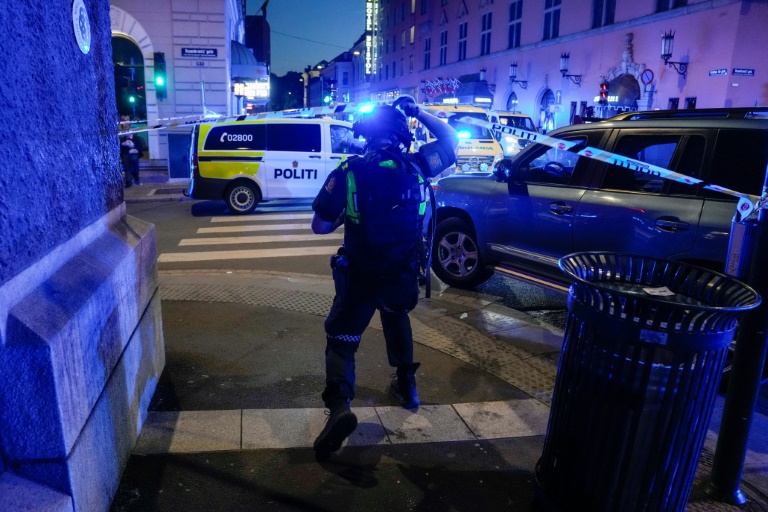
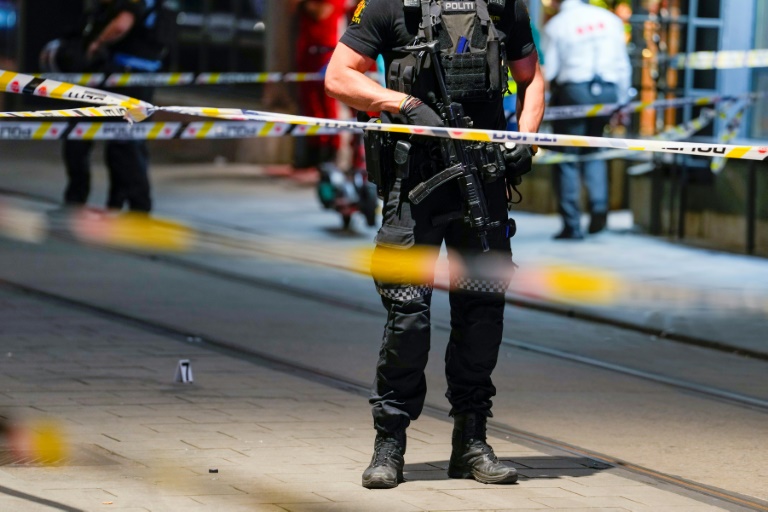
Two people were killed and 14 others wounded, several seriously, in shootings near bars in central Oslo, Norwegian police said Saturday.

Police said a suspect had been arrested following the shootings, which occurred around 1:00 am (2300 GMT Friday) in three locations, including a gay bar, close together in the centre of the Norwegian capital.

Police reported two dead and 14 wounded, and said two weapons had been seized.

“Now everything indicates that there was only one person who committed this act,” police official Tore Barstad told a press briefing.

Police numbers had however been reinforced in the capital to deal with other incidents, he added, without wishing to specify whether it was a terrorist act.

Police received the first reports at 1:14 am and the suspect was arrested five minutes later, he said.

The shootings happened near the London Pub gay club, the Herr Nilsen jazz club and a takeaway food outlet.

Police officials gathered to consider the impact of the shooting on the staging of Oslo’s Pride march which is due to take place on Saturday afternoon.

Heavily armed police equipped with bulletproof vests and helmets were patrolling the scene of the shootings.

“He looked very determined about where he was aiming. When I realised it was serious, I ran. There was a bleeding man lying on the ground,” a woman who saw the incident told the Verdens Gang newspaper.

Another witness quoted by the paper mentioned the use of an automatic weapon — which the police did not confirm — and described it as “a war zone”.

“There were a lot of injured people on the ground who had head injuries,” he said.

According to an NRK radio journalist present at the time of the shooting, the shooter arrived with a bag from which he pulled out a weapon and started firing.

Among the 14 wounded, eight were taken to hospital and six others were taken care of by a medical service.

“Some are described as seriously injured, others as more lightly injured,” said Barstad. 

Generally peaceful Norway was the scene of bloody attacks on July 22, 2011 when right-wing extremist Anders Behring Breivik killed 77 people.

He first detonated a bomb near the government headquarters in Oslo, killing eight people. 

He then disguised himself as a policeman and went on a shooting spree at a summer camp for left-wing youth on the island of Utoya, killing another 69 people — most of them teenagers.

Chinese leader Xi Jinping to attend Hong Kong celebration: Xinhua

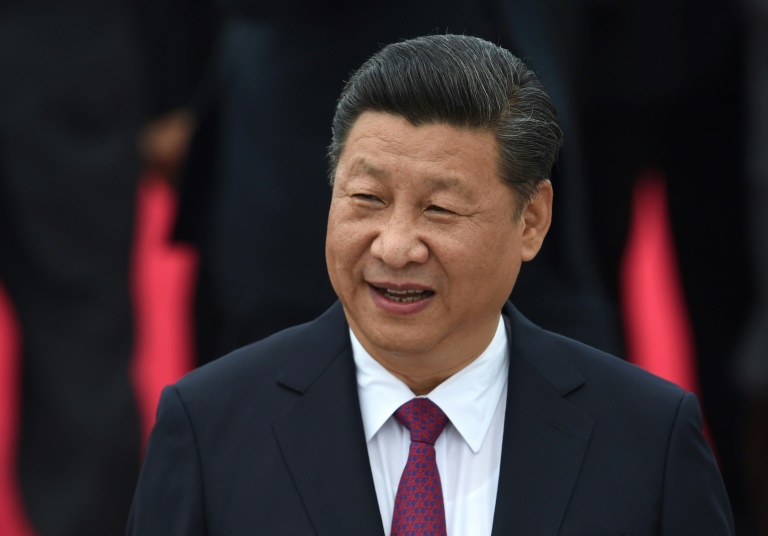
Chinese President Xi Jinping will attend a ceremony in Hong Kong celebrating 25 years of the city’s handover to China, state media Xinhua News Agency reported on Saturday.

Xi will also attend the inauguration of the next Hong Kong administration, Xinhua said, in a trip that would mark his first time leaving the Chinese mainland since the pandemic began.

“President Xi Jinping will attend a meeting celebrating the 25th anniversary of Hong Kong’s return to the motherland,” Xinhua reported.

“Xi, also general secretary of the Communist Party of China Central Committee and chairman of the Central Military Commission, will also attend the inaugural ceremony of the sixth-term government of the Hong Kong Special Administrative Region,” it added.

His last visit to the former British colony was in 2017 to swear in city leader Carrie Lam and it is customary for Chinese leaders to travel to Hong Kong for key handover anniversary dates.

But coronavirus outbreaks in both mainland China and Hong Kong have prompted doubts over whether Xi would risk travelling to the city as Beijing remains committed to a zero-Covid strategy.

Two top officials in the incoming Hong Kong administration tested positive for the coronavirus on Thursday and had to go into quarantine.

Daily case numbers in Hong Kong have climbed to nearly 2,000 though hospitalisations have remained low, with outgoing city leader Carrie Lam earlier reassuring the public that the situation was “not an alarm bell”.

– ‘A new chapter’ –

Hong Kong has its own version of zero-Covid, which has kept the international business hub isolated for much of the pandemic, but it is less strict than what is practised in the mainland.

The difference in policy means Hong Kongers coming into close contact with Chinese officials will likely be required to undergo quarantine.

Senior government officials have entered a “closed-loop” system to minimise infection risk ahead of their attendance at the handover celebration events, according to local media.

Hong Kong’s next Beijing-anointed leader John Lee and his ministers will be sworn in on July 1 — a date that also marks the halfway point of the “One Country, Two Systems” arrangement that made Hong Kong semi-autonomous.

Xi declared “a new chapter” for the city last month, after meeting with Lee in Beijing to receive the central government’s blessing. 

The finance hub was rocked by huge and sometimes violent democracy protests in 2019, swiftly crushed by authorities after Beijing imposed a sweeping security law that criminalised dissent. 

In 2017, Xi and first lady Peng Liyuan stayed in Hong Kong for three days to mark the 20th handover anniversary amid an unprecedented police presence.

What is causing record floods and heatwaves in China?

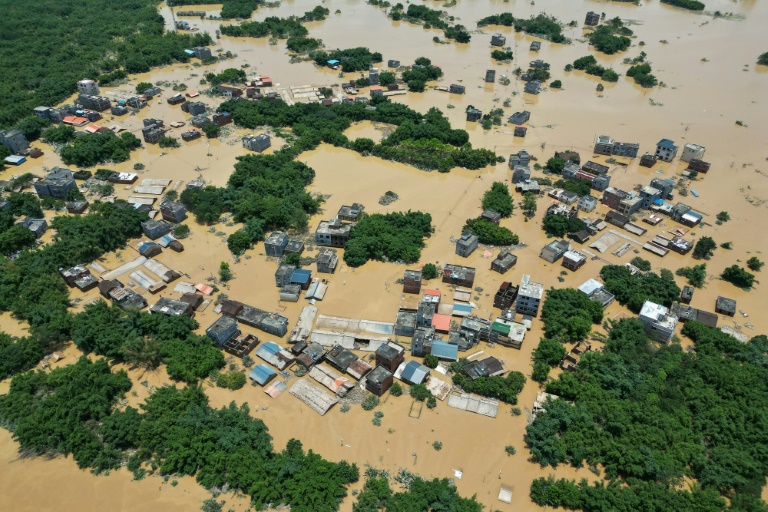
Record floods in southern China this month displaced more than half a million people, while searing heat buckled roads in other parts of the country.

Authorities have issued extreme weather warnings in multiple regions, while experts warned that these phenomena were more evidence of the impact of climate change.

– How bad are the floods? –

Summer floods are common in China, especially in the low-lying Pearl River delta region in the south.

This year, however, the National Climate Center forecast that flooding will be “relatively worse” and “more extreme” than before.

Water levels at one location in Guangdong province “surpassed historical records” this week, according to the ministry of water resources, while parts of neighbouring Fujian province and Guangxi region also reported record rainfall.

More than half a million people were evacuated this month because of the flood threat.

In the cities of Guangzhou and Shaoguan in Guangdong province, heavy rainfall turned roads into rivers and people had to be taken to safety in lifeboats.

Authorities in the province estimated the economic damage from the floods to be more than a quarter of a billion dollars.

– What about the heatwave? –

Seven provinces in northern and central China Wednesday warned millions of residents not to go outdoors as temperatures hit 40 degrees Celsius (104 degrees Fahrenheit).

State broadcaster CCTV this week showed footage of cement roads cracked under extreme heat in central Henan province.

Meanwhile, power demand surged to record levels in several cities in the north this week as residents cranked up the air conditioning to beat the heat.

In China’s second-most populous province Shandong, home to more than 100 million people, electricity use topped 93 million kilowatts on Tuesday, beating the 2020 high of 90 million kilowatts, CCTV said.

– What is the economic cost? –

China’s central economic planner estimates that extreme weather will shave off one to three percent of the country’s GDP every year.

The floods in China last year cost $25 billion — the world’s second-worst flood-related loss after Europe, a study published in April by reinsurer Swiss Re showed.

Chinese Premier Li Keqiang warned Wednesday that floods and heatwaves will affect the production of staple grains, vegetables and pork and push up inflation.

– Why is this happening? –

“Extreme weather and climate events in the country have become more frequent, severe and widespread,” China Meteorological Administration said Wednesday.

It followed a warning in March from Xiao Chan, deputy director of the National Climate Center: “Global warming and La Nina events are contributing to abnormally high temperatures and extreme rain in China.”

As the Earth’s atmosphere gets warmer, it holds more moisture, making downpours more intense.

La Nina refers to the large-scale cooling of surface temperatures in the central and eastern equatorial Pacific Ocean, causing devastating floods in South China, India and Bangladesh.

– What is China doing about it? –

China has built a network of massive dams and “sponge cities” with permeable pavements to try and limit the devastation during the annual flood season.

“But the most damaging recent floods have occurred in areas historically less at risk,” said Scott Moore, a researcher at the University of Pennsylvania focusing on China’s environmental policy.

“This is a classic climate change effect: increased extreme weather in different regions and at different times of year than the historical average.”

China is the world’s biggest coal-burning nation and top emitter of greenhouse gases that lead to climate change.

It aims to become carbon neutral by 2060, but local governments have pushed up investments in both renewables and coal in recent months.

Beijing has also not yet outlined precisely how it intends to achieve its emissions targets.

Environmentalists have warned that without specifying the size of the peak or setting an absolute cap, China can essentially keep increasing emissions until 2030.

– Focus on forecasting? –

A new roadmap for climate change adaptation published by the Chinese government last week says the focus should now shift to predicting extreme weather more accurately using sensors and satellites.

“The usefulness of weather forecasts caps out around 10 days, beyond which their accuracy rapidly drops to that of a coin flip,” think tank Trivium China said in a research note.

“Climate monitoring and forecasting is a whole different ballgame”, helping to predict severe floods and droughts at least a month in advance.

What is causing record floods and heatwaves in China?

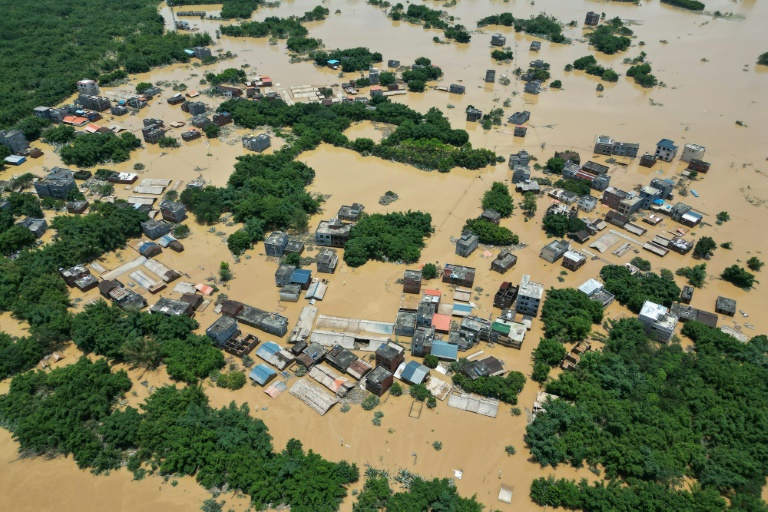
Record floods in southern China this month displaced more than half a million people, while searing heat buckled roads in other parts of the country.

Authorities have issued extreme weather warnings in multiple regions, while experts warned that these phenomena were more evidence of the impact of climate change.

– How bad are the floods? –

Summer floods are common in China, especially in the low-lying Pearl River delta region in the south.

This year, however, the National Climate Center forecast that flooding will be “relatively worse” and “more extreme” than before.

Water levels at one location in Guangdong province “surpassed historical records” this week, according to the ministry of water resources, while parts of neighbouring Fujian province and Guangxi region also reported record rainfall.

More than half a million people were evacuated this month because of the flood threat.

In the cities of Guangzhou and Shaoguan in Guangdong province, heavy rainfall turned roads into rivers and people had to be taken to safety in lifeboats.

Authorities in the province estimated the economic damage from the floods to be more than a quarter of a billion dollars.

– What about the heatwave? –

Seven provinces in northern and central China Wednesday warned millions of residents not to go outdoors as temperatures hit 40 degrees Celsius (104 degrees Fahrenheit).

State broadcaster CCTV this week showed footage of cement roads cracked under extreme heat in central Henan province.

Meanwhile, power demand surged to record levels in several cities in the north this week as residents cranked up the air conditioning to beat the heat.

In China’s second-most populous province Shandong, home to more than 100 million people, electricity use topped 93 million kilowatts on Tuesday, beating the 2020 high of 90 million kilowatts, CCTV said.

– What is the economic cost? –

China’s central economic planner estimates that extreme weather will shave off one to three percent of the country’s GDP every year.

The floods in China last year cost $25 billion — the world’s second-worst flood-related loss after Europe, a study published in April by reinsurer Swiss Re showed.

Chinese Premier Li Keqiang warned Wednesday that floods and heatwaves will affect the production of staple grains, vegetables and pork and push up inflation.

– Why is this happening? –

“Extreme weather and climate events in the country have become more frequent, severe and widespread,” China Meteorological Administration said Wednesday.

It followed a warning in March from Xiao Chan, deputy director of the National Climate Center: “Global warming and La Nina events are contributing to abnormally high temperatures and extreme rain in China.”

As the Earth’s atmosphere gets warmer, it holds more moisture, making downpours more intense.

La Nina refers to the large-scale cooling of surface temperatures in the central and eastern equatorial Pacific Ocean, causing devastating floods in South China, India and Bangladesh.

– What is China doing about it? –

China has built a network of massive dams and “sponge cities” with permeable pavements to try and limit the devastation during the annual flood season.

“But the most damaging recent floods have occurred in areas historically less at risk,” said Scott Moore, a researcher at the University of Pennsylvania focusing on China’s environmental policy.

“This is a classic climate change effect: increased extreme weather in different regions and at different times of year than the historical average.”

China is the world’s biggest coal-burning nation and top emitter of greenhouse gases that lead to climate change.

It aims to become carbon neutral by 2060, but local governments have pushed up investments in both renewables and coal in recent months.

Beijing has also not yet outlined precisely how it intends to achieve its emissions targets.

Environmentalists have warned that without specifying the size of the peak or setting an absolute cap, China can essentially keep increasing emissions until 2030.

– Focus on forecasting? –

A new roadmap for climate change adaptation published by the Chinese government last week says the focus should now shift to predicting extreme weather more accurately using sensors and satellites.

“The usefulness of weather forecasts caps out around 10 days, beyond which their accuracy rapidly drops to that of a coin flip,” think tank Trivium China said in a research note.

“Climate monitoring and forecasting is a whole different ballgame”, helping to predict severe floods and droughts at least a month in advance.

Two killed, several wounded in shooting in Oslo: police

Two people were killed and several others seriously wounded in a shooting in central Oslo, Norwegian police said Saturday.

A suspect had been arrested, police said on Twitter after reporting a shooting at a nightclub.

The incident occurred near the London Pub gay club in the centre of the Norwegian capital, according to media reports.

“Two people are confirmed dead after the shooting. There are several serious injuries,” police said.

“In all, 10 people are receiving treatment from health personnel. Three people are seriously injured,” Tore Barstad, head of police operations, was quoted as saying by NRK radio.

Oslo University Hospital had received six injured people, whose condition was unknown, a hospital spokeswoman told TV2.

NRK reported there were three crime scenes but it was not clear if they were three different locations.

Close Bitnami banner
Bitnami