World

European festivals should not be scrapped due to monkeypox: WHO

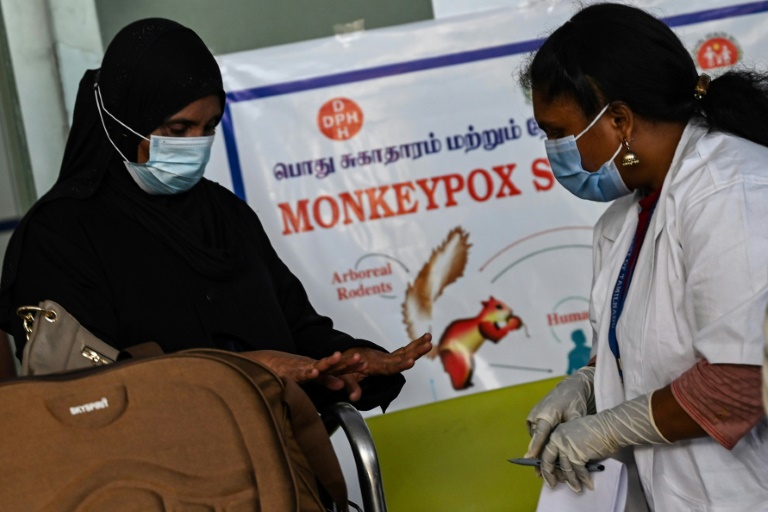
The World Health Organization said Friday that European summer festivals should not be cancelled due to the monkeypox outbreak but should instead manage the risk of amplifying the virus.

A surge of monkeypox cases has been detected since May outside of the West and Central African countries where the disease has long been endemic. Most of the new cases have been in Western Europe.

More than 3,200 confirmed cases and one death have now been reported to the WHO from 48 countries in total this year.

“We have all the summer festivals, concerts and many other events just starting in the northern hemisphere,” Amaia Artazcoz, the WHO’s mass gatherings technical officer, told a webinar entitled “Monkeypox outbreak and mass gatherings: Protecting yourself at festivals and parties”.

The events “may represent a conducive environment for transmission”, she said.

“These gatherings have really close proximity and usually for a prolonged period of time, and also a lot of frequent interactions among people,” Artazcoz explained.

“Nevertheless… we are not recommending postponing or cancelling any of the events in the areas where monkeypox cases have been identified.”

Sarah Tyler, the senior communications consultant on health emergencies at WHO Europe, said there were going to be more than 800 festivals in the region, bringing together hundreds of thousands of people from different countries.

“Most attendees are highly mobile and sexually active and a number of them will have intimate skin-to-skin contact at or around these events,” she said.

“Some may also have multiple sexual contacts, including new or anonymous partners. Without action, we risk seeing a surge in monkeypox cases in Europe this summer.”

– Risk awareness –

The UN health agency recommends that countries identify events most likely to be associated with the risk of monkeypox transmission.

The WHO urged festival organisers to raise awareness through effective communication, detect cases early, stop transmission and protect people at risk.

The outbreak in newly-affected countries is primarily among men who have sex with men, and who have reported recent sex with new or multiple partners, according to the WHO.

People with symptoms are advised to avoid attending gatherings, while people in communities among whom monkeypox has been found to occur more frequently than in the general population should exercise particular caution, it says.

The normal initial symptoms of monkeypox include a high fever, swollen lymph nodes and a blistery chickenpox-like rash.

Meg Doherty, from the global HIV, hepatitis and sexually-transmitted infection programmes at WHO, said: “We are not calling this a sexually-transmitted infection.

“Stigmatising never helps in a disease outbreak,” she added.

“This is not a gay disease. However, we want people to be aware of what the risks are.”
US passes first major gun bill in decades

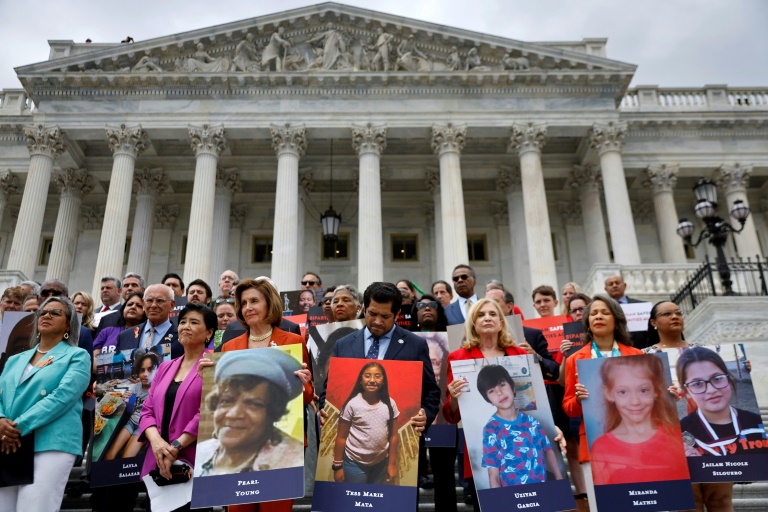
US lawmakers broke a decades-long stalemate on firearms control Friday, passing the first major safety regulations in almost 30 years, less than 24 hours after the Supreme Court bolstered the right to bear arms.

Gun regulation is a touchstone issue for both conservatives and liberals in the United States that has consumed national politics amid multiple mass shootings in recent years.

The Democratic-led House of Representatives voted to rubber-stamp a bipartisan Senate gun bill that — while modest — amounts to the first significant piece of legislation to regulate firearms since 1994.

“Let us not judge this legislation for what is not in it, but respect it for what it does. And what it does is save lives. And we are very, very proud of that,” the top Democrat Nancy Pelosi said on the House floor. 

Fourteen Republicans defied their leader Kevin McCarthy to cross the aisle and approve the 80-page package, which advanced from the evenly-divided upper chamber with cross-party backing late Thursday.

That vote came hours after the Supreme Court’s conservative majority had struck down a century-old New York law requiring permits for concealed-carry handguns.

The gun legislation includes enhanced background checks for younger buyers and federal cash for states introducing “red flag” laws that allow courts to temporarily remove weapons from those considered a threat.

Billions of dollars have been allocated to crack down on “straw purchasers” who buy firearms for people who are not allowed them and to curb gun trafficking.

– ‘Long-sought triumph’ –

The deeply-divisive issue of gun control was reignited by two massacres in May that saw 10 Black supermarket shoppers gunned down in upstate New York and 21 people, mostly young children, slain at a school in Texas.

The Supreme court had voted along party lines, with the six Republican appointees in favor of bolstering the constitutional right to bear arms and the three Democratic appointees dissenting.

The ruling was hailed by campaigners for boosted gun rights, but took the shine off what was expected to be a day of jubilation for weapons control activists.

Liberals had been celebrating the congressional action despite disappointment at the limited scope of the legislation, which doesn’t include universal background checks and omits any ban on semi-automatic weapons or high-capacity magazines.

“This decision won’t stop our grassroots army from doing what we’ve done for a decade: fighting to keep our families safe,” added Shannon Watts, founder of gun safety group Moms Demand Action, said after the Supreme Court ruling was announced.

“Just as we’re breaking the logjam in Congress, we’re going to work day-in, day-out to mitigate the fallout in New York and any other states impacted by this decision and elect gun-sense lawmakers up and down the ballot.”

Eric Tirschwell, chief litigation counsel at legal non-profit Everytown Law, said the Supreme Court had misapplied fundamental constitutional principles, and added that the group was “ready to go to court” to defend restrictions.

Top Republicans celebrated the court’s decision.

“This is not just a long-sought triumph for lawful gun owners across America, it is a victory for all citizens and our constitutional order itself,” said Senate Minority Leader Mitch McConnell.

McCarthy hailed the ruling as a victory that “rightfully ensures the right of all law-abiding Americans to defend themselves without unnecessary government interference.”

“The decision comes at an important time — as the Senate considers legislation that undermines Second Amendment freedom,” Wayne LaPierre, the National Rifle Association’s executive vice president, said in a statement.

“This decision unequivocally validates the position of the NRA and should put lawmakers on notice: no law should be passed that impinges this individual freedom.”

US recession would be 'necessary price' to defeat inflation: IMF chief

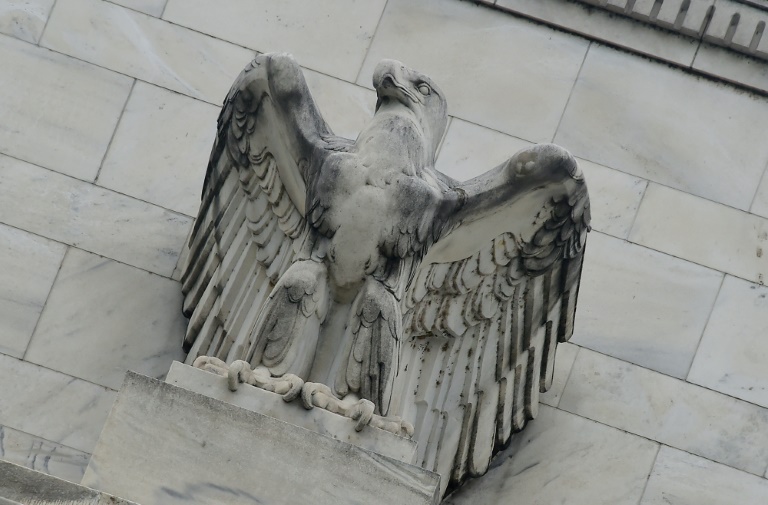
With inflation rising sharply, and the Federal Reserve raising interest rates, the United States is facing an increased risk of a downturn, IMF Managing Director Kristalina Georgieva said Friday.

But any temporary pain caused by a recession would be “a necessary price to pay” to defeat damaging inflation, she said.

The Washington-based crisis lender again slashed its US growth forecast to 2.9 percent, from the 3.7 percent forecast in April, which was cut from the rate predicted at the start of the year.

The world’s largest economy rebounded strongly from the pandemic downturn, but that has come with “unwelcome side effects” of rising prices, Georgieva said.

While the IMF is confident the Fed’s rate hikes will bring down inflation, “We are conscious that there is a narrowing path to avoiding a recession,” she said in a statement.

The Fed last week implemented the biggest increase in its benchmark lending rate in nearly 30 years, as part of its aggressive effort to quell inflation that is at a four-decade high and squeezing American families struggling with rising prices for gasoline, food and housing.

The US economy already was seeing strong demand clashing with supply snarls due to pandemic lockdowns in China and elsewhere, when Russia invaded Ukraine, which has intensified the inflationary pressures.

For 2023, growth is expected to slow to 1.7 percent, but “narrowly avoid” a recession, according to the annual review of the US economy, known as the Article IV consultation.

The IMF chief said the battle against inflation must be the “top priority” despite the impact a US slowdown might have on the global economy.

“Success over time will be beneficial for global growth, but some pain to get to that success can be a necessary price to pay,” she said in response to a question from AFP.

Georgieva met with US Treasury Secretary Janet Yellen and Fed Chair Jerome Powell and the officials “left no doubt as to their commitment to bring inflation back down.”

Nigel Chalk, deputy chief of the IMF’s Western Hemisphere division, said any US recession is likely to be short-lived, given the stockpile of savings and strong business and household balance sheets, and the strong labor market.

“All of those things would help support the economy,” he said. “So if it was hit by negative shock, it should pass relatively quickly and have a relatively quick recovery afterwards.”

– Roll back tariffs –

The IMF also urged Washington to remove punitive trade duties imposed under former president Donald Trump — something President Joe Biden said he is considering and Yellen appears to favor.

“Especially at a time when inflation is high and supply chains are strained… we can see clear benefits in rolling back the tariffs that were introduced over the last 5 years,” Georgieva said in a statement.

However, US Trade Representative Katherine Tai has said the steep tariffs on China offer negotiating “leverage” with Beijing which she is reluctant to give up.

The IMF report said removing tariffs on steel, aluminum, and a range of products from China “would support growth and help reduce inflation.”

The rapid US recovery, helped by low interest rates and hefty government aid, had domestic benefits, reducing poverty and creating more than 8.5 million jobs since the end of 2020, according to the IMF analysis. 

It also offered a boost to the pandemic-ravaged global economy, but fund economists cautioned that it will be “tricky” to avoid recession.

“The stakes are clearly high. Misjudging the policy mix — in either direction — will result in sizable economic costs at home and negative outward spillovers to the global economy.”

However, the report pushed back against comparisons to the inflationary era of the 1980s, noting the economy and the central bank actions are “markedly different.”

Stocks and oil rally as rate-hike worries ebb

Global stock markets and oil prices jumped higher on Friday following recent heavy losses as the weakening economic outlook moderates expectations about central bank monetary tightening.

With a spate of data pointing to an economic slowdown, market watchers said investors now believe central banks may need to deal out less punishing interest rate hikes, and thus the pushing of equity markets into bear market territory may have been an overreach.

The broad-based S&P 500 added 3.1 percent to stand at 3,911.74 at the end of Friday’s session, up almost 6.5 percent for the week in one of the best seven-day stretches in an otherwise downcast 2022.

Earlier, London stocks rallied 2.7 percent with investors brushing aside news of bruising defeats for Britain’s ruling Conservatives in by-elections on Thursday.

The pound firmed against the dollar, despite data showing a drop in UK retail sales volumes as inflation soars.

Paris stocks jumped 3.2 percent in eurozone trade, while Frankfurt rose 1.6 percent with gains tempered by news of the worsening German business climate.

“Stock markets are taking a breather after being beat up… as recession fears took their toll,” OANDA trading platform analyst Craig Erlam told AFP.

But he warned that stock markets remain “vulnerable to another onslaught if the news does not improve”.

Asian stock markets closed higher after Thursday’s gains on Wall Street.

The recoveries come after global markets have been thrown into turmoil for months owing to soaring inflation, interest-rate hikes, the Ukraine war and China lockdowns.

US equity markets tumbled into bear market territory — a drop of more than 20 percent from recent highs — as the US Federal Reserve began to aggressively raise interest rates.

Federal Reserve boss Jerome Powell this week told lawmakers a recession was “certainly a possibility”.

Sentiment in Asia has meanwhile been boosted by comments from Chinese President Xi Jinping suggesting an end to China’s tech crackdown as well as possible new measures aimed at lifting the economy.

Hong Kong shares were among the biggest winners Friday thanks to a rally in tech giants including Alibaba, Tencent and NetEase.

Analysts have been pointing to falling commodity prices, a primary driver of inflation, in the face of a possible recession reducing the need for sharp interest rate hikes as one possible explanation for the renewed bullish sentiment on equity markets. 

– Key figures at around 2020 GMT –

New York – Dow: UP 2.7 percent at 31,500.68 (close)

New York – S&P 500: UP 3.1 percent at 3,911.74 (close)

New York – Nasdaq: UP 3.3 percent at 11,607.62 (close)

London – FTSE 100: UP 2.7 percent at 7,208.81 (close)

Frankfurt – DAX: UP 1.6 percent at 13,118.13 (close)

Paris – CAC 40: UP 3.2 percent at 6,073.35 (close)

EURO STOXX 50: UP 2.8 percent at 3,533.17 (close)

Tokyo – Nikkei 225: UP 1.2 percent at 26,491.97 (close)

Hong Kong – Hang Seng Index: UP 2.1 percent at 21,719.06 (close)

Shanghai – Composite: UP 0.9 percent at 3,349.75 (close)

Euro/dollar: UP at $1.0559 from $1.0523 late Thursday

Pound/dollar: UP at $1.2280 from $1.2260

Euro/pound: UP at 85.95 pence from 85.83 pence

Dollar/yen: UP at 135.17 yen from 134.95 yen 

Brent North Sea crude: UP 2.8 percent at $113.12 per barrel

West Texas Intermediate: UP 3.2 percent at $107.62 per barrel

burs-jmb/bgs

Friends at first sniff: People drawn to others who smell like them

It’s often said that people who click right away share “chemistry.” 

This expression could be true in the literal sense, according to a new study published in the journal Science Advances on Friday, which finds people with similar body odors are more likely to hit it off as friends.

“Nonhuman terrestrial mammals constantly sniff themselves and each other and, based on this, decide who is friend or foe,” wrote a group of researchers led by Inbal Ravreby at Weizmann Institute of Science in Israel.

Since people seek friends who are similar to themselves, the team hypothesized that humans may smell themselves and others to subconsciously estimate body odor similarity and judge their compatibility.

To find out, they set about collecting samples from pairs of same-sex, non-romantic friends who described themselves as having clicked at first sight, that is to say “where a sense of friendship was formed before extensive biographical information was exchanged,” according to the paper.

After an extensive recruitment effort, they found 20 pairs, half of whom were male, and the other half female, all aged between 22 and 39 years old.

In order to prevent contamination or outside factors influencing their samples, all participants had to follow a strict protocol that included avoiding pungent foods and sleeping away from their partner and pets in a clean cotton T-shirt that was provided to them.

The T-shirts were collected in ziplock bags and tested with an electronic nose — a device equipped with sensors to analyze chemical composition. The researchers found that the odor signatures of “click friends” were statistically more closely matched than odors between non-friends.

To assess whether the eNose results accurately mirrored human perception, the team recruited human smellers and devised a set of tests to check the validity of their result. 

In one of these tests, for example, the human smellers were presented with three odors: two from a pair of click friends, and one outlier. They successfully identified the pairs and rejected the outlier.

– Smell predicted friendships too –

These results seemed to confirm the hypothesis that similar smells might spur friendship, but an alternative explanation was that people who are friends spend a lot of time together and so have similar body-odor shaping experiences, such as where they live and what they eat.

To disentangle these two possibilities, the team devised another test to see whether smell could be a successful predictor in whether two people who’ve never met go on to click.

They recruited 17 strangers and had them all interact with one another in a test called the “Mirror Game” — standing half a meter apart so they could subconsciously smell each other, they were asked to mimic each other’s hand movements for two minutes, without talking to each other.

Chemical similarity in their odors, as tested by the eNose, successfully predicted mutual clicks in 77 percent of cases, and predicted 68 percent of cases where both sides said they did not click.

What’s more, the closer people’s smell was, the more they reported liking each other, understanding one another, and feeling greater chemistry between themselves.

Together, the study’s results “converged to suggest that human same-sex nonromantic click friends smell more similar to each other than expected by chance,” the team concluded.

Humans, unlike other terrestrial mammals, use complex language to interact, and so it’s possible the effects of smell in lab settings were amplified compared to how important they may have been in real life, the team wrote.

“Nevertheless, we think our results imply that we may also be more like other terrestrial mammals in this respect than we typically appreciate.”

Ukraine forced to cede key battleground city

Ukrainian forces prepared Friday to retreat from the strategic city of Severodonetsk after weeks of fierce fighting, a setback that could pave the way for Russia to seize a larger swath of eastern Ukraine. 

The announcement came shortly after the European Union granted Ukraine candidate status in a show of support for the former Soviet republic, though there is still a long path ahead to membership.

Moscow dismissed the EU decision as a move to “contain Russia” geopolitically.

Russia has focused its offensive on the Donbas region of eastern Ukraine after being repelled from the capital Kyiv and other areas in the first weeks of the February invasion. Since then its forces have gradually made progress despite encountering fierce resistance and sustaining heavy losses. 

The industrial hub of Severodonetsk has been the scene of weeks of street battles as outgunned Ukrainians put up a stubborn defence.

But Sergiy Gaiday, governor of the Lugansk region that includes Severodonetsk, said that Ukrainian military forces in the city had received the order to withdraw. 

“Remaining in positions that have been relentlessly shelled for months just doesn’t make sense,” he said on Telegram, adding that 90 percent of the city had been damaged. 

The head of Severodonetsk’s military administration, Roman Vlasenko, told Radio Svoboda that the Ukrainian army was still in the city and that it would “take them some time to retire”.

Capturing Severodonetsk and its twin city of Lysychansk would effectively give the Russians control of Lugansk, and allow them to push further into the wider Donbas.

But Ukraine’s retreat from Severodonetsk will not change the course of the war, said Ivan Klyszcz, an international relations researcher at Estonia’s University of Tartu.

“The big picture — of a slow war of entrenched positions — has hardly changed. We cannot expect a massive Russian breakthrough,” he told AFP.

– Lysychansk under fire –

Gaiday said Russians were now advancing on Lysychansk, which has been facing increasingly heavy bombardments. 

The situation for those that remain in the city is bleak.

Liliya Nesterenko, who was cycling toward a friend’s house to feed her pets, said her home had no gas, water or electricity, forcing her and her mother to cook on a campfire. 

But the 39-year-old was upbeat about the city’s defences: “I believe in our Ukrainian army, they should (be able to) cope.”

Andrei Marochko, a spokesman for the Moscow-backed army of Lugansk, said Friday on Telegram that all the villages in the neighbouring areas of Zolote and Hirske were now under the control of Russian or pro-Russian forces.

In a video on Marochko’s Telegram channel, a man in military clothing could be seen replacing a Ukrainian flag featuring a Zolote coat of arms with a red hammer-and-sickle flag. 

Russia’s defence ministry said Friday that up to 2,000 people were “completely blocked” near Zolote and Hirske, and that around half of Zolote was under Russian control.

– Missiles hit university –

Russia has also intensified its offensive in the northern city of Kharkiv in the past days. 

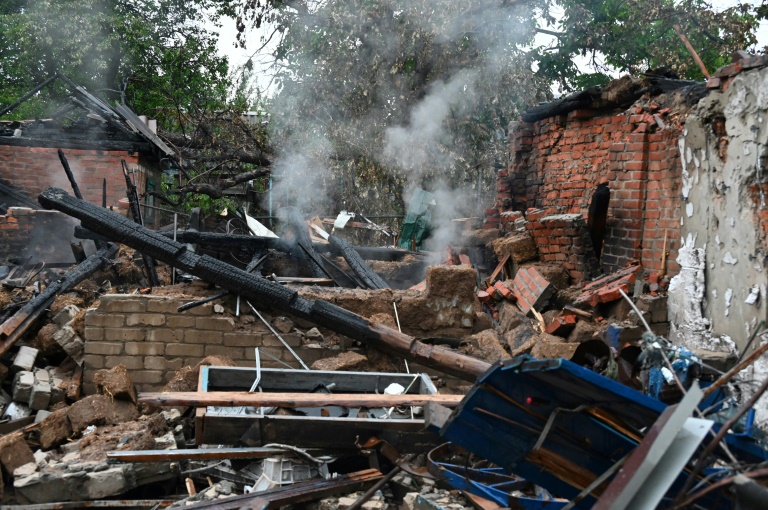
An AFP team at the scene heard strong explosions in the city centre Thursday night, and in the morning saw that the Kharkiv Polytechnic Institute had been hit by missiles, breaking windows and causing its roof to partially collapse. 

According to an unidentified military official at the scene, the Russians “thought there might be something military in there but there was not”. 

In the southern Kherson region, a Moscow-appointed official was killed by an explosive device planted in his car, Russian news agencies reported.

Moscow’s deputy head of Kherson, Kirill Stremousov, said the regional head of the department of family, youth and sports had died “as a result of a terrorist act”.

It was the first confirmed death of a pro-Russian official during a string of attacks on pro-Kremlin officials in Ukrainian regions under Russian control.

With Ukraine pleading for accelerated weapons deliveries, the United States announced it was sending another $450 million of fresh armaments, including more HIMARS rocket systems, which can launch multiple missiles at extended range. 

Ukraine’s President Volodymyr Zelensky put in a video appearance at Britain’s famed Glastonbury music festival on Friday, urging revellers to “spread the truth about Russia’s war” and help Ukrainian refugees.

– ‘Future equal EU partner’ –

At a Brussels summit Thursday, EU leaders granted candidate status to Ukraine as well as Moldova, which Zelensky hailed as “a unique and historic moment”. 

“Today it is recognised that Ukraine is not a bridge, not a pillow between the West and Russia, not a buffer between Europe and Asia, not a sphere of influence,” Zelensky said in a video address to Ukrainians on Friday. 

“Ukraine is a future equal partner for at least 27 EU countries,” he said.

Russian foreign ministry spokeswoman Maria Zakharova on Friday condemned the move.

The decision “confirms that a geopolitical monopolisation of the CIS (Commonwealth of Independent States) space is continuing actively in order to contain Russia,” she said in a statement.

Western officials also reiterated an accusation that Russia is weaponising its key exports of gas as well as grain from Ukraine.

On Friday, German Economy Minister Robert Habeck told Der Spiegel magazine that his country would be confronted with “difficult societal decisions” in the event of a gas shortage.

“When there is not enough gas some industries that need gas will have to be turned off,” Habeck said.

Italian Prime Minister Mario Draghi, however, said on Friday Italy had managed to reduce its dependence on gas imported from Russia to 25 percent from 40 percent last year as it diversifies suppliers.

burs-ech/js/har/gw

Drought hits Italy's hydroelectric plants

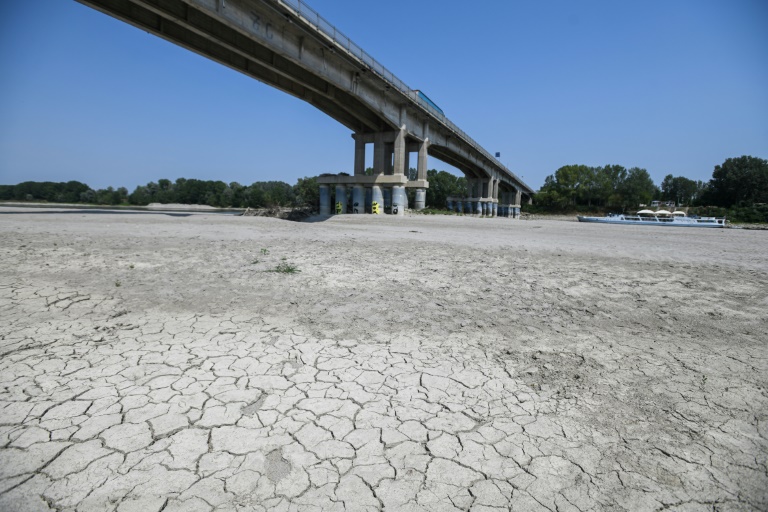
Hydroelectric power in Italy has plunged this year thanks to a drought that has also sparked water restrictions and fears for agriculture, industry sources said Friday.

Hydropower facilities, mostly located in the mountains in the country’s north, provide almost one fifth of Italy’s energy demands.

But the lack of rain is causing problems, at a time when Rome is desperately trying to wean itself off its dependence on Russian gas due to the war in Ukraine.

“From January to May 2022, hydro production fell by about 40 percent compared to the corresponding period in 2021,” a spokesman for Utilitalia, a federation of water companies, told AFP.

“Hydro production has been steadily decreasing since July 2021,” he said, blaming “the severe shortage of water even at high levels”.

An industry source told AFP that while the situation was constantly changing, estimates for the first six months of 2022 suggest nationwide hydroelectric generation will be almost half the equivalent period of 2021.

One small plant near Piacenza, southeast of Milan, was shut indefinitely on June 21 due to low levels on the River Po that feeds it, the Enel energy company said.

“Considering the current drought situation, other hydro plants are not operating at full capacity,” a spokesman added, without giving further details.

The Po River is Italy’s largest reservoir of fresh water. Much of it used by farmers, but is suffering its worst drought for 70 years. 

Italy’s largest agricultural association, Coldiretti, said the drought is putting over 30 percent of national agricultural production and half of livestock farming in the Po Valley at risk.

On Friday, the northern region of Lombardy called a state of emergency due to the drought, that recommends, among other measures, less water use by consumers and directs mayors to curtail non-essential water use, such as street washing and watering parks and sportsgrounds.

Further to the west in Piedmont, water is being rationed in more than 200 municipalities, according to the ANSA news agency.

The Maggiore and Garda lakes are both far lower than usual for this time of year, while further south, the level of the River Tiber that runs through Rome has also dropped.

Drought hits Italy's hydroelectric plants

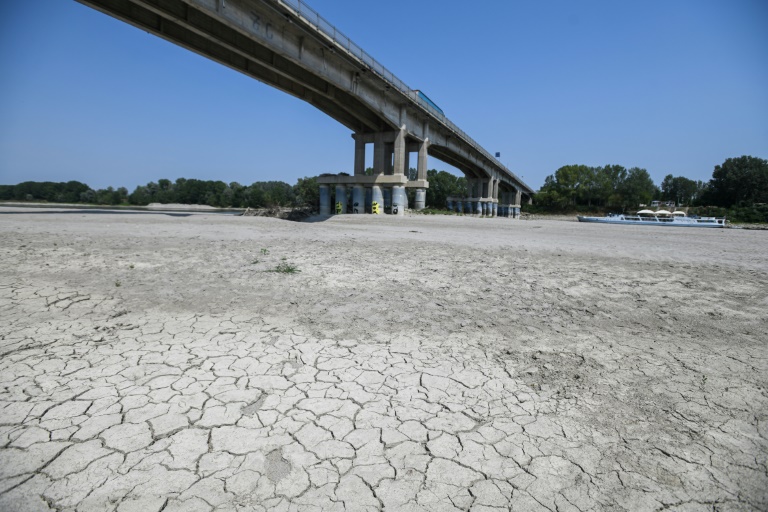
Hydroelectric power in Italy has plunged this year thanks to a drought that has also sparked water restrictions and fears for agriculture, industry sources said Friday.

Hydropower facilities, mostly located in the mountains in the country’s north, provide almost one fifth of Italy’s energy demands.

But the lack of rain is causing problems, at a time when Rome is desperately trying to wean itself off its dependence on Russian gas due to the war in Ukraine.

“From January to May 2022, hydro production fell by about 40 percent compared to the corresponding period in 2021,” a spokesman for Utilitalia, a federation of water companies, told AFP.

“Hydro production has been steadily decreasing since July 2021,” he said, blaming “the severe shortage of water even at high levels”.

An industry source told AFP that while the situation was constantly changing, estimates for the first six months of 2022 suggest nationwide hydroelectric generation will be almost half the equivalent period of 2021.

One small plant near Piacenza, southeast of Milan, was shut indefinitely on June 21 due to low levels on the River Po that feeds it, the Enel energy company said.

“Considering the current drought situation, other hydro plants are not operating at full capacity,” a spokesman added, without giving further details.

The Po River is Italy’s largest reservoir of fresh water. Much of it used by farmers, but is suffering its worst drought for 70 years. 

Italy’s largest agricultural association, Coldiretti, said the drought is putting over 30 percent of national agricultural production and half of livestock farming in the Po Valley at risk.

On Friday, the northern region of Lombardy called a state of emergency due to the drought, that recommends, among other measures, less water use by consumers and directs mayors to curtail non-essential water use, such as street washing and watering parks and sportsgrounds.

Further to the west in Piedmont, water is being rationed in more than 200 municipalities, according to the ANSA news agency.

The Maggiore and Garda lakes are both far lower than usual for this time of year, while further south, the level of the River Tiber that runs through Rome has also dropped.

Five migrants die in mass attempt to enter Spain's Melilla

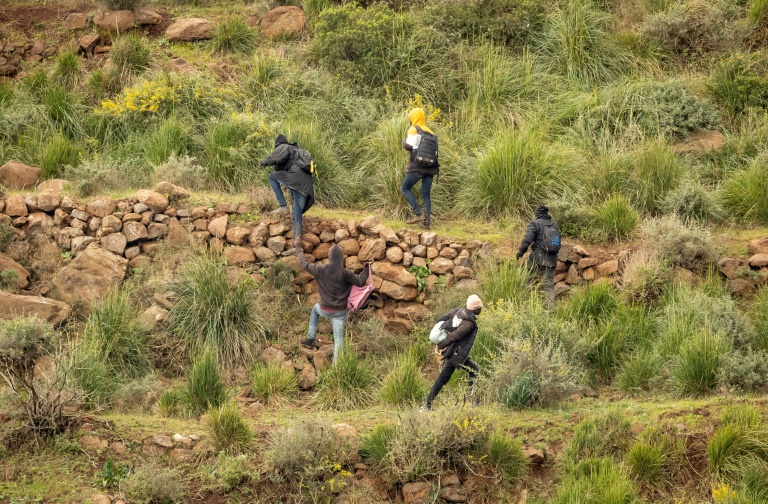
Five migrants were killed and dozens were injured when a huge crowd tried to cross from Morocco into Spain’s Melilla enclave on Friday, the latest migrant tragedy at the doors of Europe.

Some 2,000 migrants approached Melilla at dawn and over 500 managed to enter a border control area after cutting a fence with shears, the Spanish government’s local delegation said in a statement.

Of these 130 sub-Saharan African migrants, “all of them men and apparently adults”, managed to enter Melilla, it added.

A Moroccan official from the nearby border town of Nador said “five deaths were recorded after they stormed the border and some fell from the top of the barrier” separating the two sides.

He said 140 security personnel and 76 migrants were injured during the attempt to cross, the first such mass incursion since Spain and Morocco mended diplomatic relations last month.

The Spanish government’s local delegation said only that 49 Spanish police officers were lightly injured while 57 migrants suffered injuries of varying degrees, including three who were hospitalised.

Morocco had deployed a “large” number of forces to try to repel the assault on the border, who “cooperated actively” with Spain’s security forces, it said earlier in a statement.

Images on Spanish media showed exhausted migrants laying on the sidewalk in Melilla, some with bloodied hands and torn clothes.

Speaking in Brussels, Spanish Prime Minister Pedro Sanchez condemned the “violent assault” which he blamed on “mafias who traffic in human beings”.

– Migrant magnet –

Melilla and Ceuta, Spain’s other tiny North African enclave, have the European Union’s only land borders with Africa, making them a magnet for migrants. 

On Thursday night migrants and security forces “clashed” on the Moroccan side of the border, Omar Naji of Moroccan rights group AMDH told AFP. 

Several of them were hospitalised in Nador, he added.

In March this year, Spain ended a year-long diplomatic crisis by backing Morocco’s autonomy plan for Western Sahara going back on its decades-long stance of neutrality. 

Spanish Prime Minister Pedro Sanchez then visited Rabat, and the two governments hailed a “new stage” in relations.

The row began when Madrid allowed Brahim Ghali, leader of Western Sahara’s pro-independence Polisario Front, to be treated for Covid-19 in a Spanish hospital in April 2021.

A month later, some 10,000 migrants surged across the Moroccan border into Spain’s Ceuta enclave as border guards looked the other way, in what was widely seen as a punitive gesture by Rabat.

Rabat calls for the Western Sahara to have an autonomous status under Moroccan sovereignty but the Polisario wants a UN-supervised referendum on self-determination as agreed in a 1991 ceasefire agreement.

In the days just before Morocco and Spain patched up their ties, there were several attempted mass crossings of migrants into Melilla, including one involving 2,500 people, the largest such attempt on record. Nearly 500 made it across.

– ‘Means of pressure’ –

Patching up relations with Morocco — the departure point for many migrants — has meant a drop in arrivals, notably in Spain’s Atlantic Canary Islands. 

The number of migrants who reached the Canary Islands in April was 70 percent lower than in February, government figures show. 

Sanchez earlier this month warned that “Spain will not tolerate any use of the tragedy of illegal immigration as a means of pressure.”

Spain will seek to have “irregular migration” listed as one of the security threats on the NATO’s southern flank when the alliance gathers for a summit in Madrid on June 29-30.

Over the years, thousands of migrants have attempted to cross the 12-kilometre (7.5-mile) border between Melilla and Morocco, or Ceuta’s eight-kilometre border, by climbing the fences, swimming along the coast or hiding in vehicles.

The two territories are protected by fences fortified with barbed wire, video cameras and watchtowers.

Migrants sometimes use hooks and sticks to try to climb the border fence, and throw stones at police.

Government, protesters no closer on Day 12 of fuel price revolt

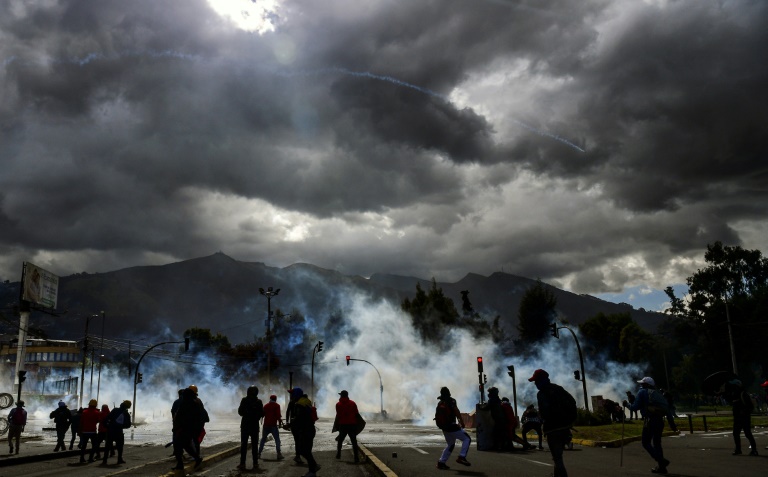
Ecuador’s government and Indigenous protesters accused each other of intransigence Friday as thousands gathered for a 12th day of a fuel price revolt that has claimed six lives and injured dozens.

After the most violent day of the campaign so far — with police firing tear gas to disperse thousands storming Congress — the government accused protesters of shunning a peaceful outcome.

“They have unmasked themselves. They don’t want to negotiate. They don’t want to come to an agreement… They don’t want peace. Until now, the only thing they have demonstrated is that they want violence,” minister of government Francisco Jimenez told broadcaster FM Mundo. 

An estimated 14,000 protesters are taking part in the mass show of discontent countrywide against rising hardship in an economy hard hit by the coronavirus pandemic.

Most of the ire is concentrated on the capital Quito, where some 10,000 people, most from other parts of the country.

Six of the country’s 24 provinces are under a state of emergency and a night-time curfew is in place in Quito.

Protesters are demanding a cut in already subsidized fuel prices, which have risen sharply in recent months, as well as jobs, food price controls, and more public spending on healthcare and education.

– Poorest ‘suffer the most’ –

But the action has been costly, with losses of some $50 million per day to the economy, and production of fuel — Ecuador’s biggest export — halved, according to the energy ministry.

On Thursday, protesters won a limited concession from President Guillermo Lasso who granted them access, “for the sake of dialogue and peace,” to a cultural center emblematic of the Indigenous struggle that had been commandeered by police.

Hours later, however, a group of protesters headed for Congress, where police fired tear gas in response to a barrage of rocks, fireworks and Molotov cocktails.

Three people died in confrontations Thursday, bringing the toll to six since the movement started on June 13 at the initiative of the powerful Confederation of Indigenous Nationalities of Ecuador (Conaie).

Conaie leader Leonidas Iza told AFP the revolt would continue “until we have results. We can no longer hold back the anger of the people.”

People were desperate, said Iza.

“We expected the president to answer the central questions of the crisis, the poverty our people are experiencing. The economic question is one of despair, which is why we are here,” he said.

“There is a lot of poverty, the increase in the price of fuel has increased all the prices, and we, the poorest, are the ones who suffer the most.”

Conaie is credited with bringing down three presidents between 1997 and 2005.

Its most recent mobilization has brought Quito to a standstill, and many shop owners and workers in the capital do not look kindly on what they see as an invasion — flying white anti-protest flags.

“The class struggle has deepened,” said Iza in response.

No talks have been scheduled between the government and Conaie.

Close Bitnami banner
Bitnami