World

Ukraine forced to cede key battleground city

Ukrainian forces prepared Friday to retreat from the strategic city of Severodonetsk after weeks of fierce fighting, a setback that could pave the way for Russia to seize a larger swath of eastern Ukraine. 

The announcement came shortly after the European Union granted Ukraine candidate status in a show of support for the former Soviet republic, though there is still a long path ahead to membership.

Russia has focused its offensive on the Donbas region of eastern Ukraine after being repelled from the capital Kyiv and other areas in the first weeks of the February invasion. Since then its forces have gradually made progress despite encountering fierce resistance and sustaining heavy losses. 

The industrial hub of Severodonetsk has been the scene of weeks of street battles as outgunned Ukrainians put up a stubborn defence.

But Sergiy Gaiday, governor of the Lugansk region that includes Severodonetsk, said that Ukrainian military forces in the city had received the order to withdraw. 

“Remaining in positions that have been relentlessly shelled for months just doesn’t make sense,” he said on Telegram, adding that 90 percent of the city had been damaged. 

The head of Severodonetsk’s military administration, Roman Vlasenko, told Radio Svoboda that the Ukrainian army was still in the city and that it would “take them some time to retire”.

Capturing Severodonetsk and its twin city of Lysychansk would effectively give the Russians control of Lugansk, and allow them to push further into the wider Donbas.

But Ukraine’s retreat from Severodonetsk will not change the course of the war, said Ivan Klyszcz, an international relations researcher at Estonia’s University of Tartu.

“The big picture — of a slow war of entrenched positions — has hardly changed. We cannot expect a massive Russian breakthrough,” he told AFP.

– Lysychansk under fire –

Gaiday said Russians were now advancing on Lysychansk, which has been facing increasingly heavy bombardments. 

The situation for those that remain in the city is bleak.

Liliya Nesterenko, who was cycling toward a friend’s house to feed her pets, said her house had no gas, water or electricity, forcing her and her mother to cook on a campfire. 

But the 39-year-old was upbeat about the city’s defences: “I believe in our Ukrainian army, they should (be able to) cope.”

Andrei Marochko, a spokesman for the Moscow-backed army of Lugansk, said Friday on Telegram that all the villages in the neighbouring areas of Zolote and Hirske were now under the control of Russian or pro-Russian forces.

In a video on Marochko’s Telegram channel, a man in military clothing could be seen replacing a Ukrainian flag featuring a Zolote coat of arms with a red hammer-and-sickle flag. 

Russia’s defence ministry said Friday that up to 2,000 people were “completely blocked” near Zolote and Hirske, and that around half of Zolote was under Russian control.

– Missiles hit university –

Russia has also intensified its offensive in the northern city of Kharkiv in the past days. 

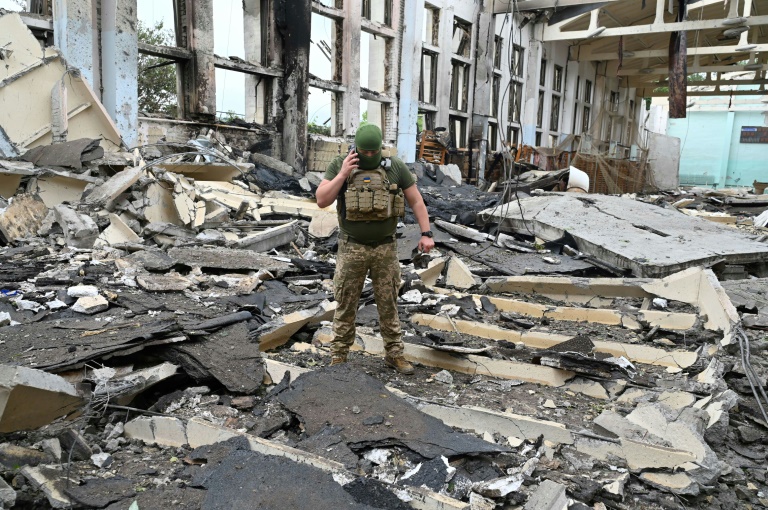
An AFP team at the scene heard strong explosions in the city centre Thursday night, and in the morning saw that the Kharkiv Polytechnic Institute had been hit by missiles, breaking windows and causing its roof to partially collapse. 

According to an unidentified military official at the scene, the Russians “thought there might be something military in there but there was not”. 

In the southern Kherson region, a Moscow-appointed official was killed by an explosive device planted in his car, Russian news agencies reported.

Moscow’s deputy head of Kherson, Kirill Stremousov, said the regional head of the department of family, youth and sports had died “as a result of a terrorist act”.

It was the first confirmed death of a pro-Russian official during a string of attacks on pro-Kremlin officials in Ukrainian regions under Russian control.

With Ukraine pleading for accelerated weapon deliveries, the United States announced it was sending another $450 million of fresh armaments, including HIMARS rocket systems, which can launch multiple missiles at extended range. 

Ukraine’s President Volodymyr Zelensky put in a video appearance at Britain’s famed Glastonbury music festival on Friday, urging revellers to “spread the truth about Russia’s war” and help Ukrainian refugees.

– ‘Future equal EU partner’ –

At a Brussels summit Thursday, EU leaders granted candidate status to Ukraine as well as Moldova, which Zelensky hailed as “a unique and historic moment”. 

“Today it is recognised that Ukraine is not a bridge, not a pillow between the West and Russia, not a buffer between Europe and Asia, not a sphere of influence,” Zelensky said in a video address to Ukrainians on Friday. 

“Ukraine is a future equal partner for at least 27 EU countries,” he said.

Kremlin spokesman Dmitry Peskov dismissed Ukraine’s new EU candidacy status as a “domestic European affair” — though Russian President Vladimir Putin has strongly resisted what Moscow sees as attempts to bring the country into NATO. 

But Ukraine’s NATO aspirations are far from being realised and EU membership is at least years away.

Western officials also reiterated an accusation that Russia is weaponising its key exports of gas as well as grain from Ukraine.

On Friday, German Economy Minister Robert Habeck told Der Spiegel magazine that his country would be confronted with “difficult societal decisions” in the event of a gas shortage.

“When there is not enough gas some industries that need gas will have to be turned off,” Habeck said.

burs-ech/js/pvh
Afghan held in Guantanamo prison freed

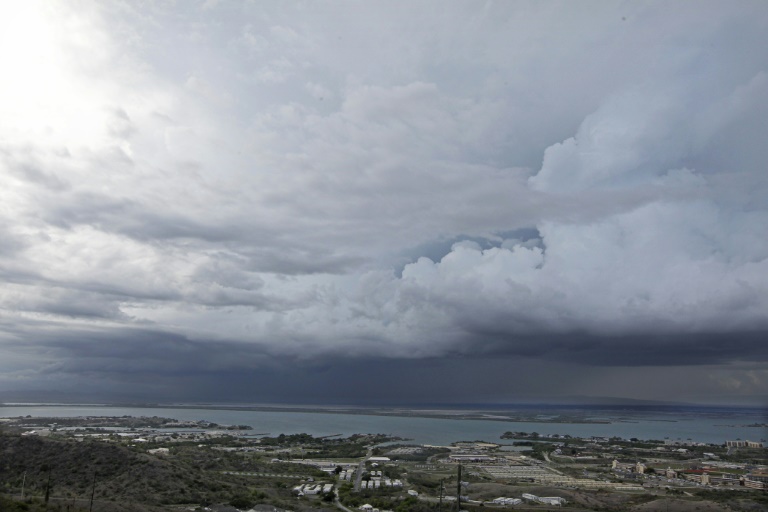
One of the last Afghan detainees held inside the Guantanamo Bay US detention centre in Cuba has been freed after 15 years following negotiations with Washington, authorities said on Friday.

The secretive prison once housed hundreds of suspected militants captured by US forces during America’s “war on terror”, many held without charge or the legal power to challenge their detention.

US authorities faced accusations of torture and abuse against prisoners at the facility, with some allegedly held in cages and subjected to illegal interrogation techniques.

Most of the inmates have been released over the years, including senior Taliban leaders, but Asadullah Haroon had languished without charge.

“The charges against him were false and the release has proved that he was innocent, but who will return those years of his life?” said his brother Roman Khan from Peshawar in Pakistan, where the family live as refugees.

He said they were informed early Friday of Haroon’s freedom.

“It’s like Eid in our house, like a wedding. These are very emotional moments for us,” Khan told AFP.

Haroon, believed to be aged around 40, is now in Qatar. He was arrested by US forces in 2006 while working as a honey trader travelling between Pakistan and Afghanistan.

The US government transferred him in 2007 to Guantanamo Bay, accusing him of being a courier linked to Al-Qaeda and serving as a commander with another militant group, Hezb-e-Islami.

– ‘Torture’ –

In a phone call he had with his lawyers in October 2021, Haroon described his ordeal in the prison.

“I have been here illegally for the last 14 years. I have never been charged. I have never been convicted of a crime,” he told them, according to a statement issued by his lawyers Friday. 

“I am very weak now. I may be 38 years old, I am feeling around 60 years old. I have suffered physically and mentally for years now.”

His release came after a hard battle, his lawyers said.

“Asadullah has suffered severe physical and psychological torture during his detention, including being beaten, hung by his wrists, deprived of food and water, and prevented from praying,” their statement said.

“He has been subjected to sleep deprivation, extreme cold temperatures and solitary confinement.”

His family, who fled to Pakistan during the 1979 Soviet invasion of Afghanistan, have admitted he was a Hezb-e-Islami member like many in their refugee camp, but said he had no links with Al-Qaeda.

His release came after “direct and positive” interaction between the Taliban and Washington, Afghanistan government spokesman Zabihullah Mujahid said in a statement.

Now that he has been released the Taliban must ensure that Haroon “does not pose a threat” to the United States and its allies, a State Department spokesperson said.

Mujahid said Haroon was one of two Afghan detainees remaining in Guantanamo Bay.

The other inmate is Muhammad Rahim, accused by the CIA of being a close associate of Al-Qaeda founder Osama bin Laden.

Afghanistan’s foreign ministry spokesman Abdul Qahar Balkhi said the government was “hopeful” that Rahim will also be freed soon.

US President Joe Biden’s administration has been working to reduce the number of detainees and eventually shut down Guantanamo Bay, which lies on the island of Cuba but is under US jurisdiction.

The Pentagon in April said 37 detainees remained at the sprawling facility.

“The Guantanamo Bay military prison is … a global symbol of American injustice, torture and abuse of power,” the American Civil Liberties Union said in a statement after Haroon’s release. 

Global trade unions urge UK to resolve rail strike row

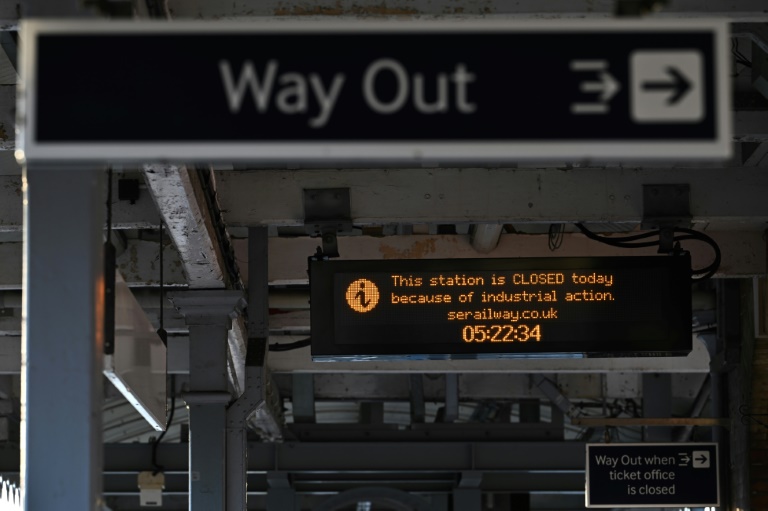
International transport trade unions on Friday urged London to negotiate a swift end to Britain’s biggest rail strike in over 30 years, on the eve of the latest walkout.

More than 100 unions have written an open letter to UK Transport Secretary Grant Shapps calling on him to help settle the bitter row over pay, as surging inflation sparks growing industrial unrest.

The letter, coordinated by the International Transport Workers’ Federation, comes one day before the third of this week’s three rail strikes.

“We are writing to call on you to meet with the transport unions to discuss rail workers’ concerns and enable the unions to reach a negotiated settlement to the disputes with rail employers,” the letter read.

And it called upon the government to “defend rail workers’ jobs, pay, conditions and pensions”.

Shapps has so far refused to get involved in negotiations, arguing that they should be held between workers’ trade unions, Network Rail and private-sector railway operating firms.

The letter was signed by unions from across the world, including Asia, Europe, South America and the Middle East.

“We are shocked that … the UK government is set to impose cuts to railway services and scrap infrastructure projects at exactly the time when it should be investing, expanding and promoting public transport, especially the railways to help reduce global emissions from transport,” the letter continued.

“We call on you to do what’s right by these workers and their communities, and call on you to meet urgently with the transport unions.”

The RMT rail union insists strikes are necessary as wages have failed to keep pace with UK inflation, which has hit a 40-year high and is on course to keep rising.

The RMT also accuses Shapps of having “wrecked” negotiations by not allowing Network Rail to withdraw a letter threatening redundancies of 2,900 RMT members.

However, Shapps has called that “a total lie”.

Rail staff went on strike on Tuesday and Thursday — and are also set to do so on Saturday in the absence of a deal.

A Department for Transport spokesperson denied that the government had sought to obstruct any agreement.

“It is entirely false to claim the government is blocking negotiations,” the spokesperson stated.

“We have said from the outset we urge the unions and industry to agree a deal that is fair for railway staff, passengers and taxpayers.”

Separately, British Airways workers at London’s Heathrow airport voted on Thursday to strike over pay.

Members of the GMB and Unite trade unions overwhelmingly backed action and warned of a “summer of strikes” as the nation’s cost-of-living crisis worsens.

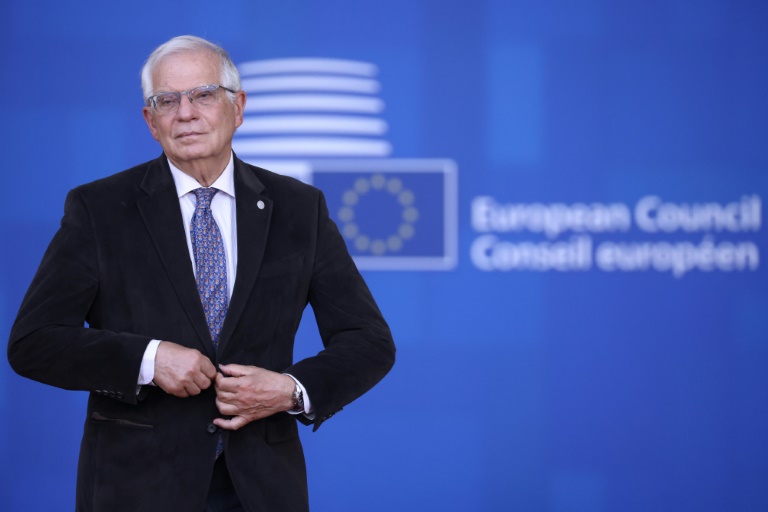
EU top diplomat bids to 'reverse tensions' on surprise Iran visit

European Union foreign policy chief Josep Borrell was headed to Tehran on Friday for a surprise visit that could breathe new life into stalled talks on reviving the 2015 Iran nuclear deal.

Borrell was due to arrive in the Iranian capital at night to meet Foreign Minister Hossein Amir-Abdollahian and other officials, Iran’s foreign ministry spokesman Saeed Khatibzadeh said.

“Diplomacy is the only way to go back to full implementation of the deal and to reverse current tensions,” Borrell tweeted as the EU confirmed his two-day trip in a statement.

News of his previously unannounced visit comes after Amir-Abdollahian said last week that Iran still believed the negotiations could succeed.

The landmark deal has been hanging by a thread since 2018, when then US president Donald Trump unilaterally withdrew from the accord and began imposing crippling economic sanctions on America’s arch enemy.

The administration of incumbent US President Joe Biden has sought to return to the agreement, saying it would be the best path with the Islamic republic.

The talks in Vienna, which began in April last year, aim to return the United States to the deal, including through the lifting of its sanctions on Iran, while ensuring Tehran’s full compliance with its nuclear commitments.

The negotiations stalled in March amid differences between Tehran and Washington, notably over a demand by Iran to remove its Islamic Revolutionary Guard Corps from a US terror list.

– ‘Difficult stops’ –

Amir-Abdollahian on Thursday stressed Iran was “serious” about reaching an agreement.

“I hope we can reach the final point of the agreement in the near future with realism from the American side,” he said, adding that “the nuclear negotiations train has reached difficult stops as they near the end.”

On Thursday, Enrique Mora, the European Union’s coordinator for the talks, tweeted a picture of himself dining together with Borrell and US negotiator Robert Malley at a restaurant in Brussels.

“In depth conversation about #JCPOA and regional perspectives in the wider Middle East. Malley reiterated firm US commitment to come back to the deal,” he wrote, referring to the accord by its formal name, the Joint Comprehensive Plan of Action.

The agreement reached between Iran and six major powers — Britain, China, France, Germany, Russia and the US — gave the Islamic republic relief from sanctions in return for guarantees it could not develop an atomic weapon.

Iran has always denied wanting a nuclear arsenal.

In April, Secretary of State Antony Blinken said the United States still believed a return to the accord was “the best way to address the nuclear challenge posed by Iran”.

Blinken warned at the time that the “breakout time” for Iran to develop a nuclear bomb if it so chooses was “down to a matter of weeks” after the deal pushed it beyond a year.

– ‘Fatal blow’ –

The International Atomic Energy Agency’s board of governors adopted a resolution this month censuring Iran for failing to adequately explain the previous discovery of traces of enriched uranium at three sites which Tehran had not declared as having hosted nuclear activities.

On the same day, June 8, Tehran said it had disconnected a number of IAEA cameras that had been monitoring its nuclear sites.

IAEA chief Rafael Grossi later confirmed that 27 cameras had been disconnected, leaving about 40 still in place.

The move by Iran, he warned, could deal a “fatal blow” to the negotiations unless the UN nuclear watchdog’s inspectors were given access within three to four weeks.

The visit by Borrell, his first to Tehran since February 2020, could be a determining factor in the fate of the deal.

During the talks in Vienna aimed at reviving the accord, Iran has repeatedly called for guarantees from the Biden administration that there will be no repeat of Trump’s pullout.

US Supreme Court ends constitutional right to abortion

The US Supreme Court on Friday ended the right to abortion in a seismic ruling that shreds half a century of constitutional protections on one of the most divisive and bitterly fought issues in American political life.

The conservative-dominated court overturned the landmark 1973 “Roe v Wade” decision that enshrined a woman’s right to an abortion and said individual states can permit or restrict the procedure themselves.

“The Constitution does not confer a right to abortion; Roe and Casey are overruled; and the authority to regulate abortion is returned to the people and their elected representatives,” the court said.

Stocks, oil prices push higher

Global stock markets and oil prices rose Friday following recent heavy losses on fears that interest rate hikes aimed at cooling decades-high inflation will spark a global recession.

London stocks rallied 1.7 percent with investors brushing aside news of bruising defeats for Britain’s ruling Conservatives in by-elections on Thursday. 

The pound firmed against the dollar and euro, despite data showing a drop in UK retail sales volumes as inflation soars.

Paris stocks jumped 2.2 percent in eurozone trade, while Frankfurt rose 0.9 percent with gains tempered by news of the worsening German business climate.

“Stock markets are taking a breather after being beat up… as recession fears took their toll,” OANDA trading platform analyst Craig Erlam told AFP.

But he warned that stock markets remain “vulnerable to another onslaught if the news does not improve”.

Asian stock markets closed higher after Thursday’s gains on Wall Street.

Wall Street kept on rising at the opening bell on Friday, with the Dow adding 0.9 percent.

The recoveries come after global markets have been thrown into turmoil for months owing to soaring inflation, interest-rate hikes, the Ukraine war and China lockdowns.

Federal Reserve boss Jerome Powell this week told lawmakers a recession was “certainly a possibility”.

He suggested officials were ready to press on with big rate hikes, following last week’s three-quarter point increase for US borrowing costs that sent markets tanking.

By contrast, the Bank of Japan is sitting tight over interest rate rises, even as the country’s inflation stands at a seven-year high.

Sentiment in Asia has meanwhile been boosted by comments from Chinese President Xi Jinping suggesting an end to China’s tech crackdown as well as possible new measures aimed at lifting the economy.

Hong Kong shares were among the biggest winners Friday thanks to a rally in tech giants including Alibaba, Tencent and NetEase.

Analysts have been pointing to falling commodity prices in the face of a possible recession means reduced need for sharp interest rate hikes as one possible reason for the rebound in sentiment for equities.

“Falling interest rates and falling commodity prices, which typically go hand-in-hand with a growth slowdown, have been held out as developments working in favor of the rebound effort,” said Patrick O’Hare, analyst at Briefing.com.

“There is some truth to that, knowing that rising interest rates and rising commodity prices have been upsetting factors for most of the year, but one has to be careful stretching the credibility of those rally catalysts knowing that slower growth is going to translate into lower earnings growth prospects” for companies, he added.

– Key figures at around 1330 GMT –

London – FTSE 100: UP 1.7 percent at 7,139.90 points

Frankfurt – DAX: UP 0.9 percent at 13,029.12

Paris – CAC 40: UP 2.2 percent at 6,013.21

EURO STOXX 50: UP 1.8 percent at 3,497.44

New York – Dow: UP 0.9 percent at 30,960.32

Tokyo – Nikkei 225: UP 1.2 percent at 26,491.97 (close)

Hong Kong – Hang Seng Index: UP 2.1 percent at 21,719.06 (close)

Shanghai – Composite: UP 0.9 percent at 3,349.75 (close)

Euro/dollar: UP at $1.0531 from $1.0523 late Thursday

Pound/dollar: UP at $1.2278 from $1.2260

Euro/pound: DOWN at 85.77 pence from 85.83 pence

Dollar/yen: UP at 135.07 yen from 134.95 yen 

Brent North Sea crude: UP 1.2 percent at $111.38 per barrel

West Texas Intermediate: UP 1.5 percent at $105.82 per barrel

burs-rl/lth

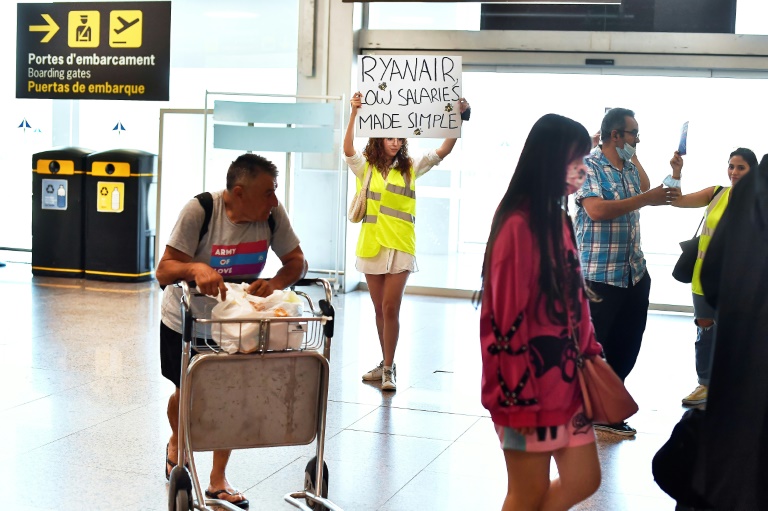
Ryanair, Brussels Airlines strikes disrupt Europe air travel

Strikes by staff at Ryanair and Brussels Airlines over pay and working conditions on Friday forced the cancelation of dozens of flights in Europe as the busy summer travel season gets underway.

The strikes are adding more headaches to passengers and the aviation sector, which has struggled with staff shortages as it struggle to recruit people after massive layoffs during the Covid pandemic.

Ryanair cabin crew unions in Spain, Portugal and Belgium called a three-day strike starting on Friday, and in Italy and France on Saturday.

The biggest impact was felt in Belgium, where the work stoppage led Europe’s biggest budget airline to cancel 127 flights to and from Charleroi airport near Brussels between Friday and Sunday.

Ryanair could only guarantee 30-40 percent of its scheduled flights at the airport, said a spokeswoman for Brussels South Charleroi Airport.

The situation in Belgium was further complicated by a three-day strike by staff at Brussels Airlines, a unit of German airline Lufthansa, which began on Thursday.

The company has cancelled 315 flights to and from Brussels’ international airport during the three-day strike.

The impact of the Ryanair strike was more limited in Portugal, where only two flights we cancelled on Friday morning, according to the SNPVAC union behind the walkout in the country.

It expects the strike to gain force later in the day.

In Spain, where Ryanair employs 1,900 people, no flights we cancelled except those heading to Belgium.

“We didn’t even know there was a strike…we didn’t have any problem at all,” said Manuel Carrion, a Spanish passenger with a Ryanair flight at Madrid airport.

Spain’s transport ministry on Thursday ordered Ryanair to operate 73 percent to 82 percent of flights over the strike period to maintain minimum services.

It argued there needs to be a balance between the “right to strike” and the “interest of travellers”.

– Threats –

But unions said Ryanair had gone beyond what was required and forced staff to maintain 100 percent of flights. Unions said they would take Ryanair to court as a result.

“The company informed staff that all flights were subject to the minimum service, and threated them with disciplinary action,” Ernesto Iglesias of local USO told reporters at Madrid airport.

The airline was not “respecting the law,” he added.

Ryanair cabin crew unions in Spain have called another strike from June 30 to July 2.

A strike on the weekend of June 12 and 13 already prompted the cancellation of about 40 Ryanair flights in France, or about a quarter of the total.

Ryanair boss Michael O’Leary has been dismissive of the strikes, saying earlier this month that most of the company’s flights “will continue to operate even if there is a strike in Spain by some Mickey Mouse union or if the Belgian cabin crew unions want to go on strike.”

– ‘Pushed to the brink’ –

Ryanair’s low-cost rival easyJet also faces nine days of strikes on different days in July at the Barcelona, Malaga and Palma de Mallorca airports.

British Airways workers at London’s Heathrow airport have voted to strike over pay as the cost-of-living crisis worsens in the UK, though no dates were set yet.

The strikes come as air travel has rebounded since Covid-19 restrictions have been lifted.

But the staff shortages have forced airlines to cancel flights, with German carrier Lufthansa cancelling more than 3,000 of them during the summer holidays.

On Monday, the European Transport Workers’ Federation called “on passengers not to blame the workers for the disasters in the airports, the cancelled flights, the long queues and longer time for check-ins, and lost luggage or delays caused by decades of corporate greed and a removal of decent jobs in the sector.”

The Federation said it expects “the chaos the aviation sector is currently facing will only grow over the summer as workers are pushed to the brink.”

Thousands of migrants storm border fence in Spain's Melilla

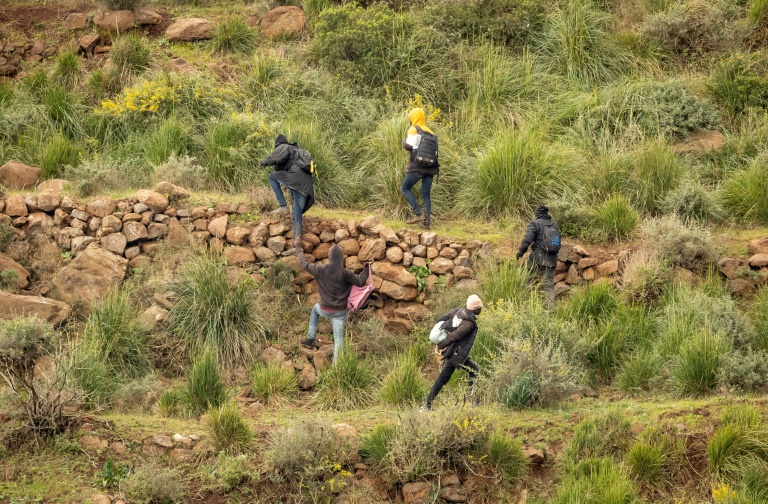
Around 2,000 migrants tried to storm the border separating Spain’s Melilla enclave from Morocco on Friday, the first such attempted mass crossing into the territory since the two nations mended diplomatic ties in March.

Some 2,000 migrants made their way to the border at dawn and over 500 managed to enter the border control area after cutting a fence with shears, the Spanish government’s local delegation said in a statement.

Of these 130 sub-Saharan African migrants, “all of them men and apparently adults”, managed to enter Melilla, it added.

Morocco deployed a “large” amount of forces to try to repel the assault on the border, who “cooperated actively” with Spain’s security forces, the delegation said earlier in a separate statement.

Images on Spanish media showed exhausted migrants laying on the sidewalk in Melilla, some with bloodied hands and torn clothes.

On Thursday night migrants and security forces “clashed” on the Moroccan side of the border, Omar Naji of Moroccan rights group AMDH told AFP.

Morocco’s Hassani Hospital in Nador near Melilla confirmed that “several” police officers and migrants were admitted for treatment.

– ‘New stage’ –

In March this year, Spain ended a year-long diplomatic crisis by backing Morocco’s autonomy plan for Western Sahara going back on its decades-long stance of neutrality. 

Spanish Prime Minister Pedro Sanchez then visited Rabat, and the two governments hailed a “new stage” in relations.

The row began when Madrid allowed Brahim Ghali, leader of Western Sahara’s pro-independence Polisario Front, to be treated for Covid-19 in a Spanish hospital in April 2021.

A month later, some 10,000 migrants surged across the Moroccan border into Spain’s Ceuta enclave as border guards looked the other way, in what was widely seen as a punitive gesture by Rabat.

Rabat calls for the Western Sahara to have an autonomous status under Moroccan sovereignty but the Polisario wants a UN-supervised referendum on self-determination as agreed in a 1991 ceasefire agreement.

In the days just before Morocco and Spain patched up their ties, there were several attempted mass crossings of migrants into Melilla, including one involving 2,500 people, the largest such attempt on record. Nearly 500 made it across

– ‘Means of pressure’ –

Patching up relationship with Morocco, the departure point for many migrants, has meant a drop in arrivals, notably in Spain’s Atlantic Canary Islands. 

The number of migrants who reached the Canary Islands in April was 70 percent lower than in February, government figures show. 

Sanchez earlier this month warned that “Spain will not tolerate any use of the tragedy of illegal immigration as a means of pressure.”

Spain will seek to have “irregular migration” listed as one of the security threats on the NATO’s southern flank when the alliance gathers for a summit in Madrid on June 29-30.

Over the years, thousands of migrants have attempted to cross the 12-kilometre (7.5-mile) border between Melilla and Morocco, or Ceuta’s eight-kilometre border, by climbing the fences, swimming along the coast or hiding in vehicles.

The two territories are protected by fences fortified with barbed wire, video cameras and watchtowers.

The attempts include violent clashes between those crossing and the agents charged to stop them. 

Migrants sometimes use hooks and sticks to try to climb the border fence, and throw stones at police.

Claimed by Morocco, the two cities have long been a flashpoint in diplomatic relations between Rabat and Madrid, which insists both are integral parts of Spain.

Ukraine forces to retreat from battleground city

Ukrainian forces will retreat from Severodonetsk after weeks of fierce fighting over the key city, a senior Ukrainian official said Friday, in a major boost to Russia’s goal of seizing a swathe of eastern Ukraine. 

The announcement came shortly after the European Union granted Ukraine candidate status in a show of support for the former Soviet republic, although there is still a long path ahead to membership.

Russia has focused its offensive on the Donbas region of eastern Ukraine after being repelled from the capital Kyiv and other areas following the February invasion. Its forces have gradually made progress despite encountering fierce resistance and sustaining heavy losses. 

“Despite the growing loss of personnel and equipment, Russians continue to outnumber the (Ukrainian) defence forces in artillery” in certain areas, Oleksandr Motuzyanyk, Ukraine’s defence ministry spokesman, told reporters on Friday. 

“This allows them to gain some tactical success,” Motuzyanyk added.

The strategically important industrial hub of Severodonetsk has been the scene of weeks of street battles as the outgunned Ukrainians put up a stubborn defence.

But Sergiy Gaiday, the governor of the Lugansk region which includes Severodonetsk, said that Ukrainian military forces in the city had received an order to withdraw. 

“Remaining in positions that have been relentlessly shelled for months just doesn’t make sense,” he said on Telegram, adding that 90 percent of the city had been damaged. 

The Ukrainians had already been pushed back from much of the city, leaving them in control of only industrial areas. 

“The Ukrainian army is still in Severodonetsk, it will take them some time to retire,” head of the city’s military administration Roman Vlasenko told Radio Svoboda — the Prague-based Russian-language wing of the US-funded Radio Free Europe.

Capturing Severodonetsk and its twin city of Lysychansk would give the Russians control of Lugansk, and allow them to push further into the wider Donbas.

– Lysychansk under fire –

Gaiday said the Russians were now advancing on Lysychansk, which has been facing increasingly heavy Russian bombardment. 

The situation for those that remain in the city is bleak.

Liliya Nesterenko said her house had no gas, water or electricity and she and her mother were cooking on a campfire. She was cycling along the street, and had come out to feed a friend’s pets. 

But the 39-year-old was upbeat about the city’s defences: “I believe in our Ukrainian army, they should (be able to) cope.”

Andrei Marochko, a spokesman for the Moscow-backed army of Lugansk said Friday on Telegram that all the villages in the neighbouring areas of Zolote and Hirske were now under the control of Russian or pro-Russian forces.

In a video on Marochko’s Telegram channel, a man in military clothing can be seen replacing the Ukrainian flag with the Zolote coat of arms with a red hammer-and-sickle flag. 

Russia’s defence ministry said on Friday that up to 2,000 people were “completely blocked” near Zolote and Hirske, and that around half of Zolote was under Russian control.

– Missiles hit university –

Russia has also intensified its offensive in the northern city of Kharkiv in the past few days. 

An AFP team at the scene heard strong explosions in the city centre last night and in the morning saw that the Kharkiv Polytechnic Institute had been hit by missiles, breaking windows and causing its roof to partially collapse. 

According to an unidentified military official at the scene, the Russians “thought there might be something military in there but there was not”. 

In the southern Kherson region, a Moscow-appointed official was killed by an explosive device planted in his car, Russian news agencies reported.

The Moscow-appointed deputy head of Kherson, Kirill Stremousov, said the regional head of the department of family, youth and sports had died “as a result of a terrorist act”.

It was the first confirmed death of a pro-Russian official during a string of attacks on pro-Kremlin officials in Ukrainian regions under Russian control.

With Ukraine pleading for accelerated weapon deliveries, the United States announced it was sending another $450 million of fresh armaments, including HIMARS rocket systems, which can launch multiple missiles at extended range. 

Ukraine’s President Volodymyr Zelensky said on Twitter that Ukraine was “grateful” to US President Joe Biden for the decision.

“This support… is now more important than ever,” he said.

Zelensky put in an appearance at Britain’s famed Glastonbury music festival on Friday, urging revellers via videolink to “spread the truth about Russia’s war” and help Ukrainian refugees.

– ‘Future equal EU partner’ –

At a Brussels summit Thursday, EU leaders granted candidate status to Ukraine, as well as Moldova.

Zelensky hailed the news as “a unique and historic moment”. 

“Today it is recognised that Ukraine is not a bridge, not a pillow between the West and Russia, not a buffer between Europe and Asia, not a sphere of influence,” Zelensky said in a video address to Ukrainians on Friday. 

“Ukraine is a future equal partner for at least 27 EU countries,” he added.

Kremlin spokesman Dmitry Peskov dismissed Ukraine’s new EU candidacy status as a “domestic European affair”.

Russian President Vladimir Putin has strongly resisted what Moscow sees as attempts to bring the country into NATO. 

But Ukraine’s NATO aspirations are far from being realised and EU membership is at least years away.

burs-ech/sjw/pvh

Swimming and surfing, Gazans savour a cleaner sea

Palestinians in the Israeli-blockaded Gaza Strip are rediscovering the pleasures of the Mediterranean Sea, after authorities declared the end of a long period of hazardous marine pollution.

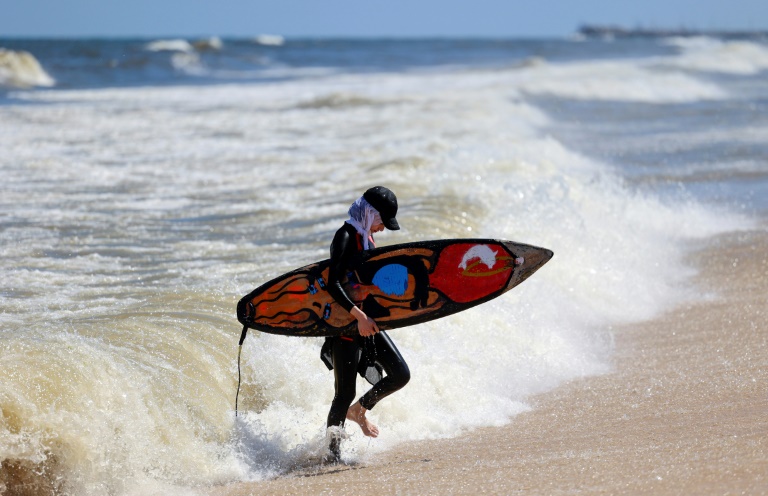
“It has been a year since I entered the water,” said 22-year-old surfer Sabah Abu Ghanem.

“As soon as I enter the water and ride the waves, I feel free and happy; all the negative energy is replaced with positive energy,” she told AFP.

Marine pollution has worsened in recent years in Gaza, where insufficient wastewater solutions have turned the Mediterranean into a dump.

The problem has been further exacerbated by the dilapidated infrastructure of the impoverished and overcrowded enclave.

The Gaza Strip is home to 2.3 million Palestinians who have been living under a strict land, sea and air blockade imposed by Israel since the Islamist movement Hamas seized power in 2007.

Only the Rafah crossing between Gaza and Egypt is outside Israeli control and it too has remained largely closed.

Gaza’s only power station, which supplies electricity to wastewater plants, has been repeatedly damaged by Israeli strikes.

But six months ago, a German-funded plant began operating in central Gaza, and now treats 60,000 cubic metres (more than 2 million cubic feet) of wastewater per day, which is half the enclave’s sewage, according to Mohammed Masleh, an official at Gaza’s environment ministry.

– ‘I missed swimming’ –

This is just the first phase of the project, and eventually, the plant could treat all wastewater in the territory.

The quality of marine water in Gaza has already improved significantly.

Now, according to samples collected by Gazan authorities, two-thirds of the enclave’s beaches are suitable for swimming, said Masleh.

With the start of school holidays and hot summer temperatures, the beach offers a refreshing solace for the residents of Gaza, a narrow sliver of land wedged between the Mediterranean, Israel and Egypt.

It’s a turning point for the enclave, where $300 million has gone into wastewater projects over the past decade, according to Maher Najjar, deputy director of the coastal waters authority.

The new treatment plant, located in Bureij, features generators and solar panels for electrical supply.

Najjar said it recovers 60 tonnes of solid waste each day, all of which would previously have ended up in the sea.

But although Sabah Abu Ghanem is back on her surfboard, she is still reluctant to bring along her children, who “have sensitive skin and could be infected.”

Sitting on the beach in Gaza City with her children and grandchildren, Umm Ibrahim Sider was also cautious.

“I said no one is to go in the water but when the kids saw all the people, they went in and we couldn’t stop them,” said the 64-year-old Palestinian.

One of her grandchildren, Ibrahim, 13, insisted on staying in the water despite his eyes having turned red from the salt.

“I have missed swimming in the sea,” he said.

Close Bitnami banner
Bitnami