World

Prince Charles says Commonwealth nations free to chart own course

Prince Charles told Commonwealth leaders Friday that the choice to become a republic or abandon the queen as head of state was theirs alone, and expressed “personal sorrow” at Britain’s legacy of slavery.

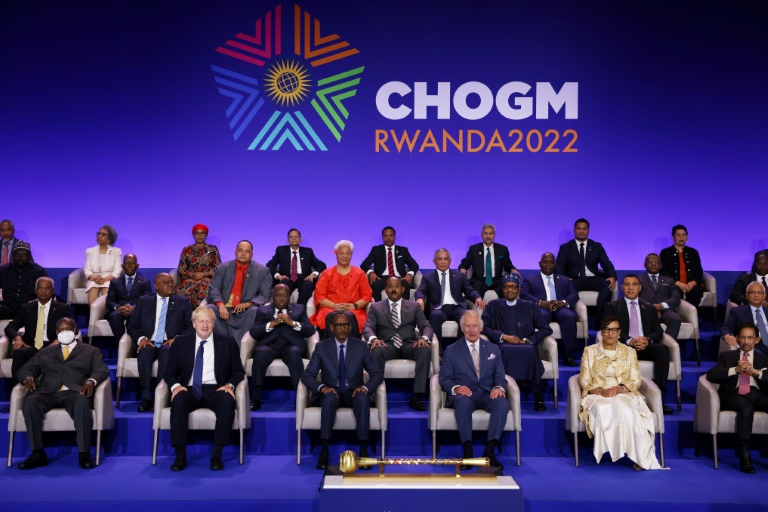
The British heir to the throne addressed the opening of a Commonwealth Heads of Government Meeting (CHOGM) in Rwanda as the host nation faced scrutiny over its rights record and a much-criticised migrant deal with the UK.

Charles is representing Queen Elizabeth II as the 54-nation grouping of mostly former British colonies grapples with questions over its future relevance and modern profile.

Republican movements are taking root in a number of Commonwealth nations and some are seeking reparations for colonial-era injustices like slavery.

Charles acknowledged the change underfoot and said the Commonwealth — which represents one-third of humanity — would always be “a free association of independent, self-governing nations”.

“The Commonwealth contains within it countries that have had constitutional relationships with my family, some that continue to do so, and increasingly those that have had none,” he told an audience of presidents and prime ministers.

“I want to say clearly, as I have said before, that each member’s constitutional arrangement, as republic or monarchy, is purely a matter for each member country to decide.”

He also acknowledged that the roots of the Commonwealth — which includes as members nations from Europe to Africa, Asia and the Americas — “run deep into the most painful period of our history”.

“I cannot describe the depths of my personal sorrow at the suffering of so many, as I continue to deepen my own understanding of slavery’s enduring impact,” he said.

– Migrant row –

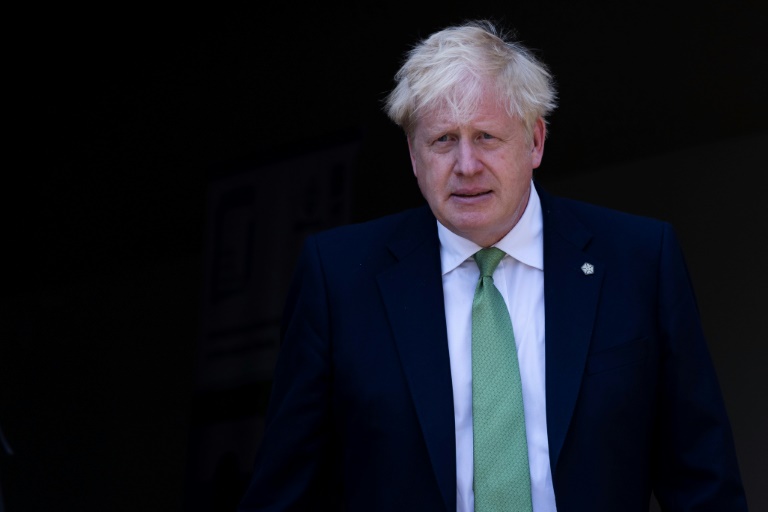
Charles earlier Friday met British Prime Minister Boris Johnson, who has been defending his controversial deal to expel migrants from the UK thousands of miles away to Rwanda.

The scheme, which has stalled in the face of legal challenges, has been fiercely opposed by the UN, church leaders, rights groups and — reportedly — Charles himself.

“What I will say is as people come to Rwanda, like you have today, there are a lot of prejudices about Rwanda need to be blown away,” Johnson told British media in Kigali.

He has also heaped praise on President Paul Kagame for the “leaps and bounds” achieved in Rwanda, despite widespread concerns over a lack of political freedom and civil liberties in the tiny African nation.

Rights groups have openly questioned the suitability of Rwanda hosting the Commonwealth, which has a charter that enshrines respect for democracy and human rights as core shared values.

More than 20 rights groups and civil society organisations issued an open letter before the summit saying a “climate of fear” exists under Kagame, whose party came to power after the horrors of the 1994 genocide.

The Democratic Republic of Congo has also called on Britain to condemn Rwanda over its alleged “aggression” in the mineral-rich eastern Congo, where Kigali has been accused of stoking a rebellion.

Johnson himself is facing a political crisis back home after his Conservatives suffered a crushing defeat in parliamentary by-elections.

– Direction and purpose –

The Commonwealth’s closed-door summit meetings are missing some heavyweights, including Narendra Modi of India, South Africa’s Cyril Ramaphosa and Australia’s Anthony Albanese who sent envoys in their place.

The body has come under scrutiny over its relevance but supporters say the expansion of membership to nations with no historic ties to Britain underscores its value and prestige.

The two newest members are Mozambique and host Rwanda. West African states Togo and Gabon are expected to join the club at this summit.

“More nations are seeking to join, which shows you everything you need to know about the health and vitality of our Commonwealth,” said Johnson.

Friday will also bring to a head a tussle for the leadership of the Commonwealth that has turned ugly at times.

Jamaica’s Foreign Minister Kamina Johnson Smith is challenging Patricia Scotland for the post as secretary-general, despite Commonwealth convention dictating the incumbent should stand unopposed for a second term.

Johnson Smith has the backing of the UK, which has publicly expressed dissatisfaction with Scotland’s stewardship of the organisation.

European stocks, oil prices rebound

European stock markets and oil prices recovered Friday following heavy losses this week on fears that interest rate hikes aimed at cooling decades-high inflation will spark a global recession.

London stocks rallied 1.3 percent around midday with investors brushing aside news of bruising defeats for Britain’s ruling Conservatives in by-elections on Thursday. 

The pound firmed against the dollar and euro, despite data showing a drop in UK retail sales volumes as inflation soars.

Paris stocks jumped 1.8 percent in eurozone trade, while Frankfurt rose 0.8 percent with gains tempered by news of the worsening German business climate.

“Stock markets are taking a breather after being beat up… as recession fears took their toll,” OANDA analyst Craig Erlam told AFP.

But he warned that stock markets remain “vulnerable to another onslaught if the news does not improve”.

Asian stock markets closed higher after Thursday’s gains on Wall Street.

The slight recoveries come after global markets have been thrown into turmoil for months owing to soaring inflation, interest-rate hikes, the Ukraine war and China lockdowns.

Federal Reserve boss Jerome Powell this week told lawmakers a recession was “certainly a possibility”.

He suggested officials were ready to press on with big rate hikes, following last week’s three-quarter point increase for US borrowing costs that sent markets tanking.

By contrast, the Bank of Japan is sitting tight over interest rate rises, even as the country’s inflation stands at a seven-year high.

Sentiment in Asia has meanwhile been boosted by comments from Chinese President Xi Jinping suggesting an end to China’s tech crackdown as well as possible new measures aimed at lifting the economy.

Hong Kong shares were among the biggest winners Friday thanks to a rally in tech giants including Alibaba, Tencent and NetEase.

– Key figures at around 1100 GMT –

London – FTSE 100: UP 1.3 percent at 7,110.72 points

Frankfurt – DAX: UP 0.8 percent at 13,010.79

Paris – CAC 40: UP 1.8 percent at 5,991.39

EURO STOXX 50: UP 1.4 percent at 3,485.73

Tokyo – Nikkei 225: UP 1.2 percent at 26,491.97 (close)

Hong Kong – Hang Seng Index: UP 2.1 percent at 21,719.06 (close)

Shanghai – Composite: UP 0.9 percent at 3,349.75 (close)

New York – Dow: UP 0.6 percent at 30,677.36 (close)

Euro/dollar: UP at $1.0543 from $1.0523 late Thursday

Pound/dollar: UP at $1.2304 from $1.2260

Euro/pound: DOWN at 85.68 pence from 85.83 pence

Dollar/yen: UP at 135.02 yen from 134.95 yen 

Brent North Sea crude: UP 1.6 percent at $111.79 per barrel

West Texas Intermediate: UP 1.6 percent at $105.91 per barrel

Drought hits Italy's hydroelectric plants

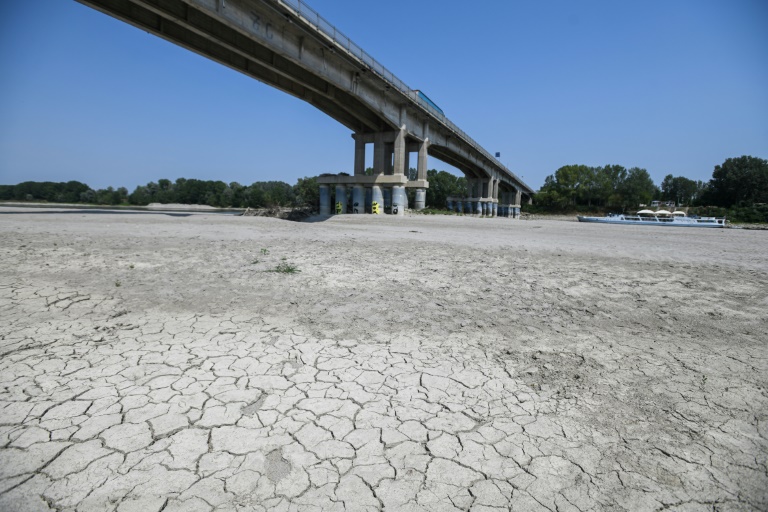
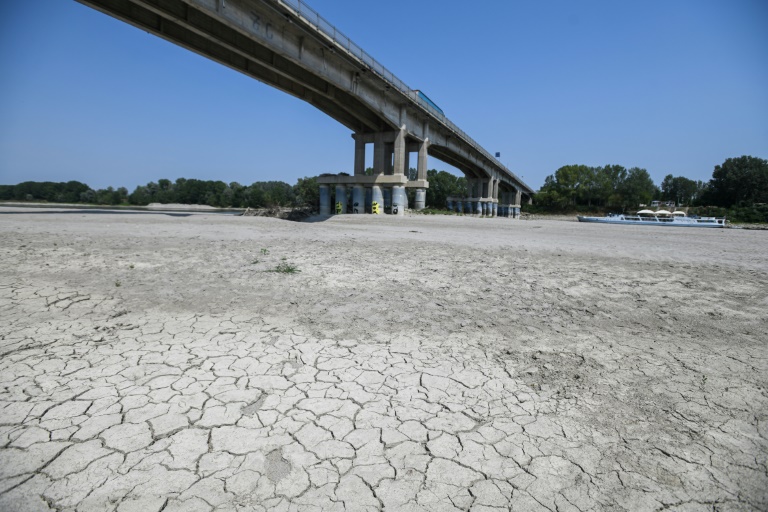
Hydroelectric power in Italy has plunged this year thanks to a drought that has also sparked water restrictions and fears for agriculture, industry sources said Friday.

Hydropower facilities, mostly located in the mountains in the country’s north, provide almost one fifth of Italy’s energy demands.

But the lack of rain is causing problems, at a time when Rome is desperately trying to wean itself off its dependence on Russian gas due to the war in Ukraine.

“From January to May 2022, hydro production fell by about 40 percent compared to the corresponding period in 2021,” a spokesman for Utilitalia, a federation of water companies, told AFP.

“Hydro production has been steadily decreasing since July 2021,” he said, blaming “the severe shortage of water even at high levels”.

An industry source told AFP that while the situation was constantly changing, estimates for the first six months of 2022 suggest nationwide hydroelectric generation will be almost half the equivalent period of 2021.

One small plant near Piacenza, southeast of Milan, was shut indefinitely on June 21 due to low levels on the River Po that feeds it, the Enel energy company said.

“Considering the current drought situation, other hydro plants are not operating at full capacity,” a spokesman added, without giving further details.

The Po River is Italy’s largest reservoir of fresh water. Much of it used by farmers, but is suffering its worst drought for 70 years. 

Italy’s largest agricultural association, Coldiretti, said the drought is putting over 30 percent of national agricultural production and half of livestock farming in the Po Valley at risk.

In the northwest region of Piedmont, water is being rationed in more than 200 municipalities, according to the ANSA news agency.

The Maggiore and Garda lakes are both far lower than usual for this time of year, while further south, the level of the River Tiber that runs through Rome has also dropped.

Drought hits Italy's hydroelectric plants

Hydroelectric power in Italy has plunged this year thanks to a drought that has also sparked water restrictions and fears for agriculture, industry sources said Friday.

Hydropower facilities, mostly located in the mountains in the country’s north, provide almost one fifth of Italy’s energy demands.

But the lack of rain is causing problems, at a time when Rome is desperately trying to wean itself off its dependence on Russian gas due to the war in Ukraine.

“From January to May 2022, hydro production fell by about 40 percent compared to the corresponding period in 2021,” a spokesman for Utilitalia, a federation of water companies, told AFP.

“Hydro production has been steadily decreasing since July 2021,” he said, blaming “the severe shortage of water even at high levels”.

An industry source told AFP that while the situation was constantly changing, estimates for the first six months of 2022 suggest nationwide hydroelectric generation will be almost half the equivalent period of 2021.

One small plant near Piacenza, southeast of Milan, was shut indefinitely on June 21 due to low levels on the River Po that feeds it, the Enel energy company said.

“Considering the current drought situation, other hydro plants are not operating at full capacity,” a spokesman added, without giving further details.

The Po River is Italy’s largest reservoir of fresh water. Much of it used by farmers, but is suffering its worst drought for 70 years. 

Italy’s largest agricultural association, Coldiretti, said the drought is putting over 30 percent of national agricultural production and half of livestock farming in the Po Valley at risk.

In the northwest region of Piedmont, water is being rationed in more than 200 municipalities, according to the ANSA news agency.

The Maggiore and Garda lakes are both far lower than usual for this time of year, while further south, the level of the River Tiber that runs through Rome has also dropped.

Ukraine forces to retreat from battleground city

Ukrainian forces will retreat from Severodonetsk after weeks of fierce fighting over the key city, a senior Ukrainian official said Friday, in a major boost to Russia’s goal of seizing a swathe of eastern Ukraine. 

The announcement came shortly after the European Union granted Ukraine candidate status in a show of support for the former Soviet republic, although there is still a long path ahead to membership.

Russia has focused its offensive on the Donbas region of eastern Ukraine after being repelled from the capital Kyiv and other areas following the February invasion. Its forces have gradually made progress despite encountering fierce resistance and sustaining heavy losses. 

The strategically important industrial hub of Severodonetsk has been the scene of weeks of street battles as the outgunned Ukrainians put up a stubborn defence.

But Sergiy Gaiday, the governor of the Lugansk region which includes Severodonetsk, said that Ukrainian military forces in the city had received an order to withdraw. 

“Remaining in positions that have been relentlessly shelled for months just doesn’t make sense,” he said on Telegram, adding that 90 percent of the city had been damaged. 

The Ukrainians had already been pushed back from much of the city, leaving them in control of only industrial areas. 

Capturing Severodonetsk and its twin city of Lysychansk would give the Russians control of Lugansk, and allow them to push further into the wider Donbas.

– Lysychansk under fire –

Gaiday said the Russians were now advancing on Lysychansk, which has been facing increasingly heavy Russian bombardment. 

The situation for those that remain in the city is bleak.

Liliya Nesterenko said her house had no gas, water or electricity and she and her mother were cooking on a campfire. She was cycling along the street, and had come out to feed a friend’s pets. 

But the 39-year-old was upbeat about the city’s defences: “I believe in our Ukrainian army, they should (be able to) cope.”

A representative of pro-Russian separatists in Ukraine earlier told AFP that the resistance by Ukrainian forces trying to defend Lysychansk and Severodonetsk was “pointless and futile”.

“At the rate our soldiers are going, very soon the whole territory of the Lugansk People’s Republic will be liberated,” said Andrei Marochko, a spokesman for the Moscow-backed army of Lugansk.

On Friday, Marochko said on Telegram that all the villages in the neighbouring areas of Zolote and Hirske were now under the control of Russian or pro-Russian forces.

In a video on Marochko’s Telegram channel, a man in military clothing can be seen replacing the Ukrainian flag with the Zolote coat of arms with a hammer-and-sickle red flag. 

Russia’s defence ministry said on Friday that up to 2,000 people were “completely blocked” near Zolote and Hirske, and that around half of Zolote was under Russian control.

– Missiles hit university –

Russia has also intensified its offensive in the northern city of Kharkiv in the past few days. 

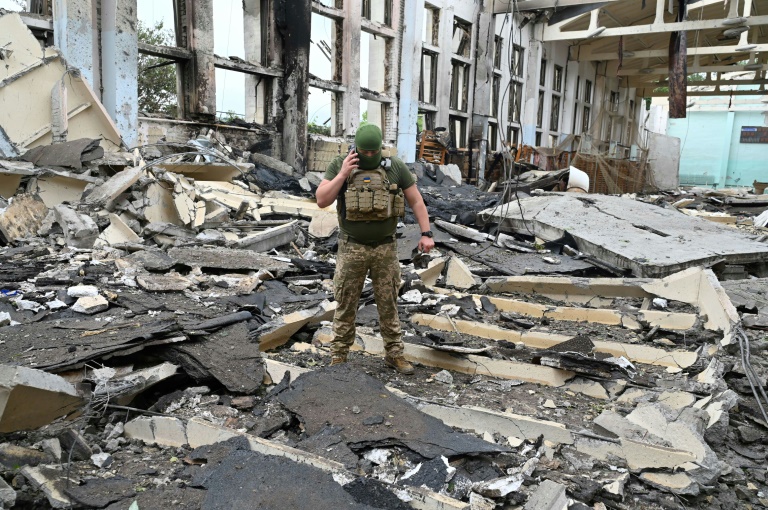
An AFP team at the scene heard strong explosions in the city centre last night and in the morning saw that the Kharkiv Polytechnic Institute had been hit by missiles, breaking windows and causing its roof to partially collapse. 

According to an unidentified military official at the scene, the Russians “thought there might be something military in there but there was not”. 

In the southern Kherson region, a Moscow-appointed official was killed by an explosive device planted in his car, Russian news agencies reported.

The Moscow-appointed deputy head of Kherson, Kirill Stremousov, said the regional head of the department of family, youth and sports had died “as a result of a terrorist act”.

It was the first confirmed death of a pro-Russian official during a string of attacks on pro-Kremlin officials in Ukrainian regions under Russian control.

With Ukraine pleading for accelerated weapon deliveries, the United States announced it was sending another $450 million in fresh armaments, including HIMARS rocket systems, which can launch multiple missiles at extended range. 

Ukraine’s President Volodymyr Zelensky said on Twitter that Ukraine was “grateful” to US President Joe Biden for the decision.

“This support… is now more important than ever,” he said.

– ‘Future equal EU partner’ –

At a Brussels summit Thursday, EU leaders granted candidate status to Ukraine, as well as Moldova.

Zelensky hailed the news as “a unique and historic moment”. 

“Today it is recognised that Ukraine is not a bridge, not a pillow between the West and Russia, not a buffer between Europe and Asia, not a sphere of influence,” Zelensky said in a video address to Ukrainians on Friday. 

“Ukraine is a future equal partner for at least 27 EU countries,” he added.

Kremlin spokesman Dmitry Peskov dismissed Ukraine’s new EU candidacy status as a “domestic European affair”.

Russian President Vladimir Putin has strongly resisted what Moscow sees as attempts to bring the country into NATO. 

But Ukraine’s NATO aspirations are far from being realised and EU membership is at least years away.

burs-sr/ech/sjw/dl

Johnson in crisis after Tories crushed in UK parliamentary votes

British Prime Minister Boris Johnson Friday refused to bow to renewed demands to quit, after his Conservatives suffered two crushing defeats in Westminster elections and a staunch ally resigned.

In a pointed letter to Johnson, party chairman and cabinet member Oliver Dowden said “somebody” had to shoulder the blame for “recent events”.

That was widely seen as a reference to “Partygate” and other scandals dogging the prime minister, who only narrowly survived a no-confidence vote this month among Tory MPs.

But Johnson framed the election setbacks as mid-term blues for the Conservatives, as Britain contends with inflation reaching double-digit levels not seen since the 1970s. 

National strikes by railway workers this week have added to the sense of crisis.

“Clearly we’ve got to listen to these results,” he said from Rwanda, where he is attending a Commonwealth summit. “We will keep going, addressing the concerns of people.”

Johnson travels to Germany and then Spain for G7 and NATO summits after his current visit to Rwanda. He is not due back in Britain until late next week, and in the meantime Tory critics will be sharpening their knives.

If replicated in the next general election due by 2024, the results in the two by-elections would consign the Conservatives to a historic national defeat. 

In the Tiverton and Honiton constituency, southwest England, the party saw its 2019 general election majority of more than 24,000 votes wiped out by the centrist Liberal Democrats, in one of the biggest upsets of UK electoral history. 

The main Labour opposition meanwhile regained the Westminster seat of Wakefield, in northern England, in a further sign of its resurgence after Johnson triumphed in 2019 on a vow to “get Brexit done”.

Since then, the impact of Brexit and the Covid pandemic have worsened the economic picture, and opinion polls show widespread disgust at Johnson’s leadership arising from lockdown-busting parties held in Downing Street.

The victorious Liberal Democrat candidate, Richard Foord, said voters in Tiverton and Honiton had sent a “shockwave through British politics”.

“It’s time for Boris Johnson to go, and go now,” he said.

Labour’s newly elected MP for Wakefield, Simon Lightwood, told Johnson: “Your contempt for this country is no longer tolerated.”

– ‘Ravens leaving the Tower’ –

The reasons for the two by-elections were emblematic of Tory troubles.

The former MP for Tiverton and Honiton had to step down after he was seen watching pornography on his phone in parliament. 

In Wakefield, the MP quit after he was convicted of sexual assault against a 15-year-old boy.

The “porn MP”, Neil Parish, rejected Johnson’s attempts to deflect blame after the Tories lost his rural area of southwest England for the first time since the early 19th century.

“It became a referendum on Boris Johnson and what is happening nationally,” he told BBC television.

Under current party rules, the prime minister should be safe from another leadership vote for 12 months.

But senior MP Geoffrey Clifton-Brown, who sits on the “1922 committee” of Tory backbenchers, indicated that the rules could change.

Johnson will have to defend himself anew to the party in the coming days, he said on BBC radio.

“We will then, in the parliamentary party, have to make a judgment as to whether we think that is a satisfactory explanation, or whether we should actually take steps to have a new prime minister.”

Dowden was an early backer of Johnson’s bid to unseat Theresa May as Conservative leader in June 2019.

“His departure is the ravens leaving the Tower of London,” Daniel Finkelstein, a Conservative lord and journalist, wrote in The Times newspaper.

Another early Johnson backer was Rishi Sunak, who became finance minister. On Twitter, Sunak said he was “sad” at Dowden’s exit.

“We all take responsibility for the results and I’m determined to continue working to tackle the cost of living” he said, without specifying whether he still backs the prime minister.

Afghan quake survivors without food and shelter as aid trickles in

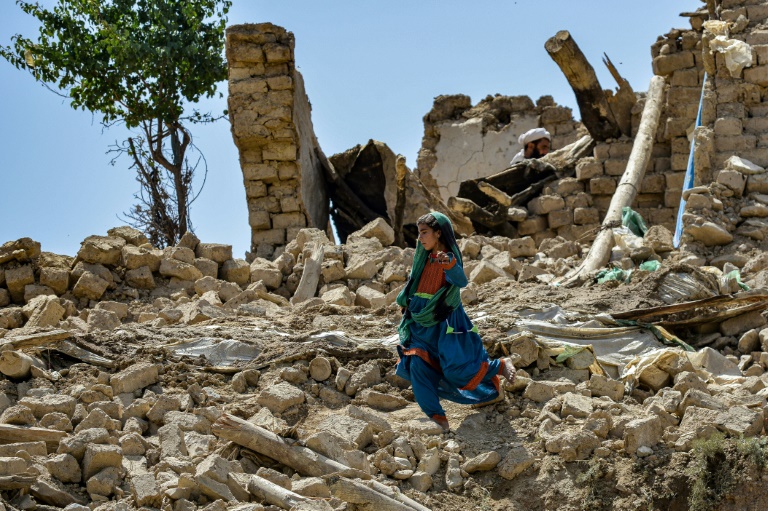
Aid trickled to devastated villages in remote parts of Afghanistan Friday but thousands of people remain without food, shelter and water three days after the country’s deadliest earthquake in decades.

Wednesday’s 5.9-magnitude quake struck hardest in the rugged east along the border with Pakistan while people slept, killing more than 1,000 and leaving thousands homeless.

Entire villages have been levelled in some of the worst affected districts, where survivors said they were even struggling to find equipment to bury their dead.

“There are no blankets, tents… there’s no shelter. Our entire water distribution system is destroyed. There is literally nothing to eat,” 21-year-old Zaitullah Ghurziwal told an AFP team that reached his village in hard-hit Paktika province.

The area was still being roiled by aftershocks that were sending frightened locals scurrying from whatever shelter they had sought in badly damaged dwellings.

One aftershock early Friday killed five people, according to Maqbool Luqmanzai, director of health in Gayan district.

Aid was starting to trickle through in some areas. AFP saw seven trucks from the United Nations World Food Programme trundle into the village of Wuchkai Friday morning, 24 hours after leaving Kabul, to distribute tents and emergency rations.

Two Doctors Without Borders trucks also arrived with medical supplies.

Mohammad Amin Huzaifa, head of information for Paktika province, said heavy rain and floods were hampering efforts to reach those affected.

Communications have also been hit as the quake toppled mobile phone towers and power lines.

The earthquake struck areas already suffering the effects of heavy rain, causing rockfalls and mudslides that wiped out hamlets perched precariously on mountain slopes.

Officials say nearly 10,000 houses were destroyed, an alarming number in an area where the average household size is more than 20 people.

“Seven in one room, five in the other room, four in another, and three in another have been killed in my family,” Bibi Hawa told AFP from a hospital bed in the Paktika capital Sharan.

At Wuchkai, a cemetery on a rise overlooking the village had 11 fresh graves — all members of the same family.

Save the Children said more than 118,000 children were impacted by the disaster.

“Many children are now most likely without clean drinking water, food and a safe place to sleep,” the international charity said.

– UN mobilises –

The disaster poses a huge logistical challenge for the Taliban government, which has isolated itself from much of the world by introducing hardline Islamic rule.

The aid-dependent country saw the bulk of its foreign assistance cut off following the Taliban takeover last August, and even before Wednesday’s disaster the United Nations warned of a humanitarian crisis that threatened the entire population.

But the quake has prompted an outpouring of sympathy from abroad — although many are wary of how any aid will be used.

“The aid distribution will be transparent,” government spokesman Bilal Karimi told AFP, adding “many countries have supported us and stood with us”.

UN Secretary-General Antonio Guterres said the global agency has “fully mobilised” to help. 

According to his office, refugee agency UNHCR has dispatched tents, blankets and plastic sheeting; the World Food Programme has delivered food stocks for about 14,000; and the World Health Organization has provided 10 tonnes of medical supplies sufficient for 5,400 surgeries.

Afghan government officials said Thursday that aid flights had landed from Qatar and Iran, while Pakistan had sent trucks carrying tents, medical supplies and food.

Even before the Taliban takeover, Afghanistan’s emergency response teams were stretched to deal with the natural disasters that frequently strike the country.

But with only a handful of airworthy planes and helicopters left since they returned to power, any immediate response to the latest catastrophe is further limited.

“We hope that the International Community & aid agencies will also help our people in this dire situation,” tweeted Anas Haqqani, a senior Taliban official.

Afghanistan is frequently hit by earthquakes, especially in the Hindu Kush mountain range, near the junction of the Eurasian and Indian tectonic plates.

Afghanistan’s deadliest recent earthquake killed 5,000 in 1998 in the northeastern provinces of Takhar and Badakhshan.

How credible are Ukraine's battlefield statistics?

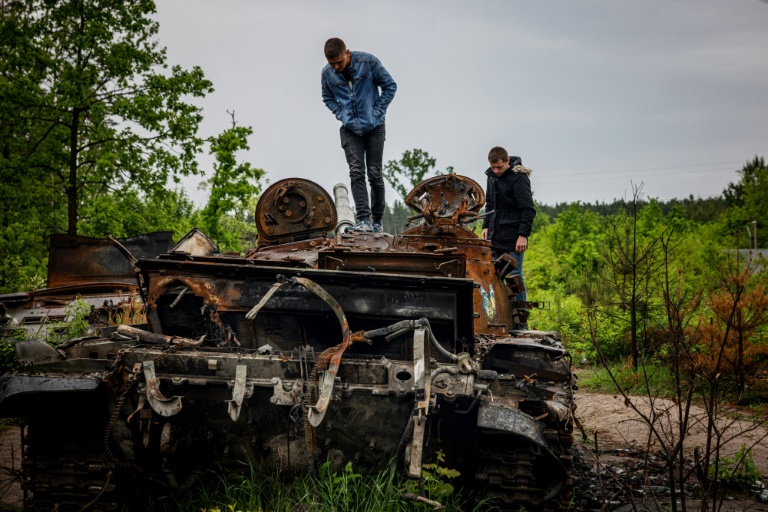
While the outcome of the conflict sparked by Russia’s invasion of Ukraine remains unclear, there is no doubt that Kyiv has already emerged as the undisputed victor in the information war.

Yet alongside admiration for the prowess of Ukraine in projecting its message through modern media, Western sources express scepticism over some of the claims made by Kyiv in an intense information conflict.

The Ukrainian government issues a daily catalogue of Russia’s losses in the four-month long conflict, while remaining cagey about its own casualties and destroyed hardware.

According to its latest update Friday, Russia has lost over 34,500 troops and sustained hardware losses that include over 1,500 tanks, 216 planes and 183 helicopters.

Kyiv reveals no such statistics for its own forces, although President Volodymyr Zelensky revealed earlier this month that it was losing up to 100 soldiers per day as fighting rages in the eastern Donbas region.

Russia however has been also deeply reticent, giving an official toll of troops killed only on two occasions, the last on March 25 with a figure of 1,351 which experts believe is way too low.

“The Ukrainians are controlling information about their own forces and society and have been very successful in doing that,” said Mark Cancian, senior adviser at the Washington-based Center for Strategic and International Studies (CSIS).

“That is not unusual. Allies always manipulate their patrons,” he told AFP, arguing that Britain’s practices were similar in World War II.

Western sources contacted by AFP usually give a much lower figure on Russian casualties — from 15,000 to 20,000 soldiers killed — as do specialist sites on hardware losses like Oryx, which rely on visual proof.

– ‘Maintain credibility’ –

But Cancian warned that Kyiv needed to keep an eye on its long-term credibility in a war that experts believe could last for years.

“It is in the long-run interest of any country to put out accurate information to maintain its credibility, but that’s very hard to do in war time.”

There is “always a desire to be optimistic, to rally the population, to present a picture of success. That short-term incentive overwhelms a longer-term value of credibility”.

A French military source, who asked not to be named, said the Ukrainians “had been very strong and still are” in the information war.

“They have won the narrative battle in Western countries.

“They flooded us with images taken as close as possible in the field. The Russians, strangely, were not present at all here although we expected their propaganda machine to be working.”

But military historian and former French colonel, Michel Goya, said the Ukrainian figures are within “the margin of error between what can be seen and what is real”.

“Military equipment, especially old ex-Soviet (equipment), can be lost without being hit. This is particularly true of artillery pieces out of use after a few thousand rounds,” he said. 

Precise data is non-existent and AFP is cannot independently verify competing claims.

– ‘More weapons’ –

But the numbers on losses — and their reliability — are crucial as the war grinds on and Kyiv ups pressure on Western partners to accelerate and expand weapons shipments.

Kyiv has sometimes also accused some Western powers — notably France and Germany — of not wanting Ukraine to win the war but settle for an accord with Russia after ceding territory, a claim vehemently denied in Paris and Berlin.

There has also been scepticism about Zelensky’s claim Ukraine was losing up to 100 soldiers a day.

“They might have made it sound like the Russians were doing better than they were,” said Phillips O’Brien, professor of Strategic Studies at the University of St Andrews. 

He said Ukraine had given briefings with the aim of creating “greater impetus for NATO governments to send more weapons”. 

But military sources also insist a difference must be drawn between briefings to the public — which may hide an ulterior purpose — and those made to allies in private.

US military sources contacted by AFP expressed serenity over the situation, saying they knew exactly in what state the Ukrainians were.

“I haven’t heard any complaints from the US that they have been misled,” said Cancian.

The building of trust between allies is a real challenge in times of war, given the mix of excessive optimism, impatience and fear of losing everything.

“The Ukrainians do not say everything, it does not mean that they are lying”, said a high-ranking French officer, who asked not to be named. 

Ousted Myanmar leader Suu Kyi's solitary confinement: what we know

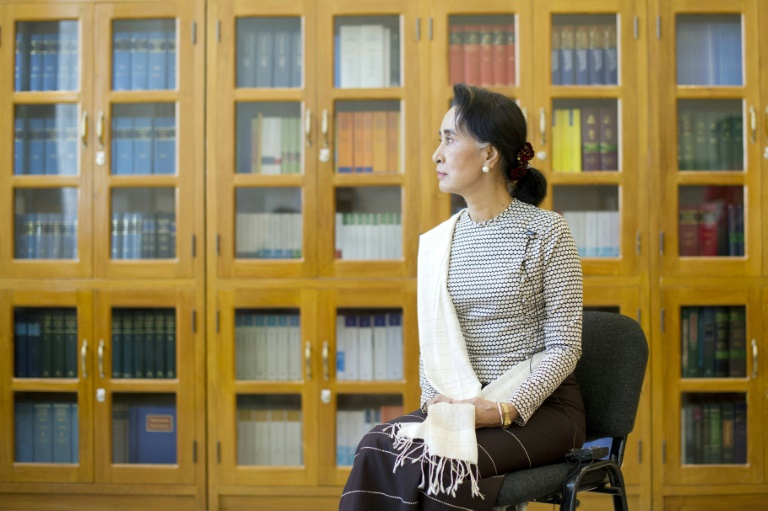
One of the Myanmar military’s first moves during its coup last year was to place Aung San Suu Kyi, the country’s de facto civilian leader and a democracy figurehead who has spent decades battling military rule, under house arrest.

On Thursday, the junta announced the Nobel laureate, 77, would be shifted to solitary confinement in prison in the capital Naypyidaw.

AFP takes a look at what we know about Suu Kyi’s new confinement.

– Where is she now? –

After more than a year of house arrest at an undisclosed location in Naypyidaw, Suu Kyi was on Wednesday moved amid high security to a prison compound on the western side of the sprawling military-built capital.

Satellite imagery shows a series of buildings surrounded by a wall and set back from a main road, but details on where in the complex she is being held are scant.

Richard Horsey of the International Crisis Group (ICG) said reports indicated Suu Kyi would be housed in a “purpose-built dwelling” in the prison.

– What are her new conditions like? –

Suu Kyi will no longer be attended to by the ten or so domestic staff who accompanied her during her house arrest.

Instead, prison authorities will provide three female helpers to look after her, said a source with knowledge of the matter.

Suu Kyi will also be without her dog Taichido — gifted to her in 2010 by her UK-born youngest son when he made a rare visit to Myanmar, according to local media.

Her new conditions are a far cry from the years she spent under house arrest during the previous junta, when she lived at her family’s colonial-era lakeside mansion in Yangon and regularly gave speeches to crowds on the other side of her garden wall.

– Why have they moved her? –

Up until now Suu Kyi — the daughter of independence hero Aung San — had largely been spared the time inside prison given to thousands of other democracy activists during decades of military rule.

“It’s hard to explain their reasoning for this decision after more than a year” of house arrest, a former lawmaker from Suu Kyi’s National League for Democracy party, who did not want to be named, told AFP.

The move was “cruel and there is no doubt malice behind it”, said ICG’s Horsey.

“But there can also be logistical reasons — the regime can easily force her to attend court hearings inside the prison, whereas before she had sometimes declined to travel” to the court, he said.

Independent analyst David Mathieson said the move was “certainly a sign they don’t care about her welfare”. 

– How is she doing? –

Suu Kyi remained sanguine after the transfer to jail, a source with knowledge of the case told AFP.

“She is used to facing any kind of situation calmly,” said the source, who requested anonymity.

Suu Kyi spent around 15 years under house arrest under previous juntas, leading a simple life dominated by reading, meditation and prayer. 

“It was important to establish a routine and to follow it strictly to avoid a feckless squandering of time”, she wrote in the 1990s.

She has, however, missed several hearings in her trial and has sometimes appeared tired by the frequency of her near-daily court appearances.

– What now? –

Her trial on a slew of corruption and other charges — which rights groups decry as a sham — will continue inside the prison compound, the junta has said. 

Suu Kyi faces a prison sentence of more than 150 years if found guilty on all counts. She has already been convicted of a number of offences and sentenced to 11 years imprisonment.

“What else is there to assume other than the junta wants to ensure she spends the rest of her life behind bars,” Manny Maung of Human Rights Watch told AFP.

African economies see reasons for optimism despite crises

From Covid-19 to the war in Ukraine, external crises have put pressure on African economies, but many on the continent see opportunities to undertake radical reforms.

Africa already showed some resilience during the pandemic as its economic contraction was less severe than in the rest of the world, shrinking by two percent compared to 3.3 percent globally in 2020.

While Russia’s invasion of Ukraine is weighing on the world economy, Africa faces a better outlook again in 2022.

“Africa is headed towards growth of around 3.7 percent, while in North America and Europe there is a real risk of recession”, said economist Lionel Zinsou, formerly prime minister of Benin.

“We haven’t been the biggest victims of the pandemic, and we won’t be the biggest victims of the collateral consequences of the war in Ukraine”, added Zinsou.

The conflict in Europe has fuelled a surge in global inflation, but Zinsou said growing prices for raw materials will compensate for the higher costs of imports in Africa.

Another positive signal is that investor confidence in Africa is up to a higher level than that before the pandemic.

Of 190 business owners in Africa who were questioned, 78 percent voiced confidence about their development prospects — compared to 61 percent before the Covid crisis, according to a report by the Deloitte accountancy firm.

– ‘Opportunity to transform’ –

The fallout from the war in Ukraine, however, remains a threat as it has driven up prices for wheat and other key agricultural products, sparking fears of famine in some countries.

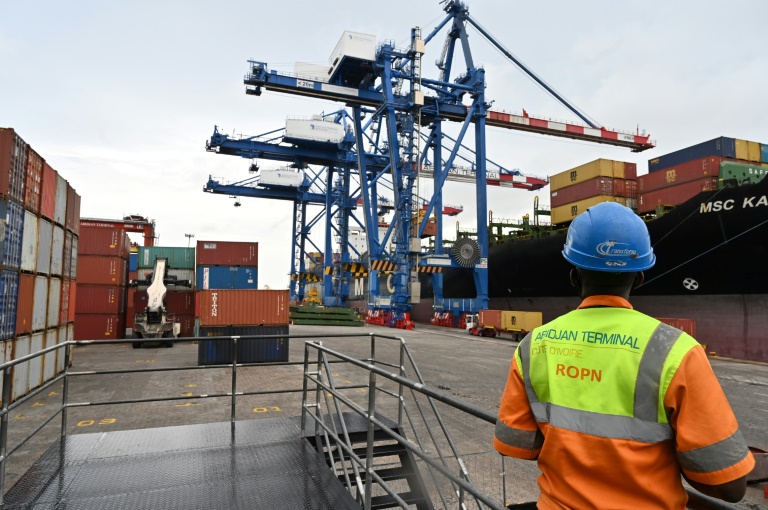
“We are concerned about the slowdown in global growth and the availability for Africa of certain products such as wheat or fertilisers”, Ivory Coast President Alassane Ouattara said during the Africa CEO Forum in Abidjan this month.

Makhtar Diop, general director of the International Finance Corporation (IFC), a branch of the World Bank, said African economies “have taken a hit and haven’t regained their pre-2019 growth rates”.

“The situation remains particularly difficult with inflation which disproportionally affects the poorest populations,” he added.

But some see the situation as a chance for African countries to map out new strategies. 

“We lose a good part of our crops each year due to lack of electricity and cold chain,” said Zinsou, referring to the transport of goods that need to be kept cool across the supply chain.

These losses could be reduced through infrastructure investment, he added.

For Diop, “every crisis is an opportunity to transform the situation structurally. There is potential for the economic transformation of African countries by increasing the added value created on the continent.”

– ‘Gain independence’ –

Some countries have stepped up the pace in recent years. Ivory Coast has built new cashew processing plants, while Nigeria is building a major oil refinery in Lagos. 

In Guinea, foreign companies have recently been tasked with building bauxite processing plants. 

“One of the consequences of the pandemic is that many groups wanted to depend less on foreign imports,” said Emmanuel Gadret, head of Deloitte in francophone Africa. 

Georges Wega, deputy director of international banking networks for the Africa region at France’s Societe Generale financial group, believes that Africa has “a lot of potential” to finance its essential projects.

“This is the time for Africa to gain its independence in many aspects. We need to rely more on funds raised on the continent versus external debt,” he said. 

The African Continental Free Trade Area (AfCFTA), which aims to harmonise customs tariffs across the continent, which is gradually happening, holds out hopes of boosting intra-African trade.

“Africa has been extraordinarily responsive (to the pandemic), financially and technically, and it will be again,” said Zinsou. 

Close Bitnami banner
Bitnami