World

EU top diplomat bids to 'reverse tensions' on surprise Iran visit

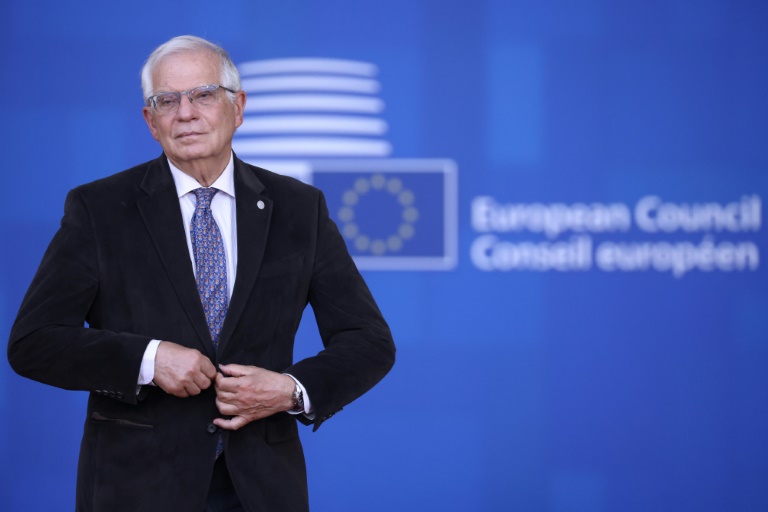
European Union foreign policy chief Josep Borrell is set to travel to Tehran on Friday for a surprise visit that could breathe new life into stalled talks on reviving the 2015 Iran nuclear deal.

Borrell was due to arrive in the Iranian capital at night to meet Foreign Minister Hossein Amir-Abdollahian and other officials, Iran’s foreign ministry spokesman Saeed Khatibzadeh said.

“Diplomacy is the only way to go back to full implementation of the deal and to reverse current tensions,” Borrell tweeted as the EU confirmed his two-day trip in a statement.

News of his previously unannounced visit comes after Amir-Abdollahian said last week that Iran still believed the negotiations could succeed.

The landmark deal has been hanging by a thread since 2018, when then US president Donald Trump unilaterally withdrew from the accord and began imposing crippling economic sanctions on America’s arch enemy.

The administration of incumbent US President Joe Biden has sought to return to the agreement, saying it would be the best path with the Islamic republic.

The talks in Vienna, which began in April last year, aim to return the United States to the deal, including through the lifting of its sanctions on Iran, while ensuring Tehran’s full compliance with its nuclear commitments.

The negotiations stalled in March amid differences between Tehran and Washington, most notably due to a demand by Iran to remove its Islamic Revolutionary Guard Corps from a US terror list.

Amir-Abdollahian on Thursday stressed Iran was “serious” about reaching an agreement.

“I hope we can reach the final point of the agreement in the near future with realism from the American side,” he said, adding that “the nuclear negotiations train has reached difficult stops as they near the end.”

On Thursday, Enrique Mora, the European Union’s coordinator for the talks, tweeted a picture of himself dining together with Borrell and US negotiator Robert Malley at a restaurant in Brussels.

“In depth conversation about #JCPOA and regional perspectives in the wider Middle East. Malley reiterated firm US commitment to come back to the deal,” he wrote, referring to the accord by its formal name, the Joint Comprehensive Plan of Action.

– ‘Fatal blow’ –

The agreement reached between Iran and six major powers — Britain, China, France, Germany, Russia and the US — gave the Islamic republic relief from sanctions in return for guarantees it could not develop an atomic weapon.

Iran has always denied wanting a nuclear arsenal.

In April, Secretary of State Antony Blinken said the United States still believed a return to the accord was “the best way to address the nuclear challenge posed by Iran”.

Blinken warned at the time that the “breakout time” for Iran to develop a nuclear bomb if it so chooses was “down to a matter of weeks” after the deal pushed it beyond a year.

The International Atomic Energy Agency’s board of governors adopted a resolution this month censuring Iran for failing to adequately explain the previous discovery of traces of enriched uranium at three sites which Tehran had not declared as having hosted nuclear activities.

On the same day, June 8, Tehran said it had disconnected a number of IAEA cameras that had been monitoring its nuclear sites.

IAEA chief Rafael Grossi later confirmed that 27 cameras had been disconnected, leaving about 40 still in place.

The move by Iran, he warned, could deal a “fatal blow” to the negotiations unless the UN nuclear watchdog’s inspectors were given access within three to four weeks.

The visit by Borrell, however, could be a determining factor in the fate of the deal.

During the talks in Vienna aimed at reviving the accord, Iran has repeatedly called for guarantees from the Biden administration that there will be no repeat of Trump’s pullout.

Markets rise as recession talk tempers rate hike expectations

Stocks climbed Friday following another rally on Wall Street as investors try to process central bank moves to fight soaring inflation and the growing possibility that those measures will induce a recession.

Global markets have been thrown into turmoil for months by a perfect storm of crises that have left observers predicting a sharp contraction, including the Ukraine war, China’s lockdown-induced economic troubles, supply chain snarls and spiking energy costs.

Expectations that the Federal Reserve and other central banks will have to keep lifting rates have left many traders fretting that the pain could go on for some time, with sovereign bond yields — key gauges to future rates — continuing to climb.

This week Fed boss Jerome Powell told lawmakers a recession was “certainly a possibility” and suggested officials were ready to press on with big rate hikes, following a three-quarter point lift this month.

However, analysts said speculation that a recession is on the way has helped push yields down in recent days and led traders to scale back their expectations for the length of rate hikes.

Demand concerns have also helped send oil prices — a key driver of inflation — lower with both main contracts down around 15 percent over the past week.

Added to the mix this week are comments from President Xi Jinping suggesting an end to China’s tech crackdown as well as possible new measures aimed at boosting the economy.

“As we have been saying for some time now, for stocks to return to any semblance of form, it would likely require an unlikely upbeat mix of a seamless China growth recovery, a top in US bond yields, and much softer oil prices,” said Stephen Innes at SPI Asset Management.

“While a tall order and still a near-term unlikely combination scenario, the fall in commodity prices, especially oil, should be music to the Fed’s ears, so some could be ticking one or two of those boxes off.”

In early Asia trade investors took their cue from Wall Street, where all three main indexes closed with healthy gains, including a more than one percent advance on the Nasdaq.

Hong Kong was among the biggest winners thanks to a rally in tech giants including Alibaba, Tencent and NetEase.

Tokyo, Mumbai, Shanghai, Sydney, Seoul, Singapore, Taipei, Manila and Jakarta were also well up, while in Europe London, Paris and Frankfurt all rose in the morning.

Lower expectations for US rates and bets on a recession also saw the dollar drop against the safe haven yen, having surged to a 24-year high on the Japanese unit at the start of the week.

“Assuming that the Fed will have to change course sooner than late 2023 isn’t an unreasonable assumption,” said OANDA’s Jeffrey Halley. 

“The Fed and a procession of central banks around the world got inflation completely wrong and have been scrambling to reverse the mistake. Given their track record, assuming they are going to be wrong the other way is completely reasonable in that context.”

– Key figures at around 0810 GMT –

Tokyo – Nikkei 225: UP 1.2 percent at 26,491.97 (close)

Hong Kong – Hang Seng Index: UP 2.1 percent at 21,719.06 (close)

Shanghai – Composite: UP 0.9 percent at 3,349.75 (close)

London – FTSE 100: UP 0.6 percent at 7,063.88

Dollar/yen: DOWN at 134.51 yen from 134.94 yen late Thursday

Pound/dollar: UP at $1.2269 from $1.2259

Euro/dollar: UP at $1.0528 from $1.0526

Euro/pound: DOWN at 85.77 pence from 85.80 pence

West Texas Intermediate: UP 0.1 percent at $104.33 per barrel

Brent North Sea crude: DOWN 0.2 percent at $109.88 per barrel

New York – Dow: UP 0.6 percent at 30,677.36 (close)

War in Ukraine: Latest developments

Here are the latest developments in the war in Ukraine:

– Ukrainian forces to withdraw from Severodonetsk – 

Ukrainian forces will retreat from Severodonetsk in the embattled eastern Donbas region in the face of a brutal Russian offensive, says Sergiy Gaiday, the governor of Lugansk, which includes the city.

The strategically important city has been the scene of weeks of street battles as the outgunned Ukrainians put up a fierce defence. 

“Remaining in positions that have been relentlessly shelled for months just doesn’t make sense,” Gaiday says, adding that the city has been “nearly turned to rubble”.

Taking Severodonetsk, along with its twin city Lysychansk, would give Moscow control of the whole of Lugansk, one of two regions with neighbouring Donetsk that make up Ukraine’s industrial heartland of Donbas.

Russia has been focusing its offensive on eastern Ukraine after being repelled from Kyiv following their February invasion. 

– Ukraine granted ‘historic’ EU candidacy –

European Union leaders agree to grant “candidate status” to war-torn Ukraine and neighbouring Moldova, in a show of support in the face of Russia’s war, EU chief Charles Michel says. 

“A historic moment. Today marks a crucial step on your path towards the EU,” Michel tweets during a summit in Brussels. 

Ukraine’s President Volodymyr Zelensky hails the news as “a unique and historic moment”, adding: “Ukraine’s future is within the EU.”

French President Emmanuel Macron says that the decision by EU leaders sends “very strong signal” to Russia that Europeans support the pro-Western aspirations of Ukraine.

Securing candidate status is the first step on the road to EU membership, a process that can take years.

– US to send more advanced rocket systems –

The United States is sending $450 million of new military assistance to Ukraine, the White House says, with the shipment including four more advanced rocket systems to use against Russian invasion forces.

White House spokesman John Kirby says the package includes new High Mobility Artillery Rocket Systems, as well as tens of thousands of rounds of artillery ammunition and patrol boats.

Ukraine said on Thursday it had taken an initial delivery of US HIMARS.

Kyiv has pleaded for the new rocket systems, which have greater range than those it is currently using, in order to be able to strike Russian targets from safe positions.

– World leaders seek united front on Ukraine –

World leaders prepare for back-to-back G7 and NATO summits from Sunday, at which they will seek to close ranks on offering emphatic support to help Ukraine repel Russian forces.

At the talks they will take stock of the effectiveness of sanctions imposed so far against Russia, consider possible new military and financial aid for Ukraine, and begin turning their eye to longer-term reconstruction plans. 

But they are expected to struggle to maintain a united front as the fallout from the war — from soaring inflation to looming food shortages to fears over energy supplies — dents their resolve.

– Moscow official killed in Kherson –

A Moscow-appointed official in Ukraine’s southern Kherson region has been killed in an explosion, Russian news agencies report, the latest in a string of attacks on pro-Kremlin officials in Ukrainian regions under Russian control.

“According to preliminary data, he died. An explosive device was planted in his car,” a representative of the Kherson region administration tells Interfax, confirmed by other news agencies. 

The Moscow-appointed deputy leader of Kherson region, Kirill Stremousov, confirmed to the RIA Novosti news agency that the victim was the head of the region’s department of youth policy, family and sports. 

Ukraine forces to retreat from battleground city: governor

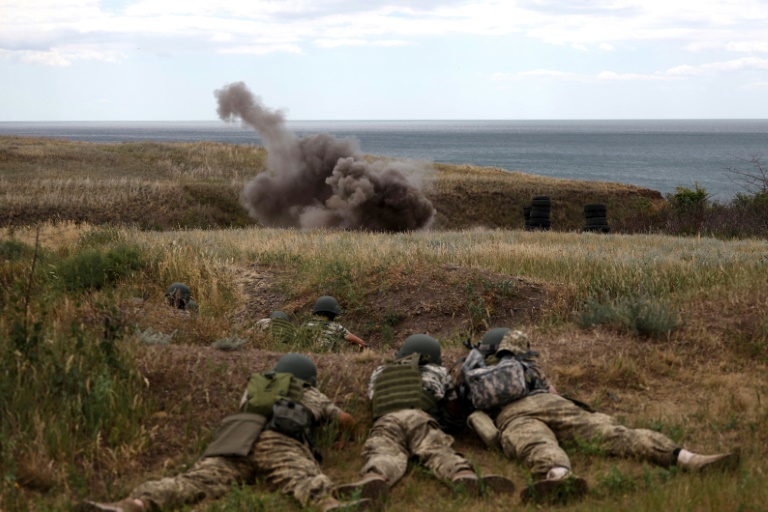
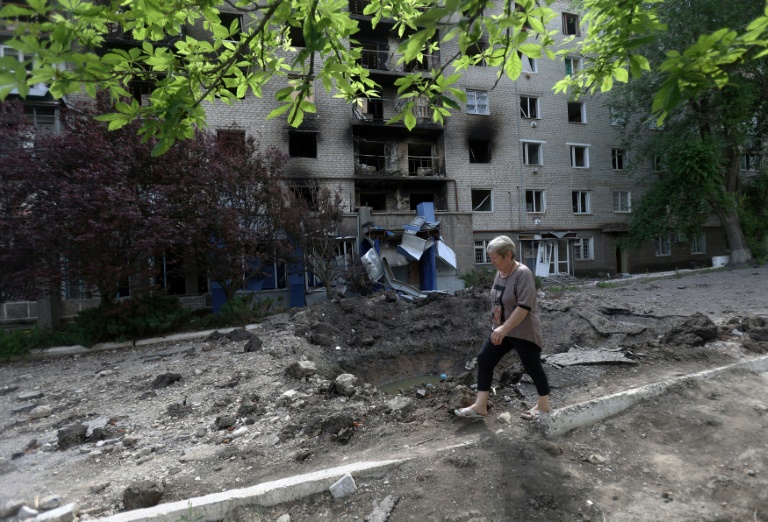
Ukrainian forces will retreat from Severodonetsk in the face of a brutal Russian offensive that is reducing the battleground eastern city to rubble, a senior Ukrainian official said Friday.

The news came shortly after the European Union made a strong show of support for Ukraine, granting the former Soviet republic candidate status, although there is still a long path ahead to membership.

Capturing Severodonetsk has become a key goal of the Russians as they focus their offensive on eastern Ukraine after being repelled from Kyiv and other areas following their February invasion. 

The strategically important industrial hub has been the scene of weeks of street battles as the outgunned Ukrainians put up a fierce defence. 

But Sergiy Gaiday — governor of Lugansk, which includes the city — said the Ukrainian military would have to retreat. 

“They have received an order” to withdraw, he said on Telegram. 

“Remaining in positions that have been relentlessly shelled for months just doesn’t make sense.”

The city has been “nearly turned to rubble” by continual bombardment, he added. 

“All critical infrastructure has been destroyed. Ninety percent of the city is damaged, 80 percent (of) houses will have to be demolished,” he said. 

The Ukrainians had already been pushed back from much of the city, leaving them in control of only industrial areas. 

Capturing Severodonetsk and its twin city of Lysychansk would give the Russians control of Lugansk, and allow them to push further into the wider Donbas.

– Lysychansk under fire –

Gaiday said the Russians were now advancing on Lysychansk, which has been facing increasingly heavy Russian bombardment. 

AFP journalists driving out of the city Thursday twice had to jump out of cars and lie on the ground as Russian forces shelled its main supply road. 

They saw dark smoke rising over the road ahead, and heard artillery fire and saw flashes of light, while the road was strewn with trees felled by shelling.

The situation for those that remain in the city is bleak.

Liliya Nesterenko said her house had no gas, water or electricity and she and her mother were cooking on a campfire. She was cycling along the street, and had come out to feed a friend’s pets. 

But the 39-year-old was upbeat about the city’s defences: “I believe in our Ukrainian army, they should (be able to) cope.

“They’ve prepared already.”

A representative of pro-Russian separatists in Ukraine earlier told AFP the resistance of Ukrainian forces trying to defend Lysychansk and Severodonetsk was “pointless and futile”.

“At the rate our soldiers are going, very soon the whole territory of the Lugansk People’s Republic will be liberated,” said Andrei Marochko, a spokesman for the Moscow-backed army of Lugansk.

In the southern Kherson region, a Moscow-appointed official was killed in an explosion, Russian news agencies reported, the latest in a string of attacks on pro-Kremlin officials in Ukrainian regions under Russian control.

Interfax reported an explosive device was planted in the car of the victim, who was likely the head of the region’s department of youth policy, family and sports.

With Ukraine pleading for accelerated weapon deliveries, the United States announced it was sending another $450 million in fresh armaments, including Himars rocket systems, which can launch multiple missiles at extended range. 

– ‘Historic’ EU decision –

At a Brussels summit Thursday, EU leaders granted candidate status to Ukraine, as well as Moldova.

Ukraine’s President Volodymyr Zelensky hailed the news as “a unique and historic moment”, adding: “Ukraine’s future is within the EU.”

French President Emmanuel Macron said the decision by EU leaders sent a “very strong signal” to Russia that Europeans support the pro-Western aspirations of Ukraine.

President Vladimir Putin had declared Ukraine to be part of Moscow’s sphere and insisted he was acting due to attempts to bring the country into NATO, the Western alliance that comes with security guarantees.

European powers before the invasion had distanced themselves from US support for Ukraine’s NATO aspirations, and EU membership is at least years away.

Ukraine and Moldova will have to go through protracted negotiations and the European Union has laid out steps that Kyiv must take even before that, including bolstering the rule of law and fighting corruption.

Western officials have accused Russia of weaponising its key exports of gas as well as grain from Ukraine, contributing to global inflation and rising hunger in the world.

A US official warned of new retaliatory measures against Russia at the Group of Seven summit being attended by President Joe Biden in Germany starting Sunday.

Germany ratcheted up an emergency gas plan to its second alert level, just one short of the maximum that could require rationing in Europe’s largest economy, after Russia slashed supplies.

“Gas is now a scarce commodity,” German Economy Minister Robert Habeck told reporters, urging households to cut back on use. 

burs-sr/axn

World's largest bacteria discovered in Guadeloupe

You can see it with the naked eye and pick it up with a pair of tweezers — not bad for a single bacteria.

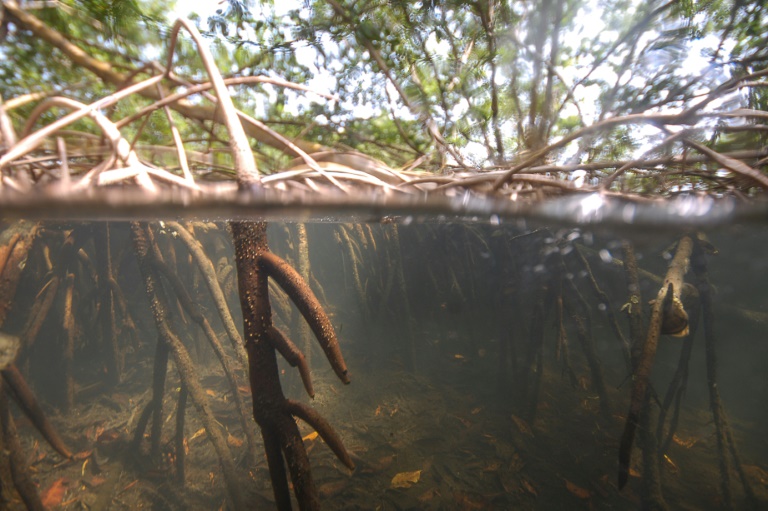
Scientists say they have discovered the world’s largest variety in the mangroves of Guadeloupe — and it puts its peers to shame.

At up to two centimetres (three-quarters of an inch), “Thiomargarita magnifica” is not only around 5,000 times bigger than most bacteria — it boasts a more complex structure, according to a study published in the journal Science on Thursday.

The discovery “shakes up a lot of knowledge” in microbiology, Olivier Gros, professor of biology at the University of the Antilles and co-author of the study, told AFP.

In his laboratory in the Caribbean island group city of Pointe-a-Pitre, he marvelled at a test tube containing strands that look like white eyelashes.

“At first I thought it was anything but a bacterium because something two centimetres (in size) just couldn’t be one”, he said.

The researcher first spotted the strange filaments in a patch of sulphur-rich mangrove sediment in 2009.

Techniques including electronic microscopy revealed it was a bacterial organism, but there was no guarantee it was a single cell.

– ‘As tall as Mount Everest’ –

Molecular biologist Silvina Gonzalez-Rizzo, from the same laboratory, found it belonged to the Thiomargarita family, a bacterial genus known to use sulphides to grow. And a researcher in Paris suggested they were indeed dealing with just one cell.

But a first attempt at publication in a scientific journal a few years later was aborted. 

“We were told: ‘This is interesting, but we lack the information to believe you’,” Gros said, adding that they needed stronger images to provide proof.

Then a young researcher, Jean-Marie Volland, managed to study the bacterium with the Lawrence Berkeley National Laboratory, run by the University of California.

With financial backing and access to some of the best tools in the field, Volland and his colleagues began building up a picture of the colossal bacteria.

It was clearly enormous by bacterial standards — scaled up to human proportions, it would be like meeting someone “as tall as Mount Everest”, Volland said.

Specialist 3D microscope images finally made it possible to prove that the entire filament was indeed a single cell.

But they also helped Volland make a “completely unexpected” discovery.

Normally, a bacterium’s DNA floats freely in the cell. But in the giant species, it is compacted in small structures surrounded by a membrane, he explained.

This DNA compartmentalisation is “normally a feature of human, animal and plant cells, complex organisms… but not bacteria,” Volland said.

Future research will have to determine if these characteristics are unique to Thiomargarita magnifica, or if they can be found in other species of bacteria, Gros said.

World's largest bacteria discovered in Guadeloupe

You can see it with the naked eye and pick it up with a pair of tweezers — not bad for a single bacteria.

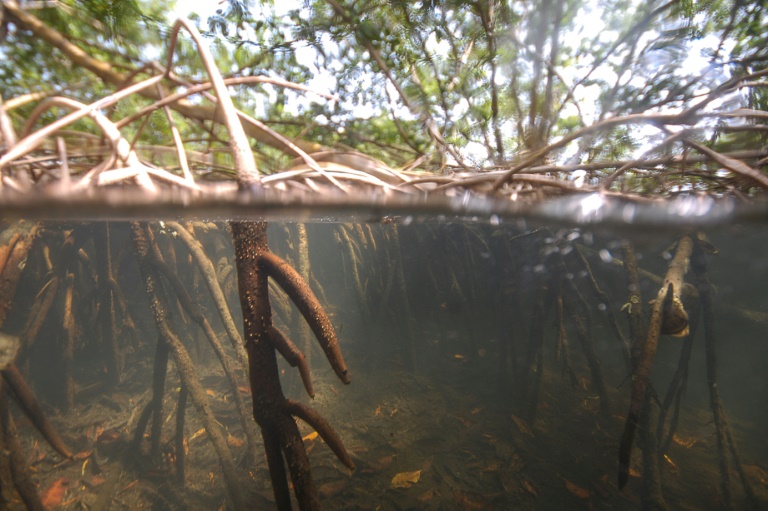
Scientists say they have discovered the world’s largest variety in the mangroves of Guadeloupe — and it puts its peers to shame.

At up to two centimetres (three-quarters of an inch), “Thiomargarita magnifica” is not only around 5,000 times bigger than most bacteria — it boasts a more complex structure, according to a study published in the journal Science on Thursday.

The discovery “shakes up a lot of knowledge” in microbiology, Olivier Gros, professor of biology at the University of the Antilles and co-author of the study, told AFP.

In his laboratory in the Caribbean island group city of Pointe-a-Pitre, he marvelled at a test tube containing strands that look like white eyelashes.

“At first I thought it was anything but a bacterium because something two centimetres (in size) just couldn’t be one”, he said.

The researcher first spotted the strange filaments in a patch of sulphur-rich mangrove sediment in 2009.

Techniques including electronic microscopy revealed it was a bacterial organism, but there was no guarantee it was a single cell.

– ‘As tall as Mount Everest’ –

Molecular biologist Silvina Gonzalez-Rizzo, from the same laboratory, found it belonged to the Thiomargarita family, a bacterial genus known to use sulphides to grow. And a researcher in Paris suggested they were indeed dealing with just one cell.

But a first attempt at publication in a scientific journal a few years later was aborted. 

“We were told: ‘This is interesting, but we lack the information to believe you’,” Gros said, adding that they needed stronger images to provide proof.

Then a young researcher, Jean-Marie Volland, managed to study the bacterium with the Lawrence Berkeley National Laboratory, run by the University of California.

With financial backing and access to some of the best tools in the field, Volland and his colleagues began building up a picture of the colossal bacteria.

It was clearly enormous by bacterial standards — scaled up to human proportions, it would be like meeting someone “as tall as Mount Everest”, Volland said.

Specialist 3D microscope images finally made it possible to prove that the entire filament was indeed a single cell.

But they also helped Volland make a “completely unexpected” discovery.

Normally, a bacterium’s DNA floats freely in the cell. But in the giant species, it is compacted in small structures surrounded by a membrane, he explained.

This DNA compartmentalisation is “normally a feature of human, animal and plant cells, complex organisms… but not bacteria,” Volland said.

Future research will have to determine if these characteristics are unique to Thiomargarita magnifica, or if they can be found in other species of bacteria, Gros said.

Thailand relaxes mask rule to bolster pandemic-hit tourism

Thailand has dropped rules requiring people to wear masks from Friday, the government says, as Covid-19 cases fall and the tourism-dependent kingdom seeks to lure back foreign visitors.

Face masks had been compulsory in public since mid-2021, when the country saw a wave of cases driven by the spread of the Delta variant. 

But the kingdom is keen to kickstart its stuttering economy and is relaxing Covid-19 restrictions, including discarding most entry requirements from next month.

“Wearing a surgical mask or cloth mask is a voluntary practice,” said Prime Minister Prayut Chan-O-Cha in a royal gazette announcement issued late Thursday.

The health ministry recommends people continue to wear face masks in crowded or poorly ventilated areas, the statement added, but there was no explicit mention of public transport.

The capital Bangkok’s privately-owned metro service later announced, however, that it would still require travellers using its trains to wear masks.

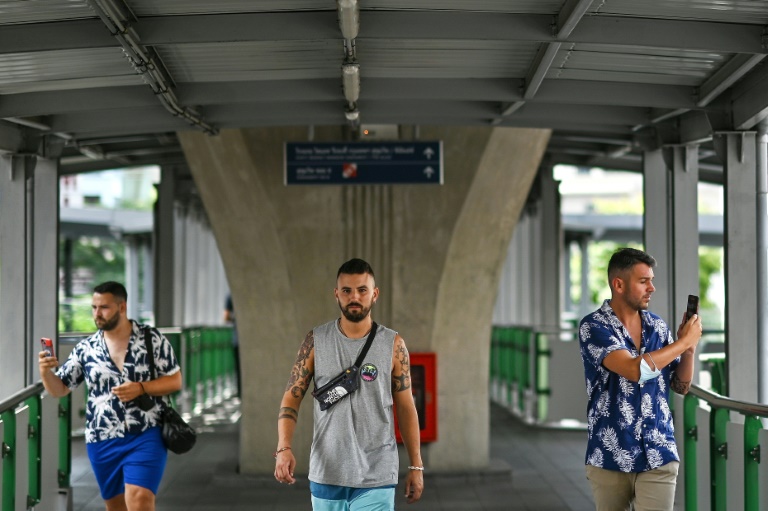
While the shift was not immediately obvious on the streets of the city, many voiced approval for the policy change.

“The lifting (of restrictions) would allow people to resume their normal life,” said Supanya Pajaree, a 26-year-old freelance worker.

American tourist Jake Lucchi was supportive of the move, but said he would continue wearing a mask.

“I usually don’t wear one but now I see most people are wearing one so I want to be respectful (to) what people are doing,” he said.

The Thai government’s move comes after Singapore and Cambodia also discarded rules requiring outdoor mask wearing.

It also comes ahead of the end of the “Thailand Pass” system, which required visitors to register and show proof of vaccination before entering the kingdom.

From July 1, tourists will only have to carry their vaccine certificates or take a Covid-19 test on arrival.

Thailand’s economy has faltered in the last two years, with growth hammered by the bitter combination of rising living costs and Covid-19.

The kingdom has endured a precipitous drop in tourism, welcoming 1.6 million foreign tourists during the first six months of 2022, according to government data.

In the first six months of 2019 that figure was just under 20 million, the data showed. 

Covid-19 cases and related deaths have now come down from a peak, with the kingdom registering around 2,500 daily infections and fewer than 50 deaths a day for more than a month.

At least three-quarters of the population are double-vaccinated, with around 40 percent also having received a booster shot.

Johnson's Tories crushed in twin UK parliamentary by-elections

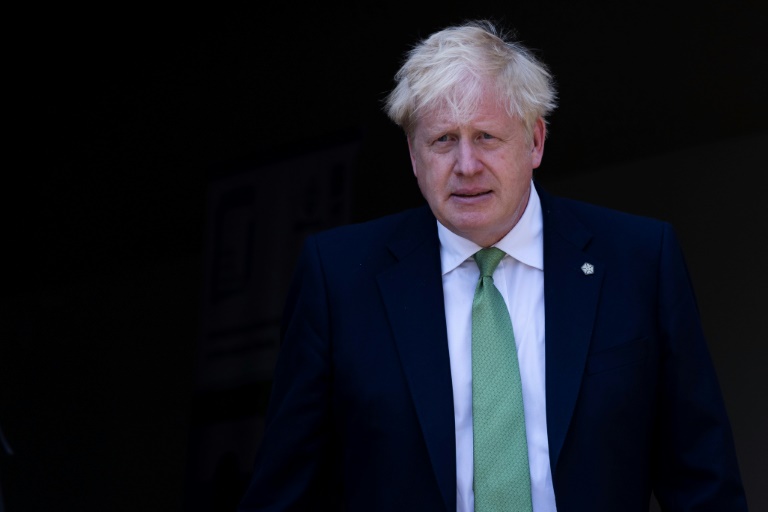
Beleaguered British Prime Minister Boris Johnson suffered two crushing parliamentary by-election defeats on Friday, including in a seat previously held by his ruling Conservatives for over a century, prompting the party’s chairman to quit.

In a stunning reversal, the Tories saw their December 2019 general election majority of more than 24,000 votes overturned by the centrist Liberal Democrats in the Tiverton and Honiton constituency.

At the same time, the main Labour opposition regained the Westminster seat of Wakefield, in northern England, in a further sign of its resurgence following the party’s worst electoral performance in decades two and a half years ago.

The disastrous outcomes for the Conservatives are set to pile new pressure on the embattled Johnson, as the highly damaging “Partygate” scandal involving lockdown-breaching gatherings in Downing Street continues to plague him and his party.

The latest in a string of electoral defeats for the Tories in the last year, the dire results spurred the immediate resignation of the party’s chairman, Oliver Dowden.

“Our supporters are distressed and disappointed by recent events, and I share their feelings,” the key Johnson ally wrote in a resignation letter to the Conservative leader.

“We cannot carry on with business as usual. Somebody must take responsibility and I have concluded that, in these circumstances, it would not be right for me to remain in office.”

But Johnson, in Rwanda for a Commonwealth summit, insisted he would not step down.

“Clearly we’ve got to listen to these results,” he told UK broadcasters accompanying him.

“We will keep going, addressing the concerns of people,” Johnson added.

– ‘Wake-up call’ –

The votes were held Thursday after the two areas’ former Tory MPs both resigned in disgrace in recent months.

Tiverton and Honiton’s ex-lawmaker Neil Parish quit after admitting watching pornography on his phone in the House of Commons, while Wakefield’s Imran Ahmad Khan was jailed for sexually assaulting a teenage boy.

The Liberal Democrats won Tiverton and Honiton — parts of which have voted Conservative in every general election since the 1880s — by more than 6,000 votes on a 30 percent swing.

The party, which has historically performed well in the southwest, appeared to benefit from tactical voting, with Labour’s vote share plunging nearly 16 percent. 

Meanwhile, in Wakefield — one of dozens of traditional Labour seats that Johnson took in 2019 on a promise to “get Brexit done” and address glaring regional economic inequalities — the opposition party won by nearly 5,000 ballots.

Visiting the constituency early Friday, Labour leader Keir Starmer said his party’s victory in one of its former heartland seats showed it was “on track” to win back power for the first time in more than a decade at the next general election due by 2024.

“What a judgement this is on the Tories and Boris Johnson… out of touch, out of ideas,” he told reporters there.

Liberal Democrat leader Ed Davey said his party’s win in the southwest was a “wake-up call for all those Conservative MPs propping up Boris Johnson”. 

– Sense of crisis –

Johnson has spent months fighting for his survival after various controversies.

Opinion polls have shown most people think he lied about Covid lockdown-breaking events at Downing Street and should resign.

Even before the controversy erupted last December, the 58-year-old Brexit architect oversaw the loss of two once-safe seats in by-elections last year.

He then scored dismally in May’s local elections.

Weeks later, dozens of Conservative MPs triggered a no-confidence vote which saw more than 40 percent of them desert Johnson, leaving him severely weakened and struggling to reset his turbulent tenure.

Meanwhile Britain is gripped by 40-year highs in inflation and a cost-of-living crisis that has seen prices soar for everyday essentials such as energy, petrol and food.

Strikes this week by railway workers were some of the biggest seen in Britain in decades and have added to the sense of crisis.

Johnson, who travels to Germany and then Spain for G7 and NATO summits after his current visit to Rwanda, is not due back in Britain until late next week.

Afghan quake survivors without food and shelter as floods hamper relief effort

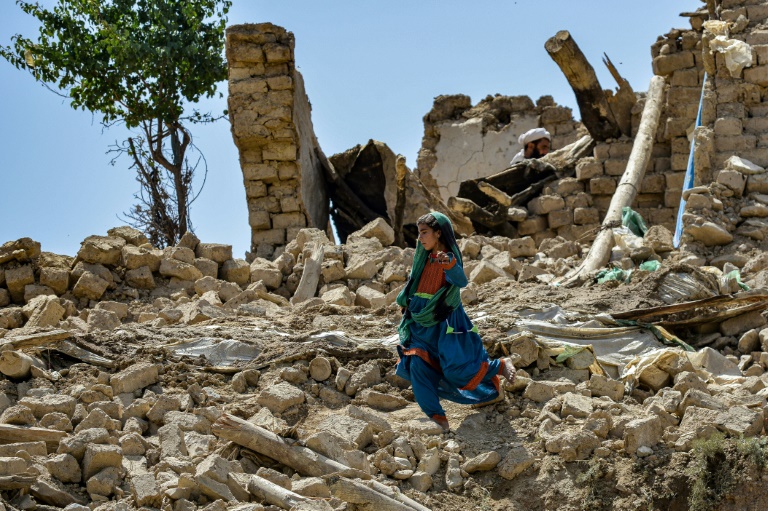
Many survivors of Afghanistan’s deadliest earthquake in more than two decades were on Friday without food, shelter and water as they waited in devastated villages for relief workers to reach them, with rain compounding their misery.

Wednesday’s 5.9-magnitude quake struck hardest in the rugged east along the border with Pakistan, killing more than 1,000 and leaving thousands homeless.

Entire villages have been levelled in some of the worst affected districts, where survivors said they were even struggling to find equipment to bury their dead.

“There are no blankets, tents, there’s no shelter. Our entire water distribution system is destroyed. There is literally nothing to eat,” 21-year-old Zaitullah Ghurziwal told an AFP team that reached his village in hard-hit Paktika province.

Mohammad Amin Huzaifa, head of information for the province, said heavy rain and floods were hampering efforts to reach those affected.

Communications have also been hit as the quake toppled mobile phone towers and power lines.

The earthquake struck areas already suffering the effects of heavy rain, causing rockfalls and mudslides that wiped out hamlets perched precariously on mountain slopes.

Officials say nearly 10,000 houses were destroyed, an alarming number in an area where the average household size is more than 20 people.

“Seven in one room, five in the other room, four in another, and three in another have been killed in my family,” Bibi Hawa told AFP from a hospital bed in the Paktika capital Sharan.

Save the Children said more than 118,000 children were impacted by the disaster.

“Many children are now most likely without clean drinking water, food and a safe place to sleep,” the international charity said.

– UN mobilises –

The disaster poses a huge logistical challenge for the Taliban government, which has isolated itself from much of the world by introducing hardline Islamic rule.

The aid-dependent country saw the bulk of its foreign assistance cut off following the Taliban takeover last August, and even before Wednesday’s disaster the United Nations warned of a humanitarian crisis that threatened the entire population.

But the quake has prompted an outpouring of sympathy from abroad — although many are wary how any aid will be used.

“The aid distribution will be transparent,” government spokesman Bilal Karimi told AFP, adding “many countries have supported us and stood with us”.

UN Secretary-General Antonio Guterres said the global agency has “fully mobilised” to help. 

According to his office, refugee agency UNHCR has dispatched tents, blankets and plastic sheeting; the World Food Programme has delivered food stocks for about 14,000; and the World Health Organization has provided 10 tonnes of medical supplies sufficient for 5,400 surgeries.

Afghan government officials said Thursday that aid flights had landed from Qatar and Iran, while Pakistan had sent trucks carrying tents, medical supplies and food across the border.

Even before the Taliban takeover, Afghanistan’s emergency response teams were stretched to deal with the natural disasters that frequently strike the country.

But with only a handful of airworthy planes and helicopters left since they returned to power, any immediate response to the latest catastrophe is further limited.

“We hope that the International Community & aid agencies will also help our people in this dire situation,” tweeted Anas Haqqani, a senior Taliban official.

Afghanistan is frequently hit by earthquakes, especially in the Hindu Kush mountain range, near the junction of the Eurasian and Indian tectonic plates.

Afghanistan’s deadliest recent earthquake killed 5,000 in 1998 in the northeastern provinces of Takhar and Badakhshan.

Three dead after fresh Ecuador protest clashes, despite govt concession

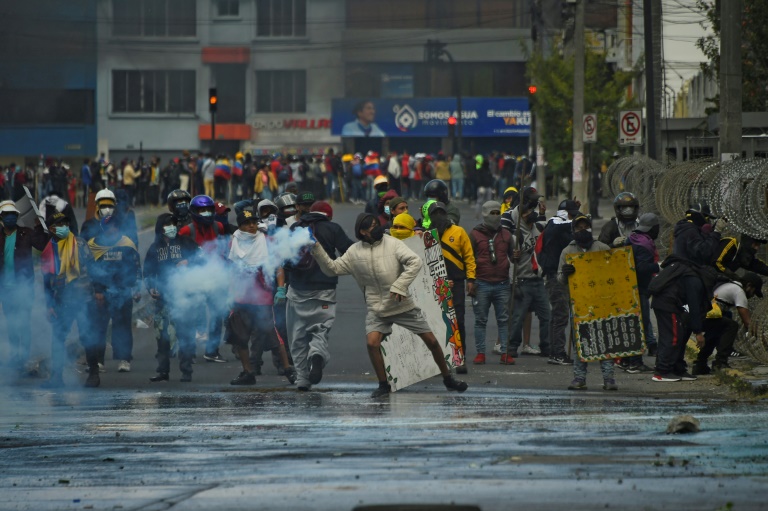
Police in Ecuador’s capital fired tear gas on Thursday to disperse Indigenous protesters who tried to storm congress, as the country’s crippling cost-of-living demonstrations left another three dead, according to a rights group.

The latest deaths brought the overall toll from the 11 days of protests to six, according to the Alliance of Human Rights Organizations, which recorded three fatalities between Monday and Wednesday.

Protesters had earlier won a concession from the Ecuadoran government when President Guillermo Lasso, isolating because of a Covid-19 infection, granted them access to a cultural center emblematic of the Indigenous struggle that had been commandeered by police over the weekend.

Later in the day, however, a group of Indigenous protesters led by women headed towards congress, only to be pushed back by police as violent clashes broke out.

Police fired tear gas, while protesters threw rocks, fireworks and Molotov cocktails.

“This is a very bad sign, given we asked our base to march peacefully,” said protest leader Leonidas Iza.

Thursday’s clashes, which spread to a neighboring park, left a 39-year-old protester dead by gunfire, according to the Alliance. A young man died nearby, and in Caspigasi, on the outskirts of Quito, an Indigenous community member died during confrontations with the military.

The armed forces said on Thursday that members of the military providing security for a food convoy were “assaulted by a violent group” in Caspigasi, resulting in 17 soldiers being seriously injured.

An estimated 14,000 protesters are taking part in the mass show of discontent, with about 10,000 of them in Quito, which is under a night-time curfew.

Six of the country’s 24 provinces are under a state of emergency.

The protesters’ demands include a cut in already subsidized fuel prices, which have risen sharply in recent months, as well as jobs, food price controls, and more public spending on healthcare and education.

– ‘For the sake of dialogue’ –

Francisco Jimenez, Ecuador’s minister of government, announced the concession granting access to the cultural center earlier Thursday, saying it was made “for the sake of dialogue and peace.”

The aim, he said, was “to stop roadblocks, violent demonstrations, and attacks.”

The protesters hailed the move.

“It is a triumph of the struggle,” Iza proclaimed over a megaphone, advancing on the center with hundreds of others in a jubilant mood.

The Alliance of Human Rights Organizations said a 38-year-old man died on Wednesday in the southern town of Tarqui in clashes between protesters and police, whom it accused of violent tactics.

Dozens of people have also been injured in the countrywide demonstrations, which Indigenous groups have vowed to continue until their demands are met.

The police said the man had died of a medical condition that occurred “in the context of the demonstrations.”

Two other people died on Monday and Tuesday, according to the Alliance, which also reported 92 wounded and 94 civilians arrested in 11 days of protests.

Officials say 117 police personnel and soldiers have been injured.

On Wednesday night, about 300 protesters occupied a power plant in southern Ecuador and briefly took its operators hostage, authorities said.

Ecuador, a small South American country riddled with drug trafficking and related violence, has been hard hit by rising inflation, unemployment and poverty — all exacerbated by the pandemic.

– $50 million daily losses –

The protests, which have involved the burning of tires and tree branches by vocal marchers brandishing sticks, spears and makeshift shields, have paralyzed the capital and severely harmed the economy with barricades on key roads.

The government has rejected demands to lift the state of emergency imposed in response to the sometimes violent demonstrations called by the powerful Confederation of Indigenous Nationalities of Ecuador (Conaie).

“I cry to see so many people mistreated by this… government,” protester Cecilia, an 80-year-old who did not give her full name, told AFP as she marched with an Ecuadoran flag and a banner reading: “Lasso, liar.”

Conaie led two weeks of protests in 2019 in which 11 people died and more than 1,000 were injured, causing economic losses of about $800 million before the then-president abandoned plans to reduce fuel price subsidies.

Lasso’s government has ruled out cutting fuel prices this time, as it would cost the state an unaffordable $1 billion per year.

Conaie — credited with ending three presidencies between 1997 and 2005 — insists the state of emergency be lifted before it will negotiate, but the government has said this “would leave the capital defenseless.”

It was unclear whether the group was ready to negotiate after Thursday’s concession.

Official data showed the economy was losing about $50 million per day due to the protests, not counting production of oil — the country’s main export product — which has also been affected.

Producers of flowers, another of Ecuador’s main exports, have complained their wares are rotting as trucks cannot reach their destinations.

Close Bitnami banner
Bitnami