World

Dozens of turtles, dolphins found dead in Guatemala, probe launched

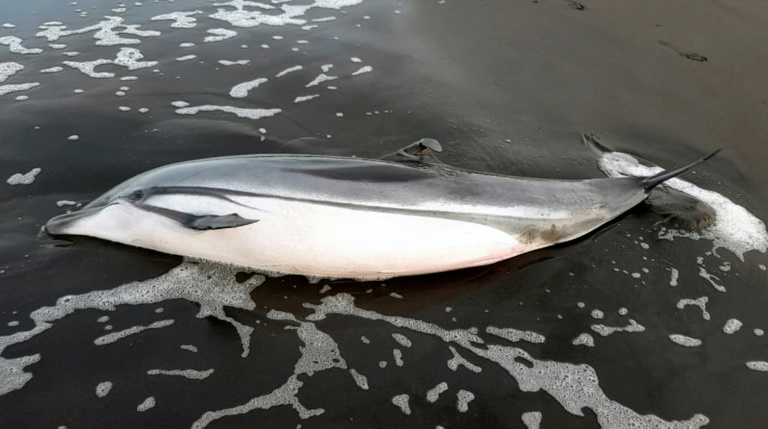
Dozens of turtles, dolphins and other marine species have been found dead on Guatemala’s Pacific coast, prompting an official investigation, authorities said Thursday.

As many as 65 turtles, most of them of the Olive Ridley variety, and 14 dolphins were discovered dead earlier this week, Guatemala’s National Council of Protected Areas told AFP.

The agency didn’t say where exactly the dead animals were found.

Officials at the agency believe the deaths could have been caused by heavy rains in recent days, which could have carried some toxic materials from the mainland into the sea.

Investigators are also looking into whether industrial fishing being developed offshore could have played a role.

Experts in this Central American nation will now study the animals’ remains to determine what caused the deaths.

Local officials together with volunteers were also looking to see if more dead species were to be found.

Dozens of turtles, dolphins found dead in Guatemala, probe launched

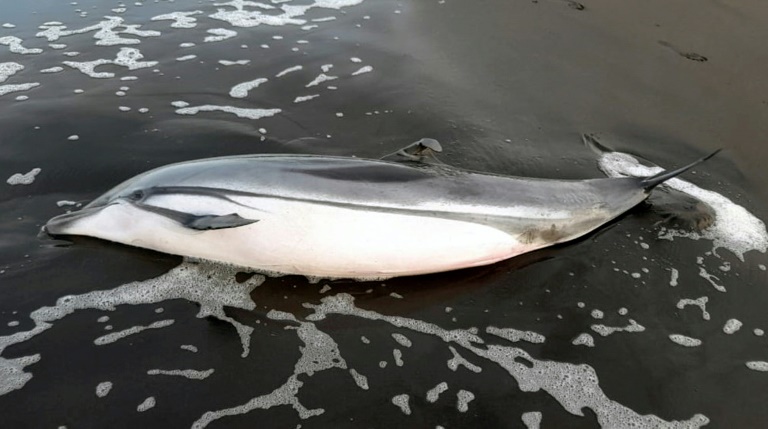
Dozens of turtles, dolphins and other marine species have been found dead on Guatemala’s Pacific coast, prompting an official investigation, authorities said Thursday.

As many as 65 turtles, most of them of the Olive Ridley variety, and 14 dolphins were discovered dead earlier this week, Guatemala’s National Council of Protected Areas told AFP.

The agency didn’t say where exactly the dead animals were found.

Officials at the agency believe the deaths could have been caused by heavy rains in recent days, which could have carried some toxic materials from the mainland into the sea.

Investigators are also looking into whether industrial fishing being developed offshore could have played a role.

Experts in this Central American nation will now study the animals’ remains to determine what caused the deaths.

Local officials together with volunteers were also looking to see if more dead species were to be found.

Mystery deepens over fate of Hong Kong's Jumbo Floating Restaurant

Mystery over the fate of Hong Kong’s Jumbo Floating Restaurant deepened Friday after its owner stirred confusion over whether the financially struggling tourist attraction had actually sunk while being towed away from the city last week.

On Monday Aberdeen Restaurant Enterprises released a statement saying the vessel had capsized on Sunday near the Paracel Islands in the South China Sea after it “encountered adverse conditions” and began to take on water.

“The water depth at the scene is over 1,000 metres, making it extremely difficult to carry out salvage works,” it added.

On Thursday night, Hong Kong’s Marine Department put out a statement saying it had only learnt of the incident from media reports, and had immediately requested a report from the company.

The department said the report was delivered on Thursday, saying the restaurant had capsized but that “at present, both Jumbo and the tugboat are still in the waters off Xisha islands,” using the Chinese name for the Paracels.

Hours later an AFP journalist was contacted by a spokesman representing the restaurant who said the company had always used the word “capsized” not “sank”.

Asked directly if the boat had sunk, he said again the statement had said “capsized”, and did not explain why it had referred to the depth of the water when mentioning salvage.

The South China Morning Post reported a similar conversation with a spokeswoman for the company, in which they insisted the boat had “capsized”, not “sank”, but refused to clarify whether it was still afloat.

The newspaper said it had been told by the Marine Department that the company might have breached local regulations if it had not notified the authorities of a sinking incident within 24 hours.

Widespread reporting in both local and international media at the beginning of the week that Jumbo had sunk was not contradicted by the company. 

AFP has requested a formal statement from Aberdeen Restaurant Enterprises on the status of Jumbo, as well as a detailed explanation of what happened. 

The company previously said marine engineers had been hired to inspect the floating restaurant and install hoardings on the vessel before the trip, and that “all relevant approvals” had been obtained.

– Financial woes –

The tourist attraction closed in March 2020, citing the Covid-19 pandemic as the final straw after almost a decade of financial woes.

Operator Melco International Development said last month the business had not been profitable since 2013 and cumulative losses had exceeded HK$100 million ($12.7 million).

It was still costing millions in maintenance fees every year and around a dozen businesses and organisations had declined an invitation to take it over at no charge, Melco added. 

It announced last month that ahead of its licence expiration in June, Jumbo would leave Hong Kong and await a new operator at an undisclosed location.

The restaurant set off shortly before noon last Tuesday from the southern Hong Kong Island typhoon shelter where it had sat for nearly half a century.

Opened in 1976 by the late casino tycoon Stanley Ho, in its glory days it embodied the height of luxury, reportedly costing more than HK$30 million to build.

Designed like a Chinese imperial palace and once considered a must-see landmark, the restaurant drew visitors from Queen Elizabeth II to Tom Cruise. 

It also featured in several films — including Steven Soderbergh’s “Contagion”, about a deadly global pandemic.

EU grants Ukraine candidate status as fighting rages in east

EU leaders granted “candidate status” to Ukraine in its bid to join the bloc, as tensions deepened over Russian gas supplies and Moscow’s forces closed in on key cities. 

Russia is focusing its offensive on the eastern Donbas region, after being pushed back from Kyiv following their February invasion, and its troops are making steady advances despite fierce Ukrainian resistance.

In a show of support, European Union leaders agreed Thursday to grant candidate status to Ukraine, as well as Moldova, although the two former Soviet republics face a long path before joining the bloc.

Ukraine’s President Volodymyr Zelensky hailed the news as “a unique and historic moment”, adding: “Ukraine’s future is within the EU.”

French President Emmanuel Macron said that the decision by EU leaders sent a “very strong signal” to Russia that Europeans support the pro-Western aspirations of Ukraine.

President Vladimir Putin had declared Ukraine to be part of Moscow’s sphere and insisted he was acting due to attempts to bring the country into NATO, the Western alliance that comes with security guarantees.

European powers before the invasion had distanced themselves from US support for Ukraine’s NATO aspirations and EU membership is at least years away.

Ukraine and Moldova will have to go through protracted negotiations and the European Union has laid out steps that Kyiv must take even before that, including bolstering the rule of law and fighting corruption.

– ‘Too much damage’ –

Russian troops were pressing their advance in the east, tightening their grip on strategically important Severodonetsk and its twin city Lysychansk across the Donets river.

Taking the cities would allow Russia to press further into the Donbas region, and potentially farther west.

Ukraine acknowledged Thursday that it had lost control of two areas from where it was defending the cities, with Russian forces now closer to encircling the industrial hubs.

Street fighting has raged for weeks in Severodonetsk, with Ukrainian forces controlling only the industrial zones of the city. 

But Sergiy Gaiday — governor of the Lugansk, which includes Severodonetsk — warned that Ukrainian forces faced “relentless shelling” and may have to withdraw further. 

“There has been too much damage now, and probably even a retreat might be needed to new fortified positions,” he said. 

Several hundred civilians remain trapped in a chemical plant in the city, which Ukraine says faces heavy Russian bombardment. 

A representative of pro-Russian separatists in Ukraine told AFP the resistance of Ukrainian forces trying to defend Lysychansk and Severodonetsk was “pointless and futile.”

“At the rate our soldiers are going, very soon the whole territory of the Lugansk People’s Republic will be liberated,” said Andrei Marochko, a spokesman for the Moscow-backed army of Lugansk.

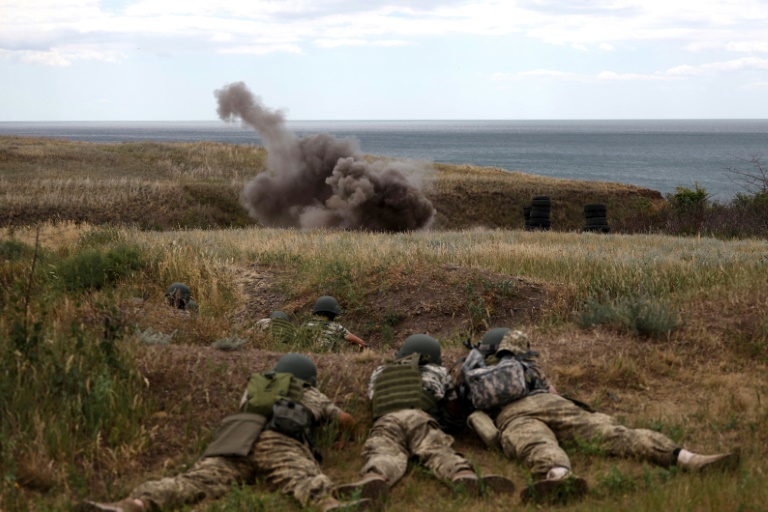
AFP journalists driving out of Lysychansk Thursday twice had to jump out of cars and lie on the ground as Russian forces shelled the city’s main supply road. 

They saw dark smoke rising over the road ahead, and heard artillery fire and saw flashes of light, while the road was strewn with trees felled by shelling.

The situation for those that remain in the city was increasingly bleak.

Liliya Nesterenko said her house had no gas, water or electricity and she and her mother were cooking on a campfire. She was cycling along the street, and had come out to feed a friend’s pets. 

But the 39-year-old was upbeat about the city’s defences: “I believe in our Ukrainian army, they should (be able to) cope.

“They’ve prepared already.”

– ‘Gas is scarce’ –

With Ukraine pleading for accelerated weapon deliveries, the United States announced it was sending another $450 million in fresh armaments, including Himars rocket systems. 

The systems can simultaneously launch multiple precision missiles at an extended range.

Western officials have also accused Russia of weaponising its key exports of gas as well as grain from Ukraine, contributing to global inflation and rising hunger in the world.

A US official warned of new retaliatory measures against Russia at the Group of Seven summit being attended by President Joe Biden in Germany starting Sunday.

Germany ratcheted up an emergency gas plan to its second alert level, just one short of the maximum that could require rationing in Europe’s largest economy, after Russia slashed its supplies.

“Gas is now a scarce commodity,” German Economy Minister Robert Habeck told reporters, urging households to cut back on use. Demand for gas is lower in the summer but shortages could cause heating shortages in the winter.

France is aiming to have its gas storage reserves at full capacity by early autumn, and will build a new floating methane terminal to get more energy supplies by sea, French Prime Minister Elisabeth Borne said.

A Kremlin spokesman reiterated its claim that the supply cuts were due to maintenance and that necessary equipment from abroad had not arrived

burs-sr/dhc

Johnson's Tories crushed in twin UK parliamentary by-elections

Beleaguered British Prime Minister Boris Johnson suffered two crushing parliamentary by-election defeats on Friday, including in a southwest English seat previously held by his ruling Conservatives for over a century.

The Tories lost the Tiverton and Honiton seat to the centrist Liberal Democrats while the main opposition Labour party regained the Wakefield constituency in northern England, in stunning twin results set to pile new pressure on Johnson.

The votes were held Thursday after the two areas’ former Tory MPs both resigned in disgrace in recent months.

Tiverton and Honiton’s ex-lawmaker Neil Parish quit after admitting watching pornography on his phone in the House of Commons, while Wakefield’s Imran Ahmad Khan was jailed for sexually assaulting a teenage boy.

The by-elections also follow months of scandals and setbacks that have severely dented the popularity of Johnson and his party, and come just weeks after he narrowly survived an attempt by his own lawmakers to oust him as Tory leader and prime minister.

The Conservatives had been tipped to lose both by-elections and Johnson vowed Thursday — while in Rwanda for a Commonwealth summit — not to resign if that occurred.

But the manner of the defeats will undoubtedly renew calls for the embattled leader to stand down as the highly damaging “Partygate” scandal centred on lockdown-breaching gatherings in Downing Street continues to dog him.

– ‘Wake-up call’ –

The Liberal Democrats overturned a Tory majority of more than 24,000 to win Tiverton and Honiton — which had voted Conservative in every general election since the 1880s — by more than 6,000 votes, according to officials at a count centre in nearby town Crediton.

Meanwhile, in Wakefield near Leeds — one of dozens of traditional Labour seats that Johnson took in 2019 on a promise to “get Brexit done” and address glaring regional economic inequalities — the opposition party won by nearly 5,000 votes.

In speeches hailing their victories, both newly-elected MPs said Britain had lost faith in Johnson and urged him to quit.

Labour leader Keir Starmer, who is eyeing replacing Johnson as prime minister after the next general election due by 2024, said his party’s victory in one of its former heartland seats showed it could win back power for the first time in more than a decade.

“Wakefield has shown the country has lost confidence in the Tories,” he said in a statement, following Labour’s first by-election win since 2012.

“This result is a clear judgment on a Conservative Party that has run out of energy and ideas.”

Liberal Democrat leader Ed Davey said his party has made “political history with this stunning win” and it was a “wake-up call for all those Conservative MPs propping up Boris Johnson”. 

“The people of Tiverton and Honiton have spoken for the country,” he added.

“The public is sick of Boris Johnson’s lies and law-breaking and it’s time for Conservative MPs to finally do the right thing and sack him.”

– Sense of crisis –

Johnson has spent months fighting for his survival after a series of controversies including the “Partygate” saga led many Tories to question whether he should remain as leader.

Various opinion polls have shown the public thinks he lied about Covid lockdown-breaking events at Downing Street and should resign.

Even before the controversy erupted last December, the 58-year-old Brexit architect saw the loss of two once-safe seats in by-elections last year.

He then scored dismally in May’s local elections.

Weeks later, dozens of Conservative MPs triggered a no-confidence vote in Johnson which saw more than 40 percent of them desert their embattled leader, leaving him severely weakened and struggling to reset his turbulent tenure.

The polls come as Britain is gripped by 40-year highs in inflation and a cost-of-living crisis that has seen prices soar for everyday essentials such as energy, petrol and food.

Strikes this week by railway workers — including on election day Thursday — were some of the biggest seen in Britain in decades and have added to the sense of crisis.

Johnson, who travels to Germany and then Spain for G7 and NATO summits after his current visit to Rwanda, is not due back in Britain until late next week.

Dozens of Suriname villages await aid following unprecedented floods

A boat meanders between the sheet metal roofs of houses in Baling Sula, one of numerous villages in central Suriname hit by devastating flooding.

Heavy rainfall since January led rivers to burst their banks in the small South American nation, forcing the state energy firm, Staatsolie Power Company Suriname, to open scuppers at a hydroelectric power station in early March to avoid an even greater catastrophe.

That, in turn, resulted in the flooding of several villages in Brokopondo district, around 100 kilometers south of the capital Paramaribo.

The waters have yet to recede.

More than 3,000 households in seven districts have been affected, but also businesses, farms and schools.

On a recent day, Elsy Poeketie, 48, who fled to the capital to stay with her daughter, showed her granddaughter pictures and videos of her hotel, the Bonanza River holiday resort that until three months ago had a nice sandy beach, cabins and an outdoor recreation hall.

“Now, all flooded, at some places two to three meters high. No beach, just water everywhere you look,” she sighed.

“It really hurts and stresses me. Where will I find the money to renovate?”

In the flooded village of Asigron, Patricia Menig has put up her brother, while their sister is living with an aunt after both their houses were submerged.

“The water started to rise on April 12 and within a week their house was filled with water, four to five meters high,” she told AFP by telephone.

And Menig lost all the crops at her 1.5 hectare agricultural plot, leaving her without income.

“Many of us depend on government aid now,” she said.

– Waiting for the dry season –

Last month, Suriname President Chan Santokhi declared seven of the country’s 10 districts to be disaster areas and asked international partners for help.

China donated $50,000 on Tuesday and the Netherlands, Suriname’s former colonial power, pledged 200,000 euros through UNICEF.

Nearby Venezuela, which has been ravaged by years of economic crisis, nonetheless delivered 40,000 tons of goods, including food and medicines, and distribution will begin this week.

Dry season isn’t expected until August and authorities proposed evacuating the area. But many residents chose to remain, with the government providing short-term shelter for them.

Remote villages in the interior have been cut off from road transport and are only reachable by boat or helicopter, making distribution of relief goods extra challenging, according to Colonel Jerry Slijngard from the National Disaster Management Coordination Center (NCCR).

A flight from Paramaribo to Kwamalasamutu, an Indigenous village near the Brazilian border, costs roughly $3,900.

“Per flight, I can only bring 40 food parcels and there are 400 households,” said Slijngard. 

– ‘I need money, not food’ –

Some former villagers now living in the capital set up an educational project to help children that cannot make it to school, with funding from a Canadian mining firm digging for gold in the area.

The project produces online videos in Dutch and the Aucan and Saramaccan Indigenous languages.

They also provide USB sticks for those without internet access.

The flooding has created other problems, not least a mosquito infestation.

And along the border with French Guiana, Indigenous Wayana villages that have not been flooded still have lost 60 percent of crops, after heavy rainfall has soaked the ground, causing vegetables to rot, said Jupta Itoewaki from the Wayana Mulokot Kawemhakan foundation, an advocacy group.

Some residents of Brokopondo complain that they are not receiving the help they need.

“I don’t need food parcels, my machines can’t eat. I need money,” said furniture maker Amania Nelthan.

Now he sees no other solution than to move.

“Climate change is a fact. Rains and floods will come. Renovating after the floods is not an option. I need to move to higher ground.”

Dozens of Suriname villages await aid following unprecedented floods

A boat meanders between the sheet metal roofs of houses in Baling Sula, one of numerous villages in central Suriname hit by devastating flooding.

Heavy rainfall since January led rivers to burst their banks in the small South American nation, forcing the state energy firm, Staatsolie Power Company Suriname, to open scuppers at a hydroelectric power station in early March to avoid an even greater catastrophe.

That, in turn, resulted in the flooding of several villages in Brokopondo district, around 100 kilometers south of the capital Paramaribo.

The waters have yet to recede.

More than 3,000 households in seven districts have been affected, but also businesses, farms and schools.

On a recent day, Elsy Poeketie, 48, who fled to the capital to stay with her daughter, showed her granddaughter pictures and videos of her hotel, the Bonanza River holiday resort that until three months ago had a nice sandy beach, cabins and an outdoor recreation hall.

“Now, all flooded, at some places two to three meters high. No beach, just water everywhere you look,” she sighed.

“It really hurts and stresses me. Where will I find the money to renovate?”

In the flooded village of Asigron, Patricia Menig has put up her brother, while their sister is living with an aunt after both their houses were submerged.

“The water started to rise on April 12 and within a week their house was filled with water, four to five meters high,” she told AFP by telephone.

And Menig lost all the crops at her 1.5 hectare agricultural plot, leaving her without income.

“Many of us depend on government aid now,” she said.

– Waiting for the dry season –

Last month, Suriname President Chan Santokhi declared seven of the country’s 10 districts to be disaster areas and asked international partners for help.

China donated $50,000 on Tuesday and the Netherlands, Suriname’s former colonial power, pledged 200,000 euros through UNICEF.

Nearby Venezuela, which has been ravaged by years of economic crisis, nonetheless delivered 40,000 tons of goods, including food and medicines, and distribution will begin this week.

Dry season isn’t expected until August and authorities proposed evacuating the area. But many residents chose to remain, with the government providing short-term shelter for them.

Remote villages in the interior have been cut off from road transport and are only reachable by boat or helicopter, making distribution of relief goods extra challenging, according to Colonel Jerry Slijngard from the National Disaster Management Coordination Center (NCCR).

A flight from Paramaribo to Kwamalasamutu, an Indigenous village near the Brazilian border, costs roughly $3,900.

“Per flight, I can only bring 40 food parcels and there are 400 households,” said Slijngard. 

– ‘I need money, not food’ –

Some former villagers now living in the capital set up an educational project to help children that cannot make it to school, with funding from a Canadian mining firm digging for gold in the area.

The project produces online videos in Dutch and the Aucan and Saramaccan Indigenous languages.

They also provide USB sticks for those without internet access.

The flooding has created other problems, not least a mosquito infestation.

And along the border with French Guiana, Indigenous Wayana villages that have not been flooded still have lost 60 percent of crops, after heavy rainfall has soaked the ground, causing vegetables to rot, said Jupta Itoewaki from the Wayana Mulokot Kawemhakan foundation, an advocacy group.

Some residents of Brokopondo complain that they are not receiving the help they need.

“I don’t need food parcels, my machines can’t eat. I need money,” said furniture maker Amania Nelthan.

Now he sees no other solution than to move.

“Climate change is a fact. Rains and floods will come. Renovating after the floods is not an option. I need to move to higher ground.”
US Senate advances breakthrough bill on gun safety

US senators advanced a bipartisan bill late Thursday addressing the epidemic of gun violence convulsing the country, approving a narrow package of new firearms restrictions and billions of dollars in mental health and school security funding.

The reforms — which are almost certain to be rubber-stamped by the House of Representatives on Friday — fall short of the demands of gun safety advocates and President Joe Biden, but have been hailed as a life-saving breakthrough after almost 30 years of inaction by Congress.

“This bipartisan legislation will help protect Americans,” Biden said in a statement shortly after the Senate vote. “Kids in schools and communities will be safer because of it.”

The Bipartisan Safer Communities Act, which was backed by all 50 Democratic senators and 15 Republicans, includes enhanced background checks for buyers under the age of 21, $11 billion in funding for mental health and $2 billion for school safety programs.

It also provides funding to incentivize states to implement “red flag” laws to remove firearms from people considered a threat.

And it closes the so-called “boyfriend” loophole, under which domestic abusers could avoid a ban on buying firearms if they were not married to or living with their victim.

“Tonight, the United States Senate is doing something many believed was impossible even a few weeks ago: we are passing the first significant gun safety bill in nearly 30 years,” Senate Democratic majority leader Chuck Schumer said after the legislation passed.

“The gun safety bill we are passing tonight can be described with three adjectives: bipartisan, common sense, lifesaving.”

His Republican counterpart Mitch McConnell said the legislation would make America safer “without making our country one bit less free.”

“This is a common-sense package. Its provisions are very, very popular. It contains zero new restrictions, zero new waiting periods, zero mandates and zero bans of any kind for law-abiding gun owners.”

The National Rifle Association and many Republicans in both chambers of Congress opposed the bill but it is endorsed by advocacy groups working in policing, domestic violence and mental illness.

The Senate and House are on a two-week recess starting next week but the Democratic-controlled House is expected to approve the Senate’s bill with little drama before members leave town on Friday night.

– ‘Historic day’ –

The breakthrough is the work of a cross-party group of senators who have been hammering out the details and resolving disputes for weeks.

The lawmakers had been scrambling to finish the negotiations quickly enough to capitalize on the momentum generated by the fatal shooting of 19 children in Uvalde, Texas and of 10 Black people at a supermarket in Buffalo, upstate New York, both last month.

Chris Murphy, the senator leading negotiations for Democrats, hailed a “historic day.”

“This will become the most significant piece of anti-gun-violence legislation Congress has passed in three decades,” he said on the Senate floor. 

“This bill also has the chance to prove to the weary American public that democracy is not so broken, that it is able to rise to the moment.”

The last significant federal gun control legislation was passed in 1994, introducing a national background check system and banning the manufacture for civilian use of assault rifles and large capacity ammunition clips.

But it expired a decade later and there has since been no serious movement on reform, despite rising gun violence.

Biden had pushed for more substantial reforms, including a reinstatement of the ban on assault rifles — which were used in both the Texas and New York shootings — and high-capacity magazines.

But the political challenge of legislating in a 50-50 Senate, where most bills require 60 votes to pass, means that more wide-ranging reforms are unrealistic.

“The morning after the tragedy in Uvalde, the United States Senate faced a choice,” Schumer added. 

“We could surrender to gridlock… Or we could choose to try and forge a bipartisan path forward to pass a real bill, as difficult as that may have seemed to many.”

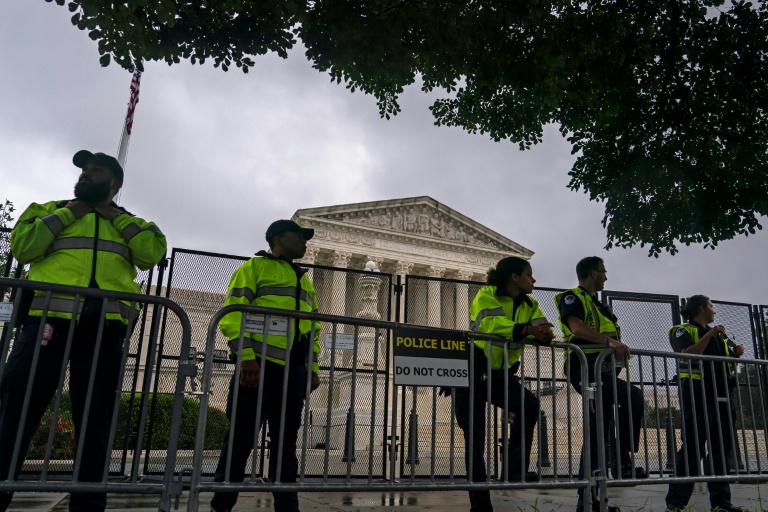
The vote came as a boon for gun safety activists hours after they were dismayed by a Supreme Court ruling that Americans have a fundamental right to carry a handgun in public.

The 6-3 decision struck down a more than century-old New York law that required a person to prove they had a legitimate self-defense need to receive a permit to carry a concealed handgun outside the home.

Supreme Court says Americans have right to carry guns in public

The US Supreme Court ruled Thursday that Americans have a fundamental right to carry a handgun in public, a landmark decision with far-reaching implications for states and cities across the country confronting a surge in gun violence.

The 6-3 decision strikes down a more than century-old New York law that required a person to prove they had a legitimate self-defense need to receive a permit to carry a concealed handgun outside the home.

Five other states, including California, and Washington, the nation’s capital, have similar laws and the ruling will curb their ability to restrict people from carrying guns in public.

Democratic President Joe Biden denounced the decision, saying it “contradicts both common sense and the Constitution, and should deeply trouble us all.”

“We must do more as a society -— not less -— to protect our fellow Americans,” Biden said. “I call on Americans across the country to make their voices heard on gun safety.”

Despite growing calls for limits on firearms after two horrific mass shootings in May, the court sided with plaintiffs who said the US Constitution guarantees the right to own and carry guns.

The ruling is the first by the court in a major Second Amendment case since 2008, when it ruled that Americans have a right to keep a gun at home for self-defense.

It was a stunning victory for the National Rifle Association lobby group, which brought the case along with two New York men who had been denied gun permits.

“Today’s ruling is a watershed win for good men and women all across America and is the result of a decades-long fight the NRA has led,” NRA executive vice president Wayne LaPierre said in a statement.

“The right to self-defense and to defend your family and loved ones should not end at your home.”

– ‘Dark day’ –

New York Governor Kathy Hochul called it a “dark day,” and vowed to enact gun control legislation.

“It is outrageous that at a moment of national reckoning on gun violence, the Supreme Court has recklessly struck down a New York law that limits those who can carry concealed weapons,” Hochul said.

California’s governor Gavin Newsom termed the decision “shameful.”

“This is a dangerous decision from a court hell-bent on pushing a radical ideological agenda and infringing on the rights of states to protect our citizens from being gunned down in our streets, schools, and churches,” Newsom tweeted.

Justice Clarence Thomas wrote the majority opinion and was joined by the other five conservatives on the court, three of whom were nominated by former Republican president Donald Trump.

Thomas said the New York law prevents “law-abiding citizens with ordinary self-defense needs from exercising their Second Amendment right to keep and bear arms in public for self-defense.”

“We conclude that the State’s licensing regime violates the Constitution,” Thomas said.

New York prohibits open carrying of handguns and rifles and the court ruling does not affect that since it was narrowly focused on the state requirements for a permit to carry a concealed handgun.

Just hours after the court ruling, the Senate moved in a different direction, passing a rare bipartisan bill that includes modest gun control measures.

“The gun safety bill we are passing tonight can be described with three adjectives: bipartisan, commonsense, lifesaving,” said Senate Majority Leader Chuck Schumer.

The breakthrough is the work of a cross-party group of senators who have been hammering out the details and resolving disputes for weeks.

The lawmakers had been scrambling to finish the negotiations quickly enough to capitalize on the momentum generated by the fatal shooting of 19 children in Uvalde, Texas and of 10 Black people at a supermarket in Buffalo, upstate New York, both last month.

In both cases, the gunmen were teens and used AR-15 style assault weapons.

– Liberals dissent –

The New York state law the Supreme Court overturned dated to 1913 and had stood based on the understanding that individual states had the right to regulate gun usage and ownership.

It said that to be given a permit to carry a concealed handgun outside the home, an applicant must clearly demonstrate “proper cause” — that it is explicitly needed for self-defense.

Gun-rights advocates said that violated the Second Amendment, which says “the right of people to keep and bear arms shall not be infringed.”

The three liberal justices on the Supreme Court dissented to the ruling.

“Many states have tried to address some of the dangers of gun violence,” Justice Stephen Breyer said. “The Court today severely burdens states’ efforts to do so.”

Half of the 50 US states allow permitless carry of concealed firearms in public places while the other 25 allow it in some form.

Over the past two decades more than 200 million guns have hit the US market, led by assault rifles and personal handguns, feeding a surge in murders, mass shootings and suicides.

Asian markets rise as recession talk tempers rate hike expectations

Stocks rose in Asia on Friday following another rally on Wall Street as investors try to process central bank moves to fight soaring inflation with the growing possibility that those measures will induce a recession.

Global markets have been thrown into turmoil for months by a perfect storm of crises that have left observers predicting a sharp contraction, including the Ukraine war, China’s lockdown-induced economic troubles, supply chain snarls and spiking energy costs.

Expectations that the Federal Reserve and other central banks will have to keep lifting rates have left many traders fretting that the pain could go on for some time, with sovereign bond yields — key gauges to future rates — continuing to climb.

This week Fed boss Jerome Powell told lawmakers a recession was “certainly a possibility” and suggested officials were ready to press on with big rate hikes, following a three-quarter point lift this month.

However, analysts said speculation that a recession is on the way has helped push yields down in recent days and led traders to scale back their expectations for the length of rate hikes.

Demand concerns have also helped send oil prices — a key driver of inflation — lower with both main contracts around 15 percent over the past week.

Added to the mix this week are comments from President Xi Jinping suggesting an end to China’s tech crackdown as well as possible new measures aimed at boosting the economy.

“As we have been saying for some time now, for stocks to return to any semblance of form, it would likely require an unlikely upbeat mix of a seamless China growth recovery, a top in US bond yields, and much softer oil prices,” said Stephen Innes at SPI Asset Management.

“While a tall order and still a near-term unlikely combination scenario, the fall in commodity prices, especially oil, should be music to the Fed’s ears, so some could be ticking one or two of those boxes off.”

In early Asia trade investors took their cue from Wall Street, where all three main indexes closed with healthy gains, including a more than one percent advance on the Nasdaq.

Hong Kong, Tokyo, Shanghai, Sydney, Seoul, Singapore, Taipei, Manila and Jakarta were well up.

Markets are negotiating “a fraught transition from ‘front-loaded’ synchronised tightening towards demand destruction and peak ‘price-pressure’,” Citigroup Inc. strategists William O’Donnell and Edward Acton wrote in a note.

– Key figures at around 0230 GMT –

Tokyo – Nikkei 225: UP 0.7 percent at 26,362.24 (break)

Hong Kong – Hang Seng Index: UP 1.1 percent at 21,499.82

Shanghai – Composite: UP 0.7 percent at 3,343.83

Dollar/yen: DOWN at 134.84 yen from 134.94 yen late Thursday

Pound/dollar: UP at $1.2277 from $1.2259

Euro/dollar: UP at $1.0533 from $1.0526

Euro/pound: DOWN at 85.78 pence from 85.80 pence

West Texas Intermediate: UP 0.1 percent at $104.34 per barrel

Brent North Sea crude: DOWN 0.1 percent at $110.05 per barrel

New York – Dow: UP 0.6 percent at 30,677.36 (close)

London – FTSE 100: DOWN 1.0 percent at 7,020.45 (close)

Close Bitnami banner
Bitnami