World

ASEAN must step up pressure on Myanmar junta: UN expert

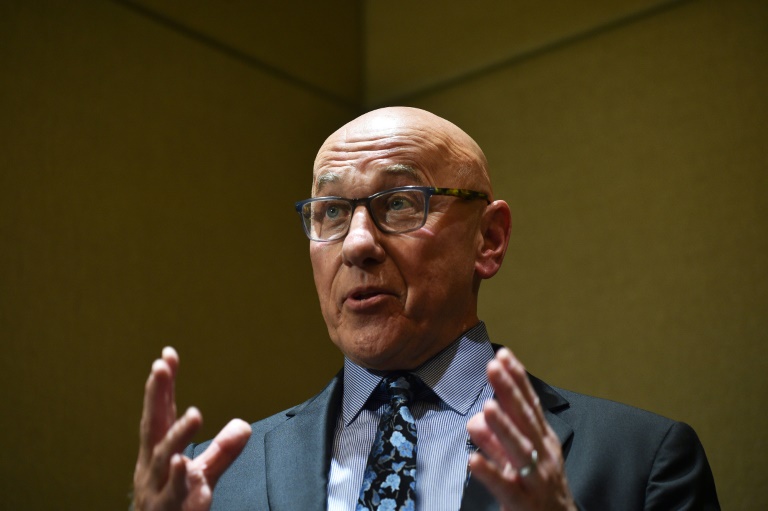
Southeast Asia’s regional bloc must increase pressure on Myanmar’s junta or there will be more death and suffering, a UN expert warned Thursday, after a long period of stalled diplomacy.

Myanmar has been in turmoil and its economy paralysed since the February 2021 coup that ousted civilian leader Aung San Suu Kyi, who was transferred from house arrest to solitary confinement in prison this week.

Efforts by the 10-member Association of Southeast Asian Nations (ASEAN) to bring peace to the country — which is a member of the bloc — have stalled as fighting continues to rage.

Last year, they agreed on the so-called “five-point consensus”, which calls for a cessation of violence and constructive dialogue, but the junta has ignored it. 

Divisions in ASEAN, long criticised as a toothless talking shop, have also complicated attempts to resolve the crisis. 

Asked about the bloc’s efforts, Tom Andrews, the UN Special Rapporteur on the situation of human rights in Myanmar, said that “clearly, more needs to be done”. 

“The longer we wait, the more inaction that there is, the more people are going to die, the more people are going to suffer,” he said.

“The people of Myanmar just can’t take another year of inaction,” added Andrews, speaking at the end of a visit to ASEAN member Malaysia, which has strongly criticised the coup.

He said the five-point consensus, hammered out at a meeting in Jakarta in April 2021, is “meaningless if it sits on a piece of paper”.

“It’s only chance of making a difference is if it’s put into meaningful action.”

He said Malaysian Foreign Minister Saifuddin Abdullah had suggested “practical, pragmatic steps forward” and urged regional leaders to heed his recommendations. 

Some ASEAN states have spoken out against the military takeover, but others have appeared reluctant to take a strong stand.

In January, Hun Sen, Cambodia’s authoritarian ruler of more than three decades, made the first trip by a foreign leader to Myanmar since the coup, which critics said risked undermining efforts to isolate the generals. 

Cambodia currently holds ASEAN’s rotating chairmanship, and the junta’s defence minister attended a meeting of the bloc’s defence chiefs in Phnom Penh on Wednesday. 

Andrews also said it was “preposterous” to suggest that elections planned by the junta for next year could be free and fair.

“You can’t have a free and fair election if you have locked up your opponents,” he said. 

Suu Kyi has been convicted of a raft of charges and sentenced to 11 years in jail so far.

Markets fluctuate, oil falls again as recession warnings build

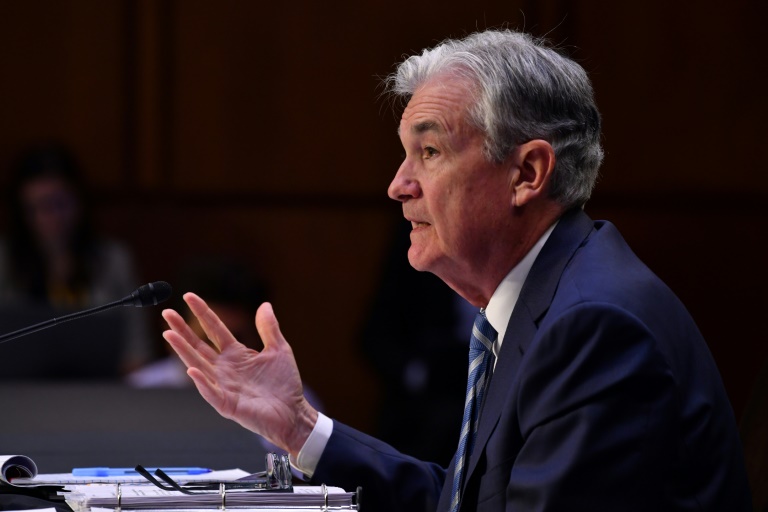
Asian markets mostly rose Thursday on bargain buying after the previous day’s battering, though oil extended losses after US Federal Reserve boss Jerome Powell admitted the economy could tip into recession as the bank hikes interest rates to fight runaway inflation.

Soaring prices and the battle by central banks to rein them in have sent a chill through global trading floors this year, while investors are also having to deal with the uncertainty brought by the Ukraine war and patchy pandemic recovery.

Commentators have warned for some time that the world economy could be heading for another contraction owing to the sharp increase in borrowing costs and rampant inflation, which is at decades highs in several countries.

And on Wednesday, the head of the most powerful central bank in the world told lawmakers it was “certainly a possibility”.

While saying the economy was strong enough for rates to rise, he added that “frankly, the events of the last few months around the world have made it more difficult for us to achieve what we want, which is two percent inflation and still a strong labour market.”

He also warned: “Inflation has obviously surprised to the upside over the past year, and further surprises could be in store.”

The Fed this month hiked rates by 75 basis points and is expected to do the same in July, with some observers predicting two more such moves after that.

After a day of swings, Wall Street ended in negative territory, though off big early lows.

Asia fluctuated in the morning but enjoyed a more positive afternoon, though optimism remains at a premium among investors, and analysts warned it was unlikely to improve anytime soon.

Hong Kong and Shanghai led gains thanks to a pick-up in tech firms after Chinese President Xi Jinping chaired a meeting Wednesday that pushed for “healthy” development of the fintech sector, adding to optimism that a crackdown on the industry may be coming to an end.

Xi also reaffirmed the country’s 5.5 percent growth target for this year despite months of lockdown-induced pain for the economy.

The comments suggest the government will unveil market-friendly measures to boost growth.

Tokyo, Sydney, Singapore, Mumbai, Bangkok and Wellington were higher, but Seoul, Taipei, Manila and Jakarta fell.

London, Paris and Frankfurt sank, with data showing the eurozone economy slowed sharply in June. There were also concerns about Germany after it raised its gas alert level owing to Russia’s war in Ukraine, with the country moving a step closer to rationing.

“Having listened to Powell’s lengthy Senate testimony… it is clear that inflation is the domestic issue at the top of the political agenda,” said SPI Asset Management’s Stephen Innes. 

“Powell consistently bobbed and weaved his way through commenting on anything of fiscal nature but was focused on deploying the tools within the Fed’s power to address their dual mandate” of reining in inflation and keeping unemployment in check. 

“So we should still position for more rate hike fallout to occur.”

Powell’s comments came as other top economists added to the recession talk, with former New York Fed President Bill Dudley saying it was “inevitable within the next 12 to 18 months”.

And Deutsche Bank CEO Christian Sewing said there was a 50 percent chance of a contraction next year.

Elon Musk, JP Morgan boss Jamie Dimon and economist Nouriel Roubini are among several others to have made similar forecasts.

“We are still in an era where uncertainty is elevated and is expected to remain so for quite a while,” said JoAnne Feeney, of Advisors Capital Management, on Bloomberg Television.

“It’s risky right now in terms of the forward outlook for the global economy. Recession risk has clearly risen.”

The prospect of a retreat in the global economy continued to drag oil prices down as traders fret over demand, with both main contracts down around one percent, having tumbled on Wednesday. However, they were well off morning lows.

Brent and WTI have dropped around 15 percent over the past week, even with sanctions on Russian crude exports and China’s gradual reopening from lockdowns.

Adding to the selling was data Wednesday indicating a jump in US stockpiles.

“A slowdown in global growth is a risk to oil demand, which could help ease some of the tightness in the market,” Warren Patterson, at ING Groep, said. 

“Already, we have seen demand estimates revised lower.”

– Key figures at around 0810 GMT –

Tokyo – Nikkei 225: UP 0.1 percent at 26,171.25 (close)

Hong Kong – Hang Seng Index: UP 1.3 percent at 21,273.87 (close)

Shanghai – Composite: UP 1.6 percent at 3,320.15 (close)

London – FTSE 100: DOWN 0.8 percent at 7,029.19

West Texas Intermediate: DOWN 1.9 percent at $104.23 per barrel

Brent North Sea crude: DOWN 1.6 percent at $109.94 per barrel

Dollar/yen: DOWN at 135.43 yen from 136.22 yen late Wednesday

Pound/dollar: DOWN at $1.2181 from $1.2263

Euro/dollar: DOWN at $1.0508 from $1.0570

Euro/pound: UP at 86.27 pence from 86.17 pence

New York – Dow: DOWN 0.2 percent at 30,483.13 (close)

Russia and China eye NATO's 'Arctic Achilles heel'

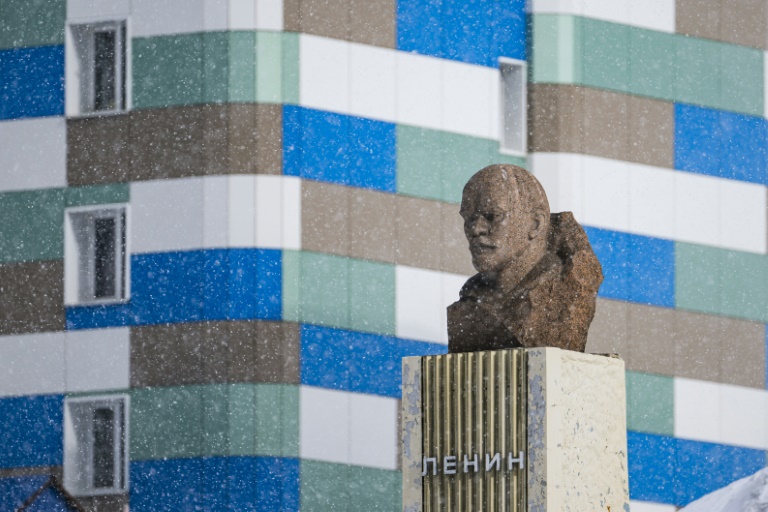
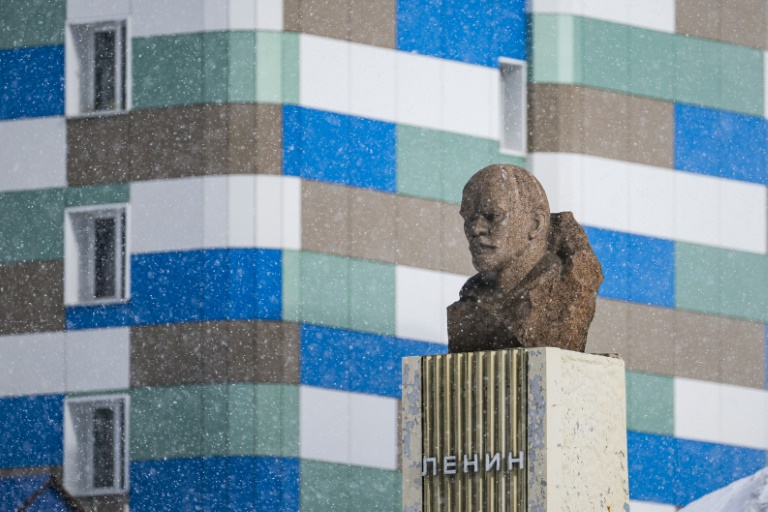
Russian flags flap in the stiff polar breeze, a bust of Lenin looms out of the snow and a vast slogan declares, “Communism is our goal!”

No, this is not some time warp Soviet settlement lost in the Arctic wastes, but a corner of Norway where Moscow can — theoretically at least — mine, build, drill and fish what it likes.

Welcome to Spitsbergen, the largest island of the Svalbard archipelago and “NATO’s Achilles heel in the Arctic”.

These spectacular islands of glaciers and mountain peaks halfway between Norway and the North Pole are a strategic and economic bridgehead not just for Moscow but also for Beijing. 

All because of one of the most bizarre and little-understood international treaties ever concluded, which gives Norway sovereignty but allows the citizens of 46 countries to exploit the islands’ potentially vast resources on an equal footing.

Which is why 370 Russians and Ukrainian miners from the Donbass work in Barentsburg, a cut-off corner of Spitsbergen where the Soviets dug coal for decades and where it is pitch dark for nearly three months of the year.

“Spitsbergen has been covered with Russian sweat and blood for centuries,” Moscow’s consul Sergey Gushchin said.

“I’m not arguing that it’s not Norwegian territory but it’s part of Russian history,” he added.

He makes no attempt to hide that some Ukrainians have left since the Russian invasion in February. 

Moscow has long wanted a bigger say in the archipelago which has been a haunt of its hunters, whalers, fishermen since the 16th century. 

It also insists on calling the islands by the original Spitsbergen rather than the Norwegian Svalbard, the official name since shortly after the treaty handing them to Norway was signed in 1920 while Russia was otherwise engaged with the civil war between Reds and Whites.

– Nuclear submarines –

Nuclear submarines from Russia’s powerful Northern Fleet also have to pass close to Svalbard’s southernmost Bear Island to get into the North Atlantic.

Russia’s “main interest is to avoid a situation (where) others use (the islands) offensively,” said political scientist Arild Moe of Norway’s Fridtjof Nansen Institute.

To make sure that happens they “maintain a reasonable presence and are very attentive to what is going on,” he added. 

After failing to get joint authority of the islands at the end of World War II, Russia is now pushing — without much success — for “bilateral consultations” to lift the brakes on its activities.

With its mines losing money for years, it has diversified into tourism and scientific research.

But with no road to the capital Longyearbyen, visitors have to come to Barentsburg by boat or snowmobile — depending on the season — to admire what was for decades a Soviet showpiece on the Western side of the Iron Curtain.

Barentsburg holds onto its Soviet relics “not because we still have hope for communism but because we value our heritage — and tourists also like taking pictures” of themselves with them, said Russian historian and tourist guide Natalia Maksimishina.

– Ringfencing the Russians –

Moscow accuses Norway of using environmental protection to hamstring its ambitions, with Russian helicopter flights for instance strictly controlled.

“We started to put nature reserves around Russian sites,” admitted former diplomat Sverre Jervell, the architect of Norwegian policy in the Barents Sea which separates the islands from Norway and Russia. 

“Particularly after the end of the Cold War and the collapse of the USSR when Barentsburg struggled to stay afloat.”

This “wasn’t officially” done to curtail the Russians, Jervell said, but in reality that is what happened. “Of course we had good arguments, the environment is very fragile,” he said. 

And Norway was treaty-bound to protect the islands’ nature. “But we particularly protected the areas around Russian sites.”

With another Soviet mining operation at Pyramiden, there was actually more Russians than Norwegians on the islands at the end of the Cold War.

Moscow regularly accuses Oslo of violating one of the most important articles of the 1920 treaty which effectively makes Svalbard a demilitarised zone.

It protests every time a Norwegian frigate docks or NATO lawmakers visit, and is particularly wary of the gigantic Svalsat satellite station near Longyearbyen. 

On a windy plateau near the Global Seed Vault — a “Noah’s Ark” where 1,145,693 seed varieties are frozen in case of catastrophe — some 130 antennae covered by giant golf-ball domes communicate with space. 

They also download data from military satellites, Moscow suspects.

In January, one of two fibre optic cables linking Svalsat with the mainland was mysteriously damaged.

Russia too has been accused of taking liberties with the treaty, like when its then deputy prime minister Dmitry Rogozin — who had been sanctioned by Europe over the annexation of Crimea — turned up unannounced in Svalbard in 2015. 

Or when Chechen special forces made a stopover there the following year on their way to a military exercise close to the North Pole.

Even if experts rule out any repeat of what happened in Crimea in Svalbard, they expect a reaction because of the chill caused by the Russian invasion of Ukraine.

“Svalbard is sensitive to the general international climate,” said Norwegian analyst Moe. “It is somewhere where Russia can easily express its dissatisfaction by putting Norway under pressure.”

– ‘Neutralising NATO’ –

Svalbard is “the Achilles heel of NATO in the Arctic”, said James Wither, a professor at the George C. Marshall European Center for Security Studies in Germany, because its distance from mainland Norway and “peculiar legal status provides a range of possible pretexts for Russian intervention.

“Although the danger of a direct military confrontation remains low, Svalbard is particularly vulnerable to a Russian gamble that offers the strategic payoff of advancing Russia’s long-term objectives of dividing the West and neutralising NATO,” the former British Army officer wrote in 2018.

Norway tries to play down Russian grievances, saying that they are far from new and insists that its sovereignty over the islands is no different to any other part of its territory.

Praised for his rapport with his Russian opposite number Sergei Lavrov when he was foreign minister between 2005 and 2012, Norwegian Prime Minister Jonas Gahr Store is an apostle of Oslo’s “High North, low tensions” doctrine.

“I would not say that we are being tested,” he said, “but there is growing interest in the Arctic from countries from there and from afar.”

“We wish to see the communities in Svalbard developed when it comes to new activities, research, (and) tourism… and that will be done in a transparent fashion,” he added.

Even so, Norway spent 300 million kroner (33.5 million euros) in 2016 buying a huge estate near Longyearbyen, the only one in private hands in the archipelago.

The government justified the expense saying they “wanted the land to be Norwegian” given the supposed interest of foreign, and notably Chinese, investors.

Russia has been quick to play on fears of the arrival of new powers like China.

“If we leave Spitsbergen, then who might come in our place?” said the Russian consul Gushchin from his impressive residence on a hill overlooking Barentsburg. “It might be China for example, or the United States or any member state of the Spitsbergen Treaty.”

– China planting flag –

Like its high-latitude neighbours Greenland, Iceland and the Faroe Islands, Svalbard seems to be in China’s sights. Indeed it now defines itself as a “near-Arctic” state and wants to establish a “Polar Silk Road”.  

With the region heating up three times faster than the planet, shrinking ice floes are opening up economic opportunities and maritime routes, although some are more theoretical than real.

With new fishing grounds and easier access to potential resources like oil and gas fields, everyone is trying to get a foot in the door.

It is hard to miss China’s Institute of Polar Research in Spitsbergen’s third biggest settlement Ny-Alesund, a former mining community now given over to international science.

Two marble lions — symbols of imperial China — guard the entrance of the Norwegian-owned building known as the Yellow River Station by its occupants.

It is a flagrant example of “flag showing”, according to Torbjorn Pedersen, a political science from Norway’s Nord University in Bodo.

“Some foreign capitals… cast their presence there as national stations and strategic footholds, potentially entitling them to political power and influence on the islands and in the wider Arctic region,” he wrote in the Polar Journal last year.

“Some of the research presence in Svalbard may seem geopolitically motivated,” Pedersen added. 

“If consolidated, the strategic presence could potentially embolden some… including great powers, with regional aspirations and become a real security challenge for host nation Norway.”

Oslo takes a dim view of “scientific diplomacy” more suited to Antarctica than a sovereign nation.

In 2019 it began trying to discourage the idea of national research stations from which countries could fly their flag in favour of sharing research facilities. 

The Franco-German station appears to be the first to feel the change. Since 2014 Paris and Berlin have been trying to centralise researchers scattered over several sites in one new building, but they have gotten nowhere.

Privately the Norwegians say they do not want to create a precedent.

“We cannot allow the French to do one thing and refuse the Chinese,” said Jervell. “The principle of the Svalbard Treaty is not to discriminate.”

Russia and China eye NATO's 'Arctic Achilles heel'

Russian flags flap in the stiff polar breeze, a bust of Lenin looms out of the snow and a vast slogan declares, “Communism is our goal!”

No, this is not some time warp Soviet settlement lost in the Arctic wastes, but a corner of Norway where Moscow can — theoretically at least — mine, build, drill and fish what it likes.

Welcome to Spitsbergen, the largest island of the Svalbard archipelago and “NATO’s Achilles heel in the Arctic”.

These spectacular islands of glaciers and mountain peaks halfway between Norway and the North Pole are a strategic and economic bridgehead not just for Moscow but also for Beijing. 

All because of one of the most bizarre and little-understood international treaties ever concluded, which gives Norway sovereignty but allows the citizens of 46 countries to exploit the islands’ potentially vast resources on an equal footing.

Which is why 370 Russians and Ukrainian miners from the Donbass work in Barentsburg, a cut-off corner of Spitsbergen where the Soviets dug coal for decades and where it is pitch dark for nearly three months of the year.

“Spitsbergen has been covered with Russian sweat and blood for centuries,” Moscow’s consul Sergey Gushchin said.

“I’m not arguing that it’s not Norwegian territory but it’s part of Russian history,” he added.

He makes no attempt to hide that some Ukrainians have left since the Russian invasion in February. 

Moscow has long wanted a bigger say in the archipelago which has been a haunt of its hunters, whalers, fishermen since the 16th century. 

It also insists on calling the islands by the original Spitsbergen rather than the Norwegian Svalbard, the official name since shortly after the treaty handing them to Norway was signed in 1920 while Russia was otherwise engaged with the civil war between Reds and Whites.

– Nuclear submarines –

Nuclear submarines from Russia’s powerful Northern Fleet also have to pass close to Svalbard’s southernmost Bear Island to get into the North Atlantic.

Russia’s “main interest is to avoid a situation (where) others use (the islands) offensively,” said political scientist Arild Moe of Norway’s Fridtjof Nansen Institute.

To make sure that happens they “maintain a reasonable presence and are very attentive to what is going on,” he added. 

After failing to get joint authority of the islands at the end of World War II, Russia is now pushing — without much success — for “bilateral consultations” to lift the brakes on its activities.

With its mines losing money for years, it has diversified into tourism and scientific research.

But with no road to the capital Longyearbyen, visitors have to come to Barentsburg by boat or snowmobile — depending on the season — to admire what was for decades a Soviet showpiece on the Western side of the Iron Curtain.

Barentsburg holds onto its Soviet relics “not because we still have hope for communism but because we value our heritage — and tourists also like taking pictures” of themselves with them, said Russian historian and tourist guide Natalia Maksimishina.

– Ringfencing the Russians –

Moscow accuses Norway of using environmental protection to hamstring its ambitions, with Russian helicopter flights for instance strictly controlled.

“We started to put nature reserves around Russian sites,” admitted former diplomat Sverre Jervell, the architect of Norwegian policy in the Barents Sea which separates the islands from Norway and Russia. 

“Particularly after the end of the Cold War and the collapse of the USSR when Barentsburg struggled to stay afloat.”

This “wasn’t officially” done to curtail the Russians, Jervell said, but in reality that is what happened. “Of course we had good arguments, the environment is very fragile,” he said. 

And Norway was treaty-bound to protect the islands’ nature. “But we particularly protected the areas around Russian sites.”

With another Soviet mining operation at Pyramiden, there was actually more Russians than Norwegians on the islands at the end of the Cold War.

Moscow regularly accuses Oslo of violating one of the most important articles of the 1920 treaty which effectively makes Svalbard a demilitarised zone.

It protests every time a Norwegian frigate docks or NATO lawmakers visit, and is particularly wary of the gigantic Svalsat satellite station near Longyearbyen. 

On a windy plateau near the Global Seed Vault — a “Noah’s Ark” where 1,145,693 seed varieties are frozen in case of catastrophe — some 130 antennae covered by giant golf-ball domes communicate with space. 

They also download data from military satellites, Moscow suspects.

In January, one of two fibre optic cables linking Svalsat with the mainland was mysteriously damaged.

Russia too has been accused of taking liberties with the treaty, like when its then deputy prime minister Dmitry Rogozin — who had been sanctioned by Europe over the annexation of Crimea — turned up unannounced in Svalbard in 2015. 

Or when Chechen special forces made a stopover there the following year on their way to a military exercise close to the North Pole.

Even if experts rule out any repeat of what happened in Crimea in Svalbard, they expect a reaction because of the chill caused by the Russian invasion of Ukraine.

“Svalbard is sensitive to the general international climate,” said Norwegian analyst Moe. “It is somewhere where Russia can easily express its dissatisfaction by putting Norway under pressure.”

– ‘Neutralising NATO’ –

Svalbard is “the Achilles heel of NATO in the Arctic”, said James Wither, a professor at the George C. Marshall European Center for Security Studies in Germany, because its distance from mainland Norway and “peculiar legal status provides a range of possible pretexts for Russian intervention.

“Although the danger of a direct military confrontation remains low, Svalbard is particularly vulnerable to a Russian gamble that offers the strategic payoff of advancing Russia’s long-term objectives of dividing the West and neutralising NATO,” the former British Army officer wrote in 2018.

Norway tries to play down Russian grievances, saying that they are far from new and insists that its sovereignty over the islands is no different to any other part of its territory.

Praised for his rapport with his Russian opposite number Sergei Lavrov when he was foreign minister between 2005 and 2012, Norwegian Prime Minister Jonas Gahr Store is an apostle of Oslo’s “High North, low tensions” doctrine.

“I would not say that we are being tested,” he said, “but there is growing interest in the Arctic from countries from there and from afar.”

“We wish to see the communities in Svalbard developed when it comes to new activities, research, (and) tourism… and that will be done in a transparent fashion,” he added.

Even so, Norway spent 300 million kroner (33.5 million euros) in 2016 buying a huge estate near Longyearbyen, the only one in private hands in the archipelago.

The government justified the expense saying they “wanted the land to be Norwegian” given the supposed interest of foreign, and notably Chinese, investors.

Russia has been quick to play on fears of the arrival of new powers like China.

“If we leave Spitsbergen, then who might come in our place?” said the Russian consul Gushchin from his impressive residence on a hill overlooking Barentsburg. “It might be China for example, or the United States or any member state of the Spitsbergen Treaty.”

– China planting flag –

Like its high-latitude neighbours Greenland, Iceland and the Faroe Islands, Svalbard seems to be in China’s sights. Indeed it now defines itself as a “near-Arctic” state and wants to establish a “Polar Silk Road”.  

With the region heating up three times faster than the planet, shrinking ice floes are opening up economic opportunities and maritime routes, although some are more theoretical than real.

With new fishing grounds and easier access to potential resources like oil and gas fields, everyone is trying to get a foot in the door.

It is hard to miss China’s Institute of Polar Research in Spitsbergen’s third biggest settlement Ny-Alesund, a former mining community now given over to international science.

Two marble lions — symbols of imperial China — guard the entrance of the Norwegian-owned building known as the Yellow River Station by its occupants.

It is a flagrant example of “flag showing”, according to Torbjorn Pedersen, a political science from Norway’s Nord University in Bodo.

“Some foreign capitals… cast their presence there as national stations and strategic footholds, potentially entitling them to political power and influence on the islands and in the wider Arctic region,” he wrote in the Polar Journal last year.

“Some of the research presence in Svalbard may seem geopolitically motivated,” Pedersen added. 

“If consolidated, the strategic presence could potentially embolden some… including great powers, with regional aspirations and become a real security challenge for host nation Norway.”

Oslo takes a dim view of “scientific diplomacy” more suited to Antarctica than a sovereign nation.

In 2019 it began trying to discourage the idea of national research stations from which countries could fly their flag in favour of sharing research facilities. 

The Franco-German station appears to be the first to feel the change. Since 2014 Paris and Berlin have been trying to centralise researchers scattered over several sites in one new building, but they have gotten nowhere.

Privately the Norwegians say they do not want to create a precedent.

“We cannot allow the French to do one thing and refuse the Chinese,” said Jervell. “The principle of the Svalbard Treaty is not to discriminate.”
Russia and China eye NATO's 'Arctic Achilles heel'

Russian flags flap in the stiff polar breeze, a bust of Lenin looms out of the snow and a vast slogan declares, “Communism is our goal!”

No, this is not some time warp Soviet settlement lost in the Arctic wastes, but a corner of Norway where Moscow can — theoretically at least — mine, build, drill and fish what it likes.

Welcome to Spitsbergen, the largest island of the Svalbard archipelago and “NATO’s Achilles heel in the Arctic”.

These spectacular islands of glaciers and mountain peaks halfway between Norway and the North Pole are a strategic and economic bridgehead not just for Moscow but also for Beijing. 

All because of one of the most bizarre and little-understood international treaties ever concluded, which gives Norway sovereignty but allows the citizens of 46 countries to exploit the islands’ potentially vast resources on an equal footing.

Which is why 370 Russians and Ukrainian miners from the Donbass work in Barentsburg, a cut-off corner of Spitsbergen where the Soviets dug coal for decades and where it is pitch dark for nearly three months of the year.

“Spitsbergen has been covered with Russian sweat and blood for centuries,” Moscow’s consul Sergey Gushchin said.

“I’m not arguing that it’s not Norwegian territory but it’s part of Russian history,” he added.

He makes no attempt to hide that some Ukrainians have left since the Russian invasion in February. 

Moscow has long wanted a bigger say in the archipelago which has been a haunt of its hunters, whalers, fishermen since the 16th century. 

It also insists on calling the islands by the original Spitsbergen rather than the Norwegian Svalbard, the official name since shortly after the treaty handing them to Norway was signed in 1920 while Russia was otherwise engaged with the civil war between Reds and Whites.

– Nuclear submarines –

Nuclear submarines from Russia’s powerful Northern Fleet also have to pass close to Svalbard’s southernmost Bear Island to get into the North Atlantic.

Russia’s “main interest is to avoid a situation (where) others use (the islands) offensively,” said political scientist Arild Moe of Norway’s Fridtjof Nansen Institute.

To make sure that happens they “maintain a reasonable presence and are very attentive to what is going on,” he added. 

After failing to get joint authority of the islands at the end of World War II, Russia is now pushing — without much success — for “bilateral consultations” to lift the brakes on its activities.

With its mines losing money for years, it has diversified into tourism and scientific research.

But with no road to the capital Longyearbyen, visitors have to come to Barentsburg by boat or snowmobile — depending on the season — to admire what was for decades a Soviet showpiece on the Western side of the Iron Curtain.

Barentsburg holds onto its Soviet relics “not because we still have hope for communism but because we value our heritage — and tourists also like taking pictures” of themselves with them, said Russian historian and tourist guide Natalia Maksimishina.

– Ringfencing the Russians –

Moscow accuses Norway of using environmental protection to hamstring its ambitions, with Russian helicopter flights for instance strictly controlled.

“We started to put nature reserves around Russian sites,” admitted former diplomat Sverre Jervell, the architect of Norwegian policy in the Barents Sea which separates the islands from Norway and Russia. 

“Particularly after the end of the Cold War and the collapse of the USSR when Barentsburg struggled to stay afloat.”

This “wasn’t officially” done to curtail the Russians, Jervell said, but in reality that is what happened. “Of course we had good arguments, the environment is very fragile,” he said. 

And Norway was treaty-bound to protect the islands’ nature. “But we particularly protected the areas around Russian sites.”

With another Soviet mining operation at Pyramiden, there was actually more Russians than Norwegians on the islands at the end of the Cold War.

Moscow regularly accuses Oslo of violating one of the most important articles of the 1920 treaty which effectively makes Svalbard a demilitarised zone.

It protests every time a Norwegian frigate docks or NATO lawmakers visit, and is particularly wary of the gigantic Svalsat satellite station near Longyearbyen. 

On a windy plateau near the Global Seed Vault — a “Noah’s Ark” where 1,145,693 seed varieties are frozen in case of catastrophe — some 130 antennae covered by giant golf-ball domes communicate with space. 

They also download data from military satellites, Moscow suspects.

In January, one of two fibre optic cables linking Svalsat with the mainland was mysteriously damaged.

Russia too has been accused of taking liberties with the treaty, like when its then deputy prime minister Dmitry Rogozin — who had been sanctioned by Europe over the annexation of Crimea — turned up unannounced in Svalbard in 2015. 

Or when Chechen special forces made a stopover there the following year on their way to a military exercise close to the North Pole.

Even if experts rule out any repeat of what happened in Crimea in Svalbard, they expect a reaction because of the chill caused by the Russian invasion of Ukraine.

“Svalbard is sensitive to the general international climate,” said Norwegian analyst Moe. “It is somewhere where Russia can easily express its dissatisfaction by putting Norway under pressure.”

– ‘Neutralising NATO’ –

Svalbard is “the Achilles heel of NATO in the Arctic”, said James Wither, a professor at the George C. Marshall European Center for Security Studies in Germany, because its distance from mainland Norway and “peculiar legal status provides a range of possible pretexts for Russian intervention.

“Although the danger of a direct military confrontation remains low, Svalbard is particularly vulnerable to a Russian gamble that offers the strategic payoff of advancing Russia’s long-term objectives of dividing the West and neutralising NATO,” the former British Army officer wrote in 2018.

Norway tries to play down Russian grievances, saying that they are far from new and insists that its sovereignty over the islands is no different to any other part of its territory.

Praised for his rapport with his Russian opposite number Sergei Lavrov when he was foreign minister between 2005 and 2012, Norwegian Prime Minister Jonas Gahr Store is an apostle of Oslo’s “High North, low tensions” doctrine.

“I would not say that we are being tested,” he said, “but there is growing interest in the Arctic from countries from there and from afar.”

“We wish to see the communities in Svalbard developed when it comes to new activities, research, (and) tourism… and that will be done in a transparent fashion,” he added.

Even so, Norway spent 300 million kroner (33.5 million euros) in 2016 buying a huge estate near Longyearbyen, the only one in private hands in the archipelago.

The government justified the expense saying they “wanted the land to be Norwegian” given the supposed interest of foreign, and notably Chinese, investors.

Russia has been quick to play on fears of the arrival of new powers like China.

“If we leave Spitsbergen, then who might come in our place?” said the Russian consul Gushchin from his impressive residence on a hill overlooking Barentsburg. “It might be China for example, or the United States or any member state of the Spitsbergen Treaty.”

– China planting flag –

Like its high-latitude neighbours Greenland, Iceland and the Faroe Islands, Svalbard seems to be in China’s sights. Indeed it now defines itself as a “near-Arctic” state and wants to establish a “Polar Silk Road”.  

With the region heating up three times faster than the planet, shrinking ice floes are opening up economic opportunities and maritime routes, although some are more theoretical than real.

With new fishing grounds and easier access to potential resources like oil and gas fields, everyone is trying to get a foot in the door.

It is hard to miss China’s Institute of Polar Research in Spitsbergen’s third biggest settlement Ny-Alesund, a former mining community now given over to international science.

Two marble lions — symbols of imperial China — guard the entrance of the Norwegian-owned building known as the Yellow River Station by its occupants.

It is a flagrant example of “flag showing”, according to Torbjorn Pedersen, a political science from Norway’s Nord University in Bodo.

“Some foreign capitals… cast their presence there as national stations and strategic footholds, potentially entitling them to political power and influence on the islands and in the wider Arctic region,” he wrote in the Polar Journal last year.

“Some of the research presence in Svalbard may seem geopolitically motivated,” Pedersen added. 

“If consolidated, the strategic presence could potentially embolden some… including great powers, with regional aspirations and become a real security challenge for host nation Norway.”

Oslo takes a dim view of “scientific diplomacy” more suited to Antarctica than a sovereign nation.

In 2019 it began trying to discourage the idea of national research stations from which countries could fly their flag in favour of sharing research facilities. 

The Franco-German station appears to be the first to feel the change. Since 2014 Paris and Berlin have been trying to centralise researchers scattered over several sites in one new building, but they have gotten nowhere.

Privately the Norwegians say they do not want to create a precedent.

“We cannot allow the French to do one thing and refuse the Chinese,” said Jervell. “The principle of the Svalbard Treaty is not to discriminate.”
Myanmar's Suu Kyi moved to solitary confinement in prison

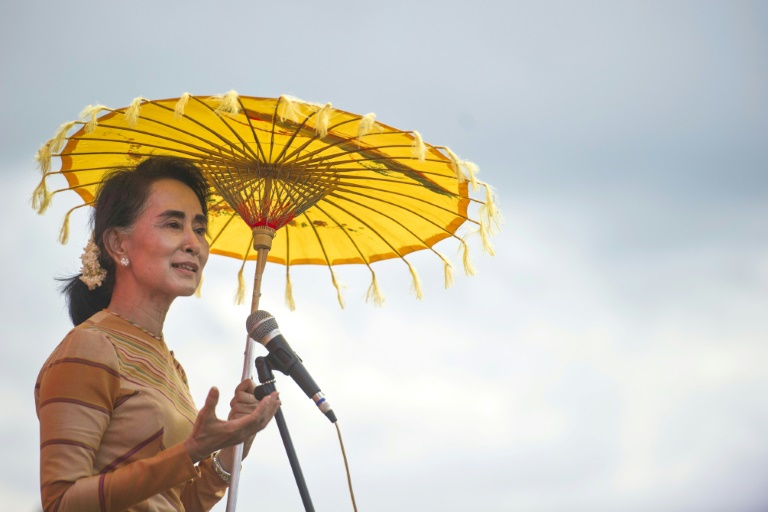
Ousted Myanmar leader Aung San Suu Kyi has been moved from house arrest to solitary confinement in a prison compound in the military-built capital Naypyidaw, a junta spokesman said on Thursday.

“In accordance with criminal laws… (Aung San Suu Kyi) has been kept in solitary confinement in prison” since Wednesday, Zaw Min Tun said in a statement.

Since her ouster in a coup last year, Suu Kyi had been under house arrest at an undisclosed location in Naypyidaw, accompanied by several domestic staff and her dog, according to sources with knowledge of the matter.

The Nobel laureate, 77, left those premises only to attend hearings for her trial in a junta court that could see her handed a prison sentence of more than 150 years.

Suu Kyi had on Wednesday been “transferred to prison”, a source with knowledge of the case told AFP, speaking on condition of anonymity.

Her staff and dog had not accompanied her, the source said, adding that security around the prison compound was “tighter than before”.

“Aung San Suu Kyi is in good health as far as we know,” they added.

– ‘Punitive’ –

“What we are seeing is the Myanmar junta moving towards a much more punitive phase, towards Aung San Suu Kyi,” said Phil Robertson, deputy Asia director for Human Rights Watch.

“They are obviously trying to intimidate her and her supporters.” 

On Tuesday, a source with knowledge of the case said future hearings in Suu Kyi’s trials would be moved to a prison compound in Naypyidaw.

Her lawyers have been banned from speaking to the media and journalists barred from her trial.

Under a previous junta regime, she spent long spells under house arrest in her family mansion in Yangon, Myanmar’s largest city.

Her current detention has seen her links to the outside world limited to brief pre-trial meetings with her lawyers.

She has already been convicted of corruption, incitement against the military, breaching Covid-19 rules and breaking a telecommunications law, with a court sentencing her to 11 years so far.

Suu Kyi turned 77 on Sunday and brought a birthday cake to court to eat with her lawyers ahead of a hearing on Monday, according to a source with knowledge of the matter.

Rescuers scramble to reach Afghan quake survivors as foreign aid arrives

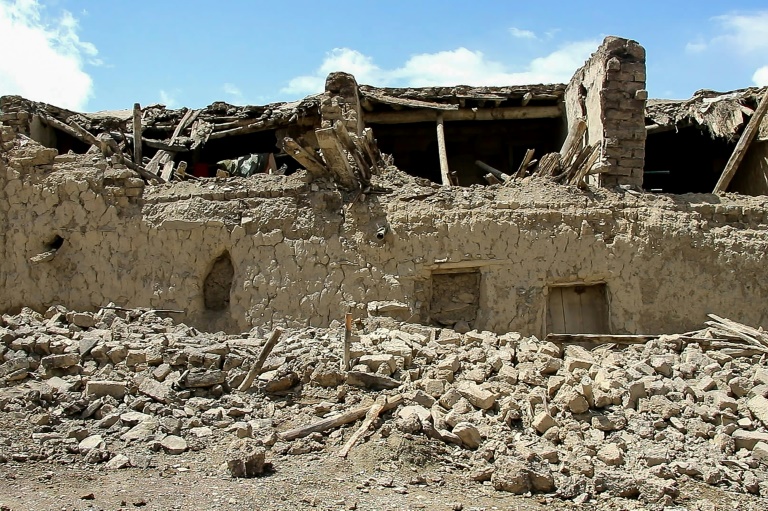
Desperate rescuers battled against the clock and heavy rain Thursday to reach cut-off areas in eastern Afghanistan after a powerful earthquake killed at least 1,000 people and left thousands more homeless.

Wednesday’s 5.9-magnitude quake struck hardest in the rugged east, downing mobile phone towers and power lines while triggering rock and mudslides which blocked mountain roads.

“Getting information from the ground is very difficult because of bad networks,” Mohammad Amin Huzaifa, head of information for badly hit Paktika province, told AFP Thursday, adding there was no immediate update to the death toll.

“The area has been affected by floods because of heavy rains last night… it is also difficult to access the affected sites.” 

The disaster poses a huge logistical challenge for Afghanistan’s new Taliban government, which has isolated itself from much of the world by introducing hardline Islamist rule that subjugates women and girls.

The aid-dependent country saw the bulk of its foreign assistance cut off in the wake of the Taliban takeover last August, and even before the earthquake the United Nations warned of a humanitarian crisis that threatened the entire population.

UN Secretary-General Antonio Guterres said the global agency has “fully mobilised” to help, deploying health teams and supplies of medicine, food, trauma kits and emergency shelter to the quake zone.

– ‘Like a tsunami’ –

Afghan government spokesman Zabihullah Mujahid tweeted Thursday that aid flights had landed from Qatar and Iran, while Pakistan had sent trucks carrying tents, medical supplies and food across the land border.

The earthquake struck areas that were already suffering the effects of heavy rain, causing rockfalls and mudslides that wiped out hamlets perched precariously on mountain slopes.

The UN humanitarian coordinator for Afghanistan, Ramiz Alakbarov, told reporters nearly 2,000 homes were likely destroyed — a huge number in an area where the average household size is more than 20 people.

“Seven in one room, five in the other room, four in another, and three in another have been killed in my family,” Bibi Hawa told AFP from a hospital bed in the Paktika capital.

“I can’t talk any more, my heart is getting weak.”

Hospital director Mohammad Yahya Wiar said they were doing their best to treat everyone.

“Our country is poor and lacks resources,” he told AFP. “This is a humanitarian crisis. It is like a tsunami.”

– Trench graves –

Footage released by the Taliban showed people in one village digging a long trench to bury the dead, who by Islamic tradition must be laid to rest facing Mecca.

Even before the Taliban takeover, Afghanistan’s emergency response teams were stretched to deal with the natural disasters that frequently strike the country.

But with only a handful of airworthy planes and helicopters left since they returned to power, any immediate response to the latest catastrophe is further limited.

“The government is working within its capabilities,” tweeted Anas Haqqani, a senior Taliban official.

“We hope that the International Community & aid agencies will also help our people in this dire situation.”

– Offers of help –

The United States, whose troops helped topple the initial Taliban regime and remained in Afghanistan for two decades until Washington pulled them out last year, was “deeply saddened” by the earthquake, the White House said.

“President Biden is monitoring developments and has directed USAID (US Agency for International Development) and other federal government partners to assess US response options to help those most affected,” National Security Advisor Jake Sullivan said in a statement.

The European Union was also quick to offer assistance.

Tomas Niklasson, EU special envoy for Afghanistan, tweeted: “The EU is monitoring the situation and stands ready to coordinate and provide EU emergency assistance to people and communities affected.”

– Prayers for victims –

Afghanistan is frequently hit by earthquakes, especially in the Hindu Kush mountain range, which lies near the junction of the Eurasian and Indian tectonic plates.

Scores of people were killed in January when two quakes struck the western province of Badghis.

In 2015, more than 380 people were killed in Pakistan and Afghanistan when a 7.5-magnitude earthquake ripped across the two countries.

Afghanistan’s deadliest recent earthquake killed 5,000 in May 1998 in the northeastern provinces of Takhar and Badakhshan.

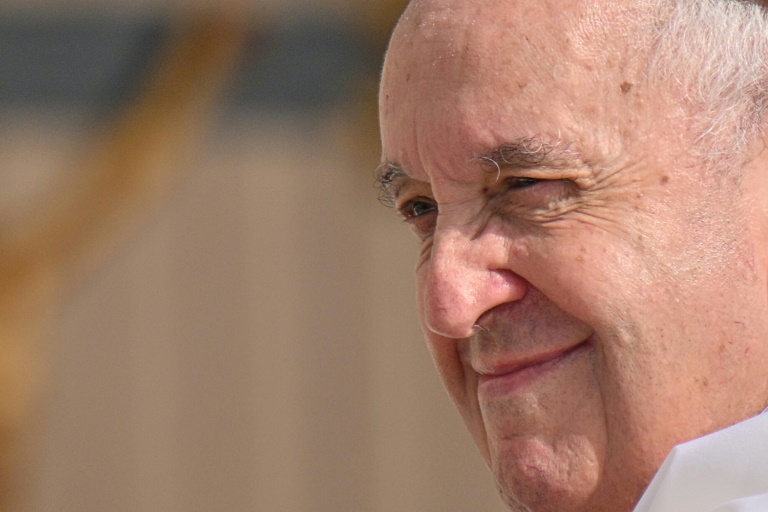
From the Vatican, Pope Francis offered prayers for victims of the latest quake.

“I express my closeness with the injured and those who were affected,” the 85-year-old pontiff said concluding his weekly audience.

'So many murders': Pope mourns priests killed in Mexico

Pope Francis on Wednesday lamented the spiral of violence engulfing Mexico after two Jesuit priests and a man seeking sanctuary were gunned down inside a church.

The pope, himself a Jesuit, expressed sadness and dismay over the killings of men he called his “brothers” in the mountains of the northern state of Chihuahua.

“So many murders in Mexico. I am close, in affection and prayer, to the Catholic community affected by this tragedy,” the pontiff said at the end of his weekly audience at the Vatican.

Priests Javier Campos, 79, and Joaquin Mora, 81, were shot dead in the town of Cerocahui on Monday “while trying to defend a man who was seeking refuge,” according to the order, also known as the Society of Jesus.

The pursued man, identified as tour guide Pedro Palma, was also killed and his body taken away with those of the two priests.

Chihuahua state governor Maru Campos later confirmed that the three men’s bodies had been found.

“We have managed to locate and recover… the bodies of the Jesuit priests Javier Campos and Joaquin Mora, and of the tour guide Pedro Palma,” Maru Campos said in a video posted to social media.

The identity of the victims was confirmed by forensic experts, while the state prosecutor’s office announced a reward of $250,000 for information leading to the capture of the alleged murderer.

Authorities have identified as a suspect a 30-year-old man already wanted over the murder of an American tourist in 2018.

The prosecutor’s office said on Wednesday that before the murders, the suspect had assaulted two other people after a disagreement over a baseball game.

He later kidnapped Palma, who managed to escape and ran into the church seeking help.

About 30 priests have been killed in Mexico in the past decade, according to the Centro Catolico Multimedial, a Catholic organization.

More than 340,000 people have been killed in a wave of bloodshed in Mexico since the government deployed the army to fight drug cartels in 2006.

– Crime-ridden region –

Mexican President Andres Manuel Lopez Obrador said Wednesday that a manhunt was under way for the alleged murderer.

The suspect was identified by another priest present in the church, he told reporters.

“That area of the mountains has for some time been infiltrated, penetrated, dominated by crime,” Lopez Obrador said.

The three bodies were placed in the back of a pickup truck by armed men, covered with plastic and taken away, according to Father Luis Gerardo Moro Madrid, head of the Jesuits in Mexico.

“We demand justice,” the order said.

Experts say Chihuahua is an important transit route for illegal drugs bound for the United States and violently contested between rival trafficking gangs.

Father Jorge Atilano Gonzalez, also a Jesuit, told a local television station the priests killed on Monday had attempted to intervene because they knew the assailant, who was from the area.

“He wanted to confess” after the shooting, he said, citing the testimony of the third priest present.

“What we believe is that he was in a state of alcoholism or addiction because of the reaction he had,” he added.

– ‘Important social work’ –

The office of the UN High Commissioner for Human Rights in Mexico condemned the killings, saying the priests had carried out “important social and pastoral work” among the Raramuri, or Tarahumara, Indigenous people.

“The murder of these two well-known priests reminds us of the situation of extreme violence and vulnerability faced by the communities of the Sierra Tarahumara in Chihuahua,” said UN human rights representative Guillermo Fernandez-Maldonado.

The Mexican Episcopal Conference called for a rapid investigation as well as increased security for the country’s clergy.

It is common for religious leaders in Mexico to act as defenders of their communities and as mediators with criminal gangs operating there.

In states such as Michoacan and Guerrero, some have even entered into dialogue with drug traffickers in a bid to keep the peace in largely poor regions with little government presence.

Greece's fire-ravaged Evia will take decades to heal

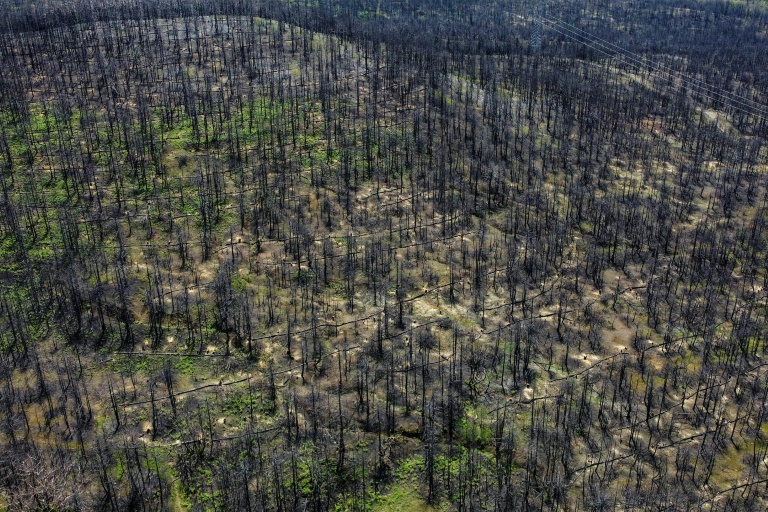
Nearly a year after Greece’s second-largest island of Evia was devastated by some of the worst wildfires in the country’s history, nature is making a slow comeback.

Grass is growing on blackened mountainsides under the carcasses of burnt trees and birds are singing again.

And while the woods and meadows that once produced some of Greece’s best honey will likely need two decades to recover, experts say the best method is to let nature do the heavy lifting itself.

“There is rebirth, in some places better than others,” Nikos Georgiadis of the World Wildlife Fund Greece told AFP.

In two weeks last August, more than 46,000 hectares went up in smoke on Evia — 80 kilometres (50 miles) east of Athens — laying waste to homes, pine forests, olive groves, beehives and livestock after a prolonged heatwave.

– Apocalyptic –

Thousands of locals and tourists fled from the north of the island amid apocalyptic scenes, with authorities forced to stage a mass evacuation to avoid a repeat of the 2018 fire near Athens that claimed over 100 lives.

Three people died in Greek wildfires last year during a brutal summer for a swathe of southern Europe from Spain to France, Italy, Croatia and Cyprus. Blazes also claimed lives in Turkey and Algeria.

Scientists have warned that extreme weather and fierce fires will become increasingly common due to man-made global warming, and Greece’s conservative prime minister has linked the blazes to climate change. 

In the wake of the destruction on Evia, premier Kyriakos Mitsotakis pledged hundreds of millions of euros for reconstruction, reforestation and flood prevention works, and a 1.7-billion-euro ($1.78 billion) overhaul of the civil protection agency.

– Letting nature grow –

Forester Elias Apostolidis, whose company is involved in the state’s reconstruction plan, said inspections so far have shown that only a little human intervention is needed for regrowth.

The worst-hit zones — around five percent of the burned area  — will be replanted with seeds gathered elsewhere on the island, he told AFP.

The fact that the destruction was so total in some areas also enables foresters to replant with more fire-resistant trees.

“We have recorded per species the percentage of plants that survived,” Apostolidis said. 

For example, only six percent of black pine was saved, compared to 42 percent of broadleaf oak, he said.

“This means that some plants are more resistant than others. We now know practically how forests behave in relation to fire and we must take that into account in the future so that we can make them more resistant” to blazes, he said.

But it will take “close to 20 to 25 years” for the forest to be restored, said WWF’s Georgiadis, provided that the area is not grazed and not hit by another wildfire.

Premier Mitsotakis vowed to “rebuild northern Evia better and more beautiful than it was”, announcing an aid package for the region worth 500 million euros.

The state has already removed unsavable trees in some badly affected areas and begun infrastructural works to assist reforestation and prevent soil erosion and flash floods.

– ‘We are done’ –

But for many locals, it is already too late.

Giannis Dimou, a 66-year-old shepherd, lost more than 60 animals and his three goat folds in the fire. 

He now has just a dozen animals left, not enough to keep him in business.

And because his pens were not fully licensed, he was not eligible for state help.

“There is nothing you can do with so few animals left,” he said. “We are done.”

The situation is equally dire for beekeepers on an island that was home to around 40 percent of national honey production.

“The beekeepers of the region are facing huge issues and essentially they won’t be able to collect honey from the area” for years and will have to move elsewhere, said Stathis Albanis, president of the Istiaia beekeepers cooperative. 

Monkeypox vaccine maker Bavarian Nordic ready to meet demand

As the lone laboratory manufacturing a licensed vaccine against monkeypox, Danish company Bavarian Nordic has seen its order book fill up as the usually rare disease spreads around the world. 

“The approval we got in 2019, when we only sold maybe a few hundred doses, all of a sudden became very, very relevant for international health,” the company’s vice president Rolf Sass Sorensen says with a smile at the biotech company’s headquarters in Copenhagen’s harbour.

Bavarian Nordic was caught by surprise by the disease’s sudden spread earlier this year to dozens of countries outside West and Central Africa where it had previously been generally confined.

But Sorensen says he is confident the company can meet global demand even though it only has one production facility.

“With the current demand we can easily supply the global market. We have a couple of million doses in bulk that we can put into vials and make sure that the current outbreak is handled,” he told AFP in an interview.

Bavarian Nordic has an annual production capacity of 30 million vaccine doses.

The Danish company’s smallpox vaccine, marketed as Imvanex in Europe, Jynneos in the US and Imvamune in Canada, is a third-generation serum (a live vaccine that does not replicate in the human body).

It has been licensed in Europe since 2013.

It was designed against smallpox in adults, a disease considered eradicated some 40 years ago, and requires two doses for inoculation.

– World clamouring for vaccine –

According to Sorensen, the vaccine is in stock “in many countries” and can also be used against monkeypox, both before and after exposure to the virus.

“If you are vaccinated a few days after you are exposed, you can also be protected”, he explained.

After getting the green light from the US Food and Drug Administration (FDA) three years ago to use its smallpox vaccine against monkeypox, Bavarian Nordic is now applying to do the same in Europe.

The European Health Emergency Preparedness and Response Authority (HERA), created by the European Commission during the Covid-19 pandemic, has already bought more than 100,000 doses for the 27 EU countries as well as Norway and Iceland.

The first deliveries are due at the end of June for those countries deemed a priority.

The United States has also filled up their stocks with an order for 500,000 doses, in addition to 100 million doses of an older smallpox vaccine previously made by France’s Sanofi but which is known to have some side effects. 

Canada and Denmark have also placed orders with Bavarian Nordic.

Other than these announcements made by the countries themselves, Bavarian Nordic — which also makes vaccines against tick-borne encephalitis, rabies, Ebola, Covid-19 and the RS respiratory virus — does not disclose which countries have placed orders.

“But I can say we have procurement requests from all over the world. We have procurement requests from the US, European countries, Middle Eastern countries, Asian countries”, Sorensen said.

The value of the contracts hasn’t been disclosed either, but for Bavarian Nordic it has clearly been a windfall: it raised its 2022 full-year outlook four times in three weeks.

– Rarely fatal –

Despite the rise in monkeypox cases worldwide, the World Health Organization has not recommended that countries mass vaccinate their populations at this stage.

The United States has so far recommended the vaccination of people who have been in close contact with an infected person, while France has recommended a single dose for contact cases in risk groups who were vaccinated for smallpox before 1980.

The European Medicines Agency approved a smallpox medication, Tecovirimat, for treatment of monkeypox earlier this year, but it is not yet widely available.

Most people recover from monkeypox within several weeks and the disease has only been fatal in rare cases.

Symptoms include lesions, eruptions on the face, palms or soles, scabs, fever, muscle ache and chills.

From January 1 to June 15, the WHO registered more than 2,103 cases and one death in 42 countries. 

Europe has been the epicentre of the outbreak, with 1,773 confirmed cases, or 84 percent of the global total.

Close Bitnami banner
Bitnami