World

Global food crisis 'will kill millions' by disease, health executive warns

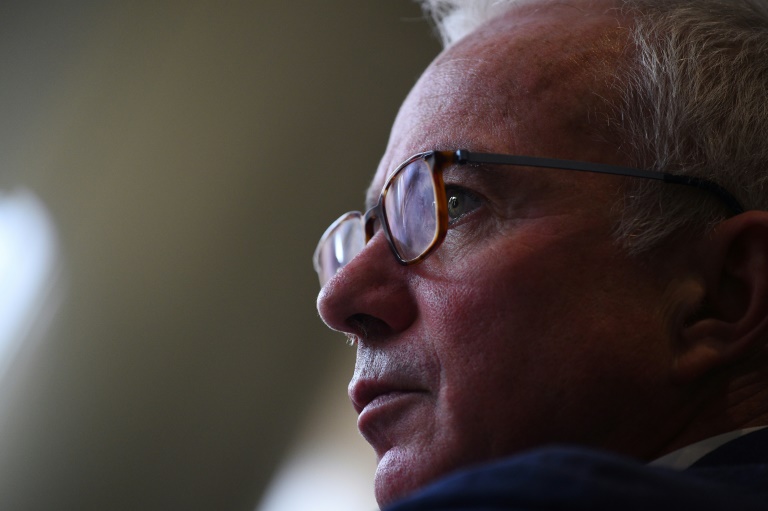
The global food crisis sparked by the war in Ukraine will kill millions by leaving the hungriest more vulnerable to infectious diseases, potentially triggering the world’s next health catastrophe, the head of a major aid organisation has warned.

A Russian naval blockade of Ukraine’s Black Sea ports has stopped grain shipments from the world’s fourth-largest exporter of wheat and corn, raising the spectre of shortages and hunger in low-income countries.

The knock-on effects of the food shortages mean many will die not only of starvation but from having weaker defences against infectious diseases due to bad nutrition, Peter Sands, executive director of the Global Fund to Fight Aids, Tuberculosis and Malaria told AFP this week.

“I think we’ve probably already begun our next health crisis. It’s not a new pathogen but it means people who are poorly nourished will be more vulnerable to the existing diseases,” he said in an interview on the sidelines of a G20 health minister meeting in the Indonesian city of Yogyakarta.

“I think the combined impact of infectious diseases and the food shortages and the energy crisis… we can be talking about millions of extra deaths because of this,” he said.

World governments should minimise the impact of the food crisis by providing frontline healthcare to their poorest communities, who will be the most vulnerable, said the British former banker who now heads the $4 billion fund.

“That means focusing on primary healthcare so the healthcare that is delivered in the villages, in the communities. Hospitals are important but when you are faced with this kind of challenge, the most important thing is primary healthcare.”

– ‘Disaster’ –

The battle to contain the spread of coronavirus has taken resources away from the fight against tuberculosis, which killed 1.5 million people in 2020, according to World Health Organization data.

“It’s been a disaster for TB,” said Sands.

“In 2020 you saw globally 1.5 million people less getting treated for TB and tragically that means several hundreds of thousands of people will die but also that those people will infect other people.”

The health expert said solving the food crisis was now paramount in aiding the treatment of the world’s second-deadliest infectious disease.  

The West and Ukraine accuse Russia of trying to pressure them into concessions by blockading vital grain exports to increase fears of global famine.

Moscow has countered by saying that it is Western sanctions that are to blame for shortfalls in the Middle East and Africa.

Germany will host a meeting on the crisis on Friday under the title “Uniting for Global Food Security”, with US Secretary of State Antony Blinken among those attending.

“It is the poor person pandemic and because of that, it hasn’t attracted the same amount of investment in research and development,” Sands said, referring to tuberculosis. 

“This is a tragedy because this is a disease we know how to prevent, how to cure, we know how to get rid of.”
EU debates Ukraine candidacy as Russia makes life 'hell' in east

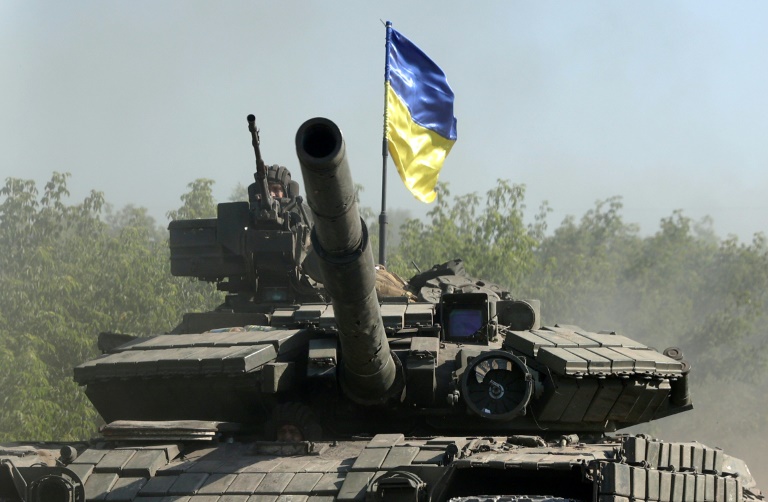
EU leaders will gather in Brussels Thursday to discuss calls to formally grant war-torn Ukraine “candidate status” to join the bloc, as Russian forces slowly advance in the eastern Donbas region despite fierce resistance from Kyiv’s military.

Ukrainian President Volodymyr Zelensky said he had been conducting a “telephone marathon” on his country’s behalf in the run-up to the meeting, making his case to 11 European leaders on Wednesday alone.

“We are preparing for the historic decision of the European Council. There are only a few hours remaining before it,” he said in his daily address.

But while the European Commission-backed candidacy is widely expected to be approved, some members have been lukewarm about Ukraine’s status, and any accession process is likely to take years if not decades.

On the ground in eastern Ukraine’s Donbas, massive Russian bombardments are making life “hell”, Kyiv said Wednesday, while insisting its soldiers would hold on “as long as necessary”.

Moscow’s troops have been pummelling the battleground Lugansk region and the strategically important city of Severodonetsk for weeks and are slowly advancing, despite fierce resistance from the outgunned Ukrainian military.

With President Vladimir Putin’s forces tightening their grip on Severodonetsk, its twin city of Lysychansk — located just across the Donets river — is now coming under heavier bombardment.

Taking the two cities would give Moscow control of the whole of Lugansk, allowing Russia to press further into Donbas.

“The Russian army is… just destroying everything” in Lysychansk, Sergiy Gaiday, governor of the Lugansk region, which includes both cities, wrote on Telegram.

“It’s just hell out there,” after four months of shelling in Severodonetsk, he wrote later.

“Our boys are holding their positions and will continue to hold on as long as necessary,” he added.

Pro-Russian separatists claimed they were close to surrounding both Lysychansk and Severodonetsk.

“Over the past several days, enormous work has been accomplished,” Andrei Marochko, an officer in the separatist army of Lugansk, told Russian state television.

– ‘Only grannies left’ –

After being pushed back from Kyiv and other parts of Ukraine following their February invasion, Moscow is seeking to seize a vast eastern swathe of the country.

But daily bombardment continues elsewhere.

The northeastern city of Kharkiv near the Russian border was near empty on Wednesday, AFP reporters said, a day after shelling by Moscow’s forces killed five people there.

Leyla Shoydhry, a young woman in a park near the opera house, said the situation was “very bad”.

“Last night the building next to mine collapsed from the bombardment while I was sleeping,” she said.

Roman Pohuliay, a 19-year-old in a pink sweatshirt, said most residents had fled the city.

“Only the grannies are left,” he said.

Ukrainian President Volodymyr Zelensky on Wednesday again pressed for the rapid supply of arms from Western allies, having earlier accused the Russian army of “brutal and cynical” shelling in the eastern Kharkiv region, where the governor said 15 people had been killed in a day.

As Ukraine awaits the delivery of advanced rocket systems, a new report from the Institute for the Study of War suggests its use of drones, a key factor in early success against Russian forces, is increasingly being hampered by improvements to Moscow’s air-defence capabilities.

In the central city of Zaporizhzhia, meanwhile, women were training to use Kalashnikov assault rifles in urban combat as Russian forces edged nearer.

“When you can do something, it’s not so scary to take a machine gun in your hands,” said Ulyana Kiyashko, 29, after moving through an improvised combat zone in a basement.

Separately, Iulia Tserkovnikova, lawyer for captured British combatant Shaun Pinner has told Russia’s TASS news agency that she and her staff are preparing an appeal of his recent death sentence.

Pinner, along with fellow British citizen Aiden Aslin and Moroccan Brahim Saadoun, were sentenced to death by pro-Moscow separatists in the breakaway Donetsk People’s Republic earlier this month.

The trio were accused of being hired mercenaries, a description Russia has broadly applied to foreigners volunteers fighting for Kyiv. 

– G7 to ‘increase pressure’ –

Away from the battlefield, a senior US official in Washington said President Joe Biden and other Group of Seven leaders holding a summit this weekend in Germany would announce new measures to punish Russia for the invasion.

Moscow this week summoned Brussels’ ambassador in a dispute with EU member Lithuania over the country’s restrictions on rail traffic to the Russian outpost of Kaliningrad.

The territory, annexed from Germany following World War II, is about 1,000 miles (1,600 kilometres) from Moscow, bordering Lithuania and Poland.

By blocking goods arriving from Russia, Lithuania says it is simply adhering to European Union-wide sanctions on Moscow.

The United States made clear its commitment to Lithuania as NATO ally, while Germany urged Russia not to “violate international law” by retaliating.

On Wednesday, a Turkish cargo ship left the Russian-occupied city of Mariupol on Ukraine’s Sea of Azov coast.

Moscow and Ankara have negotiated for weeks towards getting millions of tonnes of desperately needed grain out of the war zone and on to Africa and the Middle East.

But it was not immediately clear whether the Azov Concord was carrying wheat.

burs-sr/cwl/je

S.Africa's Ramaphosa should have acted against graft under Zuma: report

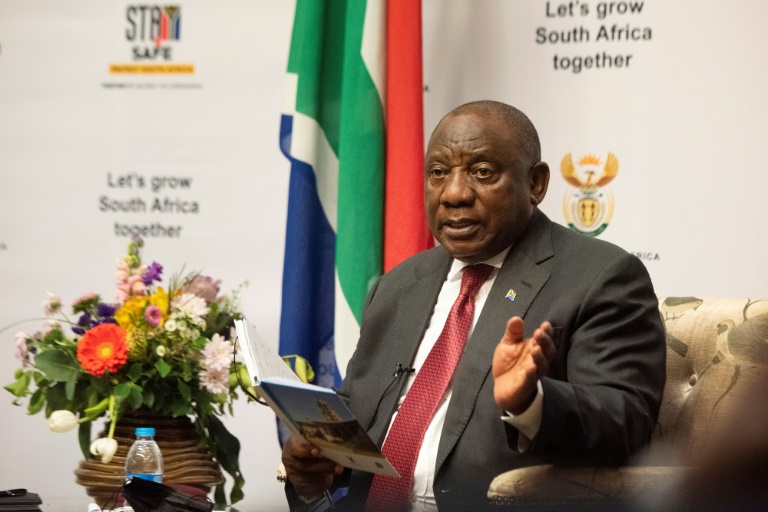
The last damning findings of a four-year probe into state corruption in South Africa under ex-leader Jacob Zuma, published Wednesday, suggested that President Ramaphosa could have acted against some of the allegations against his predecessor.

Receiving the report Ramaphosa, who was then deputy to Zuma, described the graft as an “assault on our democracy”.

The report was handed to Ramaphosa at his Pretoria offices by the head of the investigating panel and chief justice, Raymond Zondo.

The pillaging and mismanagement of South Africa’s state-owned enterprises during Zuma’s nine years in office, when Ramaphosa was his deputy, has been dubbed “state capture”.

In all, it took more than 400 days for an investigating panel to collect testimonies from around 300 witnesses, including Ramaphosa.

Ramaphosa’s answers to some questions about what he knew of the corrupt activities were “opaque” and “unfortunately leave some important gaps”, the report said. 

And whether he could have acted to curb the graft, “the wealth of evidence before this commission suggests that the answer is yes”, it said. 

“There was surely enough credible information in the public domain… to at least prompt him to inquire and perhaps act on a number of serious allegations.

“As the Deputy President, he surely had the responsibility to do so.” 

Ramaphosa did not immediately respond to the contents of the report, but said it “provides us with an opportunity to make a decisive break with the era of state capture”.

“State capture really was an assault on our democracy, it violated the rights of every man, woman and child in this country.”

The investigation was triggered by a 2016 report by the then corruption ombudswoman.

More than 1,430 individuals and institutions, including Zuma, were implicated. Zuma has previously denied any wrongdoing.

Ramaphosa now has four months to act on the panel’s recommendations.

The first volume of the report was published in January, and now the complete document runs to more than 5,600 pages. 

The report described Zuma as a “critical player” in the high-level plunder of state-owned enterprises that dogged his nine-year tenure, which ended unceremoniously in 2018 when he was forced to resign.

Zuma was last year slapped with a 15-month jail term for refusing to testify before the investigators.

He was granted parole just two months into his incarceration, but not before his jailing sparked riots last July that left more than 350 people dead.

– ‘Looting scheme’ –

The panel said “Zuma fled the commission because he knew there were questions” he would fail to answer, as it singled out his ally and ex-chairwoman of the struggling national carrier South African Airlines (SAA) of running down the airline.

The investigations revealed how Zuma’s friends, the wealthy Indian-born Gupta brothers, became enmeshed at the highest levels of government and the ruling African National Congress, including influencing ministerial appointments under Zuma.

Two of the three Gupta tycoons were arrested in Dubai earlier this month and face extradition to South Africa to face trial.

“The natural conclusion is that, during this period… the ANC under president Zuma, permitted, supported and enabled corruption and state capture,” said the report.

Taking over after Zuma was forced to resign over corruption, Ramaphosa came into office declaring anti-graft fight a priority of his administration. 

Ramaphosa in 2019 estimated that corruption, could have cost South Africa around 500-billion-rand ($31.4-billion), then an amount equivalent to about a tenth of the GDP of Africa’s most industrialised economy.

The publication of the final report comes as Ramaphosa is himself embroiled in a scandal following a robbery at his luxury game and cattle farm two years ago.

A former spy chief Arthur Fraser accused him of corruption alleging he hid millions of dollars in cash inside couches, and that he bribed the robbers to avoid scrutiny for keeping large sums of cash at home.

The scandal risks derailing Ramaphosa’s bid for a second term as ANC president ahead of the 2024 general election. He says he is a victim of “dirty tricks” and “intimidation” from those against his anti-graft fight.

China's Xi calls for stronger fintech oversight, security

A high-level Chinese government meeting led by President Xi Jinping has called for stronger oversight and better security in financial tech, state media reported, with the sector hit hard by a regulatory crackdown.

The government action has pummelled some of China’s biggest tech firms, wiping out hundreds of billions of dollars in market value since last year.

But with the Chinese economy hammered by Covid lockdowns, the government has rolled out a series of support measures, including a call for “predictable” tech regulation.

“Regarding large payment and fintech platform enterprises, Xi called for efforts to improve regulations, strengthen institutional weak links, ensure the security of payment and financial infrastructure, and guard against and defuse potential systemic financial risks,” according to a readout of the Wednesday meeting by the official Xinhua news agency.

The Chinese leader also “called for these enterprises to be better supported in serving the real economy”, Xinhua said.

The officials at the meeting discussed  promoting the “healthy development” of fintech companies, it added, and said “China will tighten oversight” of financial holding firms and internet financial services.

Investors have been heartened in recent weeks by similar statements by the Chinese government, with some perceiving them as signals that the tech crackdown is finally easing.

Hopes also soared this month when dozens of new video games were approved, and tech stocks rose on reports that authorities were wrapping up a cybersecurity probe into ride-hailing giant Didi.

But regulators this month denied reports that they were discussing the potential revival of Ant Group’s scuppered IPO, which would have been the world’s largest public offering at the time.

Ant Group — the payments affiliate of e-commerce giant Alibaba — had its share offering cancelled at the last minute in 2020.

Alibaba was later hit with a $2.75 billion fine over alleged unfair practices.

Ant Group is set to apply for a financial licence as soon as this month, Bloomberg News reported Wednesday, citing unnamed people familiar with the matter.

EU debates Ukraine candidacy as Russia makes life 'hell' in east

EU leaders will gather in Brussels Thursday to discuss calls to formally grant war-torn Ukraine “candidate status” to join the bloc, as Russian forces slowly advance in the eastern Donbas region despite fierce resistance from Kyiv’s military.

Ukrainian President Volodymyr Zelensky said he had been conducting a “telephone marathon” on his country’s behalf in the run-up to the meeting, making his country’s case to 11 European leaders on Wednesday alone.

“We are preparing for the historic decision of the European Council. There are only a few hours remaining before it,” he said in his daily address.

But while the European Commission-backed candidacy is widely expected to be approved, some members have been lukewarm about Ukraine’s status, and any accession process is likely to take years if not decades.

On the ground in eastern Ukraine’s battleground Donbas, massive Russian bombardments are making life “hell”, Kyiv said Wednesday, while insisting its soldiers would hold on “as long as necessary”.

Moscow’s troops have been pummelling the Lugansk region and the strategically important city of Severodonetsk for weeks and are slowly advancing, despite fierce resistance from the outgunned Ukrainian military.

With President Vladimir Putin’s forces tightening their grip on Severodonetsk, its twin city of Lysychansk — located just across the Donets river — is now coming under heavier bombardment.

Taking the two cities would give Moscow control of the whole of Lugansk, allowing Russia to press further into Donbas.

“The Russian army is… just destroying everything” in Lysychansk, Sergiy Gaiday, governor of the Lugansk region, which includes both cities, wrote on Telegram.

“It’s just hell out there,” after four months of shelling in Severodonetsk, he wrote later.

“Our boys are holding their positions and will continue to hold on as long as necessary,” he added.

Pro-Russian separatists claimed they were close to surrounding both Lysychansk and Severodonetsk.

“Over the past several days, enormous work has been accomplished,” Andrei Marochko, an officer in the separatist army of Lugansk, told Russian state television.

– ‘Only grannies left’ –

After being pushed back from Kyiv and other parts of Ukraine following their February invasion, Moscow is seeking to seize a vast eastern swathe of the country.

But daily bombardment continues elsewhere.

The northeastern city of Kharkiv near the Russian border was near empty on Wednesday, AFP reporters said, a day after shelling by Moscow’s forces killed five people there.

Leyla Shoydhry, a young woman in a park near the opera house, said the situation was “very bad”.

“Last night the building next to mine collapsed from the bombardment while I was sleeping,” she said.

Roman Pohuliay, a 19-year-old in a pink sweatshirt, said most residents had fled the city.

“Only the grannies are left,” he said.

Ukrainian President Volodymyr Zelensky on Wednesday again pressed for the rapid supply of arms from Western allies, having earlier accused the Russian army of “brutal and cynical” shelling in the eastern Kharkiv region, where the governor said 15 people had been killed in a day.

As Ukraine awaits the delivery of advanced rocket systems, a new report from the Institute for the Study of War suggests its use of drones, a key factor in early success against Russian forces, is increasingly being hampered by improvements to Moscow’s air-defence capabilities.

On Wednesday, the Russian defence ministry claimed responsibility for a missile strike it said killed a number of Ukrainian troops in the southern city of Mykolaiv.

In the central city of Zaporizhzhia, meanwhile, women were training to use Kalashnikov assault rifles in urban combat as Russian forces edged nearer.

“When you can do something, it’s not so scary to take a machine gun in your hands,” said Ulyana Kiyashko, 29, after moving through an improvised combat zone in a basement.

– G7 to ‘increase pressure’ –

Away from the battlefield, a senior US official in Washington said President Joe Biden and other Group of Seven leaders holding a summit this weekend in Germany would announce new measures to punish Russia for the invasion.

“We will roll out a concrete set of proposals to increase pressure on Russia,” the official said, adding that Zelensky would address the summit.

Moscow this week summoned Brussels’ ambassador in a dispute with EU member Lithuania over the country’s restrictions on rail traffic to the Russian outpost of Kaliningrad.

The territory, annexed from Germany following World War II, is about 1,000 miles (1,600 kilometres) from Moscow, bordering Lithuania and Poland.

By blocking goods arriving from Russia, Lithuania says it is simply adhering to European Union-wide sanctions on Moscow.

The United States made clear its commitment to Lithuania as an ally in NATO, which considers an attack against one member an attack on all.

And Germany urged Russia not to “violate international law” by retaliating against Lithuania.

On Wednesday, a Turkish cargo ship left the Russian-occupied city of Mariupol on Ukraine’s Sea of Azov coast.

Moscow and Ankara have negotiated for weeks towards getting millions of tonnes of desperately needed grain out of the war zone and on to Africa and the Middle East.

But it was not immediately clear whether the Azov Concord was carrying wheat.

Ankara’s defence ministry said four-way talks would be held “in the coming weeks” between Russia, Turkey, Ukraine and the United Nations, with media reporting the meeting could happen next week.

burs-sr/cwl/oho

Record floods threaten southern China

Record floods were expected in parts of southern China Thursday as heavy rains pushed water levels in the Pearl River delta to their highest in almost a century.

Hundreds of thousands of people have been evacuated from the worst-hit parts of the region, which includes Guangdong province, a manufacturing and logistics hub that is home to China’s tech capital Shenzhen.

China’s ministry of water resources on Wednesday placed its highest flood alert on the Pearl River basin, saying water levels at one location “surpassed historical records” and that the provincial capital Guangzhou would be impacted.

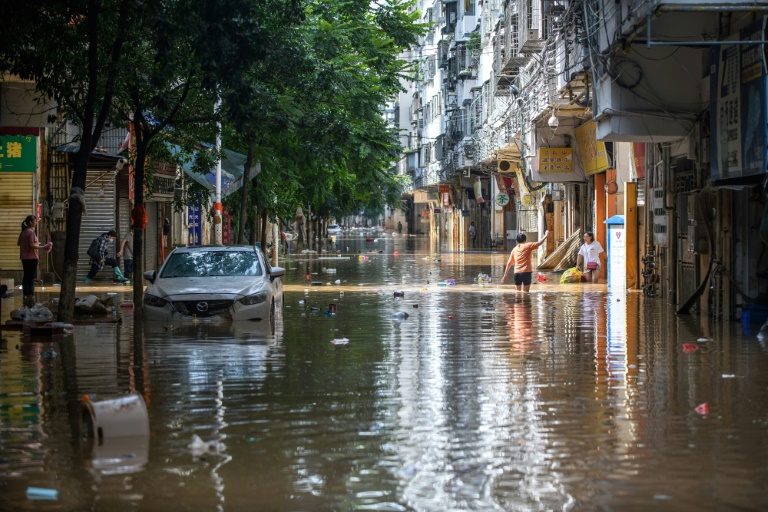
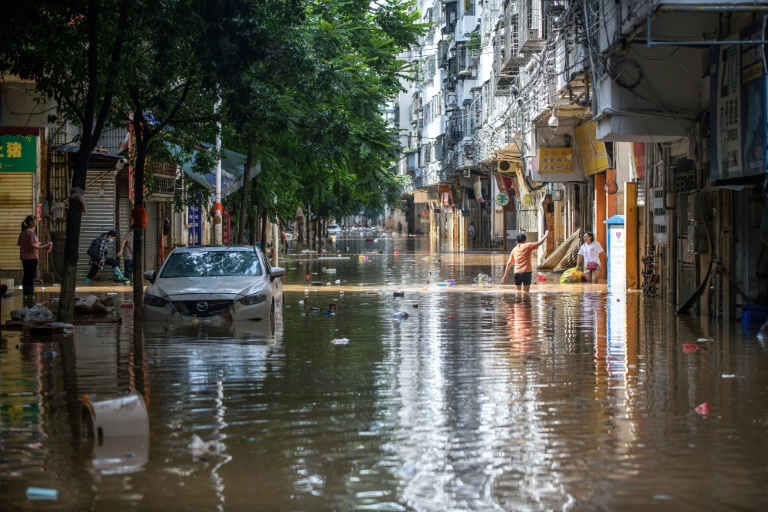
Images from the city of Shaoguan, north of Guangzhou, showed residents on Wednesday making their way through flooded main roads, as water in some areas reached the tops of cars.

The muddy floodwater inundated shops and buildings, and people were seen clearing away the debris.

The low-lying Pearl River delta is home to the economic powerhouses of Guangzhou and Shenzhen, as well as several smaller but densely populated cities with major manufacturing and other industries.

Provincial emergency management authorities said earlier this week that direct economic losses were estimated at 1.7 billion yuan ($253 million).

Under the highest alert level, at-risk areas in Guangdong have been ordered to take all necessary measures including suspending work at factories and closing schools to minimise damage.

Other regions in southern China, including coastal Fujian province and Guangxi, have also been affected by record rains this month, forcing hundreds of thousands to evacuate.

Summer floods are common in parts of China, but these have been getting more extreme in recent years as a result of climate change.

Chinese authorities so far have not directly linked this year’s extreme floods to climate change. 

Some local media have dubbed it a “once-in-a-century flood”, reporting that water levels have surpassed the highest recorded in 1931 and are approaching the area’s worst floods in 1915.

Record floods threaten southern China

Record floods were expected in parts of southern China Thursday as heavy rains pushed water levels in the Pearl River delta to their highest in almost a century.

Hundreds of thousands of people have been evacuated from the worst-hit parts of the region, which includes Guangdong province, a manufacturing and logistics hub that is home to China’s tech capital Shenzhen.

China’s ministry of water resources on Wednesday placed its highest flood alert on the Pearl River basin, saying water levels at one location “surpassed historical records” and that the provincial capital Guangzhou would be impacted.

Images from the city of Shaoguan, north of Guangzhou, showed residents on Wednesday making their way through flooded main roads, as water in some areas reached the tops of cars.

The muddy floodwater inundated shops and buildings, and people were seen clearing away the debris.

The low-lying Pearl River delta is home to the economic powerhouses of Guangzhou and Shenzhen, as well as several smaller but densely populated cities with major manufacturing and other industries.

Provincial emergency management authorities said earlier this week that direct economic losses were estimated at 1.7 billion yuan ($253 million).

Under the highest alert level, at-risk areas in Guangdong have been ordered to take all necessary measures including suspending work at factories and closing schools to minimise damage.

Other regions in southern China, including coastal Fujian province and Guangxi, have also been affected by record rains this month, forcing hundreds of thousands to evacuate.

Summer floods are common in parts of China, but these have been getting more extreme in recent years as a result of climate change.

Chinese authorities so far have not directly linked this year’s extreme floods to climate change. 

Some local media have dubbed it a “once-in-a-century flood”, reporting that water levels have surpassed the highest recorded in 1931 and are approaching the area’s worst floods in 1915.

Workers in Chile strike at world's largest copper producer

Workers at Chile’s state mining company Codelco, the largest producer of copper in the world, launched an open- ended strike Wednesday to protest the closure of a foundry in one of the country’s most polluted regions.

Police said they arrested 18 people as striking workers, waving Chilean flags and setting tires on fire, blocked entry to six mining facilities around the country. They did this mainly at the Ventanas foundry, which the government announced last week that it would shut down.

Union leaders said the strike had paralyzed Codelco altogether but Finance Minister Mario Marcel said it had “altered” production but not shut it down.

The Copper Workers Federation said the strike will cost Codelco — which produces around eight percent of the world’s copper amounting to 10-15 percent of Chile’s GDP — $20 million a day. Marcel contested that figure.

The FTC represents around 14,000 Codelco workers and another 40,000 external contractors, according to Pantoja.

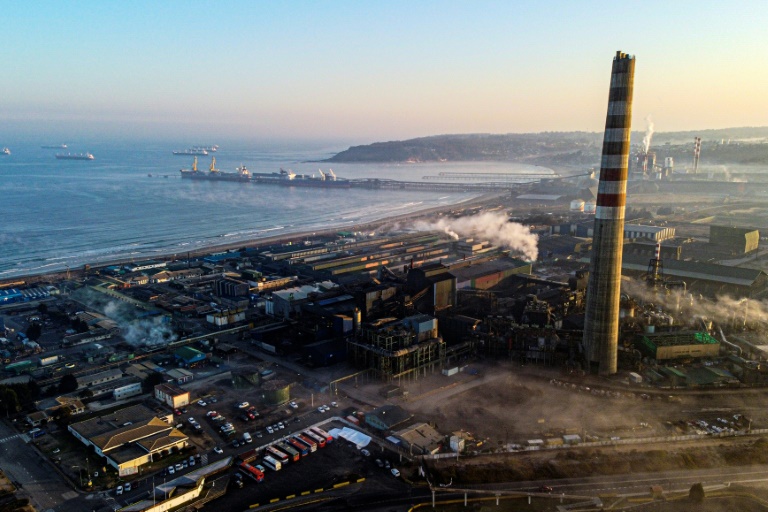
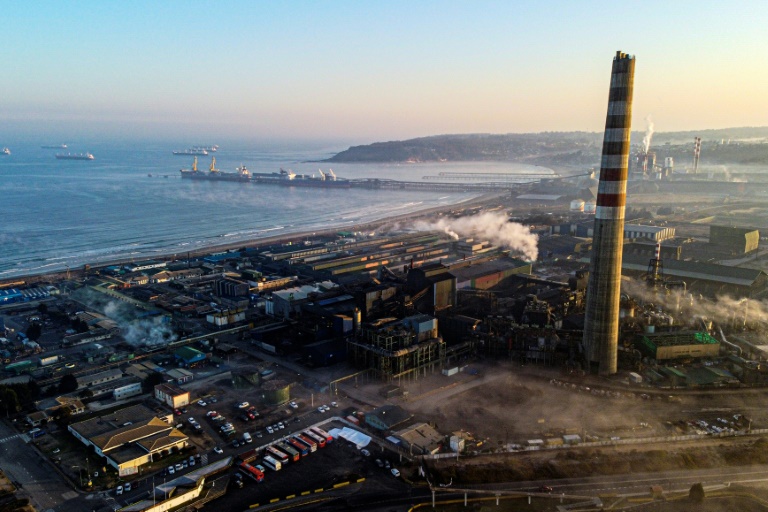
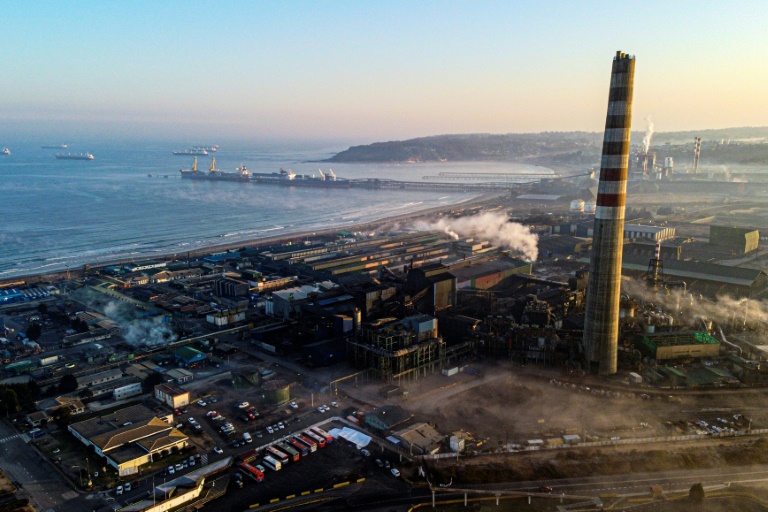
Unions described the closure of the Ventanas foundry, located around 140 kilometers west of the capital Santiago, as “arbitrary,” and are demanding the government invests $54 million to bring the plant up to the highest environmental standards.

– ‘Standards very low’ –

Government spokeswoman Camila Vallejo said the government remains open to dialogue but that it was focused on “a more sustainable model of development.”

“Our standards are very low and if we truly want to meet our environmental commitments we have to be guided by” World Health Organization standards, she added.

Codelco’s decision comes after an incident on June 9 when 115 people, mostly school children, suffered sulphur dioxide poisoning released by heavy industry, provoking the closure of schools in the area.

It was the second such incident in a matter of just three days.

Sulphur dioxide is a classic air pollutant usually linked to the burning of fossil fuels.

Greenpeace described the area around the Ventanas plant as “Chile’s Chernobyl” following a serious incident in 2018 when around 600 people in Quintero and Puchuncavi received medical treatment for symptoms such as vomiting blood, headaches, dizziness, paralysis of their extremities and strange red marks on children’s skin.

Last week, President Gabriel Boric hit out at Chile’s record on polluting the environment.

“We don’t want any more areas of (environmental) sacrifice,” he said.

“There are now hundreds of thousands of people who live in our country exposed to severe degradation of the environment that we have provoked or allowed and, as a Chilean, that makes me feel ashamed.”

Pollution accumulated in the area of Quintero and Puchuncavi, home to around 50,000 people, after the government decided in 1958 to convert it into an industrial center that now hosts four coal-fired power stations and oil and copper refineries.

Workers in Chile strike at world's largest copper producer

Workers at Chile’s state mining company Codelco, the largest producer of copper in the world, launched an open- ended strike Wednesday to protest the closure of a foundry in one of the country’s most polluted regions.

Police said they arrested 18 people as striking workers, waving Chilean flags and setting tires on fire, blocked entry to six mining facilities around the country. They did this mainly at the Ventanas foundry, which the government announced last week that it would shut down.

Union leaders said the strike had paralyzed Codelco altogether but Finance Minister Mario Marcel said it had “altered” production but not shut it down.

The Copper Workers Federation said the strike will cost Codelco — which produces around eight percent of the world’s copper amounting to 10-15 percent of Chile’s GDP — $20 million a day. Marcel contested that figure.

The FTC represents around 14,000 Codelco workers and another 40,000 external contractors, according to Pantoja.

Unions described the closure of the Ventanas foundry, located around 140 kilometers west of the capital Santiago, as “arbitrary,” and are demanding the government invests $54 million to bring the plant up to the highest environmental standards.

– ‘Standards very low’ –

Government spokeswoman Camila Vallejo said the government remains open to dialogue but that it was focused on “a more sustainable model of development.”

“Our standards are very low and if we truly want to meet our environmental commitments we have to be guided by” World Health Organization standards, she added.

Codelco’s decision comes after an incident on June 9 when 115 people, mostly school children, suffered sulphur dioxide poisoning released by heavy industry, provoking the closure of schools in the area.

It was the second such incident in a matter of just three days.

Sulphur dioxide is a classic air pollutant usually linked to the burning of fossil fuels.

Greenpeace described the area around the Ventanas plant as “Chile’s Chernobyl” following a serious incident in 2018 when around 600 people in Quintero and Puchuncavi received medical treatment for symptoms such as vomiting blood, headaches, dizziness, paralysis of their extremities and strange red marks on children’s skin.

Last week, President Gabriel Boric hit out at Chile’s record on polluting the environment.

“We don’t want any more areas of (environmental) sacrifice,” he said.

“There are now hundreds of thousands of people who live in our country exposed to severe degradation of the environment that we have provoked or allowed and, as a Chilean, that makes me feel ashamed.”

Pollution accumulated in the area of Quintero and Puchuncavi, home to around 50,000 people, after the government decided in 1958 to convert it into an industrial center that now hosts four coal-fired power stations and oil and copper refineries.

Workers in Chile strike at world's largest copper producer

Workers at Chile’s state mining company Codelco, the largest producer of copper in the world, launched an open- ended strike Wednesday to protest the closure of a foundry in one of the country’s most polluted regions.

Police said they arrested 18 people as striking workers, waving Chilean flags and setting tires on fire, blocked entry to six mining facilities around the country. They did this mainly at the Ventanas foundry, which the government announced last week that it would shut down.

Union leaders said the strike had paralyzed Codelco altogether but Finance Minister Mario Marcel said it had “altered” production but not shut it down.

The Copper Workers Federation said the strike will cost Codelco — which produces around eight percent of the world’s copper amounting to 10-15 percent of Chile’s GDP — $20 million a day. Marcel contested that figure.

The FTC represents around 14,000 Codelco workers and another 40,000 external contractors, according to Pantoja.

Unions described the closure of the Ventanas foundry, located around 140 kilometers west of the capital Santiago, as “arbitrary,” and are demanding the government invests $54 million to bring the plant up to the highest environmental standards.

– ‘Standards very low’ –

Government spokeswoman Camila Vallejo said the government remains open to dialogue but that it was focused on “a more sustainable model of development.”

“Our standards are very low and if we truly want to meet our environmental commitments we have to be guided by” World Health Organization standards, she added.

Codelco’s decision comes after an incident on June 9 when 115 people, mostly school children, suffered sulphur dioxide poisoning released by heavy industry, provoking the closure of schools in the area.

It was the second such incident in a matter of just three days.

Sulphur dioxide is a classic air pollutant usually linked to the burning of fossil fuels.

Greenpeace described the area around the Ventanas plant as “Chile’s Chernobyl” following a serious incident in 2018 when around 600 people in Quintero and Puchuncavi received medical treatment for symptoms such as vomiting blood, headaches, dizziness, paralysis of their extremities and strange red marks on children’s skin.

Last week, President Gabriel Boric hit out at Chile’s record on polluting the environment.

“We don’t want any more areas of (environmental) sacrifice,” he said.

“There are now hundreds of thousands of people who live in our country exposed to severe degradation of the environment that we have provoked or allowed and, as a Chilean, that makes me feel ashamed.”

Pollution accumulated in the area of Quintero and Puchuncavi, home to around 50,000 people, after the government decided in 1958 to convert it into an industrial center that now hosts four coal-fired power stations and oil and copper refineries.

Close Bitnami banner
Bitnami