World

Markets fluctuate, oil falls again as recession warnings build

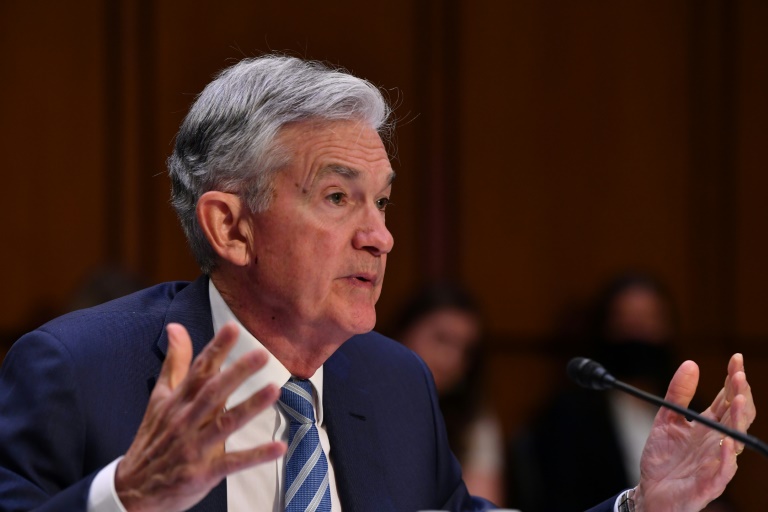
Asian markets struggled Thursday to recover from the previous day’s battering, while oil extended losses, after Federal Reserve boss Jerome Powell admitted the economy could tip into recession as the bank hikes interest rates to fight runaway inflation.

Soaring prices and central banks’ battle to rein them in have sent a chill through global trading floors this year, while investors are also having to deal with the uncertainty wrought by the Ukraine war and patchy pandemic recovery.

Commentators have warned for some time that the world economy could be heading for another contraction owing to the sharp increase in borrowing costs and rampant inflation, which is at decades highs in several countries.

And on Wednesday the head of the most powerful central bank in the world told lawmakers that it was “certainly a possibility”.

While saying the economy was strong enough for rates to rise, he added that “frankly, the events of the last few months around the world have made it more difficult for us to achieve what we want, which is two percent inflation and still a strong labour market.”

He also warned: “Inflation has obviously surprised to the upside over the past year, and further surprises could be in store”.

The Fed this month hiked rates by 75 basis points and is expected to do the same in July, with some observers predicting two more such moves after that.

After a day of swings, Wall Street ended in negative territory, though off big early lows.

Asia fluctuated after a big sell-off Wednesday, with optimism at a premium among investors and analysts saying it is unlikely to improve anytime soon.

Hong Kong, Sydney, Singapore and Wellington were slightly higher but Tokyo, Shanghai, Seoul, Taipei, Manila and Jakarta fell.

“Having listened to Powell’s lengthy Senate testimony… it is clear that inflation is the domestic issue at the top of the political agenda,” said SPI Asset Management’s Stephen Innes. 

“Powell consistently bobbed and weaved his way through commenting on anything of fiscal nature but was focused on deploying the tools within the Fed’s power to address their dual mandate” of reining in inflation and keeping unemployment in check. 

“So we should still position for more rate hike fallout to occur.”

Powell’s comments came as other top economists added to the recession talk, with former New York Fed President Bill Dudley saying it was “inevitable within the next 12 to 18 months”.

And Deutsche Bank CEO Christian Sewing said there was a 50 percent chance of a contraction next year.

Elon Musk, JP Morgan boss Jamie Dimon and Nouriel Roubini are among several others to have made similar forecasts.

“We are still in an era where uncertainty is elevated and is expected to remain so for quite a while,” said JoAnne Feeney, of Advisors Capital Management, on Bloomberg Television.

“It’s risky right now in terms of the forward outlook for the global economy. Recession risk has clearly risen.”

The prospect of a retreat in the global economy continued to drag oil prices down as traders fret over demand, with both main contracts down more than three percent, having tumbled on Wednesday.

Brent and WTI have dropped around 15 percent over the past week, even with sanctions on Russian crude exports and China’s gradual reopening from lockdowns.

Adding to the selling was data Wednesday indicating a jump in US stockpiles.

“A slowdown in global growth is a risk to oil demand, which could help ease some of the tightness in the market,” Warren Patterson, at ING Groep, said. 

“Already, we have seen demand estimates revised lower.”

– Key figures at around 0230 GMT –

Tokyo – Nikkei 225: FLAT at 26,146.71 (break)

Hong Kong – Hang Seng Index: UP 0.2 percent at 21,039.28

Shanghai – Composite: DOWN 0.1 percent at 3,263.02

West Texas Intermediate: DOWN 3.5 percent at $102.51 per barrel

Brent North Sea crude: DOWN 3.2 percent at $108.14 per barrel

Dollar/yen: DOWN at 135.74 yen from 136.22 yen late Wednesday

Pound/dollar: DOWN at $1.2241 from $1.2263

Euro/dollar: DOWN at $1.0561 from $1.0570

Euro/pound: UP at 86.27 pence from 86.17 pence

New York – Dow: DOWN 0.2 percent at 30,483.13 (close)

London – FTSE 100: DOWN 0.9 percent at 7,089.22 (close)
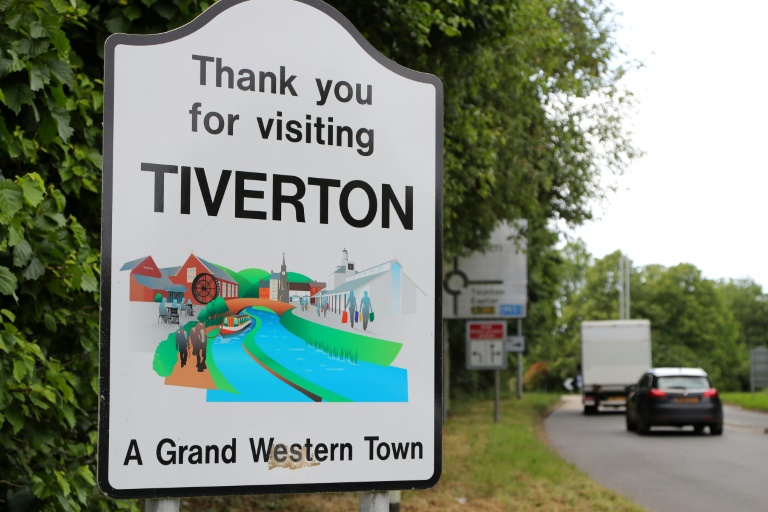
UK by-elections pose fresh threat to Boris Johnson

Voters head to the polls on Thursday in two closely watched UK by-elections that risk renewing pressure on beleaguered Prime Minister Boris Johnson following months of scandals and setbacks.

His ruling Conservatives are tipped to lose both contests, for the parliamentary seats of Tiverton and Honiton in southwest England and Wakefield in the north, after both Tory MPs resigned in disgrace.

Tiverton and Honiton’s MP Neil Parish quit after admitting watching pornography on his phone in the House of Commons, while Wakefield’s Imran Ahmad Khan was jailed for sexually assaulting a teenage boy.

The votes come just weeks after Johnson narrowly survived an attempt by his own lawmakers to oust him as party leader and prime minister.

The June 6 vote among Conservative MPs saw more than 40 percent of the parliamentary party desert him, leaving him severely weakened and struggling to reset his turbulent tenure in power.

Johnson has spent months fighting for his survival after a series of controversies including the “Partygate” saga led many Tories to question whether he should remain as leader.

Various opinion polls have shown the public think he lied about Covid lockdown-breaking events at Downing Street and should resign.

Even before the controversy erupted last December, the 58-year-old Brexit architect saw the loss of two once-safe seats in by-elections last year. 

He then scored dismally in May’s local elections.

Defeat in the true blue Tory heartland of Tiverton and Honiton, and in Wakefield, which Johnson snatched in 2019 from the main opposition Labour party for the first time since the 1930s, could see his position challenged again.

– ‘Madness’ –

Parish, who described his actions as an indefensible moment of “total madness”, won a more than 24,000 majority in Tiverton and Honiton in 2019.

There, the small opposition Liberal Democrats are hopeful of picking up the seat in rural Devon after overturning similarly large majorities in two other historically safe Tory seats in 2021.

Wakefield, near Leeds, was one of dozens of so-called Labour “red wall” seats that Johnson took in 2019 on a promise to “get Brexit done” and address glaring regional economic inequalities.

But it could now flip back due in part to Johnson’s waning popularity.

“Anything is better than the Tory Party, as far as I’m concerned — especially Boris Johnson,” long-time Labour voter Stephen, a 61-year-old hospitality worker, told AFP this week.

– ‘Partygate’ and prices –

The polls come with Britain gripped by 40-year highs in inflation and a cost-of-living crisis that has seen prices soar for everyday essential such as energy, petrol and food.

Strikes this week by railway workers — some of the biggest seen in Britain in decades — have added to the sense of crisis.

Some in Wakefield said they expected that to weigh as heavily on voters’ minds as the Downing Street parties saga.

“I think people will be affected by ‘Partygate’,” said David, a retired medical consultant. 

“But I think the main thing we’re going to be affected by is being hit by the inflation and the rising cost of living from the point of view of heating, energy and the knock-on effect on food prices and transport.”

The contest there also comes with risks for Labour, which needs to secure seats like Wakefield if it is to win the next general election due by 2024.

Labour leader Keir Starmer, a sober-minded former lawyer who has been trying to rebuild the centre-left party after the shattering 2019 defeat, has been criticised for failing to connect with voters, particularly in its former heartlands.

Anything less than a convincing win in Wakefield is likely to be seized upon by his critics as further evidence of his inability to complete the rebuild and return the party to power after 12 years in opposition.

Short hair, don't care: Saudi working women embrace cropped locks

When Saudi doctor Safi took a new job at a hospital in the capital, she decided to offset her standard white lab coat with a look she once would have considered dramatic.

Walking into a Riyadh salon, she ordered the hairdresser to chop her long, wavy locks all the way up to her neck, a style increasingly in vogue among working women in the conservative kingdom.

The haircut –- known locally by the English word “boy” –- has become strikingly visible on the streets of the capital, and not just because women are no longer required to wear hijab headscarves under social reforms pushed by Crown Prince Mohammed bin Salman, Saudi Arabia’s de facto ruler.

As more women join the workforce, a central plank of government efforts to remake the Saudi economy, many describe the “boy” cut as a practical, professional alternative to the longer styles they might have preferred in their pre-working days.

For Safi, who asked to be identified by a pseudonym to preserve her anonymity, the look also serves as a form of protection from unwanted male attention, allowing her to focus on her patients.

“People like to see femininity in a woman’s appearance,” she said. “This style is like a shield that protects me from people and gives me strength.”

– A practical time-saver –

At one salon in central Riyadh, demand for the “boy” cut has spiked –- with seven or eight customers out of 30 requesting it on any given day, said Lamis, a hairdresser.

“This look has become very popular now,” she said. “The demand for it has increased, especially after women entered the labour market.

“The fact that many women do not wear the hijab has highlighted its spread” while spurring even more customers to try it out, especially women in their late teens and twenties, she said.

The lifting of the headscarf requirement is just one of many changes that have reordered daily life for Saudi women under Prince Mohammed, who was named as the heir to his 86-year-old father, King Salman, five years ago.

Saudi women are no longer banned from concerts and sports events, and in 2018 they gained the right to drive.

The kingdom has also eased so-called guardianship rules, meaning women can now obtain passports and travel abroad without a male relative’s permission.

Such reforms, however, have been accompanied by a crackdown on women’s rights activists, part of a broader campaign against dissent.

Getting more women to work is a major component of Prince Mohammed’s Vision 2030 reform plan to make Saudi Arabia less dependent on oil.

The plan initially called for women to account for 30 percent of the workforce by the end of the decade, but already that figure has reached 36 percent, assistant tourism minister Princess Haifa Al-Saud told the World Economic Forum in Davos last month.

“We see women today in every single job type,” Princess Haifa said, noting that 42 percent of small and medium-sized enterprises are women-owned.

Many working women interviewed by AFP praised the “boy” cut as a tool for navigating their new professional lives.

“I am a practical woman and I don’t have time to take care of my hair,” said Abeer Mohammed, a 41-year-old mother of two who runs a men’s clothing store.

“My hair is curly, and if my hair grows long, I will have to spend time that is not available to me taking care of it in the morning.”

– ‘Show of strength’ –

Saudi Arabia has traditionally outlawed men who “imitate women” or wear women’s clothing, and vice versa.

But Rose, a 29-year-old shoe saleswoman at a Riyadh mall, sees her close-cropped hair as a means of asserting her independence from men, not imitating them.

It “gives me strength and self-confidence… I feel different, and able to do what I want without anyone’s guardianship”, said Rose, who did not want to give her full name.

“At first my family rejected the look, but over time they got used to it,” she added.

Such acceptance partly reflects the influence of Arab stars like actress Yasmin Raeis or singer Shirene who have adopted the style, said Egyptian stylist Mai Galal.

“A woman who cuts her hair in this way is a woman whose character is strong because it is not easy for women to dispense with their hair,” Galal told AFP.

Nouf, who works in a cosmetics store and preferred not to give her family name, described the message of the “boy” cut this way: “We want to say that we exist, and our role in society does not differ much from that of men.”

Short hair, she added, is “a show of women’s strength”.

At least 1,000 killed in Afghan quake, with fear toll will rise

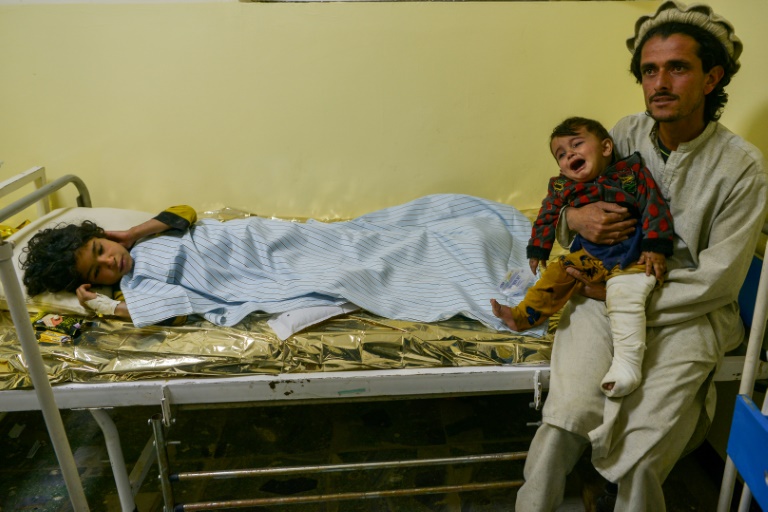
Desperate rescuers battled against the clock Thursday under pouring rain to pull survivors from the rubble after a powerful quake struck a mountainous border region of Afghanistan, killing at least 1,000 people.

The 5.9-magnitude quake struck hardest in the rugged east, where people already lead hardscrabble lives in the grip of a humanitarian crisis made worse since the Taliban takeover in August.

“People are digging grave after grave,” said Mohammad Amin Huzaifa, head of the Information and Culture Department in hard-hit Paktika, adding that at least 1,000 people had died in that province alone.

He said more than 1,500 people were injured, many critically.

“People are still trapped under the rubble,” he told journalists.

United Nations Secretary-General Antonio Guterres said the global agency has “fully mobilised” to help, deploying health teams and supplies of medicine, food, trauma kits and emergency shelter to the quake zone.

The death toll climbed steadily Wednesday as news of casualties filtered in from hard-to-reach areas in the mountains, and the country’s supreme leader, Hibatullah Akhundzada, warned it would likely rise further.

The earthquake struck areas that were already suffering the effects of heavy rain, causing rockfalls and mudslides that hampered rescue efforts.

“It was a horrible situation,” said Arup Khan, 22, recovering at a hospital in Paktika’s provincial capital Sharan.

“There were cries everywhere. The children and my family were under the mud.”

– ‘Like a tsunami’ –

Sharan Hospital director Mohammad Yahya Wiar said they were doing their best to treat everyone.

“Our country is poor and lacks resources,” he told AFP. “This is a humanitarian crisis. It is like a tsunami.”

Photographs and video posted on social media showed scores of badly damaged houses in remote areas. The UN humanitarian coordinator for Afghanistan, Ramiz Alakbarov, told reporters nearly 2,000 homes are likely destroyed.

Footage released by the Taliban showed people in one village digging a long trench to bury the dead, who by Islamic tradition must be laid to rest facing Mecca.

The disaster poses a huge challenge for the Taliban, who have largely isolated the country with their hardline Islamist policies — particularly the subjugation of women and girls.

Even before the Taliban takeover, Afghanistan’s emergency response teams were stretched to deal with the natural disasters that frequently strike the country.

But with only a handful of airworthy planes and helicopters left since they returned to power, any immediate response to the latest catastrophe is further limited.

“The government is working within its capabilities,” tweeted Anas Haqqani, a senior Taliban official.

“We hope that the International Community & aid agencies will also help our people in this dire situation.”

– Offers of help –

The United States, whose troops helped topple the initial Taliban regime and remained in Afghanistan for two decades until Washington pulled them out last year, was “deeply saddened” by the earthquake, the White House said.

“President Biden is monitoring developments and has directed USAID (US Agency for International Development) and other federal government partners to assess US response options to help those most affected,” National Security Advisor Jake Sullivan said in a statement.

The European Union was also quick to offer assistance.

Tomas Niklasson, EU special envoy for Afghanistan, tweeted: “The EU is monitoring the situation and stands ready to coordinate and provide EU emergency assistance to people and communities affected.”

Neighbour Pakistan, where officials said one person was killed in the quake, said it would send emergency aid — including tents — across the border.

– Prayers for victims –

Afghanistan is frequently hit by earthquakes, especially in the Hindu Kush mountain range, which lies near the junction of the Eurasian and Indian tectonic plates.

Scores of people were killed in January when two quakes struck the western province of Badghis.

In 2015, more than 380 people were killed in Pakistan and Afghanistan when a 7.5-magnitude earthquake ripped across the two countries.

Afghanistan’s deadliest recent earthquake killed 5,000 in May 1998 in the northeastern provinces of Takhar and Badakhshan.

From the Vatican, Pope Francis offered prayers for victims of the latest quake.

“I express my closeness with the injured and those who were affected,” the 85-year-old pontiff said concluding his weekly audience.

The quake struck in the early hours of Wednesday at a depth of 10 kilometres (six miles), according to the United States Geological Survey.

It was felt as far away as Lahore in Pakistan, 480 kilometres from the epicentre.

Biden, fragile at home, faces historic leadership task in Europe

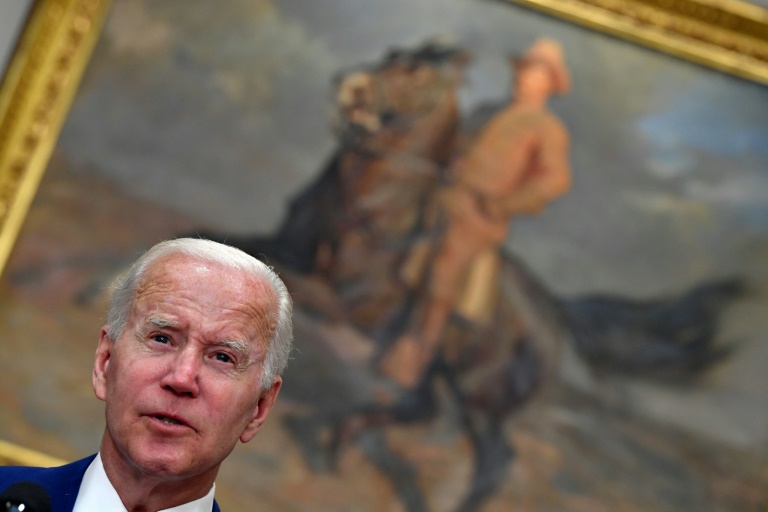
Leader of the free world sounds like a superhero character, but the Joe Biden heading this week to twin European summits is in reality a politically fragile president tasked, somehow, with resolving an unenviable string of diplomatic problems.

Biden arrives Saturday in Germany for the G7 summit of major Western powers, followed next week by the NATO military alliance summit in Madrid.

Both sessions will take place in the shadow of Russia’s Ukraine invasion, but also a global surge in inflation, fears of recession, and the ever-growing challenge of containing China while avoiding open conflict.

For sure, Biden will tout the success of a monumental effort to rally the West and breathe new life into NATO — a “high water mark in transatlantic solidarity in the post-Cold War period,” according to a senior US official.

But the less flattering picture is one of a 79-year-old politician whose approval rating at home has plummeted below 40 percent and whose Democratic party seems likely to lose control of Congress this November, giving way to vengeful Republican opponents.

As Donald Trump — who spent four years in the White House shredding American alliances — prepares his own possible revenge match in the 2024 presidential election, Biden is the first to admit that not all view the United States with confidence.

“I travel the world trying to put things back together,” Biden told an audience of trade union members this month, and “no matter where I go… they look at me and I say — I say, ‘America is back,’  and they look and me and they say: ‘For how long?'”

– Democratic alliances –

Biden refers to his presidency as an inflection point in a battle for the survival of Western democracy against the likes of Russian President Vladimir Putin, as well as against internal attacks, like Trump’s attempt to overturn the 2020 election.

A big part of that campaign is rebuilding alliances and restoring the traditional US role as a first among equals — in contrast to Trump’s policy of treating all countries as bitter rivals.

Both in Germany and Spain, Biden will be able to showcase considerable success, especially concerning the response to Russia’s onslaught in Ukraine.

“He came into office with the express purpose of revitalizing and reinforcing our allies, our alliances and our partnerships around the world and that’s exactly what he’s done,” John Kirby, a White House spokesman, said.

“He has been unafraid to use the convening power of the United States which is still ample, still relevant, still viable. The free world has demonstrated incredible unity.”

– Stress test –

But for all the self-congratulations likely to emanate from Bavaria and Madrid, the Western partners face increasingly tricky blowback from their own sanctions on Russia.

Their coordinated attempt to shut down Russia’s economy and cripple the ruble has clearly not worked so far, while spiraling energy costs are instead exacting a political price on leaders like Biden at home.

A US official said the G7 will “roll out” yet more measures to “increase pressure” on Moscow. But there will also be a parallel question for leaders to ponder.

“How do we maximize pain on Putin’s regime? How do we minimize spill-backs back to the rest of the world? And I think that’s exactly how the discussion around energy markets and energy market challenges will get framed,” the official said.

Amid warnings of Ukraine fatigue setting in across Western capitals, Biden says the transatlantic coalition has to tough it out.

“At some point, this is going to be a bit of a waiting game: what the Russians can sustain and what Europe is going to be prepared to sustain. That’s one of the things we’re going to be speaking in Spain about,” he said.

If that’s going to happen — and if the West is going to stick together through the growing threat of global recession — then much may depend on Biden.

“Leadership matters a lot here,” Kirby said.

“Multilateral leadership matters a lot — because this isn’t just affecting the United States, it’s affecting the whole world.”

Workers strike at world's largest copper producer, Chile's Codelco

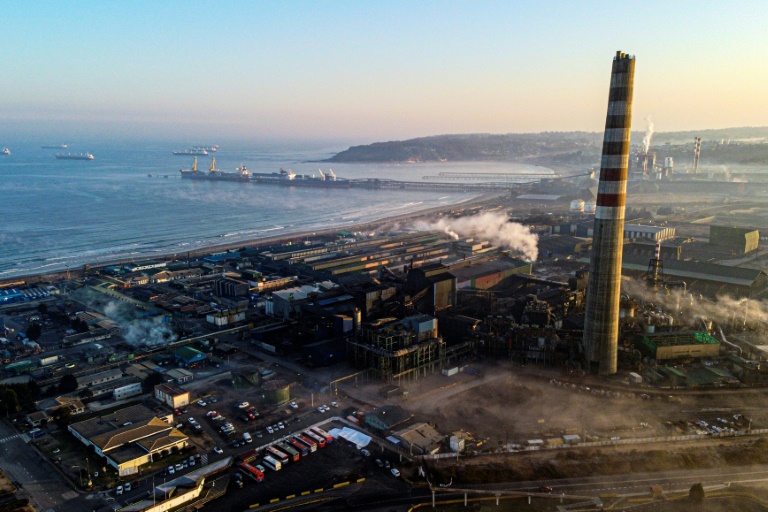
Workers at Chile’s state mining company Codelco, the largest producer of copper in the world, went on an “indefinite” strike on Wednesday, unions said, protesting the closure of a foundry in one of the country’s most polluted regions.

Codelco announced last week that it would close the Ventanas foundry in the towns of Quintero and Puchuncavi.

The Copper Workers Federation (FTC) released a statement saying there was “full support for this paralyzation (of work) in solidarity with the workers at the Ventanas division” from Codelco’s other divisions.

FTC president Amador Pantoja told a local television station the strike will cost Codelco — which produces around eight percent of the world’s copper amounting to 10-15 percent of Chile’s GDP — $20 million a day.

However, Finance Minister Mario Marcel contested that figure.

“For those figures to be correct, all Codelco operations would have to be paralyzed abruptly without this production being recovered in the future and none of those things are happening right now,” said Marcel.

“There is no paralyzation of operations, there’s a disruption of access by groups of workers.”

The FTC represents around 14,000 Codelco workers and another 40,000 external contractors, according to Pantoja.

Unions described the closure of the Ventanas foundry, located around 140 kilometers west of the capital Santiago, as “arbitrary,” and are demanding the government invests $54 million to bring the plant up to the highest environmental standards.

– ‘Standards very low’ –

The entrance to Ventanas was blocked by burning roadblocks and dozens of workers waving Chilean flags on Wednesday.

“No to closure, yes to investment,” read one banner.

Spokeswoman Camila Vallejo said the government “remains open to dialogue” but that it was focused on “a more sustainable model of development.”

“Our standards are very low and if we truly want to meet our environmental commitments we have to be guided by” World Health Organization standards, she added.

Codelco’s decision comes after an incident on June 9 when 115 people, mostly school children, suffered sulphur dioxide poisoning released by heavy industry, provoking the closure of schools in the area.

It was the second such incident in a matter of just three days.

Sulphur dioxide is a classic air pollutant usually linked to the burning of fossil fuels.

Greenpeace described the area around the Ventanas plant as “Chile’s Chernobyl” following a serious incident in 2018 when around 600 people in Quintero and Puchuncavi received medical treatment for symptoms such as vomiting blood, headaches, dizziness, paralysis of their extremities and strange red marks on children’s skin.

Last week, President Gabriel Boric hit out at Chile’s record on polluting the environment.

“We don’t want any more areas of (environmental) sacrifice,” he said.

“There are now hundreds of thousands of people who live in our country exposed to severe degradation of the environment that we have provoked or allowed and, as a Chilean, that makes me feel ashamed.”

Pollution accumulated in the area of Quintero and Puchuncavi, home to around 50,000 people, after the government decided in 1958 to convert it into an industrial center that now hosts four coal-fired power stations and oil and copper refineries.

Government, Indigenous Ecuadorans dig in heels on day 10 of protests

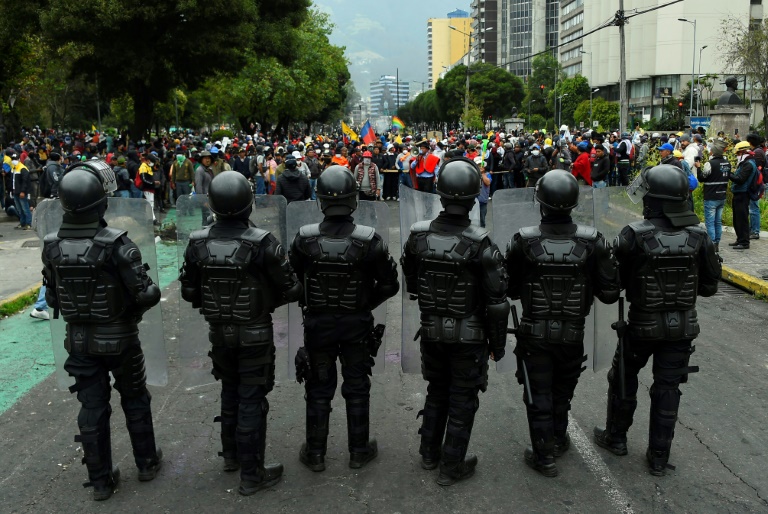
Thousands flooded the Ecuadoran capital Quito Wednesday for a tenth day of demonstrations over living costs, in an ever-tenser standoff between the government and Indigenous protesters that has left two dead.

The government rejected protesters’ demands to lift a state of emergency in six of the country’s 24 provinces and said 18 officers were missing following an attack by protesters on a police station in the Amazonian city of Puyo.

The capital has been semi-paralyzed since Monday, with the arrival of some 10,000 protesters from around the country who have been taking to the streets daily with demands for fuel price cuts and other social aid amid growing economic hardship.

Protesters burned tires and tree branches, while barbed wire and military guards protected the presidential headquarters.

Some 90 civilians and 100 security personnel have been injured, according to rights groups and the government, and about 87 civilians arrested since the countrywide protests started on June 13.

President Guillermo Lasso has proposed dialogue with the powerful Confederation of Indigenous Nationalities of Ecuador (Conaie), which called the protests, in a bid to end the escalating violence.

But Conaie leader Leonidas Iza has said talks were conditional on the state of emergency being repealed and the “demilitarization” of a park in Quito that has been a rallying point for Indigenous people but was taken over by the security forces.

“We cannot lift the state of exception because that would leave the capital defenseless, and we already know what happened in October 2019 and we will not allow that,” Minister of Government Francisco Jimenez told the Teleamazonas channel.

Conaie led two weeks of protests in 2019 in which 11 people died and more than 1,000 were injured. 

– ‘Blood on its hands’ –

Iza said on Wednesday the government has “blood on its hands” for its response to the latest protests.

Interior Minister Patricio Carrillo, for his part, said 18 officers were missing after an attack that injured six others, as well as a protester.

“The mob began setting fires with police still inside patrol cars, began looting, burning… until they ended up torching the police facilities in the center of the city,” said Carrillo.

Ecuador, a small South American country riddled by drug trafficking, has been hit by rising inflation, unemployment and poverty — all exacerbated by the pandemic.

Olmedo Ayala, 42, said Indigenous people were “very annoyed with the government.

“We live in economic crisis in the countryside, there is no development there, we have no sources of work, we’re just farmers and our women (live off) milking” livestock.

A key demand of the protesters is a lowering of fuel prices, which have risen sharply in recent months.

Ecuador exports crude oil but imports much of the fuel it consumes.

– ‘Negotiated resolution’ –

An Indigenous protester died after he was “hit in the face, apparently with a tear gas bomb” on Tuesday following a confrontation with security forces in Puyo, a lawyer for the Alliance of Human Rights Organizations told AFP.

The police said “it was presumed that the person died as a result of handling an explosive device.”

Another protester died on Monday after falling into a ravine outside Quito, with police claiming that too was an accident.

However, the public prosecutor’s office has opened a murder investigation.

Brian Nichols, the top US diplomat for Latin America, called in a Tweet Wednesday for “a peaceful and negotiated resolution to the protests in Ecuador” and urged all parties to refrain from violence.

The Organization of American States urged dialogue to “address the claims of the community.”

In a statement it said “it is necessary that the political system gives immediate response on improvement of subsidies, cancellation of overdue loans, as well as resolving the state of emergency in the health sector and improvements in the budget for intercultural education, among others.”

Passenger jet catches fire while landing at Miami airport

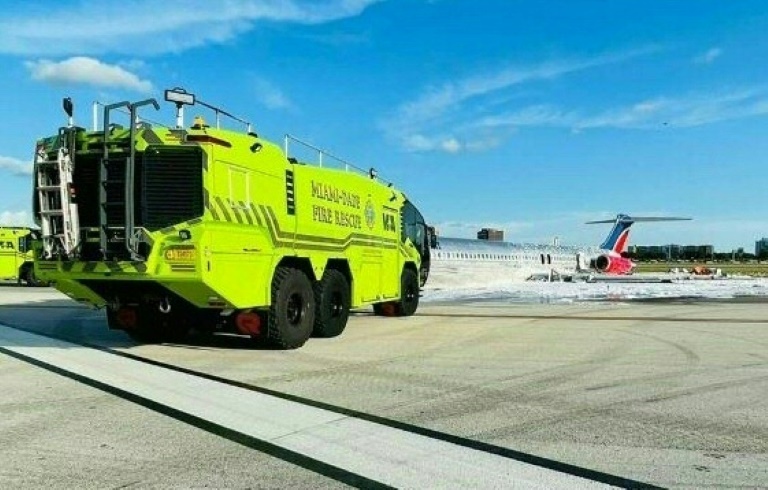
Officials arrived in Miami Wednesday to investigate a passenger jet that caught fire as it touched down at the US city’s international airport, forcing more than 100 people to flee the burning and mangled aircraft.

Three people were hospitalized after the crash of Red Air Flight 203 late Tuesday, according to Miami-Dade fire officials, but no deaths or serious injuries have been reported among those on board.

Dramatic video footage showed people being evacuated from the McDonnell Douglas MD-82 aircraft, lying askew on the runway with its nose crumpled as thick black smoke billows from its body.

The National Transportation Safety Board (NTSB), the US government agency in charge of probing civil aviation accidents, said the airplane’s left main landing gear collapsed during landing. 

The plane then “departed the runway” before coming to rest on a grassy area, it said, with a fire breaking out on its right side.

Red Air, a Dominican budget carrier which only launched in November last year, said the plane was arriving from Santo Domingo when it met with “technical difficulties.”

Investigators were able to recover the cockpit voice recorder and flight data recorder from the plane. They will additionally examine runway markings and the physical environment.

Red Air and the NTSB said there were 130 passengers and 10 crew on board.

Medical staff in Argentina to be tried for Maradona death

Eight medical personnel will stand trial for alleged criminal neglect causing Argentine football legend Diego Maradona to die in bed while receiving post-surgery care.

A judge on Wednesday ordered a culpable homicide trial for the eight, who include Maradona’s family doctor and nurses, based on evidence that they had failed to take “action that could have prevented the death” in November 2020.

No trial date has been set.

Maradona died aged 60 while recovering from brain surgery for a blood clot, and after decades of battles with cocaine and alcohol addictions.

He was found dead in bed two weeks after going under the knife, in a rented house in an exclusive Buenos Aires neighborhood where he was brought after being discharged from hospital.

He was found to have died of a heart attack.

A panel of 20 medical experts convened by Argentina’s public prosecutor concluded last year that Maradona’s treatment was rife with “deficiencies and irregularities.”

It said the footballer “would have had a better chance of survival” with adequate treatment in an appropriate medical facility.

The experts found his caregivers had abandoned the idolized player to his fate for a “prolonged, agonizing period” leading up to his death.

Prosecutors asked for his caregivers to be put on trial for negligent homicide, charging that they had abandoned him “to his fate.”

The eight will stand trial on a legal definition of homicide characterized by negligence committed in the knowledge that it may lead to a person’s death.

– ‘Reckless’ treatment –

Charged in the case are neurosurgeon and family doctor Leopoldo Luque, psychiatrist Agustina Cosachov, psychologist Carlos Diaz, medical coordinator Nancy Forlini, nursing coordinator Mariano Perroni, nurses Ricardo Almiron and Dahiana Madrid, and clinician Pedro Paglo Di Spagna.

Prosecutors have charged the defendants with being “the protagonists of an unprecedented, totally deficient and reckless hospitalization at home.”

They risk sentences ranging from eight to 25 years in prison. 

All of them have denied responsibility and none are in pre-trial detention.

An investigation was opened following a complaint filed by two of Maradona’s five children against Luque, whom they blame for their father’s deterioration after the operation.

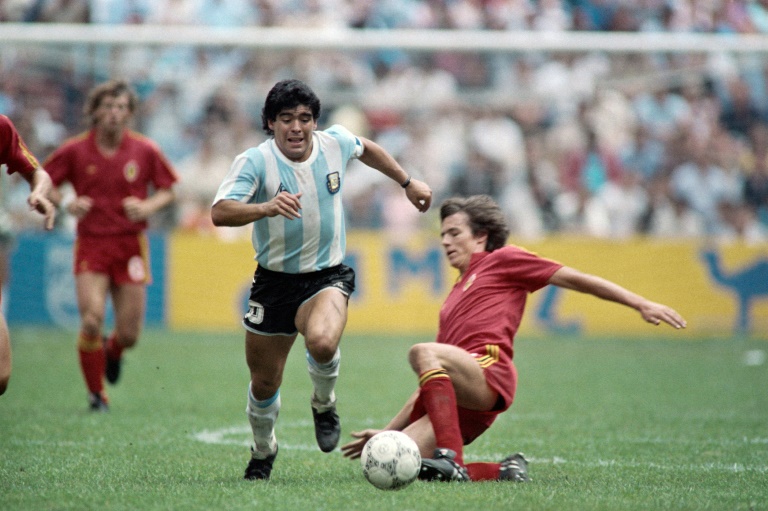
Maradona is widely considered one of the greatest footballers in history.

The former Boca Juniors, Barcelona and Napoli star suffered from liver, kidney and cardiovascular disorders when he died.

He became an idol to millions of Argentines after he inspired the South American country to their second World Cup triumph in 1986.

The court ruling came as Argentina celebrated its Day of the Footballer commemorating Maradona’s performance in the 1986 quarter final against England — when he scored the infamous “hand of God” goal and then the “Goal of the Century” as voted in a FIFA poll.

His death shocked fans around the world, and tens of thousands queued to file past his coffin, draped in the Argentine flag, at the presidential palace in Buenos Aires amid three days of national mourning.

Recession fears send oil prices plunging, equities diverge

Wall Street stocks climbed Wednesday as the US Fed chief stressed the need to combat decades-high inflation, but elsewhere equities and oil prices tumbled on mounting recession fears as central banks hike interest rates.

Wall Street was moderately higher in late morning trading, while European and Asian markets closed in the red, a day after healthy gains.

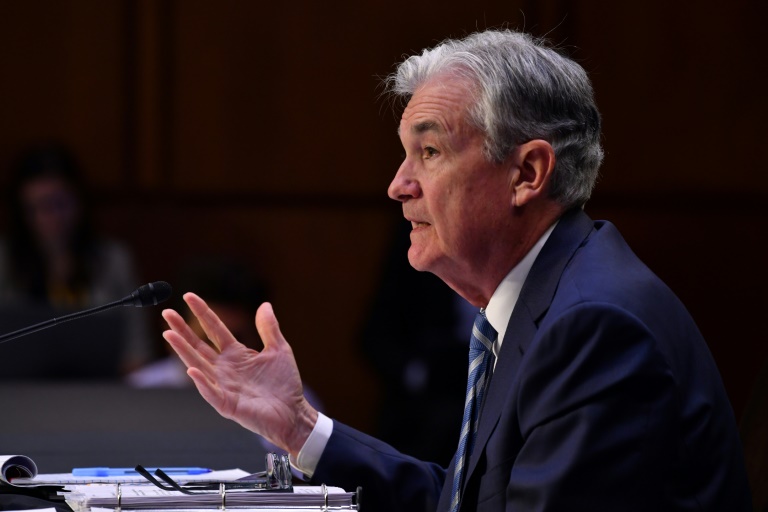
Federal Reserve boss Jerome Powell began two days of testimony to US lawmakers on Wednesday, warning that the US economy faced an “uncertain” global environment and could face further inflation “surprises”.

His testimony to Congress this week will be pored over for an idea about officials’ plans for fighting runaway prices, which are being fanned by supply chain snarls, China’s Covid lockdowns and the war in Ukraine.

Powell once again stressed that the Fed was committed to bringing down inflation — which has reached a 40-year high — with higher interest rates.

But the world’s largest economy “is very strong and well positioned to handle tighter monetary policy”, he said.

Most observers expect the Fed to aggressively hike US interest rates several more times this year, having recently carried out the sharpest lift in almost 30 years.

Powell said rapid interest rate increases were meant to cool demand and bring inflation down, but he acknowledged the risk that the hikes could trigger a US recession.

“It’s not our intended outcome at all, but it’s certainly a possibility,” Powell said in testimony to the Senate Banking Committee.

“The ‘R’ word is likely to come up a lot today and the Chairman will have a tough time dodging it, especially with mid-terms in five months,” said OANDA market analyst Craig Erlam, referring to recession.

“Naturally, he’ll do his best to remain apolitical but I’m not sure investors will be able to ignore so much recession chat,” he added.

Expectations of more rate hikes have been handing support to the dollar, which pushed the yen briefly to a fresh 24-year low Wednesday, before sliding against major rivals.

The Bank of Japan is holding back from lifting interest rates, in sharp contrast to other major central banks.

Oil prices were feeling the heat from recessionary fears, with both main contracts tanking more than six percent at one point.

“Concerns about a global slowdown appear to be outweighing any concern over supply issues derived from Russia’s invasion of Ukraine, and the prospect that Chinese demand could return,” said market analyst Michael Hewson at CMC Markets.

Crude and gas prices have soared in recent months after major economies lifted pandemic lockdowns and following the invasion of Ukraine by major energy producer Russia.

Surging energy costs are fuelling global inflation, with official data Wednesday showing the British annual rate hitting a fresh 40-year high above nine percent.

In the United States, President Joe Biden asked Congress on Wednesday to suspend the federal gas tax for three months as skyrocketing prices cause widespread anger among Americans just months before crucial mid-term elections.

A senior administration official noted that US gas prices — averaging near $5 per gallon — had jumped almost $2 since Russian President Vladimir Putin began building up forces on the Ukrainian border earlier this year.

– Key figures at around 1530 GMT –

Brent North Sea crude: DOWN 3.7 percent at $110.39 per barrel

West Texas Intermediate: DOWN 110.39 percent at $104.86 per barrel

New York – Dow: UP 0.3 percent at 30,623.29 points

EURO STOXX 50: DOWN 0.8 percent at 3,467.26

London – FTSE 100: DOWN 0.9 percent at 7,089.22 (close)
Frankfurt – DAX: DOWN 1.1 percent at 13,144.28 (close)

Paris – CAC 40: DOWN 0.8 percent at 5,916.63 (close)

Tokyo – Nikkei 225: DOWN 0.4 at 26,149.55 (close)

Hong Kong – Hang Seng Index: DOWN 2.6 percent at 21,008.34 (close)

Shanghai – Composite: DOWN 1.2 percent at 3,267.20 (close)

Euro/dollar: UP at $1.0594 from $1.0535 late Tuesday

Pound/dollar: UP at $1.2304 from $1.2273

Euro/pound: UP at 86.10 pence from 85.80 pence

Dollar/yen: DOWN at 135.89 yen from 136.64 yen

burs-rl/jj

Close Bitnami banner
Bitnami