World

US Fed chair admits recession a 'possibility' after rate hikes

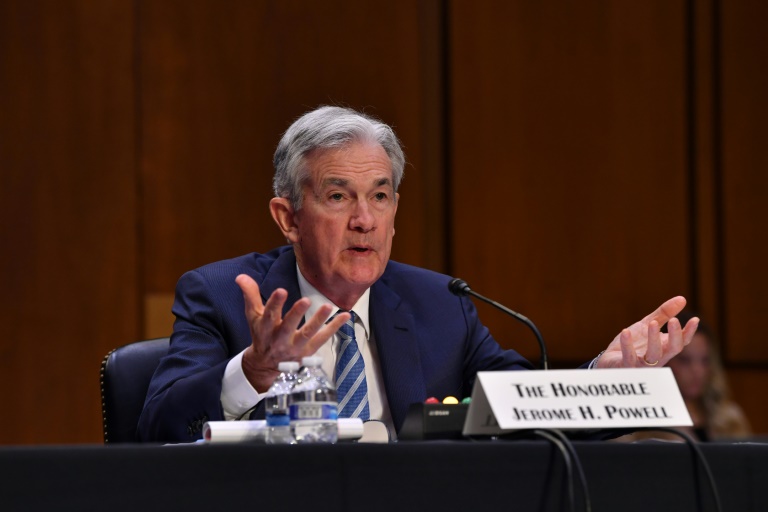
The US economy remains strong but a series of aggressive rate hikes meant to cool soaring inflation could eventually trigger a recession, Federal Reserve Chair Jerome Powell cautioned Wednesday.

Powell, whose testimony before senators was closely watched by investors and analysts, also said the world’s largest economy faces an “uncertain” global environment and could see further inflation “surprises.”

The Fed chair again stressed that policymakers understand the hardships caused by rising prices and are committed to bringing down inflation, which has reached a 40-year high.

Last week, the US central bank announced the sharpest interest rate increase in nearly 30 years and promised additional similar moves to combat the price surge, with gas and food costs skyrocketing and millions of Americans struggling to get by.

But when peppered with questions about the prospect of a recession, Powell acknowledged the risk.

“It’s not our intended outcome at all, but it’s certainly a possibility,” he told the Senate Banking Committee.

“And frankly, the events of the last few months around the world have made it more difficult for us to achieve what we want, which is two percent inflation and still a strong labor market.”

In his opening remarks, Powell insisted the US economy “is very strong and well positioned to handle tighter monetary policy.”

“Inflation has obviously surprised to the upside over the past year, and further surprises could be in store,” the Fed chief said in his semi-annual appearance before Congress.

Policymakers “will need to be nimble” given that the economy “often evolves in unexpected ways,” he said.

The Fed is facing intense criticism that it was too slow to react to the changing economy, which benefited from a flood of federal government stimulus.

Last week’s super-sized 0.75-percentage-point increase in the benchmark lending rate was the third since March, taking the policy rate up a total of 1.5 points. Powell at the time said a similar increase was likely in July.

The ideal scenario would be for those moves to cool the economy enough to douse inflation pressures, without choking off growth — the hoped-for “soft landing.”

“I think it’s going to be very challenging,” Powell said, insisting there are “pathways” to avoid recession, and that he does not view the risk of a downturn as “particularly elevated.”

Financial markets seemed cheered by his relatively upbeat comments, which echo those of other Fed officials in recent days who have pushed back against rising pessimism. 

But Wall Street stocks lost steam late in the trading session, and the Dow finished the day down 0.2 percent.

– ‘Essential’ to curb inflation –

In addition to easing the financial strain on less-wealthy American families, the Fed chief said tamping down inflation was “essential” to maintain a healthy labor market.

The US economy recovered quickly from the Covid-19 pandemic, helped by robust consumer spending, and has continued to create jobs at a strong pace, pushing unemployment down to near a 50-year low.

But the buoyant demand for homes, cars and other goods clashed with transportation and supply chain snarls in parts of the world where Covid-19 has remained a challenge.

That fueled inflation, which got dramatically worse after Russia invaded Ukraine in late February and Western nations imposed stiff sanctions on Moscow, sending food and fuel prices up at a blistering rate.

But Powell noted that inflation is a global issue, not unique to the United States.

Many major central banks have joined the Fed in beginning to tighten monetary policy — with the notable exception of the Bank of Japan.

Powell said many factors driving inflation are beyond the Fed’s control, but he pointed to signs that rising rates are having an impact, as business investment slows and “activity in the housing sector looks to be softening, in part reflecting higher mortgage rates.”

Average home loan rates jumped to 5.23 percent in May for a 30-year, fixed-rate mortgage, from 4.98 percent in April, according to Freddie Mac, while the median price for homes topped $400,000 for the first time.

“The tightening in financial conditions that we have seen in recent months should continue to temper growth and help bring demand into better balance with supply,” Powell said.
At least 1,000 killed in Afghan quake, with fear toll will rise

A powerful earthquake jolted a remote border region of Afghanistan overnight killing at least 1,000 people and injuring 1,500 more, officials said Wednesday, with the toll expected to rise as desperate rescuers dig through collapsed dwellings.

The 5.9-magnitude quake struck hardest in the rugged east, where people already lead hardscrabble lives in the grip of a humanitarian crisis made worse since the Taliban takeover in August.

“People are digging grave after grave,” said Mohammad Amin Huzaifa, head of the Information and Culture Department in hard-hit Paktika, adding that at least 1,000 people had died in that province alone.

He said more than 1,500 people were injured, many critically.

“People are still trapped under the rubble,” he told journalists.

United Nations Secretary-General Antonio Guterres said the global agency has “fully mobilized” to help, with UN officials confirming the deployment of health teams and supplies of medicine, food, trauma kits and emergency shelter to the quake zone.

The death toll climbed steadily Wednesday as news of casualties filtered in from hard-to-reach areas in the mountains, and the country’s supreme leader, Hibatullah Akhundzada, warned it would likely rise further.

The earthquake struck areas that were already suffering the effects of heavy rain, causing rockfalls and mudslides that hampered rescue efforts.

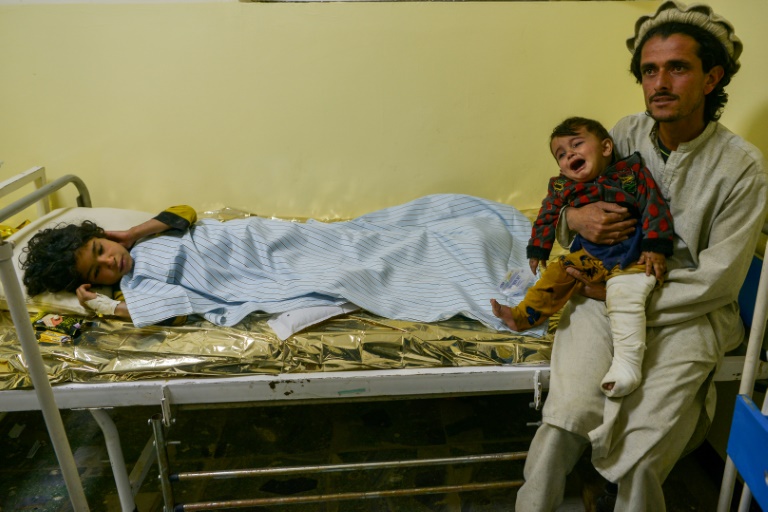
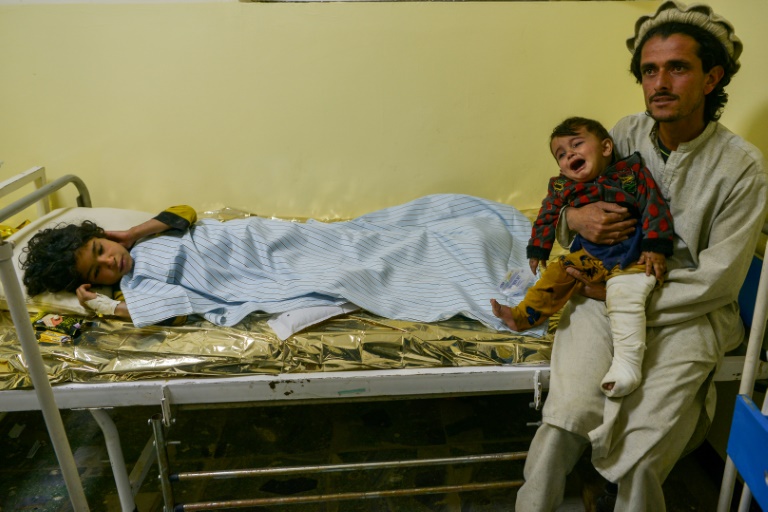
“It was a horrible situation,” said Arup Khan, 22, recovering at a hospital in Paktika’s provincial capital Sharan.

“There were cries everywhere. The children and my family were under the mud.”

– ‘Dire situation’ –

Sharan Hospital director Mohammad Yahya Wiar said they were doing their best to treat everyone.

“Our country is poor and lacks resources,” he told AFP. “This is a humanitarian crisis. It is like a tsunami.”

Photographs and video posted on social media showed scores of badly damaged houses in remote areas. The UN humanitarian coordinator for Afghanistan, Ramiz Alakbarov, told reporters nearly 2,000 homes are likely destroyed.

Footage released by the Taliban showed local residents of one village digging a long trench to bury the dead, who by Islamic tradition should be laid to rest facing Mecca.

The disaster poses a huge challenge for the Taliban, who have largely isolated the country as a result of their hardline Islamist policies — particularly the subjugation of women and girls.

Even before the Taliban takeover, Afghanistan’s emergency response teams were stretched to deal with the natural disasters that frequently strike the country.

But with only a handful of airworthy planes and helicopters left since they returned to power, any immediate response to the latest catastrophe is further limited.

“The government is working within its capabilities,” tweeted Anas Haqqani, a senior Taliban official.

“We hope that the International Community & aid agencies will also help our people in this dire situation.”

– Offers of help –

The United States, whose troops helped topple the initial Taliban regime and remained in Afghanistan for two decades until Washington pulled them out last year, was “deeply saddened” by the earthquake, the White House said.

“President Biden is monitoring developments and has directed USAID (US Agency for International Development) and other federal government partners to assess US response options to help those most affected,” National Security Advisor Jake Sullivan said in a statement.

The United Nations and European Union were quick to offer assistance.

“Inter-agency assessment teams have already been deployed to a number of affected areas,” the UN Office for the Coordination of Humanitarian Affairs (UNOCHA) in Afghanistan said on Twitter.

In sending his condolences, UN chief Guterres noted how the tragedy is afflicting a nation mired in multiple crises.

“My heart goes out to the people of Afghanistan who are already reeling from the impact of years of conflict, economic hardship and hunger,” he said in a statement.

Tomas Niklasson, EU special envoy for Afghanistan, tweeted: “The EU is monitoring the situation and stands ready to coordinate and provide EU emergency assistance to people and communities affected.”

Neighbour Pakistan, where officials said one person was killed in the quake, said it would send emergency aid — including tents — across the border.

Afghanistan is frequently hit by earthquakes, especially in the Hindu Kush mountain range, which lies near the junction of the Eurasian and Indian tectonic plates.

Scores of people were killed in January when two quakes struck the western province of Badghis.

In 2015, more than 380 people were killed in Pakistan and Afghanistan when a 7.5-magnitude earthquake ripped across the two countries.

Afghanistan’s deadliest recent earthquake killed 5,000 in May 1998 in the northeastern provinces of Takhar and Badakhshan.

From the Vatican, Pope Francis offered prayers for victims of the latest quake.

“I express my closeness with the injured and those who were affected,” the 85-year-old pontiff said concluding his weekly audience.

Wednesday’s quake occurred at around 1:30 am at a depth of 10 kilometres (six miles), some 47 kilometers southwest of Khost, according to the United States Geological Survey.

It was felt as far away as Lahore in Pakistan, 480 kilometres from the epicentre.

At least 1,000 killed in Afghan quake, with fear toll will rise

A powerful earthquake jolted a remote border region of Afghanistan overnight killing at least 1,000 people and injuring 1,500 more, officials said Wednesday, with the toll expected to rise as desperate rescuers dig through collapsed dwellings.

The 5.9-magnitude quake struck hardest in the rugged east, where people already lead hardscrabble lives in the grip of a humanitarian crisis made worse since the Taliban takeover in August.

“People are digging grave after grave,” said Mohammad Amin Huzaifa, head of the Information and Culture Department in hard-hit Paktika, adding that at least 1,000 people had died in that province alone.

He said more than 1,500 people were injured, many critically.

“People are still trapped under the rubble,” he told journalists.

United Nations Secretary-General Antonio Guterres said the global agency has “fully mobilized” to help, with UN officials confirming the deployment of health teams and supplies of medicine, food, trauma kits and emergency shelter to the quake zone.

The death toll climbed steadily Wednesday as news of casualties filtered in from hard-to-reach areas in the mountains, and the country’s supreme leader, Hibatullah Akhundzada, warned it would likely rise further.

The earthquake struck areas that were already suffering the effects of heavy rain, causing rockfalls and mudslides that hampered rescue efforts.

“It was a horrible situation,” said Arup Khan, 22, recovering at a hospital in Paktika’s provincial capital Sharan.

“There were cries everywhere. The children and my family were under the mud.”

– ‘Dire situation’ –

Sharan Hospital director Mohammad Yahya Wiar said they were doing their best to treat everyone.

“Our country is poor and lacks resources,” he told AFP. “This is a humanitarian crisis. It is like a tsunami.”

Photographs and video posted on social media showed scores of badly damaged houses in remote areas. The UN humanitarian coordinator for Afghanistan, Ramiz Alakbarov, told reporters nearly 2,000 homes are likely destroyed.

Footage released by the Taliban showed local residents of one village digging a long trench to bury the dead, who by Islamic tradition should be laid to rest facing Mecca.

The disaster poses a huge challenge for the Taliban, who have largely isolated the country as a result of their hardline Islamist policies — particularly the subjugation of women and girls.

Even before the Taliban takeover, Afghanistan’s emergency response teams were stretched to deal with the natural disasters that frequently strike the country.

But with only a handful of airworthy planes and helicopters left since they returned to power, any immediate response to the latest catastrophe is further limited.

“The government is working within its capabilities,” tweeted Anas Haqqani, a senior Taliban official.

“We hope that the International Community & aid agencies will also help our people in this dire situation.”

– Offers of help –

The United States, whose troops helped topple the initial Taliban regime and remained in Afghanistan for two decades until Washington pulled them out last year, was “deeply saddened” by the earthquake, the White House said.

“President Biden is monitoring developments and has directed USAID (US Agency for International Development) and other federal government partners to assess US response options to help those most affected,” National Security Advisor Jake Sullivan said in a statement.

The United Nations and European Union were quick to offer assistance.

“Inter-agency assessment teams have already been deployed to a number of affected areas,” the UN Office for the Coordination of Humanitarian Affairs (UNOCHA) in Afghanistan said on Twitter.

In sending his condolences, UN chief Guterres noted how the tragedy is afflicting a nation mired in multiple crises.

“My heart goes out to the people of Afghanistan who are already reeling from the impact of years of conflict, economic hardship and hunger,” he said in a statement.

Tomas Niklasson, EU special envoy for Afghanistan, tweeted: “The EU is monitoring the situation and stands ready to coordinate and provide EU emergency assistance to people and communities affected.”

Neighbour Pakistan, where officials said one person was killed in the quake, said it would send emergency aid — including tents — across the border.

Afghanistan is frequently hit by earthquakes, especially in the Hindu Kush mountain range, which lies near the junction of the Eurasian and Indian tectonic plates.

Scores of people were killed in January when two quakes struck the western province of Badghis.

In 2015, more than 380 people were killed in Pakistan and Afghanistan when a 7.5-magnitude earthquake ripped across the two countries.

Afghanistan’s deadliest recent earthquake killed 5,000 in May 1998 in the northeastern provinces of Takhar and Badakhshan.

From the Vatican, Pope Francis offered prayers for victims of the latest quake.

“I express my closeness with the injured and those who were affected,” the 85-year-old pontiff said concluding his weekly audience.

Wednesday’s quake occurred at around 1:30 am at a depth of 10 kilometres (six miles), some 47 kilometers southwest of Khost, according to the United States Geological Survey.

It was felt as far away as Lahore in Pakistan, 480 kilometres from the epicentre.

Medical staff to be tried for Maradona death

Eight medical personnel will stand trial for alleged criminal negligence in the death of Argentine football legend Diego Maradona, according to a court ruling made public on Wednesday.

No date has been set for the trial of the staff over Maradona’s death in 2020, which prosecutors say was due to “omissions” by his caregivers who abandoned him “to his fate” during home hospitalization.

Maradona died aged 60 while recovering from brain surgery for a blood clot, and after decades of battles with cocaine and alcohol addictions.

He was found dead in bed two weeks after going under the knife, in a rented house in an exclusive Buenos Aires neighborhood to where he was brought after being discharged from hospital.

He was found to have died of a heart attack.

A panel of 20 medical experts convened by Argentina’s public prosecutor concluded last year that Maradona’s treatment was rife with “deficiencies and irregularities.”

It said the footballer “would have had a better chance of survival” with adequate treatment in an appropriate medical facility.

The experts found his caregivers had abandoned the idolized player to his fate for a “prolonged, agonizing period” leading up to his death.

– ‘Reckless’ treatment –

Charged in the case are neurosurgeon and family doctor Leopoldo Luque, psychiatrist Agustina Cosachov, psychologist Carlos Diaz, medical coordinator Nancy Forlini and four others including two nurses.

Prosecutors had asked that the defendants be tried for negligent homicide, stating they “were the protagonists of an unprecedented, totally deficient and reckless hospitalization at home.”

They risk sentences ranging from eight to 25 years in prison. All have denied responsibility.

An investigation was opened following a complaint filed by two of Maradona’s five children against Luque, whom they blame for their father’s deterioration after the operation.

Maradona is widely considered one of the greatest footballers in history.

The former Boca Juniors, Barcelona and Napoli star suffered from liver, kidney and cardiovascular disorders when he died.

He became an idol to millions of Argentines after he inspired the South American country to only their second World Cup triumph in 1986.

The court ruling ordering the composition of a trial bench came as Argentina celebrated its Day of the Footballer commemorating Maradona’s performance in the 1986 quarter final against England — when he scored the infamous “hand of God” goal and then the “Goal of the Century” as voted in a FIFA poll.

His death shocked fans around the world, and tens of thousands queued to file past his coffin, draped in the Argentine flag, at the presidential palace in Buenos Aires amid three days of national mourning.

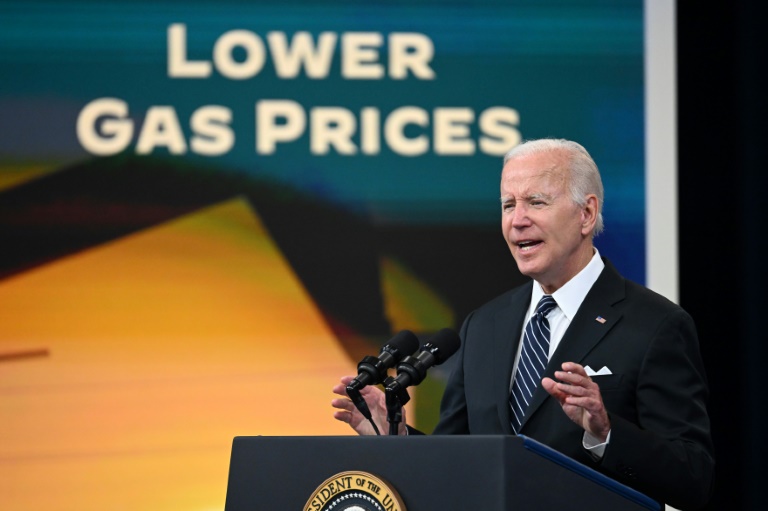
Biden seeks fuel tax suspension to help fight inflation pain

Joe Biden pitched a temporary fuel tax break Wednesday to help American drivers face the highest inflation in four decades, but critics called it window dressing by an unpopular US president ahead of difficult midterm elections.

Biden asked Congress to suspend the federal gas tax for three months as price increases — in large part spurred by fallout from President Vladimir Putin’s invasion of Ukraine and subsequent Western sanctions on Russia — drive general inflation.

But so far, lawmakers seem unlikely to give his plan the green light.

In a televised address, Biden called for lifting the federal tax on gasoline of 18 cents a gallon until September. He also asked state governments to suspend their own taxes for the same period.

Noting that gas prices — now averaging near $5 per gallon — had gone up almost $2 a gallon since the start of the Ukraine invasion, Biden said he was doing what he could.

“I fully understand that the gas tax holiday alone is not going to solve the problem but it will provide families some immediate relief,” he said.

– Skepticism –

A handful of states including New York and Connecticut have already suspended fuel taxes or delayed planned tax increases. 

But some 46 states have yet to act, including Democratic-governed California, where gasoline is the most taxed and the most expensive in the country, at well over $6 a gallon.

Federal tax revenues on gas and diesel help pay for the Highway Trust Fund, which is used to maintain roads and support public transport, but Biden says Congress can ensure the estimated $10 billion gap that would be caused by a three-month tax break is made up from other sources.

Whether Congress — where Democrats hold only a narrow majority over Republicans — will pass tax relief is a big question. Even Biden’s backers are lukewarm.

“I’ve not been a proponent,” Steny Hoyer, a senior Democratic leader in Congress, told Politico. “I just don’t know that it gives much relief.”

Jason Furman, a former top economic adviser to president Barack Obama — who himself once dismissed so-called gas tax holidays as a “gimmick” — also said the move would not help regular people. 

“It would be very unlikely that gas prices would fall by more than a dime because of this change. And oil company profits would go up by billions of dollars,” he told NPR.

– Biden’s populist mission –

Biden urged retailers at filling stations to apply any tax cuts immediately and he pushed refiners to expand their crude processing capacity in the hopes that the combined measures could cut gas prices by as much as a dollar a gallon.

He has previously tried other measures, including releasing a million barrels of oil a day from the Strategic Petroleum Reserve, negotiating the release of an additional 60 million barrels from international partners, and expanding access to biofuels.

Nothing so far has had an appreciable effect.

With Democrats fearing a severe defeat in November midterm elections — thereby leaving Biden weakened for the rest of his first term in office — the president has turned to an increasingly populist message, portraying himself as fighting for the middle class against profiteering Big Oil.

The White House recently called out groups including ExxonMobil and Chevron, denouncing their profit margins as “well above normal” and calling it their patriotic duty to increase output.

In his remarks, Biden repeatedly underlined that the blame for high prices lay with Russia and the oil industry, not the White House.

“This is a time of war, global peril, Ukraine — these are not normal times,” he said, addressing the oil companies. “Bring down the price.”

Responding to criticism growing within the Republican Party, he also defended his leadership of the strong Western response to Russia, including the highly disruptive sanctions on Russian energy exports.

“We could have turned a blind eye to Putin’s murderous ways and the price of gas wouldn’t have spiked,” he said. “I believe that would have been wrong.”

Energy Secretary Jennifer Granholm is due to meet with refiners Thursday to urge them to contribute to these measures, including increasing their output.

Republican National Committee chairwoman Ronna McDaniel quickly dismissed the president’s speech, saying: “No one is buying Biden’s gimmicks, yet Americans are paying the price for his anti-US energy agenda.”

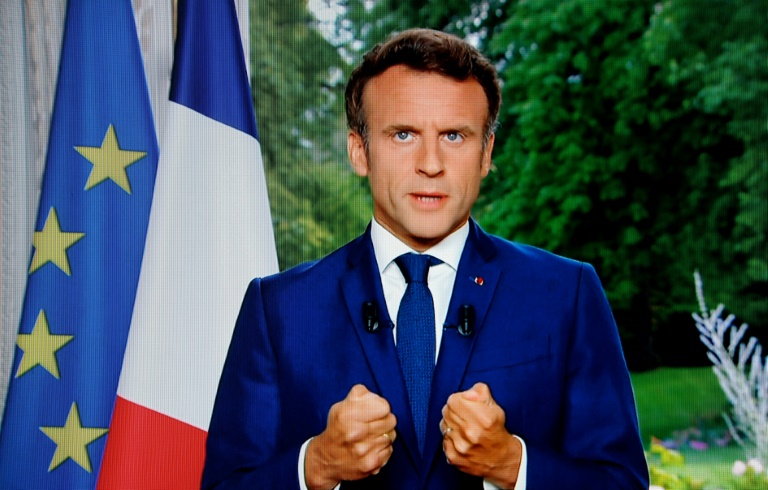
Macron urges 'compromises' to break France impasse

President Emmanuel Macron on Wednesday urged France’s political forces to make compromises to end a political deadlock sparked by his failure to retain a parliamentary majority that threatens to paralyse government.

Macron’s centrist alliance finished Sunday’s parliamentary elections 44 seats short of a majority in the National Assembly, as a new left-wing coalition and the far right made major gains.

The situation has called into question Macron’s plans for reform in his second term after his April presidential re-election — including a key measure to raise the retirement age — and risks denting his international stature.

Breaking three days of silence in the wake of the elections, Macron in a televised address to the nation ruled out a national unity government but appeared upbeat on the chances for progress, even if he did not offer any concrete solutions. 

Macron said France’s political forces must “collectively learn to govern and legislate differently” by building “compromises, additions and amendments but doing so in complete transparency, for the sake of national unity”.

But Macron ruled out any attempt to create a “government of national unity”, saying such a move was “not justified” at this stage.

Macron acknowledged that the parliamentary elections had highlighted social problems in France, but he called on the opposition parties to “leave in-fighting behind” and move “beyond politics”.

– ‘Advance on major topics’ –

Over the past two days Macron has hosted rare talks at the Elysee Palace with opposition leaders to find a way out of the crisis.

He met the head of the far-right National Rally (RN) Marine Le Pen on Tuesday, while the head of the left-wing NUPES alliance, hard-leftist Jean-Luc Melenchon, sent MP Adrien Quatennens, 32, to represent him in talks on Wednesday.

The meetings so far appear to have made little headway, and Macron has also rejected an offer from under-fire PM Elisabeth Borne to resign.

But Macron said the opposition were ready “to advance on major topics” such as the cost of living, jobs, energy, climate and health”.

He said urgent draft laws, especially to alleviate the impact of inflation and rising energy prices, would be submitted to parliament over the summer.

Macron called on the opposition parties to “clarify in all transparency, in the coming days, how far they are willing to go” in their support of such measures which he said would not be financed by higher taxes.

The parliamentary impasse should not lead to “stagnation”, Macron said, but to “dialogue and the willingness to listen to each other”. 

Macron’s intervention Wednesday was crucial for indicating his future strategy, especially as he is to be distracted by foreign policy and outside of France for much of the next week.

He is due to attend an EU summit on Thursday and Friday, then the G7 summit in Germany from Sunday and then the NATO summit in Madrid from Tuesday.

Analysts have said the most viable solution would be a deal between Macron’s centrist alliance and the right-wing Republicans (LR), a party on the decline but which still won 61 seats.

But after talks with Macron on Tuesday, LR leader Christian Jacob ruled out any kind of “pact” with Macron’s Together alliance.

– ‘All options on table’ –

Olivier Veran, the minister in charge of relations with parliament, told BFM on Wednesday that “all options” were on the table. But he ruled out working with Le Pen’s RN or Melenchon’s hard-left France Unbowed (LFI) to find a majority.

This could be achieved, he said, either through an alliance or on a “bill by bill” basis, with the government finding a majority thanks to certain MPs on the right or left, depending on the legislation.

Julien Bayou, the leader of the Green EELV party that is part of NUPES, said after his talks with Macron on Wednesday that his party would be in opposition. But it would vote “according to the national interest” and would put forward its own legislation on climate change.

Melenchon has threatened to file a motion of no-confidence against Borne next month, but other opposition leaders have shown less appetite for such action.

Borne, an experienced technocrat with little experience of frontline campaign politics and in office for just over month, has been widely criticised for her performance in the election.

While Macron has rejected her offer to resign, her future remains in question.

Francois Bayrou, a key Macron ally who leads the MoDem party that is part of his coalition, increased the pressure on Borne on Wednesday.

France needs a “political” prime minister, he said.

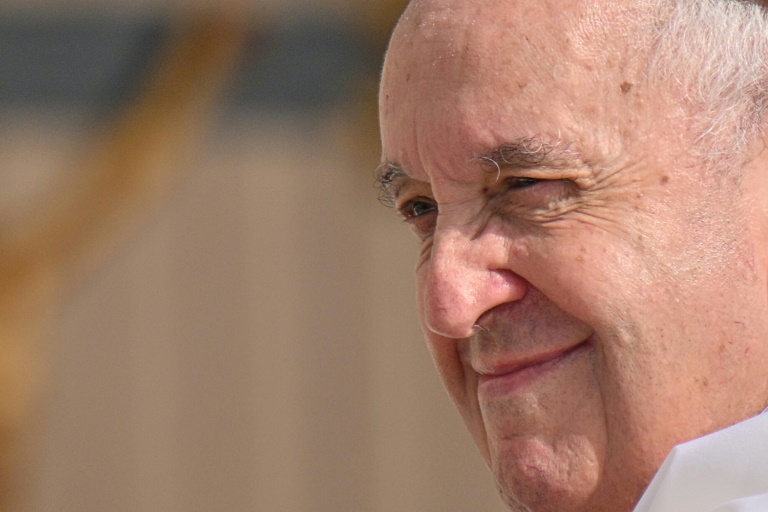
'So many murders': Pope mourns priests killed in Mexico

Pope Francis on Wednesday lamented the spiral of violence engulfing Mexico, after two Jesuit priests and a man seeking sanctuary were gunned down inside a church.

The pope, himself a Jesuit, expressed sadness and dismay over the killings of men he called his “brothers” in the mountains of the northern state of Chihuahua.

“So many murders in Mexico. I am close, in affection and prayer, to the Catholic community affected by this tragedy,” the pontiff said at the end of his weekly audience at the Vatican.

Priests Javier Campos, 79, and Joaquin Mora, 81, were shot dead in the town of Cerocahui on Monday “while trying to defend a man who was seeking refuge,” according to the order also known as the Society of Jesus.

The pursued man, who worked as a tour guide, was also killed and his body taken away with those of the two priests.

About 30 priests have been killed in Mexico in the past decade, according to the Centro Catolico Multimedial, a Catholic organization.

More than 340,000 people have been killed in a wave of bloodshed in Mexico since the government deployed the army to fight drug cartels in 2006.

– Crime-ridden region –

Mexican President Andres Manuel Lopez Obrador said Wednesday that the alleged murderer had been identified and that a manhunt was under way.

The suspect, who was identified by another priest present in the church, was already wanted for the murder of a US tourist in 2018, he told reporters.

“That area of the mountains has for some time been infiltrated, penetrated, dominated by crime,” Lopez Obrador said.

The three bodies were placed in the back of a pickup truck by armed men, covered with plastic and taken away, according to Father Luis Gerardo Moro Madrid, head of the Jesuits in Mexico.

“We demand justice and the recovery of the bodies,” the order said.

Experts say Chihuahua is an important transit route for illegal drugs bound for the United States and violently contested between rival trafficking gangs.

Father Jorge Atilano Gonzalez, also a Jesuit, told a local television station the priests killed on Monday had attempted to intervene because they knew the assailant, who was from the area.

“He wanted to confess” after the shooting, he said, citing the testimony of the third priest present.

“What we believe is that he was in a state of alcoholism or addiction because of the reaction he had,” he added.

– ‘Important social work’ 

The office of the UN High Commissioner for Human Rights in Mexico condemned the killings, saying the priests had carried out “important social and pastoral work” among the Raramuri, or Tarahumara, Indigenous people.

“The murder of these two well-known priests reminds us of the situation of extreme violence and vulnerability faced by the communities of the Sierra Tarahumara in Chihuahua,” said UN human rights representative Guillermo Fernandez-Maldonado.

The Mexican Episcopal Conference called for a rapid investigation as well as increased security for the country’s clergy.

It is common for religious leaders in Mexico to act as defenders of their communities and as mediators with criminal gangs operating there.

In states such as Michoacan and Guerrero, some have even entered into dialogue with drug traffickers in a bid to keep the peace in largely poor regions with little government presence.

Google agrees to pay for beefed-up Wikipedia service

Google has agreed to pay for ramped-up Wikipedia services, part of a growing trend for the US tech giant to strike commercial deals with other web companies.

The Wikimedia Foundation, the charity that oversees the online encyclopedia, said Google was the first paying customer for its commercial venture Wikimedia Enterprise, which it launched last year.

The Internet Archive, a non-profit that runs a site called the Wayback Machine that saves snapshots of websites and is used to fix Wikipedia links, will be offered the commercial services for free.

“We’re thrilled to be working with them both as our longtime partners,” said Wikimedia’s Lane Becker in a statement on Tuesday.

Wikipedia, one of the world’s most visited websites, is free to use, updated by volunteers and relies on donations to keep afloat.

The new commercial venture will not change that arrangement for individual users, the foundation said.

Google uses material from the site for its “knowledge panel” — a sidebar that accompanies the main search results.

The source of the information is not always shown, a practice that had sparked complaints from Wikimedia.

The foundation said its new product gave customers a “feed of real-time content updates on Wikimedia projects” beyond what is available to the public.

The product was “designed to make it easier for these entities to package and share Wikimedia content”, it said in a statement.

Google has previously given money to Wikipedia through donations and grants but the new deal puts their relationship on a more formal commercial footing.

“We have long supported the Wikimedia Foundation in pursuit of our shared goals of expanding knowledge and information access for people everywhere,” said Google’s Tim Palmer.

The foundation’s statement did not reveal the value of the Google contract.

Google has long had a troubled relationship with other websites — it even attempted to create a rival to Wikipedia called Knol, though the venture failed.

But the company has changed tack in recent years and is increasingly making deals, particularly with media companies.

French regulators and Google ended a years-long dispute on Tuesday by agreeing a framework for the US firm to pay news outlets for content.

Google said it had already made deals with hundreds of news outlets across Europe, Agence France-Presse among them.

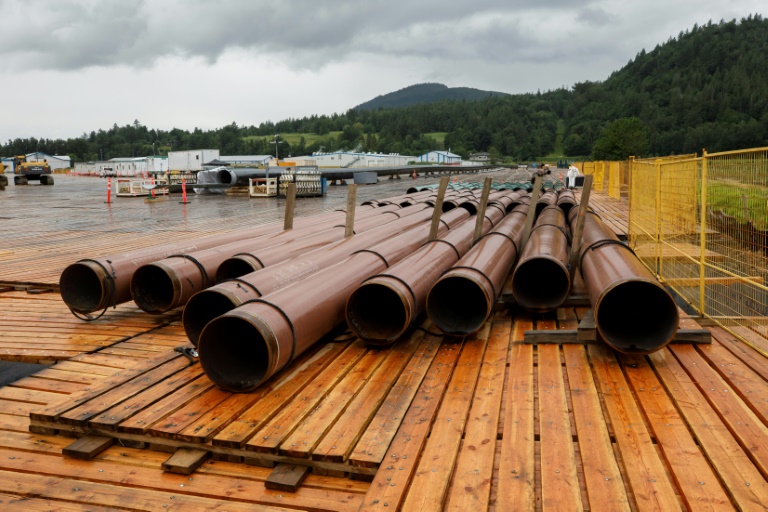
Troubled Canada pipeline no longer profitable: budget watchdog

The controversial Trans Mountain pipeline expansion project, now under construction in western Canada after being nationalized, is no longer profitable as costs have spiralled, Parliament’s budget watchdog said Wednesday.

In a report, the office of the Parliamentary Budget Officer said a review of the project’s finances found “that the government’s 2018 decision to acquire, expand, operate, and eventually divest of the Trans Mountain assets will result in a net loss for the federal government.”

Ottawa purchased the pipeline for Can$4.4 billion (US$3.4 billion) from Kinder Morgan four years ago to salvage the troubled expansion project.

But its current value, the PBO estimated, is only Can$3.9 billion, after construction costs soared to $21.4 billion — a threefold increase from the original price tag — and its completion was pushed one year to late 2023. 

The negative valuation is based on the pipeline’s future cash flows over 40 years, minus construction costs.

In response, Adrienne Vaupshas, the spokeswoman for Deputy Prime Minister Chrystia Freeland, told AFP the project is “in the national interest and will make Canada and the Canadian economy more sovereign and more resilient.”

She cited independent analyses from BMO Capital Markets and TD Securities that concluded the project remains commercially viable at the higher costs.

The pipeline’s sale, Vaupshas added, will only proceed after further consultations with Indigenous groups and the risks associated with it are reduced.

The project is to replace an aging conduit built in 1953 to deliver 890,000 barrels of oil a day from landlocked Alberta to the Pacific coast for shipping to new markets in Asia and elsewhere.

Prior to the government taking over the project, it had been stalled by legal challenges and protests by Indigenous groups and environmental activists.

On Wednesday, Environmental Defense called the project a “financially dangerous boondoggle” that will lead to “more carbon emissions for the planet.”

“As the costs of the project keep ballooning, the government should cut its losses and cancel construction of the expansion pipeline — before even more of our dollars are wasted,” the group said in a statement.

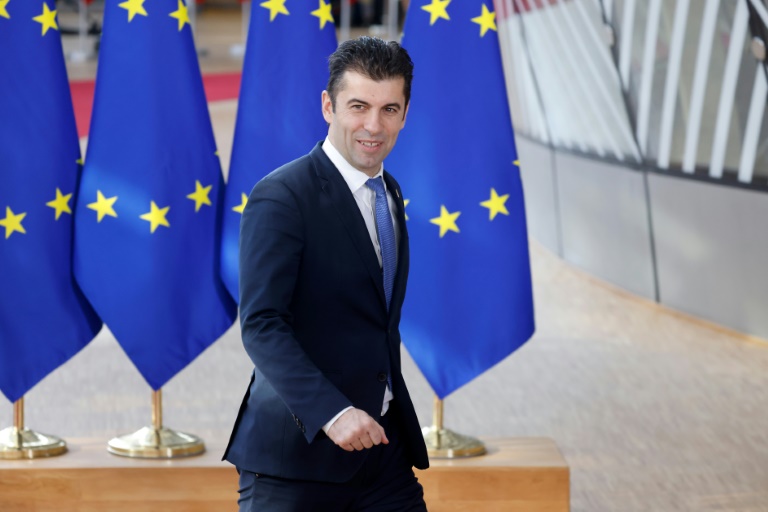
Fresh turmoil for Bulgaria as govt loses confidence vote

Bulgaria’s coalition government collapsed Wednesday after just six months when it lost a vote of confidence among lawmakers, bringing fresh political turmoil and the increased likelihood of an early general election.

But analysts say there is no guarantee that another national vote in this country of 6.5 million people, which last year went through three such polls, would end its political instability.

In the most recent election last November, the party of liberal Kiril Petkov came out ahead and formed an unwieldy coalition government with three other parties.

An energetic, pro-European prime minister, Petkov promised to end Bulgaria’s endemic corruption after a decade of rule by the controversial conservative Boyko Borisov.

But cracks in the coalition began to appear soon after Russia’s invasion of Ukraine, and earlier this month the anti-establishment ITN party led by entertainer Slavi Trifonov withdrew its support.

Borisov’s conservative GERB party swiftly filed a no-confidence motion citing “the failure of the government’s economic and financial policy” as consumer inflation soared.

On Wednesday evening, 123 lawmakers in the 240-seat chamber voted in favour of the motion, two more than it needed to succeed, while 116 voted against. One member of parliament missed the vote through illness.

It was the first time a Bulgarian government had ever been toppled by such a vote.

– ‘End the plunder’ –

“It was an honour for me to lead a government overthrown by Borisov, (Delyan) Peevski, Trifonov and (Eleonora) Mitrofanova,” Petkov told lawmakers, referring to a well-known oligarch and the Russian ambassador to Sofia as well as the other party leaders.

“They did not understand that this is not the way to win the Bulgarian people,” Petkov said of his opponents, before promising to continue fighting for Bulgaria to be a “normal” European state “without mafia”.

Outside parliament, a small rally of government opponents was followed by a bigger gathering of thousands of Petkov supporters.

“It is very discouraging that this vote succeeded but we remain here until we win the next election. What’s most important is to end the plunder,” 22-year-old brewer and Petkov supporter Marin Yorkishev told AFP, blaming the opposition for “another political crisis”.

The Ukraine conflict has inflamed divisions in Bulgaria, a country with strong historical ties to Moscow.

Despite Bulgaria’s heavy dependence on Russian gas and oil, Petkov opposed Moscow’s demand to open a ruble account to pay for Russian gas — a response to European Union sanctions. 

The decision caused friction in the government and the country faced a cut in supplies in response.

Another source of tension was Ukraine’s appeal for arms.

While most of the parties in Petkov’s government were ready to authorise such deliveries, the Socialists — also part of the ruling coalition — remained opposed.

The final straw however came from the EU’s drive to settle longstanding historical and cultural disputes between Bulgaria and neighbouring North Macedonia.

It was Petkov’s advocacy of rapprochement with Skopje that the ITN says prompted them to quit the coalition.

– Election surprise? – 

President Rumen Radev will now have three attempts to see if any party can form a governing majority among lawmakers.

Petkov’s party is expected to receive the first mandate from Radev to try to gather a majority, followed by GERB and then another party of Radev’s choosing.

Petkov told the Bulgarian Nova television channel that he intends to present “essentially” the same cabinet to parliament for approval in spite of Wednesday evening’s events. 

If no workable majority can be found, politicians will go back to campaigning for elections that would have to be held within two months.

According to political scientist Daniel Smilov from the Centre for Liberal Strategies think tank, the only chance of cobbling together a majority in the current parliament lies with Petkov.

Early elections would most likely lead to a “fragmented parliament”, Smilov told AFP.

But “at the same time, there is a very serious mobilisation in support of (Petkov), which, if utilised in an election campaign, could lead to a surprise”.

Close Bitnami banner
Bitnami