World

Saudi prince visits Turkey for talks clouded by Khashoggi murder

Saudi Arabia’s de facto ruler took a big step out of international isolation Wednesday by paying his first visit to Sunni rival Turkey since the 2018 murder of journalist Jamal Khashoggi in the kingdom’s Istanbul consulate.

The talks in Ankara between Crown Prince Mohammed bin Salman and Turkey’s Recep Tayyip Erdogan come one month before US President Joe Biden visits Riyadh for a regional summit. Those talks will focus on the energy crunch caused by Russia’s invasion of Ukraine.

President Erdogan’s decision to revive ties with one of his biggest rivals is driven in large part by economics and trade.

Turks’ living standards are imploding a year before a general election that poses one of the biggest challenges of Erdogan’s mercurial two-decade rule.

It was his Islamic-rooted government that released gruesome details of the Khashoggi murder suggesting that his body had been dismembered and dissolved in acid.

But it is now drumming up investment and central bank assistance from the very countries it opposed on ideological grounds in the wake of the Arab Spring revolts.

– ‘Swallowing his pride’ 

“I think this is probably one of the most significant visits to Ankara by a foreign leader in almost a decade,” said The Washington Institute’s Turkey specialist Soner Cagaptay.

“Erdogan is all about Erdogan. He’s all about winning elections and I think he has decided to kind of swallow his pride.”

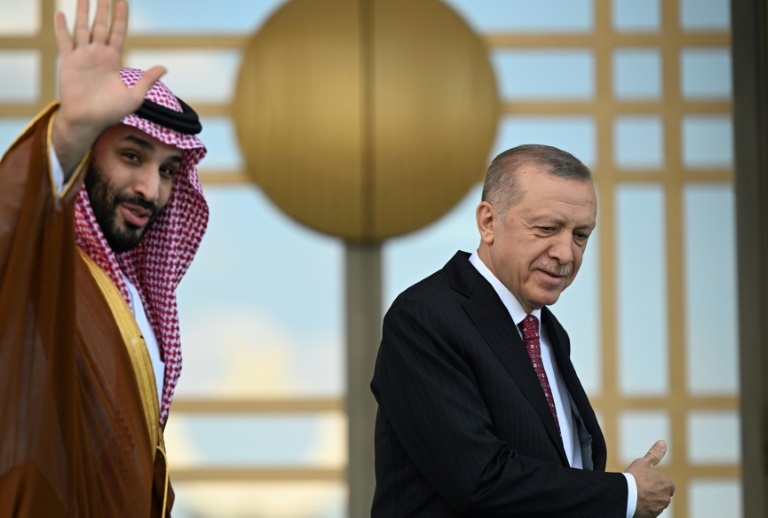
The Turkish leader personally welcomed the crown prince at his presidential palace at a grand ceremony featuring a parade of horses and a military honour guard.

They then held a two-hour meeting and a private dinner but no media event.

A joint statement issued by their foreign ministers said the meeting was held “in an atmosphere of sincerity and brotherhood embodying the depth of excellent relations between the two countries”.

It said the sides discussed Saudi investments but announced no concrete deals.

Analysts believe Prince Mohammed came to see if he could win broader backing ahead of a possible new nuclear agreement between world powers and the Saudis’ arch-enemy Iran.

“There is increased confidence (in Riyadh) that Ankara could be more useful in the current geopolitical environment,” the Eurasia Group said in a research note.

– ‘His bones would ache’ 

Turkey’s rapprochement with the Saudis began with an Istanbul court decision in April to break off the trial in absentia of 26 suspects accused of links to Khashoggi’s killing and to transfer the case to Riyadh.

US intelligence officials have determined that Prince Mohammed approved the plot against Khashoggi — which Riyadh denies.

The court’s decision drew protests from Khashoggi’s Turkish fiancee Hatice Cengiz. She told AFP on Wednesday that the summit was “unacceptable”.

“If Jamal had a tomb, his bones would ache,” said Cengiz.

But the Istanbul court ruling paved the way for a politically sensitive visit to Saudi Arabia by Erdogan just three weeks later.

The kingdom’s state media ended up releasing a picture of Erdogan hugging the crown prince, an image that created a furore in Turkey.

“He gets off the plane and hugs the killers,” fumed Turkey’s opposition leader Kemal Kilicdaroglu.

Ankara expects the mending of fences to help prop up the Turkish economy at a crucial stage of Erdogan’s rule.

– Lack of trust –

Erdogan’s unconventional economic approach has set off an inflationary spiral that has seen consumer prices almost double in the past year.

Analysts believe the resulting drop in Erdogan’s public approval and depletion of state reserves mean the Turkish leader can ill afford to maintain his hostile stance toward petrodollar-rich Gulf states.

Turkey’s problems with the Saudis began when Erdogan refused to accept Egyptian President Abdel Fattah al-Sisi’s ouster of the Muslim Brotherhood from power in Cairo in 2013.

The Saudis and other Arab kingdoms viewed the Brotherhood as an existential threat.

Those rivalries intensified after Turkey tried to break the nearly four-year blockade the Saudis and their allies had imposed on Qatar in 2017.

Analysts believe that Washington is watching this gradual return of regional calm with an approving nod.

“Encouraged by the United States, this rapprochement is relaxing tensions and building diplomacy across the region,” said the US-based Middle East Institute’s Turkish scholar Gonul Tol.

But Tol questioned whether Prince Mohammed was prepared to fully trust Erdogan.

The crown prince “will not easily forget the attitude adopted by Turkey after the Khashoggi affair”, she said.

Key Ukrainian city under 'massive' Russian bombardment

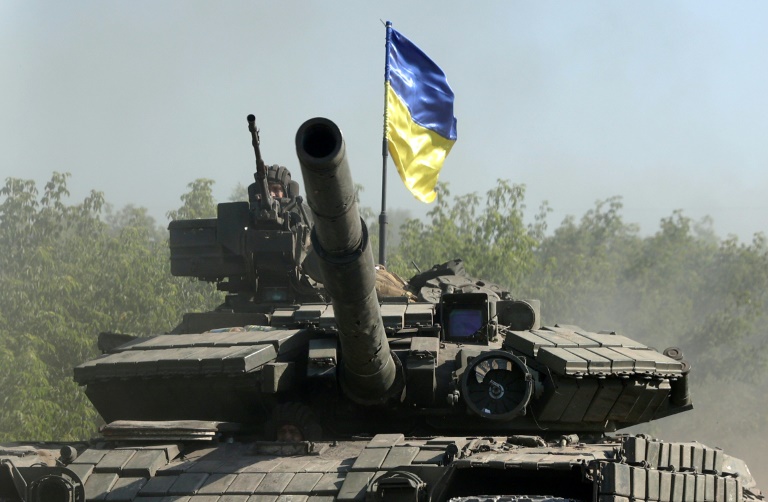
“Massive” Russian bombardment of Ukraine’s battleground eastern Lugansk region and key city Severodonetsk has been “hell” for soldiers there, Kyiv said Wednesday, while insisting that defenders would hold on “as long as necessary”.

Moscow’s troops have been pummelling eastern Ukraine for weeks and are slowly advancing, despite fierce resistance from the outgunned Ukrainian military.

With President Vladimir Putin’s forces tightening their grip on the strategically important city of Severodonetsk in the Donbas, its twin city of Lysychansk is now coming under heavier bombardment.

“The Russian army is… just destroying everything” in Lysychansk, Sergiy Gaiday, governor of the Lugansk region, which includes both cities, wrote on Telegram.

“It’s just hell out there,” after four months of shelling in Severodonetsk, across the Donets river, he wrote later.

“Our boys are holding their positions and will continue to hold on as long as necessary,” he added.

Pro-Russian separatists claimed they were close to surrounding both Lysychansk and Severodonetsk.

“Over the past several days enormous work has been accomplished,” Andrei Marochko, an officer in the separatist army of Lugansk, told Russian state television.

– ‘Only grannies left’ –

Taking control of the two cities would give Moscow control of the whole of Lugansk, allowing them to press further into the Donbas.

After being pushed back from Kyiv and other parts of Ukraine following their February invasion, Moscow is seeking to seize a vast eastern swathe of the country.

But daily bombardment also continues in other parts of the country.

The northeastern city of Kharkiv near the Russian border was near empty on Wednesday, AFP reporters said, a day after Russian shelling killed five people in the city.

Leyla Shoydhry, a young woman in a park near the opera house, said the situation was “very bad”.

“Last night the building next to mine collapsed from the bombardment while I was sleeping,” she said.

Roman Pohuliay, a 19-year-old in a pink sweatshirt, said most residents had fled the city.

“Only the grannies are left,” he said.

In his daily address Tuesday, Ukrainian President Volodymyr Zelensky accused the Russian army of “brutal and cynical” shelling in the eastern Kharkiv region, where the governor said 15 people had been killed Tuesday.

In a briefing Wednesday, the Russian defence ministry claimed responsibility for a missile strike it said killed a number of Ukrainian troops in the southern city of Mykolaiv.

Mayor Oleksandr Senkevych told Ukrainian television that the strike hit two firms and a school, sparking a blaze that authorities could not put out.

In the central city of Zaporizhzhia, women were training to use Kalashnikov assault rifles in urban combat as Russian forces edged nearer.

“When you can do something, it’s not so scary to take a machine gun in your hands,” said Ulyana Kiyashko, 29, after moving through an improvised combat zone in a basement.

Aid group Doctors Without Borders said it had gathered accounts of an “outrageous lack of care to distinguish and protect civilians” during the war in Ukraine.

Most patients it had evacuated by train blamed Russian or Russian-backed forces for a spectrum of gruesome injuries, it added.

– Ship leaves Mariupol –

On the Russian side, officials said Wednesday two drones had hit an oil refinery in the Rostov region bordering Ukraine, causing an explosion and a fire but no casualties.

Away from the battlefield, Moscow summoned Brussels’ ambassador in a dispute with EU member Lithuania over the country’s restrictions on rail traffic to the Russian outpost of Kaliningrad.

The territory is around 1,000 miles (1,600 kilometres) from Moscow, bordering Lithuania and Poland.

By blocking goods arriving from Russia, Lithuania says it is simply adhering to European Union-wide sanctions on Moscow.

The United States made clear its commitment to Lithuania as an ally in NATO, which considers an attack against one member an attack on all.

And Germany urged Russia not to “violate international law” by retaliating against Lithuania.

Also on Wednesday, a Turkish cargo ship left the Russian-occupied city of Mariupol on Ukraine’s Sea of Azov coast.

Moscow and Ankara have negotiated for weeks towards getting millions of tonnes of desperately needed grain out of the war zone and on to Africa and the Middle East.

But it was not immediately clear whether the Azov Concord was carrying wheat.

Turkey’s defence ministry said four-way talks would be held “in the coming weeks” between Russia, Turkey, Ukraine and the United Nations, with media reporting the meeting could happen next week.

– ‘Marshall Plan’ –

Reporters Without Borders (RSF) said in an investigation published Wednesday that a Ukrainian photojournalist, Maks Levin, had been killed and possibly tortured by Russian troops after his capture on March 13.

In Brussels, ministers unanimously agreed Tuesday to grant Ukraine and neighbour Moldova candidate status for membership in the European Union.

German Chancellor Olaf Scholz told parliament in Berlin on Wednesday that Ukraine “needs a Marshall Plan for its reconstruction”, a reference to the post-World War II aid from Washington that helped a devastated Europe get back on its feet.

Ukraine and Russia were “still far from negotiations… because Putin still believes in the possibility of a dictated peace”, he added, urging Kyiv’s Western allies to keep up their military and financial support.

Spain’s Foreign Minister Jose Manuel Albares on Wednesday said the Ukrainian president would join a NATO summit to be held in Madrid next week via video link.

Moscow, meanwhile, complained that its delegates to an Organization for Security and Cooperation in Europe (OSCE) assembly in Britain next month had been refused UK visas.

The Kremlin was Wednesday turning to other members of the so-called “BRICS” grouping that also includes Brazil, India, China and South Africa.

Russia is “actively redirecting its trade flows and external economic contacts towards reliable international partners, above all the BRICS countries,” Putin told a business forum by video link ahead of a virtual leaders’ summit Thursday.

burs-sr/ah/har

New antibody therapies fight cancer, drum up investment

Antibody therapies are offering promising treatment breakthroughs for cancer and other illnesses, generating greater investor interest more than 20 years after they were first commercialised.

Antibodies are proteins that recognise foreign substances, known as antigens, attaching themselves to them to alert the rest of the human immune system.

In 1975, scientists Georges Koehler and Cesar Milstein discovered how to produce them in a laboratory, which later earned them a Nobel Prize for medicine. Dozens of synthetic antibodies have since been developed.

New antibody treatments to be used with chemotherapy have arrived on the scene in recent years.

Most recently, a clinical trial of an antibody developed by pharmaceutical groups Daiichi Sankyo and AstraZeneca caught the attention of leading cancer specialists gathered at the American Society of Clinical Oncology’s annual congress in Chicago this month.

The treatment, Enhertu, was already authorised for breast cancer patients who had large amounts of a protein called HER2. 

The antibody also performed well in patients with smaller quantities of the protein — increasing the number of people who could benefit.

The antibody latches onto the surface of a cancer cell whose receptors no longer work and the cell then “digests” the receptors to recycle them, activating the chemotherapy, explained cancer specialist William Jacot.

“We hadn’t seen such progress, in terms of survival, with a chemotherapy treatment for dozens of years,” said Jacot, a professor at the Montpellier Cancer Institute in southern France.

Although antibody therapy technology has a complex production process, it is less difficult to implement than new treatments using cellular therapy.

Antibodies can be used in different ways to fight cancer. They can target and destroy the proteins necessary to produce cancer cells or act to regulate the immune response.

French biotech firm Inatherys is in the first stage of clinical trials of an antibody treatment for leukaemia, its boss Pierre Launay said.

He said the company’s antibody will be designed act as a “guided missile” and target a receptor that lets iron enter cancer cells, which need the substance. 

The antibody will then release a poison within the cell to destroy it.

Some antibody treatments are being used preventively while others are treatments. For example, AstraZeneca’s Evusheld antibody treatment is used preventively to ward off Covid-19, while Xevudy by British company GSK is used as a treatment.

Treatments are also being developed for inflammatory diseases, which are also a major killer. 

– Booming market –

The promising announcements have triggered interest beyond the scientific community and a flood of investment. French biotech firm ImCheck Therapeutics recently raised almost 100 million euros ($106 million) for an antibody treatment in development.

Pharmaceutical giants are also prepared to spend big to ensure they do not miss out. French company Sanofi bought Belgian biotech firm Ablynx and its mini antibodies, nanobodies, for almost four billion euros in 2018.

Dupixent, Sanofi’s flagship immunotherapy antibody medication, earned more than five billion euros for the pharma giant last year, and Keytruda, an oncological treatment by US firm MSD, generated more than $17 billion in 2021.

According to predictions by research firm Market Data Forecast, the market could grow to reach $249 billion in three years’ time.

Heartbreak and shock at Afghan quake hospital

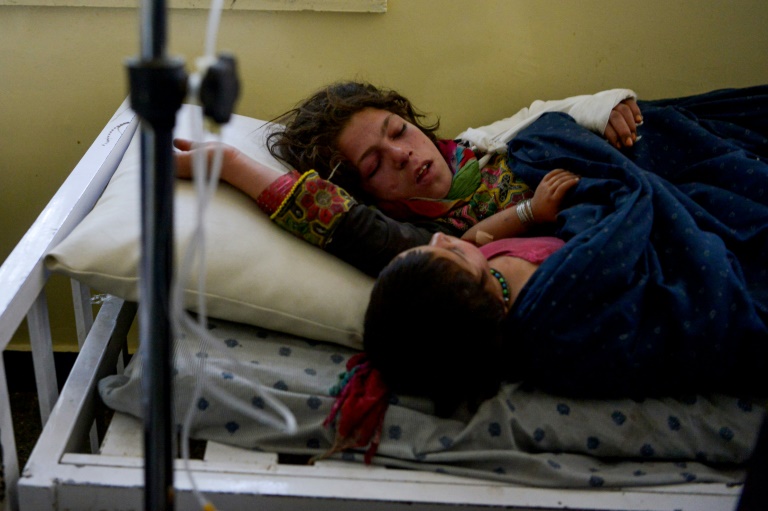
Bibi Hawa’s face is distorted by tears as she tries to grasp her predicament from a hospital bed in Sharan, capital of Afghanistan’s Paktika province.

At least a dozen members of her family were among over 1,000 people killed by a devastating earthquake that struck the region early Wednesday, and she fears she has been left all alone.

“Where will I go, where will I go?” the 55-year-old asks repeatedly.

As a nurse tries to calm her down, talking to her gently and caressing her forehead, Bibi sighs: “My heart is weak.”

The 5.9-magnitude quake struck hardest in the rugged and impoverished east, where people already led hand-to-mouth lives made worse since the Taliban takeover in August.

The disaster poses a huge challenge for the hardline Islamists, who have largely isolated the country as a result of their hardline policies.

The United Nations in an initial estimate said over 2,000 homes were destroyed in the region, where the average family often has up to 20 members.

In the room where Bibi is being treated a dozen other women lie on beds — many asleep, some burrowed beneath blankets, others hooked up to vital fluids.

Shahmira is unhurt, but her one-year-old grandson lies in her lap, a large dressing covering his temple.

On the next bed her daughter-in-law is sleeping off her injuries, while a son is being treated in a different ward.

“We were sleeping when we heard a loud noise,” she tells AFP of the quake.

“I screamed… I thought my family was buried under the rubble and that I was the only one” still alive.

 – Cries everywhere –

In an adjacent ward, a dozen men are also recovering on beds.

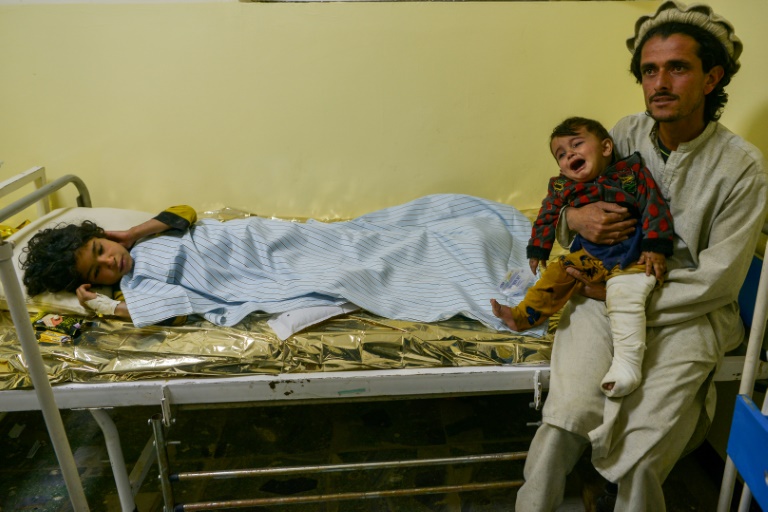
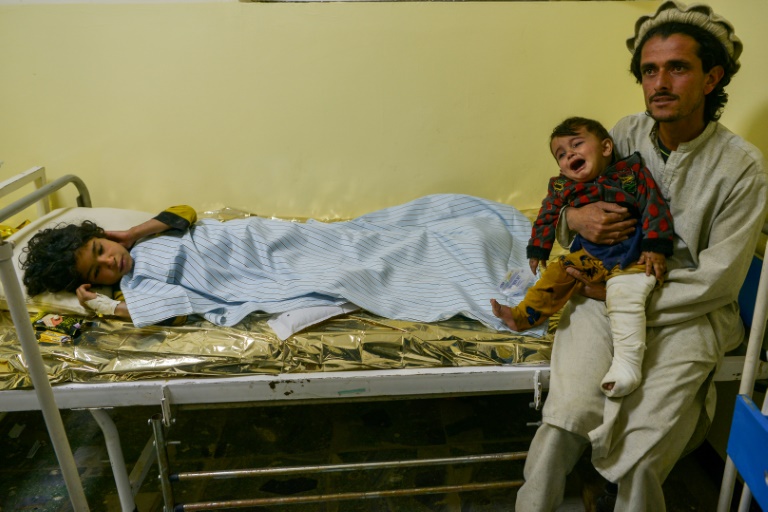
One father holds his son on his lap — the boy wearing mustard-coloured pants with little black hearts, one leg in a plaster cast.

Nearby another child lies under a blue blanket. His left arm is also in a cast, while on his forehead a white bandage bears the word “emergency” written in black marker.

“It was a horrible situation,” recalls Arup Khan, 22, talking of the moments after the quake.

“There were cries everywhere. The children and my family were under the mud.”

Mohammad Yahya Wiar, director of Sharan Hospital, says they have been doing their best to treat everyone.

When the injured arrived, they “were crying, and we were crying too”, he tells AFP.

“Our country is poor and lacks resources. This is a humanitarian crisis. It is like a tsunami.”

But locals are rallying to help. In front of the hospital, a hundred men are waiting patiently.

“They have come to give blood — about 300 have already given it since this morning,” explains a Taliban fighter.

Heartbreak and shock at Afghan quake hospital

Bibi Hawa’s face is distorted by tears as she tries to grasp her predicament from a hospital bed in Sharan, capital of Afghanistan’s Paktika province.

At least a dozen members of her family were among over 1,000 people killed by a devastating earthquake that struck the region early Wednesday, and she fears she has been left all alone.

“Where will I go, where will I go?” the 55-year-old asks repeatedly.

As a nurse tries to calm her down, talking to her gently and caressing her forehead, Bibi sighs: “My heart is weak.”

The 5.9-magnitude quake struck hardest in the rugged and impoverished east, where people already led hand-to-mouth lives made worse since the Taliban takeover in August.

The disaster poses a huge challenge for the hardline Islamists, who have largely isolated the country as a result of their hardline policies.

The United Nations in an initial estimate said over 2,000 homes were destroyed in the region, where the average family often has up to 20 members.

In the room where Bibi is being treated a dozen other women lie on beds — many asleep, some burrowed beneath blankets, others hooked up to vital fluids.

Shahmira is unhurt, but her one-year-old grandson lies in her lap, a large dressing covering his temple.

On the next bed her daughter-in-law is sleeping off her injuries, while a son is being treated in a different ward.

“We were sleeping when we heard a loud noise,” she tells AFP of the quake.

“I screamed… I thought my family was buried under the rubble and that I was the only one” still alive.

 – Cries everywhere –

In an adjacent ward, a dozen men are also recovering on beds.

One father holds his son on his lap — the boy wearing mustard-coloured pants with little black hearts, one leg in a plaster cast.

Nearby another child lies under a blue blanket. His left arm is also in a cast, while on his forehead a white bandage bears the word “emergency” written in black marker.

“It was a horrible situation,” recalls Arup Khan, 22, talking of the moments after the quake.

“There were cries everywhere. The children and my family were under the mud.”

Mohammad Yahya Wiar, director of Sharan Hospital, says they have been doing their best to treat everyone.

When the injured arrived, they “were crying, and we were crying too”, he tells AFP.

“Our country is poor and lacks resources. This is a humanitarian crisis. It is like a tsunami.”

But locals are rallying to help. In front of the hospital, a hundred men are waiting patiently.

“They have come to give blood — about 300 have already given it since this morning,” explains a Taliban fighter.

Bolsonaro ex-minister arrested for 'influence peddling'

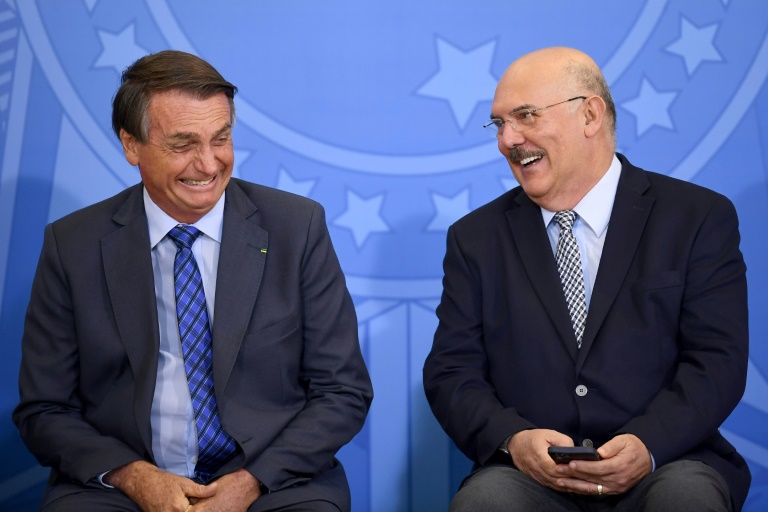
A Brazilian former education minister accused of influence peddling, allegedly at the request of President Jair Bolsonaro, was arrested Wednesday, police and a defense lawyer said.

Milton Ribeiro resigned in March over allegations that he channeled public funds to allies of two influential Evangelical pastors at Bolsonaro’s “special request.”

Newspaper Folha de Sao Paulo revealed an audio recording of Ribeiro saying he gave priority in deciding school-funding requests to municipalities governed by “friends” of the pastors.

One mayor reportedly said he had been asked for a kilo of gold in exchange for having his school-funding request cleared.

The claims triggered calls from opposition lawmakers for Ribeiro and Bolsonaro to be investigated. 

Bolsonaro, a conservative Catholic, won the presidency in 2018 with solid backing from Brazil’s powerful Evangelical Christian movement. 

He is keen to keep the Evangelical vote as he seeks reelection in October, trailing in the polls to leftist ex-president Luiz Inacio Lula da Silva. 

Bolsonaro and Ribeiro, himself a Presbyterian pastor, have denied wrongdoing.

“Based on documents, testimony and the final report of the preliminary investigation… possible indications of criminal practice in the granting of public budgets were identified,” Brazilian police said in a statement. 

Ribeiro’s arrest, it said, was the result of an operation across four Brazilian states Wednesday morning to dismantle a criminal network, with officers armed with five arrest warrants and 13 search warrants. 

He risks a sentence of between two and five years for influence peddling and two to 12 years for corruption, the police said. 

Ribeiro’s lawyer Daniel Bialski in a statement described his client’s arrest as “unjust” and “indisputably unnecessary.”

The Ministry of Education confirmed its premises were searched on Wednesday and said it intended to cooperate with investigators. 

In March, Bolsonaro defended Ribeiro and called the claims “cowardly.” 

On Wednesday, the president appeared to distance himself from his former minister. 

“Let him answer for his actions, I pray to God that he has no problem. But if he does, it shows that I have no influence on the police,” the far-right president told the Itaitiaia radio station. 

“I have 23 ministers, about a hundred secretaries of state… If someone does something wrong, will they blame me?” he added.

Ribeiro, 64, took office in July 2020 — the third education minister in the cabinet of Bolsonaro, whose government was shaken by an avalanche of resignations and dismissals. 

Ecuador refuses to end state of emergency as 18 police 'missing' after attack

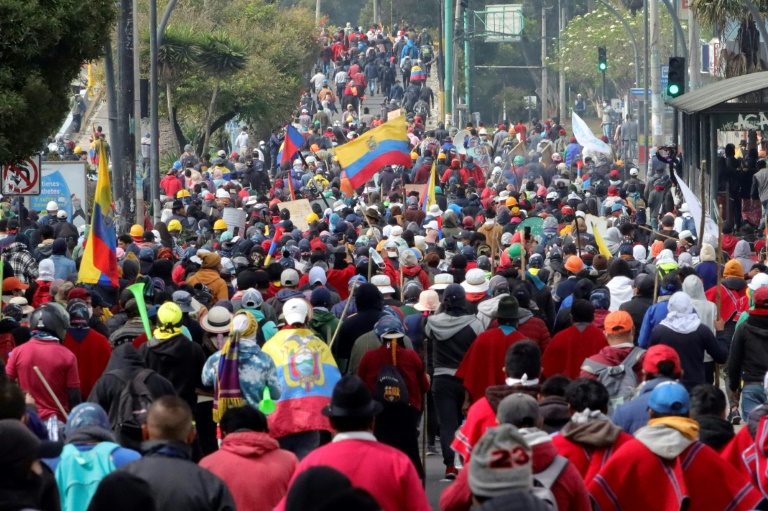
Ecuador on Wednesday refused to end its state of emergency and said 18 police officers are “missing” following an attack by Indigenous protesters on a police station in the eastern Amazon region.

Two people have died in the 10-day protest in which the government has declared an emergency in six of Ecuador’s 24 departments following violent clashes between protesters and security forces.

Around 90 civilians and 100 members of the security forces have been injured in clashes, while the interior minister said that 18 officers were missing following the attack in the Amazonian city of Puyo.

Another six officers were “seriously injured” and three more detained by the protesters, said Patricio Carrillo. 

A protester also died in the attack in Puyo, a five-hour drive south of Quito, the government said on Tuesday night.

“The mob began setting fires with police still inside patrol cars, began looting, burning public-private facilities such as the Guayaquil Bank, Red Cross, until they ended up torching the police facilities in the center of the city,” said Carrillo.

President Guillermo Lasso has proposed dialogue with the powerful Confederation of Indigenous Nationalities of Ecuador (Conaie), which called the protests, in a bid to end the escalating violence.

But Conaie leader Leonidas Iza says talks are conditional on the state of emergency being repealed and the “demilitarization” of a public park in Quito that is a traditional rallying point for Indigenous people but is currently under the control of security forces.

“We cannot lift the state of exception because that would leave the capital defenseless, and we already know what happened in October 2019 and we will not allow that,” Minister of Government Francisco Jimenez told the Teleamazonas channel.

Conaie led two weeks of nationwide protests in 2019 in which 11 people died and more than 1,000 were injured, also generating losses of $800 million.

In the capital Quito, Indigenous protesters occupied congress, torched the comptroller’s office and damaged public and private property.

– ‘Time to talk’ –

The capital is once again the epicenter of the protests.

Conaie, which has mobilized at least 10,000 people in Quito, hundreds of whom have clashed with security forces in recent days, want the government to lower fuel prices.

“It is not the time to put more conditions, to make more demands. It is the moment to sit down and talk,” said Jimenez.

“Unfortunately there has been accidental loss of life, according to the information we have, and we cannot keep waiting.”

An Indigenous protester died after he was “hit in the face, apparently with a tear gas bomb” on Tuesday following the “confrontation” with security forces in Puyo, a lawyer for the Alliance of Human Rights Organizations told AFP.

The police said “it was presumed that the person died as a result of handling an explosive device.”

Another protester died on Monday after falling into a ravine outside Quito, with police claiming that too was an accident.

However, the public prosecutor’s office has opened a murder investigation.

The Alliance said 90 people have been injured and 87 arrested since protests began on June 13.

Police say 101 officers and military personnel have been injured, with another 27 temporarily detained by protesters.

It said 80 civilians have been arrested.

Quito was relatively calm on Wednesday morning.

French co-discoverer of 'Lucy' dies at 87

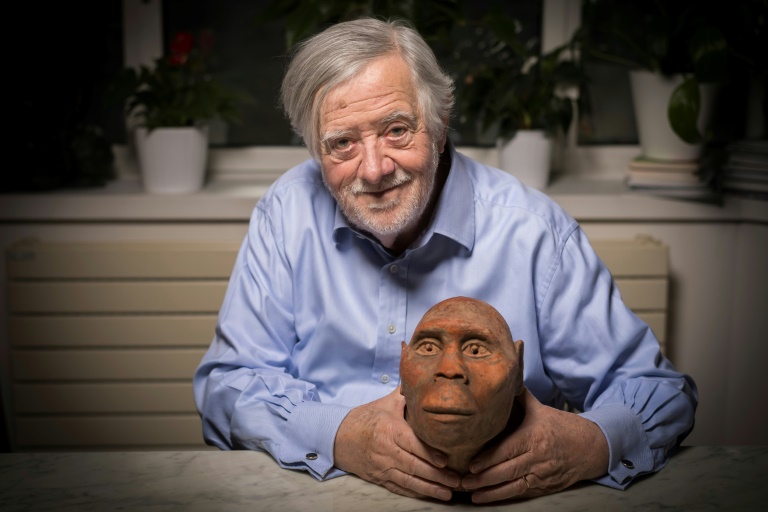
French palaeontologist Yves Coppens, credited with the co-discovery of the famous fossil find known as “Lucy”, died on Wednesday aged 87 after a long illness, his publisher said.

“France has lost one of its great men,” publisher Odile Jacob tweeted, adding that beyond his science skills, Coppens had also been “a talented writer, storyteller and non-fiction author”.

He was, with Maurice Taieb and Donald Johanson, part of the team that found the most complete remnants of an Australopithecus afarensis ever discovered, in 1974 in Hadar, Ethiopia.

The team nicknamed the 3.2- million-year-old female hominid “Lucy” after the Beatles song “Lucy in the Sky with Diamonds” which they listened to while labelling the fossils.

Based on the large part of Lucy they found, 40 percent of her skeleton, the scientists were able to determine her height (one metre, 3.5 feet) and show that she was muscular and able to climb trees as well as walk upright.

Coppens, who was born in Britanny and was the son of a nuclear physicist father, co-signed six hominid discoveries over his career.

“At six or seven years old I already wanted to become an archaeologist,” Coppens told AFP in 2016. “All my holiday time was spent at digs,” he added.

Coppens was admitted to France’s prestigious CNRS scientific centre in 1956 when he was still only 22.

He began travelling to Africa from the 1960s, starting with Algeria and Chad.

His first major discovery came in 1967, a 2.6-million-year-old fossil in the Omo valley in Ethiopia.

Then in 1974 came the international expedition in Ethiopia’s Afar triangle that was to make Coppens, his friend and fellow Frenchman Taieb and Donald Johanson, an American, world famous for the discovery of Lucy.

Coppens often referred to himself as one of Lucy’s “daddies” (“papas” in French).

For a long time after the find, which comprised 52 bone fragments, scientists believed that she was a direct ancestor of humanity.

But this claim is no longer widely believed, and Coppens as well as other palaeontologists came instead to view Lucy as a distant cousin of mankind.

Later Coppens ran digs in Mauritania, the Philippines, Indonesia, Siberia, China and Mongolia.

Back home, he became director of the Musee de l’Homme (Museum of Mankind) in Paris, was given the palaeontology chair in the prestigious College de France,  and joined France’s Academy of Science.

He also won several prizes, served as an advisor on environmental questions to the French government, and wrote several books and more than a million scientific articles.

Besides the discovery of Lucy, Coppens once told AFP, he was particularly proud to have “made an irrefutable link between the emergence of man and climate change”.

As forests gave place to savannas, man stopped climbing trees, began to walk upright and needed to develop brain power to keep carnivores at bay, he said.

burs-jh/har

At least 1,000 killed in Afghan quake as rescuers scramble for survivors

A powerful earthquake struck a remote border region of Afghanistan overnight killing at least 1,000 people and injuring 1,500 more, officials said Wednesday, with the toll expected to rise as desperate rescuers dig through collapsed dwellings.

The 5.9-magnitude quake struck hardest in the rugged east, where people already lead hardscrabble lives in the grip of a humanitarian crisis made worse since the Taliban takeover in August.

“People are digging grave after grave,” said Mohammad Amin Huzaifa, head of the Information and Culture Department in hard-hit Paktika, adding that at least 1,000 people had died in that province alone.

He said more than 1,500 people were injured, many critically.

“People are still trapped under the rubble,” he told journalists.

The death toll climbed steadily all day as news of casualties filtered in from hard-to-reach areas in the mountains, and the country’s supreme leader, Hibatullah Akhundzada, warned it would likely rise further.

The earthquake struck areas that were already suffering the effects of heavy rain, causing rockfalls and mudslides that hampered rescue efforts.

“It was a horrible situation,” said Arup Khan, 22, recovering at a hospital in the Paktika provincial capital of Sharan.

“There were cries everywhere. The children and my family were under the mud.”

He told AFP that rescuers pulled him out of the wreckage of a guesthouse, but two relatives were killed at his nearby home.

Photographs and video clips posted on social media showed scores of badly damaged houses in remote rural areas.

“We believe that nearly 2,000 homes are destroyed,” the UN’s humanitarian coordinator for Afghanistan, Ramiz Alakbarov, told reporters.

Footage released by the Taliban showed local residents of one village digging a long slit trench to bury the dead, who by Islamic tradition should be laid to rest facing Mecca.

– Offers of help –

The disaster poses a huge challenge for the Taliban, who have largely isolated the country as a result of their hardline Islamist policies — particularly the subjugation of women and girls.

Even before the Taliban takeover, Afghanistan’s emergency response teams were stretched to deal with the natural disasters that frequently strike the country.

But with only a handful of airworthy planes and helicopters left since they returned to power, any immediate response to the latest catastrophe is further limited.

“The government is working within its capabilities,” tweeted Anas Haqqani, a senior Taliban official.

“We hope that the International Community & aid agencies will also help our people in this dire situation.”

The United States, whose troops helped topple the initial Taliban regime and remained in Afghanistan for two decades until Washington pulled them out last year, was “deeply saddened” by the earthquake, the White House said.

“President Biden is monitoring developments and has directed USAID (US Agency for International Development) and other federal government partners to assess US response options to help those most affected,” National Security Advisor Jake Sullivan said in a statement.

The United Nations and European Union were quick to offer assistance.

“Inter-agency assessment teams have already been deployed to a number of affected areas,” the UN Office for the Coordination of Humanitarian Affairs (UNOCHA) in Afghanistan said on Twitter.

Tomas Niklasson, EU special envoy for Afghanistan, tweeted: “The EU is monitoring the situation and stands ready to coordinate and provide EU emergency assistance to people and communities affected.”

Neighbour Pakistan, where officials said one person was killed in the quake, said it would send emergency aid — including tents — across their border.

Afghanistan is frequently hit by earthquakes — especially in the Hindu Kush mountain range, which lies near the junction of the Eurasian and Indian tectonic plates.

Scores of people were killed and injured in January when two quakes struck the western province of Badghis, damaging hundreds of buildings.

In 2015, more than 380 people were killed in Pakistan and Afghanistan when a 7.5-magnitude earthquake ripped across the two countries, with the bulk of the deaths in Pakistan.

Afghanistan’s deadliest recent earthquake killed 5,000 in May 1998 in the northeastern provinces of Takhar and Badakhshan.

From the Vatican, Pope Francis offered prayers for victims of the latest quake.

“I express my closeness with the injured and those who were affected,” the 85-year-old pontiff said at the end of his weekly audience.

Wednesday’s quake occurred at around 1:30 am at a depth of 10 kilometres (six miles), some 47 kilometers southwest of the city of Khost, according to the United States Geological Survey.

It was felt as far away as Lahore in Pakistan, 480 kilometres from the epicentre.

At least 1,000 killed in Afghan quake as rescuers scramble for survivors

A powerful earthquake struck a remote border region of Afghanistan overnight killing at least 1,000 people and injuring 1,500 more, officials said Wednesday, with the toll expected to rise as desperate rescuers dig through collapsed dwellings.

The 5.9-magnitude quake struck hardest in the rugged east, where people already lead hardscrabble lives in the grip of a humanitarian crisis made worse since the Taliban takeover in August.

“People are digging grave after grave,” said Mohammad Amin Huzaifa, head of the Information and Culture Department in hard-hit Paktika, adding that at least 1,000 people had died in that province alone.

He said more than 1,500 people were injured, many critically.

“People are still trapped under the rubble,” he told journalists.

The death toll climbed steadily all day as news of casualties filtered in from hard-to-reach areas in the mountains, and the country’s supreme leader, Hibatullah Akhundzada, warned it would likely rise further.

The earthquake struck areas that were already suffering the effects of heavy rain, causing rockfalls and mudslides that hampered rescue efforts.

“It was a horrible situation,” said Arup Khan, 22, recovering at a hospital in the Paktika provincial capital of Sharan.

“There were cries everywhere. The children and my family were under the mud.”

He told AFP that rescuers pulled him out of the wreckage of a guesthouse, but two relatives were killed at his nearby home.

Photographs and video clips posted on social media showed scores of badly damaged houses in remote rural areas.

“We believe that nearly 2,000 homes are destroyed,” the UN’s humanitarian coordinator for Afghanistan, Ramiz Alakbarov, told reporters.

Footage released by the Taliban showed local residents of one village digging a long slit trench to bury the dead, who by Islamic tradition should be laid to rest facing Mecca.

– Offers of help –

The disaster poses a huge challenge for the Taliban, who have largely isolated the country as a result of their hardline Islamist policies — particularly the subjugation of women and girls.

Even before the Taliban takeover, Afghanistan’s emergency response teams were stretched to deal with the natural disasters that frequently strike the country.

But with only a handful of airworthy planes and helicopters left since they returned to power, any immediate response to the latest catastrophe is further limited.

“The government is working within its capabilities,” tweeted Anas Haqqani, a senior Taliban official.

“We hope that the International Community & aid agencies will also help our people in this dire situation.”

The United States, whose troops helped topple the initial Taliban regime and remained in Afghanistan for two decades until Washington pulled them out last year, was “deeply saddened” by the earthquake, the White House said.

“President Biden is monitoring developments and has directed USAID (US Agency for International Development) and other federal government partners to assess US response options to help those most affected,” National Security Advisor Jake Sullivan said in a statement.

The United Nations and European Union were quick to offer assistance.

“Inter-agency assessment teams have already been deployed to a number of affected areas,” the UN Office for the Coordination of Humanitarian Affairs (UNOCHA) in Afghanistan said on Twitter.

Tomas Niklasson, EU special envoy for Afghanistan, tweeted: “The EU is monitoring the situation and stands ready to coordinate and provide EU emergency assistance to people and communities affected.”

Neighbour Pakistan, where officials said one person was killed in the quake, said it would send emergency aid — including tents — across their border.

Afghanistan is frequently hit by earthquakes — especially in the Hindu Kush mountain range, which lies near the junction of the Eurasian and Indian tectonic plates.

Scores of people were killed and injured in January when two quakes struck the western province of Badghis, damaging hundreds of buildings.

In 2015, more than 380 people were killed in Pakistan and Afghanistan when a 7.5-magnitude earthquake ripped across the two countries, with the bulk of the deaths in Pakistan.

Afghanistan’s deadliest recent earthquake killed 5,000 in May 1998 in the northeastern provinces of Takhar and Badakhshan.

From the Vatican, Pope Francis offered prayers for victims of the latest quake.

“I express my closeness with the injured and those who were affected,” the 85-year-old pontiff said at the end of his weekly audience.

Wednesday’s quake occurred at around 1:30 am at a depth of 10 kilometres (six miles), some 47 kilometers southwest of the city of Khost, according to the United States Geological Survey.

It was felt as far away as Lahore in Pakistan, 480 kilometres from the epicentre.

Close Bitnami banner
Bitnami