World

China's mass testing mantra is building a waste mountain

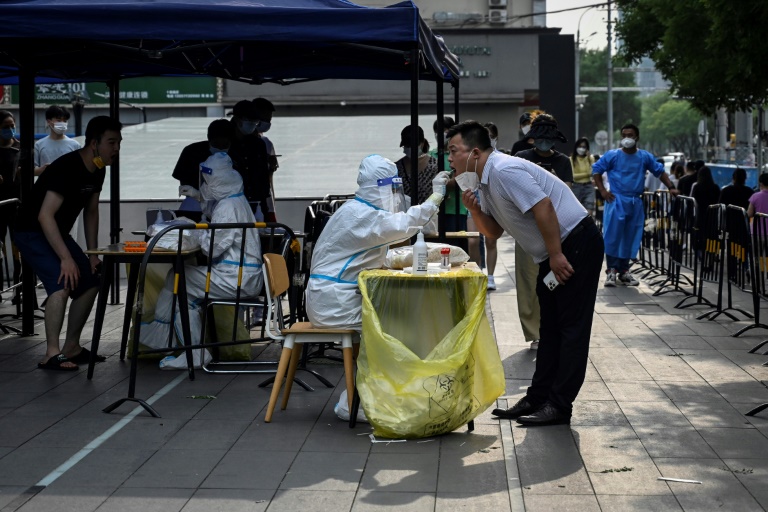
Hazmat-suited workers poke plastic swabs down millions of throats in China each day, leaving bins bursting with medical waste that has become the environmental and economic levy of a zero-Covid strategy.

China is the last major economy wedded to stamping out infections no matter the cost.

Near-daily testing is the most commonly used weapon in an anti-virus arsenal that includes snap lockdowns and forced quarantines when just a few cases are detected.

From Beijing to Shanghai, Shenzhen to Tianjin, cities are now home to an archipelago of temporary testing kiosks, while authorities order hundreds of millions of people to get swabbed every two or three days.

Mass testing appears set to stay as Chinese authorities insist zero-Covid has allowed the world’s most populous nation to avoid a public health catastrophe.

But experts say the approach — a source of political legitimacy for the ruling Communist Party — creates a sea of hazardous waste and a mounting economic burden for local governments who must plough tens of billions of dollars into funding the system.

“The sheer amount of medical waste that is being generated on a routine basis (is) at a scale that is practically unseen in human history,” said Yifei Li, an environmental studies expert at New York University Shanghai.

“The problems are already becoming astronomical, and they will continue to grow even bigger,” he told AFP.

Beijing has positioned itself as an environmental leader, cracking down on air and water pollution while setting the goal of making its economy carbon-neutral by 2060, a target experts say is untenable given the current trajectory of investments in coal.

Blanket-testing is now posing a new trash challenge.

Each positive case — typically a few dozen a day nationwide — unspools a trail of used test kits, face masks and personal protective gear.

If not disposed of properly, biomedical waste can contaminate soil and waterways, posing threats to the environment and human health.

– Burning questions –

Cities and provinces home to a total of around 600 million people have announced some form of routine testing in recent weeks, according to an AFP analysis of government notices and Chinese media reports.

Different regions have imposed different restrictions, and some areas have suspended the policy in step with falling cases. 

Nationwide data on the waste footprint has not been disclosed. But Shanghai officials said last month the city produced 68,500 tonnes of medical waste during its recent Covid lockdown, with daily output up to six times higher than normal.

Under Chinese regulations, local authorities are tasked with separating, disinfecting, transporting and storing Covid waste before finally disposing of it — usually by incineration.

But disposal systems in the poorer rural parts of the country have long been overburdened.

“I’m not sure that… the countryside really has the capacity to deal with a significant increase in the amount of medical waste,” said Yanzhong Huang, a senior fellow for global health at the Council on Foreign Relations.

The spike in waste may prompt some local governments to process it improperly or simply “dump it on the ground” in temporary landfills, said Benjamin Steuer, of the Hong Kong University of Science and Technology.

In a statement to AFP, China’s health ministry said it had made “specific demands for medical waste management” as part of national Covid protocols. 

– Waste of money? –

Beijing has urged provincial capitals and cities with at least 10 million people to set up a test site within 15 minutes’ walk of every resident.

Top leaders also expect local governments to foot the bill for testing at a time when many are struggling to balance the books.

Expanding the model to the whole of the country could cost between 0.9 and 2.3 percent of China’s gross domestic product, Nomura analysts said last month.

“The economics of that is tricky,” said Li of NYU Shanghai. “You don’t want to invest in permanent infrastructure to process what is perceived as a short-term surge of medical waste.”

Jin Dong-yan, a professor at Hong Kong University’s School of Biomedical Sciences, said “very ineffective and costly” routine testing would force governments to back away from other much-needed healthcare investments.

Authorities are also likely to miss positive cases as the Omicron variant spreads rapidly and is harder to detect than other strains, he told AFP.

“This will not work,” he said. “It will just wash down millions of dollars into the sea.”
Future king William's influence grows as he hits 40

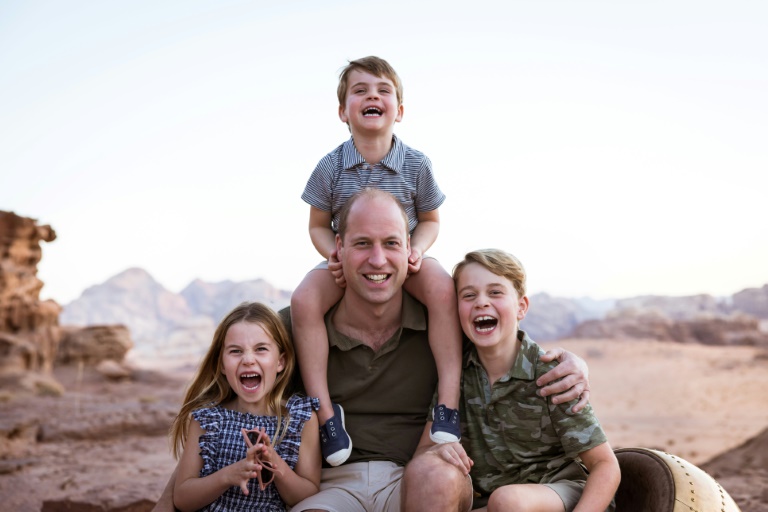
Prince William’s 40th birthday this week marks a significant milestone for the future king, who is rapidly stamping his authority on the British royal family by plotting a course between tradition and modernity. 

William’s wife Catherine celebrated her landmark birthday in January and only Queen Elizabeth II is held in higher regard by the public than the close-knit couple, who are often held up as a model for the future of the monarchy. 

According to pollsters YouGov, William, whose birthday is on Tuesday, is the most popular royal behind the queen, with a 66-percent approval rating, followed by Kate on 60 percent.

“It’s a very important milestone for him because, with his father Prince Charles, he’s stepping up to support the queen, and also to continue to create an identity as the future king,” royal commentator Richard Fitzwilliams told AFP.  

Such is William’s popularity that many even want him to leapfrog his father and become king when his grandmother dies.  

Since the 96-year-old sovereign began winding down her duties due to ill health and old age last year, second-in-line to the throne William has been an increasingly influential figure. 

The Duke of Cambridge, as he is officially known, accompanied his father when the queen missed the State Opening of Parliament in May and has also weighed in on important family decisions.

He was reportedly a prime mover in blocking the participation of Prince Andrew, his sex scandal-hit uncle, in the traditional Order of the Garter ceremony this month.   

“They (William and Kate) are the monarchy’s future, that was underlined at the balcony appearance at the end of the Jubilee” celebrations to mark the queen’s record-breaking 70-year reign, said Fitzwilliams. 

– Central role –

William’s time has been devoted to the family since giving up his role as a helicopter ambulance pilot in 2017. 

Significantly, he is reportedly planning to move out of London’s Kensington Palace and into a four-bedroom cottage, described as modest, on the grounds of the queen’s Windsor Castle home west of London where she spends most of her time.    

The move will allow him to get closer to the queen and strengthen his role in the family’s inner sanctum, commentators said.

While he is becoming more committed to his royal duties, he is also determined to provide a normal life for his three children — Prince George, aged eight, Princess Charlotte, seven, and four-year-old Prince Louis.

This is partly driven by his own childhood, which was marked by the trauma of his parents’ very public separation and divorce, and the death of his mother Diana in a car accident in 1997 when he was only 15.  

His mother’s example is evident in his more modern outlook, which saw him break with the traditions of royal fathers and get his hands dirty with nappy changing, and help the older two with homework.    

The tall, blond, partially bald prince is also keen to carry on his mother’s legacy of helping society’s most vulnerable members. 

He was spotted in London earlier this month selling The Big Issue, the UK’s homeless magazine, and has spoken out frequently on other issues such as the environment and mental health. 

– Diana’s legacy –

William was “moulded” by the “traditional” queen during Sunday lunches with her at Windsor when he was studying at the elite Eton College nearby, Marc Roche, author of several books on the monarchy, told AFP. 

But “among William’s assets, there is… perhaps due to the influence of his mother, a great sensitivity to diversity and the environment”, he added. 

The prince has revealed little about what goes on behind palace walls but defended the family after his brother Harry and wife Meghan gave a shock interview on US television, in which they accused members of being racist.

He vehemently denied the allegations and by all accounts, relations with Harry are strained.

But William recognises the need to modernise the age-old institution to enable it to survive after Elizabeth II and fend off the forces of republicanism that are stronger among younger generations. 

This need was emphasised during a recent tour of the Caribbean in March, which was criticised for being a throwback to colonial times.

“One of the things that William is particularly concerned with is the image of the monarchy and how it moves forward,” said Fitzwilliams. 

Jubilant Gustavo Petro elected Colombia's first leftist president

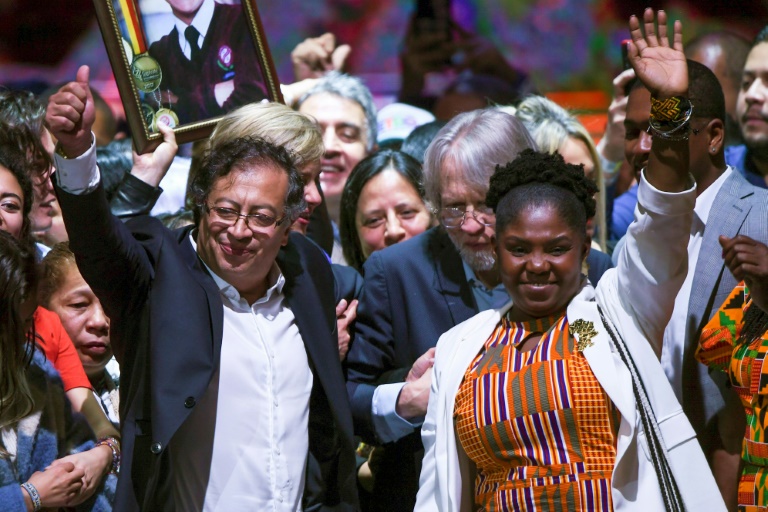
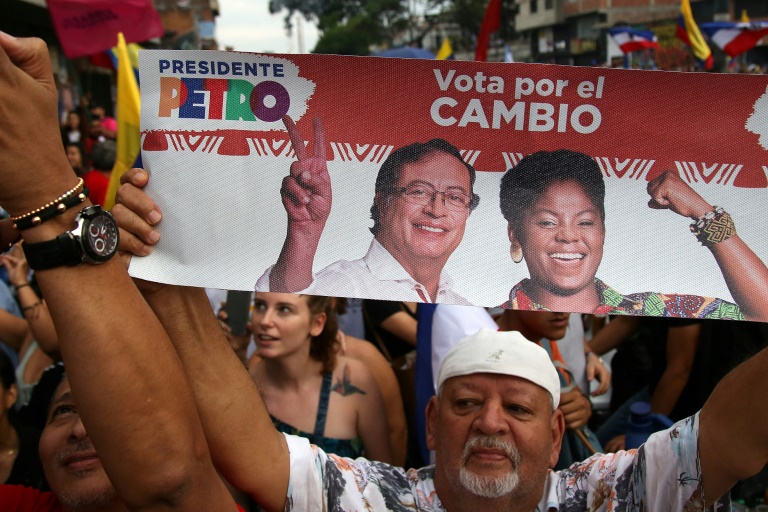
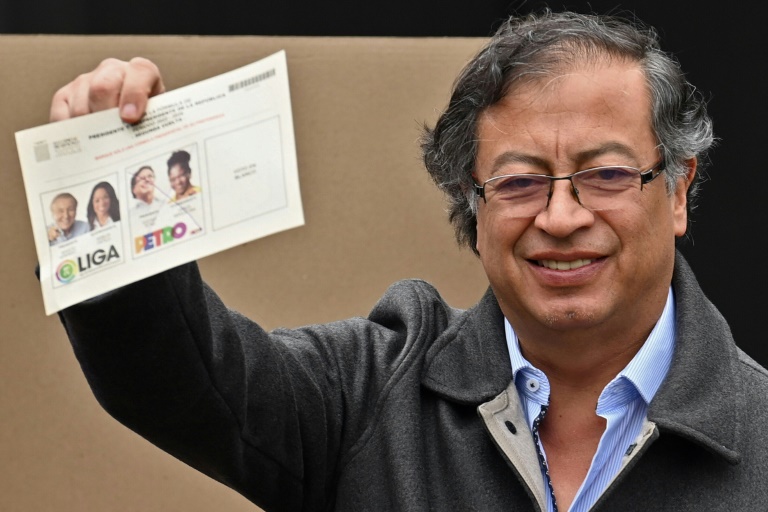
Ex-guerrilla Gustavo Petro was elected the first ever left-wing president of Colombia on Sunday, after beating millionaire businessman Rodolfo Hernandez in a tense and unpredictable runoff election.

With all votes counted, Petro — the 62-year-old former mayor of Bogota — won with 50.4 percent compared to Hernandez’s 47.3 percent.

“As of today, Colombia is changing, a real change that guides us to one of our aims: the politics of love … of understanding and dialogue,” said a victorious Petro.

Hernandez, 77, accepted the result, in which he came up short by 700,000 votes, in a Facebook live broadcast.

“I hope that Mr Gustavo Petro knows how to run the country and is faithful to his discourse against corruption,” said the construction magnate, who had made fighting graft his main campaign pledge.

Petro will succeed the deeply unpopular conservative Ivan Duque, who was barred by Colombia’s constitution from standing for reelection, in a country saddled with widespread poverty, a surge in violence and other woes.

Speaking to delirious supporters at his party headquarters in Bogota, Petro held out an olive branch to his opponents.

“This is not a change to deepen sectarianism in Colombia. The change consists precisely of leaving hatred behind, leaving sectarianism behind.”

He added: “We want a Colombia that through its diversity is one Colombia.”

In another historic achievement for a country where 10 percent of the population identify as Afro-descendents, environmental activist and feminist Francia Marquez, 40, will become Colombia’s first black woman vice president.

“The great challenge that all of us Colombians have is reconciliation,” said Marquez, who was the target of threats during a fractious campaign. 

“The time has come to build peace, a peace that implies social justice.”

In central Bogota, thousands of Petro supporters — mostly young people — rejoiced.

“I’m celebrating because finally we’re going to have change … this shows there is hope,” academic Lusimar Asprilla, 25, told AFP.

– ‘Joy for Latin America’ –

Leftist leaders in the Latin America region were quick to congratulate Petro.

“Gustavo Petro’s victory is historic. Colombia’s conservatives have always been tenacious and tough,” Mexico President Andres Manuel Lopez Obrador wrote on Twitter.

“Joy for Latin America! We will work together for the unity of our continent in the challenges of a world changing rapidly,” tweeted Chile President Gabriel Boric.

“The will of the Colombian people has been heard, it went out to defend the path to democracy and peace,” said Venezuela’s authoritarian President Nicolas Maduro, who has been branded a dictator by the opposition in his own country.

Meanwhile, US Secretary of State Antony Blinken sent congratulations to “the people of Colombia for making their voices heard in a free and fair presidential election.

Amid fears a tight result could spark post-election violence, some 320,000 police and military were deployed to ensure security for the 39 million registered voters.

The electoral observer mission said one of Petro’s election monitors and a soldier were killed, both in the south.

Colombia is no stranger to political violence, with five presidential candidates having been murdered over the course of the 20th century. 

Before the first round of this year’s presidential election, several candidates received death threats.

– ‘No clear mandate’ –

Petro will have to deal with a country reeling economically from the coronavirus pandemic, a spike in drug-trafficking related violence and deep-rooted anger at the political establishment that spilled over into mass anti-government protests in April 2021.

Almost 40 percent of the country lives in poverty while 11 percent are unemployed.

“This result does not give the new president a clear mandate to execute his policy without at least trying to address concerns from his counterpart,” Sergio Guzman, president of the Colombia Risk Analysis consultancy, told AFP.

Guzman said that unless Petro learns “how to govern with the other half of the country, we can expect four years of stalemate and brinksmanship.”

One major worry for many is Petro’s past as a radical leftist urban guerrilla in the 1980s who spent almost two years in jail.

Left-wing ideology is intrinsically linked in many Colombians’ minds to the country’s six-decade long multi-faceted conflict, leaving many to fear what a Petro presidency would represent.

He has also vowed to negotiate with Colombia’s last recognized Marxist guerrillas, the National Liberation Army (ELN).

“To demonstrate he is not himself an extreme left wing politician, it would be very complicated for him to open negotiations (with the ELN),” Elizabeth Dickinson, Colombia analyst at the International Crisis Group in Bogota, told AFP.

Britain set for biggest rail strike in decades

Britain’s railway network this week faces its biggest strike action in more than three decades in a row over pay as soaring inflation erodes earnings.

Rail union the RMT has said that more than 50,000 workers will take part in a three-day national strike, coinciding with major events including the Glastonbury music festival.

Schools are warning that thousands of teenagers taking national exams will also be affected.

The RMT argues that the strikes are necessary as wages have failed to keep pace with inflation, which has hit a 40-year high.

Jobs are also at risk with passenger traffic yet to fully recover after the lifting of coronavirus pandemic lockdowns.

Countries around the world are being hit by decades-high inflation as the Ukraine war and the easing of Covid restrictions fuel energy and food price hikes.

The strikes are planned for Tuesday, Thursday and Saturday in the biggest dispute on Britain’s railway network since 1989, according to the RMT.

The union has also announced a 24-hour walkout of its members on the Tube, London’s underground railway network, planned for Tuesday.

Rail operators, however, warn of disruption throughout the week — with lines not affected by strike action nevertheless reducing services.

“Talks have not progressed as far as I had hoped and so we must prepare for a needless national rail strike and the damaging impact it will have,” said Andrew Haines, chief executive of Network Rail, which looks after the country’s rail tracks.

“We, and our train operating colleagues, are gearing up to run the best service we can for passengers and freight users next week despite the actions of the RMT.” 

The strikes will likely compound travel chaos in the aviation sector, after airlines were forced to cut flights due to staff shortages, causing long delays and frustration for passengers.

Thousands of workers were sacked in the aviation industry during the pandemic but the sector is now struggling to recruit workers as travel demand rebounds following the lifting of lockdowns.

– War of words –

The government and the RMT were engaged in a war of words over the weekend, after the union’s general-secretary Mick Lynch said strikes would go ahead as “no viable settlements” had been found to the disputes.

But Transport Secretary Grant Shapps accused union bosses of refusing to meet for further talks on Saturday and instead attending a protest march against the rising cost of living.

Shapps said the disruption would cause “misery” and force hospital patients to cancel appointments and pupils sitting exams would face extra pressures of having to change their travel plans.

“By carrying out this action, the RMT is punishing millions of innocent people, instead of calmly discussing the sensible and necessary reforms we need to make in order to protect our rail network,” he added.

Modernising the rail network was necessary, as travel use changes, including after the pandemic, he said.

But Lynch accused Shapps of fabrication, insisting talks with train operating companies had broken up without agreement on Thursday night, and no further negotiations had been scheduled.

Contrary to government claims, no pay offer had been made and the union had received no response to its push for a pay increase of 7.1 percent in December, in line with inflation at the time, he said.

“If there’s not a settlement, we will continue our campaign,” he told Sky News on Sunday, predicting more strikes as other transport unions balloted their members.

The RMT was not looking for special treatment but a deal was needed as members had not had a pay rise for several years, he added.

“If we don’t play our hand, thousands of our members will lose their jobs” and safety on the network would be compromised, he said.

The government was being “just as ruthless as P&O but they haven’t got agency workers to step in”, he added, referring to the mass sacking of staff at the ferry operator earlier this year.

Latin American leftist leaders hail Petro victory in Colombia

Gustavo Petro’s election on Sunday as the first left-wing president in Colombia’s history sparked joy among fellow Latin American leaders with similar ideologies.

It also continued a trend in recent years that has seen many countries in the region swing to the left, although some would argue those are populist moves as much as ideological ones.

Argentina, Peru, Chile, Mexico, Bolivia and Honduras have all moved to the left in their last elections and Petro’s victory sparked a feeling of fraternity amongst these leaders.

“Your victory validates democracy and ensures the path towards an integrated Latin America in this time when we demand maximum solidarity amongst brother peoples,” said Argentina President Alberto Fernandez on Twitter.

Chile President Gabriel Boric, who was elected earlier this year to replace conservative Sebastian Pinera, said Petro’s victory was a “joy for Latin America.”

“We will work together for the unity of our continent in the challenges of a world changing rapidly,” he tweeted.

Peru’s Pedro Castillo, a rural school teacher and trade unionist, said he looked forward to working with an ally, something that has been in short supply in his homeland where the right-wing opposition dominates congress.

“We are united by a common feeling that seeks improved collective, social and regional integration for our peoples,” he said.

“Latin American integration is strengthened,” added Bolivia’s Luis Arce.

Mexico President Andres Manuel Lopez Obrador said Petro’s success could heal the wounds in a country in which political assassinations are not uncommon.

He referenced the 10-year Colombian civil war that broke out following the 1948 assassination of leftist presidential candidate Jorge Eliecer Gaitan and was the precursor to the six-decade long conflict between the state and left-wing guerrillas.

“Today’s triumph can be the end of this curse and the awakening for this brotherly and dignified people,” said Lopez Obrador.

– Maduro praises victory for ‘democracy and peace’ –

Venezuelan President Nicolas Maduro, who has a fraught relationship with outgoing conservative Colombian President Ivan Duque, was jubilant.

“The will of the Colombian people has been heard, it went out to defend the path to democracy and peace,” said Maduro, who has been branded a dictator by the opposition in his own country.

Maduro broke off diplomatic relations with Colombia in 2019 after Duque backed attempts by Venezuelan opposition leader Juan Guaido, who claims to be the country’s acting leader, to oust Maduro.

Henrique Capriles, another Venezuelan opposition figure, was more interested in the lot of the estimated two million migrants that fled economic and political crises in his country to Colombia.

“We hope the new President will govern with respect and without excluding them,” he said on Twitter.

Miguel Diaz-Canel, the president of Cuba, which like Venezuela is subject to international sanctions and isolation, spoke of his hope for “advancing the development of bilateral relations for the wellbeing of our peoples.”

The United States — which riled many Latin American leaders by not inviting the authoritarian heads of Nicaragua, Cuba, and Venezuela to the recent Summit of the Americas — sent congratulations to “the people of Colombia for making their voices heard in a free and fair presidential election.”

“We look forward to working with President-Elect Petro to further strengthen the U.S.-Colombia relationship and move our nations toward a better future,” said US Secretary of State Antony Blinken, in a statement.

There were also warm regards from one of the few remaining conservative leaders in South America, neighboring Ecuador’s Guillermo Lasso, who last year beat the leftist Andres Arauz in a rare recent success for the right.

He said he spoke to Petro by telephone and “reiterated the availability of our government to strengthen friendship and cooperation, prioritizing development and the integration of our peoples.”

Sao Paulo's LGBTQ parade calls for Brazilians to 'vote with pride'

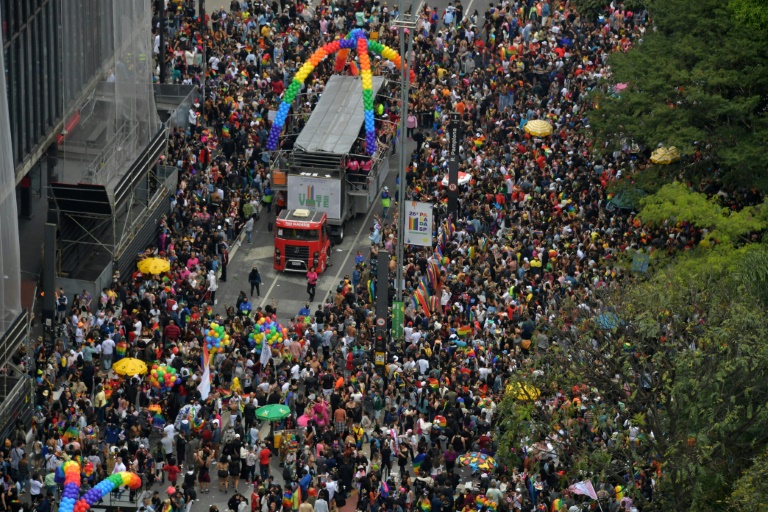
Several hundred thousand people marched Sunday in Sao Paulo’s annual LGBTQ Pride parade under the slogan “vote with pride, for policies that represent us” — a reference to Brazil’s upcoming presidential election.

The October vote will pit far-right President Jair Bolsonaro against former leftist president Luiz Inacio Lula da Silva, who is leading the polls.

Back in-person for the first time in two years due to Covid, the 26th edition of the Pride parade brought a day full of color, music and messages to “fight against any kind of discrimination” and “respect for diversity” in Brazil’s most populous city.

The parade “shows society that we are present, that we are a sufficient number to make a difference in politics and in society itself,” Gleydson Santos, a 26-year-old nursing technician, told AFP.

“The theme of this year’s parade was really good,” said Braulio da Silva, a 31-year-old primary school teacher, adding “You can’t be silent, you can’t be submissive anymore. It’s time we slapped ourselves in the face,” he added. 

The massive march started in the morning on Paulista Avenue, the city’s main artery, and advanced into the afternoon towards Roosevelt Square, the route’s endpoint. 

Turnout appeared to be lower than the three million people organizers said they were expecting.

One of the main attractions of the day was popular Brazilian artist Pabllo Vittar. The drag queen, dressed in yellow and white boots, got the crowd grooving. 

There was also no lack of criticism for the incumbent president, with shouts and signs of “Fora Bolsonaro” (“Out with Bolsonaro”).

In Brazil, homophobia has been a crime since mid-2019, but there are still daily attacks against gay and transgender people.

In 2021, 140 trans people were murdered in the country, according to the National Association of Transvestites and Transsexuals of Brazil.

Gustavo Petro, from imprisoned guerilla to Colombia's first leftist leader

Colombia’s first ever left-wing president Gustavo Petro, elected on Sunday, is a former guerrilla who spent two years in jail before turning to politics.

He won 50.49 percent of a runoff vote with 99.7 percent of the ballots counted, after a tense and unpredictable campaign against maverick millionaire businessman Rodolfo Hernandez.

But 10.5 million people voted against him in the second round, in a country with a total population of some 50 million, underscoring a potentially bumpy road ahead.

“It should be well understood that a significant portion of the country did not want Petro to become president,” Sergio Guzman, president of the Colombia Risk Analysis consultancy told AFP.

Petro, 62, was mayor of Bogota from 2012 to 2015 — a stint that was not without controversy and gave birth to unflattering accounts of his management style and alleged despotic tendencies.

He has “a very impetuous and authoritarian temperament, and when he insisted on carrying out his proposals … he did not know how to persuade the different sectors to put them into practice,” said Daniel Garcia-Pena, Petro’s adviser at the time.

Petro also garnered much criticism as mayor for a chaotic plan to nationalize rubbish collection.

A self-styled “revolutionary” warrior for the marginalized — black and Indigenous people, the poor and the young — Petro promises to address hunger and inequality.

This was his third presidential race.

“He believes it’s his destiny … that he’s the only person who can save Colombia,” said a source close to the president-elect.

– Guerrilla organizer –

The father of six is seen as a good orator, though not necessarily charismatic. He is a map buff, and a keen social media user.

Born into a modest family on Colombia’s Caribbean coast, Petro embraced leftist politics as a teenager after the 1973 coup d’etat in Chile that unseated Marxist president Salvador Allende.

He joined the M-19 urban guerrilla group as a 17-year-old, but insisted afterwards that his role in Colombia’s decades of civil war was as an organizer, never a fighter.

Petro was captured by the military in 1985 and claimed to have been tortured before spending almost two years in jail on arms charges.

He was freed and the M-19 signed a peace deal with the government in 1990. He has since served as a lower house legislator, senator and mayor.

– ‘Smart’, ‘ambitious’ –

Petro’s critics have sought to portray him as a radical populist who will bring about a Venezuela-style economic collapse.

He has, however, railed against the “banana republic” rule of Colombia’s neighbor and vowed there would be no expropriation on his watch.

“I can’t imagine Petro would pursue that for two reasons: his whole adult life has been looking for the big prize as Colombia president and he’s smart enough to know Venezuela is a complete disaster,” Michael Shifter, of the Inter-American Dialogue think tank, told AFP.

In a country with a tradition of political killings, Petro is no stranger to death threats and travels in a convoy of a dozen armored vehicles accompanied by police on motorcycles, an ambulance and snipers.

He has said he would reopen negotiations with Colombia’s last guerrilla group, the ELN, and seek to peacefully dismantle the drug trade.

“This is a very ambitious plan, it’s very important, however, because it’s the only real exit route to the conflict,” Elizabeth Dickinson, Colombia analyst at International Crisis Group in Bogota, told AFP.

Petro has made it his mission to address climate change, somewhat controversially by phasing out crude oil exploration — a major income-earner for Colombia.

He was also accused of playing a “dangerous” game by regularly evoking potential fraud in the lead up to Sunday’s vote, and on the day itself.

Spanish PM set for drubbing in Andalusia regional election

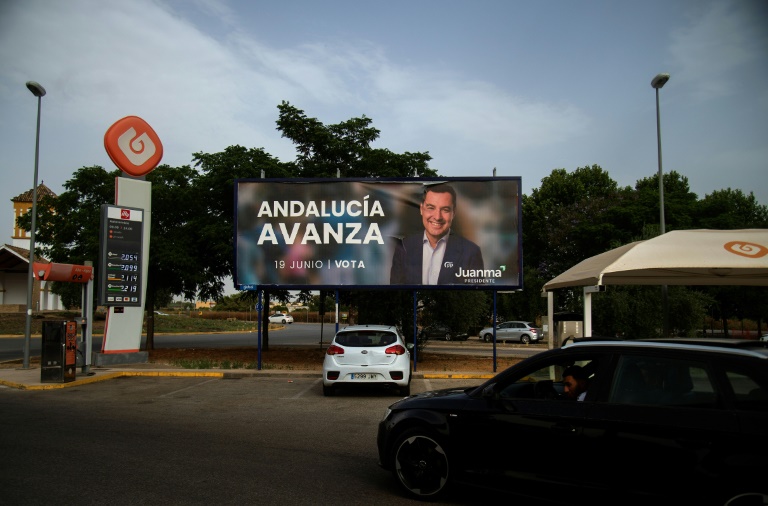
Spanish Prime Minister Pedro Sanchez’s Socialists appeared to have suffered a drubbing in a regional vote in Andalusia on Sunday ahead of a national election expected at the end of next year.

According to a poll carried out over the past week by GAD3, released after polling stations closed at 8 pm (1800 GMT), the incumbent conservative Popular Party (PP) won by a landslide, capturing 58-61 seats in the 109-seat Andalusian regional parliament. 

That would give the party its first ever absolute majority in Spain’s most populous region and prevent it from having to govern in alliance with far-right party Vox, which captured 13-15 seats according to the poll.

The Socialists were set to win 26-30 seats, which would be its worst ever result in their former stronghold which they governed without interruption between 1982 and 2018 when the PP ousted them from office.

A scandal over the misuse of public funds intended to fight unemployment was blamed for the party’s loss of support in the last election in 2018 in the region of around 8.5 million people.

Final official results were expected later on Sunday.

– ‘Uphill battle’ –

If the poll is correct, this will be the Socialists’ third consecutive regional election loss to the PP after votes in Madrid in May 2021 and Castilla y Leon in February.

Sanchez’s leftist coalition government has been struggling to deal with the economic fallout from Russia’s invasion of Ukraine, which has fuelled inflation worldwide, especially through increasing energy prices.

Losing in Andalusia would be a “severe blow” for the Socialists and would mean “Sanchez might face an uphill battle to get re-elected” next year, said Antonio Barroso, an analyst at political consultancy Teneo.

“The PP seems to be gaining increasing momentum, and voter concerns about inflation might only make it more challenging for Sanchez to sell his government’s achievements in the next legislative election,” he added.

Spain’s inflation rate hit 8.7 percent in May, its highest level in decades.

Sanchez’s government has rolled out a swathe of measures to help consumers, including a subsidy on fuel prices at the pump, an increase in the minimum wage, direct grants to truck drivers and financial support for some farmers.

The PP has governed Andalusia — known for its popular Costa del Sol beach resorts — since 2018 in a coalition with smaller centre-right party Ciudadanos which the polls suggests did not get enough votes to win a single seat this time around.

– ‘Sensible alternative’ –

Vox had warned that if the PP failed to get an absolute majority, it would demand to enter into government with the PP in exchange for the latter’s support.

Until now, Vox has supported the PP in Andalusia but from outside government.

During the campaign the head of the PP in Andalusia, Juan Manuel Moreno Bonilla, had urged voters to deliver him a “strong” government that is not “weighed down” by Vox.

Vox entered a regional government in Spain for the first time since the country returned to democracy in the 1970s in the central Castilla and Leon region earlier this year.

Any deal with Vox in Andalusia would complicate efforts by the PP’s new national leader, Alberto Nunez Feijoo, to project a more moderate image.

The PP has sought to present itself in Andalusia as a centrist “sensible alternative”, University of Granada political science professor Oscar Garcia Luengo told AFP.

The strategy appears to be working as the party is poised to win the support of nearly 17 percent of voters who cast their ballot for the Socialists in 2018, according to a survey published in daily newspaper El Mundo.

Phillips and Pereira: killed trying to save the Amazon

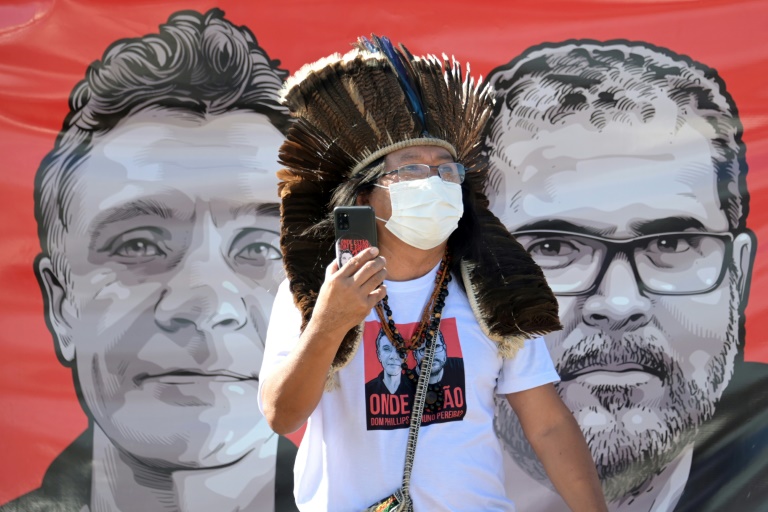
Four years after they first went on an expedition deep into the jungle of Brazil’s Javari Valley, Dom Phillips and Bruno Pereira teamed up again, each working on a big new project to save the Amazon. It cost them their lives.

The British journalist and Brazilian Indigenous expert, both at a crossroads in life, had gravitated back to the far-flung region they visited together in 2018, home to an Indigenous reservation bigger than Austria.

On their 2018 trip, Pereira, then head of Brazilian Indigenous agency FUNAI’s program for isolated tribes, invited Phillips, then on assignment for The Guardian, to cover a grueling 17-day expedition into the thick of the rainforest.

The goal was to survey the lands occupied by an uncontacted tribe, to try to avoid conflicts with other ethnicities.

In his article, Phillips wrote admiringly of Pereira squatting by a campfire in flip-flops, eating a monkey’s brain for breakfast as he discussed policy.

A bromance had clearly been born.

Four years later, the duo was back in the Javari Valley, in northwestern Brazil near the Peruvian and Colombian borders.

Phillips, 57, had set aside newspaper reporting to write a book on the world’s biggest rainforest.

Pereira, 41, had taken leave from FUNAI and set up a program to help Indigenous people detect and report invasions of their land by illegal loggers, miners and poachers.

On June 2, they set off by boat from Atalaia do Norte, a sleepy town at the juncture of the Itaquai and Javari rivers, so Pereira could show Phillips his project.

They planned to return on June 5. They never arrived.

Police say as the pair motored back to town that Sunday in a small boat, illegal fishermen sped up and shot them, then buried them in the forest.

– Indigenous app –

Pereira, who took leave from FUNAI after clashing with the program-cutting leadership appointed when far-right President Jair Bolsonaro took office in 2019, found a new home at an Indigenous-rights group, UNIVAJA.

There, he trained Indigenous volunteers to patrol the Javari Valley, entering incursions into a specially created app.

The reservation has seen a surge of land invasions, threatening it at a time when numerous studies have found that native people’s stewardship of their lands is key to protecting the Amazon, a vital resource in the race to curb climate change.

The project earned Pereira death threats.

“With the app, they had the whole crime scene mapped out, and they were preparing a report to show the authorities,” said Brazilian-American journalist Monica Yanakiew of Al Jazeera English, who accompanied Pereira on a similar trip in December.

“Everybody says you can’t patrol an area that large without a whole army, but if you have 10 Indigenous patrollers who know the lay of the land and an app, you can figure out what’s going on,” she told AFP.

It was this blend of masterful organizing and intimate knowledge of the terrain that made Pereira “one of the great Indigenous experts,” said a long-time friend, veteran Brazilian reporter Rubens Valente.

“He had a very rare gift. He was someone you just knew would go on to big things — environment minister or something. His death is a tremendous loss.”

– ‘How to Save the Amazon’ –

Phillips, one of the most respected foreign correspondents covering Brazil, had put that job on hold last year when he won a prestigious Alicia Patterson fellowship for his book project.

A deeply researched dive into the Amazon and the people who live here, the book was meant to be a highly readable look at practical ways to protect the rainforest.

His working title was “How to Save the Amazon.”

“He was so excited,” said Jenny Barchfield, a friend who met Phillips when they were both foreign correspondents in Rio de Janeiro in the 2010s.

She remembered him as friendly, kind, voraciously curious and “magnetic,” with bright blue eyes and an impish grin.

“He talked about how exciting it was to be able to think beyond the next story to this long project that had really important ramifications,” she said.

“The topic he was writing on literally could not be more important for everybody and everything on Earth.”

Friends say Phillips was well into writing the book. They are exploring ways to finish it and get it published.

“I’m sure Dom would want you to take some positives out of the tragedy,” said another friend, Scottish former foreign correspondent Andrew Downie.

“If there is a positive point to be taken out of this, it might be that people are looking at the Amazon now.”

Macron to lose parliament majority in blow for reform plans: estimates

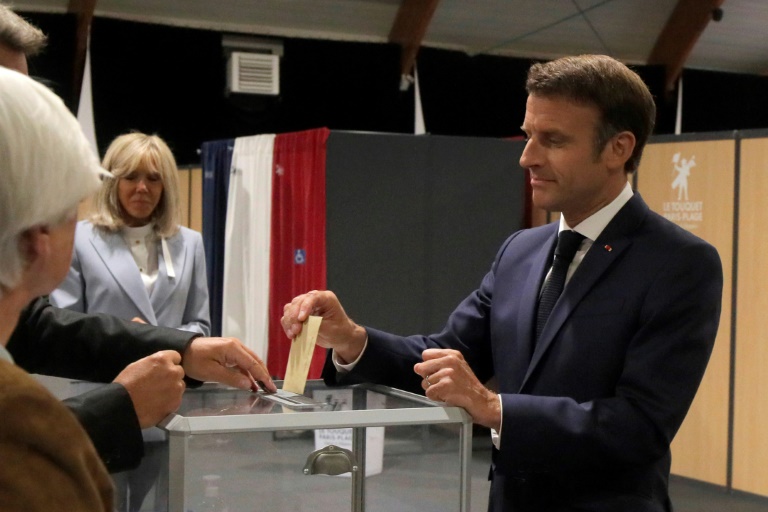
French President Emmanuel Macron on Sunday was set to lose his parliamentary majority after major election gains by a newly formed left-wing alliance and the far right, in a stunning blow to his hopes of major reform in his second term.

The run-off election was decisive for Macron’s second-term agenda following his re-election in April, with the 44-year-old needing a majority to secure promised tax cuts and welfare reform and raise the retirement age.

His “Together” coalition was on course to be the biggest party in the next National Assembly, but with 200-260 seats it will be short of the 289 seats needed for a majority, according to a range of projections by five French polling firms.

If confirmed, the results would severely tarnish Macron’s April presidential election victory when he defeated the far-right to be the first French president to win a second term in over two decades.  

The new left-wing coalition NUPES under 70-year-old hard-left figurehead Jean-Luc Melenchon was on course to win 149-200 seats, according to projections.

The coalition, formed in May after the left splintered for April’s presidential elections, brings together Socialists, the hard left, Communists and greens.

The left only had 60 seats in the outgoing parliament, meaning they could triple their representation.

Far-right leader Marine Le Pen’s National Rally party was on track for huge gains after having only eight seats in the outgoing parliament.

It was due to send 60-102 MPs to the new parliament, according to the projections.

If Macron’s alliance performs at the lower end of the projections, there could be a hung parliament and political paralysis in France, even raising the possibility of fresh elections to resolve the deadlock.

– ‘Incredible breakthrough’ –

The results are “far from what we hoped”, Budget Minister Gabriel Attal said on the TF1 channel. “It is clear the French did not give us an overall majority.”

Justice Minister Eric Dupond-Moretti told BFM television: “We’re in first place but it’s a first place that is obviously disappointing.”

Clementine Autain, a close ally of Melenchon, described the result on France 2 television as an “incredible breakthrough” and “vindication” of Melenchon’s strategy.

The head of Le Pen’s party, Jordan Bardella, hailed its performance as a “tsumani”.

Falling short of the majority will mean Macron will have to forge tricky partnerships with other parties on the right to pass legislation.

There could now potentially be weeks of political deadlock as the president seeks to reach out to new parties.

The most likely option would be an alliance with the Republicans (LR), the traditional party of the French right, which is on track to win 40-80 seats. 

“We will work with all those who want to move the country forwards,” government spokeswoman Olivia Gregoire told France 2.

The nightmare scenario for the president — the left winning a majority and Melenchon heading the government — appears to have been excluded.

Melenchon had promised a break from “30 years of neo-liberalism” — meaning free-market capitalism — and had pledged minimum wage and public spending hikes, as well as nationalisations.

– Ministers at risk –

The ruling party’s campaign had been shadowed by growing concern over rising prices, while new Prime Minister Elisabeth Borne failed to make an impact in sometimes lacklustre campaigning.

In a sign of the concern, French television reports said Borne had gone to the Elysee to talk with Macron even before the projections were published.

The jobs of ministers standing for election were also on the line under a convention that they should resign if they fail to win seats.

In France’s Caribbean island of Guadeloupe — where the poll is held a day early — Justine Benin was defeated by NUPES candidate Christian Baptiste Saturday, a loss that jeopardises her role in the government as Secretary of State for the Sea.

On the mainland, France’s Europe Minister Clement Beaune and Environment Minister Amelie de Montchalin are facing tough challenges in their constituencies, with both likely to exit government if defeated.

Parliament speaker Richard Ferrand, a close ally of Macron, acknowledged defeat in the fight for his seat, while another close Macron ally, former interior minister Christophe Castaner, also looked to have lost. 

Health Minister Brigitte Bourguignon was defeated by the far-right in the battle for her seat.

Before embarking a trip to Ukraine this week, Macron called on voters to hand his coalition a “solid majority”, adding “nothing would be worse than adding French disorder to the world disorder”.

Close Bitnami banner
Bitnami