World

NATO chief warns Ukraine war could last 'years'

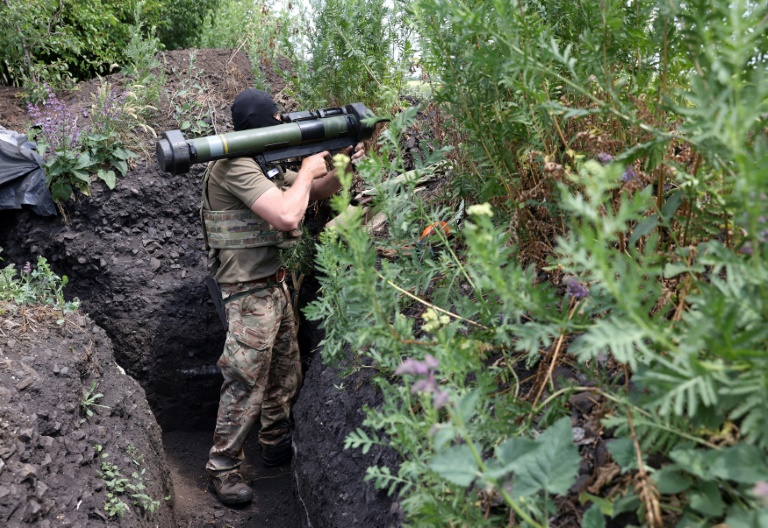
NATO’s chief warned that the war in Ukraine could last “for years” as President Volodymyr Zelensky vowed Sunday his forces would not give up the south of the country to Russia after he visited the frontline there.

Ukraine said it had also repulsed fresh attacks by Russian forces on the eastern front, rocked by weeks of fierce battles as Moscow tries to seize the industrial Donbas region.

While Ukraine remained defiant, NATO Secretary-General Jens Stoltenberg urged Western countries must be ready to offer long-term military, political and economic support to Kyiv during a grinding war.

“We must be prepared for this to last for years,” Stoltenberg told German daily newspaper Bild.

“We must not weaken in our support of Ukraine, even if the costs are high — not only in terms of military support but also because of rising energy and food prices.”

British Prime Minister Boris Johnson issued a similar warning, urging sustained support for Kyiv or risk “the greatest victory for aggression” since World War II.

“Time is now the vital factor,” Johnson wrote in an article for the Sunday Times after making his second visit to Kyiv, calling for the West to ensure Ukraine has the “strategic endurance to survive and eventually prevail”.

Ukraine has repeatedly urged Western countries to step up their deliveries of arms since the February 24 invasion, despite Russian warnings that it could trigger wider conflict.

– ‘Mood is confident’ –

Zelensky made a rare trip outside Kyiv Saturday to the hold-out Black Sea city of Mykolaiv, and visited troops nearby and in the neighbouring Odessa region for the first time since the Russian invasion.

“We will not give away the south to anyone, we will return everything that’s ours and the sea will be Ukrainian and safe,” he said in a video posted on Telegram as he made his way back to Kyiv.

He said he talked with troops and police during his visit.

“Their mood is confident, and looking into their eyes it is obvious that they all do not doubt our victory,” he said.

But Zelensky admitted that losses were “significant”, adding: “Many houses were destroyed, civilian logistics were disrupted, there are many social issues.”

Russia’s defence ministry said on Sunday it launched missile strikes during the past 24 hours, with one attack by Kalibr missiles on a top-level Ukrainian military meeting near the city of Dnipro killing “more than 50 generals and officers”.

It said it also targeted a building housing western-delivered weapons in Mykolaiv, destroying “ten 155 mm howitzers and around 20 armoured vehicles supplied by the West to the Kyiv regime over the last ten days”, the Russian defence ministry said.

There was no independent verification of the claims.

Mykolaiv is a key target for Russia as it lies on the way to the strategic port of Odessa.

With Russia maintaining a blockade of Odessa that has trapped grain supplies and is threatening a global food crisis, Odessa residents have turned their attention to rallying the home front effort.

“Every day, including the weekend, I come to make camouflage netting for the army,” said Natalia Pinchenkova, 49, behind a large Union flag, a show of thanks to Britain for its support for Ukraine.

– ‘Hero’ –

The Ukraine war is fuelling not only a global food crisis but an energy crisis too. 

Germany on Sunday announced emergency measures including increased use of coal to ensure it meets its energy needs after a drop in supply of Russian gas.

Hit by punishing sanctions, Moscow has turned up the pressure on European economies by sharply reducing gas supplies, which has driven up energy prices. 

Italian company Eni meanwhile joined a huge Qatari project to expand production from the world’s biggest natural gas field, days after Russia slashed supplies to Italy.

Back in Kyiv, thousands gathered to pay tribute to one young man — Roman Ratushny, a leading figure in Ukraine’s pro-European Maidan movement, who was killed fighting Russians in the country’s east earlier this month aged just 24.

In front of the coffin draped in a yellow and blue Ukrainian flag at the foot of a monument that overlooks the sprawling Independence Square in the capital, people of all ages saluted his memory.

“I think it is important to be here because he is a hero of Ukraine and we must remember him,” Dmytro Ostrovsky, a 17-year-old high school student, told AFP. 

The loss put a human face on the shared grief of Ukrainians, as the bloodshed continues.

The worst of the fighting continues to be in the eastern industrial Donbas region, with battles raging in villages outside the city of Severodonetsk, which Russia has been trying to seize for weeks.

“There’s an expression: prepare for the worst and the best will come by itself,” the governor of the eastern Lugansk region, Sergiy Gaiday, told AFP in an interview from the Ukrainian-controlled city of Lysychansk across the river from Severodonetsk.

“Of course, we need to prepare,” he said, wearing a flak jacket and carrying gun cartridges and a tourniquet.

Ukraine’s armed forces said Sunday they had pushed back Russian attacks on villages near Severodonetsk.

“Our units repulsed the assault in the area of Toshkivka,” the Ukrainian army said on Facebook, adding that Russian forces were also “storming” towards the village of Orikhove.
burs-dk/har

Europe swelters in record-breaking June heatwave

Spain, France and other western European nations sweltered over the weekend under a blistering June heatwave, with some wildfires still blazing even as the weather began to ease. 

The soaring temperatures were in line with scientists’ predictions that such phenomena will now strike earlier in the year thanks to global warming.

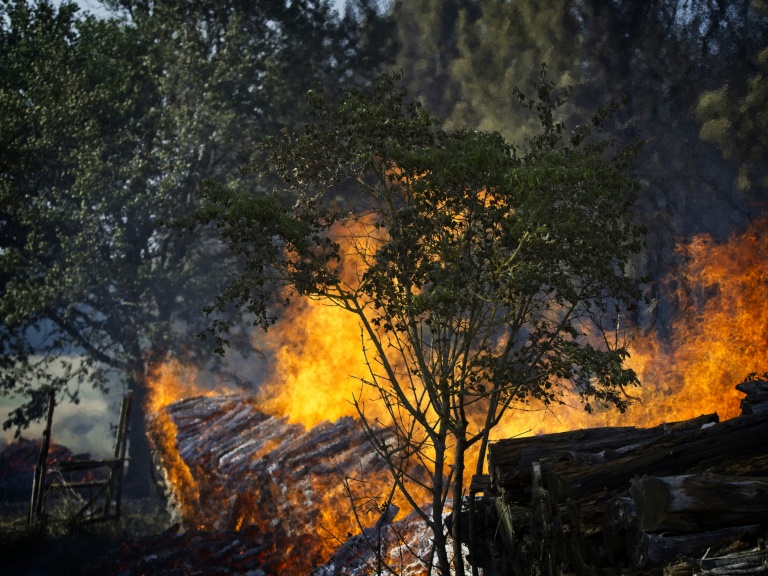
Emergency services battled several wildfires Sunday in northern Spain. The most alarming blaze in the north-western Sierra de Culebra mountain range has destroyed more than 25,000 hectares (62,000 acres), the regional government said.

Firefighters said cooler temperatures overnight had helped them make progress in their battle against the flames.

Residents of some 20 villages evacuated from their homes were allowed to return home Sunday morning, local officials said.

Temperatures of more than 40 degrees Celsius (104 degrees Fahrenheit) have been recorded in parts of Spain throughout the week, but they had dipped by Sunday in most of the country.

The mercury was only expected to hit 29C in Madrid on Sunday and 25C in the province of Zamora where the Sierra de Culebra mountain range is located.

There have also been fires in Germany, where temperatures reached 38C in the eastern regions of Brandenburg, Thuringia and Saxony with the eastern city of Cottbus setting a new German record for June of 38.7C.

One fire in the Brandenburg region outside Berlin saw 700 people evacuated, local authorities said, as the blaze threatened “three quarters” of the town of Treuenbrietzen.

In contrast, several northern regions were shivering in temperatures of 12C.

Austria’s western Vorarlberg region hit a seasonal record of 36.5C at Feldkirch on the Swiss border, with the country’s ZAMG meteorological institute indicating this June has already seen twice as many days surpassing 30C as normal.

Much of neighbouring Switzerland was also labouring under a heatwave with meteorological authorities indicating Sunday would see more records broken after a slew of hitherto unseen seasonal peaks the previous day.

As Geneva sweltered under 35C, several other towns were not far behind, Neuchatel and Fahy beating previous records topping 34C.

In southern France, a blaze triggered by the firing of an artillery shell in military training burnt around 200 hectares of vegetation, authorities in the Var region said.

“There is no threat to anyone except 2,500 sheep who are being evacuated and taken to safety,” the local fire brigade chief said.

– Record temperatures –

The popular French southwestern seaside resort of Biarritz saw its highest all-time temperature Saturday afternoon of 42.9C, state forecaster Meteo France said as authorities urged caution from the central western coast down to the Spanish border.

Many parts of the region surpassed 40C, although storms were expected on the Atlantic coast on Sunday evening.

With the River Seine off limits to bathing, scorched Parisians took refuge in the city’s fountains.   

And at Vincennes Zoo on the outskirts of the capital, shaggy-haired lions licked at frozen blood fed to them by zookeepers, who monitored the enclosure’s animals for signs of dehydration.

“This is the earliest heatwave ever recorded in France” since 1947, said Matthieu Sorel, a climatologist at Meteo France calling the weather a “marker of climate change”.

– Foretaste of future –

The UK recorded its hottest day of the year on Friday, with early afternoon temperatures reaching over 30C. 

Several towns in northern Italy announced water rationing. The country’s dairy cows were putting out 10 percent less milk as a result of the heat, the main agricultural association Coldiretti said Saturday. 

Experts warned the high temperatures were caused by worrying climate change trends.  

“As a result of climate change, heatwaves are starting earlier,” said Clare Nullis, a spokeswoman for the World Meteorological Organization in Geneva.

“What we’re witnessing today is unfortunately a foretaste of the future.”

burs/lcm/cdw/gw

Macron battles French left in tight parliament election

French President Emmanuel Macron on Sunday faced a challenge from a newly formed left-wing alliance in parliamentary elections that could see his centrist coalition lose its overall majority.

The vote will be decisive for Macron’s second-term agenda following his re-election in April, with the 44-year-old needing a majority to secure promised tax cuts and welfare reform and raise the retirement age.

Polls have suggested his “Together” coalition is on course to be the biggest party in the next National Assembly, but possibly short of the 289 seats needed for a majority.

New left-wing coalition NUPES is hoping to spring a surprise, with the red-green collective promising to block Macron’s agenda after uniting behind 70-year-old figurehead Jean-Luc Melenchon.

Turnout, seen as crucial to the outcome of the vote, was at 38.11 percent with three hours of voting to go, down on the 39.42 percent recorded in the first round on June 12 at the same stage, although up on the 35.33 percent recorded in 2017, the interior ministry said.

Meanwhile, polling firms predicted that abstention rates would be between 53.5 percent and 54 percent, higher than the 52.5 percent recorded in the first round.

Analysts had said a higher-than-expected turnout would most likely favour NUPES, which is banking on young people and the working classes voting.

– ‘Extremely open’ –

Falling short of the majority would force Macron into tricky alliances with other parties on the right to force through legislation.

The nightmare scenario for the president — seen as unlikely although not impossible — would be the left winning a majority and Melenchon heading the government.

“The vote is extremely open and it would be improper to say that things are settled one way or the other,” Melenchon told reporters Friday during a final campaign stop in Paris.

Macron was left disappointed last weekend after the first round placed Together and NUPES neck-and-neck in the popular vote at around 26 percent.

The first-round vote served to whittle down candidates in most of the country’s 577 constituencies to two finalists who are going head-to-head Sunday. 

Far-right leader Marine Le Pen is also eyeing major gains for her National Rally party, which had just eight seats in the outgoing parliament.

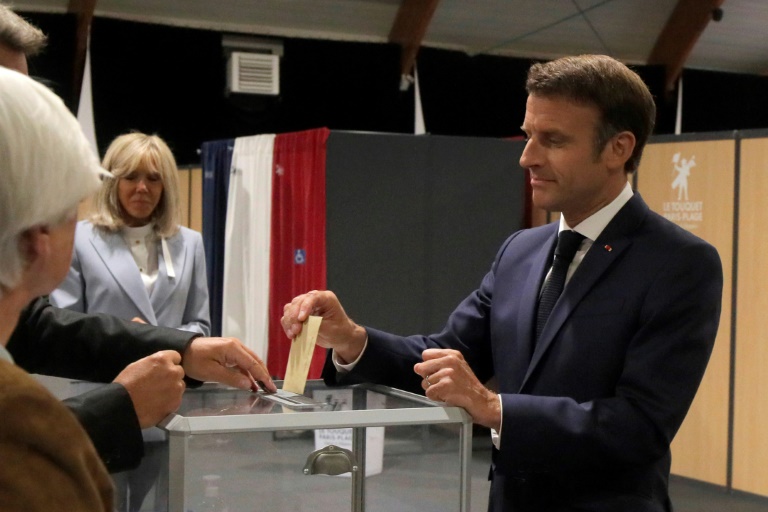
Macron cast his ballot in northern seaside town Le Touquet alongside his wife Brigitte, while Melenchon voted in Mediterranean port city of Marseille.

– Political mudslinging –

The contest between Together and NUPES has turned increasingly bitter over the last week, with Macron’s allies seeking to paint their main opponents as dangerous far-leftists.

Senior MP Christophe Castaner has accused Melenchon of wanting a “Soviet revolution”, while Economy Minister Bruno Le Maire called him a “French (Hugo) Chavez” after the late Venezuelan autocrat. 

Macron headed to Ukraine last week, hoping to remind voters of his foreign policy credentials and one of Melenchon’s perceived weaknesses — his anti-NATO and anti-EU views at a time of war in Europe.

As president, he would retain control of foreign and defence policy whatever the outcome, but his domestic agenda would be thwarted if his party lost control of parliament.

Macron had before embarking on the trip called on voters to hand his coalition a “solid majority”, adding “nothing would be worse than adding French disorder to the world disorder”.

Melenchon has promised a break from “30 years of neo-liberalism” — meaning free-market capitalism — and has pledged minimum wage and public spending hikes, as well as nationalisations.

It has been 20 years since France last had a president and prime minister from different parties, when right-winger Jacques Chirac had to work with a Socialist-dominated parliament under premier Lionel Jospin.

A final flurry of polls Friday suggested Macron’s Together allies were on track for 255-305 seats Sunday, with only the upper end of that range being a majority of more than 289.

“I saw that 60-70 percent of young people don’t vote. I find that incredible… we are the ones who can change things,” said Lena Laurent, a producer in the film industry, of the low turnout.

In France’s Caribbean island of Guadeloupe — where the poll is held a day early — Justine Benin was defeated by NUPES candidate Christian Baptiste Saturday, a loss that jeopardises her role in the government as Secretary of State for the Sea.

On the mainland, France’s Europe Minister Clement Beaune and Environment Minister Amelie de Montchalin are facing tough challenges in their constituencies, with both likely to exit government if defeated.  

burs-adp-tgb-sjw/gw

Uncertainty reigns as Colombia votes between ex-guerrilla and maverick

Colombians headed to the polls Sunday in a presidential election filled with uncertainty, as ex-guerrilla Gustavo Petro and millionaire businessman Rodolfo Hernandez vie for power in a country saddled with widespread poverty, violence and other woes.

Abstention is expected to be high as voters face a stark choice between electing their first ever left-wing president or plumping for a maverick outsider dubbed the Colombian Donald Trump.

“These are the tightest elections in the country’s recent history,” said the Sunday edition of the El Tiempo daily.

Amid fears a tight result could spark post-election violence, some 320,000 police and military have been deployed to ensure security.

Colombia is no stranger to political violence with five presidential candidates having been murdered over the course of the 20th century. 

Several candidates received death threats before the first round.

Petro, 62, has repeatedly evoked the potential of fraud during the campaign and again raised his concerns Sunday.

“The projections put us well above the other candidate…. The only thing we still have to overcome is fraud,” he wrote on Twitter.

In response, the national registrar, Alexander Vega, denounced “disinformation.”

Although Petro comfortably topped last month’s first round with 40 percent, 12 points ahead of Hernandez, opinion polls have the two candidates neck and neck.

In Bogota, outgoing President Ivan Duque opened voting for Colombia’s 39 million voters at 8:00 am (1300 GMT).

Polls close at 4:00 pm, with early results expected a couple of hours after that.

Hernandez, 77, was amongst the early voters in the northern city of Bucaramanga, where he was mayor from 2016 to 2019.

– ‘Whoever wins, it won’t be good’ –

With the traditional political powers suffering a chastening first round defeat, a lot of early voters seemed undecided, not just about who to vote for but what the candidates represent.

Although Colombia has never had a left wing government before, Petro has been in politics for 30 years, while Hernandez is an unconventional outsider with little experience.

“Whoever wins today won’t be good but at least it will be a change,” said Valentina Rios, 19, who voted in Bogota.

“For me, neither of them represents change,” countered Alejandro Bueno, 20, an economics student in the capital, who hopes for “a peaceful transition to the next government.”

The successor to unpopular conservative Duque will have to deal with a country in crisis, reeling from the coronavirus pandemic, recession, a spike in drug-trafficking related violence and deep-rooted anger at the political establishment that spilled over into mass anti-government protests in April 2021.

Almost 40 percent of the country lives in poverty while 11 percent are unemployed.

Left-wing ideology is intrinsically linked in many Colombians’ minds to the country’s six-decade long multi-faceted conflict.

“Neither of the two is good … but the least bad is Rodolfo. The other one was a guerrilla,” said Ruth Sepulveda, 56, a homemaker in Bucaramanga.

Petro was a radical leftist urban guerrilla in the 1980s and spent almost two years in jail.

But his M-19 group made peace with the state in 1990 and formed a political party.

“The worry comes from the experience of leftist governments in the region,” Patricia Munoz, an expert at Pontifical Javerian University, told AFP.

Michael Shifter, from the Inter-American Dialogue think tank, says fears Colombia could turn into another authoritarian populist socialist state like neighboring Venezuela “borders on hysteria.”

However, he said it’s understandable since Colombia has been effected more than any other Latin American country by “the Venezuela tragedy and nightmare.”

– ‘I’ll end corruption’ –

Until a few months ago, Hernandez was a virtual unknown outside of Bucaramanga.

He made the fight against corruption his main campaign pledge, although he himself is under investigation for graft.

He has vowed to “reduce the size of the state, end corruption and replace inept officials.”

But his other policies are unconventional and he lacks a clear program.

“As a businessman he’s used to resolving conflicts in a direct and quick way, but the exercise of governance requires dialogue, agreements, long meetings to find common ground,” said Munoz.

That will be Hernandez’s challenge if he is elected, given he has almost no representation in congress.

Whoever wins, for the first time Colombia will have a black woman vice president, either Petro’s running mate and environmentalist feminist Francia Marquez or conservative academic Mirelen Castillo.

NATO chief warns Ukraine war could last 'years'

NATO’s chief warned that the war in Ukraine could last “for years” as President Volodymyr Zelensky vowed Sunday his forces would not give up the south of the country to Russia after he visited the frontline there.

Ukraine said it had also repulsed fresh attacks by Russian forces on the eastern front, rocked by weeks of fierce battles as Moscow tries to seize the industrial Donbas region.

While Ukraine remained defiant, NATO Secretary-General Jens Stoltenberg urged Western countries must be ready to offer long-term military, political and economic support to Kyiv during a grinding war.

“We must be prepared for this to last for years,” Stoltenberg told German daily newspaper Bild.

“We must not weaken in our support of Ukraine, even if the costs are high — not only in terms of military support but also because of rising energy and food prices.”

British Prime Minister Boris Johnson issued a similar warning, urging sustained support for Kyiv or risk “the greatest victory for aggression” since World War II.

“Time is now the vital factor,” Johnson wrote in an article for the Sunday Times after making his second visit to Kyiv, calling for the West to ensure Ukraine has the “strategic endurance to survive and eventually prevail”.

Ukraine has repeatedly urged Western countries to step up their deliveries of arms since the February 24 invasion, despite Russian warnings that it could trigger wider conflict.

– ‘Mood is confident’ –

Zelensky made a rare trip outside Kyiv Saturday to the hold-out Black Sea city of Mykolaiv, and visited troops nearby and in the neighbouring Odessa region for the first time since the Russian invasion.

“We will not give away the south to anyone, we will return everything that’s ours and the sea will be Ukrainian and safe,” he said in a video posted on Telegram as he made his way back to Kyiv.

He said he talked with troops and police during his visit.

“Their mood is confident, and looking into their eyes it is obvious that they all do not doubt our victory,” he said.

But Zelensky admitted that losses were “significant”, adding: “Many houses were destroyed, civilian logistics were disrupted, there are many social issues.”

Russia said on Sunday it launched missile strikes during the past 24 hours, including some targeting western-delivered weapons in Mykolaiv.

The strikes on a building in the city destroyed “ten 155 mm howitzers and around 20 armoured vehicles supplied by the West to the Kyiv regime over the last ten days”, the Russian defence ministry said.

There was no independent verification of the claims.

Mykolaiv is a key target for Russia as it lies on the way to the strategic port of Odessa.

With Russia maintaining a blockade of Odessa that has trapped grain supplies and is threatening a global food crisis, Odessa residents have turned their attention to rallying the home front effort.

“Every day, including the weekend, I come to make camouflage netting for the army,” said Natalia Pinchenkova, 49, behind a large Union flag, a show of thanks to Britain for its support for Ukraine.

– ‘Hero’ –

The Ukraine war is fuelling not only a global food crisis but an energy crisis too. 

Germany on Sunday announced emergency measures including increased use of coal to ensure it meets its energy needs after a drop in supply of Russian gas.

Hit by punishing sanctions, Moscow has turned up the pressure on European economies by sharply reducing gas supplies, which has driven up energy prices. 

Italian company Eni meanwhile joined a huge Qatari project to expand production from the world’s biggest natural gas field, days after Russia slashed supplies to Italy.

Back in Kyiv, thousands gathered to pay tribute to one young man — Roman Ratushny, a leading figure in Ukraine’s pro-European Maidan movement, who was killed fighting Russians in the country’s east earlier this month aged just 24.

In front of the coffin draped in a yellow and blue Ukrainian flag at the foot of a monument that overlooks the sprawling Independence Square in the capital, people of all ages saluted his memory.

“I think it is important to be here because he is a hero of Ukraine and we must remember him,” Dmytro Ostrovsky, a 17-year-old high school student, told AFP. 

The loss put a human face on the shared grief of Ukrainians, as the bloodshed continues.

The worst of the fighting continues to be in the eastern industrial Donbas region, with battles raging in villages outside the city of Severodonetsk, which Russia has been trying to seize for weeks.

“There’s an expression: prepare for the worst and the best will come by itself,” the governor of the eastern Lugansk region, Sergiy Gaiday, told AFP in an interview from the Ukrainian-controlled city of Lysychansk across the river from Severodonetsk.

“Of course, we need to prepare,” he said, wearing a flak jacket and carrying gun cartridges and a tourniquet.

Ukraine’s armed forces said Sunday they had pushed back Russian attacks on villages near Severodonetsk.

“Our units repulsed the assault in the area of Toshkivka,” the Ukrainian army said on Facebook, adding that Russian forces were also “storming” towards the village of Orikhove.
burs-dk

US recession not 'inevitable,' Treasury secretary says

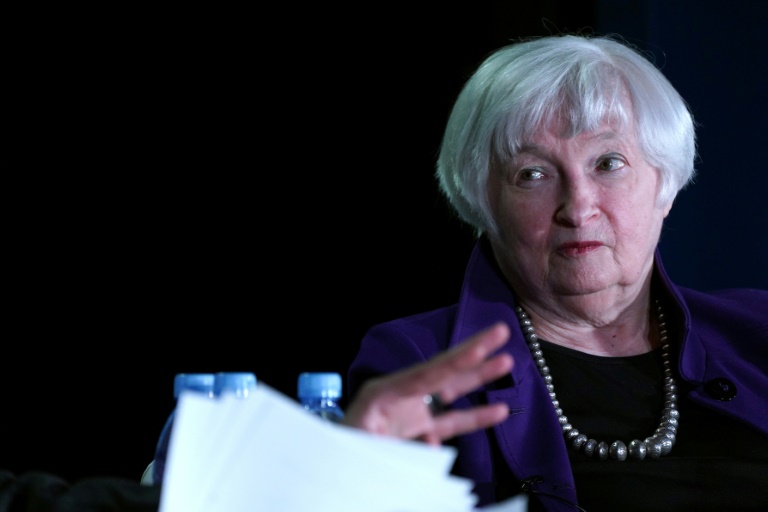
A recession in the United States is not “inevitable” but the economy is likely to slow, Treasury Secretary Janet Yellen said Sunday, days after the US Federal Reserve hiked interest rates, raising fears of a contraction.

“I expect the economy to slow” as it transitions to stable growth, she said on ABC’s “This Week,” but “I don’t think a recession is at all inevitable.”

The US economy has recovered strongly from the damage wrought by Covid-19, but soaring inflation and supply-chain snarls made worse by the war in Ukraine have increased pessimism.

Wall Street stocks tumbled after the US central bank, seeking to cool inflation, on Wednesday raised the benchmark borrowing rate by 0.75 percentage points, the sharpest rise in nearly 30 years.

And economists see worrying signs that consumer confidence is weakening, with spending on services affected most sharply.

People are beginning to hold off on vacation plans — domestic flight bookings were down 2.3 percent last month, Adobe Analytics reported — and are cutting back on restaurant visits, haircuts and home repairs.

– Inflation ‘unacceptably high’ –

Yellen conceded that “clearly inflation is unacceptably high,” attributing it partly to the war in Ukraine, which has pushed up energy and food prices.

But she said she did not believe “a dropoff in consumer spending is the likely cause of a recession.” 

The US labor market is “arguably the strongest of the postwar period,” Yellen said, and she predicted a slowing of inflation in coming months.

For Fed chair Jerome Powell — who succeeded Yellen in that position — to control inflation without weakening the labor market will take “skill and luck,” she said, before adding, “but I believe it’s possible.”

The US economy contracted by 1.5 percent in the first quarter of this year, its first drop since 2020, and early indications point to a continued slowing in key sectors including manufacturing, real estate and retail sales.  

A recent survey of 750 company executives by the Conference Board found 76 percent believed a recession is looming, or has already begun.

A recent analysis from the non-profit business group predicted a period of “stagflation” — stagnant growth coupled with inflation — in 2023.

Economist Larry Summers, who served as Treasury secretary from 1999 to 2001, said a wide range of indicators — market volatility, interest rates and inflation among them — suggest a recession on the horizon.

“All of that tells me that… the dominant probability would be that by the end of next year we would be seeing a recession in the American economy,” Summers told NBC’s “Meet the Press.”

– ‘Pain’ at the pump –

For now, Americans are trying to cope with some historically sharp price increases. The cost of gas at the pump, now around $5 a gallon, has roughly doubled in only two years. 

Yellen was asked about proposals for a temporary suspension in federal gas taxes, and expressed openness.

US President Joe Biden “wants to do anything he possibly can to help consumers,” she said. “And that’s an idea that’s certainly worth considering.”

The White House recently confirmed Biden will travel to major oil producer Saudi Arabia during a Mideast trip next month.

The president is “very concerned about what people are experiencing at the pump,” Energy Secretary Jennifer Granholm told CNN Sunday. 

“Saudi Arabia is head of OPEC and we need to have increased production so that everyday citizens in America will not be feeling this pain that they’re feeling.”

Spanish PM faces regional election test in Andalusia

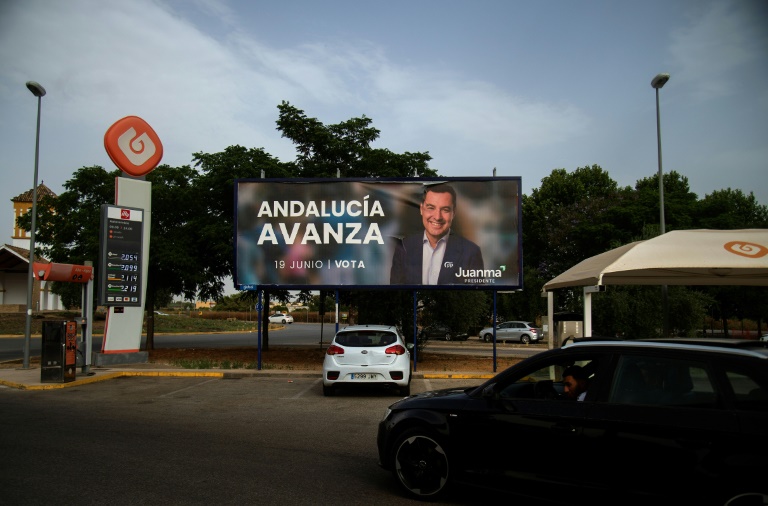
Andalusia votes Sunday in an early regional election that the incumbent conservative Popular Party is expected to win comfortably, dealing a blow to Spain’s Socialist Prime Minister Pedro Sanchez ahead of a national vote expected at the end of 2023.

Sanchez’s leftist coalition government has been struggling to deal with the economic fallout from Russia’s invasion of Ukraine, which has fuelled inflation worldwide, especially through increasing energy prices.

Polling stations in Spain’s most populous region opened at 9:00 am (0700 GMT) and will close at 8:00 pm, with final results expected a few hours later.

Surveys suggest the conservative Popular Party (PP) will win around 50 seats in the 109-seat Andalusian parliament, more than all leftist parties combined.

It has governed the southern region known for its popular Costa del Sol beach resorts since 2018 in a coalition with smaller centre-right party Ciudadanos which may not get enough votes to win a single seat this time around.

The Socialists are predicted to win around 33 seats, the same number as at the last election in 2018 when they were ousted from power in Andalusia for the first time since the regional government was established in 1982.

A scandal over the misuse of public funds intended to fight unemployment was blamed for the party’s drubbing in its longstanding stronghold which is home to around 8.5 million people.

“All social advances that have taken place in Andalusia and in Spain were initiated by the Socialists. Never by the right,” Sanchez told a final campaign rally Friday in Seville, the region’s capital.

– Far-right party support? –

While the PP appears set to win Sunday’s election, it is not clear if it will secure an absolute majority which would allow it to govern alone.

If it doesn’t, the PP will likely need to seek support from the far-right Vox by bringing it into the regional government, as happened earlier this year in the northern region of Castilla y Leon.

Until now, Vox has supported the PP in Andalusia but from outside government.

Any deal with Vox would complicate efforts by the PP’s new national leader, Alberto Nunez Feijoo, to project a more moderate image.

The head of PP in Andalusia, Juan Manuel Moreno Bonilla, appealed for a high turnout after he voted in Malaga, saying the polls were “extremely important for all of us”.

During the campaign he urged voters to deliver him a “strong” government that is not “weighed down” by Vox.

Turnout as of 2 pm stood at 34.2 percent, over four percentage points higher than at the same time during the last election in 2018.

– ‘Gaining momentum’ –

If the polls are right, this will be the Socialists’ third consecutive regional election loss to the PP after votes in Madrid in May 2021 and Castilla y Leon in February.

Losing in Andalusia would be a “severe blow” for the Socialists and would mean “Sanchez might face an uphill battle to get re-elected” next year, said Antonio Barroso, an analyst at political consultancy Teneo.

“The PP seems to be gaining increasing momentum, and voter concerns about inflation might only make it more challenging for Sanchez to sell his government’s achievements in the next legislative election,” he added.

Spain’s inflation rate hit 8.7 percent in May, its highest level in decades.

Sanchez’s government has rolled out a swathe of measures to help consumers, including a subsidy on fuel prices at the pump, an increase in the minimum wage, direct grants to truck drivers and financial support for some farmers.

The PP has sought to present itself in Andalusia as a “sensible alternative” from the centre, University of Granada political science professor Oscar Garcia Luengo told AFP.

The strategy appears to be working as the party is poised to win the support of nearly 17 percent of voters who cast their ballot for the Socialists in 2018, according to a survey published in daily newspaper El Mundo.

Uncertainty reigns as Colombia votes between ex-guerrilla and maverick

Colombia’s election stations opened for voting Sunday in a presidential race filled with uncertainty, as ex-guerrilla Gustavo Petro and millionaire businessman Rodolfo Hernandez vie for power in a country saddled with widespread poverty, violence and other woes.

Abstention is expected to be high as voters face a stark choice between electing their first ever left-wing president or plumping for a maverick outsider dubbed the Colombian Donald Trump.

In Bogota, outgoing President Ivan Duque opened voting for Colombia’s 39 million voters at 8:00 am (1300 GMT).

Polls will close at 4:00 pm, with early results expected a couple of hours after that.

Hernandez was amongst the early voters in the northern city of Bucaramanga, where he was mayor from 2016 to 2019.

“What we have now in the country are questions, uncertainties,” Patricia Ines Munoz, an expert at the Pontifical Javerian University, told AFP.

It has been a tense campaign, with death threats against several candidates ahead of the first round last month, when Colombia’s traditional conservative and liberal powers were dealt a chastening defeat.

“These are the tightest elections in the country’s recent history,” said the Sunday edition of the El Tiempo daily.

There are fears a tight result could spark post-election violence and 320,000 police and military have been deployed to ensure security.

The successor to unpopular conservative Duque will have to deal with a country in crisis, reeling from the coronavirus pandemic, recession, a spike in drug-trafficking related violence and deep-rooted anger at the political establishment.

Almost 40 percent of the country lives in poverty while 11 percent are unemployed.

That anger spilled over into mass anti-government protests in April 2021 that were controversially met by a heavy-handed response from the security forces.

Opinion polls in the lead up to the election have been inconclusive, although abstention is expected to be 45 percent with up to another five percent undecided.

“I feel very bewildered,” Camila Araque, a 29-year-old lawyer in Bogota, told AFP. “I don’t like either of the two options as president.” 

– ‘Understandable hysteria’ –

Michael Shifter, from the Inter-American Dialogue think tank, says voters “are trying to figure out who is the lesser of two evils.”

Petro comfortably topped the first round of voting with 40 percent, 12 points ahead of Hernandez.

But Petro’s past as a radical leftist urban guerrilla in the 1980s — during which time he spent two years in prison on arms charges — has left many Colombians fearful.

He has been in politics since his M-19 group made peace with the state in 1990 and formed a political party.

“The worry comes from the experience of leftist governments in the region,” said Munoz, “not just among citizens but also the business and economic sectors.”

Some believe the former mayor of Bogota would turn Colombia into another authoritarian populist socialist state like neighboring Venezuela.

“It borders on hysteria,” said Shifter, but “it’s understandable because… more than any other Latin American country, the Venezuela tragedy and nightmare has impacted Colombia,” creating a “terror” that they are next.

Petro, 62, says the country needs social justice to build peace after a six-decade multi-faceted conflict involving leftist rebels, the state, right-wing paramilitaries and drug cartels.

“That is to say less poverty, less hunger, less inequality, more rights. If you don’t do this, the violence proliferates,” he told Caracol Radio on Friday.

Petro, who is popular with many young people, named environmentalist feminist Francia Marquez, 40, as his running mate.

– ‘Dialogue and agreements needed’ –

Just a few months ago, Hernandez was a virtual unknown outside of Bucaramanga.

But his unconventional policies and a series of gaffes, not least when he seemingly mistook Adolf Hitler for Albert Einstein in a radio interview, have caught attention.

Although he also named a woman, academic Mirelen Castillo, 53, as his running mate, he recently said a woman’s place was in the home.

But it is his lack of political experience or a program that worries many.

“As a businessman he’s used to resolving conflicts in a direct and quick way, but the exercise of governance requires dialogue, agreements, long meetings to find common ground,” said Munoz.

That is something he will have to do if elected, given he has almost no representation in congress.

“I’m direct, I speak the truth, I don’t calculate the consequences,” he told Caracol TV on Friday.

What has attracted voters to Hernandez has been his anti-corruption stance — although he faces a graft investigation of his own from his mayorship.

“Between theft, luxury and waste, a billion a week disappears, we will put an end to that from day one,” he vowed.

Europe swelters in record-breaking June heatwave

Spain, France and other western European nations sweltered over the weekend under a blistering June heatwave, with some wildfires still blazing even as the weather began to ease. 

The soaring temperatures were in line with scientists’ predictions that such phenomena will now strike earlier in the year thanks to global warming.

Emergency services battled several wildfires Sunday in northern Spain. The most alarming blaze in the north-western Sierra de Culebra mountain range has destroyed over 25,000 hectares (62,000 acres), the regional government said.

Firefighters said cooler temperatures overnight had helped them make progress in their battle against the flames.

Residents of some 20 villages who were evacuated from their homes were allowed to return home Sunday morning, local officials said.

Temperatures of more than 40 degrees Celsius (104 degrees Fahrenheit) have been recorded in parts of Spain throughout the week, but they had dipped by Sunday in most of the country.

The mercury was only expected to hit 29C in Madrid on Sunday and 25C in the province of Zamora where the Sierra de Culebra mountain range is located.

There have also been fires in Germany, where temperatures reached 36C.

In southern France, a blaze triggered by the firing of an artillery shell in military training burnt around 200 hectares of vegetation, authorities in the Var region said.

“There is no threat to anyone except 2,500 sheep who are being evacuated and taken to safety,” the local fire brigade chief said.

– Record temperatures –

The popular French southwestern seaside resort of Biarritz saw its highest all-time temperature Saturday afternoon of 42.9C, state forecaster Meteo France said as authorities urged vigilance from the central western coast down to the Spanish border.

Many parts of the region surpassed 40C, although storms were expected on the Atlantic coast on Sunday evening — signs that the stifling temperatures will “gradually regress to concern only the eastern part of the country,” the weather service reported.

The baking heat failed to put off heavy metal aficionados attending the Hellfest festival at Clisson on the outskirts of the western city of Nantes, where temperatures soared beyond 40C.

With the River Seine off limits to bathing, scorched Parisians took refuge in the city’s fountains.   

And at Vincennes Zoo on the outskirts of the capital, shaggy-haired lions licked at frozen blood fed to them by zookeepers, who monitored the enclosure’s animals for signs of dehydration.

“This is the earliest heatwave ever recorded in France” since 1947, said Matthieu Sorel, a climatologist at Meteo France, as June records fell in a dozen areas, leading him to call the weather a “marker of climate change”.

– Foretaste of future –

The UK recorded its hottest day of the year on Friday, with temperatures reaching over 30C in the early afternoon, meteorologists said. 

Several towns in northern Italy announced water rationing. The country’s dairy cows were putting out 10 percent less milk, the main agricultural association Coldiretti said Saturday. 

With temperatures far above the cows’ “ideal climate” of 22-24C, animals were drinking up to 140 litres of water a day, double their normal intake, and producing less due to stress, it said.

Experts warned the high temperatures were caused by worrying climate change trends.  

“As a result of climate change, heatwaves are starting earlier,” said Clare Nullis, a spokeswoman for the World Meteorological Organization in Geneva.

“What we’re witnessing today is unfortunately a foretaste of the future” if concentrations of greenhouse gases in the atmosphere continue to rise and push global warming towards 2C from pre-industrial levels, she added.

burs/lcm/gw

Italy's Eni joins giant Qatar gas project after Russian cuts

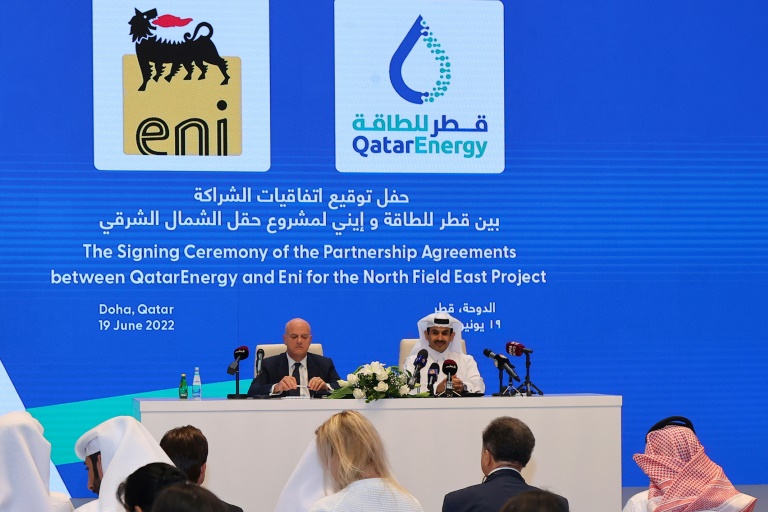
Italian company Eni on Sunday joined Qatar Energy’s $28.75 billion project to expand production from the world’s biggest natural gas field, days after Russia slashed supplies to Italy.

Eni will own a stake of just over three percent in the North Field East project, Qatar Energy’s CEO told a signing ceremony in Doha.

Qatar announced last week that France’s TotalEnergies will be its first, and largest, foreign partner on the development, with a 6.25 percent share. 

An unknown number of companies are also set to be named.

“Today I’m pleased… to announce the selection of Eni as a partner in this unique strategic project,” said Qatar’s Energy Minister Saad Sherida al-Kaabi, who is also president and CEO of state-owned Qatar Energy.

The project’s LNG — the cooled form of gas that makes it easier to transport — is expected to come on line in 2026. It will expand Qatar’s LNG production from 77 million tonnes a year to 110 million, Qatar Energy said.

The Qatari company estimates that the North Field, which extends under the Gulf sea into Iranian territory, holds about 10 percent of the world’s known gas reserves.

Russia’s invasion of Ukraine has injected urgency into efforts around the world to develop new energy sources as Western countries try to reduce their reliance on Russia.

On Friday, Eni said it would receive only 50 percent of the gas requested from Russia’s Gazprom, the third day running of reduced supplies. Rome has accused Gazprom of peddling “lies” over the cuts.

“We have a lot of things to learn from your leadership and also from your standards and from your ability to adapt to very difficult circumstances,” Eni CEO Claudio Descalzi told his Qatari counterpart.

– ‘Geopolitical vision’ –

Kaabi refused to divulge how many more partners will be announced. “We signed with everybody. We’re just not telling you,” he told reporters. 

More announcements are due this week. Industry sources have discussed ExxonMobil, Shell and ConocoPhillips, while Bloomberg has reported that Chinese companies are in talks.

Qatar, which is one of the world’s biggest LNG exporters, is “sharing the risks of commercialisation” by bringing partners on board, said Thierry Bros, a professor at Paris’s Sciences Po and an expert on energy and climate. 

“There could also be a geopolitical vision,” he added.

South Korea, Japan and China have been the main markets for Qatar’s LNG but since an energy crisis hit Europe last year, the Gulf state has helped Britain with extra supplies and also announced a cooperation deal with Germany.

Europe has in the past rejected the long-term deals that Qatar seeks for its energy but the Ukraine war has forced a change in attitude.

Poland, Bulgaria, Finland and The Netherlands have had their natural gas deliveries from Russia suspended for refusing to pay in rubles.

“In the near-term, we see LNG demand being all about Europe as those European buyers look to wean themselves off Russian gas,” Daniel Toleman, an analyst at resources consultancy Wood Mackenzie, told AFP.

“But in the longer term, it does switch back to Asia, and Qatar has a shipping advantage over those US projects and it will be able to supply the Asian (customers).”

Close Bitnami banner
Bitnami