World

Indigenous protesters in Ecuador defy state of emergency

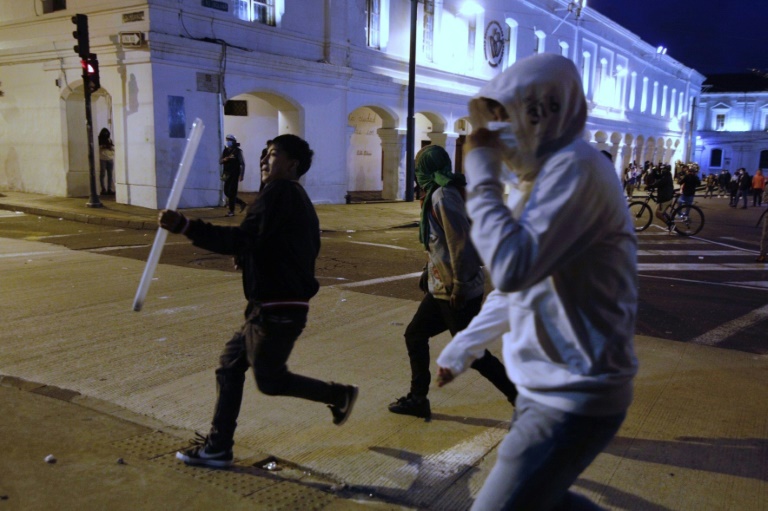
Indigenous protesters demanding cheaper fuel in Ecuador defied a state of emergency Saturday, pressing on with road blockages now in their sixth day.

A day after President Guillermo Lasso announced the restrictive measures in a bid to end the sometimes violent demonstrations, police said Indigenous people kept up protests in most of the country’s 24 provinces, including three where the president declared the state of emergency. One includes the capital, Quito.

Oil producer Ecuador has been hit by rising inflation, unemployment and poverty exacerbated by the coronavirus pandemic.

Fuel prices have risen sharply since 2020, almost doubling for diesel from $1 to $1.90 per gallon and rising from $1.75 to $2.55 for petrol.

Demonstrators from the country’s Indigenous community — which makes up over a million of Ecuador’s 17.7 million inhabitants — launched an open-ended anti-government protest this week that has since been joined by students, workers and others.

The demonstrations have blocked roads across the country, including highways leading into the capital Quito.

Talks with the president failed to end the demonstrations.

Clashes with security forces during the protests have left at least 83 people injured, and 40 have been arrested.

In response, Lasso’s decree empowers him to mobilize the armed forces to maintain order, suspend civil rights and declare curfews. 

“I am committed to defending our capital and our country,” Lasso said on television. 

“I called for dialogue and the response was more violence. There is no intention to seek solutions.”

The demonstrations have largely been concentrated in the northern region of Pichincha which includes Quito, and neighboring Cotopaxi and Imbabura.

In Quito, nearly 1,000 protesters tried to tear down metal fences that surround the presidential headquarters this week.

In a bid to ease grassroots anger, Lasso announced in his address late Friday a small increase in a monthly subsidy paid to Ecuador’s poorest, as well as a program to ease the debt of those who have loans from state-run banks.

But Saturday, Indigenous activists urged national lawmakers to step in to end the state of emergency.

Ecuador’s legislature has the authority to end it constitutionally.

Lasso, a rightwing ex-banker who took office a year ago, met Thursday with Indigenous leaders to assuage discontent but the discussions collapsed.

Producers of flowers, one of Ecuador’s main exports, complained Friday that due to the roadblocks, their wares were rotting.

But the powerful Confederation of Indigenous Nationalities of Ecuador (Conaie), which called the protests, has said it will maintain the road blockades until the government meets 10 demands.

Conaie — which has been credited with helping topple three Ecuadoran presidents between 1997 and 2005 — wants prices reduced to $1.50 for diesel and $2.10 for petrol, a demand the government has so far rejected.

Its other demands include food price controls and renegotiating the personal bank loans of about four million families.

“It’s about time the president did this because it’s not fair that a group of Indigenous people want to run the country as they please,” Elsa Proano, a 64-year-old street vendor who considers herself harmed by the demonstrations. “I am against the strike,” she added.
Police say British journalist and Brazilian guide shot in Amazon killings

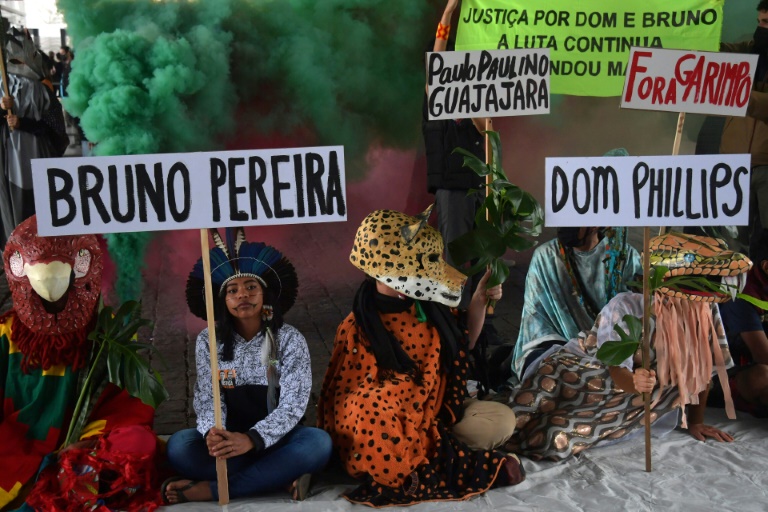
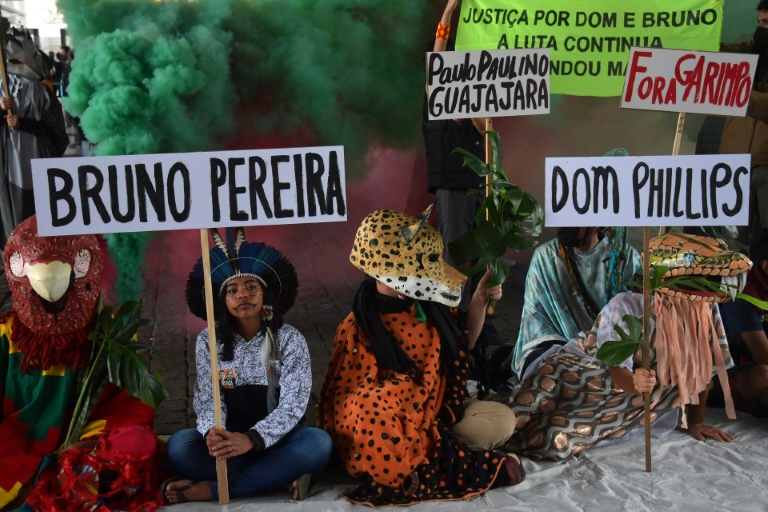
British journalist Dom Phillips and his Brazilian guide, whose disappearance in the Amazon some two weeks ago sparked an international outcry, were killed by gunfire, Brazilian police said Saturday.

A day after investigators identified remains found buried in a remote part of the Amazon as those of Phillips, officials said a second set of remains belonged to his guide, Indigenous expert Bruno Pereira.

Authorities said both men were gunshot victims — Phillips, 57, struck by a single shot to the chest, Pereira, 41, by three shots, one to the head — with ammunition typically used for hunting. 

Pereira, an outspoken defender of Indigenous rights, had received multiple death threats.

The two men went missing on June 5 in an isolated part of the rainforest rife with illegal mining, fishing and logging, as well as drug trafficking.

Ten days later, a suspect took police to a place near the city of Atalaia do Norte in western Amazonas state, where he said he had buried bodies. Soon after, the suspect’s brother was also detained.

Police on Saturday said an additional suspect in the case, whom they identified as Jefferson da Silva Lima, also known as “Pelado da Dinha,” had turned himself in at the police station in Atalaia do Norte.

Commissioner Alex Perez Timoteo told news site G1 that evidence and testimony collected so far indicated that the suspect “was at the scene of the crime and actively participated in the double homicide that occurred.”

Timoteo also told reporters it is “fairly likely” there could be further arrests in the case in the coming days.

“We are going to try to understand whether there was a previous agreement (among the suspects), if they had been planning this situation,” the commissioner said, adding that the third suspect was not related to the two brothers.

Police had said Friday they believed the perpetrators had “acted alone, without there being an intellectual author or criminal organization behind the crime.” 

Activists have blamed the killings on President Jair Bolsonaro for allowing commercial exploitation of the Amazon at the cost of the environment and law and order.

For his part, Bolsonaro sought to lay blame at the door of the men themselves for undertaking a “reckless” trip in an area where Phillips was “disliked.” 

– ‘Not just two killers’ –

Phillips, a longtime contributor to several leading international newspapers, including the British newspaper The Guardian, was working on a book on sustainable development in the Amazon with Pereira as his guide. 

Pereira, an expert at Brazil’s indigenous affairs agency FUNAI, had received multiple threats from loggers and miners with their eye on isolated Indigenous land. 

The Univaja association of Indigenous peoples, which had taken part in the search for the men, rejected the police’s conclusion that the killers had acted alone.

“These are not just two killers, but an organized group that planned the crime in detail,” Univaja said in a statement. 

The group claimed authorities had ignored numerous complaints about the activities of criminal gangs in the area.  

Brazilian representative of the Committee to Protect Journalists (CPJ) Renata Neder said it was “rash” and “concerning” that police have said so early in the investigation that the killers acted alone.

“In Brazil there is a historical pattern that in cases of killings of journalists and human-rights defenders, when there is an investigation, only the executors are brought to justice, but very rarely the mastermind,” she told AFP.

prev/bbk/md/caw/st

Ukraine's fallen honoured in Kyiv memorial

Roman Ratushny was a leading figure in Ukraine’s pro-European Maidan movement, an anti-corruption activist who fought Russian forces with the Ukrainian army. 

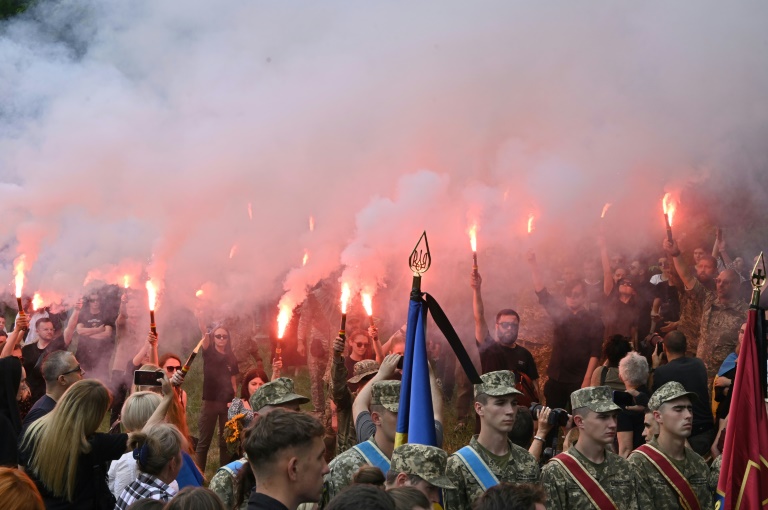
On Saturday, thousands of people in Kiev’s Independence Square paid tribute to the “hero” who was killed in the country’s east at the age of 24. 

In front of the coffin draped in a yellow and blue Ukrainian flag at the foot of the monument that overlooks the sprawling square in the capital, people of all ages saluted his memory.

He had joined the army like many other civilians since the start of the Russian offensive on February 24. 

“I think it is important to be here because he is a hero of Ukraine and we must remember him,” Dmytro Ostrovsky, a 17-year-old high school student, told AFP. 

Ratushny died on June 9 near Izium, in the Kharkiv region, where Ukrainian forces are confronting the Russian army. 

Mourners approached the body in turn, kneeling or bowing and placing a hand on the coffin where many flowers were laid. 

“For all, you were a brother, for some a son, and for others a father figure,” his father Taras Ratushny said into a microphone. 

“Roman has always fought for the right cause and this is an example for all of us, for the young,” said Hlib, a 29-year-old soldier. 

Ratushny was one of the first students to protest in the Maidan (Independence) square at the end of 2013, with the location going on to be the scene of massive pro-European protests that led to the fall of pro-Russian president Viktor Yanukovych in February 2014 . 

– Wave of reactions –

In addition to his political commitment and his fight against corruption in Ukraine, Ratushny headed the Protasiv Yar NGO, named after a historic site in Kyiv which activists sought to protect from illegal construction resulting in the destruction of a large forest in the neighbourhood. 

His activism had earned him death threats. 

He had appealed to President Volodymyr Zelensky and the prosecutor general in Kyiv, but no criminal investigation was opened. 

“If there were 10 people like Roman in Ukraine, we would live in a completely different country,” Ostrovsky said. 

Earlier in the day, hundreds of people, including Kyiv’s mayor Vitali Klitschko, attended the funeral at St Michael’s Golden-Domed monastery in central Kiev. 

“Although I didn’t know him personally, I felt like a loss because when my world view was formed, (Roman) became a person who influenced my vision and the person I am now,” Alina Horhol, a student who attended the funeral, told AFP. 

“Roman was the kind of person who could have changed a lot in our society,” she added. 

The news of his death earlier this week sparked a wave of reactions on social media, including that of English football legend Gary Lineker, who tweeted: “tragic”. 

“Roman Ratushnyi, one of the student protesters beaten by police on the first night of Maidan revolution, has been killed fighting in the east. I interviewed him a couple of times, and spoke to him a week ago. Very sharp, bright guy,” journalist Oliver Carroll tweeted. 

After the tribute on Maidan square, six soldiers carried the coffin down the steps of the square through crowds massed on both sides, before lowering it into a hearse. 

It was to be buried in the afternoon at the Baikove cemetery in southern Kyiv, where many prominent Ukrainian figures are buried. 

Lunch with Warren Buffett goes for a whopping $19 mn … tip included?

Talk about an expensive date: a mystery bidder will be spending a record $19 million for the right to have lunch with legendary American investment guru Warren Buffett. 

That whopping bid, announced by eBay, came in the 21st — and last — such charity luncheon with the aging multibillionaire, who is chairman and CEO of Berkshire Hathaway.

Bidding on the eBay website opened last Sunday at a modest $25,000. But it shot up rapidly as rival bidders tried to outdo one another, finally ending Friday at a total of just over $19 million.

The auction — held annually, though canceled by Covid-19 concerns for the past two years — raises funds for Glide, which fights poverty in San Francisco. It distributes food to the homeless and helps them find shelter, medical assistance and training.

San Francisco, a place of income extremes, has struggled for years with a large homeless population. 

This year’s still-anonymous winner of the charity auction “has not only made history, but will spend an unforgettable afternoon with American legend Warren Buffett at a private lunch with up to seven guests at Smith & Wollensky Steakhouse in New York City,” said an announcement posted by eBay.

The last pre-pandemic auction was won by Justin Sun, an American entrepreneur active in cryptocurrencies, who spent $4.6 million for the right to dine with Buffett, an outspoken critic of bitcoin.

The eBay statement quoted the 91-year-old Buffett — revered throughout the investment community as the “Oracle of Omaha” — as saying he had “met a lot of interesting people all over the world” through the auctions.

“The one universal characteristic,” he added, “is that they feel the money is going to be put to very good uses.”

Buffett’s net worth was estimated in March at $117 billion, according to Forbes.com. 

He joined Bill and Malinda Gates in forming a group of the ultra-wealthy who have vowed to give away half their fortunes. Buffett is estimated to have already donated some $48 billion.

Defrocked Chilean priest gets 15 years for abusing minors

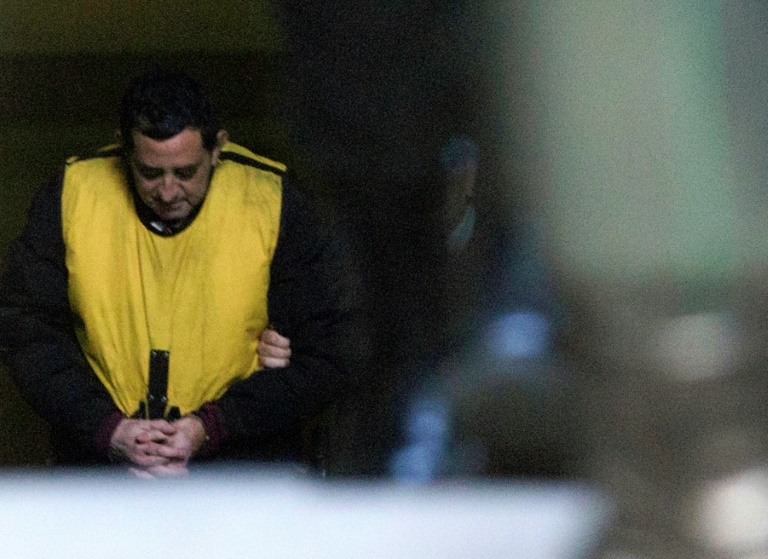
A defrocked priest who once held senior positions in the Catholic Church in Chile was sentenced to 15 years in prison Saturday for raping and otherwise sexually abusing minors for more than a decade.

The sentence against Oscar Munoz, 60, was handed down by a criminal court in the capital Santiago.

Munoz was a well-known clergyman who held senior positions under the archbishop of Santiago and as recently as 2018 under Cardinal Ricardo Ezzati.

The latter is accused of covering up many cases of sexual abuse of minors within the church in Chile.

Munoz is accused of raping or abusing at least five minors. Two other alleged victims are still being evaluated.

Munoz has been in preventive prison since 2018 as he awaited sentencing.

His alleged crimes span from 2002 to 2018.

Prosecutors had asked for a 30 year sentence for him.

Pope Francis expelled Munoz from the church in 2019.

As in other countries around the world, the Catholic church in Chile has confronted a wave of charges that its priests sexually abused minors.

Argentine leader denies grounded plane has any terror link

Argentine President Alberto Fernandez insisted Saturday that a cargo plane with Iranian and Venezuelan crew members had been grounded due only to fueling difficulties, not because of any alleged link to Iran’s elite Quds Force.

There is “no irregularity” with the Venezuelan plane, Fernandez told Radio 10, adding that the sole problem was refueling difficulties linked to US sanctions on Venezuela. 

Paraguay’s intelligence chief had said Friday that one man aboard the plane, which has been grounded since Wednesday at an airport near Buenos Aires, had ties to the Quds Force. 

Intelligence chief Esteban Aquino told AFP that Captain Gholamreza Ghasemi did not merely share a name with a member of the Force — an arm of Iran’s Revolutionary Guards which the US lists as a terrorist organization — but is in fact the same man.

But Fernandez blamed his political opponents for spreading that notion, saying they wanted to show “something that is not — something dark” by suggesting a link to terrorism.

The Boeing 747 cargo plane is reportedly carrying car parts. Its 14 Venezuelan and five Iranian crew members have been prevented from leaving the country pending an investigation.

The plane arrived in Argentina from Mexico on June 6, before trying to fly to Uruguay two days later, where it was refused entry.

Uruguay’s Interior Minister Luis Alberto Heber said his country had received a “formal warning from Paraguayan intelligence.”

The plane then returned to Argentina where it has been grounded ever since.

The plane belongs to Emtrasur, a subsidiary of Venezuela’s Conviasa, which is under US sanctions. Conviasa purchased the plane from Tehran’s Mahan Air last year, Iranian officials said.

The United States has accused Mahan Air of links to the Revolutionary Guards.

Paraguay said Tuesday it had information that seven crew on the Emtrasur plane, which stopped in that country in May, were Quds Force members.

Argentine leader denies grounded plane has any terror link

Argentine President Alberto Fernandez insisted Saturday that a cargo plane with Iranian and Venezuelan crew members had been grounded due only to fueling difficulties, not because of any alleged link to Iran’s elite Quds Force.

There is “no irregularity” with the Venezuelan plane, Fernandez told Radio 10, adding that the sole problem was refueling difficulties linked to US sanctions on Venezuela. 

Paraguay’s intelligence chief had said Friday that one man aboard the plane, which has been grounded since Wednesday at an airport near Buenos Aires, had ties to the Quds Force. 

Intelligence chief Esteban Aquino told AFP that Captain Gholamreza Ghasemi did not merely share a name with a member of the Force — an arm of Iran’s Revolutionary Guards which the US lists as a terrorist organization — but is in fact the same man.

But Fernandez blamed his political opponents for spreading that notion, saying they wanted to show “something that is not — something dark” by suggesting a link to terrorism.

The Boeing 747 cargo plane is reportedly carrying car parts. Its 14 Venezuelan and five Iranian crew members have been prevented from leaving the country pending an investigation.

The plane arrived in Argentina from Mexico on June 6, before trying to fly to Uruguay two days later, where it was refused entry.

Uruguay’s Interior Minister Luis Alberto Heber said his country had received a “formal warning from Paraguayan intelligence.”

The plane then returned to Argentina where it has been grounded ever since.

The plane belongs to Emtrasur, a subsidiary of Venezuela’s Conviasa, which is under US sanctions. Conviasa purchased the plane from Tehran’s Mahan Air last year, Iranian officials said.

The United States has accused Mahan Air of links to the Revolutionary Guards.

Paraguay said Tuesday it had information that seven crew on the Emtrasur plane, which stopped in that country in May, were Quds Force members.

Prepare for the long haul, UK's PM tells Western allies

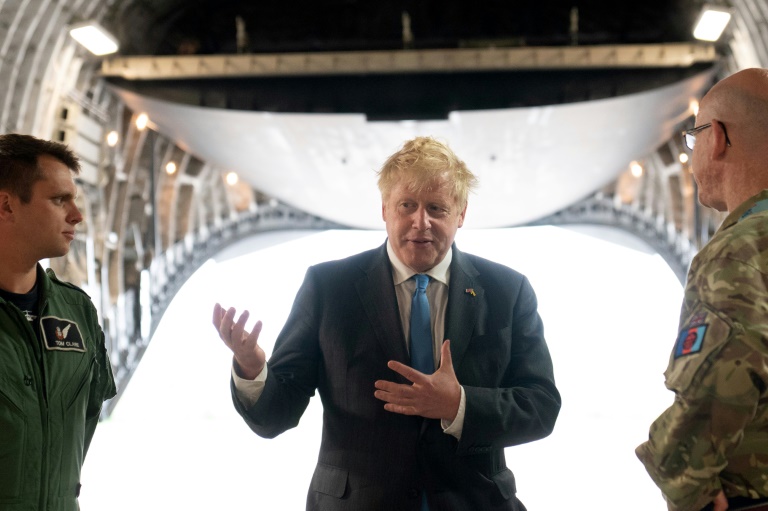
Britain’s Prime Minister Boris Johnson has warned allies to prepare for a long war in Ukraine, urging sustained support for Kyiv or risk “the greatest victory for aggression” since World War II.

In an article for The Sunday Times, Johnson said Ukraine’s foreign backers should hold their nerve to ensure it has “the strategic endurance to survive and eventually prevail”.

Johnson made a surprise visit to Kyiv on Friday, a day after European leaders from France, Germany, Italy and Romania were in the Ukrainian capital to back the country’s EU ambitions.

The British premier offered President Volodymyr Zelensky a ramped up military training programme to help in its fight against Russian forces.

“Time is now the vital factor,” Johnson wrote in a 1,000-word article posted online on Saturday night. 

“Everything will depend on whether Ukraine can strengthen its ability to defend its soil faster than Russia can renew its capacity to attack. Our task is to enlist time on Ukraine’s side.”

To help, he outlined a four-point plan for “constant funding and technical help”, levels of which should be maintained for “years to come” and potentially be increased.

Johnson has previously warned of a drawn-out conflict lasting until the end of next year. Ukrainian officials have repeatedly called on NATO allies for more weapons and equipment.

Russian troops failed to take Kyiv after invading on February 24, and fighting has switched to the south and east.

Western nations have slapped wide-ranging restrictions on pro-Kremlin Russian businesses and individuals but there is concern the conflict is exacerbating  global economic difficulties.

Johnson, himself battling inflation at 40-year highs at home and spiralling domestic fuel prices, however told allies that economic concerns should not lead to a rushed settlement in Ukraine.

Allowing President Vladimir Putin to keep territory in Ukraine would not lead to a more peaceful world, he said.

“Such a travesty would be the greatest victory for aggression in Europe since the Second World War,” he added.

Police confirm ID of Brazilian guide in Amazon double killing

British journalist Dom Phillips and his Brazilian guide, whose disappearance in the Amazon some two weeks ago sparked an international outcry, were killed by gunfire, Brazilian police said Saturday.

A day after investigators identified remains found buried in a remote part of the Amazon as those of Phillips, officials said a second set of remains belonged to his guide, Indigenous expert Bruno Pereira.

Authorities said both men were gunshot victims — Phillips, 57, struck by a single shot to the chest, Pereira, 41, by three shots, one to the head — with ammunition typically used for hunting. 

Pereira, an outspoken defender of Indigenous rights, had received multiple death threats.

The two men went missing on June 5 in an isolated part of the rainforest rife with illegal mining, fishing and logging, as well as drug trafficking.

Ten days later, a suspect took police to a place near the city of Atalaia do Norte in western Amazon state, where he said he had buried bodies. Soon after, the suspect’s brother was also detained.

Police on Saturday said an additional suspect in the case, whom they identified as Jefferson da Silva Lima, also known as “Pelado da Dinha,” had turned himself in at the police station in Atalaia do Norte.

Commissioner Alex Perez Timoteo told news site G1 that evidence and testimony collected so far indicated that the suspect “was at the scene of the crime and actively participated in the double homicide that occurred.”

On Friday, police said they believed the perpetrators had “acted alone, without there being an intellectual author or criminal organization behind the crime.” 

Activists have blamed the killings on President Jair Bolsonaro for allowing commercial exploitation of the Amazon at the cost of the environment and law and order.

For his part, Bolsonaro sought to lay blame at the door of the men themselves for undertaking a “reckless” trip in an area where Phillips was “disliked.” 

– ‘Not just two killers’ –

Phillips, a longtime contributor to several leading international newspapers, including the British newspaper The Guardian, was working on a book on sustainable development in the Amazon with Pereira as his guide. 

Pereira, an expert at Brazil’s indigenous affairs agency FUNAI, had received multiple threats from loggers and miners with their eye on isolated Indigenous land. 

The Univaja association of Indigenous peoples, which had taken part in the search for the men, rejected the police’s conclusion that the killers had acted alone.

“These are not just two killers, but an organized group that planned the crime in detail,” Univaja said in a statement. 

The group claimed authorities had ignored numerous complaints about the activities of criminal gangs in the area.  

prev/bbk/md

Police confirm ID of Brazilian guide in Amazon double killing

British journalist Dom Phillips and his Brazilian guide, whose disappearance in the Amazon some two weeks ago sparked an international outcry, were killed by gunfire, Brazilian police said Saturday.

A day after investigators identified remains found buried in a remote part of the Amazon as those of Phillips, officials said a second set of remains belonged to his guide, Indigenous expert Bruno Pereira.

Authorities said both men were gunshot victims — Phillips, 57, struck by a single shot to the chest, Pereira, 41, by three shots, one to the head — with ammunition typically used for hunting. 

Pereira, an outspoken defender of Indigenous rights, had received multiple death threats.

The two men went missing on June 5 in an isolated part of the rainforest rife with illegal mining, fishing and logging, as well as drug trafficking.

Ten days later, a suspect took police to a place near the city of Atalaia do Norte in western Amazon state, where he said he had buried bodies. Soon after, the suspect’s brother was also detained.

Police on Saturday said an additional suspect in the case, whom they identified as Jefferson da Silva Lima, also known as “Pelado da Dinha,” had turned himself in at the police station in Atalaia do Norte.

Commissioner Alex Perez Timoteo told news site G1 that evidence and testimony collected so far indicated that the suspect “was at the scene of the crime and actively participated in the double homicide that occurred.”

On Friday, police said they believed the perpetrators had “acted alone, without there being an intellectual author or criminal organization behind the crime.” 

Activists have blamed the killings on President Jair Bolsonaro for allowing commercial exploitation of the Amazon at the cost of the environment and law and order.

For his part, Bolsonaro sought to lay blame at the door of the men themselves for undertaking a “reckless” trip in an area where Phillips was “disliked.” 

– ‘Not just two killers’ –

Phillips, a longtime contributor to several leading international newspapers, including the British newspaper The Guardian, was working on a book on sustainable development in the Amazon with Pereira as his guide. 

Pereira, an expert at Brazil’s indigenous affairs agency FUNAI, had received multiple threats from loggers and miners with their eye on isolated Indigenous land. 

The Univaja association of Indigenous peoples, which had taken part in the search for the men, rejected the police’s conclusion that the killers had acted alone.

“These are not just two killers, but an organized group that planned the crime in detail,” Univaja said in a statement. 

The group claimed authorities had ignored numerous complaints about the activities of criminal gangs in the area.  

prev/bbk/md

Close Bitnami banner
Bitnami