World

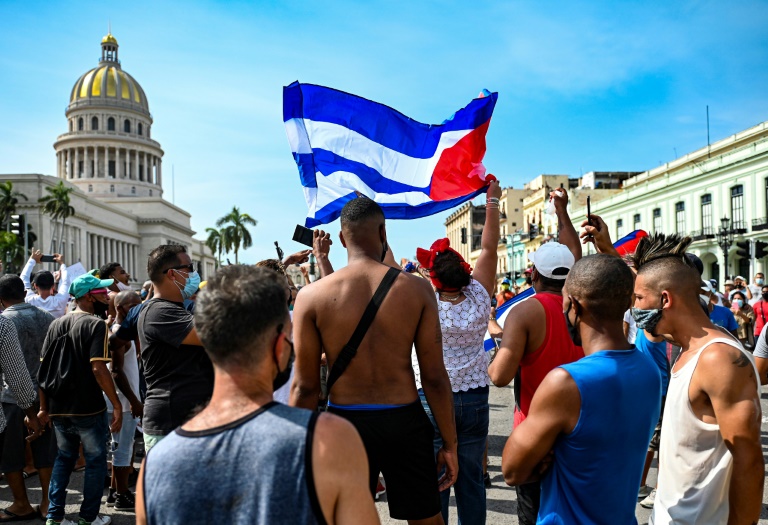
More Cuban protesters jailed as US blasts 'unfair' trials

A day after the United States sanctioned five Cuban officials over “unfair trials” for anti-government protesters, officials in Havana said Friday that another 33 have been sentenced, bringing the total to 414.

Some received jail sentences between five and 18 years, and others “correctional labor.” Protesters had previously been jailed for up to 25 years.

Mass protests broke out across Cuba on July 11 and 12 last year, with demonstrators demanding “freedom” amid economic strife, medical and food shortages, and growing anger at the government.

A crackdown by the security forces left one dead, dozens injured and 1,300 people detained, according to the Justicia 11J civil organization.

In January, the government said 790 people, including 55 minors, had been prosecuted for the July demonstrations.

On Thursday, US Secretary of State Antony Blinken announced visa restrictions on five Cuban officials he said were “connected to unfair trials and unjust sentencing and imprisonment of peaceful July 11, 2021 protesters.”

The Cuban government, he added, was denying Cubans “their basic human rights and fundamental freedoms.”

Blinken’s Cuban counterpart Bruno Rodriguez reacted in English on Twitter Friday, saying the “US resorts again to coercive measures against #Cuba as act of aggression, with individual sanctions based on mendacious and absolutely unfounded allegations.”

The Cuban government accuses the United States of being behind the protests, the biggest since the island’s 1959 revolution.

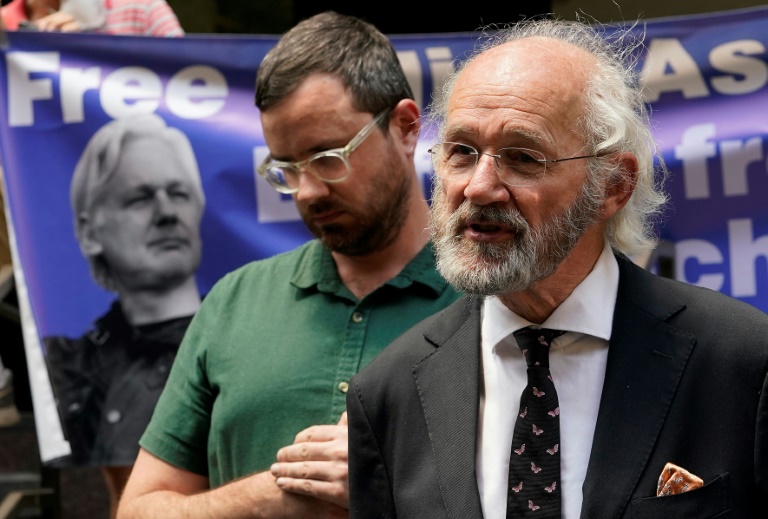
Assange's family say counting on Europe to block his extradition to US

Julian Assange’s father and brother said Friday they were counting on European lawmakers to stop Britain from extraditing the WikiLeaks founder to the United States, and welcomed a promise of citizenship by French leftist politician Jean-Luc Melenchon. 

“I think there’s a great chance of stopping this extradition. We have great support among the European nations,” said Gabriel Shipton, Assange’s brother, at a press briefing outside the British consulate in New York City. 

The Assange case has become a cause celebre for media freedom and his supporters accuse Washington of trying to muzzle reporting of legitimate security concerns.

He is wanted to face trial for violating the US Espionage Act by publishing military and diplomatic files in 2010 and could face up to 175 years in jail if found guilty, although the exact sentence is difficult to estimate.

On Friday the British government approved his extradition to the United Sates, to the dismay of his supporters and free press campaigners. He has 14 days to appeal.

Shipton welcomed the support from parliamentary groups across Europe, and cited comments by Melenchon made in Paris on Friday. 

“If I am prime minister on Monday, Mr Julian Assange — I believe he has already asked for it — will be naturalized as French and we will ask for him to be sent to us,” Melenchon told reporters ahead of parliamentary elections this weekend.

“So there is great support in Europe and I think (the) European Court of Human Rights will stand up for the principles in this case, which is press freedom,” Shipton said. 

The charges, he said, are “an expansion of the Espionage Act to attack the First Amendment (of the US Constitution) to limit the freedom of the press.”

His father John Shipton, also at the press briefing, added that “every single parliament in Europe” as well as nations in South America, as well as Mexico, has lawmakers who support Assange.

Assange has been held on remand at a top-security jail in southeast London since 2019 for jumping bail in a previous case accusing him of sexual assault in Sweden.

Before that he spent seven years at Ecuador’s embassy in London to avoid being removed to Sweden.

He was arrested when the government changed in Quito and his diplomatic protection was removed.

French screen legend Jean-Louis Trintignant dead at 91

France lost a screen legend on Friday — actor Jean-Louis Trintignant, who died at the age of 91, was hailed by President Emmanuel Macron as “a wonderful artistic talent”. 

Among the legends that emerged during French cinema’s New Wave in the 1960s, Trintignant had one of the most durable careers, still making ground-breaking films into his eighties. 

His quiet authority and sonorous voice left their mark on some 120 films, from the notorious “And God Created Woman” alongside Brigitte Bardot in 1959, through classics like “A Man and a Woman” and “Z”, to later powerful dramas such as “Three Colours: Red” and “Amour”. 

“He accompanied our lives through French cinema,” said Macron when he was informed of the news during a tech conference in Paris.  

“It’s a page that turns on a wonderful artistic talent and voice.”

Trintignant’s life was, however, marked by one terrible trauma when his daughter Marie was beaten to death by her rock-star boyfriend Bertrand Cantat in 2003. 

He was surrounded by his family in the Gard region of southern France when he passed away, his wife said in a statement sent to AFP. No cause of death was given. 

– Traitors, thugs and crooks –

Trintignant announced his retirement from cinema in 2017 but returned two years later for a sequel to the film that made his name — the 1966 classic “A Man and a Woman”. 

The New Wave love story from director Claude Lelouch starred Trintignant as a racing driver — his real-life passion — and turned him into an international star after it won two Academy Awards and the Palme d’Or at the Cannes Film Festival.

He won the best actor award at the festival three years later for political thriller “Z”.

“The most beautiful voice that we’ve heard in theatre or cinema,” Lelouch told French radio on Friday. 

“He made us a gift of his scars. He was a remarkable man… I owe him everything,” added Lelouch, who worked with Trintignant on seven films. 

Despite his screen success, Trintignant was known to say that he preferred the theatre. 

“I could have spent my whole life doing theatre,” he said in 2017, adding: “But cinema paid better!”

After his breakout role alongside Bardot — with whom he had a brief affair — Trintignant went on to be seen as one of the most gifted actors of the postwar generation, playing an array of traitors, thugs and crooks or ambiguous and perverted types.

“Trintignant was one of my all-time favourite actors: sexy, pensive, mischievous, capable of deep and searching sadness,” tweeted Variety film critic Guy Lodge. “What a body of work. What a face.”

Images of him crying at his daughter’s funeral touched French hearts in 2003. 

“Inside me, everything is destroyed,” he said, and disappeared from cinema for a decade.

But he refused to give in to bitterness and even forgave Cantat, the lead singer of the French band Noir Desir, when many others refused.

And he returned to triumph in 2012, starring in Michael Haneke’s Oscar-winning “Amour” as a man in his eighties struggling to look after his wife after a stroke. 

Trintignant first married actress Stephane Audran, then film director Nadine Marquand, with whom he had three children — Marie, Pauline and Vincent. The couple divorced and he then went on to marry Mariane Hoepfner, a former racing driver like himself.

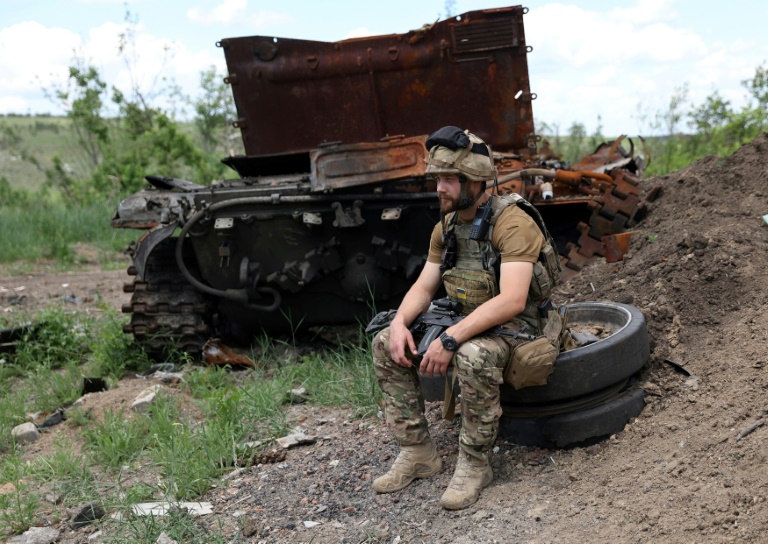
Deadly air strike hits Ukraine frontline city as it readies for street battle

Ashes littered a square in the war-ravaged east Ukrainian city of Lysychansk Friday as smoke rose from a cultural centre following a Russian air strike that killed four people sheltering there.

The embattled city is preparing for a possible street battle, with Russian troops fighting Ukrainian soldiers in the city of Severodonetsk, just across the river.

The bombing on Thursday sparked a fire that raged through the blue and white-painted Stalin-era Diamant Palace of Culture overnight and was still burning on Friday.  

The building contained a library and post office as well as a stage for arts events. After the war began, it became used a bomb shelter by locals and a makeshift refuge for those who lost their homes.

A mother and daughter were killed, as well as a young man and a bedridden woman who had moved there to shelter from her home in Severodonetsk, locals standing around said.

Police said that around 10 were injured, some seriously injured after being trapped by debris, while there were around 10 others inside the building, while locals suggested the figure was higher. 

Police said those seriously hurt were taken to hospital in the nearby city of Bakhmut — since Lysychansk’s hospital has no electricity.

“Locals say the military sometimes used to come here,” said a bearded police special forces officer with the nickname Jaconda, who was helping evacuate local residents.

The attack came after Russian forces bombed a theatre where civilians were sheltering in the besieged port city of Mariupol in March.

“Who knows — maybe it was the same reason that they bombed Mariupol too,” said Jaconda, suggesting a pro-Russian local could have passed information on troop locations.

– ‘Abandoning everything’ –

A group of local residents stood nearby with bags ready to be evacuated by police to a safer city.

One, Alla Bor, said she had not resolved to leave until the Palace of Culture attack.

“I got scared. We’re abandoning everything and going. No one can survive such a strike,” said the history teacher, waiting with her son-in-law Volodymyr and 14-year-old grandson.

“We are abandoning everything, we are leaving our house. We left our dog with food. It’s inhumane but what can you do?”

Two police vehicles were going round the city collecting people for evacuation, said a special forces police inspector, Maksym.

“There is more and more firing,” he said. 

– ‘Shooting here soon’ –

Preparations were afoot in the city for possible street fighting with Russians as a battle continued for the city of Severodonetsk on the opposite river bank.

Across the river in the city of Severodonetsk, an AFP photographer heard sounds of street fighting.

AFP journalists saw Ukrainian soldiers digging a firing position on a central street of Lysychansk and erecting makeshift defences using barbed wire and branches. 

A tractor dragged a burnt-out car to place partly across a main street to slow vehicles.

Across the river in the city of Severodonetsk, an AFP photographer heard sounds of street fighting .

“There could be shooting starting here soon,” policeman Jaconda tried to persuade a local man who was reluctant to leave his home.

“You could end up encircled,” Jaconda warned, adding: “There won’t be life here,” while by evacuating, “you’ll at least be safe and sound.”

– ‘Forgotten’ –

Amid tensions between officials and the local population, Jaconda told an AFP reporter quietly: “Many of those who stayed are awaiting the Russian world,” referring to Russian President Vladimir Putin’s drive to restore Russian influence in neighbouring countries.

Locals were clinging to life in the city despite nearby shelling.

A group of residents showed AFP the cold and damp cellar where they shelter from rockets and one bombed-out family lives full-time, including a 70-year-old woman and her husband, who is unable to walk after a stroke. 

Lacking running water or power, they were boiling a kettle and frying eggs in their apartment building’s courtyard on a camp fire, using branches snapped off by shelling.

“Our country doesn’t help us, our country has forgotten us. We are helped by ordinary people volunteering,” said one, Nataliya, 47.

Ukrainian troops were busy on roads to and from the city, with trucks carrying Grad systems.

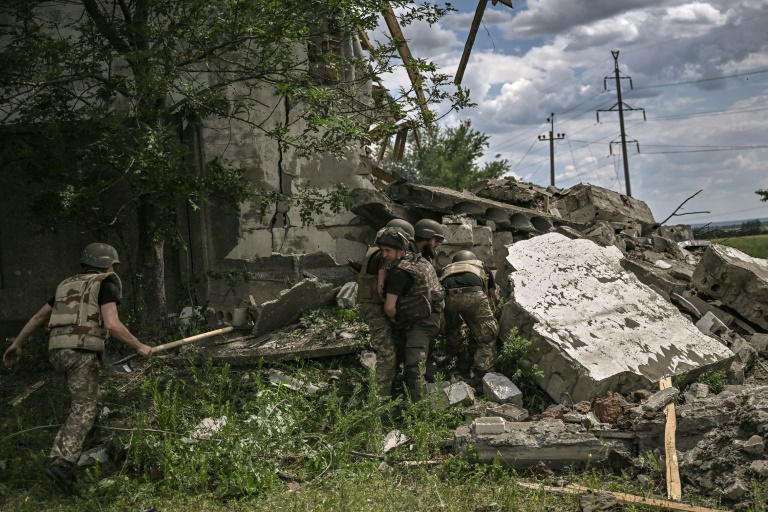
As an AFP team drove out of the city, smoke rose from a large agricultural building beside the road and rubble was strewn across the highway.

Soldiers were busily removing concrete slabs as others dug trenches nearby. They said that the strike had occurred 10 to 15 minutes earlier and no one had been injured, while declining to say what was in the building.

EU backs Ukraine's 'European dream' as Russia cuts gas supplies

Europe sent a powerful symbol of solidarity with Ukraine on Friday as Brussels backed Kyiv’s bid for EU candidate status, a decision Russian President Vladimir Putin said he had “nothing against”.

With the European Commission’s backing, Ukraine could join the list of countries vying for membership as early as next week, when member state leaders meet at their Brussels summit. 

All 27 leaders have to agree to the candidacy, but the heads of the bloc’s biggest members — France, Germany and Italy — gave full-throated support to the idea on Thursday, on a trip to a war-torn Kyiv suburb.

On Friday, the European Commission gave formal backing to the bid, and EU chief Ursula von der Leyen made her position clear by donning a striking jacket in Ukraine’s national colours.

“We all know that Ukrainians are ready to die for the European perspective. We want them to live with us for the European dream,” she said.

Ukraine’s President Volodymyr Zelensky immediately welcomed the decision as a “first step on the EU membership path that’ll certainly bring our victory closer”.

He thanked von der Leyen for the commission’s “historic decision” and said he expected that EU leaders would give Ukraine a “positive result” at the June 23-24 summit.

Putin said Russia had “nothing against” Ukraine joining the EU, saying it was “their sovereign decision to join economic unions or not” — unlike the security risk he sees in Kyiv joining NATO.

But he said membership of the European Union would turn Ukraine into a “semi-colony” of the West.

Russia had earlier said the West was “manipulating” Ukraine with promises of integration.

As Brussels celebrated their breakthrough, British Prime Minister Boris Johnson returned to Kyiv for his second visit since Russia’s February 24 invasion. 

“Many days of this war have proved that Great Britain’s support for Ukraine is firm and resolute,” Zelensky wrote on social media. 

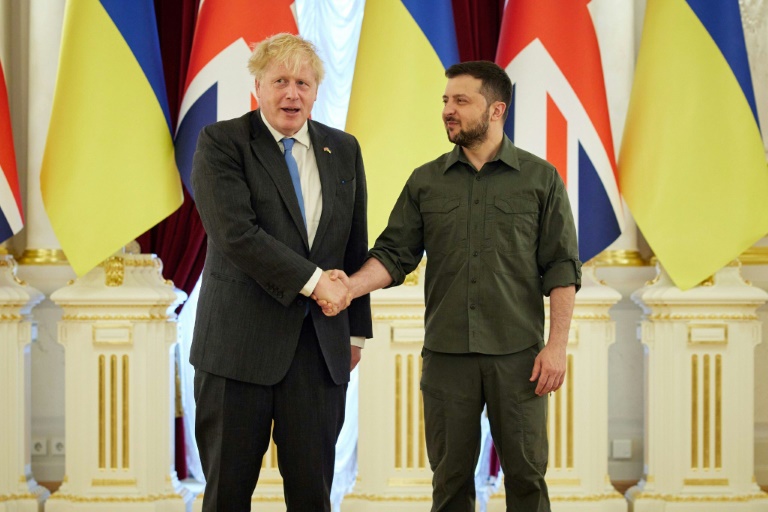
Johnson’s office tweeted a picture of the premier meeting the Ukrainian leader, carrying a stack of books and paperwork under one arm.

“My visit today, in the depths of this war, is to send a clear and simple message to the Ukrainian people: the UK is with you, and we will be with you until you ultimately prevail,” Johnson said.

According to Downing Street, Johnson offered to launch a major training operation for Ukrainian forces, to train up to 10,000 soldiers every 120 days and “change the equation of the war”.

Each Ukrainian soldier would spend three weeks on the British training course, learning combat tactics, basic medical skills, cybersecurity and counter explosive tactics.

– Russian bombardment –

Once Ukraine joins the EU candidates’ list — alongside several countries in the western Balkans — it could still take years to meet all the formal membership requirements, even if Kyiv prevails in the war.

“Ukraine should be welcomed as a candidate country — this is based on the understanding that good work has been done but important work also remains to be done,” von der Leyen said.

And in the meantime, the fighting continues, with Russian forces bombarding pockets of Ukrainian resistance in frontline Severodonetsk, including civilians holed up in a chemical plant in the eastern Ukrainian city.

Moscow turned up the pressure on Western allies, sharply reducing flows of natural gas in its pipelines to western Europe, driving up energy prices.

France’s network provider said it had not received any Russian gas by pipeline from Germany since June 15, and Italy’s Eni said it expected Russian firm Gazprom to cut its supplies by half on Friday.

Several European countries, including Italy and Germany, are highly reliant upon Russian gas for their energy needs and, as the West sides with Ukraine, Moscow is cutting supplies.

– ‘Extremely alarming’ –

Berlin and Rome have rejected Russia’s argument that technical issues have caused the drop in supplies, arguing that state-owned Gazprom’s move is political.

But western Europe is sweltering in a heatwave and energy prices are already soaring, adding to runaway inflation and industrial action in several economies.

The situation is, of course, starker in Ukraine itself, where Russian troops have occupied a swathe of the south and east of the country during the 113-day war, including much of the Donbas region.

“The humanitarian situation across Ukraine — particularly in the eastern Donbas — is extremely alarming and continues to deteriorate rapidly,” the UN humanitarian agency, OCHA, said.

The statement said the situation is “particularly worrying in and around Severodonetsk” — where bloody battles have raged for weeks. 

Severodonetsk is in the Lugansk region, where governor Sergiy Gaiday called for a ceasefire, stating hundreds of civilians were trapped in the besieged Azot chemical plant in the city.  

“It is now impossible and physically dangerous to get out of the plant due to constant shelling and fighting. There are 568 people in the shelter, including 38 children,” he said.

– ‘God’s will’ –

Gaiday said earlier this week that around 10,000 civilians remained in the city, which is controlled mostly by Russian forces.

In the frontline Donbas village of Adamivka near the city of Sloviansk, a community of Orthodox nuns have seen a rocket hole blasted into the wall of their well-tended garden.

Under near-constant bombardment by Russian forces, Sister Anastasi and a group of other black-clad nuns and pilgrims live day-to-day, praying for deliverance.

“We are all alive, yes. No one has left. This is our home,” she said quietly, her face framed by a black veil, as shells crashed in the distance.

“We trust in God’s will, in God’s help, in the help of all the saints and the Holy Virgin. This is our home, we have nowhere else to go.” 

At least two people were killed and 20 injured in a Russian strike on a residential area in the southern Ukrainian city of Mykolaiv, the local governor said.

Separately, Zelensky announced an end to the visa-free travel that Russian citizens, many of whom have Ukrainian relatives, have enjoyed since Ukraine became independent from the Soviet Union in 1991.

burs-dc/imm

Amazon killers acted alone: Brazil police

Brazilian police said Friday the killers of British journalist Dom Phillips and his expert guide Bruno Pereira had acted on their own initiative and not as part of a criminal group — an assertion rejected by Indigenous leaders. 

“The investigations… suggest that the perpetrators acted alone, without there being an intellectual author or criminal organization behind the crime,” the Federal Police said in a statement. 

“The investigations continue and there are indications of the participation of more people” in the murders, it added. 

Veteran correspondent Phillips, 57, and Pereira, 41, went missing on June 5 in a remote part of the rainforest rife with illegal mining, fishing and logging, as well as drug trafficking. 

Ten days later, on Wednesday, a suspect named Amarildo da Costa de Oliveira — known as “Pelado” — took police to a place where he said he had buried bodies near the city of Atalaia do Norte, where the pair had been headed by boat. 

Human remains unearthed from the site arrived in Brasilia on Thursday evening for identification by experts. 

Police have said there was “a 99 percent probability” the remains belong to the missing men. 

– ‘A powerful criminal organization’ –

Phillips, a longtime contributor to The Guardian and other leading international newspapers, was working on a book on sustainable development in the Amazon with Pereira as his guide. 

Pereira, an expert at Brazil’s indigenous affairs agency FUNAI, had received multiple threats from loggers and miners with their eye on isolated Indigenous land. 

The Univaja association of Indigenous peoples, which had taken part in the search for the missing men, on Friday refuted the police’s conclusion that the killers had acted alone.

“These are not just two killers, but an organized group that planned the crime in detail,” Univaja said in a statement. 

It claimed authorities had ignored numerous complaints about the activities of criminal gangs in the area.  

Univaja said it had filed a report in April to say that “Pelado” was involved in illegal fishing. 

He had previously been accused, it said, of “being the perpetrator of gun attacks in 2018 and 2019 against a base of FUNAI,” the organization Pereira had worked for. 

Univaja said that “a powerful criminal organization (had) tried at all costs to cover its tracks during the investigation” of the double murder. 

Experts say illegal fishing of endangered species in the Javari Valley takes place under the control of drug traffickers who use the sale of fish to launder drug money.

– ‘Brutal act of violence’ –

On Thursday, the UN denounced a “brutal act of violence” as activists blamed the murders on President Jair Bolsonaro for allowing commercial exploitation of the Amazon at the cost of environment and law and order. 

UN human rights spokeswoman Ravina Shamdasani said attacks and threats against activists and Indigenous people in Brazil were “persistent” and urged the government to step up protections. 

Investigations continue to look into the motive for the crime. 

Police have been unable to find the boat in which Phillips and Pereira were traveling when they were last seen. 

Blood found in Oliveira’s boat belonged to a man, investigators said, but not to Phillips. 

Analysis had also revealed that entrails found in the river during the search contained “no human DNA,” according to police. 

On Monday, Bolsonaro had said that entrails were found floating in the river, in an interview in which he appeared to blame the missing men for undertaking a “reckless” trip in an area where Phillips was “disliked.” 

“All signs indicate that if they were killed — and I hope that’s not the case — they’re in the water, and in the water there won’t be much left. I don’t know if there are piranhas in the Javari,” said the far-right president, whose government is accused of dragging its feet in the investigation.

TikTok says Oracle to keep US user data safe

TikTok on Friday said Oracle will store all the data from its US users, in a bid to allay fears about its safety in the hands of a platform owned by ByteDance in China.

The popular video snippet sharing service will continue to use its own datacenters in Virginia and Singapore to backup information as it works to “fully pivot” to relying on Oracle in the United States, TikTok said in a post.

“We know we are among the most scrutinized platforms from a security standpoint, and we aim to remove any doubt about the security of US user data,” said Albert Calamug, who handles US security public policy at TikTok.

President Joe Biden last year revoked executive orders from his predecessor Donald Trump seeking to ban Chinese-owned apps TikTok and WeChat from US markets on national security concerns.

Trump had given his blessing to a plan that would have given TikTok to US tech giant Oracle with investments from retail powerhouse Walmart, but that deal failed to win approval in Beijing.

Biden’s new executive order nixed the unimplemented ban and called for “an evidence-based analysis to address the risks” from internet applications controlled by foreign entities.

WeChat, part of Chinese tech giant Tencent, is a “super app” which includes social networking, messaging, e-commerce and more.

TikTok revealed late last year that it had a billion users worldwide.

“Today, 100 percent of US user traffic is being routed to Oracle Cloud Infrastructure,” Calamug said.

“In addition, we’re working closely with Oracle to develop data management protocols that Oracle will audit and manage to give users even more peace of mind.”

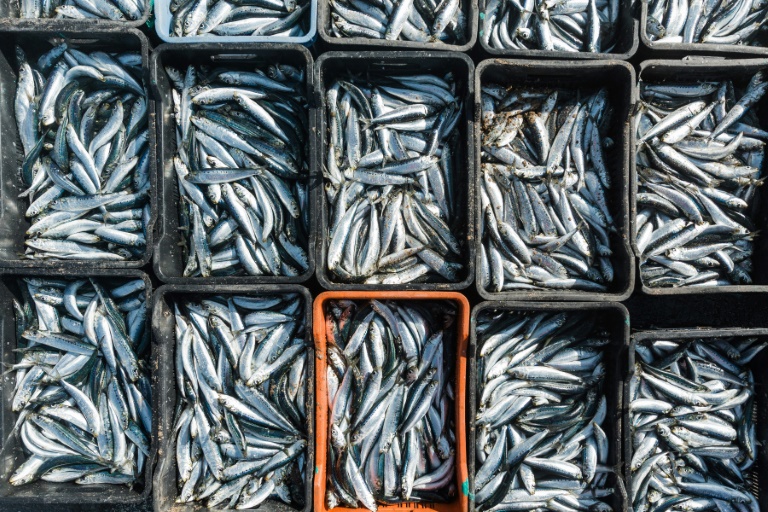
WTO fishing deal hailed as historic though 'not perfect'

A WTO deal aimed at curbing overfishing was hailed by conservation groups as a major turning point, even if it was the result of compromises to seal the long-sought agreement.

Negotiations towards banning subsidies that encourage overfishing and threaten the sustainability of the planet’s fish stocks had been going on at the World Trade Organization since 2001.

The text was watered down compared to what had originally been envisaged, but WTO chief Ngozi Okonjo-Iweala insisted it was better to get an agreement rather than keep negotiating for years to come.

The fishing agreement was part of a clutch of deals that were struck after marathon talks in Geneva to tackle food insecurity and place a waiver on Covid vaccine patents.

The deal on fishing subsidies had “environmental sustainability at its heart”, Okonjo-Iweala said.

The deal, she said, targets subsidies that contribute to illegal, undeclared and unregulated fishing, and bans support to fishing in areas where fish stocks are overstretched.

The agreement, she added, marks “a first but significant step forward” towards reducing the fishery subsidies that contribute to overfishing on unregulated high seas.

Non-government organisations agreed.

“The new agreement is the product of compromise among 164 countries, so it’s not perfect,” said Marco Lambertini, director general of WWF International. 

“But the ocean needs help now, and marine ecosystems as well as coastal communities cannot wait for a perfect solution,” he said. 

“What the WTO has delivered is an agreement that should be a catalyst for further subsidy and fisheries reform.”

Another NGO, Bloom, called it a “first historic step for the ocean” and a “giant step for transparency.”

A study co-authored by Bloom found that subsidies to the fishing sector amount to $35.4 billion worldwide in 2018, with 80 percent going to industrial-scale fishing.

Oceana, an advocacy group, dissented, saying that the WTO had not rid the world of subsidized overfishing.

“Our oceans are the big loser today,” said Oceana CEO Andrew Sharpless. 

“The WTO is losing its credibility. Member states are way overdue in adopting strict rules that eliminate harmful subsidies, which is the single greatest global action we can take to ensure a healthy and abundant ocean,” he said.

“This meagre agreement falls demonstrably short of this target.”

– ‘A turning point’ –

Bloom founder Claire Nouvian told AFP that the WTO had been pragmatic.

The deal bans subsidies for illegal, unreported and unregulated fishing, with a two-year exemption for developing countries within their exclusive economic zones, or 200 nautical miles.

It also prohibits subsidies linked to overfished stocks, with a two-year reprieve for poorer nations. India had threatened to block this article if it was not granted a 25-year transition period.

In addition, the text allows for subsidies if they are implemented to rebuild the fishing stock to a “biologically sustainable level”.

Bloom warned that this exemption could open the door for industrial lobbies and governments to create false measures to replenish fish populations.

NGOs hailed a “transparency” clause that requires governments to report their subsidies and other data.

“This is a turning point in addressing one of the key drivers of global over-fishing,” said Isabel Jarrett, who manages the campaign to reduce harmful fisheries subsidies at the Pew Charitable Trusts.

“We did not have any monitoring mechanism, we have now a framework. This is very, very important,” she told AFP.

Four Moroccan women accuse French tycoon of sexual harassment

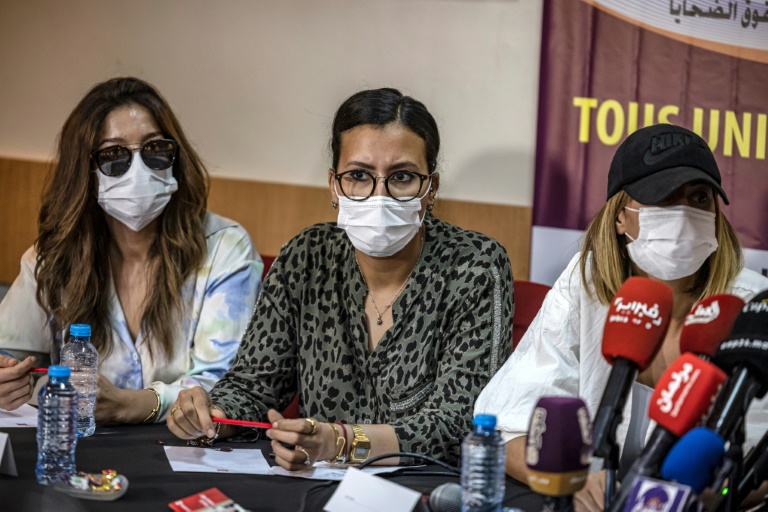
Four women have pressed charges in Morocco against French insurance tycoon Jacques Bouthier, currently under arrest in Paris on charges of raping a minor, a rights group said Friday.

Bouthier is accused of various acts of “people trafficking, sexual harassment and verbal and moral violence,” between 2018 and this year, said Karima Salama, a lawyer from the Moroccan Association for the Rights of Victims (AMDV).

“An enquiry has been opened and we have faith in the justice system,” she said at a press conference in the northern port city of Tangiers, where the four alleged victims, aged from 26 to 28, had been employed by Bouthier’s firm.

Bouthier, 75 and one of France’s richest men, is ex-CEO of insurance group Assu2000, later renamed Vilavi.

Three of his Moroccan alleged victims told journalists on Friday about their experiences, using sanitary masks and dark glasses to hide their identities. 

“He asked to sleep with me and when I said no, he asked me to introduce him to a sister, a female cousin or a friend, saying he would give me a nice present in exchange,” one said.

The women said they had been sacked after refusing to “give in to harassment and blackmail” over their employment by Bouthier and other French and Moroccan executives.

The women said they had faced repeated sexual harassment and intimidation as well as threats to their jobs, in a city where many struggle to find work.

One said he had presented them to men working at the firm, telling them: ‘If you bring in contracts, there will be beautiful Moroccan girls’.

“Jacques Bouthier… believes that with his financial power he can get away with anything, in complete impunity,” said AMDV chief Aicha Guellaa.

Bouthier, was indicted on May 21 and arrested by Paris prosecutors after a preliminary investigation into accusations of people trafficking and rape of a minor.

He is also being prosecuted for conspiracy to kidnap, kidnapping in an organised gang and possession of child pornography.

British PM Johnson in Kyiv on second visit: Zelensky

Britain’s prime minister on Friday made his second visit to Kyiv in just over two months, offering Kyiv a military training programme as President Volodymyr Zelensky hailed Britain’s “resolute” support.

“Many days of this war have proved that Great Britain’s support for Ukraine is firm and resolute. Glad to see our country’s great friend Boris Johnson in Kyiv again,” Zelensky wrote on Telegram with a video of him greeting the British leader at the presidential palace.

“Mr President, Volodymyr, it is good to be in Kyiv again,” wrote Johnson on his official Twitter account.

The visit came a day after the European Union’s most powerful heads of state embraced Ukraine’s bid to be accepted as a candidate for EU membership, nearly four months into the Russian invasion. 

It followed European Commission backing for Kyiv being granted EU candidacy status in a move likely to be formalised at an EU leaders’ summit on June 23-24.

Such a move would be a potent symbol of support for Kyiv in its conflict with Russia. 

Johnson became the first leader of a G7 country to visit Kyiv on April 9, two weeks after Russian troops had been driven back from the suburbs of the capital. 

He was filmed on a walkabout through Kyiv’s deserted streets with Zelensky in a move acclaimed by Ukrainians for his show of solidarity, prompting the president to say Britain’s support for Ukraine would “remain forever in history”.

– ‘War crime’ –

Beset by problems at home and facing record-low opinion polls from British voters, Johnson last week narrowly survived a vote of no confidence by his own MPs over alleged parties at Downing Street while the country was under lockdown during the coronavirus pandemic.

On Friday, Johnson’s Downing Street office said Britain stood ready to offer Zelensky a major new training programme with the potential to train 10,000 new and existing Ukrainian soldiers every 120 days.

London claimed that the move would “fundamentally change the equation of the war, ensuring the Armed Forces of Ukraine have the resilience they need to be victorious in their fight for enduring peace”.

The previous Operation Orbital saw the UK train more than 22,000 Ukrainian personnel from 2015 until this year’s invasion.

The British leader said it was “great to be back” in Kyiv, noting that “life is coming back to the streets, to the cafes, to the restaurants.

“But we’ve got to face the fact that only a couple of hours away a barbaric assault continues on entirely innocent people,” he added.

He accused Russia of deliberately targeting civilians in “what is unquestionably a war crime” but said that Ukraine’s resistance was hampering Moscow’s plans.

– Pressure –

Britain’s highest-ranking military officer, Chief of Defence Staff Admiral Tony Radakin, earlier on Friday said Russia had “strategically lost” in Ukraine.

“President Putin has used about 25 percent of his army’s power to gain a tiny amount of territory and 50,000 people either dead or injured.

“Russia is failing,” he said in an interview.

In Kyiv, Johnson said Russian troops were “under acute pressure themselves and they are taking heavy casualties”.

“Their expenditure of munitions, of shells and other weaponry, is colossal and after 114 days of attack on Ukraine, they have still not achieved the objectives they set out for the first week.” 

Britain would work with Ukraine “to liberate the grain… that is being held hostage right now by Putin, depriving people around the world of the food that they need,” he added.

“We will continue… to provide the military equipment that you need and now of course the training that may be necessary to go with that… so that you, the Ukrainian people… will be able to do what I believe Ukrainians yearn to do: and that is to expel the aggressor from Ukraine,” he added.

burs-jwp/phz/jm

Close Bitnami banner
Bitnami