World

Biden calls clean energy matter of national security

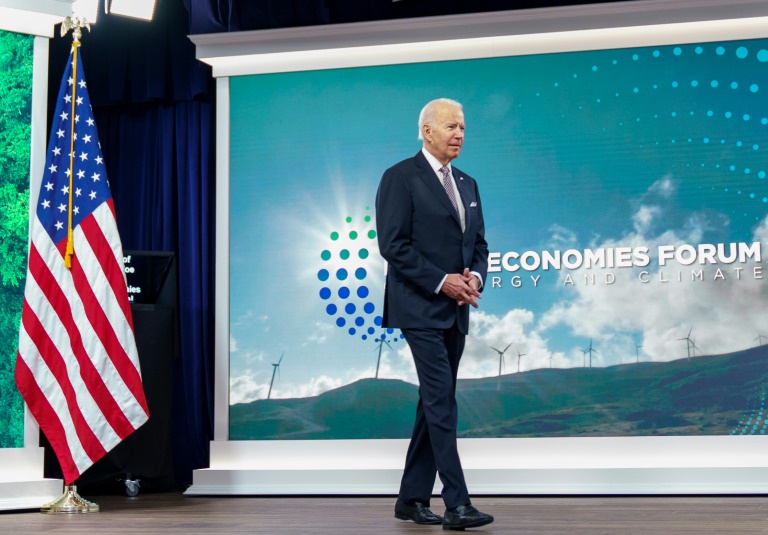
US President Joe Biden told a climate conference for major economies Friday that Russia’s war in Ukraine shows the shift to renewable energy is a matter of national security as well as key to preventing global warming.

“Russia’s brutal and unprovoked assault on its neighbor Ukraine has fueled a global energy crisis and sharpened the need to achieve longterm reliable energy security and security,” Biden told the virtual summit hosted from the White House. “The good news is that climate security and energy security go hand in hand.”

This was Biden’s third convening of the Major Economies Forum on Energy and Climate since he took office in 2021 with a vow to make the United States a leader in the world’s attempt to halt catastrophic global warming.

But it comes just as Biden faces public anger over soaring fuel prices linked to fallout from Russia’s invasion of Ukraine. At the same time, European countries are struggling to find ways to circumvent dependence on Russian oil and gas imports.

In his speech, UN Secretary General Antonio Guterres delivered a blistering attack on the oil and gas industry, accusing it of mirroring tobacco companies’ tactics to push a “false narrative to minimize their responsibility for climate change.”

“Nothing could be more clear or present than the danger of fossil fuel expansion. Even in the short-term, fossil fuels don’t make political or economic sense. Yet we seem trapped in a world where fossil fuel producers and financiers have humanity by the throat,” he said.

However, the UN chief’s message ran counter to the political realities facing Biden as he tries to persuade the domestic oil industry to amp up production and prepares for a visit to Saudi Arabia next month.

Americans are currently paying an average of $5 a gallon to fill their cars, up from $3 a year ago, and the hike is in turn fueling wider inflation, now at a 40-year high.

– India, Russia absent –

A senior Biden administration official said 23 countries were represented at the video conference, representing most of the world’s major economies and “focused around the mitigation that they will be taking” on climate impacts.

At a previous session in September 2021, Biden and the European Union announced a pledge to cut emissions of methane, a planet-warming gas. This was formally launched at the COP26 UN climate summit in Glasgow and now has 115 countries signed on.

Friday’s gathering was the largest leader-level gathering before COP27, the follow-up summit, set to take place in Egypt this November.

But highlighting diplomatic complications besetting the search for international cooperation on the global climate threat, Russia did not attend Friday’s summit.

China was represented only at the level of its climate envoy, rather than President Xi Jinping, the White House said. And India was not on the official list of attendees, either.

– Methane opportunity –

Warning that the world must not let global climate change mitigation goals “slip out of our reach,” Biden said “the window for action is rapidly narrowing.”

Despite the scramble to adapt global energy markets to fallout from the Ukraine war, Biden insisted that longterm climate management, immediate economic goals and ending reliance on energy exporter Russia can all work together.

He cited the global pledge to end methane gas leaks and the practice of burning off, or flaring, unwanted gas at oil fields, calling on countries to “ramp up” their responses.

European economies are heavily reliant on Russian energy, but Biden said an end to methane waste alone could solve that problem.

“Each year our existing energy system leaks enough methane to meet the needs for the entire European power sector. We flare enough gas to offset nearly all of the EU’s gas imports from Russia,” he said.

“So by stopping the leaking and flaring of this super-potent greenhouse gas and capturing this resource for countries that need it we’re addressing two problems at once.”
Biden calls clean energy matter of national security

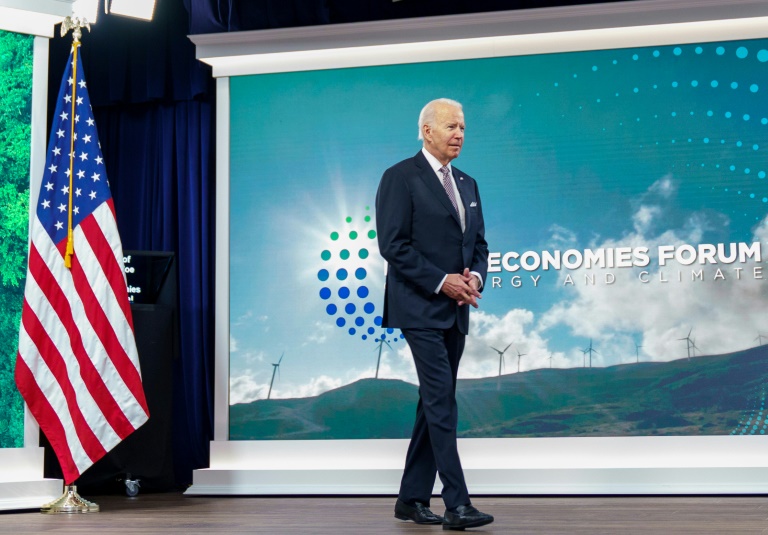
US President Joe Biden told a climate conference for major economies Friday that Russia’s war in Ukraine shows the shift to renewable energy is a matter of national security as well as key to preventing global warming.

“Russia’s brutal and unprovoked assault on its neighbor Ukraine has fueled a global energy crisis and sharpened the need to achieve longterm reliable energy security and security,” Biden told the virtual summit hosted from the White House. “The good news is that climate security and energy security go hand in hand.”

This was Biden’s third convening of the Major Economies Forum on Energy and Climate since he took office in 2021 with a vow to make the United States a leader in the world’s attempt to halt catastrophic global warming.

But it comes just as Biden faces public anger over soaring fuel prices linked to fallout from Russia’s invasion of Ukraine. At the same time, European countries are struggling to find ways to circumvent dependence on Russian oil and gas imports.

In his speech, UN Secretary General Antonio Guterres delivered a blistering attack on the oil and gas industry, accusing it of mirroring tobacco companies’ tactics to push a “false narrative to minimize their responsibility for climate change.”

“Nothing could be more clear or present than the danger of fossil fuel expansion. Even in the short-term, fossil fuels don’t make political or economic sense. Yet we seem trapped in a world where fossil fuel producers and financiers have humanity by the throat,” he said.

However, the UN chief’s message ran counter to the political realities facing Biden as he tries to persuade the domestic oil industry to amp up production and prepares for a visit to Saudi Arabia next month.

Americans are currently paying an average of $5 a gallon to fill their cars, up from $3 a year ago, and the hike is in turn fueling wider inflation, now at a 40-year high.

– India, Russia absent –

A senior Biden administration official said 23 countries were represented at the video conference, representing most of the world’s major economies and “focused around the mitigation that they will be taking” on climate impacts.

At a previous session in September 2021, Biden and the European Union announced a pledge to cut emissions of methane, a planet-warming gas. This was formally launched at the COP26 UN climate summit in Glasgow and now has 115 countries signed on.

Friday’s gathering was the largest leader-level gathering before COP27, the follow-up summit, set to take place in Egypt this November.

But highlighting diplomatic complications besetting the search for international cooperation on the global climate threat, Russia did not attend Friday’s summit.

China was represented only at the level of its climate envoy, rather than President Xi Jinping, the White House said. And India was not on the official list of attendees, either.

– Methane opportunity –

Warning that the world must not let global climate change mitigation goals “slip out of our reach,” Biden said “the window for action is rapidly narrowing.”

Despite the scramble to adapt global energy markets to fallout from the Ukraine war, Biden insisted that longterm climate management, immediate economic goals and ending reliance on energy exporter Russia can all work together.

He cited the global pledge to end methane gas leaks and the practice of burning off, or flaring, unwanted gas at oil fields, calling on countries to “ramp up” their responses.

European economies are heavily reliant on Russian energy, but Biden said an end to methane waste alone could solve that problem.

“Each year our existing energy system leaks enough methane to meet the needs for the entire European power sector. We flare enough gas to offset nearly all of the EU’s gas imports from Russia,” he said.

“So by stopping the leaking and flaring of this super-potent greenhouse gas and capturing this resource for countries that need it we’re addressing two problems at once.”
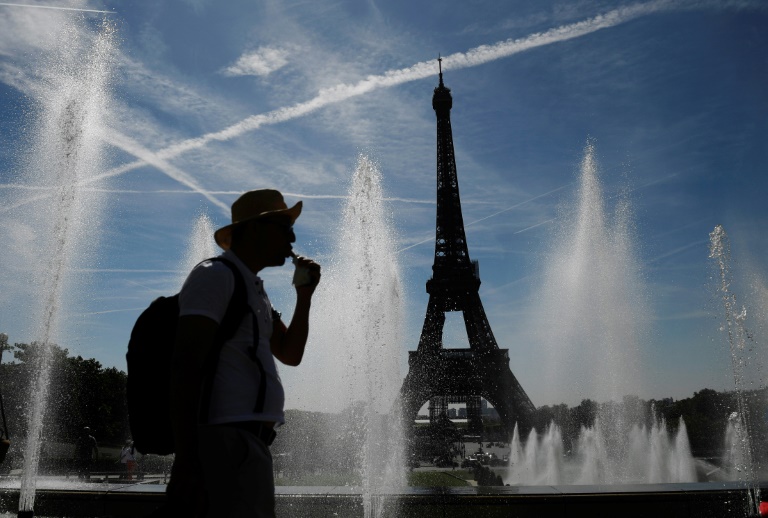
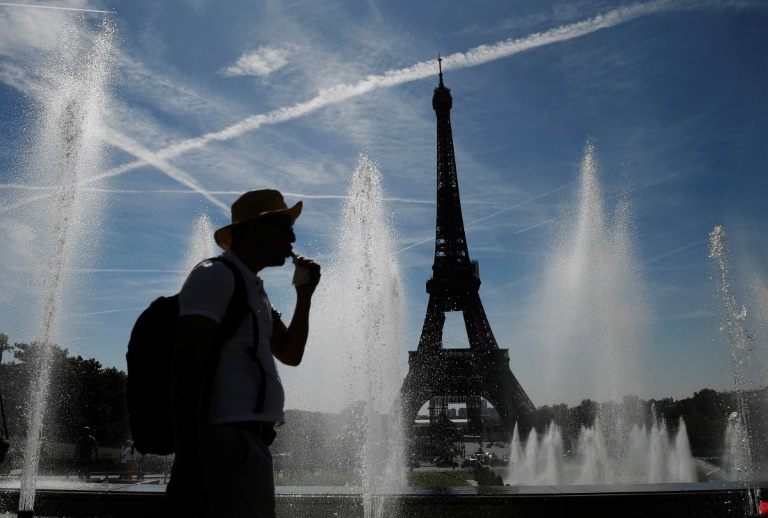
Europe's hottest summers

Sweltering temperatures in Spain and France spotlight the increasing frequency of heatwaves in Europe.

In just over two decades, the continent has experienced its five hottest summers since 1500.

– 2021: Hottest ever –

Last year was Europe’s hottest summer on record, according to the European climate change monitoring service Copernicus.

Between late July and early August 2021, Greece endures what Prime Minister Kyriakos Mitsotakis calls the country’s worst heatwave in over 30 years, with temperatures hitting 45 degrees Celsius (113 Fahrenheit) in some regions.

In Spain, temperatures reach 47C in parts of the south, according to national weather agency AEMET.

The heat and drought spark large wildfires along the Mediterranean, from Turkey and Greece to Italy and Spain.

– 2019: Northern Europe swelters –

The summer of 2019 brings two heatwaves, in late June and mid-July, which leave around 2,500 people dead, according to the Centre for Research on the Epidemiology of Disasters of Belgium’s Louvain University.

In France, temperatures hit a record 46C on June 28 in the southern town of Verargues. Thousands of schools are closed.

On July 24 and 25, northern Europe fries in record heat. Temperatures of 42.6C are recorded at Lingen in northwestern Germany, 41.8C in Begijnendijk in northern Belgium and 38.7C in the eastern English city of Cambridge.

– 2018: Drought drains the Danube –

The second half of July and beginning of August 2018 sees very high temperatures across much of Europe and rivers running dry due to drought.

The Danube falls to its lowest level in 100 years in some areas, notably exposing World War II tanks in Serbia that were submerged since the conflict.

Portugal and Spain suffer hugely destructive forest fires.

– 2017: Months of mugginess –

Much of Europe, but especially the south, sweats from late June to well into August. 

Spain set a record of 47.3C on July 13 in the southern town of Montoro.

Persistent drought sparks forest fires in Portugal.

– 2015: Back-to-back heatwaves –

It’s heatwave after heatwave throughout the summer of 2015 which leaves an estimated 1,700 people dead in France.

In Britain, roads melt and trains are delayed in the hottest July on record, with temperatures reaching 36.7C at Heathrow airport.

– 2007: Greek forests ablaze –

Central and southern Europe are parched by drought throughout June and July, provoking a spate of forest fires in Italy, North Macedonia and Serbia. 

In Hungary, 500 people die as a result of the heat. 

In Greece, the worst fires in half a century — some believed to be the result of arson but others the product of heat and drought — consume four percent of the country’s forests. 

– 2003: 70,000 dead –

Britain, France, Italy, Spain and Portugal all experience exceptional heat in the first half of August, with Portugal suffering a record 47.3C at Amareleja in the south.

An EU study of 16 nations puts the number of excess deaths across the bloc during the heatwave as high as 70,000, with France and Italy each seeing between 15,000 and 20,000 fatalities, according to various reports since.

In France, most of the victims are elderly people left to fend for themselves in an episode that traumatises the country and leads to the implementation of new systems to protect vulnerable people during heatwaves.

Stocks rise but recession fears linger

US and European stock markets rose Friday after a global rout, but investors remain anxious that inflation-fighting interest rate hikes could spark a recession.

Investors were shaken this week after the US Federal Reserve unleashed its biggest hike in borrowing costs for almost 30 years to tackle runaway consumer prices.

This was followed by the fifth straight hike by the Bank of England and the first in 15 years by the Swiss central bank, underscoring the growing global concerns about inflation.

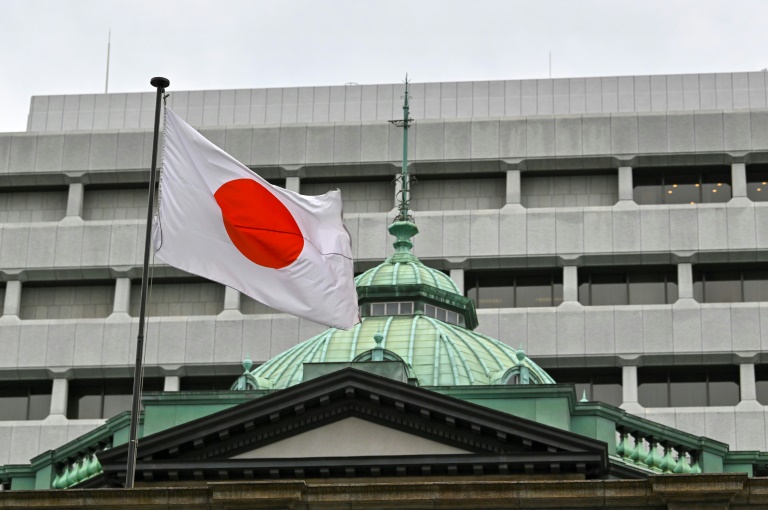
On Friday, however, the Bank of Japan stood by its decision not to raise its rate, sending the yen close to the lowest level against the dollar since 1998.

Officials in Tokyo insist that low rates are still needed to nurture a struggling economy, though the BoJ did say it “was necessary to pay due attention to developments in financial and foreign exchange markets”.

Asian stock markets mostly closed lower Friday after an overnight slump on Wall Street.

US indices opened higher on Friday, with the Dow back up above 30,000 points after falling below the mark for the first time in more than a year. 

European markets were all about 0.5 percent higher in afternoon trading, lower than earlier in the day.

“Stock markets are ending the week on a positive note, not that anyone is getting carried away with today’s price action after turbulent trading conditions in recent days,” said Craig Erlam, analyst at OANDA online trading platform.

“Recessions are increasingly likely as central banks race to dramatically raise rates before inflation spirals out of control,” he said.

– ‘Sinking feeling’ –

Commentators remain unconvinced that Friday’s rebound would be prolonged — because they argue that further rate tightening is needed to bring down sky-high inflation.

Investors worry that while the rate increases can help tame inflation, they can have the adverse side effect of crimping economic growth.

“There is unlikely to be sustained relief from the sinking feeling that has hit financial markets this week, as worries rise that countries around the world won’t avoid falling into the economic pit of recession,” said Hargreaves Lansdown analyst Susannah Streeter.

“After the initial boost of optimism that the Federal Reserve was going to get a handle on inflation… concerns mounted that the price spiral was going to be an even harder nut to crack without fresh aggressive hikes.”

Stock markets have been tumbling for months as traders contemplate the end of the era of cheap cash that had sent share prices to record or multi-year highs.

Inflation worldwide stands at levels not seen for decades owing in particular to surges in energy and food prices.

Oil prices, however, fell by more than two percent on Friday, though they remained elevated at more than $117 per barrel for the main international contract.

– Key figures at around 1340 GMT –

New York – Dow: UP 0.3 percent at 30,012.30 points

London – FTSE 100: UP 0.5 percent at 7,079.02 

Frankfurt – DAX: UP 0.6 percent at 13,119.37 

Paris – CAC 40: UP 0.6 percent at 5,921.31

EURO STOXX 50: UP 0.7 percent at 3,453.20

Tokyo – Nikkei 225: DOWN 1.8 percent at 25,963.00 (close)

Hong Kong – Hang Seng Index: UP 1.1 percent at 21,075.00 (close)

Shanghai – Composite: UP 1.0 percent at 3,316.79 (close)

Euro/dollar: DOWN at $1.0482 from $1.0549 late Thursday

Pound/dollar: DOWN at $1.2235 from $1.2353

Euro/pound: UP at 85.68 pence from 85.41 pence

Dollar/yen: UP at 134.80 yen from 132.21 yen

Brent North Sea crude: DOWN 2.2 percent at $117.15 per barrel

West Texas Intermediate: DOWN 2.4 percent at $112.45

burs-lth/jv

Heatwave grips France and Spain as temps set to rise

A punishing heatwave broke a string of records in France and Britain on Friday as Spain battled to contain forest fires that forced hundreds from their homes. 

The hot weather is in line with warnings from scientists that heatwaves will be more intense and hit earlier than usual thanks to climate change. 

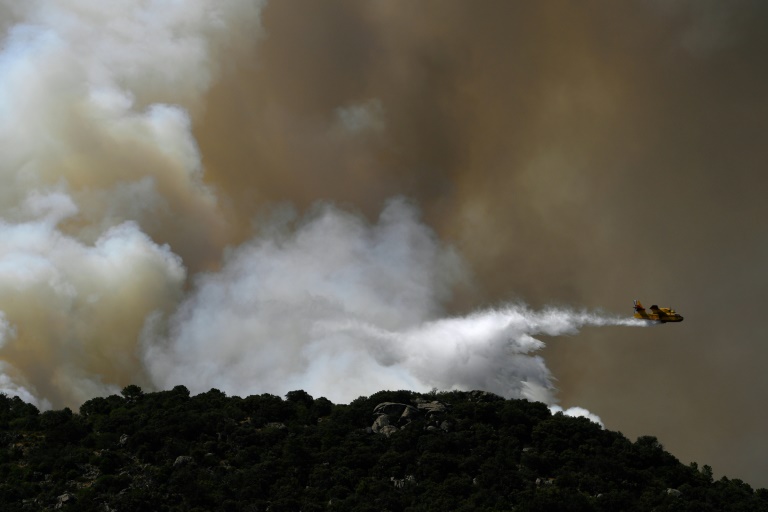
In Spain, forest fires burned up to 7,000 hectares (17,300 acres) of land in the northwest Sierra de la Culebra region Friday, forcing some 200 people from their homes. 

Firefighters were battling fires in several other regions, including woodlands in Catalonia where weather conditions complicated the fight. 

Prime Minister Pedro Sanchez praised firefighters “who risk their lives on the frontline of fires” on Friday, which is also World Day to Combat Desertification and Drought. 

Temperatures were above 35C Friday in most parts of the country and will top 40C in some areas.

– Hospitals full –

In France, temperatures also climbed Friday with one third of French departments at the highest or second-highest heat alert level. 

Much of the country’s southwest will see thermometers top 40C, prompting warnings for the vulnerable. 

“Hospitals are at capacity, but are keeping up with demand,” Health Minister Brigitte Bourguignon told reporters in Vienne, near Lyon in the southeast.

Schoolchildren have been told to stay at home in the 12 departments at alert level “red” and the health ministry activated a special heatwave hotline.

“This is the earliest heatwave ever recorded in France” since 1947, said Matthieu Sorel, a climatologist at weather authority Meteo France.

With “many monthly or even all-time temperature records likely to be beaten in several regions,” he called the unseasonable weather a “marker of climate change”.

The heatwave has spread up from north Africa through Spain, also affecting Italy and the United Kingdom. 

Several towns in northern Italy have announced water rationing and the Lombardy region may declare a state of emergency as a record drought threatens harvests.

The UK recorded its hottest day of the year on Friday with temperatures reaching over 30C in the early afternoon, meteorologists said. 

It was the third day in a row that temperature records had been broken in the UK, where it was over 28C on Wednesday and 29.5C on Thursday.

– Climate change –

Experts warned that the high temperatures were caused by worrying climate change trends.  

“As a result of climate change, heatwaves are starting earlier,” said Clare Nullis, a spokeswoman for the World Meteorological Organization in Geneva.

“What we’re witnessing today is unfortunately a foretaste of the future” if concentrations of greenhouse gases in the atmosphere continue to rise and push global warming towards 2C from pre-industrial levels, she added.

In France, special measures have been taken in care homes for elderly people, still marked by the memory of a deadly 2003 heatwave.

Buildings are being sprayed down with water to cool them and residents are being rotated through air-conditioned rooms.

“We’re taking even more care than usual with the old folks. It’s tough for them. They’re often alone, worn down physically and unable to act independently,” said Sarah Jalabert, a nurse making home visits in the Tarn department.

In the Gironde department, which includes Bordeaux, authorities said all public events outdoors or in non-air-conditioned venues would be banned from 2:00 pm (1200 GMT) on Friday, a measure set to be broadened across the region.

And speed limits in several regions, including around Paris, have been reduced to limit the concentration of harmful smog or ozone in the heat.

Electric grid operator RTE said increased use of fans and air-conditioners was also driving up power consumption.

burs-tgb/js/jv

Heatwave grips France and Spain as temps set to rise

A punishing heatwave broke a string of records in France and Britain on Friday as Spain battled to contain forest fires that forced hundreds from their homes. 

The hot weather is in line with warnings from scientists that heatwaves will be more intense and hit earlier than usual thanks to climate change. 

In Spain, forest fires burned up to 7,000 hectares (17,300 acres) of land in the northwest Sierra de la Culebra region Friday, forcing some 200 people from their homes. 

Firefighters were battling fires in several other regions, including woodlands in Catalonia where weather conditions complicated the fight. 

Prime Minister Pedro Sanchez praised firefighters “who risk their lives on the frontline of fires” on Friday, which is also World Day to Combat Desertification and Drought. 

Temperatures were above 35C Friday in most parts of the country and will top 40C in some areas.

– Hospitals full –

In France, temperatures also climbed Friday with one third of French departments at the highest or second-highest heat alert level. 

Much of the country’s southwest will see thermometers top 40C, prompting warnings for the vulnerable. 

“Hospitals are at capacity, but are keeping up with demand,” Health Minister Brigitte Bourguignon told reporters in Vienne, near Lyon in the southeast.

Schoolchildren have been told to stay at home in the 12 departments at alert level “red” and the health ministry activated a special heatwave hotline.

“This is the earliest heatwave ever recorded in France” since 1947, said Matthieu Sorel, a climatologist at weather authority Meteo France.

With “many monthly or even all-time temperature records likely to be beaten in several regions,” he called the unseasonable weather a “marker of climate change”.

The heatwave has spread up from north Africa through Spain, also affecting Italy and the United Kingdom. 

Several towns in northern Italy have announced water rationing and the Lombardy region may declare a state of emergency as a record drought threatens harvests.

The UK recorded its hottest day of the year on Friday with temperatures reaching over 30C in the early afternoon, meteorologists said. 

It was the third day in a row that temperature records had been broken in the UK, where it was over 28C on Wednesday and 29.5C on Thursday.

– Climate change –

Experts warned that the high temperatures were caused by worrying climate change trends.  

“As a result of climate change, heatwaves are starting earlier,” said Clare Nullis, a spokeswoman for the World Meteorological Organization in Geneva.

“What we’re witnessing today is unfortunately a foretaste of the future” if concentrations of greenhouse gases in the atmosphere continue to rise and push global warming towards 2C from pre-industrial levels, she added.

In France, special measures have been taken in care homes for elderly people, still marked by the memory of a deadly 2003 heatwave.

Buildings are being sprayed down with water to cool them and residents are being rotated through air-conditioned rooms.

“We’re taking even more care than usual with the old folks. It’s tough for them. They’re often alone, worn down physically and unable to act independently,” said Sarah Jalabert, a nurse making home visits in the Tarn department.

In the Gironde department, which includes Bordeaux, authorities said all public events outdoors or in non-air-conditioned venues would be banned from 2:00 pm (1200 GMT) on Friday, a measure set to be broadened across the region.

And speed limits in several regions, including around Paris, have been reduced to limit the concentration of harmful smog or ozone in the heat.

Electric grid operator RTE said increased use of fans and air-conditioners was also driving up power consumption.

burs-tgb/js/jv

DR Congo soldier killed in gunfire on Rwandan border

A DR Congo soldier was killed in the country’s flashpoint eastern region on Friday in an exchange of fire at a border post with Rwanda, police said, while Rwanda said two of its soldiers were wounded.

The incident, coinciding with mounting tension between the neighbouring countries, happened at a frontier post in the eastern Congolese city of Goma, they said.

“A Congolese soldier rushed forward, opening fire in the direction of the Rwandan border,” a Congolese policeman who was present told AFP.

“A Rwandan soldier opened fire and he died on the spot. There was then an exchange of fire between us and the Rwandan security forces. Some of the civilians who were waiting to cross the border were wounded.” 

Rwanda’s army later confirmed the incident, stating that a Congolese soldier had crossed the border and begun shooting at troops and civilians with an AK-47 assault rifle, wounding two Rwandan soldiers.

“The Congolese soldier was shot dead 25 metres (yards) inside Rwandan territory,” the statement said.

In the early afternoon, the Congolese soldier’s body was repatriated to DR Congo, according to an AFP correspondent, where an applauding crowd received it.

Observers from a multinational organisation called the International Conference on the Great Lakes Region (ICGLR) briefly conferred with Congolese and Rwandan officials at the border. 

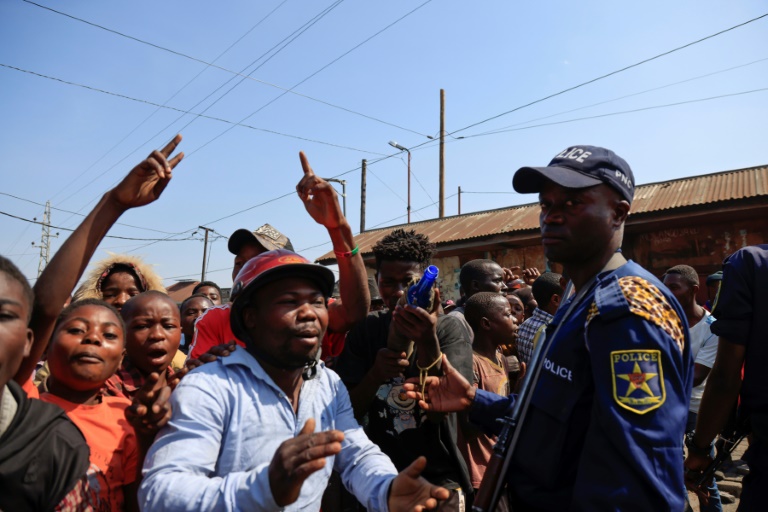
Congolese police held back around a hundred demonstrators who tried to head to the border post, chanting slogans against Rwandan President Paul Kagame.

Fighting between Congolese troops and a rebel movement called the M23 has inflamed tensions between the two neighbours.

The Democratic Republic of Congo’s government accuses Rwanda of supporting, funding and arming the rebels, a charge that the government in Kigali repeatedly denies.

– Troubled region –

The M23 is a primarily Congolese Tutsi militia that is one of scores of armed groups in eastern DRC.

It leapt to global prominence in 2012 when it briefly captured Goma, an important commercial hub of about a million people.

It was forced out shortly afterward in a joint offensive by UN troops and the Congolese army.

After lying dormant for years, the rebels resumed fighting last November after accusing the government of failing to honour a 2009 agreement under which the army was to incorporate its fighters.

Clashes intensified in March, causing thousands of people to flee. On Monday, M23 fighters captured the strategic town of Bunagana on the Ugandan border. 

Relations between Kinshasa and Kigali have a strained history, dating back to the influx in DRC of Rwandan Hutus accused of slaughtering Tutsis during the 1994 Rwanda genocide.

WTO agrees to lift Covid vaccine patents, but is it 'too late'?

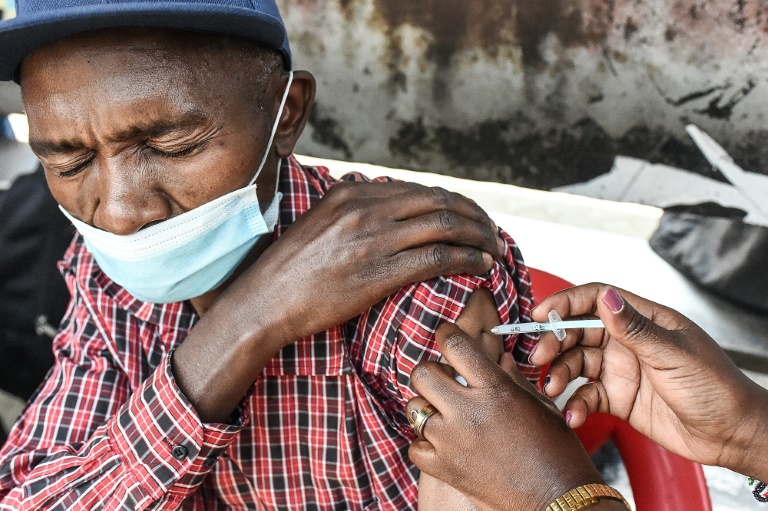
The World Trade Organization agreed Friday to temporarily lift patents on Covid-19 vaccines after two years of bruising negotiations, but experts expressed scepticism that the deal will have a major impact on global vaccination inequality.

The unprecedented agreement, sealed by all 164 WTO members after late-night overtime talks, will grant developing countries the right to produce Covid vaccines for five years “without the consent of the right holder”.

Since October 2020, South Africa and India have called for intellectual property rights for coronavirus vaccines to be temporarily lifted so they can boost production to address the gaping inequality in access between rich and poor nations.

But Friday’s compromise fell short of their earlier requests that the waiver apply to all countries — and also cover Covid tests and treatments.

Under the terms of the new deal, WTO members have six months to decide on whether to extend the measures “to cover the production and supply of Covid-19 diagnostics and therapeutics”. 

“This does not correspond to the initial request,” said Jerome Martin, the co-founder of the Drug Policy Transparency Observatory, pointing to the fact that the deal only includes developing countries.

“We have to see what it does in the field, but it is not ambitious at all,” he told AFP.

– ‘Disappointing’ –

James Love, director of Knowledge Ecology International, said it was “a limited and disappointing outcome”.

“The fact that the exception is limited to vaccines, has a five-year duration and does not address WTO rules on trade secrets makes it particularly unlikely to provide expanded access to Covid-19 counter-measures,” he said in a statement.

“The pressure this week was to reach consensus in order to make multilateralism look like it works, which seems to have been the main justification for producing this decision.”

Max Lawson, co-chair of the People’s Vaccine Alliance and Oxfam’s head of inequality, singled out Switzerland, Britain and the European Union for “blocking anything that resembles a meaningful intellectual property waiver”.

“The conduct of rich countries at the WTO has been utterly shameful,” he said.

The agreement also disappointed the pharmaceutical lobby group IFPMA, which warned that “dismantling” patent protections would strangle innovation. 

“The single biggest factor affecting vaccine scarcity is not intellectual property, but trade. This has not been fully addressed by the World Trade Organization,” said IFPMA’s director general Thomas Cueni.

And while vaccine doses were scarce early in the pandemic, that is no longer the case. 

Nearly 14 billion doses had been produced worldwide as of mid-June, according to research group Airfinity.

As supply soars, some vaccine makers like the giant Serum Institute of India have stopped producing doses due to falling demand.

Yet many developing countries still lag far behind the rest of the world in vaccination rates.

While 60 percent of the world’s population has received two vaccine doses, that number falls to 17 percent in Libya, eight percent in Nigeria and less than five percent in Cameroon, according to the World Health Organization.

Pharma groups have said that the logistics involved in distributing vaccines in developing countries is a far bigger hurdle to rolling out doses.

– ‘Wealthy countries failed’ – 

Even India, which fought long and hard for the waiver, expressed doubts about whether the final compromise deal would have an effect.

Earlier this week, Indian Commerce and Industry Minister Piyush Goyal said that “my own feeling is, not a single factory, not one, will ever come up with the agreement that we are finally trying to negotiate and which may get approved.”

“It is just too late,” he said in a statement.

It marks the first time the WTO has temporarily lifted patents on vaccines, though in 2001 it set up a compulsory licensing mechanism for HIV treatments. 

Francois Pochart, a patent specialist at the August Debouzy law firm in Paris, said that the new WTO agreement is “a step forward” compared to those compulsory licences.

“Countries can decide on their own without having to make a request. The real novelty is that this waiver allows the country that produces the vaccine to also export to other markets, to another eligible member,” he said. 

But Christos Christou, the president of Doctors Without Borders, branded the deal “a devastating global failure”.

“Despite lofty political commitments and words of solidarity, it has been discouraging for us to see that wealthy countries failed to resolve the glaring inequities in access to lifesaving Covid-19 medical tools for people in low- and middle-income countries.”

EU backs Ukraine's 'European dream' as Russia cuts gas supplies

Europe sent a powerful symbol of solidarity with Ukraine on Friday, when Brussels backed Kyiv’s bid for EU candidate status, even as Russia shelled frontline Ukrainian cities and cut back gas supplies to the West.

With the European Commission’s backing, Ukraine could now be added to the list of countries vying for EU membership as early as next week, when member state leaders meet at their Brussels summit. 

All 27 EU leaders will have to agree to the candidacy, but the heads of the European Union’s biggest members — France, Germany and Italy — already gave their full-throated support to the idea on Thursday, on a trip to a war-torn suburb of Kyiv.

Then on Friday, the European Commission gave the executive’s formal backing to the bid, and EU chief Ursula von der Leyen made her position clear by donning a striking jacket in Ukraine’s national colours.

“We all know that Ukrainians are ready to die for the European perspective. We want them to live with us for the European dream,” she said.

Ukraine’s President Volodymyr Zelensky immediately welcomed the decision as a “first step on the EU membership path that’ll certainly bring our victory closer”.

He thanked von der Leyen for the commission’s “historic decision” and said he expected that EU leaders would give Ukraine a “positive result” at the June 23 to 24 summit.

Russia responded to Brussels’ decision with scorn, accusing the West of “manipulating” Ukraine with promises of integration. 

– Russian bombardment –

Foreign ministry spokeswoman Maria Zakharova said Ukraine “is not getting a bright future, for some reason, despite the promises becoming more and more sweet and alluring”.

Once Ukraine joins the EU candidates’ list — alongside several countries in the western Balkans — it could still take years to meet all the formal membership requirements, even if Kyiv prevails in the war.

“Yes, Ukraine should be welcomed as a candidate country — this is based on the understanding that good work has been done but important work also remains to be done,” von der Leyen said.

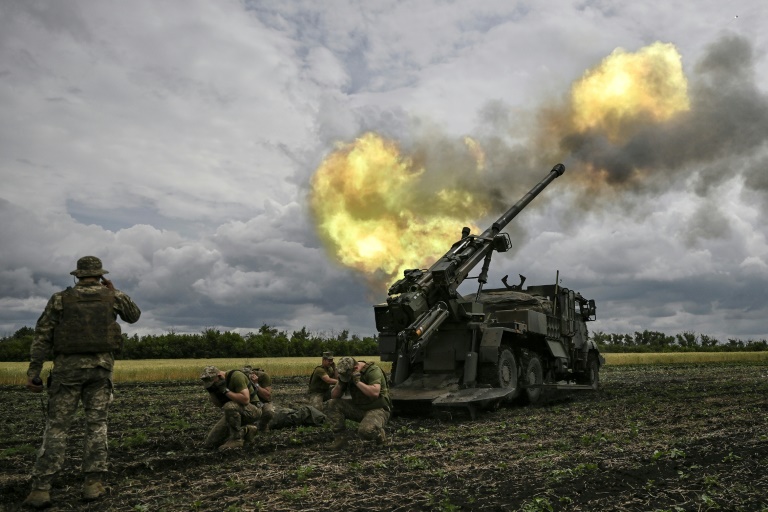
And in the meantime, the fighting continues, with Russian forces bombarding Ukrainian pockets of resistance in frontline Severodonetsk, including civilians holed up in a chemical plant in the eastern Ukrainian city.

And Moscow turned up the pressure on the Western allies, sharply reducing flows of natural gas in its pipelines to Western Europe, driving up energy prices.

France’s network provider said it had not received any Russian gas by pipeline from Germany since June 15, and Italy’s Eni said it expected Russian firm Gazprom to cut its supplies by half on Friday.

Several European countries, including Italy and Germany, are highly reliant upon Russian gas for their energy needs and, as the West sides with Ukraine, Moscow is cutting supplies.

– ‘Extremely alarming’ –

Berlin and Rome have rejected Russia’s argument that technical issues have caused the drop in supplies, arguing that state-owned Gazprom’s move is political.

But western Europe is sweltering in a heatwave and energy prices are already soaring, adding to runaway inflation and industrial action in several economies.

The situation is, of course, starker in Ukraine itself, where Russian troops have occupied a swathe of the south and east of the country during the 113-day war, including much of the Donbas region.

“The humanitarian situation across Ukraine — particularly in the eastern Donbas — is extremely alarming and continues to deteriorate rapidly,” the UN humanitarian agency, OCHA, said.

The statement said the situation is “particularly worrying in and around Severodonetsk” — where bloody battles have raged for weeks. 

Severodonetsk is in the Lugansk region, where governor Sergiy Gaiday called for a ceasefire, stating hundreds of civilians were trapped in the besieged Azot chemical plant in the city.  

“It is now impossible and physically dangerous to get out of the plant due to constant shelling and fighting. There are 568 people in the shelter, including 38 children,” he said.

– ‘God’s will’ –

Gaiday said earlier this week that around 10,000 civilians remained in the city, which is controlled mostly by Russian forces.

In the frontline Donbas village of Adamivka near the city of Sloviansk, a community of Orthodox nuns have seen a rocket hole blasted into the wall of their well-tended garden.

Under near-constant bombardment by Russian forces, Sister Anastasi and a group of other black-clad nuns and pilgrims live day-to-day, praying for deliverance.

“We are all alive, yes. No one has left. This is our home,” she said quietly, her face framed by a black veil, as shells crashed in the distance.

“We trust in God’s will, in God’s help, in the help of all the saints and the Holy Virgin. This is our home, we have nowhere else to go.” 

At least two people were killed and 20 injured in a Russian strike on a residential area in the southern Ukrainian city of Mykolaiv, the local governor said.

Separately, Zelensky announced an end to the visa-free travel that Russian citizens, many of whom have Ukrainian relatives, have enjoyed since Ukraine became independent from the Soviet Union in 1991.

burs-dc/jm

US approves Pfizer and Moderna vaccines for youngest children

The US Food and Drug Administration granted emergency authorization Friday for the use of Pfizer and Moderna Covid-19 vaccines in the youngest children, the final age group awaiting immunization in most countries.

The agency authorized Moderna’s two-dose vaccine for children aged six months to five years, and three doses of Pfizer’s shots for those between six months and four years old.

“Many parents, caregivers and clinicians have been waiting for a vaccine for younger children and this action will help protect those down to six months of age,” Food and Drug Administration chief Robert Califf said in a statement.

“We expect that the vaccines for younger children will provide protection from the most severe outcomes of Covid-19, such as hospitalization and death.”

The Centers for Disease Control and Prevention (CDC) must now also recommend the vaccines before they are put into use — a final green light that will be given after a meeting of an advisory committee of experts that is expected to be held shortly.

But the US government has said that as soon as the FDA decision is made, 10 million doses could immediately be sent around the country, followed by millions more in subsequent weeks. 

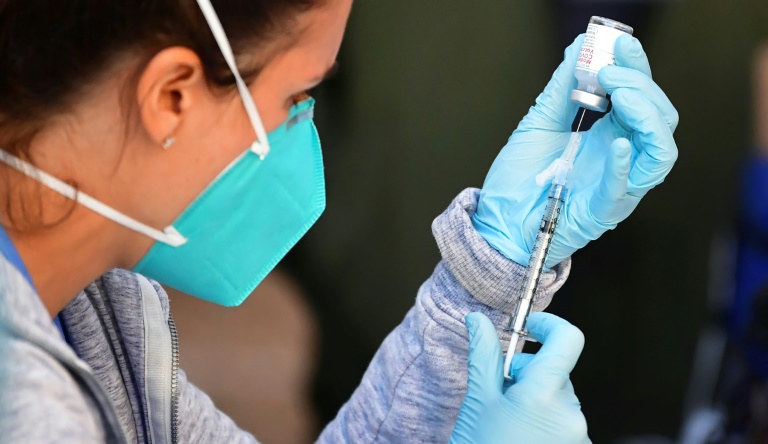
Both vaccines are based on messenger RNA, which delivers genetic code for the coronavirus spike protein to human cells that then grow it on their surface, training the immune system to be ready. The technology is now considered the leading Covid vaccination platform.

The vaccines were tested in trials of thousands of children. They were found to cause similar levels of mild side effects as in older age groups and triggered similar levels of antibodies.

Efficacy against infection was higher for Pfizer, with the company placing it at 80 percent, compared to Moderna’s estimates of 51 percent for children aged six-months to two years old and 37 percent for those aged two to five years.

But the Pfizer figure is based on very few cases and is thus considered preliminary. It also takes three doses to achieve its protection, with the third shot given eight weeks after the second, which is given three weeks after the first.

Moderna’s vaccine should provide strong protection against severe disease after two doses, given four weeks apart, and the company is studying adding a booster that would raise efficacy levels against mild disease.

However, Moderna’s decision to go with a higher dose is associated with higher levels of fevers in reaction to the vaccine compared to Pfizer.

There are some 20 million children aged four years and under in the United States.

Close Bitnami banner
Bitnami