World

UAE seeks Iran assurance on 'peacefulness' of nuclear programme

The United Arab Emirates urged Iran on Friday to provide reassurances on the peaceful nature of its nuclear programme after the International Atomic Energy Agency denounced Tehran’s lack of cooperation.

“There are concerns,” said the permanent representative of the UAE to the IAEA, Hamad Al Kaabi.

In response to an AFP question during a press conference on the Emirates’ own nuclear programme, he called on Iran to “closely cooperate with the IAEA” and “provide reassurances to regional and international countries regarding the peacefulness of its nuclear programme”.

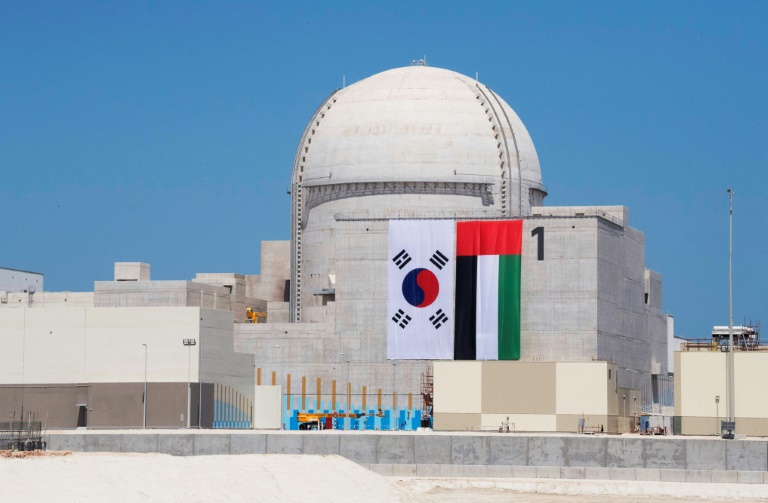
The UAE has the first nuclear power plant in the Arab world. 

It lies just across the Gulf from Iran which has a nuclear power plant of its own outside the coastal city of Bushehr, as well as a controversial uranium enrichment programme.

Kaabi’s statements come after Iran disconnected some IAEA cameras monitoring its nuclear sites this month, shortly after the US and its European allies pushed through a resolution at the UN agency denouncing Tehran’s lack of cooperation.

A 2015 deal with world powers gave Iran relief from sanctions in return for guarantees that it could not develop a nuclear weapon — something Tehran has always denied wanting to do.

The United States unilaterally withdrew from the nuclear agreement in 2018 under then-president Donald Trump, before imposing biting sanctions on the Islamic republic. Iran in turn began reneging on its own commitments.

US President Joe Biden has said he is ready to again embrace the deal so long as Iran also respects its own pledges under it.

Washington’s Secretary of State Antony Blinken in April said the “breakout time” for Iran to develop a nuclear bomb, if it so chooses, is “down to a matter of weeks” after the deal had pushed it beyond a year.

The UAE has repeatedly said its nuclear ambitions are for “peaceful purposes” and has ruled out developing any enrichment programme or nuclear reprocessing technologies.

It has also moved to dispel any concerns over safety, underlining that the plant has welcomed more than 40 international reviews and inspection missions.
UAE seeks Iran assurance on 'peacefulness' of nuclear programme

The United Arab Emirates urged Iran on Friday to provide reassurances on the peaceful nature of its nuclear programme after the International Atomic Energy Agency denounced Tehran’s lack of cooperation.

“There are concerns,” said the permanent representative of the UAE to the IAEA, Hamad Al Kaabi.

In response to an AFP question during a press conference on the Emirates’ own nuclear programme, he called on Iran to “closely cooperate with the IAEA” and “provide reassurances to regional and international countries regarding the peacefulness of its nuclear programme”.

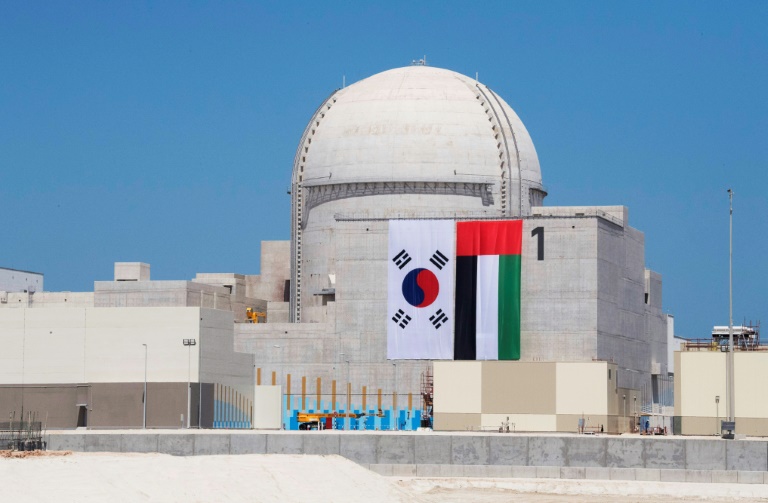
The UAE has the first nuclear power plant in the Arab world. 

It lies just across the Gulf from Iran which has a nuclear power plant of its own outside the coastal city of Bushehr, as well as a controversial uranium enrichment programme.

Kaabi’s statements come after Iran disconnected some IAEA cameras monitoring its nuclear sites this month, shortly after the US and its European allies pushed through a resolution at the UN agency denouncing Tehran’s lack of cooperation.

A 2015 deal with world powers gave Iran relief from sanctions in return for guarantees that it could not develop a nuclear weapon — something Tehran has always denied wanting to do.

The United States unilaterally withdrew from the nuclear agreement in 2018 under then-president Donald Trump, before imposing biting sanctions on the Islamic republic. Iran in turn began reneging on its own commitments.

US President Joe Biden has said he is ready to again embrace the deal so long as Iran also respects its own pledges under it.

Washington’s Secretary of State Antony Blinken in April said the “breakout time” for Iran to develop a nuclear bomb, if it so chooses, is “down to a matter of weeks” after the deal had pushed it beyond a year.

The UAE has repeatedly said its nuclear ambitions are for “peaceful purposes” and has ruled out developing any enrichment programme or nuclear reprocessing technologies.

It has also moved to dispel any concerns over safety, underlining that the plant has welcomed more than 40 international reviews and inspection missions.
Assange vows to fight UK approval of extradition to US

Supporters of Julian Assange on Friday vowed to fight his extradition to the United States after Britain approved a US request for the WikiLeaks founder to face trial over the publication of secret military files.

“We’re not at the end of the road here. We’re going to fight this. We’re going to use every appeal avenue,” Stella Assange, who married the Australian publisher earlier this year, told reporters.

His lawyer, Jen Robinson, urged US President Joe Biden to drop the charges and called on the Australian government to press for her client’s release.

“We will appeal this all the way through the British courts and if necessary to the European Court of Human Rights,” she added.

The Assange case has become a cause celebre for media freedom and his supporters accuse Washington of trying to muzzle reporting of legitimate security concerns.

He is wanted to face trial for violating the US Espionage Act by publishing military and diplomatic files in 2010 and could face up to 175 years in jail if found guilty, although the exact sentence is difficult to estimate.

The UK interior ministry earlier announced that Home Secretary Priti Patel had approved the extradition order but that he had 14 days to appeal.

– ‘Dark day’ –

That sets up yet another court hearing in the long-running legal saga, which began in 2010 after WikiLeaks published more than 500,000 classified US documents about the wars in Iraq and Afghanistan.

His supporters have held frequent rallies to protest the planned deportation, accusing Washington of a politically motivated campaign as Assange, 50, had exposed US war crimes and a cover-up.

WikiLeaks said the decision was a “dark day for press freedom and for British democracy” and alleged that Assange had been on a CIA hit-list.

“Julian did nothing wrong. He has committed no crime and is not a criminal. He is a journalist and a publisher, and he is being punished for doing his job,” the group said in a statement.

Extradition was a work of “revenge” and an attempt to “try to disappear him into the darkest recesses of their prison system for the rest of his life to deter others from holding governments to account”.

Amnesty International said the government’s approval of the extradition “sends a chilling message” to journalists and exposed Assange to torture and ill-treatment if he were kept in solitary confinement.

The human rights monitor’s secretary-general Agnes Callamard said diplomatic assurances that he would be well treated were not to be trusted, she added.

– No grounds –

The Home Office, however, said there were no grounds for Patel to block the extradition order, which was made on April 20.

“In this case, the UK courts have not found that it would be oppressive, unjust or an abuse of process to extradite Mr Assange,” a spokesperson said.

“Nor have they found that extradition would be incompatible with his human rights, including his right to a fair trial and to freedom of expression, and that whilst in the US he will be treated appropriately, including in relation to his health.”

Legal experts said Assange’s decision to appeal sets up potentially months of legal hearings.

He would first need permission to appeal from the High Court. If that was granted, the hearing might not be until early next year.

“He could also make an application to the European Court of Human Rights,” said Kate Goold, an extradition lawyer at London firm Bindmans.

– ‘Lengthy process’ –

“Once you get to the European Court of Human Rights, it’s a very, very slow process,” added another specialist Rebecca Niblock, from lawyers Kingsley Napley.

“Extradition is a very lengthy process and it is very unlikely that this will be the end of it.”

Assange has been held on remand at a top-security jail in southeast London since 2019 for jumping bail in a previous case accusing him of sexual assault in Sweden.

That case was dropped but he was not released from prison after serving time for breaching bail on the grounds he was a flight risk in the US extradition case.

His supporters have tried to secure his release and block his extradition on the grounds that he was a suicide risk if held in punishing isolation in US custody.

Assange, who got married behind bars in March, spent seven years at Ecuador’s embassy in London to avoid being removed to Sweden.

He was arrested when the government changed in Quito and his diplomatic protection was removed.

Russia gas squeeze threatens Europe's stockpiling plans

With France becoming the latest country to be cut off from Russian natural gas, and supplies sharply reduced in Italy and Germany, Europe’s summer stockpiling plans are looking shaky.

As the war in Ukraine nears its fourth month, Moscow is hitting Europe — which gets some 40 percent of its gas from Russia — where it hurts.

Several European countries, including Italy and Germany, are highly reliant upon Russian gas for their energy needs and Italian Prime Minister Mario Draghi has bluntly accused energy giant Gazprom of lying over the reasons for the cuts.

Europe uses less gas in summer months as it does not need to heat buildings, but countries are racing to replenish their reserves for the following winter.

The EU wants the gas storage infrastructures of its member states to be filled to at least 80 percent of their capacity by November.

The gas squeeze, which pushes prices up, “has consequences, not immediately on consumption, but on stockpiling”, Draghi said Thursday, adding that Italy’s reserves were at 52 percent.

– ‘Gas as weapon’ –

The reduction in supplies will also be costly for manufacturers — especially in countries like Germany, where factories in the chemical, steel, cement and fertiliser industries need huge quantities of gas.

“The Russians have been using gas as a weapon for a long time,” Thierry Bros, a professor at the Sciences Po university in Paris, told AFP.

“The Kremlin uses the principle of uncertainty, one day something and the next day something else, to… stretch the commodities market and drive up prices”.

Poland, Bulgaria, Finland and the Netherlands have had their natural gas deliveries suspended over refusing to follow Russia’s demand that it be paid in rubles.

The latest blows hit France Friday, where operator GRTgaz said it had not received any Russian gas by pipeline since 15 June, and Italy, which faced a third day of reduced supplies.

On Friday, Europe’s reference natural gas price, Dutch TTF, reached 130 euros ($137) per megawatt/hour compared to 100 euros on Wednesday — and 30 euros a year earlier.

– Breaking European unity –

France had been relying on Russia for about 17 percent of its gas, most of which arrived via pipeline, with the rest being brought in in liquid form by LNG ships.

The reason for the cut is unknown — but follows a 60 percent reduction in deliveries to Germany via the Nord Stream 1 pipeline.

Italy’s Eni said it will receive only 50 percent of the gas requested Friday.

Draghi has rejected Gazprom’s excuses, saying the reasons “we are told, are technical”.

“We and Germany and others believe that these are lies”.

The Russian company, he insisted Thursday, was using gas for “political” ends.

Germany’s economy and climate minister, Robert Habeck, has described the gas cuts as “a showdown with (Russian President Vladimir) Putin”.

“This is a decision he is making arbitrarily – that’s how dictators and despots act.” 

Gazprom, however, says Moscow has every right to play by its own rules over the cuts.

Bros at Sciences Po said Gazprom “does not need any justification”.

“It is cutting in a differentiated way to break European unity.”

EU countries have scrambled to wean themselves off Russian energy but are divided about imposing a natural gas embargo because several member states are heavily reliant on Moscow’s supplies.

Some are considering installing new terminals to boost their capabilities for liquefied natural gas (LNG).

France has already greatly upped purchases of LNG since the February invasion and its terminals are close to their maximum, according to GRTgaz.

The country has become the largest buyer of Russian LNG in the world, according to Lauri Myllyvirta, an analyst at the Centre for Research on Energy and Clean Air (CREA), which published a report on Russian oil and gas sales this week.

Tesla shareholder sues Musk over racism and sexual harassment complaints

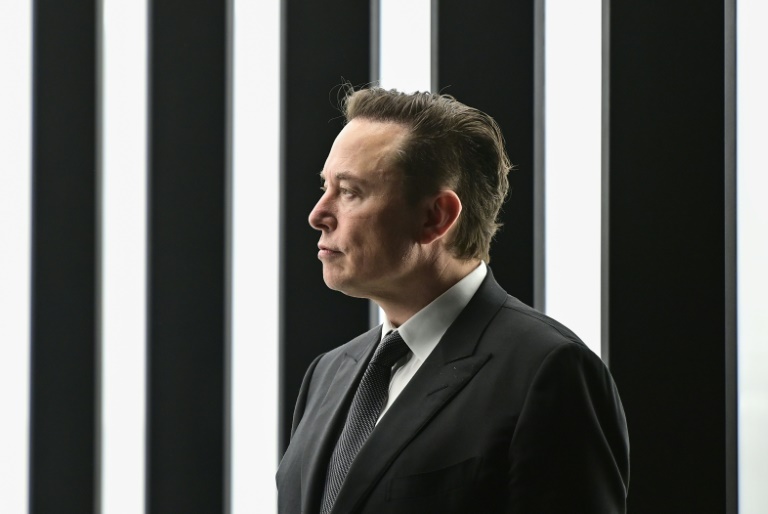
A Tesla shareholder has filed legal proceedings against Elon Musk and the company’s board of directors, accusing them of ignoring employee complaints of racism and sexual harassment.

The lawsuit — brought forward Thursday by plaintiff Solomon Chau in Texas where Tesla is headquartered — argues that an unaddressed “toxic workplace culture” at the company has caused “irreparable” reputational damage and financial harm.

The action was the latest against Tesla, which has been hit by a spate of sexual harassment lawsuits and Black employees complaining of rampant racism. 

In February, the state of California sued Tesla over alleged discrimination and harassment against Black employees at its Fremont plant near San Francisco, saying in a complaint that the company had created a “racially segregated workplace.”

Thursday’s court filing stated that a “toxic environment took shape internally for years and the truth about Tesla’s culture has only recently emerged, leading to actions by both regulators and private individuals.”

The lawsuit asserts that Musk, who is Tesla’s executive director, and its 11 board members ignored several “red flags”, which resulted in the departure of numerous highly qualified employees and set off a series of costly legal proceedings.

“These wrongs resulted in significant damages to Tesla’s reputation, goodwill, and standing in the business community”, the lawsuit states, and “exposed Tesla to hundreds of millions of dollars in potential liability for violations of state and federal law.”

In another lawsuit last year, Tesla was ordered to pay $137 million plus interest to a former elevator operator at its Fremont factory for turning a blind eye to racism. Earlier this year, the penalty was reduced to $15 million.

Other legal proceedings, in particular from Black women employees who claim to have been victims of racial slurs and inappropriate sexual remarks by colleagues or superiors, are underway.

Tesla, which has barely responded to requests from journalists since late 2020, did not respond to a request from AFP.

Musk was also sued on Thursday by an investor in dogecoin, who says he lost money after investing in the cryptocurrency, and described himself as an “American citizen who was defrauded” by what he called a “Dogecoin Crypto Pyramid Scheme.”

UK clears Assange extradition to US

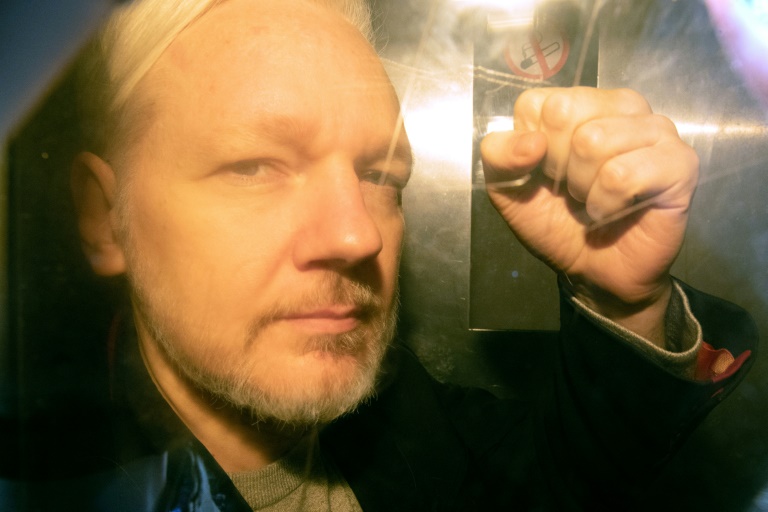
Britain on Friday approved a US government request to extradite WikiLeaks founder Julian Assange to face trial over the publication of secret military files, prompting outrage from his supporters.

Home Secretary Priti Patel’s interior ministry said Assange had 14 days to appeal the decision, which comes after a UK court issued a formal order clearing his removal in April.

Assange’s supporters have held frequent rallies to protest the planned deportation in what they claim is a defence of media freedom and free speech.

His wife, Stella, has pleaded for his release from custody after they had two children in secret he was holed up for years in Ecuador’s London embassy.

WikiLeaks called Patel’s decision a “dark day for press freedom and for British democracy” and vowed to pursue the appeal to the High Court”.

It accused the United States of having “plotted his assassination”.

“Julian did nothing wrong. He has committed no crime and is not a criminal. He is a journalist and a publisher, and he is being punished for doing his job,” the group said in a statement.

WikiLeaks said the case was “political”, as Assange published evidence that the United States “committed war crimes and covered them up”.

The extradition was an attempt to “try to disappear him into the darkest recesses of their prison system for the rest of his life to deter others from holding governments to account”.

The head of Amnesty International said the government’s approval of the extradition “sends a chilling message” to journalists.

“If the extradition proceeds, Amnesty International is extremely concerned that Assange faces a high risk of prolonged solitary confinement, which would violate the prohibition on torture and other ill treatment,” said Agnes Callamard.

“Diplomatic assurances provided by the US that Assange will not be kept in solitary confinement cannot be taken on face value given previous history,” she added, calling for the charges to be dropped and Assange to be released.

– No grounds –

A Home Office spokesperson said there were no grounds for Patel to block the extradition order, which was made on April 20 after a long-running legal saga up the hierarchy of UK courts.

“In this case, the UK courts have not found that it would be oppressive, unjust or an abuse of process to extradite Mr Assange,” the spokesperson said.

“Nor have they found that extradition would be incompatible with his human rights, including his right to a fair trial and to freedom of expression, and that whilst in the US he will be treated appropriately, including in relation to his health.”

Legal experts assess that Patel’s decision is likely not the end of the road for Assange, with potentially months of court challenges ahead.

Assange would first need permission to appeal from the High Court. If that was granted, the hearing might not be until early next year.

“He could also make an application to the European Court of Human Rights,” said Kate Goold, an extradition lawyer at London firm Bindmans.

“Once you get to the European Court of Human Rights, it’s a very, very slow process,” added another specialist Rebecca Niblock, from lawyers Kingsley Napley.

“Extradition is a very lengthy process and it is very unlikely that this will be the end of it.”

– Cause celebre –

The Assange case has become a cause celebre for media freedom, with his supporters accusing Washington of trying to muzzle reporting of legitimate security concerns.

He is wanted to face trial for violating the US Espionage Act by publishing military and diplomatic files in 2010, and could face up to 175 years in jail if found guilty, although the exact sentence is difficult to estimate.

He has been held on remand at a top-security jail in southeast London since 2019 for jumping bail in a previous case accusing him of sexual assault in Sweden.

That case was dropped but he was not released from prison after serving time for breaching bail on the grounds he was a flight risk in the US extradition case.

His supporters have tried to secure his release and block his extradition on the grounds that he was a suicide risk if held in punishing isolation in US custody.

Assange, who married in jail in March, spent seven years at Ecuador’s embassy in London to avoid being removed to Sweden.

He was arrested when the government changed in Quito and his diplomatic protection was removed.

China launches third aircraft carrier in major military milestone

China on Friday launched its biggest and most modern aircraft carrier, marking a major military advance for the Asian superpower.

The announcement comes at a time of heightened tensions between China and the United States over Beijing’s sabre-rattling towards Taiwan, which it views as a breakaway province to be seized by force if necessary.

China’s carrier development programme is part of a massive overhaul of the People’s Liberation Army under President Xi Jinping, who has vowed to build a “fully modern” force to rival the US military by 2027.

The new carrier, named Fujian, is the “first catapult aircraft carrier wholly designed and built by China”, said state broadcaster CCTV.

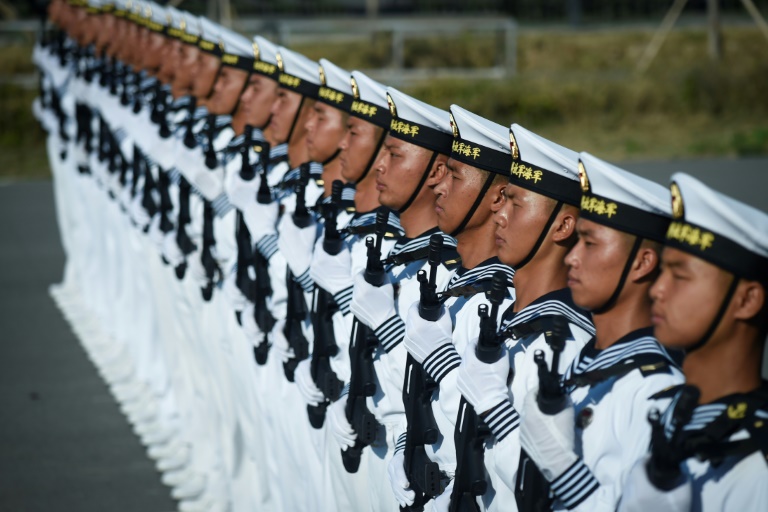
Columns of sailors in white uniforms applauded under colourful clouds of smoke as jets of water arced over the gigantic vessel to mark its launch.

Colourful streamers hung from its flight deck, on which large banners read: “Strive for the comprehensive construction of a… first-class navy.”

The launch of the carrier marks a major milestone for the Chinese military.

It has significantly more advanced technology than China’s two other carriers, including electromagnetic catapults to launch aircraft off its deck, the official Xinhua news agency reported.

The other carriers — the Liaoning and the Shandong — use a ski-jump-style ramp for takeoffs.

And with a displacement of more than 80,000 tonnes, according to Xinhua, it is comparable in size to the supercarriers of the United States Navy, analysts said.

– ‘Game changer’ –

Collin Koh, a research fellow at Nanyang Technological University in Singapore, said it could be a “game changer” for the Chinese navy.

“The conventional flight deck with (electromagnetic catapults) will at least in theory allow the carrier to launch aircraft faster and with heavier payloads — which constitute key deciding factors during battle,” he told AFP.

“At a strategic level, the new carrier heralds the coming of age of a blue-water PLA Navy.”

Blue-water navies are able to operate around the world at vast ranges.

It will take years before the Fujian becomes operational, however. Authorities have not said when it will enter service.

The Liaoning was commissioned in 2012, and the Shandong entered service in 2019.

The Shandong was the first aircraft carrier entirely built by China.

The United States has by far the most aircraft carriers in service at 11 ships, followed by China and Britain at two each, according to defence magazine Janes.

Unlike the US Navy’s nuclear-powered supercarriers, the Fujian uses conventional propulsion. Nuclear vessels have significant advantages over conventional ships as they can operate for long periods without the need to dock and refuel.

– Taiwan tensions –

The launch of the carrier comes at a time of ramped-up geopolitical tensions as Washington looks to shore up military alliances in the Asia-Pacific region.

Last year, the United States secured a historic deal with Britain to share nuclear submarine technology with Australia and has since made multiple arms sales to self-ruled Taiwan, provoking angry responses from Beijing.

Meanwhile, China brokered an unprecedented security agreement with the Solomon Islands earlier this year which blindsided Washington and its allies, stoking fears of a Chinese military base in the Pacific.

In recent years, Beijing has deployed naval assets as a show of power in the strait that separates Taiwan from the Chinese mainland. 

It has also used fighter jets to repel freedom of navigation patrols by the United States and its allies.

Chinese defence minister Wei Fenghe last week warned his US counterpart that Beijing would “not hesitate to start a war, no matter the cost” if Taiwan declared independence.

State media reported that the PLA’s newest aircraft carrier is named after China’s Fujian province — which lies across from Taiwan.

Covid in Hong Kong shows 'signs of rebound', city leader says

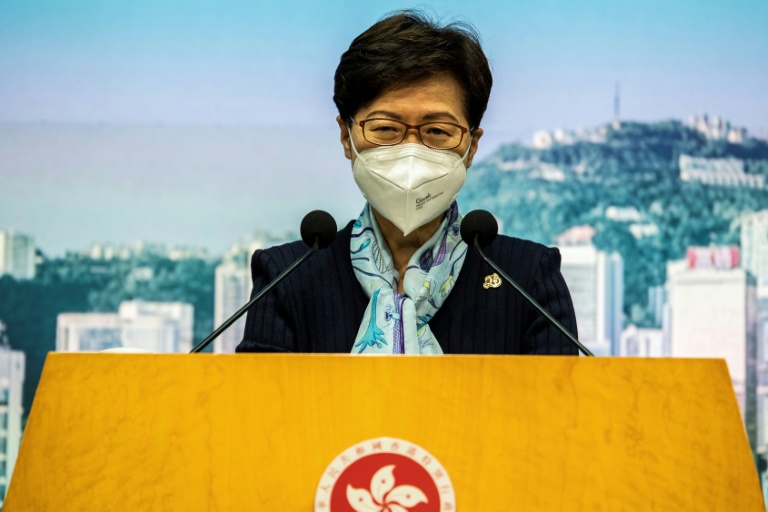
Hong Kong’s coronavirus case numbers are showing signs of rebounding, city chief executive Carrie Lam said on Friday, days after reintroducing more restrictions ahead of the 25th anniversary of the city’s transfer to Chinese rule.

The finance hub this week saw daily cases go above 1,000 for the first time in two months — though hospitalisations have remained relatively low, with only 25 people in serious or critical condition as of Friday, according to health officials.

Recent outbreaks have cast a shadow over Hong Kong’s plans to mark the handover on July 1, and it remains unclear if Chinese President Xi Jinping will attend the celebrations in person.

Lam said social distancing rules would not be tightened again despite the rebound in numbers, saying the figures were “not an alarm bell yet”.

“I have to stress that this sort of upward cases, according to the experts, are not unexpected, because we have almost returned to normalcy as far as social activities are concerned,” she said.

On Tuesday, however, the government brought in new restrictions related to bars and clubs. Patrons now need to present proof of a negative rapid Covid-19 test taken in the last 24 hours. 

There have been questions over enforcement, with Bloomberg News reporting some people have been able to dodge the rule and that bar operators have cited difficulties in verifying photos of test results.

The new measure seemed to be a response to recent case clusters that were traced to bars and clubs, but there was little evidence to show the move could slow outbreaks, University of Hong Kong microbiology professor Siddharth Sridhar told Bloomberg.

On Tuesday, officials also said that if people test positive, home quarantine will only be an option if they have at least two bathrooms in their residence, to avoid the healthy and the infected sharing facilities.

Hong Kong is famous for its cramped living quarters, with more than 220,000 of its 7.4 million residents living in subdivided housing.

Lam on Friday extended an arrangement for Hong Kong teachers and students to take Covid-19 rapid tests daily, and demanded more testing for staff at care homes for the elderly.

Hong Kong has enjoyed a lull in cases for around two months, after a deadly Omicron wave earlier this year killed more than 9,000, mostly under-vaccinated elderly people in care homes.

Public health experts say Hong Kong’s next coronavirus wave may be less deadly because many residents acquired immunity through natural infection, and vaccination rates have improved.

The city has followed China’s zero-Covid strategy, in which virus outbreaks have been quashed with mass testing, social distancing and stringent border controls.

Germans turn to food banks as inflation hits

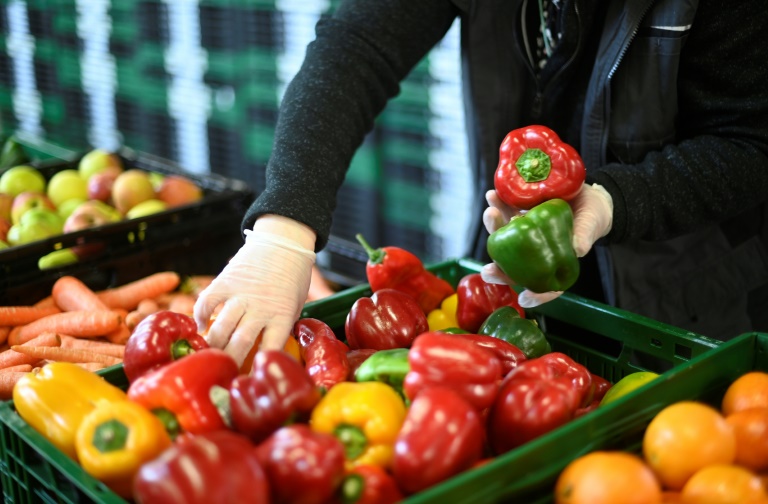
German pensioner Gabriele Washah waits in line to fill her trolley with bags of carrots for 50 cents, yoghurts just past their sell-by date and bunches of wilting flowers.

With the cost of living soaring across Europe, the 65-year-old retired shop assistant is one of many Germans turning to food banks to make ends meet. 

“Sometimes I go home from the shop almost crying because I can’t afford it any more,” she told AFP outside the row of stalls in Bernau, near Berlin.

Nestled in an alleyway behind a big chain supermarket, the food bank sells at greatly reduced prices groceries donated by supermarkets, as well as cheap prepared meals.

Here, customers can pick up a full trolley of food for around 30 euros (around $32).

For Washah, that means bread, butter and her favourite sandwich filling, sausage — “which used to cost 99 cents ($1.02) but now sometimes costs more than two euros”.

Driven by the war in Ukraine, inflation in Germany soared to 7.9 percent in May — its highest level since reunification in 1990, with food prices among those worst affected.

Demand for food banks across the country has increased “significantly” since the start of the year and doubled in some areas, according to a spokeswoman for the Tafel food bank network.

There are around 1,000 such schemes in Germany, run by volunteers and available to customers on a means-tested basis. 

Groceries, while donated, are still sold rather than given away free to the customers as the Tafel has to cover running costs, including rents and electricity. The organisation too has had to put up prices because their running costs have risen.

“It’s not just one product,” said 69-year-old pensioner Peter Behme. “All the prices are going up.”

– Poverty line –

In a bid to ease the pressure on squeezed finances, the government has lowered taxes on fuel, drastically slashed the cost of public transport and promised all taxpayers a one-off payment of 300 euros.

But Behme remains unimpressed. “I don’t know where the government help is going,” he said.

Even the food banks themselves are feeling the effects of the massive inflation.

“We have had to raise some prices by 20 or 50 cents because we need money to replenish our stocks,” said Malina Jankow, manager of the Bernau food bank.

Along with pensioners and unemployed people, the queues are now also filling up with Ukrainian refugees.

Anna Dec, a 35-year-old hospital worker, has come to Bernau with two Ukrainian women who are staying in her home and currently each receiving 449 euros a month in benefits.

“They have to pay for water, energy, food, hygiene products… That’s almost nothing,” she said.

Overwhelmed by the influx of customers, some food banks in Germany have had to turn away new arrivals or ration the food they distribute.

“We have been asking the government for a long time for a law to force supermarkets to give away their unsold food,” said Norbert Weich, 72, chairman of the food bank.

Some 16 percent of Germans, or more than 13 million people, were living below the poverty line in 2020, according to a study by the charity Deutscher Paritaetische Gesamtverband, published in December 2021.

“The federation of food banks has a resolution: as soon as we are no longer needed, we will disband,” said Weich. “But I don’t think it will be in my lifetime.”

Kinder factory at centre of Salmonella cases can reopen

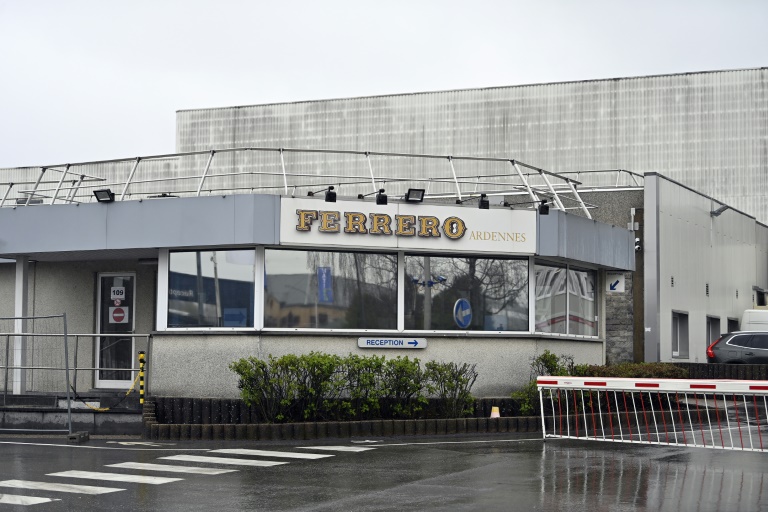
A factory in Belgium behind a Salmonella contamination in Kinder chocolates sold in Europe can reopen conditionally after a clean-up by owner Ferrero, health authorities said Friday.

Belgium’s AFSCA food health safety agency “has decided to give Ferrero conditional authorisation for its production factory in Arlon,” in the country’s southeast, it said in a statement.

The permission was given for three months, during which all the products will be analysed before they can be distributed and sold, it added.

Ferrero was forced to withdraw more than 3,000 tonnes of Kinder products worth tens of millions of euros after the Salmonella cases were traced to Kinder chocolates made in its Arlon factory.

AFSCA ordered the factory closed in early April, just before the Easter period that usually sees Kinder products fly off supermarket shelves.

Nearly 400 Salmonella cases ended up being detected across the EU and Britain, many of them in children. There were no deaths. 

Salmonella contamination symptoms can include severe diarrhoea and vomiting that are particularly dangerous for children under 10.

Ferrero, an Italian confectionary giant that also makes the Nutella chocolate spread in other sites, said it had started the process of reopening the Arlon plant and expected production to restart in a few weeks.

It stressed that it had carried out a “deep clean” of the factory, which has around 1,000 workers, and taken steps so that such a contamination would never happen again. It said the contamination likely was from a filter in a dairy milk tank.

“We are truly sorry for what happened and want to apologise once more to all people who were affected,” Ferrero CEO Lapo Civiletti said.

The company is under several probes by Belgian authorities, who are notably investigating whether it was slow to respond to a hygiene problem that might have come to its attention months earlier.

Officials are seeing if Ferrero met obligations for tracing products in its food chain and if the Salmonella incident put human lives in danger.

Close Bitnami banner
Bitnami