World

It's a small world: Disney to fly guests round all 12 parks for $110,000

Not sure which Disney resort to visit next summer? 

Disney chiefs have a solution for its most obsessive — and deep-pocketed — fans, offering a round-the-world package trip to all 12 parks, starting at a hefty $110,000 per person.

“Disney Parks Around The World — A Private Jet Adventure” will fly 75 mega-fans around the world in July 2023, with VIP visits to Disney resorts in California, Tokyo, Shanghai, Hong Kong, Paris and Florida.

Across 24 days, there will also be stops at countries which do not have Disney parks, including tours of the Taj Mahal in Agra, India and Egypt’s Pyramids of Giza.

According to its brochure, the “bucket list adventure” also includes a “rare opportunity to be a guest at Summit Skywalker Ranch,” founded by “Star Wars” creator George Lucas outside San Francisco.

“You’ll travel in luxury via a VIP-configured Boeing 757, operated by Icelandair, with long-range capabilities that allows for direct flights to maximize your time in each destination,” it says.

Guests will be joined on board by “experts and staff, who use an audiovisual system for informative briefings and lectures,” while Disney “leaders” and “Imagineers” will be on hand at various points.

As well as the movies, TV shows and theme parks it is best known for, the Walt Disney Company has long offered travel packages, including cruises.

With theme park attendances and tourism more generally recovering from the pandemic, Disney’s latest offering is its most luxurious yet.

The $109,995 per person price tag is based on two people sharing, with those who travel solo facing an additional surcharge of at least $10,995.

No discount is offered for children, who must be at least 12, and airfare to Los Angeles and from Orlando for the first and last legs is excluded.

US Fed announces biggest interest rate hike since 1994

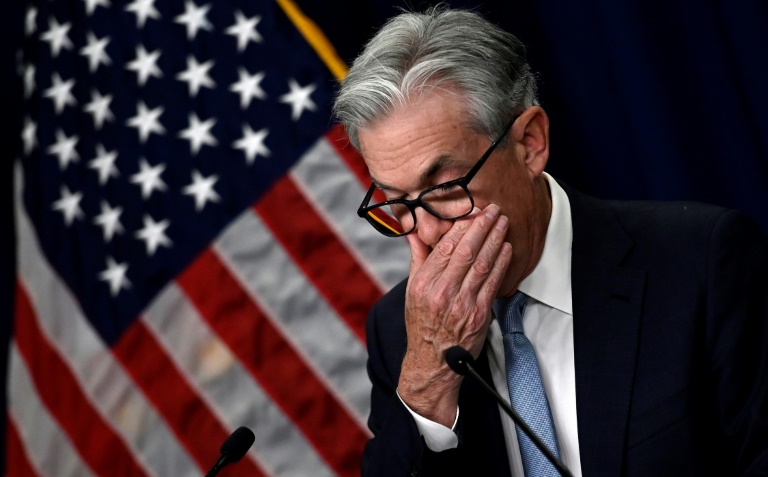
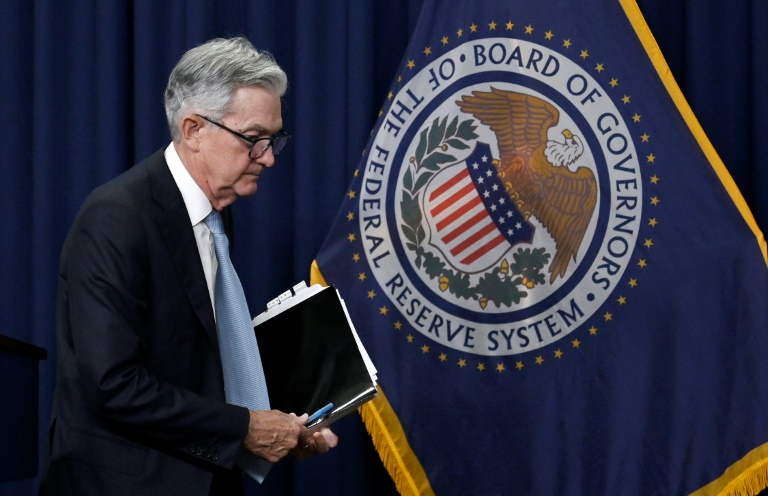
The US Federal Reserve announced the most aggressive interest rate increase in nearly 30 years on Wednesday, and said it is prepared to do so again next month in an all-out battle to drive down surging inflation.

The super-sized 0.75-percentage-point hike came with the Fed under intense pressure to curb soaring gas and food prices that have left millions of Americans struggling to make ends meet and sent President Joe Biden’s approval ratings plunging.

Fed Chair Jerome Powell said it was “essential” to lower inflation, and policymakers “have both the tools we need and the resolve it will take to restore price stability on behalf of American families.”

He stressed that the goal is to achieve that without derailing the US economy, but acknowledged there is always a risk of going too far.

The Fed’s policy-setting Federal Open Market Committee raised the benchmark borrowing rate to a range of 1.5-1.75 percent, up from zero at the start of the year.

It was the first 75-basis-point increase since November 1994.

Powell told reporters the move was “an unusually large one,” but he does not expect “moves of this size to be common.”

However, “from the perspective of today, either a 50-basis-point or a 75-basis-point increase seems most likely at our next meeting,” he said.

“It is essential that we bring inflation down if we are to have a sustained period of strong labor market conditions that benefit all.”

Biden has endorsed the Fed’s effort and is hoping for success as his Democrats face the possibility of losing control of Congress in key midterm elections in November.

He has blamed opposition Republicans for blocking bills meant to help lower costs and ease supply constraints.

White House economic adviser Brian Deese told Fox News “the most constructive steps that Congress and the executive branch can take to help support what the Fed is trying to do are to lower the cost that families face directly and to lower the federal deficit.”

– ‘Brace yourself’ –

Wall Street loved the aggressive posture, closing sharply higher following Powell’s comments.

But Kansas City Federal Reserve Bank President Esther George, a noted inflation hawk, dissented from the committee vote, preferring a smaller, half-point increase.

Until recently, the central bank seemed set to approve a 0.5-percentage-point increase, but economists say the rapid surge in inflation put the Fed behind the curve, meaning it needed to react strongly to prove its resolve to combat scorching price increases.

Committee members now see the federal funds rate ending the year at 3.4 percent, up from the 1.9 percent projection in March, according to the median quarterly forecast.

They also expect growth slowing to 1.7 percent in 2022 from the previous 2.8 percent forecast.

However, Powell stressed that “we are not trying to induce a recession now.”

But Diane Swonk of Grant Thornton, a long-time Fed watcher, said, “It is not clear the economy will be as resilient as the Fed expects.”

She called the central bank’s outlook “fanciful” and compared the current situation to the early 1980s when then-Fed chief Paul Volcker drove interest rates up to 20 percent to choke off inflation, tumbling the economy into recession.

“Brace yourself for what comes next. This is a Volcker-Esque Fed. That means the Fed is willing to take a rise in unemployment and a recession to avert a repeat of mistakes of the 1970s,” she said on Twitter. “Growing up in Detroit, I remember that period well. It was ugly with deep scars.”

– Caught off guard –

US central bankers began raising interest rates off zero in March as buoyant demand from American consumers for homes, cars and other goods clashed with transportation and supply chain snarls in parts of the world where Covid-19 remained — and remains — a challenge.

That fueled inflation, which got dramatically worse after Russia invaded Ukraine in late February and Western nations imposed steep sanctions on Moscow, sending food and fuel prices up at a blistering rate.

US gasoline prices have topped $5.00 a gallon for the first time ever and are setting new records daily.

Economists thought March was the peak for consumer price hikes, but the rate spiked again in May, jumping 8.6 percent in the latest 12 months.

The Fed was caught off guard with the speed of the price increases, and while policymakers usually prefer to clearly telegraph any policy shift to financial markets, the latest data changed the calculus.

Wall Street stocks greet aggressive Fed rate hike

Wall Street stocks welcomed Wednesday’s aggressive moves by the Federal Reserve to counter inflation, while European equities also gained following an emergency central bank meeting to address fallout from monetary tightening.

The US central bank raised the benchmark borrowing rate by 0.75 percentage points, bigger than the telegraphed 0.5-percentage-point increase after economic data in recent days showed inflation strengthening and consumer confidence weakening.

Fed Chair Jerome Powell said the Fed has the “tools” and “resolve” to do what it takes to lower inflation from the highest level in more than 40 years, noting that the central bank could hike the benchmark interest rate by another 0.75 percentage points in July.

Powell emphasized that the Fed was not trying to induce a recession, but that aggressive measures were needed to counter inflation.

Stocks climbed after the Fed decision, strengthening somewhat during the news conference. The S&P 500, which tumbled into a “bear market” earlier this week, finished up 1.5 percent.

However, stocks also rallied after the Fed raised interest rates in May, only to weaken substantially in subsequent sessions.

“The market is getting comfortable with the idea that the Fed is now starting to take the inflation situation very seriously,” said Tom Cahill of Ventura Wealth Management, who nonetheless expressed skepticism that the Fed could achieve a “soft landing.” 

Data released Wednesday showed US retail sales declined by 0.3 percent in May, confounding analysts who had expected a modest rise.

“These numbers were worse than expected and point to a US economy that appears to be weaker than thought,” said CMC Markets analyst Michael Hewson. 

Wells Fargo economist Jay Bryson shifted his outlook from an economic soft landing to a “mild recession starting in mid-2023,” noting signs that inflation is becoming “increasingly entrenched in the economy” and cautioning that higher interest rates will curtail some spending.

– Emergency meeting –

Earlier, Frankfurt, London and Paris all rallied as investors were reassured by news of an emergency European Central Bank meeting.

The ECB said after its surprise meeting that it would use “flexibility” to ease stress on sovereign debt markets and design a new instrument to ward off a fresh crisis in the eurozone.

The borrowing costs of some eurozone countries have risen faster than those of others as the ECB tightens its monetary policy. The bank has vowed to prevent such “fragmentation,” which occurred during the eurozone debt crisis a decade ago.

Markets.com analyst Neil Wilson called the announcement “somewhat underwhelming” and did not merit a special meeting.

Earlier, Wilson had said the emergency meeting “smacks of panic and a lack of control — but the market is happy to see it happen.”

The ECB is due to raise eurozone interest rates and end its massive bond-buying stimulus program in July.

Asian stock markets closed mixed Wednesday with investors on edge over the looming Fed decision that has taken on greater significance since forecast-busting US inflation recently sent shockwaves through world markets.

– Key figures at around 2030 GMT –

New York – Dow: UP 1.0 percent at 30,668.53 (close)

New York – S&P 500: UP 1.5 percent at 3,789.99 (close)

New York – Nasdaq: UP 2.5 percent at 11,099.15 (close)

London – FTSE 100: UP 1.2 percent at 7,273.41 (close)

Frankfurt – DAX: UP 1.4 percent at 13,485.29 (close)

Paris – CAC 40: UP 1.4 percent at 6,030.13 (close)

EURO STOXX 50: UP 1.6 percent at 3,532.32 (close)

Tokyo – Nikkei 225: DOWN 1.1 percent at 26,326.16 (close)

Hong Kong – Hang Seng Index: UP 1.1 percent at 21,308.21 (close)

Shanghai – Composite: UP 0.5 percent at 3,305.41 (close)

Euro/dollar: DOWN at $1.0457 from $1.0416 late Tuesday

Pound/dollar: UP at $1.2181 from $1.1997

Euro/pound: DOWN at 85.80 pence from 86.83 pence

Dollar/yen: DOWN at 133.69 yen from 135.47 yen

Brent North Sea crude: DOWN 2.2 percent at $118.51 per barrel

West Texas Intermediate: DOWN 3.0 percent at $115.31 per barrel

Biden chastises oil industry over fuel costs

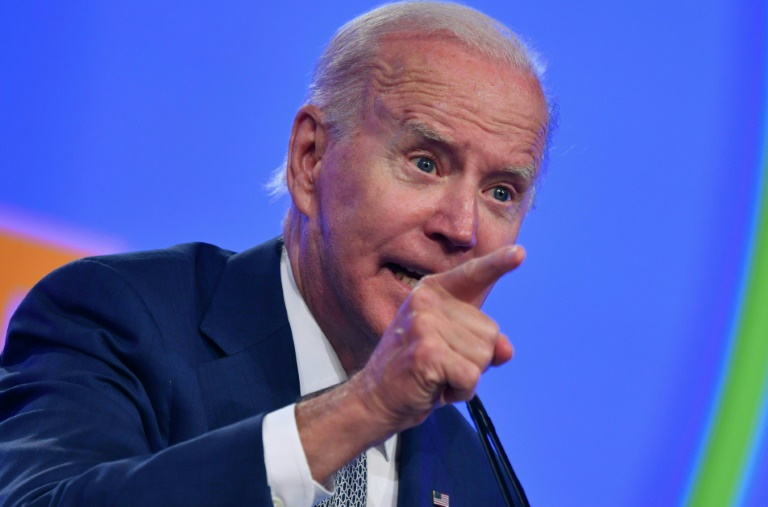
US President Joe Biden on Wednesday chastised the oil industry over soaring fuel prices at the heart of 40-year-high inflation, warning of unspecified emergency measures.

In a letter to seven major oil corporations, Biden delivered his most direct salvo yet in a campaign to blame the industry for stoking price increases. 

Average fuel prices are now $5 a gallon for drivers in the United States, up from $3 a year ago, and the spike is reverberating through the entire economy, helping to sink Biden’s approval ratings to below 40 percent.

“Refinery profit margins well above normal being passed directly onto American families are not acceptable,” Biden wrote in the letter to executives from Shell, Marathon Petroleum Corp, Valero Energy Corp, ExxonMobil, Phillips 66, Chevron and BP.

Biden said the economy is in “a time of war,” referring to the global fallout from President Vladimir Putin’s invasion of Ukraine and subsequent sanctions against energy exporter Russia.

“My administration is prepared to use all reasonable and appropriate federal government tools and emergency authorities to increase refinery capacity and output in the near term, and to ensure that every region of this country is appropriately supplied,” Biden said, without detailing what kind of actions he could take.

White House Press Secretary Karine Jean-Pierre told reporters that Biden sees it as US oil companies’ “patriotic duty” to increase capacity.

The president has regularly lambasted the oil industry for what he says is a failure to tap into already approved wells and increase output. 

But the letter, accompanied by a graph depicting rising producer profits, marked an escalation in the war of words.

In the letter Biden asked for “explanation of any reduction in your refining capacity since 2020 and any concrete ideas that would address the immediate inventory, price, and refining capacity issues in the coming months — including transportation measures to get refined product to market.”

“The crunch that families are facing deserves immediate action. Your companies need to work with my Administration to bring forward concrete, near-term solutions that address the crisis,” he wrote.

Biden’s Democratic Party risks a heavy defeat, losing control of Congress, in November elections and polls show that fears over the economy dominate.

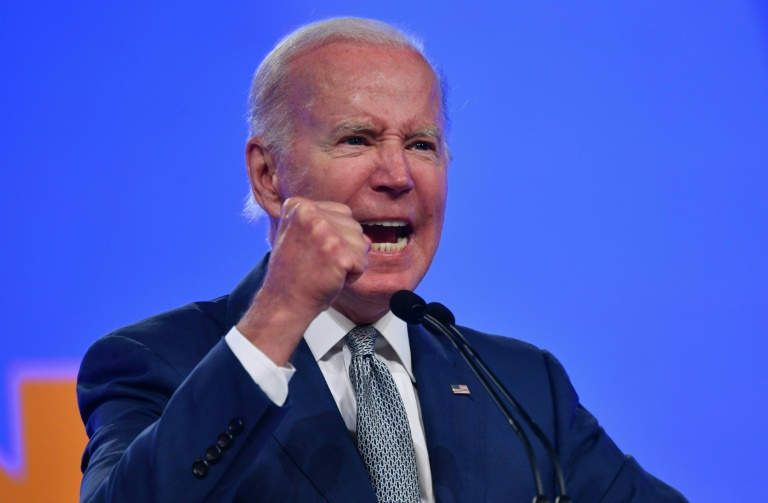
In a fiery speech Tuesday, Biden blamed Republican obstruction in Congress and Russia’s war in Ukraine for price increases that he said are “sapping the strength of a lot of families.”

The US Federal Reserve announced the most aggressive interest rate increase in nearly 30 years Wednesday, raising the benchmark borrowing rate by 0.75 percentage points.

The goal is to tamp down inflation, but Federal Reserve Chair Jerome Powell said the central bank was “not trying to induce a recession.”

Ecuador Indigenous leader freed, protests unabated

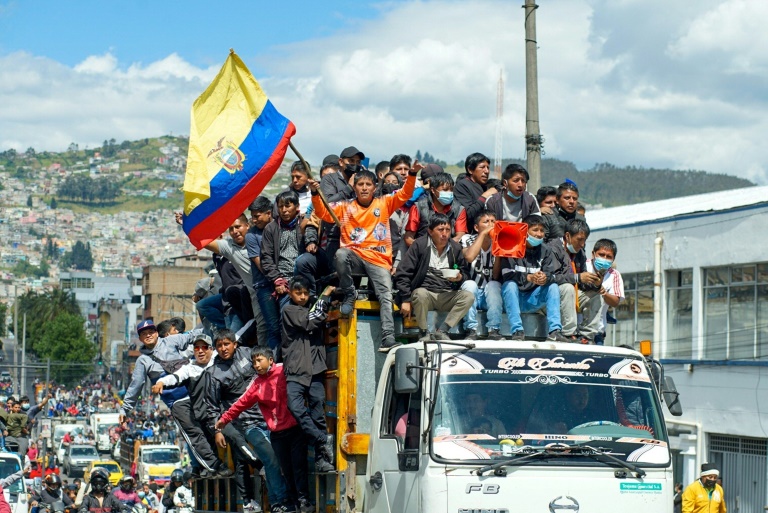
Ecuadoran Indigenous leader Leonidas Iza was freed Wednesday on a judge’s orders as protesters flocked to the capital Quito on a third day of anti-government protests led by his organization.

Some on foot and others on the back of trucks, protesters streamed into the city as police and soldiers kept watch, planning to gather in the historical center that houses the seat of government.

Indigenous Ecuadorans embarked on an open-ended protest Monday, blockading roads countrywide with burning tires and barricades of sand, rocks and tree branches to protest high fuel prices and living costs.

The protests, which partly blocked access to Quito, were called by the powerful Confederation of Indigenous Nationalities of Ecuador (Conaie) — a group credited with helping topple three Ecuadoran presidents between 1997 and 2005.

Indigenous people make up over a million of Ecuador’s 17.7 million inhabitants.

Conaie leader Iza was arrested on the second day of the mass protest on suspicion of “sabotage,” the government said — prompting furious supporters to descend on the prosecutor’s office to demand he be freed.

A judge late Tuesday ordered Iza’s release pending trial on what the prosecutor’s office said were charges of “allegedly paralyzing public transport services.”

He risks up to three years in prison.

Iza appeared defiant after his release, telling supporters over a loudhailer: “We are not going to be demoralized… We maintain the struggle.”

“Long live the struggle!” they shouted in response, according to a Facebook livestream.

– ‘We will contain violence’ –

Conaie said the protest continued with even “more force” on Wednesday as the ECU911 public safety body said more than 9,000 protesters participated in roadblocks in 14 of Ecuador’s 24 provinces.

Interior Minister Patricio Carrillo insisted the security services “have control” of the situation.

“We can guarantee that we will contain violence with… the firmness that Ecuador requires,” he said.

The military said ten soldiers were wounded as they tried to prevent demonstrators from taking over an oil installation in the Ecuadoran Amazon.

According to Carrillo, five people in total were arrested Tuesday, including Iza. He accused protesters of “paralyzing, looting, kidnapping (and) attacking.”

Oil producer Ecuador has been hit by rising inflation, unemployment and poverty exacerbated by the pandemic.

Fuel prices have risen sharply since 2020, almost doubling for diesel from $1 to $1.90 per gallon (3.78 liters) and rising from $1.75 to $2.55 for gasoline.

Conaie has taken part in several rounds of fruitless talks with President Guillermo Lasso’s conservative government.

Lasso, who took office a year ago, froze fuel prices last October after a round of Conaie-led protests saw dozens arrested and several people, including police, injured in clashes.

But the freeze failed to assuage simmering anger in a country that exports crude but imports much of the fuel it consumes.

Lasso accused protesters of “acts of vandalism,” including “an attack on an oil pumping facility, the cutting off of community water supplies, the closure and serious damage to state roads.”

Chinese company PetroOriental said Tuesday protesters had occupied and paralyzed some of its wells in the Amazonian Orellana province, causing a loss of 1,400 barrels of crude per day.

In 2019, Conaie-led protests resulted in 11 deaths and forced then-president Lenin Moreno to abandon plans to eliminate fuel subsidies. 

War in Ukraine: Latest developments

Here are the latest developments in the war in Ukraine:

– US gives Ukraine $1 bn more arms –

US President Joe Biden announces a new $1 billion-worth of arms and ammunition for Ukraine after reaffirming Washington’s support for Kyiv against Russia’s invasion in a call with President Volodymyr Zelensky.

The package includes more artillery, coastal anti-ship defence systems and ammunition for artillery and advanced rocket systems that Ukraine is already using, Biden says. 

He made his announcement after US Defense Secretary Lloyd Austin urged allies to step up arms deliveries to Ukraine as Kyiv said it is outgunned and appealed to Western allies for greater military aid.

“We can’t afford to let up and we can’t lose steam. The stakes are too high. Ukraine is facing a pivotal moment on the battlefield,” Austin says at a meeting in Brussels with some 50 countries backing Ukraine.

– Xi assures Russia of Chinese support –

Chinese President Xi Jinping assures his Russian counterpart Vladimir Putin of Beijing’s support for Moscow on “sovereignty and security” during a call, according to state media.

China is “willing to continue to offer mutual support (to Russia) on issues concerning core interests and major concerns such as sovereignty and security,” Chinese state broadcaster CCTV reports Xi as saying.

China has refused to condemn Moscow’s invasion of Ukraine and has been accused of providing diplomatic cover for Russia by blasting Western sanctions and arms sales to Kyiv.

The Kremlin says that in the call Xi and Putin agreed to ramp up economic cooperation in the face of “unlawful” Western sanctions.

The United States expresses concern about China’s alignment with Russia, warning that nations which side with Putin over his invasion of Ukraine will be “on the wrong side of history”.

– Russia says Ukraine blocked evacuations- 

Moscow says Ukraine on Wednesday blocked its planned civilian evacuations from a chemical plant in the war-torn eastern city of Severodonetsk.

Russia created a corridor to evacuate civilians from the Azot chemical factory, but “the Kyiv authorities cynically scuppered the humanitarian operation”, the Russian defence ministry says in a statement.

About 500 civilians are holed up in the Azot chemical plant, alongside Ukrainian fighters defending one of the last pockets of resistance in the city to Russian forces. 

The evacuation plan came after Russian forces destroyed the last bridge over the Donets river into Severodonetsk in a bid to encircle it.

Britain’s defence ministry says in an intelligence note that the fight for the Azot plant, like the weeks-long battle for a steelworks in the port of Mariupol, will likely prevent Russia from redeploying forces from there to other battles.

– UK rocket launcher delivery soon –

Britain will soon deliver multiple-launch rocket systems to Ukraine in response to its request for heavy arms to repel the Russian invasion, UK Defence Secretary Ben Wallace says.

“I think it’s imminent, their delivery, and the munition has to go alongside”, Wallace tells reporters in Oslo on the sidelines of a meeting of the Joint Expeditionary Force grouping 10 Northern European countries.

– Gazprom further cuts Nord Stream deliveries –

Russian gas giant Gazprom says it is cutting daily gas deliveries via the Nord Stream pipeline by a further 33 percent, after Germany decried an earlier cut as political.

On Tuesday, Gazprom announced it would be cutting deliveries via the pipeline by around 40 percent to 100 million cubic meters per day due to “repair” work on compressor units by German company Siemens.

– Ikea scales down Russian activities –

Swedish furniture giant Ikea says it will “scale down” its activities in Russia and Belarus, after putting them on hold following the Russian invasion of Ukraine.

“Businesses and supply chains across the world have been heavily impacted and we do not see that it is possible to resume operations any time soon,” Ingka Group, which manages the majority of Ikea’s stores, says in a statement.

burs-cb-jmy/pvh

Media awards highlight human stories of climate crisis

Rising ice melt in Greenland, the impact of relentless heat waves in California, and the precarious future of coastal cities were among subjects featured at the annual Covering Climate Now Journalism Awards unveiled Wednesday.

The winning entries were hailed by judges for capturing the urgency of the global climate crisis, bringing to light “abundant solutions,” and inspiring people and policymakers to act.

Among work honored was an HBO Max documentary on two pre-teen sisters as their sixth-generation family farm in Iowa is battered by cycles of drought and flooding.

The judges said the film succeeded in showing how “a small story becomes a large, important one” with the sisters and their parents taking joy in farm chores but recognizing climate change is rendering their way of life unsustainable.

Justin Worland of Time was named journalist of the year, while AFP won an award for a “globe-spanning” video project on how rising seas will rewrite maps, doom some major cities and impact the world’s poorest.

“Better news coverage is an essential climate solution, a catalyst that makes progress on every part of the problem — from politics to business, lifestyle change to systems change — more likely,” said Mark Hertsgaard, executive director of Covering Climate Now.

The 23 winners were selected from over 900 entries from 65 countries for the awards’ second year.

Other winners included Al Jazeera on a UNESCO World Heritage site in Senegal crumbling beneath rising seas, PBS coverage of the COP26 summit in Scotland, and a Guardian podcast series on Pacific Island nations.

Covering Climate Now is a global media project devoted to reporting on global warming.

Black Death origin mystery solved… 675 years later

A deadly pandemic with mysterious origins: it might sound like a modern headline, but scientists have spent centuries debating the source of the Black Death that devastated the medieval world.

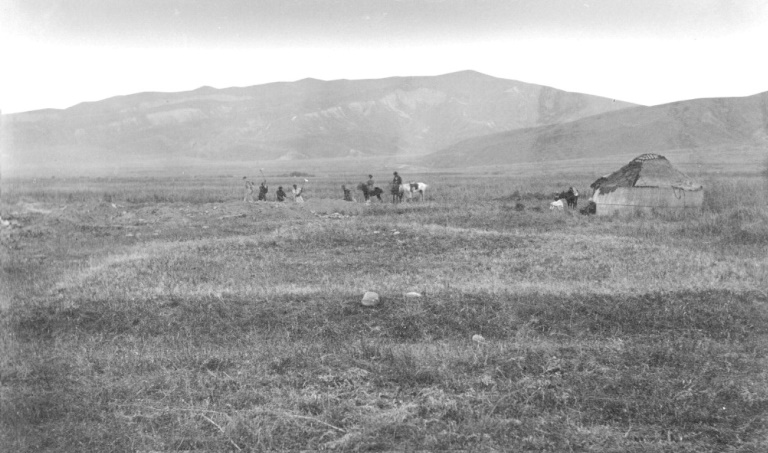
Not anymore, according to researchers who say they have pinpointed the source of the plague to a region of Kyrgyzstan, after analysing DNA from remains at an ancient burial site.

“We managed to actually put to rest all those centuries-old controversies about the origins of the Black Death,” said Philip Slavin, a historian and part of the team whose work was published Wednesday in the journal Nature.

The Black Death was the initial wave of a nearly 500-year pandemic. In just eight years, from 1346 to 1353, it killed up to 60 percent of the population of Europe, the Middle East and Africa, according to estimates.

Slavin, an associate professor at the University of Stirling in Scotland who has “always been fascinated with the Black Death”, found an intriguing clue in an 1890 work describing an ancient burial site in what is now northern Kyrgyzstan.

It reported a spike in burials in 1338-39 and that several tombstones described people having “died of pestilence”.

“When you have one or two years with excess mortality it means that something funny was going on there,” Slavin told reporters.

“But it wasn’t just any year — 1338 and 1339 was just seven or eight years before the Black Death.”

It was a lead, but nothing more without determining what killed the people at the site.

For that, Slavin teamed up with specialists who examine ancient DNA.

They extracted DNA from the teeth of seven people buried at the site, explained Maria Spyrou, a researcher at the University of Tuebingen and author of the study.

Because teeth contain many blood vessels, they give researchers “high chances of detecting blood-borne pathogens that may have caused the deaths of the individuals,” Spyrou told AFP.

– ‘Big Bang’ event –

Once extracted and sequenced, the DNA was compared against a database of thousands of microbial genomes.

“One of the hits that we were able to get… was a hit for Yersinia pestis,” more commonly known as plague, said Spyrou.

The DNA also displayed “characteristic damage patterns,” she added, showing that “what we were dealing with was an infection that the ancient individual carried at the time of their death.”

The start of the Black Death has been linked to a so-called “Big Bang” event, when existing strains of the plague, which is carried by fleas on rodents, suddenly diversified.

Scientists thought it might have happened as early as the 10th century but had not been able to pinpoint a date.

The research team painstakingly reconstructed the Y. pestis genome from their samples and found the strain at the burial site pre-dated the diversification.

And rodents living in the region now were also found to be carrying the same ancient strain, helping the team conclude the “Big Bang” must have happened somewhere in the area in a short window before the Black Death.

The research has some unavoidable limitations, including a small sample size, according to Michael Knapp, an associate professor at New Zealand’s University of Otago who was not involved in the study.

“Data from far more individuals, times and regions… would really help clarify what the data presented here really means,” said Knapp.

But he acknowledged it could be difficult to find additional samples, and praised the research as nonetheless “really valuable”.

Sally Wasef, a paleogeneticist at Queensland University of Technology, said the work offered hope for untangling other ancient scientific mysteries.

“The study has shown how robust microbial ancient DNA recovery could help reveal evidence to solve long-lasting debates,” she told AFP.

Biden announces $1 bn in new military aid for Ukraine

US President Joe Biden announced a new package of arms and ammunition for Ukraine Wednesday after speaking with President Volodymyr Zelensky and reaffirming Washington’s support for Kyiv as it battles Russia’s invasion.

The package of $1 billion worth of arms includes more artillery, coastal anti-ship defense systems and ammunition for artillery and advanced rocket systems that Ukraine is already using, Biden said.

In the phone call with Zelensky, Biden said he “reaffirmed my commitment that the United States will stand by Ukraine as it defends its democracy and support its sovereignty and territorial integrity in the face of unprovoked Russian aggression,” according to a US statement.

Biden also announced $225 million worth of humanitarian assistance for Ukraine.

The money will go toward supplying food, drinking water, medical supplies and other critical goods.

“The bravery, resilience, and determination of the Ukrainian people continues to inspire the world,” Biden said.

The Pentagon detailed the new supplies as including 18 more 155mm howitzers and 36,000 rounds of ammunition for them; two land-based Harpoon anti-ship missile systems; and additional rockets for the four Himars precision rocket systems that Ukraine is soon to put in the field.

With ranges of up to around 80 kilometers (50 miles), the Himars rockets potentially give Ukraine a greater ability to attack Russian targets, with greater precision, in the ongoing artillery battle along the front lines.

US officials said that the first batch of Ukrainian troops were completing training on the Himars on Wednesday.

Also in the new package are thousands of secure radio and night vision devices and thermal sighting systems, the Pentagon said.

This package takes to $5.6 billion the value of arms the United States has provided Ukraine since Russia invaded on February 24.

Police take suspect to search site in Amazon missing case: reports

Police investigating the disappearance of a British journalist and Brazilian Indigenous expert in the Amazon brought the latest suspect arrested in the case to the search site Wednesday, media reports said.

The suspect, identified as 41-year-old Oseney da Costa Oliveira, was escorted by officers with his face covered, a red-and-black hooded sweatshirt pulled low over his head, and placed on a police boat, in images shown on TV Globo, Brazil’s biggest broadcaster.

Reports said the blue-and-white boat then set off for the spot on the Itaquai river where investigators are searching for signs of veteran correspondent Dom Phillips, 57, and respected Indigenous specialist Bruno Pereira, 41, who disappeared on June 5.

Federal police declined to comment.

Oliveira, nicknamed “Dos Santos,” was arrested Tuesday in Atalaia do Norte, the small northern city that Phillips and Pereira were returning to when they disappeared in the remote Javari Valley after receiving threats during a reporting trip.

A man reported to be Oliveira’s brother, Amarildo da Costa de Oliveira, a fisherman nicknamed “Pelado,” was arrested on June 7. Investigators are analyzing a blood sample found in his boat, as well as suspected human remains found in the Itaquai river.

Witnesses said Amarildo da Costa had been seen following the missing men’s boat at high speed shortly before they disappeared.

Phillips, 57, a long-time contributor to Britain’s Guardian and other leading international newspapers, was working on a book on sustainable development in the Amazon.

Pereira, highly regarded advocate for the region’s Indigenous peoples, was acting as his guide.

The Brazilian was on leave from his job as an Indigenous protection specialist at Brazil’s federal agency for native peoples, FUNAI.

He had received death threats for his work helping Indigenous communities resist increasing incursions on their land in the Javari Valley, which sits near the borders with Colombia and Peru and has seen a surge of drug trafficking and environmental crimes such as illegal fishing.

Close Bitnami banner
Bitnami