World

EU takes legal action against UK for breaching N.Ireland agreement

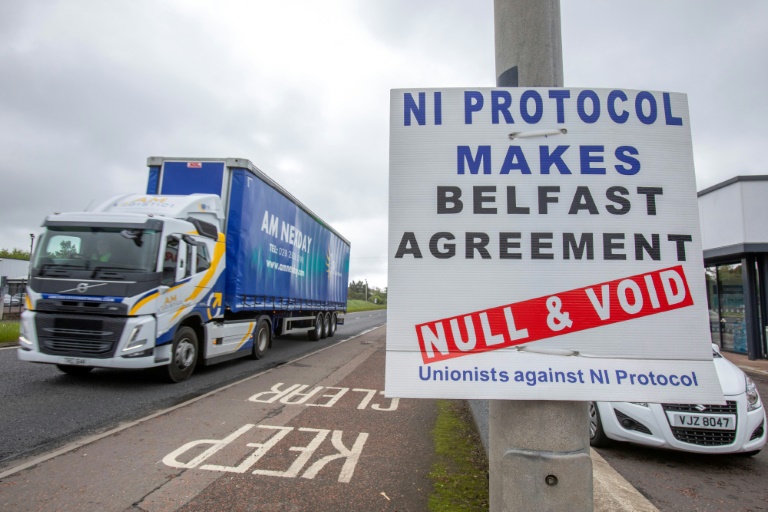
The European Commission launched new legal action against Britain on Wednesday, accusing London of putting peace in Northern Ireland at risk by trying to overhaul the post-Brexit trade deal.

“The UK government tabled legislation confirming its intention to unilaterally break international law,” EU commission vice-president Maros Sefcovic said.

“More precisely to break an agreement that protects peace and stability in Northern Ireland,” he said.

“Opening the door to unilaterally changing an international agreement is a breach of international law, as well. So let’s call a spade a spade. This is illegal.”

On Monday, the British government introduced legislation to rip up post-Brexit trading rules for Northern Ireland, in an attempt to override the EU withdrawal treaty that it had signed.

Prime Minister Boris Johnson’s government insists it is not breaking international law, citing a “necessity” to act to restore Northern Ireland’s power-sharing institutions.

But Brussels rejects this argument, and Sefcovic said that legal action would be taken, with two new cases joining those the commission had suspended.

Sefcovic said the EU would revive a case is launched last year to control the export of certain food products from Great Britain to Northern Ireland.

“If the UK doesn’t reply within two months, we may take them to the Court of Justice,” he warned.

“Second, we are launching two new infringements against the UK,” he said, announcing cases that could see the British government brought before the European Court of Justice.  

“One for failing to carry out the necessary controls at the border control posts in Northern Ireland by ensuring adequate staffing and infrastructure.

“And one for failing to provide the EU with essential trade statistics data to enable the EU to protect its single market.”

– ‘Grave peril’ –

The cases brought by the EU do not directly tackle the proposed UK legislation, but rather seek to compel Britain to implement the existing agreements.

Johnson’s government has said it would still prefer a negotiated outcome with the European Union to reform the Northern Ireland Protocol.

But it accuses Brussels of failing to engage on its concerns about measures to control goods moving from Great Britain to Northern Ireland.

Brussels counters that, with Northern Ireland remaining in the EU single market, European law must ultimately apply to goods arriving in the territory.

And Sefcovic says that attempts to negotiate a compromise with Britain within the terms of the agreement Johnson himself hailed and signed have been mate with “radio silence” since February.

The spat comes at a bad time for the UK economy, with inflation at 40-year highs and rising household bills that have left many Britons struggling to make ends meet.

But there are economic headwinds in the European Union too, and warnings that the West must not fall out over trade when trying to present a united front against Russia’s invasion of Ukraine.

Irish Minister for Foreign Affairs Simon Coveney said Wednesday’s EU action is “the result of a deliberate UK Government strategy of provocation over partnership”.

“Reckless UK decisions this week have forced the EU into responding to a threatened breach of international law with serious consequences.”

Jonathan Jones, the former head of the UK government legal service scoffed at Number 10’s argument.

Jones resigned after Northern Ireland minister Brandon Lewis admitted that unilaterally breaking the deal would “break international law in a very specific and limited way”. 

“The concept of ‘necessity’ is an extremely high test. It applies only where a state must act to safeguard its essential interests against ‘grave and imminent peril’,” Jones said.

“How can an agreement willingly entered into only in 2020, at what the Prime Minister described as a ‘fantastic moment’, be already proving so disastrous as to represent ‘grave peril’ to the country?”

Meanwhile, the Democratic Unionist Party argues the protocol’s creation of an effective border in the Irish Sea jeopardises Northern Ireland’s status in the wider UK.

The pro-British party is boycotting the local government in Belfast until the deal is scrapped or dramatically overhauled, putting at risk the power-sharing agreement that underlies the Northern Ireland peace agreement.

Tanzania targets internet giants with new tax

Tanzania will introduce a digital tax this year, the country’s finance minister said, in a move targeting global internet giants offering services in the East African nation.

The two-percent tax will come into effect in July and follows similar attempts by other countries to force US multinational tech companies to pay at least a portion of their revenues in local tax.

Tanzania’s Minister for Finance and Planning, Mwigulu Nchemba, announced the measure on Tuesday as he presented the nation’s annual budget.

“Tanzania Revenue Authority shall establish a simplified registration process to accommodate digital economy operators who have no presence in Tanzania,” Nchemba told lawmakers.

“This measure is intended to keep pace with rapid growth in the digital economy,” he added.

The tax needs to be approved by Tanzania’s parliament, which will vote on the budget before July.

The tax announcement follows talks in April between officials from the Tanzania Revenue Authority and US social media giant Meta — the parent company to Facebook, Instagram and WhatsApp.

Nearly 140 countries signed up to a 15-percent global minimum corporate tax last October under the auspices of the Organization for Economic Co-operation and Development (OECD).

Since then more countries, including Turkey and India, have signed up to the deal, which is expected to come into effect in 2023.

The historic agreement aims to put an end to corporations sheltering profits in low-tax haven countries.

Calls in UK to ditch European rights pact after Rwanda plan blocked

Furious Conservatives called on Britain’s government Wednesday to abandon a European human rights pact after a judge dramatically blocked its plan to fly asylum-seekers to Rwanda.

The last-gasp intervention by the European Court of Human Rights (ECHR) forced the government to abandon the first flight, after the number of claimants aboard had already been whittled down by legal challenges in the UK.

Cabinet member Therese Coffey said the government was “surprised and disappointed” at the ruling late Tuesday, but echoed interior minister Priti Patel in vowing that preparations would proceed for the next flight.

“And we will continue to prepare and try and overturn any future legal challenges as well,” Coffey told Sky News. 

The ECHR is unrelated to the European Union, which Britain left in January 2020. 

But Tory backbenchers, fresh from rebelling in large numbers against Prime Minister Boris Johnson’s leadership, said the ruling infringed on British sovereignty.

“Yes, let’s withdraw from European Court of Human Rights and stop their meddling in British law,” MP Andrea Jenkyns tweeted, echoing others in the party and banner headlines in right-wing newspapers.

The European convention was enshrined in UK law in 1998 by the Labour government of Tony Blair. It notably underpins the Good Friday Agreement of the same year, which brought peace to Northern Ireland after three decades of bloodshed.

Johnson’s government is already on a collision course with the EU over post-Brexit trading rules for Northern Ireland, and critics allege it is picking a separate fight over asylum-seekers after a series of electorally damaging scandals.

The convention has been used frequently by human rights lawyers to frustrate Johnson and Patel’s hardline policy against illegal migrants.

– Johnson’s grandfather –

Coffey said she was “not aware of any decisions or even hints” in the government about withdrawing from the convention.

But last month, in the “Queen’s Speech” opening a new session of parliament, the government committed to replacing the 1998 act with a new bill of rights.

Johnson’s own maternal grandfather, James Fawcett, helped to write the European convention and was the commission’s president for a decade in the years after World War II.

Anneke Campbell, a cousin to Johnson’s late mother, wrote last week that Fawcett would have been “appalled” at the government’s actions.

She noted that Johnson had previously described human rights lawyers working to halt deportations as “lefty activists”.

“Would you have called your grandfather a lefty human rights activist to his face? Where did you pick up this kind of contempt?” Campbell wrote in the Byline Times newspaper.

Under the UK’s agreement with Rwanda, all migrants arriving illegally in Britain are liable to be sent to the East African nation thousands of miles away for processing and settlement.

The government, after arguing that Brexit would lead to tighter borders, says the plan is needed to deter record numbers of migrants from making the perilous Channel crossing from northern France.

– ‘Cruel farce’ –

More than 10,000 migrants have crossed since the start of the year. On Tuesday, 444 people were detected coming from France in 11 small boats, the Ministry of Defence said.

The ECHR, ruling in favour of an Iraqi claimant, said his expulsion should wait until London’s High Court has taken a final decision on the policy’s legality at a hearing next month.

For Britain’s opposition Labour party, home affairs spokeswoman Yvette Cooper said the government only had itself to blame for what the Daily Mirror newspaper called a “cruel farce”.

“They have pushed ahead with a policy they knew was unworkable, unethical, and incredibly expensive because they just wanted a row and someone else to blame,” she said.

The legal challenges had highlighted concern over human rights in Rwanda. But the government in Kigali insists it is a safe country.

“We are not deterred by these developments. Rwanda remains fully committed to making this partnership work,” government spokeswoman Yolande Makolo told AFP.

“Rwanda stands ready to receive the migrants when they do arrive and offer them safety and opportunity in our country.”

burs-jit/phz/jv

No way around BTS break as military service looms: analysts

Why would K-pop titans BTS decide to step back from their supergroup and focus on solo careers while at the pinnacle of their success? South Korea’s mandatory military service, analysts say.

Many of the group’s fans — known as ARMY — were moved by the “exhausted” pop stars’ emotional plea for time apart to grow, but analysts say there may be a more strategic reason behind the pending hiatus.

All South Korean able-bodied young men under the age of 30 must perform around two years of military service, mainly due to the fact that the country remains technically at war with nuclear-armed North Korea.

The spectre of conscription has long hovered over BTS, with its seven male stars ranging in age from 24-year-old Jungkook to Jin, 29, who must sign up by next year or risk jail time.

“The issue of military service was clearly involved in the announcement,” Lee Moon-won, a K-pop culture commentator, told AFP, adding that it seemed clear the band did not want to continue making music unless all members were available. 

Allowing the band members to focus on their solo careers was a “logical move”, said Lee, as successive stints of military service look set to disrupt the septet’s globetrotting schedule for the next several years.

Other K-pop groups, such as Super Junior, have tried to continue performing and recording while some of their stars take enforced career breaks during active duty service.

– Exemption questions –

South Korea grants exemptions from military service to some elite athletes, such as Olympic medallists, and classical musicians — but pop stars do not qualify.

The lack of exemptions for BTS, who are credited with generating billions of dollars for the South Korean economy, sparked debate and even prompted a possible law revision.

But the draft bill went nowhere in parliament, and with mandatory service looming, the band made a “sensible decision to halt their group activity”, Lee said.

From K-pop stars like G-Dragon to Hallyu heartthrobs like Song Joong-ki, many South Korean male entertainers have performed their military service and continued their careers after.

Who does — and does not — undertake military service is a highly-charged issue in South Korea and suspicions of evading active duty can sound a death knell for careers.

One 1990s pop star, Steve Yoo, renounced his South Korean citizenship to avoid service but inadvertently torpedoed his career as his popularity plunged after he was seen as shirking his duty.

Refusing to serve is a crime, and can lead to imprisonment and social stigma, but even so some South Koreans go to extreme measures — trying to gain weight or having unnecessary surgery, for example — to evade service, AFP has reported.

But BTS have not shown any signs of trying to evade the draft. 

“As a South Korean young man, I believe military service is a natural course. And as I have always said, I will answer the country’s call whenever it comes,” Jin said in 2020.

The group had already benefited from a 2020 revision to South Korea’s conscription law, which moved the age limit for some entertainers to sign up from 28 to 30 years old.

A majority of South Koreans — 59 percent — favour expanding military service exemptions, but there is staunch opposition from young men who have already done it, local reports say. 

– Going solo –

For BTS, who have been making music non-stop for nine years, it is likely that creative burnout is a factor in their decision to take time apart, Jeff Benjamin, Billboard’s K-pop columnist, told AFP.

Although the band have announced breaks before, this time feels more “significant” as all members will work independently on new projects, he said.

All BTS members remain signed to their label until 2026, which “is key to keeping them together”, Benjamin said. 

“If they get the freedom to try new things creatively then it can help them come work together in a better place,” he said. 

“I’ve always said that BTS’ key to connecting in a larger way has been their honesty and openness, and this continues… even if this news feels more ominous.”

China Covid pass system allegedly used to block protest

Authorities in central China allegedly used the country’s powerful Covid tracking system to stop an anticipated protest, state media reported, sparking furious condemnation online on Wednesday.

China relies on a vast coronavirus surveillance infrastructure to carry out rigorous contact tracing as part of its zero-Covid strategy to stamp out all outbreaks.

Residents are required to scan codes on their smartphones to access public venues and transport nationwide. Those with red codes — either infected themselves or contacts of a Covid case — have their movement severely restricted.

Reports emerged this week of numerous disgruntled bank customers getting a red code when they attempted to travel to Henan province’s capital Zhengzhou to demand access to their money after withdrawals were frozen last month.

“Seeing this sent shivers down my spine. Uncontrolled power is too frightening,” wrote a user on Weibo, a Twitter-like social media platform, where hashtags related to the reports were trending Wednesday with tens of millions of views.

“It’s clearly abuse of power,” read another comment.

One bank customer suddenly received a red code when they arrived in the city, despite having a negative PCR virus test result, state media reported.

Another got it without even leaving their home, while some had their red codes turn green when they left Zhengzhou, reported Global Times, a state-run tabloid.

“This kind of behaviour is not only against social morality, but also suspected of breaking the law,” read a commentary published by the outlet.

Its former editor and prominent commentator Hu Xijin on Tuesday called it a “breach of pandemic prevention laws” that “damages the support of the people for the fight against the virus”.

– Suspected financial crimes –

Health authorities in Zhengzhou told AFP they were “currently investigating” the situation but provided no further details.

Global Times cited Henan authorities as saying a database glitch may be the cause.

Thousands of customers at four rural banks in Henan have had their savings frozen since mid-April after withdrawals were suddenly suspended, as China’s smaller lenders strain under an economic slowdown that has worsened under the zero-Covid policy.

The freeze triggered rare street protests last month, with total frozen deposits estimated to be as much as $1.5 billion, Chinese financial magazine Caixin reported.

China’s banking regulator last month blamed the crisis on suspected bank shareholder mismanagement and vowed to “severely punish financial crimes”.

This is not the first time China’s Covid pass system has come under fire. Rights advocates say it is being used to stifle protests and suppress individual rights.

In recent months, some dissidents have claimed that their health codes turned red when they attempted to travel to major cities to attend trials or to petition authorities.

War in Ukraine: Latest developments

Here are the latest developments in the war in Ukraine:

– Evacuations planned in eastern city – 

Russia says it will evacuate civilians sheltering at a chemical plant in the war-torn eastern city of Severodonetsk on Wednesday.

About 500 civilians are holed up in the Azot chemical plant, alongside Ukrainian fighters defending one of the last pockets of resistance in the city to Russian forces. 

The Russian defence ministry says it will take the evacuees to a part of the Lugansk region held by pro-Moscow separatists.

Ukraine has yet to respond to the evacuation plan which comes after Russian forces destroyed the last bridge over the Donets river into Severodonetsk in a bid to encircle it.

Britain’s defence ministry says in an intelligence note that the fight for the Azot plant, like the weeks-long battle for a steelworks in the port of Mariupol, will likely prevent Russia from redeploying forces from there to other battles.

– ‘We must stay strong’, says Zelensky –

Ukrainian President Volodymyr Zelensky urges the nation to remain united in the face of Russia’s scorched-earth offensive in the eastern Donbas region.

“Unfortunately, there are painful losses. But we must stay strong,” he says in a video address, adding that staying the course in the Donbas, the mainly Russian-speaking region that Moscow has vowed to “liberate” is “crucial.” 

“Donbas is the key to deciding who will dominate in the coming weeks,” he says.

– NATO seeks more arms for Ukraine –

NATO Secretary General Jens Stoltenberg calls on Western countries to send more heavy weapons to Ukraine to help it fend off Russia’s offensive in the east of the country.

“Yes, Ukraine should have more heavy weapons,” Stoltenberg says after meeting the leaders of seven European NATO allies in The Hague.

Ukraine has repeatedly appealed for more heavy weapons from the West, including tanks, howitzers, advanced rocket launcher systems and ammunition.

The country’s deputy defence minister Anna Malyar said Tuesday that Kyiv had received just 10 percent of the weapons pledged by the West.

– New Ukraine grain plan –

US President Joe Biden discloses Western plan to build silos on the borders of Ukraine to facilitate the export of grain caught in a Russian blockade of the country’s Black Sea ports.

Ukraine is looking for alternative ways of getting the 20 million tonnes of grain sitting in its ports and silos to market. Some grain is being exported overland by rail and truck, but the process of crossing several land borders is cumbersome, leading to bottlenecks.

Biden revealed a plan to build silos “in the borders of Ukraine, including in Poland” to help ease the process.

– EU looks to Israel for gas –

European Union Commission chief Ursula von der Leyen visits Israel to discuss increasing its gas supplies to Europe as EU members desperately seek alternatives to Russian gas.

Von der Leyen says the Kremlin “has used our dependency on Russian fossil fuels to blackmail us”. 

Poland, Bulgaria and Finland, the Netherlands and Denmark have all had their gas supplies turned off since the war began for refusing to pay in rubles.

Von der Leyen says the EU is exploring ways to import more gas from Israel, pointing to work on an underwater power cable and plans for a gas pipeline in the eastern Mediterranean that would transport gas from Israel and Cyprus to Greece and Italy.

burs-cb/yad

ECB calls surprise meeting as borrowing costs rise

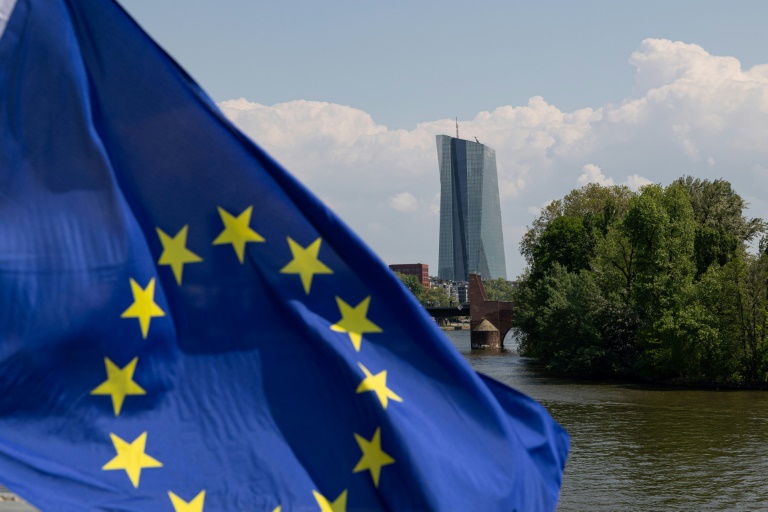
European Central Bank policymakers called an emergency meeting on Wednesday, as more indebted eurozone states have come under pressure from rising borrowing costs.

A week after a regular gathering, the governing council will hold an “ad-hoc meeting” to discuss “current market conditions,” an ECB spokesperson said.

The ECB drew a line under years of ultra-loose monetary policy at last week’s meeting, calling an end to its massive bond-buying stimulus programme at the beginning of July.

Under pressure from soaring inflation in the eurozone, the ECB also announced its first planned interest rate hike in over a decade for the same month.

Consumer prices rose at an 8.1-percent pace in May, an all-time high for the currency club and well above the ECB’s own two-percent target.

The switch in the central bank’s policy has raised the spectre of “fragmentation” in the eurozone, where the borrowing costs for some, more indebted members rise faster than for others.

Following the meeting last week, the so-called spread between the yields for 10-year Italian bonds and those of Germany — seen as a benchmark for stability — climbed even further, reaching levels not seen since the very start of the pandemic in 2020.

Yields on Italian 10-year bonds fell following the announcement of the ECB meeting, reducing the spread with German government debt.

Eurozone stock markets also rose after falling this week ahead of a regular US Federal Reserve meeting where policymakers could hike rates even higher than expected to combat decades-high inflation.

Speaking at an event in Paris on Tuesday, ECB executive board member Isabel Schnabel said the bank would “not tolerate” unwarranted increases in borrowing costs that would “undermine” the bank’s policy. 

Schnabel said the ECB’s response to the risks of fragmentation would “depend on the situation we are facing”, but insisted that the bank’s commitment had “no limits”.

“There can be no doubt that, if and when needed, we can and will design and deploy new instruments to secure monetary policy transmission and hence our primary mandate of price stability,” she said.

– ‘Flexibility’ –

The ECB was prepared to respond in a “very short period of time” if necessary, Schnabel said.

“In that case, reinvestments from maturing securities under the PEPP can be adjusted flexibly across time,” she said.

PEPP is the ECB’s pandemic-era stimulus programme to stoke economic growth and keep credit flowing in the 19-nation currency club.

The ECB brought an end to net purchases under the 1.85-trillion-euro ($1.94-trillion) scheme in March this year.

Another option would be to design a new “tool”, Schnabel said, though its scope would depend on “the situation we are facing”.

Schnabel is only the latest senior ECB figure to intone on the risks of rising spreads.

President Christine Lagarde said the ECB would show “flexibility” in response to pressure on borrowing costs at the ECB’s regular meeting last week in Amsterdam.

– ‘Flexibility’ –

“Some spread widening amid an overall rise in yields is normal,” said Holger Schmieding, chief economist at Berenberg Bank.

“As long as it remains consistent with the inflation backdrop and the pace of nominal growth, it should not present an imminent risk even for fiscally challenged Italy,” Schmieding said.

Policymakers will meet to discuss the developments in markets from 11:00 am Frankfurt time (0900) GMT.

Normally members of the governing council meet roughly every six weeks to set the course for the ECB, with their next regular meeting planned for July 21.

Flights resume after computer glitch shuts Swiss airspace

Swiss airspace reopened Wednesday morning after a computer glitch grounded flights across the country for several hours, officials said.

“Swiss airspace is now open again,” the Alpine nation’s air traffic control service Skyguide said on Twitter, adding “the technical malfunction at Skyguide has been resolved”.

It did not say what had caused the problem that shut Swiss airspace for hours Wednesday morning, but said that “air traffic over Switzerland and operations at the national airports of Geneva and Zurich are resuming”.

Those airports too announced that flights had begun taking off.

“Good news! Air traffic has gradually resumed since 8:30 am (0630 GMT),” Geneva airport said in a tweet, warning that a number of flights had been cancelled and urging passengers to check with their airlines.

Zurich airport also said flight operations were “running again” at full capacity by 10:00 am (0800 GMT).

But it warned that “delays are to be expected today. We still recommend passengers to check with their airline about the status of their flight.”

– ‘Vacation could fall through’ –

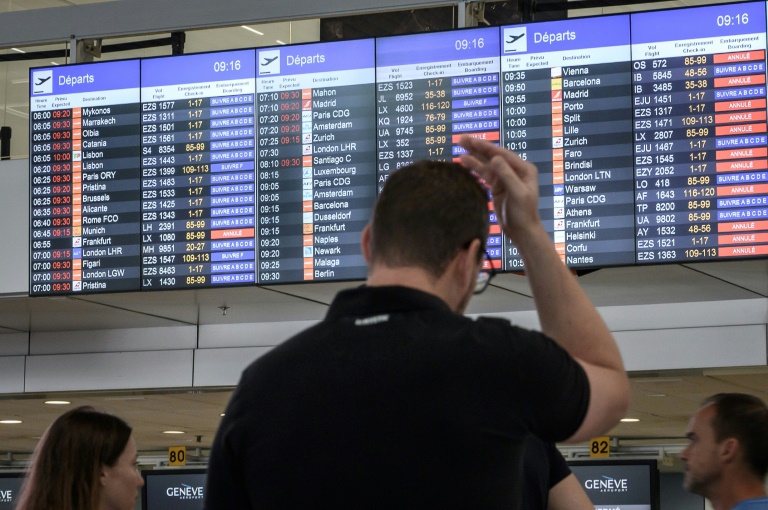
At Geneva airport, where the first morning flights were delayed by more than three hours, dozens of travellers crowded around the information screens, with phones stuck to their ears.

Airport spokesman Ignace Jeannerat told AFP that around 2,000 people had seen their flights affected, adding that while flights were resuming, there would not be a return to normal before early Thursday.

“We are trying to find a solution,” Sandrine Vert, 52, told AFP, after her family’s easyJet flight to Split in Croatia was cancelled.

She, her husband and teenage daughter, who drove to the airport from Annecy in France, had been told there were now no flights from Geneva to Split until Friday, putting their one-week holiday plans on the line.

“Our vacation could fall through,” she said.

The chaos erupted when Skyguide announced it had “experienced a technical malfunction in the early hours of this morning, which is why Swiss airspace has been closed to traffic for safety reasons”.

It said it regretted “this incident and its consequences for its customers, partners and passengers.”

The closure blocked all overflight of the country, and forced a number of flights to be rerouted to airports in neighbouring countries.

The Swiss news agency ATS said some international flights to Switzerland had been re-routed to Milan in northern Italy.

Zurich airport’s website meanwhile showed that a United Airlines flight from New York had been rerouted to Frankfurt in western Germany, while a Singapore Airlines flight from the city state had been sent to the southern German city of Munich. 

Zurich is Switzerland’s largest airport, with more than 10.2 million passengers going through its terminals in 2021.

But with Covid restrictions lifted, air traffic has picked up significantly since then, with 1.9 million passengers registered there in May alone. For this summer season, it is serving flights to 191 destinations.

Geneva airport saw 5.9 million passengers pass through during the Covid pandemic year of 2021. There too, traffic has been rapidly picking up, and it now sees around one million passengers a month.

Indigenous team scours remote Amazon for missing Phillips and Pereira

Wooden canoes slice soundlessly through the flooded jungles of Javari Valley in Brazil’s Amazon region, steered by a team of Indigenous people scouring for clues to the whereabouts of British journalist Dom Phillips and his colleague Bruno Pereira. 

Since the pair’s disappearance on June 5, about 20 members of the Union of Indigenous Peoples of the Javari Valley (UNIVAJA) have relentlessly searched the area in Atalaia do Norte, one of the world’s most remote places.

Phillips, 57, a regular contributor to Guardian, and Bruno Pereira, a 41-year-old expert on Brazil Indigenous communities, were last seen aboard a boat on the Itaquai River — a snaking muddy-brown channel in the upper Amazon Basin.

“We have been working from 6 am to 6 pm,” Orlando de Moraes Possuelo, a consultant with UNIVAJA, told AFP. 

He has been coordinating the search across the valley, which is now joined by the federal police and army as international attention grows over the fate of the two missing men.

The men use wooden oars to navigate their way through the flooded jungles, maneuvering around trees and vines.

“They are not motorized canoes,” Possuelo said. “And the search is being carried out in the igapos, which is what we call the forest area that floods during the monsoon season.”

In the non-flooded areas, the searchers — who are Indigenous people belonging to five ethnic groups — trek on foot through muddy terrain, hacking with machetes through thick vegetation and keeping on alert for any signs of Phillips and Pereira.

The British journalist was working on a book on sustainable ways to protect the world’s largest rainforest, while Pereira — who was on leave from his job with the Brazilian government’s Indigenous affairs agency, or Funai — was accompanying him as a guide. 

– Little hope –

The site of their disappearance borders Peru and Colombia, and is home to about 20 isolated Indigenous groups where drug traffickers, loggers, miners and illegal fishermen operate.

On Sunday, they made a discovery — a health card, black pants, a black sandal and a pair of boots belonging to Pereira; a pair of boots and a backpack containing Phillips’ personal clothing. 

“It was the Indigenous people who found them,” Possuelo said. “After we found this place with their belongings, the movement in the region increased.”

The items were found submerged near the house of a fisherman, Amarildo da Costa Oliveira, who witnesses said they saw pass at high speed onboard a boat going in the same direction as Phillips and Pereira before their disappearance. 

He was arrested on June 7 and has denied any involvement. Traces of blood on his boat are currently being analyzed.

A second man, Oseney da Costa Oliveira, was also arrested as he was “suspected of participating in the affair,” police said Tuesday. Brazilian media said he was Amarildo’s brother.

Possuelo says he thinks Phillips and Pereira’s disappearance could be related to the illegal fishing of large Amazonian fish, such as the pirarucu — which is native to the bio-diverse basin and fetches a hefty price at the markets.

He appears to have given up hope of finding the two men alive. 

“We believe that in the next few days or in the next few hours, we can find the rest of their equipment, maybe the boat, and probably the bodies,” he tells AFP.

Flights resume after computer glitch shuts Swiss airspace

Swiss airspace reopened Wednesday morning after a computer glitch grounded flights across the Alpine nation for several hours, officials said.

“Swiss airspace is now open again,” Swiss air traffic control service Skyguide said in a tweet, adding “the technical malfunction at Skyguide has been resolved”.

It did not say what had caused the problem that shut Swiss airspace for hours Wednesday morning, but said that “air traffic over Switzerland and operations at the national airports of Geneva and Zurich are resuming”.

Those airports too announced that flights had begun taking off.

“Good news! Air traffic has gradually resumed since 8:30 am (0630 GMT),” Geneva airport said in a tweet, warning that a number of flights had been cancelled and urging passengers to check with their airlines.

At the airport, where the first morning flights were delayed by more than three hours, dozens of travellers crowded around the information screens, with phones plastered to their ears.

Zurich airport also said flight operations were “running again”, although flight operations would be at 50-percent capacity until 9:30 am, and 75-percent after that.

“We recommend passengers to pay attention to the flight information of the airline.”

The chaos erupted when Skyguide announced it had “experienced a technical malfunction in the early hours of this morning, which is why Swiss airspace has been closed to traffic for safety reasons”.

It said it regretted “this incident and its consequences for its customers, partners and passengers.”

The Swiss news agency ATS-Keystone said international flights to Switzerland had been re-routed to Milan in northern Italy.

The Zurich airport website meanwhile showed that a United Airlsines flight from New York had been rerouted to Frankfurt in western Germany, while a Singapore Airlines flight from the city state had been sent to the southern German city of Munich. 

Zurich is Switzerland’s largest airport, with more than 10.2 million passengers going through its terminals in 2021.

But with Covid restrictions lifted, air traffic has picked up significantly since then, with 1.9 million passengers registered there in May alone.

Close Bitnami banner
Bitnami