World

UK airport chaos due to Brexit 'shambles': Ryanair boss

Air travel chaos in Britain is purely down to Brexit “shambles” by hobbling recruitment at airports, Ryanair boss Michael O’Leary said on Tuesday.

The CEO of Europe’s biggest airline also dismissed threats of summer strike action by what he called “Mickey Mouse” unions in Belgium and Spain covering some Ryanair workers.

And he said his company has dropped a controversial pre-boarding questionnaire for South African passport holders requiring them to answer questions in Afrikaans — a language commonly used by just 12 percent of South Africans, many of them white.

O’Leary told AFP that “100 percent” of the woes experienced by air passengers in the UK — including massively long lines and cancelled flights — was because “Brexit has been a shambles”.

“It was delivered by a government led by Boris Johnson that is also a shambles. It was inevitable that Brexit would constrain the labour market, you see,” he said.

O’Leary said Britain’s decision to pursue a hardline departure from the European Union that put a halt to EU workers filling jobs is largely why it was difficult to quickly ramp up recruitment for ground and security staff at UK passports.

Airports and airlines in several countries, including in the EU and the US, have struggled to cope with surging numbers of travellers, many of them keen to fly after months or years of being grounded because of Covid restrictions.

O’Leary said that unlike European rivals Air France and Lufthansa, low-cost Ryanair had fully bounced back from the pandemic and was flying 115 percent of the passenger loads recorded before the coronavirus hit.

Rising inflation was only pushing more passengers into Ryanair seats, he argued, while acknowledging that the airline was raising ticket prices by around 9 percent.

He said the company’s hedging on fuel prices through to March next year was keeping it competitive.

– Strike threats –

But unions in Belgium, Portugal and Spain are threatening to clip Ryanair’s peak summer revenues with strikes later this month to demand better pay and conditions.

O’Leary shrugged off the walk-out warnings.

“We think there will be very few strikes, if any, and those strikes will be meaningless and won’t be noticed by anybody,” he said.

“We operate two and half thousand flights every day. Most of those flights will continue to operate even if there is a strike in Spain by some Mickey Mouse union or if the Belgian cabin crew unions want to go on strike over here,” he added in a media conference.

O’Leary said that, in Belgium, the airline had “reached agreement with the unions representing over 90 percent of our pilots and cabin crew” and was continuing negotiations.

A Portuguese union joined the strike movement on Tuesday, announcing a three-day work stoppage from June 24 to 26 to “draw attention to multiple attacks on the dignity of workers”.

On the controversial Afrikaans test, the Ryanair boss said the company had tried to respond to a rise in detection of false South African passports.

“We suffer a fine of 2,000 euros for every passenger who arrives in Dublin from Bodrum (in Turkey) with a false South African passport,” he said.

He added that, while the airline had been asking South African passport holders to answer local general knowledge and geographical questions in Afrikaans, it got rid of the questionnaire.

“We didn’t think it was appropriate either. So we have ended the Afrikaans test, because it doesn’t make any sense,” he said, adding that “South Africa needs to fix its problems”.

South Africa’s government had called the test “backward profiling”. 

Afrikaans is just one of 11 official languages in South Africa, and it played a role in the oppression of black citizens during apartheid.
Russia plans Severodonetsk plant evacuation as it bids to encircle city

Russia said Tuesday it would establish a humanitarian corridor to evacuate civilians from a chemical plant in Severodonetsk, as the two sides battled for control of the key city in Ukraine’s eastern Donbas region.

Russian forces have stepped up efforts to cut off the Ukrainian troops still in the industrial hub, destroying all three bridges which connect it across a river to Lysychansk.

Ukrainian President Volodymyr Zelensky meanwhile once again appealed for heavy weapons from the West, criticising the “restrained behaviour” of some European leaders.

Moscow has for weeks targeted the twin cities as the last areas in the Lugansk region of the Donbas still under Ukrainian control.

Communication with the city was “complicated” with the situation on the ground changing every hour, the head of Severodonetsk’s administration, Oleksandr Stryuk, told Ukrainian television.

Around 500 civilians were taking shelter under “heavy fire” in the Azot chemical plant in Severodonetsk, Stryuk said. 

The Russian defence ministry said it was “ready to organise a humanitarian operation” on Wednesday to evacuate from the plant to the separatist-controlled part of the Lugansk region.

– ‘Surrender or die’ –

Regional governor Sergiy Gaiday said Monday Ukraine’s forces had been pushed back from Severodonetsk’s centre with the Russians controlling 70 to 80 percent of the city in their attempt to “encircle it”.

Capturing Severodonetsk would open the road to Sloviansk and another major city, Kramatorsk, in Moscow’s push to conquer Donbas, a mainly Russian-speaking region partly held by pro-Kremlin separatists since 2014.

Zelensky, in comments to Danish journalists Tuesday, insisted that the war could only end once Ukrainians were the only ones left on its territory.

How long that took depended “very much” on international support, and “the personalities of the leaders of European states”.

He regretted what he called, “the restrained behaviour of some leaders” which, he said, had “slowed down arms supplies very much”.

Zelensky has repeatedly urged the West to deliver heavy weapons to Ukraine as quickly as possible.

– ‘Not safe anywhere’ –

From an elevated position in Lysychansk, an AFP team saw black smoke rising from the Azot factory in Severodonetsk and another area in the city.

The Ukrainian military is using the high ground to exchange fire with Russian forces fighting for control of Severodonetsk, just across the water.

Along the road from Lysychansk to Kramatorsk, Ukrainian forces were transporting more weapons systems to the front, including an M777 howitzer, while specialist vehicles were carrying tanks to be repaired.

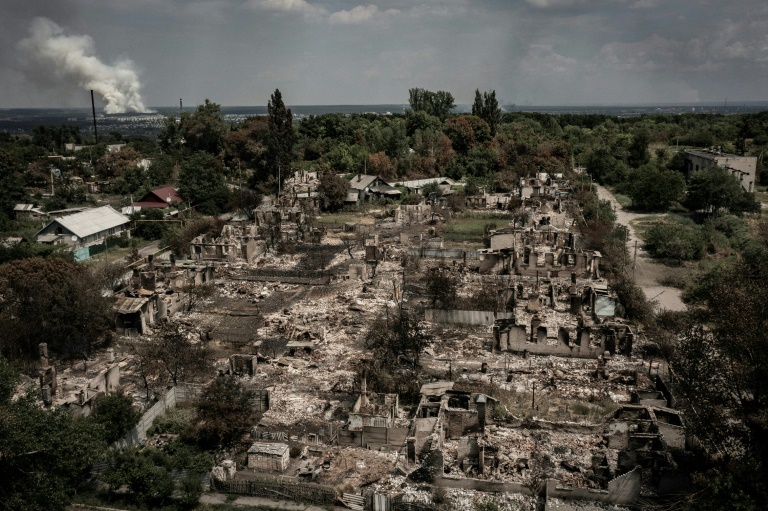
In the town of Novodruzhesk, close to Lysychansk, there was still a smell of burning and smoke from a group of houses that had been destroyed by fire from shelling at the weekend, with just chimneys left.

“It’s not safe anywhere, it just depends on the time of day, that’s all,” said a soldier standing at the local fire station with a skull logo on his sleeve. 

“There are tons of people (still) here,” he added.

Further away in Sloviansk, Nataliya, 41, a now unemployed cleaner said she was trying to decide whether to evacuate. 

“People will leave again if they start bombing the town heavily,” she told AFP. 

“If it’s like Mariupol, they’ll give us buses. We’ll leave if the Russians enter Sloviansk.”

– ‘Positive signal’ –

The European Union needs to “give a positive signal” to Ukraine and be “open” to granting it candidate status, France’s Europe minister, Clement Beaune, said Tuesday. 

Ukraine has applied to become a member of the bloc, with the European Commission due to give its recommendation in the coming days. But some member states are sceptical about potentially fast-tracking Ukraine’s accession.

The process would “take time”, Beaune said, adding that the first priority was to “stop the war”.

“Ukraine is fighting and defending our shared European values, it must at least be a candidate for EU,” President Zelensky said Tuesday.

Russian energy giant Gazprom said Tuesday it would reduce gas deliveries to the EU via the Nord Stream pipeline by 40 percent, due to the delayed return of compressor units from German company Siemens.

A number of European countries, including Germany, where the underwater pipeline makes land, are highly reliant on supplies of Russian gas for their energy needs.

The Kremlin meanwhile said it had not received a request from London to intervene in the case of two Britons sentenced to death by pro-Moscow separatist authorities in eastern Ukraine.

Aiden Aslin and Shaun Pinner, along with Moroccan Saaudun Brahim, were convicted of acting as mercenaries for Ukraine by the self-proclaimed Donetsk People’s Republic.

“Everything will depend on the appeal from London, and I am sure that the Russian side will be ready to consider it,” Kremlin spokesman Dmitry Peskov told reporters.

Russia also announced it was blacklisting 49 UK citizens, including defence officials and prominent journalists from the BBC, The Financial Times and The Guardian.

burs-sea/gw

How Brazil's Javari Valley became a criminal haven

The far-flung Amazon region where a British journalist and a Brazilian indigenous expert disappeared has become a haven for drug trafficking and environmental crimes because of increasing lawlessness and an absent state, experts say.

The Javari Valley, where veteran correspondent Dom Phillips and respected indigenous specialist Bruno Pereira disappeared on June 5, is one of the remotest places on Earth, a vast expanse of thick jungle in northwestern Brazil near the Peruvian and Colombian borders.

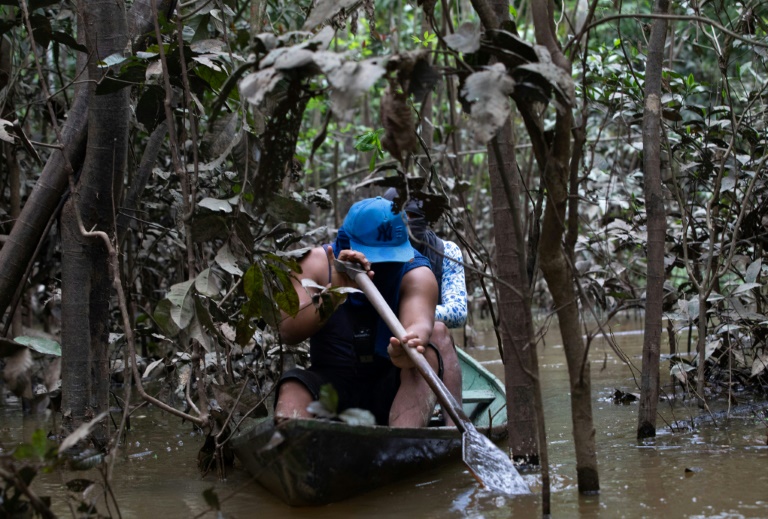
Phillips, 57, and Pereira, 41, were last seen boating up the Itaquai river just outside the Javari Valley Indigenous Reservation, a territory bigger than Austria that is home to an estimated 6,300 indigenous inhabitants, including 19 uncontacted tribes.

The region is suffering from a surge of criminal activity, blamed on drug gangs with links to other crimes including illegal fishing on indigenous lands — something Pereira had long fought, making him a target of death threats.

The men’s disappearance remains unsolved, but investigators have found their belongings and are analyzing suspected human remains, fueling fears they were murdered.

A suspect has been arrested.

Experts on the Javari Valley told AFP drug gangs and illegal mining, logging and poaching rings have capitalized on weaker enforcement by Brazilian authorities in recent years to expand their presence.

“What happened to Bruno and Dom is the result of an increase in organized crime, which is in turn explained by the absence of the state,” said Antenor Vaz, head of Brazilian indigenous affairs agency FUNAI’s operations in the region from 2006 to 2009.

– Attractive base –

The very things complicating the investigation are what make the region an attractive base for criminal operations.

The region is hard to reach, and harder to patrol: huge, remote, densely forested and criss-crossed by meandering rivers that flood the surrounding area for several months a year.

“By its very nature, the forest has always been an attractive space for drug traffickers, since they can camouflage drugs so easily,” said Aiala Colares, a geographer and Amazon expert at the Federal University of Para.

Since the 1990s, drug gangs have used the region’s rivers to ship cocaine and other drugs from Peru and Colombia, for both the Brazilian and international markets, he said.

That traffic has increased substantially over the past decade.

Drug gangs operating in the region are “multidimensional” outfits, with operations that also include illegal logging and fishing, Colares said.

The main group, “Os Crias,” emerged in 2021 as a splinter from the Northern Family, one of the biggest criminal organizations in the Amazon basin.

They now dominate the triple border on the Brazilian side and the Javari trafficking routes, Colares said.

– Poverty, impunity –

The gangs feed off a long history of poverty and impunity in the region, now exacerbated by a power vacuum left by the state, said anthropologist Barbara Arisi of Vrije Universiteit in Amsterdam, a specialist in the indigenous peoples of the Javari Valley.

“A growing number of criminals, more and more organized and better-armed, are taking advantage of the lack of state structure,” she said.

The gangs have even penetrated some indigenous groups, such as the Tikuna, she said.

Just like in big-city slums, “drug trafficking offers lots of young people a life they could never attain otherwise,” she said.

Poverty has helped the gangs thrive.

The small city of Atalaia do Norte, the local outpost Phillips and Pereira were returning to, has the third-worst human development index in Brazil.

Enforcement operations by environmental authorities have meanwhile been reduced since President Jair Bolsonaro took office in 2019.

The far-right president, who has pushed to develop the Amazon — “rich lands” with “poor Indians,” in his words — has also brought upheaval at FUNAI.

Since he replaced the indigenous affairs agency’s leadership, many veteran officers have been forced out or quit.

That includes Pereira, the one-time head of FUNAI’s Javari operations and its programs for isolated tribes, who was placed on administrative leave.

FUNAI’s base in the area has meanwhile been a target of several shooting attacks in recent years.

In 2019, FUNAI’s anti-logging and anti-poaching chief for the Javari Valley was shot dead in the city of Tabatinga.

The case remains unsolved.

London remembers, five years on from fire tragedy that killed 72

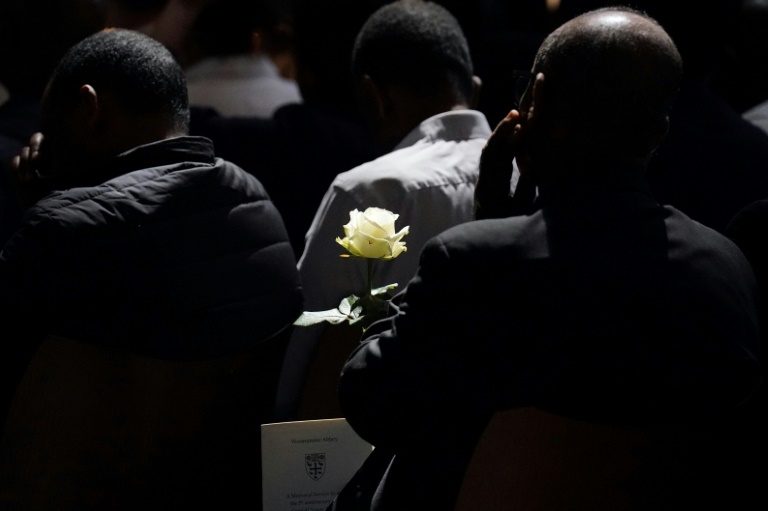
Survivors and families of the victims of Britain’s worst residential fire since World War II on Tuesday marked the fifth anniversary of the tragedy, with memorial services and tributes.

The names of the 72 men, women and children who perished in the Grenfell Tower fire were read out at a church service at Westminster Abbey before a 72-second silence. Flowers were laid at the site.

The fire started in a faulty freezer and ripped through the 24-storey west London block in an inferno that was visible across the British capital.

An official report blamed highly combustible cladding fixed to the exterior of the high-rise as the “principal reason” the fire spread.

But despite a costly ongoing public inquiry, the government has been accused of failing to implement urgent safety changes to prevent a similar tragedy.

Prince William and his wife Catherine were among those attending a multi-faith service at the foot of the tower, which is still covered in tarpaulin.

– ‘Multiple failings’ –

Five years on, emotions remain raw about the treatment of survivors and the bereaved, some of whom are yet to be permanently rehoused.

The local Anglican Bishop of Kensington, Graham Tomlin, said in the years before the fire, lax building and safety regulations had made Grenfell a “tinderbox” and a tragedy inevitable.

“The memory of today is really hard for people,” he told Times Radio. “People are still deeply traumatised by it.”

Firefighters who braved the heat and flames to try to rescue residents have accused the government of failing to take fire safety seriously.

The general secretary of the Fire Brigades Union, Matt Wrack, said firefighters and the Grenfell community had a “bond that was forged in tragedy”.

But there have been job cuts across the service since 2017.

“The community have faced constant denials from those responsible for Grenfell being covered in cladding as flammable as petrol,” he said.

“They have faced a wait for criminal charges that continues to this day.”

The FBU has also highlighted “multiple failings” in the testing and approval of cladding, insulation and other material used in the Grenfell Tower.

It claimed the tragedy could have been averted had the building’s regulator not been privatised and become “dependent on fee income” from manufacturers.

– Failings –

Grenfell campaigners say the fire and its aftermath have exposed gaping social inequality.

They argue changes would have been implemented sooner had low-income workers and ethnic minority families in social housing not been the ones affected.

The main opposition Labour party’s foreign affairs spokesman David Lammy, who lost a friend in the fire, said decent, safe social housing “should not be something this country has to aspire towards.

“It should be the bare minimum. The fire should have been a turning point. There is no excuse for delay,” he wrote in the Evening Standard. 

There has also been a wider outcry among homeowners who have been forced to pay for the removal of unsafe cladding in the high-rises where they live.

Many have been unable to sell their properties or get proper insurance.

The Times newspaper reported that some 640,000 people were still living in buildings with the same type of cladding material.

Government ministers have also been condemned for advising as late as last month that residents should wait for help before evacuating during a high-rise fire.

“A lot of people who managed to survive were people who managed to get out early because they ignored the ‘stay put’ advice,” said Tiago Alves, 25, who escaped with his mother, father and younger sister.

“I’m gobsmacked at the fact that we’re still having this conversation five years on.”

London Mayor Sadiq Khan praised survivors for their campaign to improve public safety. The ongoing public inquiry was “painstakingly unearthing the truth” — that profits were prioritised over public safety and deregulation weakened building standards, he said.

“The response from the government, building developers and owners has fallen far short of what the families of the victims and survivors have every right to expect,” he wrote in The Observer on Sunday.

“We still have too many residents in London and across the country living in high-rise buildings that are covered in dangerous flammable cladding, and we are still seeing designs for buildings that have critical safety failings.”

Stocks mostly fall as recession fears linger

Stock markets mostly fell on Tuesday as investors fret over the possibility that the US Federal Reserve will move aggressively to combat inflation.

Panic has swept through trading floors since data on Friday showed US consumer prices rising at their fastest pace in decades on surging energy and food costs caused by the Ukraine war and supply chain snarls.

Investors are now bracing for the Fed’s interest rate decision on Wednesday as it struggles to walk a fine line between reining in inflation and trying to keep the economy on track.

“While there is no doubt that inflation is a considerable challenge for the US at this point, slamming on the brakes too hard risks pushing the economy off its track,” said Tai Hui, chief market strategist for Asia at JP Morgan Asset Management. 

The inflation reading has raised expectations that the US central bank could raise rates by a hefty 75 basis points, higher than its previous 50-point hike.

“The mood has turned very negative since the latter half of last week,” said Craig Erlam, analyst at online trading platform OANDA.

“Now all the talk is about if we’re heading for a recession and how bad it will be,” Erlam said.

Those recession fears sent Wall Street plunging on Monday, with the broad-based S&P 500 stocks index sinking into a bear market after dropping more than 20 percent from its recent peak.

After opening higher on Tuesday, US indices diverged near midday, with the S&P 500 flat while the Dow fell and the tech-heavy Nasdaq rose.

“An anaemic and now rapidly disappearing bounce in US markets shows us that investors are very cautious about going bargain-hunting ahead of tomorrow’s momentous Fed decision,” said Chris Beauchamp, chief market analyst at online trading platform IG.

“Not just 75bps but even 100bps are being viewed as a possibility on Wednesday evening, as the committee looks to try and steal a march on inflation,” he said.

London, Paris, Frankfurt and most Asian equities closed in the red.

Oil prices, which have fuelled the global inflation surge, rose more than 1.5 percent, with Brent North Sea Crude, the international benchmark, above $124 per barrel.

Cryptocurrencies have mirrored the falls in the stock markets, with bitcoin tumbling to an 18-month low under $23,000 this week.

Digital currency exchange Coinbase said Tuesday it will lay off 18 percent of staff, citing tight economic conditions and an overly rapid expansion.

– Key figures at around 1545 GMT –

New York – Dow: DOWN 0.4 percent at 30,410.87 points

London – FTSE 100: DOWN 0.3 percent at 7,187.46

Frankfurt – DAX: DOWN 0.9 percent at 13,304.39 

Paris – CAC 40: DOWN 1.2 percent at 5,949.84 

EURO STOXX 50: DOWN 1.1 percent at 3,405.06 

Tokyo – Nikkei 225: DOWN 1.3 percent at 26,629.86 (close)

Hong Kong – Hang Seng Index: FLAT at 21,067.99 (close)

Shanghai – Composite: UP 1.0 percent at 3,288.91 (close)

Euro/dollar: UP at $1.0414 from $1.0412 late Monday

Pound/dollar: DOWN at $1.2004 from $1.2136

Euro/pound: UP at 86.77 pence from 85.76 pence

Dollar/yen: UP at 134.88 yen from 134.42 yen 

Brent North Sea crude: UP 1.7 percent at $124.34 per barrel

West Texas Intermediate: UP 1.5 percent at $122.77 per barrel

burs-lth/pvh

Roman gate closed after bits of ancient stone fall off

Rome’s ruins are such an integral part of the Eternal City that it can be suprising when sometimes bits of them fall off.

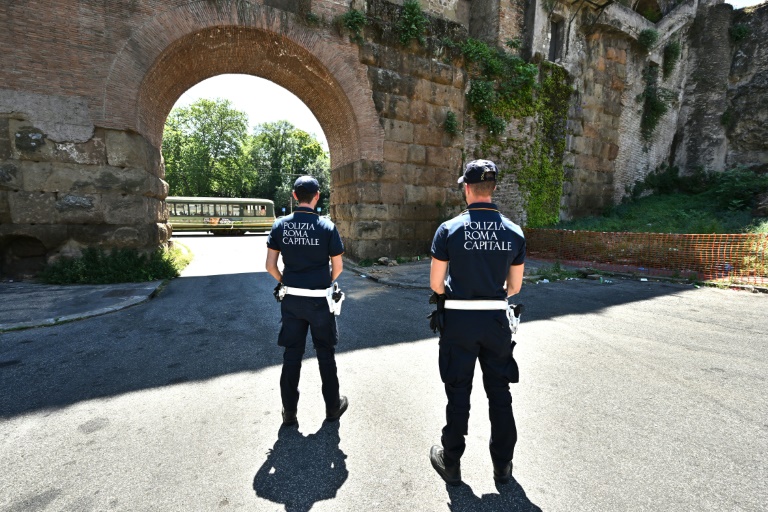
Nobody was hurt after a few fragments fell early Tuesday morning from the Porta Maggiore gate, whose monumental double arches once provided a gateway through the third-century Aurelian Walls.

But the monument — which originally supported two of the city’s aqueducts and is now located behind Rome’s main train station — was temporarily closed off while it was checked, according to a statement from the city authorities.

The fragments of tufa — a type of easy-to-cut rock used in Roman-era construction — fell off around 6:15 am, landing on a pavement “without causing any damage to people or things”, it said.

“At first glance, there does not seem to be any further damage,” said the statement, which added that “the overall state of conservation of the monument is good”.

Normal pedestrian and road traffic was not affected.

Residents have long complained about the state of monuments and roads in the city, which draws millions of tourists each year to see such wonders as the Colosseum.

“We really need maintenance here in Rome,” said Veronica Rinaldin, 33, who works near the Porta Maggiore, which is often marred by overgrown weeds and garbage.

A police officer told AFP on condition of anonymity that tufa provided an excellent base for certain plants to grow, and their roots often split the stone.

“It doesn’t happen often. It happens if they are abandoned and neglected,” the officer said.

WHO to assess if monkeypox an international health emergency

The World Health Organization said Tuesday it would hold an emergency meeting next week to determine whether to classify the global monkeypox outbreak as a public health emergency of international concern.

The UN agency is also working to change the name of the disease, which was long confined to Western and Central Africa until more than 1,000 cases were detected in dozens of countries across the world over the last two months.

“The outbreak of monkeypox is unusual and concerning,” World Health Organization chief Tedros Adhanom Ghebreyesus told journalists.

“For that reason I have decided to convene the Emergency Committee under the international health regulations next week, to assess whether this outbreak represents a public health emergency of international concern”.

The emergency committee will meet on June 23 to discuss the designation, which is the highest alarm the UN agency can sound.

– New name –

Tedros added that the “WHO is also working with partners and experts from around the world on changing the name of monkeypox virus… and the disease it causes.”

“We will make announcements about the new names as soon as possible.”

The announcement comes after more than 30 scientists wrote last week that there was an “urgent need for a non-discriminatory and non-stigmatising nomenclature for monkeypox”.

“In the context of the current global outbreak, continued reference to, and nomenclature of this virus being African is not only inaccurate but is also discriminatory and stigmatising,” they wrote. 

While monkeypox was first discovered in macaques, many cases are believed to be transmitted to humans by rodents.

The normal initial symptoms of monkeypox include a high fever, swollen lymph nodes and a blistery chickenpox-like rash.

However, the US Centers for Disease Control and Prevention said last week that current cases do not always present flu-like symptoms, and rashes are sometimes limited to certain areas.

Tedros said that 1,600 confirmed monkeypox cases and 1,500 suspected cases have been reported to the WHO this year from 39 countries, 32 of which have been recently hit by the virus.

While 72 deaths have been reported in countries where monkeypox was already endemic, none have been seen in the newly affected countries, Tedros said.

“Although WHO is seeking to verify news reports from Brazil of a monkeypox-related death there,” he added.

– No mass vaccination –

To fight the global spread, the WHO aims to recommend “tried-and-tested public health tools including surveillance, contact-tracing and isolation of infected patients”.

However, the WHO does not recommend mass vaccination against monkeypox, he said, after the European Union said Tuesday it had purchased almost 110,000 vaccine doses.

“While smallpox vaccines are expected to provide some protection against monkeypox, there is limited clinical data, and limited supply,” Tedros told journalists.

“Any decision about whether to use vaccines should be made jointly by individuals who may be at risk and their health care provider, based on an assessment of risks and benefits, on a case-by-case basis.”

Rosamund Lewis, WHO’s technical lead for monkeypox, told journalists that there are a few smallpox vaccines that may be protective against monkeypox.

But “much of the data that we have is from years gone by, and/or from clinical studies — there is not a lot of clinical data,” she said.

She called on countries that are vaccinating to share their research and pointed to a set of interim guidance documents released by the WHO.

Tedros also emphasised that vaccines must be “available equitably wherever needed,” adding that the WHO is working with its member states “to develop a mechanism for fair access to vaccines and treatments”.

UK defends Rwanda migrant deportation policy

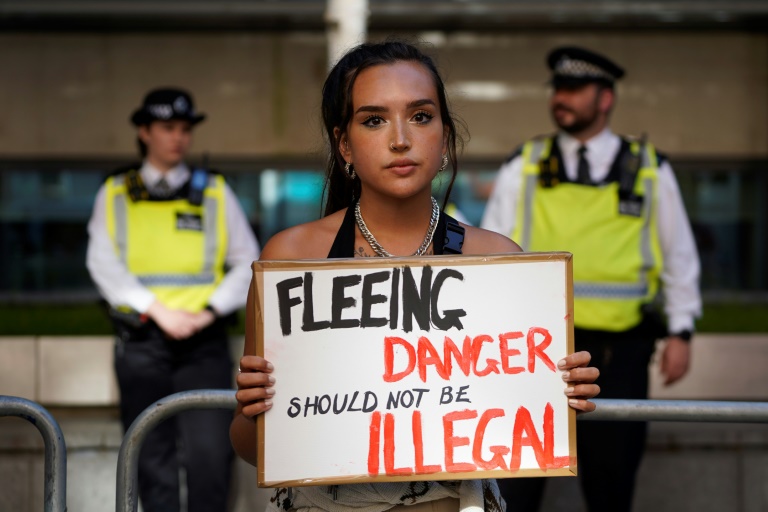
The UK government on Tuesday defended its controversial policy to send asylum seekers to Rwanda, even as the entire senior leadership of the Church of England branded it shameful and immoral.

Foreign Secretary Liz Truss insisted the first flight to Kigali, believed to be operated by Spanish charter firm Privilege Style, would take off, no matter how many people were on board.

Only seven people are now due to be deported because of legal challenges and reviews of their cases — well down on the 130 initially envisaged by the authorities.

“We’re expecting to send the flight later today,” Truss told Sky News but said she was unable to confirm the numbers due to be on board. 

“There will be people on the flights and if they’re not on this flight, they will be on the next flight,” she added.

Truss said the policy, which the UN refugee agency has criticised as “all wrong”, was vital to break up human-trafficking gangs exploiting vulnerable migrants.

Record numbers of migrants have made the perilous Channel crossing from northern France, heaping pressure on the government in London to act after it promised to tighten borders after Brexit.

British media said some 260 people attempting the crossing in small boats were brought ashore at the Channel port of Dover by 1200 GMT on Tuesday.

More than 10,000 have crossed since the start of the year.

– ‘Shames Britain’ –

Legal challenges in recent days have failed to stop the deportation policy, which the two top clerics in the Church of England and 23 bishops said was “immoral” and “shames Britain”.

“They (migrants) are the vulnerable that the Old Testament calls us to value,” Archbishop of Canterbury Justin Welby and Archbishop of York Stephen Cottrell wrote in a letter to The Times. 

“We cannot offer asylum to everyone, but we must not outsource our ethical responsibilities, or discard international law — which protects the right to claim asylum.”

It was reported last weekend that Queen Elizabeth II’s heir, Prince Charles, had privately described the government’s plan as “appalling”.

But Truss said: “The people who are immoral in this case are the people traffickers trading on human misery.

“Our policy is completely legal. It’s completely moral,” she added, accusing critics of having no alternative plan.

In Kigali, government spokeswoman Yolande Makolo told reporters it was an “innovative programme” to tackle “a broken global asylum system”.

“We don’t think it is immoral to offer a home to people,” she told a news conference.

An undeterred Boris Johnson meanwhile told his senior ministers the policy was “the right thing to do”.

The prime minister accused opponents of “undermining everything that we’re trying to do to support safe and legal routes for people to come to the UK” and “abetting the work of criminal gangs”.

– ‘Value for money’ – 

Truss said she could not put a figure on the cost of the charter flight, which has been estimated at upwards of £250,000 ($303,000). 

But she insisted it was “value for money” to reduce the long-term cost of irregular migration, which the government says costs UK taxpayers £1.5 billion a year, including £5 million a day on accommodation.

In the Channel port of Calais, in northern France, migrants said the risk of deportation to Rwanda would not stop them trying to reach Britain.

Moussa, 21, from the Darfur region of Sudan, said “getting papers” was the attraction. “That’s why we want to go to England,” he said.

Deported asylum seekers who make the 4,000-mile (6,500-kilometre) trip to Kigali will be put up in the Hope Hostel, which was built in 2014 to give refuge to orphans from the 1994 genocide of around 800,000 mainly ethnic Tutsis.

Hostel manager Ismael Bakina says up to 100 migrants can be accommodated at a rate of $65 per person a day.

“This is not a prison. It’s a home like our home,” Bakina told AFP. “In a hotel a person will be free in everything they want. When they want to go out of the hotel, it’s no problem.”

As part of the agreement, anyone landing in Britain illegally is liable to be given a one-way ticket for processing and resettlement in Rwanda.

The government in Kigali has said the deportations will begin slowly and rejected criticism that Rwanda is not a safe country and that serious human rights abuses were rife.

Rwandan opposition parties also question whether the resettlement scheme will work given high youth unemployment rates.

burs-phz/cjo/jm

Fed begins meeting with massive hike possible amid price surge

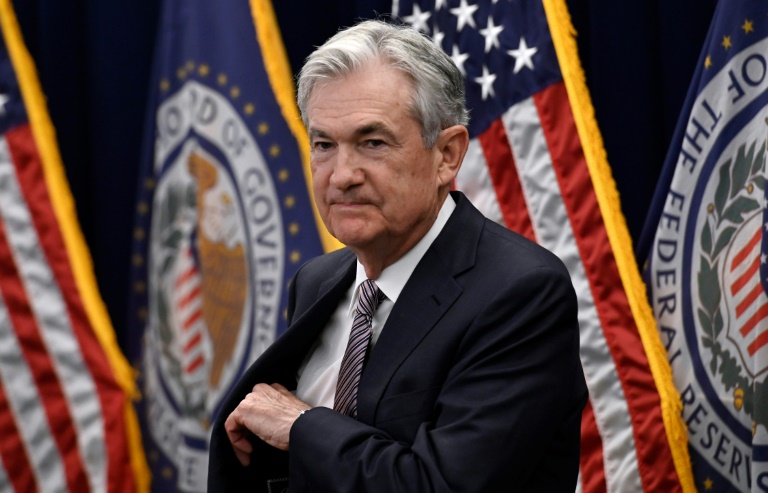
US central bankers opened their two-day policy meeting Tuesday amid a blistering inflation surge that has ignited predictions the Federal Reserve will approve the biggest interest rate hike in more than 27 years.

Fed Chair Jerome Powell has signaled that policymakers were poised to implement another half-point increase in the benchmark borrowing rate this week and another next month.

But a growing number of voices are now calling for a more aggressive three-quarter point hike in response to the big, unexpected jump in the consumer price index in May, which defied widespread expectations the data would show inflation pressures easing.

A Fed spokesperson confirmed the meeting of the policy-setting Federal Open Market Committee began as scheduled at 1500 GMT. Markets will get the rate decision on Wednesday at 1800 GMT.

Officials will debate how high to raise borrowing costs amid surging prices and fears of a bout of 1970s-style stagflation if their efforts to cool the economy clamp down on growth as well.

After dropping the rate to zero since March 2020 in a successful bid to help the world’s largest economy avoid a devastating downturn and recover quickly from the impact of the Covid-19 pandemic, the Fed has raised rates twice, including a big, half-point increase last month.

Low lending rates and the boost from massive federal stimulus caused demand to outstrip supply amid global supply chain snarls, pushing prices higher, and the Russian invasion of Ukraine added more fuel to the inflation fires, sending food and fuel prices soaring.

– Credibility boost or negative surprise? –

Economists thought March was the peak of CPI, but the rate spiked in May, jumping 8.6 percent in the latest 12 months.

“Given the latest information on inflation, we believe that risk-management considerations call for aggressive action to reinforce the Fed’s inflation-fighting credibility,” Barclays analysts said in a commentary.

If policymakers decide on a giant step, it would be the first 75-basis-point increase since November 1994.

But other analysts say the massive step would be unnecessary and could be viewed as panicky, and instead project an additional half-point hike in September.

“With supply improving and demand for goods falling relative to services, margins will compress and inflation will fall much faster than markets and the Fed expect,” Ian Shepherdson of Pantheon Macroeconomics said in an analysis.

He noted that many of the factors driving the price spikes are “outside the Fed’s control, like oil prices.”

The consensus remains for policymakers to stick to the plan, and central bankers are typically loath to surprise markets, although they insist their decisions are “data dependent” and will adjust to evolving situations.

Karl Haeling of LBBW said markets are pricing in at least one 75-basis-point increase in the next three meetings, but chances of that happening this week are “50-50.”

“We believe they will probably avoid raising by 75 bps to reduce risk of an even bigger stock market plunge. But the coming barrage of Fed officials giving public comments after Wednesday will probably suggest that 75 bps is certainly possible at July’s FOMC,” he said.

Barclays said despite the element of surprise, “an aggressive move in June would provide the committee with the biggest bang for its buck, sending a resounding signal of the Fed’s resolve to guide inflation back to its 2 percent target.”

Biden signals US-Saudi thaw with prince meeting on Mideast trip

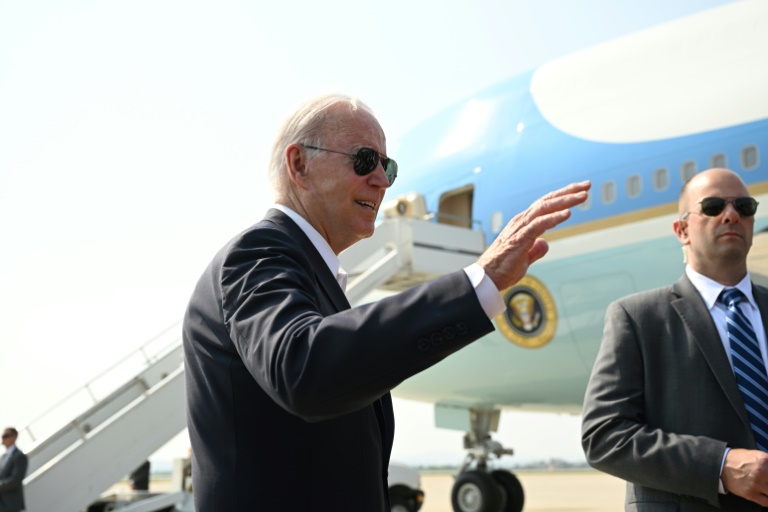
US President Joe Biden will meet with Saudi Arabian Crown Prince Mohammed bin Salman next month, abandoning efforts to ostracize the kingdom’s de facto leader over the horrific murder of a dissident.

The White House ended weeks of speculation Tuesday, announcing that Biden will travel to Israel, the Palestinian West Bank, and Saudi Arabia from July 13-16 — his first trip to the Middle East since taking office.

In addition to meetings with individual leaders in all three places, he will attend a regional Gulf Cooperation Council summit in Saudi Arabia.

Biden is expected to press for increased Saudi oil production, in the hope of taming spiraling fuel costs and inflation at home ahead of midterm congressional elections in which his Democratic party risks a drubbing.

But his meeting with the crown prince, often referred to as MBS, will mark a controversial shift.

As a presidential candidate, Biden said the 2018 murder and dismemberment of Jamal Khashoggi — a Saudi-born US resident known for writing critical articles about the kingdom’s rulers for The Washington Post — had made the country a “pariah.”

US intelligence findings released by the Biden administration identified MBS as the mastermind of the operation.

The White House sought to play down the encounter, not specifically mentioning MBS in its statement.

Pressed by reporters, White House Press Secretary Karine Jean-Pierre said “the president is going to see over a dozen leaders on this trip… We can expect the president to see the crown prince as well.”

Saudi Arabia’s statement was more direct, noting simply that Biden would meet with King Salman and then the young heir to the throne.

– Oil and inflation –

US inflation is at 8.6 percent, the highest rate in 40 years, with high fuel costs largely to blame. Political fallout has been swift as voters vent over Biden’s inability to change global oil markets.

John Kirby, a White House foreign policy spokesman, told MSNBC on Tuesday that oil production “absolutely… is going to be part of” Biden’s discussions in Saudi Arabia.

But while the White House also confirmed that “energy security” will be a topic, officials stressed that the whole trip has broader aims.

Jean-Pierre emphasized that “this visit to the Middle East region culminates months of diplomacy,” as opposed to being driven by recent domestic political concerns.

Biden’s multiple leader-level engagements during the brief yet intense journey will demonstrate “the return of American leadership” to the region, a senior US official told reporters.

– Re-establishing Palestinian links –

The tour starts with meeting Prime Minister Naftali Bennett in Israel, with emphasis on the lavish US support for Israel’s armed forces. That includes the Iron Dome anti-rocket system at a time of tension over ongoing failure to resurrect an international pact curtailing Iran’s nuclear development.

“While in Israel, the president will likely visit an area where these defensive systems are utilized, as well as discuss new innovations between our countries that use  laser technologies to defeat missiles and other airborne threats,” the official said, speaking on condition of anonymity.

“The president will reaffirm the ironclad commitment to Israel’s security.”

Biden will meet Palestinian president Mahmud Abbas, likely in Bethlehem, the US official said.

Biden will stress “his lifelong commitment to a two state solution” for Palestinians and Israelis and restore US ties with Palestinians that were “nearly severed” under his predecessor Donald Trump.

– History and controversy –

The part of the trip that will make history — and generate the most chatter — comes last.

Biden’s flight from Israel to Jeddah will be the first by a US president from Israel to an Arab state that does not recognize the country. In 2017, Trump made the journey in reverse.

Once there, Biden will attend the Gulf Cooperation Council meeting with leaders from Bahrain, Kuwait, Oman, Qatar, Saudi Arabia and the United Arab Emirates, as well as being joined by the leaders of Egypt, Iraq and Jordan, the US official said.

A priority for Biden will be maintaining the recently extended truce in Yemen, as well as deterring Iran, “advancing human rights, and ensuring global energy and food security,” the official said.

Biden will also join a virtual summit of the so-called I2-U2 diplomatic group of India, Israel, the UAE and the United States, with focus on “the food security crisis” sparked by Russia’s invasion of major agricultural exporter Ukraine.

However, the most closely watched meeting will be between Biden and MBS.

The senior official said that despite the Khashoggi murder, the US-Saudi relationship goes back eight decades and while there had been a “recalibration,” there was no desire for “rupture.”

Close Bitnami banner
Bitnami