World

Russians bid to encircle Severodonetsk, Zelensky pleads for arms

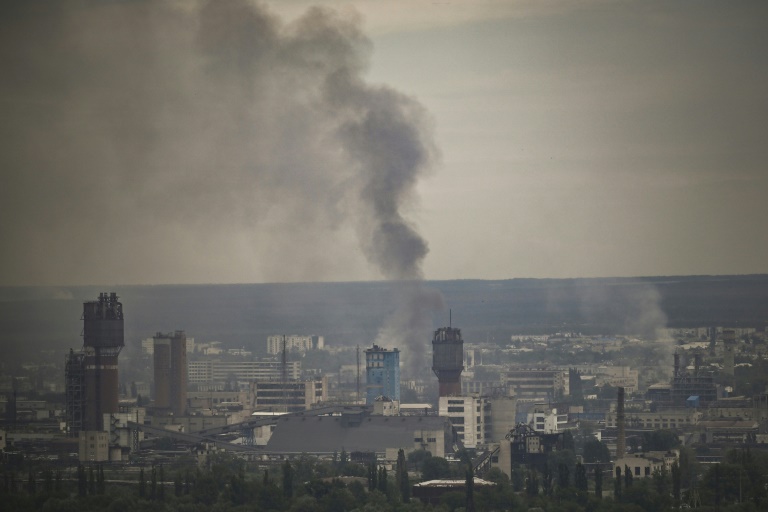
Russian forces on Tuesday stepped up efforts to cut off Ukrainian troops in the key industrial city of Severodonetsk in the east of the country despite Ukrainians insisting they were holding on.

Moscow has laid siege for weeks to the cities of Severodonetsk and Lysychansk, which are separated by a river, as the last areas in the eastern Donbas region of Lugansk still under Ukrainian control.

The head of Severodonetsk’s administration said “massive shelling” had destroyed a third bridge linking the twin cities, but insisted his city was “not isolated”.

“There are communication channels even if they are quite complicated,” Oleksandr Stryuk told Ukrainian television. Ukraine’s “continue to defend the city” but that the situation on the ground “changes every hour,” he added.

On Monday, Sergiy Gaiday, governor of Lugansk, told Radio Free Europe that Russian forces had “destroyed all the bridges and getting into the city is no longer possible. Evacuation is also not possible”. 

Ukrainian President Volodymyr Zelensky has branded the human cost of the battle for east “simply terrifying,” urging Western allies to speed arms deliveries to shore up Ukraine’s ability to reclaim territory.

“We just need enough weapons to ensure all of this. Our partners have them.”

His presidential advisor, Mikhaylo Podolyak, has listed hundreds of howitzers, tanks and armoured vehicles as among items needed by the Ukrainian army.

– ‘Tear off their arms’ –

“To end the war we need heavy weapons,” he tweeted.

Last week, Ukraine’s defence minister said up to 100 Ukrainian troops were being killed and 500 sustaining injuries every day.

The capture of Severodonetsk would open the road to Sloviansk and another major city, Kramatorsk, in Moscow’s push to conquer Donbas, a mainly Russian-speaking region partly held by pro-Kremlin separatists since 2014.

AFP team in Lysychansk saw massive damage after months of shelling, with no water, electricity or phone signal.

The Ukrainian military is using high ground in the city to exchange fire with Russian forces fighting for control of Severodonetsk, just across the water.

Lysychansk resident Maksym Katerin buried his mother and stepfather in his garden on Monday after a shell ripped through his yard, killing them instantly.

“I don’t know who did this, but if I knew, I would tear off their arms,” he said.

Neighbour Yevgeniya Panicheva wept. 

– ‘Surrender or die’ –

Katerin’s mother was lying on the ground, “her stomach was ripped and her guts were falling out. She was a very good, kind and helpful woman. Why did they do this to her?” Panicheva said.

“They bomb and they bomb, and we don’t know what to do.”

The Lugansk governor said Ukraine’s forces had been pushed back from Severodonetsk’s centre with the Russians controlling 70 to 80 percent of the city in their attempt to “encircle it”.

With Russia turning the screw on Severodonetsk, Ukrainian forces have two choices: “to surrender or die”, said Eduard Basurin, a representative for pro-Russian separatists.

On Monday, Amnesty International accused Russia of war crimes in Ukraine, saying that attacks on the north-eastern city of Kharkiv — including banned cluster bombs — had killed hundreds of civilians. 

“The repeated bombardments of residential neighbourhoods in Kharkiv are indiscriminate attacks which killed and injured hundreds of civilians, and as such constitute war crimes,” the rights group said in a report about Ukraine’s second-biggest city.

– ‘Hands tied’ –

In Bucha, a town near Kyiv that has become synonymous with allegations of Russian war crimes, police said Monday they had discovered another seven bodies in a grave.

“Several victims had their hands tied and knees bound,” Kyiv regional police chief Andriy Nebytov said on Facebook.

Dozens of bodies in civilian clothing were found in the town in April after Russian troops withdrew from the area following a month-long occupation.

Away from the battlefield, Russia’s war in Ukraine has posed a threat to global food security. Ukraine’s deputy agriculture minister said Monday that a quarter of his country’s arable land had been lost but insisted national food security was not threatened.

On a farm near the southern Ukrainian city Mykolaiv, the harvest has been delayed by the need to undo damage by Russian troops who passed through the area in March.

“We planted really late because we needed to clear everything beforehand,” including bombshells, Nadiia Ivanova, 42, told AFP.

The farm’s warehouses currently hold 2,000 tonnes of last season’s grain but with normal export routes blocked or damaged by the war, there are no buyers for the harvest.

burs-sea/jm
Biden to visit Mideast, meet controversial Saudi leader

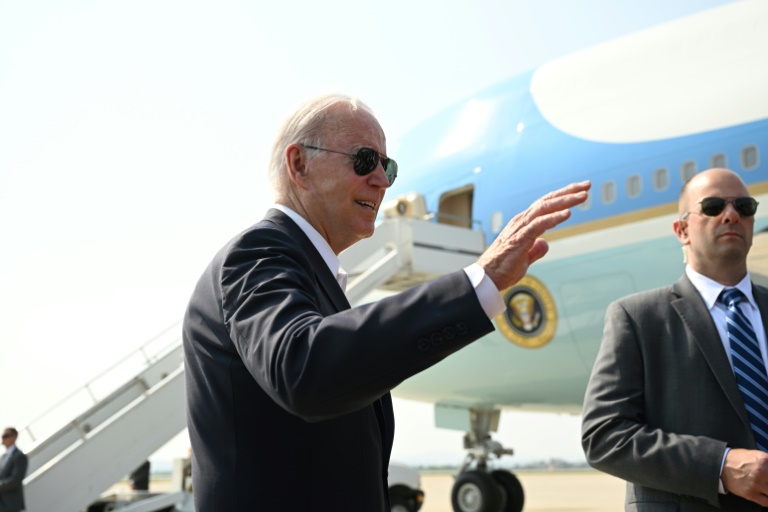
US President Joe Biden will make history next month with a direct flight between Israel and Saudi Arabia where he will meet Crown Prince Mohammed bin Salman, abandoning efforts to ostracize the oil kingdom’s de facto leader over the murder of a dissident.

The White House ended weeks of speculation Tuesday, announcing that Biden will travel to Israel, the Palestinian West Bank and Saudi Arabia from July 13-16.

This will be Biden’s first trip to the Middle East as president and in addition to meetings with individual leaders in all three places, he will attend a regional Gulf Cooperation Council summit in Saudi Arabia.

There is widespread expectation that Biden hopes to secure a boost in Saudi oil production, in an attempt to tame spiralling fuel costs and inflation at home ahead of midterm congressional elections in which his Democratic party risks a drubbing.

Whatever the outcome, his meeting with the crown prince, often referred to as MBS, will mark a controversial policy shift.

As a presidential candidate, Biden said the 2018 murder and dismemberment of Jamal Khashoggi — a Saudi-born US resident known for writing critical articles about Saudi rulers in The Washington Post — had made the country a “pariah.”

US intelligence findings released by the Biden administration identified MBS as the mastermind of the operation.

While the White House confirmed that “energy security” will be a topic in Saudi Arabia, officials stressed that the whole trip has broader diplomatic aims.

Press Secretary Karine Jean-Pierre emphasized that “this visit to the Middle East region culminates months of diplomacy,” as opposed to being driven by recent domestic political concerns.

Biden will engage with nearly a dozen leaders during the brief yet intense journey, demonstrating “the return of American leadership,” a senior US official told reporters.

– Re-establishing Palestinian links –

The tour starts with meeting Prime Minister Naftali Bennett in Israel, a country Biden first visited nearly 50 years ago as a young senator.

There will be emphasis on the lavish US support for Israel’s armed forces, including the Iron Dome anti-missile defense system, at a time of tension over the ongoing failure to resurrect an international pact curtailing Iran’s nuclear development.

“While in Israel, the president will likely visit an area where these defensive systems are utilized, as well as discuss new innovations between our countries that use  laser technologies to defeat missiles and other airborne threats,” the official said, speaking on condition of anonymity.

“The president will reaffirm the ironclad commitment to Israel’s security.”

Biden will meet Palestinian president Mahmud Abbas, likely in Bethlehem, the US official said.

Biden will stress “his lifelong commitment to a two state solution” for Palestinians and Israelis and restore US ties with Palestinians that were “nearly severed” under his predecessor Donald Trump.

– History and controversy –

The part of the trip that will make history — and generate the most chatter — comes at the end.

Biden’s flight from Israel to Jeddah will be the first by a US president from Israel to an Arab state that does not recognize the country. In 2017, Trump made the journey in reverse.

Once there, Biden will attend the Gulf Cooperation Council with leaders from Bahrain, Kuwait, Oman, Qatar, Saudi Arabia and the United Arab Emirates, as well as being joined by the leaders of Egypt, Iraq and Jordan, the US official said.

A priority for Biden will be maintaining the recently extended truce in Yemen, as well as deterring Iran, “advancing human rights, and ensuring global energy and food security,” the official said.

Biden will also join a virtual summit of the so-called I2-U2 diplomatic group of India, Israel, the UAE and the United States, with focus on “the food security crisis” sparked by Russia’s invasion of major agricultural exporter Ukraine.

However, the most closely watched meeting will be between Biden and MBS.

“We can expect the president to see the crown prince,” the US official said, while rejecting the notion that Biden was retreating from his principles.

“US policy demanded recalibration of relations” after the Khashoggi murder, “not a rupture,” the official said.

The official pointed out that Saudi Arabia has been a strategic US partner for eight decades and is home to some 70,000 Americans.

The visit, according to the official, is “the smart thing to do at the right time and offers opportunity for significant gains for the United States, for Saudi Arabia, for the Middle East region.”

Bloomberg News says 'encouraged' by reported bail for detained China staffer

Bloomberg News said Tuesday it was “encouraged” to learn that Chinese authorities had apparently released its employee Haze Fan on bail, more than a year after she was detained on suspected national security violations.

A Chinese member of staff at the US news outlet’s bureau in Beijing, Fan was detained in December 2020, a few months after Australian TV anchor Cheng Lei was detained on similar charges.

According to a statement on the Chinese embassy in Washington website dated last month, authorities have released her although she remains under investigation pending trial.

“At the request of Fan’s lawyer, China’s state security authority decided to release her on bail in January 2022,” the statement said.

Bloomberg News said in a Tuesday news report it was only made aware of the statement last weekend, and had not been able to contact Fan.

“We are encouraged that Haze is out on bail,” Bloomberg editor-in-chief John Micklethwait said in the report.

“She is a much valued member of our Beijing bureau — and we will continue to do everything possible to help her and her family.”

The Chinese embassy statement, dated May 6, was in response to an advert last month by the Washington Post for World Press Freedom Day, which featured Fan.

She was last seen being escorted from her apartment building by plainclothes security officials in December 2020, and formally arrested in July last year on suspicion of committing crimes endangering national security.

China is one of the world’s most hostile places for journalists, ranked 175th out of 180 countries in a list published earlier this year by Reporters Without Borders.

Reporters frequently face harassment and intimidation in the country, while some regions are off-limits to most media.

Overseas outlets are banned from hiring Chinese citizens as journalists, although they can recruit them as news assistants.

The Chinese embassy’s statement said Fan’s case has “nothing to do with her status as a foreign media employee.”

“The case is still under investigation according to law and Fan’s legitimate rights and interests have been fully protected,” it said.

Cheng, a mother-of-two and a former anchor on Beijing’s state broadcaster CGTN, was detained in August 2020 and last year formally arrested for “illegally supplying state secrets overseas”.

In March, a Chinese court deferred sentencing Cheng at a closed-door trial that Canberra condemned for a “lack of transparency”.

Memorials held five years on from London fire tragedy

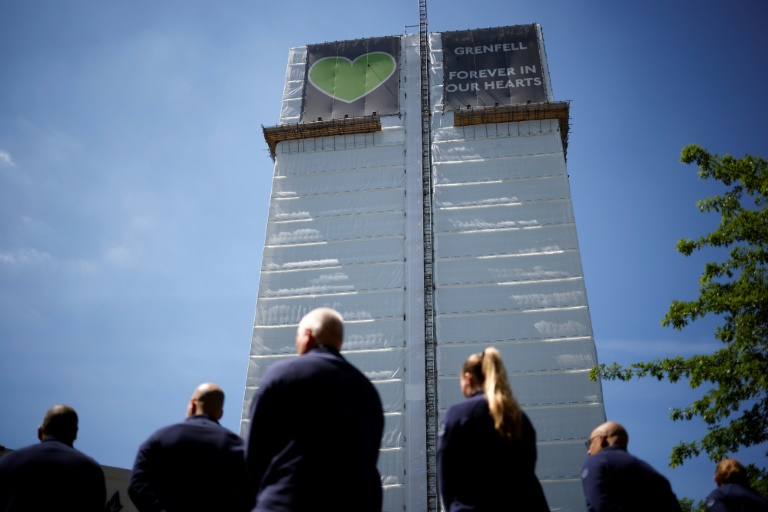
The names of the 72 people who perished in Britain’s worst residential fire since World War II were read out on Tuesday at a church service marking the fifth anniversary of the blaze.

Survivors and families of the victims of the Grenfell Tower fire gathered at Westminster Abbey for the first of a day of events to remember the tragedy.

The fire started in a faulty freezer and ripped through the 24-storey block in west London in an inferno that was visible across the British capital.

An official report blamed highly combustible cladding fixed to the exterior of the high-rise as the “principal reason” the fire spread.

But despite a costly ongoing public inquiry, the government has been accused of failing to implement urgent safety changes to prevent a similar tragedy.

Also on Tuesday, attendees observed a 72-second silence and laid flowers at the foot of the tower, which is still shrouded in tarpaulin. 

Five years on, emotions remain raw about the treatment of survivors and the bereaved, some of whom are yet to be permanently rehoused.

The local Anglican Bishop of Kensington, Graham Tomlin, said in the years before the fire, Grenfell had become a “tinderbox” and a tragedy was inevitable.

“The memory of today is really hard for people,” he told Times Radio. “People are still deeply traumatised by it.”

Firefighters who braved the heat and flames to try to rescue residents have accused the government of failing to take fire safety seriously.

The general secretary of the Fire Brigades Union, Matt Wrack, said firefighters and the Grenfell community had a “bond that was forged in tragedy”.

But there had been job cuts across the service since 2017.

“The community have faced constant denials from those responsible for Grenfell being covered in cladding as flammable as petrol,” he said.

“They have faced a wait for criminal charges that continues to this day.”

The FBU has also highlighted “multiple failings” in the testing and approval of cladding, insulation and other material used in the Grenfell Tower.

It claimed the tragedy could have been averted had the building’s regulator not been privatised and been “dependent on fee income” from manufacturers.

– Failings –

Grenfell campaigners say the fire and its aftermath has exposed gaping social inequality.

They argue changes would have been implemented sooner had low-income workers and ethnic minority families in social housing not been the ones affected.

There has also been a wider outcry among homeowners who have been forced to pay for the removal of unsafe cladding in the high-rises where they live.

Many have been unable to sell their properties or get proper insurance.

The Times newspaper reported that some 640,000 people were still living in buildings with the same type of cladding material.

Government ministers have also been condemned for advising as late as last month that residents should wait for help before evacuating during a high-rise fire.

“A lot of people who managed to survive were people who managed to get out early because they ignored the ‘stay put’ advice,” said Tiago Alves, 25, who escaped with his mother, father and younger sister.

“I’m gobsmacked at the fact that we’re still having this conversation five years on.”

London Mayor Sadiq Khan, from the main opposition Labour party, praised survivors for their campaign to improve public safety.

The ongoing public inquiry was “painstakingly unearthing the truth” — that profits were prioritised over public safety and deregulation weakened building standards, he said.

“The response from the government, building developers and owners has fallen far short of what the families of the victims and survivors have every right to expect,” he wrote in The Observer on Sunday.

“We still have too many residents in London and across the country living in high-rise buildings that are covered in dangerous flammable cladding, and we are still seeing designs for buildings that have critical safety failings.”

Facing gas 'blackmail' by Russia, EU turns to Israel

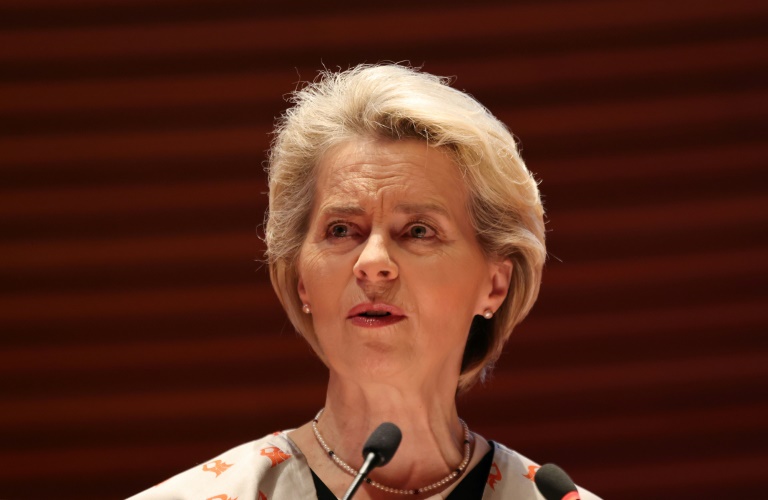
The European Union wants to strengthen its energy cooperation with Israel in light of Russia’s use of gas supplies to “blackmail” its members over the Ukraine conflict, European Commission chief Ursula von der Leyen said Tuesday.

Her remarks came as Italian Prime Minister Mario Draghi, also visiting Israel, said Rome was seeking to boost gas supplies from Israel as EU members eye options to diminish their reliance on Russian energy.

“The Kremlin has used our dependency on Russian fossil fuels to blackmail us,” von der Leyen said in a speech at the Ben Gurion University in the southern Israeli city of Beersheba.

“Since the beginning of the war, Russia has deliberately cut off its gas supplies to Poland, Bulgaria and Finland, and Dutch and Danish companies, in retaliation for our support to Ukraine.” 

But Moscow’s conduct “only strengthens our resolve to break free of our dependence on Russian fossil fuels,” she said, noting the EU was “exploring ways to step up our energy cooperation with Israel,” with work on an underwater power cable and a gas pipeline in the eastern Mediterranean.

Israel exports gas to Egypt, some of which is then liquefied and shipped to Europe. A significant increase in gas exports would require major long-term infrastructure investments. 

In talks with Energy Minister Karine Elharrar on Monday, von der Leyen reiterated “the EU need for Israeli gas,” the minister’s spokesperson said.

The spokesperson said there had been talks since March on establishing the legal framework to enable more Israeli gas exports to Europe via Egypt.

Another option would be the EastMed project, a proposal for a seafloor pipeline linking Israel to Greece and Italy via Cyprus.

But US President Joe Biden’s administration has questioned the viability of the project, given its huge cost and the time it would take to complete.

Speaking alongside Israeli Prime Minister Naftali Bennett in Jerusalem, Draghi said Italy and Israel were “working together on the use of gas resources from the eastern Mediterranean and for the development of renewable energy”. 

“We want to reduce our dependence on Russian gas, and accelerate the energy transition towards the climate goals we have set ourselves,” Draghi added.

– Lebanese maritime dispute –

Bennett described Europe’s need for alternative gas supplies as “good news.”

An Israel-Turkey pipeline project, estimated to require three years and $1.5 billion, is another option to get Israeli gas to European markets. 

Bennett directed fresh criticism at Israel’s northern neighbour, Lebanon, with which it remains technically at war. 

The two countries have a long-running maritime border dispute and Washington has been brokering talks aimed at demarcating a border and allowing both sides to ramp up exploration.

Lebanon had backed away from the talks, but Israel has urged Beirut to re-engage. 

“I look forward to the day Lebanon will decide to take advantage of the natural gas in its economic water,” said Bennett. 

“It’s a shame that Lebanon’s leadership, instead of extracting gas for its people, is busy fighting internally and externally,” he added.  

Israel is estimated to have gas reserves of at least one trillion cubic metres, with domestic use over the next three decades expected to total no more than 300 billion.

Von der Leyen was due to hold talks with Bennett later Tuesday, before travelling on to Egypt.

France vows cash for urban vegetation as heatwave hits

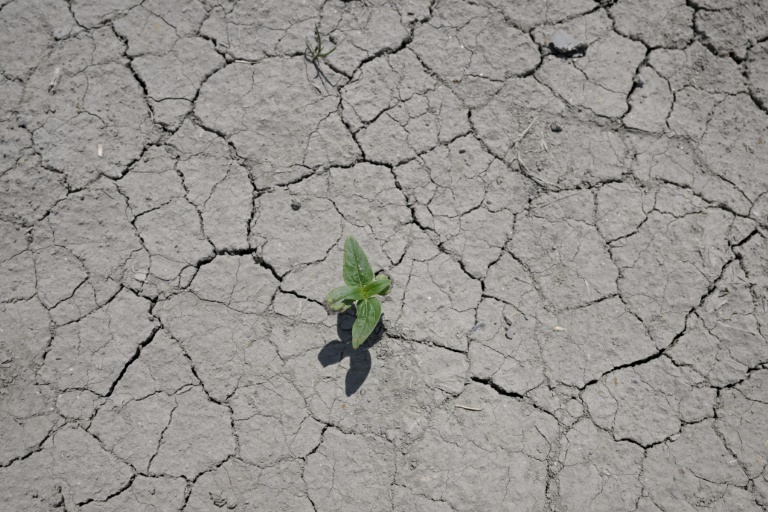
The French government announced 500 million euros on Tuesday to encourage urban vegetation projects to tackle high temperatures in towns and cities as a heatwave began to strike in the south and southwest.

“The government is going to encourage the development of cool spaces in urban areas with strong support for local authorities as they adapt to the consequences of climate change,” government spokeswoman Olivia Gregoire told reporters.

A total of 500 million euros  ($522 million) would be set aside for the initiative, she said.

She also called for “vigilance” as temperatures began to climb in the south and southwest of the country, which is expected to bear the full brunt of a heatwave later this week.

Peak temperatures of more than 40 degrees Celsius (104 Fahrenheit) are forecast between Thursday and Saturday, national weather forecaster Meteo France has said, with the whole of the country set to experience a hotter-than-usual spell.

“Faced with this significant, strong and early heatwave, the government calls for vigilance,” Gregoire added, saying the elderly, people living on their own and the homeless were particularly at risk. 

School children and teachers are also complaining about the impact of the hot weather which is coinciding with end-of-year exams for many students.

A primary school teacher in Marseille told AFP she had measured 30 degrees C in her class on Monday.

“We’re facing fully south and we couldn’t even open the windows to get some air in,” she said.

Water use restrictions are already in place in around a third of France — and utilities are urging farmers, factories and public service providers to show “restraint” in their water use.

The spring has been exceptionally warm and dry so far, with May 2022 the warmest May since records began.

Under a 2015 law passed by parliament, all rooftops on new buildings built in commercial zones in France must either be partially covered in plants or solar panels.

Cambodia convicts opposition figures in mass trial

A Phnom Penh court convicted around 60 opposition figures including an outspoken US-Cambodian activist in a mass trial Tuesday as long-serving leader Hun Sen cracks down on dissent ahead of national elections next year.

The defendants faced charges ranging from treason to incitement and conspiracy over opposition leader Sam Rainsy’s failed bid to return to Cambodia in 2019 — a move characterised by the government as an aborted bid to overthrow Hun Sen.

While some were senior figures in the now-dissolved Cambodia National Rescue Party (CNRP) directly involved in organising the return, many were prosecuted simply for posting support on social media.

Sam Rainsy, who has lived in France since 2015 to avoid jail for convictions he says are politically motivated, had another eight years added to his existing sentence.

“The political repression against the opposition gets more and more violent, and I would say also more and more blind,” he told AFP.

“It targets all spheres of society, and actually targets freedom of expression, which is not tolerated under part of the authorities.”

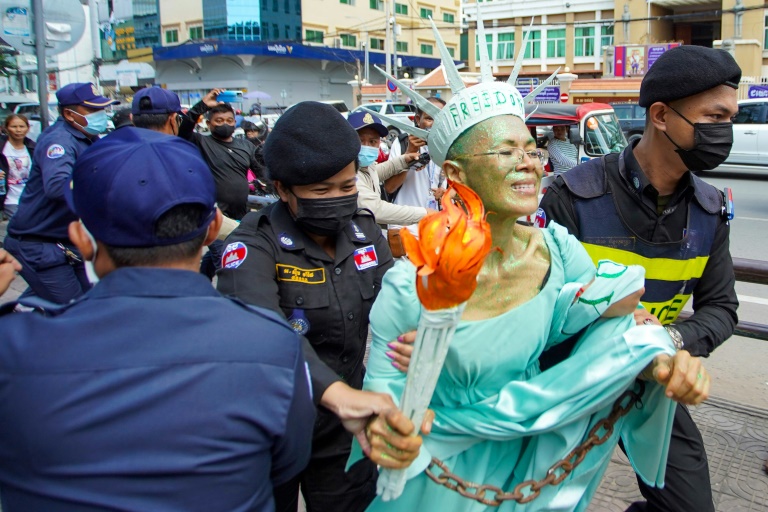
Outside court, US-Cambodian lawyer and campaigner Theary Seng — dressed as the Statue of Liberty — was abruptly dragged into a car by police after receiving a six-year jail term for treason.

“I am ready for a guilty verdict because this regime will not let me go free,” Theary Seng said before her conviction.

“It will be an unfair and unjust verdict because I am innocent, the others charged with me are innocent,” the 51-year-old added.

Following her detention, there was a brief scuffle outside the court between police and relatives of those convicted, as well as supporters of Theary Seng.

“We are deeply troubled by today’s unjust verdicts,” a spokesman for the US embassy in Phnom Penh said, calling for her and others convicted to be released.

The embassy urged Cambodian authorities to “stop politically motivated trials” against political activists, journalists, and human rights campaigners.

“Freedom of expression and association, and tolerance of dissenting views, are vital components of democracy,” US ambassador Patrick Murphy added in a tweet.

– ‘Living in a dictatorship’ –

Theary Seng is among scores caught up in a push to detain and arrest former members of the now-dissolved opposition Cambodia National Rescue Party (CNRP), human rights defenders, and any dissenting voices.

Several defendants have already been jailed, while many remain at large or have fled Cambodia — 27 of Tuesday’s convictions were in absentia, Human Rights Watch (HRW) said, with sentences ranging from five to eight years.

“The mass trials against political opposition members are really about preventing any electoral challenge to Prime Minister Hun Sen’s rule, but they have also come to symbolise the death of Cambodia’s democracy,” HRW spokesman Phil Robertson said.

“By creating a political dynamic that relies on intimidation and persecution of government critics, Hun Sen demonstrates his total disregard for democratic rights.”

The prime minister is one of the world’s longest-serving leaders, having been in power for 37 years, and is reportedly grooming his eldest son.

Theary Seng was charged by the Phnom Penh Municipal Court with conspiracy to commit treason and incitement to commit a felony.

“We are living in a dictatorship,” she said, claiming Hun Sen’s government “uses the law as a weapon against its own people”.

She added that “this regime is imprisoning liberty and freedom”.

Ahead of recent local elections, the United Nations Human Rights Office said it was disturbed by reports of opposition obstruction in a “paralysing political environment”.

Hun Sen’s political party later announced a landslide win.

Stocks mostly extend losses as recession fears linger

Stock markets across Europe and Asia on Tuesday mostly extended recent sharp losses on lingering worries about possible recession for major economies.

Panic has swept through trading floors since data on Friday showed US consumer prices rising at their fastest pace in decades on surging energy and food costs caused by the Ukraine war and supply chain snarls.

The pain has been felt across all assets, with bitcoin threatening to fall below $20,000 for the first time since December 2020, currencies retreating against the dollar, and safe havens including the yen and gold feeling the squeeze.

Investors are bracing for the Federal Reserve’s interest rate decision Wednesday as it struggles to walk a fine line between reining in inflation and trying to keep the economy on track.

“While there is no doubt that inflation is a considerable challenge for the US at this point, slamming on the brakes too hard risks pushing the economy off its track,” said Tai Hui of JP Morgan Asset Management. 

Fears that the world’s top economy is heading for a recession sent Wall Street plunging Monday, with the broad-based S&P 500 stocks index sinking into a bear market after dropping more than 20 percent from its recent peak.

Elsewhere, data Tuesday confirmed annual inflation in Germany, Europe’s biggest economy, hit a record 7.9 percent in May.

It comes as confidence among German investors remains subdued despite picking up for the second month in a row.

The ZEW institute’s economic expectations index climbed in June by 6.3 points to minus 28 points compared with May, but it is still well below pre-pandemic levels.

“The economy is still exposed to numerous risks, such as the effects of the sanctions against Russia, the unclear pandemic situation in China and the gradual change of course in monetary policy,” said ZEW president Achim Wambach.

On the upside, UK transport giant Go-Ahead saw its share price surge after the group agreed to a takeover from a global consortium.

Shares in Go-Ahead, which operates London’s famous red buses on behalf of the capital’s transport authority, jumped 14 percent to £15.50 ($18.75).

The cash bid, pitched at £15 per share including a special dividend, is worth the equivalent of $793 million.

– Key figures at around 1045 GMT –

London – FTSE 100: DOWN 0.9 percent at 7,140.71 

Frankfurt – DAX: DOWN 0.7 percent at 13,328.29 

Paris – CAC 40: DOWN 1.2 percent at 5,948.94 

EURO STOXX 50: DOWN 0.7 percent at 3,476.64 

Tokyo – Nikkei 225: DOWN 1.3 percent at 26,629.86 (close)

Hong Kong – Hang Seng Index: FLAT at 21,067.99 (close)

Shanghai – Composite: UP 1.0 percent at 3,288.91 (close)

New York – Dow: DOWN 2.8 percent at 30,516.74 (close)

Euro/dollar: UP at $1.0439 from $1.0412 late Monday

Pound/dollar: DOWN at $1.2111 from $1.2136

Euro/pound: UP at 86.18 pence from 85.76 pence

Dollar/yen: DOWN at 134.27 yen from 134.42 yen 

Brent North Sea crude: UP 0.9 percent at $123.37 per barrel

West Texas Intermediate: UP 0.8 percent at $121.86 per barrel

Russians bid to encricle Severodonetsk, Zelensky pleads for arms

Russian forces on Tuesday stepped up efforts to cut off Ukrainian troops in the key industrial city of Severodonetsk in the east of the country despite Ukrainians insisting they were holding on.

Moscow has laid siege for weeks to the cities of Severodonetsk and Lysychansk, which are separated by a river, as the last areas in the eastern Donbas region of Lugansk still under Ukrainian control.

The head of Severodonetsk’s administration said “massive shelling” had destroyed a third bridge linking the twin cities, but insisted his city was “not isolated”.

“There are communication channels even if they are quite complicated,” Oleksandr Stryuk told Ukrainian television. Ukraine’s “continue to defend the city” but that the situation on the ground “changes every hour,” he added.

On Monday, Sergiy Gaiday, governor of Lugansk, told Radio Free Europe that Russian forces had “destroyed all the bridges and getting into the city is no longer possible. Evacuation is also not possible”. 

Ukrainian President Volodymyr Zelensky has branded the human cost of the battle for east “simply terrifying,” urging Western allies to speed arms deliveries to shore up Ukraine’s ability to reclaim territory.

“We just need enough weapons to ensure all of this. Our partners have them.”

His presidential advisor, Mikhaylo Podolyak, has listed hundreds of howitzers, tanks and armoured vehicles as among items needed by the Ukrainian army.

– ‘Tear off their arms’ –

“To end the war we need heavy weapons,” he tweeted.

Last week, Ukraine’s defence minister said up to 100 Ukrainian troops were being killed and 500 sustaining injuries every day.

The capture of Severodonetsk would open the road to Sloviansk and another major city, Kramatorsk, in Moscow’s push to conquer Donbas, a mainly Russian-speaking region partly held by pro-Kremlin separatists since 2014.

AFP team in Lysychansk saw massive damage after months of shelling, with no water, electricity or phone signal.

The Ukrainian military is using high ground in the city to exchange fire with Russian forces fighting for control of Severodonetsk, just across the water.

Lysychansk resident Maksym Katerin buried his mother and stepfather in his garden on Monday after a shell ripped through his yard, killing them instantly.

“I don’t know who did this, but if I knew, I would tear off their arms,” he said.

Neighbour Yevgeniya Panicheva wept. 

– ‘Surrender or die’ –

Katerin’s mother was lying on the ground, “her stomach was ripped and her guts were falling out. She was a very good, kind and helpful woman. Why did they do this to her?” Panicheva said.

“They bomb and they bomb, and we don’t know what to do.”

The Lugansk governor said Ukraine’s forces had been pushed back from Severodonetsk’s centre with the Russians controlling 70 to 80 percent of the city in their attempt to “encircle it”.

With Russia turning the screw on Severodonetsk, Ukrainian forces have two choices: “to surrender or die”, said Eduard Basurin, a representative for pro-Russian separatists.

On Monday, Amnesty International accused Russia of war crimes in Ukraine, saying that attacks on the north-eastern city of Kharkiv — including banned cluster bombs — had killed hundreds of civilians. 

“The repeated bombardments of residential neighbourhoods in Kharkiv are indiscriminate attacks which killed and injured hundreds of civilians, and as such constitute war crimes,” the rights group said in a report about Ukraine’s second-biggest city.

– ‘Hands tied’ –

In Bucha, a town near Kyiv that has become synonymous with allegations of Russian war crimes, police said Monday they had discovered another seven bodies in a grave.

“Several victims had their hands tied and knees bound,” Kyiv regional police chief Andriy Nebytov said on Facebook.

Dozens of bodies in civilian clothing were found in the town in April after Russian troops withdrew from the area following a month-long occupation.

Away from the battlefield, Russia’s war in Ukraine has posed a threat to global food security. Ukraine’s deputy agriculture minister said Monday that a quarter of his country’s arable land had been lost but insisted national food security was not threatened.

On a farm near the southern Ukrainian city Mykolaiv, the harvest has been delayed by the need to undo damage by Russian troops who passed through the area in March.

“We planted really late because we needed to clear everything beforehand,” including bombshells, Nadiia Ivanova, 42, told AFP.

The farm’s warehouses currently hold 2,000 tonnes of last season’s grain but with normal export routes blocked or damaged by the war, there are no buyers for the harvest.

burs-sea/jm
UK defends Rwanda migrant deportation policy

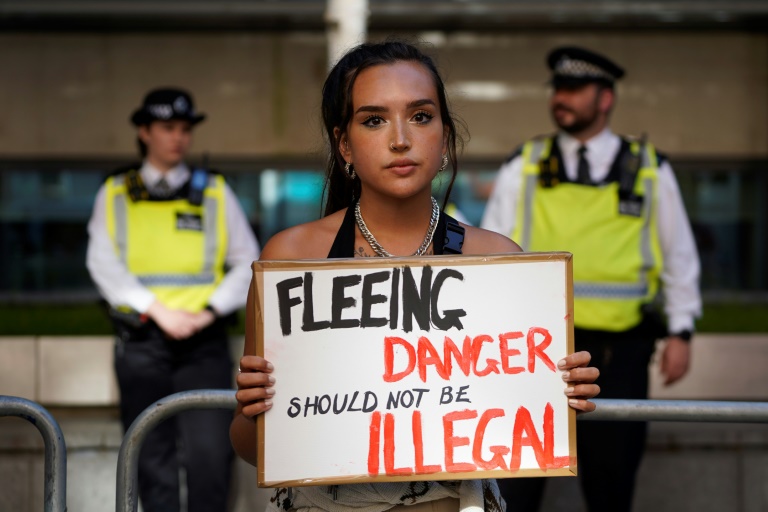
The UK government on Tuesday defended its controversial policy to send asylum seekers to Rwanda, even as the entire senior leadership of the Church of England branded it shameful and immoral.

Foreign Secretary Liz Truss insisted the first flight to Kigali would take off no matter how many people were on board, after 23 of the 31 migrants had their tickets cancelled.

“We’re expecting to send the flight later today,” she told Sky News, as fresh protests were held at a detention centre near London Gatwick airport. 

Truss said she was unable to confirm how many people would be on the charter flight to Kigali, which was due to leave from an undisclosed airport on Tuesday night.

But she said the policy, which the UN refugee agency has also criticised as “all wrong”, was vital to smash the business model of human-trafficking gangs exploiting vulnerable migrants.

Record numbers of migrants have made the perilous Channel crossing from northern France, heaping pressure on the government in London to act after it promised to tighten borders after Brexit.

Campaigners supporting migrants and a union representing Border Force workers who will have to carry out the policy failed in a legal challenge to stop the deportations.

After the latest attempt was thrown out on Monday, the two senior-most clerics in the Church of England and 23 bishops called the policy “immoral” and said it “shames Britain”.

“They (migrants) are the vulnerable that the Old Testament calls us to value,” Archbishop of Canterbury Justin Welby and Archbishop of York Stephen Cottrell wrote in a letter to The Times. 

“We cannot offer asylum to everyone, but we must not outsource our ethical responsibilities, or discard international law — which protects the right to claim asylum.”

At the weekend, it was reported that Queen Elizabeth II’s heir, Prince Charles, had privately described the government’s plan as “appalling”.

Truss, though, hit back. “The people who are immoral in this case are the people traffickers trading on human misery,” she said.

“Our policy is completely legal. It’s completely moral,” she added, accusing critics of having no alternative plan.

– ‘Value for money’ – 

Truss said she could not put a figure on the cost of the charter flight, which has been estimated at some £250,000 ($303,000). 

But she insisted it was “value for money” to reduce the long-term social cost of irregular migration.

“There will be people on the flights and if they’re not on this flight, they will be on the next flight,” she added.

Deported asylum seekers who make it to Kigali will be put up in the Hope Hostel, which was built in 2014 to give refuge to orphans from the 1994 genocide of 800,000 to one million ethnic Tutsis.

Some 20 orphans were living in the hostel when the partnership between Rwanda and Britain was signed. They have since been evicted.

Hostel manager Ismael Bakina says up to 100 migrants can be accommodated and he will charge $65 a day.

“This is not a prison. It’s a home like our home,” hostel manager Ismael Bakina told AFP. “In a hotel a person will be free in everything they want. When they want to go out of the hotel, it’s no problem.”

Under the agreement with Kigali, anyone landing in Britain illegally is liable to be given a one-way ticket for processing and resettlement in Rwanda.

The government of President Paul Kagame has said the deportations will begin slowly and rejected criticism that Rwanda is not a safe country.

Human Rights Watch has warned that there are “serious human rights abuses” in Rwanda, including curbs on free speech, arbitrary detention, ill-treatment and torture.

Rwandan opposition parties also question whether the resettlement scheme will work given high youth unemployment rates.

Kagame is due to host leaders of the 53 other Commonwealth countries later this month, as well as Prince Charles as head of the grouping.

Close Bitnami banner
Bitnami