World

Human remains found in Amazon search for missing journalist, expert

Human remains have been found in the search for a British journalist and Brazilian indigenous expert who disappeared deep in the Amazon after receiving threats, Brazil’s president confirmed Monday.

Relatives of veteran correspondent Dom Phillips and respected indigenous specialist Bruno Pereira meanwhile said authorities informed them two bodies had been found — though police and local indigenous leaders denied that, adding to confusion around the case.

The families of Phillips, 57, and Pereira, 41, have endured an anguished wait for news since the pair disappeared a week ago Sunday during a reporting trip to Brazil’s Javari Valley, a remote jungle region rife with illegal fishing, logging, mining and drug trafficking.

“The evidence leads us to believe something bad was done to them, because human innards were found floating in the river, which are now undergoing DNA testing,” President Jair Bolsonaro said.

The development came a day after police said they had found personal items belonging to the two, including Pereira’s health card, pants and boots, as well as Phillips’s backpack and clothing.

Bolsonaro, whose government has faced accusations of failing to act urgently enough in the case, said hope was fading.

“Because of the time that’s passed — eight days now, approaching the ninth — it’s going to be very difficult to find them alive,” the president told CBN Recife radio.

“I pray to God for that to happen, but the information and evidence we’re getting suggest the opposite.”

– ‘Upset and distressed’ –

Phillips’s niece Dominique Davies told AFP via text message that authorities had informed the family two bodies had been found.

“We are waiting on confirmation from the federal police (in Brazil) as to whether they are Dom and Bruno. We all remain upset and distressed at this time,” she said.

Britain’s Guardian newspaper, where Phillips was a regular contributor, said the bodies were found tied to a tree, according to information given to Phillips’s family by an aide to Brazil’s ambassador in London.

Federal police said in a statement that reports that Phillips and Pereira’s bodies had been found were incorrect. And the Union of Indigenous Peoples of the Javari Valley (UNIVAJA), which is taking part in the search, denied two bodies had been found.

The police have confirmed they are analyzing a blood sample and suspected human remains found during the search to determine whether they are from the missing men.

They said the results of these analyzes are expected “during this week.” 

Pereira’s wife Beatriz Matos said Monday on Twitter that the police had confirmed “no body was found.”

She added that “the confusion caused by the Brazilian embassy in London cannot demobilize the searches”, which she said must be “intensified.” 

“We the family members need answers and certainty, and only with real evidence will we have that,” Matos said. 

Brazilian police have arrested a suspect in the case, 41-year-old Amarildo Costa de Oliveira, nicknamed “Pelado.”

Witnesses say they saw him threaten Phillips and Pereira prior to their disappearance, then pursue them in his boat just before they disappeared.

The blood sample being analyzed was found on a tarp in Oliveira’s boat.

The search has been complicated given the difficult jungle terrain in the far-flung Javari Valley, where the men had traveled by boat gathering material for a book Phillips was writing about sustainable ways to protect the world’s biggest rainforest.

– U2 adds to pressure –

Brazil’s government faces pressure from international media organizations, rights groups and high-profile figures over the case — fueling criticism of Bolsonaro’s policies on the Amazon, where illegal deforestation and other environmental crimes have surged since he took office in 2019.

Dozens of indigenous protesters marched Monday in Atalaia do Norte, the small city Phillips and Pereira had been headed to, demanding answers on their whereabouts.

“It’s been a week… and every day brings conflicting reports,” Natalie Southwick, Latin America coordinator for the Committee to Protect Journalists (CPJ), said in a statement.

“CPJ remains deeply concerned about the government’s insufficient response and lack of transparency. Brazilian authorities must stop dragging their feet.”

Irish rock band U2 became the latest to rally to the cause, joining Brazilian football legend Pele and singer Caetano Veloso.

“We are waiting to find out what has happened to these courageous men,” the band tweeted, along with a red-and-black drawing of the pair by artist Cristiano Siqueira that has gone viral.

“Where are Dom Phillips and Bruno Pereira?” it reads.
Facing gas 'blackmail' by Russia, EU turns to Israel

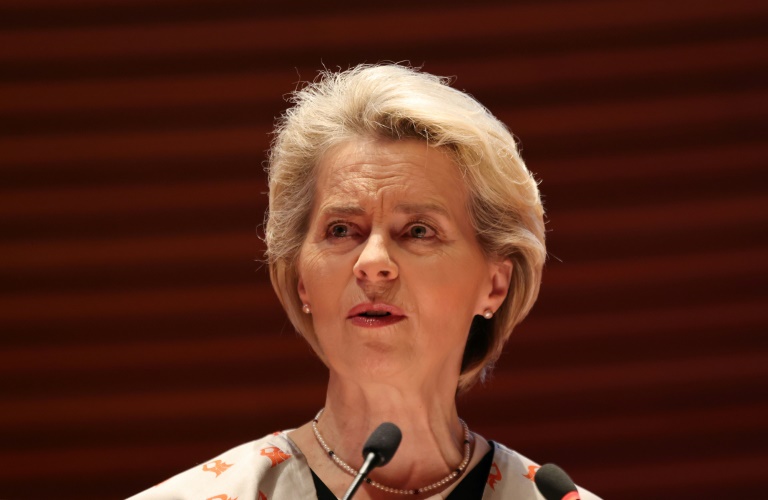
The European Union wants to strengthen its energy cooperation with Israel in light of Russia’s use of gas supplies to “blackmail” its members over the Ukraine conflict, European Commission chief Ursula von der Leyen said Tuesday.

“The Kremlin has used our dependency on Russian fossil fuels to blackmail us,” she said in a speech at the Ben Gurion University in the southern Israeli city of Beersheba.

“Since the beginning of the war, Russia has deliberately cut off its gas supplies to Poland, Bulgaria and Finland, and Dutch and Danish companies, in retaliation for our support to Ukraine.” 

But Moscow’s conduct “only strengthens our resolve to break free of our dependence on Russian fossil fuels,” she said, noting the EU was “exploring ways to step up our energy cooperation with Israel,” with work on an underwater power cable and a gas pipeline in the eastern Mediterranean.

Israel exports gas to Egypt, some of which is then liquefied and shipped to Europe. A significant increase in gas exports would require major long-term infrastructure investments. 

In talks with Energy Minister Karine Elharrar on Monday, von der Leyen reiterated “the EU need for Israeli gas,” the minister’s spokesperson said.

The spokesperson said there had been talks since March on establishing the legal framework to enable more Israeli gas exports to Europe via Egypt.

Another option would be the EastMed project, a proposal for a seafloor pipeline linking Israel with Cyprus and Greece. But US President Joe Biden’s administration has questioned the viability of the project, given its huge cost and the time it would take to complete.

Another proposal is a pipeline connecting Israel to Turkey.

Israel’s ties with Ankara have thawed in recent months after more than a decade of frosty relations and analysts have said Turkey’s desire for joint energy projects has partly triggered its outreach to Israel.  

That pipeline project would cost $1.5 billion and take two to three years to complete, according to estimates.

Israel is estimated to have gas reserves of at least one trillion cubic metres, with domestic use over the next three decades expected to total no more than 300 billion.

Von der Leyen was due to hold talks with Prime Minister Naftali Bennett later Tuesday, before travelling on to Egypt.

Britain and Falklands mark 40 years since Argentine surrender

Britain on Tuesday remembered its fallen troops on the 40th anniversary of the end of the Falklands War with Argentina, as London reasserted its territorial claim to the islands.

Veterans will gather for a remembrance ceremony at the National Memorial Arboretum in central England at 1400 GMT, alongside bereaved family members and civilian support staff.

The Act of Remembrance will include a live link to a similar event at the 1982 Cemetery in the Falklands’ capital, Port Stanley, where Argentine forces surrendered on June 14, 1982.

British Foreign Secretary Liz Truss paid tribute to the veterans, saying the UK “will always remember their efforts and their sacrifice to liberate the remote South Atlantic archipelago. 

“Today the Falklands are thriving as part of the British family. They’re a shining beacon of freedom and democracy as a self-governing overseas territory,” she said.

British government support for the Falklands since the conflict has been unwavering, despite Argentina’s steadfast claims to what it calls Las Malvinas.

Truss said Britain “will never hesitate” to defend the islands and drew comparisons between the military junta in Buenos Aires’s landgrab four decades ago with Russia’s invasion of Ukraine.

“The assumption that peace and stability were inevitable has been shattered by Putin’s invasion of Ukraine,” she said in a video posted on Twitter. 

“We must stay vigilant about threats to freedom, sovereignty and self-determination, wherever they may be.” 

– ‘Psychological wounds’ –

The prime minister at the time, Margaret Thatcher, announced the surrender to parliament on the morning of June 14, 1982, vindicating for many her high-risk decision to send nearly 30,000 troops half-way round the world to retake the islands.

The task force sailed home, greeted by crowds on the docks waving a sea of Union Jacks upon their return from the self-governing British overseas territory nearly 13,000 kilometres (8,000 miles) away.

The victory gave a declining Britain hit by strikes and civil unrest a patriotic boost — and ensured Thatcher a landslide re-election in 1983.

Argentine forces invaded on April 2, beginning a war which claimed the lives of 255 British servicemen, three women who lived on the island and 649 Argentines.

In Britain and the Falklands, the anniversary of the start of the conflict on April 2 was muted. Islanders in particular see Argentina’s invasion as nothing to celebrate.

But a year-long series of events has been taking place to mark the 40th anniversary, including those on June 14 to mark Liberation Day — a public holiday on the islands, which are home to just 3,500 people.

British veterans of the conflict — which was the first since World War II to involve all branches of the armed forces — are grouped under the South Atlantic Medal Association.

Carol Betteridge, of veterans’ charity Help for Heroes, recalled that “for many of those who fought so far from home, the physical and mental wounds they received during the conflict affect them every day –- not just on anniversaries.”

“The lack of proper support for mental health means that many Falklands veterans buried their issues and ‘soldiered on’ as they were expected to,” said Betteridge, the charity’s head of clinical and medical services. 

“This is why, 40 years on, we still have Falklands veterans coming to us for help for psychological wounds that they have struggled with for so long.”

Famed Hong Kong floating restaurant towed away after half a century

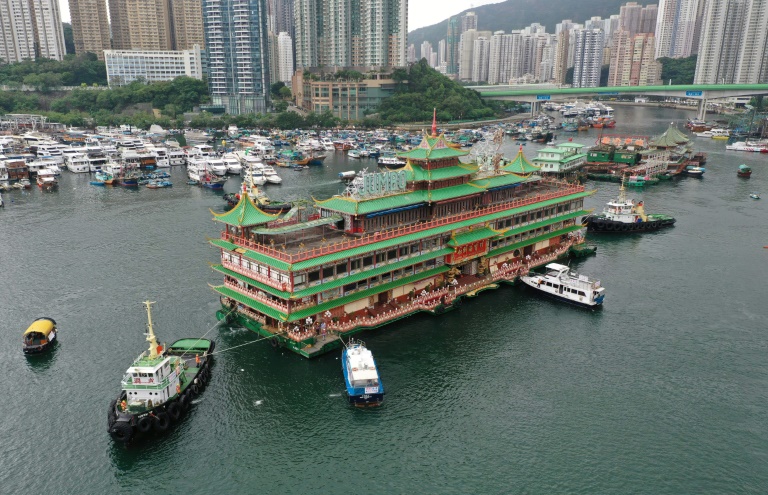
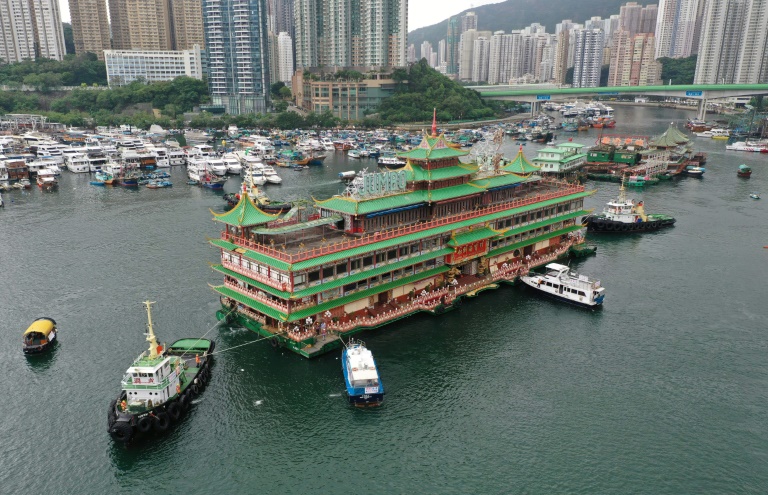
Hong Kong’s Jumbo Floating Restaurant, a famed but ageing tourist attraction that featured in multiple Cantonese and Hollywood films, was towed out of the city Tuesday after the Covid pandemic finally sank the struggling business.

The buoyant behemoth, which at 76 metres (250 feet) long could house 2,300 diners, set out shortly before noon from the southern Hong Kong Island typhoon shelter where it has sat for nearly half a century.

Designed like a Chinese imperial palace and once considered a must-see landmark, the restaurant drew visitors from Queen Elizabeth II to Tom Cruise, and featured in several films — including Steven Soderbergh’s “Contagion”, about a deadly global pandemic.

The lavish restaurant’s operators cited the Covid-19 pandemic as the reason for finally closing its doors in March 2020, after around a decade of financial woes.

Restaurant owner Melco International Development announced last month that ahead of its licence expiration in June, Jumbo would leave Hong Kong and await a new operator at an undisclosed location.

Under overcast skies, a scattered group of onlookers gathered on the Aberdeen waterfront to see it be dragged away.

Watching the restaurant’s ponderous progress across the shelter waters was Mr Wong, a 60-year-old man who told AFP he had come specially to see its departure.

“The exterior was for many years a symbol of Hong Kong,” he said, adding he had eaten there once 20 years ago.

“I believe it will come back and I look forward to it,” he added wistfully.

Another spectator, who gave her name as Mrs Chan, said she had heard the news and came to take one last picture by the restaurant before it left. 

“I think it is such a pity to see it go,” she said. 

“Jumbo has a long history and it has attracted many locals and tourists… It’s a restaurant that’s known to the world.”

– ‘Bidding farewell’ –

Opened in 1976 by the late casino tycoon Stanley Ho, the Jumbo Floating Restaurant embodied the height of luxury, reportedly costing more than HK$30 million ($3.8 million) to build.

It featured a “dragon throne” in the style of the Ming dynasty as well as an opulent mural.

The throne was fondly remembered by one of those watching the restaurant’s departure on Tuesday, a 24-year-old man surnamed Leung who said he had always begged his mother to let him sit on it when they visited for dim sum.

“There are quite some childhood memories for me,” he said. “I feel a bit sad. (Coming here) to see it is like bidding my farewell.”

Aberdeen harbour was traditionally a hotspot for seafood eateries — and fierce competition for customers only cooled when Jumbo’s operators acquired its biggest competitor, Tai Pak Floating Restaurant, in the 1980s.

The restaurant was kept afloat by Hong Kong’s booming tourism industry but its popularity had dimmed in recent years even before the coronavirus hit.

Restaurant operator Melco said last month the business had not been profitable since 2013 and cumulative losses had exceeded HK$100 million ($12.7 million).

It was still costing millions in maintenance fees every year and around a dozen businesses and organisations had declined an invitation to take it over at no charge, Melco added. 

In her 2020 policy address, Hong Kong leader Carrie Lam announced plans to turn the restaurant over to local theme park Ocean Park for revitalisation, but the project fell through after the park said it could not find a suitable operator.

The ailing restaurant’s fate was sealed just days before Lam is set to leave office.

In a sign of its dilapidation, on June 1, Jumbo’s kitchen boat listed into the water after a suspected hull breach, tilting almost 90 degrees. 

The derelict kitchen boat will be left behind, according to local media. 

Famed Hong Kong floating restaurant towed away after half a century

Hong Kong’s Jumbo Floating Restaurant, a famed but ageing tourist attraction that featured in multiple Cantonese and Hollywood films, was towed out of the city Tuesday after the Covid pandemic finally sank the struggling business.

The buoyant behemoth, which at 76 metres (250 feet) long could house 2,300 diners, set out shortly before noon from the southern Hong Kong Island typhoon shelter where it has sat for nearly half a century.

Designed like a Chinese imperial palace and once considered a must-see landmark, the restaurant drew visitors from Queen Elizabeth II to Tom Cruise, and featured in several films — including Steven Soderbergh’s “Contagion”, about a deadly global pandemic.

The lavish restaurant’s operators cited the Covid-19 pandemic as the reason for finally closing its doors in March 2020, after around a decade of financial woes.

Restaurant owner Melco International Development announced last month that ahead of its licence expiration in June, Jumbo would leave Hong Kong and await a new operator at an undisclosed location.

Under overcast skies, a scattered group of onlookers gathered on the Aberdeen waterfront to see it be dragged away.

Watching the restaurant’s ponderous progress across the shelter waters was Mr Wong, a 60-year-old man who told AFP he had come specially to see its departure.

“The exterior was for many years a symbol of Hong Kong,” he said, adding he had eaten there once 20 years ago.

“I believe it will come back and I look forward to it,” he added wistfully.

Another spectator, who gave her name as Mrs Chan, said she had heard the news and came to take one last picture by the restaurant before it left. 

“I think it is such a pity to see it go,” she said. 

“Jumbo has a long history and it has attracted many locals and tourists… It’s a restaurant that’s known to the world.”

– ‘Bidding farewell’ –

Opened in 1976 by the late casino tycoon Stanley Ho, the Jumbo Floating Restaurant embodied the height of luxury, reportedly costing more than HK$30 million ($3.8 million) to build.

It featured a “dragon throne” in the style of the Ming dynasty as well as an opulent mural.

The throne was fondly remembered by one of those watching the restaurant’s departure on Tuesday, a 24-year-old man surnamed Leung who said he had always begged his mother to let him sit on it when they visited for dim sum.

“There are quite some childhood memories for me,” he said. “I feel a bit sad. (Coming here) to see it is like bidding my farewell.”

Aberdeen harbour was traditionally a hotspot for seafood eateries — and fierce competition for customers only cooled when Jumbo’s operators acquired its biggest competitor, Tai Pak Floating Restaurant, in the 1980s.

The restaurant was kept afloat by Hong Kong’s booming tourism industry but its popularity had dimmed in recent years even before the coronavirus hit.

Restaurant operator Melco said last month the business had not been profitable since 2013 and cumulative losses had exceeded HK$100 million ($12.7 million).

It was still costing millions in maintenance fees every year and around a dozen businesses and organisations had declined an invitation to take it over at no charge, Melco added. 

In her 2020 policy address, Hong Kong leader Carrie Lam announced plans to turn the restaurant over to local theme park Ocean Park for revitalisation, but the project fell through after the park said it could not find a suitable operator.

The ailing restaurant’s fate was sealed just days before Lam is set to leave office.

In a sign of its dilapidation, on June 1, Jumbo’s kitchen boat listed into the water after a suspected hull breach, tilting almost 90 degrees. 

The derelict kitchen boat will be left behind, according to local media. 

Memorials held five years on from London fire tragedy

Survivors and families of the victims of Britain’s worst residential fire since World War II will on Tuesday mark the fifth anniversary of the tragedy.

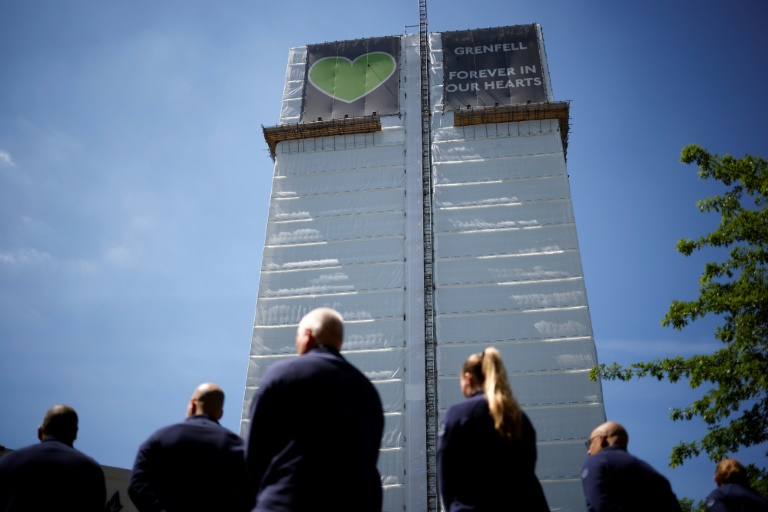
A total of 72 people were killed when a fire that started in a faulty freezer ripped through the 24-storey Grenfell Tower block in west London.

An official report blamed highly combustible cladding fixed to the exterior of the high-rise as the “principal reason” the fire spread.

But despite a costly ongoing public inquiry, the government has been accused of failing to implement urgent safety changes to prevent a similar tragedy in other high-rise blocks.

A day of events includes a memorial service and a 72-second silence after which the names of all of the victims will be read out.

Survivors, the bereaved and community groups will then pay their respects and lay flowers at the foot of the tower, which is still shrouded in tarpaulin.

“This will be a difficult week for everyone affected by the Grenfell Tower fire,” said Natasha Elcock, head of the Grenfell United support group.

“For many of us the events five years ago are still so raw in our minds and our losses remain heavy in our hearts.”

Firefighters from across the country, including those who tackled the blaze, will also form a guard of honour at a silent walk starting from the tower.

The general secretary of the Fire Brigades Union, Matt Wrack, said firefighters and the Grenfell community had a “bond that was forged in tragedy”.

But he hit out at the government for failing to take fire safety and firefighting seriously, pointing to job cuts across the service since 2017.

“The community have faced constant denials from those responsible for Grenfell being covered in cladding as flammable as petrol,” he said.

“They have faced a wait for criminal charges that continues to this day.”

The FBU has also highlighted “multiple failings” in the testing and approval of cladding, insulation and other material used in the Grenfell Tower.

It claimed that the tragedy could have been averted had the building’s regulator not been privatised and been “dependent on fee income” from manufacturers.

– Failings –

Grenfell campaigners claim that the treatment of survivors — some of whom are yet to be permanently rehoused — has exposed gaping social inequality.

They argue changes would have been implemented sooner had low-income workers and ethnic minority families in social housing not been the ones affected.

There has also been a wider outcry among homeowners who have been forced to pay for the removal of unsafe cladding in the high-rises where they live.

Many have been unable to sell their properties or get proper insurance.

The Times newspaper reported that some 640,000 people were still living in buildings with the same type of cladding material.

There has also been criticism of the government for advising as late as last month that residents should wait for help before evacuating during a high-rise fire.

“A lot of people who managed to survive were people who managed to get out early because they ignored the ‘stay put’ advice,” said Tiago Alves, 25, who escaped with his mother, father and younger sister.

“I’m gobsmacked at the fact that we’re still having this conversation five years on.”

London Mayor Sadiq Khan, from the main opposition Labour party, praised survivors for their campaign to improve public safety.

The ongoing public inquiry was “painstakingly unearthing the truth” — that profits were prioritised over public safety and deregulation weakened building standards, he said.

“The response from the government, building developers and owners has fallen far short of what the families of the victims and survivors have every right to expect,” he wrote in The Observer.

“We still have too many residents in London and across the country living in high-rise buildings that are covered in dangerous flammable cladding, and we are still seeing designs for buildings that have critical safety failings.”

War in Ukraine: Latest developments

Here are the latest developments in the war in Ukraine:

– Last bridge to eastern city destroyed – 

Ukrainian authorities say Russian forces have destroyed the last bridge into the eastern city of Severodonetsk, cutting off an escape route for civilians trapped in a scorched-earth battle for a key city in Ukraine’s industrial heartland, the Donbas. 

“They destroyed all the bridges, and getting into the city is no longer possible. Evacuation is also not possible,” Sergiy Gaiday, governor of the Donbas region of Lugansk, where Severodonetsk is located, tells Radio Free Europe.

The head of the city’s administration, Oleksandr Stryuk, says that communication channels to the city remain open but “are quite complicated.” 

President Volodymyr Zelensky describes the human cost of the battle for Donbas as “simply terrifying”, but insists Ukrainian forces could regain lost ground if they received more heavy weapons from the West. 

– Ukraine grain circumvents blockade –

A Ukrainian grain shipment has arrived in Spain after successfully circumventing Russia’s blockade of the country’s Black Sea ports, a Spanish food association says.

The grain was transported overland to Poland, from where it was shipped to Spain via Baltic Sea, the first time the northern sea passage has been used for Ukrainian grain, the Agafac food manufacturers association claims.

Before the Russian invasion, Ukraine was the world’s top producer of sunflower oil and a major wheat exporter, but millions of tonnes of grain exports remain trapped in silos and ports because of the blockade. 

Some grain is being exported by rail and truck, but the quantity is only a fraction of that exported through ports such as Odessa before the war.

– More bodies in Bucha – 

Ukrainian police say another seven bodies, several with their hands and legs tied, have been found in a grave near Bucha, the Kyiv suburb that has become synonymous with allegations of Russian war crimes.

Regional police chief Andriy Nebytov claims the seven found near the village of Myrotske, about 10 kilometres (six miles) northwest of Bucha, “were tortured by the Russians then executed in a cowardly manner with a bullet to the head”. 

The bodies of dozens of civilians were found lying on the street, in basements and buried in mass graves in Bucha after Russian troops pulled out of the area in late March.

– France ups spot purchases of Russian gas –

A report shows Russia’s revenues from exports of oil and gas reaching record highs during the first 100 days of the war, with Moscow taking in 93 billion euros ($98 billion), most of it from European Union customers.

The report from the independent Finland-based Centre for Research on Energy and Clean Air (CREA) shows some countries increasing their purchases from Moscow since the war began, including France, which has boosted its purchases of Russian LNG (liquefied natural gas).

EU members last month agreed to halt most Russian oil imports. They have also vowed to reduce, but not halt, Russian gas purchases.

– ‘Shocking’ use of cluster bombs: Amnesty –

Amnesty International accuses Russia of the repeated use of cluster bombs in attacks on residential neighbourhoods of Ukraine’s second city, Kharkiv. 

The London-based NGO says it has uncovered proof of the use of 9N210 and 9N235 cluster bombs and scatterable land mines, all of which are banned under international conventions.

“The repeated use of widely banned cluster munitions is shocking, and a further indication of utter disregard for civilian lives,” Donatella Rovera, Amnesty International’s Senior Crisis Response Adviser, says.

burs-cb/spm

Asian stocks pare early losses but inflation fears remain focus

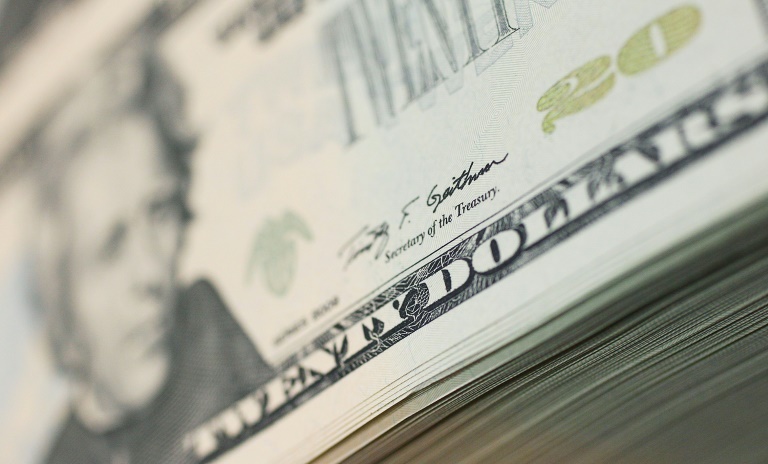
Asian equities mostly fell Tuesday after the previous day’s global rout but dip-buying helped pare early losses, while Europe saw gains, with attention turning to the Federal Reserve as it prepares to ramp up interest rates to fight runaway inflation.

Panic has swept through trading floors since data on Friday showed US consumer prices rising at their fastest pace in a generation owing to a spike in energy and food costs caused by the Ukraine war, China’s lockdowns and supply chain snarls.

The pain has been felt across all assets, with bitcoin threatening to fall below $20,000 for the first time since December 2020, currencies retreating against the dollar, and even safe-haven plays including the yen and gold feeling the squeeze.

Investors are now laser-focused on Wednesday’s Fed interest rate decision as it struggles to walk a fine line between reining in inflation and trying to keep the economy on track.

Danielle DiMartino Booth, at Quill Intelligence, said: “While tightening into a recession is no easy task, the Federal Reserve must indicate a willingness to raise interest rates by more than a half-percentage point at upcoming meetings if inflation continues to surprise to the upside.”

But JP Morgan Asset Management’s Tai Hui warned: “While there is no doubt that inflation is a considerable challenge for the US at this point, slamming on the brakes too hard risks pushing the economy off its track.”

Before Friday’s news, expectations had been for a 50-point basis hike and a signal that more of the same was to come at the next few meetings. But now analysts say there is a one-in-three chance officials could announce a three-quarter point increase, with some even predicting a one percentage point hike.

That has ramped up fears that the world’s top economy is heading for a recession, and on Monday Wall Street plunged with the broad-based S&P 500 sinking into a bear market after dropping more than 20 percent from its recent peak.

But in Asia dip-buying helped some markets recover to positive territory, and others pare the morning’s drop.

Sydney shed 3.6 percent but was much better off than the initial losses of around five percent as traders there returned after a long weekend.

Tokyo, Seoul, Singapore, Wellington, Taipei and Manila were also lower.

Hong Kong was marginally higher and Shanghai edged up, while there were also advances in Mumbai, Bangkok and Jakarta.

London, Paris and Frankfurt rose in the morning.

– ‘Recipe for recession’ –

Commentators warned that the Fed was in a tough place on what to do Wednesday. A decision to lift rates more than 0.50 percentage points could signal its determination to finally defeat inflation but also hit its credibility as it confuses officials’ signals to traders.

“Once the Fed starts moving in 75s it would be hard to stop, and the combination of this and the Fed’s outcome-based approach to inflation feels like it could be a recipe for recession,” said Evercore ISI’s Krishna Guha and Peter Williams.

But Stephen Innes of SPI Asset Management said there was “some positive readthrough with the Fed front-loading and telegraphing a 75 basis point move”.

“In that case, it not only allows the market to brace for impact but could also mean rate hike clouds start dissipating sooner on the fourth quarter horizon if an aggressive front-loading Fed snuffs out inflation.”

Bets on a run of sharp hikes have sent the dollar spiralling higher against other currencies, hitting a 24-year high Monday against the yen and a record peak on the Indian rupee. 

Both units have clawed back some of the losses but remain under severe pressure, while the euro is in danger of hitting a two-decade low. The pound is at its weakest level in two years.

And bitcoin remains in the firing line, hitting $20,823 for the first time since December 2020, with selling compounded by news that crypto lending platform Celsius Network had paused withdrawals owing to volatile conditions. The announcement raised worries about a possible contagion for other firms.

– Key figures at around 0810 GMT –

Tokyo – Nikkei 225: DOWN 1.3 percent at 26,629.86 (close)

Hong Kong – Hang Seng Index: FLAT at 21,067.99 (close)

Shanghai – Composite: UP 1.0 percent at 3,288.91 (close)

London – FTSE 100: UP 0.4 percent at 7,232.37

Dollar/yen: UP at 134.43 yen from 134.42 yen late Monday

Euro/dollar: UP at $1.0467 from $1.0412

Pound/dollar: UP at $1.2185 from $1.2136

Euro/pound: UP at 85.88 pence from 85.76 pence

Brent North Sea crude: UP 0.8 percent at $123.23 per barrel

West Texas Intermediate: UP 0.7 percent at $121.83 per barrel

New York – Dow: DOWN 2.8 percent at 30,516.74 (close)

— Bloomberg News contributed to this story —

Take holiday to grow food, Sri Lanka tells civil servants

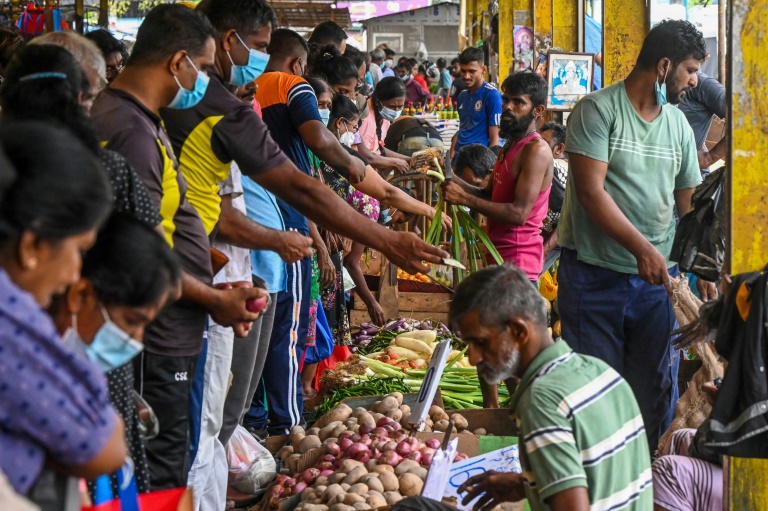
Crisis-hit Sri Lanka is asking civil servants to take an extra day off each week to grow crops in their backyards in a bid to forestall a looming food shortage.

The island nation’s unprecedented economic downturn has left several staple foods in short supply, along with petrol and medicines, and rampant inflation is ravaging household budgets.

“It seems appropriate to grant government officials leave for one working day of the week and provide them with the necessary facilities to engage in agricultural activities in their backyards,” a cabinet statement said Tuesday.

The extra day off would be a “solution to the food shortage that is expected to occur in the future”, the statement read, adding that cutting down on civil servant commutes would also help reduce fuel consumption.

Last week the United Nations warned Sri Lanka was facing a “dire humanitarian crisis”, and said four out of five people in the nation of 22 million were forced to skip meals.

Motorists, meanwhile, have suffered through months of chronic petrol and diesel shortages, and long queues of vehicles outside filling stations are a regular sight around the country. 

Public employees will have every Friday off for the next three months without a pay cut, according to the cabinet decision, but the arrangement will not apply to essential services staff.

The government also said any members of the 1.5 million-strong public sector who wanted to travel abroad to find work would be given up to five years of unpaid leave without affecting their seniority or pensions. 

The move is aimed at encouraging more people to get foreign jobs and send money back to the island, which is labouring under a critical shortage of foreign currency to buy imports.

Sri Lanka has defaulted on its $51 billion foreign debt and is in talks with the International Monetary Fund for a bailout. 

Public protests have demanded the resignation of President Gotabaya Rajapaksa over mismanagement of the country’s economy and the severe hardships facing its people. 

Rajapaksa introduced sweeping tax cuts soon after coming to power in November that have been blamed for leaving the island without the means to pay for essential imports.

The cash shortfall was worsened by the Covid-19 pandemic, which savaged the local tourism industry and cut remittances sent back home by Sri Lankans working abroad.

Asian stocks pare early losses but inflation fears remain in focus

Asian equities mostly fell Tuesday after the previous day’s global rout but dip-buying helped pare early losses, while Europe saw gains, with attention turning to the Federal Reserve as it prepares to ramp up interest rates to fight runaway inflation.

Panic has swept through trading floors since data on Friday showed US consumer prices rising at their fastest pace in a generation owing to a spike in energy and food costs caused by the Ukraine war, China’s lockdowns and supply chain snarls.

The pain has been felt across all assets, with bitcoin threatening to fall below $20,000 for the first time since December 2020, currencies retreating against the dollar, and even safe-haven plays including the yen and gold feeling the squeeze.

Investors are now laser-focused on Wednesday’s Fed interest rate decision as it struggles to walk a fine line between reining in inflation and trying to keep the economy on track.

Danielle DiMartino Booth, at Quill Intelligence, said: “While tightening into a recession is no easy task, the Federal Reserve must indicate a willingness to raise interest rates by more than a half-percentage point at upcoming meetings if inflation continues to surprise to the upside.”

But JP Morgan Asset Management’s warned: “While there is no doubt that inflation is a considerable challenge for the US at this point, slamming on the brakes too hard risks pushing the economy off its track.”

Before Friday’s news, expectations had been for a 50-point basis hike and a signal that more of the same was to come at the next few meetings. But now analysts say there is a one-in-three chance officials could announce a three-quarter point increase, with some even predicting a one percentage point hike.

That has ramped up fears that the world’s top economy is heading for a recession, and on Monday Wall Street plunged with the broad-based S&P 500 sinking into a bear market after dropping more than 20 percent from its recent peak.

But in Asia dip-buying helped some markets recover to positive territory, and others pare the morning’s drop.

Sydney shed 3.6 percent but was much better off than the initial losses of around five percent as traders there returned after a long weekend.

Tokyo, Seoul, Singapore, Wellington, Taipei and Manila were also lower.

Hong Kong and Shanghai edged up in the afternoon, while there were also advances in Mumbai, Bangkok and Jakarta.

London, Paris and Frankfurt opened higher.  

Commentators warned that the Fed was in a tough place on what to do Wednesday. A decision to lift rates more than 0.50 percentage points could signal its determination to finally defeat inflation but also hit its credibility as it confuses officials’ signals to traders.

“Once the Fed starts moving in 75s it would be hard to stop, and the combination of this and the Fed’s outcome-based approach to inflation feels like it could be a recipe for recession,” said Evercore ISI’s Krishna Guha and Peter Williams.

But Stephen Innes of SPI Asset Management said there was “some positive readthrough with the Fed front-loading and telegraphing a 75 basis point move”.

“In that case, it not only allows the market to brace for impact but could also mean rate hike clouds start dissipating sooner on the fourth quarter horizon if an aggressive front-loading Fed snuffs out inflation.”

Bets on a run of sharp hikes have sent the dollar spiralling higher against other currencies, hitting a 24-year high Monday against the yen and a record peak on the Indian rupee. 

Both units have clawed back some of the losses but remain under severe pressure, while the euro is in danger of hitting a two-decade low. The pound is at its weakest level in two years.

And bitcoin remains in the firing line, hitting $20,823 for the first time since December 2020, with selling compounded by news that crypto lending platform Celsius Network had paused withdrawals owing to volatile conditions. The announcement raised worries about a possible contagion for other firms.

– Key figures at around 0720 GMT –

Tokyo – Nikkei 225: DOWN 1.3 percent at 26,629.86 (close)

Hong Kong – Hang Seng Index: DOWN 0.3 percent at 21,120.50

Shanghai – Composite: UP 1.0 percent at 3,288.91 (close)

London – FTSE 100: UP 0.8 percent at 7,262.77

Dollar/yen: UP at 134.58 yen from 134.42 yen late Monday

Euro/dollar: UP at $1.0442 from $1.0412

Pound/dollar: UP at $1.2160 from $1.2136

Euro/pound: UP at 85.88 pence from 85.76 pence

Brent North Sea crude: UP 0.7 percent at $123.16 per barrel

West Texas Intermediate: UP 0.7 percent at $121.73 per barrel

New York – Dow: DOWN 2.8 percent at 30,516.74 (close)

— Bloomberg News contributed to this story —

Close Bitnami banner
Bitnami