World

UK to send first asylum seekers to Rwanda

The British government was due to send a first plane carrying failed asylum seekers to Rwanda on Tuesday despite last-ditch legal bids to block the deportations, mounting protests and UN criticism.

A chartered plane is set to leave one of London’s airports overnight and land in Kigali on Wednesday, campaigners said, after British judges on Monday rejected an appeal against the deportations.

Claimants had argued that a decision on the policy should have waited until a full court hearing on the legality of the policy next month.

Thirty-one migrants were due to be sent but one of the claimants, the NGO Care4Calais, tweeted that 23 of them had now had their tickets cancelled.

Those due to be deported include Albanians, Iraqis, Iranians and a Syrian, Care4Calais said.

Other claimants included the Public and Commercial Services Union (PCS), whose members will have to implement the removals, and immigration support group Detention Action.

PCS chief Mark Serwotka has said it would be “an appalling situation” if Tuesday’s removals were subsequently found to be illegal at the full hearing in July.

Home Secretary Priti Patel should wait until then if she “had any respect, not just for the desperate people who come to this country, but for the workers she employs”, Serwotka told Sky News.

Protesters gathered outside the Royal Courts of Justice and the Home Office on Monday.

In Geneva, UN refugee chief Filippo Grandi has denounced the UK government policy as “all wrong” and said it should not be “exporting its responsibility to another country”.

– ‘Immoral policy’ –

Church of England leaders, including top cleric the Archbishop of Canterbury, Justin Welby, stepped up criticism of the policy as “one that should shame us as a nation”.

“Our Christian heritage should inspire us to treat asylum seekers with compassion, fairness and justice, as we have for centuries,” Welby and 24 other bishops wrote in Tuesday’s Times newspaper.

“This immoral policy shames Britain.”

“Evil trafficking” must be combatted by providing safe routes to the UK to “reduce dangerous journeys”, The Times quoted the bishops as saying ahead of the letter’s publication.

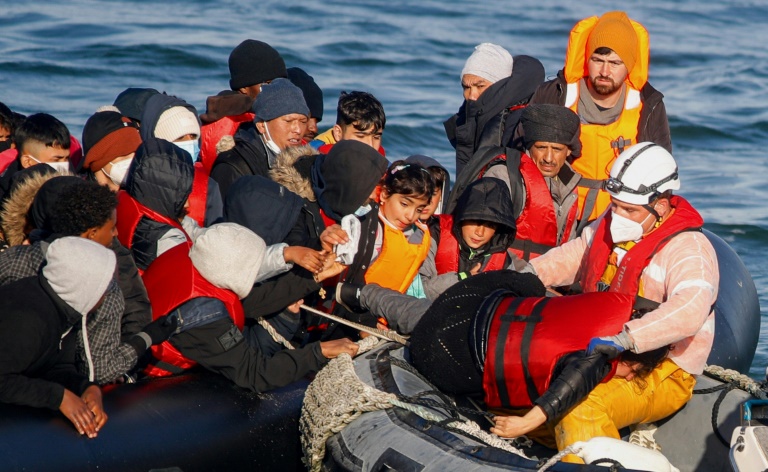
The British government insists the policy is needed to stop a flood of all-too-often deadly migrant crossings of the Channel from France.

“I can’t say exactly how many people will be on the flight,” Foreign Secretary Liz Truss told Sky News on Tuesday.

“The really important thing is that we establish the principle and we start to break the… business model of these appalling people, traffickers who are trading in misery,” she added, reiterating remarks made by Prime Minister Boris Johnson on Monday.

“It’s very important that the criminal gangs who are putting people’s lives at risk in the Channel understand that their business model is going to be broken,” Johnson told LBC radio.

“They’re selling people falsely, luring them into something that is extremely risky and criminal.”

– ‘Appalling’ –

Under the agreement with Kigali, anyone landing in the UK illegally is liable to be given a one-way ticket for processing and resettlement in Rwanda.

The UK government says that genuine asylum claimants should be content to stay in France.

Contradicting the UN refugee agency UNHCR, it insists that Rwanda is a safe destination with the capacity to absorb possibly tens of thousands of UK-bound claimants in the future.

Doris Uwicyeza, chief technical adviser to Rwanda’s justice ministry, pushed back against criticism of the human rights record of President Paul Kagame’s government — which is set this month to host a Commonwealth summit attended by Prince Charles and Johnson.

Rwanda’s 1994 genocide made it particularly attentive to “protecting anybody from hate speech and discrimination”, including gay people, she told LBC radio.

British newspapers reported that Prince Charles had dubbed the plan “appalling”.

The reported comment prompted unnamed cabinet ministers to tell Queen Elizabeth II’s heir to stay out of politics.

International NGO Human Rights Watch issued a public letter warning that “serious human rights abuses continue to occur in Rwanda, including repression of free speech, arbitrary detention, ill-treatment, and torture”.
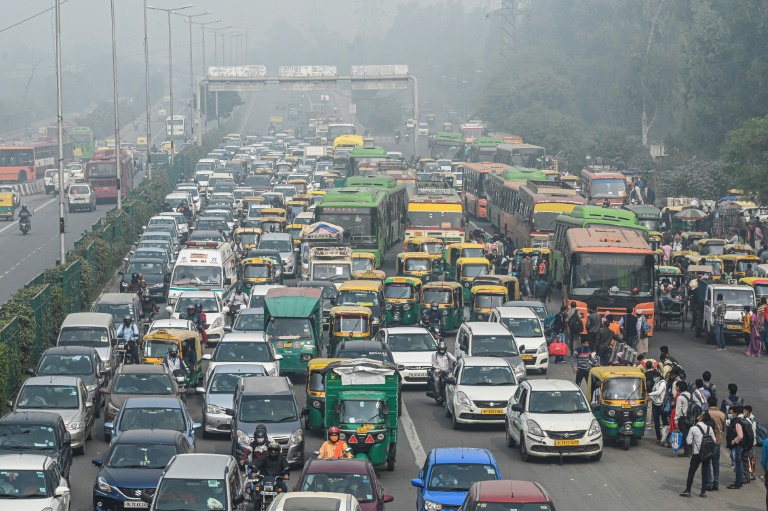
Polluted air cuts global life expectancy by two years

Microscopic air pollution caused mostly by burning fossil fuels shortens lives worldwide by more than two years, researchers reported Tuesday. 

Across South Asia, the average person would live five years longer if levels of fine particulate matter met World Health Organization standards, according to a report from the University of Chicago’s Energy Policy Institute.

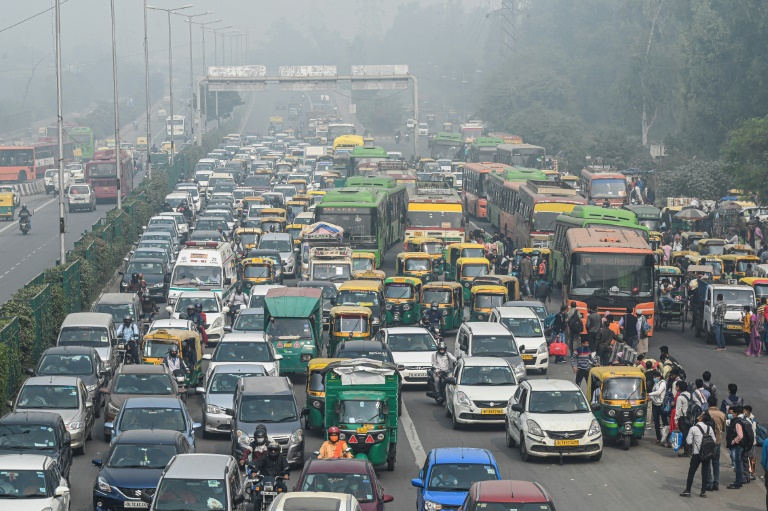
In the Indian states of Uttar Pradesh and Bihar, home to 300 million, crippling lung and heart disease caused by so-called PM2.5 pollution reduces life expectancy by eight years, and in the capital city of New Delhi by a decade.

PM2.5 pollution — 2.5 microns across or less, roughly the diameter of a human hair — penetrates deep into the lungs and enters the bloodstream. 

In 2013, the United Nations classified it as a cancer-causing agent.

The WHO says PM2.5 density in the air should not top 15 microgrammes per cubic metre in any 24-hour period, or 5 mcg/m3 averaged across an entire year.

Faced with mounting evidence of damaging health impacts, the WHO tightened these standards last year, the first change since establishing air quality guidance in 2005.

“Clean air pays back in additional years of life for people across the world,” lead research Crista Hasenkopf and colleagues said in the Air Quality Life Index report.

“Permanently reducing global air pollution to meet the WHO’s guidelines would add 2.2 years onto average life expectancy.”

– Major gains in China –

Almost all populated regions in the world exceed WHO guidelines, but nowhere more so that in Asia: by 15-fold in Bangladesh, 10-fold in India, and nine-fold in Nepal and Pakistan.

Central and West Africa, along with much of Southeast Asia and parts of central America, also face pollution levels — and shortened lives — well above the global average.

Surprisingly, PM2.5 pollution in 2020, the most recent data available, was virtually unchanged from the year before despite a sharp slow-down in the global economy and a corresponding drop in CO2 emissions due to Covid lockdowns.

“In South Asia, pollution actually rose during the first year of the pandemic,” the authors noted.

One country that has seen major improvements is China.

PM2.5 pollution fell in the nation of 1.4 billion people by almost 40 percent between 2013 and 2020, adding two years to life expectancy. 

But even with this progress, lives in China are on average cut short today by 2.6 years.

The worst-hit provinces include Henan and Hebei, in north-central China, and the coastal province of Shandong.

Compared to other causes of premature death, the impact of PM2.5 pollution is comparable to smoking tobacco, more than three times that of alcohol use, and six times that of HIV/AIDS, the report said.

Polluted air cuts global life expectancy by two years

Microscopic air pollution caused mostly by burning fossil fuels shortens lives worldwide by more than two years, researchers reported Tuesday. 

Across South Asia, the average person would live five years longer if levels of fine particulate matter met World Health Organization standards, according to a report from the University of Chicago’s Energy Policy Institute.

In the Indian states of Uttar Pradesh and Bihar, home to 300 million, crippling lung and heart disease caused by so-called PM2.5 pollution reduces life expectancy by eight years, and in the capital city of New Delhi by a decade.

PM2.5 pollution — 2.5 microns across or less, roughly the diameter of a human hair — penetrates deep into the lungs and enters the bloodstream. 

In 2013, the United Nations classified it as a cancer-causing agent.

The WHO says PM2.5 density in the air should not top 15 microgrammes per cubic metre in any 24-hour period, or 5 mcg/m3 averaged across an entire year.

Faced with mounting evidence of damaging health impacts, the WHO tightened these standards last year, the first change since establishing air quality guidance in 2005.

“Clean air pays back in additional years of life for people across the world,” lead research Crista Hasenkopf and colleagues said in the Air Quality Life Index report.

“Permanently reducing global air pollution to meet the WHO’s guidelines would add 2.2 years onto average life expectancy.”

– Major gains in China –

Almost all populated regions in the world exceed WHO guidelines, but nowhere more so that in Asia: by 15-fold in Bangladesh, 10-fold in India, and nine-fold in Nepal and Pakistan.

Central and West Africa, along with much of Southeast Asia and parts of central America, also face pollution levels — and shortened lives — well above the global average.

Surprisingly, PM2.5 pollution in 2020, the most recent data available, was virtually unchanged from the year before despite a sharp slow-down in the global economy and a corresponding drop in CO2 emissions due to Covid lockdowns.

“In South Asia, pollution actually rose during the first year of the pandemic,” the authors noted.

One country that has seen major improvements is China.

PM2.5 pollution fell in the nation of 1.4 billion people by almost 40 percent between 2013 and 2020, adding two years to life expectancy. 

But even with this progress, lives in China are on average cut short today by 2.6 years.

The worst-hit provinces include Henan and Hebei, in north-central China, and the coastal province of Shandong.

Compared to other causes of premature death, the impact of PM2.5 pollution is comparable to smoking tobacco, more than three times that of alcohol use, and six times that of HIV/AIDS, the report said.

Famed Hong Kong floating restaurant towed away after half a century

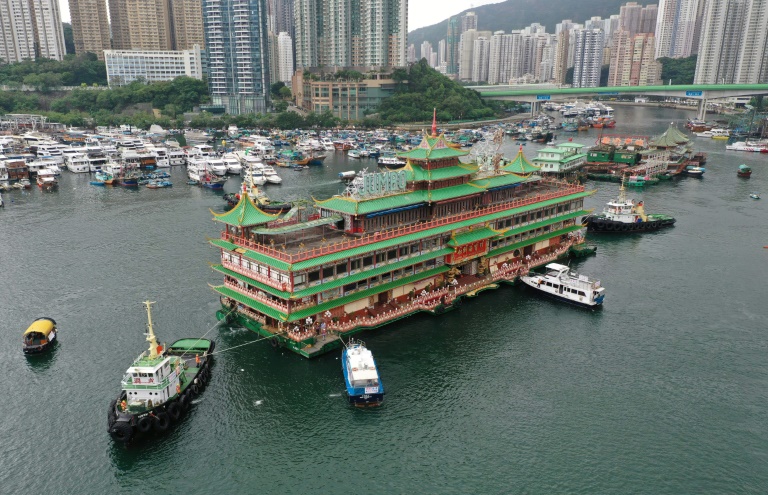
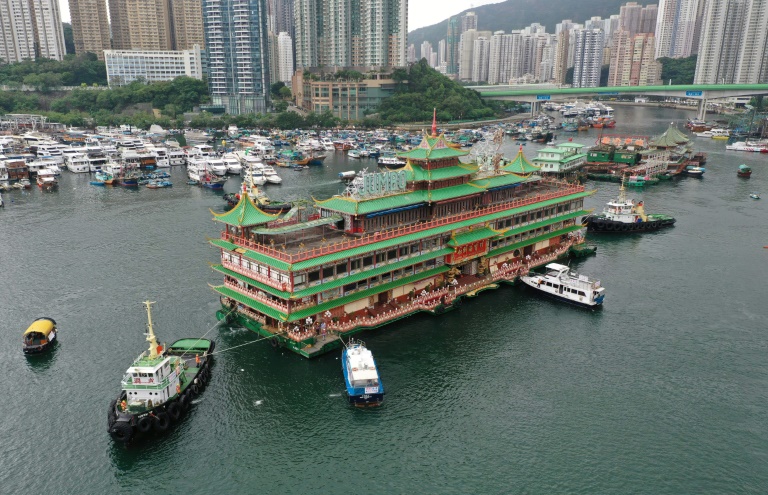
Hong Kong’s Jumbo Floating Restaurant, a famed but ageing tourist attraction that featured in multiple Cantonese and Hollywood films, was towed out of the city Tuesday after years of revitalisation efforts went nowhere.

The buoyant behemoth, which at 76 metres long could house 2,300 diners, set out shortly before noon from the southern Hong Kong Island typhoon shelter where it has sat for nearly half a century. 

Designed like a Chinese imperial palace and once considered a must-see landmark, the restaurant drew visitors from Queen Elizabeth II to Tom Cruise, and featured in several films — including Steven Soderbergh’s “Contagion”, about a deadly global pandemic.   

The lavish restaurant’s operators cited the Covid-19 pandemic as the reason for finally closing its doors in March 2020, after around a decade of financial woes. 

Restaurant owner Melco International Development announced last month that ahead of its licence expiration in June, Jumbo would leave Hong Kong and await a new operator at an undisclosed location.

Under overcast skies, a scattered group of onlookers gathered on the Aberdeen waterfront to see it be dragged away. 

Watching the restaurant’s ponderous progress across the shelter waters was Mr Wong, a 60-year-old man who told AFP he had come specially to see its departure. 

“The exterior was for many years a symbol of Hong Kong,” he said, adding he had eaten there once 20 years ago. 

“I believe it will come back and I look forward to it.”

Opened in 1976 by the late casino tycoon Stanley Ho, the Jumbo Floating Restaurant embodied the height of luxury, reportedly costing over HK$30 million ($3.8 million) to build. 

It featured a “dragon throne” in the style of the Ming dynasty as well as an opulent mural, according to the South China Morning Post.

The restaurant’s berth in Aberdeen harbour was traditionally a hotspot for seafood eateries — and fierce competition for customers only cooled when Jumbo’s operators acquired its biggest competitor, Tai Pak Floating Restaurant, in the 1980s.

The restaurant was kept afloat by Hong Kong’s booming tourism industry but its popularity had dimmed in recent years even before the coronavirus hit.

Restaurant operator Melco said last month the business had not been profitable since 2013 and cumulative losses had exceeded HK$100 million ($12.7 million).

It was still costing millions in maintenance fees every year and around a dozen businesses and organisations had declined an invitation to take it over at no charge, Melco added. 

In her 2020 policy address, Hong Kong leader Carrie Lam announced plans to turn the restaurant over to local theme park Ocean Park for revitalisation, but the project fell through after the park said it could not find a suitable operator.

The ailing restaurant’s fate was sealed just days before Lam is set to leave office. 

In a sign of its dilapidation, on June 1, Jumbo’s kitchen boat listed into the water after a suspected hull breach, tilting almost 90 degrees. 

The derelict kitchen boat will be left behind, according to local media. 

Famed Hong Kong floating restaurant towed away after half a century

Hong Kong’s Jumbo Floating Restaurant, a famed but ageing tourist attraction that featured in multiple Cantonese and Hollywood films, was towed out of the city Tuesday after years of revitalisation efforts went nowhere.

The buoyant behemoth, which at 76 metres long could house 2,300 diners, set out shortly before noon from the southern Hong Kong Island typhoon shelter where it has sat for nearly half a century. 

Designed like a Chinese imperial palace and once considered a must-see landmark, the restaurant drew visitors from Queen Elizabeth II to Tom Cruise, and featured in several films — including Steven Soderbergh’s “Contagion”, about a deadly global pandemic.   

The lavish restaurant’s operators cited the Covid-19 pandemic as the reason for finally closing its doors in March 2020, after around a decade of financial woes. 

Restaurant owner Melco International Development announced last month that ahead of its licence expiration in June, Jumbo would leave Hong Kong and await a new operator at an undisclosed location.

Under overcast skies, a scattered group of onlookers gathered on the Aberdeen waterfront to see it be dragged away. 

Watching the restaurant’s ponderous progress across the shelter waters was Mr Wong, a 60-year-old man who told AFP he had come specially to see its departure. 

“The exterior was for many years a symbol of Hong Kong,” he said, adding he had eaten there once 20 years ago. 

“I believe it will come back and I look forward to it.”

Opened in 1976 by the late casino tycoon Stanley Ho, the Jumbo Floating Restaurant embodied the height of luxury, reportedly costing over HK$30 million ($3.8 million) to build. 

It featured a “dragon throne” in the style of the Ming dynasty as well as an opulent mural, according to the South China Morning Post.

The restaurant’s berth in Aberdeen harbour was traditionally a hotspot for seafood eateries — and fierce competition for customers only cooled when Jumbo’s operators acquired its biggest competitor, Tai Pak Floating Restaurant, in the 1980s.

The restaurant was kept afloat by Hong Kong’s booming tourism industry but its popularity had dimmed in recent years even before the coronavirus hit.

Restaurant operator Melco said last month the business had not been profitable since 2013 and cumulative losses had exceeded HK$100 million ($12.7 million).

It was still costing millions in maintenance fees every year and around a dozen businesses and organisations had declined an invitation to take it over at no charge, Melco added. 

In her 2020 policy address, Hong Kong leader Carrie Lam announced plans to turn the restaurant over to local theme park Ocean Park for revitalisation, but the project fell through after the park said it could not find a suitable operator.

The ailing restaurant’s fate was sealed just days before Lam is set to leave office. 

In a sign of its dilapidation, on June 1, Jumbo’s kitchen boat listed into the water after a suspected hull breach, tilting almost 90 degrees. 

The derelict kitchen boat will be left behind, according to local media. 

Hunger claims children in forgotten corner of Uganda

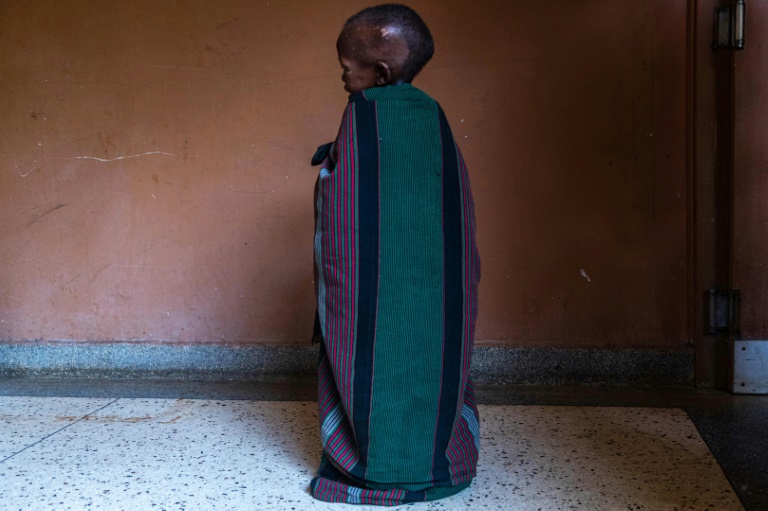
In one of Uganda’s poorest and most lawless regions, anxious mothers clutch bone-thin infants in a malnutrition ward, terrified their child could be next to succumb to starvation in Karamoja.

One of Maria Logiel’s youngsters, too weak to sit up, bears telltale skin lesions caused by extreme hunger. The other, strapped to her back, stares gauntly from sunken eyes. 

“I came with these two because they were badly off, and going to die,” Logiel told AFP at a hospital in Karamoja, a vast and isolated northeastern border region afflicted by drought, disease and armed bands.

“(But) I left two others home, and I worry that by the time I get back, they’ll be no more,” the 30-year-old mother said.

More than half a million people are going hungry in Karamoja, some 40 percent of the population of this neglected, long-suffering rural region between South Sudan and Kenya.

Natural disasters, plagues of locusts and army worms, and raids by heavily-armed cattle thieves have left little to eat.

As food has become ever more scarce, Karamoja’s most vulnerable residents are struggling to survive.

“In three months we have lost more than 25 children under five due to the malnutrition,” said Doctor Sharif Nalibe, the district health officer in Kaabong, one of Karamoja’s worst-hit districts.

“And these were the ones under our care, but (who) were brought at the last minute to the hospital. But there are many who die and (are) not reported in the communities.”

– Out of sight –

Starvation in Karamoja is going largely unnoticed as higher-profile crises, including looming famine in the Horn of Africa, and the war in Ukraine, compel global attention.

Even in Uganda, the desperation is out of sight, unfolding 500 kilometres (310 miles) from the capital Kampala in a part of the country long written off as harsh and volatile.

But the level of hardship is extraordinary, even by the extremes sometimes endured in Karamoja.

Across the region, about 91,600 children and 9,500 pregnant or breastfeeding women are suffering from acute malnutrition and need treatment, according to the latest assessment by humanitarian agencies and foreign donors.

“In terms of acute malnutrition… this year we have experienced the worst that we have had in the last 10 years,” said Alex Mokori, a nutrition specialist from UNICEF, which is screening for malnutrition in Karamoja with local authorities.

Logiel said she resorted to foraging to put food on the table, but the wild plants often made her children sicker.

In desperation, she would sometimes purchase the mealy dregs from a popular locally-made sorghum brew called “malwa”, even if the effect was mildly alcoholic.

Half a litre of this residue goes for about 40 US cents — often more than she could afford.

“Often we failed to raise money and the children sleep hungry,” Logiel said.

– ‘Worse to come’ –

With a porous border and thriving illicit trade, Karamoja has endured decades of tit-for-tat armed cattle raids between nomadic clans that wander the lawless frontier between Uganda, South Sudan and Kenya.

These incursions make life even more miserable for Karimojong communities entirely reliant on livestock and crops to survive, and government interventions to disarm rustlers have not stopped the cycles of violence.

The erratic effects of a changing climate — Karamoja is experiencing harsh drought, but last year witnessed damaging floods and landslides — have only multiplied the hardships bearing down on the region.

“Now, with the prolonged drought, and cattle rustlers, and communities left with no source of livelihood, we are heading for the worst,” said Nalibe, the Kaabong district health officer.

For some, the worst has already arrived.

Nangole Lopwon went to sell firewood in a nearby village and left her hungry twins with one of her older children, only to return and find one of the young ones had died.

“What could I do? The child was not sick. It was purely hunger that killed him,” said the mother of five from Kaabong.

Now she, too, is malnourished, and the surviving twin in a dire state.

“Even this one is about to die,” she wailed.

Cambodia convicts opposition figures in mass trial

A Phnom Penh court convicted around 60 opposition figures including an outspoken US-Cambodian activist in a mass trial Tuesday as long-serving leader Hun Sen cracks down on dissent ahead of national elections next year.

Opposition leader Sam Rainsy, who has lived in France since 2016 to avoid jail for convictions he says are politically motivated, had another eight years added to his existing sentence.

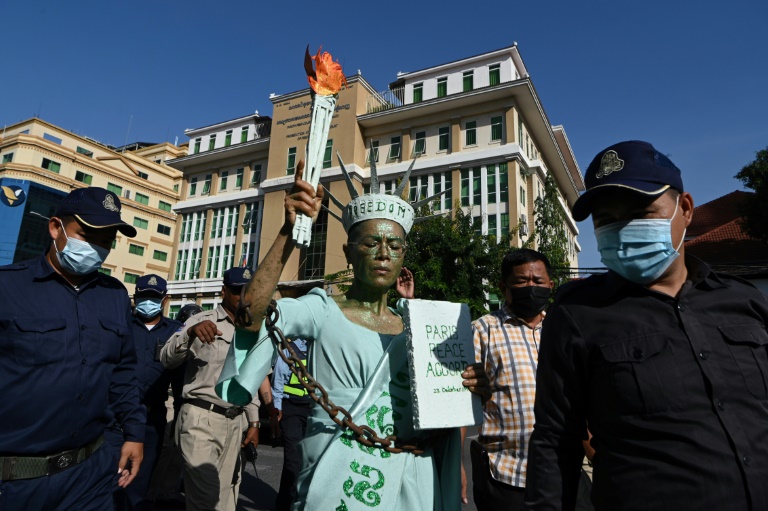
Outside court, US-Cambodian lawyer and campaigner Theary Seng — dressed as the Statue of Liberty — was abruptly dragged into a car by police after receiving a six-year jail term for treason.

“I am ready for a guilty verdict because this regime will not let me go free,” Theary Seng said before her conviction.

“It will be an unfair and unjust verdict because I am innocent, the others charged with me are innocent,” the 51-year-old added.

Patrick Murphy, the US Ambassador to Cambodia, tweeted he was “deeply troubled” by the verdict against Seng Theary. 

“Freedom of expression and association, and tolerance of dissenting views, are vital components of democracy,” the ambassador said, calling for her release.

– ‘Living in a dictatorship’ –

Theary Seng is among scores caught up in a push to detain and arrest former members of the now-dissolved opposition Cambodia National Rescue Party (CNRP), human rights defenders, and any dissenting voices to the administration.

The case is linked to Sam Rainsy’s failed attempt to return to Cambodia in 2019 — moves characterised by the government as an aborted bid to overthrow Hun Sen. 

The charges faced by those convicted on Tuesday ranged from treason to incitement and conspiracy. 

Several defendants have already been jailed, while many remain at large or have fled Cambodia.

“The mass trials against political opposition members are really about preventing any electoral challenge to Prime Minister Hun Sen’s rule, but they have also come to symbolise the death of Cambodia’s democracy,” Human Rights Watch spokesman Phil Robertson said.

“By creating a political dynamic that relies on intimidation and persecution of government critics, Hun Sen demonstrates his total disregard for democratic rights.”

The prime minister is one of the world’s longest-serving leaders, having been in power for 37 years, and is reportedly grooming his eldest son to take the reins.

Theary Seng was charged by the Phnom Penh Municipal Court with conspiracy to commit treason and incitement to commit a felony.

“We are living in a dictatorship,” she said, claiming Hun Sen’s government “uses the law as a weapon against its own people”.

She added that “this regime is imprisoning liberty and freedom”.

Ahead of a recent local poll, the United Nations Human Rights Office said it was disturbed by reports of opposition obstruction in a “paralysing political environment”.

Hun Sen’s political party later announced a landslide win.

Families of overdose victims demand action from social media platforms

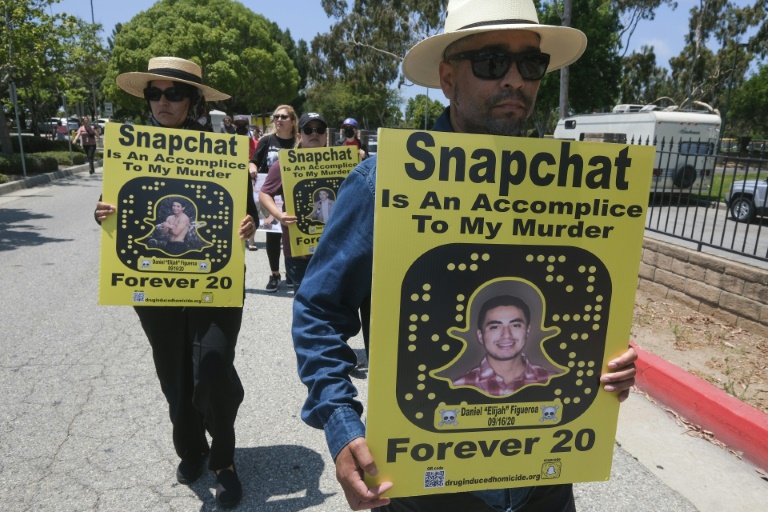
Families of teens who died after overdosing on drugs they bought through Snapchat and other social media platforms called Monday for tech firms to do more to address the problem.

Sam Chapman, part of a group that staged a protest Monday in front of Snapchat’s Santa Monica headquarters, told AFP his son died in February 2021 after a pill he purchased through the platform was laced with the extremely powerful opioid fentanyl.

“I’m here today to warn people about the dangers of social media, delivering drugs and other criminal acts into the lives of our families, through our children,” said Chapman, 57.

His son Sammy would have celebrated his 18th birthday last weekend.

Chapman described the horrific scene of finding his son dead on the floor in his bedroom, in what he said was called the “fentanyl death pose.”

“He had stopped breathing and fell backwards in his chair and vomited, and he choked on his own vomit… It’s a very common way of going,” said Chapman.

Of the 107,000 overdose deaths recorded last year in the United States, 70 percent were caused by “fentanyl poisoning,” which is now the leading cause of death for Americans aged 18 to 45, according to the groups backing Monday’s protest.

Chapman said a drug dealer had contacted his son on Snapchat, and sent him a “colorful drug menu with pictures.”

“At the bottom it said that he delivered. And so he connected with our son and delivered the drugs to our home after we were asleep, like it was a pizza,” he added.

Like the other victims’ family members, Chapman is calling on Snapchat and other social media platforms geared toward young people to take stronger action against drug sales.

“We have been working tirelessly to help combat this national crisis by eradicating illicit drug dealers from our platform,” a Snapchat spokesperson told AFP.

“We use advanced technology to proactively detect and shut down drug dealers who try to abuse our platform, and block search results for dangerous drug-related content,” the representative added.

But Chapman said the tools currently in place do not work because dealers use emojis and code words that aren’t blocked.

The group Victims of Illicit Drugs (VOID) is demanding US law to be updated so that social networks are held liable for what happens to their users on their platforms.

“If you’re walking in a grocery store, you slip and fall, you can sue them,” said VOID president Jaime Puerta.

“The law was written in 1996,” he added.

“The legislators had no idea of where the internet would be today.”

Families of overdose victims demand action from social media platforms

Families of teens who died after overdosing on drugs they bought through Snapchat and other social media platforms called Monday for tech firms to do more to address the problem.

Sam Chapman, part of a group that staged a protest Monday in front of Snapchat’s Santa Monica headquarters, told AFP his son died in February 2021 after a pill he purchased through the platform was laced with the extremely powerful opioid fentanyl.

“I’m here today to warn people about the dangers of social media, delivering drugs and other criminal acts into the lives of our families, through our children,” said Chapman, 57.

His son Sammy would have celebrated his 18th birthday last weekend.

Chapman described the horrific scene of finding his son dead on the floor in his bedroom, in what he said was called the “fentanyl death pose.”

“He had stopped breathing and fell backwards in his chair and vomited, and he choked on his own vomit… It’s a very common way of going,” said Chapman.

Of the 107,000 overdose deaths recorded last year in the United States, 70 percent were caused by “fentanyl poisoning,” which is now the leading cause of death for Americans aged 18 to 45, according to the groups backing Monday’s protest.

Chapman said a drug dealer had contacted his son on Snapchat, and sent him a “colorful drug menu with pictures.”

“At the bottom it said that he delivered. And so he connected with our son and delivered the drugs to our home after we were asleep, like it was a pizza,” he added.

Like the other victims’ family members, Chapman is calling on Snapchat and other social media platforms geared toward young people to take stronger action against drug sales.

“We have been working tirelessly to help combat this national crisis by eradicating illicit drug dealers from our platform,” a Snapchat spokesperson told AFP.

“We use advanced technology to proactively detect and shut down drug dealers who try to abuse our platform, and block search results for dangerous drug-related content,” the representative added.

But Chapman said the tools currently in place do not work because dealers use emojis and code words that aren’t blocked.

The group Victims of Illicit Drugs (VOID) is demanding US law to be updated so that social networks are held liable for what happens to their users on their platforms.

“If you’re walking in a grocery store, you slip and fall, you can sue them,” said VOID president Jaime Puerta.

“The law was written in 1996,” he added.

“The legislators had no idea of where the internet would be today.”

Memorials held five years on from London fire tragedy

Survivors and families of the victims of Britain’s worst residential fire since World War II will on Tuesday mark the fifth anniversary of the tragedy.

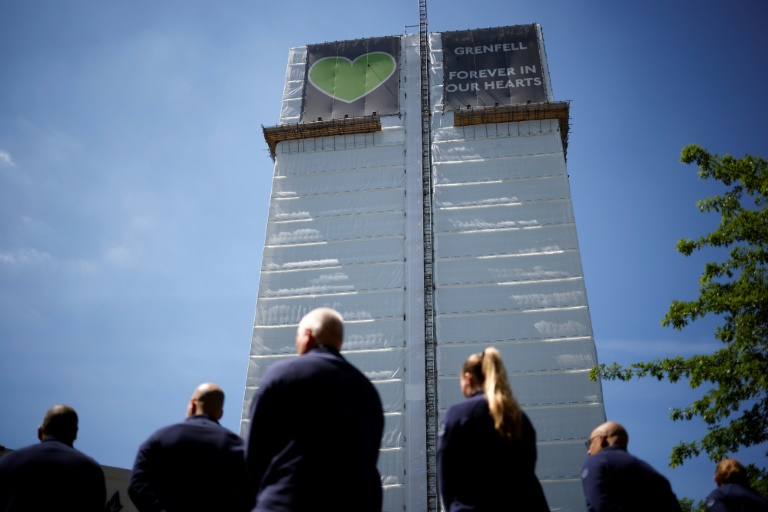
A total of 72 people were killed when a fire that started in a faulty freezer ripped through the 24-storey Grenfell Tower block in west London.

An official report blamed highly combustible cladding fixed to the exterior of the high-rise as the “principal reason” the fire spread.

But despite a costly ongoing public inquiry, the government has been accused of failing to implement urgent safety changes to prevent a similar tragedy in other high-rise blocks.

A day of events includes a memorial service and a 72-second silence after which the names of all of the victims will be read out.

Survivors, the bereaved and community groups will then pay their respects and lay flowers at the foot of the tower, which is still shrouded in tarpaulin.

“This will be a difficult week for everyone affected by the Grenfell Tower fire,” said Natasha Elcock, head of the Grenfell United support group.

“For many of us the events five years ago are still so raw in our minds and our losses remain heavy in our hearts.”

Firefighters from across the country, including those who tackled the blaze, will also form a guard of honour at a silent walk starting from the tower.

The general secretary of the Fire Brigades Union, Matt Wrack, said firefighters and the Grenfell community had a “bond that was forged in tragedy”.

But he hit out at the government for failing to take fire safety and firefighting seriously, pointing to job cuts across the service since 2017.

“The community have faced constant denials from those responsible for Grenfell being covered in cladding as flammable as petrol,” he said.

“They have faced a wait for criminal charges that continues to this day.”

The FBU has also highlighted “multiple failings” in the testing and approval of cladding, insulation and other material used in the Grenfell Tower.

It claimed that the tragedy could have been averted had the building’s regulator not been privatised and been “dependent on fee income” from manufacturers.

– Failings –

Grenfell campaigners claim that the treatment of survivors — some of whom are yet to be permanently rehoused — has exposed gaping social inequality.

They argue changes would have been implemented sooner had low-income workers and ethnic minority families in social housing not been the ones affected.

There has also been a wider outcry among homeowners who have been forced to pay for the removal of unsafe cladding in the high-rises where they live.

Many have been unable to sell their properties or get proper insurance.

The Times newspaper reported that some 640,000 people were still living in buildings with the same type of cladding material.

There has also been criticism of the government for advising as late as last month that residents should wait for help before evacuating during a high-rise fire.

“A lot of people who managed to survive were people who managed to get out early because they ignored the ‘stay put’ advice,” said Tiago Alves, 25, who escaped with his mother, father and younger sister.

“I’m gobsmacked at the fact that we’re still having this conversation five years on.”

London Mayor Sadiq Khan, from the main opposition Labour party, praised survivors for their campaign to improve public safety.

The ongoing public inquiry was “painstakingly unearthing the truth” — that profits were prioritised over public safety and deregulation weakened building standards, he said.

“The response from the government, building developers and owners has fallen far short of what the families of the victims and survivors have every right to expect,” he wrote in The Observer.

“We still have too many residents in London and across the country living in high-rise buildings that are covered in dangerous flammable cladding, and we are still seeing designs for buildings that have critical safety failings.”

Close Bitnami banner
Bitnami