World

UK to send first asylum seekers to Rwanda

The British government was to send a first plane carrying failed asylum seekers to Rwanda on Tuesday despite last-gasp legal bids and protests against the controversial policy.

A chartered plane was to leave one of London’s airports overnight and land in Kigali on Tuesday, campaigners said, after UK judges rejected an appeal against the deportations.

Claimants had argued that a decision on the policy should have waited until a full hearing on the legality of the policy next month.

Thirty-one migrants were due to be sent but one of the claimants, the NGO Care4Calais, tweeted that 23 of them had now had their tickets cancelled.

Those due to be deported include Albanians, Iraqis, Iranians and a Syrian, Care4Calais said.

Other claimants included the Public and Commercial Services Union, whose members will have to implement the removals, and immigration support group Detention Action.

PCS chief Mark Serwotka said on Sunday it would be “an appalling situation” if Tuesday’s removals were subsequently found to be illegal at the full hearing.

Home Secretary Priti Patel should wait for the July hearing if she “had any respect, not just for the desperate people who come to this country, but for the workers she employs”, Serwotka told Sky News.

Protesters gathered outside the Royal Courts of Justice and the Home Office on Monday.

In Geneva, UN refugee chief Filippo Grandi called the UK government policy “all wrong” and said it should not be “exporting its responsibility to another country”.

Church of England leaders, including the most senior cleric the Archbishop of Canterbury, Justin Welby, reiterated criticism of the policy as “one that should shame us as a nation”.

“Our Christian heritage should inspire us to treat asylum seekers with compassion, fairness and justice, as we have for centuries,” Welby and 24 other bishops wrote in Tuesday’s Times newspaper.

“This immoral policy shames Britain.”

“Evil trafficking” must be combatted by providing safe routes to the UK to “reduce dangerous journeys”, The Times quoted the bishops as saying ahead of the letter’s publication.

– ‘Hate speech and discrimination’ –

Patel and Prime Minister Boris Johnson insist the policy is needed to stop a flood of all-too-often deadly migrant crossings of the Channel from France.

“It’s very important that the criminal gangs who are putting people’s lives at risk in the Channel understand that their business model is going to be broken,” Johnson told LBC radio on Monday.

“They’re selling people falsely, luring them into something that is extremely risky and criminal.”

Under the agreement with Kigali, anyone landing in the UK illegally is liable to be given a one-way ticket for processing and resettlement in Rwanda.

The government says that genuine asylum claimants should be content to stay in France.

And contradicting the UN refugee agency UNHCR, it insists that Rwanda is a safe destination with the capacity to absorb possibly tens of thousands of UK-bound claimants in future.

Doris Uwicyeza, chief technical adviser to Rwanda’s justice ministry, pushed back against criticism of the human rights record of President Paul Kagame’s government — which is set this month to host a Commonwealth summit attended by Prince Charles and Johnson.

Rwanda’s 1994 genocide made it particularly attentive to “protecting anybody from hate speech and discrimination”, including gay people, she told LBC radio.

British newspapers reported that Prince Charles had dubbed the plan “appalling”.

The reported comment prompted unnamed cabinet ministers to tell Queen Elizabeth II’s heir to stay out of politics.

International NGO Human Rights Watch issued a public letter warning that “to this day, serious human rights abuses continue to occur in Rwanda, including repression of free speech, arbitrary detention, ill-treatment, and torture”.
Zelensky pleads for arms as Russian forces lay siege to Severodonetsk

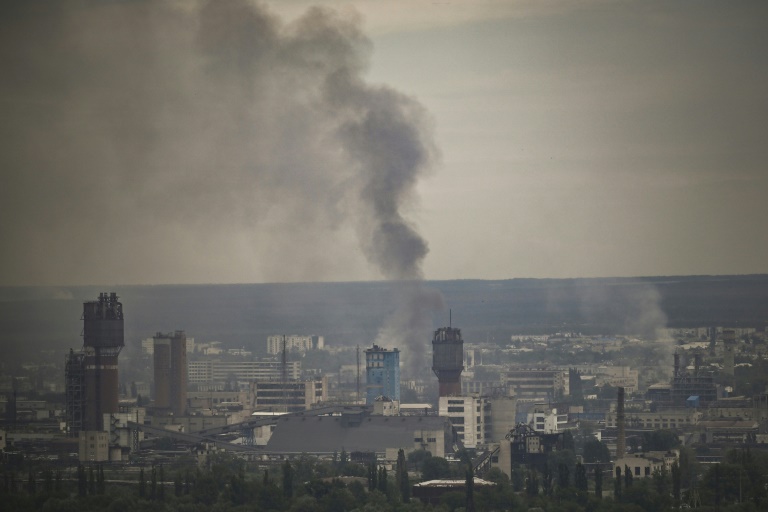
Ukraine’s president has made an impassioned plea to Western allies to speed arms deliveries and help stem “terrifying” casualties as Russian forces lay siege to the eastern city of Severodonetsk, destroying the last bridges into the industrial hub.

The cities of Severodonetsk and Lysychansk have been targeted for weeks as the last areas in the eastern Donbas region of Lugansk still under Ukrainian control.

President Volodymyr Zelensky said Monday the human cost of the battle for the region was “simply terrifying”. 

Zelensky expressed confidence in Ukraine’s ability to reclaim territory, calling on the nation’s allies to send more weapons.

“We just need enough weapons to ensure all of this. Our partners have them.”

Presidential advisor Mikhaylo Podolyak on Monday listed items he said the Ukrainian army requires, including hundreds of howitzers, tanks and armoured vehicles.

“Being straightforward — to end the war we need heavy weapons,” he tweeted.

– Severodonetsk under siege –

Regional governor Sergiy Gaiday said Monday that Ukraine’s forces had been pushed back from Severodonetsk’s centre after a weeks-long Russian offensive.

“They destroyed all the bridges, and getting into the city is no longer possible. Evacuation is also not possible,” he told Radio Free Europe.

He said Russian forces control 70 to 80 percent of the city but had not captured or encircled it.

Last week, Ukraine’s defence minister said up to 100 of his troops were dying daily and 500 sustaining injuries. Previously, Zelensky had estimated 60-100 Ukrainian soldiers were dying daily. 

With the screws tightening on the Lugansk region, Ukrainian forces have two choices: “to surrender or die”, said Eduard Basurin, a representative for pro-Russian separatists.

The capture of Severodonetsk would open the road to Sloviansk and another major city, Kramatorsk, in Moscow’s push to conquer Donbas, a mainly Russian-speaking region partly held by pro-Kremlin separatists since 2014.

– ‘War crimes’ –

On Monday, Amnesty International accused Russia of war crimes in Ukraine, saying that attacks on the northeastern city of Kharkiv — many using banned cluster bombs — had killed hundreds of civilians. 

“The repeated bombardments of residential neighbourhoods in Kharkiv are indiscriminate attacks which killed and injured hundreds of civilians, and as such constitute war crimes,” the rights group said in a report about Ukraine’s second-biggest city.

In Bucha, a town near Kyiv that has become synonymous with war crimes allegations, police said they had discovered another seven bodies in a grave.

“Several victims had their hands tied and knees bound,” Kyiv regional police chief Andriy Nebytov said on Facebook.

Dozens of bodies in civilian clothing were found in the town in April after Russian troops withdrew from the area following a month-long occupation.

– ‘They bomb and they bomb’ –

Elsewhere in northern Ukraine on Monday, Russian rocket strikes hit the town of Pryluky, authorities said.

Pryluky, which lies about 150 kilometres (93 miles) east of the capital, is home to a military airfield.

In Donetsk, separatist authorities said three people were killed and four wounded in Ukrainian shelling on a market.

The nearby city of Lysychansk has been massively damaged after months of shelling, with no water, electricity or phone signal.

Ukrainian artillery uses the city’s high ground to exchange fire with Russian forces fighting for control of Severodonetsk, just across the river.

Lysychansk resident Maksym Katerin buried his mother and stepfather in his garden Monday after a shell ripped through his yard, killing them instantly.  

“I don’t know who did this, but if I knew, I would tear off their arms,” said Katerin.

Katerin’s neighbour Yevgeniya Panicheva wept, saying Katerin’s mother “was lying here, her stomach was ripped and her guts were falling out. She was a very good, kind and helpful woman. Why did they do this to her?”

“They bomb and they bomb and we don’t know what to do.”

A six-year-old boy was also killed in the city on Sunday, police told AFP.

– Harvest delayed –

Far from the battlefield, World Trade Organization members gathered in Geneva to address the threat to global food security since Russia’s invasion.

Ukraine’s deputy agriculture minister said on Monday that a quarter of his country’s arable land had been lost but insisted national food security was not threatened.

On a farm near the southern Ukrainian city Mykolaiv, the harvest has been delayed by the need to undo damage by Russian troops who passed through the area in March.

“We planted really late because we needed to clear everything beforehand,” including bombshells, Nadiia Ivanova, 42, told AFP.

The farm’s warehouses currently hold 2,000 tonnes of last season’s grain but there are no takers.

burs-sea/imm/dva/lb

Asian stocks sink again as inflation panic grips world markets

Equity markets tumbled again Tuesday to extend a global rout fuelled by fears of recession, with the Federal Reserve preparing to ramp up interest rates as inflation shows no sign of slowing.

Panic has swept through trading floors since data on Friday showed US consumer prices rising at their fastest pace in a generation owing to a spike in energy and food costs caused by the Ukraine war, China’s lockdowns and supply chain snarls.

The pain has been felt across all assets, with bitcoin threatening to fall below $20,000 for the first time since December 2020, currencies retreating against the dollar, and even safe-haven plays including the yen and gold feeling the squeeze.

Investors are now laser-focused on Wednesday’s Fed interest rate decision as it struggles to walk a fine line between reining in inflation and trying to keep the economy on track.

Danielle DiMartino Booth, at Quill Intelligence, said: “While tightening into a recession is no easy task, the Federal Reserve must indicate a willingness to raise interest rates by more than a half-percentage point at upcoming meetings if inflation continues to surprise to the upside.”

But JP Morgan Asset Management’s warned: “While there is no doubt that inflation is a considerable challenge for the US at this point, slamming on the brakes too hard risks pushing the economy off its track.”

Before Friday’s news, expectations had been for a 50-point basis hike and a signal that more of the same was to come at the next few meetings. But now analysts say there is a one-in-three chance officials could announce a three-quarter point increase, with some even predicting a one percentage point hike.

That has ramped up fears that the world’s top economy is heading for a recession, and on Monday Wall Street plunged with the broad-based S&P 500 sinking into a bear market after dropping more than 20 percent from its recent peak.

And the selling continued in Asia, with Sydney tanking five percent at one point as it reopened after a holiday weekend to catch up with Monday’s drama, while Tokyo was off around two percent and Wellington more than three percent.

Hong Kong, Shanghai, Seoul, Singapore, Taipei and Manila were also deep in the red.

Commentators warned that the Fed was in a tough place on what to do Wednesday. A decision to lift rates more than 0.50 percentage points could signal its determination to finally defeat inflation but also hit its credibility as it confuses officials’ signals to traders.

“Once the Fed starts moving in 75s it would be hard to stop, and the combination of this and the Fed’s outcome-based approach to inflation feels like it could be a recipe for recession,” said Evercore ISI’s Krishna Guha and Peter Williams.

Bets on a more aggressive approach have sent the dollar spiralling higher against other currencies, hitting a 24-year high Monday against the yen and a record peak on the Indian rupee. 

Both units have clawed back some of the losses but remain under severe pressure, while the euro is in danger of hitting a two-decade low. The pound is at its weakest level in two years.

And bitcoin remains in the firing line, hitting $20,823 for the first time since December 2020, with selling compounded by news that crypto lending platform Celsius Network had paused withdrawals owing to volatile conditions. The announcement raised worries about a possible contagion for other firms.

– Key figures at around 0250 GMT –

Tokyo – Nikkei 225: DOWN 2.0 percent at 26,446.82 (break)

Hong Kong – Hang Seng Index: DOWN 0.7 percent at 20,926.15

Shanghai – Composite: DOWN 0.5 percent at 3237.98

Dollar/yen: DOWN at 134.40 yen from 134.42 yen late Monday

Euro/dollar: DOWN at $1.0408 from $1.0412

Pound/dollar: UP at $1.2142 from $1.2136

Euro/pound: DOWN at 85.71 pence from 85.76 pence

Brent North Sea crude: UP 0.2 percent at $122.45 per barrel

West Texas Intermediate: UP 0.2 percent at $121.13 per barrel

New York – Dow: DOWN 2.8 percent at 30,516.74 (close)

London – FTSE 100: DOWN 1.5 percent at 7,205.81 (close)

— Bloomberg News contributed to this story —

Keeping China fed as inflation surges brings risk for commodity prices

Bedevilled by high fuel and fertiliser costs, along with a labour crisis driven by Covid-19 restrictions, China risks a smaller autumn harvest that could supercharge demand for commodities just as the world can afford it least.

Global food prices have spiked since Russia’s February invasion of Ukraine, a major world producer of wheat, corn and sunflower oil, driving costs to record highs.

Moscow stands accused of pushing the globe to the brink of catastrophe by blockading Ukrainian ports and seizing commodity stocks, driving up prices and leaving the world’s poorest nations facing hunger.

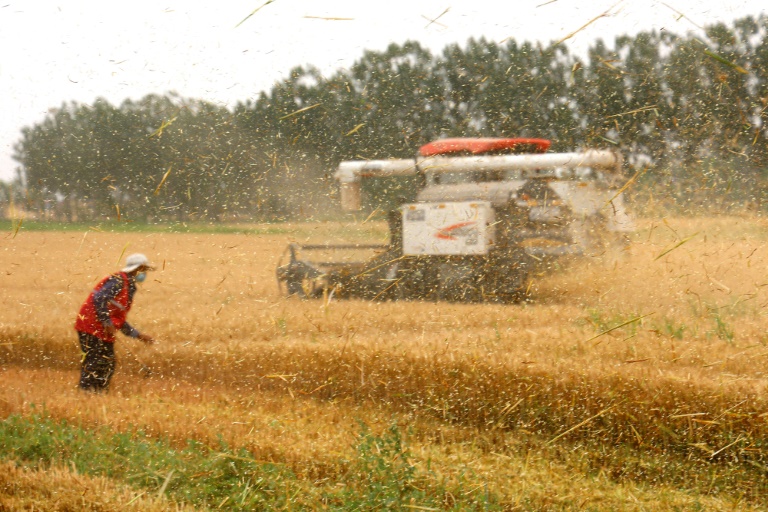
China is relatively self-reliant, producing more than 95 percent of its needs in rice, wheat and maize.

But relentless Covid disruptions — caused by restrictions on the movement of goods and farm workers — on top of higher fertiliser and fuel costs and issues with access to equipment, threaten the autumn harvest of key crops such as soybean and corn.

Experts caution even a small rise in demand from the world’s most populous nation could drive global commodity costs up sharply.

“The last thing the global market needs right now is for China to become a more active buyer,” said Even Pay, an agriculture analyst with consultancy Trivium China.

Corn prices hit a nine-year high in April, while soybean prices traded near a 10-year high this month.

China is the last major economy to adhere to a zero-Covid policy.

How that manifests itself in the next harvest is uncertain, but Pay said “last-mile logistics” have been complicated by virus restrictions in rural areas afraid of the spread of the disease.

“Villages have been very resistant to letting outsiders in during Covid-control periods,” she added.

If China ends up going to the global market to fill any shortfall, there will be “a big impact” on prices, said Darin Friedrichs, co-founder of agriculture research firm Sitonia Consulting.

– Seeds of doubt –

For now, Beijing is keeping a close eye on the country’s wheat harvest.

At a meeting last month, Premier Li Keqiang said a strong summer harvest with manageable prices depended in part on “unimpeded” access of workers and machines to wheat-growing provinces from eastern Anhui to northern Shanxi.

China has harvested about 80 percent of its winter wheat crop so far, according to state media, although Friedrichs cautioned that prices are 25 percent higher than last year, at about 3,000 yuan ($450) per tonne.

While a decent wheat harvest is good news to world markets, “Covid-related disruptions haven’t gone away”, according to Pay, who added that prices of fertilisers and fuels were riding high.

China has “massively ramped up its wheat, corn, barley purchases” in recent years, from below 20 million tonnes a year around four years ago to some 50 million tonnes now, according to Andrew Whitelaw, an analyst at Thomas Elder Markets.

But global inflation and uncertainty will make it expensive for China to import more.

Already, China has bought newly harvested wheat for its reserves at sky-high prices this month.

The political dimension of feeding China’s vast population has not been lost on Beijing.

President Xi Jinping has said China should make “unrelenting efforts to ensure grain security”, state media reported.

The issue has grown in importance since 2020, when the coronavirus spread worldwide, said Friedrichs.

“There were worries about global disruptions to supply chains, and now we have the global food crisis — that’s redoubled focus on food security,” he said.

Keeping China fed as inflation surges brings risk for commodity prices

Bedevilled by high fuel and fertiliser costs, along with a labour crisis driven by Covid-19 restrictions, China risks a smaller autumn harvest that could supercharge demand for commodities just as the world can afford it least.

Global food prices have spiked since Russia’s February invasion of Ukraine, a major world producer of wheat, corn and sunflower oil, driving costs to record highs.

Moscow stands accused of pushing the globe to the brink of catastrophe by blockading Ukrainian ports and seizing commodity stocks, driving up prices and leaving the world’s poorest nations facing hunger.

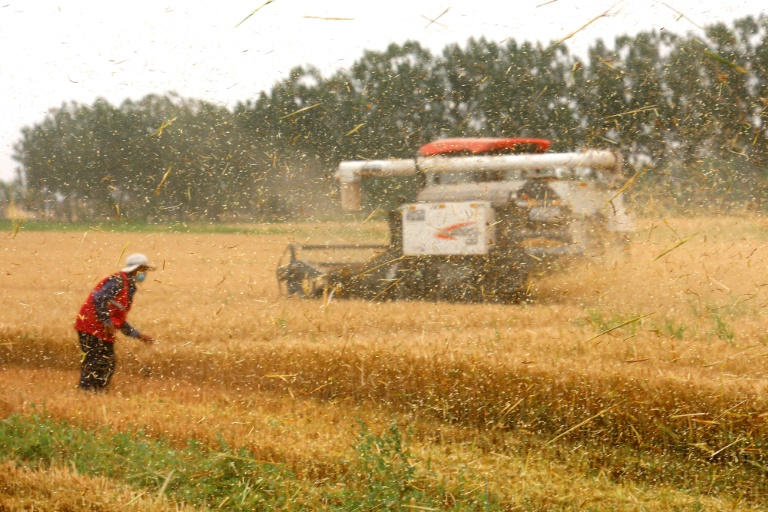
China is relatively self-reliant, producing more than 95 percent of its needs in rice, wheat and maize.

But relentless Covid disruptions — caused by restrictions on the movement of goods and farm workers — on top of higher fertiliser and fuel costs and issues with access to equipment, threaten the autumn harvest of key crops such as soybean and corn.

Experts caution even a small rise in demand from the world’s most populous nation could drive global commodity costs up sharply.

“The last thing the global market needs right now is for China to become a more active buyer,” said Even Pay, an agriculture analyst with consultancy Trivium China.

Corn prices hit a nine-year high in April, while soybean prices traded near a 10-year high this month.

China is the last major economy to adhere to a zero-Covid policy.

How that manifests itself in the next harvest is uncertain, but Pay said “last-mile logistics” have been complicated by virus restrictions in rural areas afraid of the spread of the disease.

“Villages have been very resistant to letting outsiders in during Covid-control periods,” she added.

If China ends up going to the global market to fill any shortfall, there will be “a big impact” on prices, said Darin Friedrichs, co-founder of agriculture research firm Sitonia Consulting.

– Seeds of doubt –

For now, Beijing is keeping a close eye on the country’s wheat harvest.

At a meeting last month, Premier Li Keqiang said a strong summer harvest with manageable prices depended in part on “unimpeded” access of workers and machines to wheat-growing provinces from eastern Anhui to northern Shanxi.

China has harvested about 80 percent of its winter wheat crop so far, according to state media, although Friedrichs cautioned that prices are 25 percent higher than last year, at about 3,000 yuan ($450) per tonne.

While a decent wheat harvest is good news to world markets, “Covid-related disruptions haven’t gone away”, according to Pay, who added that prices of fertilisers and fuels were riding high.

China has “massively ramped up its wheat, corn, barley purchases” in recent years, from below 20 million tonnes a year around four years ago to some 50 million tonnes now, according to Andrew Whitelaw, an analyst at Thomas Elder Markets.

But global inflation and uncertainty will make it expensive for China to import more.

Already, China has bought newly harvested wheat for its reserves at sky-high prices this month.

The political dimension of feeding China’s vast population has not been lost on Beijing.

President Xi Jinping has said China should make “unrelenting efforts to ensure grain security”, state media reported.

The issue has grown in importance since 2020, when the coronavirus spread worldwide, said Friedrichs.

“There were worries about global disruptions to supply chains, and now we have the global food crisis — that’s redoubled focus on food security,” he said.

Lithuania to buy howitzers from France

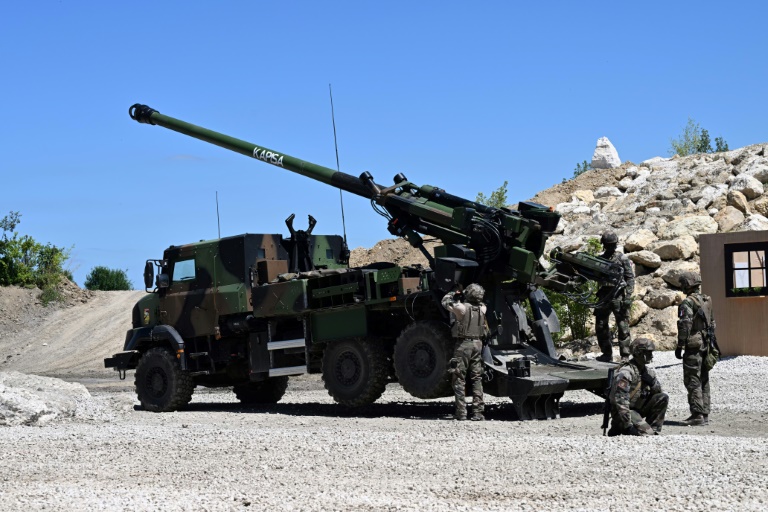
Lithuania has agreed to buy 18 howitzers from France, both sides’ defence ministers announced Monday, as the Baltic country bolsters its arsenal due to Russia’s invasion of Ukraine.

Lithuania, a European Union and NATO member, decided to inject an additional 300 million euros ($312 million) into its 2022 defence budget as the Ukraine war ramped up security fears. 

“Lithuania will buy 18 Caesar MarktII howitzers from France,” Lithuanian Defence Minister Arvydas Anusauskas tweeted alongside a photo with French counterpart Sebastien Lecornu. 

“They will significantly strengthen” the capabilities of the Lithuanian armed forces, Anusauskas added.

Moscow’s attack on its former Soviet neighbour has spooked the small Baltic States, which fear they could be next.

Lithuania, Latvia and Estonia — all NATO members and part of the former Soviet Union — have come to Ukraine’s defence with military hardware and humanitarian aid.

Lithuania has said it sent military supplies worth “tens of millions” of euros, including Stinger anti-aircraft missiles, mortars, rifles, ammunition and other equipment. Lithuanians also crowdfunded over five million euros to buy Ukraine another Bayraktar drone.

Trump became 'detached from reality,' says ex-justice chief

Donald Trump deluged aides with wild voter fraud conspiracy theories after losing the 2020 US election, his top law-enforcement official said in testimony revealed Monday by a congressional probe which the ex-president branded a “mockery of justice.”

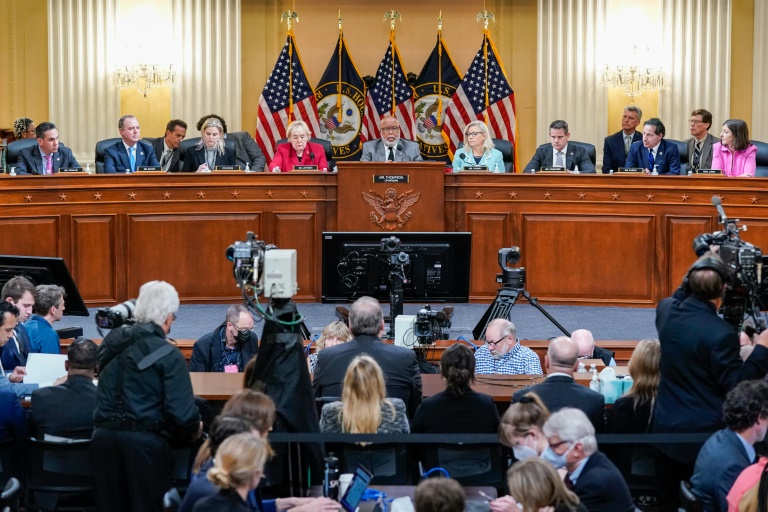
Appearing in a pre-recorded deposition at a congressional hearing into the 2021 assault on the US Capitol, former attorney general Bill Barr described his then-boss as having no interest in the facts that debunked his groundless narrative.

“I was demoralized because I thought, boy… he’s become detached from reality if he really believes this stuff,” Barr told the House committee investigating the January 6 insurrection by supporters of Trump.

“When I went into this and would tell him how crazy some of these allegations were, there was never an indication of interest in the actual facts,” said Barr, who likened addressing Trump’s avalanche of false allegations with playing the game “whack-a-mole.”

The panel is holding six hearings throughout June to outline its case that the riot at the seat of US democracy in Washington was the culmination of a seven-step conspiracy by Trump and his inner circle to overturn his defeat to Joe Biden.

Trump ignored repeated warnings from top aides against falsely claiming the November 2020 election was stolen, according to testimony unveiled by the panel.

“We will tell the story of how Donald Trump lost the election — and knew he lost the election — and as a result of his loss, decided to wage an attack on our democracy,” the committee’s Democratic chairman Bennie Thompson said in his opening remarks.

Trump released his first extended reaction to the probe Monday evening, with a rambling 12-page statement in which he called the panel a “mockery of justice” and a “Kangaroo Court hoping to distract the American people from the great pain they are experiencing.”

The second of six planned hearings was shown videotaped accounts from the former president’s advisors, including Barr and campaign manager Bill Stepien, saying they repeatedly counseled him not to declare victory on election night because he hadn’t won — but that Trump went ahead anyway.

“He thought I was wrong, he told me so, and that they were going to go in a different direction,” Stepien said.

– ‘Far flung conspiracies’ –

Thompson’s deputy on the panel, Republican lawmaker Liz Cheney, said Trump chose to listen to the advice of “apparently inebriated” former New York mayor Rudy Giuliani “to just claim he won, and insist that the vote counting stop — to falsely claim everything was fraudulent.”

Trump started pushing what came to be known as his “Big Lie” around 2:30 am on November 4, 2020, prematurely declaring victory on the night of an election he ultimately lost to Biden by seven million votes.

Barr said in his testimony that Trump claimed major fraud “right out of the box on election night… before there was actually any potential of looking at evidence.”

Giuliani and associates including the lawyer Sidney Powell would go on to push debunked theories of massive voter fraud that put them at odds with the White House lawyers Stepien referred to as “Team Normal.”

Cheney highlighted “far-flung conspiracies” — dismissed as “nonsense” by Barr — of fraud involving voting machines “with a deceased Venezuelan Communist allegedly pulling the strings.”

Trump repeated a number of unfounded claims in his statement late Monday.

“Democrats created the narrative of January 6th to detract from the much larger and more important truth that the 2020 Election was Rigged and Stolen,” he said.

– ‘Big rip-off’ –

The committee says the initial claim of fraud grew quickly into a conspiracy to cling to power by Trump and his inner circle — and a fundraising campaign that raised $250 million between election night and the Capitol insurrection.

The committee’s senior investigative counsel Amanda Wick said much of the cash was funneled into a political action committee that made donations to pro-Trump organizations.

“As early as April 2020, Mr Trump claimed that the only way he could lose an election would be as a result of fraud,” Democratic panel member Zoe Lofgren said.

“The big lie was also a big rip-off,” she said, promising to show how the Trump campaign raised hundreds of millions of dollars from supporters who were falsely led to believe their donations would be used for the legal fight over fraud claims.

All but one of the 62 lawsuits filed by the Trump campaign were dismissed — the vast majority by Republican-appointed judges — while the one that was upheld didn’t affect the outcome.

Powell filed four federal lawsuits in staunchly Democratic cities that were all rejected as frivolous and, in Detroit, a judge ordered that she face sanctions for a “historic and profound abuse of the judicial process.”

The panel ended the hearing by returning to the Capitol riot, showing footage of mob participants explaining how Trump’s voter fraud claims had motivated their actions.

“I know exactly what’s going on right now. Fake election,” one said.

VW faces Brazil hearing over dictatorship-era slavery claims

German carmaker Volkswagen faces an audience with Brazilian prosecutors Tuesday over allegations of human-rights violations at a farm it ran during Brazil’s military dictatorship, including slave labor, rapes and beatings.

Prosecutors have assembled a 90-page dossier they say documents years of atrocities committed by Volkswagen managers and hired guns at a cattle ranch the company owned in the Amazon rainforest basin in the 1970s and 80s.

In the latest attempt to bring justice for abuses committed under Brazil’s 1964-1985 military regime, the federal prosecutor’s office for labor affairs summoned VW representatives to a hearing in Brasilia to answer for evidence of abuses including torture and killings at the property in the northern state of Para, known as Fazenda Vale do Rio Cristalino.

“There were grave and systematic violations of human rights, and Volkswagen is directly responsible,” lead prosecutor Rafael Garcia told AFP.

The audience will be an initial contact “to see if it’s possible to reach a settlement” without opening criminal proceedings, he said.

Volkswagen has declined to comment on specifics of the case, saying it first needs “clarity on all the allegations.”

But the company is “committed to contributing very seriously to the investigations,” a spokeswoman for Volkswagen Brasil told AFP by email.

In 2020, Volkswagen agreed to pay 36 million reais ($6.4 million at the time) in compensation for collaborating with Brazil’s secret police during the dictatorship to identify suspected leftist opponents and union leaders at its local operation, who were then detained and tortured.

– Crusading priest –

That settlement caught the eye of Ricardo Rezende, a Catholic priest who spent years compiling evidence of abuses at Volkswagen’s farm after moving to Para in 1977 and hearing what he says were horrifying stories from victims.

Rezende wondered if the company could also be held to account for that case, and decided to share his files with prosecutors, he told AFP.

“You can’t fix someone suffering torture by paying reparations. The suffering of the women whose sons and husbands went to the farm and never came back — there’s no reparation for that pain,” said the priest, now 70.

“But there could be a symbolic reparation. I think it’s necessary.”

Rezende’s hundreds of pages of testimony and other documents convinced prosecutors to launch a task force, which spent three years assembling evidence — boiled down to the dossier they will now present to VW.

In it, victims tell investigators of being lured to the 70,000-hectare (173,000-acre) farm with false promises of lucrative jobs, then forced to cut down the jungle under grueling conditions for Volkswagen’s cattle ranch, which became the biggest in Para for a time.

Workers were kept in “debt-slavery” by being forced to buy food and supplies from the farm at exorbitant prices, prosecutors said.

Those who tried to escape were beaten, tied to trees and left for days by armed guards who kept violent watch over the workforce, they said.

In one case, three witnesses said gunmen kidnapped a worker’s wife and raped her as punishment after he tried to escape.

“There were extremely grave abuses,” said Rezende, who estimates hundreds and probably thousands of workers were essentially enslaved from 1974 to 1986.

– VW in the jungle? –

What was a German automaker doing raising cattle in the Brazilian Amazon in the first place?

The story is a window on how the military regime saw the Amazon, and helps explain why the world’s biggest rainforest is threatened today.

It was a time when Brazil was urgently pushing to develop the rainforest, which the regime saw as backwards, luring settlers with promised riches and the slogan: “Land without men for men without land.”

The government also lured companies. Volkswagen benefited from tax exemptions and negative-interest loans for cutting down the forest to develop a farm, not to mention close ties with the regime, Rezende said.

“On the one hand, Volkswagen loved the dictatorship. On the other, it was a highly profitable business,” he said.

“It could have 6,000 people working almost for free.”

Authorities say such practices were widespread in the Amazon region, even after the dictatorship.

Holding other companies to account would depend on gathering sufficient evidence, Garcia said.

VW faces Brazil hearing over dictatorship-era slavery claims

German carmaker Volkswagen faces an audience with Brazilian prosecutors Tuesday over allegations of human-rights violations at a farm it ran during Brazil’s military dictatorship, including slave labor, rapes and beatings.

Prosecutors have assembled a 90-page dossier they say documents years of atrocities committed by Volkswagen managers and hired guns at a cattle ranch the company owned in the Amazon rainforest basin in the 1970s and 80s.

In the latest attempt to bring justice for abuses committed under Brazil’s 1964-1985 military regime, the federal prosecutor’s office for labor affairs summoned VW representatives to a hearing in Brasilia to answer for evidence of abuses including torture and killings at the property in the northern state of Para, known as Fazenda Vale do Rio Cristalino.

“There were grave and systematic violations of human rights, and Volkswagen is directly responsible,” lead prosecutor Rafael Garcia told AFP.

The audience will be an initial contact “to see if it’s possible to reach a settlement” without opening criminal proceedings, he said.

Volkswagen has declined to comment on specifics of the case, saying it first needs “clarity on all the allegations.”

But the company is “committed to contributing very seriously to the investigations,” a spokeswoman for Volkswagen Brasil told AFP by email.

In 2020, Volkswagen agreed to pay 36 million reais ($6.4 million at the time) in compensation for collaborating with Brazil’s secret police during the dictatorship to identify suspected leftist opponents and union leaders at its local operation, who were then detained and tortured.

– Crusading priest –

That settlement caught the eye of Ricardo Rezende, a Catholic priest who spent years compiling evidence of abuses at Volkswagen’s farm after moving to Para in 1977 and hearing what he says were horrifying stories from victims.

Rezende wondered if the company could also be held to account for that case, and decided to share his files with prosecutors, he told AFP.

“You can’t fix someone suffering torture by paying reparations. The suffering of the women whose sons and husbands went to the farm and never came back — there’s no reparation for that pain,” said the priest, now 70.

“But there could be a symbolic reparation. I think it’s necessary.”

Rezende’s hundreds of pages of testimony and other documents convinced prosecutors to launch a task force, which spent three years assembling evidence — boiled down to the dossier they will now present to VW.

In it, victims tell investigators of being lured to the 70,000-hectare (173,000-acre) farm with false promises of lucrative jobs, then forced to cut down the jungle under grueling conditions for Volkswagen’s cattle ranch, which became the biggest in Para for a time.

Workers were kept in “debt-slavery” by being forced to buy food and supplies from the farm at exorbitant prices, prosecutors said.

Those who tried to escape were beaten, tied to trees and left for days by armed guards who kept violent watch over the workforce, they said.

In one case, three witnesses said gunmen kidnapped a worker’s wife and raped her as punishment after he tried to escape.

“There were extremely grave abuses,” said Rezende, who estimates hundreds and probably thousands of workers were essentially enslaved from 1974 to 1986.

– VW in the jungle? –

What was a German automaker doing raising cattle in the Brazilian Amazon in the first place?

The story is a window on how the military regime saw the Amazon, and helps explain why the world’s biggest rainforest is threatened today.

It was a time when Brazil was urgently pushing to develop the rainforest, which the regime saw as backwards, luring settlers with promised riches and the slogan: “Land without men for men without land.”

The government also lured companies. Volkswagen benefited from tax exemptions and negative-interest loans for cutting down the forest to develop a farm, not to mention close ties with the regime, Rezende said.

“On the one hand, Volkswagen loved the dictatorship. On the other, it was a highly profitable business,” he said.

“It could have 6,000 people working almost for free.”

Authorities say such practices were widespread in the Amazon region, even after the dictatorship.

Holding other companies to account would depend on gathering sufficient evidence, Garcia said.

US Senate gun measures gain support despite limited scope

Two horrific massacres in recent weeks have succeeded in bringing Democrats and Republicans close to the most significant federal legislation addressing US gun violence in three decades.

Twenty senators — 10 from each party — reached a deal Sunday to put through legislation that would tighten some rules on gun sales and put more resources toward mental health treatment.

The 10 Republicans are just enough to ensure that the legislation could overcome Senate rules that have allowed the party since the 1990s to block almost every single measure aimed at controlling the flood of personal firearms on the US market.

Their agreement comes less than a month after two shocking mass shootings: first, when 10 African Americans were killed on May 14 at a supermarket in Buffalo, New York, and then less than two weeks later when 19 children and two teachers were shot and killed at an elementary school in Uvalde, Texas.

Those tragedies also brought into focus smaller, but more frequent instances of gun violence across the United States.

Chris Coons, a Senate Democrat who led the chamber’s bipartisan effort, said the legislation could be introduced within days and possibly passed in early July.

“In the wake of the horrifying recent shootings in Buffalo, Uvalde, and across the country, Americans have demanded that the Senate take meaningful steps forward on this issue,” said Coons.

“This framework will save lives. If it becomes law, it will lower the risks of mass shootings, of lethal domestic violence incidents, of violence we see too frequently on our streets.”

– Modest measures –

The senators’ agreed measures are modest, and far short of what US President Joe Biden called for following last month’s tragic killings.

They include: 

– Enhanced background checks for people under 21 buying a gun, allowing a review of juvenile crime and mental health records

– Funding and incentives for states to pass “red flag” laws to keep guns out of the hands of people deemed a danger to themselves or society, and perpetrators of domestic abuse

– Tougher penalties for “straw purchasers” of guns for others that feed illegal firearms trafficking

– Closing loopholes on gun dealer regulations

– Federal support for state investments in school security and mental health programs

But they did not approach demands from gun control advocates, including an outright ban on assault rifles, as was in place from 1994 to 2004, a ban on gun sales to people under 21, mandatory waiting periods in all gun purchases, and bans on high-capacity magazines.

Both the Buffalo and Uvalde shootings were by 18-year-olds using high-powered AR-15-style semi-automatic rifles.

Moreover, whatever gains that come with the legislation could be dealt a setback by a Supreme Court ruling due this month that could overturn state restrictions on carrying guns in public.

– ‘Breaking the logjam’ – 

Even so, gun control advocates cheered the measures, recognizing the potential for a significant shift towards breaking the gun industry’s stranglehold.

“We applaud this historic step forward for gun violence prevention — one born out of the recognition that this nation needs change and action to save American lives from preventable gun violence,” said Kris Brown, president of the Brady: United Against Gun Violence group.

“We’re breaking the logjam in Congress and proving that gun safety isn’t just good policy -– it’s good politics,” said Shannon Watts, founder of the group Moms Demand Action.

– Narrow political margin –

Yet supporters were not fully confident the measures will pass, knowing that the legislation could be blocked if fewer than 10 of the Senate’s 50 Republicans support it.

Working in their favor is that none of the 10 Republicans who agreed to the deal Sunday are standing for reelection in November. Four are retiring, and five won’t face reelection until 2026; one other faces reelection in 2024.

The 20 senators “are committed to each other and to this project,” said Coons.

But the National Rifle Association, which has wielded powerful influence over Republicans for decades, made clear their fundamental opposition.

“NRA will continue to oppose any effort to insert gun control policies, initiatives that override constitutional due process protections and efforts to deprive law-abiding citizens of their fundamental right to protect themselves into this or any legislation,” the group said.

David Hogg, leader of anti-gun violence group March For Our Lives and himself a school shooting survivor, called for action to counter the NRA’s political pressure.

“We’re going to need a lot of gun owners to speak out and let these Republican senators know that they are supported, that the NRA speaks only for the NRA and not the majority of responsible, voting gun owners,” he said.

Close Bitnami banner
Bitnami