World

Scientists map brain network linked to addiction

Researchers said on Monday they had mapped the network in the brain linked to addiction by studying long-time smokers who abruptly quit after suffering brain lesions.

They hope the research will give future treatments a target to aim for in the fight against addiction to a range of substances.

To find out where addiction resides in the brain, the researchers studied 129 patients who were daily smokers when they had a brain lesion.

While more than half kept on smoking as normal after getting the lesion, a quarter immediately quit without any problem — even reporting an “absence of craving”, according to a new study in the journal Nature Medicine.

While the lesions of those who stopped smoking were not located in one specific region of the brain, they mapped them to a number of areas — what they called the “addiction remission network”.

They found that a lesion that would cause someone to give up an addiction would probably affect parts of the brain like the dorsal cingulate, lateral prefrontal cortex and insula — but not the medial prefrontal cortex.

Previous research has shown that lesions affecting the insula relieve addiction. But it failed to take into account other parts of the brain identified in the new study.

To confirm their findings, the researchers studied 186 lesion patients who completed an alcohol risk assessment. 

They found that lesions in the patients’ addiction remission network also reduced the risk of alcoholism, “suggesting a shared network for addiction across these substances of abuse”, the study said.

Juho Joutsa, a neurologist at Finland’s University of Turku and the study’s author, told AFP “the identified network provides a testable target for treatment efforts”.

“Some of the hubs of the network were located in the cortex, which could be targeted even with non-invasive neuromodulation techniques,” he added.

Neuromodulation involves stimulating nerves to treat a range of ailments. 

One such technique is the transcranial magnetic stimulation (TMS) coil, which was approved by the US Food and Drug Administration last month for obsessive-compulsive disorder. 

It already targets many of the same areas of the brain as the addiction remission network identified in Monday’s study.

Joutsa said he hoped his research would contribute to a TMS coil targeting addiction.

“However, we still need to figure what is the best way to modulate this network and conduct carefully designed, randomised, controlled trials to test if targeting the network is clinically beneficial,” he added. 

Heatwave grips Spain as France braces for soaring temperatures

Spain was on Monday in the grips of a heatwave expected to reach “extreme” levels with France set to follow suit as meteorologists blame the unusually high seasonal temperatures on global warming.

The “unusual” temperatures in the first-half of June come after Spain experienced its hottest May in at least 100 years, Ruben del Campo, spokesman for the Spanish Meteorological Agency (Aemet) said.

He told AFP that the current heatwave would bring “extreme temperatures” and “could last until the end of the week”.

Temperatures are forecast to rise above 40 degrees Celsius (around 104 degrees Fahrenheit) in the centre and south of the country on Monday, and even climb as high as 43 degrees in the southern Andalusia region, especially in the cities of Cordoba or Seville, according to Aemet.

The heatwave is also set to spread elsewhere in Europe, such as France, in the next few days, del Campo warned.

France’s weather service said the heatwave would hit southern regions from late Tuesday, worsening a drought across much of the country that is threatening farm harvests.

From Wednesday, much of France will swelter in temperatures that could reach 38 or even 40C — “extremely early” for the season — forecaster Frederic Nathan of Meteo-France told AFP.

Water use restrictions are already in place in around a third of France — and utilities are urging farmers, factories and public service providers to show “restraint” in their water use.

– ‘Not normal’ – 

In Portugal, hot weather began last Friday, prompting the civil protection authority to raise the alert level over the risks of forest fires.

Portugal was among several European nations to have faced fierce fires last summer, which climate scientists warn will become increasingly common due to manmade global warming.

In 2017, fires killed dozens of people in Portugal.

Recent science has shown beyond any doubt that climate change has already increased the frequency and intensity of heatwaves, and that worse is on the horizon no matter how quickly humanity draws down carbon pollution.

Earth has already warmed 1.1 degrees C since pre-industrial times.

The decade from 2011 to 2020 was the warmest on record, and the last six years the hottest ever registered.

Spain has experienced four episodes of extreme temperatures in the last 10 months.

A heatwave last August set a new record, with the temperature hitting 47.4 degrees C in the southern city of Montoro.

“This extreme heat is not normal at this time during the spring,” del Campo said, attributing it to global warming.

Temperatures were also “exceptionally high” between Christmas and New Year’s Day.

– Summer ‘one-month longer’ –

Since the pre-industrial era, Spain has seen temperatures rise by 1.7 degrees C on average, del Campo said.

Not only have temperatures become more extreme, he said, but periods of heat have become more frequent.

Summers in Spain, he added, “are a bit hotter every year and getting longer and longer. A summer lasts one month longer than in the 1980s.”

Apart from the consequences on human health, he warned of the environmental impact, with a high risk of drought and water supply problems, and more fires.

In September, a huge wildfire raged for seven days in the Sierra Bermeja area, killing a firefighter and forcing 2,600 people from their homes as it burned through some 10,000 hectares (24,700 acres) of land. 

Turkey, meanwhile, braced for strong rains, wind and flash floods in the north and centre of the country on Monday, after a weekend of flooding left five people dead, authorities said on Monday.

Greece, too, saw widespread flooding at the weekend.

Major markets tumble on heightened recession fears

Global equities, oil prices and bitcoin plunged Monday on heightened recession fears triggered by runaway inflation.

The dollar, however, gained versus major rivals, benefiting from its status as a haven investment and expectations of aggressive interest-rate hiking from the Federal Reserve. 

Bond yields also rose, with 10-year US Treasuries above 3.3 percent and Italy’s 10-year debt breaking four percent for the first time in more than eight years.

The US currency struck a 24-year peak against the yen before retreating, while it broke above 78 Indian rupees for the first time. It jumped one percent versus the pound.

“The hangover from a higher-than-expected US inflation reading is continuing to cause scissoring pain throughout the markets, as it extinguishes the hope the US Federal Reserve might be able to take its foot off the pedal on interest rate rises,” noted AJ Bell investment director Russ Mould.

US and European stocks had already tumbled Friday following the inflation data, with Asia following suit Monday.

European stock markets extended pre-weekend losses with drops of over two percent, while London took a hit also from data showing the UK economy contracted in April for a second month in a row.

Wall Street also tumbled, with the blue-chip Dow down around 2.3 percent in late morning trading and the tech-heavy Nasdaq falling nearly four percent.

World oil prices, whose surge has contributed massively to soaring inflation, slid around 1.5 percent as the high cost of living increased recession expectations.

The possibility of more Covid restrictions in China’s biggest cities also weighed on crude futures as the country is a major oil consumer.

Fresh coronavirus outbreaks in Shanghai and Beijing have seen authorities reimpose containment measures.

“This has fed into a narrative that the global economy will slow even further at a time when prices are showing little sign of doing the same,” said market analyst Michael Hewson at CMC Markets UK.

– Bitcoin crash –

Bitcoin tumbled to an 18-month low of under $23,000 as investors shunned risky assets in the face of the vicious global markets selloff. 

The unit took a heavy knock also from news that cryptocurrency lending platform Celsius Network paused withdrawals, citing volatile conditions.

“It is not very surprising to see such a strong downturn as we have noticed an increased correlation over the last few years between traditional stocks, which have also tanked recently, and the cryptocurrency market,” noted XTB chief market analyst Walid Koudmani.

Patrick O’Hare, analyst at Briefing.com, said the carnage in the crypto market “is compounding worries about growth prospects due to the reduced wealth effect that also incorporates falling stock and bond prices.”

Investors were left surprised Friday when data showed US inflation jumped to 8.6 percent in May, the fastest pace in more than 40 years, as the Ukraine war further fuelled energy and food prices.

The reading has led to fervent speculation that the Fed will now be contemplating a single interest-rate lift of 75 basis points at its meeting this week.

With the central bank forced to be more aggressive, there is heightened concern that the US economy could be sent into recession next year.

“The market is now thinking much more about the Fed driving rates sharply higher to get on top of inflation and then having to cut back as growth drops,” said SPI Asset Management’s Stephen Innes.

– Key figures at around 1530 GMT –

New York – Dow: DOWN 2.3 percent at 30,663.44 points

EURO STOXX 50: DOWN 1.9 percent at 3,444.93

London – FTSE 100: DOWN 1.5 percent at 7,205.81 (close)

Frankfurt – DAX: DOWN 2.4 percent at 13,427.03 (close)

Paris – CAC 40: DOWN 2.7 percent at 6,022.32 (close)

Tokyo – Nikkei 225: DOWN 3.0 percent at 26,987.44 (close)

Hong Kong – Hang Seng Index: DOWN 3.4 percent at 21,067.58 (close)

Shanghai – Composite: DOWN 0.9 percent at 3,255.55 (close)

Dollar/yen: DOWN at 134.13 yen from 134.42 yen late Friday

Euro/dollar: DOWN at $1.0433 from $1.0526

Pound/dollar: DOWN at $1.2161 from $1.2309

Euro/pound: UP at 85.78 pence from 85.39 pence

Brent North Sea crude: DOWN 1.5 percent at $120.13 per barrel

West Texas Intermediate: DOWN 1.6 percent at $118.72 per barrel

burs-rl/pvh

Human remains found in Amazon search for journalist, expert

Human remains have been found in the search for a British journalist and Brazilian indigenous expert who disappeared deep in the Amazon after receiving threats, Brazil’s president confirmed Monday.

Relatives of the missing men — veteran correspondent Dom Phillips, 57, and respected indigenous specialist Bruno Pereira, 41 — meanwhile said Brazilian authorities had informed them two bodies had been found in the search.

The men’s families have endured an anguished wait for news since they disappeared a week ago Sunday during a reporting trip to Brazil’s Javari Valley, a remote jungle region rife with illegal fishing, logging, mining and drug trafficking.

“The evidence leads us to believe something bad was done to them, because human innards were found floating in the river, which are now undergoing DNA testing,” President Jair Bolsonaro said.

Bolsonaro, whose government has faced accusations of failing to act urgently enough in the case, said hope was fading.

“Because of the time that’s passed — eight days now, approaching the ninth — it’s going to be very difficult to find them alive,” the president told CBN Recife radio.

“I pray to God for that to happen, but the information and evidence we’re getting suggest the opposite.”

– ‘Upset and distressed’ –

The search has been complicated given the difficult jungle terrain in the far-flung Javari Valley, where the men had traveled by boat gathering material for a book Phillips was writing about sustainable ways to protect the world’s biggest rainforest.

Phillips’s niece Dominique Davies told AFP via text message that authorities had informed the family two bodies had been found.

“We are waiting on confirmation from the federal police (in Brazil) as to whether they are Dom and Bruno. We all remain upset and distressed at this time,” she said.

Britain’s Guardian newspaper, where Phillips was a regular contributor, said the bodies were found tied to a tree, according to information given to Phillips’s family by an aide to Brazil’s ambassador in London.

Phillips’s Brazilian wife, Alessandra Sampaio, said she had also been told by authorities that two bodies had been found, and that investigators were working to identify them, according to journalist Andre Trigueiro of TV Globo, Brazil’s biggest broadcaster.

Federal police said in a statement that reports that Phillips and Pereira’s bodies had been found were incorrect, but declined to comment further.

The police have confirmed they are analyzing a blood sample and suspected human remains found during the search to determine whether they are from the missing men.

They said Sunday they had found personal items belonging to the two, including Pereira’s health card, pants and boots, as well as Phillips’s backpack and clothing.

Police have arrested a suspect in the case, 41-year-old Amarildo Costa de Oliveira, nicknamed “Pelado.”

Witnesses say they saw him threaten Phillips and Pereira prior to their disappearance, then pursue them in his boat just before they disappeared.

The blood sample being analyzed was found on a tarp in Oliveira’s boat.

– U2 adds to pressure –

Phillips’s mother-in-law said Sunday the family had lost hope of finding the pair alive.

“They are no longer with us. Mother Nature has snatched them away with a grateful embrace,” she posted online.

“Their souls have joined those of so many others who gave their lives in defense of the rainforest and Indigenous peoples.”

Brazil’s government faces pressure from leading international media organizations, rights groups and high-profile figures over the case — fueling criticism of Bolsonaro’s policies on the Amazon, where illegal deforestation and other environmental crimes have surged since he took office in 2019.

Irish rock band U2 became the latest to rally to the cause, joining Brazilian football legend Pele and iconic singer Caetano Veloso.

“We are waiting to find out what has happened to these courageous men,” the band wrote in a tweet signed by bassist Adam Clayton, along with a red-and-black drawing of the pair by artist Cristiano Siqueira that has gone viral.

“Where are Dom Phillips and Bruno Pereira?” it reads.

War in Ukraine: Latest developments

Here are the latest developments in the war in Ukraine:

– Ukraine forces driven from central Severodonetsk –

The governor of the eastern Lugansk, Sergiy Gaiday, says Ukraine’s forces have been driven from the centre of the key eastern city of Severodonetsk, after a weeks-long Russian offensive.

Ukrainian President Volodymyr Zelensky says his forces are fighting for “literally every meter” of the industrial hub.

Gaiday says that the Russians have destroyed a second bridge into the city on the Donets river and that the Azot chemical plant, where hundreds of civilians are taking shelter, is being heavily shelled.

Moscow-backed separatist forces say the city is “blocked” and call on Ukrainian troops to “surrender or die.”  

– More bodies in Bucha – 

Ukrainian police say another seven bodies, several with their hands and legs tied, have been found in a grave near Bucha, the Kyiv suburb that has become synonymous with allegations of Russian war crimes.

Regional police chief Andriy Nebytov claims the seven found near the village of Myrotske, about 10 kilometres (six miles) northwest of Bucha, “were tortured by the Russians then executed in a cowardly manner with a bullet to the head”. 

The bodies of dozens of civilians were found lying on the street, in basements and buried in mass graves in Bucha after Russian troops pulled out of the area in late March.

– Baltic states could be next, says ex-PM –

One of Russian President Vladimir Putin’s former prime ministers warns that the war could last up to two years and tells AFP it is imperative that Ukraine wins.

“If Ukraine falls, the Baltic states will be next,” says Mikhail Kasyanov, who was Putin’s first prime minister before being sacked in 2004 and is now one of the Kremlin’s chief critics.

Kasyanov, who has left Russia, disagrees with French President Emmanuel Macron’s suggestion that Putin should not be humiliated and also rejects calls for Ukraine to cede territory to end the war.

“I believe this is wrong and hope that the West won’t go down that path,” he says.

– ‘Shocking’ use of cluster bombs: Amnesty –

Amnesty International accuses Russia of the repeated use of cluster bombs in attacks on residential neighbourhoods of Ukraine’s second city, Kharkiv. 

The London-based NGO says it has uncovered proof of the use of 9N210 and 9N235 cluster bombs and scatterable land mines, all of which are banned under international conventions.

“The repeated use of widely banned cluster munitions is shocking, and a further indication of utter disregard for civilian lives,” Donatella Rovera, Amnesty International’s Senior Crisis Response Adviser, says.

– Russian oil revenues soar –

A report shows Russia’s revenues from exports of oil and gas reaching record highs during the first 100 days of the war, with Moscow taking in 93 billion euros ($98 billion), most of it from European Union customers.

The report from the independent, Finland-based Centre for Research on Energy and Clean Air (CREA) shows the top clients for Russian oil, gas and coal being China with 12.6 billion euros, followed by Germany (12.1 billion euros) and Italy (7.8 billion euros).

The EU last month agreed to halt most Russian oil imports but an embargo on Russian gas is not on the cards at present.

– Long queues for Russian ‘McDonald’s’ –

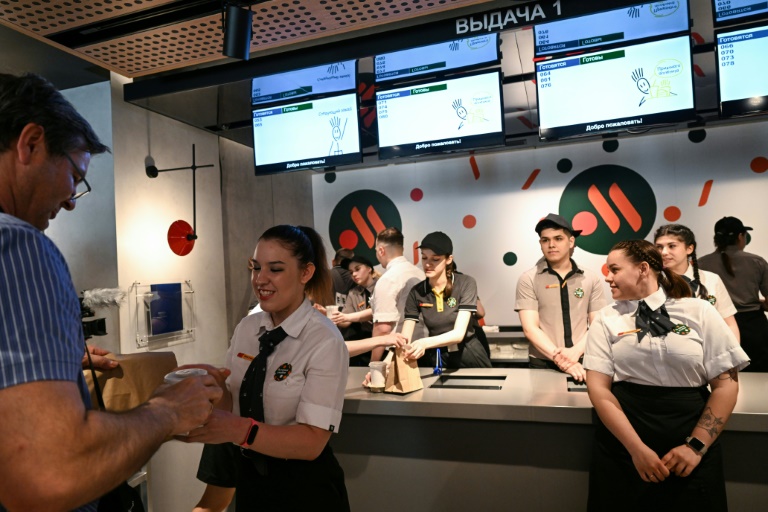
Long queues form outside a former McDonald’s restaurant in central Moscow that reopened Sunday a month after the US fast-food giant pulled out of Russia.

Russia’s answer to McDonald’s is called “Vkusno i tochka” (“Delicious. Full Stop”). A new logo depicting a burger and two fries has replaced McDonald’s iconic Golden Arches.

The queues at the restaurant on Pushkin Square draw comparisons with the excitement generated by the opening of the first McDonald’s in Russia in January 1990, which was hailed as a sign of Soviet detente with the West.

Fifty more of the burger joints are to be opened on Monday, the chain’s management says.

burs-cb/gw

Cautious optimism at high-stakes WTO meet

The World Trade Organization chief voiced cautious optimism Sunday as global trade ministers gathered to tackle food security threatened by Russia’s invasion of Ukraine, overfishing and equitable access to Covid vaccines.

Opening the WTO’s first ministerial meeting in nearly five years, Ngozi Okonjo-Iweala said to “expect a rocky, bumpy road with a few landmines along the way”.

But she told journalists she was “cautiously optimistic” that the more than 100 attending ministers would manage to agree on at least one or two of a long line of pressing issues, and that would be “a success”.

The WTO faces pressure to eke out long-sought trade deals on a range of issues and show unity amid the still raging pandemic and an impending global hunger crisis.

But since the global trade body only makes decisions by consensus, it can be more than tricky to reach agreements.

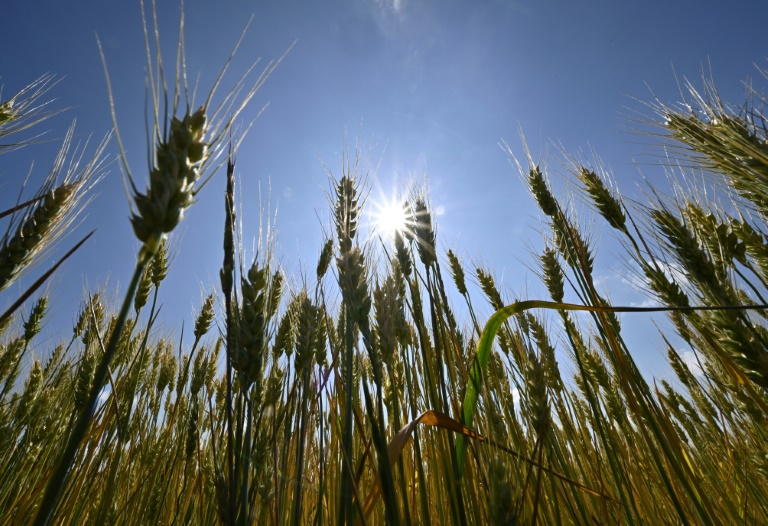
Top of the agenda at the four-day meeting is the toll Russia’s war in Ukraine, traditionally a breadbasket that feeds hundreds of millions of people, is having on food security. 

– Walkout –

Tensions ran high during a closed-door session, where a number of delegates took the floor to condemn Russia’s war in Ukraine, including Kyiv’s envoy, who was met with a standing ovation, WTO spokesman Dan Pruzin told journalists.

Then, right before Russia’s deputy economic development minister Vladimir Ilichev spoke, around three dozen delegates “walked out”, he said.

Even before the conference began, the European Union gathered representatives from 57 countries for a show solidarity with Ukraine, with EU trade commissioner Valdis Dombrovskis slamming Russia’s “illegal and barbaric aggression”

Despite the contentious atmosphere, ministers are expected to agree on a joint declaration on strengthening food security, in which they will “commit to take concrete steps to facilitate trade and improve the functioning and longterm resilience of global markets for food and agriculture”.

According to the draft text, countries would vow that “particular consideration will be given to the specific needs and circumstances of developing country Members”.

“I hope you will collectively do the right thing,” Ngozi told the delegates.

– Fisheries deal in sight? –

The WTO hopes to keep criticism of Russia’s war in Ukraine to the  first day of talks, allowing ministers to focus in the following days on nailing down trade deals, after nearly a decade with no major agreements. 

There is some optimism that countries could finally agree on banning subsidies that contribute to illegal and unregulated fishing, after more than two decades of negotiations.

“Will our children forgive us… if we allow our oceans to be depleted?” Okonjo-Iweala said. 

One of the main sticking points has been so-called special and differential treatment (SDT) for developing countries, including major fishing nation India, which can request exemptions.

The duration of exemptions remains undefined, with environmental groups warning anything beyond 10 years would be catastrophic.

– India blocking  –

India has demanded a 25-year exemption, and is so far refusing to budge.

Indian Commerce and Industry Minister Piyush Goyal insisted in a video address that most fishing in India is vital for survival, and that fishermen use “sustainable methods”.

“Their right to life and livelihood cannot be curtailed in any manner.”

Angered by lacking follow-through on promises made at a WTO ministerial meeting nearly a decade ago for food policy measures, India is proving intransigent on other issues as well, jeopardising the chances of locking down deals.

“There is not a single issue that India is not blocking,” a Geneva-based ambassador said, singling out WTO reform and agriculture.

– Patent waiver? –

India has also struck a harsh tone on another key issue on the table: WTO response to the Covid crisis.

“The rich countries need to introspect. We need to bow our heads in shame for our inability to respond to the pandemic in time,” he said.

India and South Africa began in October 2020 pushing for the WTO to temporarily lift intellectual property rights on Covid-19 medical tools like vaccines to help ensure more equitable access in poorer nations.

After multiple rounds of talks, the EU, the United States, India and South Africa hammered out a compromise.

The text, which would allow most developing countries, although not China, to produce Covid vaccines without authorisation from patent holders, still faces opposition from both sides.

The pharmaceutical industry insists the waiver would undermine investment in innovation, while public interest groups charge the text falls far short of what is needed, by limiting and complicating the vaccine waiver and not covering Covid treatments and diagnostics.

French army quits Mali base ahead of total pullout

French troops were on Monday handing back a military base in northeastern Mali ahead of a final withdrawal from the Sahel nation, France’s army said, after nine years fighting a jihadist insurgency.

And the UN’s emissary there warned that their withdrawal could leave Menaka, where they were based, vulnerable to a jihadist attack.

The departure from the Menaka base “was conducted in good order, safely and in transparent fashion”, said French army spokesman General Pascal Ianni in Paris.

It comes ahead of the last withdrawal from Mali “at the end of the summer” when France’s main military base at Gao will be returned to Malian forces, he added.

But El-Ghassim Wane, the UN Secretary General’s special representative in Mali, warned that the pull-out could spell trouble for Menaka.

He had visited the town two weeks ago, he said, and people there he had spoken to “did not rule out an attack on Menaka town”, where 5,000 people forced to flee the violence in the region had taken shelter.

“Should this scenario come to pass, the MINUSMA base is likely to be perceived as the last haven for civilians fleeing violence,” Wane added, referring to the base of the UN peacekeeping force in Mali.

But he warned: “With minimal Malian forces in the area and some 600 peacekeepers available to protect civilians, UN personnel and assets, MINUSMA’s ability to mount an effective response is limited.”

– Deteriorating relations –

Former colonial ruler France set up the Menaka outpost in 2018 in the wild tri-border zone where Mali meets Niger and Burkina Faso. It housed French and European special forces under the name Takuba tasked with training up local troops.

General Ianni told journalists the Takuba operation would not be transferred to neighbouring Niger.

France launched anti-jihadist operations in the Sahel in 2013, helping Mali snuff out a revolt in the north.

But the jihadists regrouped to attack the volatile centre of the country, initiating a fiery insurgency that elected president Ibrahim Bubacar Keita was unable to crush.

In August 2020, protests against Keita culminated in a coup by disgruntled colonels — followed by a second military takeover in May 2021.

From then on, relations with France went steadily downhill, propelled by the junta’s resistance to setting an early date to restore civilian rule and by Bamako’s charges that France was inciting the region to take a hard line against it.

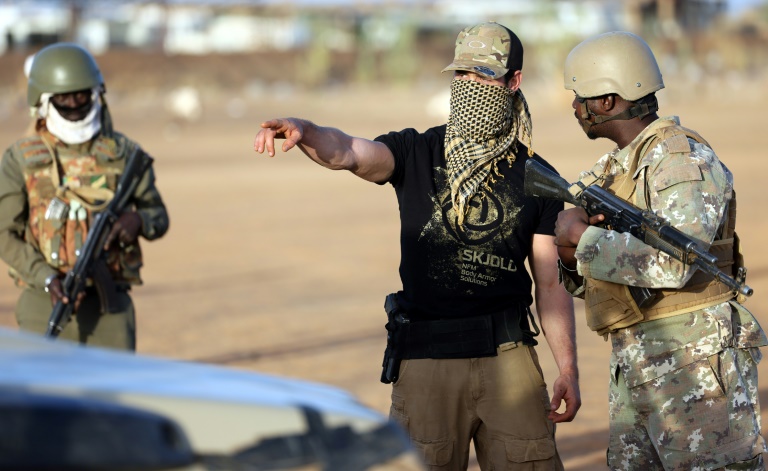
The bust-up accelerated in 2021 as the junta wove closer ties with Moscow, bringing in “military instructors” that France and its allies condemned as mercenaries hired from the pro-Kremlin Wagner group.

– France not quitting Sahel –

The French operation across the Sahel counted at its peak in 2020 some 5,500 troops before Paris started to reduce the numbers gradually and close the most forward bases at Kidal, Tessalit and Timbuktu in northern Mali.

Last January, the French ambassador to Bamako was expelled and the following month President Emmanuel Macron announced the total withdrawal from Mali as relations and security deteriorated.

However, the army said Monday that French forces were not quitting the Sahel region.

“The commitment to the struggle against terrorism, alongside the states of the region, at their request, remains an absolute priority,” the spokesman said.

Rwanda YouTuber alleges prison torture, HRW says

A prominent Rwandan YouTuber has accused prison guards of torturing him, Human Rights Watch (HRW) said Monday as it urged leaders attending an upcoming Commonwealth summit in Kigali to pressure the government to free critics.

The East African country, ruled by President Paul Kagame since the end of the 1994 genocide, has often come under fire for rights abuses and for misusing laws to round up critics.

Aimable Karasira, 41, a former university lecturer turned YouTuber, was arrested over a year ago and is on trial for alleged genocide denial, a charge which could see him jailed for more than a decade if he is found guilty.

At a court hearing last month, Karasira reportedly said the authorities at Nyarugenge prison had been subjecting him to severe sleep deprivation and beatings and denying him treatment for health conditions including diabetes.

“I’ve gone for days without sleeping. I don’t know how to explain the torture I have been subjected to,” he told the court, according to a statement by HRW, which obtained transcripts of the hearings.

“They beat us to make us come to court… They torture us by playing loud music and never turning off the lights. It’s terrible torture, like in the movies.”

“The prison staff tell us they will kill us after CHOGM,” he added, referring to the Commonwealth Heads of Government Meeting (CHOGM) due to be held in Kigali next week.

There was no immediate response from the Rwandan government to an AFP request for comment.

Campaigners have called on those attending the Commonwealth meeting to pile pressure on Rwanda to improve its grim human rights record.

“Just a few kilometres (miles) away from the Kigali Convention Center, where Commonwealth government leaders will be discussing good governance, jailed Rwandan journalists and critics are brutally being reduced to silence,” said Lewis Mudge, Central Africa director at HRW. 

“The victims of abuse will be abandoned by the Commonwealth if it fails to speak out about the human rights situation in Rwanda.”

– ‘Grave concern’ –

“At least 2 journalists, 3 commentators, and 16 opposition activists are currently behind bars in Rwanda,” HRW said.

Several people have fallen foul of the Rwandan authorities after turning to YouTube to publish content critical of the Kagame government.

Dieudonne Niyonsenga, better known by his YouTube persona Cyuma (“Iron”), was sentenced to seven years in prison last November after being found guilty of forgery and impersonation.

His jailing came weeks after another YouTube star, Yvonne Idamange, was jailed for 15 years for inciting violence online.

On Friday, 23 groups including HRW and Amnesty International released a joint statement expressing their “grave concern” about the human rights situation in Rwanda ahead of the Commonwealth meeting.

The biennial event had originally been scheduled in 2020 before it was pushed back twice because of the coronavirus outbreak. 

The Commonwealth is made up mainly of former British colonies comprising 54 countries and 2.4 billion people.

US FDA says Pfizer Covid vaccine effective in kids under five

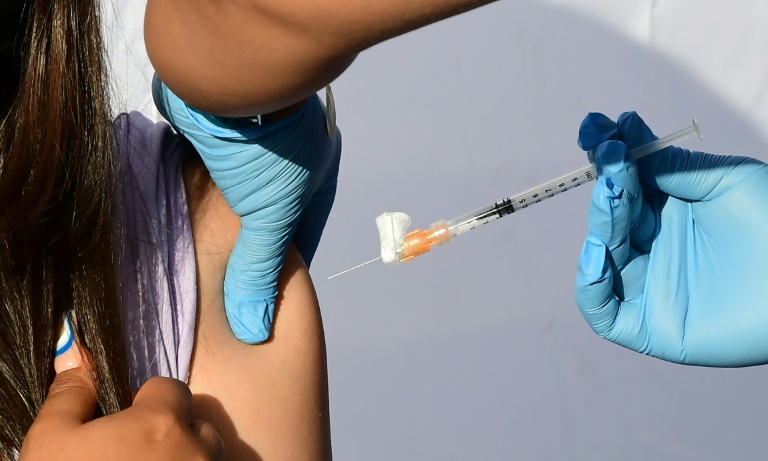
The US Food and Drug Administration (FDA) has said the Pfizer Covid vaccine is safe and effective in children under five, ahead of a meeting to weigh its authorization later this week.

Children under five are the only age group not yet eligible for vaccination in the United States and most countries, a pressing need since rates of hospitalization and death “are higher than among children and adolescents 5-17 years of age,” the FDA said in a document posted on its website Sunday.

The agency has called a meeting of experts on June 15 to decide whether to recommend the Pfizer vaccine, given as three shots to children aged six months through four years, as well as the Moderna vaccine, given as two shots to children aged six months through five years.

Pfizer’s first two shots are given three weeks apart, then the third is given eight weeks after the second. They are all dosed at three micrograms, as opposed to 30 micrograms the company gives those 12 and up, and 10 micrograms to those five and up, levels chosen to mitigate adverse reactions.

Both Pfizer and Moderna had previously posted their results in press statements, but the FDA then had to review the data in detail and carry out its own evaluation. It posted a favorable analysis about Moderna on Friday.

Its comments towards Pfizer also appear favorable, based on the levels of infection-blocking antibodies it evoked in trial participants, and a similar side-effect profile to higher age groups. The total trial population was around 4,500 children.

A preliminary estimate placed vaccine efficacy at 80.3 percent, but the FDA noted this was based on very few positive cases — just 10, as opposed to the 21 sought for a more accurate figure.

There are some 20 million US children aged four years and under, or six percent of the population. If, as expected, the FDA-appointed experts recommend the two vaccines, then the matter will go to another committee convened by the Centers for Disease Control and Prevention for a final say.

White House officials last week said rollout of millions of shots at pharmacies and doctors’ offices could begin as soon as June 21, following the Juneteenth holiday on June 20.

Of the total US Covid deaths, 481 have come in children under five, according to the latest official data. Obesity, neurological disorders and asthma are associated with increased risk of severe disease, “however, a majority of children hospitalized for Covid-19 have no underlying medical conditions,” the FDA said.

Children can also go on to contract multisystem inflammatory syndrome in children (MIS-C), a rare but serious post-viral condition. Data on long Covid in children is sparse, but “a national survey in the United Kingdom found that among children ages two to 11 years who tested positive for COVID-19, 7.2 percent reported continued symptoms at 12 weeks,” the document said.

EU chief, Italian PM in Israel for energy talks

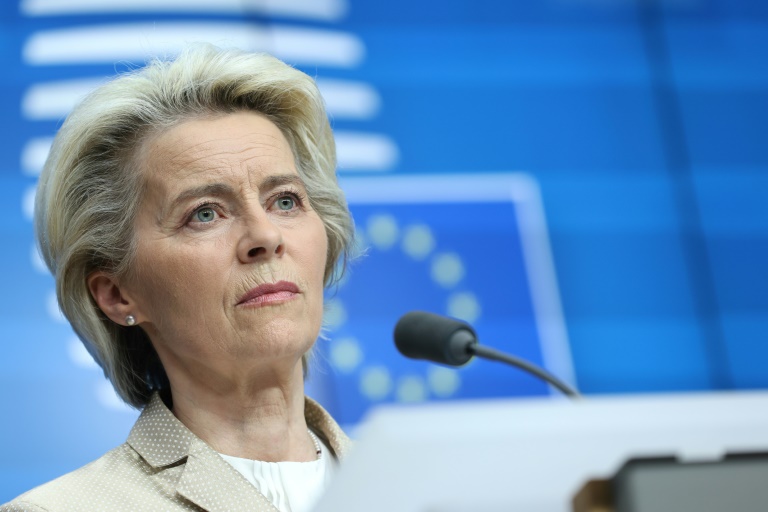
European Commission chief Ursula von der Leyen and Italian Prime Minister Mario Draghi landed in Israel on Monday as the EU seeks to wean itself off Russian fossil fuel imports. 

Both leaders were due to hold energy talks in Israel, which has turned from a natural gas importer into an exporter in recent years because of major offshore finds.

Von der Leyen was to meet Foreign Minister Yair Lapid later Monday and Prime Minister Naftali Bennett on Tuesday, with talks expected to focus “in particular on energy cooperation”, a commission statement said.

Draghi, on his first Middle East trip since taking office last year, will also discuss energy and food security during his two-day trip, Italian media reported.  

Both leaders will on Tuesday meet Palestinian prime minister Mohammed Shtayyeh in the Israeli-occupied West Bank.

The EU this month formally adopted a ban on most Russian oil imports, its toughest sanctions yet over the war in Ukraine. Von der Leyen has suggested the bloc end its dependence on Russian hydrocarbons, including gas, by 2027.

Draghi and other EU leaders have warned European customers may need protection as energy costs continue to rise.  

Israeli Energy Minister Karine Elharrar and other officials have said their country could help meet EU demand if it can deliver gas from its offshore reserves estimated at nearly 1,000 billion cubic metres.

Ahead of Von der Leyen’s visit, European Commission spokeswoman Dana Spinant told reporters to “stay tuned for announcements that we are going to make on energy cooperation with Israel and other partners in the region”.

– Export options –

For now, getting Israeli gas to Europe is fraught with challenges and would require major and long-term infrastructure investments. 

With no pipeline linking its offshore fields to Europe, one option for now is piping natural gas to Egypt, where it could be liquified for export by ship to Europe. 

Another possible scenario is building a pipeline to Turkey. 

Israel’s ties with Ankara have thawed after more than a decade of diplomatic rupture and experts have said Turkey’s desire for joint energy projects has partly triggered its outreach to Israel.  

That pipeline project would take $1.5 billion and two to three years to complete, according to Israel’s former energy minister Yuval Steizitz, now an opposition lawmaker. 

Option three is known as the EastMed project, a proposal for a seafloor pipeline linking Israel with Cyprus and Greece. 

Experts have, however, raised concerns about the cost and viability of the project, while Israel has said it would like to see Italy sign on. 

A spokesperson for Elharrar, the Israeli energy minister, told AFP on Monday there have been talks since March to create an agreement or legal framework to enable Israeli gas exports to Europe via Egypt.

Further complicating Israel’s offshore gas production is a long-running maritime border dispute with Lebanon. 

The neighbours technically remain at war but have agreed to US-mediated talks aimed at delineating the border to allow both countries to boost exploration. 

Talks broke down last year but Israel has urged Lebanon to re-engage. 

Tensions flared this month following a Lebanese claim that Israeli production was taking place in contested waters.

Israel countered that the area was located clearly south of the disputed zone. 

The US envoy mediating the maritime border talks, Amos Hochstein, was due in Lebanon on Monday. 

Close Bitnami banner
Bitnami