World

EU chief, Italian PM in Israel for energy talks

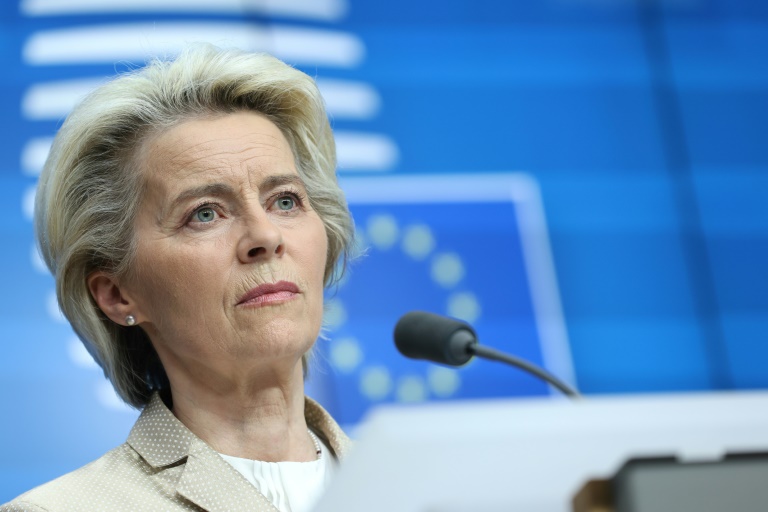
European Commission chief Ursula von der Leyen and Italian Prime Minister Mario Draghi landed in Israel on Monday as the EU seeks to wean itself off Russian fossil fuel imports. 

Both leaders were due to hold energy talks in Israel, which has turned from a natural gas importer into an exporter in recent years because of major offshore finds.

Von der Leyen was to meet Foreign Minister Yair Lapid later Monday and Prime Minister Naftali Bennett on Tuesday, with talks expected to focus “in particular on energy cooperation”, a commission statement said.

Draghi, on his first Middle East trip since taking office last year, will also discuss energy and food security during his two-day trip, Italian media reported.  

Both leaders will on Tuesday meet Palestinian prime minister Mohammed Shtayyeh in the Israeli-occupied West Bank.

The EU this month formally adopted a ban on most Russian oil imports, its toughest sanctions yet over the war in Ukraine. Von der Leyen has suggested the bloc end its dependence on Russian hydrocarbons, including gas, by 2027.

Draghi and other EU leaders have warned European customers may need protection as energy costs continue to rise.  

Israeli Energy Minister Karine Elharrar and other officials have said their country could help meet EU demand if it can deliver gas from its offshore reserves estimated at nearly 1,000 billion cubic metres.

Ahead of Von der Leyen’s visit, European Commission spokeswoman Dana Spinant told reporters to “stay tuned for announcements that we are going to make on energy cooperation with Israel and other partners in the region”.

– Export options –

For now, getting Israeli gas to Europe is fraught with challenges and would require major and long-term infrastructure investments. 

With no pipeline linking its offshore fields to Europe, one option for now is piping natural gas to Egypt, where it could be liquified for export by ship to Europe. 

Another possible scenario is building a pipeline to Turkey. 

Israel’s ties with Ankara have thawed after more than a decade of diplomatic rupture and experts have said Turkey’s desire for joint energy projects has partly triggered its outreach to Israel.  

That pipeline project would take $1.5 billion and two to three years to complete, according to Israel’s former energy minister Yuval Steizitz, now an opposition lawmaker. 

Option three is known as the EastMed project, a proposal for a seafloor pipeline linking Israel with Cyprus and Greece. 

Experts have, however, raised concerns about the cost and viability of the project, while Israel has said it would like to see Italy sign on. 

A spokesperson for Elharrar, the Israeli energy minister, told AFP on Monday there have been talks since March to create an agreement or legal framework to enable Israeli gas exports to Europe via Egypt.

Further complicating Israel’s offshore gas production is a long-running maritime border dispute with Lebanon. 

The neighbours technically remain at war but have agreed to US-mediated talks aimed at delineating the border to allow both countries to boost exploration. 

Talks broke down last year but Israel has urged Lebanon to re-engage. 

Tensions flared this month following a Lebanese claim that Israeli production was taking place in contested waters.

Israel countered that the area was located clearly south of the disputed zone. 

The US envoy mediating the maritime border talks, Amos Hochstein, was due in Lebanon on Monday. 
Ryanair faces strike in Spain during summer break

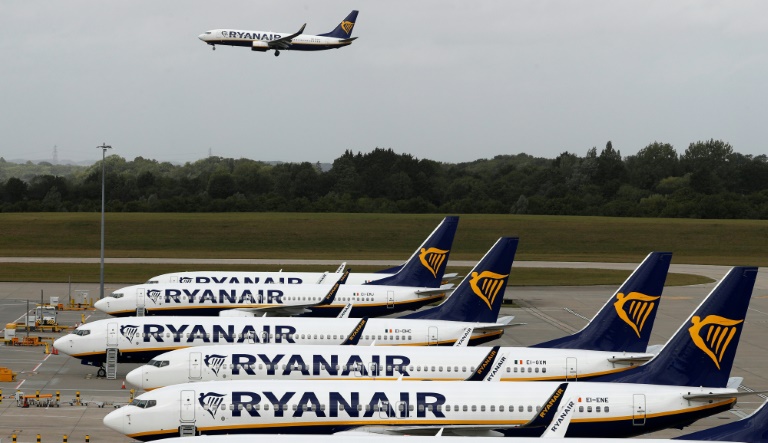
Spanish unions called on staff at low-cost airline Ryanair on Monday to hold a six-day strike at the start of the summer holidays, the latest action by aviation industry workers to demand better conditions in Europe.

The planned work stoppage could cause more travel headaches in Europe, where strikes and shortages of staff have hit a sector that has started to recover from the Covid pandemic.

The call for flight crew to walk out from June 24 to July 2 aims to push Ireland’s Ryanair to reach a deal that “guarantees decent work conditions for all personnel” at the airline, the USO and SITCPLA unions said in a joint statement.

Ryanair is the only international airline not to have a collective bargaining agreement that defines workplace conditions for its Spanish employees, according to the trade unions.

It finally agreed to negotiate eight months ago, but ended talks after reaching a deal, which includes minimum pay and flight hours previsions, with one union that does not have a majority among flight crew.

Both the USO and SITCPLA unions believe that the agreement is insufficient and does not respect Spanish labour law.

“We don’t expect labour conflicts this summer,” Ryanair told AFP, adding the agreement it had reached in Spain had brought real improvements for staff.

The strike would come as summer holidays get underway in European countries and a recovery in air travel following the lifting of most Covid-19 travel restrictions.

The boom in demand has caught short some airlines and airports that shed staff during the pandemic and which are having trouble rehiring employees, as well as facing demands for wage hikes and better working conditions.

Staff shortages have disrupted flights in London, Amsterdam and Frankfurt in recent weeks.

Meanwhile, French easyJet pilots have warned management that the British low-cost airline faces having to cancel a massive number of flights this summer due to staff shortages.

The head of the SNPL pilots union at the airline, Arnaud Wiplier, said the unions sent a letter last week after management did not appear to realise the extent of the risk despite having to cancel flights during three-day holiday weekends last month.

Strikes at Paris’s main airport on Thursday led to a quarter of flights being grounded, runways closed and passengers delayed

Nearly 1,000 SAS pilots have threatened to go on indefinite strike from the end of June after talks broke down with the Scandinavian airline.

Seventy Afghan couples marry in Kabul mass wedding

Dozens of Afghan women concealed in thick green shawls were married off in an austere mass wedding in Kabul on Monday, in a ceremony attended by hundreds of guests and gun-toting Taliban fighters.

Marriage is a costly affair in deeply impoverished Afghanistan, traditionally involving huge dowries, expensive gifts and lavish parties.

Historically, couples from families unable to foot the bill have sometimes opted to pool their resources in low-cost large scale marriages.

Monday’s ceremony hitching 70 couples was one of the largest recently witnessed in Afghanistan, currently in economic freefall since the return of the Taliban.

“Today, no young man wants to bear the burden of an expensive wedding,” said groom Ebadullah Niazai, who had waited eight years to be married.

“I have no job. We were short of money and so we decided to marry at a mass wedding ceremony,” said 22 year-old groom Esmatullah Bashardost, who hails from the minority Shiite Hazara community.

Bashardost, sporting a traditional Afghan cap, said his wedding would likely be the most “happy day” of his life.

However celebrations were dramatically dampened by frigid restrictions the Taliban have imposed on social life.

Before they seized power in August weddings were riotously colourful affairs marked with singing, dancing, and some degree of mingling between men and women in the deeply conservative nation.

On Monday the brides and grooms were kept separate throughout the ceremony.

Guests of opposite sexes were separated by around a dozen Taliban fighters patrolling with weapons, and the only entertainment was poetry recitations and speeches by charity organisers of the event.

Journalists were not allowed to speak to the brides, who wore crisp white gowns under their concealing shawls, but were permitted to photograph and film them.

A red and white wedding cake was produced for each couple, but was placed in front of the men only, who wore traditional white shalwar kameez.

The event ended as grooms — each sporting a plastic name badge — collected their brides and left the venue in cars decorated with flowers and ribbons.

A single day booking at a Kabul wedding hall costs between $10,000 and $20,000 and organiser Sayed Ahmad Selab said some betrothed couples were “waiting for years” because of the expense.

During their first regime between 1996 and 2001 the Taliban barred showy weddings.

After surging back to power on the heels of a hasty US withdrawal, the Islamists have yet to reinstate their previous ban but they have forbidden musical entertainment.

Meanwhile, they have also issued creeping restrictions on women, segregating them from men and rolling back marginal gains they made over the past two decades.

In May women were told to stay at home as much as possible and to conceal themselves completely, including their faces, should they need to step out in public.

Clashes in Sudan's Darfur kill more than 100

Clashes in Sudan’s Darfur between Arab and non-Arab groups have killed more than 100 people, adding to a toll of hundreds in the region over recent months.

The latest fighting broke out last week between the Arab Rizeigat and non-Arab Gimir tribes in the district of Kolbus, about 160 kilometres (100 miles) from El Geneina, the capital of West Darfur state. 

It started as a land dispute between two people, one from the Rizeigat and another from the Gimir, before morphing into broader violence involving other members from both tribes. 

“The fighting has so far killed 117 people and left 17 villages burnt,” including three on Monday, Ibrahim Hashem, a leader in the ethnic African Gimir tribe, told AFP by phone.  

Hashem said the deaths counted so far were largely among the Gimir tribe. He added that “many people” from his tribe have gone missing since the violence broke out and which was continuing. 

It was not immediately clear how many were killed among the Arab tribe. 

The latest violence highlighted a broader security breakdown in Darfur which was exacerbated by last year’s military coup led by army chief Abdel Fattah al-Burhan. 

The October coup derailed a fragile transition put in place following the 2019 ouster of president Omar al-Bashir. 

– ‘Cycle of violence’ –

In April alone, more than 200 people were killed in clashes between an Arab community and the non-Arab Massalit minority in the Krink area of West Darfur. 

The United Nations estimated 125,000 people were displaced in that unrest.

A month earlier, fighting in South Darfur between the ethnic Fallata and the Arab Rizeigat tribes killed at least 45 people.

On Monday, UN special representative Volker Perthes said he was “appalled” by the violence in Kolbus. 

“The cycle of violence in Darfur is unacceptable & highlights root causes that must be addressed,” he said on Twitter.

Perthes called on the fighting sides to “de-escalate”. 

Sudan’s western Darfur region was ravaged by a bitter civil war that erupted in 2003.

The conflict pitted ethnic minority rebels who complained of discrimination against the Arab-dominated government of  then-president Bashir.

Khartoum responded by unleashing the Janjaweed, mainly recruited from Arab pastoralist tribes, who were blamed for atrocities including murder, rape, looting and burning villages.

The scorched-earth campaign left 300,000 people dead and displaced 2.5 million, according to the United Nations.

Many Janjaweed have since been integrated into the feared paramilitary Rapid Support Forces, commanded by General Mohamed Hamdan Daglo, de facto deputy leader of Sudan, according to rights groups.

In 2020, Sudan signed a peace deal with key rebel groups including from Darfur.

The main conflict has subsided over the years, but the region remains awash with weapons and deadly clashes often erupt over access to pasture or water. 

IPL cricket rights battle goes into day three

The battle for broadcast rights for the Indian Premier League reached fever pitch on Monday with global media giants reportedly bidding $5.65 billion to show and stream the hugely popular cricket contest.

Attracting some of cricket’s top stars from India and abroad with large salaries, the pioneering IPL helped make Twenty20, a shorter and more exciting format of the sport, hugely popular, spawning copycat events worldwide.

The Board of Control for Cricket in India (BCCI) began an online auction on Sunday for four different packages to show the annual two-month event, attracting giants such as Disney, Sony and Indian tycoon Mukesh Ambani’s Reliance group.

On Monday TV rights for the Indian market were sold for $3.02 billion while the digital streaming segment went for $2.56 billion for five seasons from 2023 to 2027, but it was unclear to whom, media reports said.

Two more packages of non-exclusive digital rights for 18 games including the play-offs as well and another for overseas TV and digital rights will likely be decided Tuesday.

This dwarfs the $2.55 billion paid in 2017 by Star India, owned by US behemoth Disney, for the previous TV and digital rights deal that expired last month with the conclusion of the 15th edition of the tournament.

Sony had televised the IPL for the first 10 years since the league started in 2008.

Jeff Bezos’s Amazon, which has spent hundreds of millions of dollars on rights for European soccer and American football,  had earlier shown interest in the IPL but pulled out of the contest ahead of the auction.

Iraq swept by tenth sandstorm in weeks

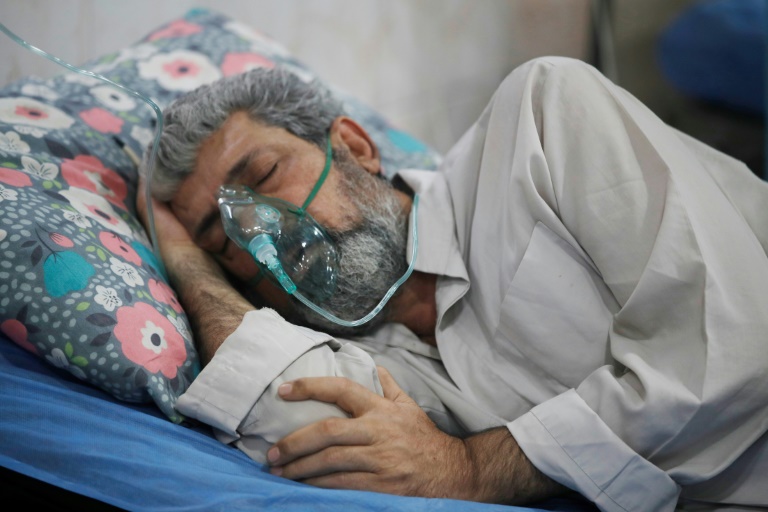
Iraq temporarily closed Baghdad airport Monday as choking clouds of dust blanketed the capital, the latest crippling sandstorm in a country that has warned climate change poses an “existential threat”.

It was the tenth such storm since mid-April to hit Iraq, which has been battered by intense droughts, soil degradation, high temperatures and low rainfall linked to climate change.

Earlier this month, to mark World Environment Day, President Barham Saleh warned that tackling climate change “must become a national priority for Iraq as it is an existential threat to the future of our generations to come”.

The sun eventually reappeared on Monday afternoon, after a thick white dust had covered Baghdad and surrounding areas through the morning, with visibility slashed to a few hundred metres (yards).

Officials at Baghdad airport announced the temporary suspension of flights, before they were restarted at around 10:30 am (0730 GMT).

In Najaf, a Shiite holy city in central Iraq, the airport briefly suspended operations in the morning before reopening a few hours later when the dust passed.

Airports have been forced to suspend flights several times due to sandstorms in recent weeks.

In May, sandstorms sent thousands of people to hospital with respiratory problems, and left one person dead.

Iraq, which is entering the scorching summer season when temperatures at times surpass 50 degrees Celsius (122 Fahrenheit), is ranked by the United Nations as one of the world’s five most vulnerable nations to climate change and desertification.

The environment ministry has warned that over the next two decades Iraq could endure an average of 272 days of sandstorms per year, rising to above 300 by 2050.

The World Bank warned in November that Iraq could suffer a 20 percent drop in water resources by 2050 due to climate change.

Water shortages have been exacerbated by the building of upstream dams in neighbouring Turkey and Iran.

Major markets dive on heightened recession fears

Global equities, oil prices and bitcoin plunged Monday on heightened recession fears triggered by runaway inflation.

The dollar, however, gained versus major rivals, benefiting from its status as a haven investment and expectations of aggressive interest-rate hiking from the Federal Reserve. 

The US currency struck a 24-year peak against the yen before retreating, while it broke above 78 Indian rupees for the first time. It jumped one percent versus the pound.

“The hangover from a higher-than-expected US inflation reading is continuing to cause scissoring pain throughout the markets, as it extinguishes the hope the US Federal Reserve might be able to take its foot off the pedal on interest rate rises,” noted AJ Bell investment director Russ Mould.

US and European stocks had already tumbled Friday following the inflation data, with Asia following suit Monday.

European stock markets extended pre-weekend losses, while London took a hit also from data showing the UK economy contracted in April for a second month in a row.

Wall Street opened sharply lower, with the blue-chip Dow down around two percent and the tech-heavy Nasdaq falling around three percent.

World oil prices, whose surge has contributed massively to soaring inflation, slid abound one percent as the high cost of living increases recession expectations.

The possibility of more Covid restrictions in China’s biggest cities also weighed on crude futures as the country is a major oil consumer.

Fresh coronavirus outbreaks in Shanghai and Beijing have seen authorities reimpose containment measures.

– Bitcoin crash –

Bitcoin tumbled to an 18-month low under $24,000 as investors shunned risky assets in the face of the vicious global markets selloff. 

The unit took a heavy knock also from news that cryptocurrency lending platform Celsius Network paused withdrawals, citing volatile conditions.

“It is not very surprising to see such a strong downturn as we have noticed an increased correlation over the last few years between traditional stocks, which have also tanked recently, and the cryptocurrency market,” noted XTB chief market analyst Walid Koudmani.

Patrick O’Hare, analyst at Briefing.com, said the carnage in the crypto market “is compounding worries about growth prospects due to the reduced wealth effect that also incorporates falling stock and bond prices.”

Investors were left surprised Friday when data showed US inflation jumped to 8.6 percent in May, the fastest pace in more than 40 years, as the Ukraine war further fuelled energy and food prices.

The reading has led to fervent speculation that the Fed will now be contemplating a single interest-rate lift of 75 basis points at its meeting this week.

With the central bank forced to be more aggressive, there is heightened concern that the US economy could be sent into recession next year.

“The market is now thinking much more about the Fed driving rates sharply higher to get on top of inflation and then having to cut back as growth drops,” said SPI Asset Management’s Stephen Innes.

– Key figures at around 1330 GMT –

London – FTSE 100: DOWN 1.2 percent at 7,229.50 points

Frankfurt – DAX: DOWN 2.2 percent at 13,462.38 

Paris – CAC 40: DOWN 2.4 percent at 6,040.28 

EURO STOXX 50: DOWN 1.7 percent at 3,452.95

New York – Dow: DOWN 2.0 percent at 30,752.22

Tokyo – Nikkei 225: DOWN 3.0 percent at 26,987.44 (close)

Hong Kong – Hang Seng Index: DOWN 3.4 percent at 21,067.58 (close)

Shanghai – Composite: DOWN 0.9 percent at 3,255.55 (close)

Dollar/yen: DOWN at 133.97 yen from 134.42 yen late Friday

Euro/dollar: DOWN at $1.0459 from $1.0526

Pound/dollar: DOWN at $1.2175 from $1.2309

Euro/pound: UP at 85.90 pence from 85.39 pence

Brent North Sea crude: DOWN 0.9 percent at $120.96 per barrel

West Texas Intermediate: DOWN 1.0 percent at $119.50 per barrel

burs-rl/

Ryanair faces strike in Spain during summer break

Spanish unions called on staff at low-cost airline Ryanair on Monday to hold a six-day strike at the start of the summer holidays, the latest action by aviation industry workers to demand better conditions in Europe.

The planned work stoppage could cause more travel headaches in Europe, where strikes and shortages of staff have hit a sector that has started to recover from the Covid pandemic.

The call for flight crew to walk out from June 24 to July 2 aims to push Ireland’s Ryanair to reach a deal that “guarantees decent work conditions for all personnel” at the airline, the USO and SITCPLA unions said in a joint statement.

Ryanair is the only international airline that does not have a collective bargaining agreement that defines workplace conditions for its Spanish employees, according to the trade unions.

It finally agreed to negotiate with trade unions eight months ago, but ended talks after reaching a deal, which includes minimum pay and flight hours previsions, with one union that does not have a majority among flight crew.

Both the USO and SITCPLA unions believe that the agreement is insufficient and doesn’t respect Spanish labour law.

The strike would come as summer holidays get underway in European countries and a recovery in air travel following the lifting of most Covid-19 travel restrictions.

The boom in demand has caught short some airlines and airports that shed staff during the pandemic and which are having trouble rehiring employees as well as facing demands for wage hikes and better working conditions.

Staff shortages have disrupted flights in London, Amsterdam and Frankfurt in recent weeks.

Strikes at Paris’s main airport on Thursday led to a quarter of flights being grounded, runways closed and passengers delayed

Nearly 1,000 SAS pilots have threatened to go on indefinite strike from the end of June after talks broke down with the Scandinavian airline.

EU chief, Italian PM head to Israel for energy talks

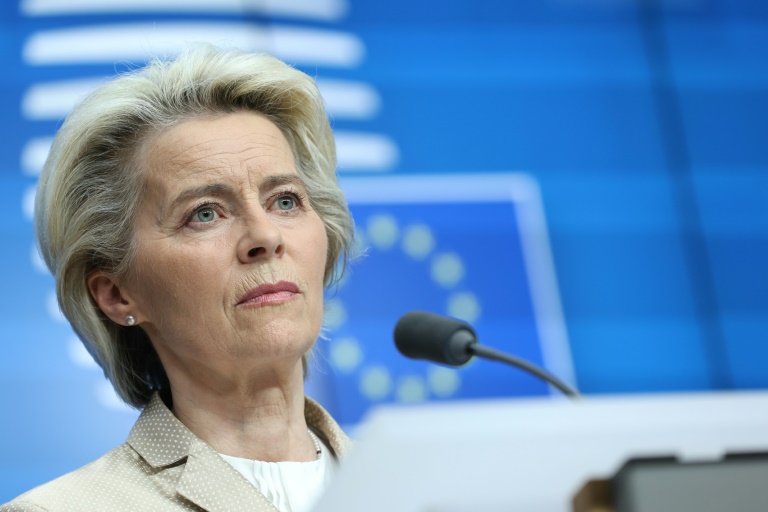
European Commission chief Ursula von der Leyen and Italian Prime Minister Mario Draghi were headed to Israel Monday as the EU seeks to wean itself off Russian fossil fuel imports. 

Both leaders were due to hold energy talks in Israel, which has turned from a natural gas importer into an exporter in recent years because of major offshore finds.

Von der Leyen was to meet Foreign Minister Yair Lapid on Monday and Prime Minister Naftali Bennett on Tuesday, with talks expected to focus “in particular on energy cooperation,” a commission statement said.

Mario Draghi, on his first Middle East trip since taking office last year, will also discuss energy and food security during his two-day trip, Italian media reported.  

Both leaders will on Tuesday meet Palestinian prime minister Mohammed Shtayyeh in the occupied West Bank.

The EU this month formally adopted a ban on most Russian oil imports, its toughest sanctions yet over the war in Ukraine. Von der Leyen has suggested the bloc end its dependence on Russian hydrocarbons, including gas, by 2027.

Draghi and other EU leaders have warned European customers may need protection as energy costs continue to rise.  

Israeli Energy Minister Karine Elharrar and other officials have said their country could help meet EU demand if it can deliver gas from its offshore reserves estimated at nearly 1,000 billion cubic metres.

Ahead of Von der Leyen’s visit, European Commission spokeswoman Dana Spinant told reporters to “stay tuned for announcements that we are going to make on energy cooperation with Israel and other partners in the region.”

– Export options –

For now, getting Israeli gas to Europe is fraught with challenges and would require major and long-term infrastructure investments. 

With no pipeline linking its offshore fields to Europe, one option for now is piping natural gas to Egypt, where it could be liquified for export by ship to Europe. 

Another possible scenario is building a pipeline to Turkey. 

Israel’s ties with Ankara have thawed after more than a decade of diplomatic rupture and experts have said Turkey’s desire for joint energy projects has partly triggered its outreach to Israel.  

That pipeline project would take $1.5 billion and two to three years to complete, according to Israel’s former energy minister Yuval Steizitz, now an opposition lawmaker. 

Option three is known as the EastMed project, a proposal for a seafloor pipeline linking Israel with Cyprus and Greece. 

Experts have, however, raised concerns about the cost and viability of the project, while Israel has said it would like to see Italy sign on. 

Further complicating Israel’s offshore gas production is a long-running maritime border dispute with Lebanon. 

The neighbours technically remain at war but have agreed to US-mediated talks aimed at delineating the border to allow both countries to boost exploration. 

Talks broke down last year but Israel has urged Lebanon to re-engage. 

Tensions flared this month following a Lebanese claim that Israeli production was taking place in contested waters.

Israel countered that the area was located clearly south of the disputed zone. 

The US envoy mediating the maritime border talks, Amos Hochstein, was due in Lebanon on Monday. 

EU chief, Italian PM head to Israel for energy talks

European Commission chief Ursula von der Leyen and Italian Prime Minister Mario Draghi were headed to Israel Monday as the EU seeks to wean itself off Russian fossil fuel imports. 

Both leaders were due to hold energy talks in Israel, which has turned from a natural gas importer into an exporter in recent years because of major offshore finds.

Von der Leyen was to meet Foreign Minister Yair Lapid on Monday and Prime Minister Naftali Bennett on Tuesday, with talks expected to focus “in particular on energy cooperation,” a commission statement said.

Mario Draghi, on his first Middle East trip since taking office last year, will also discuss energy and food security during his two-day trip, Italian media reported.  

Both leaders will on Tuesday meet Palestinian prime minister Mohammed Shtayyeh in the occupied West Bank.

The EU this month formally adopted a ban on most Russian oil imports, its toughest sanctions yet over the war in Ukraine. Von der Leyen has suggested the bloc end its dependence on Russian hydrocarbons, including gas, by 2027.

Draghi and other EU leaders have warned European customers may need protection as energy costs continue to rise.  

Israeli Energy Minister Karine Elharrar and other officials have said their country could help meet EU demand if it can deliver gas from its offshore reserves estimated at nearly 1,000 billion cubic metres.

Ahead of Von der Leyen’s visit, European Commission spokeswoman Dana Spinant told reporters to “stay tuned for announcements that we are going to make on energy cooperation with Israel and other partners in the region.”

– Export options –

For now, getting Israeli gas to Europe is fraught with challenges and would require major and long-term infrastructure investments. 

With no pipeline linking its offshore fields to Europe, one option for now is piping natural gas to Egypt, where it could be liquified for export by ship to Europe. 

Another possible scenario is building a pipeline to Turkey. 

Israel’s ties with Ankara have thawed after more than a decade of diplomatic rupture and experts have said Turkey’s desire for joint energy projects has partly triggered its outreach to Israel.  

That pipeline project would take $1.5 billion and two to three years to complete, according to Israel’s former energy minister Yuval Steizitz, now an opposition lawmaker. 

Option three is known as the EastMed project, a proposal for a seafloor pipeline linking Israel with Cyprus and Greece. 

Experts have, however, raised concerns about the cost and viability of the project, while Israel has said it would like to see Italy sign on. 

Further complicating Israel’s offshore gas production is a long-running maritime border dispute with Lebanon. 

The neighbours technically remain at war but have agreed to US-mediated talks aimed at delineating the border to allow both countries to boost exploration. 

Talks broke down last year but Israel has urged Lebanon to re-engage. 

Tensions flared this month following a Lebanese claim that Israeli production was taking place in contested waters.

Israel countered that the area was located clearly south of the disputed zone. 

The US envoy mediating the maritime border talks, Amos Hochstein, was due in Lebanon on Monday. 

Close Bitnami banner
Bitnami