World

UN agency urges Iran to resume stalled nuclear talks 'now'

The International Atomic Energy Agency on Sunday urged Iran to resume talks “now” to avoid a crisis that could make it “extremely more difficult” to salvage the 2015 nuclear accord.

Iran this week disconnected some cameras allowing international inspectors to monitor its nuclear activities in response to a Western resolution passed June 8 in which the UN agency denounced Tehran’s lack of cooperation.

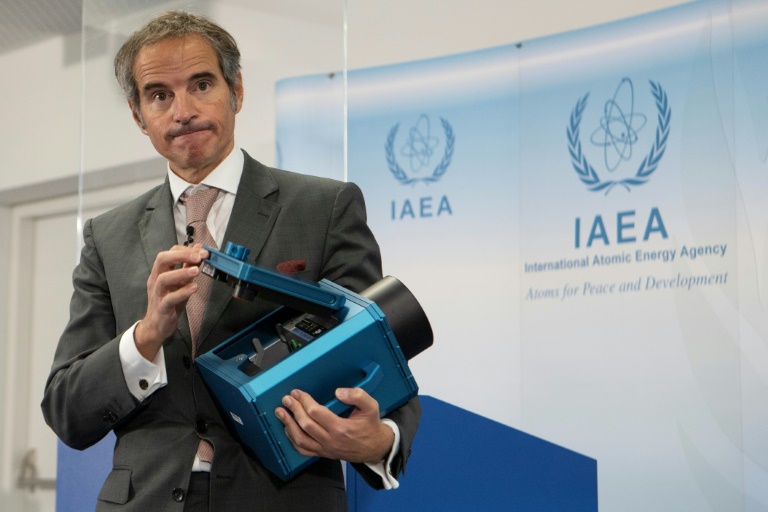
Twenty-seven surveillance cameras “have been removed,” IAEA Director General Rafael Grossi said in an interview broadcast Sunday by CNN, calling it a “very serious move.”

“Recent history tells us that it is never a good thing to start saying to international inspectors, go home… things get much more problematic,” he added.

The 2015 deal, known as the Joint Comprehensive Plan of Action, gave Iran relief from crippling economic sanctions in exchange for curbs on its nuclear activities.

But in 2018, then-US president Donald Trump unilaterally pulled out of the pact and reimposed sanctions, prompting Iran to begin rolling back on its own commitments.

Talks to revive the deal have stalled since March.

In the CNN interview, Grossi said he was telling his Iranian counterparts, “We have to sit down now, we have to redress the situation, we have to continue working together.

“The only way for Iran to get the confidence, the trust they so badly need in order to move their economy forward… is to allow the inspectors of the IAEA to be present.”

Without the surveillance cameras, Grossi said, his agency will soon be unable to declare whether the Iranian nuclear program is “peaceful” — as Tehran has repeatedly insisted — or whether Iran is developing an atomic bomb.

Even if the Iranians reconnect the cameras in a few months, Grossi said, whatever work they do in the meantime will remain secret, possibly rendering useless any agreement.

Therefore, he said, the recent Iranian action makes “the way back to an agreement extremely more difficult.”

While Trump pulled the United States out of what he said was a badly flawed accord, his successor Joe Biden has said he is ready to again embrace the deal so long as Iran also respects its own commitments.

But negotiators have met with repeated frustration, and the possibility of failure appears closer than ever. 

In a call Saturday with Iranian Foreign Minister Hossein Amir-Abdollahian, UN Secretary-General Antonio Guterres called on diplomats to rescue the agreement, according to a Sunday statement.
US senators announce limited deal on gun violence measures

A bipartisan group of US senators on Sunday proposed steps to curb gun violence following devastating mass shootings in Texas and New York, but the limited measures fall far short of the president’s calls for change.

The shootings in May — one at a Texas elementary school that killed 19 young children and two teachers, and another at a New York supermarket that left 10 Black people dead — have piled pressure on politicians to take action.

But Republicans lawmakers, who have repeatedly blocked tougher measures, are still resisting major changes to gun regulations, instead pointing to mental health issues as the root of the problem.

The new proposals include tougher background checks for gun buyers under 21, increasing resources for states to keep weapons out of the hands of people deemed a risk, and cracking down on illegal gun purchases.

“Today, we are announcing a commonsense, bipartisan proposal to protect America’s children, keep our schools safe, and reduce the threat of violence across our country,” the group of 20 Democratic and Republican lawmakers said in a statement.

“Our plan increases needed mental health resources, improves school safety and support for students, and helps ensure dangerous criminals and those who are adjudicated as mentally ill can’t purchase weapons.”

The senators also called for increased investment in mental health services and school safety resources, as well as including domestic violence convictions and restraining orders in the national background check database.

President Joe Biden praised the announcement and urged lawmakers to pass it quickly, while making clear that the proposals do not go far enough.

“Obviously, it does not do everything that I think is needed, but it reflects important steps in the right direction, and would be the most significant gun safety legislation to pass Congress in decades,” he said in a statement.

“With bipartisan support, there are no excuses for delay, and no reason why it should not quickly move through the Senate and the House.”

– Frequent mass shootings –

The president had pushed for more substantive reforms, including a ban on assault rifles — which were used in both the Texas and New York shootings — or at least an increase in the age at which they can be purchased.

He had also urged lawmakers to ban high-capacity magazines, mandate safe storage of firearms, and allow gun manufacturers to be held liable for crimes committed with their products.

The Democrat-controlled House of Representatives passed a broad package of proposals that included raising the purchasing age for most semi-automatic rifles from 18 to 21.

But the party does not have the requisite 60 votes to advance it in the Senate, leaving the bipartisan deal as the only hope for federal measures to address firearms violence.

Frequent mass shootings have led to widespread outrage in the United States, where a majority of people support tighter gun laws, but opposition from many Republican lawmakers and voters has long been a hurdle to major changes.

A strong supporter of gun rights is the National Rifle Association, which has been weakened by scandals and was hit by a lawsuit from New York State’s attorney general, but it still wields considerable influence.

“The media, leftist politicians, and gun-hating activists are bullying NRA members and gun owners because they want us to give up. We won’t bend a knee,” the lobby tweeted on Saturday.

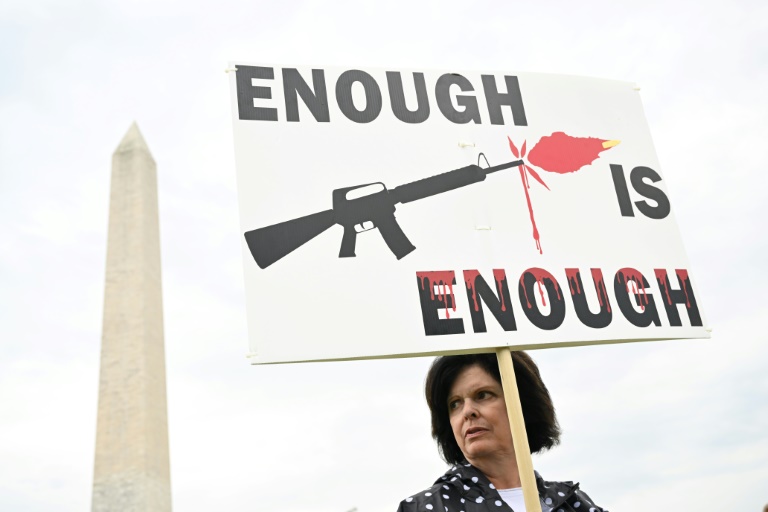
That day, thousands of people took to the streets in the United States to push for action on gun violence, protesting in Washington, New York and locations across the country.

“The will of the American people is being subverted by a minority,” said protestor Cynthia Martins, a 63-year-old resident of the US capital. “Hand wringing is not going to do anything — you have to make your voice heard.”

Cautious optimism at high-stakes WTO meet

The World Trade Organization chief voiced cautious optimism Sunday as global trade ministers gathered to tackle food security threatened by Russia’s invasion of Ukraine, overfishing and equitable access to Covid vaccines.

Speaking ahead of the WTO’s first ministerial meeting in nearly five years, Ngozi Okonjo-Iweala acknowledged that “the road will be bumpy and rocky.”

But she told journalists she was “cautiously optimistic” that the more than 100 attending ministers would manage to agree on at least one or two of a long line of pressing issues, and that would be “a success”.

The WTO faces pressure to eke out long-sought trade deals on a range of issues and show unity amid the still raging pandemic and an impending global hunger crisis.

But since the global trade body only makes decisions by consensus, it can be more than tricky to reach agreements.

Top of the agenda at the four-day meeting is the toll Russia’s war in Ukraine, traditionally a breadbasket that feeds hundreds of millions of people, is having on food security. 

– ‘Do the right thing’ –

The ministers are expected to agree on a joint declaration in which they “commit to take concrete steps to facilitate trade and improve the functioning and longterm resilience of global markets for food and agriculture.”

According to the draft text, countries would also vow that “particular consideration will be given to the specific needs and circumstances of developing country Members, especially those of least-developed and net food-importing developing countries.”

“I hope you will collectively do the right thing,” Ngozi told the delegates. 

EU trade commissioner Valdis Dombrovskis, who has accused Russia of “using food and grain as a weapon of war,” gathered ministers and representatives from 57 countries, including Kyiv’s trade representative Taras Kachka, for an event right before the WTO conference kicked off, to show solidarity with Ukraine, and decry Russia’s “illegal and barbaric aggression”.

– Fisheries deal in sight? –

The WTO hopes to keep criticism of Russia’s war in Ukraine to the numerous blistering statements issued on the first day of talks.

But there are fears it could run into the following days, when the WTO wants to focus on nailing down trade deals, after nearly a decade with no major agreements.  

There is some optimism that countries could finally agree on banning subsidies that contribute to illegal and unregulated fishing, after more than 20 years of negotiations.

“Will our children forgive us… if we allow our oceans to be depleted?” Ngozi asked.

The WTO says talks have never been this close to the finish line, but diplomats remain cautious.

The negotiations “have made progress recently, but these remain difficult subjects,” a diplomatic source in Geneva told AFP.

One of the main sticking points has been so-called special and differential treatment (SDT) for developing countries, including major fishing nation India, which can request exemptions.

– India blocking  –

The duration of exemptions remains undefined, with environmental groups warning anything beyond 10 years would be catastrophic.

India has demanded a 25-year exemption, and is so far refusing to budge.

Fishing in India is “largely sustenance fishing,” used by many to survive, Indian Commerce and Industry Minister Piyush Goyal told the conference in a video address, insisting: “their right to life and livelihood cannot be curtailed in any manner.”

Angered by lacking follow-through on promises made at a WTO ministerial meeting nearly a decade ago for food policy measures, India is proving intransigent on other issues as well, jeopardising the chances of locking down deals.

“There is not a single issue that India is not blocking,” a Geneva-based ambassador said, singling out WTO reform and agriculture.

– Patent waiver? –

The ministers are also set to seek a joint WTO response to the pandemic, although significant obstacles remain. 

In October 2020, India and South Africa called for intellectual property rights on Covid-19 vaccines and other pandemic responses to be suspended in a bid to ensure more equitable access in poorer nations.

After multiple rounds of talks, the European Union, the United States, India and South Africa hammered out a compromise that has become the basis for a draft text sent to ministers.

The text, which would allow most developing countries, although not China, to produce Covid vaccines without authorisation from patent holders, still faces opposition from both sides.

Britain and Switzerland are reluctant to sign up, arguing along with the pharmaceutical industry that the waiver would undermine investment in innovation.

Public interest groups meanwhile say the text falls far short of what is needed by covering only vaccines and not Covid treatments and diagnostics.

“The negotiations are still aeons away from ensuring access to lifesaving Covid medical tools for everyone, everywhere,” medical charity Doctors Without Borders warned.

Cautious optimism at high-stakes WTO meet

The World Trade Organization chief voiced cautious optimism Sunday as global trade ministers gathered to tackle food security threatened by Russia’s invasion of Ukraine, overfishing and equitable access to Covid vaccines.

Speaking ahead of the WTO’s first ministerial meeting in nearly five years, Ngozi Okonjo-Iweala acknowledged that “the road will be bumpy and rocky.”

But she told journalists she was “cautiously optimistic” that the more than 100 attending ministers would manage to agree on at least one or two of a long line of pressing issues, and that would be “a success”.

The WTO faces pressure to eke out long-sought trade deals on a range of issues and show unity amid the still raging pandemic and an impending global hunger crisis.

But since the global trade body only makes decisions by consensus, it can be more than tricky to reach agreements.

Top of the agenda at the four-day meeting is the toll Russia’s war in Ukraine, traditionally a breadbasket that feeds hundreds of millions of people, is having on food security. 

– ‘Do the right thing’ –

The ministers are expected to agree on a joint declaration in which they “commit to take concrete steps to facilitate trade and improve the functioning and longterm resilience of global markets for food and agriculture.”

According to the draft text, countries would also vow that “particular consideration will be given to the specific needs and circumstances of developing country Members, especially those of least-developed and net food-importing developing countries.”

“I hope you will collectively do the right thing,” Ngozi told the delegates. 

EU trade commissioner Valdis Dombrovskis, who has accused Russia of “using food and grain as a weapon of war,” gathered ministers and representatives from 57 countries, including Kyiv’s trade representative Taras Kachka, for an event right before the WTO conference kicked off, to show solidarity with Ukraine, and decry Russia’s “illegal and barbaric aggression”.

– Fisheries deal in sight? –

The WTO hopes to keep criticism of Russia’s war in Ukraine to the numerous blistering statements issued on the first day of talks.

But there are fears it could run into the following days, when the WTO wants to focus on nailing down trade deals, after nearly a decade with no major agreements.  

There is some optimism that countries could finally agree on banning subsidies that contribute to illegal and unregulated fishing, after more than 20 years of negotiations.

“Will our children forgive us… if we allow our oceans to be depleted?” Ngozi asked.

The WTO says talks have never been this close to the finish line, but diplomats remain cautious.

The negotiations “have made progress recently, but these remain difficult subjects,” a diplomatic source in Geneva told AFP.

One of the main sticking points has been so-called special and differential treatment (SDT) for developing countries, including major fishing nation India, which can request exemptions.

– India blocking  –

The duration of exemptions remains undefined, with environmental groups warning anything beyond 10 years would be catastrophic.

India has demanded a 25-year exemption, and is so far refusing to budge.

Fishing in India is “largely sustenance fishing,” used by many to survive, Indian Commerce and Industry Minister Piyush Goyal told the conference in a video address, insisting: “their right to life and livelihood cannot be curtailed in any manner.”

Angered by lacking follow-through on promises made at a WTO ministerial meeting nearly a decade ago for food policy measures, India is proving intransigent on other issues as well, jeopardising the chances of locking down deals.

“There is not a single issue that India is not blocking,” a Geneva-based ambassador said, singling out WTO reform and agriculture.

– Patent waiver? –

The ministers are also set to seek a joint WTO response to the pandemic, although significant obstacles remain. 

In October 2020, India and South Africa called for intellectual property rights on Covid-19 vaccines and other pandemic responses to be suspended in a bid to ensure more equitable access in poorer nations.

After multiple rounds of talks, the European Union, the United States, India and South Africa hammered out a compromise that has become the basis for a draft text sent to ministers.

The text, which would allow most developing countries, although not China, to produce Covid vaccines without authorisation from patent holders, still faces opposition from both sides.

Britain and Switzerland are reluctant to sign up, arguing along with the pharmaceutical industry that the waiver would undermine investment in innovation.

Public interest groups meanwhile say the text falls far short of what is needed by covering only vaccines and not Covid treatments and diagnostics.

“The negotiations are still aeons away from ensuring access to lifesaving Covid medical tools for everyone, everywhere,” medical charity Doctors Without Borders warned.

Despite major gas deal, energy giant warns consumers to turn down heating

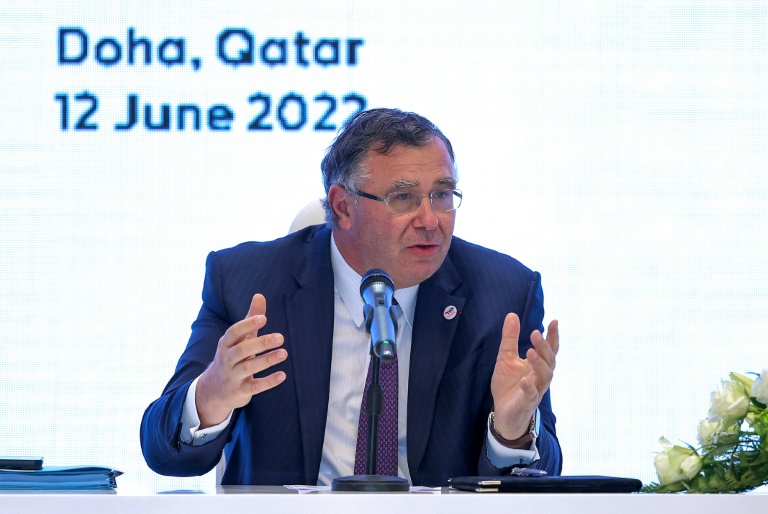
TotalEnergies chief Patrick Pouyanne hailed a deal to expand production in the world’s biggest natural gas field in Qatar but told AFP on Sunday that more projects are needed and consumers will still have to “turn down the heating” to ease the growing price crisis.

The chairman and chief executive of the French multinational that is one of the world’s most powerful energy companies said putting two billion dollars into a joint venture with Qatar Energy was the company’s response to doubts expressed after it ended investment in Russia.

The deal for a 6.25-percent stake in the North Field East project was announced Sunday barely two months after TotalEnergies said it would pump no more money into Russia where it has huge natural gas interests.

Pouyanne, who has headed TotalEnergie since 2018, told AFP the deal was part of a “success story” with Qatar, where it struck a first accord in 1986. 

“It comes at the right time. Some were asking the question what would TotalEnergies do in place of Russia? This is the answer,” he said in an interview.

“We have announced projects in the United States. We wanted another one. We have added Qatar to the portfolio.”

The company is determined to remain a leader in liquefied natural gas (LNG), he stressed.

Pouyanne said his company would help build a new LNG train, or production factory, for North Field East but the speed of recovering the $2-billion investment would depend on market prices.

– Consumers beware – 

Higher energy prices have gripped Europe with some governments wondering how they will get through the next winter without Russian supplies which are being cut because of the Ukraine war.

Qatar, one of the world’s top three natural gas producers with the United States and Australia, has warned it cannot send more in the short term.

Pouyanne said that consumers “who want electricity all the time”, must use less.

“What consumers can do is turn down the heating a bit in Europe. At the moment there is no heating because it is summer. But my advice is not too much air conditioning either,” he said.

Pouyanne also said more investment in production is needed to “bring prices down”.

The new natural gas complex in Qatar will only be ready at the end of 2025 or early 2026, he said. “We need more to stabilise the market. That’s important.”

TotalEnergies, like Qatar Energy, also wants more medium- and long-term contracts in Europe.

European governments have in recent years refused long-term deals so they can take advantage of market falls.

Russia’s invasion of Ukraine has forced them to change their policy and many have made approaches to Qatar in recent months.

Qatar is attractive, Pouyanne added, because it sells to China, Japan, South Korea and India in Asia, but can also provide Europe.

“Competitive production costs, liquefication costs that benefit from economies of scale and a good position, that is why Qatar has become a leader for liquefied natural gas.”

Global media giants battle for IPL cricket rights

Global media giants including Disney and Sony and Asia’s richest man battled Sunday for the broadcast rights for the Indian Premier League cricket tournament, one of the world’s most-watched sporting events.

The winning bidders were expected to pay up to $7.7 billion in an online auction begun by India’s cricket board on Sunday to show and stream the two-month contest for five seasons from 2023 to 2027, according to analysts.

This dwarfs the $2.55 billion shelled out by Star India, owned by US behemoth Disney, for the previous five-year deal which ended last month with the 15th edition of the tournament involving an expanded 10 franchises playing 74 matches.

Attracting some of cricket’s top stars from India and abroad with large salaries, the pioneering IPL helped make Twenty20, a shorter and more exciting format of the sport, hugely popular, spawning copycat events worldwide.

This time the Board of Control for Cricket in India (BCCI) is selling off four different packages including domestic and international television and online streaming rights as well as for special matches.

At the end of the first day on Sunday, bids for more than $5.59 billion had been received just for domestic TV and digital rights, a source within the BCCI told AFP without wishing to be named.

Besides Disney and Sony, bidders in the auction, which will continue on Monday, include a consortium including Viacom as well as Reliance, owned by Asia’s wealthiest man Mukesh Ambani, reports said.

But fellow tycoon Jeff Bezos’s Amazon, which has spent hundreds of millions of dollars on rights for European soccer and American football and had earlier shown interest in the IPL, pulled out of the contest, reports said on Friday.

India's Sonia Gandhi hospitalised with Covid

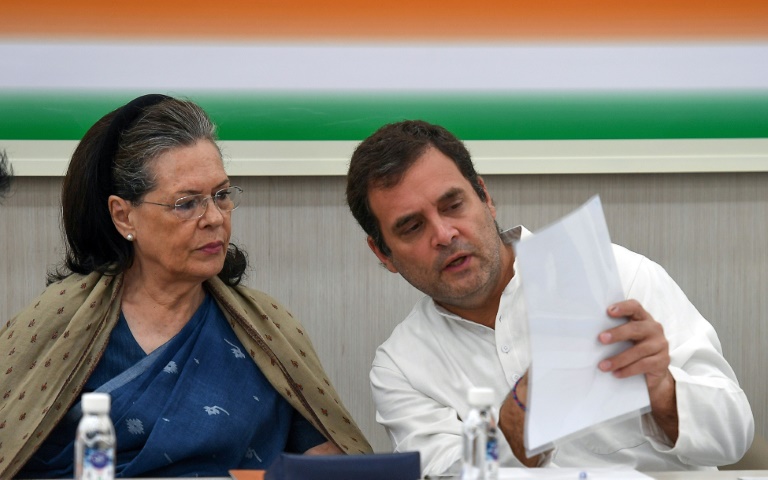
Sonia Gandhi, president of India’s main opposition Congress party, has been admitted to hospital with “Covid-related issues,” a party spokesman said Sunday.

Gandhi was admitted to the Ganga Ram Hospital in the capital New Delhi, Congress general secretary Randeep Surjewala said in a tweet.

“She is stable and will be kept at the hospital for observation,” he said, giving no other details.  

The 75-year-old had tested positive for Covid-19 on June 2. 

Italian-born Gandhi is the widow of former prime minister Rajiv Gandhi who was assassinated in 1991.

Famously media-shy, Gandhi’s health has always been a matter of secrecy with her party never divulging too many details or entertaining questions, raising questions about transparency. 

Almost a decade ago, Indian media reported that Gandhi was being treated in the United States for cancer. 

Several media reports after that have said she continues to visit the States for “routine medical check-up.”

TotalEnergies takes $2 billion foothold in Qatar's giant gas expansion

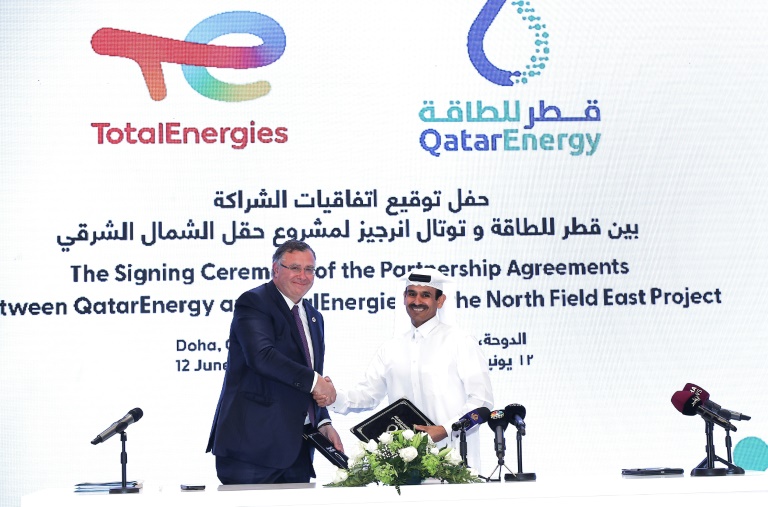
Qatar on Sunday named France’s TotalEnergies as its first foreign partner to expand the world’s largest natural gas field and eventually help ease Europe’s energy fears.

The French energy major will spend an estimated $2 billion for a 6.25-percent share of the giant North Field East project that will help Qatar increase its liquefied natural gas (LNG) production by more than 60 percent by 2027, TotalEnergies chief executive Patrick Pouyanne told AFP.

Qatar’s Energy Minister Saad Sherida al-Kaabi called the joint venture “a marriage more than an engagement” as it will last until 2054.

Other foreign firms will also take stakes in North Field with state-owned Qatar Energy (QE) but none will be bigger than TotalEnergies, said Kaabi, who did not reveal names.

Industry sources say ExxonMobil, Shell and ConocoPhillips are all in line to take part in the giant $28-billion expansion, that Qatar had originally wanted to finance alone.

“We have finished the selection process and we have signed the agreements,” Kaabi said, adding that names would be announced in the “near future”.

With European nations scrambling to find alternatives to Russian oil and gas, LNG from North Field is expected to start coming on line in 2026.

Pouyanne said the company’s biggest deal with Qatar would help make up for the company’s withdrawal from Russia in the wake of the Ukraine invasion.

“Some were asking the question what would TotalEnergies do in place of Russia, this is the answer,” Pouyanne told AFP.

“We have also announced projects in the United States, now we have added Qatar to the portfolio. We are number two in the world for natural gas and intend to stay there.”

– Hard bargain –

Without giving figures, Pouyanne indicated that Qatar had demanded a high price in the talks that started in 2019.

“Your team and yourself have been a very good defender of Qatar’s interests in this project,” he said in comments to the minister who is also the QE chief.

“Qatar Energy certainly drove a hard bargain. But for the biggest global LNG players like Shell and TotalEnergies, Qatar is too good to pass up. A stake in these LNG trains delivers scale, low-cost supply, great marketing opportunities, and a good partner,” said Ben Cahill, an energy security specialist at the Center for Security and International Studies in Washington.

Qatar is already one of the world’s top LNG producers, alongside the United States and Australia. 

QE estimates that North Field holds about 10 percent of the world’s known natural gas reserves.

The reserves extend under the sea into Iranian territory, where Tehran’s efforts to exploit its South Pars gas field have been hindered by international sanctions.

South Korea, Japan and China have become the main markets for Qatar’s LNG but since an energy crisis hit Europe last year, the Gulf state has helped Britain with extra supplies and also announced a cooperation deal with Germany.

Europe has in the past rejected the long-term deals that Qatar seeks for its energy but the Ukraine conflict has forced a change in attitude.

Qatar’s expansion “underlines its position as a leader in this industry”, said Bill Farren-Price, head of macro oil and gas research at the Enverus energy consultancy.

“With gas balances tight globally amid reduced Russian gas exports to Europe, LNG is a key and growing component in the energy transition and Qatar is determined to leverage its world-class North Field reserves to capture additional value through this deal.”

The Ukraine conflict has also injected a new urgency into efforts around the world to develop new sources.

Tanzania on Saturday signed a framework agreement with British and Norwegian energy giants Shell and Equinor towards implementing a $30-billion project to export its natural gas.

Two airport workers killed in Afghanistan bus ambush: official

Unidentified gunmen fired at a bus ferrying airport employees in northern Afghanistan on Sunday, killing at least two people and wounding six others, a senior police official said.

The bus was ambushed by two gunmen on its way to the Mazar-i-Sharif airport, Balkh provincial police spokesman Mohammad Asif Waziri told AFP.

“The vehicle came under attack when the technical team was on its way to the airport,” Waziri said.

The ambush was the latest in a series of deadly attacks that have hit Afghanistan in recent months.

Foreign airlines have still not resumed flights to Kabul and other Afghan cities since the Taliban seized power in August, citing security concerns for their crew and passengers.

While Taliban fighters provide security at all Afghan airport terminals, a UAE firm has been tasked with providing ground handling and passenger screening services at several facilities. 

Since the Taliban’s return to power, the country has faced an acute shortage of professionals in a wide array of fields, including technical staff for the country’s airports. 

While levels of violence in Afghanistan have fallen since the hardline Islamist group returned to power, bombings and gun attacks have ticked up recently.

On Saturday, a bomb blast targeting a minibus in the capital Kabul killed at least four people and injured several others.

Dozens of civilians were killed in Kabul and other cities — primarily in sectarian attacks — during the holy month of Ramadan, with some attacks claimed by the Islamic State group.

Many of those attacks targeted the country’s Shiite Hazara and Sufi communities. 

Climate: offshore methane gas leak spotted from space

Scientists have for the first time used satellite data to detect a major offshore leak of the potent greenhouse gas methane, according to peer-reviewed research.

The findings add a crucial tool to an expanding space-based arsenal for pinpointing previously invisible methane plumes from the oil and gas industry.   

Fossil fuel operations globally emitted about 120 million tonnes of the planet-warming gas in 2020, nearly one-third of all methane emissions from human activity, according to the International Energy Agency (IEA). 

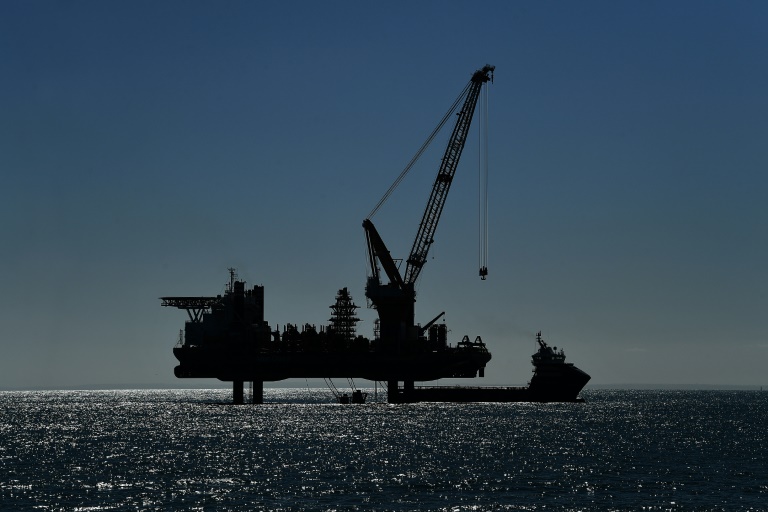
The new study in the journal Environmental Science and Technology Letters identified a plume from an oil and gas production platform in the Gulf of Mexico that spewed some 40,000 tonnes over a 17-day period in December.  

The platform, near Campeche in southern Mexico, is in one of the country’s biggest oil producing fields.

“Our results demonstrate how satellites can detect methane plumes from offshore infrastructure,” senior author Luis Guanter, a professor at Valencia Polytechnic University, said in a statement. 

“It opens the door to systematic monitoring of industrial emissions from individual offshore platforms.”

Satellite-based methods for spotting methane leaks over land have developed rapidly in the last few years, training an uncomfortable spotlight on regulators and industry.   

But equivalent techniques have been lacking for leaks from offshore oil and gas operations, which account for about 30 percent of global production.

– Huge short-term potential –

Up to now, ocean water’s capacity to absorb short-wave infrared radiation has limited the amount of reflected light reaching space-based sensors. 

Guanter and colleagues overcame this problem with a new method for measuring solar radiation bouncing off the water’s surface, called Sun-glint observation mode.

Methane is responsible for roughly 30 percent of the global rise in temperatures to date. 

While far less abundant in the atmosphere than CO2, it is about 28 times more powerful as a greenhouse gas on a century-long timescale. Over a 20-year time frame, it is 80 times more potent.

Methane lingers in the atmosphere for only a decade, compared to hundreds or thousands of years for CO2. 

This means a sharp reduction in emissions could shave several tenths of a degree Celsius off of projected global warming by mid-century, helping keep alive the Paris Agreement goal of capping Earth’s average temperature increase to 1.5C, according to the UN Environment Programme (UNEP). 

Last year saw a record jump in the atmospheric concentration of methane, US government scientists reported in April.

Methane is generated by the production, transport and use of fossil fuels, but also from the decay of organic matter in wetlands, and as a by-product of livestock digestion in agriculture.

At last year’s COP26 climate summit in Glasgow, more than 100 nations agreed under the Global Methane Pledge to reduce emissions 30 percent by 2030. But several major methane emitters — including China, Russia, Iran and India — failed to sign.

Close Bitnami banner
Bitnami