World

TotalEnergies gains foothold in Qatar gas expansion

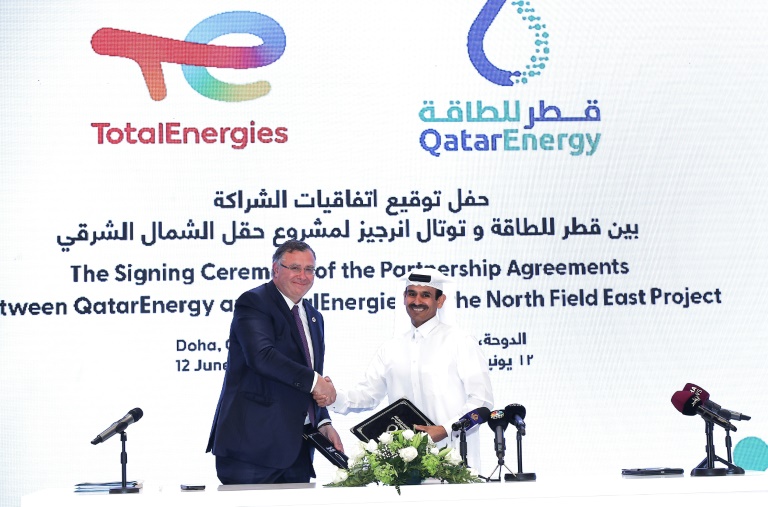
Qatar on Sunday named France’s TotalEnergies as its first foreign partner to develop the world’s largest natural gas field and eventually help ease Europe’s energy fears.

The French energy major will have a 6.25-percent share of the giant North Field East project that will help Qatar increase its liquefied natural gas (LNG) production by more than 60 percent by 2027, Qatar’s Energy Minister Saad Sherida al-Kaabi told a news conference.

Kaabi said it was “a marriage more than an engagement” as the accord will last until 2054.

Other foreign firms will also have joint venture stakes with state-owned Qatar Energy (QE) but none will be bigger than TotalEnergies, said Kaabi, who did not reveal names.

Industry sources say ExxonMobil, Shell and ConocoPhillips are all in line to take part in the giant $28-billion expansion, that Qatar had originally wanted to finance alone.

“We have finished the selection process and we have signed the agreements,” Kaabi said, adding that names would be announced in the “near future”.

With European nations scrambling to find alternatives to Russian oil and gas, LNG from North Field is expected to start coming on line in 2026.

TotalEnergies chief executive Patrick Pouyanne said the company’s biggest deal with Qatar would help make up for the company’s withdrawal from Russia in the wake of the Ukraine invasion.

– Hard bargain –

Without giving figures, Pouyanne indicated that Qatar had demanded a high price in the talks that started in 2019.

“Your team and yourself have been a very good defender of Qatar’s interests in this project,” he said in comments to the minister who is also the QE chief.

“Qatar Energy certainly drove a hard bargain. But for the biggest global LNG players like Shell and TotalEnergies, Qatar is too good to pass up. A stake in these LNG trains delivers scale, low-cost supply, great marketing opportunities, and a good partner,” said Ben Cahill, an energy security specialist at the Center for Security and International Studies in Washington.

Qatar is already one of the world’s top LNG producers, alongside the United States and Australia. 

QE estimates that North Field holds about 10 percent of the world’s known natural gas reserves.

The reserves extend under the sea into Iranian territory, where Tehran’s efforts to exploit its South Pars gas field have been hindered by international sanctions.

South Korea, Japan and China have become the main markets for Qatar’s LNG but since an energy crisis hit Europe last year, the Gulf state has helped Britain with extra supplies and also announced a cooperation deal with Germany.

Europe has for long rejected the long-term deals that Qatar seeks for its energy but the Ukraine conflict has forced a change in attitude.

Qatar’s expansion “underlines its position as a leader in this industry”, said Bill Farren-Price, head of macro oil and gas research at the Enverus energy consultancy.

“With gas balances tight globally amid reduced Russian gas exports to Europe, LNG is a key and growing component in the energy transition and Qatar is determined to leverage its world-class North Field reserves to capture additional value through this deal.

“Its partnership with TotalEnergies reinforces Doha’s political partnership with Western powers while giving it even more marketing options.”

The Ukraine conflict has also injected a new urgency into efforts around the world to develop new sources.

Tanzania on Saturday signed a framework agreement with British and Norwegian energy giants Shell and Equinor towards implementing a $30-billion project to export its natural gas.
WTO chief says 'cautiously optimistic' ahead of high-stakes meet

The World Trade Organization chief voiced cautious optimism Sunday as global trade ministers gather to tackle food security threatened by Russia’s invasion of Ukraine, overfishing and equitable access to Covid vaccines.

Speaking just hours before the opening of the WTO’s first ministerial meeting in nearly five years, Ngozi Okonjo-Iweala acknowledged that “the road will be bumpy and rocky, there may be a few landmines on the way.”

But she told journalists she was “cautiously optimistic that we’ll get one or two deliverables”, adding she would consider that “a success”.

With its first ministerial meeting in years, the WTO faces pressure to finally eke out long-sought trade deals and show unity amid the still raging pandemic and an impending global hunger crisis.

Top of the agenda as the four-day meeting kicks off is the toll Russia’s war in Ukraine, traditionally a breadbasket that feeds hundreds of millions of people, is having on food security. 

EU trade commissioner Valdis Dombrovskis said the bloc had been “working hard with all the members to prepare a multilateral food security package,” and slammed Russia for “using food and grain as a weapon of war”.

The WTO is hoping to keep criticism of Russia’s war in Ukraine to the first day of talks, when many of the more than 100 ministers due to attend are expected to issue blistering statements.

But with many flatly refusing to negotiate directly with Moscow, there are fears this could bleed into the following days, when the WTO wants to focus on nailing down elusive trade deals.  

“There is a real risk that things could go off the rails next week,” a Geneva-based diplomatic source said.

– Fisheries deal in sight? –

The tensions have not curbed Okonjo-Iweala’s zeal to press for agreements on a range of issues during the first ministerial gathering on her watch, especially as the global trade body strives to prove its worth after nearly a decade with no new large trade deals.

There is cautious optimism that countries could finally agree on banning subsidies that contribute to illegal and unregulated fishing, after more than 20 years of negotiations.

The WTO says talks have never been this close to the finish line, but diplomats remain cautious.

The negotiations “have made progress recently, but these remain difficult subjects,” a diplomatic source in Geneva told AFP.

One of the main sticking points has been so-called special and differential treatment (SDT) for developing countries, like major fishing nation India, which can request exemptions.

A draft text sent to the ministers for review proposes exemptions should not apply to member states accounting for an as yet undefined share of the global volume of fishing.

The duration of exemptions also remains undefined.

Environmental groups say anything beyond 10 years would be catastrophic. India has demanded a 25-year exemption.

– India ‘creating problems’ –

“Twenty-five years is an unreasonable length of time,” Isabel Jarrett, head of the Pew Charitable Trusts’ project to end harmful fisheries subsidies, told AFP, warning so much leeway would be “devastating for fish stocks”.

Colombian Ambassador Santiago Wills, who chairs the WTO fisheries subsidies negotiations, stressed the urgency of securing a deal.

“The longer we wait, the more the fish lose. And the more the fish lose, the more we all lose,” he said in a statement Saturday.

India however appears to be stubbornly sticking to its demands on fisheries and in other areas, jeopardising the chances of reaching deals since WTO agreements require full consensus backing.

“There is not a single issue that India is not blocking,” a Geneva-based ambassador said, singling out WTO reform and agriculture.

A source with knowledge of the negotiations towards a text on food security also said “the Indians are still creating problems”.

Elvire Fabry, a senior research fellow at the Jacques Delors Institute, said India had appeared eager to “throw more weight around” in international organisations, warning New Delhi was capable of scuppering talks.

– Patent waiver? –

The ministers are also set to seek a joint WTO response to the pandemic, although significant obstacles remain. 

Back in October 2020, India and South Africa called for intellectual property rights on Covid-19 vaccines and other pandemic responses to be suspended in a bid to ensure more equitable access in poorer nations.

After multiple rounds of talks, the European Union, the United States, India and South Africa hammered out a compromise that has become the basis for a draft text sent to ministers.

The text, which would allow most developing countries, although not China, to produce Covid vaccines without authorisation from patent holders, is still facing opposition from both sides.

Britain and Switzerland are reluctant to sign up, arguing along with the pharmaceutical industry that the waiver would undermine investment in innovation.

Public interest groups meanwhile say the text falls far short of what is needed by covering only vaccines and not Covid treatments and diagnostics.

“The negotiations are still aeons away from ensuring access to lifesaving Covid medical tools for everyone, everywhere,” medical charity Doctors Without Borders warned.

WTO chief says 'cautiously optimistic' ahead of high-stakes meet

The World Trade Organization chief voiced cautious optimism Sunday as global trade ministers gather to tackle food security threatened by Russia’s invasion of Ukraine, overfishing and equitable access to Covid vaccines.

Speaking just hours before the opening of the WTO’s first ministerial meeting in nearly five years, Ngozi Okonjo-Iweala acknowledged that “the road will be bumpy and rocky, there may be a few landmines on the way.”

But she told journalists she was “cautiously optimistic that we’ll get one or two deliverables”, adding she would consider that “a success”.

With its first ministerial meeting in years, the WTO faces pressure to finally eke out long-sought trade deals and show unity amid the still raging pandemic and an impending global hunger crisis.

Top of the agenda as the four-day meeting kicks off is the toll Russia’s war in Ukraine, traditionally a breadbasket that feeds hundreds of millions of people, is having on food security. 

EU trade commissioner Valdis Dombrovskis said the bloc had been “working hard with all the members to prepare a multilateral food security package,” and slammed Russia for “using food and grain as a weapon of war”.

The WTO is hoping to keep criticism of Russia’s war in Ukraine to the first day of talks, when many of the more than 100 ministers due to attend are expected to issue blistering statements.

But with many flatly refusing to negotiate directly with Moscow, there are fears this could bleed into the following days, when the WTO wants to focus on nailing down elusive trade deals.  

“There is a real risk that things could go off the rails next week,” a Geneva-based diplomatic source said.

– Fisheries deal in sight? –

The tensions have not curbed Okonjo-Iweala’s zeal to press for agreements on a range of issues during the first ministerial gathering on her watch, especially as the global trade body strives to prove its worth after nearly a decade with no new large trade deals.

There is cautious optimism that countries could finally agree on banning subsidies that contribute to illegal and unregulated fishing, after more than 20 years of negotiations.

The WTO says talks have never been this close to the finish line, but diplomats remain cautious.

The negotiations “have made progress recently, but these remain difficult subjects,” a diplomatic source in Geneva told AFP.

One of the main sticking points has been so-called special and differential treatment (SDT) for developing countries, like major fishing nation India, which can request exemptions.

A draft text sent to the ministers for review proposes exemptions should not apply to member states accounting for an as yet undefined share of the global volume of fishing.

The duration of exemptions also remains undefined.

Environmental groups say anything beyond 10 years would be catastrophic. India has demanded a 25-year exemption.

– India ‘creating problems’ –

“Twenty-five years is an unreasonable length of time,” Isabel Jarrett, head of the Pew Charitable Trusts’ project to end harmful fisheries subsidies, told AFP, warning so much leeway would be “devastating for fish stocks”.

Colombian Ambassador Santiago Wills, who chairs the WTO fisheries subsidies negotiations, stressed the urgency of securing a deal.

“The longer we wait, the more the fish lose. And the more the fish lose, the more we all lose,” he said in a statement Saturday.

India however appears to be stubbornly sticking to its demands on fisheries and in other areas, jeopardising the chances of reaching deals since WTO agreements require full consensus backing.

“There is not a single issue that India is not blocking,” a Geneva-based ambassador said, singling out WTO reform and agriculture.

A source with knowledge of the negotiations towards a text on food security also said “the Indians are still creating problems”.

Elvire Fabry, a senior research fellow at the Jacques Delors Institute, said India had appeared eager to “throw more weight around” in international organisations, warning New Delhi was capable of scuppering talks.

– Patent waiver? –

The ministers are also set to seek a joint WTO response to the pandemic, although significant obstacles remain. 

Back in October 2020, India and South Africa called for intellectual property rights on Covid-19 vaccines and other pandemic responses to be suspended in a bid to ensure more equitable access in poorer nations.

After multiple rounds of talks, the European Union, the United States, India and South Africa hammered out a compromise that has become the basis for a draft text sent to ministers.

The text, which would allow most developing countries, although not China, to produce Covid vaccines without authorisation from patent holders, is still facing opposition from both sides.

Britain and Switzerland are reluctant to sign up, arguing along with the pharmaceutical industry that the waiver would undermine investment in innovation.

Public interest groups meanwhile say the text falls far short of what is needed by covering only vaccines and not Covid treatments and diagnostics.

“The negotiations are still aeons away from ensuring access to lifesaving Covid medical tools for everyone, everywhere,” medical charity Doctors Without Borders warned.

End of an era as Russia's McDonald's reopens under new name

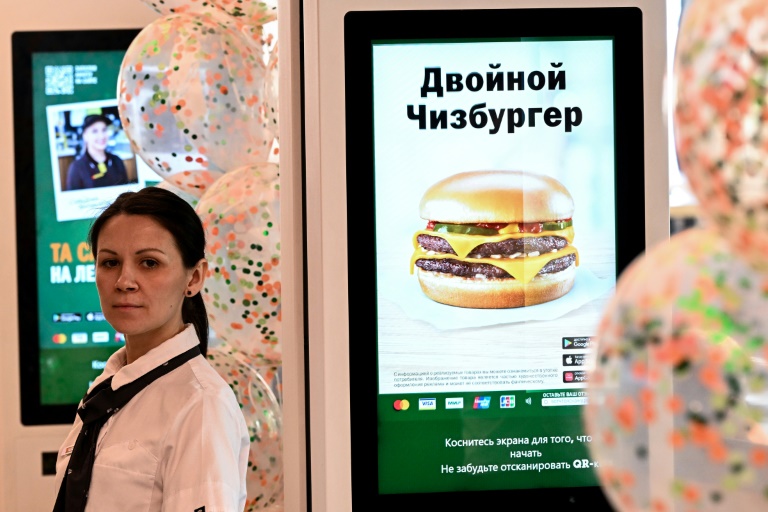
The restaurant that launched McDonald’s in Russia in 1990, heralding Moscow’s opening after decades of Soviet rule, reopened Sunday with a new name and logo in a potent reminder of the upheaval sparked by the conflict in Ukraine.

The US fast-food giant announced on May 16 that it would exit Russia in the wake of its Ukraine offensive.

In Moscow’s Pushkin Square on Sunday, dozens of people gathered outside the Russian incarnation of the fast-food restaurant, “Vkusno i tochka” (“Delicious. Full Stop”), well before the official noon (0900 GMT) opening.

“My whole family went… three times to McDonald’s for a farewell meal,” Elena, a programmer and mother of two, told AFP.

“Now we’re going for a reunion lunch,” she smiled.

Inside, 31-year-old Oleg, one of the first customers to receive his order, said “Vkusno i tochka” was “delicious, beautiful and cheap.”

The restaurant, on the spot where the very first McDonald’s opened its doors to long queues and great fanfare in January 1990, is among the first 15 to welcome customers.

On Monday, another 50 restaurants are set to open, according to Oleg Paroyev, general manager of the new group, with the chain then planning to reopen 50 to 100 a week across the country.

In place of the Golden Arches, there’s a new logo – two stylised orange fries alongside a red dot on a green background.

There are still double cheeseburgers on the menu, as well as a wide range of ice creams and desserts. But the “Mc” prefix no longer appears.

“We had to remove some products from the menu because they refer directly to McDonald’s, such as the McFlurry and Big Mac,” Paroyev said.

Prices have risen “slightly” due to the inflation that has hit Russia hard after Western countries imposed sanctions — but they remain “reasonable”, he added.

As for the packaging, it is “neutral” — “no word, no letter” should remind customers of the McDonald’s group, Paroyev said.

McDonald’s Russian restaurants had accounted for around nine percent of the US group’s turnover.

Three days after the company announced its exit in May, Russian businessman Alexander Govor, who had been a licensee of the chain, bought the 850-restaurant operation.

“I am ambitious and I don’t only plan to open the 850 restaurants but to develop new ones,” Govor said on Sunday.

Under the sale conditions, Govor agreed to retain employees for at least two years and fund liabilities to suppliers, landlords and utilities, McDonald’s said.

The price of the transaction was not disclosed but in announcing its exit, McDonald’s said it planned to take a one-time charge of $1.2 billion to $1.4 billion to write off the investment.

McDonald’s had employed 62,000 workers in Russia.

Govor, a licensee since 2015, has operated 25 restaurants in Siberia. He is co-founder of NefteKhimService, a refining company, and a board member of a firm that owns the Park Inn hotel and private clinics in Siberia.

Macron seeks majority in parliament vote as left mounts challenge

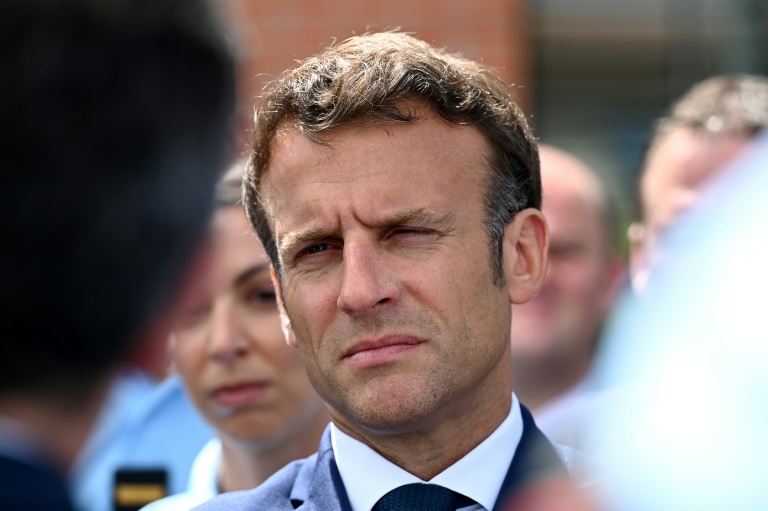
France voted in the first round of parliamentary elections on Sunday with President Emmanuel Macron hoping to win a majority backing his reform plans while a resurgent and newly unified left seeks to thwart his ambitions.

Elections for the 577 seats in the lower house National Assembly are a two-round process, with the shape of the new parliament becoming clear only after the second round on June 19.

The ballots provide a crucial coda to April’s presidential election, when Macron won a second term and pledged a transformative new era after a first mandate dominated by protests, the coronavirus pandemic and Russia’s war against Ukraine.

After a dismal performance in April, the French left has united in a coalition for what its leader Jean-Luc Melenchon dubs “the third round” of the presidential elections.

Opinion polls show the president’s centrist alliance, Ensemble (Together), and Melenchon’s NUPES coalition of hard left, Socialists, Communists and Greens neck-and-neck in the popular vote — although the actual breakdown of parliamentary seats will depend on turnout in the second round.

– ‘Gardening instead’ –

The abstention rate is predicted to be well over 50 percent in the first round, in what would be a new record for elections already marked by feeble participation in recent years.

At midday (1000 GMT) turnout was 18.43 percent, according to an interior ministry estimate, down 0.8 points from the last election in 2017.

“I voted tactically in the presidential election, and that didn’t change a thing,” unemployed 59-year-old Alain Mendez told AFP at an outdoor cafe in Toulouse, southwestern France. “So today I’d rather do my gardening instead, and cook for my grandchildren.”

If the president’s alliance retains an overall majority, Macron will be able to carry on governing as before. 

Falling short could prompt messy bill-by-bill deals with right-wing parties in parliament, or an unwanted cabinet reshuffle.

A win by the left-wing alliance –- seen as unlikely by analysts — would spell political disaster for the president by raising the spectre of a clunky “cohabitation” — where the prime minister and president hail from different factions.

Such a set-up has has paralysed French politics in the past, most recently from 1997 to 2002 when right-wing president Jacques Chirac ruled in tandem with Socialist Lionel Jospin as premier.

Melenchon, a former Marxist, has already made clear his ambition to become prime minister and stymie Macron’s plan to raise the French retirement age, a key part of his reform plans.

– ‘Can’t get anything done’ –

Polls have indicated that Macron’s alliance is expected to win the largest number of seats but is by no means assured of getting over the line of 289 for an absolute majority.

“Some people say that parliamentary elections aren’t important but that’s not true,” Arnaud, a 40-year old engineer, told AFPTV as cast his vote in central Paris. “If the president doesn’t win a majority he can’t get anything done.”

While Macron and his European Union allies breathed a heavy sigh of relief after his solid, if unspectacular, presidential victory against far-right leader Marine Le Pen, the last weeks have brought no sense of a honeymoon.

Energy and food prices are soaring in France as elsewhere in Europe, the treatment of English fans at the Champions League final in Paris damaged France’s image abroad and Macron has been accused by Ukraine of being too accommodating to Russia.

His new Disabilities Minister Damien Abad has faced two rape accusations –- which he has vehemently denied –- while new Prime Minister Elisabeth Borne has yet to make an impact.

Macron has made clear that ministers who are standing in the election — including Borne, who is making her first attempt at winning a seat — will have to step down if they lose.

Macron’s party and his allies currently hold an absolute majority of 345 seats in the 577-seat assembly.

Under France’s system, a candidate needs over half the vote on the day as well as the backing of at least 25 percent of registered voters in a constituency to be elected outright in the first round.

Otherwise the top two candidates in a constituency, as well as any other candidate who won the backing of at least 12.5 percent of registered voters, go forward to the second round, where the candidate with the most votes wins.

burs-jh/yad

War in Ukraine: Latest developments

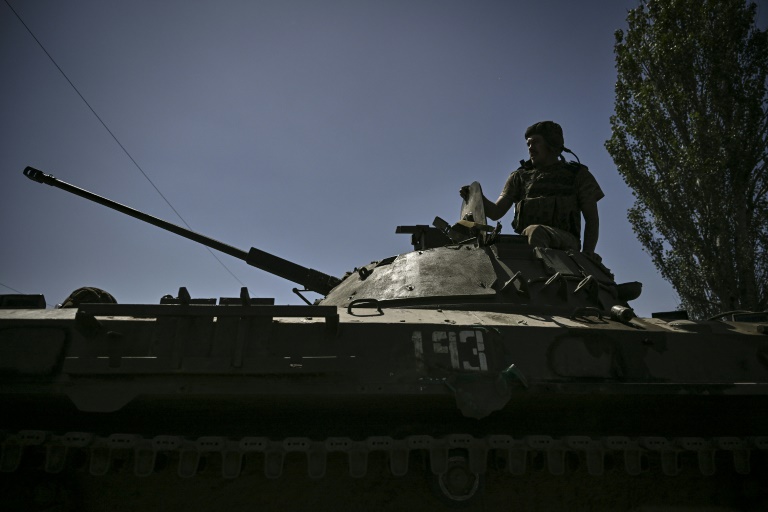
Here are the latest developments in the war in Ukraine:

– Ministers at crucial WTO meet –

More than 100 ministers are meeting at the  World Trade Organization in Geneva to tackle pressing issues including global food security threatened by Russia’s invasion of Ukraine.

Top of the agenda as the four-day meeting kicks off is the toll Russia’s war in Ukraine — traditionally a breadbasket that feeds hundreds of millions of people — is having on food security.

– Russia renames McDonald’s –

Former McDonald’s restaurants in Russia have been renamed “Vkusno i tochka” (“Delicious. Full Stop”), the new owner says.

Replete with a new logo to replace the Golden Arches, the restaurant on Moscow’s Pushkin Square — where the very first McDonald’s opened its doors to long queues and great fanfare in January 1990 — is due to open its doors again on Sunday.

The US McDonald’s fast-food giant announced on May 16 that it would exit Russia in the wake of Moscow’s Ukraine offensive.


– Ukraine  to get word on EU hopes –

Ukraine’s bid to become a candidate to join the EU will get a clear signal next week, the bloc’s chief Ursula von der Leyen announces in a surprise visit to Kyiv.

Von der Leyen says talks she held with Ukrainian President Volodymyr Zelensky “will enable us to finalise our assessment by the end of next week”.

It is the first time the EU has publicly given timing on when the commission will deliver its opinion. The bloc’s 27 member countries need to decide whether to allow Ukraine to start accession negotiations.

– Zelensky warns of food crisis –

Volodymyr Zelensky has urged international pressure to end a Russian naval blockade of Black Sea ports that has choked off his country’s grain exports, threatening a global food crisis.

“The world will face an acute and severe food crisis and famine, in many countries of Asia and Africa,” Zelensky says in a video addressed to the Shangri-La Dialogue security summit in Singapore.

– Ukrainians get Russian passports –

Authorities in the Moscow-occupied city of Kherson in southern Ukraine have handed out Russian passports to local residents for the first time, news agencies reported.

Russia’s TASS agency says 23 Kherson residents received a Russian passport at a ceremony through a “simplified procedure” facilitated by a decree signed by Russian President Vladimir Putin in May.

– ‘Very difficult battles’ –

Ukrainian President Volodymyr Zelensky says his country’s forces are involved in “very difficult battles”, including in the eastern Donbas region where Russia has focused its firepower.

“Ukrainian troops are doing everything to stop the offensive of the occupiers,” Zelensky says.

He adds in his address that Ukraine must “not allow the world to divert its attention away from what is happening on the battlefield”.

– ‘Out of ammo’ –

In the Mykolaiv region near the frontline in the south, the regional governor calls for urgent international military assistance.

“Russia’s army is more powerful, they have a lot of artillery and ammo. For now, this is a war of artillery… and we are out of ammo,” Vitaliy Kim says.

“The help of Europe and America is very, very important.”

– ‘Imperial appetites’ –

US Defense Secretary Lloyd Austin issues scathing criticism of Moscow and its goals in Ukraine.

“Let’s be clear: Russia’s invasion of Ukraine is what happens when oppressors trample the rules that protect us all,” he tells the Shangri-La Dialogue security summit in Singapore.

“It’s what happens when big powers decide that their imperial appetites matter more than the rights of their peaceful neighbours.”

“And it’s a preview of a possible world of chaos and turmoil that none of us would want to live in.”

burs-jhe/yad

Volcano ash blankets Philippine towns after second eruption this week

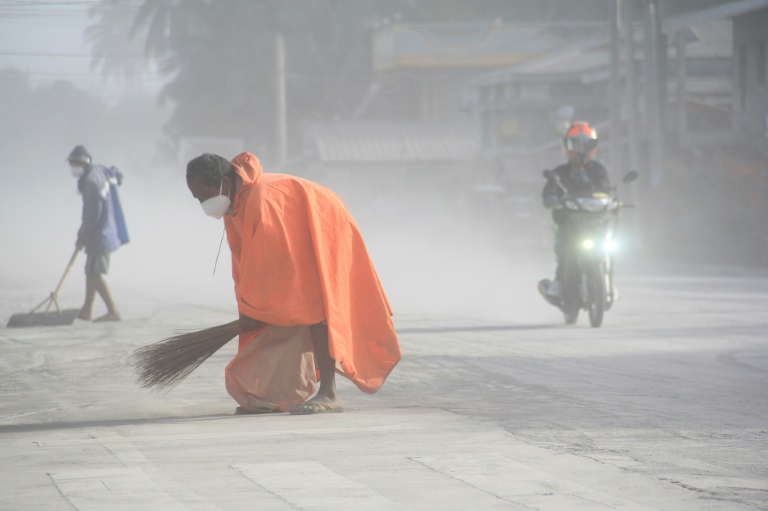
A volcano in the Philippines spewed a huge column of ash into the sky on Sunday, blanketing a region still recovering from last week’s eruption. 

The blast from Bulusan volcano lasted 18 minutes, the Philippine seismological agency said, impairing road visibility and forcing airlines to cancel flights. 

On June 5, Mount Bulusan sent a grey plume shooting up at least one kilometre (0.6 miles) and covered 10 villages with ash.

Residents of Juban town in Sorsogon province, still reeling from last week’s eruption, were woken up Sunday by the volcano’s thundering. 

“I thought it was just raining, but when I looked outside there was ash everywhere,” resident Antonio Habitan told AFP. “Our river was once clear but now it is ash-coloured.” 

No casualties were reported, but the seismological agency raised the alert level to one on the five-level system, indicating “low-level unrest”.

“We still can’t say that it is over. It’s still possible that this eruption could be followed by another one, that’s why we need to be careful with the Bulusan volcano,” agency head Renato Solidum told local radio station DZBB. 

Emergency workers were deployed to clean ash-laden roads and guide drivers struggling to see oncoming vehicles. 

Five flights in the area were cancelled. 

Juban’s local disaster office said 366 people were in emergency shelters, with most evacuated days before the eruption due to a series of volcanic earthquakes. 

Bulusan volcano has been active in recent years, with a dozen similar eruptions recorded in 2016 and 2017. 

The Philippines is located in the seismically active Pacific “Ring of Fire” and has over 20 active volcanoes.

Cash-strapped Sri Lanka announces weekly fuel quotas

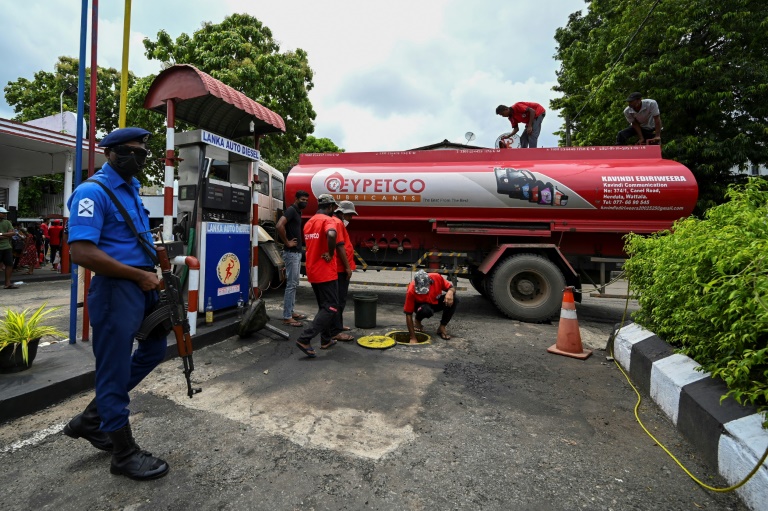
Crisis-hit Sri Lanka announced weekly fuel quotas for motorists on Sunday, as an acute shortage worsened and longer queues formed outside the few pumping stations still operating.

Energy minister Kanchana Wijesekera said the state-run Ceylon Petroleum Corporation was struggling to finance oil imports, while consumption had shot up due to shortages of electricity and liquefied petroleum gas.

“We have no choice but to register consumers at filling stations and give them a guaranteed weekly quota until we are able to strengthen the financial situation,” the minister said.

“I hope to have this system in place by the first week of July.”

He did not say how much fuel motorists will be allowed to buy under the new system.

Sri Lanka has been struggling with its worst economic crisis in decades, with the country unable to import basic necessities such as food, fuel and medication due to a lack of foreign exchange reserves. 

In mid-April, the government ordered all fuel stations not to pump more than four litres of petrol for a motorcycle, five for a three-wheeler and 19.5 litres of gasoline or diesel for cars and SUVs. 

Under that system, many motorists would top up, drain fuel into cans to build a buffer stock, and then return to the queue for more.

This week, queues at fuel stations had become longer, with hundreds of cars and thousands of motorcycles waiting in line, sometimes for days.

Two weeks ago, Sri Lanka received a shipment of Russian crude oil to be refined on the island, but the finished product from the Sapugaskanda refinery was less than a tenth of the country’s daily requirement.

Around 90,000 tonnes of Siberian light crude was sent to Sri Lanka’s lone refinery after the shipment was acquired on credit from Dubai-based intermediary Coral Energy last month.

The Sri Lankan government has also approached Moscow’s envoy in Colombo to help secure direct supplies of Russian oil, Energy Minister Wijesekera said.

Sri Lanka defaulted on its $51 billion foreign debt in mid-April and has since opened talks with the International Monetary Fund for a bailout. 

The United Nations has issued an appeal for $47 million to buy essential food for 1.7 million Sri Lankans in the next four months.

The worst economic crisis since the country gained independence in 1948 has sparked widespread protests calling for President Gotabaya Rajapaksa to step down.

He has refused, and instead got his brother Mahinda to step down as prime minister on May 9.

President Rajapaksa then appointed opposition politician Ranil Wickremesinghe to succeed Mahinda and help lead the country out of the unprecedented economic chaos.

Global media giants battle for IPL cricket rights

Global media giants including Disney and Sony and Asia’s richest man reportedly battled Sunday for the broadcast rights for the Indian Premier League cricket tournament, one of the world’s most-watched sporting events.

The winning bidders were expected to pay up to $7.7 billion in an online auction held by India’s cricket board on Sunday to show and stream the two-month contest for five seasons from 2023 to 2027, according to analysts.

This dwarfs the $2.55 billion shelled out by Star India, owned by US behemoth Disney, for the previous five-year deal which ended last month with the 15th edition of the tournament involving an expanded 10 franchises playing 74 matches.

Attracting some of cricket’s top stars from India and abroad with large salaries, the league has helped make Twenty20, a shorter and more exciting format of the sport, hugely popular, spawning copycat events worldwide.

This time the Board of Control for Cricket in India (BCCI) is selling off four different packages including domestic and international television and online streaming rights as well as for special matches.

Besides Disney and Sony, bidders in the auction, which could stretch into Monday, include a consortium including Viacom as well as Reliance, owned by Asia’s wealthiest man Mukesh Ambani, reports said.

Fellow tycoon Jeff Bezos’s Amazon, which has spent hundreds of millions of dollars on rights for European soccer and American football and had earlier shown interest in the IPL, pulled out of the contest, reports said on Friday.

China vows 'fight to the end' to stop Taiwan independence

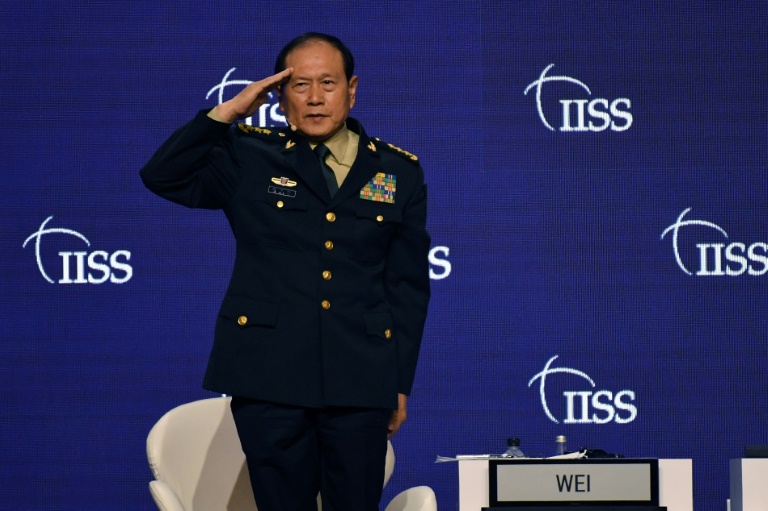
China will “fight to the very end” to stop Taiwanese independence, the country’s defence minister vowed Sunday, stoking already soaring tensions with the United States over the island. 

The superpowers are locked in a growing war of words over the self-ruled, democratic island, which Beijing views as part of its territory awaiting reunification.

Frequent Chinese aircraft incursions near Taiwan have raised the diplomatic temperature, and on Saturday US Defense Secretary Lloyd Austin accused Beijing of “destabilising” military activity, in a speech to the Shangri-La Dialogue security summit.

Defence Minister Wei Fenghe hit back in a fiery address at the same event, saying Beijing had “no choice” but to fight if attempts are made to separate Taiwan from China.

“We will fight at all cost, and we will fight to the very end,” he told the summit, which brings together defence ministers from Asia and around the world. 

“No one should ever underestimate the resolve and ability of the Chinese armed forces to safeguard its territorial integrity.”

“Those who pursue Taiwanese independence in an attempt to split China will definitely come to no good end,” he added.

Wei urged Washington to “stop smearing and containing China… stop interfering in China’s internal affairs and stop harming China’s interests”.

But he also struck a more conciliatory tone at points, calling for a “stable” China-US relationship, which he said was “vital for global peace”.

During his address, Austin stressed the importance of “fully open lines of communication with China’s defence leaders” in avoiding miscalculations.

The pair held their first face-to-face talks on the sidelines of the summit in Singapore on Friday, during which they also clashed over Taiwan. 

Tensions over Taiwan have escalated in particular due to increasing Chinese military aircraft incursions into the island’s air defence identification zone (ADIZ).

President Joe Biden, during a visit to Japan last month, appeared to break decades of US policy when, in response to a question, he said Washington would defend Taiwan militarily if it was attacked by China.

The White House has since insisted its policy of “strategic ambiguity” over whether or not it would intervene had not changed.

– Disputed sea ‘rampage’ –

Despite the heightened tensions, analysts said the fact Austin and Wei were willing to meet in person offered a small sign of hope.

“Talking is better than not talking,” Ian Chong, associate professor of political science at the National University of Singapore, who is attending the summit, told AFP.

“But I think at this point, we won’t be seeing any breakthroughs. Maybe it’ll lead to something in future.”

The dispute is just the latest between Washington and Beijing, who have clashed over everything from the South China Sea to human rights and Russia’s invasion of Ukraine.

China’s expansive claims to the sea, through which trillions of dollars in shipping trade passes annually, have stoked tensions with rival claimants Brunei, Malaysia, the Philippines, Taiwan and Vietnam.

China, whose historical claims were rejected in a landmark 2016 Hague ruling, has been accused of flying its planes and sailing its boats close to the coastlines of rival claimants, and of intercepting patrol planes in international airspace in a dangerous fashion.

While the superpowers traded blows, there were more positive signs for Australia and China’s strained ties as the countries’ defence ministers met for the first time in three years.

Richard Marles held talks for over an hour with Wei on the sidelines of the summit, which wrapped up Sunday. 

Relations had grown frosty of late over issues including Canberra’s call for an independent probe into the origins of the coronavirus pandemic, with China responding by imposing tariffs and disrupting more than a dozen key industries.

In a change of tone to the gathering’s geopolitical sparring, Fiji’s defence minister warned that the biggest threat facing his country was climate change, rather than conflict. 

“Machine guns, fighter jets, ships… are not our primary security concern,” Inia Seruiratu said. “The single greatest threat to our very existence is… human-induced, devastating climate change.”

Close Bitnami banner
Bitnami