World

Australia, China defence ministers meet for first time in 3 years

Australia and China’s defence ministers met for the first time in three years on Sunday, with the talks described as “an important first step” following a period of strained ties. 

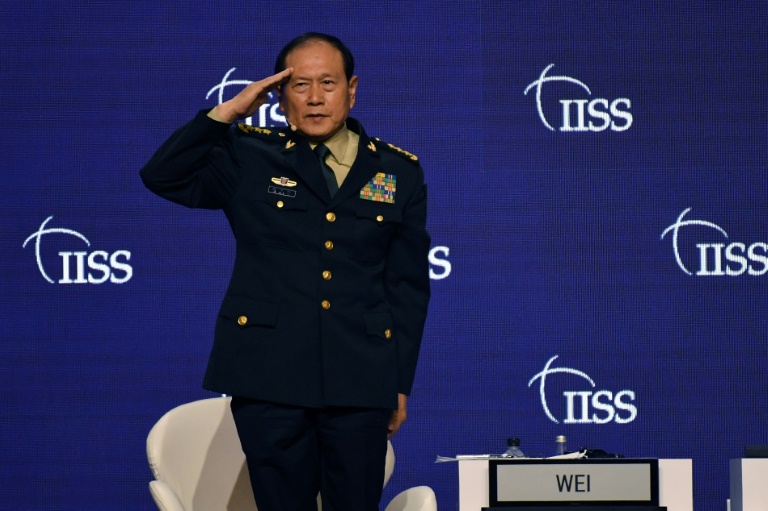
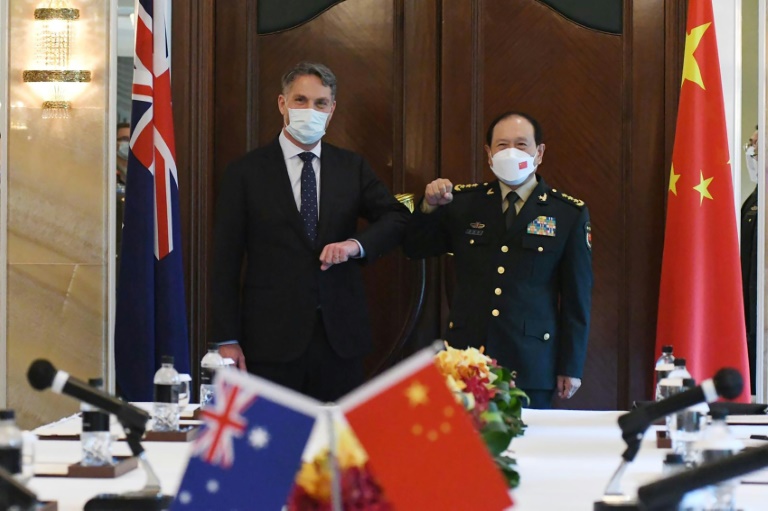
Richard Marles, whose centre-left government came to power in May, held talks for over an hour with China’s Wei Fenghe on the sidelines of the Shangri-La Dialogue security summit in Singapore. 

Marles described the meeting as “an important first step” and “very significant”.

“It was an opportunity to have a very frank and full exchange in which I raised a number of issues of concern to Australia,” said Marles, who is also Australia’s deputy prime minister.

The Chinese government did not offer any immediate comment following the meeting.

Relations between Beijing and Canberra have grown frosty in recent years after the latter called for an independent probe into the origins of the coronavirus pandemic and banned telecom giant Huawei from building Australia’s 5G network.

China — Australia’s biggest trading partner — responded by imposing tariffs and disrupting more than a dozen key industries, including wine, barley and coal.

Marles said the recent interception of an Australian patrol plane in international airspace by a Chinese warplane as well as Australia’s “abiding interest in the Pacific” were among topics discussed. 

This included Australia’s focus on ensuring “that the countries of the Pacific are not put in a position of increased militarisation”, he said.

– ‘Change of tone’ –

The patrol plane incident, described by Canberra as “very dangerous”, happened on May 26, when a Chinese aircraft intercepted the Australian jet and released a cloud of small aluminium strips, known as chaff. 

Australia is battling for influence with China among Pacific island states, with the new government playing catch-up after years of relations being soured by the previous Australian leadership’s foot-dragging on climate change. 

Chinese foreign minister Wang Yi has recently been visiting the region and, while he failed to secure support for a regional security pact, he still inked a series of deals. 

Australia’s new foreign minister, Penny Wong, has paid visits to the Pacific islands since taking office. 

Marles underscored the importance of “open lines of dialogue” with China.

“Australia and China’s relationship is complex. And it’s precisely because of this complexity that it is really important that we are engaging in dialogue right now.”

Asked about next steps, he said Australia wanted to move in a “very sober and very deliberate manner. We don’t underestimate the difficulties that we’ve had in our bilateral relationship”.

He stressed that “while there is a change of tone, there is absolutely no change in the substance of Australia’s national interests”.
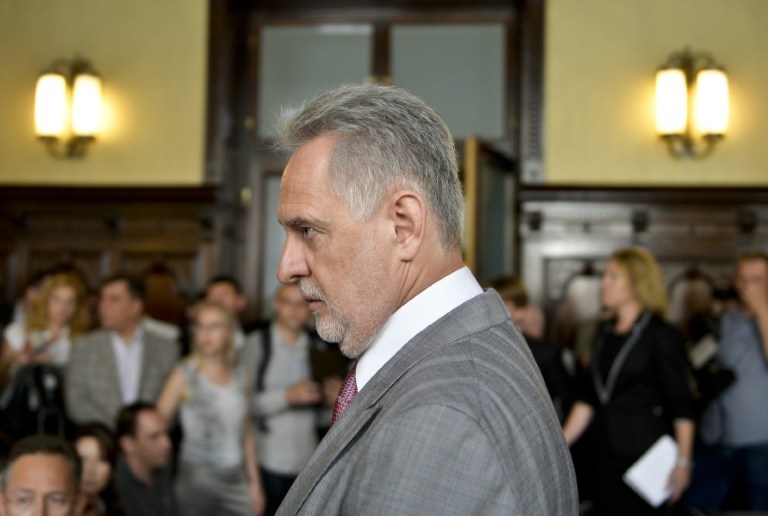
Sanctioned Ukraine tycoon seeks to support war effort

Sanctioned by Ukraine in the past over his close ties to Russia, Dmytro Firtash, one of the country’s wealthiest citizens, made international headlines this week for saying he is sheltering hundreds of Ukrainians in his chemical factory.

“This war is completely pointless and cannot be justified in any way, it only brings suffering and misery on all sides. This humanitarian tragedy is intolerable,” the 57-year-old said in a statement on his company’s website.

A one-time ally of ousted pro-Russian Ukrainian president Viktor Yanukovych, Firtash, who is currently in Austria and fighting extradition to the US on bribery accusations, has a controversial history. 

– Providing refuge –

In June 2021, Ukraine President Volodymyr Zelensky signed a decree imposing sanctions on Firtash, including the freezing of his assets and withdrawal of licences from his companies, after accusing him of selling titanium products to Russian military companies.

But now some 800 civilians, including 200 factory workers, have taken refuge in the bunkers of the Azot chemical plant, owned by Firtash’s Group DF, in Ukraine’s strategic eastern city of Severodonetsk, the tycoon’s lawyer Lanny Davis said this week. 

Russian troops have been pushing for control of the key city over the past weeks as part of their effort to conquer eastern Ukraine. 

Russian President Vladimir Putin “is never going to come out victorious… No matter what happens, Russia will lose,” Firtash said in an NBC News interview in April.

Since Russia invaded Ukraine in February, Firtash’s Inter has also joined the pool of several main Ukrainian news channels, which broadcast news 24/7 and fully reflect the official position of the Ukrainian authorities.

Before the invasion, Inter, one of the largest Ukrainian national TV channels, was considered pro-Russian.

Firtash insists he has always been pro-Ukrainian, telling NBC that he was “never pro-Russian”.

“But you have to understand that I am a businessman. And my goal is to earn money. That’s my job,” he said in the interview.

An AFP request to interview Firtash is pending.

– Wanted by US –

Firtash is also wanted on bribery and racketeering charges in the United States.

In the case, Indian officials allegedly received $18.5 million in bribes to secure titanium mining licences in 2006.

The United States argues it has jurisdiction because the conspiracy involved using US financial institutions, travel to and from the US, and use of US-based communications — computers, telephones, and the internet.

Firtash, who denies the charges and says he is the victim of a smear campaign, was detained in Austria in March 2014.

He had to pay bail of 125 million euros ($130 million) — reportedly a record high for Austria — and has since not been able to leave the country.

Austria’s supreme court ruled in 2019 that he could be extradited. But Firtash is still fighting the extradition and can remain in Austria while court proceedings continue.

In an interview with CNN in May, Firtash said he had requested prosecutors to be allowed to return to Ukraine while the war is going on — but his request was denied.

He has also been accused of being involved in alleged efforts by Rudy Giuliani, former New York mayor and a personal lawyer of former US president Donald Trump, to dig up dirt on Joe Biden before he became president, but Firtash denies ever having met with Giuliani.

Born in a village in western Ukraine, Firtash’s father was a diver and his mother an accountant, and for additional income the family grew tomatoes.

Firtash began his business career by organising commodity trading in Ukraine and Russia.

In 1993, he established business ties in Central Asia and organised the supply of consumer goods in exchange for natural gas.

In 2004, he set up a joint venture with Russia’s Gazprom to supply natural gas from Central Asia to Ukraine and other European countries.

Three years later, Firtash set up Group DF, growing it into a business empire, employing some 100,000 people.

The group is involved in energy, chemicals, media, banking and property in Ukraine and other countries.

French left seeks to challenge Macron in parliament elections

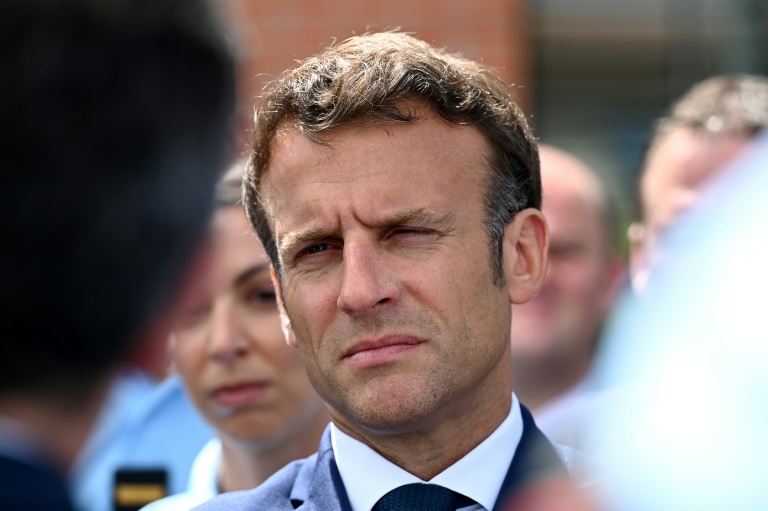
France began voting in the first round of parliamentary elections on Sunday, with a resurgent and newly unified left seeking to thwart President Emmanuel Macron’s plans for reform.

Elections for the 577 seats in the lower house National Assembly are a two-round process, with the shape of the new parliament becoming clear only after the second round on June 19.

The ballots provide a crucial coda to April’s presidential election, when Macron won a second term and pledged a transformative new era after a first mandate dominated by protests, the coronavirus pandemic and Russia’s war against Ukraine.

Polls opened at 8:00 am (0600 GMT) in mainland France, after voters in overseas territories cast ballots earlier in the weekend.

After a dismal performance in April, the French left has united in a coalition for what its leader Jean-Luc Melenchon dubs “the third round” of the presidential elections.

Opinion polls show the president’s centrist alliance, Ensemble (Together), and Melenchon’s NUPES coalition of hard left, Socialists, Communists and Greens neck-and-neck in the popular vote.

But France’s constituency-based parliamentary system and the two-round election means that the seat breakdown will be another matter, and much will depend on turnout in the second round.

The abstention rate is predicted to be well over 50 percent in the first round, in what would be a new record for elections already marked by feeble participation in recent years.

– ‘Cohabitation?’ –

If the president’s alliance retains an overall majority, Macron will be able to carry on governing as before. 

Falling short could prompt messy bill-by-bill deals with right-wing parties in parliament or an unwanted cabinet reshuffle.

A win by the left-wing alliance –- seen as unlikely by analysts but not impossible –- would be a disaster for Macron. 

It would raise the spectre of a clunky “cohabitation” — where the prime minister and president hail from different factions — which has paralysed French politics in the past.

The most recent example was from 1997 to 2002 when right-wing president Jacques Chirac ruled in tandem with Socialist Lionel Jospin as premier.

Socialist president Francois Mitterrand twice had to cohabit with right-wingers: with Chirac in a famously fractious ruling duo and then with Edouard Balladur.

Melenchon, a former Marxist, has already made clear his ambition to become prime minister and stymie Macron’s plan to raise the French retirement age, although the president would retain control over foreign policy.

– ‘Strong and clear majority’ –

Stepping into the fray on Thursday, Macron acknowledged the stakes were high, warning France against choosing “extremes” that would add “crisis to crisis”.

“If the presidential election is crucial, the legislative election is decisive,” he said on a visit to the rural Tarn region, calling for a “strong and clear majority”.

Polls have indicated that Macron’s alliance is expected to win the largest number of seats but is by no means assured of getting over the line of 289 for an absolute majority.

Analysts say the young and members of low-income groups are among those likely to stay at home for the first round and if Melenchon could mobilise them for round two it would transform the picture.

While Macron and his European Union allies breathed a heavy sigh of relief after his solid, if unspectacular, presidential victory against far-right leader Marine Le Pen, the last weeks have brought no sense of a honeymoon.

Energy and food prices are soaring in France as elsewhere in Europe, the treatment of English fans at the Champions League final in Paris damaged France’s image abroad and Macron has been accused by Ukraine of being too accommodating to Russia.

His new Disabilities Minister Damien Abad has faced two rape accusations –- which he has vehemently denied –- while new Prime Minister Elisabeth Borne has yet to make an impact.

Macron has made clear that ministers who are standing in the election — including Borne, who is making her first attempt at winning a seat — will have to step down if they lose.

Of the 577 lawmakers in the National Assembly, eight represent France’s overseas territories and 11 account for French nationals living abroad.

Macron’s party and his allies currently hold an absolute majority of 345 seats.

Under France’s system, a candidate needs over half the vote on the day as well as the backing of at least 25 percent of registered voters in a constituency to be elected outright in the first round.

Otherwise the top two candidates in a constituency, as well as any other candidate who won the backing of at least 12.5 percent of registered voters, go forward to the second round, where the candidate with the most votes wins.

burs/jh/yad

China vows 'fight to the end' to stop Taiwan independence

China will “fight to the very end” to stop Taiwanese independence, the country’s defence minister vowed Sunday, stoking already soaring tensions with the United States over the island. 

The superpowers are locked in a growing war of words over the self-ruled, democratic island, which Beijing views as part of its territory awaiting reunification.

Frequent Chinese aerial incursions near Taiwan have raised the diplomatic temperature, and on Saturday, US Defense Secretary Lloyd Austin accused Beijing of “destabilising” military activity in a speech to the Shangri-La Dialogue security summit.

Defence Minister Wei Fenghe hit back in a fiery address at the same event, saying Beijing had “no choice” but to fight if attempts are made to separate Taiwan from China.

“We will fight at all cost, and we will fight to the very end,” he said. 

“No one should ever underestimate the resolve and ability of the Chinese armed forces to safeguard its territorial integrity.”

“Those who pursue Taiwanese independence in an attempt to split China will definitely come to no good end,” he added.

Wei urged Washington to “stop smearing and containing China… stop interfering in China’s internal affairs and stop harming China’s interests”.

But he also struck a more conciliatory tone at points, calling for a “stable” China-US relationship, which he said was “vital for global peace”.

During his address, Austin stressed the importance of “fully open lines of communication with China’s defence leaders” in avoiding miscalculations.

The pair held their first face-to-face talks on the sidelines of the summit in Singapore on Friday, during which they clashed over Taiwan. 

– US accused of sea ‘rampage’ –

Tensions over Taiwan have escalated in particular due to increasing Chinese military aircraft incursions into the island’s air defence identification zone (ADIZ).

President Joe Biden, during a visit to Japan last month, appeared to break decades of US policy when, in response to a question, he said Washington would defend Taiwan militarily if it was attacked by China.

The White House has since insisted its policy of “strategic ambiguity” over whether or not it would intervene had not changed.

The dispute is just the latest between Washington and Beijing, who have clashed over everything from the South China Sea to human rights in Hong Kong and Xinjiang.

China’s expansive claims to the sea, through which trillions of dollars in shipping trade passes annually, have stoked tensions with rival claimants, Brunei, Malaysia, the Philippines, Taiwan and Vietnam.

China, whose historical claims were rejected in a landmark 2016 Hague ruling, has been accused of flying its planes and sailing its boats close to the coastlines of rival claimants, and of intercepting patrol planes in international airspace in a dangerous fashion.

Wei insisted Sunday that China respects freedom of navigation in the seas, and took a veiled swipe at Washington.

“Some big power has long practised navigation hegemony on the pretext of freedom of navigation,” he said. “It has flexed its muscles by sending warships and warplanes on a rampage in the South China Sea.”

Wei said China — North Korea’s main ally — wanted peace on the Korean Peninsula following Pyongyang’s blitz of sanctions-busting rocket launches and as fears grow it is preparing for a nuclear test. 

“The key to (resolving) the problem now is to pay attention to and meet the security interests of all parties,” he said. 

Speaking at the Shangri-La Dialogue on Sunday, South Korean Defence Minister Lee Jong-sup said Seoul would boost its defence capabilities and work with the United States in face of the threat from the North. 

“The level of tensions on the Korean Peninsula remains higher than in any other place in the world,” he said.

The United States and China have also been at loggerheads over Russia’s invasion of Ukraine, with Washington accusing Beijing of providing tacit support for Moscow.

'Like it or not', Britannia still rules part of Cyprus

Next to a palm tree, the Union Jack hangs limply on a pole outside a simple courthouse built decades ago on this eastern Mediterranean island.

“Morning your honour,” the clerk said in English to the British judge, beginning another day at Her Majesty’s Court in Waterloo Road, Dhekelia.

In this part of Cyprus, a former British colony, Britain is still in charge and Cypriots appear before the court.

Some on the island liken the arrangement to continued colonisation. Scholars called it “undeniably anachronistic” and “highly unusual”. 

“It is different,” said Major General Rob Thomson, the top official in the sovereign areas, “but it’s different because it serves a different purpose.”

Cyprus became independent from Britain in 1960 after a bloody guerrilla campaign. 

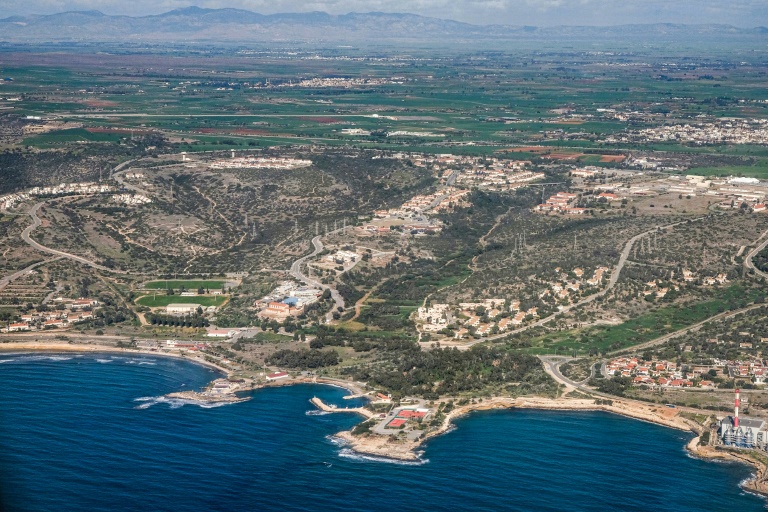
Under that treaty, which Greece and Turkey also signed, Britain retained control over two military zones in the east and south of the island, Sovereign Base Areas (SBAs) where thousands of Cypriots live -– outnumbering British troops.

They comprise the only British overseas territory effectively run through the defence ministry, Thomson, 55, told AFP, a portrait of Queen Elizabeth II hanging in his office.

His three “guiding principles” are to operate the bases, cooperate with Cyprus and to “look after the interests of the people who live there”.

Thomson oversees SBA police, courts, customs and immigration, and a prison — all run separately from the Republic of Cyprus — though laws in the base areas reflect Cypriot regulations.

SBA officers, most of whom are Cypriots, have jurisdiction over 12,000 compatriots living on base land along with 5,662 British troops and their families.

Since no physical borders separate SBA land from the Republic of Cyprus, it’s difficult to tell where their jurisdiction begins -– except for the tell-tale cricket pitch lying in a spectacular valley.

Beaches, ancient ruins and bird-rich wetlands are attractions for tourists, who are also subject to SBA law.

Nicos Costa, one person before the court, was charged with driving while disqualified. It “is a serious offence”, the judge said, as Costa faced a possible two-year jail term.

– Colonial ‘remnants’ –

“It’s a bit strange. Don’t you think?” said Costas Evripidou, a community councillor in Akrotiri, a hilltop village on SBA land on Cyprus’s southern tip.

For Evripidou, the court symbolises an odd arrangement which limits his rights and is seen by many as “remnants of the colonies”.

Akrotiri lies just outside the fences of a Royal Air Force base, from where warplanes thunder off as part of the international coalition against the Islamic State group.

The base has supported operations in Iraq and Afghanistan, and helped reinforce NATO’s eastern flank after Russia invaded Ukraine.

British administration of Cypriots is “not logical anymore”, argued George Perdikis, who protested at the base during two decades as a Green party lawmaker.

Officials from Cyprus and Britain conceded there had been unequal treatment of Cypriot SBA residents due to restrictions on developing their property, which have now changed under new rules adopted last month.

Andreas Theophanous, head of the University of Nicosia’s politics department, said allowing non-military development on base land is “a positive step” but “it’s not enough”.

The island has been divided since 1974 when Turkey invaded following a Greek-sponsored coup.

The Republic of Cyprus, a European Union member with an overwhelmingly Greek-Cypriot majority, controls the southern two-thirds of the island. Only Ankara recognises the self-declared Turkish Republic of Northern Cyprus.

Theophanous and other Cypriots see Britain’s role as intertwined with what they call the “Cyprus problem”.

“Britain has benefited from the bases,” he said, but did not in turn fulfil its treaty obligations “to protect the territorial integrity, sovereignty and independence of the Republic of Cyprus”.

Anti-British anger resurfaced when Cypriot groups withdrew from an SBA charity concert marking the queen’s Platinum Jubilee. Critics have linked her to Britain’s hanging of nine Cypriots during the 1955-59 armed struggle by Greek nationalists to unite Cyprus with Greece.

– ‘Global presence’ –

“Britain has not come to terms with the past,” said Theophanous, calling for London to make a symbolic gesture acknowledging “those executed by the British authorities in the 1950s” and to work to end the Turkish occupation.

But Thomson said the “venomous criticism” of the concert was from a tiny minority, arguing the focus should be on “the profound partnership that we share”.

“The UK is absolutely invested in trying to find a solution to the Cyprus problem,” he stressed.

Apart from warplanes and what Thomson called a “significant” intelligence capability, the bases host two infantry battalions, one on standby for rapid deployment. They help make Britain, its NATO allies, and the region safer, he said.

“It gives us global presence,” he said, offering “strategic advantage” to the West, with no disadvantages for Cypriots.

Ypsonas Mayor Pantelis Georgiou can see things from both sides. About 25 percent of his community, and roughly 1,000 residents, lies inside the base.

Despite questions about the arrangement “whether we like it or not it’s within” the 1960 agreement, Georgiou said.

Is AI the future of art?

To many they are art’s next big thing — digital images of jellyfish pulsing and blurring in a dark pink sea, or dozens of butterflies fusing together into a single organism.

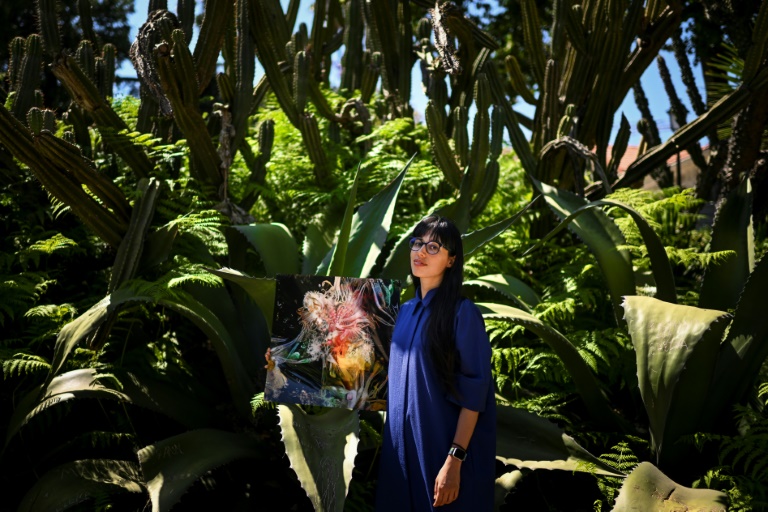
The Argentine artist Sofia Crespo, who created the works with the help of artificial intelligence, is part of the “generative art” movement, where humans create rules for computers which then use algorithms to generate new forms, ideas and patterns.

The field has begun to attract huge interest among art collectors — and even bigger price tags at auction. 

US artist and programmer Robbie Barrat — a prodigy still only 22 years old — sold a work called “Nude Portrait#7Frame#64” at Sotheby’s in March for £630,000 ($821,000). 

That came almost four years after French collective Obvious sold a work at Christie’s titled “Edmond de Belamy” — largely based on Barrat’s code — for $432,500.

– A ballet with machines –

Collector Jason Bailey told AFP that generative art was “like a ballet between humans and machines”. 

But the nascent scene could already be on the verge of a major shake-up, as tech companies begin to release AI tools that can whip up photo-realistic images in seconds. 

Artists in Germany and the United States blazed a trail in computer-generated art during the 1960s. 

The V&A museum in London keeps a collection going back more than half a century, one of the key works being a 1968 piece by German artist Georg Nees called “Plastik 1”. 

Nees used a random number generator to create a geometric design for his sculpture. 

– ‘Babysitting’ computers –

Nowadays, digital artists work with supercomputers and systems known as Generative Adversarial Networks (GANs) to create images far more complex than anything Nees could have dreamed of. 

GANs are sets of competing AIs –- one generates an image from the instructions it is given, the other acts as a gatekeeper, judging whether the output is accurate. 

If it finds fault, it sends the image back for tweaks and the first AI gets back to work for a second try to beat the gamekeeper. 

But artists like Crespo and Barrat insist that the artist is still central to the process, even if their working methods are not traditional.

“When I’m working this way, I’m not creating an image. I’m creating a system that can create images,” Barrat told AFP. 

Crespo said she thought her AI machine would be a true “collaborator”, but in reality it is incredibly tough to get even a single line of code to generate satisfactory results.

She said it was more like “babysitting” the machine.

Tech companies are now hoping to bring a slice of this rarefied action to regular consumers. 

Google and Open AI are both touting the merits of new tools they say bring photorealism and creativity without the need for coding skills. 

– Enter the ‘transformers’ –

They have replaced GANs with more user-friendly AI models called “transformers” that are adept at converting everyday speech into images. 

Google Imagen’s webpage is filled with absurdist images generated by instructions such as: “A small cactus wearing a straw hat and neon sunglasses in the Sahara desert.”

Open AI boasts that its Dalle-2 tool can offer any scenario in any artistic style from the Flemish masters to Andy Warhol. 

Although the arrival of AI has led to fears of humans being replaced by machines in fields from customer care to journalism, artists see the developments more as an opportunity than a threat. 

Crespo has tried out Dalle-2 and said it was a “new level in terms of image generation in general” — though she prefers her GANs.

“I very often don’t need a model that is very accurate to generate my work, as I like very much when things look indeterminate and not easily recognisable,” she said. 

Camille Lenglois of Paris’s Pompidou Centre — Europe’s largest collection of contemporary art — also played down any idea that artists were about to be replaced by machines.

She told AFP that machines did not yet have the “critical and innovative capacity”, adding: “The ability to generate realistic images does not make one an artist.” 

Is AI the future of art?

To many they are art’s next big thing — digital images of jellyfish pulsing and blurring in a dark pink sea, or dozens of butterflies fusing together into a single organism.

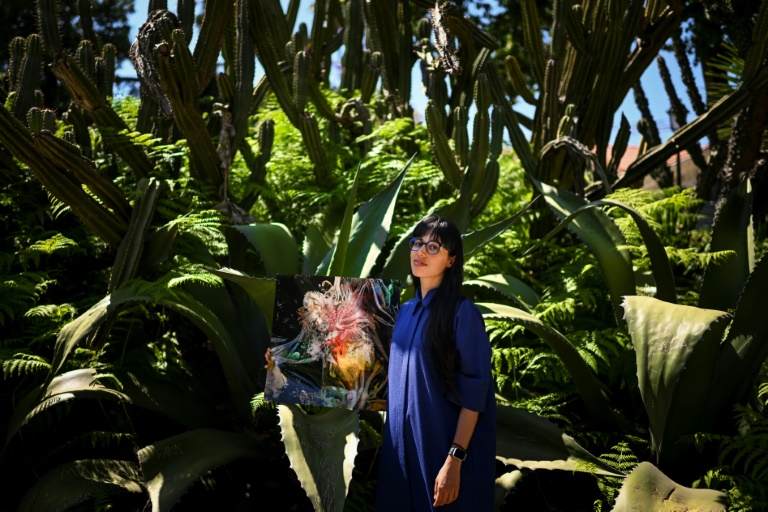
The Argentine artist Sofia Crespo, who created the works with the help of artificial intelligence, is part of the “generative art” movement, where humans create rules for computers which then use algorithms to generate new forms, ideas and patterns.

The field has begun to attract huge interest among art collectors — and even bigger price tags at auction. 

US artist and programmer Robbie Barrat — a prodigy still only 22 years old — sold a work called “Nude Portrait#7Frame#64” at Sotheby’s in March for £630,000 ($821,000). 

That came almost four years after French collective Obvious sold a work at Christie’s titled “Edmond de Belamy” — largely based on Barrat’s code — for $432,500.

– A ballet with machines –

Collector Jason Bailey told AFP that generative art was “like a ballet between humans and machines”. 

But the nascent scene could already be on the verge of a major shake-up, as tech companies begin to release AI tools that can whip up photo-realistic images in seconds. 

Artists in Germany and the United States blazed a trail in computer-generated art during the 1960s. 

The V&A museum in London keeps a collection going back more than half a century, one of the key works being a 1968 piece by German artist Georg Nees called “Plastik 1”. 

Nees used a random number generator to create a geometric design for his sculpture. 

– ‘Babysitting’ computers –

Nowadays, digital artists work with supercomputers and systems known as Generative Adversarial Networks (GANs) to create images far more complex than anything Nees could have dreamed of. 

GANs are sets of competing AIs –- one generates an image from the instructions it is given, the other acts as a gatekeeper, judging whether the output is accurate. 

If it finds fault, it sends the image back for tweaks and the first AI gets back to work for a second try to beat the gamekeeper. 

But artists like Crespo and Barrat insist that the artist is still central to the process, even if their working methods are not traditional.

“When I’m working this way, I’m not creating an image. I’m creating a system that can create images,” Barrat told AFP. 

Crespo said she thought her AI machine would be a true “collaborator”, but in reality it is incredibly tough to get even a single line of code to generate satisfactory results.

She said it was more like “babysitting” the machine.

Tech companies are now hoping to bring a slice of this rarefied action to regular consumers. 

Google and Open AI are both touting the merits of new tools they say bring photorealism and creativity without the need for coding skills. 

– Enter the ‘transformers’ –

They have replaced GANs with more user-friendly AI models called “transformers” that are adept at converting everyday speech into images. 

Google Imagen’s webpage is filled with absurdist images generated by instructions such as: “A small cactus wearing a straw hat and neon sunglasses in the Sahara desert.”

Open AI boasts that its Dalle-2 tool can offer any scenario in any artistic style from the Flemish masters to Andy Warhol. 

Although the arrival of AI has led to fears of humans being replaced by machines in fields from customer care to journalism, artists see the developments more as an opportunity than a threat. 

Crespo has tried out Dalle-2 and said it was a “new level in terms of image generation in general” — though she prefers her GANs.

“I very often don’t need a model that is very accurate to generate my work, as I like very much when things look indeterminate and not easily recognisable,” she said. 

Camille Lenglois of Paris’s Pompidou Centre — Europe’s largest collection of contemporary art — also played down any idea that artists were about to be replaced by machines.

She told AFP that machines did not yet have the “critical and innovative capacity”, adding: “The ability to generate realistic images does not make one an artist.” 

Turkey bets on modern cruise hub to boost tourism

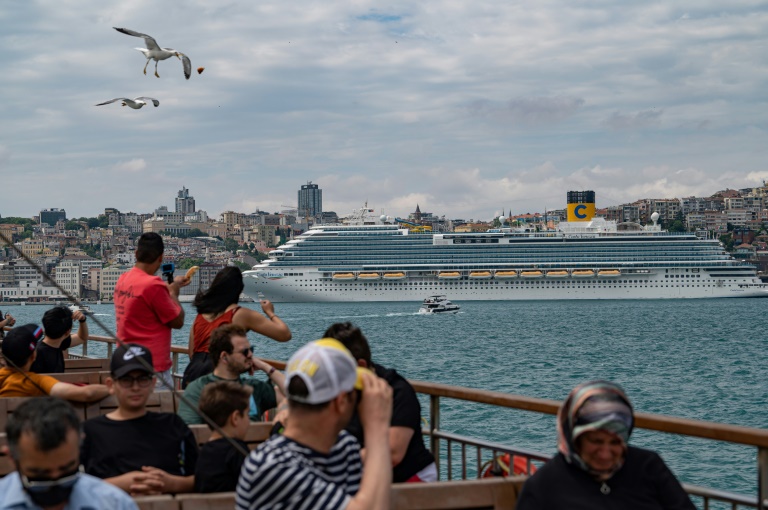
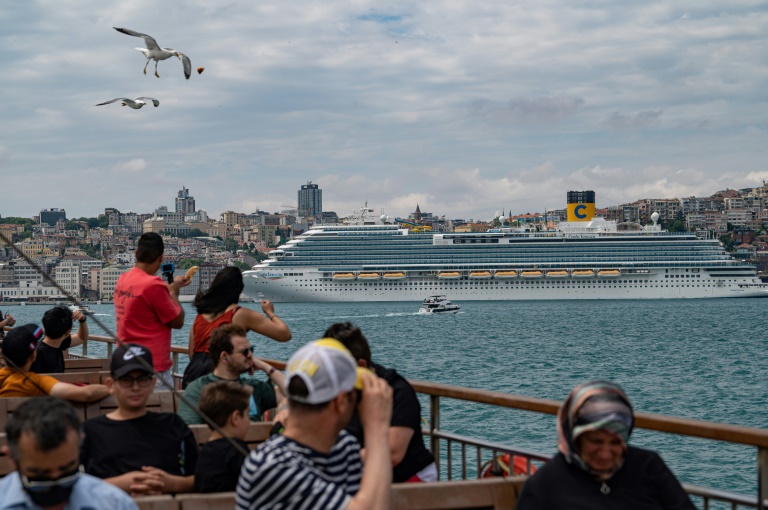
A state-of-the-art port in Istanbul with an underground terminal, a celebrity chef’s restaurant and a shopping centre, welcomes yet another 5,000-passenger cruise ship, bringing more cash to Turkey’s struggling tourism industry.

Hit hard by Covid, Turkey’s tourism sector could get a shot in the arm from the revenue generated at Galataport, which opened in 2021 — a year later than planned due to the pandemic.

The port could also provide a boost to an economy that has been weighed down by double-digit inflation and a currency in free fall, though the project has drawn criticism over the destruction of historical monuments and the potential environmental impact.

Figen Ayan, chief port officer at Galataport, said “ships began to arrive one after the other” after the facility opened in October. 

“Galataport has become the face of tourism,” she told AFP.

The 20-story Costa Venezia vessel from Italy was taking passengers from an 11-day voyage to the Aegean Sea when it docked in Galataport, its gangway connecting directly to the futuristic underground customs terminal.

The port is home to a shopping centre, a hotel, cultural venues and a restaurant owned by Turkish butcher Nusret Gokce, better known as Salt Bae, the social media star who sprinkles salt on steaks in front of celebrity customers.

“Galataport Istanbul is much more than a cruise port,” Ayan said.

– High-spending passengers –

Around 30 cruise ships have so far anchored at Galataport and 200 more are expected by the end of the year, which amounts to 450,000 passengers. 

The pandemic caused havoc in the global cruise ship industry as vessels were hit by outbreaks and vessels were banned in several countries.

“Now we can say that we have left the pandemic behind and that the cruise sector, which is an important segment of tourism, has revived and is on the move,” Ayan said.

The target is 1.5 million cruise passengers and 25 million visitors annually.

“If a regular tourist spends $62 daily, a cruise passenger spends $400. He spends up to eight times more in one day,” she said. 

– Environmental cost –

The project also opened up a 1.2-kilometre (three-quarter-mile) coastline that had been closed to public use for 200 years.

But critics, including some urban planners and architects, say the gentrification of the area destroyed old neighbourhoods, with the shopping centre replacing a historical post office building, and also posed a risk to the environment.

Cruises threaten marine life, discharging large quantities of sewage and other waste, said Muharrem Balci, associate professor of biology at Istanbul University.

“The environmental cost of cruises is seven times higher than the financial return they provide,” Balci told AFP.

“The consumption level of each traveller is higher than in the host cities, therefore, cruise tourism has the potential to create stress (for the environment) for the regions they visit.”

Large ships were banned from Venice last year after years of warnings that the giant floating hotels risked causing irreparable damage to the lagoon city.

Burak Caliskan, country manager for MSC Cruises, said no such danger awaited Istanbul. 

“We don’t think Istanbul will face a similar situation. We don’t have a city structure like Venice,” he told AFP. 

Caliskan also said newly built ships addressed environmental concerns. 

“To give a few examples, the exhaust gases from the ships are filtered. The paints used on the ships have been completely changed. Paints that will not harm the sea are used,” he said. 

“We even have efforts to reduce the sound of the ships’ engine so that while our ships are navigating in the open seas, they do not cause any disturbance to the living things, especially the whales.”

Turkey bets on modern cruise hub to boost tourism

A state-of-the-art port in Istanbul with an underground terminal, a celebrity chef’s restaurant and a shopping centre, welcomes yet another 5,000-passenger cruise ship, bringing more cash to Turkey’s struggling tourism industry.

Hit hard by Covid, Turkey’s tourism sector could get a shot in the arm from the revenue generated at Galataport, which opened in 2021 — a year later than planned due to the pandemic.

The port could also provide a boost to an economy that has been weighed down by double-digit inflation and a currency in free fall, though the project has drawn criticism over the destruction of historical monuments and the potential environmental impact.

Figen Ayan, chief port officer at Galataport, said “ships began to arrive one after the other” after the facility opened in October. 

“Galataport has become the face of tourism,” she told AFP.

The 20-story Costa Venezia vessel from Italy was taking passengers from an 11-day voyage to the Aegean Sea when it docked in Galataport, its gangway connecting directly to the futuristic underground customs terminal.

The port is home to a shopping centre, a hotel, cultural venues and a restaurant owned by Turkish butcher Nusret Gokce, better known as Salt Bae, the social media star who sprinkles salt on steaks in front of celebrity customers.

“Galataport Istanbul is much more than a cruise port,” Ayan said.

– High-spending passengers –

Around 30 cruise ships have so far anchored at Galataport and 200 more are expected by the end of the year, which amounts to 450,000 passengers. 

The pandemic caused havoc in the global cruise ship industry as vessels were hit by outbreaks and vessels were banned in several countries.

“Now we can say that we have left the pandemic behind and that the cruise sector, which is an important segment of tourism, has revived and is on the move,” Ayan said.

The target is 1.5 million cruise passengers and 25 million visitors annually.

“If a regular tourist spends $62 daily, a cruise passenger spends $400. He spends up to eight times more in one day,” she said. 

– Environmental cost –

The project also opened up a 1.2-kilometre (three-quarter-mile) coastline that had been closed to public use for 200 years.

But critics, including some urban planners and architects, say the gentrification of the area destroyed old neighbourhoods, with the shopping centre replacing a historical post office building, and also posed a risk to the environment.

Cruises threaten marine life, discharging large quantities of sewage and other waste, said Muharrem Balci, associate professor of biology at Istanbul University.

“The environmental cost of cruises is seven times higher than the financial return they provide,” Balci told AFP.

“The consumption level of each traveller is higher than in the host cities, therefore, cruise tourism has the potential to create stress (for the environment) for the regions they visit.”

Large ships were banned from Venice last year after years of warnings that the giant floating hotels risked causing irreparable damage to the lagoon city.

Burak Caliskan, country manager for MSC Cruises, said no such danger awaited Istanbul. 

“We don’t think Istanbul will face a similar situation. We don’t have a city structure like Venice,” he told AFP. 

Caliskan also said newly built ships addressed environmental concerns. 

“To give a few examples, the exhaust gases from the ships are filtered. The paints used on the ships have been completely changed. Paints that will not harm the sea are used,” he said. 

“We even have efforts to reduce the sound of the ships’ engine so that while our ships are navigating in the open seas, they do not cause any disturbance to the living things, especially the whales.”

Ministers gather for high-stakes WTO meet

The World Trade Organization gathers ministers in Geneva Sunday to tackle pressing issues including global food security threatened by Russia’s invasion of Ukraine, overfishing and equitable access to Covid vaccines.

With its first ministerial meeting in years, WTO faces pressure to finally eke out long-sought trade deals and show unity amid the still raging pandemic and an impending global hunger crisis.  

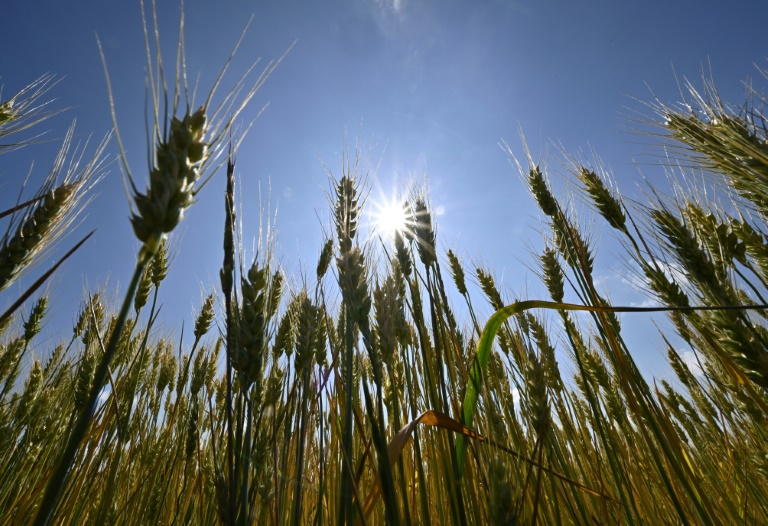
Top of the agenda as the four-day meeting kicks off is the toll Russia’s war in Ukraine — traditionally a breadbasket that feeds hundreds of millions of people — is having on food security.

EU trade commissioner Valdis Dombrovskis said the bloc had been “working hard with all the members to prepare a multilateral food security package,” slamming Russia for “using food and grain as a weapon of war”.

The WTO is hoping to isolate criticism of Russia’s war in Ukraine to the first day of talks, when many of the more than 100 ministers due to attend are expected to issue blistering statements.

But with many flatly refusing to negotiate directly with Moscow, there are fears the issue could bleed into the following days, when WTO wants to focus on nailing down long-elusive trade deals.  

“There is a real risk that things could go off the rails next week,” a Geneva-based diplomatic source said.

– Fisheries deal in sight? –

The tensions have not curbed WTO chief Ngozi Okonjo-Iweala’s zeal to press for agreements on a range of issues during the first ministerial gathering on her watch, especially as the global trade body strives to prove its worth after nearly a decade with no new large trade deals.

There is cautious optimism that countries could finally agree on banning subsidies that contribute to illegal and unregulated fishing, after more than 20 years of negotiations.

The WTO says talks have never been this close to the finish line, but diplomats remain cautious.

The negotiations “have made progress recently, but these remain difficult subjects,” a diplomatic source in Geneva told AFP.

One of the main sticking points has been so-called special and differential treatment (SDT) for developing countries, like major fishing nation India, which can request exemptions.

A draft text sent to the ministers for review proposes exemptions should not apply to member states accounting for an as yet undefined share of the global volume of fishing.

The duration of exemptions also remains undefined.

Environmental groups say anything beyond 10 years would be catastrophic. India has demanded a 25-year exemption.

– India ‘creating problems’ –

“Twenty-five years is an unreasonable length of time,” Isabel Jarrett, head of the Pew Charitable Trusts’ project to end harmful fisheries subsidies, told AFP, warning so much leeway would be “devastating for fish stocks”.

Colombian Ambassador Santiago Wills, who chairs the WTO fisheries subsidies negotiations, stressed the urgency of securing a deal.

“The longer we wait, the more the fish lose. And the more the fish lose, the more we all lose,” he said in a statement Saturday.

India however appears to be stubbornly sticking to its demands on fisheries and in other areas, jeopardising the chances of reaching deals since WTO agreements require full consensus backing.

“There is not a single issue that India is not blocking,” a Geneva-based ambassador said, singling out WTO reform and agriculture.

A source with knowledge of the negotiations towards a text on food security meanwhile said “the Indians are still creating problems”.

Elvire Fabry, a senior research fellow at the Jacques Delors Institute, said India had appeared eager to “throw more weight around” in international organisations, warning New Delhi was capable of scuppering talks.

– Patent waiver? –

The ministers are also set to seek a joint WTO response to the pandemic, although significant obstacles remain. 

Back in October 2020, India and South Africa called for intellectual property rights on Covid-19 vaccines and other pandemic responses to be suspended in a bid to ensure more equitable access in poorer nations.

After multiple rounds of talks, the European Union, the United States, India and South Africa hammered out a compromise that has become the basis for a draft text sent to ministers.

The text, which would allow most developing countries, although not China, to produce Covid vaccines without authorisation from patent holders, is still facing opposition from both sides.

Britain and Switzerland are reluctant to sign up, arguing along with the pharmaceutical industry that the waiver would undermine investment in innovation.

Public interest groups meanwhile say the text falls far short of what is needed by covering only vaccines and not Covid treatments and diagnostics.

“The negotiations are still aeons away from ensuring access to lifesaving Covid medical tools for everyone, everywhere,” Doctors Without Borders warned.

Close Bitnami banner
Bitnami