World

Ministers gather for high-stakes WTO meet

The World Trade Organization gathers ministers in Geneva Sunday to tackle pressing issues including global food security threatened by Russia’s invasion of Ukraine, overfishing and equitable access to Covid vaccines.

With its first ministerial meeting in years, WTO faces pressure to finally eke out long-sought trade deals and show unity amid the still raging pandemic and an impending global hunger crisis.  

Top of the agenda as the four-day meeting kicks off is the toll Russia’s war in Ukraine — traditionally a breadbasket that feeds hundreds of millions of people — is having on food security.

EU trade commissioner Valdis Dombrovskis said the bloc had been “working hard with all the members to prepare a multilateral food security package,” slamming Russia for “using food and grain as a weapon of war”.

The WTO is hoping to isolate criticism of Russia’s war in Ukraine to the first day of talks, when many of the more than 100 ministers due to attend are expected to issue blistering statements.

But with many flatly refusing to negotiate directly with Moscow, there are fears the issue could bleed into the following days, when WTO wants to focus on nailing down long-elusive trade deals.  

“There is a real risk that things could go off the rails next week,” a Geneva-based diplomatic source said.

– Fisheries deal in sight? –

The tensions have not curbed WTO chief Ngozi Okonjo-Iweala’s zeal to press for agreements on a range of issues during the first ministerial gathering on her watch, especially as the global trade body strives to prove its worth after nearly a decade with no new large trade deals.

There is cautious optimism that countries could finally agree on banning subsidies that contribute to illegal and unregulated fishing, after more than 20 years of negotiations.

The WTO says talks have never been this close to the finish line, but diplomats remain cautious.

The negotiations “have made progress recently, but these remain difficult subjects,” a diplomatic source in Geneva told AFP.

One of the main sticking points has been so-called special and differential treatment (SDT) for developing countries, like major fishing nation India, which can request exemptions.

A draft text sent to the ministers for review proposes exemptions should not apply to member states accounting for an as yet undefined share of the global volume of fishing.

The duration of exemptions also remains undefined.

Environmental groups say anything beyond 10 years would be catastrophic. India has demanded a 25-year exemption.

– India ‘creating problems’ –

“Twenty-five years is an unreasonable length of time,” Isabel Jarrett, head of the Pew Charitable Trusts’ project to end harmful fisheries subsidies, told AFP, warning so much leeway would be “devastating for fish stocks”.

Colombian Ambassador Santiago Wills, who chairs the WTO fisheries subsidies negotiations, stressed the urgency of securing a deal.

“The longer we wait, the more the fish lose. And the more the fish lose, the more we all lose,” he said in a statement Saturday.

India however appears to be stubbornly sticking to its demands on fisheries and in other areas, jeopardising the chances of reaching deals since WTO agreements require full consensus backing.

“There is not a single issue that India is not blocking,” a Geneva-based ambassador said, singling out WTO reform and agriculture.

A source with knowledge of the negotiations towards a text on food security meanwhile said “the Indians are still creating problems”.

Elvire Fabry, a senior research fellow at the Jacques Delors Institute, said India had appeared eager to “throw more weight around” in international organisations, warning New Delhi was capable of scuppering talks.

– Patent waiver? –

The ministers are also set to seek a joint WTO response to the pandemic, although significant obstacles remain. 

Back in October 2020, India and South Africa called for intellectual property rights on Covid-19 vaccines and other pandemic responses to be suspended in a bid to ensure more equitable access in poorer nations.

After multiple rounds of talks, the European Union, the United States, India and South Africa hammered out a compromise that has become the basis for a draft text sent to ministers.

The text, which would allow most developing countries, although not China, to produce Covid vaccines without authorisation from patent holders, is still facing opposition from both sides.

Britain and Switzerland are reluctant to sign up, arguing along with the pharmaceutical industry that the waiver would undermine investment in innovation.

Public interest groups meanwhile say the text falls far short of what is needed by covering only vaccines and not Covid treatments and diagnostics.

“The negotiations are still aeons away from ensuring access to lifesaving Covid medical tools for everyone, everywhere,” Doctors Without Borders warned.
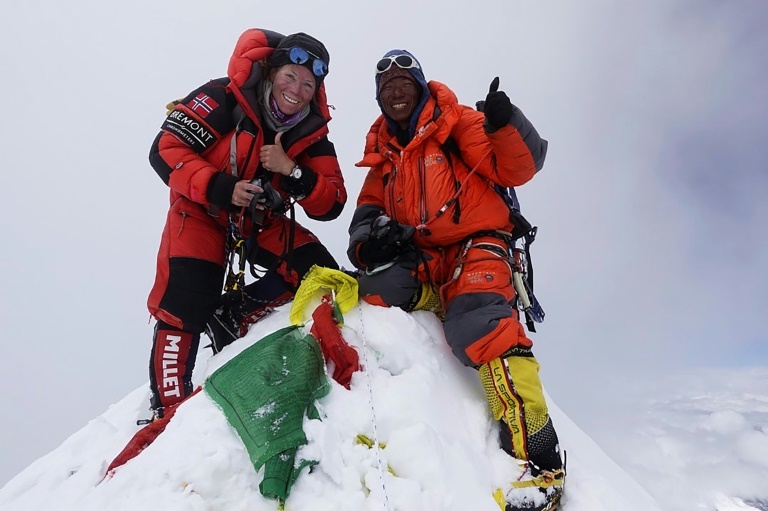
Norwegian climber sets her sights on 14 peaks record

A Norwegian climber is on track to beat the time record for summiting the globe’s 14 highest peaks, part of her quest to change how the mountaineering world views women athletes.

Kristin Harila has already climbed six mountains over 8,000 metres (26,250 feet) high, including Everest, in the last two months. 

The 36-year-old hopes to match or surpass Nepali adventurer Nirmal Purja and his groundbreaking 2019 record of six months and six days, an achievement that smashed the previous record and was profiled in a popular Netflix documentary.

“In history and until now, it has been the strong macho men going out climbing mountains,” Harila told AFP this week.

“When I talk to people that are not in this sport, they believe that men are more capable than women… If we are going to change, we need to get attention and show that women are just as capable.”

Male climbers and guides far outnumber women in the top tier of the sport, with only a handful of women mountaineers getting attention and sponsorships for their expeditions. 

Out of nearly a thousand climbers who visited Nepal’s famed Himalayan peaks this year, only around a fifth were women, according to Nepali government data.

Harila’s first notable climb was on Tanzania’s Mount Kilimanjaro in 2015, but she made headlines last year for becoming the fastest woman to travel between the summits of Everest and Mount Lhotse in Nepal.

She accomplished that feat in 12 hours, but broke her own record this year, knocking four hours off her time.

But neither record was enough to convince major sponsors to back her current endeavour.

“There are lots of girls and women (who want) to climb, they want to have the sponsorship from the brands,” she said. 

“It’s easier for the brands to believe in what the men are presenting.”

The former cross-country skier was able to find support from Bremont Watches and some other brands, but still had to sell her apartment to fund the project, she said.

– ‘Inspire women’ –

Only around 40 people in history have summited all 14 of the world’s 8,000-metre-plus peaks.

None have come close to Nirmal Purja’s 2019 expedition. He demolished the previous record for accomplishing the feat with supplemental oxygen, set by Poland’s Jerzy Kukuczka in the 1980s at seven years, 11 months and 14 days.

Harila said the Nepali climber was an “inspiration”. 

“But for me, it is not a competition against him, I don’t care much about that,” she added.

Nonetheless, she climbed her first six peaks in just 29 days, accompanied by her Nepali guides Pasdawa and Dawa Ongju Sherpa, breaking an earlier record set by Purja. 

“She is a very strong and determined climber. The first phase has been record-breaking,” Lakpa Sherpa of 8K Expeditions, Harila’s expedition organiser, told AFP.

The team is now preparing to leave for Pakistan to climb their next five mountains, including K2 and the 8,126 metre (26,660 foot) Nanga Parbat, while she raises more funds for the expedition.

Maya Sherpa, the president of the Everest Summiteers Association, said Harila’s project was a welcome effort to bring more women into the male-dominated climbing world.

“Climbers like her are very important to set an example,” Sherpa said. 

Australian defence minister introduced to Chinese counterpart

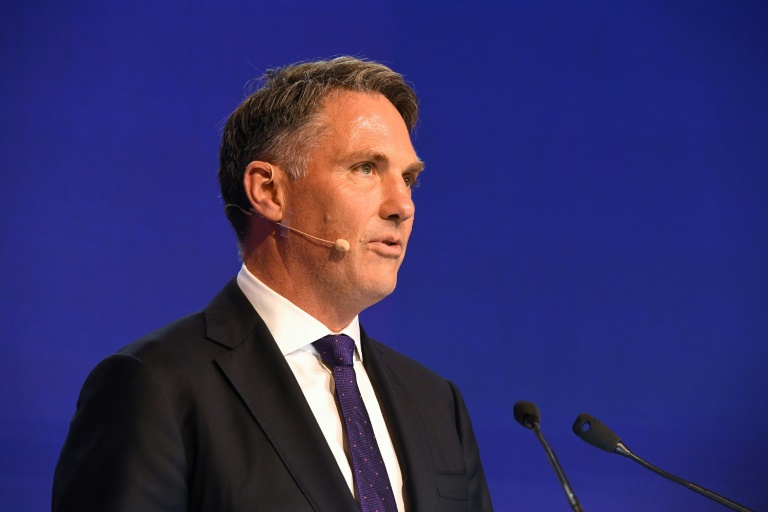
Australian Defence Minister Richard Marles confirmed Sunday he was introduced to his Chinese counterpart Wei Fenghe at Singapore’s Shangri-La Dialogue, the first such contact between the nations in more than two years.

Marles, who also serves as Australia’s deputy prime minister, told Sky News Australia the pair had shaken hands at the high-level security summit “but there’s been no opportunity to have a proper conversation”.

The defence minister said it was possible a meeting between them could occur on Sunday, the final day of the dialogue.

Relations between Beijing and Canberra have grown frosty in recent years after the latter called for an independent probe into the origins of the coronavirus pandemic and banned telecom giant Huawei from building Australia’s 5G network.

Marles cautioned that the interaction was “literally nothing more than a handshake”, but he did note that United States Defence Secretary Lloyd Austin met with Wei in Singapore.

He called on China to be transparent about its “very significant military build-up”.

“Insecurity is what drives an arms race, and we can’t afford to see that happen in this part of the world,” Marles said.

The handshake came as Australia’s Trade and Tourism Minister Don Farrell sought a meeting with his Chinese counterpart while in Geneva for World Trade Association meetings.

“I look forward to an early opportunity to engage with Commerce Minister Wang Wentao,” Farrell said in a statement.

Resurging US inflation puts Fed on track for more big rate hikes

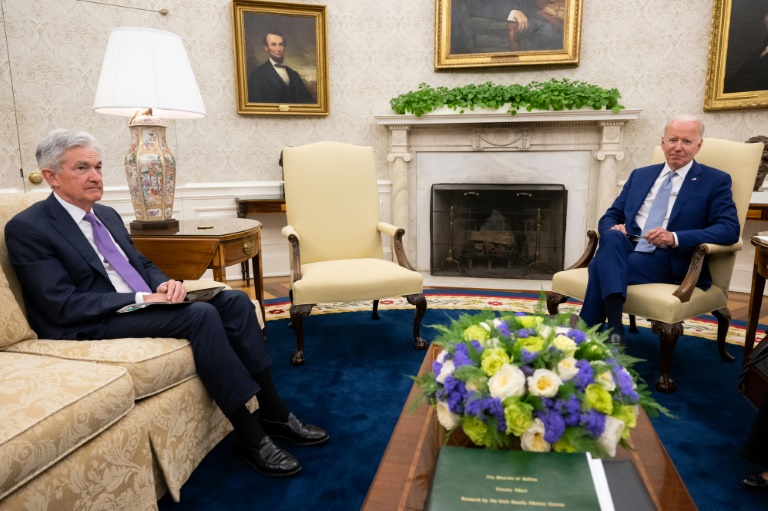
Red-hot US inflation is showing few signs of cooling, putting the Federal Reserve on track to continue its aggressive interest rate increases to help cool high prices that are challenging Joe Biden’s presidency.

The hoped-for signs of relief for American families did not materialize in May as consumer prices hit a new four-decade high, rising 8.6 percent and topping what economists thought was the peak in March.

With Russia’s war on Ukraine continuing to pressure global fuel and food prices, and amid ongoing supply chain uncertainties due to Covid-19 lockdowns in Asia, analysts now say the expected easing of inflationary pressures will take much longer to materialize.

The US central bank already had signaled plans for more big increases in the benchmark borrowing rate this week and next month, but chances are rising that the Fed might have to be even more aggressive — which increases the risk the economy might tip into a recession.

The latest inflation report — the last major data point before the Fed’s policy meeting Tuesday and Wednesday — also douses hopes central bankers will be able to call a ceasefire in September ahead of key congressional elections, where Biden’s Democrats are widely expected to suffer damaging losses.

Prices continued to rise last month for a range of goods, including housing, groceries, airline fares and used and new vehicles, setting new records in multiple categories, according to the Labor Department data.

Energy has soared 34.6 percent over the past year, the fastest since September 2005, while food jumped 10.1 percent, and the cost of fuel oil more than doubled, jumping 106.7 percent, the largest increase in the history of CPI, which dates to 1935.

The CPI surge “raises the probability of even more aggressive Fed rate hikes to tamp down on inflationary expectations,” said Mickey Levy of Berenberg Capital Markets

If the policy-setting Federal Open Market Committee decides on a giant step — three quarters of a point rather than the expected half-point increase — it would be the first 75 basis point rate hike since November 1994.

Diane Swonk of Grant Thornton indicated such a move is possible. 

“They are behind the curve and eager to catch up,” she said on Twitter. “Fed has to reduce demand to meet a supply-constrained world. Ugly in many ways.”

Economists at Barclays are now calling for a 0.75-point increase, though Ryan Sweet at Moody’s says chances are low, and Karl Haeling at LBBW expects three more half-point hikes.

– Political considerations? –

Biden is facing growing political backlash as high prices increase the pain for American families, who are seeing daily records at the gas pump and higher grocery bills due to the fallout from Russian leader Vladimir Putin’s invasion of Ukraine.

Unlike his predecessor Donald Trump, who relentlessly attacked the Fed and its chair Jerome Powell, Biden has publicly endorsed the central bank’s efforts.

Biden, who blames “Putin’s Price Hike” for the acceleration in inflation, said Washington “must do more — and quickly — to get prices down here in the United States.” 

Hoping to avoid a devastating setback in November elections that could return control of the legislature to opposition Republicans, Biden has urged Congress to approve legislation to bring down costs of key products such as medicines and services such as shipping to soften the blow for US consumers.

Some analysts had speculated that Powell might call for a timeout in the interest rate moves at the FOMC’s September meeting, but economist Levy echoed the prevailing view that a pause in rate hikes is now “looking increasingly unlikely.”

Powell has always insisted that central bankers eschew political considerations and focus on what’s best for the economy.

The Fed, which has already acknowledged that slowing demand will entail some pain, is hoping to cool price pressures without choking off economic growth — but that is looking increasingly difficult.

Gita Gopinath, the number two at the International Monetary Fund, last week said US central bankers are treading an “incredibly narrow path” to achieve a soft landing and avoid a sharp increase in unemployment.

“It will be a real challenge to bring down inflation… without turbulence,” she said at a Financial Times conference, adding that it could “require much steeper increases in rates.”

Far from home, new chance in Mexico for Frida the rescued 'pet' tiger

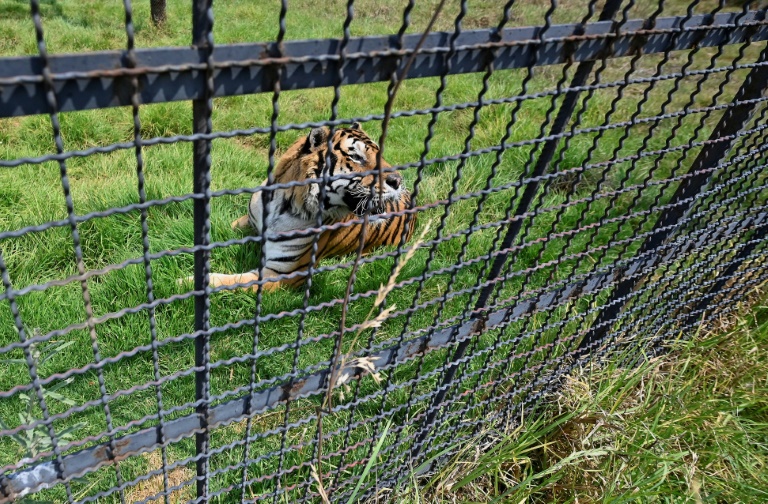
As a tiny cub four years ago, Frida the Bengal tiger was found chained up in a restaurant parking lot in Mexico City, dirty, emaciated and unable to walk.

Rescued and rehabilitated, she is now a popular attraction at the Reino Animal (Animal Kingdom) park along with hundreds of other exotic creatures taken from misguided Mexican “pet” owners — including showy drug traffickers.

Far from the Asian forests where she belongs, Frida has made a full recovery and “no longer suffers,” said park employee Agustin Bastida as the tigress gave a big yawn.

Lying on a grassy patch she looked disinterestedly at the humans ogling her from the other side of a fence.

Frida is one of six big cats among 1,100 animals — 40 percent of them rescued exotic creatures — at the park in Otumba, northeast of the Mexican capital.

Fellow residents include zebras, giraffes, wolves and a variety of birds.

According to authorities, some 150 to 200 exotic animals are seized in Mexico City every year, often after reports from neighbors.

Some of the worst culprits are drug lords such as Joaquin “El Chapo” Guzman, who had a pet monkey called “Boots.”

In one major rescue in 2007, officials busting a “narco-mansion” found two jaguars, two tigers, two lions and a macaque, according to Lucio Garcia Gil, head of the PROFEPA environmental crimes office for Mexico City.

“There are many exotic birds, such as macaws or parrots, reptiles, many primates and big cats; it is what we have most detected that people have,” he told AFP.

Two big cats were rescued in the megacity in 2021 and four — including a lion cub — so far this year.

– $5,000 for a lion –

According to Gil, a tiger or lion sells for between $1,000 and $5,000 on the Mexican black market.

Mexican law allows people to legally purchase exotic animals from registered dealers “as long as they keep them safe and provide the appropriate protection,” he told AFP.

“Unfortunately… hardly anybody complies with the conditions,” he said.

Illegal possession is punishable by up to nine years in prison or a fine of up to $15,000, though Gil said he could not remember anyone ever going to jail.

Keeping a big cat is expensive — they can eat as much as 30 kilograms (66 pounds) of meat per day, and many private owners abandon the animals in the end.

Like lions or jaguars, Bengals — which grow to stand over a meter tall and can weigh as much as 260 kilograms (570 pounds) — are not easy housemates and many have their fangs and claws removed so that they do not destroy their surroundings, or owners.

– ‘They are not pets’ –

According to the UN Environment Programme, global wildlife trafficking generates as much as $23 billion per year.

It is the seventh-most lucrative illicit business, according to the Washington-based Global Financial Integrity.

In Mexico City, the lucky trafficked animals that do get rescued are taken to zoos and parks such as the 53-hectare (130-acre) Animal Kingdom northeast of the capital.

In Frida’s case, she was brought in with a broken hip, which has since completely healed.

“She could not walk, it was very sad, very sad,” said Bastida.

“People buy these animals to keep them as pets, but they are not pets,” he added. 

“They have to be in the wild or in open spaces where the conditions are adequate for a good quality of life.”

French left seeks to challenge Macron in parliament elections

France goes to the polls on Sunday in the first round of parliamentary elections, with a resurgent and newly unified left seeking to thwart President Emmanuel Macron’s plans for reform.

Elections for the 577 seats in the lower house National Assembly are a two-round process. The shape of the new parliament will become clear only after the second round, a week later, on June 19.

The ballots provide a crucial coda to April’s presidential election, when Macron won a second term and pledged a transformative new era after a first mandate dominated by protests, the coronavirus pandemic and Russia’s war against Ukraine.

Polls open in mainland France at 8:00 am (0600 GMT), after voters in overseas territories cast ballots earlier in the weekend.

After a dismal performance in April, the French left has unified in a coalition for what its leader Jean-Luc Melenchon dubs “the third round” of the presidential elections.

Opinion polls show the president’s centrist alliance, Ensemble (Together), and Melenchon’s NUPES coalition of hard left, Socialists, Communists and Greens neck-and-neck in the popular vote.

But France’s constituency-based parliamentary system and the two-round election means that the seat breakdown will be another matter, and much will depend on turnout in the second round.

The abstention rate is predicted to be well over 50 percent in the first round, in what would be a new record for elections already marked by feeble participation in recent years.

– ‘Cohabitation?’ –

If the president’s alliance retains an overall majority, Macron will be able to carry on governing as before. 

Falling short could prompt messy bill-by-bill deals with right-wing parties in parliament or an unwanted cabinet reshuffle.

A win by the left-wing alliance –- seen as unlikely by analysts but not impossible –- would be a disaster for Macron. 

It would raise the spectre of a clunky “cohabitation” — where the prime minister and president hail from different factions — which has paralysed French politics in the past.

The most recent example was from 1997 to 2002 when right-wing president Jacques Chirac ruled in tandem with Socialist Lionel Jospin as premier.

Socialist president Francois Mitterrand twice had to cohabit with right-wingers: with Chirac in a famously fractious ruling duo and then with Edouard Balladur.

Melenchon, a former Marxist, has already made clear his ambition to become prime minister and stymie Macron’s plan to raise the French retirement age, although the president would retain control over foreign policy.

– ‘Strong and clear majority’ –

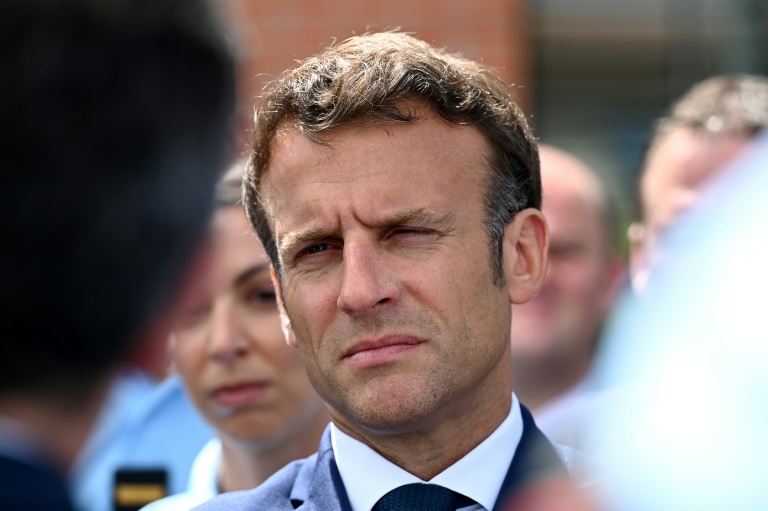
Stepping into the fray on Thursday, Macron acknowledged the stakes were high, warning France against choosing “extremes” that would add “crisis to crisis”.

“If the presidential election is crucial, the legislative election is decisive,” he said on a visit to the rural Tarn region, calling for a “strong and clear majority”.

Polls have indicated that Macron’s alliance is expected to win the largest number of seats but is by no means assured of getting over the line of 289 for an absolute majority.

Analysts say the young and members of low-income groups are among those likely to stay at home for the first round and if Melenchon could mobilise them for round two it would transform the picture.

While Macron and his European Union allies breathed a heavy sigh of relief after his solid, if unspectacular, presidential victory against far-right leader Marine Le Pen, the last weeks have brought no sense of a honeymoon.

Energy and food prices are soaring in France as elsewhere in Europe, the treatment of English fans at the Champions League final in Paris damaged France’s image abroad and Macron has been accused by Ukraine of being too accommodating to Russia.

His new Disabilities Minister Damien Abad has faced two rape accusations –- which he has vehemently denied –- while new Prime Minister Elisabeth Borne has yet to make an impact.

Macron has made clear that ministers who are standing in the election — including Borne, who is making her first attempt at winning a seat — will have to step down if they lose.

Of the 577 lawmakers in the National Assembly, eight represent France’s overseas territories and 11 account for French nationals living abroad.

Macron’s party and his allies currently hold an absolute majority of 345 seats.

Under France’s system, a candidate needs over half the vote on the day as well as the backing of at least 25 percent of registered voters in a constituency to be elected outright in the first round.

Otherwise the top two candidates in a constituency, as well as any other candidate who won the backing of at least 12.5 percent of registered voters, go forward to the second round, where the candidate with the most votes wins.

Protesters march in Geneva against WTO role in agriculture

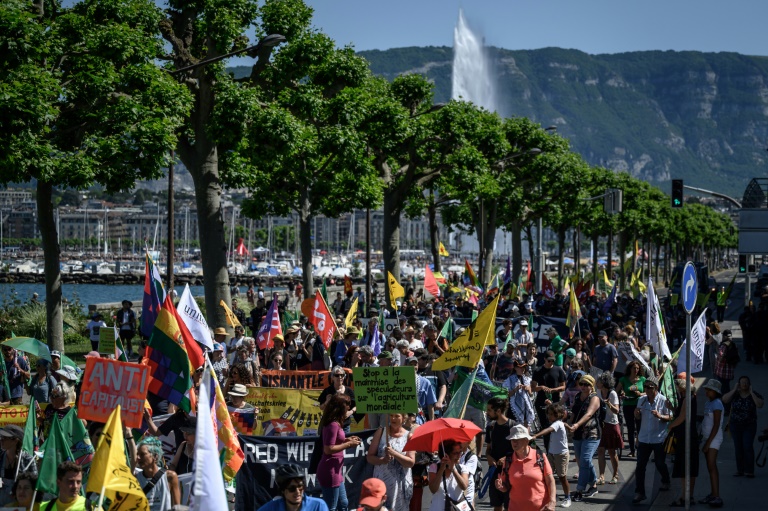
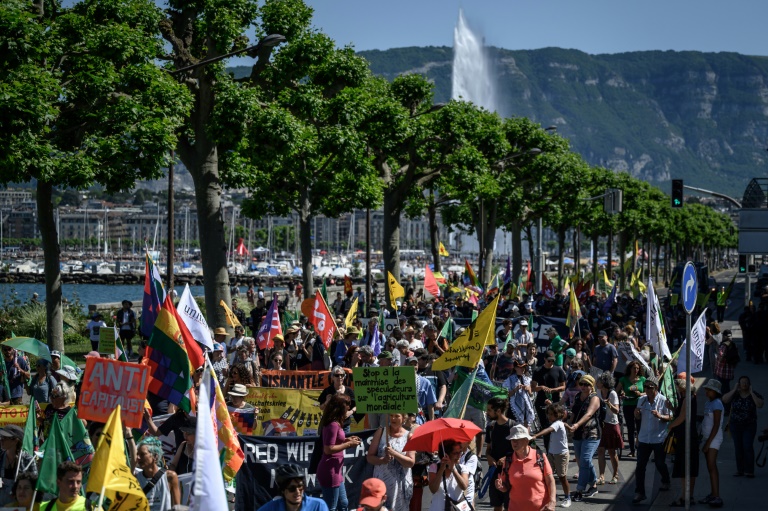
Around 500 people marched in Geneva Saturday slamming free trade’s role in a global food security crisis, as the WTO prepared to host global trade ministers in the city.

“Our food is not merchandise,” and “Speculation: the beginning of hunger” read some of the banners paraded through Geneva, a day before the opening of the World Trade Organization’s first ministerial meeting in five years.

Global food security will be high on the agenda at the four-day meeting, with WTO’s 164 member states under pressure to produce a common response to the risk of a global hunger crisis that has been dramatically amplified by Russia’s invasion of Ukraine. 

But the farmers organisations behind Saturday’s demonstration slammed what they deemed the destructive impact of the WTO-backed free trade agreements on small farmers and agricultural producers, and in turn on food security.

“No farmers, no food!” shouted the demonstrators.

“Today, the WTO is purely a place for doing business, taking market share and pushing up the cost of food, rendering it inaccessible to many,” Nicolas Girod, spokesman for the French farmers union Confederation Paysanne, told AFP.

“The alternative is to develop true food sovereignty” at the local level, “in accordance with what populations are asking for,” he said.

Asked what he expected to come out of the WTO ministerial meeting, due to last through Wednesday, he said “not much”.

Protesters march in Geneva against WTO role in agriculture

Around 500 people marched in Geneva Saturday slamming free trade’s role in a global food security crisis, as the WTO prepared to host global trade ministers in the city.

“Our food is not merchandise,” and “Speculation: the beginning of hunger” read some of the banners paraded through Geneva, a day before the opening of the World Trade Organization’s first ministerial meeting in five years.

Global food security will be high on the agenda at the four-day meeting, with WTO’s 164 member states under pressure to produce a common response to the risk of a global hunger crisis that has been dramatically amplified by Russia’s invasion of Ukraine. 

But the farmers organisations behind Saturday’s demonstration slammed what they deemed the destructive impact of the WTO-backed free trade agreements on small farmers and agricultural producers, and in turn on food security.

“No farmers, no food!” shouted the demonstrators.

“Today, the WTO is purely a place for doing business, taking market share and pushing up the cost of food, rendering it inaccessible to many,” Nicolas Girod, spokesman for the French farmers union Confederation Paysanne, told AFP.

“The alternative is to develop true food sovereignty” at the local level, “in accordance with what populations are asking for,” he said.

Asked what he expected to come out of the WTO ministerial meeting, due to last through Wednesday, he said “not much”.

Sanctions-hit Iran, Venezuela sign 20-year cooperation deal

Iran and Venezuela signed a 20-year deal on cooperation between the two allies subject to US sanctions during a visit Saturday to the Islamic republic by Venezuelan President Nicolas Maduro.

The inking of the agreement “shows the determination of the high-level officials of the two countries for development of relations in different fields,” Iranian President Ebrahim Raisi said.

Maduro, speaking at a joint news conference in Tehran, said the cooperation covered the energy and financial sectors, as well as “work together on defence projects”.

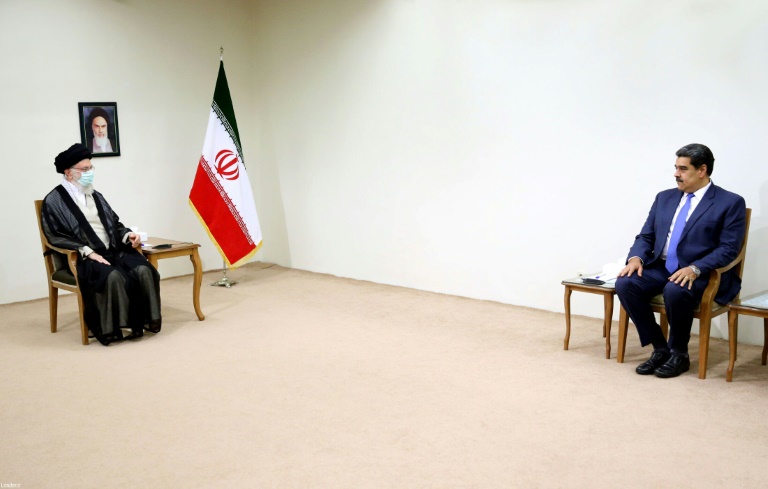
Maduro also met Iran’s supreme leader Ayatollah Ali Khamenei, who said that “resistance” is the way to confront US pressure.

“The conclusion that can be drawn from the resistance and success of the two nations of Iran and Venezuela is that the only way against pressure is to stand and resist,” Khamenei said.

Khamenei welcomed the agreement, and called for “stronger” cooperation between Tehran and Caracas, according to a statement on his official website.

“The Islamic Republic of Iran has shown that it takes risks in times of danger and takes the hands of its friends,” he added.

Alongside the likes of Russia, China, Cuba and Turkey, Iran is one of Venezuela’s main allies. And like Venezuela, it is subject to tough US sanctions.

“Venezuela has passed hard years but the determination of the people, the officials and the president of the country was that they should resist the sanctions,” Raisi said during the joint news conference.

“This is a good sign that proves to everyone that resistance will work and will force the enemy to retreat,” the Iranian president added.

In addition to the 20-year accord inked by the two countries’ foreign ministers, “Iran and Venezuela signed documents on cooperation in the political, cultural, tourism, economic, oil and petrochemical fields,” state news agency IRNA said.

“We have important projects of cooperation between Iran and Venezuela in the fields of energy, petrochemicals, oil, gas and refineries,” Maduro said.

– Direct flights –

From July 18, direct flights would operate between Caracas and Tehran “in order to promote tourism and the union between our countries,” he said, adding that “Venezuela is open to receive tourists from Iran”.

Iran’s president said direct flights would pave the way for enhanced “trade and economic relations, as well as bringing the two nations closer together”.

The two presidents took part via videoconference in a ceremony marking the delivery of the second of four Iranian-built oil tankers to Venezuela, IRNA reported.

Ties between the two oil producers were strong under late Venezuelan socialist leader Hugo Chavez and have been further bolstered under his successor Maduro.

In May 2022, Iran’s Oil Minister Javad Owji met Maduro during an official visit to Venezuela, which sits on the world’s largest proven crude reserves.

Owji also held talks with his Venezuelan counterpart Tareck El Aissami on how best to cope with US economic sanctions.

The oil minister’s trip to Venezuela came just weeks after a surprise visit by US officials following the sharp rise in world oil prices triggered by Russia’s invasion of Ukraine in February.

The US delegation even held a hushed meeting with Maduro, whose very legitimacy as president Washington disputes.

Iran is a major oil producer and said in April that its output capacity was back to the levels seen before the reimposition of US sanctions by president Donald Trump in 2018.

In 2020, Venezuela received two shiploads of fuel and derivatives from Iran to help address chronic domestic shortages.

Iran is the third country Maduro visited this week after trips to Turkey and Algeria.

Sanctions-hit Iran, Venezuela sign 20-year cooperation deal

Iran and Venezuela signed a 20-year deal on cooperation between the two allies subject to US sanctions during a visit Saturday to the Islamic republic by Venezuelan President Nicolas Maduro.

The inking of the agreement “shows the determination of the high-level officials of the two countries for development of relations in different fields,” Iranian President Ebrahim Raisi said.

Maduro, speaking at a joint news conference in Tehran, said the cooperation covered the energy and financial sectors, as well as “work together on defence projects”.

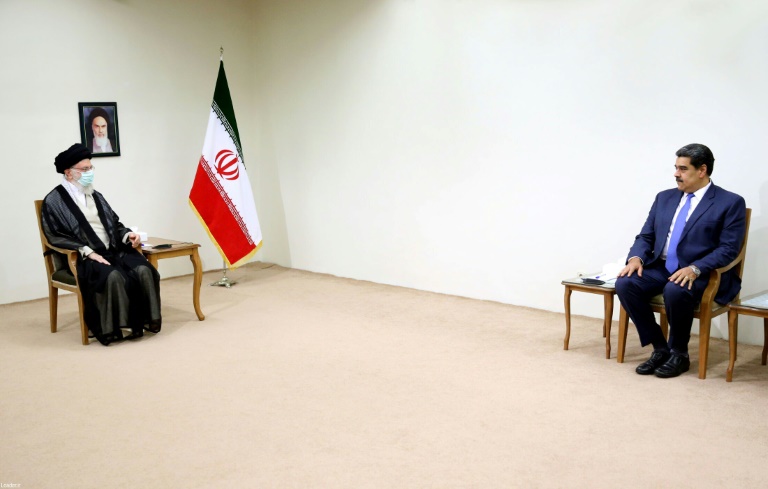
Maduro also met Iran’s supreme leader Ayatollah Ali Khamenei, who said that “resistance” is the way to confront US pressure.

“The conclusion that can be drawn from the resistance and success of the two nations of Iran and Venezuela is that the only way against pressure is to stand and resist,” Khamenei said.

Khamenei welcomed the agreement, and called for “stronger” cooperation between Tehran and Caracas, according to a statement on his official website.

“The Islamic Republic of Iran has shown that it takes risks in times of danger and takes the hands of its friends,” he added.

Alongside the likes of Russia, China, Cuba and Turkey, Iran is one of Venezuela’s main allies. And like Venezuela, it is subject to tough US sanctions.

“Venezuela has passed hard years but the determination of the people, the officials and the president of the country was that they should resist the sanctions,” Raisi said during the joint news conference.

“This is a good sign that proves to everyone that resistance will work and will force the enemy to retreat,” the Iranian president added.

In addition to the 20-year accord inked by the two countries’ foreign ministers, “Iran and Venezuela signed documents on cooperation in the political, cultural, tourism, economic, oil and petrochemical fields,” state news agency IRNA said.

“We have important projects of cooperation between Iran and Venezuela in the fields of energy, petrochemicals, oil, gas and refineries,” Maduro said.

– Direct flights –

From July 18, direct flights would operate between Caracas and Tehran “in order to promote tourism and the union between our countries,” he said, adding that “Venezuela is open to receive tourists from Iran”.

Iran’s president said direct flights would pave the way for enhanced “trade and economic relations, as well as bringing the two nations closer together”.

The two presidents took part via videoconference in a ceremony marking the delivery of the second of four Iranian-built oil tankers to Venezuela, IRNA reported.

Ties between the two oil producers were strong under late Venezuelan socialist leader Hugo Chavez and have been further bolstered under his successor Maduro.

In May 2022, Iran’s Oil Minister Javad Owji met Maduro during an official visit to Venezuela, which sits on the world’s largest proven crude reserves.

Owji also held talks with his Venezuelan counterpart Tareck El Aissami on how best to cope with US economic sanctions.

The oil minister’s trip to Venezuela came just weeks after a surprise visit by US officials following the sharp rise in world oil prices triggered by Russia’s invasion of Ukraine in February.

The US delegation even held a hushed meeting with Maduro, whose very legitimacy as president Washington disputes.

Iran is a major oil producer and said in April that its output capacity was back to the levels seen before the reimposition of US sanctions by president Donald Trump in 2018.

In 2020, Venezuela received two shiploads of fuel and derivatives from Iran to help address chronic domestic shortages.

Iran is the third country Maduro visited this week after trips to Turkey and Algeria.

Close Bitnami banner
Bitnami