World

US gas price hits a record $5 a gallon: auto group

The average price of premium gasoline at the pump has surpassed $5 a gallon for the first time in the United States, the American Automobile Association (AAA) reported Saturday. 

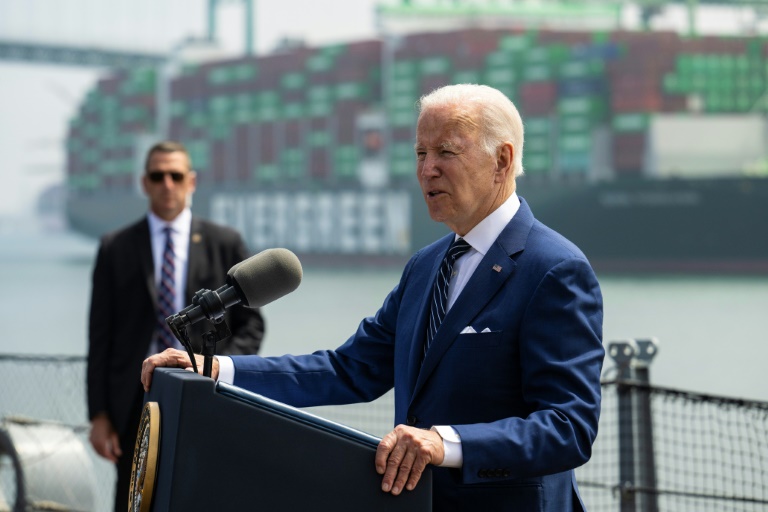
That record level, coming on top of months of soaring inflation, represents the latest bad news for President Joe Biden just five months before crucial midterm elections.

A year ago, the average price of gas in the US was just $3.07; since then it has shot up by 62 percent. 

While Europeans have long been accustomed to paying much more at the pump, US gas taxes are lower — leaving car-loving Americans in shock over surging prices.  

The increase in gas prices follows a steady rise in oil prices — which had plummeted in the early days of the Covid-19 pandemic as demand sagged, but have risen again as world economic activity resumes.

Oil prices soared further after Moscow invaded Ukraine in late February, and as international sanctions against Russia — a major petroleum producer — began to bite. 

A barrel of crude currently sells for more than $120 in both London and New York.

Overall US energy prices in May were nearly 35 percent higher compared to the same month in 2021, according to government data.

This has contributed to the overall rise in US consumer prices, which were up 8.6 percent in May from a year earlier — a 40-year record.

As the summer vacation season nears, Americans — with their longtime love affair for big gas-guzzling vehicles — can expect to see energy prices rise still further. 

That will pile even more pressure on consumers already struggling with higher prices for food (up 10.1 percent in May), housing, automobiles and health care.

All this complicates Biden’s position. For months he has sought to reassure Americans that his administration is doing everything in its power to bring down prices without derailing the economic recovery.

But in November, Americans vote to elect all members of the House of Representatives and one-third of senators — and polls show voters listing the economy, inflation and high gas prices as their top issues.

On Friday, the president again lashed out at the American oil industry, cautioning it in a statement “not (to) use the challenge created by the war in Ukraine as a reason to make things worse for families with excessive profit taking or price hikes.”
N.Macedonia says EU candidacy held 'hostage' by Bulgaria

North Macedonia’s prime minister on Saturday said his country’s long-standing dream of joining the EU was being held “hostage” by neighbouring Bulgaria.

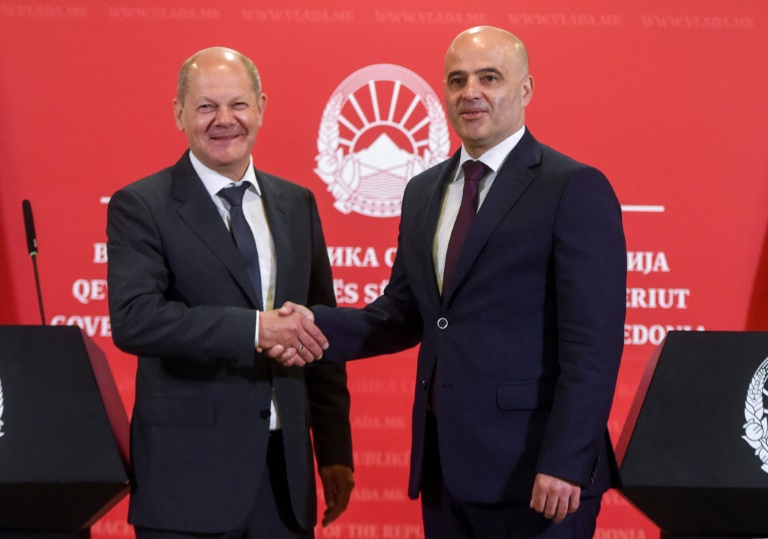
Speaking alongside German Chancellor Olaf Scholz, who is on a lightning tour of the Balkans, Dimitar Kovacevski told reporters that “one EU member state… is holding two candidate countries, North Macedonia and Albania, as hostages on the path of EU integration”. 

His comments were a clear reference to Bulgaria, which in 2020 blocked North Macedonia’s ambition to start European Union membership talks.

The two countries have long sparred over history and language, including Bulgaria’s claim that the Macedonian language is a dialect of Bulgarian.

They both also lay claim to certain historical events and figures, mainly from the Ottoman era.

Scholz said his country was “serious about EU integration for the states in the region and of course that applies particularly to North Macedonia”.

Later on Saturday Scholz travelled to Sofia where he met his Bulgarian counterpart Kiril Petkov.

Petkov said that Bulgaria would seek to see how the EU accession process could be used to improve tha status of the Bulgarian minority in North Macedonia.

Speaking after meeting Petkov, Scholz said “we can be confident of progress”, adding that the “many objections that have built up between the two sides over the years must be cleared away”.

Ukraine to get word on EU hopes next week: von der Leyen

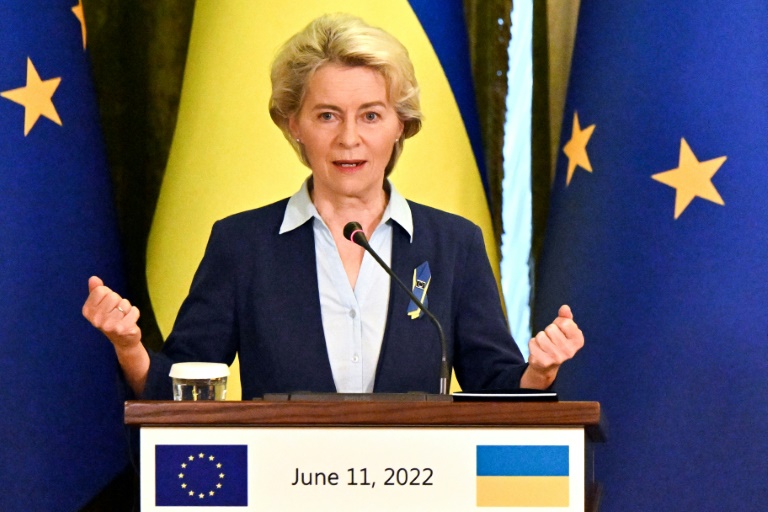
Ukraine’s bid to become a candidate to join the EU will get a clear signal next week, the bloc’s chief Ursula von der Leyen said Saturday on a surprise visit to Kyiv.

Von der Leyen said talks she held with Ukrainian President Volodymyr Zelensky “will enable us to finalise our assessment by the end of next week”.

It was the first time the EU has publicly given timing on when the commission will deliver its opinion. The bloc’s 27 member countries need to decide whether to allow Ukraine to start accession negotiations.

Shortly after Russian’s February invasion, Zelensky started pushing for Ukraine’s rapid admission into the European Union and has demanded an answer on its candidacy before the end of this month.

But officials and leaders in the bloc caution that, even with candidacy status, actual EU membership could take years or even decades.

Ukraine sees the prospect of joining the EU as a way of reducing its geopolitical vulnerability, which has been exposed by Russia’s war inside its borders.

Von der Leyen, appearing alongside Zelensky for a brief declaration to media, did not hold out any promises. 

“You have done a lot in strengthening the rule of law, but there still need to be reforms implemented, to fight corruption for example or to modernise this well-functioning administration, to help attract investors,” she noted.

Instead she focused more on the future reconstruction of Ukraine, once the war has ended. 

That, von der Leyen said, “should be a process that is fully owned by Ukraine”, with the EU standing by to help and to contribute to a roadmap “to support Ukraine in pursuing its European path”. 

There are expectations that Ukraine’s EU candidacy status will be green lit at an EU leaders’ summit taking place on June 23-24 — though with stern conditions attached.

Several EU countries, including Sweden, Denmark and the Netherlands, are reluctant to give their nod and Germany has not set out its position.

Some have concerns with Ukraine’s problem with corruption documented before the war, and the fact that other countries such as North Macedonia and Albania are already further along the EU candidacy path.

– ‘European family’ –

EU officials will pore over Ukraine’s bid next week, with von der Leyen and her commissioners getting together on Friday to unveil their opinion ahead of the summit a week later.

Von der Leyen’s trip to Kyiv was her second since the Russian invasion in late February. 

Her last one, on April 8, was to hand Zelensky a questionnaire his officials needed to fill to provide details that would help inform the European Commission’s opinion it has to give to the European Council, representing the EU’s member states.

On that April visit, von der Leyen said “Ukraine belongs to the European family”. 

The European Union is helping channel weapons to Ukraine through a two-billion-euro ($2.1-billion) fund and has given it more than 700 million euros in aid and in-kind assistance since the invasion.

It has also slapped six rounds of sanctions on Russia, including against its coal and oil sent to the bloc, and against oligarchs close to President Vladimir Putin and media outlets deemed to be propagandising the war.

EU countries are hosting nearly five million Ukrainian refugees who have fled the war.

Syria says major damage, runways unusable after Israel hits airport

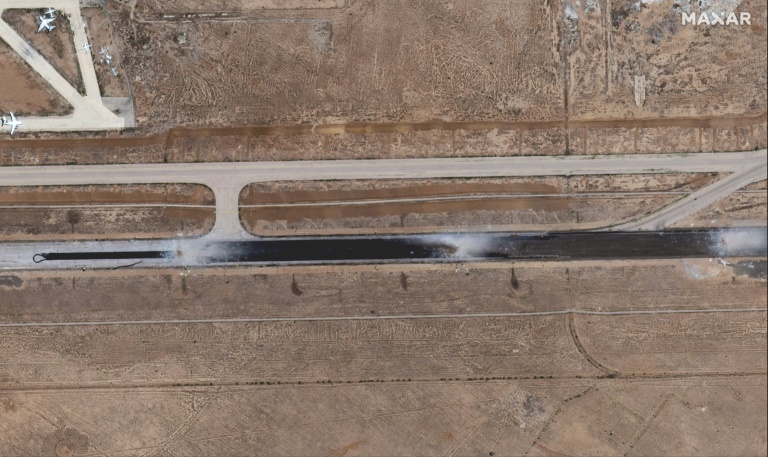
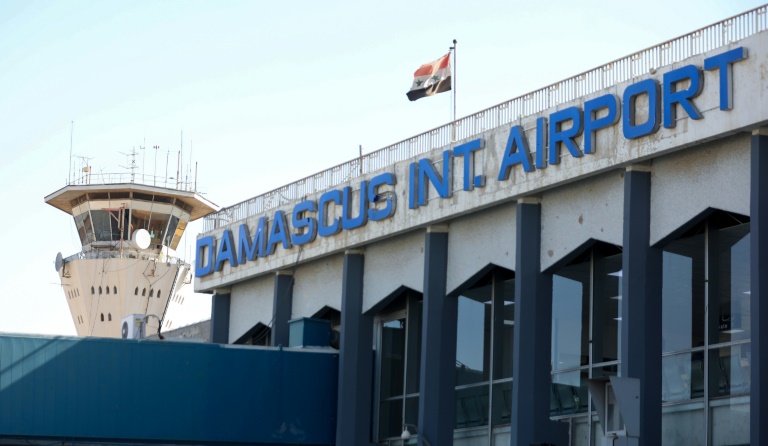
Syria has confirmed major damage including to runways at Damascus International Airport, which was closed for a second day Saturday for repairs after Israeli air strikes.

The transport ministry said in a statement that runways were out of service.

Since civil war broke out in Syria in 2011, Israel has carried out hundreds of air strikes against its neighbour, targeting government troops as well as allied Iran-backed forces and fighters from Lebanon’s Shiite militant group Hezbollah.

But rarely have such attacks caused major flight disruptions. The ministry said air traffic would remain suspended until repair work is finished and airport security can be assured.

“Civil aviation and national companies are working… to repair the sizeable damage at the airport,” the ministry said, adding a terminal building was also hit.

Syria’s official SANA news agency said the Israeli bombardment wounded a civilian.

The Syrian Observatory for Human Rights war monitor said the missile strike before dawn on Friday hit the only runway still in service at the airport, as well as several adjacent buildings. Israeli bombing last year had disabled another runway, it said.

“The runway, the control tower, three hangars, warehouses as well as reception rooms were badly damaged by the Israeli strikes,” the Observatory said.

Some of the reception rooms were used to receive Iranian officials and Hezbollah members while the warehouses stored weapons from Iran, it said.

The Britain-based Observatory, which relies on a network of sources within Syria, said the strikes wounded an undetermined number of people.

Satellite images posted on Twitter by the Israeli firm ISI showed three separate areas of what it said was “extensive damage to both military and civilian runways” caused by the strikes.

– Russian condemnation –

The airport is in a region south of Damascus where Iran-backed groups, including Lebanon’s Hezbollah, regularly operate.

The area has been repeatedly targeted by Israel, which has launched 15 aerial attacks on Syria this year alone and regularly accuses Iran of using the airport to send weapons shipments to its allies.

Syrian state media had reported that a volley of missiles was fired from the Israeli-occupied Golan Heights at around 4:20 am (0120 GMT) on Friday.

Syria’s ally Russia strongly condemned “the provocative Israeli attack against essential civilian infrastructure”.

A spokesperson for Russia’s foreign ministry called such attacks “an absolutely unacceptable violation of international norms.”

Syrian Foreign Minister Faisal Mekdad and his Iranian counterpart Hossein Amir-Abdollahian spoke by phone and also condemned the attack, SANA reported.

Syria “will defend itself by all legitimate means” against Israeli attacks, Mekdad said.

On May 20, Israeli surface-to-surface missiles from the Golan Heights killed three people near Damascus, state media said at the time, quoting a military source. Those strikes targeted Iranian positions and weapon depots near Damascus, starting a fire near one of the positions close to the airport, the Syrian Observatory for Human Rights said.

While Israel rarely comments on individual strikes, it has acknowledged carrying out hundreds in Syria, which the Jewish state’s military says is necessary to prevent its arch foe Iran from gaining a foothold on its doorstep.

The conflict in Syria started with the brutal repression of peaceful protests and escalated to pull in foreign powers and global jihadists.

The war has killed nearly half a million people and forced around half of the country’s pre-war population from their homes.

Russia’s military intervention in 2015 helped turn the war in favour of Syria’s President Bashar al-Assad. Moscow maintains military bases in the country.

Sanctions-hit Iran, Venezuela sign 20-year cooperation deal

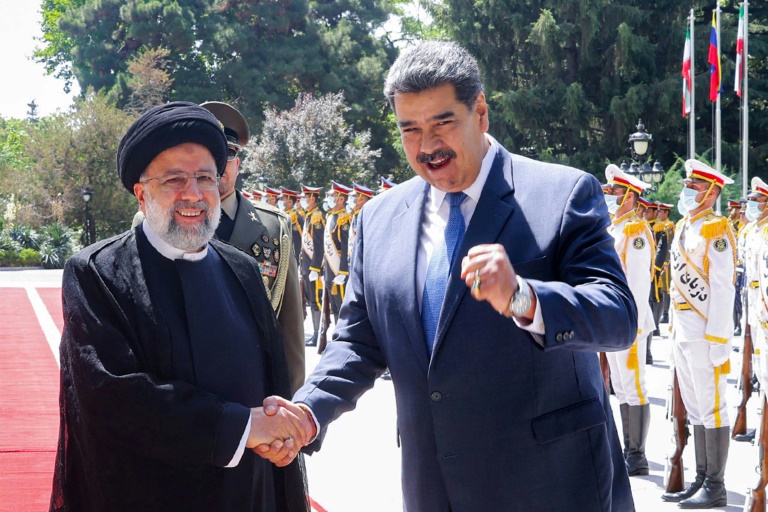
Iran and Venezuela signed a 20-year deal on cooperation between the two allies subject to US sanctions during a visit Saturday to the Islamic republic by Venezuelan President Nicolas Maduro.

The inking of the agreement “shows the determination of the high-level officials of the two countries for development of relations in different fields,” Iranian President Ebrahim Raisi said.

Maduro, speaking at a joint news conference in Tehran, said the cooperation covered the energy and financial sectors as well as “work together on defence projects”.

Alongside the likes of Russia, China, Cuba and Turkey, Iran is one of Venezuela’s main allies. And like Venezuela it is subject to tough US sanctions.

“Venezuela has passed hard years but the determination of the people, the officials and the president of the country was that they should resist the sanctions,” Raisi said during the news conference.

“This is a good sign that proves to everyone that resistance will work and will force the enemy to retreat,” the Iranian president added.

In addition to the 20-year accord inked by the two countries’ foreign ministers, “Iran and Venezuela signed documents on cooperation in the political, cultural, tourism, economic, oil and petrochemical fields,” state news agency IRNA said.

“We have important projects of cooperation between Iran and Venezuela in the fields of energy, petrochemical, oil, gas and refineries,” Maduro said.

– Direct flights –

From July 18, direct flights would operate between Caracas and Tehran “in order to promote tourism and the union between our countries,” he said, adding that “Venezuela is open to receive tourists from Iran”.

Iran’s president said direct flights would pave the way for enhanced “trade and economic relations as well as bringing the two nations closer together”.

The two presidents took part via videoconference in a ceremony marking the delivery of the second of four Iranian-built oil tankers to Venezuela, IRNA reported.

Ties between the two oil producers were strong under late Venezuelan socialist leader Hugo Chavez and have been further bolstered under his successor Maduro.

In May, Iran’s Oil Minister Javad Owji met with Maduro during an official visit to Venezuela, which sits on the world’s largest proven crude reserves.

Owji also held talks with his Venezuelan counterpart Tareck El Aissami on how best to cope with US economic sanctions.

The oil minister’s trip to Venezuela came just weeks after a surprise visit by US officials following the sharp rise in world oil prices triggered by Russia’s invasion of Ukraine in February.

The US delegation even held a hushed meeting with Maduro, whose very legitimacy as president Washington disputes.

Iran is a major oil producer and said in April that its output capacity was back to the levels seen before the reimposition of US sanctions by president Donald Trump in 2018.

In 2020, Venezuela received two shiploads of fuel and derivatives from Iran to help address chronic domestic shortages.

Iran is the third country Maduro has visited this week after trips to Turkey and Algeria.

Sanctions-hit Iran, Venezuela sign 20-year cooperation deal

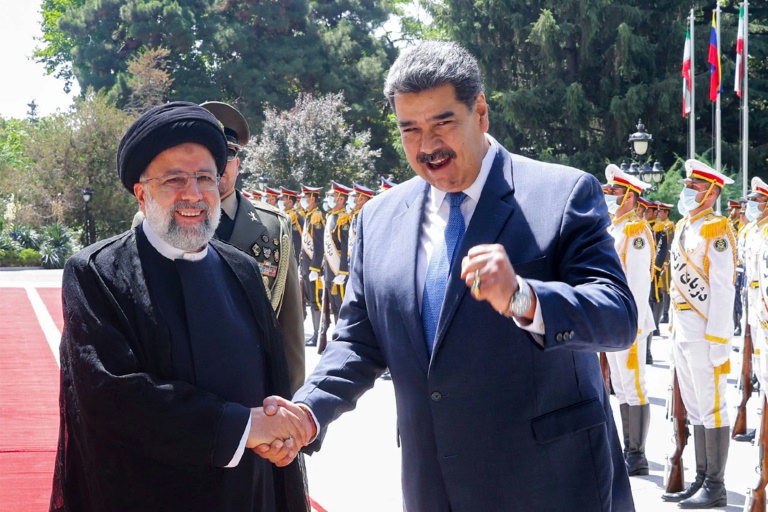
Iran and Venezuela signed a 20-year deal on cooperation between the two allies subject to US sanctions during a visit Saturday to the Islamic republic by Venezuelan President Nicolas Maduro.

The inking of the agreement “shows the determination of the high-level officials of the two countries for development of relations in different fields,” Iranian President Ebrahim Raisi said.

Maduro, speaking at a joint news conference in Tehran, said the cooperation covered the energy and financial sectors as well as “work together on defence projects”.

Alongside the likes of Russia, China, Cuba and Turkey, Iran is one of Venezuela’s main allies. And like Venezuela it is subject to tough US sanctions.

“Venezuela has passed hard years but the determination of the people, the officials and the president of the country was that they should resist the sanctions,” Raisi said during the news conference.

“This is a good sign that proves to everyone that resistance will work and will force the enemy to retreat,” the Iranian president added.

In addition to the 20-year accord inked by the two countries’ foreign ministers, “Iran and Venezuela signed documents on cooperation in the political, cultural, tourism, economic, oil and petrochemical fields,” state news agency IRNA said.

“We have important projects of cooperation between Iran and Venezuela in the fields of energy, petrochemical, oil, gas and refineries,” Maduro said.

– Direct flights –

From July 18, direct flights would operate between Caracas and Tehran “in order to promote tourism and the union between our countries,” he said, adding that “Venezuela is open to receive tourists from Iran”.

Iran’s president said direct flights would pave the way for enhanced “trade and economic relations as well as bringing the two nations closer together”.

The two presidents took part via videoconference in a ceremony marking the delivery of the second of four Iranian-built oil tankers to Venezuela, IRNA reported.

Ties between the two oil producers were strong under late Venezuelan socialist leader Hugo Chavez and have been further bolstered under his successor Maduro.

In May, Iran’s Oil Minister Javad Owji met with Maduro during an official visit to Venezuela, which sits on the world’s largest proven crude reserves.

Owji also held talks with his Venezuelan counterpart Tareck El Aissami on how best to cope with US economic sanctions.

The oil minister’s trip to Venezuela came just weeks after a surprise visit by US officials following the sharp rise in world oil prices triggered by Russia’s invasion of Ukraine in February.

The US delegation even held a hushed meeting with Maduro, whose very legitimacy as president Washington disputes.

Iran is a major oil producer and said in April that its output capacity was back to the levels seen before the reimposition of US sanctions by president Donald Trump in 2018.

In 2020, Venezuela received two shiploads of fuel and derivatives from Iran to help address chronic domestic shortages.

Iran is the third country Maduro has visited this week after trips to Turkey and Algeria.

'No chance' Myanmar polls will be free and fair: US official

A top US government official said Saturday there was “no chance” the Myanmar junta’s planned elections next year would be free and fair.

Myanmar has been in turmoil and its economy paralysed since the February 2021 coup which ousted civilian leader Aung San Suu Kyi.

Suu Kyi’s National League for Democracy Party won a landslide victory in November 2020 elections but the military alleged voter fraud to justify the coup.

US State Department counsellor Derek Chollet cast doubt over the junta’s pledge to hold new elections in August 2023.

“I think there’s no chance it could be free and fair, and it can be an attempt to just manipulate the region, the international community,” Chollet told the Shangri-La Dialogue in Singapore.

Almost 2,000 civilians have been killed in the junta’s crackdown on dissent and more than 14,000 people have been arrested.

United Nations special envoy for Myanmar Noeleen Heyzer — who has not been allowed to visit the country since she took up the role late last year — fears an illegitimate poll could cause further unrest.

She said unless Myanmar citizens had faith the election would lead the country back to “proper civilian rule” and the will of the people would be respected, it could be a “trigger point for greater violence”. 

Thai foreign ministry representative Pornpimol Kanchanalak however argued the international community should not get “stuck in cancel rhetoric”.

“Condemnations, sanctions, ostracisation… have reached diminishing returns,” she said.

Pornpimol acknowledged concerns about the upcoming poll but said the international community must take junta’s commitment to hold elections “at face value”.

The Association of Southeast Asian Nations — a bloc of 10 countries including Myanmar — has led stalled diplomatic efforts to resolve the crisis.

Malaysian Foreign Minister Saifuddin Abdullah urged ASEAN countries go back to the drawing board and set deadlines on the “Five-Point Consensus” reached in Jakarta in April 2021, which calls for a cessation of violence and “constructive dialogue”.

He said there had been no discussions about booting Myanmar out of the bloc.

Chollet confirmed Washington “was not currently thinking about” supplying weapons to anti-coup fighters in Myanmar despite requests for support like that being given to Ukraine following the Russian invasion.

Post-coup violence has pushed the number of displaced people in Myanmar to more than one million for the first time, the UN said in early June, voicing concerns about a lack of humanitarian assistance as well as the monsoon season.

Since she was ousted, Suu Kyi has been in military custody and faces a raft of charges that could result in her being jailed for more than 150 years.

Syria says major damage, runways unusable after Israel hits airport

Syria has confirmed major damage including to runways at Damascus International Airport, which was closed for a second day Saturday for repairs after Israeli air strikes.

The transport ministry said in a statement that runways were out of service.

Since civil war broke out in Syria in 2011, Israel has carried out hundreds of air strikes against its neighbour, targeting government troops as well as allied Iran-backed forces and fighters from Lebanon’s Shiite militant group Hezbollah.

But rarely have such attacks caused major flight disruptions.

“Civil aviation and national companies are working… to repair the sizeable damage at the airport,” the ministry said, adding a terminal building was also hit.

The official SANA news agency said the Israeli bombardment wounded a civilian.

The Syrian Observatory for Human Rights war monitor said the missile strike before dawn on Friday hit one of the runways as well as three arms depots near the airport belonging to Hezbollah, and other Iran-backed groups.

The Observatory, which relies on a network of sources within Syria, said the strikes wounded an undetermined number of people.

Satellite images posted on Twitter by the Israeli firm ISI showed three separate areas of what it said was “extensive damage to both military and civilian runways” caused by the strikes.

According to the Observatory, the damaged runway was the only one still operational after an Israeli strike last year put another one out of service.

– Russian condemnation –

The 2021 bombardment had targeted weapons shipments and arms depots operated by Iran-backed groups, said the Observatory, a Britain-based monitor.

The airport is in a region south of Damascus where Iran-backed groups, including Lebanon’s Hezbollah, regularly operate.

The vicinity of the facility is favourite target for Israel which has launched 15 aerial attacks on Syria this year alone and regularly accuses Iran of using Damascus airport to send weapons shipments to its allies.

Syrian state media had reported that a volley of missiles was fired from the Israeli-occupied Golan Heights at around 4:20 am (0120 GMT) on Friday.

Syria’s ally Russia strongly condemned “the provocative Israeli attack against essential civilian infrastructure”.

A spokesperson for Russia’s foreign ministry called such attacks “an absolutely unacceptable violation of international norms.”

Syrian Foreign Minister Faisal Mekdad and his Iranian counterpart Hossein Amir-Abdollahian spoke by phone and also condemned the attack, SANA reported.

Syria “will defend itself by all legitimate means” against Israeli attacks, Mekdad said.

While Israel rarely comments on individual strikes, it has acknowledged carrying out hundreds in Syria, in what the Jewish state’s military says is necessary to prevent its arch foe Iran from gaining a foothold on its doorstep.

The conflict in Syria started with the brutal repression of peaceful protests and escalated to pull in foreign powers and global jihadists.

The war has killed nearly half a million people and forced around half of the country’s pre-war population from their homes.

Russia’s military intervention in 2015 helped turn the war in favour of Syria’s President Bashar al-Assad. Moscow maintains military bases in the country.

Zelensky warns of food crisis, urges end to Russian blockade

Ukrainian President Volodymyr Zelensky on Saturday urged international pressure to end a Russian naval blockade of Black Sea ports that has choked off his country’s grain exports, threatening a global food crisis.

Before the Russian invasion, Ukraine was the world’s top producer of sunflower oil and a major wheat exporter, but millions of tonnes of grain exports remain trapped due to the blockade.

The United Nations and some countries are pushing for a maritime corridor to be opened up to allow exports to resume.

“The world will face an acute and severe food crisis and famine, in many countries of Asia and Africa,” Zelensky said in a video address to the Shangri-La Dialogue security summit in Singapore.

“The shortage of foodstuffs will inexorably lead to political chaos, which can result in the (collapse) of many governments and the ousting of many politicians,” he told delegates, including Pentagon chief Lloyd Austin and China’s defence minister. 

“This looming threat is plain to see by just looking at the skyrocketing prices of basic products in the world markets and in certain countries. This is the direct consequence of the acts of the Russian state.”

Zelensky urged the international community to “restore the full might of the international law” that existed before the February 24 invasion.

Kyiv is in discussion with the UN, Turkey and other countries to open a way to allow the grain exports, and Zelensky said the talks are focused on the “format” of the corridor.

Russian Foreign Minister Sergei Lavrov and his Turkish counterpart held talks this week in Ankara on securing safe passage for Ukrainian grain exports, but the discussions made little headway. 

Zelensky said Ukraine was currently exporting more than two million tonnes of grain a month via rail but this was not enough.

He accused Russia of seeking to push up grain prices higher, adding it had done the same with energy. 

Russia’s invasion sparked worldwide condemnation and a barrage of sanctions. After being repelled from Kyiv and other parts of the country, it is focusing its offensive on the eastern Donbas region.

Prince Charles slams UK's Rwanda plan: report

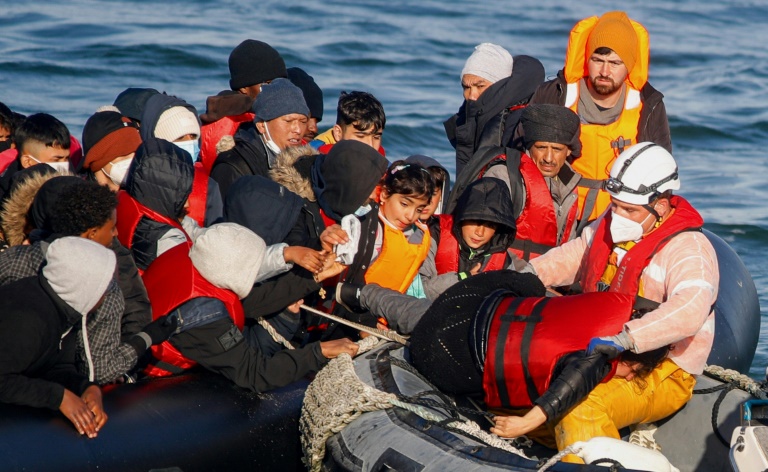
Britain’s Prince Charles has called the government’s plan to send asylum-seekers to Rwanda “appalling”, a report said Saturday as opponents readied a last-gasp legal bid to stop the first flight.

The UK government intends to fly the first planeload of 31 claimants to Rwanda on Tuesday — shortly before Charles is due to represent his mother Queen Elizabeth II at a Commonwealth summit in Kigali.

Prime Minister Boris Johnson — who is also set to attend the summit — welcomed his government’s victory in a High Court hearing Friday that gave the plan a green light.

“We cannot allow people traffickers to put lives at risk and our world-leading partnership will help break the business model of these ruthless criminals,” Johnson tweeted.

Charles, however, joined others including senior Christian clerics in denouncing the plan, and fears the issue could overshadow the Commonwealth summit on June 24-25, The Times reported.

“He said he was more than disappointed at the policy,” the newspaper quoted an unidentified source as saying. 

“He said he thinks the government’s whole approach is appalling. It was clear he was not impressed with the government’s direction of travel,” the source added.

A spokesman for Charles declined to comment on private conversations, “except to restate that he remains politically neutral”.

“Matters of policy are decisions for government,” the spokesman added.

The reported intervention from the Prince of Wales threatens to stoke controversy about his political views as he shoulders more of the duties of his 96-year-old mother.

In a BBC documentary marking his 70th birthday in 2018, Charles said he would no longer make public interventions on political matters once he becomes king.

“I’m not that stupid,” he said.

In Kigali, Charles and Johnson are due to meet Rwandan President Paul Kagame, whose government is accused by campaigners of persecuting political dissidents and gay people.

– ‘Ashamed to be British’ –

But after a one-day hearing in London on Friday, judge Jonathan Swift sided with the government’s contention that Rwanda was a “fundamentally safe and secure” destination for would-be refugees.

He ruled that it was in the “public interest” for Home Secretary Priti Patel “to be able to implement immigration control decisions”.

However, Swift gave permission for his ruling to be appealed, and Court of Appeal judges are expected to take it up on Monday, ahead of a fuller two-day High Court hearing next month.

Vowing to appeal, refugee rights campaigners and a union representing UK Border Force staff slammed the Rwanda policy as immoral, dangerous and counter-productive.

Rose Hudson-Wilkin, the Anglican bishop of Dover where Channel migrants have been arriving on fragile vessels, said the policy made her “deeply ashamed to be British”.

“It feels inhumane,” she told Times Radio after Friday’s ruling.

Lawyers for the claimants said Patel’s interior ministry had claimed endorsement for the plan from the United Nations High Commissioner for Refugees (UNHCR).

But addressing the High Court, the UN agency’s lawyer Laura Dubinsky denied that.

She added that the would-be refugees were at risk of “serious, irreparable harm” if sent to Rwanda, and that the UN had “serious concerns about Rwandan capacity”.

But Patel has dismissed all objections to her agreement, which is worth £120 million ($148 million) to Kagame’s government.

She said Friday the government “will not be deterred in breaking the deadly people smuggling trade and ultimately saving lives”.

The government said it had issued deportation notices to another 100 people, beyond the 31 who are due to leave on Tuesday’s specially chartered flight from an undisclosed airport in Britain.

Close Bitnami banner
Bitnami