World

Phillips and Pereira: the men missing in the Amazon

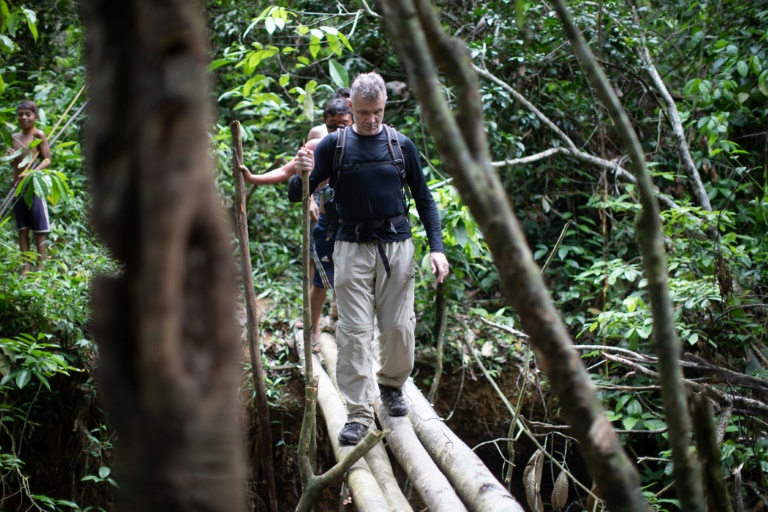
Veteran British freelance journalist Dom Phillips and respected Brazilian indigenous expert Bruno Pereira share a passion for the farthest reaches of the Amazon rainforest, where they disappeared three days ago.

The pair were last seen early Sunday traveling by boat in Brazil’s Javari Valley, a far-flung jungle region near the border with Peru, where Phillips has been researching a book.

The region has seen a surge of criminal activity in recent years, including illegal logging, gold mining, poaching and drug trafficking — incursions Phillips has reported on and Pereira has vigorously fought.

They had already traveled there together in 2018 for a feature story Phillips wrote in British newspaper The Guardian on an uncontacted tribe — one of an estimated 19 in the region.

“Wearing just shorts and flip-flops as he squats in the mud by a fire, Bruno Pereira, an official at Brazil’s government indigenous agency, cracks open the boiled skull of a monkey with a spoon and eats its brains for breakfast as he discusses policy,” it began.

That memorable introduction neatly sums up both men, courageous adventurers who love the rainforest and its peoples, each defending the Amazon in his own way.

– ‘Sharp, caring journalist’ –

Phillips, 57, started out as a music journalist in Britain, editing the magazine Mixmag and writing a book on the rise of DJ culture.

Lured by DJ friends, he set off for Brazil 15 years ago, falling in love with the country and his now wife, Alessandra Sampaio — a native of the northeastern city of Salvador, where the couple lives.

Reinventing himself as a foreign correspondent, Phillips has covered Brazil for media including The New York Times, Washington Post, Financial Times and Guardian, where he is a regular contributor.

“Dom is known as one of the sharpest and most caring foreign journalists in South America,” a group of friends and colleagues said in a statement, urging the Brazilian authorities to redouble their search efforts.

“But there was a lot more to him than pages and paragraphs. His friends knew him as a smiling guy who would get up before dawn to do stand-up paddle. We knew him as a caring volunteer worker who gave English classes in a Rio favela.”

Phillips has traveled in and written about the Amazon for dozens of stories, winning a fellowship from the Alicia Patterson Foundation last year to fund his project to write a book on sustainable development in the rainforest.

The project took him back to the region he loved.

“Lovely Amazon,” he posted on Instagram last week, along with a video of a small boat winding down a meandering river.

– ‘Courageous, dedicated’ indigenous advocate –

Until recently working as a top expert at Brazil’s indigenous affairs agency, FUNAI, Pereira was head of programs for isolated and recently contacted indigenous groups.

As part of that job, the 41-year-old organized one of the largest ever expeditions to monitor isolated groups and try to avoid conflicts between them and others in the region.

Fiona Watson, research director at indigenous-rights group Survival International, called him a “courageous and dedicated” defender of indigenous peoples.

“He’s an immensely passionate person, and extremely knowledgeable,” she said.

Pereira was especially revered for his knowledge of the Javari Valley, where he was also FUNAI’s regional coordinator for years.

But he is currently on leave from the agency, after butting heads with the new leadership brought in by far-right President Jair Bolsonaro, who faces accusations of dismantling indigenous and environmental protection programs since taking office in 2019.

Pereira “was effectively forced out at FUNAI, basically because he was doing what FUNAI should be doing and have stopped doing since Bolsonaro took office: standing up for indigenous rights,” Watson told AFP.

Pereira has frequently received threats for his work fighting illegal invasions of the Javari reservation.

That includes helping set up indigenous patrols. He and Phillips were on their way to a meeting on one such patrol project when they disappeared.

“Every time he enters the rainforest, he brings his passion and drive to help others,” Pereira’s family said in a statement.

He and his partner have three children.
US lays out pledges as Biden woos Latin American leaders

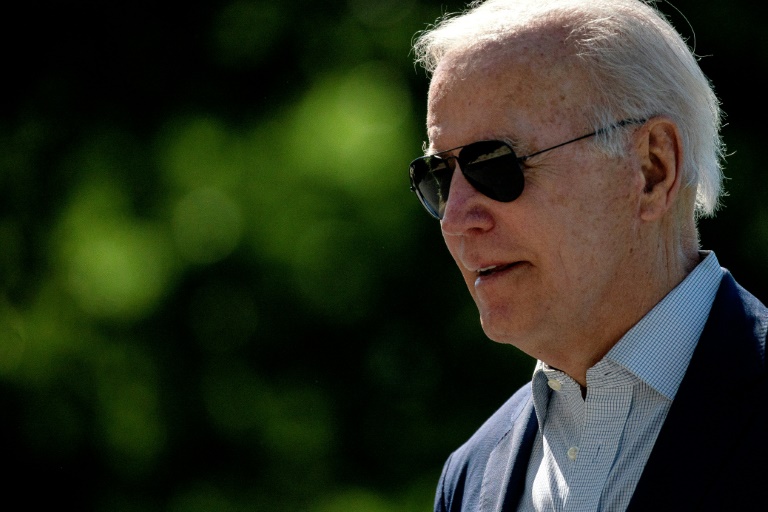
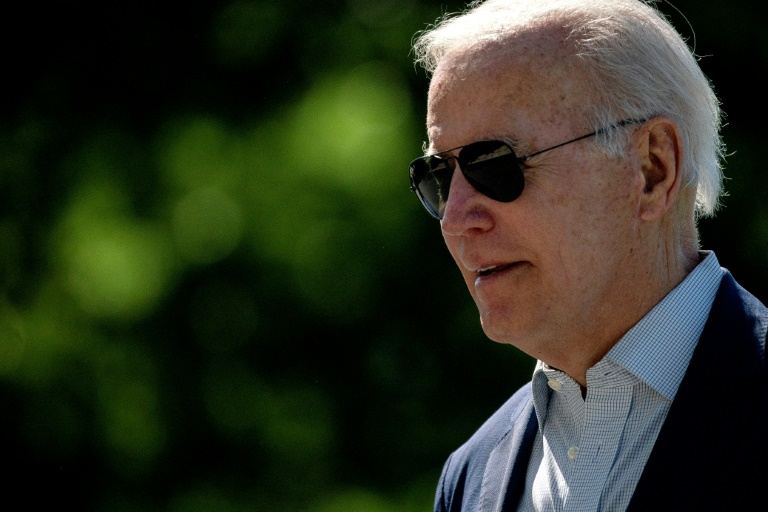
US President Joe Biden heads Wednesday to a Latin America summit on a mission to woo back the region as his administration pledged greater economic cooperation, investment and a program to train half a million health workers.

Biden is hoping to cement ties with a region long seen by Washington as its turf but where China has quickly emerged as a leading investor, although the administration has focused on modest progress rather than sweeping proposals.

“We need to demonstrate,” Secretary of State Antony Blinken said Tuesday at the weeklong summit, “that democracies can really effectively deliver for their citizens.”

Hours before Biden was to arrive, the White House announced a new Americas Health Corps that aims to improve the skills of 500,000 health workers across the region, building on the lessons from Covid-19, which hit the Western Hemisphere especially hard.

The health training will cost $100 million, although the United States will not contribute it all and will seek to raise funds, including through the Pan American Health Organization, an administration official said.

China has stepped up its role in Latin America during the pandemic, moving early to supply vaccines, and US nemesis Cuba has long exported its state-employed doctors. 

Biden will separately announce plans for a hemisphere-wide “economic partnership,” although there were few concrete commitments as part of it.

The announcements comes a day after Vice President Kamala Harris detailed $1.9 billion in private-sector investment in impoverished and violence-ravaged El Salvador, Guatemala and Honduras.

The troubles in the so-called Northern Triangle, as well as Haiti, have generated a soaring number of migrants to the United States, setting off a domestic furor as Donald Trump’s Republican Party demands efforts to stop them.

– Trade deals lite –

The Summit of the Americas is the first in the United States since the inaugural edition in 1994 was held in Miami under Bill Clinton, who proposed a free-trade zone that would span the hemisphere other than communist Cuba.

The White House billed Biden’s summit as an update to Clinton’s vision. But the US political mood has since dramatically soured on free trade, with Biden’s predecessor Trump rising to power denouncing liberalization as harmful to US workers. 

The Americas Partnership for Economic Prosperity, to be announced by Biden, will look at coordinating on standards and supply chains but will not offer new market access — a key incentive offered to the region by China, with its billion-plus consumer market.

Stronger supply chains will help “our hemisphere reduce overdependence and concentration on certain countries,” another administration official said.

Biden last month similarly unveiled an Asian partnership on setting economic standards as he visited Tokyo.

But unlike in Asia, the United States already has free-trade deals with a number of major Latin American nations including Mexico, Chile, Colombia and Peru.

The official said the new partnership would start with “like-minded countries,” without naming them.

While hesitant on free trade, Biden has stood firm on another core principle of the original Summit of the Americas — democracy — even as he considers going next month to Saudi Arabia, a critical oil supplier.

Draining US diplomatic energy ahead of the summit, Mexican President Andres Manuel Lopez Obrador refused to attend as he insisted that Biden invite the leftist leaders of Cuba, Nicaragua and Venezuela, shunned on the grounds that they are autocrats.

Biden is separately expected to meet President Jair Bolsonaro of Brazil, Latin America’s most populous nation, despite rising fears that the Trump ally will not accept the legitimacy of upcoming elections.

– ‘Nearshoring’ –

Mauricio Claver-Carone, the president of the Inter-American Development Bank, said that Latin America can increasingly be seen as a “sea of peace” for investors amid the global turbulence from Russia’s invasion of Ukraine and rising risks associated with China.

The head of the bank, which provides development funding in Latin America, said he saw a rise of “nearshoring,” with businesses moving closer to markets instead of to China.

Since the first Summit of the Americas, “each dollar that went to China was one dollar, one investment, one job less for Latin America and the Caribbean,” he told AFP in an interview in Los Angeles.

In Latin America, “whether they are governments of the left or the right, they all want foreign investment, they all want nearshoring, they all want economic growth,” he said.

US lays out pledges as Biden woos Latin American leaders

US President Joe Biden heads Wednesday to a Latin America summit on a mission to woo back the region as his administration pledged greater economic cooperation, investment and a program to train half a million health workers.

Biden is hoping to cement ties with a region long seen by Washington as its turf but where China has quickly emerged as a leading investor, although the administration has focused on modest progress rather than sweeping proposals.

“We need to demonstrate,” Secretary of State Antony Blinken said Tuesday at the weeklong summit, “that democracies can really effectively deliver for their citizens.”

Hours before Biden was to arrive, the White House announced a new Americas Health Corps that aims to improve the skills of 500,000 health workers across the region, building on the lessons from Covid-19, which hit the Western Hemisphere especially hard.

The health training will cost $100 million, although the United States will not contribute it all and will seek to raise funds, including through the Pan American Health Organization, an administration official said.

China has stepped up its role in Latin America during the pandemic, moving early to supply vaccines, and US nemesis Cuba has long exported its state-employed doctors. 

Biden will separately announce plans for a hemisphere-wide “economic partnership,” although there were few concrete commitments as part of it.

The announcements comes a day after Vice President Kamala Harris detailed $1.9 billion in private-sector investment in impoverished and violence-ravaged El Salvador, Guatemala and Honduras.

The troubles in the so-called Northern Triangle, as well as Haiti, have generated a soaring number of migrants to the United States, setting off a domestic furor as Donald Trump’s Republican Party demands efforts to stop them.

– Trade deals lite –

The Summit of the Americas is the first in the United States since the inaugural edition in 1994 was held in Miami under Bill Clinton, who proposed a free-trade zone that would span the hemisphere other than communist Cuba.

The White House billed Biden’s summit as an update to Clinton’s vision. But the US political mood has since dramatically soured on free trade, with Biden’s predecessor Trump rising to power denouncing liberalization as harmful to US workers. 

The Americas Partnership for Economic Prosperity, to be announced by Biden, will look at coordinating on standards and supply chains but will not offer new market access — a key incentive offered to the region by China, with its billion-plus consumer market.

Stronger supply chains will help “our hemisphere reduce overdependence and concentration on certain countries,” another administration official said.

Biden last month similarly unveiled an Asian partnership on setting economic standards as he visited Tokyo.

But unlike in Asia, the United States already has free-trade deals with a number of major Latin American nations including Mexico, Chile, Colombia and Peru.

The official said the new partnership would start with “like-minded countries,” without naming them.

While hesitant on free trade, Biden has stood firm on another core principle of the original Summit of the Americas — democracy — even as he considers going next month to Saudi Arabia, a critical oil supplier.

Draining US diplomatic energy ahead of the summit, Mexican President Andres Manuel Lopez Obrador refused to attend as he insisted that Biden invite the leftist leaders of Cuba, Nicaragua and Venezuela, shunned on the grounds that they are autocrats.

Biden is separately expected to meet President Jair Bolsonaro of Brazil, Latin America’s most populous nation, despite rising fears that the Trump ally will not accept the legitimacy of upcoming elections.

– ‘Nearshoring’ –

Mauricio Claver-Carone, the president of the Inter-American Development Bank, said that Latin America can increasingly be seen as a “sea of peace” for investors amid the global turbulence from Russia’s invasion of Ukraine and rising risks associated with China.

The head of the bank, which provides development funding in Latin America, said he saw a rise of “nearshoring,” with businesses moving closer to markets instead of to China.

Since the first Summit of the Americas, “each dollar that went to China was one dollar, one investment, one job less for Latin America and the Caribbean,” he told AFP in an interview in Los Angeles.

In Latin America, “whether they are governments of the left or the right, they all want foreign investment, they all want nearshoring, they all want economic growth,” he said.

Moderna announces positive results for Omicron vaccine

US biotech company Moderna on Wednesday announced positive results for a new vaccine that targets both the original Covid strain and Omicron, and sees the shot as its “lead candidate” for a booster this fall.

The so-called “bivalent” vaccine was tested in a trial of 814 adults and shown to produce 1.75 times more Omicron-specific neutralizing antibodies, which have the power to prevent infection, compared to Moderna’s original Spikevax vaccine.

All of the participants previously received three doses of Spikevax, and then slightly more than half went on to get a fourth dose of the bivalent shot while the rest got another dose of Spikevax. Antibody levels were tested one month later.

The group that got the new shot also received slightly superior protection to the ancestral strain of Covid compared to Spikevax — though original Covid has long since disappeared from circulation.

“We are thrilled,”  said Stephane Bancel, CEO of Moderna in a statement, adding he anticipated this vaccine would be the company’s lead candidate for authorization as a booster this fall.

“We want to be as ready as early as August for shipping,” he added to investors in a call.

The results were broadly welcomed by experts, who agreed Moderna’s vaccine is now the front runner as a booster, though some gave a note of caution. 

“We won’t know about clinical outcomes until later this year,” tweeted Eric Topol, a physician and scientist at Scripps Research Translational Institute. The study concerns only antibody levels, which are thought to serve as a useful proxy for how a vaccine will perform, but can’t make precise predictions.

Breakthrough infections have risen since Omicron became dominant in late 2021, with vaccine makers hoping to restore efficacy to previous levels, even as first generation vaccines continue to protect well against severe disease and death.

– Omicron subvariants challenge –

Moderna officials did concede during the investor call that antibody levels would be lower against Omicron’s subvariants that are now in circulation, but said it believed it was still a superior booster than repeating Spikevax. 

The BA.2.12.12 variant is currently dominant, followed by BA.2, with BA.4 and BA.5 rising, according to Centers for Disease Control and Prevention (CDC) data. Each successive Omicron subvariant appears to have a transmission advantage over those that came before it.

Moderna also doesn’t yet have data on durability — how the new vaccine booster will fare three months and six months out.

The problem of an ever-evolving virus poses a challenge for health authorities.  A panel of Food and Drug Administration experts will meet June 28 to discuss considerations and strategies for boosters in fall and winter.

“Society is moving toward a new normal that may well include annual Covid-19 vaccination alongside seasonal influenza vaccination,” top FDA officials wrote in a letter to the Journal of the American Medical Association in May.

President Joe Biden’s government has said it has enough funds to deliver additional boosters for those at highest risk this fall — including the elderly and those with immune compromised conditions. 

But whether these vaccines will be made widely available to the general public for free could depend on whether Congress authorizes $22.5 billion in funding the White House is seeking.

Report accuses TikTok of spreading hate speech ahead of Kenya poll

Clips containing hate-speech, political disinformation and threats of ethnic violence are spreading on TikTok ahead of Kenya’s high-stakes elections, a new report said Wednesday, accusing the video-sharing platform of “failing its first real test in Africa”.

East Africa’s economic powerhouse will hold presidential and parliamentary elections on August 9, in the shadow of previous polls which have often been marred by ethnic violence.

On Wednesday, the US-based global non-profit Mozilla Foundation said it had analysed 130 videos which sought to spread misinformation and stoke fear, accruing over four million views after being shared by dozens of accounts.

“Kenya’s democracy carries a tainted past of post-election violence. Now, political disinformation on TikTok — in violation of the platform’s own policies — is stirring up this highly volatile political landscape,” Odanga Madung, a fellow at the foundation, said. 

Many of the videos contained explicit threats of ethnic violence against communities based in the Rift Valley region, according to the non-profit.

In one instance, a video which drew more than 400,000 views, alleged that a certain presidential candidate hated a particular community and would target them if he came to power.

The torrent of misinformation included fake television news bulletins, doctored newspaper pages and sham opinion polls. 

“The content targets specific communities with threats and uses past violence as a tool of fear,” the report said, adding that similar narratives were peddled in 2007 when a disputed election result sparked tribal violence which cost more than 1,100 lives.

– ‘Remove election misinformation’ –

The report said TikTok had removed several videos and suspended many accounts after reviewing the report.

A spokesperson for TikTok told AFP that the company planned to roll out new features to connect users “with authoritative information about the Kenyan elections”.

“We prohibit and remove election misinformation, promotions of violence, and other violations of our policies.”

TikTok, which is owned by Chinese tech giant ByteDance, saw explosive growth during the pandemic, but was doing little to rein in fake news, the report said.

Moderators were often asked to examine content which they knew little about, despite being unfamiliar with the context and the language used, a former TikTok employee told the researchers behind the report.

Kenya’s elections have been dogged by claims of fake news before.

An undercover expose by UK media revealed that Cambridge Analytica, a British consulting firm, used the personal data of millions of Facebook users to target political ads and spread misinformation during the 2013 and 2017 presidential campaigns.

“Rather than learn from the mistakes of more established platforms like Facebook and Twitter, TikTok is following in their footsteps, hosting and spreading political disinformation ahead of a delicate African election,” the report said.

“TikTok’s shortcomings in terms of moderation of the platform only adds fuel to the fire.”

Experts recently told AFP that the war in Ukraine had made TikTok the number one source of misinformation thanks to its gigantic number of users and minimal filtering of content.

AFP is a partner of TikTok, providing fact-checking services in Asia-Pacific, Europe, the Middle East, Latin America and Africa.

UN chief warns impact of Ukraine war on world is worsening

UN chief Antonio Guterres said Wednesday that the consequences for the world of Russia’s invasion of Ukraine are worsening, with 1.6 billion people likely to be affect.

“The war’s impact on food security, energy and finance is systemic, severe, and speeding up,” the Secretary-General said, presenting the UN’s second report into the repercussions of the conflict.

He added that “for people around the world, the war is threatening to unleash an unprecedented wave of hunger and destitution, leaving social and economic chaos in its wake.”

Guterres said that while this year’s food crisis is “about lack of access,” next year’s “could be about lack of food.”

“There is only one way to stop this gathering storm: the Russian invasion of Ukraine must end,” he pleaded in a speech.

The head of the world body said he had asked colleagues to help find “a package deal that allows for the safe and secure export of Ukrainian-produced food through the Black Sea, and unimpeded access to global markets for Russian food and fertilizers.”

“This deal is essential for hundreds of millions of people in developing countries, including in sub-Saharan Africa,” said Guterres.

The UN report, led by diplomat Rebeca Grynspan, says that an estimated 94 countries, home to around 1.6 billion people, are “severely exposed to at least one dimension of the crisis and unable to cope with it.”

“Out of the 1.6 billion, 1.2 billion or three quarters live in ‘perfect-storm’ countries that are severely exposed and vulnerable to all three dimensions of finance, food, and energy, simultaneously,” it adds.

The report says that the war may increase the number of food-insecure people by 47 million people in 2022, bringing it to 323 million by the end of the year.

It is estimated that up to 58 million more Africans may fall into poverty this year, the document adds.

Extreme poverty in the Middle East and North Africa could increase by 2.8 million people in 2022, while in South Asia 500 million people are at risk, according to the report.

“Concrete efforts should be made to ensure critical supplies of food and energy reach the most vulnerable,” the report says.

Kashmir violence dampens celebrations at Hindu festival

The spectre of recent violence in Indian-administered Kashmir overshadowed celebrations for a Hindu festival on Wednesday, with crowds a fraction of their usual size despite heavy security to mollify fears of an attack.

The annual gathering takes place at the Kheer Bhawani temple, a short drive from the city of Srinagar, and is usually a major religious milestone for the local Pandit community. 

Worshippers and pilgrims typically offer milk and Kheer pudding to the sacred spring within the temple complex, throwing rose petals and lighting earthen oil lamps in rituals of respect for the Kheer Bhawani goddess.

But this year many stayed home, some fearful after the killing of nearly a dozen Hindus and Sikhs living in the Kashmir valley in recent weeks.

“I see much less crowd here compared to previous years,” said Kirti, who travelled for hours to reach the temple along with her family. 

Their voyage to the shrine passed armed soldiers lining the road in, while hundreds of police and paramilitary troops were deployed at the site to scan visitors with metal detectors and X-ray machines.

“Obviously, some people are scared because of the recent targeted killings,” Kirti said. 

“But I am happy we came again and see that it’s not that unsafe.”

– Tensions high –

Kashmir has weathered decades of violence and upheaval since it was partitioned between India and Pakistan when both countries became independent in 1947. 

The two neighbours both claim it in full, and have fought two of their three wars over control of the territory. 

In 2019, Indian Prime Minister Narendra Modi overhauled the region’s governing arrangements and imposed a security chokehold which critics say has severely restricted civic life.

Tension has run high since then, with many accusing India of “settler colonialism” aimed at changing the demographics in the highly militarised territory.

Through the decades, Kashmir’s minority Pandits have long fretted over their place in the restive territory and their relationship with its Muslim majority, which largely supports the territory’s independence or a merger with Pakistan.

Hundreds of thousands of them fled Kashmir from 1989 in the wake of an armed rebellion against Indian rule.

The spate of killings since the last week of May have heightened the community’s fears for its safety. 

Among the victims was Rahul Bhat, a Pandit who had been employed by the government, alongside 10,000 others, to help resettle members of the community that fled back in the valley. 

He was shot dead inside his office by militants, sparking large protests by colleagues who have refused to return to work and demanded reassignment to “secure” locations outside the Kashmir valley. 

– ‘Boycotted because of fear’ –

Only around 2,000 people made the pilgrimage to the Kheer Bhawani shrine on Wednesday, officials told AFP — a fraction of the huge crowds seen in earlier years. 

Sandeep Raina, a community representative, told AFP that most people living in Pandit resettlement projects had stayed away in protest. 

“Most boycotted because of fear and the government not meeting our demands,” he said.

Those who did come for the festival nonetheless appeared in high spirits.

Each year, most of the festivals stalls are manned by local Muslims, selling toys and worship materials to Hindu pilgrims.

Ghulam Hassan was one of several vendors offering free flowers to worshippers. 

“I have been doing it for six years,” he told AFP. “It’s about maintaining brotherhood and doing it brings me comfort.”

Car ploughs into school trip teenagers killing teacher in Berlin

A German-Armenian man drove into a crowd in a busy shopping district in Berlin on Wednesday, mowing down a group of teenagers and killing their teacher before crashing through a shop window.

The incident happened at around 10:30 am (0830 GMT) just across from Breitscheidplatz, where an Islamic State group sympathiser deliberately ploughed a truck into a Christmas market in 2016, killing 12.

At least a dozen people were injured on Wednesday, including six who remain in a life-threatening condition, emergency services said. 

It was not clear whether the crash was intentional. The driver, 29, was being questioned, police told AFP. 

The silver Renault Clio with a Berlin licence plate first mounted the sidewalk on the corner of Tauentzienstrasse and Rankestrasse, hitting the group of secondary school students on a class trip, before returning to the road.

It then rammed into the shop front on Marburger Strasse about 150 to 200 metres (165 to 220 yards) away.

A female teacher with the group from a school in Bad Arolsen, a small town in the central German state of Hesse, was killed. A male teacher was seriously injured, the Hesse state government said in a statement. 

– ‘Happened so fast’ –

The driver was briefly detained by passers-by before being handed over to police after the car smashed through the shop front, according to police.

Berlin police chief Barbara Slowik said the driver was in hospital and “at this time, we do not have conclusive evidence of a political act”. 

Berlin interior minister Iris Spranger denied media reports a letter of confession was found in the car, but said there were “posters with remarks about Turkey”.

However, security sources told AFP the car did not belong to the driver and cautioned that the contents of the vehicle may not be his.

Frank Vittchen, a witness at the scene, told AFP he was sitting at a fountain nearby when he “heard a big crash and then also saw a person fly through the air”. 

The vehicle drove “at high speed onto the pavement and didn’t brake”, he said, with its windows shattering from the impact.

“It all happened so fast,” he said.

Another witness who would only be named as F. Kacan said the driver had ploughed his car into the perfume store, and “then he suddenly took off running on the street and we were able to stop him”.

– ‘Concerned and shocked’ –

The German government is “very concerned and shocked” by the “terrible incident in Berlin”, said a spokeswoman, adding that their thoughts were with the victims and their loved ones. 

Germany has been on high alert for car ramming attacks since the deadly 2016 Christmas market assault, with most carried out by people who were found to have psychological issues.

In December 2020, a German man ploughed his car through a pedestrian shopping street in the southwestern city of Trier, killing four adults and a baby.

Earlier the same year, a German man rammed his car through a carnival procession in the central town of Volkmarsen, injuring dozens of bystanders, including children. He was sentenced to life in jail last year.

In January 2019, another German man injured eight people when he drove into crowds on New Year’s Eve in the western cities of Bottrop and Essen. He was later taken into psychiatric care.

In April 2018, a German crashed his van into people seated outside a restaurant in the city of Muenster, killing five before shooting himself dead. Investigators later said he had mental health problems.

During the football World Cup in Germany in 2006, a German man rammed his car into crowds gathered to watch a match at the Brandenburg Gate in Berlin, injuring some 20 people. The driver was later committed to a psychiatric hospital.  

Stocks lower as recession fears weigh on sentiment

Stock markets were lower on Wednesday as investors weighed the prospect of recession while inflation soars around the world. 

The yen fell to new lows against both the dollar and euro after the Bank of Japan — in contrast with other central banks — decided not to raise interest rates to rein in combat runaway consumer prices.

Just a day after the World Bank slashed its forecasts for global growth, the OECD warned that the world economy would pay a “hefty price” for Russia’s invasion of Ukraine and inflation would keep rising.

The Paris-based Organisation for Economic Co-operation and Development predicted that the world economy would grow by three percent this year — much slower than its previous estimate of 4.5 percent in December.

Market sentiment “continues to remain extremely fickle, prone to the ebb and flow of inflation expectations, followed by fears that central banks will overreact in combatting inflation (and) concern about what that might do to global growth,” said CMC Markets analyst Michael Hewson. 

“This argument over whether we see a recession… is likely to become a lot clearer over the next week or so,” he said, pointing in particular to the release of US inflation data on Friday. 

European stock markets ended the session in the red and Wall Street was also lower following two days of gains. 

Earlier in Asia, stock prices had rallied as China eases Covid lockdown restrictions and is forecast to lift its crackdown on the tech sector.

China’s approval of dozens of new video game releases sent shares of some of its biggest tech firms soaring Wednesday.

Global equities have enjoyed some respite in recent weeks from a painful sell-off caused by central bank monetary tightening, in particular by the US Federal Reserve.

The new inflation data on Friday will provide a clearer idea about the pace of future Fed rate hikes.

In Europe, the European Central Bank is on Thursday expected to signal an end to its bond-buying, paving the way for an interest rate increase further down the line.

“The reality for the economy and probably the stock markets is that aggressive central bank rate hikes are likely to take a sharp bite out of household consumption,” said SPI Asset Management’s Stephen Innes.

Hungarian inflation has reached double figures for the first time in 20 years, official data showed Wednesday.

High oil prices, a major factor behind the surge in inflation, were up again on Wednesday. 

– Key figures at around 1540 GMT –

New York – Dow: DOWN 0.2 percent to 33,128.37 points

London – FTSE 100: DOWN 0.1 percent at 7,593.00 (close)

Frankfurt – DAX: DOWN 0.8 percent at 14,445.99 (close)

Paris – CAC 40: DOWN 0.8 percent at 6,448.63 (close)

EURO STOXX 50: DOWN 0.5 percent at 3,788.93

Tokyo – Nikkei 225: UP 1.0 percent at 28,234.29 (close)

Hong Kong – Hang Seng Index: UP 2.2 percent at 22,014.59 (close)

Shanghai – Composite: UP 0.7 percent at 3,263.79 (close)

Dollar/yen: UP at 133.91 yen from 132.62 yen late Tuesday

Euro/dollar: UP at $1.0739 from $1.0715 

Pound/dollar: DOWN at $1.2553 from $1.2592

Euro/pound: UP at 85.55 pence from 85.02 pence

Brent North Sea crude: UP 1.6 percent at $122.55 per barrel

West Texas Intermediate: UP 1.5 percent at $121.20 per barrel

burs/spm/jj

Ukraine says troops may have to pull back from flashpoint city

Kyiv’s forces may have to retreat from the eastern city of Severodonetsk, a senior Ukrainian official conceded on Wednesday, as diplomatic efforts intensified to unblock grain stuck in Ukraine’s ports.

The strategic city has become the focus of Russia’s offensive as it seeks to seize an eastern swathe of Ukraine, after being repelled from other parts of the country. 

Moscow claimed on Tuesday they had full control of residential areas while Kyiv was still holding the industrial zone and surrounding settlements, but Ukrainian officials insisted the Russians were not in control of the city.

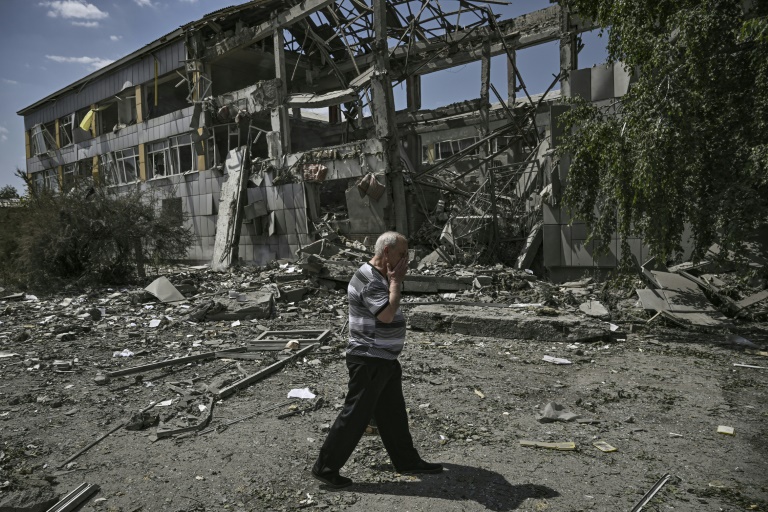
On Wednesday, Sergiy Gaiday — governor of the Lugansk region, which includes the city — said Ukraine’s forces might have to pull back as Severodonetsk is being shelled by Russian troops “24 hours a day”.

“It is possible that we will have to retreat” to better fortified positions, he said in an interview on the TV channel 1+1. 

Russia’s offensive is now targeting the Donbas region, which includes Lugansk and Donetsk, after its forces were pushed back from Kyiv and other areas following the February invasion.

The cities of Severodonetsk and Lysychansk, which are separated by a river, are the last areas still under Ukrainian control in Lugansk.

As concerns mounted over grain trapped at Ukrainian ports, Russian Foreign Minister Sergei Lavrov said Moscow was ready to ensure the safe passage of ships from Ukraine.

“We are ready to do this in cooperation with our Turkish colleagues,” Lavrov told reporters in Ankara amid stark warnings of shortages worldwide partly blamed on Russia’s invasion of Ukraine.

His Turkish counterpart Mevlut Cavusoglu called Russian demands for an end to sanctions to help grain onto the world market “legitimate”.

“If we need to open up the international market to Ukrainian grain, we see the removal of obstacles standing in the way of Russia’s exports as a legitimate demand,” he said.

However Kyiv, which was not represented at the Ankara talks, pushed back against claims that Western sanctions on Moscow had sent prices soaring.

“We have been actively communicating, the president and myself, about the true cause of this crisis: it is Russian aggression, not sanctions,” Ukraine’s Foreign Minister Dmytro Kuleba said. 

Moscow’s campaign in the pro-Western country has not only devastated crops and farming, but also disrupted crucial deliveries from Ukraine — one of the world’s main grain producers.

– ‘Millions’ could die –

Ukraine said on Wednesday it would not demine waters around the Black Sea port of Odessa to allow grain exports, citing the threat of Russian attacks on the city.

At the request of the United Nations, Turkey has offered its services to escort maritime convoys from Ukrainian ports, despite the presence of mines — some of which have been detected near the Turkish coast.

Both sides accuse one another of destroying agricultural areas, which could worsen global food shortages.

As he hosted Mediterranean ministers on the global food crisis, Italian Foreign Minister Luigi Di Maio warned “millions” could die unless Russia unblocked Ukraine’s ports.

But Kremlin spokesman Dmitry Peskov rejected suggestions that grain stuck in Ukrainian ports was fuelling a global food crisis.

“As far as we know, there is much less grain than the Ukrainians say. There is no need to exaggerate the importance of these grain reserves,” he told reporters.

The war’s economic impact continued to reverberate, with the World Bank cutting its global growth estimate to 2.9 percent — 1.2 percentage points below the January forecast — due largely to the invasion.

The toxic combination of weak growth and rising prices could trigger widespread suffering in dozens of poorer countries still struggling to recover from the upheaval of the Covid-19 pandemic, the bank said.

“The risk from stagflation is considerable with potentially destabilising consequences for low- and middle-income economies,” World Bank President David Malpass told reporters.

“For many countries recession will be hard to avoid,” Malpass said.

The bank additionally announced $1.5 billion more in aid for Ukraine, bringing the total planned support package to more than $4 billion.

The OECD also warned the world economy would pay a “hefty price” for the Russian invasion as it slashed its 2022 growth forecast and projected higher inflation.

– ‘Bombings every day’ –

Severodonetsk appeared close to being captured just days ago but Ukrainian forces launched counterattacks and managed to hold out, despite warnings they were outnumbered by superior forces.

“Severodonetsk is where the fiercest battles are raging,” Ukrainian defence ministry spokesman Olexandr Motuzianyk said, adding that its troops were mounting counterassaults where possible. 

Lanny Davis, a US lawyer for Ukraine tycoon Dmytro Firtash, said 800 civilians had taken refuge in the bunkers inside his huge Azot chemical plant in the city.

The situation was also increasingly desperate in Lysychansk.

“Every day there are bombings and every day something burns. A house, a flat… And there is nobody to help me,” 70-year-old Yuriy Krasnikov told AFP.

“I tried to go to the city authorities, but nobody’s there, everyone has run away.”

Ivan Sosnin was among those residents who decided to stay despite the war.

“This is our home, that’s all we know. We grew up here, where else should we go?” said the 19-year-old.

burs-dlc/har

Close Bitnami banner
Bitnami