World

US to ban single-use plastics on public lands by 2032

The United States will phase out single-use plastics in national parks and other public lands over the next decade, President Joe Biden’s administration announced Wednesday as part of actions on World Oceans Day.

This will include the sale and distribution of plastic bags and bottles as well as food wrappers, beverage cups and other tableware, according to an order by the interior secretary Deb Haaland.

Government departments have one year to develop plans to switch over to alternatives, such as biodegradable and compostable materials, and then have until 2032 to complete the transition.

“As the steward of the nation’s public lands, including national parks and national wildlife refuges, and as the agency responsible for the conservation and management of fish, wildlife, plants and their habitats, we are uniquely positioned to do better for our Earth,” Haaland said in a statement.

Plastic waste is devastating for fish and other wildlife, with oceans bearing the brunt of the impact since they are downstream of all pollution sources.

Of the more than 300 million tons of plastic produced every year, at least 14 million tons end up in the ocean, the interior department said.

While the plastics industry has attempted to portray the problem as something that can be overcome through recycling, only nine percent of all the plastic the world has ever made has been recycled, and recycling rates are stagnant.

Christy Leavitt, plastics campaign director for non-profit Oceana, welcomed the administration’s announcement.

“The Biden administration is taking a big step to protecting our oceans from single use plastic,” Leavitt told AFP.

Oceana and 300 other nonprofits, organizations, and businesses had sought the action in a letter to the Biden administration last year.

The order will cover the nation’s 423 national parks but also wildlife refuges and other lands and waters managed by the interior department: in total 20 percent of the United States’ land, which hosts some 400 million visitors annually.

“Ten years is a long time, but we are hopeful that they will take steps along the way to reach that end goal,” said Leavitt.

A number of larger national parks have already moved toward eating areas with reusable tableware and refillable water stations, she added.

“We are hopeful that ultimately not just our national parks and other public lands but cities and counties and states around the country can move towards those reusable and refillable systems.”

The White House also announced a new national marine sanctuary to preserve the Hudson Canyon, an ecological hotspot located approximately 100 miles off the coast of New York and reaches depths of 2.5 miles, as well as the start of efforts to create an Ocean Climate Action Plan.
US lays out pledges as Biden woos Latin American leaders

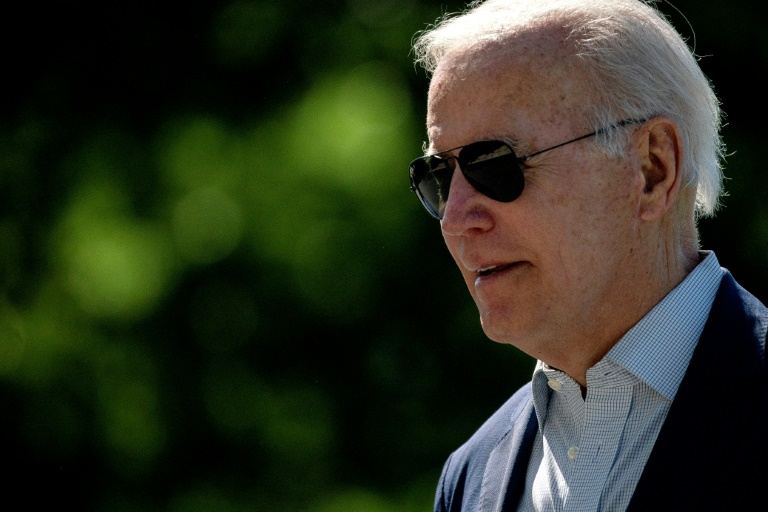
US President Joe Biden heads Wednesday to a Latin America summit on a mission to woo back the region as his administration pledged greater economic cooperation, investment and a program to train half a million health workers.

Biden is hoping to cement ties with a region long seen by Washington as its turf but where China has quickly emerged as a leading investor, although the administration has focused on modest progress rather than sweeping proposals.

“We need to demonstrate,” Secretary of State Antony Blinken said Tuesday at the weeklong summit, “that democracies can really effectively deliver for their citizens.”

Hours before Biden was to arrive, the White House announced a new Americas Health Corps that aims to improve the skills of 500,000 health workers across the region, building on the lessons from Covid-19, which hit the Western Hemisphere especially hard.

The health training will cost $100 million, although the United States will not contribute it all and will seek to raise funds, including through the Pan American Health Organization, an administration official said.

China has stepped up its role in Latin America during the pandemic, moving early to supply vaccines, and US nemesis Cuba has long exported its state-employed doctors. 

Biden will separately announce plans for a hemisphere-wide “economic partnership,” although there were few concrete commitments as part of it.

The announcements comes a day after Vice President Kamala Harris detailed $1.9 billion in private-sector investment in impoverished and violence-ravaged El Salvador, Guatemala and Honduras.

The troubles in the so-called Northern Triangle, as well as Haiti, have generated a soaring number of migrants to the United States, setting off a domestic furor as Donald Trump’s Republican Party demands efforts to stop them.

– Trade deals lite –

The Summit of the Americas is the first in the United States since the inaugural edition in 1994 was held in Miami under Bill Clinton, who proposed a free-trade zone that would span the hemisphere other than communist Cuba.

The White House billed Biden’s summit as an update to Clinton’s vision. But the US political mood has since dramatically soured on free trade, with Biden’s predecessor Trump rising to power denouncing liberalization as harmful to US workers. 

The Americas Partnership for Economic Prosperity, to be announced by Biden, will look at coordinating on standards and supply chains but will not offer new market access — a key incentive offered to the region by China, with its billion-plus consumer market.

Stronger supply chains will help “our hemisphere reduce overdependence and concentration on certain countries,” another administration official said.

Biden last month similarly unveiled an Asian partnership on setting economic standards as he visited Tokyo.

But unlike in Asia, the United States already has free-trade deals with a number of major Latin American nations including Mexico, Chile, Colombia and Peru.

The official said the new partnership would start with “like-minded countries,” without naming them.

While hesitant on free trade, Biden has stood firm on another core principle of the original Summit of the Americas — democracy — even as he considers going next month to Saudi Arabia, a critical oil supplier.

Draining US diplomatic energy ahead of the summit, Mexican President Andres Manuel Lopez Obrador refused to attend as he insisted that Biden invite the leftist leaders of Cuba, Nicaragua and Venezuela, shunned on the grounds that they are autocrats.

Biden is separately expected to meet President Jair Bolsonaro of Brazil, Latin America’s most populous nation, despite rising fears that the Trump ally will not accept the legitimacy of upcoming elections.

– ‘Nearshoring’ –

Mauricio Claver-Carone, the president of the Inter-American Development Bank, said that Latin America can increasingly be seen as a “sea of peace” for investors amid the global turbulence from Russia’s invasion of Ukraine and rising risks associated with China.

The head of the bank, which provides development funding in Latin America, said he saw a rise of “nearshoring,” with businesses moving closer to markets instead of to China.

Since the first Summit of the Americas, “each dollar that went to China was one dollar, one investment, one job less for Latin America and the Caribbean,” he told AFP in an interview in Los Angeles.

In Latin America, “whether they are governments of the left or the right, they all want foreign investment, they all want nearshoring, they all want economic growth,” he said.

Belgian king regrets colonial 'humiliation' in landmark Congo trip

King Philippe of Belgium, in a historic visit to DR Congo, said on Wednesday that his country’s rule over the vast central African country had inflicted pain and humiliation through a mixture of “paternalism, discrimination and racism.”

In a speech outside the Democratic Republic of Congo’s parliament, Philippe amplified remorse he first voiced two years ago over Belgium’s brutal colonial rule — an era that historians say saw millions die.

“This regime was one of an unequal relationship, in itself unjustifiable, marked by paternalism, discriminations and racism,” Philippe said, speaking in French. 

“It led to abuse and humiliation,” he said.

The king noted that many Belgians had been sincerely committed to the Congo and its people, however.

Philippe landed in Kinshasa on Tuesday afternoon for a six-day visit, billed as a chance for reconciliation between the DRC and its former colonial master.

Belgium’s colonisation of the Congo was one of the harshest imposed by the European powers that ruled most of Africa in the late 19th and 20th centuries.

King Leopold II, the brother of Philippe’s great great grandfather, governed what is now the DRC as his personal property between 1885 and 1908, before it became a Belgian colony. 

Historians say that millions of people were killed, mutilated or died of disease as they were forced to collect rubber under his rule. The land was also pillaged for its mineral wealth, timber and ivory. 

As the DRC headed to its 60th anniversary of indepence, Philippe wrote a letter to Congolese President Felix Tshisekedi in 2020 to express his “deepest regrets” for the “wounds of the past.”

The king’s speech Wednesday went further in expressing regret, but it fell short of an apology for colonial-era crimes. 

– Looted art –

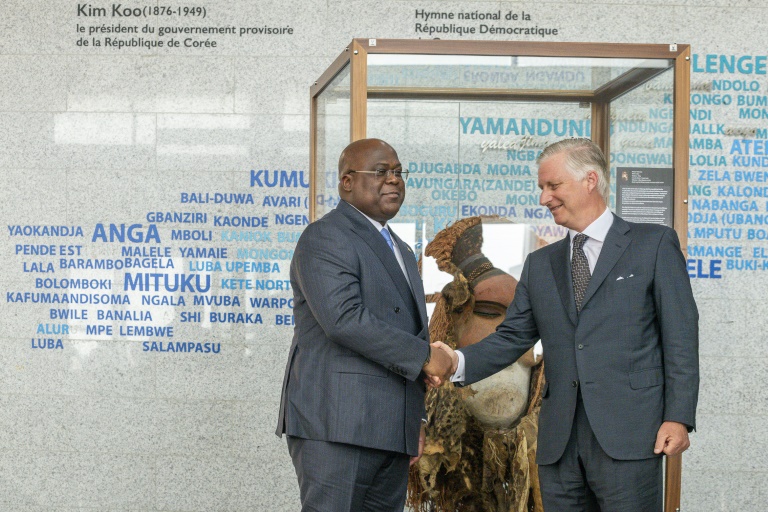
Earlier Wednesday, Philippe visited DRC’s national museum in Kinshasa, where he handed over a mask the ethnic Suku group use in initiation rites. 

The ceremonial mask is on “unlimited” loan from Belgium’s Royal Museum for Central Africa, he announced. 

The Belgian government last year set out a roadmap for returning art works looted during the colonial era, a sensitive topic in the DRC.  

“The coloniser hauled away our artworks, it’s right that they should be returned to us,” said Louis Karhebwa, a 63-year-old businessman.

Prince Pungi, a young civil servant, agreed. “Congo is changing, moving forward,” he said. “It’s time to take back what belongs to us”. 

Philippe is due to address university students in the southern city of Lubumbashi on Friday. 

On Sunday, he will also visit the clinic of gynaecologist Denis Mukwege, co-winner of the 2018 Nobel Peace Prize for his fight against sexual violence, in the eastern city of Bukavu.

His trip comes as Belgium is preparing to return to Kinshasa a tooth — the last remains of Patrice Lumumba, a hero of the anti-colonial struggle and short-lived first prime minister of the independent Congo. 

Lumumba was murdered by Congolese separatists and Belgian mercenaries in 1961 and his body dissolved in acid, but the tooth was kept as a trophy by one of his killers, a Belgian police officer.

– Eastern violence –

The Belgian sovereign’s trip also comes at a time of heightened tension between Kinshasa and neighbouring Rwanda over rebel activity in the conflict-torn eastern DRC. 

DRC’s government has accused Rwanda of backing the resurgent M23 militia, an accusation which Rwanda has denied.

At a news conference in Kinshasa on Wednesday, President Tshisekedi told reporters that he saw security support as a priority in DRC’s relationship with Belgium. 

“There is no development without security,” the president said. 

The DRC, a nation of about 90 million people, is one of the poorest countries in the world.

Over 120 groups roam the country’s volatile east, many of which are a consequence of regional wars more than two decades ago, and civilian massacres remain common.

King Philippe, in his speech Wednesday, also said the situation in eastern DRC “cannot continue”. 

“It is the responsibility of all of us to do something about it,” he added.

Nigeria's ruling party picks ex-Lagos governor as 2023 candidate

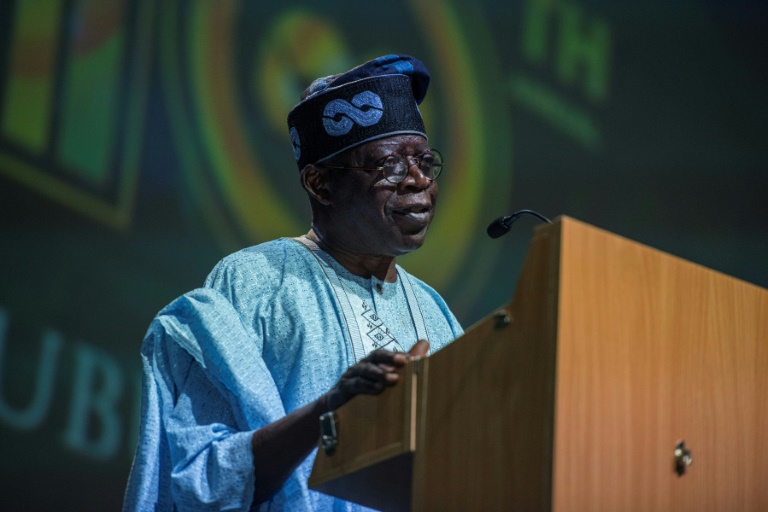
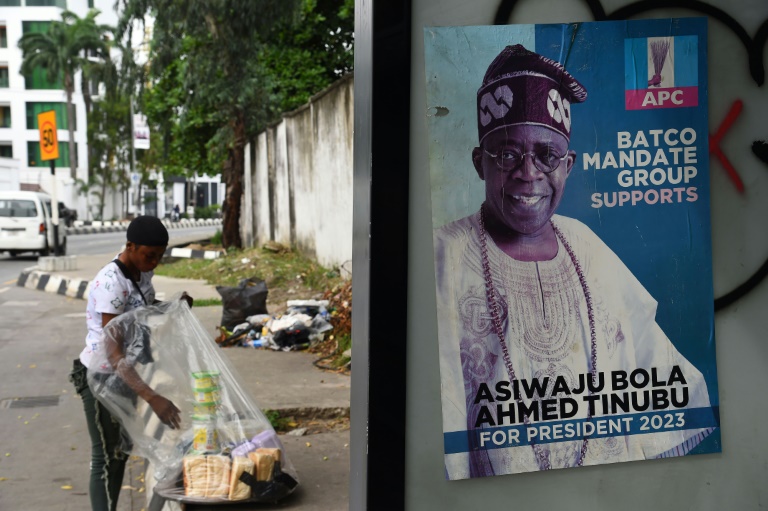
Nigeria’s ruling All Progressives Congress on Wednesday picked former Lagos governor and veteran political operator Bola Tinubu as its candidate for the 2023 election to succeed President Muhammadu Buhari. 

Tinubu, known as the “Godfather of Lagos” for his political clout, easily won with 1,271 votes of the ballots cast by 2,300 party delegates at primaries held on Tuesday and Wednesday at an Abuja convention.

He beat other hopefuls including Vice President Yemi Osinbajo, former transport minister Rotimi Amaechi and Senate president Ahmad Lawan.

An APC stalwart, Tinubu emerged victorious following weeks of wrangling among party factions over their candidate to govern Africa’s most populous nation and largest economy.

“Shame on those who already build a coffin of the APC, our party is alive. No destroyer can bring Nigeria backward,” Tinubu told the convention after APC officials named him the candidate. 

A Muslim from Nigeria’s Yoruba-speaking southwest, Tinubu will face off in the February 25 ballot against Atiku Abubakar, a fellow veteran of Nigerian politics and the candidate for the main opposition Peoples Democratic Party (PDP).

Tinubu, 70, had said becoming president was his life-long ambition. But he sparked outrage days before the primaries by insisting it was his “turn” to run the country.

“It is a difficult thing to run for president. I am humble and grateful to my fellow aspirants.”

Seven candidates withdrew at the last minute to give their support to Tinubu in the primaries.

The APC ballot took place just two days after gunmen raided a church in Ondo State, killing 22 people, a rare attack in the country’s usually more peaceful southwest that has highlighted insecurity.

Security will be a top issue in the 2023 election, with the military dealing with a 12-year-old jihadist conflict in the northeast and heavily armed criminal gangs who carry out raids in the northwest.

Nigeria’s economy is also recovering from the impact of the coronavirus pandemic and the fallout from the Ukraine war that has pushed up food and fuel prices across the continent.

The World Bank projects the number of poor Nigerians will hit 95.1 million this year — nearly half of the country’s population.

– North and south –

Buhari, who was once a military governor during Nigeria’s dictatorship, will be stepping down after the two terms he is allowed in the constitution.

Since the end of military rule in 1999, Nigeria has had six elections, many of which were marred by electoral fraud, legal challenges and violence.

Part of the APC’s internal debate over candidates related to “zoning” — an unofficial agreement among political elites that Nigeria’s presidency should alternate between those from the predominantly Christian south and those from the largely Muslim north.

After two terms with northern Muslim Buhari, observers expected the presidency to go to a candidate from the south.

But the PDP — which held its primary on May 28 and 29 — chose Abubakar, a wealthy former vice president and political veteran who is a northern Muslim.

The opposition’s choice to ignore “zoning” has made the APC reconsider how their candidate will appeal to the north, where voter numbers and participation are traditionally higher. 

“Money still plays a significant role in Nigerian politics. Only the big can win against the big,” said Olutayo Adesina, history professor at the University of Ibadan.

“If it’s Atiku versus Tinubu, there will be a massive turnout, because it wouldn’t be about ideology or party, it will be about ethnicity.”

The PDP dominated Nigeria’s politics for a decade and a half following the country’s 1999 return to democracy.

But the APC managed to end the PDP’s dominance in 2015 with Buhari promising to use his security credentials as a former military man and also tackle rife corruption.

But Buhari has been under increasing pressure over violence, with kidnap gangs carrying out mass abductions at schools and even blowing up a train track earlier this year in a brazen raid to snatch passengers for ransom.

OECD sees lower world growth due to Ukraine war's 'hefty price'

The OECD warned Wednesday that the world economy will pay a “hefty price” for Russia’s invasion of Ukraine as it slashed its 2022 growth forecast and projected higher inflation.

The Paris-based organisation, which represents 38 mostly developed countries, is the latest institution to predict lower GDP growth due to the conflict, which has sent food and energy prices soaring.

In its latest economic outlook, the Organisation for Economic Co-operation and Development said global gross domestic product would grow by three percent in 2022 — down sharply from the 4.5 percent estimated in December.

The OECD also doubled its forecast for inflation among its members — which range from the United States to Australia, Japan, and Latin American and European nations — to 8.5 percent, its highest level since 1988. 

“The world is set to pay a hefty price for Russia’s war against Ukraine,” wrote the OECD’s chief economist and deputy secretary-general, Laurence Boone, adding that a “humanitarian crisis is unfolding before our eyes”.

“The extent to which growth will be lower and inflation higher will depend on how the war evolves, but it is clear the poorest will be hit hardest,” Boone said.

“The price of this war is high and will need to be shared.”

Before the war broke out, the outlook had appeared “broadly favourable” for 2022-23, with growth and inflation expected to return to normal after the devastating Covid-19 pandemic, said the OECD.

However, “the invasion of Ukraine, along with shutdowns in major cities and ports in China due to the zero-Covid policy, has generated a new set of adverse shocks,” it said.

– Food shortage risk –

The OECD was supposed to publish its outlook in March, but it delayed its detailed assessment until now due to uncertainty over the war. At the time, it said the conflict could cut global GDP growth by “over one percentage point”.

The World Bank revised its own figures on Tuesday, lowering its global growth forecast from 4.1 percent to 2.9 percent. The IMF cut its forecast by nearly one point to 3.6 percent in April.

The OECD cut its growth forecast for the United States from 3.7 percent to 2.5 percent and that of China, the world’s second biggest economy, from 5.1 percent to 4.4 percent. The eurozone’s GPD is now seen growing by 2.6 percent instead of 4.3 percent while Britain’s outlook was lowered to 3.6 percent from 4.7 percent.

The OECD noted that commodity prices had risen, hitting real income and spending, “particularly for the most vulnerable households”.

“In many emerging-market economies the risks of food shortages are high given the reliance on agricultural exports from Russia and Ukraine,” it said.

The report warned that the “effects of the war in Ukraine may be even greater than assumed”, raising as an example a scenario of Russia cutting gas supplies to Europe.

As central banks tighten their monetary policies to counter inflation, the report said sharp increases of interest rates could also hit growth more than anticipated.

– Covid risk –

The Covid pandemic, meanwhile, could take another turn for the worse.

“New more aggressive or contagious variants may emerge, while the application of zero-Covid policies in large economies like China has the potential to sap global demand and disrupt supply for some time to come,” the OECD said.

Faced with these challenges, governments needed to protect the most vulnerable from the economic shockwaves, it added.

In the short term, “temporary, timely and well-targeted” fiscal measures would help the poorest households, the OECD said.

Over the medium- and long-term, governments would have to invest more in clean energy and defence spending.

“The world is already paying the price for Russia’s aggression,” wrote Boone.

“The choices made by policymakers and citizens will be crucial to determining how that price will be distributed across people and countries.”

Nigeria's ruling party picks candidate for 2023 election

Nigeria’s ruling All Progressives Congress or APC party on Wednesday picked former Lagos governor Bola Tinubu as its candidate for the 2023 election to succeed President Muhammadu Buhari, who steps down after two terms. 

Tinubu, known as “the Godfather of Lagos” for his political clout, won 1,271 votes of the ballots cast by 2,300 party delegates at the primaries held on Tuesday and Wednesday in Abuja. 

An APC stalwart, Tinubu emerged victorious following weeks of wrangling among party factions over their candidate to govern Africa’s most populous nation. 

“I hereby declare Asiwaju Bola Ahmed Tinubu as presidential candidate of our party in the forthcoming 2023 election,” Kebbi State Governor Atiku Bagudu, the returning officer for the election, said after the count.

A Muslim from Nigeria’s Yoruba-speaking southwest, Tinubu will face off in the February 25 ballot against Atiku Abubakar, a fellow veteran of Nigeria’s politics and the candidate for the main opposition Peoples Democratic Party or PDP.

Tinubu, 70, had said becoming president was his life-long ambition. 

But he sparked outrage days before the primaries by insisting it was his “turn” to run the country.

Seven candidates withdrew at the last minute to give their support to Tinubu in the primaries.

The APC ballot took place just two days after gunmen raided a church in Ondo State, killing 22 people and injuring dozens more, in a rare attack in the country’s usually more peaceful southwest.

Security will be a top issue in the 2023 election.

The military are grappling with a a 12-year-old jihadist conflict in the northeast and heavily-armed criminal gangs who carry out raids and mass kidnappings in the northwest.

Nigeria’s economy, Africa’s largest, is also recovering from the impact of the coronavirus pandemic and the fallout from the Ukraine war.

The World Bank projects the number of poor Nigerians will hit 95.1 million this year — nearly half of the country’s population.

Stocks lower as investors weigh recession risk

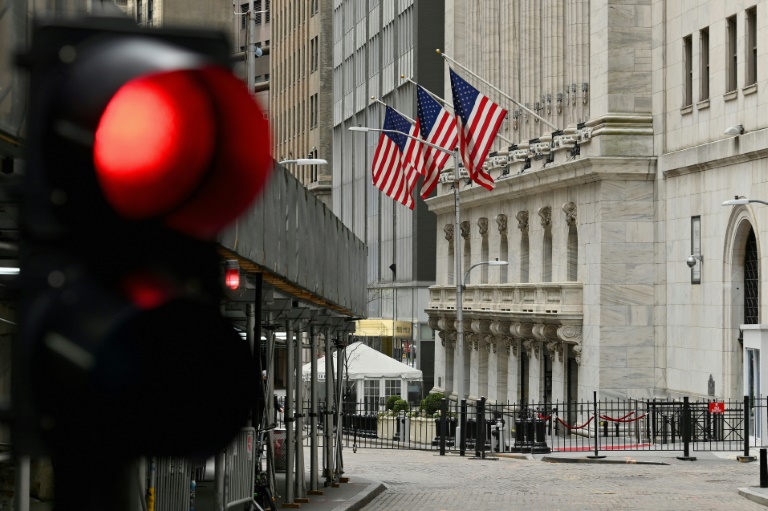
Stock markets were lower on Wednesday as investors weighed the prospect of recession with inflation soaring around the world. 

The yen fell to new lows against both the dollar and euro after the Bank of Japan — in contrast with other central banks — decided not to raise interest rates to rein in combat runaway consumer prices.

Just a day after the World Bank slashed its forecasts for global growth, the OECD warned that the world economy would pay a “hefty price” for Russia’s invasion of Ukraine and inflation would keep rising.

The Paris-based Organisation for Economic Co-operation and Development predicted that the world economy would grow by three percent this year — much slower than its previous estimate of 4.5 percent in December.

Market sentiment “continues to remain extremely fickle, prone to the ebb and flow of inflation expectations, followed by fears that central banks will overreact in combatting inflation (and) concern about what that might do to global growth,” said CMC Markets analyst Michael Hewson. 

“This argument over whether we see a recession… is likely to become a lot clearer over the next week or so,” he said, pointing in particular to the release of US inflation data on Friday. 

European stock markets were in the red in mid-afternoon trading and Wall Street also opened lower following two days of gains. 

Earlier in Asia, stock prices had rallied as China eases Covid lockdown restrictions and is forecast to lift its crackdown on the tech sector.

China’s approval of dozens of new video game releases sent shares of some of its biggest tech firms soaring Wednesday.

Global equities have enjoyed some respite in recent weeks from a painful sell-off caused by central bank monetary tightening, in particular by the US Federal Reserve.

The new inflation data on Friday will provide a clearer idea about the pace of future Fed rate hikes.

In Europe, the European Central Bank is on Thursday expected to signal an end to its bond-buying, paving the way for an interest rate increase further down the line. 

“The reality for the economy and probably the stock markets is that aggressive central bank rate hikes are likely to take a sharp bite out of household consumption,” said SPI Asset Management’s Stephen Innes.

Hungarian inflation has reached double figures for the first time in 20 years, official data showed Wednesday.

High oil prices, a major factor behind the surge in inflation, were up again on Wednesday. 

– Key figures at around 1340 GMT –

New York – Dow: DOWN 0.7 percent to 332,958.91 points

London – FTSE 100: DOWN 0.4 percent at 7,568.47

Frankfurt – DAX: DOWN 0.9 percent at 14,423.15

Paris – CAC 40: DOWN 1.1 percent at 6,431.22

EURO STOXX 50: DOWN 0.7 percent at 3,781.13

Tokyo – Nikkei 225: UP 1.0 percent at 28,234.29 (close)

Hong Kong – Hang Seng Index: UP 2.2 percent at 22,014.59 (close)

Shanghai – Composite: UP 0.7 percent at 3,263.79 (close)

Dollar/yen: UP at 134.05 yen from 132.62 yen late Tuesday

Euro/dollar: UP at $1.0747 from $1.0715 

Pound/dollar: DOWN at $1.2558 from $1.2592

Euro/pound: UP at 85.59 pence from 85.02 pence

Brent North Sea crude: UP 0.8 percent at $121.58 per barrel

West Texas Intermediate: UP 0.6 percent at $120.10 per barrel

burs/spm/jj

Campaigners launch court bid to prevent UK-Rwanda asylum flights

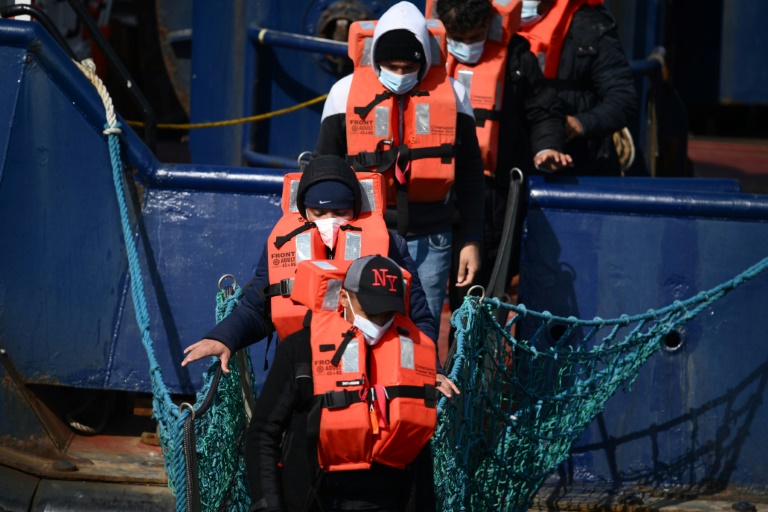
Campaigners on Wednesday launched a court bid to block UK government’s plans to send asylum seekers to Rwanda as it attempts to stop migrant boat crossings from France.

The government in London said last month that it intends to fly a first planeload of asylum-seekers to Rwanda on June 14.

But the Public and Commercial Services Union (PCS), Care4Calais and Detention Action have now issued judicial review proceedings in the High Court against what they call an “unlawful policy”.

James Wilson, deputy director of Detention Action, said interior minister Priti Patel had “overstepped her authority”.

“By rushing through what we say is an unlawful policy, she is turning a blind eye to the many clear dangers and human rights violations that it would inflict on people seeking asylum,” he said.

“It’s vital that new government policies respect and uphold the laws that we all, as a society, have agreed to follow. That’s why we’re seeking an injunction to keep this plane to Rwanda from leaving the runway,” he added.

The one-way flights are intended to deter others from entering Britain, especially via dangerous crossings of the Channel.

More than 10,000 migrants have made the journey so far this year.

Confirming the target date for the first time, Patel acknowledged the new policy was set to face challenges in the courts.

In a statement, she said: “I will not be deterred and remain fully committed to delivering what the British public expect.”

The Home Office has sent out the first notices to asylum claimants who are earmarked for removal to Rwanda, under a partnership worth £120 million ($151 million) to Kigali.

Clare Moseley, founder of Care4Calais, said most of those being detained pending their removal are “overwhelmed by total shock and despair”.

“Many came to the UK believing it to be a good place that would treat them more fairly than the places from which they escaped,” she said.

“We say that the Rwanda plan is unlawful. We hope the courts will agree with us.”

No progress at Russia-Turkey talks on Ukraine grain exports

Russia and Turkey made little headway on Wednesday in talks aimed at securing safe passage for Ukrainian grain exports, as a Russian sea blockade triggered new warnings of deadly famine.

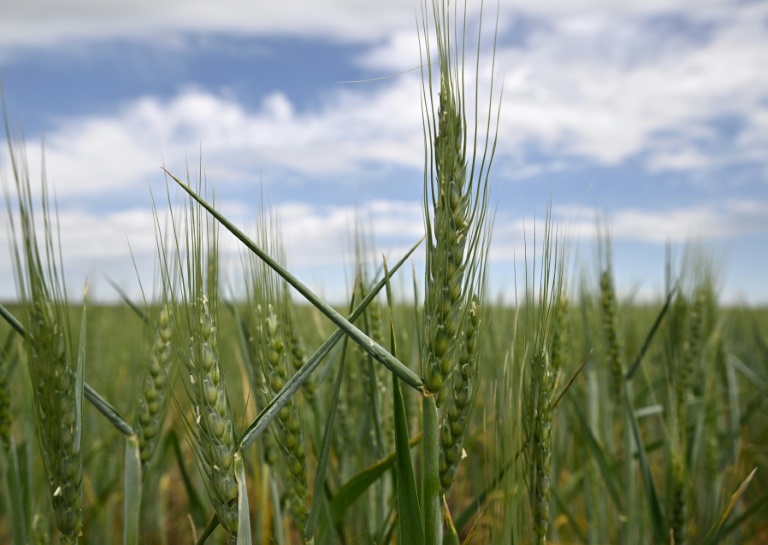
Prior to the war, Ukraine was a major exporter of wheat, corn and sunflower oil, but shipments have been blocked since Russia invaded its neighbour in late February, causing food prices to soar worldwide.

Countries in the Middle East and Africa depend on Ukraine’s exports, raising fears of hunger in those countries.

At the request of the United Nations, Turkey has offered its services to escort maritime convoys from Ukrainian ports, despite the presence of mines — some of which have been detected near the Turkish coast.

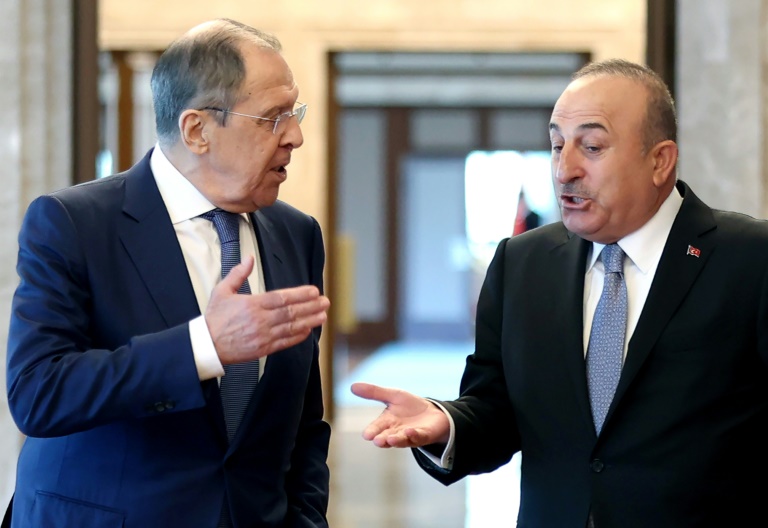
“We are ready to ensure the safety of ships that leave Ukrainian ports,” Russian Foreign Minister Sergei Lavrov said at a news conference with Turkish counterpart Mevlut Cavusoglu after talks in Ankara.

Ukraine, which was not part of the talks in Turkey, has said it is ready to create conditions to resume exports from its ports, but it seeks security guarantees not to be attacked by Russia. 

But Russia’s chief diplomat blamed Ukraine for the situation.

“Grain can be freely transported to destinations, there are no obstacles from Russia,” Lavrov said. 

Referring to Ukraine’s president, he said “it is necessary that Mr (Volodymyr) Zelensky give an order, if he is still in charge of something there, to allow foreign and Ukrainian ships to enter the Black Sea.”

Lavrov also said Russia was ready to provide guarantees it would not launch any attacks if Ukraine de-mined ports.

“We are ready to do this in cooperation with our Turkish colleagues.”

– ‘Condemning millions to death’ –

Cavusoglu said the UN plan was “reasonable” and “implementable”, and he offered to host a meeting in Istanbul to discuss the details of the scheme.

“We prepared a plan for food corridors,” a Turkish diplomatic source said. 

“We presented it to Russia but as you see during the press conference, Russia sends the ball into the court of Ukraine,” added the source, who declined to be named.

Zelensky said this week that the amount of grain blocked by the war could triple within several months.

At separate talks on the global food crisis, Italian Foreign Minister Luigi Di Maio warned that millions of people could die of hunger unless Russia lifted its blockade.

“The next few weeks will be crucial to resolving the situation,” he said after a virtual meeting involving Turkey and Lebanon among other Mediterranean countries, alongside G7 president Germany and the UN’s Food and Agriculture Organization.

“I want to say clearly, we expect clear and concrete signals from Russia, because blocking grain exports means holding hostage and condemning to death millions of children, women and men.”

– Russian exports –

Turkey, which hosted talks between Russian and Ukrainian foreign ministers in March aimed at ending the war, has positioned itself as a neutral mediator as it maintains a delicate balancing act between its two Black Sea neighbours. 

At the press conference, Cavusoglu said it was also important to export Russian goods as much as the Ukrainians, calling Moscow’s demands for an end to sanctions to help grain onto the world market “legitimate.”

“If we need to open up the international market to Ukrainian grain, we see the removal of obstacles standing in the way of Russia’s exports as a legitimate demand,” he said.

Soner Cagaptay, a specialist on Turkey for the Washington Institute think tank, said the UN-led plan that would allow Russia to trade with the outside world “could work.”

“Because ultimately this is about food security. Yes, people don’t want Russia to make money but at the same time nobody wants famine,” he told AFP.

Russia and Ukraine produce 30 percent of the global wheat supply.

Cagaptay said some progress could be made in the future, but it might require Turkish President Recep Tayyip Erdogan to meet Russian counterpart Vladimir Putin in the Russian southwestern city of Sochi, “where there’s nobody around to eavesdrop.” 

Moderna announces positive results for Omicron vaccine

US biotech company Moderna on Wednesday announced positive results for a new vaccine that targets both the original Covid strain and Omicron.

This so-called “bivalent” vaccine was tested in a trial of 814 adults, who had all received their first three doses of Moderna’s original Spikevax vaccine. 

Around half the group then received a fourth dose of Spikevax, while the rest received the bivalent vaccine.

Those who received the bivalent vaccine had significantly higher levels of neutralizing antibodies  — Y-shaped immune system proteins that block the virus — against Omicron. 

On average, these levels were around 75 percent higher in the group who got the bivalent vaccine as a fourth dose compared to those who got the original vaccine as a fourth dose. They also received slightly superior protection to the ancestral strain of Covid compared to Spikevax.

“We are thrilled,”  said Stephane Bancel, CEO of Moderna in a statement, adding he anticipated this vaccine would be the company’s lead candidate for authorization as a booster this fall.

“We want to be as ready as early as August for shipping,” he told investors in a call.

Stephen Hoge, the company’s president, did concede that antibody levels would be lower against Omicron’s sub variants that are now in circulation, but said he believed it was still a superior booster than repeating Spikevax.

The company doesn’t yet have data on durability — how the new vaccine booster will fare three months and six months out.

A panel of Food and Drug Administration experts will meet June 28 to discuss considerations and strategies for boosters in fall and winter.

Close Bitnami banner
Bitnami