World

Paris 2015 attacks trial hears closing arguments

The trial over the November 2015 attacks in Paris, France’s worst-ever terror assault, heard the beginning of closing arguments Wednesday by the three leading prosecutors in the case.

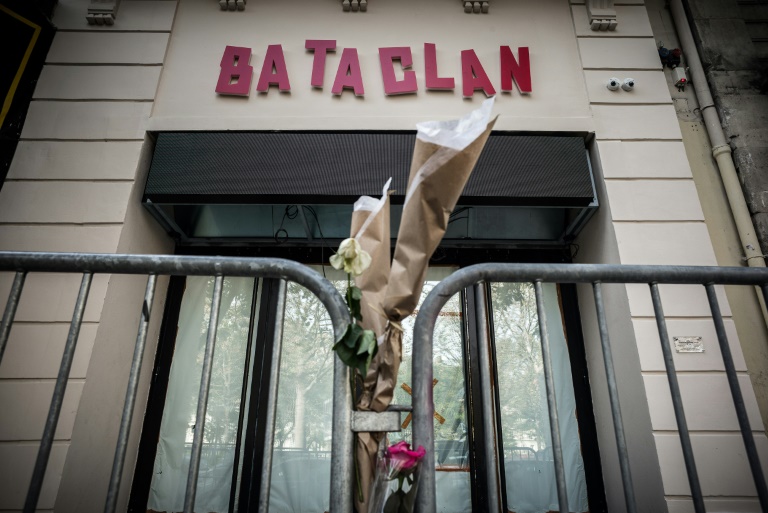
For three days, the prosecutors will detail their version of the events on November 13, 2015, when 130 people died at the Bataclan concert hall and elsewhere in shootings that traumatised the country.

In accordance with French court procedure, the prosecutors will then lay out their assessment of the level of guilt of each accused and finally, on Friday, recommend sentencing.

In the dock is Salah Abdeslam, the only surviving member of the Islamist hit team that opened fire in the packed concert hall and on cafe terraces in adjacent streets, as well as at the Stade de France sports arena. 

Also on trial are 19 others accused of various degrees of assistance to the killers.

Twelve, including Abdeslam, risk life in prison, the maximum punishment under French law.

“What will we remember from this trial? What images? What words?” asked prosecutor Camille Hennetier as she delivered her closing remarks in what is France’s biggest trial ever, which started in September 2021.

“Your verdict, of course,” she said. 

“And the names of the dead that were read out in September. The testimony of the survivors. And finally, without a doubt, the cruelty of the terrorists who fired again and again and took pleasure in killing.”

The length of the trial, its emotional charge and the number of plaintiffs — 2,500 — have made it the most impactful legal proceeding in French history.

Six suspects are being tried in absentia, including five leading Islamic State members presumed dead in Syria.

– ‘Illogical’ claim –

Abdeslam, a 32-year-old Frenchman who was arrested in Belgium after five months on the run, kept silent during the police investigation but started talking during the trial, explaining how he gave up plans to blow himself up, and apologised to victims.

But his tearful appeal for forgiveness had little impact on the prosecutors, who do not believe that Abdeslam really changed his mind about the attack. Instead, they say, his explosive belt simply malfunctioned.

Prosecutors also said the accused’s claim that he was recruited by a jihadist cell only a few days before the attacks was “strange” and “illogical”.

They are expected to ask for Abdeslam to be sentenced to life in prison without parole, a verdict pronounced only very rarely in France and which all but rules out any later reduction of his sentence.

Most prisoners on life sentences in France are released after 20 to 25 years.

Closing arguments by the defence lawyers start next week, and the verdicts are scheduled for June 29.
'Every day something burns': Despair on Ukraine's battered frontline

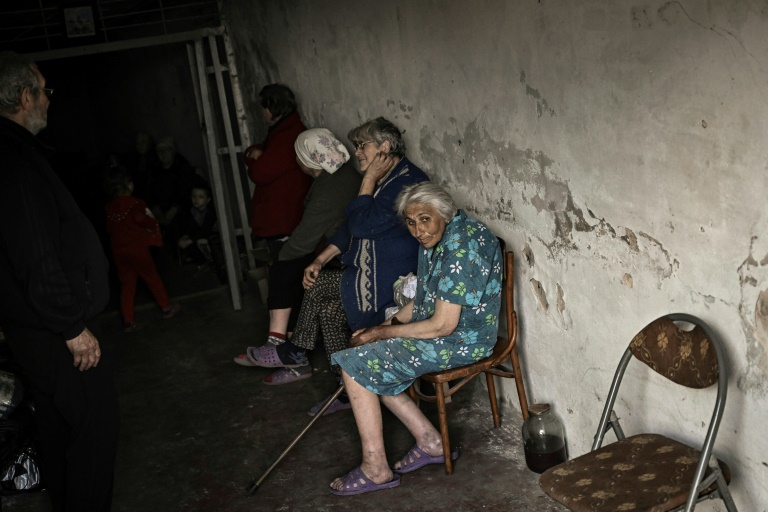
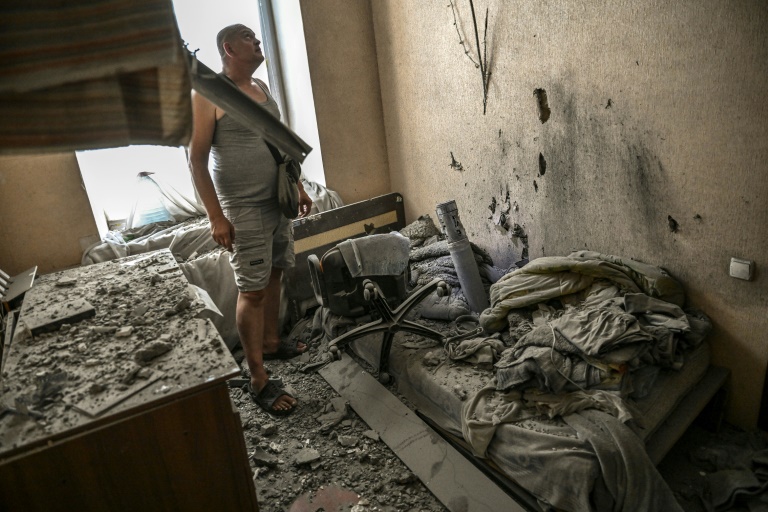
Surrounding pensioner Yuriy Krasnikov are apartment buildings scarred by war and the charred remains of bungalow homes in the eastern Ukrainian city of Lysychansk shelled by Russian forces daily.

“Every day there are bombings and every day something burns,” Krasnikov told AFP.

Nearby, a fierce fire burned the innards of a technical college — its ashes clouding the air.

The city of Lysychansk is on the other side of the river from Severodonetsk, where Russian and Ukrainian troops are battling for control.

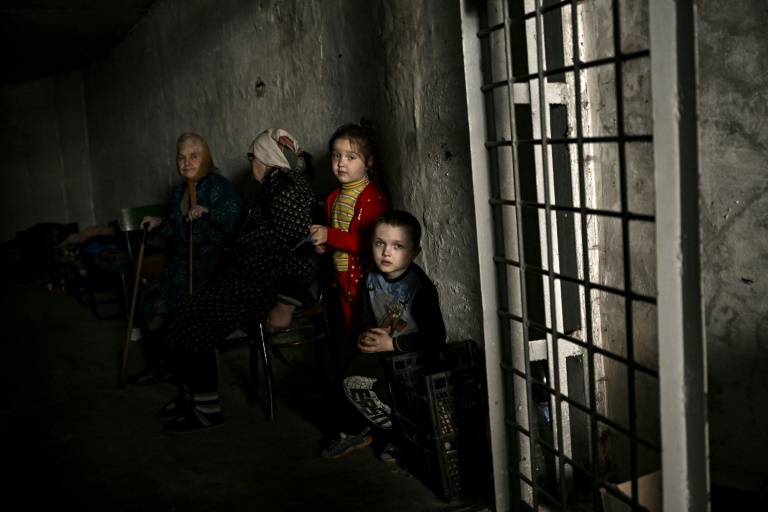
Many Lysychansk residents have fled since Russia’s invasion but many also stayed despite the risks — among them elderly people, their carers or simply those who do not have money to set up elsewhere.

“There is nobody to help me,” said Krasnikov, who uses a walking stick and was wearing a ragged blue shirt.

“I tried to go to the city authorities but there’s nobody there. Everyone has run away. They abandoned people!

“Where am I going to go at the age of 70?”

As he showed AFP reporters his badly damaged home, Serhii Lipko said he too was planning to stay in the city despite the steady advance of Russian troops which are now almost encircling both Lysychansk and Severodonetsk.

“In our country, you work your whole life to have a roof over your head. That’s why we don’t want to go somewhere where we won’t have that,” he said.

“There are a lot of people in our city who did not leave, because they worked for their own flat their whole life.”

Lysychansk resident Ivan Sosnin, 19, said his family had to stay to look after an infirm grandmother.

“This is our home. It’s all we know. We grew up here. Where else should we go? And we have no money for a longer stay anywhere else either.”

At a sparsely-supplied local food market, Vadym Shvets said he remained hopeful.

“No idea what will happen tomorrow. We don’t know how we will live.

“Of course, we hope for the best”.

French far-right clash in Riviera region ahead of polls

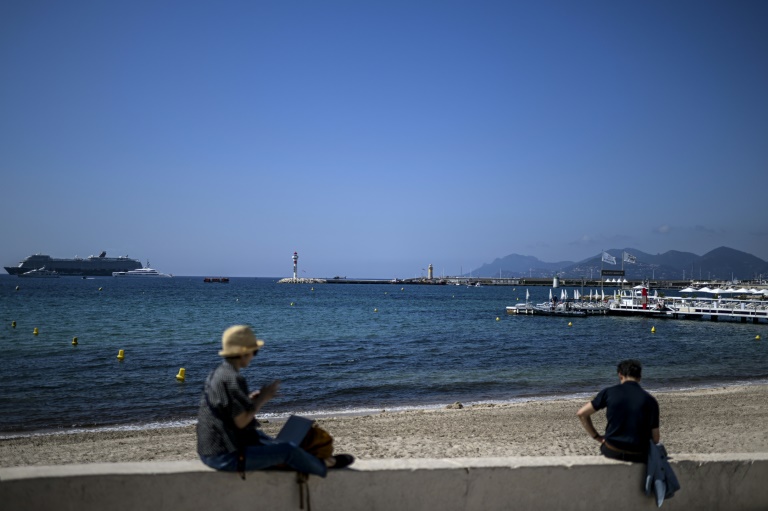
France’s Mediterranean region, home to the Cannes Film Festival and palm-lined beaches that entice tourists from around the world, is seeing a ferocious battle between far-right factions for parliamentary polls this month with immigration the most contentious issue.

National Rally (RN) leader Marine Le Pen and TV polemicist Eric Zemmour achieved some of their highest scores in the April presidential elections in the sun-kissed Provence-Alpes-Cote-d’Azur (PACA) region.

But behind the Mediterranean glitz, high immigration and unemployment rates along with an electorate that believes France’s traditional right has lost its backbone make the region fertile ground for the far-right, experts say.

Paris-born Zemmour is standing in the constituency around Saint-Tropez, a famous resort town where Le Pen scored 24.1 percent and Zemmour 22.42 percent in the first round of the presidential vote.

Around 150 mostly retired locals and holidaymakers gathered around Zemmour as he held a meeting between the seafront and a petanque area in the coastal town of Le Lavandou on Friday.

The pundit-turned-politician drew cheers as he blamed local youths of North African origin for the chaotic scenes that marred the Champions League final between Real Madrid and Liverpool in Paris on May 28.

“What happened at the Stade de France is of course the consequence of the great replacement,” Zemmour told supporters, referencing a conspiracy theory according to which white Europeans are being replaced by immigrants from Africa and the Middle East.

“We were humiliated in front of the whole world. We need change,” 84-year-old Jacques, who did not want to give his surname, told AFP.

– ‘Nip in the bud’ –

Zemmour ended up with just seven percent in the first round of the presidential election, far below his ambitions, while Le Pen finished runner up, losing to President Emmanuel Macron in the second round with 41.45 percent.

Their electorate is different, said Virginie Martin, a political scientist from Kedge Business School. 

“Eric Zemmour’s electorate is clearly more bourgeois and Marine Le Pen’s is more working class,” Martin said, adding they also had voters in common. 

Zemmour had pushed for a parliamentary election alliance between his Reconquest party and the RN. But Le Pen has sought to distance herself from the 63-year-old convicted three times for inciting racial hatred. 

“The RN’s strategy is to nip Reconquest in the bud, because they are a direct challenge,” said Felicien Faury, who has a doctorate in political science from Paris Dauphine University.

Acting RN president Jordan Bardella, 26, held a rally on Saturday in the Vaucluse area, where Zemmour’s 23-year-old protege Stanislas Rigault is running for MP. 

“It’s a shame to campaign against Reconquest when there are clearly other opponents,” Thomas Nasri, part of Eric Zemmour’s campaign team, told AFP after the meeting at Le Lavandou. 

But Bardella on Saturday denied any provocation at a press conference before the rally in Cavaillon. 

“Reconquest chose to send candidates from Paris where we have long had elected officials who are legitimate representatives of the national camp,” he said.  

– ‘Struggling to make ends meet’ –

The far-right has historically done well in Provence-Alpes-Cote-d’Azur, where the National Front, since renamed National Rally, gained control of three towns in a key breakthrough in the 1995 municipal elections.

Many French people forced to flee Algeria, — the so-called “pieds noirs” — settled in the region after the former colony gained independence in 1962, and tend to vote for the far-right. 

“Many pieds noirs know what happened in Algeria. One voter told me, ‘I’ve already lost one country, I don’t want to lose another,” Zemmour told AFP, after campaigning at the main market in the resort town of Sainte-Maxime on Friday.

Zemmour is trying to convince voters who think Le Pen — who has sought to widen her support base by focusing on social and economic issues — has gone soft on immigration to back his party instead. 

Martin says the region is not just “that of the rich and the French Riviera”, and that there have been waves of de-industrialisation and unemployment that meant voters switched from the Communist Party to the RN. 

The region also has a high immigration rate. In 2017, Provence-Alpes-Cote-d’Azur had the biggest percentage of population who are immigrants (10.8) after the Paris region of Ile-de-France (19.5), according to the interior ministry. 

“I’m a working-class retired man, my income regularly decreases, my children and my grandchildren are struggling to make ends meet,” lifelong National Rally voter Gerard Marcaggi, 71, said as he sipped a glass of rose in Cavaillon.

“I would have liked her (Le Pen) to insist a bit more on the question of immigration, but we know that she has it up her sleeve and hasn’t forgotten it,” added Marcaggi.

War in Ukraine: Latest developments

Here are the latest developments in the war in Ukraine:

– Ukraine forces moots retreat in east – 

Ukrainian troops are considering a tactical retreat from the eastern city of Severodonetsk, which is being shelled “24 hours a day” by Russian forces.

“It is possible that we will have to retreat” to better fortified positions, regional governor Sergiy Gaiday says in an interview on television channel 1+1.

But he vows there will be no surrender of one of the last major centres of resistance to Russian rule in the Lugansk region of Donbas.

Russian Defence Minister Sergei Shoigu says his troops have “fully liberated” all residential areas but have yet to capture Severodonetsk’s industrial zone.

– Hundreds holed up in chemical factory: report –

Some 800 civilians trapped by the fighting have taken refuge in the Azot chemical factory, according to a lawyer for a Ukrainian tycoon whose company owns the facility. 

The lawyer for Dmytro Firtash describes a scenario similar to the port city of Mariupol, where hundreds of civilians were holed up for weeks in a giant steelworks alongside Ukrainian troops.

The lawyer says those inside the plant include around 200 employees who remained behind to secure “highly explosive chemicals”, as well as 600 city residents.

Ukrainian authorities have yet to confirm the report.

– Blockade of Ukraine ports could kill ‘millions’: Italy – 

Italian Foreign Minister Luigi Di Maio warns that “millions” of people could die of hunger unless Russia unblocks exports of Ukrainian grain to ease global shortages.

“I want to say clearly, we expect clear and concrete signals from Russia, because blocking grain exports means holding hostage and condemning to death millions of children, women and men,” he says after a virtual meeting with Turkey and Lebanon among other countries, alongside G7 president Germany and the UN’s Food and Agriculture Organisation.

– Turkey backs Russian demand on grain exports –

Turkish foreign minister Mevlut Cavusoglu backs Russia’s calls to lift sanctions on the country’s farm exports in return for unblocking Ukraine’s Black Sea ports. 

Like Ukraine, Russia is a major wheat supplier but its exports have been hit by sanctions.

At a press conference with visiting Russian counterpart Sergei Lavrov, Cavusoglu, who is trying to negotiate safe passage for Ukraine’s agricultural exports, says Moscow’s demand for “the removal of obstacles standing in the way of Russia’s exports” is “legitimate”.

Lavrov says Russia is ready to work with Turkey to escort ships to safety but that Ukraine needs to demine its ports first — a demand Kyiv has rejected, citing the threat from Russia’s navy.

A spokesman for authorities in Odessa, Sergiy Bratchuk, warns “the moment we clear access to the port of Odessa, the Russian fleet will be there”.

– Merkel defends Russia legacy –

Former German chancellor Angela Merkel says she has “nothing to apologise for” as her years-long policy of detente towards Russian President Vladimir Putin comes under fire.

“Diplomacy isn’t wrong just because it hasn’t worked,” the 67-year-old says in her first major interview since stepping down six months ago, carried on the Phoenix news channel.

– OECD, World Bank warn of economic pain –

The OECD slashes its global growth forecast and predicts a spike in inflation caused by the war in Ukraine. 

The Paris-based body says it expects global GDP to grow by three percent, down from the 4.5 percent estimated in December, and that inflation in its 38 member states will reach 8.5 percent, the highest level since 1988.

“The world is set to pay a hefty price for Russia’s war against Ukraine,” the OECD’s chief economist Laurence Boone says.

The World Bank warns the global economy risks falling into a harmful period of 1970s-style “stagflation”.

burs-cb/ah/cdw

One dead, a dozen hurt as car ploughs into Berlin crowd

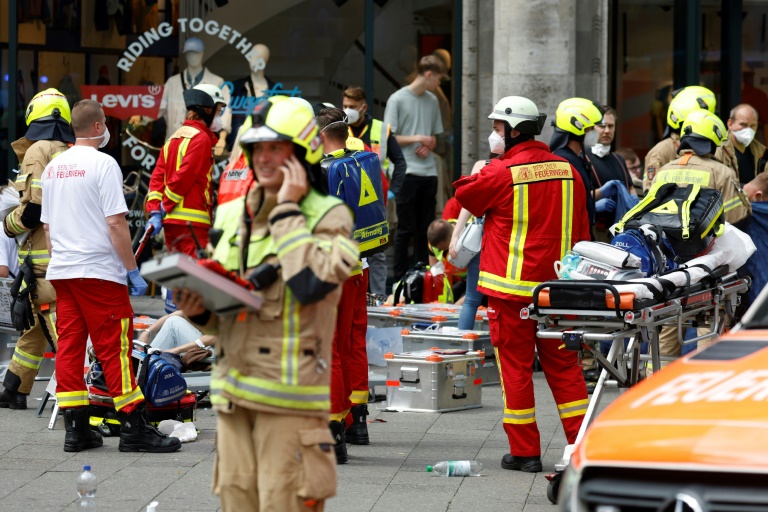
One person was killed and at least a dozen others injured when a man drove a car into a crowd, including teenagers, at a busy shopping district in central Berlin on Wednesday, police said.

The driver was briefly detained by passers-by before being handed over to police after the car smashed through a shop front, according to police spokesman Thilo Cablitz.

It was not clear whether the crash was intentional. The driver, a 29-year-old German-Armenian man, is being questioned, police told AFP.

“There are seriously injured people among the more than a dozen injured,” said Cablitz. 

Eight people had been taken to hospital and five were in a life-threatening condition, said Adrian Wenzel, a spokesman for the fire service.  

The German government is “very concerned and shocked” by the “terrible incident in Berlin”, said a spokeswoman, adding that their thoughts are with the victims and their loved ones. 

The incident happened at around 10:30 am (0830 GMT) just across from Breitscheidplatz, where an Islamic State group sympathiser ploughed a truck through a Christmas market in 2016, killing 12.

The silver Renault Clio with a Berlin licence plate first mounted the sidewalk on the corner of Tauentzienstrasse and Rankestrasse, hitting a group of mostly teenagers, before returning to the road.

It then rammed into the shop front on Marburger Strasse about 150 to 200 metres (165 to 220 yards) away.

– ‘Happened so fast’ –

Frank Vittchen, a witness at the scene, told AFP he was sitting at a fountain nearby when he “heard a big crash and then also saw a person fly through the air”. 

The vehicle drove “at high speed onto the pavement and didn’t brake”, he said, with its windows shattering from the impact.

“It all happened so fast,” he said.

Another witness who declined to be named told AFP the people hit by the car included a group of 15-16-year-olds, and that two teachers were among those injured.

British-American actor John Barrowman posted a series of videos on Twitter from the scene. “I heard the bang and the crash when we were in a store and then we came out and we just saw the carnage,” he said.

Germany has been on high alert for car ramming attacks since the deadly 2016 Christmas market assault, with most carried out by people who were found to have psychological issues.

In December 2020, a German man ploughed his car through a pedestrian shopping street in the southwestern city of Trier, killing four adults and a baby.

Earlier the same year, a German man rammed his car through a carnival procession in the central town of Volkmarsen, injuring dozens of bystanders, including children. He was sentenced to life in jail last year.

In January 2019, another German man injured eight people when he drove into crowds on New Year’s Eve in the western cities of Bottrop and Essen. He was later taken into psychiatric care.

In April 2018, a German crashed his van into people seated outside a restaurant in the city of Muenster, killing five before shooting himself dead. Investigators later said he had mental health problems.

During the football World Cup in Germany in 2006, a German man rammed his car into crowds gathered to watch a match at the Brandenburg Gate in Berlin, injuring some 20 people. The driver was later committed to a psychiatric hospital.  

Disney pulls blockbuster from French cinemas in streaming row

Disney will not release blockbuster animation “Strange World” in French cinemas, it said Wednesday, in protest against the country’s strict streaming rules.

Under French law, the company’s streaming platform, Disney+, would have to wait 17 months to show the movie after its release in cinemas, which had been due in November.

Disney told AFP it would instead send “Strange World” straight to streaming and skip cinemas entirely, confirming reports by movie website Deadline and French paper Les Echos.

Helene Etzi, Disney France president, told Les Echos that France’s rules were “unfair, constraining and poorly adapted to audience demands.”

“Strange World” is one of its most-anticipated releases of the year, with Jake Gyllenhaal voicing the lead character in the English version of the fantasy adventure tale. 

France has tried to prevent streaming platforms from undermining its large cinema network and the TV stations — notably Canal Plus — that finance many of its films and get a shorter wait for prime releases.

The National Federation of French Cinemas said it “protested with the greatest vigour against Disney’s desire to deprive the French of its Christmas animated film.”

The debate over how long to wait between cinema and streaming releases has also been fierce in Hollywood — though with much shorter delays being considered. 

After trying various strategies at the height of the Covid-19 pandemic, the US industry has settled on 45 days as the optimum gap. 

Scarlett Johansson sued Disney last year for loss of earnings after it released “Black Widow” simultaneously to cinemas and streamers. 

Director Denis Villeneuve said the same move by Warner Bros for his sci-fi blockbuster “Dune” showed “absolutely no love for cinema”. 

Even a 45-day window was reportedly not enough for Tom Cruise, who is rumoured to have launched legal action against Paramount to get a longer delay for his next “Mission: Impossible” instalment next year. 

So far, Disney has no plans to pull “Lightyear” from French cinemas — the “Toy Story” spin-off is due later this month. 

But the fate of other massive productions — including sequels to “Black Panther” and “Avatar” — rests in the balance. 

“We continue to evaluate the situation film by film and country by country,” said Disney’s Etzi.

Ukrainian troops may have to retreat from flashpoint city: governor

Kyiv’s forces may have to retreat from the eastern city of Severodonetsk, a senior Ukrainian official conceded on Wednesday, as diplomatic efforts intensified to unblock grain stuck in Ukraine’s ports.

The strategic city has become the focus of Russia’s offensive as it seeks to seize an eastern swathe of Ukraine, after being repelled from other parts of the country. 

Moscow claimed on Tuesday they had full control of residential areas while Kyiv was still holding the industrial zone and surrounding settlements, but Ukrainian officials insisted the Russians were not in control of the city.

On Wednesday, Sergiy Gaiday — governor of the Lugansk region, which includes the city — said Ukraine’s forces might have to pull back as Severodonetsk is being shelled by Russian troops “24 hours a day”.

“It is possible that we will have to retreat” to better fortified positions, he said in an interview on the TV channel 1+1.

In his daily address late Tuesday, Ukrainian President Volodymyr Zelensky had struck a defiant tone: “The absolutely heroic defence of Donbas continues.” 

Russia’s offensive is now targeting the Donbas region, which includes Lugansk and Donetsk, after its forces were pushed back from Kyiv and other areas following the February invasion.

The cities of Severodonetsk and Lysychansk, which are separated by a river, are the last areas still under Ukrainian control in Lugansk.

As concerns mounted over grain trapped at Ukrainian ports, Russian Foreign Minister Sergei Lavrov said Moscow was ready to ensure the safe passage of ships from Ukraine.

“We are ready to do this in cooperation with our Turkish colleagues,” Lavrov told reporters in Ankara amid stark warnings of shortages worldwide partly blamed on Russia’s invasion of Ukraine.

His Turkish counterpart Mevlut Cavusoglu called Russian demands for an end to sanctions to help grain onto the world market “legitimate”.

“If we need to open up the international market to Ukrainian grain, we see the removal of obstacles standing in the way of Russia’s exports as a legitimate demand,” he said. 

– ‘Millions’ could die –

But Ukraine said on Wednesday it would not demine waters around the Black Sea port of Odessa to allow grain exports, citing the threat of Russian attacks on the city.

At the request of the United Nations, Turkey has offered its services to escort maritime convoys from Ukrainian ports, despite the presence of mines — some of which have been detected near the Turkish coast.

Both sides accuse one another of destroying agricultural areas, which could worsen global food shortages.

As he hosted Mediterranean ministers on the global food crisis, Italian Foreign Minister Luigi Di Maio warned “millions” could die unless Russia unblocked Ukraine’s ports.

The war’s economic impact continued to reverberate, with the World Bank cutting its global growth estimate to 2.9 percent — 1.2 percentage points below the January forecast — due largely to the invasion.

The toxic combination of weak growth and rising prices could trigger widespread suffering in dozens of poorer countries still struggling to recover from the upheaval of the Covid-19 pandemic, the bank said.

“The risk from stagflation is considerable with potentially destabilising consequences for low- and middle-income economies,” World Bank President David Malpass told reporters.

“For many countries recession will be hard to avoid,” Malpass said.

The bank additionally announced $1.5 billion more in aid for Ukraine, bringing the total planned support package to more than $4 billion.

The OECD also warned the world economy would pay a “hefty price” for the Russian invasion as it slashed its 2022 growth forecast and projected higher inflation.

– ‘Bombings every day’ –

Severodonetsk appeared close to being captured just days ago but Ukrainian forces launched counterattacks and managed to hold out, despite warnings they are outnumbered by superior forces.

Lanny Davis, a US lawyer for Ukraine tycoon Dmytro Firtash, said 800 civilians had taken refuge in the bunkers inside Firtash’s huge Azot chemical plant in the city.

The situation was also increasingly desperate in Lysychansk.

“Every day there are bombings and every day something burns. A house, a flat… And there is nobody to help me,” 70-year-old Yuriy Krasnikov told AFP.

“I tried to go to the city authorities, but nobody’s there, everyone has run away.”

Ivan Sosnin was among some residents who decided to stay despite the war.

“This is our home, that’s all we know. We grew up here, where else should we go?” said the 19-year-old.

The leader of Ukraine’s pro-Russian separatists in Donetsk, Denis Pushilin, on Tuesday confirmed the death of another Russian general in the fighting.

Pushilin expressed on Telegram his “sincere condolences to the family and friends” of Major General Roman Kutuzov, “who showed by example how to serve the fatherland”.

Ukraine’s forces have claimed to have killed several of Russia’s top brass but their exact number is not known as Moscow is tight-lipped on losses. 

On Tuesday, Zelensky announced the launch next week of a “Book of Torturers”, a system that will collect details of alleged war crimes and Russian soldiers accused of committing them. 

“I have repeatedly stressed that they will all be held accountable. And we are approaching this step by step,” he said.

“Everyone will be brought to justice.”

burs-dlc/raz

Spain searches for wounded bear and cub after brutal attack

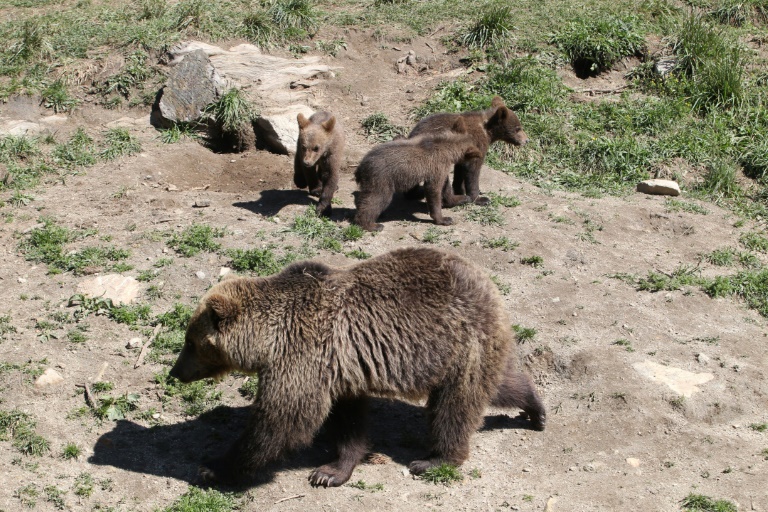
Spanish authorities are trying to find a brown bear and her cub which were separated after a brutal attack by a male bear that was caught on camera by two onlookers. 

The assault took place on a rocky mountainside in the northern Castilla y Leon region.

Although the mother bear managed to fight off her assailant, she was wounded and separated from her cub, footage released late on Tuesday showed. 

“We know that the mother bear is wounded and we don’t know anything else, the investigation is still open,” a source in the regional environment ministry told AFP.

In the footage, which runs for two-and-a-half minutes, the two adult bears fight for about 40 seconds before falling over the edge and crashing down the rocky hillside. 

The male bear, which was much larger than the female, died of injuries sustained in the fall, officials said, while the injured mother eventually got up and tried to find her cub, although it was not immediately clear whether they were reunited. 

In a post on Twitter, the regional environment ministry said  during the current season “mother bears often have to defend their cubs from attack by adult males”. 

During mating season, male bears often enter a frenzy of lust-fuelled cub killing with the aim of triggering oestrus — a period of sexual receptivity — in females who would otherwise only come on heat after raising their cubs to independence.

The behaviour is called sexually selected infanticide, and has also been observed in birds, bats, primates and big cats.

The mother “which was seen with two cubs several weeks ago, had already lost one of them, presumably after being attacked by this male or another,” the ministry said. 

Among the team searching for the wounded mother bear and her cub were vets, environmental wardens, bear conservation specialists and members of the Guardia Civil police. 

“As happens with other animals, male bears have have an instinct to kill cubs with the aim of mating again. They look for female bears with cubs that they can kill,” the head of the Brown Bear Foundation Guillermo Palomero told AFP. 

“The female enters an oestrus period two or three days after (the cub has been killed) so the male bear can copulate with her,” he said, describing such attacks as “very violent”. 

According to the foundation, 330 brown bears roam the Cantabrian mountains and another 70 are in the Pyrenees on the border between Spain and France. 

At least 17 killed in train derailment in central Iran

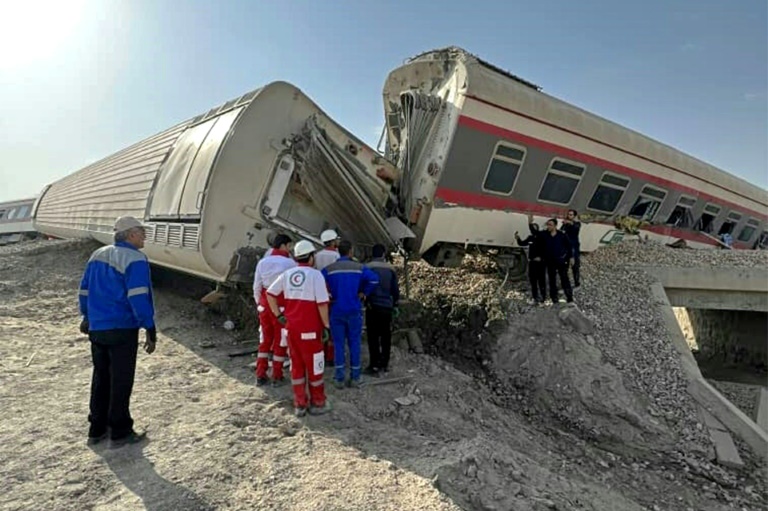
At least 17 people were killed and dozens injured Wednesday when a train derailed near the central Iranian city of Tabas after hitting an excavator beside the track, state media reported.

The train was on its way from the northeastern city of Mashhad to the central city of Yazd with 348 passengers on board when it careered off the track in the desert at 5:30 am (0100 GMT).

“Seventeen people are dead and 37 of the 86 injured people have been transferred to hospital,” emergency services spokesman Mojtaba Khaledi told state television.

“The number of the dead may rise as some of the injured are in critical condition,” he said, adding that “24 ambulances and three helicopters had been dispatched to the scene.”

Tabas is located in South Khorasan province, roughly 900 kilometres (560 miles) by road from Tehran.

The deputy head of Iran’s state-owned railways, Mir Hassan Moussavi, told the state broadcaster that the train was carrying 348 passengers.

It “derailed after hitting an excavator” that was near the track, he said.

Some of the injured were airlifted to hospital by helicopter, state television footage showed.

Rescue teams inspected the overturned carriages as onlookers gathered nearby, pictures posted by the ISNA news agency showed.

One of the pictures showed a yellow excavator on its side by the track.

Five of the train’s 11 coaches came off the rails, the Iranian Red Crescent’s head of emergency operations, Mehdi Valipour, told state television.

– Investigation –

President Ebrahim Raisi expressed his grief over the derailment and offered his condolences to the families of the dead.

He also issued orders to expedite the investigation into the causes of the crash, his office said.

Roads and Urban Development Minister Rostam Ghassemi apologised to Iranians on Twitter and said the ministry was responsible for the incident.

The Tabas prosecutor visited the scene as a judicial investigation was launched, Iranian media reported.

The train derailment comes after a tower block collapsed in southwestern Iran last month killing at least 43 people.

The collapse of the 10-storey Metropol building, which was under construction in Abadan, sparked angry protests in solidarity with the families of the dead.

The provincial judiciary said it had arrested 13 people, including Abadan’s mayor and two former mayors, suspected of being “responsible” for the tragedy.

The disaster was one of Iran’s deadliest in years and sparked a demonstrations across the country against authorities accused of corruption and incompetence.

In 2016, two trains collided and caught fire in northern Iran, killing 44 people and injuring dozens.

The then head of Iranian railways resigned after four of his employees were arrested following the collision on the main line between Tehran and second city Mashhad.

Stocks mixed as traders assess recession risk

Stock markets diverged Wednesday as investors weighed recession prospects and inflation around the world hit the highest levels in decades.

The yen hit fresh multi-year lows against the dollar and euro with the Bank of Japan refusing to raise interest rates to combat high consumer prices, in contrast to rival central banks.

The OECD on Wednesday warned that the world economy would pay a “hefty price” for Russia’s invasion of Ukraine as it slashed its 2022 world growth forecast and said inflation to keep rising.

The Organisation for Economic Co-operation and Development predicted that the world economy would grow three percent this year — down sharply on its 4.5-percent estimate in December.

“This argument which the market appears to be having with itself, over whether we see a recession… is likely to become a lot clearer over the next week or so, starting with US” inflation data Friday, noted Michael Hewson, chief market analyst at CMC Markets UK.

European stock markets were lower Wednesday approaching the half-way stage and after Asian indices had rallied as China eases Covid lockdown restrictions and is forecast to lift its crackdown on the tech sector.

China’s approval of dozens of new video game releases sent shares of some of its biggest tech firms soaring Wednesday.

Global equities have enjoyed some respite in recent weeks from a painful sell-off caused by central bank monetary tightening, in particular by the Federal Reserve.

All eyes are on the release of US inflation data for a clearer idea about the pace of future Fed rate hikes.

India on Wednesday announced a fresh hike of its own, one day after Australia unveiled an increase to borrowing costs twice as big as forecast.

The European Central Bank is Thursday expected to signal an end to its bond-buying, paving the way for an interest rate increase in the eurozone.

“The reality for the economy and probably the stock markets is that aggressive central bank rate hikes are likely to take a sharp bite out of household consumption,” said SPI Asset Management’s Stephen Innes.

Hungarian inflation has reached double figures for the first time in 20 years, official data showed Wednesday.

High oil prices, a major inflationary contributor, were up more than one percent.

– Key figures at around 1045 GMT –

London – FTSE 100: DOWN 0.4 percent at 7,571.83 points

Frankfurt – DAX: DOWN 0.5 percent at 14,484.59

Paris – CAC 40: DOWN 0.7 percent at 6,456.96

EURO STOXX 50: DOWN 0.3 percent at 3,796.44

Tokyo – Nikkei 225: UP 1.0 percent at 28,234.29 (close)

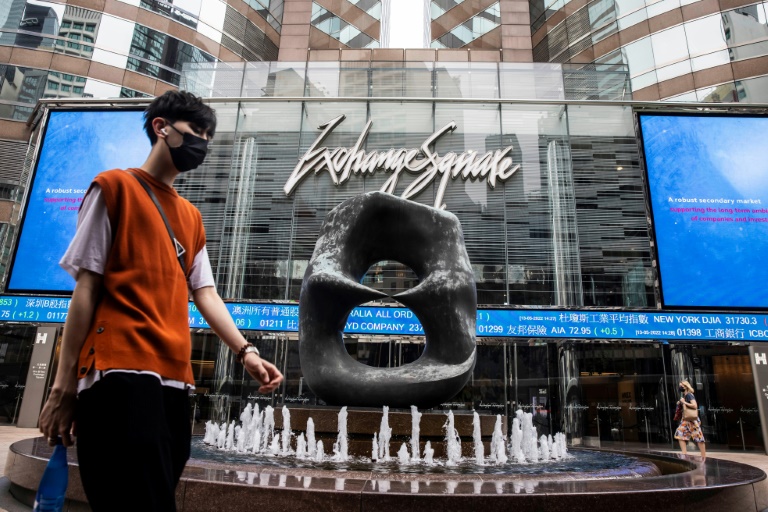
Hong Kong – Hang Seng Index: UP 2.2 percent at 22,014.59 (close)

Shanghai – Composite: UP 0.7 percent at 3,263.79 (close)

New York – Dow: UP 0.8 percent to 33,180.14 (close)

Dollar/yen: UP at 133.98 yen from 132.62 yen late Tuesday

Euro/dollar: UP at $1.0722 from $1.0715 

Pound/dollar: DOWN at $1.2538 from $1.2592

Euro/pound: UP at 85.51 pence from 85.02 pence

Brent North Sea crude: UP 1.2 percent at $122.02 per barrel

West Texas Intermediate: UP 1.4 percent at $121.03 per barrel

Close Bitnami banner
Bitnami