World

China sends three astronauts to complete space station

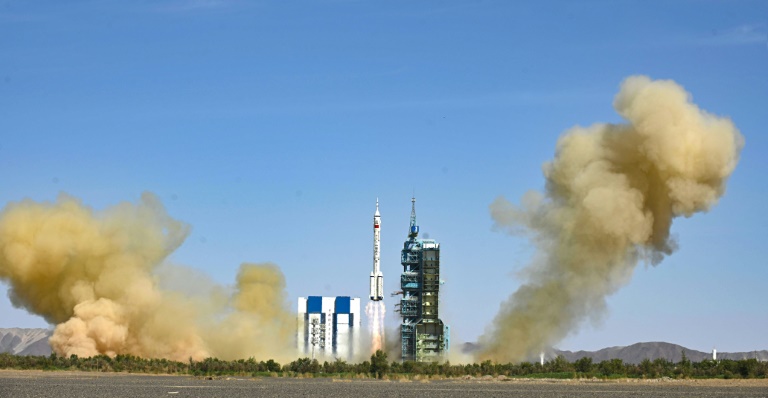
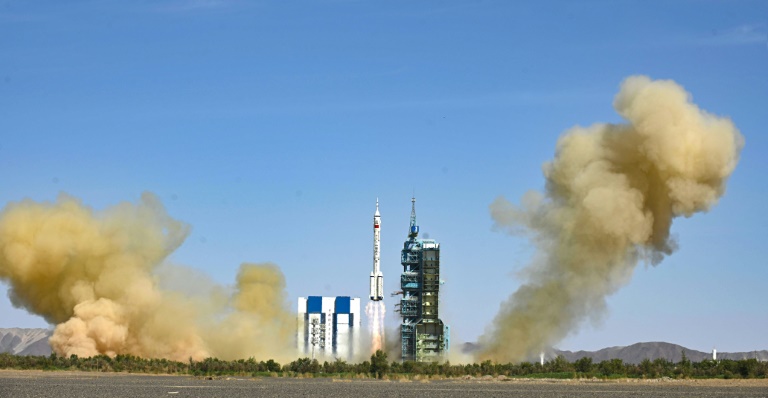
China on Sunday launched a rocket carrying three astronauts on a mission to complete construction on its new space station, the latest milestone in Beijing’s drive to become a major space power.

The trio blasted off in a Long March-2F rocket at (0244 GMT) from the Jiuquan launch center in northwestern China’s Gobi desert, said state broadcaster CCTV, with the team to spend six months expanding the Tiangong space station.

Tiangong, which means “heavenly palace,” is expected to become fully operational by the end of the year. 

China’s heavily promoted space programme has already seen the nation land a rover on Mars and send probes to the Moon.

The Shenzhou-14 crew is tasked with “completing in-orbit assembly and construction of the space station,” as well as “commissioning of equipment” and conducting scientific experiments, state-run CGTN said Saturday.

Led by air force pilot Chen Dong, 43, the three-person crew’s main challenge will be connecting the station’s two lab modules to the main body.

Dong, along with fellow pilots Liu Yang and Cai Xuzhe, will become the second crew to spend six months aboard the Tiangong after the last returned to earth in April following 183 days on the space station.

Tiangong’s core module entered orbit earlier last year and is expected to operate for at least a decade.

The completed station will be similar to the Soviet Mir station that orbited Earth from the 1980s until 2001.

– Space ambitions –

The world’s second-largest economy has poured billions into its military-run space programme, with hopes of having a permanently crewed space station by 2022 and eventually sending humans to the Moon.

The country has made large strides in catching up with the United States and Russia, whose astronauts and cosmonauts have decades of experience in space exploration.

But under Chinese President Xi Jinping, the country’s plans for its heavily promoted “space dream” have been put into overdrive.

In addition to a space station, Beijing is also planning to build a base on the Moon, and the country’s National Space Administration said it aims to launch a crewed lunar mission by 2029.

China has been excluded from the International Space Station since 2011, when the United States banned NASA from engaging with the country.

While China does not plan to use its space station for global cooperation on the scale of the ISS, Beijing has said it is open to foreign collaboration.

The ISS is due for retirement after 2024, although NASA has said it could remain functional until 2030.

China sends three astronauts to complete space station

China on Sunday launched a rocket carrying three astronauts on a mission to complete construction on its new space station, the latest milestone in Beijing’s drive to become a major space power.

The trio blasted off in a Long March-2F rocket at (0244 GMT) from the Jiuquan launch center in northwestern China’s Gobi desert, said state broadcaster CCTV, with the team to spend six months expanding the Tiangong space station.

Tiangong, which means “heavenly palace,” is expected to become fully operational by the end of the year. 

China’s heavily promoted space programme has already seen the nation land a rover on Mars and send probes to the Moon.

The Shenzhou-14 crew is tasked with “completing in-orbit assembly and construction of the space station,” as well as “commissioning of equipment” and conducting scientific experiments, state-run CGTN said Saturday.

Led by air force pilot Chen Dong, 43, the three-person crew’s main challenge will be connecting the station’s two lab modules to the main body.

Dong, along with fellow pilots Liu Yang and Cai Xuzhe, will become the second crew to spend six months aboard the Tiangong after the last returned to earth in April following 183 days on the space station.

Tiangong’s core module entered orbit earlier last year and is expected to operate for at least a decade.

The completed station will be similar to the Soviet Mir station that orbited Earth from the 1980s until 2001.

– Space ambitions –

The world’s second-largest economy has poured billions into its military-run space programme, with hopes of having a permanently crewed space station by 2022 and eventually sending humans to the Moon.

The country has made large strides in catching up with the United States and Russia, whose astronauts and cosmonauts have decades of experience in space exploration.

But under Chinese President Xi Jinping, the country’s plans for its heavily promoted “space dream” have been put into overdrive.

In addition to a space station, Beijing is also planning to build a base on the Moon, and the country’s National Space Administration said it aims to launch a crewed lunar mission by 2029.

China has been excluded from the International Space Station since 2011, when the United States banned NASA from engaging with the country.

While China does not plan to use its space station for global cooperation on the scale of the ISS, Beijing has said it is open to foreign collaboration.

The ISS is due for retirement after 2024, although NASA has said it could remain functional until 2030.

Sheeran to crown queen's four-day jubilee party

British pop superstar Ed Sheeran was on Sunday set to bring the curtain down on four days of momentous nationwide celebrations to honour Queen Elizabeth II’s historic Platinum Jubilee. 

The multi-award-winning singer-songwriter will perform at the finale of a day-long pageant lauding the 96-year-old monarch’s record seven decades on the throne, as a long weekend of festivities across the UK concludes.

Sheeran is one of numerous “national treasures” poised to perform a “special tribute” to the queen against the backdrop of Buckingham Palace to mark the milestone never previously reached by a British sovereign.

Meanwhile, millions of people are expected to attend “Big Jubilee Lunch” picnics, including an attempted world record for the longest street party.

It remains unclear if the queen will make any in-person appearances at the pageant, after being forced to skip several Platinum Jubilee celebration appearances due to mobility issues.

The four-day extravaganza began Thursday with the pomp and pageantry of the Trooping the Colour military parade to mark her official birthday, followed by beacon-lighting ceremonies across the country.

She made two public appearances to huge crowds on the Buckingham Palace balcony that day, and then launched the beacon-lighting at Windsor Castle.

Friday’s focus was a traditional Church of England service of thanksgiving led by senior royals — and returning Prince Harry and his wife Meghan — in the hallowed surroundings of St Paul’s Cathedral in London.

Then on Saturday, the tone turned more celebratory as Motown legend Diana Ross and Italian opera legend Andrea Bocelli led a star-studded “Platinum Party” outside Buckingham Palace.

– Spectacle –

Sunday’s “Platinum Jubilee Pageant” will kick off with a military spectacle celebrating Britain’s armed forces along with personnel from many of the other 53 Commonwealth countries.

The Mounted Band of the Household Cavalry — the largest regular military band in the UK — will lead the Gold State Coach along a crowd-thronged route to Buckingham Palace.

A cast of 10,000 will then stage a street performance showcasing popular culture over the seven decades of the queen’s reign featuring music, dance, fashion, youth culture and classic cars.

Performers from street theatre, carnival and other genres will also join in to celebrate her extraordinary life.

Highlights will include an aerial artist suspended under a vast helium balloon, known as a heliosphere, bearing the sovereign’s image.

The carnival will include a giant oak tree flanked with maypole dancers, a huge moving wedding cake sounding out Bollywood hits, a towering dragon and three-storey-high beasts.

The spectacle will culminate in the singing of Britain’s national anthem, “God Save the Queen”, and Sheeran’s much-anticipated performance.

Earlier on Sunday, up to 10 million people are expected to take part in the Big Jubilee Lunch picnics nationwide.

More than 70,000 had registered to host such picnics in villages, town and cities, with families, neighbours and entire communities set to come together to share food and drink.

More than 600 lunches have also been planned throughout the Commonwealth and beyond, from Canada to Brazil, New Zealand to Japan and South Africa to Switzerland.

A flagship feast with specially invited guests will take place at The Oval cricket ground in London. 

– ‘Full circle’ –

Sheeran, 31, will wrap up the Platinum Jubilee celebrations by singing his 2017 hit “Perfect”.

Ahead of his appearance, the “Shape of You” singer-songwriter revealed that the 2002 “Party at the Palace” to mark the queen’s Golden Jubilee actually inspired his phenomenally successful musical career.

Watching on television, he saw Eric Clapton play his classic song “Layla” and decided “that’s what I wanna do”, he wrote on Instagram.

Sheeran went on to perform at the queen’s Diamond Jubilee concert 10 years ago. 

“Life is weird how it keeps coming full circle in lovely ways,” he added.

His headline performance will follow Saturday night’s “Platinum Party”, which featured an array of stars on stage outside Buckingham Palace, with Prince Charles and his son Prince William paying personal tribute to the queen’s decades of service.

“You pledged to serve your whole life — you continue to deliver,” Charles said in his poignant message to “Mummy”, which he capped by calling for “three cheers to Her Majesty”.

The nearly three-hour concert, watched on TV by the monarch from Windsor, came after two packed days of celebrations on Thursday and Friday, which were designated public holidays.

Longer pub opening hours, the various street parties and other events celebrating the queen’s central place in the life of most living Britons have been credited with temporarily lifting the gloom of a worsening cost-of-living crisis.

'Street fighting' in Severodonetsk as explosions rock Kyiv

The battle for Ukraine’s eastern city of Severodonetsk was being waged street by street, President Volodymyr Zelensky said, while explosions rocked the capital Kyiv early Sunday.

“Several explosions in Darnytsky and Dniprovsky districts of the city. Services are extinguishing,” Mayor Vitali Klitschko said on Telegram shortly after air raid warnings sounded in Kyiv and several other cities.

“There are currently no dead from missile strikes on infrastructure. One wounded was hospitalised. The services are still working in the affected areas.”

Separately, at least 11 civilians were reported killed in the Lugansk region where Severodonetsk is located, the nearby Donetsk region and in the southern city of Mykolaiv.

“The situation in Severodonetsk, where street fighting continues, remains extremely difficult,” Zelensky said in his daily address Saturday evening.

Cities in the eastern Donbas area at the heart of the Russian offensive were under “constant air strikes, artillery and missile fire” but Ukrainian forces were holding their ground, he said.

Severodonetsk is the largest city still in Ukrainian hands in the Lugansk region of the Donbas, where Russian forces have been gradually advancing in recent weeks after retreating or being repelled from other areas, including around the capital Kyiv.

Russia’s army claimed some Ukrainian military units were withdrawing from Severodonetsk but Mayor Oleksandr Striuk said Ukrainian forces were fighting to retake the city.

“Our soldiers have managed to redeploy, build a line of defence,” he said in an interview broadcast on Telegram Saturday.

“We are currently doing everything necessary to re-establish total control” of the city. 

Earlier, Lugansk regional governor Sergiy Gaiday said the Russians had captured most of Severodonetsk, but that Ukraine’s forces were pushing them back.

“The Russian army, as we understand, is throwing all its power, all its reserves in this direction,” said Gaiday.

“Russians are blowing up the bridges, so that we cannot supply reinforcements to our boys, who are in Severodonetsk,” he added.

For its part, Moscow claims to have destroyed two Ukrainian command centres and six ammunition depots in the Donetsk and Lugansk regions.

“Ukrainian forces are successfully slowing down Russian operations to encircle Ukrainian positions in Luhansk Oblast as well as Russian frontal assaults in Severodonetsk through prudent and effective local counterattacks in Severodonetsk”, the US-based Institute for the Study of War said in an assessment late Saturday.

– ‘Put Russia in its place’ –

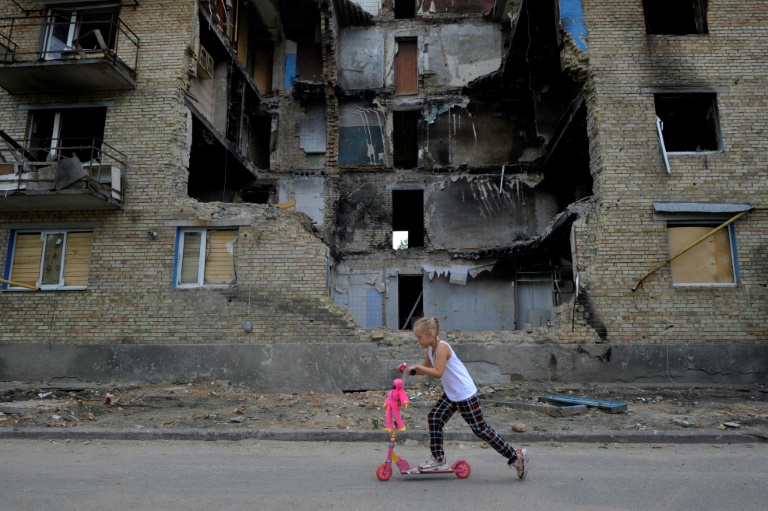
Tens of thousands of people have been killed, millions forced to flee and towns turned into rubble since Russian President Vladimir Putin ordered an all-out assault on his pro-Western neighbour on February 24.

Western powers have imposed increasingly stringent sanctions on Russia and supplied arms to Ukraine, but divisions have emerged on how to react.

French President Emmanuel Macron said Friday Putin had committed a “fundamental error” but that Russia should not be “humiliated” so that a diplomatic solution could be found.

Ukrainian Foreign Minister Dmytro Kuleba reacted Saturday by saying such calls “only humiliate France” and any country taking a similar position.

“It is Russia that humiliates itself. We all better focus on how to put Russia in its place,” he said.

Despite diplomatic efforts, the conflict has raged in the south and east of the country.

Ukraine reported two victims from a Russian missile strike on Odessa in the southwest, without specifying if they were dead or wounded.

Russia’s defence ministry said it had struck a “deployment point for foreign mercenaries” in the village of Dachne in the Odessa region.

It also claimed a missile strike in the northeastern Sumy region on an artillery training centre with “foreign instructors”.

– Fears over food –

Apart from the human toll, the conflict has caused widespread damage to Ukraine’s cultural heritage.

On Saturday, Ukrainian officials reported a large Orthodox wooden church, a popular pilgrim site, was on fire and blamed Russia.

Moscow continues to prove “its inability to be part of the civilised world,” Culture Minister Oleksandr Tkachenko said in a statement.

Russia’s defence ministry blamed “Ukrainian nationalists” for the blaze and said its forces were not operating in the area.

Russian troops now occupy a fifth of Ukraine’s territory, according to Kyiv, and Moscow has imposed a blockade on its Black Sea ports, sparking fears of a global food crisis. Ukraine and Russia are among the top wheat exporters in the world.

The United Nations said it was leading intense negotiations with Russia to allow Ukraine’s grain harvest to leave the country.

Putin said Friday there was “no problem” to export grain from Ukraine, via Kyiv- or Moscow-controlled ports or even through Central Europe.

The UN has warned that African countries, which normally import over half of their wheat consumption from Ukraine and Russia, face an “unprecedented” crisis.

Food prices in Africa have already exceeded those in the aftermath of the 2011 Arab Spring uprisings and the 2008 food riots.

The head of the African Union, Senegalese President Macky Sall, said Saturday he intended to visit Ukraine after meeting with Putin the day before to discuss the wheat shortage.

Ukraine’s Defence Minister Oleksiy Reznikov repeated the government’s appeal for the swift delivery of heavy artillery in a telecast address to the Globsec-2022 forum on international security Saturday.

If Kyiv gets the equipment they had asked for, he said, “I cannot forecast definitely what month we will kick them out, but I hope — and it’s absolutely a realistic plan — to do it this year.”

Away from the battlefield, Ukraine will be fighting for victory over Wales in Sunday’s play-off final as they aim to reach their first football World Cup since 1958.

“We all understand that the game with Wales will no longer be about physical condition or tactics, it will be a game of survival,” said Ukraine player Oleksandr Zinchenko.

“Everyone will fight to the end and give their all, because we will play for our country.”

burs-to/mtp/lb

Cambodians vote in local polls as revived opposition vies for seats

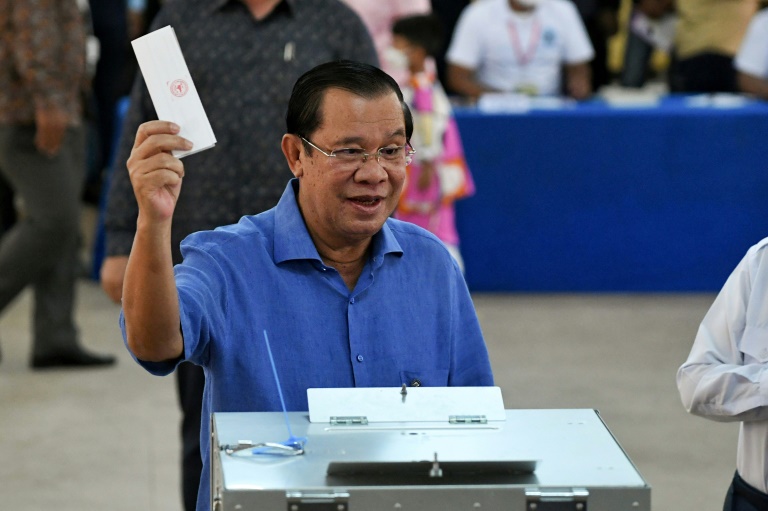
Cambodians voted in local polls on Sunday as a revived opposition party attempted to dent Prime Minister Hun Sen’s decades-long grip on power ahead of national elections next year.

Hun Sen, one of the world’s longest-serving leaders, has ruled Cambodia for more than 37 years and turned the nation into a one-party state at the 2018 general election, winning every parliamentary seat.

Critics and rights groups have accused him of creating a climate of fear by locking up scores of political opponents and activists.

The opposition Cambodia National Rescue Party (CNRP) — which won 44 percent of the popular vote in previous local elections in 2017 — was forced to forfeit its positions after a court dissolved the party later that year.

Scores of opposition figures have since fled the country, while others have been arrested.

Opposition leader Kem Sokha, who was arrested and jailed for more than a year, is facing a treason trial, while CNRP co-founder Sam Rainsy is living in France to escape convictions he says are politically motivated.

Sunday’s vote in 1,652 communes, or village clusters, will take the country’s political pulse ahead of the national elections in 2023.

Hun Sen’s ruling Cambodian People’s Party (CPP) made a show of strength in the capital Phnom Penh on Friday with a massive parade of cars, trucks, motorcycles and tuk-tuks greeted by flag-waving supporters.

A total of 17 political parties are running in the local election, with more than 11,600 positions up for grabs — the majority of which are presently controlled by the ruling party.

But all eyes are on the performance of the Candlelight Party (CP) — founded by Rainsy in 1995 — which has registered candidates to contest nearly all communes and has been gaining strong support.

– ‘last hope’ –

“The Candlelight Party is the last hope for the people, although we are suffering from intimidation and threats, and political harassment,” party secretary-general Lee Sothearayuth told AFP.

UN Human Rights Office spokeswoman Liz Throssell said she was disturbed by patterns of obstruction targeting opposition candidates ahead of the poll.

She warned that the CP “faces a paralysing political environment” after at least six candidates and activists were arrested in the run-up to the vote.

The CP is well-positioned to attract supporters and is the only party that “poses a realistic threat” to Hun Sen’s CPP, according to Sebastian Strangio, an expert on Cambodian politics and the author of “Hun Sen’s Cambodia”. 

“A strong opposition showing would demonstrate that the popular discontent with CPP rule continues to simmer beneath the surface of Cambodian politics,” he told AFP.

CPP spokesman Sok Eysan downplayed the threat, telling AFP that his party would “overwhelmingly” win.

“The whole glass has already broken. So these small pieces of glass are not strong,” Sok Eysan said, referring to the opposition movement. 

An estimated 9.2 million people are registered to cast ballots on Sunday.

N. Korea launches multiple ballistic missiles: Seoul

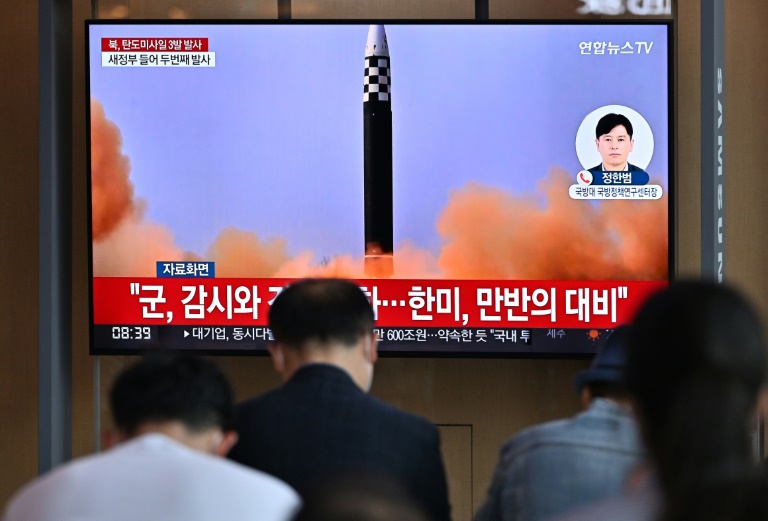
North Korea launched multiple ballistic missiles into waters off its east coast Sunday, South Korea’s military said, a day after Seoul and Washington completed their first joint drills involving a US aircraft carrier in more than four years.

Pyongyang has doubled down on upgrading its weapons programme this year, despite facing crippling economic sanctions.

“Our military detected eight short-range ballistic missiles fired from the Sunan area in Pyongyang, North Korea into the East Sea,” Seoul’s Joint Chiefs of Staff said, referring to the Sea of Japan.

The launches took place over about 30 minutes on Sunday morning, it added.

“While our military has strengthened surveillance and vigilance in preparation for additional launches, South Korea and the United States are closely cooperating and maintaining a full readiness posture.”

The launches took place at multiple locations, Tokyo said, adding that Pyongyang had tested missiles at “unprecedently high frequency” this year.

“We can say the very large number of launches from at least three locations in a short period of time like this time is unusual,” Japanese Defence Minister Nobuo Kishi said, confirming the North fired at least six missiles.

“This is absolutely unacceptable,” he added.

The launches came barely a day after South Korea and the United States wrapped up large-scale, three-day exercises involving the USS Ronald Reagan, a 100,000-tonne nuclear-powered aircraft carrier.

They were the allies’ first joint military drills since South Korea’s hawkish new President Yoon Suk-yeol took office last month, and the first involving an aircraft carrier since November 2017.

Pyongyang has long protested against the joint exercises, calling them rehearsals for invasion.

“The exercise consolidated the two countries’ determination to sternly respond to any North Korean provocations while demonstrating the US commitment to provide extended deterrence,” the Joint Chiefs of Staff said in a statement.

Go Myong-hyun, a researcher at the Asan Institute for Policy Studies, said Sunday’s launch was likely a response to the US-South Korea manoeuvres.

“It seems that they fired eight missiles because the scale of the joint drills has expanded in their view,” he told AFP.

– Nuclear test –

Last month, during a summit with Yoon, US President Joe Biden said Washington would deploy “strategic assets” if necessary as part of efforts to bolster deterrence.

Pyongyang test-fired three missiles, including possibly its largest intercontinental ballistic missile, the Hwasong-17, just days after Biden left South Korea following his summit with Yoon.

US and South Korean officials have warned for weeks that Pyongyang may conduct a seventh nuclear test. 

Despite struggling with a recent Covid-19 outbreak, North Korea has resumed construction on a long-dormant nuclear reactor, new satellite imagery has indicated.

South Korea’s presidential office said last month that Pyongyang had carried out tests of a nuclear detonation device in preparation for its first nuclear test since 2017.

Long-range and nuclear tests have been paused since North Korean leader Kim Jong Un met then US president Donald Trump for a bout of high-profile negotiations that collapsed in 2019.

But Pyongyang has since abandoned this self-imposed moratorium, carrying out a blitz of sanctions-busting weapons tests this year, including firing an intercontinental ballistic missile (ICBM) at full range.

Analysts have warned Kim could speed up nuclear testing plans to distract North Korea’s population from the disastrous coronavirus outbreak.

At least 16 killed, 170 injured in Bangladesh depot fire

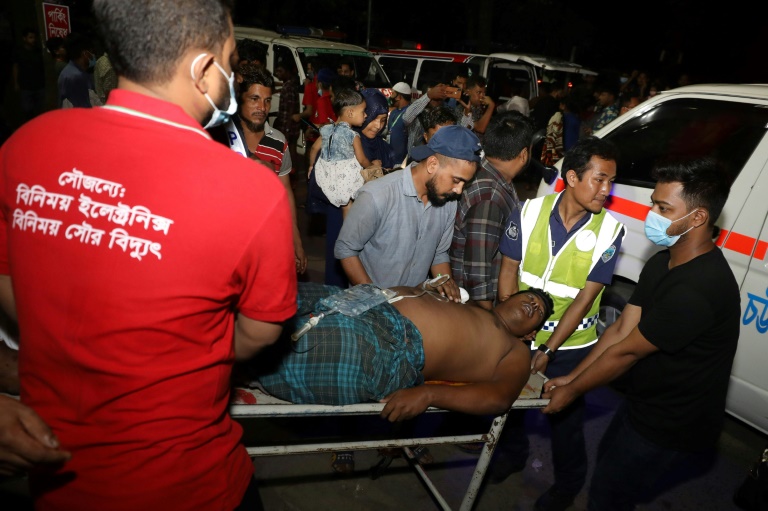
At least 16 people were killed and 170 others injured after a massive fire tore through a container depot in southern Bangladesh, officials said Sunday.

The fire broke out shortly before midnight at a container storage facility in Sitakunda, about 40 kilometres (25 miles) from the key port of Chittagong, fire service official Jalal Ahmed said.

“Sixteen people have been killed in the fire. The number of fatalities is expected to rise as some of the injured are in critical condition,” Chittagong’s chief doctor, Elias Chowdhury, told AFP.

Multiple firefighting units were at the scene attempting to douse the blaze when a massive explosion rocked the site, injuring scores of people, including firefighters, Abul Kalam Azad, the local police chief, told AFP.

“Some 170 people were injured including at least 40 firefighters and 10 police officers. Three firefighters were also killed,” he said.

Chowdhury said the injured had been rushed to different hospitals in the region as doctors were brought back from holiday to help in the emergency.

He said the number of fatalities could still grow as some 20 people remained in critical condition with burns covering 60 to 90 percent of their bodies. 

Local media put the number of injuries at about 300, and requests for blood donations for the injured flooded social media. 

Emergency crews were still working to put out the fire Sunday morning and military clinics were helping to treat the injured.

Mominur Rahman, chief administrator of Chittagong district, said while the fire was largely under control, there were “still several pockets of fire in the depot”. 

“Firefighters are trying to control these pocket fires,” he said. 

Rahman said the depot contained millions of dollars of garment products waiting to be exported to Western retailers, for whom Bangladesh is a key supplier.

Ruhul Amin Sikder, spokesman for the Bangladesh Inland Container Association (BICA), said some of the containers at the 30-acre private depot contained chemicals, including hydrogen peroxide.

The director of the B.M. Container Depot, Mujibur Rahman, said the fire’s cause was still unknown. He added the facility employs about 600 people.

In 2020, three workers were killed after an oil tank exploded in another container depot in the neighbouring Patenga area.

Fires are common in Bangladesh due to lax enforcement of safety rules. In July 2021, 54 people died when a blaze ripped through a massive food-processing factory outside the capital Dhaka. 

In 2020, 70 people were killed when another fire engulfed several Dhaka apartment blocks.

At least 16 killed, 170 injured in Bangladesh depot fire

At least 16 people were killed and 170 others injured after a massive fire tore through a container depot in southern Bangladesh, officials said Sunday.

The fire broke out shortly before midnight at a container storage facility in Sitakunda, about 40 kilometres (25 miles) from the key port of Chittagong, fire service official Jalal Ahmed said.

“Sixteen people have been killed in the fire. The number of fatalities is expected to rise as some of the injured are in critical condition,” Chittagong’s chief doctor, Elias Chowdhury, told AFP.

Multiple firefighting units were at the scene attempting to douse the blaze when a massive explosion rocked the site, injuring scores of people, including firefighters, Abul Kalam Azad, the local police chief, told AFP.

“Some 170 people were injured including at least 40 firefighters and 10 police officers. Three firefighters were also killed,” he said.

Chowdhury said the injured had been rushed to different hospitals in the region as doctors were brought back from holiday to help in the emergency.

He said the number of fatalities could still grow as some 20 people remained in critical condition with burns covering 60 to 90 percent of their bodies. 

Local media put the number of injuries at about 300, and requests for blood donations for the injured flooded social media. 

Emergency crews were still working to put out the fire Sunday morning and military clinics were helping to treat the injured.

Mominur Rahman, chief administrator of Chittagong district, said while the fire was largely under control, there were “still several pockets of fire in the depot”. 

“Firefighters are trying to control these pocket fires,” he said. 

Rahman said the depot contained millions of dollars of garment products waiting to be exported to Western retailers, for whom Bangladesh is a key supplier.

Ruhul Amin Sikder, spokesman for the Bangladesh Inland Container Association (BICA), said some of the containers at the 30-acre private depot contained chemicals, including hydrogen peroxide.

The director of the B.M. Container Depot, Mujibur Rahman, said the fire’s cause was still unknown. He added the facility employs about 600 people.

In 2020, three workers were killed after an oil tank exploded in another container depot in the neighbouring Patenga area.

Fires are common in Bangladesh due to lax enforcement of safety rules. In July 2021, 54 people died when a blaze ripped through a massive food-processing factory outside the capital Dhaka. 

In 2020, 70 people were killed when another fire engulfed several Dhaka apartment blocks.

Sudan band's music empowers sidelined ethnic group

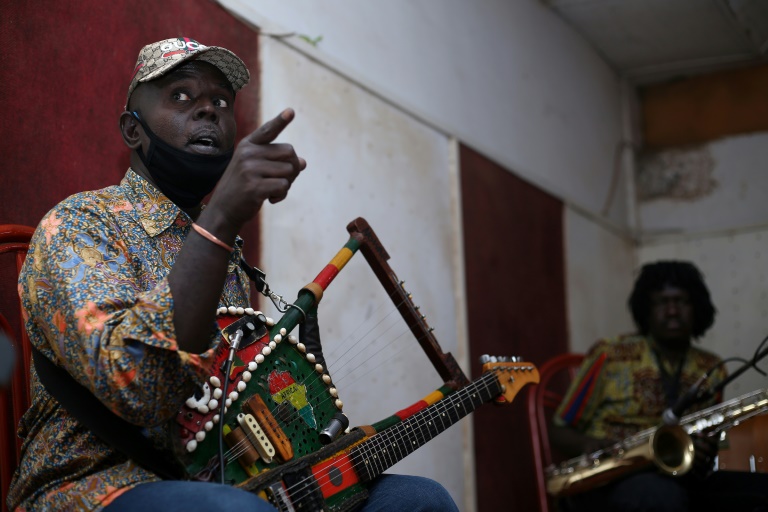
Noureddine Jaber, a musician with a unique part-guitar, part-tamboura instrument, is giving voice to Sudan’s long-marginalised eastern communities through a new album.

Hailing from the Red Sea city of Port Sudan, Jaber belongs to the Beja people, a group of nomadic herders and breeders with unique languages, culture, food and music. 

They have borne the weight of disenfranchisement especially under autocratic president Omar al-Bashir who was ousted in 2019. 

But the title of his first album, due out later in June, conveys a different message: “Beja Power.”

During Bashir’s three-decade rule, non-Arab groups complained that his government allowed Arab culture to dominate, giving little representation to the country’s many ethnic minorities. 

Also known as “Noori”, Jaber grew up devouring the rich heritage of distinct tunes of the Beja people who trace their roots back millennia. 

Though he first formed his band in 2006, it was only in recent months that he was able to record his first album, at the age of 47. 

“Beja music is the window to the struggles of its people,” said Jaber, who called his six-member band “Dorpa”, which means “the band of the mountains” in Bedawit, a Beja language. 

“The Beja have long been marginalised and we are trying to convey their voice through music.”

Though their region is a maritime trade hub known for its lush fertile fields, and rich gold mines, it is also one of the most impoverished parts of Sudan, itself one of the poorest countries in the world. 

At a studio in Omdurman, the capital Khartoum’s twin city, Jaber leads his band through rehearsal, producing a mellow, toe-tapping sound somewhat similar to jazz. 

“Let’s play the ‘Saagama’,” Jaber tells his bandmates: a bassist, saxophonist, rhythm guitarist, bongos player, and a conga drummer.

In his hand he holds his unique “tambo-guitar”, an instrument he fashioned from a guitar neck and his father’s vintage tamboura, a type of lyre played in East Africa. 

Jaber’s invention is embossed with small shells and a map of Africa.

– ‘Very special rhythm’ –

“Saagama”, which means migration in Bedawit, is one of the album’s most evocative tracks, inspired by ancient melodies from Sudan’s east. 

Unlike him, the rest of the band all hail from different parts of ethnically diverse Sudan. 

They say it took them years to learn the Beja music scales and tones, traditionally played on drums and the tamboura.

“I’ve never been to east Sudan. I only learned the music from Noori,” conga player Mohamed Abdelazim told AFP. 

“The way they play drums in the east is different, very distinct. It has its own very special rhythm.” 

According to Jaber, the Beja’s under-representation in Sudanese culture is part of why many fail to recognise their music. 

Under Bashir, he told AFP, “the rule was for the Arab culture to prevail while other African ethnicities fade.”

Beja musicians regularly faced restrictions, with authorities often stopping their performances. 

“It could be for anything, lack of permits or because the audience were mixed groups” of men and women together, in contrast to those of Arab performers, Jaber said.

Abdelhalim Adam, the band’s bassist, is originally from the ethnic Folani tribe of the Darfur region, on the other side of the country in Sudan’s west. 

For him, joining the band was particularly meaningful. 

“The Beja’s struggle is similar to our tribes in North Darfur,” Adam said. “They are as marginalised.” 

Darfur was ravaged by civil war that began in 2003 when ethnic minority rebels took up arms against Bashir’s Arab-dominated government, which unleashed the Janjaweed militia blamed for atrocities.

Hundreds of thousands were killed and millions have been displaced since.

The Beja also rebelled against Bashir’s government for more than a decade. Communities in the east then joined nationwide calls for his ouster in the protests which began in 2018.

A glimmer of hope shone following Bashir’s overthrow and the installation of a fragile transition to civilian rule which pledged to end marginalisation in Sudan. 

But even then, Beja tribes complained of marginalisation. 

Last year, they blockaded the main seaport of Port Sudan shortly before a military coup led by army chief Abdel Fattah al-Burhan upended Sudan’s transition. 

As Beja tribes continue to call for wider representation, Jaber has zeroed in on music as his avenue to highlight the struggles of his people. 

“It’s an effective way for our story to travel and attract the world’s attention,” he says. And it is also a way “to preserve our heritage.”

Palestinian farmers sound alarm over foot-and-mouth outbreak

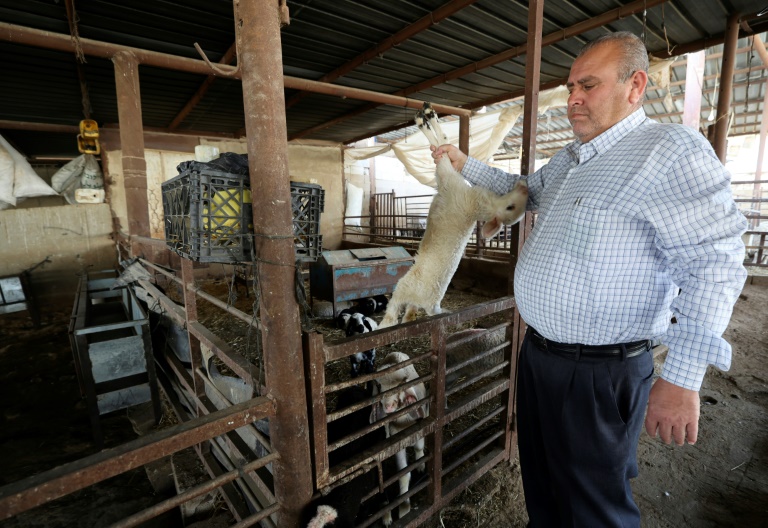
An outbreak of foot-and-mouth disease in the West Bank early this year has killed thousands of livestock, pushing Palestinian farmers already living under occupation to the brink of bankruptcy.

Mohammed Basheer said he had to incinerate hundreds of his dead lambs after the outbreak devastated livestock across the West Bank, leaving him with more than just a stinging financial loss. 

For Basheer, the ordeal underlines the unique challenges facing farmers in the occupied Palestinian territory, who complain that they are underserved by the Palestinian Authority and face constant threats from Jewish settlers.

“I got no help from the PA, not even a telephone call,” Basheer, who owns thousands of livestock near the city of Nablus, told AFP, voicing frustration over what he described as inaction from the Palestinian agriculture ministry.

Palestinian farmers blamed the PA for halting a vaccinations programme that had proven essential in protecting livestock against an endemic disease. 

And with animals absent from large stretches of grazing land, farmers fear land grabs from Jewish settlers who have repeatedly set up illegal outposts on West Bank land they claim is unused. 

The PA “should protect us because we protect the land,” Basheer said. “The farms protect the land… If you remove the farmers, Israel takes the land.”

– Farmers ‘destroyed’ –

A new strain of foot-and-mouth disease (FMD), which causes potentially lethal fevers and blisters in young animals, was detected in livestock last November in Jordan.

It soon spread across the West Bank, a territory occupied by Israel since 1967, and heavily reliant on agriculture.

But the PA’s agriculture ministry has not carried out a regular vaccination drive since 2019. 

A ministry official, who requested anonymity, told AFP that a normal year sees 60 to 70 percent of goats and sheep in the West Bank vaccinated against FMD.

That figure dropped to 20 percent in 2020 and 2021, the official said.

The ministry blamed the coronavirus pandemic, saying FMD vaccines were harder to source as vaccine-makers worldwide pivoted operations to meet demand for Covid jabs.

The ministry also blamed Israel, claiming it obstructed the PA from procuring sufficient supply.

The Israeli defence ministry body responsible for civil affairs in the Palestinian territories (COGAT) told AFP that the allegation was false.

“There has been no formal request from the Palestinian Authority for the import of such vaccines,” a COGAT statement said.

“Nonetheless, considering the health requirement that has arisen, the State of Israel has transferred vaccine doses that were in its possession to the Palestinian Authority.”

The Palestinian ministry has officially confirmed around 2,000 animal deaths as a result of the FMD strain this year.

But farmers and the agriculture ministry official said livestock deaths were likely far higher than the acknowledged toll.

Basheer said FMD losses had cost him $150,000 and accused Israel of hoarding vaccines.

“Our occupiers had continuous vaccines for all farmers, but we haven’t had anything in three years,” he said.

“They’ve destroyed the farmers.” 

– ‘Farmers can’t stand alone’ –

In the West Bank’s Area C, which remains under full Israeli control, vacant agricultural land is a prime target for Jewish settlement expansion, according to experts. 

Eyal Hareuveni, a researcher at the anti-settlement watchdog B’Tselem, told AFP that settler land grabs are often backed by Israel’s “twisted interpretation” of an Ottoman-era law that says land not cultivated for three consecutive years can be claimed.

“Israel can designate this as state land and take it for their own use, even if it’s land that is registered as private Palestinian land,” Hareuveni said.

More than 475,000 Jewish settlers live in the West Bank in communities widely regarded as illegal under international law. Israel’s governing coalition has continued to approve new settler homes across the territory, while acting sporadically against new outposts.

With no new cases detected since April, PA officials say the FMD outbreak is now under control.

Abbas Milhem, executive director of the Palestinian farmer’s union, told AFP that by faltering on vaccinations, the PA had effectively given a boost to the settler movement.

“The real fight against occupation and annexation is in the land, but the farmers can’t stand alone,” he said. “We need some accountability for this.”

Close Bitnami banner
Bitnami