World

Global stock markets fall after US jobs report

Stock markets mostly fell worldwide on Friday after data showed US employers added jobs at a better-than-expected pace last month, raising the prospect the Federal Reserve’s aggressive interest rate hikes will not be enough to contain inflation and avoid a recession.

Major Wall Street indices fell sharply, with the Nasdaq losing 2.5 percent, and were in the red for the week after a brief positive respite last week.

Paris and Frankfurt both closed slightly down. London’s FTSE 100 was closed for a holiday.

Oil prices, meanwhile, pushed higher, a day after the OPEC+ group of major oil producing nations led by Saudi Arabia and Russia agreed to raise output more than expected in the wake of a European Union ban on most Russian crude.

American employers added 390,000 jobs last month, a sign of a slowdown in hiring but still above forecasts amid a shortage of workers, according to the US Labor Department.

The jobless rate held steady at 3.6 percent for the third consecutive month.

The Fed has hiked interest rates to combat sky-high inflation, but investors worry that more aggressive moves could backfire and hamper economic growth.

The jobs report contained some positive news for the Fed: wage gains slowed in the month and more people returned to the workforce.

But the central bank has signaled big rate hikes are coming, and the increases are likely to continue through the end of the year, adding to investor worries about the economic outlook.

– Worst is not over –

“We are still in a bear market and until proven otherwise the path of least resistance is down,” Maris Ogg of Tower Bridge Advisors, told AFP.

She noted that major components of inflation are not improving.

“Oil is not going to get better, labor is not going to get better, housing is not going to get better. Housing and labor are in shortage,” she said. “As far as the stock market goes, I would be surprised if the worst is over.”

The European Central Bank has indicated it will raise interest rates in July for the first time in over a decade.

Tokyo’s stock market closed higher ahead of the US jobs report. Hong Kong and Chinese mainland indices were closed for holidays.

Among major companies, Tesla shares plunged 9.2 percent after the electric carmaker’s CEO Elon Musk told employees the company plans to cut the salaried workforce by 10 percent and rely on more hourly workers because he had a “super bad feeling” about the economy.

Elsewhere, Brent North Sea crude, the international benchmark, rose 3.2 percent, to $121.31 a barrel.

OPEC+ agreed on Thursday to ramp up output in July by 50 percent more than in previous months.

– Key figures at around 2100 GMT –

New York – Dow: DOWN 1.0 percent to 32,899.7 (close)

New York – S&P 500: DOWN 1.6 percent at 4,108.54 (close)

New York – Nasdaq:  DOWN 2.5 percent at 12,012.73 (close)  

Frankfurt – DAX: DOWN 0.2 percent at 14,460.09 (close)  

Paris – CAC 40: DOWN 0.2 percent at 6,485.30 points (close) 

EURO STOXX 50: DOWN 0.3 percent at 3,783.66 points 

London – FTSE 100: Closed for a holiday

Tokyo – Nikkei 225: UP 1.3 percent at 27,761.57 (close)

Hong Kong – Hang Seng Index: Closed for a holiday

Shanghai – Composite: Closed for a holiday

Brent North Sea crude: UP 3.2 percent at $121.31 per barrel

West Texas Intermediate: UP 2.9 percent at $120.36 per barrel

Euro/dollar: DOWN at $1.0719 from $1.0753 on Thursday

Pound/dollar: DOWN at $1.2488 from $1.2568

Euro/pound: UP at 85.81 pence from 85.49 pence

Dollar/yen: UP at 130.81 yen from 129.85 yen
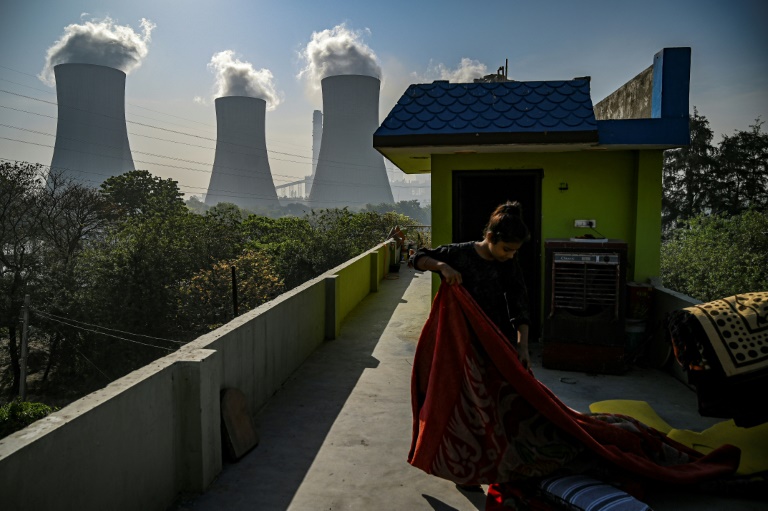
Atmospheric CO2 more than 50 percent higher than pre-industrial era

Concentrations of carbon dioxide in the atmosphere in May were 50 percent higher than during the pre-industrial era, reaching levels not seen on Earth for about four million years, the main US climate agency said on Friday.

Global warming caused by humans, particularly through the production of electricity using fossil fuels, transport, the production of cement, or even deforestation, is responsible for the new high, the National Oceanic and Atmospheric Administration (NOAA) said.

May is usually the month with the highest carbon dioxide levels each year. 

In May 2022, the threshold of 420 parts per million (ppm) — a unit of measurement used to quantify pollution in the atmosphere — was crossed. 

In May 2021, the rate was 419 ppm, and in 2020, 417 ppm. 

The measurements are taken at the Mauna Loa observatory in Hawaii, ideally located high on a volcano, which allows it to escape the possible influence of local pollution. 

Before the Industrial Revolution, levels of CO2 held steady at around 280 ppm, a level maintained for approximately 6,000 years of human civilization that preceded industrialization, according to NOAA. 

The level now is comparable to what it was between 4.1 and 4.5 million years ago, when CO2 levels were near or above 400 ppm, the agency said in a statement. 

At that time, sea levels were between five and 25 meters higher than now, high enough to submerge  many of today’s major cities. Large forests also occupied parts of the Arctic, according to studies. 

CO2 is a greenhouse gas that traps heat, gradually causing global warming. It remains in the atmosphere and oceans for thousands of years. 

Its warming effect is already causing dramatic consequences, noted NOAA, including the multiplication of heat waves, droughts, fires or floods. 

“Carbon dioxide is at levels our species has never experienced before — this is not new,” said Pieter Tans, a scientist with the Global Monitoring Laboratory. 

“We have known about this for half a century, and have failed to do anything meaningful about it. What’s it going to take for us to wake up?” 

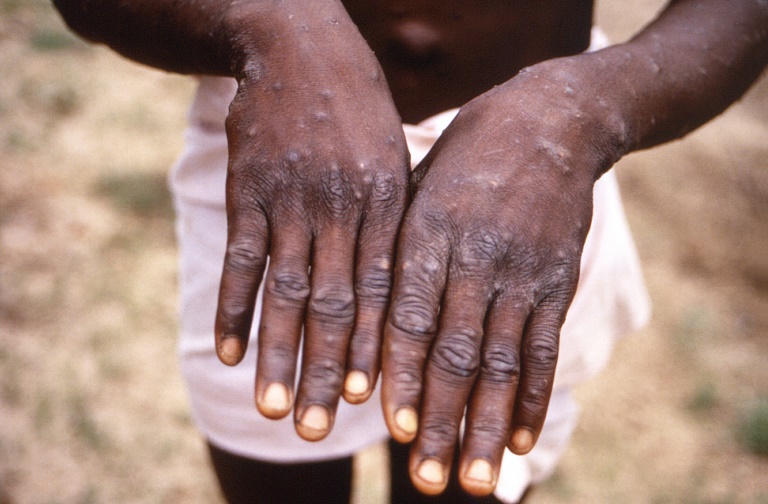
More than 700 monkeypox cases globally, 21 in US: CDC

The US Centers for Disease Control and Prevention (CDC) said Friday it was aware of more than 700 global cases of monkeypox, including 21 in the United States, with investigations now suggesting it is spreading inside the country.

Sixteen of the first 17 cases were among people who identify as men who have sex with men, according to a new CDC report, and 14 were thought to be travel associated.

All patients are in recovery or have recovered, and no cases have been fatal.

“There have also been some cases in the United States that we know are linked to known cases,” Jennifer McQuiston, deputy director of the CDC’s Division of High Consequence Pathogens and Pathology, told reporters on a call. 

“We also have at least one case in the United States that does not have a travel link or know how they acquired their infection.”

Monkeypox is a rare disease that is related to but less severe than smallpox, causing a rash that spreads, fever, chills, and aches, among other symptoms.

Generally confined to western and central Africa, cases have been reported in Europe since May and the number of countries affected has grown since.

Canada also released new figures Friday, counting 77 confirmed cases — almost all of them detected in Quebec province, where vaccines have been delivered.

Though its new spread may be linked to particular gay festivals in Europe, monkeypox is not thought to be a sexually transmitted disease, with the main risk factor being close skin-to-skin contact with someone who has monkey pox sores. 

A person is contagious until all the sores have scabbed and new skin is formed. 

– ‘More than enough vaccine’ –

Raj Panjabi, senior director for the White House’s global health security and biodefense division, added that 1,200 vaccines and 100 treatment courses had been delivered to US states, where they were offered to close contacts of those infected.

There are currently two authorized vaccines: ACAM2000 and JYNNEOS, which were originally developed against smallpox. 

Though smallpox has been eliminated, the United States retains the vaccines in a strategic national reserve in case it is deployed as a biological weapon. 

JYNNEOS is the more modern of the two vaccines, with fewer side effects.

“We continue to have more than enough vaccine available,” Dawn O’Connell, assistant secretary for preparedness and response in the Department of Health and Human Services, told reporters. 

In late May, the CDC said it had 100 million doses of ACAM200 and 1,000 doses of JYNNEOS available, but O’Connell said Friday the figures had shifted, though she could not divulge precise numbers for strategic reasons.

The CDC has also authorized two antivirals used to treat smallpox, TPOXX and Cidofovir, to be repurposed to treat monkeypox.

“Anyone can get monkeypox and we are carefully monitoring for monkeypox that may be spreading in any population, including those who are not identifying as men who have sex with men,” said McQuiston. 

That being said, the CDC is undertaking special outreach in the LGBT community, she added.

A suspected case “should be anyone with a new characteristic rash,” or anyone who meets the criteria for high suspicion such as relevant travel, close contact, or being a man who has sex with men. 

AU head says 'reassured' after talks with Putin on food shortages

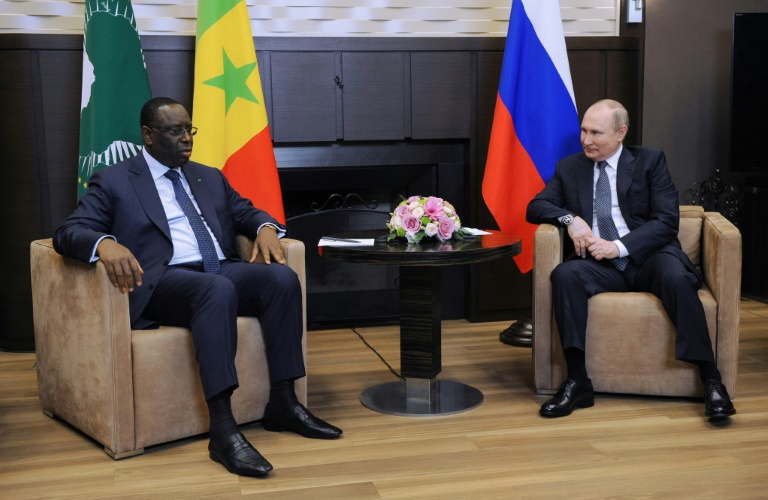
African Union head Macky Sall said on Friday he was “reassured” after talks in Russia with President Vladimir Putin on food shortages caused by Moscow’s military campaign in Ukraine.

Putin hosted the Senegalese president, who chairs the African Union, at his Black Sea residence in Sochi on the 100th day of Moscow’s offensive. Global food shortages and grain supplies stuck in Ukrainian ports were high on the agenda.

“I found Vladimir Putin committed and aware that the crisis and sanctions create serious problems for weak economies, such as African economies,” Sall told journalists, adding that he was leaving Russia “very reassured and very happy with our exchanges”.

Putin in a televised interview in the evening accused the West of “bluster” by claiming Moscow was preventing grain exports from Ukraine.

“There is no problem to export grain from Ukraine,” he said, suggesting several possible routes.

Exports could transit through the Russian-controlled ports of Mariupol and Berdyansk, or the Ukrainian-held port of Odessa as long as Ukraine “cleared” the waters around it of mines, according to Putin.

Other transport options include the Danube River via Romania, Hungary or Poland, he added.

“But the simplest, the easiest, the cheapest would be exports via Belarus, from there one can go to Baltic ports, then to the Baltic Sea and then anywhere in the world.”

But Putin said any export via Belarus would be conditional on the “lifting of sanctions” by the West against Minsk, allied to Moscow.

– ‘On Africa’s side’ –

Ahead of the talks, which lasted three hours, Sall asked Putin “to become aware that our countries… are victims” of the conflict. 

He said it was important to work together so that “everything that concerns food, grain, fertiliser is actually outside” Western sanctions imposed on Moscow after Putin sent troops to Ukraine on February 24.

In his remarks before the talks, Putin did not mention grain supplies but said Russia was “always on Africa’s side” and was now keen to ramp up cooperation.

“We place great importance on our relations with African countries, and I must say this has had a certain positive result,” Putin added.

Washington and Brussels have imposed unprecedented sanctions against Moscow, pushing Putin to seek new markets and strengthen ties with countries in Africa and Asia.

The Kremlin said the two leaders discussed expanding “political dialogue” between Russia and the African Union as well as economic and humanitarian cooperation.

Speaking to reporters earlier on Friday, Putin’s spokesman said the Russian leader would explain to Sall “the real state of affairs” concerning grain supplies stuck in Ukrainian ports.

“No-one is blocking these ports, at least not from the Russian side,” Kremlin spokesman Dmitry Peskov said.

Putin has said Moscow is ready to look for ways to ship grain stuck at Ukrainian ports but has demanded the West lift sanctions.

Russian Foreign Minister Sergei Lavrov is expected in Turkey next Wednesday for talks on creating a “security corridor” to unblock grain exports from Ukraine.

– ‘Food emergency’ –

Moscow’s military campaign in Ukraine and a barrage of international sanctions on Russia have disrupted supplies of fertiliser, wheat and other commodities from both countries, pushing up prices for food and fuel.

Cereal prices in Africa, the world’s poorest continent, have surged because of the slump in exports from Ukraine, sharpening the impact of conflict and climate change and sparking fears of social unrest.

The UN has said Africa faces an “unprecedented” crisis caused by the military operation.

On Thursday, landlocked Chad declared a “food emergency”, urging the international community to help. 

Ships loaded with grain remain blocked in Ukraine, which before February was a leading exporter of corn and wheat and alone accounted for 50 percent of world trade in sunflower seeds and oil. 

Navigation in the Black Sea has also been hampered by mines placed by both Russian and Ukrainian forces.

In 2019, Putin hosted dozens of African leaders in Sochi in a bid to reassert Russia’s influence on the continent.

Though never a colonial power in Africa, Moscow was a crucial player on the continent in the Soviet era, backing independence movements and training a generation of African leaders.

Russia’s ties with Africa declined with the collapse of the Soviet Union in 1991 and in recent years China has emerged as a key foreign power on the continent.

Myanmar junta says will carry out first judicial executions in decades

Myanmar’s junta will execute a former lawmaker from Aung San Suu Kyi’s party and a prominent democracy activist, both of whom were convicted of terrorism, in the country’s first judicial executions since 1990, a spokesman told AFP on Friday.

Four people, including former MP Phyo Zeya Thaw and democracy activist Ko Jimmy, “who were sentenced to death will be hanged according to prison procedures”, junta spokesman Zaw Min Tun told AFP. 

The junta has sentenced dozens of anti-coup activists to death as part of its crackdown on dissent after seizing power last year, but Myanmar has not carried out an execution for decades.

Phyo Zeya Thaw, a former lawmaker from Suu Kyi’s National League for Democracy who was arrested in November, was sentenced to death in January for offences under anti-terrorism laws.

Prominent democracy activist Kyaw Min Yu — better known as “Jimmy” — received the same sentence from the military tribunal.

“They continued the legal process of appealing and sending a request letter for the amendment of the sentence,” the spokesman said. 

“But the court rejected their appeal and request. There is no other step after that,” he added.

Two other men, who were convicted and sentenced to death for killing a woman they alleged was an informer for the junta in Yangon, will also be executed, the spokesman said.

No date has been set for the executions, Zaw Min Tun said.

United Nations Secretary-General Antonio Guterres condemned the junta’s decision, calling it “a blatant violation to the right to life, liberty and security of person”, according to his spokesman Stephane Dujarric.

Guterres called for the two pro-democracy activists to be released and all the charges against them to be dropped.

“The Secretary-General considers that the death penalty cannot be reconciled with full respect for the right to life,” Dujarric told reporters. 

“Abolition is necessary and desirable for the enhancement of human dignity and the progressive development of human rights.”

A spokesperson for Amnesty International called on the junta to “immediately drop such plans and for the international community to step up its efforts to intervene”.

– ‘Fuel to the fire’ –

The junta’s decision to “move towards executing two prominent political leaders will be like pouring gasoline on the fire of popular anti-military resistance in the country”, said Phil Robertson, a deputy director at Human Rights Watch.

“Such a move will also lead to global condemnation and cement the junta’s reputation as among the worst of the worst human rights abusers in Asia.”

Phyo Zeya Thaw had been accused of orchestrating several attacks on regime forces, including a gun attack on a commuter train in Yangon in August that killed five policemen. 

A hip-hop pioneer whose subversive rhymes irked the previous junta, he was jailed in 2008 for membership of an illegal organisation and possession of foreign currency. 

He was elected to parliament representing Aung San Suu Kyi’s NLD in the 2015 elections, which ushered in a transition to civilian rule.

The country’s military alleged voter fraud during elections in 2020 — which the NLD won by a landslide — as justification for its coup on February 1 last year. 

Suu Kyi has been detained ever since and faces a slew of charges in a junta court that could see her face a prison sentence of more than 150 years. 

Kyaw Min Yu, who rose to prominence during Myanmar’s 1988 student uprising against the country’s previous military regime, was arrested in an overnight raid in October. 

The junta issued an arrest warrant for him last year, alleging he had incited unrest with his social media posts.

Spain eyes crackdown on video game 'loot boxes'

Spain’s government will within days present a draft bill to regulate video game “loot boxes” for which users must pay, a minister said Friday, warning of the addiction risks for youngsters. 

An increasingly common feature in many video games, “loot boxes” are caches of virtual weapons and equipment which a player can buy to increase their prowess or status within the game.

But not all boxes contain useful tools and gamers can only see what’s inside after paying, prompting widespread criticism for encouraging behaviour similar to that associated with gambling.

“We have drawn up a very specific law which we will present in the coming days” that will regulate the sale of such content, Spain’s Consumer Affairs Minister Alberto Garzon told Radiocable. 

“It is like gambling… because it involves compulsive consumption behaviour which provokes a series of issues for players, from stress to financial bankruptcy,” he told the independent radio station.

“At the end of the day, these are sums which pile up and can lead to gambling addiction,” Garzon said. 

Such features were aimed above all “at the under-18 age group, where in 2021, up to 30 percent admitted they had paid significant amounts of money to obtain such rewards” within a game, he said, citing health ministry statistics. 

The age ratings for such games “don’t take into account the danger posed by this feature, so parents could buy a game for a 13-year-old, for example, without being aware it includes an element which, in real life, could not be bought by anyone under 18,” he explained. 

– ‘Predatory’ –

In April, PEGI, the European body that issues age ratings for video games, introduced a labelling change that requires gaming companies to say if a game includes “paid random items” — a form of optional in-game purchases.

Many other countries have also been struggling with the controversial question of “loot boxes” although few have taken steps to regulate them. 

On Tuesday, 20 European consumer groups threw their weight behind a Norwegian Consumer Council (NCC) report on loot boxes that described them as “exploitative and predatory”, with the groups demanding better regulation of the video game industry. 

“The sale and presentation of loot boxes often involve exploiting consumers through predatory mechanisms, fostering addiction, targeting vulnerable consumer groups and more,” the NCC’s head of digital policy Finn Myrstad said in a statement. 

Gaming companies often used “highly problematic practises to increase their own revenue” through features that “manipulate consumers to spend large sums of money through aggressive marketing, exploitation of cognitive biases, and misleading probabilities”, the report found. 

In Europe, only Belgium and the Netherlands have banned loot boxes after directly associating them with gambling. 

In a statement issued in response to the government’s move, the Spanish Association of Video Games (AEVI) said it “rejects any association with gambling” and insisted on the sector’s right to “self-regulation”. 

Zelensky vows victory on 100th day of Russian invasion

Ukrainian President Volodymyr Zelensky vowed victory on the 100th day of Russia’s invasion on Friday, even as Russian troops pounded the eastern Donbas region.

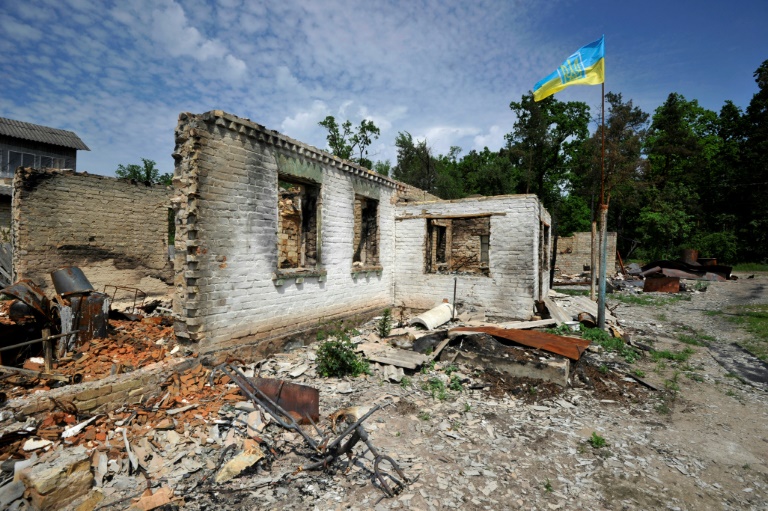
Thousands of people have been killed, millions sent fleeing and towns turned into rubble since Russian President Vladimir Putin ordered his troops into Ukraine on February 24.

Russia’s advance has been slowed by a fierce Ukrainian resistance which repelled them from around the capital and forced Moscow to shift its aims towards capturing the east.

“Victory will be ours,” Zelensky said in a video address similar to one he posted at the onset of the war outside government buildings in Kyiv.

But Kremlin spokesman Dmitry Peskov said: “certain results have been achieved”, pointing to the “liberation” of some areas from what he called the “pro-Nazi armed forces of Ukraine”.

The West has sent ever more potent weapons to Ukraine and piled on ever more stringent sanctions, with the European Union also on Friday formally adopting a ban on most Russian oil imports.

Putin’s alleged girlfriend, former gymnast Alina Kabaeva, was also added to an assets freeze and visa-ban blacklist, along with Russian army personnel suspected of war crimes.

At the same time, the United Nations said it was leading intense negotiations with Russia to allow tens of millions of tons of grain to leave Ukrainian ports to avert a global food crisis.

– ‘No problem’ to export grain –

“I am optimistic that something could give in, something could be made,” said Amin Awad, the UN crisis coordinator for Ukraine, voicing hope that we could “see a breakthrough”.

Putin in a televised interview late Friday said there was “no problem” to export grain from Ukraine, via Kyiv- or Moscow-controlled Ukrainians ports or even via central Europe.

He said this could be done from the Russian-controlled ports of Mariupol and Berdyansk, or the Ukrainian-held port of Odessa as long as Ukraine “cleared” the waters around it.

Russian troops now occupy a fifth of Ukraine’s territory and Moscow has imposed a blockade on the country’s Black Sea ports.

The UN has warned that especially African countries, which imported more than half of their wheat consumption from Ukraine and Russia, face an “unprecedented” crisis caused by the conflict. 

Food prices in Africa have already exceeded those in the aftermath of the 2011 Arab springs and the 2008 food riots.

On Friday, Putin met the head of the African Union, Senegalese President Macky Sall, at his Black Sea residence in Sochi.

Sall told Putin that African countries “are victims” in the Ukraine conflict.

And after the meeting, Sall said he was “very reassured”, adding the Russian leader was “committed and aware that the crisis and sanctions create serious problems for weak economies”.

France’s President Emmanuel Macron, meanwhile, declared Putin had “made a historic and fundamental error” in starting the war.

But he said he should not be “humiliated… so that the day the fighting stops we can pave a way out through diplomatic means.”

Putin’s troops are now concentrating in the Donbas, in the east, where some of the fiercest fighting is centred on the industrial hub city of Severodonetsk.

– Media driver killed –

Fighting continues in Severodonetsk’s city centre, the president’s office said, adding that the invaders were “shelling civilian infrastructure and Ukrainian military”.

“For 100 days, they have been levelling everything”, Lugansk regional governor Sergiy Gaiday said on Telegram.

A driver transporting two Reuters journalists in eastern Ukraine was killed and the two international news agency reporters lightly wounded, a company spokesperson said.

The agency said the group was travelling “in a vehicle provided by the Russian-backed separatists and driven by an individual assigned by the separatists”.

The French foreign ministry also on Friday said a French volunteer fighter in Ukraine had been killed in combat, following reports that the man died in artillery fire in the neighbouring Kharkiv region.

In areas around the capital Kyiv which Russian troops retreated from at the end of March, some residents are still in desperate need.

At an aid distribution point in Horenka, northwest of Kyiv, a tearful Hanna Viniychuk, 67, said she had come for some basic necessities after losing her home in a Russian bombardment.

“I’m grateful for this help,” she said.

– ‘Nothing to come back to’ –

Ukrainian troops were still holding an industrial zone, Gaiday said, a situation reminiscent of Mariupol, where a steelworks was the south-eastern port city’s last holdout until Ukrainian troops finally surrendered in late May.

The situation in Lysychansk — Severodonetsk’s twin city, which sits just across a river — also looked increasingly dire. 

About 60 percent of infrastructure and housing had been destroyed, while internet, mobile network and gas services had been knocked out, said the city’s mayor Oleksandr Zaika.

“The shelling is getting stronger every day,” he said.

In the city of Sloviansk, about 80 kilometres (50 miles) from Severodonetsk, the mayor has urged residents to evacuate as bombing intensified with water and electricity cut off.

Student Gulnara Evgaripova, 18, recounted heavy bombardments as she boarded a minibus to leave the city.

“The situation is getting worse,” she told AFP.

Ekaterina Perednenko, a paramedic, said: “I am scared that there will be nothing to come back to.”

burs-ah/bp

GM unit Cruise to deploy driverless taxis in US first

General Motor’s autonomous vehicle unit Cruise says it will deploy driverless taxis in San Francisco in a first for a major US city.

Cruise announced the plans for a ride hailing service using self-driving electric cars after the California Public Utilities Commission (CPUC) issued it a permit to give rides without anyone in the driver’s seat.

“This means that Cruise will be the first and only company to operate a commercial, driverless ride-hail service in a major US city,” chief operating officer Gil West said in a blog post late Thursday.

“We’ll begin rolling out fared rides gradually.”

The permit allows Cruise to use its fleet of 30 electric, autonomous cars in a taxi service in some parts of San Francisco.

The robotaxis are not to go faster than 30 miles per hour (48 kilometers per hour) and have a green light to only operate between late morning and early evening, barring foul weather such as thick fog or heavy rain, the CPUC permit states.

“Crossing the threshold into commercial operations isn’t just big news for Cruise alone,” West said.

“It is a major milestone for the shared mission of the (autonomous vehicle) industry to improve life in our cities.”

Self-driving, electric car services promise to reduce pollution, and save people time and money, West added.

San Francisco police earlier this year faced an unprecedented problem when an officer stopped a car that was driving at night with no headlights on, only to discover there was no one inside. 

The vehicle, it turned out, was a self-driving Cruise car, and the police officer’s encounter was captured by a passerby, who posted video on social media.

Cruise took to Twitter to say that the self-driving car “yielded to the police vehicle, then pulled over to the nearest safe location for the traffic stop, as intended. An officer contacted Cruise personnel and no citation was issued.”

Cruise explained that the headlights were turned off due to human error.

Founded in 2013, Cruise has developed software that allows cars to drive themselves completely autonomously. 

General Motors owns the majority of shares in the company, valued at more than $30 billion thanks to investments by companies such as Microsoft, Honda and Walmart. 

Cruise rival Waymo last year expanded its robotaxi service to riders in San Francisco, but has “specialists” at the steering wheels to take over driving if needed.

The move expanded a Waymo ride-hailing program which has been operating in Phoenix, Arizona since 2017.

More than 700 monkeypox cases globally, 21 in US: CDC

The US Centers for Disease Control and Prevention (CDC) said Friday it was aware of more than 700 global cases of monkeypox, including 21 in the United States, with investigations now suggesting spread inside the country.

Sixteen of the first 17 cases were among people who identify as men who have sex with men, according to a new CDC report, and 14 were thought to be travel associated.

All patients are in recovery or have recovered, and no cases have been fatal.

“There have also been some cases in the United States that we know are linked to known cases,” Jennifer McQuiston, deputy director of the CDC’s Division of High Consequence Pathogens and Pathology, told reporters on a call. “We also have at least one case in the United States that does not have a travel link or know how they acquired their infection.”

Monkeypox is a rare disease that is related to but less severe than smallpox, causing a rash that spreads, fever, chills, and aches, among other symptoms. 

Generally confined to western and central Africa, cases have been reported in Europe since May and the number of countries affected has grown since.

Though its new spread may be linked to particular gay festivals in Europe, it is not thought to be a sexually transmitted disease, with the main risk factor being close skin-to-skin contact with someone who has monkey pox sores. 

A person is contagious until all the sores have scabbed and new skin is formed. 

Raj Panjabi, senior director for the White House’s global health security and biodefense division, added that 1,200 vaccines and 100 treatment courses had been delivered to US states, where they were offered to close contacts of those infected.

There are currently two authorized vaccines: ACAM2000 and JYNNEOS, which were originally developed against smallpox. Though smallpox has been eliminated, the United States retains the vaccines in a strategic national reserve in case it is deployed as a biological weapon. 

JYNNEOS is the more modern of the two, with fewer side effects.

“We continue to have more than enough vaccine available,” Dawn O’Connell, assistant secretary for preparedness and response in the Department of Health and Human Services, told reporters. 

In late May, the CDC said it had 100 million doses of ACAM200 and 1,000 doses of JYNNEOS available, but O’Connell said Friday the figures had shifted, though she could not divulge precise numbers for strategic reasons.

The CDC has also authorized two antivirals used to treat smallpox, TPOXX and Cidofovir, to be repurposed to treat monkeypox.

“Anyone can get monkeypox and we are carefully monitoring for monkey pox that may be spreading in any population, including those who are not identifying as men who have sex with men,” said McQuiston. 

That being said, the CDC is undertaking special outreach in the LGBT community, she added.

A suspected case “should be anyone with a new characteristic rash,” or who meet the criteria for high suspicion such as relevant travel, close contact, or being a man who has sex with men. 

Rare albino Galapagos giant tortoise born in Swiss zoo

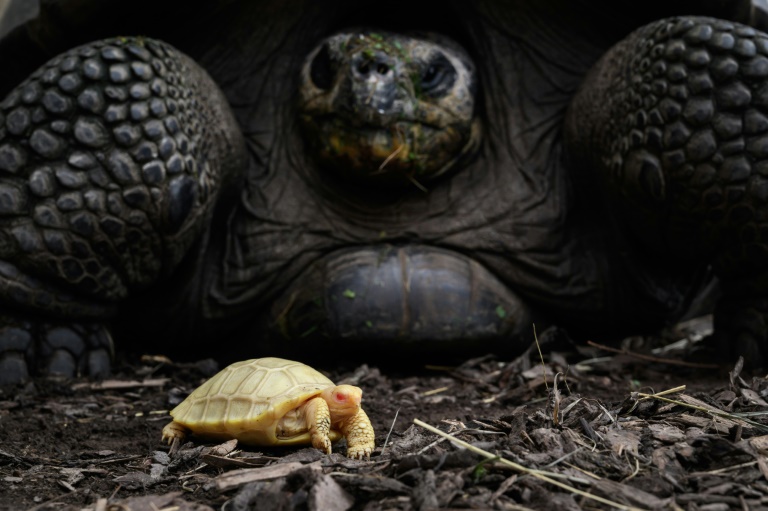
Visitors to a Swiss zoo caught a glimpse on Friday of a rare albino Galapagos giant tortoise born in May.

The baby tortoise may be a unique sight to behold with fair skin and red eyes. It weighs around 50 grams (1.7 ounces), and fits in the palm of one’s hand.

Albinism is a genetic condition that results in little or no production of the pigment melanin, which determines the colour of the skin, hair and eyes. In animals, it can be accompanied by loss of sight and hearing.

The condition has never been observed in the tortoise species whose skin and shell are usually black, both in captivity and the wild.

“We are blessed by the gods,” said Philippe Morel, owner of Tropiquarium zoo in Servion village, western Switzerland.

He said the creature was of “incredible zoological interest” as a small group of schoolchildren marvelled at the baby in front of a glass window.

The International Union for Conservation of Nature (IUCN) lists the Galapagos giant tortoises, which can live up to 200 years, as endangered.

Around 23,000 tortoises are believed to live on the archipelago.

The park’s owner said he believed the albino tortoise’s lifespan would be limited to a few weeks in the wild but is hopeful the creature, whose sex is still unknown, will live a long life.

“It’s crazy how much it climbs,” Morel said. 

“It’s more active than the other,” said his son, Thomas Morel, who is in charge of the animals at the zoo, while showing another tortoise — the usual black — born in early May.

The birth is also exceptional because the tortoises have difficulty reproducing due to their size — they can reach up to 200 kilogrammes (440 pounds). The rate of successful births is only around two percent.

So far there have been new tortoise arrivals in only three zoos worldwide, including two in Switzerland.

Close Bitnami banner
Bitnami