World

US top general in show of support for Finland's NATO bid

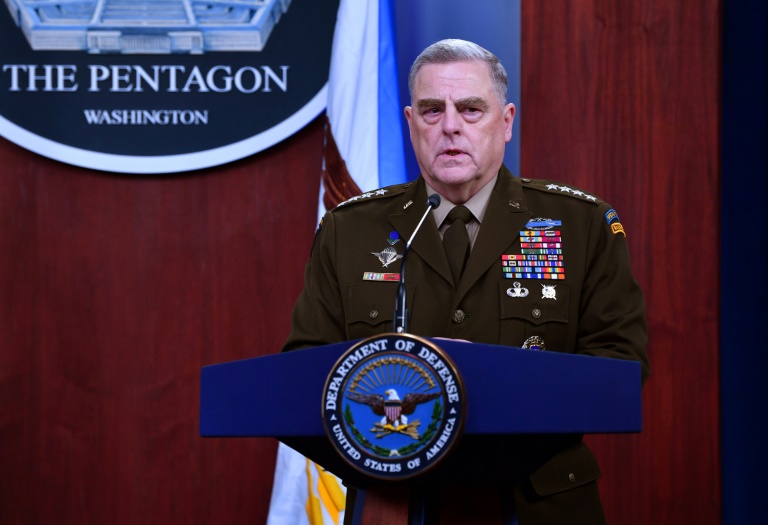
Top US General Mark Milley  on Friday met Finnish President Sauli Niinisto to pledge US support for Finland’s and Sweden’s NATO membership bids which Turkey is  blocking.

“It’s clear, that from a military perspective, both Finland and Sweden, if their applications are approved, that they will bring a significant increase in the military capability of NATO,” Milley told reporters travelling with him through Europe.

The top US officer said he had come “to talk about the way ahead on their applications for NATO and what operations, activities, exercises… that we, the United States as part of NATO, will do in support of them in order to improve our readiness and interoperability.”

After Helsinki, Milley is expected to visit neighbouring Sweden on Saturday, which together with Finland applied for membership of the Atlantic alliance in mid-May.

The two Nordic countries both reversed decades of military non-alignment after political and public support for membership soared following Russia’s invasion of Ukraine.

While the Finnish army has just 13,000 professional soldiers, the country of 5.5 million inhabitants, which shares a 1,300-kilometre (800-mile) border with Russia, has an impressive 900,000 reservists and can quickly mobilise 280,000 soldiers in war-time.

Combining its different branches, the Swedish military can field some 50,000 soldiers, about half of whom are reservists.

Both countries border the Baltic Sea, a potential  “NATO lake” outside the waters off the Russian enclave of Kaliningrad and St Petersburg.

“Both militaries are interoperable with NATO right now,” Milley said. “Their militaries all speak English very, very well. Their tactics, techniques and procedures are fundamentally inter-operable with NATO.”

Despite NATO Secretary General Jens Stoltenberg repeatedly insisting the two nations would be welcomed “with open arms,” their bids are being blocked by Turkey, which  accuses them of providing a safe haven for the outlawed Kurdistan Workers’ Party (PKK), listed as a “terrorist” group by Turkey and its Western allies.

– Enhanced manoeuvres –

While their applications are being reviewed, both countries have sought security assurances before formal accession guarantees support from allies under Article V of NATO’s founding treaty.

In the absence of a formal security guarantee, both  have called for a stronger US military presence in the Baltic and northern Europe.

But in a sign that the US is still trying to contain the risk of the Ukraine conflict spreading to other European countries, Milley was cautious about details on how Washington would deter Moscow from any aggressive moves before they formally join NATO.

“We are developing plans in order to not only sustain the exercise programs we’ve been doing, but to modestly increase those,” he said while stressing that no decisions had been made.

Charly Salonius-Pasternak, a researcher at the Finnish Institute of International Relations, however explained that Finland has significantly strengthened its bilateral and multilateral military exercise programme since the Russian invasion in February.

“The Finnish Defence Forces finally came out … saying that there were eight new and 12 kind of changed exercises now.”

Among them are the major NATO naval manoeuvres Baltops, which  Milley is due to launch symbolically on Saturday in Stockholm at a  press conference with Swedish Prime Minister Magdalena Andersson on board the USS Kearsarge, an amphibious assault ship.
Biden confirms 'possibility' of Saudi Arabia trip

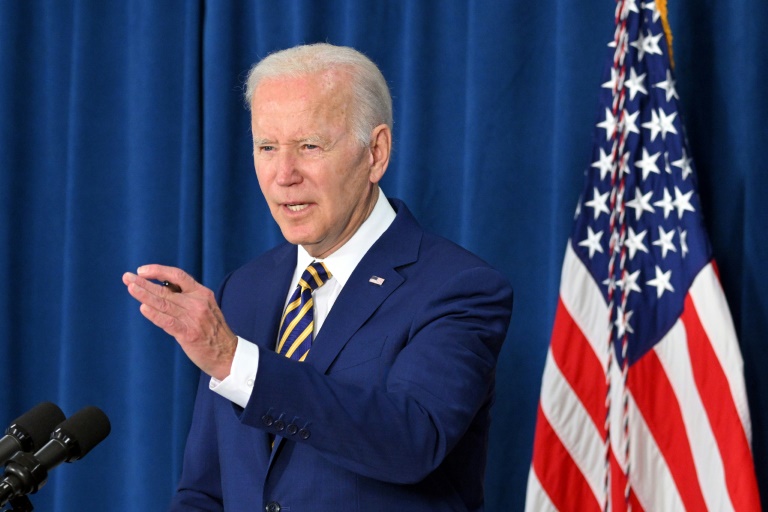
US President Joe Biden confirmed Friday he was considering a trip to Saudi Arabia, which would be a stark reversal after he called for the kingdom to be made a pariah state.

The New York Times and other US media, quoting anonymous sources, have reported that Biden would go ahead with the long-rumored Saudi stop during an upcoming overseas tour.

The reported decision came shortly after Saudi Arabia addressed two of Biden’s priorities by agreeing to a production hike in oil — which could help tame rocketing US inflation — and helping extend a truce in war-battered Yemen.

“I’m not sure whether I’m going,” Biden said when asked about reports of an imminent visit. “There is a possibility that I would be going to meet with both the Israelis and some Arab countries at the time.”

“Saudi Arabia would be included in that if I did go, but I have no direct plans at the moment,” Biden told reporters.

CNN said that Biden would meet Saudi Arabia’s de facto ruler, 36-year-old Crown Prince Mohammed bin Salman, who was accused by US intelligence of ordering the 2018 murder of dissident journalist Jamal Khashoggi.

The trip would reportedly happen around the time Biden travels to a NATO summit in Spain and Group of Seven summit in Germany later this month.

He is also widely expected to travel to Israel where, as in Saudi Arabia, he is sure to face pointed questions about slow-moving US diplomacy with the two countries’ rival, Iran.

While running for president, Biden called for Saudi leaders to be treated as “the pariah that they are” after the ultraconservative kingdom’s chummy relationship with his predecessor Donald Trump.

Trump had largely shielded Saudi Arabia from consequences after Khashoggi, a US resident who wrote critically about Crown Prince Mohammed in The Washington Post, was lured into the Saudi consulate in Istanbul where he was strangled and dismembered.

Trump’s son-in-law and top aide, Jared Kushner, had developed a close bond with the prince known by his initials “MBS,” reportedly conversing with him over WhatsApp chats.

Campaign launched to stop Musk buying Twitter

Advocacy groups on Friday launched a campaign to stop Elon Musk from buying Twitter as the proposed purchase cleared review by US antitrust authorities.

Twitter said that the deal for Musk to acquire the company was a step closer to being sealed with the passing of a deadline for it to be challenged under a US antitrust law.

The Tesla chief’s $44 billion deal to take the one-to-many messaging platform private still faces review by other regulators and must be approved by shareholders.

A “Stop The Deal” campaign launched by a coalition of nonprofit groups aims to stop the takeover.

“Elon Musk is a wolf in expensive sheep’s clothing whose Twitter takeover is motivated by ego and grievance,” Accountable Tech executive director Nicole Gill said in a release.

“If we don’t stop this deal, he’ll hand a megaphone to demagogues and extremists, who will cheer him as they incite more hate, harm, and harassment.”

The campaign will involve pressing the Securities and Exchange Commission (SEC) and other agencies to closely scrutinize everything about the takeover deal.

The coalition will also work to convince Twitter shareholders and advertisers to oppose Musk buying the San Francisco-based tech firm.

The list of more than a dozen organizations involved in the campaign includes MoveOn, SumOfUs, Media Matters for America, and the Center for Countering Digital Hate.

Musk became a major Twitter stockholder following his purchase of 73.5 million shares in early April, and less than two weeks later he launched a hostile takeover bid.

The SEC has asked Musk to explain why he didn’t disclose within a required 10-day time period his increased stake in Twitter, especially if he planned to buy the company.

“Your response should address, among other things, your recent public statements on the Twitter platform regarding Twitter, including statements questioning whether Twitter rigorously adheres to free speech principles,” regulators said in a letter.

Musk also faces a lawsuit filed by shareholders accusing him of pushing down Twitter’s stock price in order to either give himself an escape hatch from his buyout bid or room to negotiate a discount.

The suit alleges the billionaire Tesla boss tweeted and made statements intended to create doubt about the deal.

The claim seeks class action status and calls on a federal court in San Francisco to back the validity of the deal and award shareholders any damages allowed by law.

Musk is a frequent Twitter user, regularly firing off inflammatory and controversial statements about current events or other public figures with remarks that are whimsical or business-focused. 

He has sparred repeatedly with federal securities regulators, who cracked down on his social media use after a purported effort to take Tesla private in 2018 fell apart.

Estonian government in crisis as coalition crumbles

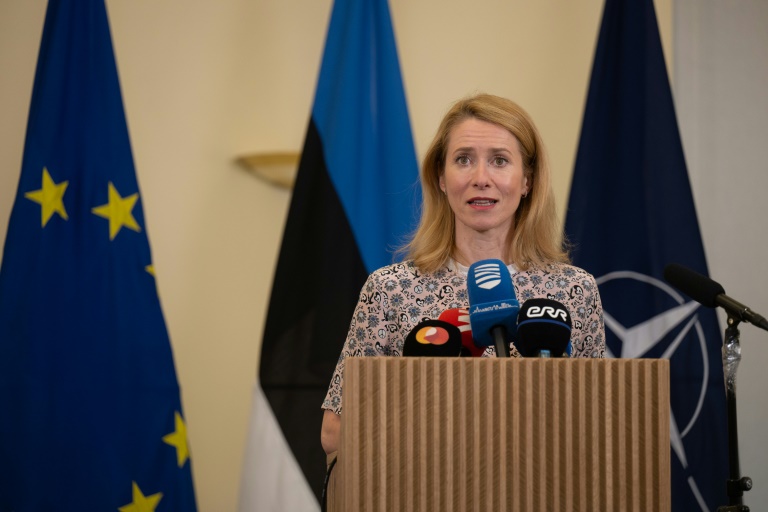
Estonian Prime Minister Kaja Kallas on Friday called for talks on a new government after her ruling coalition fell apart, urging unity because of security concerns over neighbouring Russia.

Kallas spoke to reporters after President Alar Karis accepted her request for ministers from the Centre party, including Foreign Minister Eva-Maria Liimets, to be removed from the government.

The dismissal of the Centre party follows weeks of political deadlock, including a vote on an education bill in which the coalition partner voted against the government and with the far-right EKRE opposition instead.

“It’s honest to say that this agreement is over and we’re going to form a new coalition,” Kallas said.

Kallas’s Reform party has proposed to begin coalition talks with the right-wing Isamaa conservatives and the Social Democrats.

The Centre and Reform parties have alternated in government over the nearly three decades since Estonia broke free from the crumbling Soviet Union.

Russia’s invasion of Ukraine has spooked the three Baltic states of Estonia, Latvia and Lithuania, which are all EU and NATO members.

Kallas said she hoped the conflict “would have opened the eyes of all the parliamentary parties to the importance of a common understanding of the threats for us as a country neighbouring Russia”.

In a Facebook post, she said Estonia’s future would be secured not just by increased military spending but also “the unity of our people and the unwavering will to defend our independence”.

Until a new coalition is formed, the ministers who remain in the cabinet will take over the roles of those who have been dismissed.

If talks fall through, the government would collapse and new elections would have to be held.

Harry and Meghan join royals at jubilee service for Queen Elizabeth II

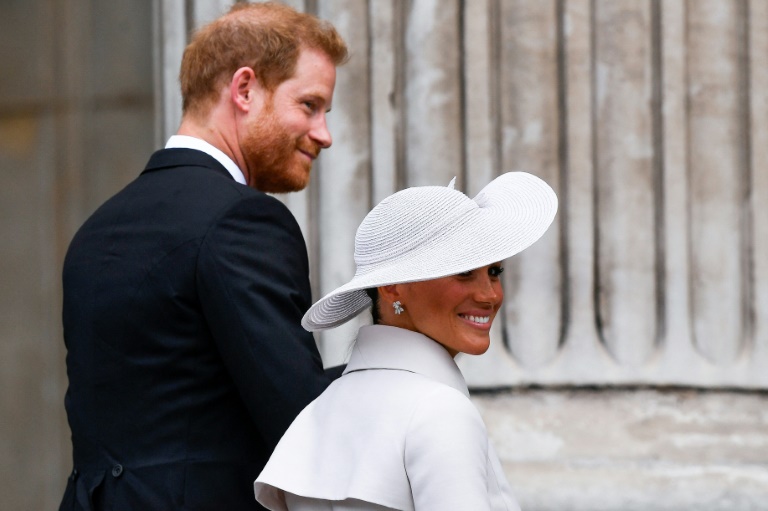
Prince Harry and his wife Meghan on Friday joined the royal family for their first public appearance in Britain in two years, at a Platinum Jubilee service for Queen Elizabeth II’s record-breaking 70 years on the throne.

But the 96-year-old monarch was a noticeable absentee, pulling out after making two public appearances on the Buckingham Palace balcony on the first of four days of celebrations on Thursday.

In the evening, she was also at Windsor Castle for a ceremony to light beacons across the country and the Commonwealth of 54 nations that she also heads.

Royal officials said the appearances had left her in “some discomfort” and on Friday confirmed she will not attend the showpiece flat-racing event The Derby at Epsom on Saturday.

The queen, a keen horseracing fan and breeder, has only missed The Derby three times in her reign, most recently in 2020 when spectators were barred due to Covid.

She has increasingly battled difficulties standing and walking since last October, when she made an unscheduled overnight stay in hospital.

A rash of cancelled engagements has stoked concerns about her health, focusing attention on the succession and the future of the monarchy without her.

There will now be questions about what other events she will attend at the celebrations, which include a pop concert on Saturday and a huge public parade on Sunday.

– ‘Staying the course’ –

At the service at St Paul’s Cathedral in central London, the Church of England’s second highest ranking cleric, Archbishop of York Stephen Cottrell, thanked the queen for “staying the course”.

“Your long reign reflects the distance of Aintree rather than the sprints of Epsom,” he told the congregation, referring to the Grand National jumps course near Liverpool.

“We are sorry that you are not here with us this morning but we are so glad you are still in the saddle and… that there is still more to come.”

Outside the domed 17th century cathedral, royal fan Stephanie Stitt, 35, said she was “a little” disappointed the queen had withdrawn.

But the events manager added: “It’s understandable because she’s 96.”

The queen’s disgraced second son Prince Andrew, sidelined from royal duties over his links to two convicted sex offenders, also missed the service after testing positive for Covid.

The queen’s heir, future king Prince Charles, 73, was again the most senior-ranking royal. He stood in at Thursday’s Trooping the Colour military parade to take the salute from troops on horseback.

The 2,000-strong congregation included some 400 health and social care staff, invited to give thanks for their work during the Covid pandemic and all five living former prime ministers.

The current incumbent, Boris Johnson, is battling a soaring cost of living crisis and damaging lockdown-breaches in Downing Street, and was booed by the crowd as he arrived. 

The Bible readings, prayers and hymns were designed to reflect on and recognise what the palace said was the queen’s “lifetime of service”.

– Cheers –

Harry and Meghan, formally known as the Duke and Duchess of Sussex, arrived mostly to cheers from the crowd outside St Paul’s Cathedral.

Former British Army captain Harry, 37, was dressed in a morning suit, complete with military medals, while Meghan, 40, wore an off-white haute-couture trench coat, with matching hat, heels and gloves.

They took their seats on the opposite side of the aisle to Harry’s brother William and his wife Kate, for the Anglican service which ended with trumpet fanfares and the national anthem “God Save the Queen” plus a rare peal of the country’s biggest bell, Great Paul.

As young boys, William and Harry provided the most enduring image of their mother Diana’s funeral in 1997, walking behind her coffin after her death in a Paris car crash.

But Harry said in an October 2019 interview that he and William, 39, were on “different paths”, apparently confirming a rift that opened up after he began dating Meghan.

The pair were last seen in public at the unveiling of a statue to their late mother princess Diana in July 2021, and at the funeral of their grandfather, the queen’s husband Prince Philip, that April.

– ‘Not about them’ –

Harry and US television actress Meghan, who is of mixed race, were once hailed as the modern face of the ancient institution after they wed in 2018.

But less than two years later they quit royal life and moved to the United States, launching a series of damaging broadsides, including of racism.

The couple have set up a charitable foundation but angered royal supporters for lifting the lid on royal life in a bombshell television interview.

A recent YouGov poll indicated nearly two-thirds (63 percent) of the British public hold a negative view of them — an all-time low.

“I think they should probably just stay in the background,” said surgeon Roger Nagy, 51, who flew in for the celebrations from Denver, Colorado.

“They can do what they want with their lives but they probably shouldn’t say things. This is about the queen, this isn’t about them,” he added.

Zelensky vows victory on 100th day of Russian invasion

Ukrainian President Volodymyr Zelensky vowed victory on the 100th day of Russia’s invasion on Friday, even as Russian troops pounded the eastern Donbas region.

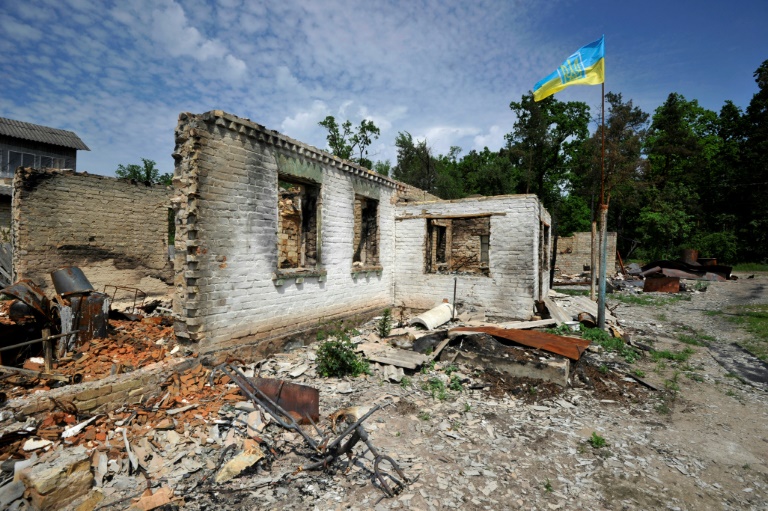
Thousands of people have been killed, millions sent fleeing and towns turned into rubble, since Russian President Vladimir Putin ordered his troops into Ukraine on February 24.

Russia’s advance has been slowed by a fierce Ukrainian resistance which repelled them from around the capital and forced Moscow to shift its aims towards capturing the east.

“Victory will be ours,” Zelensky said in a video address similar to one he posted at the onset of the war outside government buildings in Kyiv.

But Kremlin spokesman Dmitry Peskov said: “certain results have been achieved”, pointing to the “liberation” of some areas from what he called the “pro-Nazi armed forces of Ukraine”.

The West has sent ever more potent weapons to Ukraine and piled on ever more stringent sanctions, with the EU also on Friday formally adopting a ban on most Russian oil imports.

Putin’s alleged girlfriend, former gymnast Alina Kabaeva, was also added to an assets freeze and visa-ban blacklist, along with Russian army personnel suspected of war crimes.

At the same time, the United Nations said it was leading intense negotiations with Russia to allow tens of millions of tons of grain to leave Ukrainian ports to avert a global food crisis.

– Food crisis –

“I am optimistic that something could give in, something could be made,” said Amin Awad, the UN crisis coordinator for Ukraine, voicing hope that we could “see a breakthrough”.

Russian troops now occupy a fifth of Ukraine’s territory and Moscow has imposed a blockade on the country’s Black Sea ports.

The UN has warned that especially African countries, which imported more than half of their wheat consumption from Ukraine and Russia, face an “unprecedented” crisis caused by the conflict. 

Food prices in Africa have already exceeded those in the aftermath of the 2011 Arab springs and the 2008 food riots.

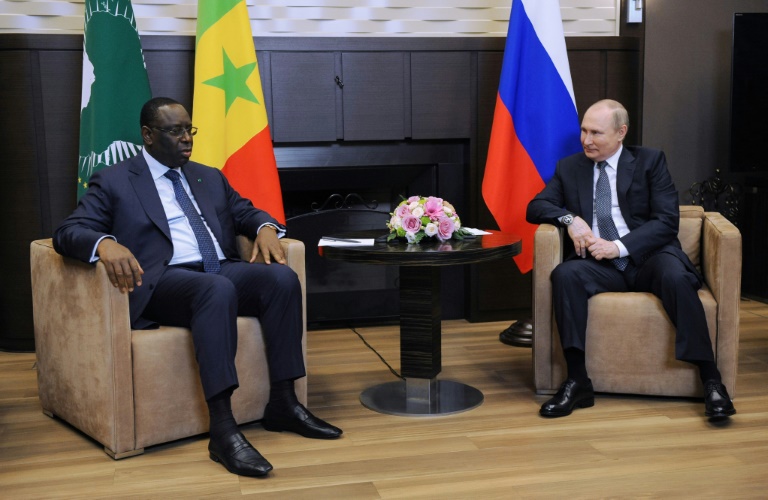
On Friday, Putin met the head of the African Union, Senegalese President Macky Sall, at his Black Sea residence in Sochi.

At the opening of those talks, Sall told Putin to “become aware” African countries “are victims” in the Ukraine conflict.

After the talks with Putin, Sall said he was “very reassured” and that the Russian leader was “committed and aware that the crisis and sanctions create serious problems for weak economies”.

Putin’s troops are now concentrating their forces in the Donbas, in the east, where some of the fiercest fighting is centred on the industrial hub city of Severodonetsk.

– Journalists wounded –

Fighting continues in Severodonetsk’s city centre, the president’s office said, adding that the invaders were “shelling civilian infrastructure and Ukrainian military”.

“For 100 days, they have been levelling everything”, Lugansk regional governor Sergiy Gaiday said on Telegram.

Two journalists working for the international news agency Reuters were lightly wounded and their driver killed on Friday while on their way to Severodonetsk, a company spokesperson said.

The agency said the group was travelling “in a vehicle provided by the Russian-backed separatists and driven by an individual assigned by the separatists”.

The French foreign ministry also on Friday said a French volunteer fighter in Ukraine had been killed in combat, following reports that the man died in artillery fire in the neighbouring Kharkiv region.

Meanwhile in areas around the capital Kyiv which Russian troops retreated from at the end of March, some residents are still in desperate need.

At an aid distribution point in Horenka, northwest of Kyiv, a tearful Hanna Viniychuk, 67, said she had come for some basic necessities after losing her home in Russian bombardment.

“I’m grateful for this help,” she said.

– ‘Nothing to come back to’ –

Ukrainian troops were still holding an industrial zone, Gaiday said, a situation reminiscent of Mariupol, where a steelworks was the south-eastern port city’s last holdout until Ukrainian troops finally surrendered in late May.

The situation in Lysychansk — Severodonetsk’s twin city, which sits just across a river — also looked increasingly dire. 

About 60 percent of infrastructure and housing had been destroyed, while internet, mobile network and gas services had been knocked out, said the city’s mayor Oleksandr Zaika.

“The shelling is getting stronger every day,” he said.

In the city of Sloviansk, about 80 kilometres (50 miles) from Severodonetsk, the mayor has urged residents to evacuate as bombing intensified and water and electricity are cut off.

Student Gulnara Evgaripova, 18, recounted heavy bombardments as she boarded a minibus to leave the city.

“The situation is getting worse, the explosions are stronger and stronger, and the bombs are falling more often,” she told AFP.

Ekaterina Perednenko, a paramedic, said: “I am scared that there will be nothing to come back to”.

burs-dt/

US continues to add jobs as wage gains slow

US job gains continued in May but at a slower pace, and rapid wage increases cooled as well, a welcome sign for US policymakers trying to ease red-hot inflation.

President Joe Biden, who has been pummeled in opinion polls as prices have spiked, said the employment data released Friday showed the world’s largest economy weathering the inflation surge while maintaining healthy growth.

“We’ve laid an economic foundation that’s historically strong,” Biden said in comments in his home state of Delaware, emphasizing the resiliency of the US economy despite rising consumer prices.

“Now we’re moving forward to a new moment where we can build on that foundation — build a future of stable, steady growth — so we can bring down inflation without sacrificing all the historic gains we’ve made.”

American employers added 390,000 jobs last month, the Labor Department reported, a sign of a slowdown in hiring but still a better-than-expected result amid the ongoing shortage of workers.

Employers have struggled to fill open positions, which has pushed wages higher, and average hourly earnings rose another ten cents compared to April, to $31.95.

The pay rate is 5.2 percent higher over the last 12 months ended in May, but that is slightly slower than the 12-month increase posted in April, the report said.

That could be good news for the Federal Reserve, which has launched an aggressive campaign to raise interest rates to combat the highest US inflation in more than 40 years.

“Average hourly earnings growth remains moderate relative to last year,” former White House economic advisor Jason Furman said on Twitter. “That’s the most important number in this release for inflation and it’s mostly reassuring.”

Ian Shepherdson of Pantheon Macroeconomics noted that the annualized rate of increase in the latest three months was just 4.3 percent — the smallest since April of last year. 

“The downshift from the 6.1 percent peak in January is clear, and the rate will slow further,” he said, which “will bring a sigh of relief at the Fed.”

The US central bank began raising the benchmark borrowing rate in March and has made clear the increases are likely to continue the rest of the year, including two big hikes in June and July that together would take the level to 1.75 percent from zero, where it sat throughout the pandemic.

Biden acknowledged that American families are anxious about sky-high prices for essential goods such as food and gasoline, which has reached a record high at the pump, and again said much of the blame lies with Russian leader Vladimir Putin and his invasion of Ukraine.

“I’ve been upfront with the American people from the outset, that there would be a cost here at home of Putin’s decision to brutally and savagely invade a sovereign nation. But as your president, I remain committed to doing everything in my power to blunt the impact on American families,” Biden said.

– Coming off the sidelines –

Fed Chair Jerome Powell has highlighted the shortage of workers as a worrisome factor in the world’s largest economy, with nearly two job openings for every unemployed person in the labor force as many people who left jobs during the pandemic have not returned.

The government data showed the participation rate edged up very slightly to 62.3 percent, a sign more workers could be coming off the sidelines to rejoin the workforce, which would ease pressure on wages.

Kathy Bostjancic of Oxford Economics said she expects more people to return to the job market, which would affect wages in the second half of the year.

But she cautioned “it will take time for labor demand and supply to realign, keeping the pace of wage growth elevated and well above the pre-pandemic rate of around 3 percent.”

The jobless rate held steady at 3.6 percent for the third consecutive month, just a tenth of a point above the pre-pandemic level in February 2020, the Labor Department said.

The unemployment rate for Asians fell to 2.4 percent from 3.1 percent, but for Blacks and Hispanics, the rate increased to 6.2 percent and 4.3 percent, respectively.

Restaurants and hotels that were decimated due to Covid-19 showed a strong recovery in May, adding 84,000 positions, the data showed. The sector is still down 1.3 million jobs compared to the pre-pandemic level.

Jobs in business services increased by 75,000, and the government added 57,000, but retail employment fell by nearly 61,000, the report said.

Train crash kills at least four near German resort

A train derailed near a Bavarian Alpine resort in southern Germany on Friday, killing at least four people and injuring dozens in a region gearing up to host the G7 summit in late June.

Several carriages of the red-coloured local train were lying on their sides on a grassy area next to a highway. 

Rescuers stood on the top-facing side of the carriages, using ladders to climb into the waggons to reach trapped passengers.

“In the serious train accident, as of 3:32 pm (1532 GMT), four people were fatally injured,” said police in a statement.

“Around 30 passengers were injured, 15 of them so seriously that they have had to be admitted to nearby hospitals,” they said, adding that a huge rescue operation was underway. 

Bavaria’s interior minister Joachim Herrmann said three of the victims were found dead, while a fourth succumbed to her injuries on the way to the hospital.

Chancellor Olaf Scholz voiced shock at the accident and said his sympathy was with families of the victims.

The accident came as rail officials were nervously watching if a new nine-euro ($10) monthly public transport ticket valid across Germany would lead to packed trains over the bank holiday weekend.

– Technical fault? –

Stefan Sonntag of Upper Bavaria’s police force said the regional train was “very crowded and many people were using it, hence the high number of injured”.

School holidays were also starting from Saturday in the two southern German regions Baden-Wuerttemberg and Bavaria, raising fears children may count among the injured.

Images carried by German television showed teenagers on the rails, apparently after having managed to climb out of the train.

The train had just left Garmisch-Partenkirchen for Munich, when the accident took place in the Burgrain district of the resort town, just past midday.

Part of the route between Munich and Garmisch-Partenkirchen has been blocked off and traffic diverted, said German rail operator Deutsche Bahn, which was not yet able to provide a reason for the accident.

But Bavaria’s transport minister Christian Bernreiter told regional broadcaster BR that the accident may have been a result of a technical fault.

“There were no third parties involved here, so one must assume that some technical reason — either on the vehicle or on the rail — was the cause,” he said.

Even as Germany launched the heavily subsidised monthly transport ticket from June for three months to provide inflation relief, Deutsche Bahn had warned that heavy investments would be needed to modernise the tracks. 

– Rescue operation –

“We have a dilemma that is hardly possible to resolve in the short-term — to grow and modernise at the same time,” said Richard Lutz, Deutsche Bahn chief on Monday.

Popular mountain resort Garmisch-Partenkirchen and the surrounding region have begun preparations to host the G7 summit of world leaders later this month.

From June 26-28, the heads of state and government including US President Joe Biden are due to meet at Schloss Elmau — 11 kilometres (seven miles) from Garmisch-Partenkirchen. 

Police and soldiers who had been deployed to prepare and secure the site ahead of the summit have now also been enlisted to help in the rescue operation.

Three helicopters from Austria’s Tyrol region were scrambled to the scene to provide first aid, according to media reports.

Germany’s deadliest rail accident happened in 1998 when a high-speed train operated by state-owned Deutsche Bahn derailed in Eschede in Lower Saxony, killing 101 people.

The most recent fatal crash took place on February 14, 2022, when one person was killed and 14 others hurt in a collision between two local trains near Munich. 

In 2017, a passenger train and a stationary freight train collided near the western city of Duesseldorf injuring 41 people.

Stock markets fall after US jobs report

Stock markets mostly fell on Friday after US government data showed employers added jobs at a better-than-expected pace last month, raising the prospect that the Federal Reserve will continue its aggressive monetary tightening.

Wall Street was just over one percent lower in morning trading, while Paris and Frankfurt both closed slightly down. London’s FTSE 100 was closed for a holiday.

Oil prices, meanwhile, pushed higher, a day after the OPEC+ group of major oil producing nations led by Saudi Arabia and Russia agreed to raise output more than expected in the wake of a European Union ban on most Russian crude.

American employers added 390,000 jobs last month, a sign of a slowdown in hiring but still above forecasts amid a shortage of workers, official figures showed.

The jobless rate held steady at 3.6 percent for the third consecutive month, according to the US Labor Department.

“Robust hiring in May pretty much guarantees the Fed will move forward with a couple half-point rate hikes at the next two meetings,” said OANDA analyst Edward Moya.

– ‘Deserting the market’ –

US indices had rallied on Thursday following a weaker-than-expected reading in a separate US private sector jobs report.

The data from payroll firm ADP sparked hopes that the US central bank may be less aggressive than initially anticipated in tightening its monetary policy.

The Fed has hiked interest rates to combat decades-high inflation but investors worry that more aggressive moves could backfire and hamper economic growth.

Friday’s non-farm payroll (NFP) figures could now reinforce the Fed’s resolve to tackle inflation.

“The doves that were cheering the terrible ADP report yesterday are deserting the market after the strong NFP read today,” Swissquote bank analyst Ipek Ozkardeskaya told AFP.

Fed Vice Chair Lael Brainard warned on Thursday that she did not yet see any reason to take a breather in the third quarter.

The European Central Bank has indicated it will raise its own rates in July for the first time in over a decade.

Tokyo’s stock market closed higher ahead of the latest US jobs report. Hong Kong and Chinese mainland indices were closed for holidays.

Among major companies, Tesla shares fell more than six percent after Reuters news agency reported that chief executive Elon Musk wanted to cut about 10 percent of jobs at the electric car firm, citing an email in which he said he has a “super bad feeling” about the economy.

Elsewhere, Brent North Sea crude, the international benchmark, rose nearly two percent, to $119.91 per barrel.

OPEC+ agreed on Thursday to ramp up output in July by 50 percent more than in previous months.

“Crude prices are consolidating after an OPEC+ hangover and a robust nonfarm payroll report that suggests the consumer is still in decent shape,” Moya said.

– Key figures at around 1550 GMT –

New York – Dow: DOWN 1.1 percent at 32,887.16 points

Frankfurt – DAX: DOWN 0.2 percent at 14,460.09 (close)  

Paris – CAC 40: DOWN 0.2 percent at 6,485.30 points (close) 

EURO STOXX 50: DOWN 0.3 percent at 3,783.66 points 

London – FTSE 100: Closed for a holiday

Tokyo – Nikkei 225: UP 1.3 percent at 27,761.57 (close)

Hong Kong – Hang Seng Index: Closed for a holiday

Shanghai – Composite: Closed for a holiday

Brent North Sea crude: UP 1.96 percent at $119.91 per barrel

West Texas Intermediate: UP 2.1 percent at $119.28 per barrel

Euro/dollar: DOWN at $1.0716 from $1.0753 on Thursday

Pound/dollar: DOWN at $1.2501 from $1.2568

Euro/pound: UP at 85.70 pence from 85.49 pence

Dollar/yen: UP at 130.88 yen from 129.85 yen

AU head says 'reassured' after talks with Putin on food shortages

African Union head Macky Sall said on Friday he was “reassured” after talks in Russia with President Vladimir Putin on food shortages caused by Moscow’s military campaign in Ukraine.

Putin hosted the Senegalese president, who chairs the African Union, at his Black Sea residence in Sochi on the 100th day of Moscow’s offensive in Ukraine. Global food shortages and grain supplies stuck in Ukrainian ports were high on the agenda.

“I found Vladimir Putin committed and aware that the crisis and sanctions create serious problems for weak economies, such as African economies,” Sall told journalists, adding that he was leaving Russia “very reassured and very happy with our exchanges”. 

Ahead of the talks, which lasted three hours, Sall asked Putin to “become aware that our countries, even if they are far from the theatre (of action), are victims on an economic level” of the conflict. 

He said it was important to work together so that “everything that concerns food, grain, fertiliser is actually outside” Western sanctions imposed on Moscow after Putin sent troops to Ukraine on February 24.

In his remarks in front of reporters before the talks, Putin did not mention grain supplies but said Russia was “always on Africa’s side” and was now keen to ramp up cooperation.

“At the new stage of development, we place great importance on our relations with African countries, and I must say this has had a certain positive result,” Putin added.

Putin did not make a statement following the talks. 

Washington and Brussels have imposed unprecedented sanctions against Moscow, pushing Putin to seek new markets and strengthen ties with countries in Africa and Asia.

The Kremlin said the two leaders discussed expanding “political dialogue” between Russia and the African Union as well as economic and humanitarian cooperation.

– ‘Exhaustive explanations’ –

Speaking to reporters earlier on Friday, Putin’s spokesman said the Russian leader would explain to Sall “the real state of affairs” concerning grain supplies stuck in Ukrainian ports.

“No-one is blocking these ports, at least not from the Russian side,” Kremlin spokesman Dmitry Peskov said.

Putin has said Moscow is ready to look for ways to ship grain stuck at Ukrainian ports but has demanded the West lift sanctions.

Russian Foreign Minister Sergei Lavrov is expected in Turkey next Wednesday for talks on creating a “security corridor” to unblock grain exports from Ukraine.

Moscow’s military campaign in Ukraine and a barrage of international sanctions on Russia have disrupted supplies of fertiliser, wheat and other commodities from both countries, pushing up prices for food and fuel.

Cereal prices in Africa, the world’s poorest continent, have surged because of the slump in exports from Ukraine, sharpening the impact of conflict and climate change and sparking fears of social unrest.

The UN has said Africa faces an “unprecedented” crisis caused by the conflict. 

On Thursday, landlocked Chad in central Africa declared a “food emergency”, urging the international community to help. 

Ships loaded with grain remain blocked in Ukraine, which before February was a leading exporter of corn and wheat and alone accounted for 50 percent of world trade in sunflower seeds and oil. 

Navigation in the Black Sea has also been hampered by mines placed by both Russian and Ukrainian forces.

In 2019, Putin hosted dozens of African leaders in Sochi in a bid to reassert Russia’s influence on the continent.

Though never a colonial power in Africa, Moscow was a crucial player on the continent in the Soviet era, backing independence movements and training a generation of African leaders.

Russia’s ties with Africa declined with the collapse of the Soviet Union in 1991 and in recent years China has emerged as a key foreign power on the continent.

Close Bitnami banner
Bitnami