World

Biden confirms 'possibility' of Saudi Arabia trip

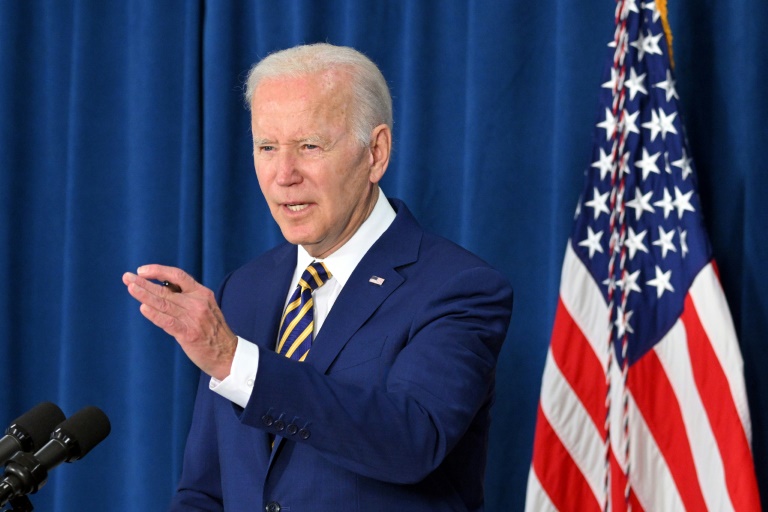
US President Joe Biden confirmed Friday he was considering a trip to Saudi Arabia, which would be a stark reversal after he called for the kingdom to be made a pariah state.

The New York Times and other US media, quoting anonymous sources, have reported that Biden would go ahead with the long-rumored Saudi stop during an upcoming overseas tour.

The reported decision came shortly after Saudi Arabia addressed two of Biden’s priorities by agreeing to a production hike in oil — which could help tame rocketing US inflation — and helping extend a truce in war-battered Yemen.

“I’m not sure when I’m going,” Biden said when asked about reports of an imminent visit. “There is a possibility that I would be going to meet with both the Israelis and some Arab countries at the time.”

“Saudi Arabia would be included in that if I did go, but I have no direct plans at the moment,” Biden told reporters.

CNN said that Biden would meet Saudi Arabia’s de facto ruler, 36-year-old Crown Prince Mohammed bin Salman, who was accused by US intelligence of ordering the 2018 murder of dissident journalist Jamal Khashoggi.

The trip would reportedly happen around the time Biden travels to a NATO summit in Spain and Group of Seven summit in Germany later this month.

He is also widely expected to travel to Israel where, as in Saudi Arabia, he is sure to face pointed questions about slow-moving US diplomacy with the two countries’ rival, Iran.

While running for president, Biden called for Saudi leaders to be treated as “the pariah that they are” after the ultraconservative kingdom’s chummy relationship with his predecessor Donald Trump.

Trump had largely shielded Saudi Arabia from consequences after Khashoggi, a US resident who wrote critically about Crown Prince Mohammed in The Washington Post, was lured into the Saudi consulate in Istanbul where he was strangled and dismembered.

Trump’s son-in-law and top aide, Jared Kushner, had developed a close bond with the prince known by his initials “MBS,” reportedly conversing with him over WhatsApp chats.
Police close Hong Kong's Victoria Park on eve of Tiananmen anniversary

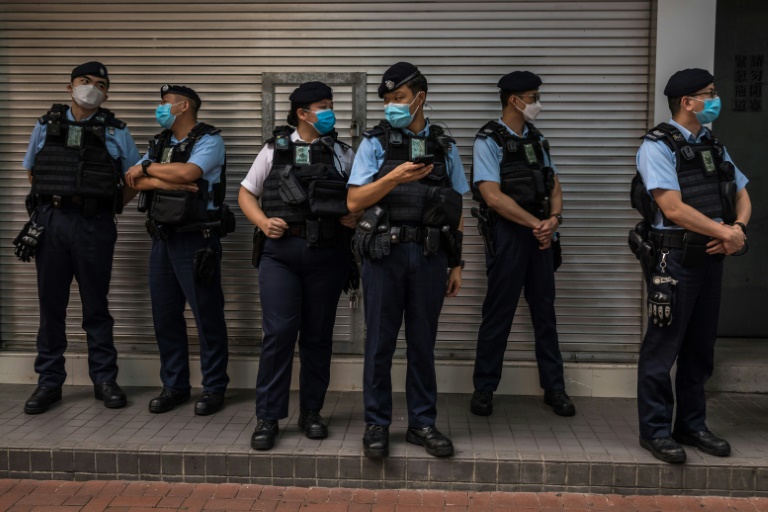
Hong Kong police on Friday closed off large parts of Victoria Park, once the site of packed annual candlelight vigils to commemorate China’s Tiananmen crackdown, on the eve of the event’s 33rd anniversary.

In the past, huge crowds would routinely gather in the large public space to pay tribute to victims of the Chinese government’s 1989 clampdown, when soldiers brutally quashed peaceful demonstrations demanding political and economic reform. 

The late-night closure comes a day after authorities warned people that going to the park on the anniversary — even alone — could put them at risk of breaking the law. 

A heavy police presence was visible in the area on Friday evening. 

In the nearby bustling Causeway Bay shopping district, a performance artist who whittled a potato into the shape of a candle and held a lighter to it was surrounded by more than a dozen officers and taken away in a police van, an AFP reporter saw. 

Public commemorations of Tiananmen are all but forbidden in mainland China. 

Semi-autonomous Hong Kong had been the one place in the country where large-scale remembrance was still tolerated — until Beijing imposed a wide-reaching national security law two years ago, in reaction to citywide pro-democracy protests. 

The imposition of the security law has swiftly driven Tiananmen commemoration underground.

The artist who was taken away by police, Chan Mei-tung, was one of three who were giving street performances that obliquely referenced Tiananmen near one of the busiest intersections in the city on Friday evening. 

One artist invited passers-by to complete a “math challenge” where the solution came to 8,964, a reference to the date June 4, 1989.

Another artist, Sanmu Chan, presented an abstract piece which included a candle frozen within a small block of ice. 

The artists were closely watched by the police, who broadcast warnings that onlookers might be at risk of breaching social distancing laws.  

Police did not immediately respond to a request for comment regarding the detention of the artist at the scene.

Earlier on Friday, authorities said they had arrested a 59-year-old security guard on suspicion of making threats on social media about killing officers at commemoration events.

Police said the investigation was ongoing.

– ‘Unauthorised assembly’ –

Hong Kong authorities said Friday that most gathering spaces in Victoria Park — including the football pitches used for the candlelight vigil in previous years — will be closed between Friday night and the early hours of Sunday.

The decision was made “in order to prevent any unauthorised assemblies in the park which affect public safety and public order, and the chance of a virus spread due to such gatherings”, a spokesperson said.

The vigil had been banned in 2020 and 2021 as well, with police citing a ban on gatherings under anti-coronavirus rules.

All major organisers of Hong Kong’s Tiananmen events have suspended their efforts this year, but police claimed there were still calls for people to join gatherings at the park and in surrounding areas. 

On Friday night, Hong Kong police warned the public that “participating in an unauthorised assembly” risked breaking the law, and carried a maximum penalty of five years’ imprisonment.

The Hong Kong Alliance, one of the main organisers of the Victoria Park vigil, disbanded last September and its leaders are being prosecuted for subversion.

Jailed former alliance leader Lee Cheuk-yan said in a letter that he planned to fast on June 4, and that he would light a match and sing commemorative songs in his jail cell. 

“I believe that Hong Kongers will join me in commemorating June 4 as a matter of sincere belief, using their own ways to express their remembrance and their commitment to democracy,” Lee wrote in a letter published online on Friday.

In the neighbouring city of Macau, former opposition lawmaker Au Kam-san said democrats will not hold a Tiananmen vigil this year due to the “worsening environment in Macau politics”, adding that a historical exhibition will also be cancelled.

Au said he will light a candle on June 4 and broadcast it live on Facebook as a sign of his perseverance.

Germany funds army update to face Russia threat

The German parliament voted on Friday for a constitutional amendment to create a 100-billion-euro ($107-billion) fund beefing up its military defences in the face of an emboldened Russia.

Deputies of the Bundestag lower house approved the measure 567 votes to 96 with 20 abstentions after the centre-left-led government and the conservative opposition reached a deal on Sunday.

The watershed move answers years of criticism from close allies that Berlin was failing to achieve NATO’s target of spending two percent of GDP on defence. 

The Bundesrat upper house must still approve the measure.

“This is the moment in which Germany says we are there when Europe needs us,” Foreign Minister Annalena Baerbock of the Green party told MPs. 

Three days after the Russian invasion of Ukraine in February, Chancellor Olaf Scholz pledged a special budget of 100 billion euros to rearm the German military and modernise its outdated equipment over the next few years.

But critics have since accused Scholz of timidity in his support for Kyiv and failing to take enough concrete action in terms of arms deliveries.

The agreement will allow Berlin to achieve NATO’s target of spending 2.0 percent of GDP on defence “on average over several years”.

Russia blasted the move on Friday, accusing Germany of “remilitarising” and using language that summoned up its Nazi past.

“We take that as another confirmation that Berlin is on the path to a new re-militarisation,” said Russian foreign ministry spokeswoman Maria Zakharova. “We know only too well how that can end.” 

It appeared to be a reference to Nazi Germany’s re-armament programme in the 1930s under Adolf Hitler that plunged the world into war.

– ‘Largest army in Europe’ –

The bulk of the German investment — 40.9 billion euros — will go toward the air force with the acquisition of 35 US-made F-35 fighter jets, 15 Eurofighter jets and 60 Chinook transport helicopters. 

Nearly 20 billion euros will be earmarked for the navy, mainly for new corvettes, frigates and a 212-model submarine.

More than 16 billion euros will beef up the army’s holdings with Marder transport tanks and Fuchs armoured troop carriers.

Scholz said this week that the agreement would “considerably strengthen” the security of Germany and its NATO allies.

“Germany will soon have the largest conventional army in Europe within NATO,” he told local media.

The exceptional fund will be financed by additional debt.

For that it was necessary to circumvent the “debt brake” rule enshrined in the constitution, which caps government borrowing.

This was why the government needed the support of the conservative opposition to muster the two-thirds majority in parliament needed to pass the constitutional amendment.

Since the end of the Cold War, Germany has significantly reduced the military from around 500,000 in 1990 to just 200,000 today.

Fewer than 30 percent of German naval ships were “fully operational” according to a report published December on the state of the military. Many of the country’s fighter aircraft are unfit to fly.

War in Ukraine: Latest developments

Here are the latest developments in the war in Ukraine.

– ‘Victory will be ours’: Zelensky’ –

President Volodymyr Zelensky vows that UKraine will prevail over Russian forces in a video marking 100 days since Moscow invaded its neighbour.

“Victory will be ours,” a defiant Zelensky says in a video together with Prime Minister Denys Shmyhal and presidential advisor Mykhaylo Podolyak at the spot in Kyiv where they addressed the nation at the start of the war and promised to stay to lead the resistance.

The Ukrainian leader says Russia now controls about one-fifth of Ukraine, including the Crimean peninsula and parts of the Donbas which were seized in 2014.

– ‘Many settlements liberated’: Kremlin –

Kremlin spokesman Dmitry Peskov says “many settlements have been liberated from the pro-Nazi armed forces of Ukraine and directly from nationalist elements” over the past 100 days.

“The opportunity has been provided for people to start establishing a peaceful life,” Peskov tells reporters.

Russia claims it sent its forces into Ukraine to defend residents of two self-proclaimed Russian-backed statelets in the eastern Donbas region, the Donetsk and Lugansk People’s Republics.

“In terms of ensuring their protection, measures are being taken and certain results have been achieved,” Peskov says.

– UN sees ‘no winner’ – 

The UN says there is “no winner” in the worst conflict in Europe in decades.

Nearly 14 million Ukrainians have been forced to flee their homes since the Russian invasion on February 24, the majority women and children, according to UN estimates.

“This war has and will have no winner. Rather, we have witnessed for 100 days what is lost: lives, homes, jobs and prospects,” UN Assistant Secretary-General Amin Awad says in a statement.

– Fierce fighting in eastern city –

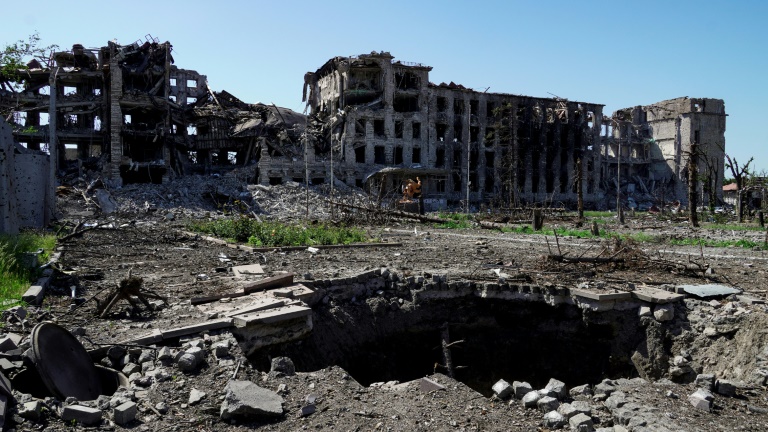
Ukrainian forces continue to battle Russian forces for the last pockets of the key eastern city of Severodonetsk.

The region’s governor says Russian forces hold 80 percent of the city but that Ukrainian forces are still holding an industrial zone, a situation reminiscent of the southeastern city of Mariupol, where troops held out for weeks at a steelworks before finally surrendering in late May.

Gaining control of Severodonetsk would give Russia de-facto control of Lugansk, one of two regions, along with Donetsk, that make up the Donbas.

– AU leader meets Putin on food shortages – 

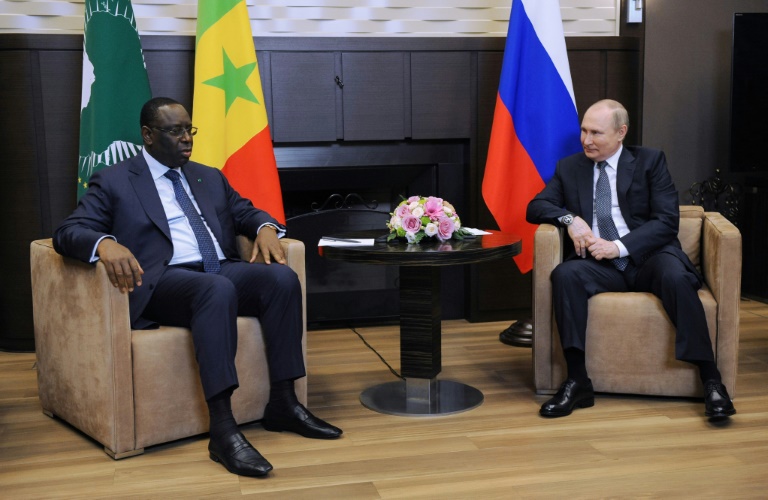
African Union leader and Senegalese President Macky Sall holds talks with President Vladimir Putin in the Black Sea resort of Sochi on the food shortages caused by the conflict, which are driving hunger in parts of Africa.

Both Ukraine and Russia are major suppliers of wheat and other cereals to Africa, while Russia, which is under export-limiting Western sanctions, is a key producer of fertiliser.

He tells Putin that Africans are “victims” of the war and calls for “everything that concerns food, grain, fertiliser” to be exempted from Western sanctions on Russia.

– EU sanctions alleged Putin girlfriend –

The EU adds President Vladimir Putin’s alleged girlfriend, former gymnast Alina Kabaeva, to an assets freeze and visa ban blacklist as part of a sixth wave of sanctions that include a ban on most Russian oil imports.

Britain was the first country to put Kabaeva on its sanctions list last month.

– Russian lobbyists barred from EU parliament –

The European Parliament bans Russian lobbyists from its premises to prevent them spreading what it calls “propaganda” about Russia’s war in Ukraine.

“Effective immediately, Russian company representatives are no longer allowed to enter European Parliament premises,” parliament speaker Roberta Metsola says on Twitter.

burs-cb/bp

Myanmar junta says will carry out first judicial executions in decades

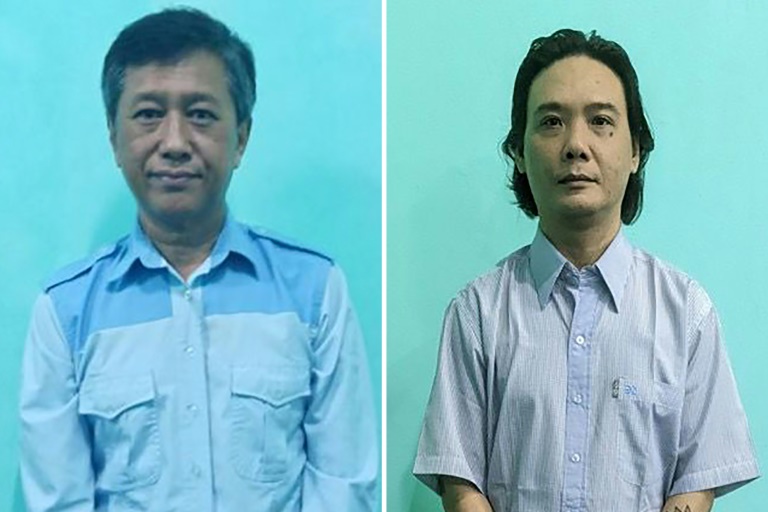
Myanmar’s junta will execute a former lawmaker from Aung San Suu Kyi’s party and a prominent democracy activist, both of whom were convicted of terrorism, in the country’s first judicial executions since 1990, a spokesman told AFP on Friday.

Four people, including former MP Phyo Zeya Thaw and democracy activist Ko Jimmy, “who were sentenced to death will be hanged according to prison procedures”, Zaw Min Tun told AFP. 

The junta has sentenced dozens of anti-coup activists to death as part of its crackdown on dissent after seizing power last year, but Myanmar has not carried out an execution for decades.

Phyo Zeya Thaw, a former lawmaker from Suu Kyi’s National League for Democracy who was arrested in November, was sentenced to death in January for offences under anti-terrorism laws.

Prominent democracy activist Kyaw Min Yu — better known as “Jimmy” — received the same sentence from the military tribunal.

“They continued the legal process of appealing and sending a request letter for the amendment of the sentence,” said junta spokesman Zaw Min Tun. 

“But the court rejected their appeal and request. There is no other step after that,” he added.

Two other men, who were convicted and sentenced to death for killing a woman they alleged was an informer for the junta in Yangon, will also be executed, the spokesman said.

No date has been set for the executions, Zaw Min Tun said.

A spokesperson for Amnesty International called on the junta to “immediately drop such plans and for the international community to step up its efforts to intervene”.

– ‘Fuel to the fire’ –

The junta’s decision to “move towards executing two prominent political leaders will be like pouring gasoline on the fire of popular anti-military resistance in the country”, said Phil Robertson, a deputy director at Human Rights Watch.

“Such a move will also lead to global condemnation and cement the junta’s reputation as among the worst of the worst human rights abusers in Asia.”

Phyo Zeya Thaw had been accused of orchestrating several attacks on regime forces, including a gun attack on a commuter train in Yangon in August that killed five policemen. 

A hip-hop pioneer whose subversive rhymes irked the previous junta, he was jailed in 2008 for membership of an illegal organisation and possession of foreign currency. 

He was elected to parliament representing Aung San Suu Kyi’s NLD in the 2015 elections, which ushered in a transition to civilian rule.

The country’s military alleged voter fraud during elections in 2020 — which the NLD won by a landslide — as justification for its coup on February 1 last year. 

Suu Kyi has been detained ever since and faces a slew of charges in a junta court that could see her face a prison sentence of more than 150 years. 

Kyaw Min Yu, who rose to prominence during Myanmar’s 1988 student uprising against the country’s previous military regime, was arrested in an overnight raid in October. 

The junta issued an arrest warrant for him last year, alleging he had incited unrest with his social media posts.

Split on drug culture, Mexican ballads flourish in digital age

With songs chronicling the lives of drug traffickers or railing against violence, a new generation of Mexican ballad singers are enjoying success and skirting censorship through digital platforms.

Abraham Vazquez, 22, and Vivir Quintana, 32, are two of the new faces of the “corrido” genre that emerged during the Mexican revolution of 1910-1917 to tell an alternative story to the official narrative.

Vazquez, originally from the northern state of Chihuahua, boasts 1.1 million listeners monthly on Spotify.

His rap-infused “narcocorrido” — a ballad about drug traffickers — “El de las dos pistolas” (The one with the two guns) has been played 52.8 million times on the digital music platform.

The video for the song exalts the world of gangsters with wads of dollars, guns, and women in a swimming pool. It has been viewed 27.7 million times on YouTube.

Fed up with her students listening to such songs, Quintana, a teacher from the northern state of Coahuila, turned to “anti-narcocorrido,” which emerged five years ago, to denounce gender and criminal violence.

She recently released “El corrido de Milo Vela” (The Ballad of Milo Vela) — a tribute to journalist Miguel Angel Lopez, murdered in 2011 along with his wife and son in the eastern state of Veracruz.

“It was to replace drug traffickers with those who really defend the country, those who defend the truth… I think we’re at a very critical moment,” she told AFP, referring to the murders of 11 Mexican reporters this year alone.

Another of Quintana’s songs, “Cancion sin Miedo” (Song without Fear), has become a feminist anthem.

Accused of being apologists for organized crime, narcocorrido singers have seen their songs banned in the states of Sinaloa, Baja California and Chihuahua, where punishments range from 36 hours’ detention to fines of $20,000.

Even well-known bands have been punished, including norteno acts Los Tigres del Norte, who were fined in Chihuahua in 2012 and 2017, and Los Tucanes, who have been banned in Tijuana since 2008.

– ‘Difficult to control’ –

The genre has flourished on digital platforms, which facilitate production, access and interaction between artists and audiences, researcher Juan Antonio Fernandez said.

“With the platforms, it’s very difficult to control it because unfortunately young people see drug trafficking as an aspirational activity, where they can get easy money,” he told AFP.

The genre’s popularity is also helped by the rags-to-riches stories the songs tell.

“The imaginary drug trafficker goes from being an individual from a rural background — growing drugs — to be a more urbanized drug trafficker, more connected with today’s youth,” Fernandez said.

In 2019, during the Coachella festival in California, hundreds of boys danced with Los Tucanes wearing shirts with the image of Joaquin “Chapo” Guzman, the notorious drug lord imprisoned in the United States.

In the government’s view, the narcocorridos — three of whose performers have been murdered since 2006 — promote gang culture and represent a “social risk” that must be tackled, Fernandez said.

But Teodoro Bello, a veteran composer of famous Los Tigres del Norte songs, rejects the label as he considers it stigmatizing.

For him, there is only the corrido genre.

His 1997 song “Jefe de Jefes” (Boss of bosses) performed by Los Tigres del Norte was thought to have been inspired by Miguel Angel Felix Gallardo, a major cartel boss in the 1980s.

But, Bello told AFP, “‘the boss of bosses’ is the one who is the best in his profession: a doctor, a lawyer or even a journalist.”

Despite the flirtation with crime, even President Andres Manuel Lopez Obrador plays songs by Los Tigres del Norte at his daily news conference. He says one reason is to refute comments by Texas Governor Greg Abbott on immigration.

Tesla shares fall following report of possible layoffs

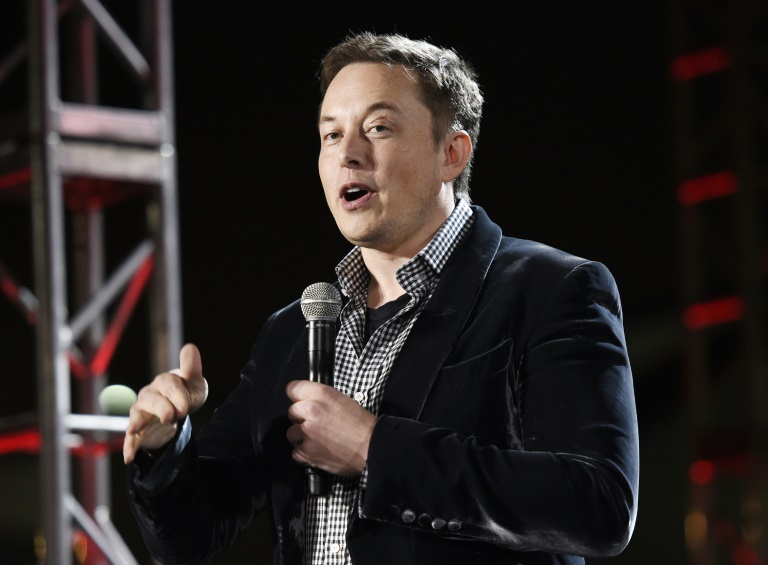
Tesla shares fell early Friday following a report that chief executive Elon Musk wants to trim headcount due to the uncertain economic outlook.

Musk said in an email to executives that he has a “super bad feeling” about the economy, according to a report from Reuters, adding that the electric automaker should pause all hiring and cut about 10 percent of jobs.

Tesla did not immediately respond to a query from AFP. 

The statement is the latest from a business leader warning about a slowdown as the Federal Reserve moves aggressively to tighten monetary policy in response to inflation, stoking recession fears.

Tesla had a little more than 100,000 employees at the end of 2021.

CFRA Research analyst Garrett Nelson called the timing of Musk’s email “somewhat odd” considering that Tesla is ramping up new factories in Austin, Texas and Germany.

“But we think Musk wants to get ahead of the curve in terms of a slowdown across the highly cyclical auto industry,” said Nelson in a note, adding that most of the job cuts could come in Shanghai, where China’s zero-tolerance Covid-19 policy has weighed on production.

Shares of Tesla fell 5.6 percent to $730.49 in early trading.

UN in 'complex' talks with Russia to unblock Ukraine ports

The UN said Friday it is leading intense negotiations with Russia to unblock Ukrainian ports and release tens of millions of tonnes of grain to avert a global food crisis.

One hundred days into Russia’s invasion of Ukraine, the UN crisis coordinator for the war-torn country, Amin Awad, stressed the high stakes of the “very, very complex” talks to try and end the impasse.

Ships loaded with grain remain blocked in Ukraine, which before February was considered a global breadbasket as a leading exporter of corn, wheat and sunflower seeds, feeding 400 million people around the world last year.

The talks are being led by UN aid chief Martin Griffith and Rebeca Gynspan, who heads the UN trade and development agency, Awad said via video link to reporters in Geneva.

The UN has warned that especially African countries, which imported more than half of their wheat consumption from Ukraine and Russia, face an “unprecedented” crisis caused by the conflict. 

Food prices in Africa have already exceeded those in the aftermath of the 2011 Arab springs and the 2008 food riots.

Putin has said that Moscow is ready to look for ways to ship grain stuck in Ukrainian ports but has demanded the West lift sanctions. 

But Awad highlighted that pressure is also being put on Russia from some of its allies feeling the pinch.

“There is a lot of shuttling between Moscow and other countries that have concerns,” he said.

On Friday, Russian President Vladimir Putin met the head of the African Union, Senegalese President Macky Sall, at his Black Sea residence in Sochi.

At the opening of those talks, Sall told Putin to “become aware” that African countries “are victims” in the Ukraine conflict.

– ‘Silver bullet’ –

Awad highlighted that Russia “has alliances in the South”, stressing that some of the impacted countries could help sway the situation.

“I am optimistic that something could give in, something could be made,” he said, voicing hope that we could “see a breakthrough”.

But, he stressed, the negotiations are “very complex” and “happening on many tracks.”

The UN’s World Food Programme said unblocking the ports would have a huge impact.

“The Black Sea ports are as it were the silver bullet when it comes to avoiding global famines, global hunger,” WFP’s emergency coordinator in Ukraine Matthew Hollingworth told reporters.

He said while efforts are underway to reopen the ports, the UN and others are also looking at other options for getting the desperately-needed grain out of Ukraine, including by truck, train or through ports in neighbouring countries.

Such options would however mean “dribbling out 1-1.5 million tonnes,” he said, highlighting that while that may sound like a lot, “it is nothing when this country was pushing five million tonnes out a month prior to this war.”

Awad agreed, pointing to a range of challenges with moving grain by truck or rail.

“It does have to be really be a maritime movement to support 50 to 60 million tonnes of food out,” he said.

Train crash kills at least three near German resort

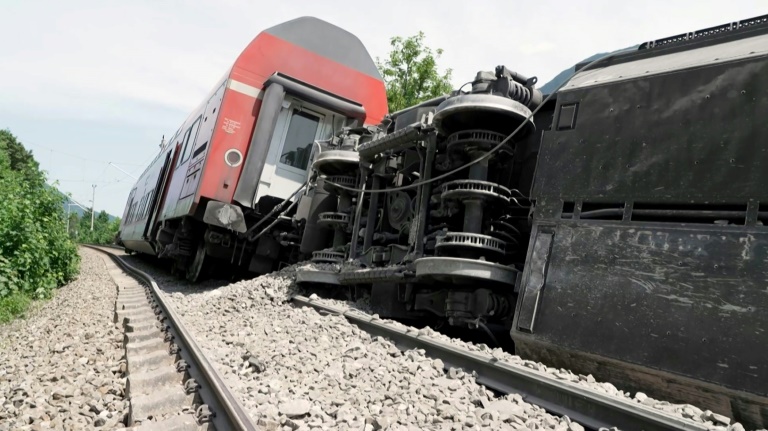
At least three people were killed and several others injured on Friday as a train derailed near a Bavarian Alpine resort in southern Germany, a region gearing up to host the G7 summit in late June.

Several carriages of the red-coloured regional train were lying on their sides on a grassy area next to a highway. 

Rescuers were standing on the top facing side of the carriages, using ladders to climb into the waggons to reach trapped passengers.

“In the serious train accident, as of 1:55 pm (1155 GMT), three people were fatally injured and an undetermined number of other train passengers hurt,” said police in a statement, adding that a huge rescue operation was underway. 

A spokesman from local authorities of Garmisch-Partenkirchen said 60 people were injured, including 16 seriously, although police were unable to confirm the figures.

The accident came as rail officials were nervously watching if a new nine-euro monthly public transport ticket valid across Germany would lead to overcrowded trains over the bank holiday weekend.

Stefan Sonntag of Upper Bavaria’s police force said the regional train was “very crowded and many people were using it, hence the high number of injured”.

School holidays were also starting from Saturday in the two southern German regions Baden-Wuerttemberg and Bavaria, raising fears children may count among the train passengers. But Sonntag said he did not have information on that.

The train had just left Garmisch-Partenkirchen for Munich, when the accident took place in the Burgrain district of the resort town.

Part of the route between Munich and Garmisch-Partenkirchen has been blocked off and traffic diverted, German rail operator Deutsche Bahn said.

– Rescue operation –

Popular mountain resort Garmisch-Partenkirchen and the surrounding regions are gearing up to host the G7 summit of world leaders later this month.

From June 26-28, the heads of state and government including US President Joe Biden are due to meet at Schloss Elmau — 11 kilometres (seven miles) from Garmisch-Partenkirchen. 

Police and soldiers who had been deployed to prepare and secure the site ahead of the summit have now also been diverted to help in the rescue operation.

Three helicopters from Austria’s Tyrol region have been scrambled to the scene to provide first aid, according to media reports.

Germany’s deadliest rail accident happened in 1998 when a high-speed train operated by state-owned Deutsche Bahn derailed in Eschede in Lower Saxony, killing 101 people.

The most recent fatal crash took place on February 14, 2022, when one person was killed and 14 others hurt in a collision between two local trains near  Munich. 

In 2017, a  passenger train and a stationary freight train collided near the western city of Duesseldorf injuring 41 people.

AU head tells Putin Africans 'victims' of Ukraine conflict

African Union head Macky Sall on Friday urged Russian President Vladimir Putin to take into account the suffering in African countries from food shortages caused by Moscow’s military campaign in Ukraine.

Putin hosted Senegalese President Macky Sall, who chairs the African Union, at his Black Sea residence in Sochi on the 100th day of Moscow’s offensive in Ukraine, with global food shortages and grain supplies stuck in Ukrainian ports high on the agenda.

Sall asked Putin to “become aware that our countries, even if they are far from the theatre (of action), are victims on an economic level” of the conflict. 

He said it was important to work together so that “everything that concerns food, grain, fertiliser is actually outside” of Western sanctions imposed on Moscow after Putin sent troops to Ukraine on February 24.

Sall also said that due to Western sanctions “we no longer have access to grain from Russia and especially fertiliser” that is crucial for Africa’s “already deficient” agriculture. 

“That really creates serious threats to the food security of the continent,” Sall added.

In his remarks in front of reporters, Putin did not mention grain supplies but said Russia was “always on Africa’s side” and was now keen to ramp up cooperation.

“At the new stage of development, we place great importance on our relations with African countries, and I must say this has had a certain positive result,” Putin added.

“Our turnover is growing,” he added. “This year, even in the first months of this year, it has grown by more than 34 percent.”

Washington and Brussels have imposed unprecedented sanctions against Moscow, pushing Putin to seek new markets and strengthen ties with countries in Africa and Asia.

– ‘Exhaustive explanations’ –

The Kremlin said the two leaders discussed expanding “political dialogue” between Russia and the African Union as well as economic and humanitarian cooperation.

Speaking to reporters earlier Friday, Putin’s spokesman said Putin would explain the situation with grain supplies stuck in Ukrainian ports to Sall.

“With a high degree of probability and confidence, I can assume that the president will give exhaustive explanations of his vision of the situation with Ukrainian grain,” Kremlin spokesman Dmitry Peskov said.

He said Putin will explain “the real state of affairs.” 

“No one is blocking these ports, at least not from the Russian side,” Peskov added.

Putin has said Moscow is ready to look for ways to ship grain blocked in Ukrainian ports but has demanded the West lift sanctions.

Moscow’s military campaign in Ukraine and a barrage of international sanctions on Russia have disrupted supplies of fertiliser, wheat and other commodities from both countries, pushing up prices for food and fuel, especially in developing nations.

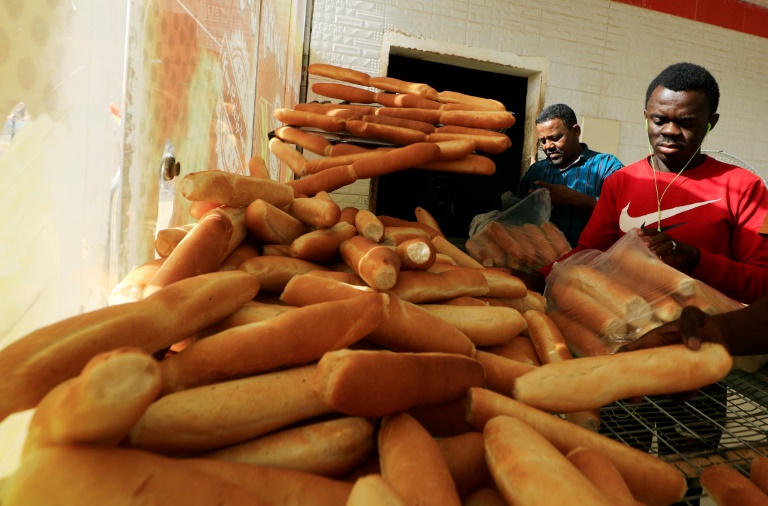
Cereal prices in Africa, the world’s poorest continent, have surged because of the slump in exports from Ukraine, sharpening the impact of conflict and climate change and sparking fears of social unrest.

Ships loaded with grain remain blocked in Ukraine, which before February was a leading exporter of corn and wheat and alone accounted for 50 percent of world trade in sunflower seeds and oil. 

The UN has said Africa faces an “unprecedented” crisis caused by the conflict. 

In 2019, Putin hosted dozens of African leaders in Sochi in a bid to reassert Russia’s influence on the continent.

Though never a colonial power in Africa, Moscow was a crucial player on the continent in the Soviet era, backing independence movements and training a generation of African leaders.

Russia’s ties with Africa declined with the collapse of the Soviet Union in 1991 and, in recent years, China has emerged as a key foreign power on the continent.

Close Bitnami banner
Bitnami