World

EU bans most Russian oil, sanctions alleged Putin girlfriend

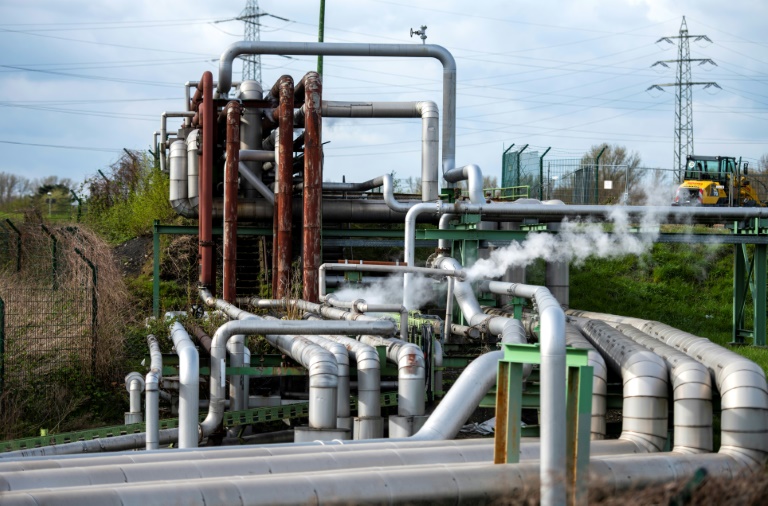
The EU formally adopted a ban on most Russian oil imports on Friday, hitting Moscow with its toughest sanctions over the war on Ukraine after weeks of wrangling with Hungary.

The sanctions — the sixth wave imposed by the 27-nation bloc since the Kremlin launched the invasion in February — include cutting Russia’s biggest bank Sberbank from the global SWIFT messaging system, the text published in the EU’s official journal said.  

President Vladimir Putin’s alleged girlfriend, former gymnast Alina Kabaeva, was also added to an assets freeze and visa ban blacklist, along with Russian army personnel suspected of war crimes in the Ukrainian town of Bucha.

EU leaders agreed to target Russia’s key oil exports on Monday after weeks of resistance from Hungary, ceding to Prime Minister Viktor Orban’s demand to exempt Russian oil delivered by pipeline. 

The sanctions cover the two-thirds of Russian exports currently being brought in by ship and come into full force in six months for crude oil and eight months for refined products.

Germany and Poland have further committed to stop receiving deliveries by pipeline — meaning that some 90 percent of EU imports of Russian oil are expected to be halted by the end of the year. 

In a bid to prevent Hungary and other countries that will still receive Russian pipeline oil from profiting from their exemption, there is a ban on reselling the cheaper supplies.

The bloc is also looking to curb Moscow’s ability to sell the oil outside the EU by banning financial institutions from insuring and financing ships carrying it to third countries. 

The EU imported more than a quarter of its oil from Russia before the war and has been accused of not moving fast enough to stop funds flowing to Moscow’s war machine, after now 100 days of fighting.  

But the difficulties reaching an oil ban mean there appear few prospects the bloc will move on to hitting Russian gas exports, which are key to powering economies like Germany.  

– Banks, ‘butchers’, broadcasters – 

The new round of sanctions looks to further cut Russia and its ally Belarus off from the global financial system by disconnecting Sberbank and three other lenders from the SWIFT system.

Providing accounting, auditing and consultancy services to Russian entities is also prohibited. 

It adds some high-profile names to a blacklist, including Putin’s alleged girlfriend Kabaeva and 45 Russian military personnel linked to the killings in Bucha. 

Senior Russian commander Mikhail Mizintsev — nicknamed the “butcher of Mariupol” for overseeing the brutal seige of the port city — is also placed under sanctions. 

One name that does not appear, however, is the head of the Russian Orthodox church, Patriarch Kirill, after Hungary demanded he be taken off the list. 

The bloc expands it broadcasting ban on Russian state outlets by including Rossiya RTR, Rossiya 24, and TV Centre International and stops EU firms advertising on the channels. 

Chemicals that could be used to make illegal weapons are added to a list of banned exports.
AU head tells Putin Africans 'victims' of Ukraine conflict

African Union head Macky Sall on Friday urged Russian President Vladimir Putin to take into account the suffering in African countries from food shortages caused by Moscow’s military campaign in Ukraine.

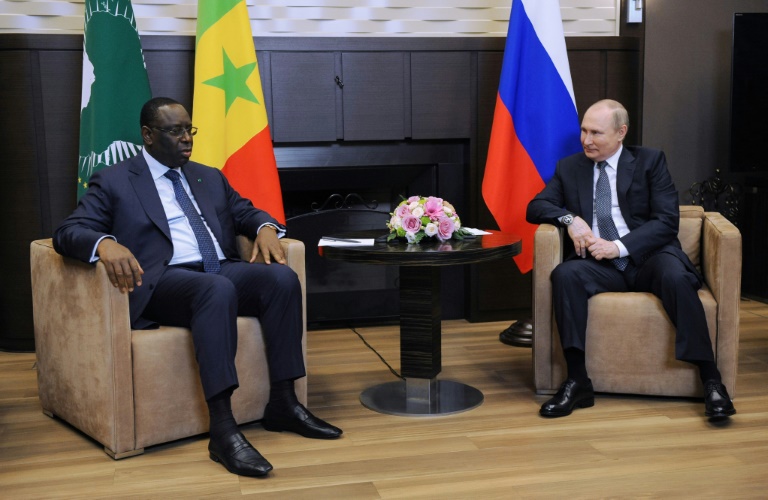
Putin hosted Senegalese President Macky Sall, who chairs the African Union, at his Black Sea residence in Sochi on the 100th day of Moscow’s offensive in Ukraine, with global food shortages and grain supplies stuck in Ukrainian ports high on the agenda.

Sall asked Putin to “become aware that our countries, even if they are far from the theatre (of action), are victims on an economic level” of the conflict. 

He said it was important to work together so that “everything that concerns food, grain, fertiliser is actually outside” of Western sanctions imposed on Moscow after Putin sent troops to Ukraine on February 24.

Sall also said that due to Western sanctions “we no longer have access to grain from Russia and especially fertiliser” that is crucial for Africa’s “already deficient” agriculture. 

“That really creates serious threats to the food security of the continent,” Sall added.

In his remarks in front of reporters, Putin did not mention grain supplies but said Russia was “always on Africa’s side” and was now keen to ramp up cooperation.

“At the new stage of development, we place great importance on our relations with African countries, and I must say this has had a certain positive result,” Putin added.

“Our turnover is growing,” he added. “This year, even in the first months of this year, it has grown by more than 34 percent.”

Washington and Brussels have imposed unprecedented sanctions against Moscow, pushing Putin to seek new markets and strengthen ties with countries in Africa and Asia.

– ‘Exhaustive explanations’ –

The Kremlin said the two leaders discussed expanding “political dialogue” between Russia and the African Union as well as economic and humanitarian cooperation.

Speaking to reporters earlier Friday, Putin’s spokesman said Putin would explain the situation with grain supplies stuck in Ukrainian ports to Sall.

“With a high degree of probability and confidence, I can assume that the president will give exhaustive explanations of his vision of the situation with Ukrainian grain,” Kremlin spokesman Dmitry Peskov said.

He said Putin will explain “the real state of affairs.” 

“No one is blocking these ports, at least not from the Russian side,” Peskov added.

Putin has said Moscow is ready to look for ways to ship grain blocked in Ukrainian ports but has demanded the West lift sanctions.

Moscow’s military campaign in Ukraine and a barrage of international sanctions on Russia have disrupted supplies of fertiliser, wheat and other commodities from both countries, pushing up prices for food and fuel, especially in developing nations.

Cereal prices in Africa, the world’s poorest continent, have surged because of the slump in exports from Ukraine, sharpening the impact of conflict and climate change and sparking fears of social unrest.

Ships loaded with grain remain blocked in Ukraine, which before February was a leading exporter of corn and wheat and alone accounted for 50 percent of world trade in sunflower seeds and oil. 

The UN has said Africa faces an “unprecedented” crisis caused by the conflict. 

In 2019, Putin hosted dozens of African leaders in Sochi in a bid to reassert Russia’s influence on the continent.

Though never a colonial power in Africa, Moscow was a crucial player on the continent in the Soviet era, backing independence movements and training a generation of African leaders.

Russia’s ties with Africa declined with the collapse of the Soviet Union in 1991 and, in recent years, China has emerged as a key foreign power on the continent.

Police close Hong Kong's Victoria Park on eve of Tiananmen anniversary

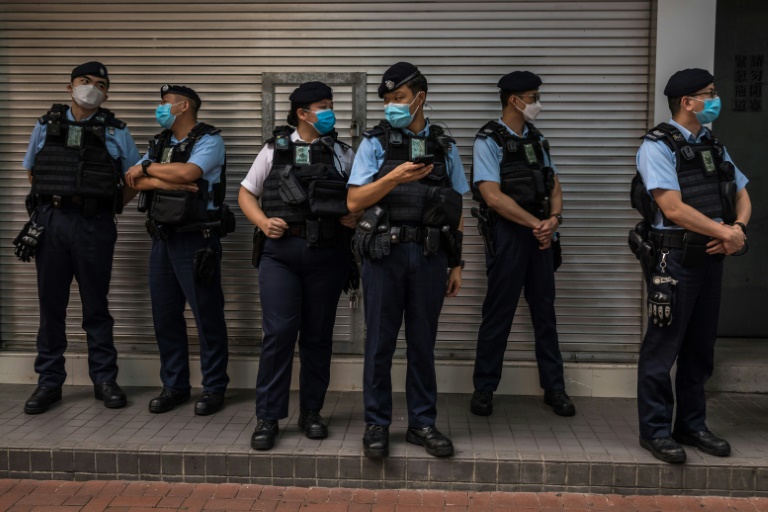
Hong Kong police said on Friday that they will close large parts of Victoria Park, once the site of packed annual candlelight vigils to commemorate China’s Tiananmen crackdown, on the eve of the event’s 33rd anniversary.

The announcement came a day after authorities warned people that going to the park on June 4 — even alone — could put them at risk of breaking the law. 

In the past, huge crowds would routinely gather in the large public space to pay tribute to victims of the Chinese government’s 1989 clampdown, when soldiers brutally quashed peaceful demonstrations demanding political and economic reform. 

Public commemorations are all but forbidden on the mainland and, until recently, semi-autonomous Hong Kong was the one place in China where large-scale remembrance was still tolerated.

That has changed since Beijing imposed a wide-reaching national security law two years ago, in reaction to citywide pro-democracy protests.  

Hong Kong authorities said Friday that most gathering spaces in the park — including the football pitches used for the candlelight vigil in previous years — will be closed between Friday night and the early hours of Sunday.

The decision was made “in order to prevent any unauthorised assemblies in the park which affect public safety and public order, and the chance of a virus spread due to such gatherings”, a spokesperson said.

The vigil had been banned in both 2020 and 2021 as well, with police citing a ban on gatherings under anti-coronavirus rules.

All major organisers of Hong Kong’s Tiananmen events have suspended their efforts this year, but police claimed there were still calls for people to join gatherings at the park and in surrounding areas. 

On Thursday, police warned against public gatherings on June 4, saying that people risked committing the crime of “unlawful assembly” even if they go solo.

The imposition of the security law has swiftly driven Tiananmen commemoration underground.

The Hong Kong Alliance, one of the main organisers of the Victoria Park vigil, disbanded last September and its leaders are being prosecuted for subversion.

Jailed former alliance leader Lee Cheuk-yan said in a letter that he planned to fast on June 4, and that he would light a match and sing commemorative songs in his jail cell. 

“I believe that Hong Kongers will join me in commemorating June 4 as a matter of sincere belief, using their own ways to express their remembrance and their commitment to democracy,” Lee wrote in a letter published online on Friday.

In the neighbouring city of Macau, former opposition lawmaker Au Kam-san said democrats will not hold a Tiananmen vigil this year due to the “worsening environment in Macau politics”, adding that a historical exhibition will also be cancelled.

Au said he will light a candle on June 4 and broadcast it live on Facebook as a sign of his perseverance.

Myanmar junta says will carry out first judicial executions in decades

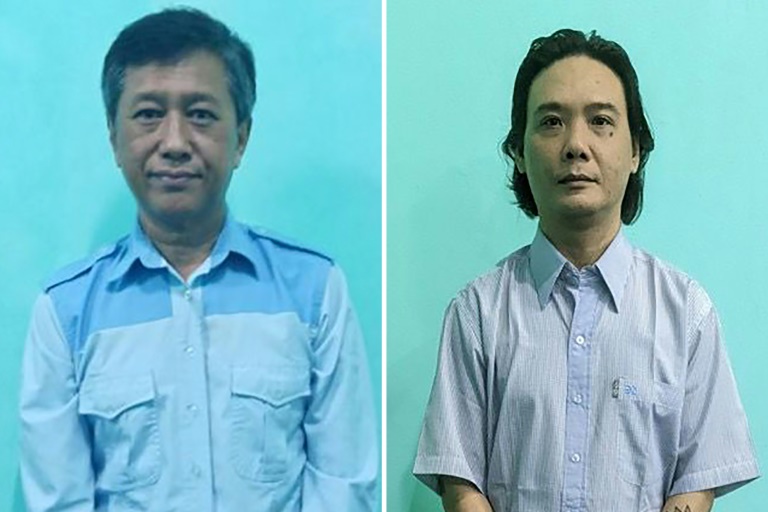
Myanmar’s junta will execute a former member of Aung San Suu Kyi’s party and a prominent democracy activist, both of whom were convicted of terrorism, in the country’s first judicial executions since 1990, a spokesman told AFP on Friday.

Four people, including former MP Phyo Zeya Thaw and democracy activist Ko Jimmy, “who were sentenced to death will be hanged according to prison procedures”, Zaw Min Tun told AFP. 

The junta has sentenced dozens of anti-coup activists to death as part of its crackdown on dissent after seizing power last year, but Myanmar has not carried out an execution for decades.

Phyo Zeya Thaw, a former member of Aung San Suu Kyi’s National League for Democracy who was arrested in November, was sentenced to death in January for offences under anti-terrorism laws.

Prominent democracy activist Kyaw Min Yu — better known as “Jimmy” — received the same sentence from the military tribunal.

“They continued the legal process of appealing and sending a request letter for the amendment of the sentence,” said junta spokesman Zaw Min Tun. 

“But the court rejected their appeal and request. There is no other step after that,” he added.

Two other men, who were convicted and sentenced to death for killing a woman they alleged was an informer for the junta in Yangon, will also be executed, the spokesman said.

No date has been set for the executions, he added.

– ‘Fuel to the fire’ –

The junta’s decision to “move towards executing two prominent political leaders will be like pouring gasoline on the fire of popular anti-military resistance in the country”, said Phil Robertson, a deputy director at Human Rights Watch.

“Such a move will also lead to global condemnation and cement the junta’s reputation as among the worst of the worst human rights abusers in Asia.”

Phyo Zeya Thaw had been accused of orchestrating several attacks on regime forces, including a gun attack on a commuter train in Yangon in August that killed five policemen. 

A hip-hop pioneer whose subversive rhymes irked the previous junta, he was jailed in 2008 for membership of an illegal organisation and possession of foreign currency. 

He was elected to parliament representing Aung San Suu Kyi’s NLD in the 2015 elections, which ushered in a transition to civilian rule.

Kyaw Min Yu, who rose to prominence during Myanmar’s 1988 student uprising against the country’s previous military regime, was arrested in an overnight raid in October. 

The junta issued an arrest warrant for him last year, alleging he had incited unrest with his social media posts.

On 100th day of Russian invasion, Zelensky vows victory

Ukraine will emerge victor in the war started by Russia, President Volodymyr Zelensky said Friday as Moscow’s invasion of its neighbour entered its 100th day with Russian troops pounding the Donbas region.

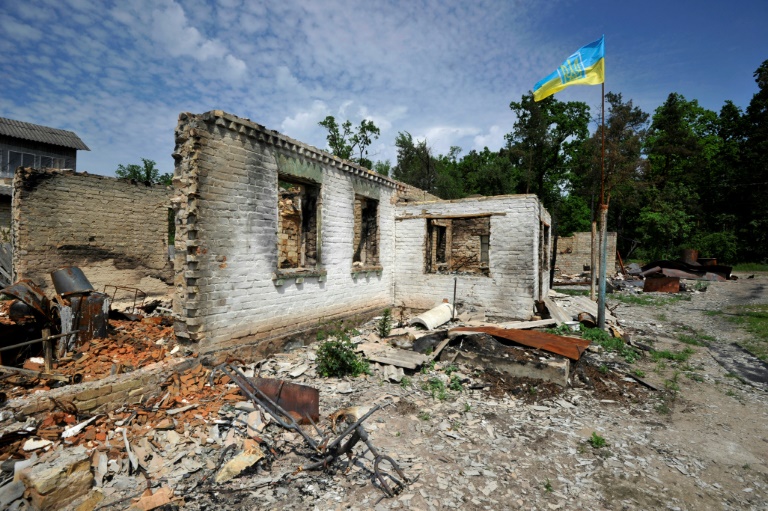
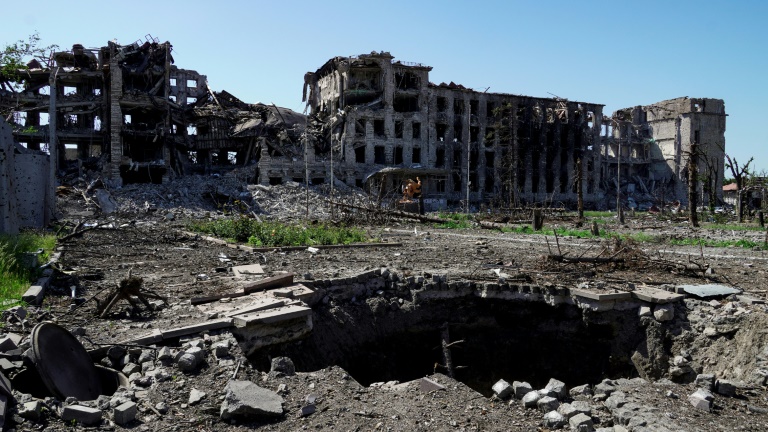
Thousands of people have been killed, millions sent fleeing and towns turned into rubble, since Russian President Vladimir Putin ordered his troops into Ukraine on February 24.

Russia’s advance has been slowed by a fierce Ukrainian resistance which repelled them from around the capital and forced Moscow to shift its aims towards capturing the east.

Russia has since taken a fifth of Ukrainian territory — tripling the land under its occupation from 2014 when it seized Crimea and parts of Donbas.

Moscow assessed that “certain results have been achieved,” Kremlin spokesman Dmitry Peskov told reporters, pointing to the “liberation” of some areas from what he called the “pro-Nazi armed forces of Ukraine”.

But Zelensky said Russia will not prevail appearing in a video accompanied by the same key political leaders also shown in a video posted on February 24 when they vowed to defend their country.

“Our team is much bigger. The Armed Forces of Ukraine are here. The most important — the people, the people of our state are here. Defending Ukraine for 100 days already,” he said. 

“Victory will be ours,” he declared in a show of defiance in the video with the presidential office building as a backdrop.

– ‘Levelling everything’ –

Putin’s troops are now concentrating their forces in the Donbas, in the east, where some of the fiercest fighting is centred on the industrial hub city of Severodonetsk.

Fighting continues in Severodonetsk’s city centre, the president’s office said, adding that the invaders were “shelling civilian infrastructure and Ukrainian military”. 

Severodonetsk “is the toughest area at the moment,” Zelensky said late Thursday. 

“For 100 days, they have been levelling everything”, Lugansk regional governor Sergiy Gaiday said on Telegram. 

Accusing the Russians of destroying hospitals, schools and roads, Gaiday said, however, that “we are only getting stronger.

“Hatred of the enemy and faith in our victory make us unbreakable.”

Ukrainian troops were still holding an industrial zone, Gaiday said, a situation reminiscent of Mariupol, where a steelworks was the south-eastern port city’s last holdout until Ukrainian troops finally surrendered in late May.

The situation in Lysychansk — Severodonetsk’s twin city, which sits just across a river — also looked increasingly dire. 

About 60 percent of infrastructure and housing had been destroyed, while internet, mobile network and gas services had been knocked out, said the city’s mayor Oleksandr Zaika.

– ‘Getting worse’ –

“The shelling is getting stronger every day,” he said.

In the city of Sloviansk, about 80 kilometres (50 miles) from Severodonetsk, the mayor has urged residents to evacuate as bombing intensified and water and electricity are cut off.

Student Goulnara Evgaripova, 18 recounted heavy bombardments as she boarded a minibus to leave the city.

“The situation is getting worse, the explosions are stronger and stronger and the bombs are falling more often,” she told AFP. 

And in Mykolaiv in the south, Russian shelling killed at least one person and injured several others, Ukrainian military officials said late Thursday.

“This war has and will have no winner,” Amid Awad, Assistant Secretary-General and United Nations Crisis Coordinator for Ukraine, said in a statement.

“Rather, we have witnessed for 100 days what is lost: lives, homes, jobs and prospects.”

Led by the United States, Western nations have pumped arms and military supplies into Ukraine to help it survive the onslaught.

Earlier this week, the United States announced that it was sending more advanced rocket launch systems to Ukraine, part of a $700 million package. The Kremlin accused Washington of “adding fuel to the fire”.

– Sall-Putin talks –

Western allies have also sought to choke off Russia’s financial lifeline in a bid to get Putin to change course.

Ramping up an already long list of embargoes, the United States on Thursday blacklisted Putin’s money manager and a Monaco company that provides luxury yachts to Moscow’s elite.

Across the Atlantic, EU nations agreed new sanctions that would halt 90 percent of Russian oil imports to the bloc by the end of the year. 

Russia warned that European consumers would be the first to pay the price for the partial oil embargo.

Major crude producers agreed to boost output by about 50 percent more a month in an effort to calm an overheated market and ease pressure on inflation.

But the move disappointed investors, and prices rose following the announcement.

With a global food crisis also looming, the head of the African Union, Senegalese President Macky Sall, is due Friday in Russia for talks with Putin.

Sall will seek to get Putin to free up stocks of cereals and fertilisers blocked 

Ukraine is one of the world’s top grain producers, and the war was already translating into higher costs for essentials from cereals to sunflower oil to maize, with the poorest among the hardest hit.

burs-hmn/jm

Harry and Meghan join royals at jubilee service for Queen Elizabeth II

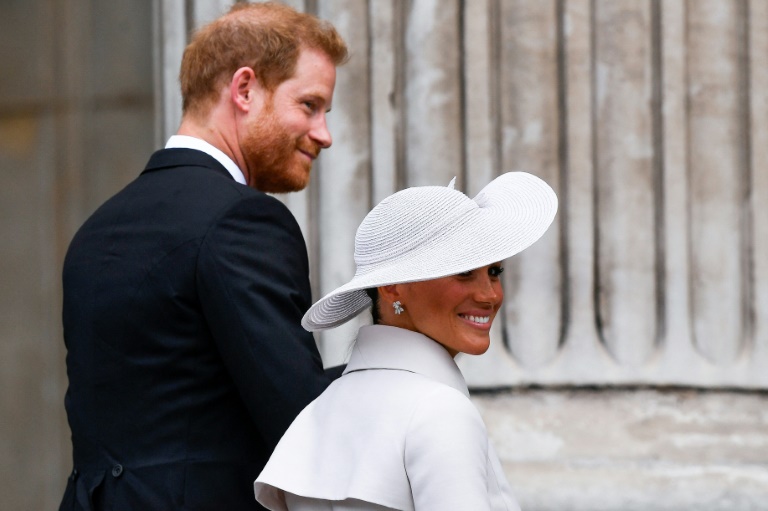
Prince Harry and his wife Meghan on Friday joined the royal family for their first public appearance in Britain in two years, at a Platinum Jubilee service for Queen Elizabeth II.

The Duke and Duchess of Sussex, as they are formally known, arrived mostly to cheers from the crowd outside St Paul’s Cathedral, an AFP reporter said.

Former British Army captain Harry, 37, was dressed in a morning suit, complete with military medals, while Meghan, 40, was in an off-white dress and matching hat.

As bells pealed, they took their seats inside among the 2,000-strong congregation, which included the last five prime ministers.

Hopes that the family would re-unite were scuppered after Harry’s grandmother the queen pulled out of the service after suffering “some discomfort” at Thursday’s kick off to four days of celebrations.

The 96-year-old monarch, who will watch the service on television, has been dogged by difficulties standing and walking that have forced her to cancel a slew of engagements since last year.

On Thursday, she made two public appearances on the balcony of Buckingham Palace in central London after the Trooping the Colour military parade.

In the evening, she was at Windsor Castle for a ceremony to light beacons across the country and the Commonwealth of 54 nations that she also heads.

Her withdrawal, which the palace said she took with “great reluctance”, puts her appearance at The Derby on Saturday in doubt.

The queen has only missed the showpiece flat-racing event three times in her 70-year reign, most recently in 2020 when spectators were barred due to Covid.

– ‘Lifetime of service’ –

Outside the domed 17th century cathedral, royal fan Stephanie Stitt, 35, said she was “a little” disappointed the queen would not be there.

But the events manager, who was among the tens of thousands of others on The Mall on Thursday, told AFP: “It’s understandable because she’s 96.”

The queen’s disgraced second son Prince Andrew, sidelined from royal duties over his links to two convicted sex offenders and absent on Thursday, also missed the service after testing positive for Covid.

The queen’s heir, Prince Charles, 73, again represented her as the most senior-ranking royal, after standing in at the parade to take the salute from troops on horseback.

The congregation included some 400 health and social care staff, invited to give thanks for their work during the Covid pandemic.

The Bible readings, prayers and hymns were designed to reflect on and recognise what the palace said was the queen’s “lifetime of service”.

The queen has received congratulations for her record-breaking reign from around leaders world, including North Korea’s Kim Jong Un.

– Harry, Meghan unpopular –

Overnight, the UK government confirmed post-Brexit plans to return the Crown symbol to pint glasses instead of the EU’s  quality control mark, in what it said was a “fitting tribute” to the monarch.

It also launched a consultation to allow the sale of goods in imperial measures after EU law gave primacy to metric.

Harry and US television actress Meghan, who is of mixed race, were once hailed as the modern face of the monarchy after they wed in 2018.

But less than two years later they quit royal life and moved to the United States, launching a series of damaging broadsides, including of racism.

The couple have set up a charitable foundation but angered royal supporters for lifting the lid on royal life in a bombshell television interview.

A recent YouGov poll indicated the couple’s popularity with the British public has slumped to an all-time low.

Nearly two-thirds (63 percent) hold a negative view of them.

The couple’s biographer, Omid Scobie, told British media on Friday that the queen would have had a chance to meet Harry and Meghan’s daughter Lilibet at Windsor for the first time on Thursday. 

Lilibet — named after the queen’s childhood nickname — turns one on Saturday.

– ‘Not about them’ –

“I think they should probably just stay in the background,” said surgeon Roger Nagy, 51, who flew in for the celebrations from Denver, Colorado.

“They can do what they want with their lives but they probably shouldn’t say things. This is about the queen, this isn’t about them,” he added.

All eyes will be watching for signs of tension between the couple and Harry’s elder brother William, 39, and his wife Kate, 40.

Harry said in an October 2019 that he and William were on “different paths”, apparently confirming a rift that opened up after he began dating Meghan.

The pair were last seen in public at the unveiling of a statue to their late mother princess Diana in July 2021, and at the funeral of their grandfather, the queen’s husband Prince Philip, that April.

Israel warns over Iran nuclear programme

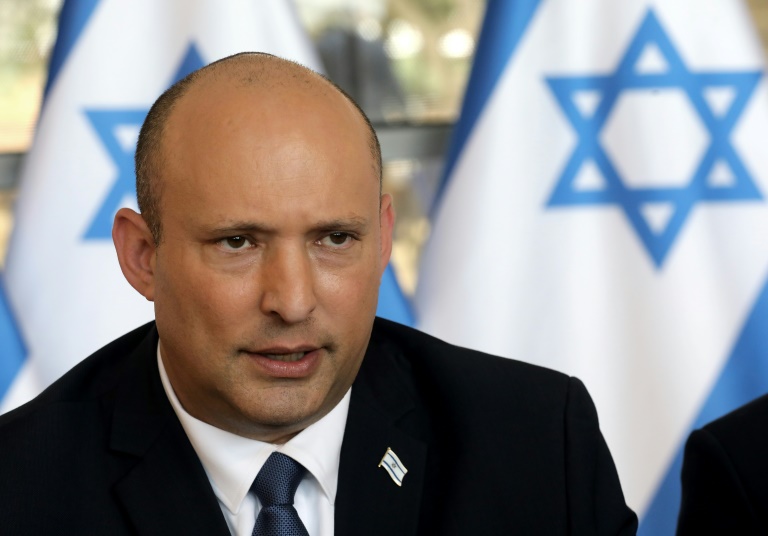
Prime Minister Naftali Bennett warned the head of the International Atomic Energy Agency Friday that Israel was prepared to use it’s “right to self defense” to stop Iran’s nuclear programme.

The comments came after IAEA chief Rafael Grossi met Bennett Friday morning during a whirlwind visit.

Bennett’s warning is a reiteration of Israeli vows to do whatever it takes to stop Iran from obtaining a nuclear bomb. It comes with tensions rising over stalled efforts to revive a 2015 nuclear deal between Iran and world powers aimed at preventing Iran from developing such a weapon.

Bennett said in a statement that he has made it clear that Israel prefers diplomacy, but “it reserves the right to self-defense and to action against Iran in order to block its nuclear programme should the international community not succeed in the relevant time frame.”

Grossi’s visit came after the global nuclear watchdog on Monday said it still had questions which were “not clarified” despite long-running efforts to get Iran to explain the presence of nuclear material at three undeclared sites.

The issue of the sites is one of the remaining obstacles to reviving the 2015 deal which gave Iran relief from crippling economic sanctions in exchange for curbs on its nuclear activities. 

Experts consider Israel as the only nuclear power in the Middle East, though the country refuses to confirm or deny that it has such weapons.

Iran has always denied seeking a nuclear bomb.

Israel is staunchly opposed to the 2015 agreement which it perceives as a threat to its security.

In October Israeli Foreign Minister Yair Lapid said that, “If a terror regime is going to acquire a nuclear weapon, we must act.” He added that Israel “reserves the right to act at any given moment in any way.” 

This week the Israeli army held military exercise over the Mediterranean and in the Red Sea. Israeli media reported the exercise simulated a wide-scale attack on Iran, including on its nuclear facilities.

When questioned by AFP on Thursday, the army did not comment on the nature of the drills, but confirmed that it prepares and trains “continuously for several scenarios including threats from Iran”.

Global plastic use and waste on track to triple by 2060

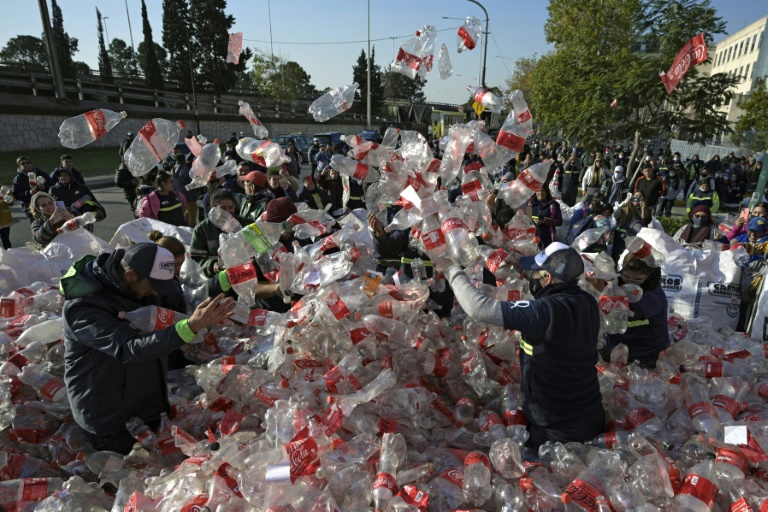
A world severely blighted by plastic pollution is on track to see the use of plastics nearly triple in less than four decades, according to findings released Friday.

Annual production of fossil-fuel-based plastics are set to top 1.2 billion tonnes by 2060 and waste to exceed one billion tonnes, according to the Organisation for Economic Co-operation and Development (OECD).

Even with aggressive action to cut demand and improve efficiencies, plastic production would almost double in less than 40 years, the 38-nation body projects in a report.

Such globally coordinated policies, however, could hugely boost the share of future plastic waste that is recycled, from 12 to 40 percent.

There is increasing international alarm over volume and omnipresence of plastics pollution, and its impact. 

Infiltrating the most remote and otherwise pristine regions of the planet, microplastics have been discovered inside fish in the deepest recesses of the ocean and locked inside Arctic ice.

The debris is estimated to cause the deaths of more than a million seabirds and over 100,000 marine mammals each year.

“Plastic pollution is one of the great environmental challenges of the 21st century, causing wide-ranging damage to ecosystems and human health,” OECD chief Mathias Cormann said.

Since the 1950s, roughly 8.3 billion tonnes of plastic have been produced with more than 60 percent of that tossed into landfills, burned or dumped directly into rivers and oceans.

Some 460 million tonnes of plastics were used in 2019, twice as much as 20 years earlier.

The amount of plastic waste has also nearly doubled, exceeding 350 million tonnes, with less than 10 percent of it recycled.

– Plastics and CO2 –

On current trends, the use of plastics is projected to roughly double in North America, Europe, and East Asia. In other emerging and developing countries, it is expected to grow three- to five-fold, and more than six-fold in sub-Saharan Africa.

The new report contrasts a business-as-usual trajectory with the benefits of more ambitious global policies of reduced plastic use and pollution.

Driven by economic growth and an expanding population, plastics production is set to increase under either scenario, the OECD warns.

Where policies can make a huge difference is in the handling of waste.

Currently, nearly 100 million tonnes of plastic waste is either mismanaged or allowed to leak into the environment, a figure set to double by 2060.

“Co-ordinated and ambitious global efforts can almost eliminate plastic pollution by 2060,” the report concludes. 

It could also curtail the amount of planet-warming greenhouse gases projected to seep into the atmosphere.

Currently, the full life-cycle of primary plastics — from production to disintegration — contributes about two billion tonnes of CO2 or its equivalent in other gases, roughly three percent of human-caused carbon pollution.

Without targeted policy action, that figure will likely double by 2060, the OECD warns.  

Earlier this year, the United Nations set in motion a process to develop an internationally binding treaty to limit plastic pollution.

Alarm bells for Macron as left gains in polls

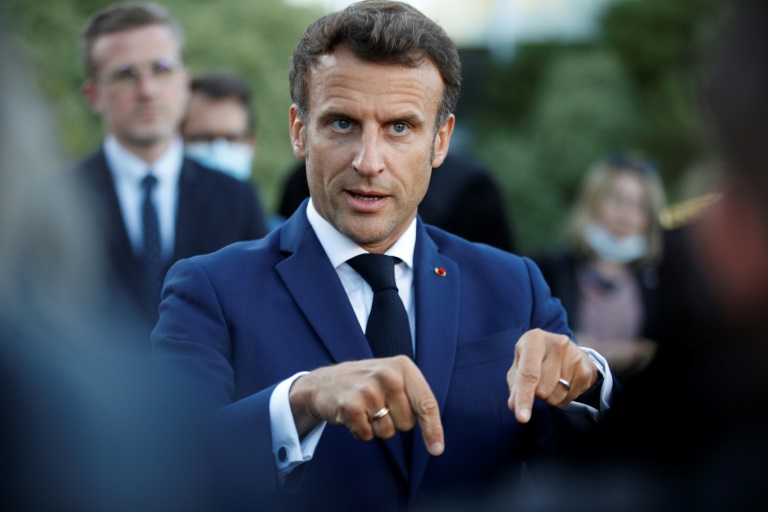
France’s rejuvenated left-wing parties appear to be gaining ground on President Emmanuel Macron’s centrist allies ahead of parliamentary elections later this month, raising fears for the ruling party that it may fail to secure a majority.

A new poll, published late Wednesday by the Ifop-Fiducial group, suggested Macron’s Ensemble (“Together”) coalition would win 275-310 seats in the vote, possibly below the 289 needed for a majority.

A new grouping of left-wing parties led by hard-left leader Jean-Luc Melenchon was seen making major gains with 170-205 seats, the poll suggested. 

“We’re taking it seriously because in the media and in the polls the only person who exists, apart from the presidential majority, is Jean-Luc Melenchon,” senior ruling party MP Aurore Berge told France 2 television on Thursday.

She said Melenchon’s new “Nupes” coalition, which includes the Greens, Socialists and Communists, was the only “strong and credible” alternative. 

But if voters failed to give Macron a majority following his re-election on April 24, it would represent a “major destabilisation of politics in our country for years to come,” parliamentary affairs minister Olivier Veran said.

France has not had a president and a parliamentary majority from different parties since 1997-2002 when right-wing president Jacques Chirac found himself working with Socialist premier Lionel Jospin.

A constitutional change in 2000 was meant to put an end to this sort of political gridlock by moving the parliamentary elections to immediately after the presidential ones.

The first round will be held on June 12 and the second one week later on June 19. It is only then that the shape of the new parliament will be clear. 

A new poll Friday by the BVA group found that only 35 percent of voters wanted Macron to have a majority, however, reflecting the sharply fractured nature of the electorate.

– ‘Real hope’ –

Macron defeated far-right leader Marine Le Pen in the second round of the presidential election on April 24, winning a second five-year term.

Although he will have a free hand in foreign policy whatever the outcome of the parliamentary polls, his domestic agenda of tax cuts, welfare reform and raising the retirement age hinges on the vote.

Melenchon, a former Trotskyist who heads the France Unbowed party, has a radically different programme that calls for lowering the retirement age to 60, wealth taxes, and hiking the minimum wage by 15 percent.

An average of polls, as calculated by the Politico website, still suggests Macron would win a majority if the vote were held today and surveys remain unreliable, some experts say.

Current projections give the left almost no chance of winning an absolute majority and forming a government.

But at a election rally on Wednesday evening, Melenchon talked up the chances of the left, which was unable to agree a common candidate for the presidential election. 

“We’ve come together to say to the country ‘we are an alternative if you’ve understood that things can’t carry on the way they are,” he said in front of 1,500 people in Paris. 

He is hoping that the left’s promise of more social spending and environmental protections, as well as anger over rising prices caused by the war in Ukraine, will lead supporters to turn out.

“If people think we can win, they’ll go out to vote in their loads, their bunches, their carriages,” the charismatic 70-year-old told the room to applause.

“There’s real hope,” Socialist party head Olivier Faure told AFP recently. 

Macron’s LREM party rolled out a new online poster campaign on Wednesday, saying people should not be “dupes” about “Nupes”.

– ‘Fragile’ –

Polls suggest Le Pen’s far-right National Rally party would make gains to around 25-49 seats if the vote were held today, while the traditional rightwing Republicans party could see their presence shrink to 39-62 seats.

Brice Teinturier, a political scientist and head of the Ipsos polling group, warned Thursday about the difficulties of making projections in terms of the number of seats of each grouping.

French people were showing little appetite for the campaign, which made high abstention rates likely, and the modelling by polling groups was highly uncertain.

“You can have 40-50 seats which change hands simply because you have one or two points more or less (of the vote), or if you have an abstention rate that changes,” he told France Inter radio.

“We’re speculating about things that are very fragile,” he said. 

The new polling by the BVA group on Friday showed said that only 38 percent of French voters were following the campaign.

War in Ukraine: Latest developments

Here are the latest developments in the war in Ukraine.

– ‘No winner’ of 100-day war – 

There are no winners in the conflict, the UN says, as the fighting enters its 100th day with Russian forces pressing deeper into the eastern Donbas region after being driven back from the cities of Kyiv and Kharkiv.

“This war has and will have no winner. Rather, we have witnessed for 100 days what is lost: lives, homes, jobs and prospects,” UN Assistant Secretary-General Amin Awad said in a statement.

Nearly 14 million Ukrainians have been forced to flee their homes since the Russian invasion on February 24, the majority women and children, according to the UN.

“We need peace. The war must end now,” the UN urged.

Ukraine says Russia now controls about one-fifth of its territory, including the Crimean peninsula and parts of the Donbas which were seized in 2014.

– NATO bracing for long ‘war of attrition’  – 

NATO chief Jens Stoltenberg warns the West to brace for a long “war of attrition” in Ukraine, in which both sides are suffering high losses.

“We just have to be prepared for the long haul,” Stoltenberg said after talks with US President Joe Biden in Washington, adding that Ukrainians are “paying a high price for defending their own country on the battlefield” but that Russia is also “taking high casualties.”

Stoltenberg said he welcomed efforts by “different countries, including NATO allies” to get grain exports blocked in Ukraine out past a Russian blockade of Ukrainian ports but would not be drawn on whether NATO would get involved.

Cereal prices in Africa have surged because of the slump in exports from Ukraine.

Russia is in talks with Turkey about opening a safe corridor for ships through the Black Sea. The US and EU have accused Moscow of weaponizing food supplies.

– Fierce fighting in Severodonetsk –

Ukrainian forces continue to hold off Russian forces in part of the key eastern city of Severodonetsk.

The region’s governor says Russian forces hold 80 percent of the city but that Ukrainian forces were still holding an industrial zone, a situation reminiscent of Mariupol, where troops held out for weeks at a steelworks before finally surrendering in late May.

Gaining control of Severodonetsk would give Russia de-facto control of Lugansk, one of two regions, along with Donetsk, that make up the industrial Donbas.

Severodonetsk’s sister city of Lysychansk, which sits just across the Donets river, is also coming under heavy shelling, which has destroyed 60 percent of its housing and knocked out internet, mobile phone and gas services, mayor Oleksandr Zaika says.

– ‘Nationalisations’ planned in occupied southeast –

Moscow-installed officials in the partly-occupied southeastern region of Zaporizhzhia, home to Europe’s largest nuclear power plant, have announced plans to “nationalise” property belonging to the Ukrainian state.

Vladimir Rogov, a member of Zaporizhzhia’s Moscow-backed administration, says the region’s chief has signed a nationalisation decree.

The regional capital, also called Zaporizhzhia, is still under Kyiv’s control, but the plant fell to Russian forces in March.

– Russian lobbyists barred from EU assembly –

The European Parliament bans Russian lobbyists from its premises to prevent them spreading what it calls “propaganda” about Russia’s war in Ukraine.

“Effective immediately, Russian company representatives are no longer allowed to enter European Parliament premises,” parliament speaker Roberta Metsola said on Twitter.

– Ukraine doubles key lending rate –

Ukraine’s central bank more than doubles its key interest rate in an unprecedented intervention aimed at propping up its war-battered economy.

The National Bank of Ukraine (NBU) raised the rate from 10 to 25 percent per annum — the highest since 2015.

The banks says it also aims to “protect households’ income and savings in (Ukraine’s currency) the hryvnia, raise the attractiveness of hryvnia assets” and “reduce the pressure on the foreign exchange market”.

burs-cb/yad

Close Bitnami banner
Bitnami