World

Global plastic waste on track to triple by 2060

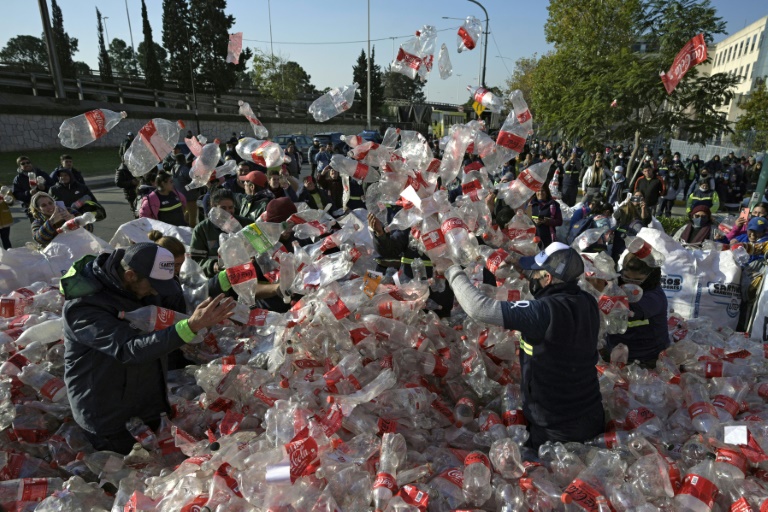
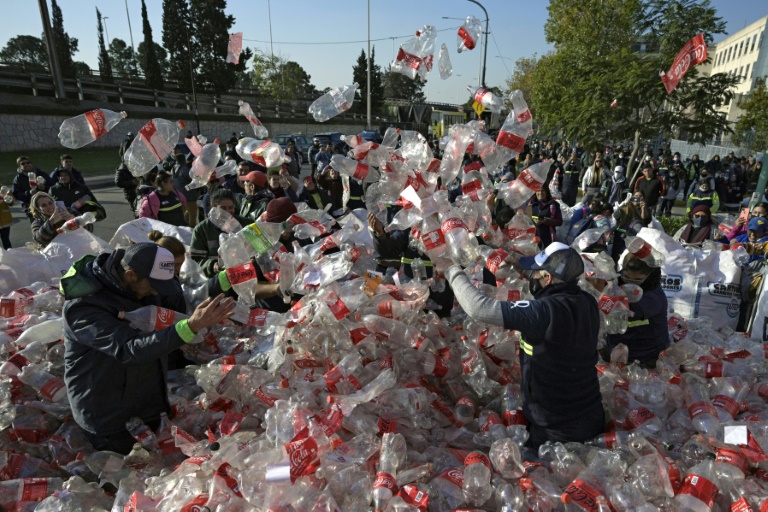
A world severely blighted by plastic pollution is on track to see the use of plastics nearly triple in less than four decades, according to findings released Friday.

Annual production of fossil-fuel-based plastics are set to top 1.2 billion tonnes by 2060 and waste to exceed one billion tonnes, according to the Organisation for Economic Co-operation and Development (OECD).

Even with aggressive action to cut demand and improve efficiencies, plastic production would almost double in less than 40 years, the 38-nation body projects in a report.

Such globally coordinated policies, however, could hugely boost the share of future plastic waste that is recycled, from 12 to 40 percent.

There is increasing international alarm over volume and omnipresence of plastics pollution, and its impact. 

Infiltrating the most remote and otherwise pristine regions of the planet, microplastics have been discovered inside fish in the deepest recesses of the ocean and locked inside Arctic ice.

The debris is estimated to cause the deaths of more than a million seabirds and over 100,000 marine mammals each year.

“Plastic pollution is one of the great environmental challenges of the 21st century, causing wide-ranging damage to ecosystems and human health,” OECD chief Mathias Cormann said.

Since the 1950s, roughly 8.3 billion tonnes of plastic have been produced with more than 60 percent of that tossed into landfills, burned or dumped directly into rivers and oceans.

Some 460 million tonnes of plastics were used in 2019, twice as much as 20 years earlier.

The amount of plastic waste has also nearly doubled, exceeding 350 million tonnes, with less than 10 percent of it recycled.

The new report contrasts a business-as-usual trajectory with the benefits of more ambitious global policies of reduced plastic use and pollution.

Driven by economic growth and an expanding population, plastics production is set to increase under either scenario, the OECD warns.

Where policies can make a huge difference is in the handling of waste.

Currently, nearly 100 million tonnes of plastic waste is either mismanaged or allowed to leak into the environment, a figure set to double by 2060.

“Co-ordinated and ambitious global efforts can almost eliminate plastic pollution by 2060,” the report concludes. 

Earlier this year, the United Nations set in motion a process to develop an internationally binding treaty to limit plastic pollution.

Global plastic waste on track to triple by 2060

A world severely blighted by plastic pollution is on track to see the use of plastics nearly triple in less than four decades, according to findings released Friday.

Annual production of fossil-fuel-based plastics are set to top 1.2 billion tonnes by 2060 and waste to exceed one billion tonnes, according to the Organisation for Economic Co-operation and Development (OECD).

Even with aggressive action to cut demand and improve efficiencies, plastic production would almost double in less than 40 years, the 38-nation body projects in a report.

Such globally coordinated policies, however, could hugely boost the share of future plastic waste that is recycled, from 12 to 40 percent.

There is increasing international alarm over volume and omnipresence of plastics pollution, and its impact. 

Infiltrating the most remote and otherwise pristine regions of the planet, microplastics have been discovered inside fish in the deepest recesses of the ocean and locked inside Arctic ice.

The debris is estimated to cause the deaths of more than a million seabirds and over 100,000 marine mammals each year.

“Plastic pollution is one of the great environmental challenges of the 21st century, causing wide-ranging damage to ecosystems and human health,” OECD chief Mathias Cormann said.

Since the 1950s, roughly 8.3 billion tonnes of plastic have been produced with more than 60 percent of that tossed into landfills, burned or dumped directly into rivers and oceans.

Some 460 million tonnes of plastics were used in 2019, twice as much as 20 years earlier.

The amount of plastic waste has also nearly doubled, exceeding 350 million tonnes, with less than 10 percent of it recycled.

The new report contrasts a business-as-usual trajectory with the benefits of more ambitious global policies of reduced plastic use and pollution.

Driven by economic growth and an expanding population, plastics production is set to increase under either scenario, the OECD warns.

Where policies can make a huge difference is in the handling of waste.

Currently, nearly 100 million tonnes of plastic waste is either mismanaged or allowed to leak into the environment, a figure set to double by 2060.

“Co-ordinated and ambitious global efforts can almost eliminate plastic pollution by 2060,” the report concludes. 

Earlier this year, the United Nations set in motion a process to develop an internationally binding treaty to limit plastic pollution.

As EU squeezes Russia, Serbia embraces old ally

While the European Union scrambles to isolate Russia and reduce energy imports from the country, EU candidate Serbia is tightening its bond with Moscow through a new gas supply deal.

Belgrade has condemned the Russian invasion of Ukraine at the United Nations, but it has refused to take part in sanctions against its old ally, even though Serbia aims to join the EU.

A day before the Europeans agreed to ban most Russian oil imports this week, Belgrade announced a three-year natural gas contract with Moscow, drawing a rebuke from Brussels.

Serbian President Aleksandar Vucic revealed the “very favourable” gas deal — with “by far the best terms in Europe” — following a phone call with Russia’s Vladimir Putin on Sunday.

“We will have a safe winter when it comes to gas supply,” the populist leader boasted, adding that in winter, Serbia will pay “one tenth” of the price shelled out by other European countries.

Russia, meanwhile, has cut gas supplies to several EU nations. The bloc aims to reduce gas imports by two-thirds this year, but an embargo is not in the cards so far.

Underscoring Belgrade’s friendly ties with Moscow, Russian Foreign Minister Sergei Lavrov is to visit the Balkan country’s capital early next week, the foreign ministry in Moscow said Friday.

Lavrov is to meet Vucic, his Serbian counterpart Nikola Selakovic and Serbian Patriarch Porfirije.

EU spokesman Peter Stano said the bloc expects Serbia “not to further strengthen its ties with Russia”.

“Candidate countries, including Serbia, are expected to progressively align their policies towards third countries with the policies and positions adopted by the European Union, including with restrictive measures,” Stano said in a statement.

– ‘Side deals’ –

Belgrade officially proclaims EU accession is a priority, but it has consistently shied away from European policies going against Russian interests while pro-government media echo the fierce messages coming from the Kremlin.

Serbian officials have accused Western countries of pressuring Belgrade to impose sanctions against Russia, and some even suggested that the country should drop its EU bid over the issue.

“It’s like they spent the last decade preparing Serbian society not for EU accession, but for an alliance with Moscow,” Srdjan Cvijic, member of The Balkans in Europe Policy Advisory Group (BiEPAG) think tank, told AFP.

According to a recent opinion poll, 40 percent of Serbians said they would be “happy” if their country gave up trying join the EU and formed an alliance with Russia instead.

Goran Vasic, assistant research professor at University of Novi Sad, said there is always a “brotherly clause” in gas prices that “is not in the contract but implies side deals or political concessions.”

Belgrade rejected the notion that cheap gas was  Kremlin’s “reward” for not heeding the calls for sanctions.

“All those who accuse us of not imposing sanctions against Russia because of a gas deal should be ashamed of themselves”, Serbian Prime Minister Ana Brnabic told local media. 

“We don’t impose sanctions against Russia out of principle.”

Lavrov told Serbian media that Moscow was “certain that they (Serbians) will continue taking the smart choice in this situation”.

– Energy monopoly –

Serbia’s president has underlined the diplomatic importance of Russia’s refusal to allow international recognition of Serbia’s breakaway province of Kosovo and historic, political and cultural ties between Belgrade and Moscow.

But the reality is that there was little room for manoeuver from Belgrade.

The previous gas deal with Russia — which was also well under market price — was about to expire with no viable alternative in the near future.

In the last few decades, Serbia gradually allowed Moscow almost complete monopoly over its energy sector by building pipelines solely for Russian gas and selling the majority stake of its oil and gas company (NIS) to Russian energy giant Gazprom.

The 2008 deal, penned only months after Kosovo declared independence, was widely seen as a political concession — allowing Moscow to connect a major European gas pipeline through Serbia in exchange for the Kremlin vetoing the recognition of Kosovo at the UN.

“It’s obvious that all this time there was a well-organised lobbyist group that has defended the monopoly, and still continues to do so,” Vasic said.

UAE firm to screen passengers at Afghan airports

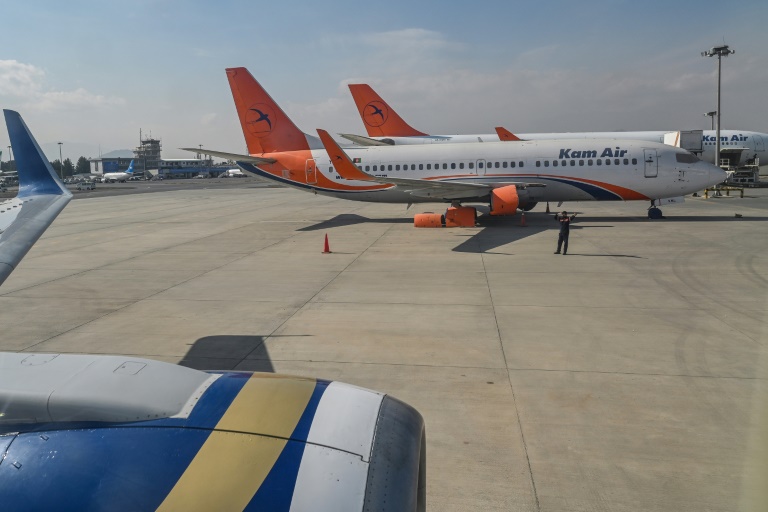
The Taliban have tasked a United Arab Emirates firm with the security screening of passengers and luggage at Afghan airports, officials said, as the country seeks to expand international flights.

While some domestic and international flights are operating out of the capital’s only airport, significant support is needed for major foreign airlines to resume a full service.

The full operation of Kabul’s airport — which was trashed in August during the mass evacuation of civilians after the Taliban stormed back to power — is seen as crucial to reviving Afghanistan’s shattered economy.

Abu Dhabi-based GAAC said it will manage screening at Kabul, Herat, Kandahar and Mazar-i-Sharif airports for the next three years. 

“The signing of this contract is expected to enhance the confidence of foreign airlines to resume their flights,” Ibrahim Morafi, regional director of GAAC, told AFP.

Afghanistan’s transport and aviation ministry confirmed the deal.

No country has yet formally recognised the Taliban government, which has increasingly stripped away the freedoms of Afghans, particularly women. 

GAAC, which operated in Afghanistan before the Taliban takeover, signed a separate contract last month to provide ground handling services at Kabul, Kandahar and Herat airports.

A Qatar-Turkey consortium has been in talks with the Afghan aviation ministry for months about operating Afghan airports, but discussions have stalled over the Taliban’s insistence that their fighters guard the facilities.

Air traffic control at Kabul airport is being handled by a team of Afghans trained by experts from Uzbekistan and Qatar.

China, Papua New Guinea discuss free-trade deal

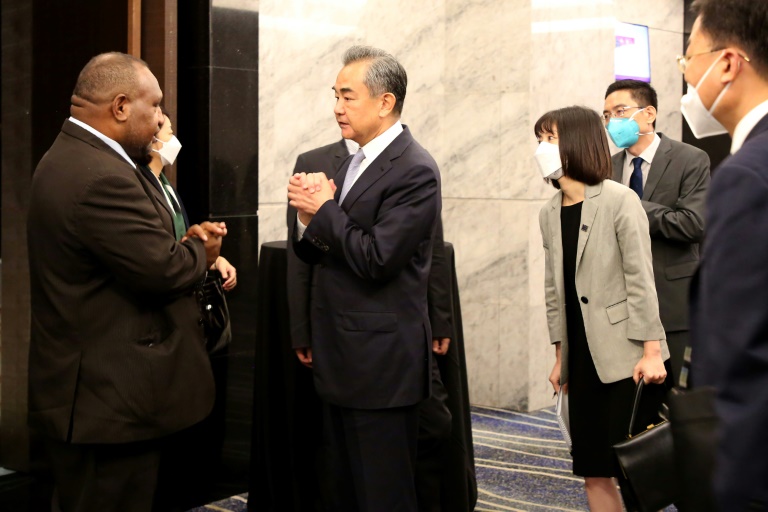
China and Papua New Guinea held talks on a free-trade deal Friday, as Beijing’s foreign minister wrapped up a landmark tour of the Pacific Islands with a stop in the resource-rich nation.

Papua New Guinea’s Prime Minister James Marape said discussions in the capital Port Moresby had focused on economic cooperation and a long-mooted trade agreement.

China is already a major investor in Papua New Guinea and buys much of the country’s gas, minerals, timber and other resources.

Beijing is vying with Australia to be Papua New Guinea’s leading trading partner.

Marape, who has vowed to make his country the world’s richest black Christian nation, said he wants to shift the economy away from primary materials to more lucrative finished products.

He has invited more Chinese investment and said work was ongoing on a trade deal.

“China and Papua New Guinea officials are going through tidying Chinese-PNG free-trade arrangements,” Marape told journalists.

“The specifics of the free-trade arrangement are being finalised as we go through, so that Papua New Guinea interests are not suppressed or harmed, but maintained and in fact augmented,” he said.

His comments come as China, Australia and other Western allies race for influence across the Pacific Islands.

The vast but sparsely populated region is home to vital shipping channels and — because of its location near areas where the Chinese and US militaries operate — seen as strategically important.

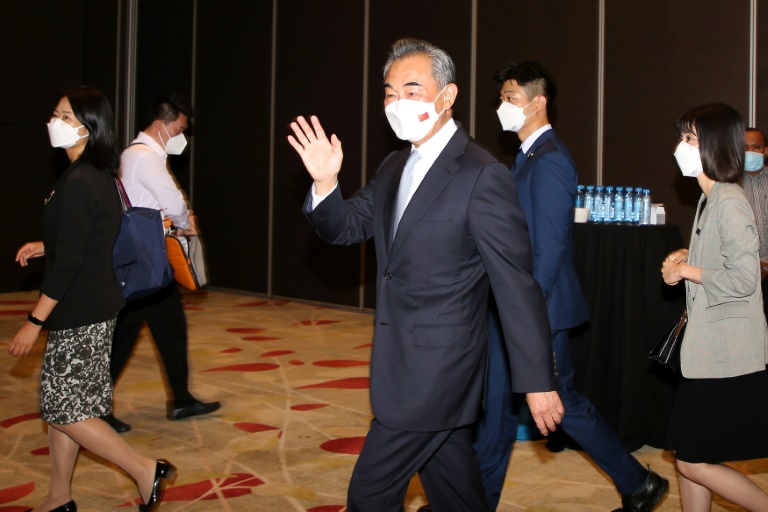
Chinese foreign minister Wang Yi has criss-crossed the South Pacific for more than a week, pressing the case for a greater role by Beijing in regional security.

But his visit to Port Moresby has been overshadowed by complaints that it comes too close to Papua New Guinea’s elections, which will be held in coming weeks, with the result expected in August.

Marape is facing a challenge for the premiership from former prime minister Peter O’Neill.

“Now is not the right time” for foreign visits, O’Neill said, adding that the government “should not sign any agreements on behalf of the state”.

Marape dismissed that argument, saying “our country is still functional”.

The two sides signed a series of agreements on investment in “green development”, Covid-19 assistance, aid and health care.

Wang’s 10-day tour has seen the Pacific Islands reject a regional deal that would have given Beijing a much greater role in sensitive areas including policing, cybersecurity and maritime surveillance.

His trip prompted Australia’s new foreign minister Penny Wong to make quick-fire visits to three Pacific Island states, looking to shore up decades-long alliances.

Speaking in Tonga on Friday, Wong’s host Prime Minister Siaosi Sovaleni stressed the importance of ties with Australia.

“There are common strands that bind us. They include respect for democracy, the rule of law, and the rights and freedoms of others. This remains the important tenets of our relations,” he said.

Asian markets track Wall St up before jobs data, oil holds gains

Asian equities rose Friday following a strong performance on Wall Street ahead of a key US jobs data release, while crude gave up some of the previous day’s gains after an output hike disappointed traders.

A below-forecast reading on US private jobs offered some support to New York, even as inflation and interest rate hike concerns remained major headaches.

While observers said the reading from payroll firm ADP was not usually a good guide for the official report, a soft number on Friday could give the Federal Reserve a little room to ease off its rate hike drive and provide a much-needed boost to sentiment.

“Seemingly, anything that keeps the Fed from a more aggressive rate-hiking path appears to be greeted with open arms by equities,” said Stephen Innes of SPI Asset Management.

For now, expectations are for the US central bank to continue tightening monetary policy with half-point hikes at upcoming meetings, while vice chair Lael Brainard warned she did not yet see any reason to take a breather in the third quarter, as some had hoped. 

Still, a rally in beaten-down tech firms helped drive healthy gains on Wall Street, and Asia managed to ride on the coattails.

Tokyo rose more than one percent, while Sydney, Seoul, Singapore, Mumbai, Manila, Wellington and Jakarta were also up.

Hong Kong, Shanghai and Taipei were closed for holidays.

– Oil pressure –

But analysts remain on edge about the near-term outlook owing to uncertainty caused by a range of issues including the Ukraine war and China’s economic travails.

“We believe a slight lean toward defensive sectors and away from the growth-oriented areas of this market still make sense,” said Scott Brown, of LPL Financial.

“Outside of this recent rally, very little about this market has changed from a technical standpoint and that makes us wary of calling the all-clear.”

Hopes that OPEC and other major crude producers could ease pressure on inflation by ramping up output were dealt a blow when they agreed to pump just 50 percent more per month.

The announcement did little to soothe worries about a supply shortage caused by bans on US and UK imports from Russia, and came just as European leaders said they would impose a partial embargo on shipments.

A report showing a steep drop in US stockpiles added to the woes on oil trading floors, with some commentators saying prices could once again spike as China relaxes long-running lockdown measures in major cities.

– Key figures at around 0610 GMT –

Tokyo – Nikkei 225: UP 1.3 percent at 27,761.57 (close)

Hong Kong – Hang Seng Index: Closed for a holiday

Shanghai – Composite: Closed for a holiday

Brent North Sea crude: DOWN 0.4 percent at $116.35 per barrel

West Texas Intermediate: DOWN 0.2 percent at $117.25 per barrel

Euro/dollar: UP at $1.0754 from $1.0753 on Thursday

Pound/dollar: UP at $1.2572 from $1.2568

Euro/pound: UP at 85.54 pence from 85.49 pence

Dollar/yen: DOWN at 129.82 yen from 129.85 yen

New York – Dow: UP 1.3 percent at 33,248.28 (close)

London – FTSE 100: Closed for a holiday

Russia's invasion of Ukraine enters 100th day as fighting rages

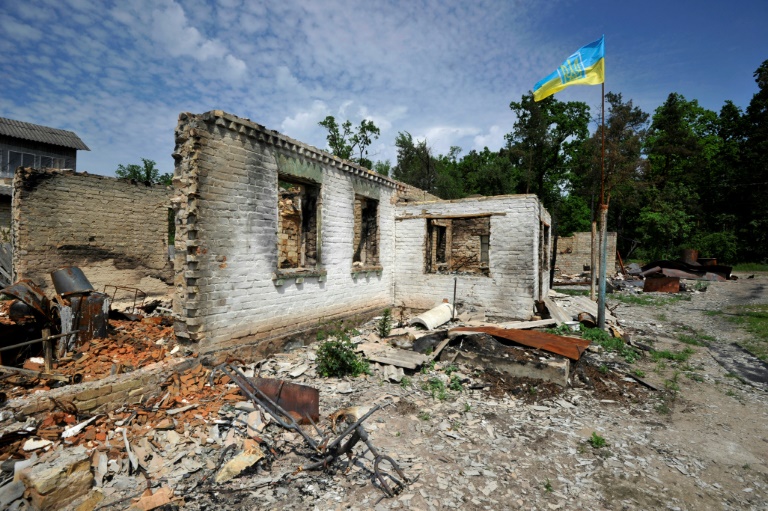
Ukraine marked 100 days since Russia’s invasion on Friday with fighting raging across the east of the country, where Moscow’s forces are tightening their grip on the Donbas region.

The sombre milestone came as Kyiv announced Moscow was now in control of a fifth of Ukrainian territory, including Crimea and parts of Donbas seized in 2014.

After being repelled from around the capital, President Vladimir Putin’s troops have set their sights on capturing eastern Ukraine, prompting warnings the war could drag on.

Some of the fiercest fighting is now centred on Severodonetsk in the Donbas region, 80 percent of which the Russians have seized, but Ukrainian forces are putting up stiff resistance.

President Volodymyr Zelensky said late Thursday Ukrainian forces had had some success in the battle for the industrial hub, which is in the Lugansk region.

“But it is still too early. It is the toughest area at the moment,” he added.

Lugansk regional governor Sergiy Gaiday said on Telegram that “for 100 days, they have been levelling everything”, accusing the Russians of destroying hospitals, schools and roads. 

“But we are only getting stronger. Hatred of the enemy and faith in our victory make us unbreakable.”

Since Russia’s February 24 invasion, thousands of people have been killed and millions forced to flee, while Zelensky says up to 100 Ukrainian soldiers are dying every day on the battlefield. 

Severodonetsk’s Azot factory, one of Europe’s biggest chemical plants, was targeted by Russian soldiers who fired on one of its administrative buildings and a warehouse where methanol was stored.

– ‘Shelling getting stronger’ –

Ukrainian troops were still holding an industrial zone, Gaiday said, a situation reminiscent of Mariupol, where a huge steelworks was the southeastern port city’s last holdout until Ukrainian troops finally surrendered in late May.

The situation in Lysychansk — Severodonetsk’s twin city, which sits just across a river — also looked increasingly dire. 

About 60 percent of infrastructure and housing had been destroyed, while internet, mobile network and gas services had been knocked out, said the city’s mayor Oleksandr Zaika.

“The shelling is getting stronger every day,” he said.

In the city of Sloviansk, about 80 kilometres (50 miles) from Severodonetsk, residents said there were constant bombardments by Russian troops. 

“It’s very difficult here,” said paramedic Ekaterina Perednenko, 24, who only returned to the city five days ago but realises that she will have to leave again.

“Shooting is everywhere, it’s scary. No water, electricity or gas,” she said.

And in Mykolaiv in the south, Russian shelling killed at least one person and injured several others, Ukrainian military officials said late Thursday.

– Financial squeeze –

Led by the United States, Western nations have pumped arms and military supplies into Ukraine to help it survive the onslaught.

Bridget Brink, the new US ambassador to Kyiv, promised Thursday that the United States would “help Ukraine prevail against Russian aggression,” after presenting her credentials to Zelensky.

Earlier this week, the United States announced that it was sending more advanced Himar multiple rocket launch systems to Ukraine.

The mobile units can simultaneously fire multiple precision-guided munitions at targets up to 80 kilometres away.

They are the centrepiece of a $700 million package that also includes air-surveillance radar, ammunition, helicopters and vehicles.

Kremlin spokesman Dmitry Peskov accused Washington of “adding fuel to the fire,” although US officials insist Ukraine has promised not to use them to strike inside Russia.

Beyond sending arms to Ukraine, Western allies have also sought to choke off Russia’s financial lifeline in a bid to get Putin to change course.

Ramping up an already long list of embargoes, the United States blacklisted Putin’s money manager and a Monaco company that provides luxury yachts to Moscow’s elite.

Across the Atlantic, EU nations agreed new sanctions that would halt 90 percent of Russian oil imports to the bloc by the end of the year. 

– Oil move disappoints –

Russia warned that European consumers would be the first to pay the price for the partial oil embargo.

Major crude producers agreed to boost output by about 50 percent more a month in an effort to calm an overheated market and ease pressure on inflation.

But the move disappointed investors, and prices rose following the announcement.

The war risks triggering a global food crisis, as Ukraine is one of the world’s top grain producers.

It was already translating into higher costs for essentials from cereals to sunflower oil to maize, with the poorest among the hardest hit.

The head of the African Union, Senegalese President Macky Sall, is to visit Russia on Friday for talks with Putin.

The visit is aimed at “freeing up stocks of cereals and fertilisers, the blockage of which particularly affects African countries”, along with easing the Ukraine conflict, Sall’s office said.

burs-sr/je

As EU squeezes Russia, Serbia embraces old ally

While the European Union scrambles to isolate Russia and reduce energy imports from the country, EU candidate Serbia is tightening its bond with Moscow through a new gas supply deal.

Belgrade has condemned the Russian invasion of Ukraine at the United Nations, but it has refused to take part in sanctions against its old ally, even though Serbia aims to join the EU.

A day before the Europeans agreed to ban most Russian oil imports this week, Belgrade announced a three-year natural gas contract with Moscow, drawing a rebuke from Brussels.

Serbian President Aleksandar Vucic revealed the “very favourable” gas deal — with “by far the best terms in Europe” — following a phone call with Russia’s Vladimir Putin on Sunday.

“We will have a safe winter when it comes to gas supply,” the populist leader boasted, adding that in winter, Serbia will pay “one tenth” of the price shelled out by other European countries.

Russia, meanwhile, has cut gas supplies to several EU nations. The bloc aims to reduce gas imports by two-thirds this year, but an embargo is not in the cards so far.

Underscoring Belgrade’s friendly ties with Moscow, Serbian media reported that Russian Foreign Minister Sergei Lavrov is expected to visit the Balkan country’s capital soon.

EU spokesman Peter Stano said the bloc expects Serbia “not to further strengthen its ties with Russia”.

“Candidate countries, including Serbia, are expected to progressively align their policies towards third countries with the policies and positions adopted by the European Union, including with restrictive measures,” Stano said in a statement.

– ‘Side deals’ –

Belgrade officially proclaims EU accession is a priority, but it has consistently shied away from European policies going against Russian interests while pro-government media echo the fierce messages coming from the Kremlin.

Serbian officials have accused Western countries of pressuring Belgrade to impose sanctions against Russia, and some even suggested that the country should drop its EU bid over the issue.

“It’s like they spent the last decade preparing Serbian society not for EU accession, but for an alliance with Moscow,” Srdjan Cvijic, member of The Balkans in Europe Policy Advisory Group (BiEPAG) think tank, told AFP.

According to a recent opinion poll, 40 percent of Serbians said they would be “happy” if their country gave up trying join the EU and formed an alliance with Russia instead.

Goran Vasic, assistant research professor at University of Novi Sad, said there is always a “brotherly clause” in gas prices that “is not in the contract but implies side deals or political concessions.”

Belgrade rejected the notion that cheap gas was the Kremlin’s “reward” for not heeding the calls for sanctions.

“All those who accuse us of not imposing sanctions against Russia because of a gas deal should be ashamed of themselves”, Serbian Prime Minister Ana Brnabic told local media. 

“We don’t impose sanctions against Russia out of principle.”

Lavrov told Serbian media that Moscow was “certain that they (Serbians) will continue taking the smart choice in this situation”.

The Russian chief diplomat’s potential trip to Belgrade would be a rare visit to Europe since the February invasion of Ukraine. Moscow has not confirmed the travel plan.

– Energy monopoly –

Serbia’s president has underlined the diplomatic importance of Russia’s refusal to allow international recognition of Serbia’s breakaway province of Kosovo and historic, political and cultural ties between Belgrade and Moscow.

But the reality is that there was little room for manoeuver from Belgrade.

The previous gas deal with Russia — which was also well under market price — was about to expire with no viable alternative in near future.

In the last few decades, Serbia gradually allowed Moscow almost complete monopoly over its energy sector by building pipelines solely for Russian gas and selling the majority stake of its oil and gas company (NIS) to Russian energy giant Gazprom.

The 2008 deal, penned only months after Kosovo declared independence, was widely seen as a political concession — allowing Moscow to connect a major European gas pipeline through Serbia in exchange for the Kremlin vetoeing the recognition of Kosovo at the UN.

“It’s obvious that all this time there was a well-organised lobbyist group that has defended the monopoly, and still continues to do so,” Vasic said.

China's diplomatic gambit heralds new 'Battle for the Pacific'

A 10-day South Pacific island-hopping tour by China’s top diplomat focused world attention on a usually overlooked region, opened a new front in Beijing’s quest for global influence and challenged decades of Western primacy.

On the face of it, Wang Yi’s trip was a failure.

His centrepiece proposal — a regional pact to turbocharge China’s role in Pacific island security — was leaked to the press and then roundly rejected by regional leaders.

Representatives of the 10 Pacific island states were not shy about expressing their displeasure at China trying to ram through such a consequential agreement with next-to-no consultation.

“You cannot have regional agreement when the region hasn’t met to discuss it,” said Samoan Prime Minister Fiame Naomi Mata’afa.

Fiji’s Prime Minister Frank Bainimarama was even more pointed.

Standing next to Wang, he upbraided those focused on “geopolitical point-scoring”, saying it “means less than little to anyone whose community is slipping beneath the rising seas”.

In the carefully choreographed world of diplomacy, where texts and talking points are drafted, redrafted and broadly agreed upon long before “principals” like Wang even sit down, it was a stunning misfire.

“It was something of an overreach by China,” said Wesley Morgan, an expert on the Pacific Islands at Griffith University.

“They must have had a slightly uncomfortable conversation.” 

When the dust settled, Chinese officials, better known in recent years for abrasive “Wolf Warrior” diplomacy, sounded chastened.

“Not every” China-Pacific Islands ministerial meeting “will necessarily produce outcome documents”, the Chinese Embassy in Fiji tweeted.

“Please stay tuned.”

– ‘Counterattack’ –

Despite the setbacks, Wang’s trip represents a “step change” in Chinese ambitions in the region, said Euan Graham, an expert on Asia-Pacific Security at the International Institute for Strategic Studies.

Where China had sought to increase its influence “piecemeal”, he said, “now the veil has dropped, there is confidence or overconfidence on China’s part and there is a clear stepping up of efforts.”

Wang spoke about “win-win” investments in infrastructure, fisheries, timber or mining assets, but he also pitched Chinese involvement in sensitive areas such as policing, cybersecurity and maritime surveillance.

Behind that push, experts see a much more ambitious geopolitical agenda — a drive to weaken US influence, change Asia’s military balance, hem in Australia and even prepare for a military takeover of Taiwan.

We “hope to expand our circle of friends,” said Zhao Shaofeng, director of the Research Center for Pacific Island Countries at Liaocheng University in China.

“The United States has continued to encircle and blockade China internationally. China should counterattack the United States to a certain extent.”

Some US officials worry Beijing’s ultimate goal is to establish a military foothold in the South Pacific, which would force a reorganisation of US Pacific forces — currently focused on North Korea and China.

If China were to develop just one base in the South Pacific, it would be “very vulnerable” given vast US assets in places such as Guam, said Graham.

“But they are obviously playing on a much larger canvas than that.”

“If they were to get three or four,” he said, they would have to be taken seriously by US defence planners.

– Not for sale –

There is a sense among analysts that China could bide its time, score small wins and pick off Pacific leaders when they see a domestic political advantage in allying with Beijing.

After all, Wang did not leave the region empty-handed, inking a series of bilateral agreements from Samoa to Papua New Guinea that, while modest, could make the presence of Chinese police, boats and officials a more normal sight.

The Solomon Islands, where Prime Minister Manasseh Sogavare’s rule was recently threatened by riots, has already signed a security deal that could allow Chinese police to come in to restore calm.

But Richard Herr, a University of Tasmania academic who has decades of experience working in the Pacific Islands, warns against underestimating local leaders.

“There is an image, an unfortunate image, in some quarters that the islands’ loyalties are there to be bought,” he told AFP. “They didn’t get independence in order to sell it.”

People “don’t credit the Pacific” with “being able to engage in really astute foreign policymaking” and balancing relations with both China and the West, said Anna Powles, a security expert at New Zealand’s Massey University.

But “they are doing exactly that”.

Russia's invasion of Ukraine enters 100th day as fighting rages

Ukraine marked 100 days since Russia’s invasion on Friday with fighting raging across the east of the country, where Moscow’s forces are tightening their grip on the Donbas.

The sombre milestone came as Kyiv announced Moscow was now in control of a fifth of Ukrainian territory, including Crimea and parts of the Donbas seized in 2014.

After being repelled from around the capital, President Vladimir Putin’s troops have set their sights on capturing eastern Ukraine, prompting warnings the war could drag on.

Following White House talks with US President Joe Biden, NATO chief Jens Stoltenberg warned Thursday that Ukraine’s allies needed to brace for a gruelling “war of attrition”.

“We just have to be prepared for the long haul,” Stoltenberg said, while reiterating that NATO does not want direct confrontation with Russia.

Despite a slower than expected advance, Moscow’s forces are making progress — President Volodymyr Zelensky told Luxembourg lawmakers about 20 percent of Ukrainian territory was now in Russian hands. 

Since Russia’s February 24 invasion, thousands of people have been killed and millions forced to flee. On the battlefield, up to 100 Ukrainian soldiers are dying every day, according to Zelensky.

Street battles are raging in the industrial hub of Severodonetsk in Lugansk, part of the Donbas.

Russia already controls about 80 percent of the strategic city but its defenders are putting up stiff resistance, with Lugansk regional governor Sergiy Gaiday vowing Ukrainian forces will fight “until the end”.

Severodonetsk’s Azot factory, one of Europe’s biggest chemical plants, was targeted by Russian soldiers who fired on one of its administrative buildings and a warehouse where methanol was stored.

– ‘Shooting is everywhere’ –

Ukrainian troops were still holding an industrial zone, Gaiday said, a situation reminiscent of Mariupol, where a huge steel works was the southeastern port city’s last holdout until Ukrainian troops finally surrendered in late May.

In the city of Sloviansk, about 80 kilometres (50 miles) from Severodonetsk, residents said there were constant bombardments by Russian troops. 

“It’s very difficult here,” said paramedic Ekaterina Perednenko, 24, who only returned to the city five days ago but realises that she will have to leave again.

“Shooting is everywhere, it’s scary. No water, electricity or gas,” she said.

In the southern city of Mykolaiv, Russian shelling killed at least one person and injured several others, Ukrainian military officials said late Thursday.

Valeriy Zaluzhnyi, the commander in chief of Ukraine’s armed forces, pleaded for modern armaments, saying that “the enemy has a decisive advantage in artillery.”

“It will save the lives of our people,” he added.

– Financial squeeze –

Led by the United States, Western nations have pumped arms and military supplies into Ukraine to help it survive the onslaught.

Bridget Brink, the new US ambassador to Kyiv, promised Thursday that the United States would “help Ukraine prevail against Russian aggression,” after presenting her credentials to Zelensky.

Earlier this week, the United States announced that it was sending more advanced Himar multiple rocket launch systems to Ukraine.

The mobile units can simultaneously fire multiple precision-guided munitions at targets up to 80 kilometres away.

They are the centrepiece of a $700 million package that also includes air-surveillance radar, ammunition, helicopters and vehicles.

Kremlin spokesman Dmitry Peskov accused Washington of “adding fuel to the fire,” although US officials insist Ukraine has promised not to use them to strike inside Russia.

Beyond sending arms to Ukraine, Western allies have also sought to choke off Russia’s financial lifeline in a bid to get Putin to change course.

Ramping up an already long list of embargoes, the United States blacklisted Putin’s money manager and a Monaco company that provides luxury yachts to Moscow’s elite.

Across the Atlantic, EU nations agreed new sanctions that would halt 90 percent of Russian oil imports to the bloc by the end of the year. 

– Oil move disappoints –

Russia warned that European consumers would be the first to pay the price for the partial oil embargo.

Major crude producers agreed to boost output by about 50 percent more a month in an effort to calm an overheated market and ease pressure on inflation.

But the move disappointed investors, and prices rose following the announcement.

The war risks triggering a global food crisis, as Ukraine is one of the world’s top grain producers.

It was already translating into higher costs for essentials from cereals to sunflower oil to maize, with the poorest among the hardest hit.

The head of the African Union, Senegalese President Macky Sall, is to visit Russia on Friday for talks with Putin.

The visit is aimed at “freeing up stocks of cereals and fertilisers, the blockage of which particularly affects African countries”, along with easing the Ukraine conflict, Sall’s office said.

burs-sr/oho

Close Bitnami banner
Bitnami