World

Police probe death of star Bollywood singer KK at 53

Indian police said Wednesday they are investigating the death of star Bollywood singer Krishnakumar Kunnath, popularly known as KK, who died at age 53 after a concert.

The singer died shortly after performing at a college festival in Kolkata on Tuesday evening, prompting a wave of tributes.

He was rushed to hospital from his hotel at around 10:30 pm, where doctors pronounced him dead.

Aroop Biswas, a government minister in the eastern state of West Bengal, said KK had died of a “suspected cardiac arrest”.

But police said they are probing whether he died an “unnatural death”, with media reports saying there were injuries to his face and head.

An autopsy was to be performed later in the day.

“We are also talking to the hotel authorities and scrutinising CCTV footage to understand what had happened before he was taken to the hospital,” said police official Sanjoy Mukherjee.

– Versatile performer –

Born in Delhi into a south Indian family, the versatile singer began his career with advertising jingles and recorded songs in Hindi, Tamil, Telugu, Kannada, Malayalam, Marathi and Bengali.

Like other playback singers in India who become stars in their own right, his songs were featured in films in which actors lip-synched along to his vocals.

His hits from the 2000s included “Aankhon Me Teri” from the movie “Om Shanti Om” and “Khuda Jaane” from “Bachna Ae Haseeno”.

Prime Minister Narendra Modi led the tributes to the singer. 

“His songs reflected a wide range of emotions (and) struck a chord with people of all age groups,” Modi said on Twitter.

“We will always remember him through his songs. Condolences to his family and fans.”

“I cannot believe that such a talented artist left us this way. He had two back-to-back programmes in Kolkata,” composer Anupam Roy told AFP.

Fans paid tribute on an Instagram post put up by his management with photos showing KK singing in front of a roaring crowd.

The post was accompanied by the caption “Pulsating gig tonight at Nazrul Mancha … Love you all.”

“Rest in peace legend, you will be always in our heart,” wrote one user.

“You’re gone too soon!!!!!!” commented another.

One of the Hindi songs he sang at his last concert was “Pal”, which has the lyrics “whether we live or not, we will remember this moment”.

The Indian film industry has lost a string of luminaries in recent years, including superstar singer Lata Mangeshkar at 92 in February and veteran actor Dilip Kumar in 2021 at 98.

The year before, India lost much-loved singer S.P. Balasubrahmanyam as well as actors Irrfan Khan, Rishi Kapoor and Sushant Singh Rajput.

On Sunday, Sidhu Moose Wala, a rapper popular at home and among the Indian diaspora in Britain and Canada, was shot dead in the northern state of Punjab. Police believe the killing was related to organised crime.

str-burs-abh/stu/cwl
Shanghai eases Covid curbs in step towards ending lockdown

Shanghai slowly whirred back to life Wednesday as a range of Covid-19 restrictions were eased after a two-month lockdown that confined residents to their homes and battered the Chinese economy.

The commercial hub of 25 million people was closed down in sections from late March, when the Omicron virus variant fuelled China’s worst outbreak in two years. 

After some rules were gradually relaxed over the past few weeks, authorities on Wednesday began allowing residents in areas deemed low-risk to move around the city freely.

“It feels like we’ve all been through a lot of trauma, a collective trauma,” Grace Guan told AFP. 

The 35-year-old Shanghai resident said she went out at midnight when the restrictions eased and saw groups gathered in the street drinking beers, some sitting together on blankets laid out on the pavements.

“Now it feels like the Berlin Wall coming down.”

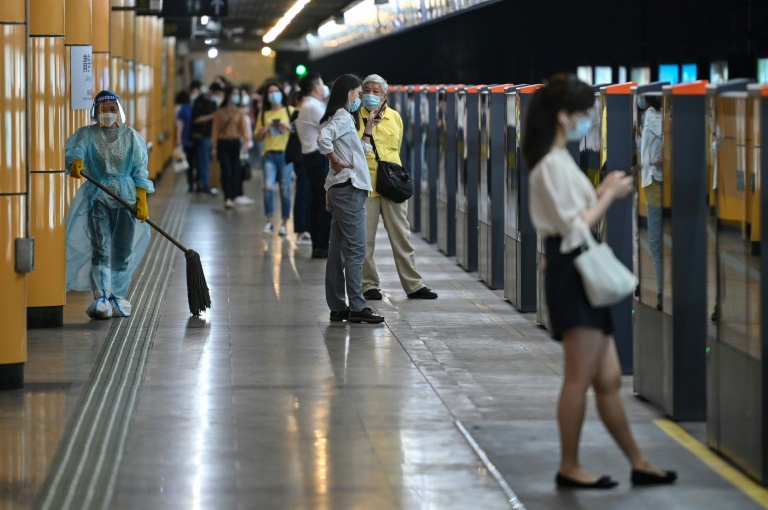
On Wednesday morning, commuters trickled into subway stations and office buildings, scanning QR codes that certify they are virus-free.

Residents gathered in small groups to chat in a park, while masked customers thronged one of the main streets in a Shanghai shopping district.

A day earlier, many of the bright yellow barriers that had hemmed in buildings and city blocks for weeks were taken down.

Deputy Mayor Zong Ming told reporters Tuesday that the easing will impact about 22 million people in the city.

Malls, convenience stores, pharmacies and beauty salons will be allowed to operate at 75 percent capacity, while parks and other scenic spots will gradually reopen, she added. 

But cinemas and gyms remain closed, and schools — shut since mid-March — will slowly reopen on a voluntary basis.

Buses, the subway and ferry services will also resume, transport officials said.

Taxi services and private cars will be allowed in low-risk areas, permitting people to visit friends and family outside their district.

“This is a moment that we have been looking forward to for a long time,” the Shanghai municipal government said in a statement on social media.

More than half a million still remained under restrictions as of Wednesday, according to the authorities.

– ‘New normal’ –

The stringent curbs in Shanghai — home to the busiest container port in the world — had hammered the economy, starving businesses and snarling supply chains in China and abroad.

Signs of resentment and anger among residents emerged throughout the lockdown.

The city government has warned that the situation is still not normal, and businesses said there were many uncertainties.

“It remains to (be seen) how this new normal will look,” said Bettina Schoen-Behanzin, chair of the Shanghai chapter at the European Union Chamber of Commerce in China.

“If there is a positive case in your office or site, in your compound, what happens? You will be locked down again for two weeks?”

China has persisted with a zero-Covid strategy, which involves rapid lockdowns, mass testing and long quarantines to try and eliminate infections.

But the economic costs have mounted, and the Shanghai government said “the task of accelerating economic and social recovery is becoming increasingly urgent”.

E-commerce professional Chen Ying said ahead of the easing that she still planned to work from home but might treat her two-year-old son to a long-awaited walk outside.

“We should have been free to begin with, so don’t expect me to be deeply grateful now they’ve given it back to us,” she told AFP.

While the easing will allow many factories and businesses to resume operations, there are concerns that the recovery will not be immediate.

“I definitely have some worries, things are beyond your control… You can’t tell with a pandemic,” said cafe owner Chen Ribin.

“No one can tell you if it will come again in July or August… We can only take one step at a time.”

UK forgets crisis to party for queen's jubilee

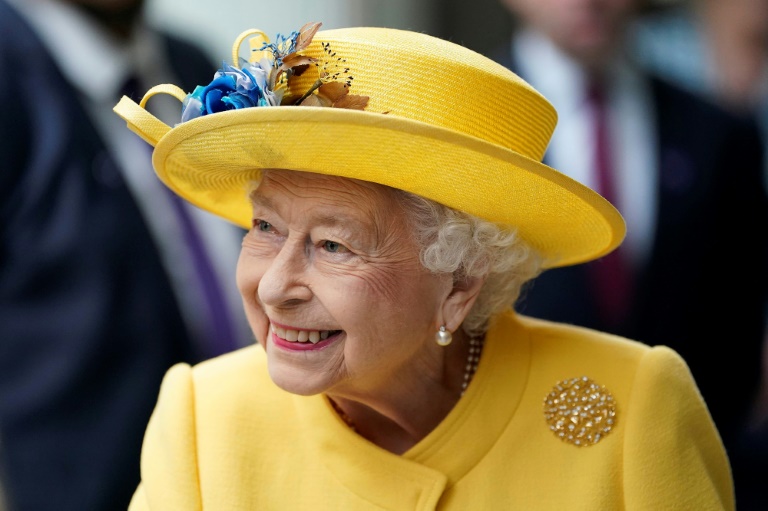
Putting aside a biting inflationary crisis and doubts over the monarchy’s future, Britons prepared Wednesday for four days of festivities to mark a record-breaking 70 years on the throne for Queen Elizabeth II.

The Platinum Jubilee offers a brief respite from a surge in prices not seen since the 1970s, with accounts emerging daily of people struggling to put food on the table and pay spiralling bills.

With two public holidays from Thursday and then the weekend, pubs, restaurants and retailers are hoping for a timely sales boost, after a difficult period including the Covid pandemic.

“With the sun set to shine across the four days we’re hoping to see pub gardens filled with people raising a toast to Her Majesty the Queen and showing their support for two great British institutions,” the British Beer and Pub Association said.

There are thousands fewer pubs in Britain than when the queen ascended the throne amid gloomy post-war rationing in 1952.

And support for the monarchy itself is an open question once the increasingly frail, 96-year-old monarch departs the scene.

– Change looms –

With Prince Charles taking over more of his mother’s duties for occasions of state, there is a sense that the first — and possibly the last — Platinum Jubilee in British history marks a turning of the page.

A poll for The Sun newspaper this week gave the queen a 91.7-percent approval rating. But Charles commanded only 67.5 percent, behind his son Prince William on 87.4 percent.

Historian Anthony Seldon, addressing a discussion at the London School of Economics and Political Science (LSE), said the monarchy’s centuries-old power to adapt and survive should not be underestimated.

But he added: “And how traumatic it’s going to be when it unravels, as well as it might in the next two, three, four years when the change comes.”

Unlike the vocal Charles, the queen has rarely vented an opinion in public, and her sheer longevity means that she has been a fixture of the life of nearly every Briton alive.

She has overcome numerous family traumas, including Charles’ very public split from Princess Diana, and personal heartache when her consort Prince Philip died aged 99 last year, modernising the monarchy along the way.

– Spitfires –

Ahead of jubilee events beginning Thursday, the queen reportedly endured a turbulent flight returning to London from a short break at her Scottish estate of Balmoral.

Lightning forced her private jet to abort its landing Tuesday, before it made a second successful attempt, The Sun newspaper said.  

Meanwhile on The Mall, leading to Buckingham Palace, royal enthusiasts from far afield have braved torrential downpours to camp out for days in advance.

“We had some lovely British hail, and wind and rain but it’s worth it,” said Canadian Angie Hart, 51, who had staked out a spot with her husband and two daughters. 

“Brits know how to do pomp.”

The celebrations get underway with Trooping the Colour, the military parade that has officially marked the British monarch’s birthday for centuries.

A fly-past will include Spitfires, the iconic fighter plane that helped win the Battle of Britain and fend off Nazi Germany in 1940.

The aerial display is expected to be watched by the queen and senior royals from the balcony of Buckingham Palace.

Numbers have been limited to “working royals” only, leaving no place for self-exiled grandson Prince Harry and his American wife Meghan, nor Elizabeth’s disgraced second son Prince Andrew.

– Parade –

Patriotic nostalgia runs red, white and blue throughout the four days of festivities, culminating in Ed Sheeran singing “God Save the Queen” in front of Buckingham Palace on Sunday.

Participants in a giant public parade through central London on Sunday will be familiar to anyone acquainted with British popular culture since 1952.

But Bollywood dancers and a Caribbean carnival will also reflect the changes in British society since then, from one that was predominantly white and Christian, to one that is multicultural and multi-faith.

Britain’s Empire has given way to a Commonwealth of nations — 14 of which still count the queen as their head of state, including Australia and Canada.

But recent royal tours of the Caribbean have laid bare growing tensions about the British monarchy’s status further afield. 

“This queen has been a significant glue within that Commonwealth,” said Michael Cox, emeritus professor of international relations at LSE. 

“Whether, how successfully, Charles is going to play the same role, I don’t know,” he said.

Asian markets mixed on inflation worry, oil bounces after drop

Asian markets fluctuated Wednesday following losses on Wall Street and data reminding traders that inflation shows no sign of easing.

Oil rose around one percent after seeing a sharp drop earlier on reports that OPEC was considering suspending Russia from an output deal, which observers said could allow producers to pump more.

Regional equities have enjoyed a largely healthy run of late on hopes that inflation could be nearing a peak and a sell-off across markets may have run its course, while the easing of some lockdown measures in China added to the optimism.

However, investors were brought down to earth with a bump Tuesday with figures showing eurozone inflation hit a record high in May owing to rocketing energy costs.

The news puts extra pressure on the European Central Bank to act quicker to rein in prices by hiking interest rates along with the Federal Reserve.

There is a fear that acting too late could mean policymakers will have to announce harder, more painful increases later on.

“There are heightened concerns around inflation and where central banks are likely to go trying to combat inflation,” Kristina Hooper, of Invesco Advisers, told Bloomberg Radio.

“This has gone from just an inflation scare to a growth scare. Uncertainty has grown.”

Equity markets were mixed in Asian trade, with traders shrugging off a further easing of lockdown restrictions in China that many hope will give a much-needed boost to the world’s number two economy.

Hong Kong and Shanghai slipped along with Taipei, Bangkok and Manila, though Tokyo, Sydney, Mumbai, Singapore and Wellington rose. London, Paris and Frankfurt opened on a positive note.

But ACY Securities chief economies Clifford Bennett remained wary.

“After this brief euphoria stock prices are again vulnerable to a mass ‘get-out’ frenzy as the reality of the already in full swing global slow-down accompanied by ever-higher interest rates begin to take their toll,” he said in a commentary.

Oil prices struggled to rebound after falling more than four percent late Tuesday in reaction to a Wall Street Journal report that OPEC was considering removing Russia from an agreement that has locked producers into limited output increases.

Moscow’s removal would mean an early end to the pact and allow major crude nations such as Saudi Arabia to open the taps, analysts said.

“If there’s any confirmation from OPEC+ members that the absence of Russia is being discussed, then prices can drop to as low as $100,” said Will Sungchil Yun, at VI Investment Corp. 

“There’s a need for OPEC+ to come up with a plan, as oil prices are likely to keep surging and boost inflationary pressure.”

Matthew Simpson of StoneX Financial said that it was debatable whether such a move would offset a partial European Union embargo on Russia and the expected pick-up in Chinese demand as lockdowns are eased.

But he added that “it can also be argued that much of the drivers behind oil’s recent rally has been priced in. Regardless, we can see that some wind has been taken out of the oil rally sails”.

– Key figures at around 0720 GMT –

Tokyo – Nikkei 225: UP 0.7 percent at 27,457.89 (close)

Hong Kong – Hang Seng Index: DOWN 0.5 percent at 21,307.40

Shanghai – Composite: DOWN 0.1 percent at 3,182.16 (close)

London – FTSE 100: UP 0.3 percent at 7,626.80

Euro/dollar: DOWN at $1.0724 from $1.0739 on Tuesday

Pound/dollar: DOWN at $1.2601 from $1.2603

Euro/pound: DOWN at 85.12  pence from 85.18 pence

Dollar/yen: UP at 129.38 yen from 128.72 yen

Brent North Sea crude: UP 1.0 percent at $116.76 per barrel

West Texas Intermediate: UP 1.0 percent at $115.85 per barrel

New York – Dow: DOWN 0.7 percent at 32,990.12 (close)

— Bloomberg News contributed to this story —

US to send Ukraine advanced weapons, as battle for east rages

President Joe Biden has said the United States will send more advanced rocket systems to Ukraine, as Russian troops press their ferocious bid to complete the capture of a key eastern city.

The battle for Severodonetsk has grown in intensity in recent days, with heavy casualties on both the Ukrainian and Russian sides.

“The Russians are storming, consolidating in the centre of Severodonetsk, while continuing to destroy infrastructure and industrial facilities,” Lugansk region governor Sergiy Gaiday wrote on Telegram early Wednesday. 

One of the industrial hubs on Russia’s path to taking the eastern Lugansk region, Severodonetsk has become a target of massive Russian firepower since the failed attempt to capture Kyiv.

The Russians now control most of the destroyed city, according to regional authorities.

But in a boost for the outgunned Ukrainian military, Biden has confirmed that more US weaponry is on the way.

“We will provide the Ukrainians with more advanced rocket systems and munitions that will enable them to more precisely strike key targets on the battlefield in Ukraine,” Biden wrote in The New York Times.

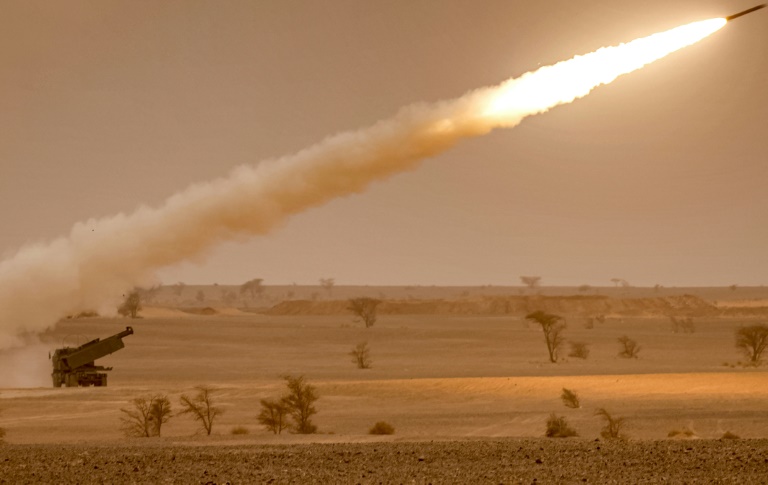
A US official told reporters the weapons being sent are Himars, or the High Mobility Artillery Rocket System, which have precision-guided munitions and a longer range than those currently deployed by Ukraine.

The Himars are the centrepiece of a $700 million package being unveiled Wednesday that includes air surveillance radar, more Javelin short-range anti-tank rockets, artillery ammunition, helicopters, vehicles and spare parts, the official said.

The US is attempting to help Kyiv’s war effort while not being seen as a direct belligerent, and the official stressed that while the weapons would be used to “repel Russian advances on Ukrainian territory”, they would not be “used against Russia”. 

While some analysts have suggested the Himars could be a “game-changer”, others say they should not be expected to suddenly turn the tables for Ukrainian forces struggling under Russian artillery fire.

– ‘Just crazy’ –

The US announcement came shortly after Russian forces struck the nitric acid tank in Severodonetsk, prompting the local governor to warn people to stay indoors. 

Ukrainian President Volodymyr Zelensky said that “given the presence of large-scale chemical production in Severodonetsk, the Russian army’s strikes there, including blind air bombing, are just crazy”.

Meanwhile, in Brussels, European Union leaders were split over banning natural gas from Moscow after agreeing to embargo two-thirds of its oil to tighten the economic screws.

Denmark on Wednesday was set to become the latest European country to be targeted by Russia over gas exports, following the Netherlands, Finland, Poland and Bulgaria.

Danish energy firm Orsted said Russian monopoly Gazprom Export would cut gas supplies after the Danes refused to pay in rubles, a demand Moscow is making of “unfriendly countries” in a bid to sidestep crippling Western sanctions. 

Also on Wednesday, residents of Denmark will vote on whether to overturn the country’s opt-out on the EU’s common defence policy, a referendum that comes on the heels of neighbouring Finland’s and Sweden’s historic applications for NATO membership  

The situation on the eastern frontline in Donbas, meanwhile, has become increasingly desperate, with Ukrainian towns facing near-constant shelling from Russian forces.

French journalist Frederic Leclerc-Imhoff was killed Monday while covering civilian evacuations in the Donbas.

– A ‘few thousand’ war crimes –

Ukraine’s prosecutor general Iryna Venediktova said authorities had identified a “few thousand” cases of war crimes in the Donbas, including murder, torture and the forced displacement of children.

The key Zelensky aide, who met with international counterparts in The Hague on Tuesday, said Kyiv was already going to prosecute 80 suspects for alleged war crimes on Ukrainian soil.

A Ukrainian court on Tuesday jailed two Russian soldiers for 11 and a half years for shelling two villages in the northeastern Kharkiv region. Earlier this month, another was jailed for life for murdering a civilian.

Russia’s invasion of its pro-Western neighbour is also threatening a global food crisis, with Ukraine’s huge grain harvest effectively taken off the world market. 

French President Emmanuel Macron said Tuesday that he and German Chancellor Olaf Scholz had urged Russian leader Vladimir Putin to end Russia’s blockade of the Ukrainian port of Odessa.

But Russian Foreign Minister Sergei Lavrov said it was up to the West and Kyiv to resolve the crisis, starting with the lifting of sanctions.

In Kyiv, meanwhile, Ukrainian football fans were set to watch their national side play its first official match since Russia’s invasion, facing Scotland in a World Cup qualifier later Wednesday in Glasgow.

“I am hoping for victory,” 44-year-old army serviceman, Andriy Veres, told AFP. 

“These days it is very important for the country, for all people, for all those who are fans and even for those who are not.”  

burs-sr/cwl

Denmark votes on joining EU's common defence policy

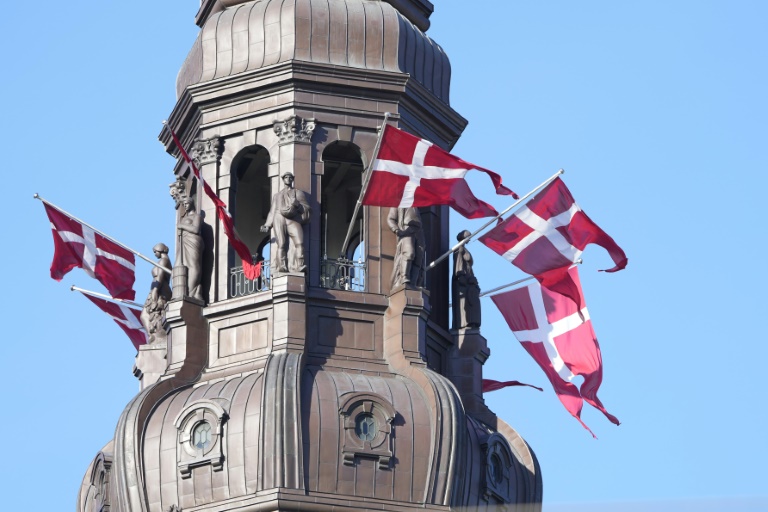
Traditionally eurosceptic Denmark votes Wednesday in a referendum on whether to overturn its opt-out on the EU’s common defence policy after Russia’s invasion of Ukraine.

The vote comes on the heels of neighbouring Finland’s and Sweden’s historic applications for NATO membership, as the Ukraine war forces countries in Europe to rethink their security policies.

More than 65 percent of Denmark’s 4.3 million eligible voters are expected to vote in favour of dropping the exemption, an opinion poll published on Sunday suggested.

Analysts’ predictions have, however, been cautious, given the low voter turnout expected in a country that has often said “no” to more EU integration, most recently in 2015.

Polls open at 8:00 am (0600 GMT) and close at 8:00 pm. Final results are due around 11:00 pm.

“We must always cast our ballots when there is a vote”, Prime Minister Mette Frederiksen urged Danes in the final televised debate of the campaign on Sunday.

“I believe with all my heart that we have to vote ‘yes’. At a time when we need to fight for security in Europe, we need to be more united with our neighbours”, she said.

Denmark has been an EU member since 1973, but it put the brakes on transferring more power to Brussels in 1992 when 50.7 percent of Danes rejected the Maastricht Treaty, the EU’s founding treaty.

It needed to be ratified by all member states to enter into force. In order to persuade Danes to approve the treaty, Copenhagen negotiated a series of exemptions and Danes finally approved it the following year.

Since then, Denmark has remained outside the European single currency, the euro — which it rejected in a 2000 referendum — as well as the bloc’s common policies on justice and home affairs, and defence.

– ‘Ukraine the major reason’-

The defence opt-out means that the Scandinavian country, a founding member of NATO, does not participate in EU foreign policy where defence is concerned and does not contribute troops to EU military missions.

Copenhagen has exercised its opt-out 235 times in 29 years, according to a tally by the Europa think tank.

Danish PM Frederiksen called the referendum just two weeks after Russia’s invasion of Ukraine, and after having reached an agreement with a majority of parties in Denmark’s parliament, the Folketing.

At the same time, she also announced plans to increase defence spending to two percent of gross domestic product, in line with NATO membership requirements, by 2033.

“It was a big surprise”, said the director of the Europa think tank, Lykke Friis. 

“For the past many, many years, nobody thought that the government would put the defence opt-out to a national referendum”, she said.

“There’s no doubt that Ukraine was the major reason for calling the referendum.”

Eleven of Denmark’s 14 parties have urged voters to say “yes” to dropping the opt-out, representing more than three-quarters of seats in parliament. 

Two far-right eurosceptic parties and a far-left party have meanwhile called for Danes to say “no”.

They have argued that a joint European defence would come at the expense of NATO, which has been the cornerstone of Denmark’s defence since its creation in 1949.

In December 2015, Danes voted “no” to strengthening their cooperation with the European Union on police and security matters for fear of losing their sovereignty over immigration.

Trans Rohingya refugee fights prejudice with beauty

A minority in a minority, transgender Rohingya beautician Tanya has faced discrimination on even more fronts than most other residents of the world’s biggest refugee camp.

Five years ago, Myanmar’s military launched a brutal crackdown on the Rohingya, forcing an estimated 750,000 of them — including Tanya and her family — to flee and take shelter in squalid settlements across the Bangladesh border.

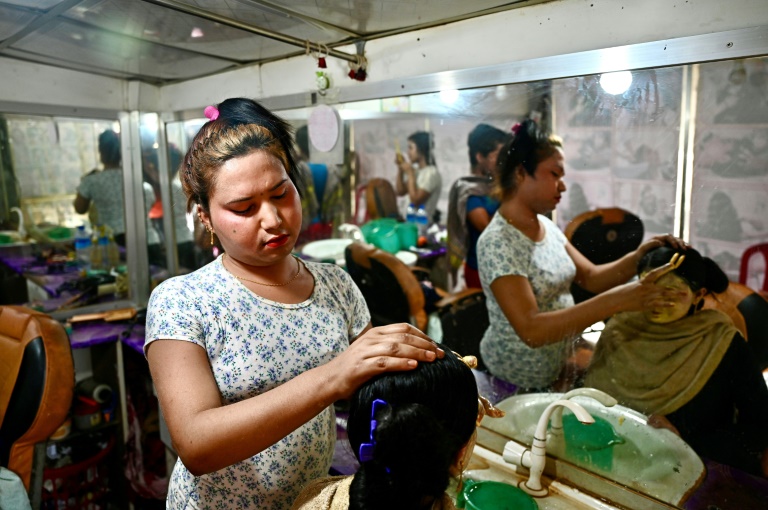
Since then, Tanya’s skills with mascara and foundation have earned her a reputation as one of the best make-up artists in Cox’s Bazar — and better earnings than most other Rohingya.

But she still has to contend with harassment from fellow members of the often socially conservative Muslim ethnic group, as well as recriminations from her own family. 

“My soul says I’m a woman,” the 22-year-old told AFP. “I don’t understand why other people have a problem with that.

“I liked to dress up and do make-up like girls from a very young age. My family didn’t like it. My brothers used to hit me. They were ashamed of me.”

She came out as trans in her early teens and said she had been subjected to violence and abuse ever since.

“I was called a curse of the devils and a punishment from Allah,” she said. 

Since her arrival, she has found work at a salon, where dyeing the hair and painting the lashes of excited brides is a welcome respite from life in the camp, a sprawling patchwork of overcrowded shanty homes fashioned from tarpaulin and bamboo.

Tanya is “the best beautician in the entire district”, according to her client Salma Akter.

“She is a hijra, but she is very good,” Akter told AFP, using a common South Asian term for a “third gender”.

“People come here from all over the region to get their face done by her.”

Tanya is now one of a lucky few bringing a steady income into her community.

But the around 300 Rohingya refugees in Bangladesh who openly identify as transgender are routinely subjected to discrimination, taunts and physical attacks from other members of their community.

“There are many instances of Rohingya transgender being brutally beaten and left on the roads in pool of blood,” said Dil Afrose Chaity, who works with transgender Rohingya refugees in Bangladesh. 

“During the pandemic, one of them was beaten for sporting bigger hair. They were accused of carrying coronavirus to the camp with their hair,” Chaity said.

– New horizons –

Myanmar’s Rohingya had already laboured under decades of discrimination when the military attacked in 2017. 

An international tribunal in The Hague is investigating the violence, which has been designated by the United States as an act of genocide.

Despite the trauma of the crackdown, arriving in Bangladesh opened new horizons for Tanya, who found a much larger transgender community that welcomed her with open arms and gave her the female name she now uses.

She began offering beauty services from her shelter in Kutupalong before her talents were discovered by a Bangladeshi businessman, who set up a salon for her at a market outside the camp.

Her earnings have helped her win some respect from her family, with whom she shares a home.

But they have not accepted her identity.

Elder sister Gul Bahar, who still refers to Tanya by her birth name and gender, says she hopes her sibling “would start being like my older brothers again”.

“Whenever he is out on the road, people laugh at him. Sometimes they follow him to our door and mock him,” she told AFP.

– ‘Man or woman’ –

The taunts and abuse have hardened Tanya’s resolve and cast her in the role of mentor to other members of her community, some of whom she has invited into the salon to learn the beauty trade. 

“People call us boy whores even when we’d simply walk on the road minding our own business,” Farhana, a fellow transgender refugee, told AFP while working in the salon as a trainee.

“If we react, they’d group up and start beating us. Tanya shows us how to ignore these taunts.”

Tanya plans to eventually set up her own salon and hire other transgender women to work alongside her, offering them the same respite from the rejection and insults of other refugees.

“There are more hijra in the camps than you see. Most are afraid to come out,” she said.

“I dream of a time when it will never occur to anyone here whether I have a body of a man or woman.”

Singaporeans in a flap at Malaysian chicken export curbs

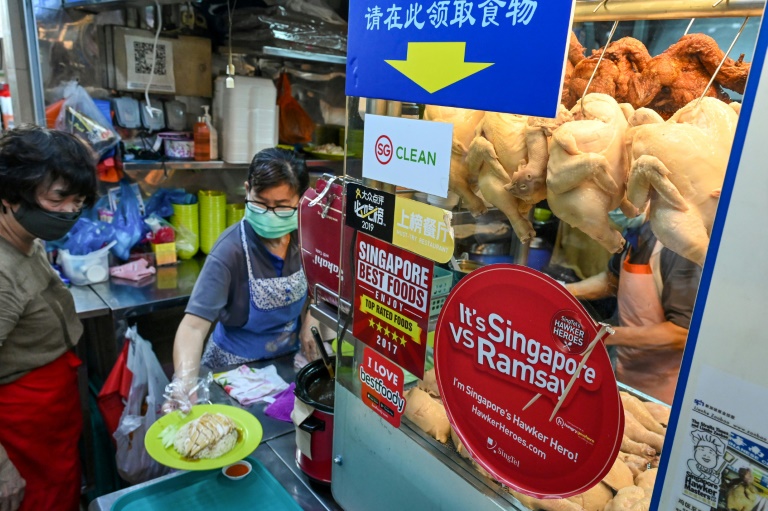
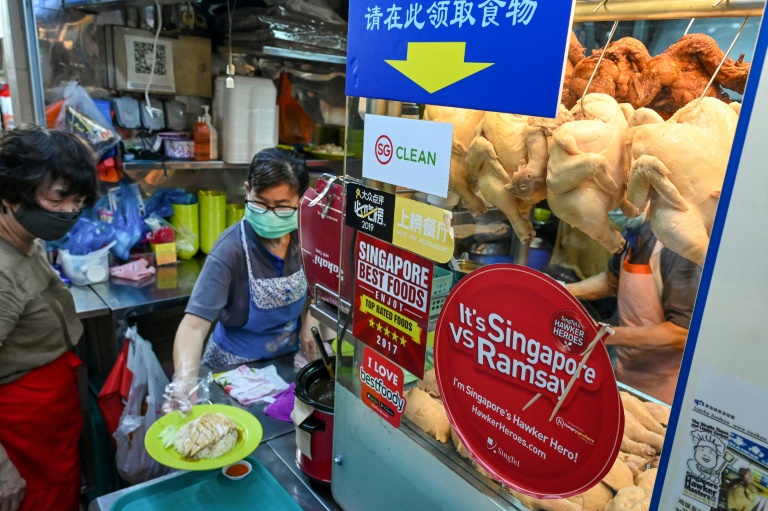
Long queues at stalls selling a popular chicken dish, increasing prices and warnings about supply disruptions — Singaporeans are in a flap due to curbs on poultry exports from neighbouring Malaysia. 

Malaysia’s move to halt exports of 3.6 million chickens a month, which kicks in Wednesday, is the latest protectionist move in Asia aimed at tackling domestic shortages and taming surging inflation.

But the surprise step has caused consternation in Singapore, a tiny city-state that relies on its larger neighbour for a good chunk of food imports, including around a third of its chicken. 

Of particular concern is the impact on chicken rice, a hugely popular dish of poached chicken, rice and chili dip, often sold at the city-state’s ubiquitous open-air food courts. 

Chicken prices “will definitely go up”, said Foo Kui Lian, founder of Tian Tian Hainanese Chicken Rice, one of the best-known stalls selling the dish in Singapore. 

“If (suppliers) raise prices by a lot we would have to raise ours a bit, or it’ll be difficult for us to survive.”

A day before the export curbs kicked in, a long queue formed at the stall as diners sought to get a taste of the dish before a feared surge in prices. 

Office worker Meilan Lim was among those who bought the dish ahead of the restrictions.

“Even though I’m not really a chicken rice person, it’s just that sometimes you do have the craving,” she told AFP.

“So if (the ban is) going to be lasting for a while, it’s going to be a problem for me.”

Some stall holders have already hiked their prices, and officials are warning about disruptions to chicken supplies. 

The city-state’s food agency has advised consumers to buy only what they need, consider buying frozen instead of refrigerated chicken, or shift to different meats.

Most chickens from Malaysia are imported to Singapore alive, and then slaughtered and chilled there. Frozen chicken is often imported from other countries, including Brazil. 

Like many other countries, Malaysia is battling rising inflation, particularly when it comes to food, which prompted it to impose the curbs. 

But Singapore — which has had a fractious relationship with Kuala Lumpur for decades — is also facing rising prices, with inflation at a decade-high. 

Other countries that have taken protectionist measures include India, which banned wheat exports and Indonesia, which temporarily halted palm oil shipments. 

The moves come as concerns grow worldwide about food insecurity caused by supply chain snarls, climate change and Russia’s invasion of Ukraine, a major grain producer.

Singaporeans in a flap at Malaysian chicken export curbs

Long queues at stalls selling a popular chicken dish, increasing prices and warnings about supply disruptions — Singaporeans are in a flap due to curbs on poultry exports from neighbouring Malaysia. 

Malaysia’s move to halt exports of 3.6 million chickens a month, which kicks in Wednesday, is the latest protectionist move in Asia aimed at tackling domestic shortages and taming surging inflation.

But the surprise step has caused consternation in Singapore, a tiny city-state that relies on its larger neighbour for a good chunk of food imports, including around a third of its chicken. 

Of particular concern is the impact on chicken rice, a hugely popular dish of poached chicken, rice and chili dip, often sold at the city-state’s ubiquitous open-air food courts. 

Chicken prices “will definitely go up”, said Foo Kui Lian, founder of Tian Tian Hainanese Chicken Rice, one of the best-known stalls selling the dish in Singapore. 

“If (suppliers) raise prices by a lot we would have to raise ours a bit, or it’ll be difficult for us to survive.”

A day before the export curbs kicked in, a long queue formed at the stall as diners sought to get a taste of the dish before a feared surge in prices. 

Office worker Meilan Lim was among those who bought the dish ahead of the restrictions.

“Even though I’m not really a chicken rice person, it’s just that sometimes you do have the craving,” she told AFP.

“So if (the ban is) going to be lasting for a while, it’s going to be a problem for me.”

Some stall holders have already hiked their prices, and officials are warning about disruptions to chicken supplies. 

The city-state’s food agency has advised consumers to buy only what they need, consider buying frozen instead of refrigerated chicken, or shift to different meats.

Most chickens from Malaysia are imported to Singapore alive, and then slaughtered and chilled there. Frozen chicken is often imported from other countries, including Brazil. 

Like many other countries, Malaysia is battling rising inflation, particularly when it comes to food, which prompted it to impose the curbs. 

But Singapore — which has had a fractious relationship with Kuala Lumpur for decades — is also facing rising prices, with inflation at a decade-high. 

Other countries that have taken protectionist measures include India, which banned wheat exports and Indonesia, which temporarily halted palm oil shipments. 

The moves come as concerns grow worldwide about food insecurity caused by supply chain snarls, climate change and Russia’s invasion of Ukraine, a major grain producer.

US to send Ukraine advanced weapons, as battle for east rages

President Joe Biden has said the United States will send more advanced rocket systems to Ukraine, as Russian troops press their ferocious bid to complete the capture of a key eastern city.

The battle for Severodonetsk has grown in intensity in recent days, with heavy casualties on both the Ukrainian and Russian sides.

Russian troops hit a nitric acid tank at a chemical plant in the city on Tuesday, prompting Ukrainian President Volodymyr Zelensky to accuse Moscow of “madness”.

One of the industrial hubs on Russia’s path to taking the eastern Lugansk region, Severodonetsk has become a target of massive Russian firepower since the failed attempt to capture Kyiv.

The Russians now control most of the destroyed city, according to regional authorities.

But in a boost for the outgunned Ukrainian military, Biden has confirmed that more US weaponry is on the way.

“We will provide the Ukrainians with more advanced rocket systems and munitions that will enable them to more precisely strike key targets on the battlefield in Ukraine,” Biden wrote in The New York Times.

A US official told reporters the weapons being sent are Himars, or the High Mobility Artillery Rocket System, which have precision-guided munitions and a longer range than those currently deployed by Ukraine.

The Himars are the centrepiece of a $700 million package being unveiled Wednesday that includes air surveillance radar, more Javelin short-range anti-tank rockets, artillery ammunition, helicopters, vehicles and spare parts, the official said.

The US is attempting to help Kyiv’s war effort while not being seen as a direct belligerent, and the official stressed that while the weapons would be used to “repel Russian advances on Ukrainian territory”, they would not be “used against Russia”. 

While some analysts have suggested the Himars could be a “game-changer”, others say they should not be expected to suddenly turn the tables for Ukrainian forces struggling under Russian artillery fire.

– ‘Just crazy’ –

The US announcement came shortly after Russian forces struck the nitric acid tank in Severodonetsk, prompting the local governor to warn people to stay indoors. 

Zelensky said that “given the presence of large-scale chemical production in Severodonetsk, the Russian army’s strikes there, including blind air bombing, are just crazy”.

Ukraine’s Deputy Defence Minister Ganna Malyar said late Tuesday that the Russians were seeking to encircle Ukrainian troops but the army was “resisting very powerfully”. 

“But at the same time, we openly say that the Russian army has an advantage in terms of the number of equipment, weapons and personnel,” she said in a video on YouTube.

Meanwhile, in Brussels, European Union leaders were split over banning natural gas from Moscow after agreeing to embargo two-thirds of its oil to tighten the economic screws.

These nations played down the chances of a rapid gas ban to follow, but Zelensky nevertheless expressed his gratitude for EU action taken so far against “the terrorist state” of Russia.

Denmark on Wednesday was set to become the latest European country to be targeted by Russia over gas exports, following the Netherlands, Finland, Poland and Bulgaria.

Danish energy firm Orsted said Russian monopoly Gazprom Export would cut gas supplies after the Danes refused to pay in rubles, a demand Moscow is making of “unfriendly countries” in a bid to sidestep crippling Western sanctions. 

The situation on the eastern frontline in Donbas has become increasingly desperate, with Ukrainian towns facing near-constant shelling from Russian forces.

French journalist Frederic Leclerc-Imhoff was killed Monday while covering civilian evacuations in the Donbas.

– A ‘few thousand’ war crimes –

Ukraine’s prosecutor general Iryna Venediktova said authorities had identified a “few thousand” cases of war crimes in the Donbas, including murder, torture and the forced displacement of children.

The key Zelensky aide, who met with international counterparts in The Hague on Tuesday, said Kyiv was already going to prosecute 80 suspects for alleged war crimes on Ukrainian soil.

A Ukrainian court on Tuesday jailed two Russian soldiers for 11 and a half years for shelling two villages in the northeastern Kharkiv region. Earlier this month, another was jailed for life for murdering a civilian.

Russia’s invasion of its pro-Western neighbour is also threatening a global food crisis, with Ukraine’s huge grain harvest effectively taken off the world market. 

French President Emmanuel Macron said Tuesday that he and German Chancellor Olaf Scholz had urged Russian leader Vladimir Putin to end Russia’s blockade of the Ukrainian port of Odessa.

But Russian Foreign Minister Sergei Lavrov said it was up to the West and Kyiv to resolve the crisis, starting with the lifting of sanctions.

In Kyiv, meanwhile, Ukrainian football fans were set to watch their national side play its first official match since Russia’s invasion, facing Scotland in a World Cup qualifier later Wednesday in Glasgow.

“I am hoping for victory,” 44-year-old army serviceman, Andriy Veres, told AFP. 

“These days it is very important for the country, for all people, for all those who are fans and even for those who are not.”  

burs-sr/cwl

Close Bitnami banner
Bitnami