World

Star Bollywood singer KK dies after concert at 53

Star Bollywood singer Krishnakumar Kunnath, popularly known as KK, died of a heart attack at age 53 after a concert, officials said Wednesday, prompting a flood of tributes.

“His songs reflected a wide range of emotions (and) struck a chord with people of all age groups,” Prime Minister Narendra Modi said on Twitter.

“We will always remember him through his songs. Condolences to his family and fans,” Modi wrote.

KK died shortly after performing at a packed concert in Kolkata on Tuesday evening, said Aroop Biswas, a government minister in the eastern state of West Bengal. 

He was rushed to the hospital from his hotel around 10:30 pm, where doctors pronounced him dead.

Born in Delhi, the versatile singer recorded songs in Hindi, Tamil, Telugu, Kannada, Malayalam, Marathi and Bengali, among other languages.

Like other playback singers in India who become stars in their own right, his songs were dubbed over in films, with the actors lip-synching along.

His hits from the 2000s included  “Aankhon Me Teri” from the movie “Om Shanti Om” and “Khuda Jaane” from “Bachna Ae Haseeno.”

“I cannot believe that such a talented artist left us this way. He had two back-to-back programmes in Kolkata,” music composer Anupam Roy told AFP.

Fans paid tribute on an Instagram post put up by his management on Tuesday with photos showing KK singing in front of a roaring crowd.

The post was accompanied by the caption “Pulsating gig tonight at Nazrul Mancha … Love you all.”

“Rest in peace legend, you will be always in our heart,” wrote one user.

“You’re gone too soon!!!!!!” commented another.

One of the Hindi songs that he sang at his last concert included “Pal” that has the lyrics “whether we live or not, we will remember this moment.”

The Indian film industry has lost a string of luminaries in recent years, including superstar singer Lata Mangeshkar at 92 in February and veteran actor Dilip Kumar in 2021 at 98.

The year before India lost much-loved singer S.P. Balasubrahmanyam as well as actors Irrfan Khan, Rishi Kapoor and Sushant Singh Rajput.

str-burs-abh/stu/mtp
Gabon takes grassroots approach in anti-poaching drive

A whistle blows. The car stops, and the driver is politely asked to turn off the engine and get out.

A team from Gabon’s anti-poaching brigade then searches the vehicle from top to bottom, looking in every cranny for guns or game. Nothing is found, and the driver is allowed to move on.

The unit’s task is to help guard Gabon’s rich biodiversity.

Forests cover 88 percent of the surface of this small central African nation, providing a haven — and a tourism magnet — for species ranging from tropical hardwoods and plants to panthers, elephants and chimps.

The team was on patrol close to a small village called Lastourville, 500 kilometres (300 miles) southeast of the capital Libreville.

The area has been badly hit by poaching, and tracks dug into the forest floor by logging vehicles are also used by illegal hunters to enter and shoot game.

– ‘Everyone poaches’ –

“There’s no standard profile of a poacher. Everyone poaches — from the villager who is looking for something to eat to some big guy in the city who has an international network,” the brigade’s commander, Jerry Ibala Mayombo, told AFP.

The unarmed unit sees its role as “educating, awareness-building and, as a last resort, punishing,” he said. The heaviest sentences are for ivory smuggling, which can carry a 10-year jail term.

The two-year-old service was created by a partnership between Gabon’s ministry for water and forests, a Belgian NGO called Conservation Justice and a Swiss-Gabonese sustainable forestry firm, Precious Woods CEB.

“At the start, the overall feeling towards us was mistrust. But that’s not the case today, because we have got the message across to people about what we do,” said Ibala Mayombo. 

“We sometimes face violent poachers who threaten us, sometimes with their guns,” he said. The team can be given a police escort when necessary.

Last year, the unit seized 26 weapons, several dozen items of game and arrested eight individuals for ivory smuggling.

“The trend is downward,” said Ibala Mayombo.

– Daily challenges –

Gabon, an oil-rich former French colony, is putting itself forward as a major advocate for conservation in central Africa, where wildlife has been battered by wars, habitat destruction and the bushmeat trade.

In 2002, Gabon set up a network of 13 national parks covering 11 percent of its territory.

In 2017, it created 20 marine sanctuaries covering 53,000 square kilometres (20,500 square miles) — the biggest ocean haven in Africa, and equivalent to more than a quarter of its territorial waters.

These initiatives have helped to place Gabon firmly on the map for lucrative eco-tourism.

But beneath the applause, there is the daily challenge of managing problems when humans and animals collide.

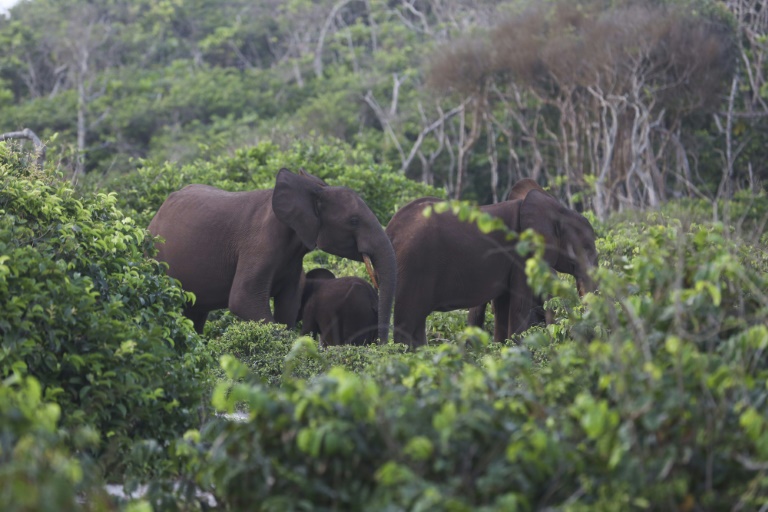
Gabon has a huge success story in its conservation of African forest elephants.

Across Africa, numbers of this species have fallen by 86 percent in 30 years — the animal is now in the Critically Endangered category on the Red List compiled by the International Union for Conservation of Nature (IUCN).

But in Gabon, the forest elephant population has doubled in a decade to 90,000 animals — although this has also come at a cost of frequent conflict between animals and farmers.

In one of the villages, Helene Benga, 67, was in tears over what to do.

“You go into the field in the morning and you see he’s eaten a bit (of the crop). You go the following day, and he’s eaten another bit. Within a few days, all the crop will be gone. I’ve got no money and nothing left to eat. What am I going to do?” she asked.

– ‘We hunt to live’ –

In the village of Bouma, around 30 local people attended a meeting to promote awareness about hunting restrictions — which species could be hunted and at what dates, areas where hunting was banned, how to obtain a permit, and so on.

The mood was tense. 

“What can we do when animals invade our fields?” asked one person. “How can you tell the difference between a protected species and a (non-protected) one when you’re hunting at night?” said another.

“I do understand that we have to protect wildlife,” said Leon Ndjanganoye, a man in his 50s.

“But here, in the village, what do we do to live? We hunt. The laws are a vexation.” 

Asian markets mixed on inflation worry, oil edges up after drop

Asian markets fluctuated Wednesday following losses on Wall Street and data reminding traders that inflation shows no sign of easing.

Oil edged up after seeing a sharp drop earlier on reports that OPEC was considering suspending Russia from an output deal, which observers said could allow producers to pump more.

Regional equities have enjoyed a largely healthy run of late on hopes that inflation could be nearing a peak and a sell-off across markets may have run its course, while the easing of some lockdown measures in China added to the optimism.

However, investors were brought down to earth with a bump Tuesday with figures showing eurozone inflation hit a record high in May owing to rocketing energy costs.

The news puts extra pressure on the European Central Bank to act quicker to rein in prices by hiking interest rates along with the Federal Reserve.

There is a fear that acting too late could mean policymakers will have to announce harder, more painful increases later on.

“There are heightened concerns around inflation and where central banks are likely to go trying to combat inflation,” Kristina Hooper, of Invesco Advisers, told Bloomberg Radio.

“This has gone from just an inflation scare to a growth scare. Uncertainty has grown.”

Equity markets were mixed in Asian trade.

Hong Kong and Shanghai slipped along with Taipei and Manila, though Tokyo, Singapore and Wellington rose. Sydney was flat.

But ACY Securities chief economies Clifford Bennett remained wary.

“After this brief euphoria stock prices are again vulnerable to a mass ‘get-out’ frenzy as the reality of the already in full swing global slow-down accompanied by ever-higher interest rates begin to take their toll,” he said in a commentary.

Oil prices struggled to rebound after falling more than four percent late Tuesday in reaction to a Wall Street Journal report that OPEC was considering removing Russia from an agreement that has locked producers into limited output increases.

Moscow’s removal would mean an early end to the pact and allow major crude nations such as Saudi Arabia to open the taps, analysts said.

“If there’s any confirmation from OPEC+ members that the absence of Russia is being discussed, then prices can drop to as low as $100,” said Will Sungchil Yun, at VI Investment Corp. 

“There’s a need for OPEC+ to come up with a plan, as oil prices are likely to keep surging and boost inflationary pressure.”

Matthew Simpson of StoneX Financial said that it was debatable whether such a move would offset a partial European Union embargo on Russia and the expected pick-up in Chinese demand as lockdowns are eased.

But he added that “it can also be argued that much of the drivers behind oil’s recent rally has been priced in. Regardless, we can see that some wind has been taken out of the oil rally sails”.

– Key figures at around 0230 GMT –

Tokyo – Nikkei 225: UP 0.7 percent at 27,472.49 (break)

Hong Kong – Hang Seng Index: DOWN 0.4 percent at 21,326.02

Shanghai – Composite: DOWN 0.2 percent at 3,178.84

Euro/dollar: DOWN at $1.0719 from $1.0739 on Tuesday

Pound/dollar: DOWN at $1.2600 from $1.2603

Euro/pound: DOWN at 85.08  pence from 85.18 pence

Dollar/yen: UP at 129.05 yen from 128.72 yen

Brent North Sea crude: UP 0.5 percent at $116.18 per barrel

West Texas Intermediate: UP 0.6 percent at $115.31 per barrel

New York – Dow: DOWN 0.7 percent at 32,990.12 (close)

London – FTSE 100: UP 0.1 percent at 7,607.66 (close)

— Bloomberg News contributed to this story —

Morocco economic rebound threatened by drought, Ukraine war

A withering drought and poor harvests plus price hikes fuelled by the war in Ukraine are threatening Morocco’s fragile economic recovery and exposing structural weaknesses, experts say.

The North African kingdom had bounced back last year after a sharp recession in 2020 due to the coronavirus pandemic, and the government of gas tycoon Aziz Akhannouch had forecast growth this year topping three percent.

But since Russia’s invasion of Ukraine he has been forced to slash that figure to at most 1.7 percent, telling parliament that “sudden external events and climate change” were to blame.

The International Monetary Fund has forecast even lower growth of 1.1 percent.

Morocco has pumped resources into diversifying its manufacturing sector, particularly by attracting auto giants such as Renault.

But those efforts “have not changed the structure of the economy”.

That is the conclusion of a 2021 report by a commission on the “New Model of Development” (NMD), a strategy announced last year which sets out ambitious plans including slashing Morocco’s wealth gap and doubling per capita economic output by 2035.

Morocco depends heavily on agriculture, a sector that accounts for 14 percent of gross domestic product and around a third of all jobs.

But farmers are on the front line of climate change, and have been hit hard in recent months with rainfall down by more than a third on the long-term average.

That has had a direct impact on crops, and the agriculture ministry now expects a cereal harvest two-thirds down on last year’s figure.

Despite an uptick in fruit and vegetable exports, the sector overall is set to shrink by 14 percent this year.

That will “directly hit jobs and the level of consumption, especially in rural areas”, said economist Abderrahim Hendouf.  

Over-reliance on agriculture, particularly for jobs, makes Morocco’s economy more vulnerable, he said.

– Profiteering, oligopolies –

But drought is not the country’s only vulnerability.

The war in Ukraine has sent grain and energy prices spiralling globally, pushing fuel prices in Morocco to record levels.

Many Moroccans have also pointed the finger at speculators and fuel distributors, accusing them of profiteering from the crisis.

In April, as Muslims marked the holy month of Ramadan, consumer inflation hit 5.9 percent on an annualised basis.

“The situation has hit Moroccans’ buying power and risks feeding social anger,” said Rachid Aourraz, a researcher at the Moroccan Institute for Policy Analysis.

Akhannouch’s government has announced a billion-euro assistance package to help farmers, as well as tackle inflation.

Aourraz predicts “the consequences of this crisis could be less severe than last time, thanks to positive developments in other sectors like services and industry”.

Since the start of the year, the government has doubled fuel and flour subsidies as well as offering direct financial aid to transport workers who had held a weeks-long strike over the crippling rise in costs.

Akhannouch has also vowed to boost state investments to create jobs.

But even prior to the current impasse, Morocco had seen a decade of slowing growth as well as gaping social and regional inequalities, with the richest fifth owning a half of the country’s wealth.

The kingdom is hoping to go beyond six percent growth by 2035, partly by bringing the large informal sector into the formal economy and by nurturing industry.

But the latter will need a major boost in private investment.

The commission for the NMD says it will also require major shifts in the business environment, currently hobbled by “oligopolies and anti-competitive practices”.

Karim Tazi, one of the report’s authors, points to the banking sector, dominated by three main operators, and the energy sector as particularly uncompetitive.

Such practices “are enough to destroy the growth of any economy,” he said.

Shanghai eases Covid curbs in step towards ending lockdown

Shanghai eased a range of Covid-19 restrictions on Wednesday in a step towards returning to normal after a two-month lockdown that confined residents of the megacity to their homes and battered China’s economy.

The commercial hub of 25 million people was closed down in sections from late March, when the Omicron virus variant fuelled China’s worst outbreak since Covid first took hold in 2020.

After some rules were gradually relaxed over the past few weeks, authorities on Wednesday began allowing residents in areas deemed low-risk to move around the city freely.

“This is a moment that we have been looking forward to for a long time,” the Shanghai municipal government said in a statement on social media.

“Because of the impact of the epidemic, Shanghai, a megacity, entered an unprecedented period of silence.”

On Wednesday morning, people were seen travelling on Shanghai’s subway and heading to office buildings, while some shops were preparing to open.

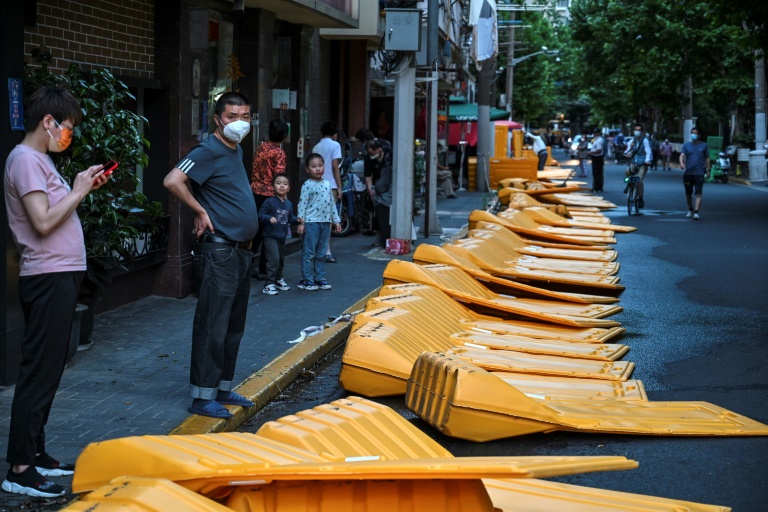
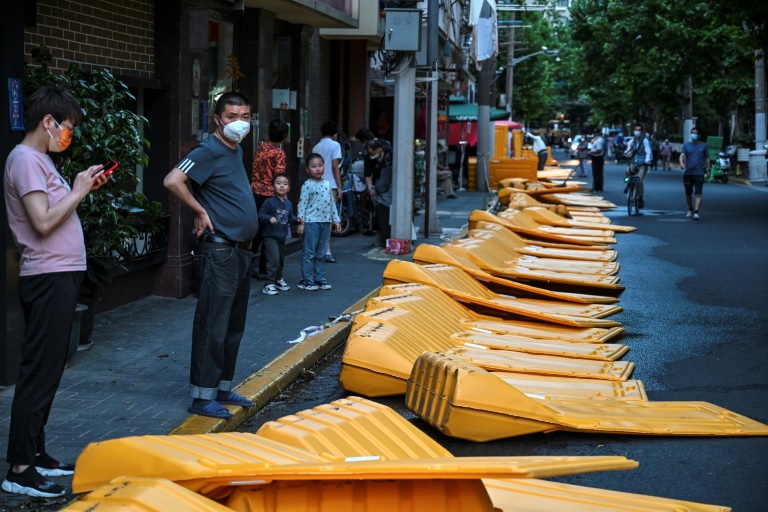
A day earlier, bright yellow barriers that had hemmed in buildings and city blocks for weeks were taken down in many areas.

The restrictions had hammered the economy of the city, snarling supply chains in China and abroad, and signs of resentment among residents emerged throughout the lockdown.

Deputy Mayor Zong Ming told reporters Tuesday that the easing will impact about 22 million people in the city.

Malls, convenience stores, pharmacies and beauty salons will be allowed to operate at 75 percent capacity, while parks and other scenic spots will gradually reopen, she added. 

But cinemas and gyms remain closed, and schools — shut since mid-March — will slowly reopen on a voluntary basis.

Buses, subway and ferry services will also resume, transport officials said.

Taxi services and private cars will also be allowed in low-risk areas, permitting people to visit friends and family outside their district.

– Not normal yet –

But the city government warned that the situation was not yet normal.

“At present, there is still no room for relaxation in consolidating the achievements of epidemic prevention and control,” it said.

China has persisted with a zero-Covid strategy, which involves rapid lockdowns, mass testing and long quarantines to try and completely eliminate infections.

But the economic costs of that policy have mounted, and the Shanghai government said Wednesday that “the task of accelerating economic and social recovery is becoming increasingly urgent”.

E-commerce professional Chen Ying said ahead of the easing that she still planned to work from home but might treat her two-year-old son to a long-awaited walk outside.

“We should have been free to begin with, so don’t expect me to be deeply grateful now they’ve given it back to us,” she told AFP.

Factories and businesses were also set to restart work after being dormant for weeks.

Shanghai eases Covid curbs in step towards ending lockdown

Shanghai eased a range of Covid-19 restrictions on Wednesday in a step towards returning to normal after a two-month lockdown that confined residents of the megacity to their homes and battered China’s economy.

The commercial hub of 25 million people was closed down in sections from late March, when the Omicron virus variant fuelled China’s worst outbreak since Covid first took hold in 2020.

After some rules were gradually relaxed over the past few weeks, authorities on Wednesday began allowing residents in areas deemed low-risk to move around the city freely.

“This is a moment that we have been looking forward to for a long time,” the Shanghai municipal government said in a statement on social media.

“Because of the impact of the epidemic, Shanghai, a megacity, entered an unprecedented period of silence.”

On Wednesday morning, people were seen travelling on Shanghai’s subway and heading to office buildings, while some shops were preparing to open.

A day earlier, bright yellow barriers that had hemmed in buildings and city blocks for weeks were taken down in many areas.

The restrictions had hammered the economy of the city, snarling supply chains in China and abroad, and signs of resentment among residents emerged throughout the lockdown.

Deputy Mayor Zong Ming told reporters Tuesday that the easing will impact about 22 million people in the city.

Malls, convenience stores, pharmacies and beauty salons will be allowed to operate at 75 percent capacity, while parks and other scenic spots will gradually reopen, she added. 

But cinemas and gyms remain closed, and schools — shut since mid-March — will slowly reopen on a voluntary basis.

Buses, subway and ferry services will also resume, transport officials said.

Taxi services and private cars will also be allowed in low-risk areas, permitting people to visit friends and family outside their district.

– Not normal yet –

But the city government warned that the situation was not yet normal.

“At present, there is still no room for relaxation in consolidating the achievements of epidemic prevention and control,” it said.

China has persisted with a zero-Covid strategy, which involves rapid lockdowns, mass testing and long quarantines to try and completely eliminate infections.

But the economic costs of that policy have mounted, and the Shanghai government said Wednesday that “the task of accelerating economic and social recovery is becoming increasingly urgent”.

E-commerce professional Chen Ying said ahead of the easing that she still planned to work from home but might treat her two-year-old son to a long-awaited walk outside.

“We should have been free to begin with, so don’t expect me to be deeply grateful now they’ve given it back to us,” she told AFP.

Factories and businesses were also set to restart work after being dormant for weeks.

Royal family's biggest fan gets ready for jubilee

It takes agility to get past the thousands of commemorative pictures and teacups piled up in the London home of Margaret Tyler, one of the UK’s biggest collectors of royal memorabilia.

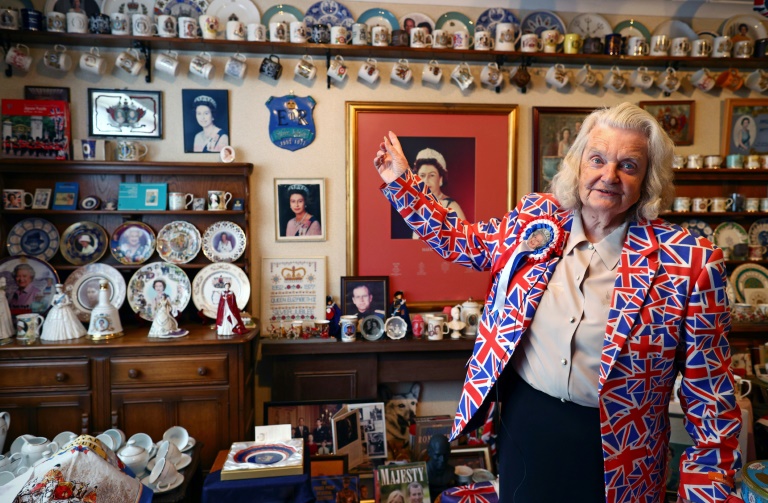
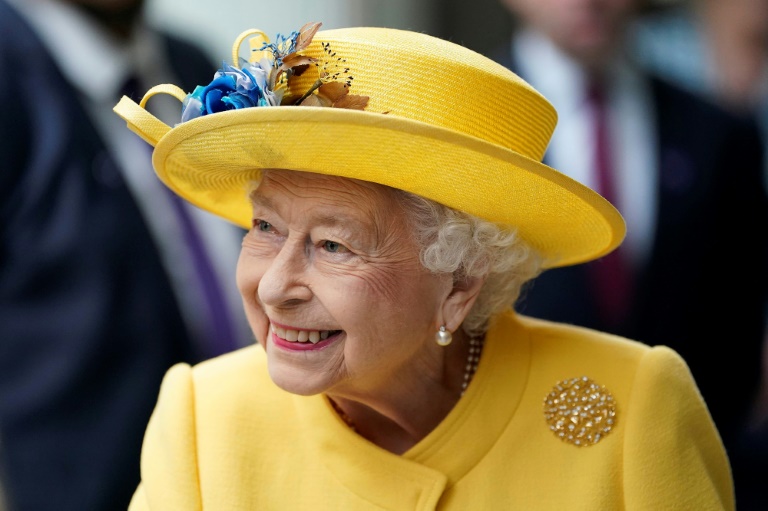
Days ahead of Queen Elizabeth II’s Platinum Jubilee marking 70 years on the throne on Thursday, the 78-year-old pensioner wearing a Union Jack jacket shows off her collection, which fills the ground floor of her house in the northwestern suburb Wembley.

“I think it’s wonderful that she’s done 70 years on the throne. The one thing that does upset me is the fact that prince Philip isn’t here,” says Tyler, casting her eye over the shelves dedicated to the queen’s husband, who died last year aged 99.

The house’s exterior sets the tone: a front door guarded by two queen-inspired garden gnomes, a replica of a bearskin hat-wearing royal guard and a pennant in the red white and blue of the Union Jack.

Inside, Tyler has collected more than 12,000 royalty-themed objects over the last 40 years, from teacups bearing the image of all the members of the royal family, to posters, framed pictures, books, statues, even slippers and ashtrays.

“If I like it, I buy it,” she says. So much that her children have barred her from going on the internet in the hope of slowing her spending.

“I don’t know whether to go to libraries” for the internet, she jokes. “They wouldn’t know.” 

– ‘Diana room’ –

When she started collecting, Tyler gave over one room in the house to her hobby and forbade her four children from entering.

“They weren’t that interested, to be truthful,” she admits.

The collection grew inexorably, and as her children become adults and left home, she used their bedrooms to store more objects.

She even had walls knocked down and an extension built to create a “Diana Room” entirely dedicated to Prince Charles’s first wife, Tyler’s favourite princess.

She has had a portrait of “Lady Di” painted on the ceiling by a US artist.

“It was very hard work because you’ve got your arm up like that all the time. So you have to keep resting it,” she said.

Despite the amount of time spent collecting royal souvenirs, Tyler also does not miss a chance to meet the royal family.

That was why, aged 19, she left rural Herefordshire in the west of England to move to London and be closer to Buckingham Palace.

She has since met the queen four times.

“I gave her a big cake shaped like a crown one time,” she says with unabashed pride.

– ‘Happy, happy time’ –

Tyler’s royal passion is relentless. 

She hopes that the jubilee will be a success for the queen, who at 96 remains very popular, despite health concerns, family scandals and the death of her husband.

“My wishes for the queen would be a happy, happy time together with her family… I hope she has a sort of restful time because she’s worked so hard,” says Tyler.

Despite her sadness that the queen’s grandson Harry and his wife Meghan left official royal duties to live in California, Tyler rejoices that they will travel to London for this week’s celebrations.

“It’s amazing they’re coming over for the jubilee. You know, they didn’t want to be left out this time, did they?” she says.

Like many Britons, Tyler is eagerly waiting for the jubilee celebrations. 

But she will follow the festivities at home on television with friends rather than travelling into London, as she has to look after a loved one who has mobility issues.

“On TV, I can watch it again on replay in the evening when everyone is gone,” she says with a smile.

10 dead, around 20 missing after Hurricane Agatha hits Mexico

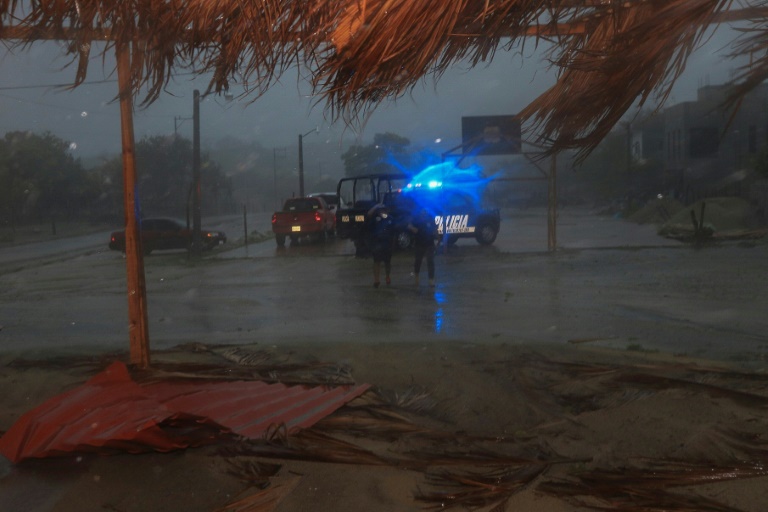
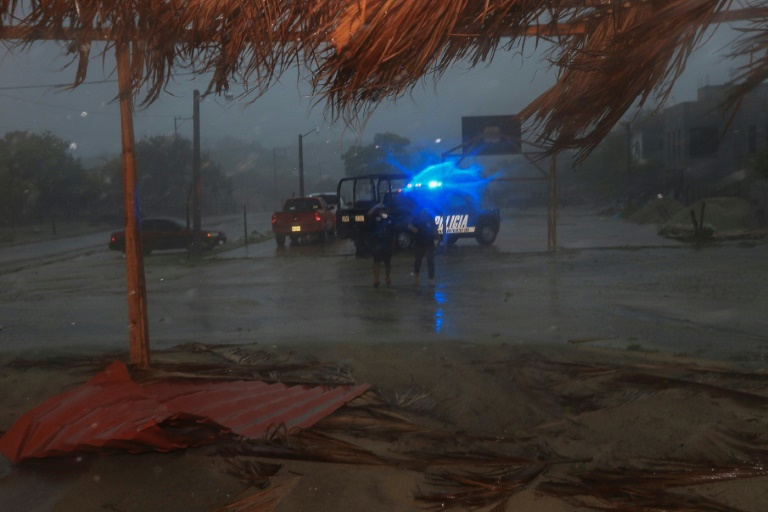
The toll from Hurricane Agatha climbed to at least ten dead and around 20 missing in southern Mexico, where heavy rains triggered landslides and flooding, local officials said Tuesday.

The storm, the first hurricane of the Pacific season, was the strongest to make landfall along Mexico’s Pacific coast in May since record keeping began in 1949, the US National Hurricane Center (NHC) said.

Agatha weakened as it moved inland with its remnants producing torrential rain Tuesday over Veracruz state.

“Right now we’re at around 20 people missing, most of them are in the upper mountains,” Oaxaca state governor Alejandro Murat told Radio Formula, adding that “ten who lost their lives were unfortunately preliminarily reported by local authorities.”

“When Agatha made landfall, the day ended without any loss of human life, but heavy rains that occurred early Tuesday morning caused rivers to burst their banks and landslides,” Murat said earlier in the day.

An earlier toll had repored three dead and eight missing.

Two people aged 18 and 21 years old died when part of a hill collapsed in the community of Santa Catarina Xanaguia, the Oaxaca civil protection office said.

Another woman died and her son was injured in a landslide in Llano del Chillar, it said.

Agatha made landfall Monday near Puerto Angel in Oaxaca as a Category Two hurricane — the second lowest on a scale of five — with winds of 165 kilometers (105 miles) per hour.

Mexico is regularly lashed by tropical storms on both its Pacific and Atlantic coasts, generally between the months of May and November.

The deadliest storm to hit Mexico last year was a Category 3 hurricane called Grace that killed 11 people in the eastern states of Veracruz and Puebla in August.

10 dead, around 20 missing after Hurricane Agatha hits Mexico

The toll from Hurricane Agatha climbed to at least ten dead and around 20 missing in southern Mexico, where heavy rains triggered landslides and flooding, local officials said Tuesday.

The storm, the first hurricane of the Pacific season, was the strongest to make landfall along Mexico’s Pacific coast in May since record keeping began in 1949, the US National Hurricane Center (NHC) said.

Agatha weakened as it moved inland with its remnants producing torrential rain Tuesday over Veracruz state.

“Right now we’re at around 20 people missing, most of them are in the upper mountains,” Oaxaca state governor Alejandro Murat told Radio Formula, adding that “ten who lost their lives were unfortunately preliminarily reported by local authorities.”

“When Agatha made landfall, the day ended without any loss of human life, but heavy rains that occurred early Tuesday morning caused rivers to burst their banks and landslides,” Murat said earlier in the day.

An earlier toll had repored three dead and eight missing.

Two people aged 18 and 21 years old died when part of a hill collapsed in the community of Santa Catarina Xanaguia, the Oaxaca civil protection office said.

Another woman died and her son was injured in a landslide in Llano del Chillar, it said.

Agatha made landfall Monday near Puerto Angel in Oaxaca as a Category Two hurricane — the second lowest on a scale of five — with winds of 165 kilometers (105 miles) per hour.

Mexico is regularly lashed by tropical storms on both its Pacific and Atlantic coasts, generally between the months of May and November.

The deadliest storm to hit Mexico last year was a Category 3 hurricane called Grace that killed 11 people in the eastern states of Veracruz and Puebla in August.

UK forgets crisis to party for queen's jubilee

Putting aside a biting inflationary crisis and doubts over the monarchy’s future, Britons are set to party this week to mark a record-breaking 70 years on the throne for Queen Elizabeth II.

The Platinum Jubilee offers a four-day respite from a surge in prices not seen since the 1970s, with accounts emerging daily of people struggling to put food on the table and clothe their children.

With two public holidays from Thursday and then the weekend, pubs, restaurants and retailers are hoping for a timely sales boost, after a difficult period including the Covid pandemic.

“With the sun set to shine across the four days we’re hoping to see pub gardens filled with people raising a toast to Her Majesty the Queen and showing their support for two great British institutions,” the British Beer and Pub Association said.

There are thousands fewer pubs in Britain than when the queen ascended the throne amid gloomy post-war rationing in 1952.

And support for the monarchy itself is an open question once the increasingly frail, 96-year-old monarch departs the scene.

– The coming change –

With Prince Charles taking over more of his mother’s duties for occasions of state, there is a sense that the first — and possibly the last — Platinum Jubilee in British history marks a turning of the page.

A poll for The Sun newspaper this week gave the queen a 91.7-percent approval rating. But Charles commanded only 67.5 percent, behind his son Prince William on 87.4 percent.

Historian Anthony Seldon, addressing a discussion at the London School of Economics and Political Science (LSE), said the monarchy’s centuries-old power to adapt and survive should not be underestimated.

But he added: “And how traumatic it’s going to be when it unravels, as well as it might in the next two, three, four years when the change comes.”

Unlike the vocal Charles, the queen has rarely vented an opinion in public, and her sheer longevity means that she has been a fixture of the lives of nearly every Briton alive.

She has overcome numerous family traumas, including Charles’ very public split from Princess Diana, and personal heartache when her consort Prince Philip died aged 99 last year, modernising the monarchy along the way.

– Spitfires and Sheeran –

The jubilee events begin on Thursday with Trooping the Colour, the military parade that has officially marked the British monarch’s birthday for more than 250 years.

A fly-past will include Spitfires, the iconic fighter plane that helped win the Battle of Britain and fend off Nazi Germany in 1940.

The aerial display is expected to be watched by the queen and senior royals from the balcony of Buckingham Palace.

Numbers have been limited to “working royals” only, leaving no place for self-exiled grandson Prince Harry and his American wife Meghan, nor Elizabeth’s disgraced second son Prince Andrew.

Patriotic nostalgia runs red, white and blue throughout the four days of festivities, culminating in Ed Sheeran singing “God Save the Queen” in front of Buckingham Palace on Sunday.

Participants in a giant public parade through central London on Sunday will be familiar to anyone acquainted with British popular culture since 1952.

But Bollywood dancers and a Caribbean carnival will also reflect the changes in British society since then, from one that was predominantly white and Christian, to one that is multicultural and multi-faith.

Britain’s Empire has given way to a Commonwealth of nations — 14 of which still count the queen as their head of state, including Australia and Canada.

But recent royal tours of the Caribbean have laid bare growing tensions about the British monarchy’s status further afield. 

“This queen has been a significant glue within that Commonwealth,” said Michael Cox, emeritus professor of international relations at LSE. 

“Whether, how successfully, Charles is going to play the same role, I don’t know,” he said.

Close Bitnami banner
Bitnami