World

Texas law against blocking online posts on hold for now

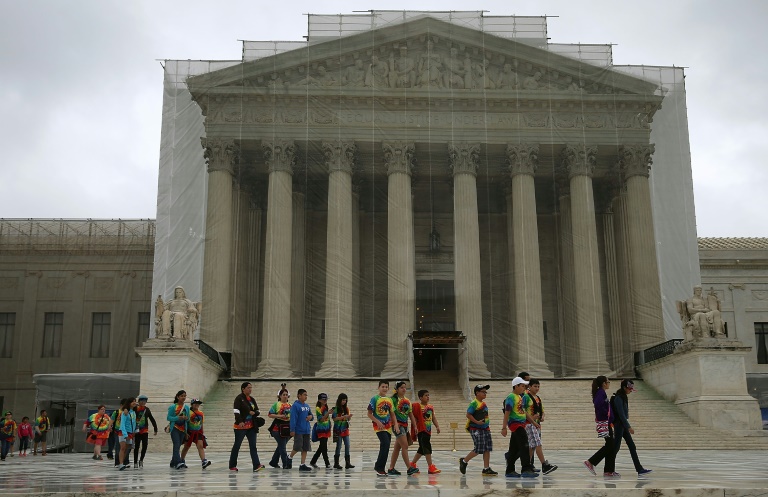
The US Supreme Court on Tuesday put back on hold a controversial Texas law barring social media platforms from “censoring” posts based on viewpoints.

The law threatens to essentially make it a crime for social media platforms to curb hate speech or bigoted tirades, or even point out when posts are demonstrably false.

Political conservatives have accused Facebook, Twitter and other social media giants of stifling their voices, providing no evidence to support the claims.

Social media platforms have consistently defended themselves against such accusations, saying content moderation decisions are based on factors such as risk of real-world harm.

Former US president Donald Trump was booted from Facebook and Twitter after a group of his supporters attacked the Capitol on January 6, 2021 in an attempt to prevent his rightly elected successor Joe Biden from taking office.

People died during the attack, and there were concerns Trump would use social media to incite further violence.

The Texas law bars social media platforms with more than 50 million users from banning people based on their political viewpoints.

NetChoice trade association, whose members include Amazon, Facebook and Google, challenged the law and convinced a federal court in Texas to stop it from being enforced until it was resolved whether it runs afoul of the US Constitution’s First Amendment.

An appeals court later sided with Texas, saying the state could go ahead with the law, prompting the matter being taken to the Supreme Court.

The top court in the United States on Tuesday backed the original decision to put Texas law HB 20 on hold while the question of whether it should be tossed out completely is resolved.

“Texas’s HB 20 is a constitutional trainwreck — or, as the district court put it, an example of ‘burning the house to roast the pig,'” NetChoice counsel Chris Marchese said in a release.

“Despite Texas’s best efforts to run roughshod over the First Amendment, it came up short in the Supreme Court.”

NetChoice welcomed the decision, which sends the case back to a district court in Texas to hear arguments regarding the law’s constitutionality.

In its original decision about the stay, the district court said social media platforms have a right to moderate content disseminated on their platforms, and that a provision against putting warning labels on misinformation even risked violating the free speech rights of internet firms.

“Texas’s law violates the First Amendment because it compels social media companies to publish speech they don’t want to publish, and because it prevents them from responding to speech they disagree with,” said attorney Scott Wilkens at Columbia University’s Knight First Amendment Institute.

“In addition, the theory of the First Amendment that Texas is advancing in this case would give government broad power to censor and distort public discourse.”
14 miners trapped in Colombian coal mine

Fourteen miners are trapped in a coal mine in northern Colombia after an underground explosion, the mayor of the town said on Tuesday.

A miner who was above ground at the time was injured by the explosion Monday afternoon, sustaining “burns all over his body,” according to mayor Manuel Pradilla of Zulia, near the Venezuelan border. 

The man was in a stable condition in hospital. 

“We are not losing hope, we hope that the 14 trapped people can be found alive,” Pradilla told Colombian TV.

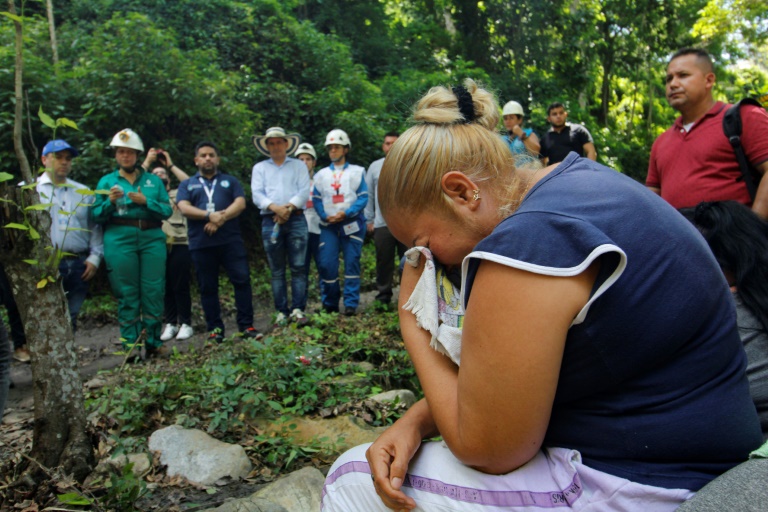
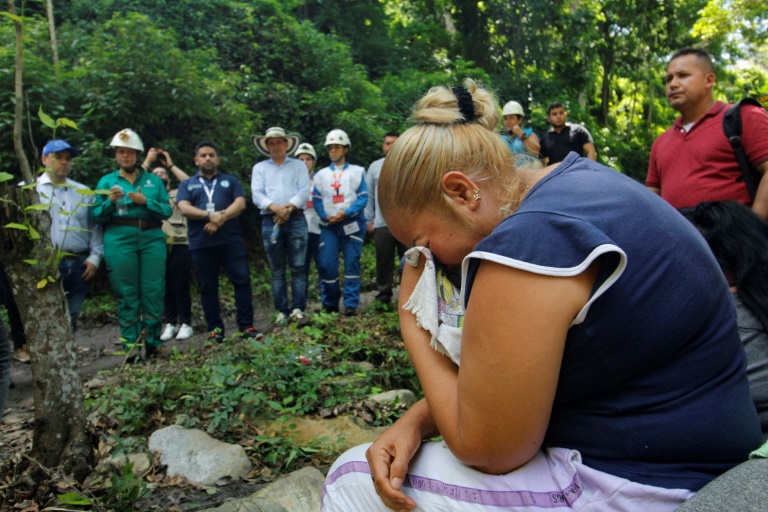
Family members of the missing miners gathered at the site, many in tears, waiting for news from rescue workers searching for survivors. 

The cause of the blast was as yet unknown. 

Mining and crude oil represent Colombia’s main exports.

Latin America’s fourth largest economy recorded 148 fatalities in mining accidents in 2021. 

14 miners trapped in Colombian coal mine

Fourteen miners are trapped in a coal mine in northern Colombia after an underground explosion, the mayor of the town said on Tuesday.

A miner who was above ground at the time was injured by the explosion Monday afternoon, sustaining “burns all over his body,” according to mayor Manuel Pradilla of Zulia, near the Venezuelan border. 

The man was in a stable condition in hospital. 

“We are not losing hope, we hope that the 14 trapped people can be found alive,” Pradilla told Colombian TV.

Family members of the missing miners gathered at the site, many in tears, waiting for news from rescue workers searching for survivors. 

The cause of the blast was as yet unknown. 

Mining and crude oil represent Colombia’s main exports.

Latin America’s fourth largest economy recorded 148 fatalities in mining accidents in 2021. 

Canada province to decriminalize hard drugs in small amounts

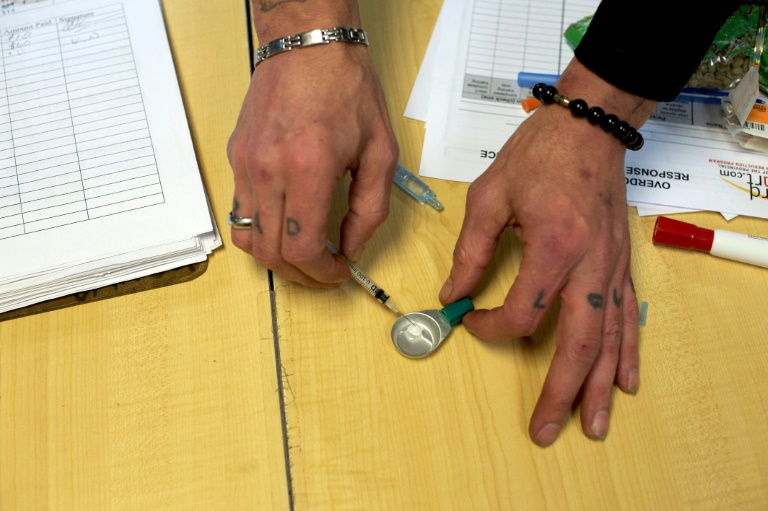
Canada announced Tuesday the decriminalization of hard drugs in small quantities in a British Columbia pilot project aiming to tame an opioid crisis that has killed thousands — by treating addictions rather than jailing users for possession.

Responding to a request by British Columbia, federal Mental Health and Addictions Minister Carolyn Bennett said an exemption from the criminal code to allow for personal possession of opioids, cocaine, methamphetamine and other hard drugs  would kick in on January 31, 2023 and last three years.

Adults in the Pacific coast province will not face arrest or charges for possession of up to 2.5 grams of hard drugs, nor will their drugs be seized by police.

Instead users will be provided with information on how to access medical help for addictions.

“For too many years, the ideological opposition to harm reduction has cost lives,” Bennett told a news conference in announcing the pilot.

“We are doing this to save lives, but also to give people using drugs their dignity and choices,” she said, adding that it could become “a template for other jurisdictions across Canada.”

Kennedy Stewart, the mayor of Vancouver — the epicentre of the crisis — said the decision “marks a fundamental rethinking of drug policy that favors healthcare over handcuffs.”

Calling it a “historic, brave and groundbreaking step in the fight to save lives from the poisoned drug crisis,” he said it would also reduce petty crimes that often feed drug habits.

Several Canadian cities, including Montreal and Toronto, have signalled a desire for similar legal exemptions. 

A small leftist faction in Parliament, the New Democratic Party, meanwhile, is to unveil Wednesday a proposed bill to decriminalize drug possession nationwide. It is expected to be defeated.

– ‘Shame and fear’ –

Bennett stressed that the exemption granted to British Columbia “is not legalization.”

It will, however, make the province only the second jurisdiction in North America to decriminalize hard drugs after the US state of Oregon did so in November 2020.

Oregon’s initiative has reportedly had mixed results as few people have taken up offers of addiction help.

Substances abuse has left thousands dead in British Columbia. Its Addictions Minister Sheila Malcolmson told AFP in November when it applied for the exemption that the province was facing “an overdose crisis that’s causing a terrible loss of life.”

The pandemic compounded its impacts, she said at Tuesday’s news conference.

“Shame and fear keep people from accessing the care that they need,” she explained. “And the fear of being criminalized has led many people to hide their addiction and use drugs alone. And using alone can mean dying alone.” 

Several drug users surveyed by AFP have said the amount of drugs allowed under the exemption is too small, as their daily consumption is far greater. Bennett acknowledged this but said it’s a starting point.

She also said calls are growing louder for Ottawa to regulate a safe supply of hard drugs now often laced with toxic substances.

But first, she added, evidence must be collected from the pilot to show the approach works.

According to federal government data, 26,690 people have died of opioid overdoses across Canada from January 2016 to September 2021.

In British Columbia, an estimated six people die each day from opioid-related drug poisoning. Roughly 9,400 have died since public health officials declared the situation a public health emergency in 2016.

Eurozone stocks sink as inflation accelerates to record high

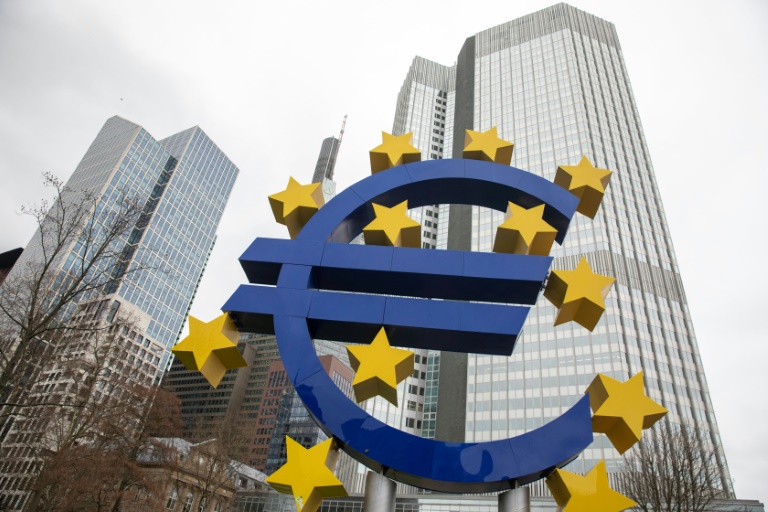
Global stocks mostly fell Tuesday with Wall Street failing to extend a rally and Eurozone bourses tumbled on news that the region’s inflation rate hit another record high in May.

Consumer prices in the eurozone rose by 8.1 percent in May, compared with 7.4 percent in April, official data showed, with energy surging the fastest.

The uninterrupted rise in prices in the wake of Russia’s invasion of Ukraine has heaped pressure on the European Central Bank to speed up interest rate increases, as it prepares to raise borrowing costs for the first time in over a decade.

Adding to the woes: Monday’s agreement by the European Union late Monday for a partial embargo of Russian oil imports pushed Brent oil prices, the European benchmark, worsening inflation worries.

“Higher inflation rates will raise serious question marks about the ECB’s viewpoint on whether gradual rate increases will be enough to deal with such high price growth,” market analyst Fawad Razaqzada from City Index and FOREX.com said.

“Investors are starting to project a faster pace of tightening from the ECB, which could be another factor holding stocks back.”

Bourses in Paris and Frankfurt both dropped more than one percent.

Wall Street also retreated following a lackluster session, the first in a holiday-shortened week.

US shares spent most of the day in the red as investors digested data showing consumer confidence slipped in May as Americans expressed greater unease about the job market, though they remained relatively upbeat even as high inflation bites.

The losses were a disappointment after US stocks last week finally mustered weekly gains after about a month of losses.

“US stocks declined as investors stared at an inflation wall of worry and uncertain Fed tightening path,” said Oanda’s Edward Moya. “In the US, it is too early to be confident in saying that the peak of inflation is in place.”

This week’s economic calendar includes surveys with readings on the American manufacturing and services sectors, as well as the May government jobs report.

– Brent oil tops $124 –

In reaction to the EU’s partial embargo, Brent oil briefly broke above $124 per barrel and WTI crude breached $119.

European chiefs said the latest sanctions would ban purchases of Russian oil delivered by sea, though there would be a temporary exemption for crude received by pipeline.

While widely expected, the agreement adds further upside to crude just as China begins to ease Covid restrictions in Shanghai and Beijing, raising the likelihood of a jump in demand from the world’s number-two economy.

– Key figures at around 2040 GMT –

New York – Dow: DOWN 0.7 percent at 32,990.12 (close)

New York – S&P 500: DOWN 0.6 percent at 4,132.15 (close)

New York – Nasdaq: DOWN 0.4 percent at 12,081.39 (close) 

Frankfurt – DAX: DOWN 1.3 percent at 14,388.35 (close)

Paris – CAC 40: DOWN 1.4 percent at 6,468.80 (close)

London – FTSE 100: UP 0.1 percent at 7,607.66 (close)

EURO STOXX 50: DOWN 1.4 percent at 3,789.21 (close)

Tokyo – Nikkei 225: DOWN 0.3 percent at 27,279.80 (close)

Hong Kong – Hang Seng Index: UP 1.4 percent at 21,415.20 (close)

Shanghai – Composite: UP 1.2 percent at 3,186.43 (close)

Euro/dollar: DOWN at $1.0739 from $1.0779 on Monday

Pound/dollar: DOWN at $1.2603 from $1.2652

Euro/pound: DOWN at 85.18  pence from 85.20 pence

Dollar/yen: UP at 128.72yen from 127.59 yen

Brent North Sea crude: UP 1.0 percent at $122.84 per barrel

West Texas Intermediate: DOWN 0.3 percent at $114.67 per barrel

burs-jmb/hs

War in Ukraine: Latest developments

Here are the latest developments in the war in Ukraine:

– Russians seize ‘most’ of key eastern city –

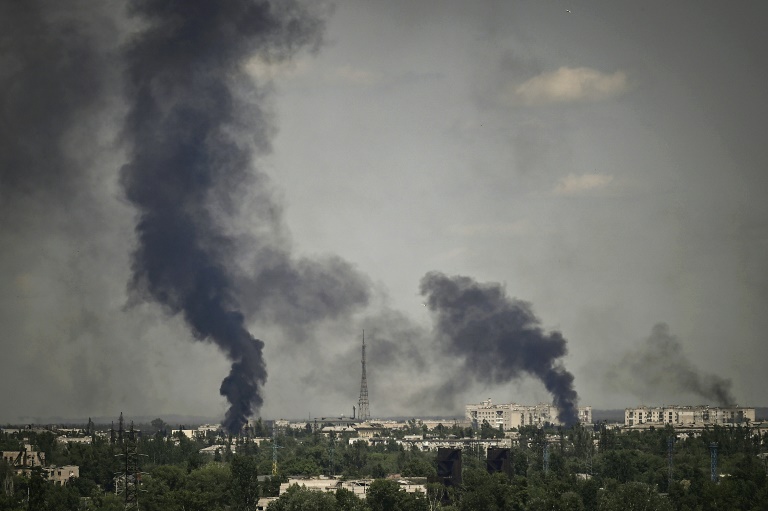
Russian forces seize control of most of the eastern Ukrainian city of Severodonetsk, a regional governor says. 

“Unfortunately, today, Russian troops control most of the city,” Lugansk governor Sergiy Gaiday says in a video. 

The industrial city is key to Russia’s goal of capturing the Donbas region, where Moscow has shifted the bulk of its firepower since failing to seize Kyiv.

– Nitric acid tank ‘hit’ –

Gaiday also says Russian forces struck a tank containing nitric acid at a Severodonetsk chemical plant, calling on residents to stay in shelters.

“For the Russian military, for Russian commanders, for Russian soldiers, any madness is absolutely acceptable,” Ukrainian President Volodymyr Zelensky says in an evening video address on Telegram.

– EU agrees ban on most Russian oil –

EU leaders agree to ban most Russian oil imports, after reaching a deal with Hungary that allows it to keep receiving Russian crude.

The deal bans oil imports delivered by tankers but exempts pipeline deliveries, a key demand of landlocked Hungary, whose leader Viktor Orban had warned that a full oil blockade would be an “atomic bomb” for his country’s economy.

European Commission chief Ursula von der Leyen says the accord will cut around 90 percent of the EU’s Russian oil imports by the end of the year.

But EU leaders play down the prospects of getting a ban on Russian gas in a next round of sanctions.

– Gazprom cuts gas supplies –

Danish energy company Orsted says Russian gas giant Gazprom Export will cut supplies to Denmark on June 1 after the Danish company refused to pay in rubles.

Dutch energy firm GasTerra says Gazprom has suspended its gas supplies for the same reason.

Finland, Bulgaria and Poland have already seen their gas supplies severed.

– ‘Thousands’ of alleged war crimes in Donbas –

Ukraine is investigating several thousand cases of suspected war crimes in the Donbas region, Kyiv’s chief prosecutor says.

On a visit to The Hague, Ukraine’s prosecutor general Iryna Venediktova says some 15,000 cases of alleged war crimes have been reported countrywide since Russia’s invasion on February 24.

– Mariupol port resumes business – 

A Russia-bound cargo ship has left occupied Mariupol, less than two weeks after the last Ukrainian defenders of the strategic port city surrendered, the city’s new rulers say.

Dozens of container ships are blocked in Ukrainian ports which have been blockaded by Russian vessels. Russia is in talks with Turkey about creating a secure corridor for shipping companies.

Separately, French President Emmanuel Macron says he and German Chancellor Olaf Scholz have urged Vladimir Putin to end Russia’s blockade of the major Ukrainian Black Sea port of Odessa under the terms of a UN resolution.

– ‘Banking sanctions hurt Africa’

The chairman of the African Union, Macky Sall, warns EU leaders their decision to expel Russian banks from the SWIFT financial messaging system risks hurting Africa’s food supplies by making it harder to import Russian grain.

On Monday, the EU barred Russia’s largest bank Sberbank from SWIFT as part of a sixth round of sanctions on the Russian economy.

The move makes it difficult for the bank to receive or make international payments but Sberbank says it is operating “as normal”.

Russian Foreign Minister Sergei Lavrov says it was up to the West and Kyiv to resolve the growing global food crisis.

Turkey’s top diplomat says Lavrov will arrive in Turkey on June 8 for talks on unblocking grain exports from Ukraine.

– Two more Russian soldiers convicted –

Two Russian soldiers are sentenced to more than 11 years in jail in Ukraine for breaching the rules of war by shelling civilian areas in the northeastern Kharkiv region.

Their convictions come a week after a Kyiv court sentenced a 21-year-old Russian soldier to life in prison for shooting dead an unarmed civilian on his bicycle.

burs-cdw/imm/ach 

Brazil storm death toll rises to 106

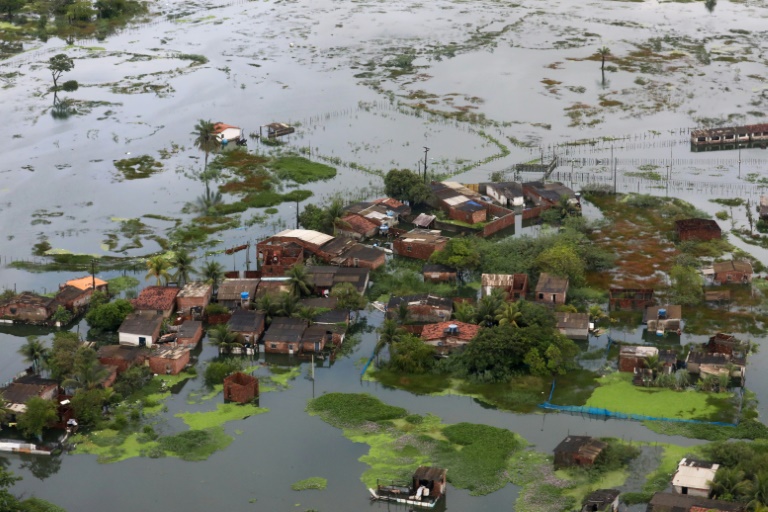
Flooding and landslides triggered by torrential rain have now killed at least 106 people in northeastern Brazil, officials said Tuesday as emergency workers continued a desperate search.

The force of the landslides ripped apart houses in neighborhoods including Jardim Monteverde, a poor community just outside the city of Recife. Locals have likened the roaring surge of mud to a tsunami.

“It was a tragedy. I lost a lot of friends,” 49-year-old resident Maria Heronize told AFP on the verge of tears.

Rescue teams have found dozens of bodies buried after floodwater tore through the neighborhood on Saturday.

Six more bodies — the last of those reported missing in the neighborhood — were recovered Friday, bringing the search there to an end, the Pernambuco state government said.

Elsewhere, at least eight people remain missing, said disaster management officials for the state, scene of the latest in a series of deadly weather disasters to hit Brazil in recent months.

Crews are using dogs trained to sniff for people and planes to locate the missing.

At least 24 municipalities in Pernambuco have declared a state of emergency and more than 6,000 people have lost their homes or been forced to flee.

President Jair Bolsonaro posted a video on Twitter on Monday that showed him flying in a helicopter over the disaster zone, where brown flood water inundated large areas and gashes of mud scarred hillsides where houses once stood.

“I tried to land, but the pilots’ recommendation was that, given the instability of the soil, we could have an accident. So we decided against it,” the far-right president told a news conference.

He recalled a string of devastating floods in Brazil that have killed hundreds of people in recent months, and which experts say are being aggravated by climate change.

– ‘So much rain in so little time’ –

The rains began last week but intensified over the weekend. Overnight Friday into Saturday, the rain that fell in some parts of Pernambuco was 70 percent of what would be normal for the whole month of May.

“We never saw so much rain fall in so little time,” said 60-year-old retiree Mario Guadalupe.

“I saw the landslide happen. First part of the hill gave way, then it was just a tsunami of mud. It nearly took out my house.”

Weather-related tragedies are becoming a familiar script in Brazil. They tend to hit hardest in poor neighborhoods, especially hillside favelas, or slums.

“Climate change could be responsible for the rise in extreme, violent rain that is being detected not only in Brazil but around the world,” Jose Marengo, research coordinator at the National Center for Natural Disaster Monitoring and Alerts, told AFP.

In February, 233 people were killed in floods and landslides in the historic southeastern city of Petropolis, in Rio de Janeiro state.

In January, torrential rains claimed at least 28 lives in southeastern Brazil, mostly in Sao Paulo state.

Bolsonaro drew criticism for sounding dismissive after saying “unfortunately these tragedies happen, a country the size of a continent has its share of problems.”

Iran says IAEA report on undeclared sites 'not fair'

Iran condemned as “not fair” Tuesday a report by the UN nuclear watchdog on traces of nuclear material found at three undeclared sites.

The comments came with talks deadlocked since March on reviving a 2015 nuclear agreement between Tehran and world powers.

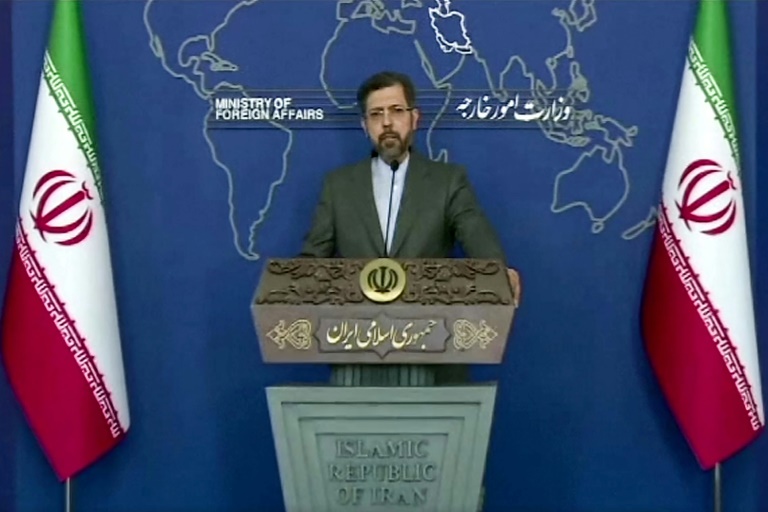
“Unfortunately, this report does not reflect the reality of the negotiations between Iran and the IAEA,” Foreign Ministry spokesman Saeed Khatibzadeh told reporters, referring to the Monday report by the International Atomic Energy Agency.

“It’s not a fair and balanced report,” he said, adding: “We expect this path to be corrected.”

In the report, the watchdog said it still had questions which were “not clarified” regarding nuclear material previously found at three sites — Marivan, Varamin and Turquzabad — which had not been declared by Iran as having hosted nuclear activities.

It said its long-running efforts to get Iranian officials to explain the presence of nuclear material had failed to provide answers to its questions.

Iran and the IAEA agreed in March on an approach for resolving the issue of the sites, one of the remaining obstacles to reviving the 2015 deal. IAEA chief Rafael Grossi is due to “report his conclusions” to the watchdog’s board of governors at a meeting scheduled for next week.

Formally known as the Joint Comprehensive Plan of Action, the 2015 deal gave Iran relief from crippling economic sanctions in exchange for curbs on its nuclear activities.

Then-US president Donald Trump unilaterally pulled out of the pact in 2018 and reimposed biting sanctions, prompting Iran to begin rolling back on its own commitments.

President Joe Biden’s administration says it favours a return to the deal, including lifting key sanctions, but has rejected an Iranian demand to reverse Trump’s designation on a terrorism blacklist of the elite Revolutionary Guards.

State Department spokesman Ned Price said that the United States had “full faith and confidence in the IAEA” and Grossi.

“Iran must fully cooperate with the IAEA without further delay,” he told reporters in Washington.

The parties to the pact with Iran saw it as the best way to stop it from building a nuclear bomb -– a goal Tehran has always denied.

– Iran sees Israeli hand –

While most of the activities discussed in the IAEA report are thought to date back to the early 2000s, sources say that one of the sites, in the Turquzabad district of Tehran, may have been used for storing uranium as recently as 2018.

Iran saw an Israeli hand in the IAEA’s latest findings. 

“It is feared that the political pressure exerted by the Zionist regime and some other actors has caused the normal path of the agency’s reports to change from technical to political,” Khatibzadeh said.

Israel on Tuesday accused its arch-foe Iran of stealing classified documents from the IAEA to hide evidence of its nuclear programme.

Israel is adamantly opposed to the 2015 nuclear deal and any effort to restore it. 

“Iran stole classified documents from the UN’s Atomic Agency IAEA and used that information to systematically evade nuclear probes,” Israeli Prime Minister Naftali Bennett wrote on Twitter. 

“How do we know? Because we got our hands on Iran’s deception plan,” Bennett wrote. His tweet included a link to eight files of documents in English and Farsi, as well as photographs.

The files were part of a cache allegedly taken by Israeli agents from an Iranian warehouse in 2018.

Iran’s representative to the IAEA, Mohammad Reza Ghaebi, said earlier that the IAEA’s report “does not reflect Iran’s extensive cooperation with the agency”.

“The agency should be aware of the destructive consequences of publishing such one-sided reports.”

– Feud over reviving deal –

In a separate report published Monday, the IAEA estimated that Iran’s stockpile of enriched uranium had grown to more than 18 times the limit agreed in the 2015 deal.

Iran seeks the lifting of all sanctions that followed Trump’s 2018 pullout.

“The pause in the negotiations is due to the US not giving an answer to the initiatives proposed by Iran and Europe,” Khatibzadeh said.

Price replied that the United States was ready to return “immediately” to the agreement and that — for now — it continued to be “in our national interest to do so”.

“It is ultimately up to Iran to decide to drop demands that go beyond the JCPOA and to engage in good faith,” he said.

Workers recall rape, beatings at VW Brazil unit: prosecutor

Victims forced to work in slave-like conditions at a Brazilian property owned by Volkswagen during the country’s dictatorship recount “grave and systematic” abuses, including rapes, beatings and being tied to trees, a prosecutor said Tuesday.

The German carmaker is facing legal action in Brazil over allegations of rampant human-rights violations at a large farm it ran in the Amazon rainforest basin in the 1970s and ’80s under the country’s then military regime, media in Germany reported Sunday.

The lead prosecutor on the case, Rafael Garcia, told AFP that investigators had collected depositions from victims who were lured to the farm with false promises of lucrative jobs, then forced to cut down the jungle under grueling conditions against their will to make way for Volkswagen’s cattle ranch, which became the biggest in the northern state of Para.

“Workers who tried to escape were beaten, tied to trees and left there for days,” he said.

“Those who tried to slip into the forest never came back — there were simply stories that they had been killed. Workers were systematically, physically abused.”

Garcia said a task force of investigators had spent three years assembling evidence in the case, after a local Catholic priest came forward with horrifying accounts of abuse at the property he had compiled over the years.

The task force’s report contains a chilling series of allegations from former workers at the farm in southern Para, known as Fazenda Vale do Rio Cristalino, where armed guards reportedly kept violent watch over a workforce that prosecutors estimate numbered in the hundreds.

“One worker tried to escape, but the gunmen caught him. As punishment, they kidnapped his wife and raped her,” it says, citing three witness’ testimony.

“Another worker tried to flee and was shot in the leg. Yet another was left bound and naked.”

The workers were kept in “debt-slavery” by being forced to buy food and supplies from the farm store at exorbitant prices, and some died of malaria with no access to medical care, Garcia said.

Prosecutors have summoned Volkswagen for an initial audience on June 14, where they will attempt to reach a settlement, he said.

If that fails, the company could face charges.

In 2020, Volkswagen agreed to pay 36 million reais ($6.4 million at the time) in compensation for collaborating with Brazil’s secret police during the dictatorship (1964-1985) to identify suspected leftist opponents and union leaders, who were then detained and tortured.

K-pop super band BTS says 'devastated' by US hate crimes

South Korean K-pop supergroup BTS used a White House visit Tuesday to call out a growth in anti-Asian hate crimes in the United States.

The singer Park Ji-min, better known as Jimin, said through a translator ahead of a meeting with President Joe Biden that the group is “devastated by the recent surge of hate crimes.”

Another member, Suga, appealed for tolerance, saying, “It’s not wrong to be different. I think equality begins when we open up and embrace all of our differences.”

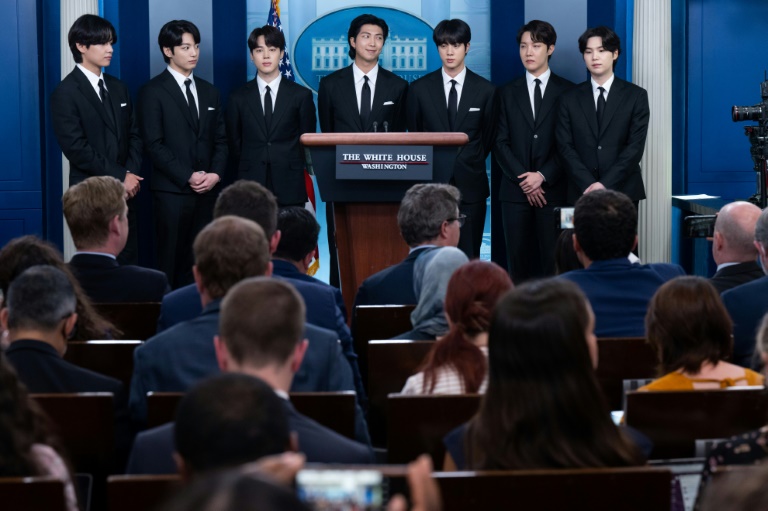
All seven members of the K-pop sensation took to the White House briefing room podium, briefly addressing reporters who were assembled for the daily back-and-forth with Press Secretary Karine Jean-Pierre.

Dressed in matching dark suits and ties, with white shirts, the boy band came to the White House with a serious message.

Biden issued the invitation to “discuss the need to come together in solidarity, Asian inclusion and representation, and addressing anti-Asian hate crimes and discrimination, which have become more prominent issues in recent years,” the White House said.

Anti-Asian sentiment and violence in the US have grown during the coronavirus pandemic in a trend many blame on fallout from the Covid-19 pandemic.

Biden’s Republican predecessor Donald Trump often blamed the pandemic, which originated with an outbreak in Wuhan, China, as “the China virus” and also mocked the deadly virus as “kung flu.”

The trend stands out within a general rise in violent crime, with the ugliest incident taking place in the Atlanta area, where a man shot dead eight people at massage spas, six of them Asian women.

The White House praised BTS’ floppy haired, stylish sensations as “youth ambassadors who spread a message of hope and positivity across the world.”

Band members, all in their 20s and who frequently appear wearing earrings and lipstick, have given a voice to a generation comfortable with gender fluidity.

They are credited with generating billions for the South Korean economy, and their label enjoyed a surge in profits despite holding fewer concerts during the pandemic.

Biden, who at 79 is the oldest person to become president, has often reached out to young celebrities and social media influencers to try and inject some glamor into his team’s messaging on social and health issues.

These included pop singer Olivia Rodrigo and the Jonas Brothers in campaigns to persuade young Americans to get their Covid-19 vaccines.

Close Bitnami banner
Bitnami