World

Brazil facing more deadly storms: expert

Tragedies like the floods and landslides that killed more than 100 people in northeastern Brazil will likely keep happening as climate change advances unless authorities act to protect poor communities in high-risk areas, an expert said.

Torrential rains over the weekend wrought havoc on the city of Recife and surrounding areas, the latest in a series of deadly storms to hit Brazil in recent months.

Jose Marengo, research coordinator at the National Monitoring and Alert Center for Natural Disasters (CEMADEN), told AFP climate change will continue fueling ever heavier rains — and that “if cities aren’t prepared, we’ll be mourning more and more deaths.”

– Is latest disaster related to climate change? –

“Climate change is a long-term process that is advancing slowly. No one isolated, extreme event can be attributed to it. Rain and disaster are different things.

“In Recife, very intense rains fell on areas near rivers and hills. Any intense rain in places like that will cause similar tragedies in these circumstances, with rivers sweeping away houses and avalanches of mud taking out everything in their path.

“Climate change could be responsible for the rise in extreme, violent rain that is being detected not only in Brazil but around the world. But it can’t be blamed for the fact that governments allow people to build in high-risk areas, or that the poor have nowhere to go and have to live in vulnerable areas. Those are urban planning problems.”

– What do Brazil’s recent storms have in common? –

“In Bahia state (northeast), where 33 people were killed in December, there is a phenomenon called the South Atlantic Convergence Zone that produces rain in the (southern hemisphere) summer. It’s always present in southeastern Brazil, but in December it reached Bahia and caused deadly floods.

“In Petropolis (southeast, where 233 people were killed in February), there was an intense meteorological phenomenon, unusual but not impossible, more similar to what happened now in Recife. In both cases, the rain had been correctly forecast, but the problem was vulnerable populations living in high-risk areas.

“If you look at videos of landslides and flash floods from both Petropolis and Recife, it’s impossible to tell which is which, because they were very similar disasters.”

– How can Brazil, other governments prepare better? –

“Rain is only part of the problem. In Brazil, we’re good at forecasting rain. The problem is the weak link in the chain: the vulnerability of the population.

“It’s a common mistake to say, ‘The rain killed X number of people.’ Rain doesn’t kill people, except when it combines with the problem of people living in high-risk areas.

“Governments need to prevent people from building on areas such as hillsides and evacuate people from existing houses to safer areas — every year, not just when there are disasters.

“And cities need to be better-organized, because we can see looking at the climate that phenomena like these rains are getting more intense and violent.

“If people and cities aren’t prepared, we’ll be mourning more and more deaths. The rainy season is just starting in the northeast, and we may see a lot more such phenomena this year.”

'I can breathe': Ukraine women and children flee Russian troops

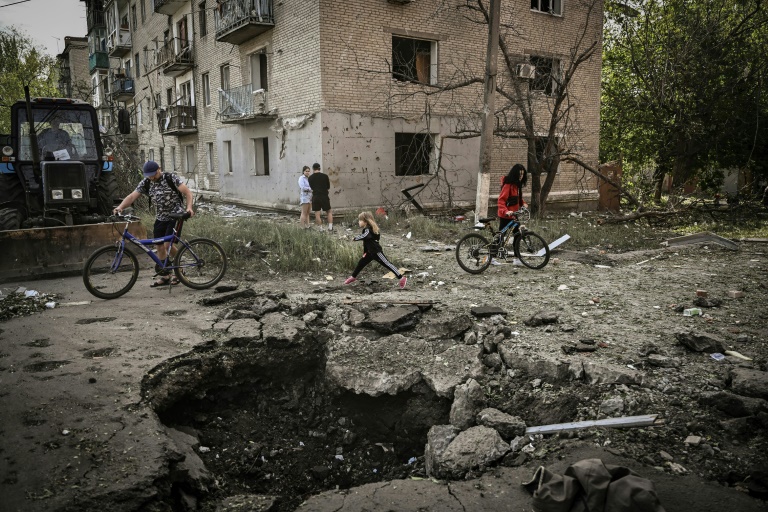
The hordes of exhausted people hurrying through the east Ukraine checkpoint towards Red Cross buses were women, children and the elderly, desperate to flee the horrors of life in Russian-controlled territory.

They were crying or had lined faces and harrowed eyes, a testimony to the living hell they had endured in east Ukraine after Russia’s invasion in late February.

“I can breathe more easily now,” Anna, a teacher who fled with her children aged 13 and 11, told AFP, declining to give her surname as she crossed the checkpoint.

But she was grieving for what she left behind. As part of the deal with Russian forces to let Ukrainians out, men under 60 were obliged to remain behind — including Anna’s husband.

“It was the only solution with the children,” she said, wiping her tears.

A steady flow of mini buses and cars delivered some 1,350 people and their luggage on Monday to land held by Ukrainian forces.

The convoy, carrying children with soft toys and women saddled with luggage, crossed a dam cutting through a reservoir that serves as the demarcation line between Russian and Ukrainian troops.

– Grim ‘Russian world’ –

The evacuees recounted horrifying stories of life under Russian occupation. The women were hesitant to give their full names, fearing their husbands could be punished for their testimony. 

Oksana said she was “relieved” to have escaped. She brought with her  two dogs “who are part of the family,” but her husband was left behind.

“There were explosions all along the road. We couldn’t get away,” she said, explaining that she was at her countryside holiday cottage when the war erupted. 

“Then the Russian tanks with the Z-symbols came through,” she said, referring to a symbol Russia uses for what it calls a special military operation in Ukraine.

Their arrival, she said, meant she was unable to return to her home in Kharkiv, Ukraine’s second-largest city, which was shelled incessantly but fended off Russian efforts to capture it.

Tetyana, a 19-year-old student said she was happy to back in her “native Ukraine” after three months of living in “the Russian world”.

The term, often repeated by Russian President Vladimir Putin, is used to refer to regions the Kremlin believes fall under sphere its of influence.

In this “Russian world”, “we didn’t go out into the streets to avoid meeting” the soldiers, said Viktoria, Anna’s colleague and mother of children aged 12 and 9, who also left her husband behind.

The two teachers said they had continued to teach remotely.

The new arrivals said Russian authorities had confiscated telephones and that residents there only felt safe using them in the privacy of their homes.

Internet and electricity had been cut for the nine days prior to their departure to the Ukrainian side.

They said they were unable to withdraw cash and that towns and cities under Russia’s grip desperately need food and humanitarian aid.

– ‘War crimes’ –

Another evacuee named Anna, a two-year-old baby in her arms, had trouble consoling herself.

“One moment it was calm, but then explosions started. We had to leave with my son,” she said. 

She was worried about her husband who stayed. 

The family had realised the war had started when it heard explosions and saw Russian trucks in the street.  

“We spent two days in the school basement,”she said.

“We did not know on whose territory we were, but then the Russians arrived and set up checkpoints.” 

Anna said she will stay with relatives and hopes to see her husband soon. 

“I hope all is well (with him). It was very difficult to leave.” 

Local prosecutor Eduard Mirgorodsky said people were “traumatised and scared.”

He is interviewing displaced people to see if war crimes were committed. 

“There is a lot of talk about kidnappings, robberies and also collaboration with the enemy,” he said. 

He also said that many who wanted to leave could not be evacuated and remained blocked on the other side.

“Many, many people stayed,” sighed 46-year-old Red Cross volunteer Igor Klymenko. 

He stressed that humanitarian aid was also needed there: “Help is needed!”

Russia closes in on key city as EU clinches oil deal

Russian forces now control “most” of eastern Ukraine’s key city of Severodonetsk, a regional governor said Tuesday, while EU leaders were split over banning gas from Moscow after agreeing to embargo most of its oil.

Ukraine meanwhile pushed on with an investigation into war crimes since the Russian invasion. Officials said thousands had been committed in the eastern Donbas region alone and that it had jailed two Russian soldiers elsewhere in the country. 

Severodonetsk is one of the industrial hubs that lie on Russia’s path to capturing the Donbas’s Lugansk region, where Moscow has shifted the bulk of its firepower since failing to capture Kyiv in the war’s early stages.

“Unfortunately, today, Russian troops control most of the city,” Lugansk governor Sergiy Gaiday said in a video, insisting Ukraine’s military was not in danger of being surrounded.

He added that “90 percent” of Severodonetsk had been destroyed.

Gaiday also warned that Russian forces had hit a tank containing nitric acid at a Severodonetsk chemical plant and called on people to stay in their shelters.

EU leaders meeting for a second day in Brussels were only partly successful in tightening the economic screws on Moscow.

A compromise oil embargo deal reached late Monday, meant to punish Russia for its invasion, cuts “a huge source of financing for its war machine”, European Council chief Charles Michel tweeted.

– Talks on gas embargo –

But the EU remained divided on the issue of gas supplies, and leaders played down the chances of a rapid ban to follow the embargo on two-thirds of oil imports from Russia.

Europe relies on Russian gas for some 40 percent of its supplies, and a ban would add to the existing pain from an energy and inflation crisis.

European Commission chief Ursula von der Leyen suggested Brussels had gone far enough for now against Russian fossil fuels and that it was time to focus more on the “financial and the economic sector”.

The oil ban “will effectively cut around 90 percent of oil imports from Russia to the EU by the end of the year”, she said.

The compromise oil deal exempts deliveries by pipeline, after Hungarian Prime Minister Viktor Orban warned halting supplies of cheap Moscow crude would wreck his nation’s economy.

“Families can sleep peacefully tonight, we kept out the most hair-raising idea,” Orban, whose country borders war-torn Ukraine to the west, said in a video message.

Denmark became the latest European country to be targeted by Russia over gas exports in the meantime, following in the footsteps of the Netherlands, Finland, Poland and Bulgaria.

Danish energy firm Orsted said Tuesday that Russian energy monopoly Gazprom Export would cut gas supplies on Wednesday after the Danish company refused to pay in rubles as the Russian government demands.

– ‘Save your lives’ –

The situation on the eastern frontline in Donbas has become increasingly desperate, with Ukrainian towns facing near constant shelling from Russian forces.

“We see some cars driving around with Ukrainian flags, so we figure that means we are still part of Ukraine,” said Yevgen Onyshchenko, a 42-year-old plumber in a powerless apartment in Severodonetsk’s twin city Lysychansk.

“But otherwise, we are in the dark.”

French journalist Frederic Leclerc-Imhoff was killed while covering civilian evacuations in the area on Monday.

An overnight rocket attack killed at least three people and wounded six in the city of Sloviansk, Donetsk regional governor Pavlo Kyrylenko said Tuesday on Telegram.

“There are no safe places in the Donetsk region, so I call again: evacuate — save your lives,” he said.

Four more civilians died and seven were injured in Donetsk on Tuesday, he added in a later Telegram post.

Ukraine’s prosecutor general said authorities had identified a “few thousand” cases of war crimes in the Donbas, including murder, torture and the forced displacement of children.

Prosecutor Iryna Venediktova, who met international counterparts in The Hague on Tuesday, said Kyiv was already going to prosecute 80 suspects for alleged war crimes on Ukrainian soil.

A Ukrainian court on Tuesday jailed two Russian soldiers for 11 and a half years for shelling civilian areas. Earlier this month, another was jailed for life for murdering a civilian.

Servicemen Alexander Bobykin and Alexander Ivanov were both convicted Tuesday of firing Grad missiles on two villages in the northeastern Kharkiv region in the early days of the war.

– Odessa blockade proposal –

Russia’s invasion of its pro-Western neighbour is also threatening a global food crisis, with Ukraine’s huge grain harvest effectively taken off the world market. 

French President Emmanuel Macron said Tuesday that he and German Chancellor Olaf Scholz had urged Vladimir Putin to end Russia’s blockade of the Ukrainian port of Odessa under the terms of a UN resolution.

Under the proposal, a UN resolution would set up a framework under which mines laid by the port’s Ukrainian defenders could be removed, and grain shipments resume.

But Russian Foreign Minister Sergei Lavrov said it was up to the West and Kyiv to resolve the crisis, starting with the lifting of sanctions.

burs-dk/imm/bp

US warns of new UN sanctions bid if North Korea tests nukes

The United States warned Tuesday that it will try again to toughen UN sanctions if North Korea tests a nuclear weapon, after a bid last week was vetoed by China and Russia.

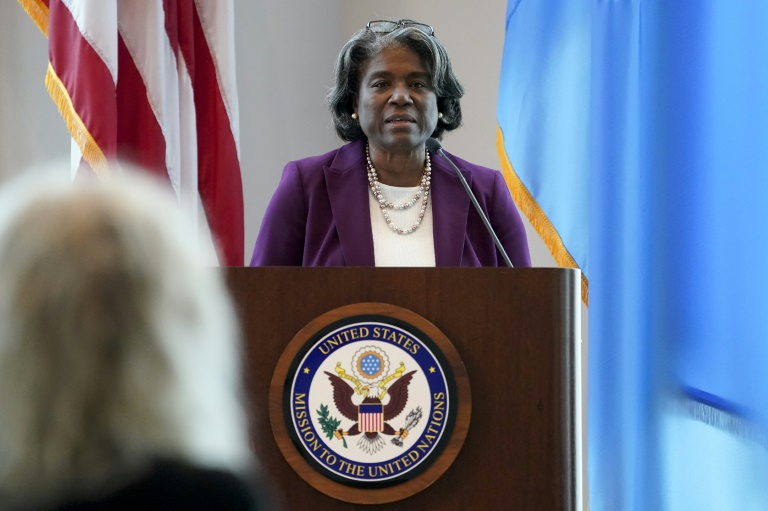
Asked if the United States would make a new attempt at the Security Council if North Korea goes ahead with a feared nuclear test, US Ambassador Linda Thomas-Greenfield said: “Absolutely we will.”

“First of all we need to enforce the sanctions that we have already authority to enforce,” she told reporters.

“And we certainly, as we attempted in this last resolution, will push for additional sanctions,” she said.

US intelligence has said that North Korea appears to be preparing its first nuclear test since 2017, although it did not go ahead during a visit to the region earlier in May by President Joe Biden.

The United States on Thursday forced a vote at the Security Council on toughening sanctions after North Korea carried out a series of rocket launches including, according to US and South Korean officials, of an intercontinental ballistic missile.

The United States said the test was a brazen violation of a unanimous UN resolution in 2017 that warned of further consequences for tests of long-range missiles or nuclear weapons.

But China, North Korea’s main ally, and Russia, whose relations with the West have deteriorated sharply over its Ukraine invasion, both vetoed the resolution, saying that new sanctions would be counterproductive and raise tensions.

The United States instead on Friday imposed new unilateral sanctions, including on two Russian banks accused of assisting North Korea on its weapons programs.

The Biden administration has said it is ready for dialogue with North Korea without preconditions.

But it has found little interest in low-level negotiations from Pyongyang, where leader Kim Jong Un held three meetings with Biden’s predecessor Donald Trump that lowered tensions but failed to produce a lasting agreement.

UK's PM launches new 'Partygate' defence as rebels mobilise

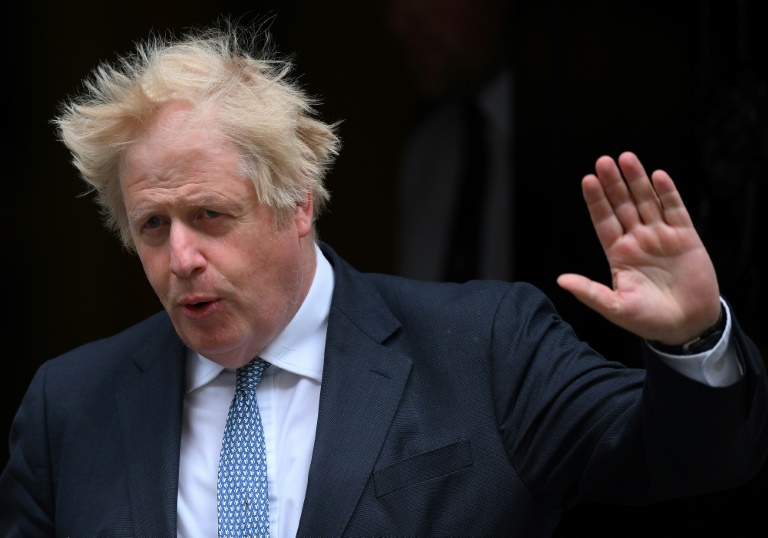
Prime Minister Boris Johnson on Tuesday denied breaching the UK government’s ministerial code of conduct, as he bids to head off a growing Conservative revolt over the “Partygate” scandal.

Former Conservative leader William Hague said Johnson could face a no-confidence vote among his own MPs as soon as next week, following numerous lockdown-breaching parties held in Downing Street. 

Johnson became the first serving UK prime minister found to have broken the law while in office when he was fined by police for attending a birthday party in June 2020.

Although he has apologised, he has repeatedly refused to resign, and doubled down on his defence in a letter to his independent adviser on ministerial interests, Christopher Geidt. 

Lord Geidt issued an annual report laying out the need for Johnson to explain why he had not breached the ministerial code, in light of the police fine.

Under previous governments, violations of the code were considered a resigning offence, but Johnson has already stood by others in his ministerial team found to have been in breach.

Responding to Geidt, Johnson said “I did not breach the code”.

There was “no intent to break the law”, he said, insisting he had been “fully accountable” to parliament “and rightly apologised for the mistake”.

However, dozens of Tory MPs have now publicly criticised their embattled leader over the parties under his watch, which happened when the government was ordering the public to respect Covid lockdowns.

If 54 of them write a letter of no confidence in Johnson to a powerful backbench committee of Tory MPs, that will trigger a vote of all 359 Conservatives lawmakers on whether he should continue as leader and thereby prime minister.

Nearly 30 MPs are publicly known to have submitted such a letter but the process is shrouded in secrecy and the real tally is impossible to gauge.

Parliament is not sitting this week and with four days of celebrations for Queen Elizabeth II’s Platinum Jubilee beginning on Thursday, any announcement about a possible vote would not come until next week at the earliest. 

The latest heavyweight Tories to express doubts about Johnson include former attorney general Jeremy Wright, who on Monday urged him to resign, and ex-cabinet minister Andrea Leadsom.

Hague said the intervention of Leadsom — a prominent “Brexiteer” who campaigned alongside Johnson in Britain’s 2016 EU referendum — had lit a “slow fuse” on a no-confidence vote.

“The fuse is getting closer to the dynamite here and it’s speeding up,” Hague told Times Radio, adding it was “just another indication the Conservative Party is moving faster towards a vote”. 

– Elections pressure –

Support for Johnson among Conservatives has ebbed further away following last week’s publication of an internal inquiry. 

The probe by senior civil servant Sue Gray found that he presided over a culture of parties that ran late into the night and even featured a drunken fight among staff.

Johnson secured an 80-seat majority at the last general election in December 2019, on a promise to take the UK out of the European Union.

But despite that, an increasing number of Tory MPs have come forward to say they do not believe the party can win the next election, which is due by 2024, under his leadership.

Opinion polls have shown deep public disapproval over the scandal, with large majorities of people saying Johnson knowingly lied about “Partygate” and that he should resign.

The Tories have suffered several electoral setbacks during his tenure, including losing traditionally safe seats to the Liberal Democrats in by-elections and hundreds of councillors in local elections in early May.

The party is also predicted to lose two more by-elections in June, in southwest and northern England.

US warns talks on Yemen truce in 'trouble'

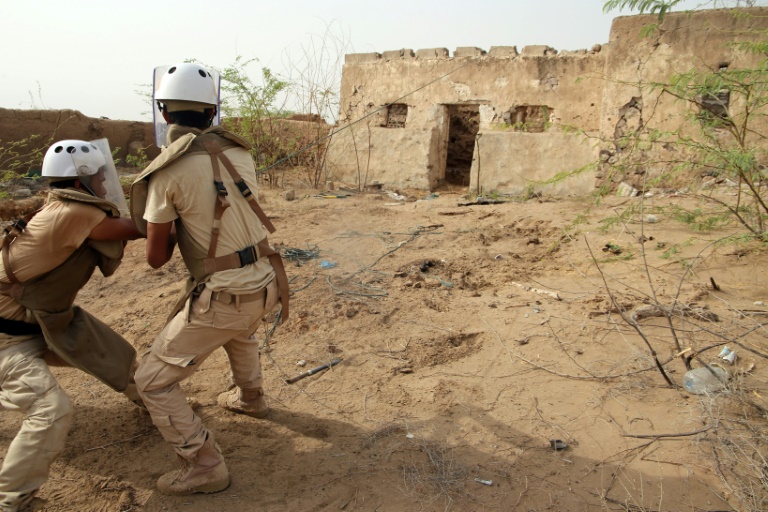
The United States warned Tuesday that talks on Yemen’s two-month truce were in “trouble” as it pushed for an extension to help support millions at risk.

Yemen’s Saudi-backed government and Iran-aligned Huthi rebels on April 2 entered a UN-brokered truce, the first since the brutal war broke out in 2016, but it expires on Thursday.

Talks to extend the pause in fighting “haven’t ended yet but seem to be in a bit of trouble,” said Linda Thomas-Greenfield, the US ambassador to the United Nations.

The talks impasse “is troublesome to us,” she told reporters.

“We encourage the parties on both sides to continue those efforts and find a peaceful way to provide needed humanitarian assistance to the people of Yemen.”

Secretary of State Antony Blinken also raised “efforts to strengthen and extend the truce in Yemen” during talks Monday with his Saudi counterpart, Foreign Minister Prince Faisal bin Farhan, the State Department said.

The war has killed hundreds of thousands of people and left millions on the brink of famine.

Aid groups have appealed for an extension of the truce, saying it has brought long-needed humanitarian dividends.

Earlier this month, the Norwegian Refugee Council said the number of civilian casualties in Yemen had dropped by more than half since the truce took effect.

The UN special envoy on Yemen, Hans Grundberg, last week also publicly urged progress and said that the truce had produced “tangible benefits.”

Biden, Fed chair discuss US inflation at White House

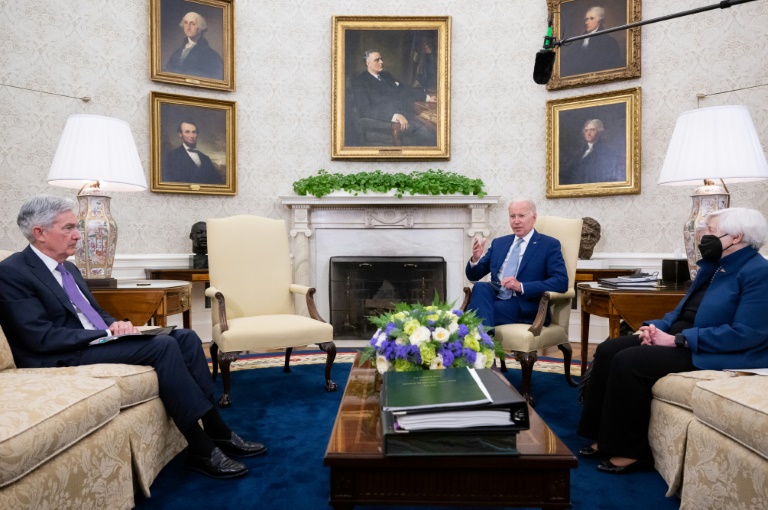
President Joe Biden held a rare White House meeting with the head of the Federal Reserve, Jerome Powell, on Tuesday to discuss soaring inflation and White House attempts to tame the politically damaging price surge ahead of midterm elections.

“I am meeting today to discuss my top priority: that is addressing inflation in order to transition from historic recovery to a steady growth,” Biden said.

Also joined in the Oval Office by Treasury Secretary Janet Yellen, Biden stressed to reporters that while the Fed has a “laser focus” on inflation, he does not intend to infringe on the central bank’s traditional independence.

“It starts with a simple proposition: respect the Fed, respect the Fed’s independence,” he said.

The White House said that the first Biden-Powell meeting this year would focus on inflation but in general “discuss the state of the American and global economy.”

This is Biden’s “top economic priority,” the White House said, “as we transition… to stable, steady growth that works for working families.”

Inflation of more than eight percent is casting a heavy shadow on Biden’s claims to be steering the US economy to health after the Covid-19-induced crash.

Employment is back near pre-pandemic levels and growth is strong, but savage price increases for essentials including food and fuel are driving growing public dissatisfaction.

The Fed has raised rates three quarters of a percentage point, kicking off what central bank officials say could be a series of hikes aimed at calming down the economy, although there are fears that the unintended result may be recession.

Federal Reserve Governor Christopher Waller said Monday that he backs several more half-point rate hikes — “until I see inflation coming down closer to our two percent target.”

According to a poll in mid-May by Pew Research Center, inflation is easily the biggest topic of concern for Americans, with 70 percent making it number one, compared to 54 percent listing violent crime. 

– Midterm elections pressure –

Biden is scrambling to ease the pressure on American consumers ahead of November midterm elections in which his Democrats are forecast to lose control of Congress to the Republicans.

Biden’s own approval ratings are barely in the 40 percent range, reflecting his inability to sell voters on his upbeat message of US economic recovery.

As the election approaches, Biden has pivoted to more aggressively trying to explain the inflation phenomenon as a byproduct of forces beyond his control.

These include the Russian invasion of Ukraine, which triggered Western sanctions disrupting the huge Russian energy industry. President Vladimir Putin’s invading forces, meanwhile, have all but put a halt to Ukraine’s important wheat exports.

Biden calls the effect “Putin’s price hike.”

Writing in the Wall Street Journal on Monday, Biden underlined the importance of not interfering in the Federal Reserve’s work.

Biden recalled that his predecessor Donald Trump frequently launched political attacks on the Fed and that other presidents had also “sought to influence its decisions inappropriately during periods of elevated inflation.”

“I won’t do this,” he pledged.

In the op-ed, Biden said his longterm plan for economic health includes easing the pace of post-Covid recovery to more sustainable levels, boosting economic productivity and reducing the federal budget deficit.

Republican National Committee Chairwoman Ronna McDaniel issued a statement on Biden’s Oval Office meeting, saying the president is “lying to hardworking Americans about the economy.”

“Under Biden, inflation and gas prices have only gone up and families are struggling to afford basic needs as a result.”

Brazil storm death toll rises to 100

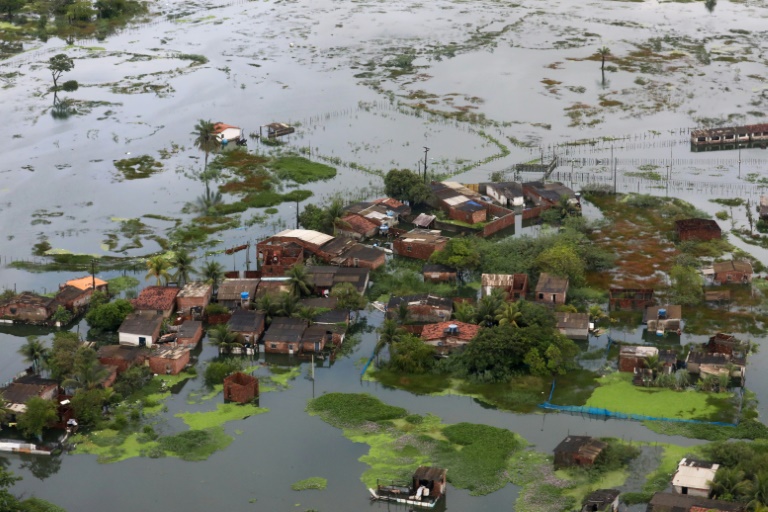
Flooding and landslides triggered by torrential rain have now killed at least 100 people in northeastern Brazil, officials said Tuesday as emergency workers searched for bodies and survivors.

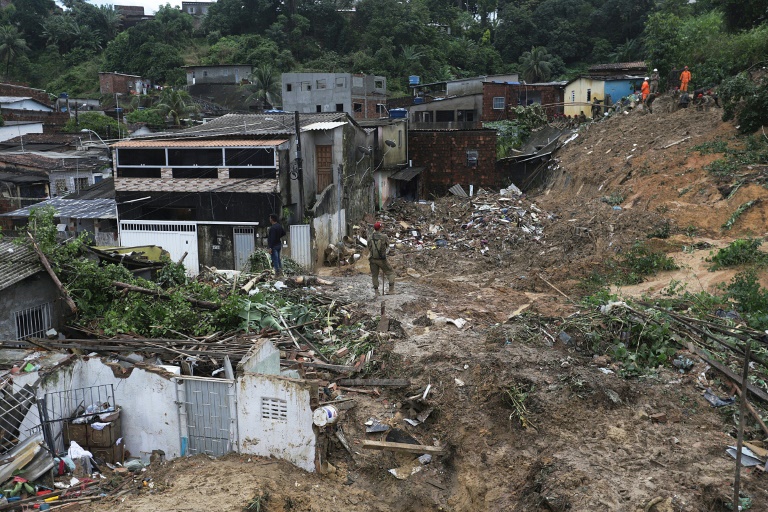
The force of the landslides ripped apart houses in neighborhoods including Jardim Monteverde, a poor community just outside the city of Recife. Locals have likened the roaring surge of mud to a tsunami.

Rescue teams have found dozens of bodies buried after floodwater tore through the neighborhood on Saturday, and said they expect to find more.

At least 14 people remain missing, said disaster management officials for the state of Pernambuco, scene of the latest in a series of deadly weather disasters to hit the country in recent months.

Crews are using dogs trained to sniff for people and planes to locate the missing.

At least 24 municipalities in Pernambuco have declared a state of emergency and more than 6,000 people have lost their homes or been forced to flee.

President Jair Bolsonaro posted a video on Twitter on Monday that showed him flying in a helicopter over the disaster zone where brown flood water inundated large areas and gashes of mud scarred hillsides where houses once stood.

“I tried to land, but the pilots’ recommendation was that, given the instability of the soil, we could have an accident. So we decided against it,” the far-right president told a news conference.

He recalled a string of devastating floods in Brazil that have killed hundreds of people in recent months, and which experts say are being aggravated by climate change.

The rains began last week but intensified over the weekend. Overnight Friday into Saturday, the rain that fell in some parts of Pernambuco was 70 percent of what would be normal for the whole month of May.

“We never saw so much rain fall in so little time,” said 60-year-old retiree Mario Guadalupe.

“I saw the landslide happen. First part of the hill gave way, then it was just a tsunami of mud. It nearly took out my house.”

Weather-related tragedies are becoming a familiar script in Brazil. They tend to hit hardest in poor neighborhoods, especially hillside favelas, or slums.

“Climate change could be responsible for the rise in extreme, violent rain that is being detected not only in Brazil but around the world,” Jose Marengo, research coordinator at the National Center for Natural Disaster Monitoring and Alerts, told AFP.

In February, 233 people were killed in floods and landslides in the southeastern city of Petropolis, in Rio de Janeiro state.

In January, torrential rains claimed at least 28 lives in southeastern Brazil, mostly in Sao Paulo state.

Bolsonaro drew criticism for sounding dismissive after saying “unfortunately these tragedies happen, a country the size of a continent has its share of problems.”

Brazil storm death toll rises to 100

Flooding and landslides triggered by torrential rain have now killed at least 100 people in northeastern Brazil, officials said Tuesday as emergency workers searched for bodies and survivors.

The force of the landslides ripped apart houses in neighborhoods including Jardim Monteverde, a poor community just outside the city of Recife. Locals have likened the roaring surge of mud to a tsunami.

Rescue teams have found dozens of bodies buried after floodwater tore through the neighborhood on Saturday, and said they expect to find more.

At least 14 people remain missing, said disaster management officials for the state of Pernambuco, scene of the latest in a series of deadly weather disasters to hit the country in recent months.

Crews are using dogs trained to sniff for people and planes to locate the missing.

At least 24 municipalities in Pernambuco have declared a state of emergency and more than 6,000 people have lost their homes or been forced to flee.

President Jair Bolsonaro posted a video on Twitter on Monday that showed him flying in a helicopter over the disaster zone where brown flood water inundated large areas and gashes of mud scarred hillsides where houses once stood.

“I tried to land, but the pilots’ recommendation was that, given the instability of the soil, we could have an accident. So we decided against it,” the far-right president told a news conference.

He recalled a string of devastating floods in Brazil that have killed hundreds of people in recent months, and which experts say are being aggravated by climate change.

The rains began last week but intensified over the weekend. Overnight Friday into Saturday, the rain that fell in some parts of Pernambuco was 70 percent of what would be normal for the whole month of May.

“We never saw so much rain fall in so little time,” said 60-year-old retiree Mario Guadalupe.

“I saw the landslide happen. First part of the hill gave way, then it was just a tsunami of mud. It nearly took out my house.”

Weather-related tragedies are becoming a familiar script in Brazil. They tend to hit hardest in poor neighborhoods, especially hillside favelas, or slums.

“Climate change could be responsible for the rise in extreme, violent rain that is being detected not only in Brazil but around the world,” Jose Marengo, research coordinator at the National Center for Natural Disaster Monitoring and Alerts, told AFP.

In February, 233 people were killed in floods and landslides in the southeastern city of Petropolis, in Rio de Janeiro state.

In January, torrential rains claimed at least 28 lives in southeastern Brazil, mostly in Sao Paulo state.

Bolsonaro drew criticism for sounding dismissive after saying “unfortunately these tragedies happen, a country the size of a continent has its share of problems.”

Global chip shortage likely to last through 2023: US official

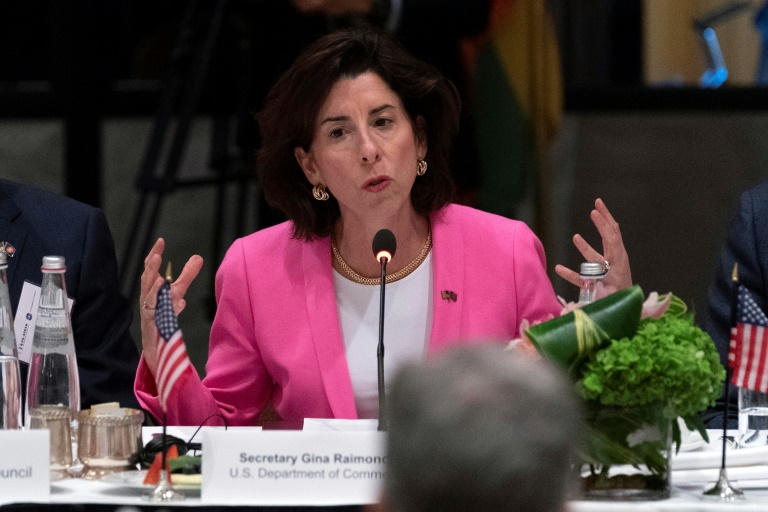
The global shortage of critical semiconductors is likely to last at least through next year and perhaps longer, US Commerce Secretary Gina Raimondo warned on Tuesday.

Shutdowns of key Asian suppliers due to the Covid-19 pandemic crippled supplies last year, just when American consumers, flush with cash from government aid, went on a spending spree buying cars and electronics, which depend on the chips.

“I do not unfortunately see the chip shortage abating in any meaningful way anytime in the next year,” Raimondo told reporters following her recent trip to Asia.

She said she convened a dozen CEOs, including leaders of chipmakers, during her time in South Korea to discuss the shortage “and they all agreed that … deep into 2023, possibly early ’24 before we see any real relief.”

She repeated her call for Congress to act to provide funding for legislation that aims to stimulate domestic manufacturing of the computer chips that are key to a wide array of products, from smartphones to medical equipment to vacuum cleaners.

“We are really on borrowed time,” she said.

“Every other country has subsidies on the table now, and if Congress doesn’t act very quickly,” key producers like Samsung, Intel and Micron “are going to build in another country and that be that would be hugely problematic.”

The US Senate and the House of Representatives each have approved $52 billion bills — the CHIPS Act and the America COMPETES Act — that would invest in domestic chip research and manufacturing, but so far have failed to agree on the final form of the legislation.

Close Bitnami banner
Bitnami