World

Global chip shortage likely to last through 2023: US official

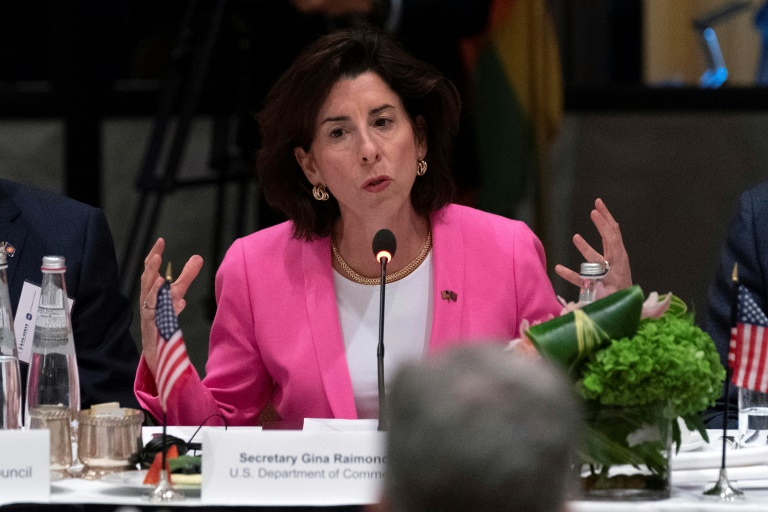
The global shortage of critical semiconductors is likely to last at least through next year and perhaps longer, US Commerce Secretary Gina Raimondo warned on Tuesday.

Shutdowns of key Asian suppliers due to the Covid-19 pandemic crippled supplies last year, just when American consumers, flush with cash from government aid, went on a spending spree buying cars and electronics, which depend on the chips.

“I do not unfortunately see the chip shortage abating in any meaningful way anytime in the next year,” Raimondo told reporters following her recent trip to Asia.

She said she convened a dozen CEOs, including leaders of chipmakers, during her time in South Korea to discuss the shortage “and they all agreed that … deep into 2023, possibly early ’24 before we see any real relief.”

She repeated her call for Congress to act to provide funding for legislation that aims to stimulate domestic manufacturing of the computer chips that are key to a wide array of products, from smartphones to medical equipment to vacuum cleaners.

“We are really on borrowed time,” she said.

“Every other country has subsidies on the table now, and if Congress doesn’t act very quickly,” key producers like Samsung, Intel and Micron “are going to build in another country and that be that would be hugely problematic.”

The US Senate and the House of Representatives each have approved $52 billion bills — the CHIPS Act and the America COMPETES Act — that would invest in domestic chip research and manufacturing, but so far have failed to agree on the final form of the legislation.

Eurozone stocks sink as inflation accelerates to record high

Eurozone equity markets sank Tuesday on news that the region’s inflation rate hit another record high in May on fallout from Russia’s invasion of Ukraine.

Consumer prices in the eurozone rose by 8.1 percent, compared with 7.4 percent in April, official data showed, with energy surging the fastest.

Sentiment took another battering on fears of severe economic fallout from a deal agreed by the European Union late Monday for a partial embargo of Russian oil imports over its assault on Ukraine.

The embargo also sent oil prices soaring to two-month peaks, in turn fuelling more inflationary fears and pressuring central banks to tighten monetary policy and prevent consumer prices rocketing even higher.

The resurgent oil market, however, lifted the London stock market because it boosts profits and revenues for energy majors BP and Shell.

– Energy ‘may soar faster’ –

“Inflation in the eurozone increased even further,” said Jonas Keck, economist at UK-based research group the Centre for Economics and Business Research.

“As the EU reached an agreement on new sanctions targeting Russian oil supplies, energy prices may well soar even faster in the coming months.”

Markets have been rocked this year as the Ukraine conflict has fuelled massive price gains for energy and food, translating into soaring inflation that threatens to derail the post-pandemic economic recovery.

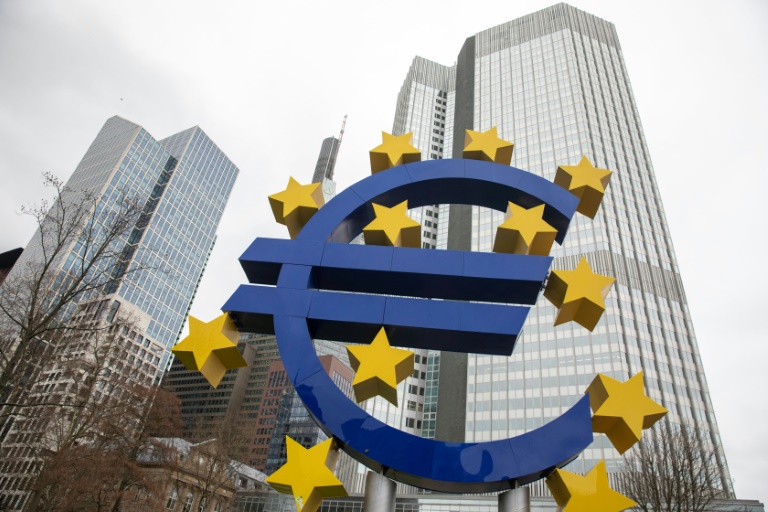
Red-hot eurozone inflation has intensified calls for interest rate hikes from the European Central Bank, which has already flagged plans to raise borrowing costs in July.

“Higher inflation rates will raise serious question marks about the ECB’s viewpoint on whether gradual rate increases will be enough to deal with such high price growth,” market analyst Fawad Razaqzada from City Index and FOREX.com said.

“Investors are starting to project a faster pace of tightening from the ECB, which could be another factor holding stocks back.”

Following a holiday weekend in the US, Wall Street stocks were also on the backfoot, as a survey showed that Americans’ feelings about the economy deteriorated in May but remained relatively strong even as high inflation bites.

– Brent oil tops $124 –

In reaction to the EU’s partial embargo, Brent oil briefly broke above $124 per barrel and WTI crude breached $119.

European chiefs said the latest sanctions would ban purchases of Russian oil delivered by sea, though there would be a temporary exemption for pipelines.

“The gradual phasing in of the deal along with the exemptions included prevented the price from rising much higher but ultimately it further tightens a market that’s already undersupplied,” said Craig Erlam at OANDA. 

While widely expected, the agreement adds further upside to crude just as China begins to ease Covid restrictions in Shanghai and Beijing, raising the likelihood of a jump in demand from the world’s number-two economy.

There was some much-needed cheer from data showing China’s manufacturing shrunk in May at a slower rate than expected.

The Purchasing Managers’ Index (PMI) — a key gauge of manufacturing activity — hit 49.6 last month, improving from 47.4 in April, which was the worst reading since early 2020.

However, it remained below the 50-point mark separating growth from contraction and showed the Chinese economy was still struggling.

– Key figures at around 1550 GMT –

Frankfurt – DAX: DOWN 1.3 percent at 14,388.35  points (close)

Paris – CAC 40: DOWN 1.4 percent at 6,468.80  points (close)

EURO STOXX 50: DOWN 1.4 percent at 3,789.21 points 

London – FTSE 100: UP 0.1 percent at 7,607.66  points (close)

Brent North Sea crude: UP 1.4 percent at $123.37 per barrel

West Texas Intermediate: UP 1.95 percent at $117.31

New York – Dow: DOWN 0.3 percent at 33,111.09 points 

Tokyo – Nikkei 225: DOWN 0.3 percent at 27,279.80 (close)

Hong Kong – Hang Seng Index: UP 1.4 percent at 21,415.20 (close)

Shanghai – Composite: UP 1.2 percent at 3,186.43 (close)

Euro/dollar: DOWN at $1.0733 from $1.0779 on Monday

Pound/dollar: DOWN at $1.2624 from $1.2652

Euro/pound: DOWN at 85.01  pence from 85.20 pence

Dollar/yen: UP at 128.51 yen from 127.59 yen

burs-rfj-kjm/spm

Spain partially reopens enclaves to Moroccan workers

Spain opened the borders of its North African enclaves Ceuta and Melilla to Moroccan workers on Tuesday, two years after their closure and following the resolution of a drawn-out diplomatic crisis.

The European Union’s only borders on African soil had been shuttered in 2020 at the height of the coronavirus pandemic, then later become hostage to a bitter spat over migration and the issue of the disputed Western Sahara.

Before they were closed, some 4,400 Moroccans had regularly made the crossing visa-free to work and trade.

A spokesperson for authorities in Ceuta said Tuesday that Spain was hoping for a “progressive and orderly reopening, and most of all, an end to the underground economy” in the region.

For now, the reopening only affects 230 Moroccans, primarily domestic workers with the correct papers. Up to 40 more will be allowed to enter each day to apply for a visa.

But on Tuesday, dozens of women gathered on the Moroccan side of the crossing, waving work permits and chanting “No to visas!”

“I’m protesting today because I want to be able get into Ceuta to work,” said Latifa, a nanny who had spent 15 years working in the enclave before the closure. “We used to be able to cross without visas”.

Aziza, who had worked as a cleaner in Ceuta for a decade before the closure, said that in two years without work she had been forced to sell her furniture to feed her six children.

– ‘Unjust’ –

A union for cross-border workers said many had seen their visas expire during the crisis and were now being forced to apply for new ones, a measure it said was “unjust”.

The borders had been the focus of a major dispute last year, when Madrid allowed the leader of a Western Saharan independence movement to be treated for Covid-19 in a Spanish hospital.

In mid-May 2021, ten thousand migrants surged across the Moroccan border into Ceuta as Moroccan border forces looked the other way, a move widely seen as a punitive gesture by Rabat.

In March this year, Spain moved to end the diplomatic crisis with Morocco by changing its decades-long stance of neutrality and backing the kingdom’s autonomy plan for the Western Sahara, which Rabat insists must remain under its sovereignty.

The borders of the enclaves had reopened on May 17, but only for holders of passports and visas from countries in the Schengen zone.

Moroccan authorities have vowed to clamp down on smuggling, which had been tolerated until late 2019 despite the loss of customs revenues.

Rabat in February opened a business park in the border town of Fnideq it hopes will create up to 1,000 jobs.

UN Security Council urges action on Gulf of Guinea piracy

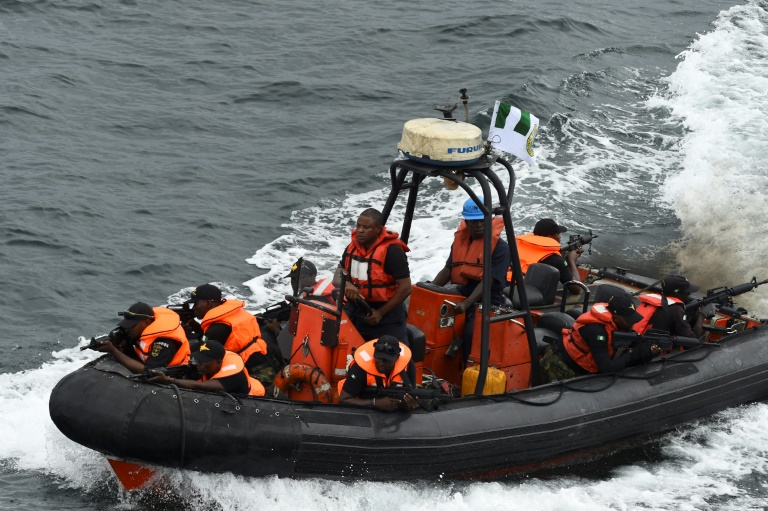
The UN Security Council on Tuesday urged greater action to stop piracy in the Gulf of Guinea, which has become by far the world’s riskiest waters for maritime kidnappings.

A Security Council resolution — approved unanimously despite high tensions between veto-wielding Russia and the West — said it “strongly condemns” the spike of piracy in the West African waters.

The Council “urges member states in the region of the Gulf of Guinea to take prompt action, at national and regional levels, with the support of the international community, when requested by the state concerned.”

It called on all nations in the region to develop their own plans and to criminalize piracy in domestic laws.

According to a UN report, 27 of the world’s 28 recorded kidnappings at sea in 2020 took place in the Gulf of Guinea.

Stretching for 5,700 kilometers (3,500 miles) from Senegal to Angola, the Gulf of Guinea is rich in hydrocarbons and fisheries and borders some 20 countries, including ones with limited naval and coast guard capacities.

The resolution was co-sponsored by Ghana and Norway, which both said that piracy posed international risks.

Harold Agyeman, Ghana’s ambassador to the United Nations, said that piracy constituted “one of the foremost security concerns on the African continent.”

Piracy “risks compounding multifaceted challenges facing the region including a surge in terrorism, a return of coup d’etats, a deepening of climate change as well as the worsening impact of the Covid-19 pandemic.”

A study by the Stable Seas research institute found that pirate groups, mostly in the Niger Delta, can earn around $5 million per year through theft and hostage-taking.

It said that conservative estimates put the cost of piracy to coastal states at $1.925 billion a year, including through lost employment.

'No way out': Life under the Russians at Chernobyl

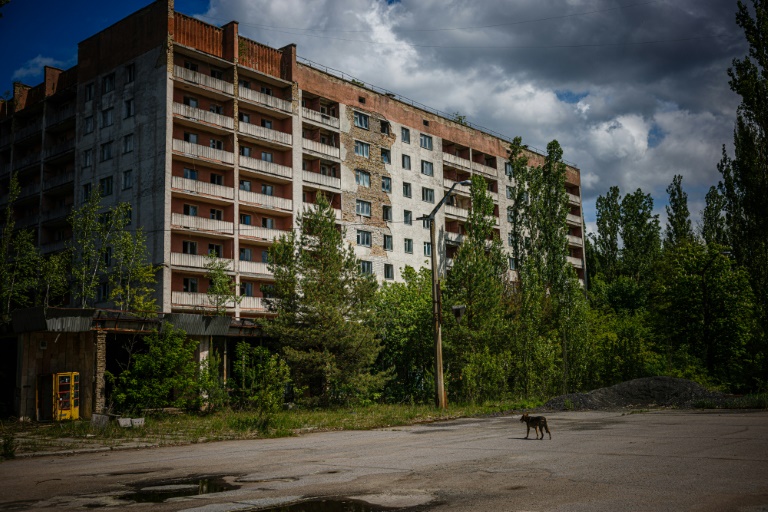
It began as a normal shift at Chernobyl for Oleksiy Shelestiy but as night turned to day on February 24, distant artillery fire and the arrival of Russian troops changed everything.

More than 100 employees, who had arrived at the defunct nuclear plant for their night shift just hours earlier, were now trapped as Russian forces crossed into Ukraine and seized swathes of land on their way towards Kyiv. 

The capture of Chernobyl by Russian forces kicked off a weeks-long ordeal that saw power briefly cut at the facility and employees carefully monitored by the invaders.

“We were not mentally prepared for this,” Shelestiy told AFP. “But we had no way out.”

As a night shift supervisor, Shelestiy oversaw a team of nearly a dozen people charged with monitoring electricity supplies at Chernobyl, where a massive sarcophagus covers the remains of a destroyed nuclear reactor to prevent radioactive contamination. 

The plant was the site in 1986 of the world’s worst nuclear accident. Since then, it has been maintained by thousands of Ukrainian workers and closely monitored by international experts to contain its radioactive waste. 

For years, a carefully executed shift schedule and monitoring network kept a close eye on radiation levels at the facility. Then Russian forces poured across the border from Belarus and seized Chernobyl, holding its workers captive and cutting it off from the world. 

“I understood that an accident was possible,” Shelestiy recalled.

“Emotional and psychological pressure did not allow me to focus on this. We just tried to do our job and tried to control all the parameters so that nothing could happen.”

– Power struggle –

The most harrowing period of the occupation began on March 9, when power was cut to the plant due to nearby fighting, Shelestiy said.

Experts acknowledged there would be no repeat of the 1986 meltdown in the absence of a working reactor on the grounds. But electricity is nonetheless vital to power the security infrastructure, including the cooling systems for the spent nuclear fuel storage facility.

For days, the workers relied first on their diesel supplies and later fuel provided by the Russians until they were able to re-route power through the Belarus grid. 

All the while, the Ukrainians trapped at the plant were only able to catch snippets of what was happening outside Chernobyl by listening to radio broadcasts and through occasional calls back home on one of the plant’s landlines.

The staff were not able to return home and became increasingly drained. That risked compromising their ability to fulfil their safety and security duties.

“It was mentally and emotionally difficult,” Shelestiy explained. 

Employees were also closely watched and forced to navigate a dizzying network of checkpoints set up by the Russians on the plant’s grounds — hindering basic movements and maintenance at the facility. 

Ukrainian authorities have since accused the Russians of showing wanton disregard for basic safety during their occupation of Chernobyl, saying its soldiers dug trenches and set up camps in contaminated areas of the facility that had received heavy doses of radiation.

“They dug bare soil contaminated with radiation, collected radioactive sand in bags for fortification, breathed this dust,” said Energy Minister German Galushchenko in April, claiming the Russian forces had been exposed to a “shocking” amount of radiation. 

“Every Russian soldier will bring a piece of Chernobyl home. Dead or alive,” the minister added.

The head of the International Atomic Energy Agency, Rafael Grossi, later said “an increase in the levels” of radiation had been recorded at Chernobyl but insisted the matter was under control. 

“The situation is not one that could be judged as posing a great danger to the environment and to people at the moment we were taking these measures,” he added.

Shelestiy was unable to confirm details about alleged Russian misconduct at Chernobyl, where he was mostly forced to remain at his workstation and had little interaction with their troops.  

– ‘Worried, nervous’ –

Amid the uncertainty, Shelestiy said he tried to console his team, whose families in the nearby town of Slavutych had been largely surrounded by Russian forces. 

Back in Slavutych, mayor Yuriy Fomichev walked a fine line, managing relations with Russian forces, helping smuggle supplies into the besieged community and comforting the families of the captive workers.

“I had to calm them down and explain that it was necessary to be patient,” said Fomichev. 

Built in the aftermath of the Chernobyl accident as a settlement for evacuated families who had been living near the plant in 1986, Slavutych was one of the last purpose-made towns constructed from scratch during the final days of the Soviet Union. 

For many of its residents, seeing chaos engulf Chernobyl again was an unwelcome case of deja-vu. 

“We were worried, nervous,” said Tamara Shyrobokova, 75, a former Chernobyl employee who was resettled in Slavutych following the meltdown.

“I was literally shocked by the fact that Russia attacked Ukraine. No-one could ever imagine this,” she added.

The whole episode also perplexes Shelestiy. He was released following a round of negotiations days before the Russians retreated, after their troops were routed in the battle for Kyiv. 

“They said they were trying to free me from something but I don’t understand from what,” said Shelestiy. “I can’t understand it.”

Rare saiga antelope population now over a million in Kazakhstan

The population of endangered Saiga antelopes in Kazakhstan is now over 1.3 million, the ecology ministry said Tuesday, in the latest boost to a species threatened by poaching and disease.  

In 2015, around 200,000 of the antelopes — well over half the total global population at the time — were wiped out by what scientists later determined was a nasal bacterium that spread in unusually warm and humid conditions.

But last year brought good news as the numbers rebounded from 334,000 in 2019 to 842,000 across the centre, west and northwest of the vast Central Asian state. 

The April aerial count ahead of this year’s spring calving took the population to 1,318,000, according to a dataset shared with AFP by the ecology ministry.  

The former Soviet country’s vast steppe is home to a majority of the world’s Saiga with Russia’s Kalmykia region and Mongolia hosting smaller numbers.

Poaching is a persistent threat to the Saiga, known for its distinctive bulbous nose, and is fuelled by demand for their horn in traditional Chinese medicine.

Kazakhstan’s leaders pledged to intensify their crackdown on poaching after two state rangers were killed by poachers in 2019.

But the success of conservation efforts have raised fears that Kazakhstan will once again allow hunting, with a ban introduced in the late 1990s running out in 2023. 

Brazil storm death toll rises to 100: officials

The death toll from torrential rains that triggered floods and landslides in northeastern Brazil has risen to 100, officials said Tuesday, as emergency workers searched for more victims.

The force of the landslides ripped apart houses in neighborhoods including Jardim Monteverde, a poor community just outside the city of Recife.

Rescue workers have found dozens of bodies buried in the mud that tore through the neighborhood on Saturday, and said they expect to find more.

At least 14 people remain missing, said disaster management officials for the state of Pernambuco, scene of the latest in a series of deadly weather disasters to hit the country in recent months.

President Jair Bolsonaro posted a video on Twitter that showed him flying in a helicopter over the disaster zone where brown floodwater inundated large areas and gashes of mud scarred hillsides where houses once stood.

“I tried to land, but the pilots’ recommendation was that, given the instability of the soil, we could have an accident. So we decided against it,” the far-right president told a news conference.

He recalled a string of devastating floods in Brazil that have killed hundreds of people in recent months, and which experts say are being aggravated by climate change.

Time to put monetary value on conservation, says Gabon

A key UN summit this year must give biodiversity the same priority as climate change and press ahead with putting a financial value on natural resources, Gabon’s environment minister says.

British-born Lee White, an ecologist who has helped make Gabon a powerful voice for the environment in central Africa, said Earth’s climate and biodiversity crises went hand in hand.

COP15 — an eagerly awaited conservation conference due to take place in Kunming, China, in the last quarter of 2022 — must give biodiversity “the same level of priority as climate change”, White said in an interview with AFP.

“We’re looking at much higher ambition for conservation,” he said.

“One of our priorities is the 30 by 30 target — 30 percent protected areas across the planet by 2030 — and moving the agenda forward on biodiversity credits, biodiversity financing.”

Carbon credits, which have been around for more than two decades, offer financial incentives to reduce or avoid emissions of greenhouse gases.

Biodiversity credits would offer similar incentives to nurture conservation hotspots, which scientists say play a hugely under-estimated role in human survival.

“The Congo Basin stabilises Africa, it’s the heart and lungs of Africa,” said White, the author of dozens of research papers.

“Without the Congo Basin… we lose the rainfall in the Sahel, and you have hundreds of millions of climate refugees moving south,” he said.

“We should be able to calculate that cost and then attribute it to the biodiversity services that the Congo Basin is providing. But today, biodiversity is worth zero.”

Born in Manchester in northern England, White, 56, began his career in the African rain forests before he managed the activities of the Wildlife Conservation Society in Gabon for 15 years and in 2002 became an advisor to President Omar Bongo Ondimba for national parks and eco-tourism. In 2009, he was appointed minister for water, forests, the sea and environment.

– Gabon success –

White pointed to Gabon’s own record in sequestering carbon by preserving its lush tropical forests.

In 2002, Gabon set up a network of 13 national parks covering 11 percent of its territory. Today, 22 percent of the land is protected.

In 2017, the country created 20 marine sanctuaries covering 53,000 square kilometres (20,500 square miles) — the biggest ocean haven in Africa, and equivalent to 27 percent of its territorial waters.

“Since the Earth summit in Rio we have absorbed three billion tonnes of CO2,” said White.

“I think if we find ways to give a value to all of that progress, if we find a way to find a value to our net sequestration of carbon, then other countries will maybe take a look at the Gabon example and potentially do something similar themselves.”

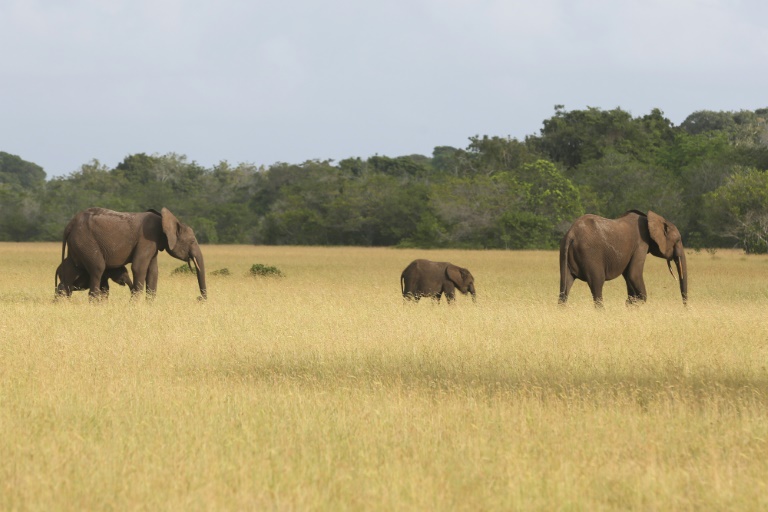
Habitat conservation has helped Gabon’s population of forest elephants grow from 60,000 to 95,000 animals, while across Africa numbers of this species have fallen by three-quarters.

This success story has a downside in conflict between elephants and humans, in which climate change also plays a part, said White.

– Hungry elephants –

Research at one of the forest sites, he said, has found that over 40 years, temperatures have risen by one degree Celsius (1.8 degrees Fahrenheit) and annual rainfall has fallen by 200 millimetres (7.9 inches), leading to a crash of 80 percent in rainforest fruits, which are a key part of the elephants’ diet.

“The elephants are hungry — we’ve actually proved scientifically that they are thinner,” said White. 

“So they are coming out of the forest as well because of climate change to eat people’s fields, looking for food.”

White said he had much sympathy for poor farmers who were exasperated by elephants which ate or trampled on their crops.

“The world loves elephants,” he said.

“I would bet there are more elephants in Paris or London than there are in the whole of Africa. But those elephants are cuddly elephants — they’re toy elephants in children’s bedrooms.

“Because for the West, the elephant is this wonderful lovely cuddly thing, and for rural African children, an elephant is a big scary thing that might have just killed their father or destroyed the food that they were going to eat in the next few months.”

White said it was essential to resolve poaching in remote areas so that elephants could move away from areas inhabited by humans and back into their old habitat.

“We (also) have to protect rural people’s crops, ideally using electric fences and other methods, rather than killing the elephants,” he said.

“But we absolutely have to protect rural people’s livelihoods and safety and quality of life.”

This year, for the first time, the government has provided funds to help ease the elephant-human conflict, he said.

The equivalent of $5 million has been included in the 2022 budget for compensation for farmers whose crops have been damaged by tuskers.

Uvalde lays first school shooting victims to rest

The small, traumatized Texan town of Uvalde begins Tuesday to bury its dead from an elementary school shooting that killed 19 young children and left the tightly-knit community united in grief and anger.

Amerie Jo Garza and Maite Yuleana Rodriguez, both 10, are expected to be laid to rest, with further funerals scheduled over the coming weeks. 

As the community mourned, anger has seethed over the response of police, who came under intense criticism since the May 24 tragedy over why it took well over an hour to neutralize the gunman — the “wrong decision,” Texas Department of Public Safety director Steven McCraw has admitted. 

The great-grandfather of one of the young victims berated police near the memorial of white crosses surrounded by wreaths and bouquets of flowers.

“They could tell me ‘Oh, we made a mistake. We made the wrong decision’. But my great-granddaughter is not coming back to me,” said a distraught 78-year-old Ruben Mata Montemayor.

When US President Joe Biden visited the town, about an hour’s drive from the Mexico border, over the weekend, shouts of “do something!” rang out from the crowd.

The shooting — the latest in an epidemic of gun violence in the United States that came less than two weeks after 10 people died in the attack at a Buffalo grocery store by a young gunman targeting African Americans — has spurred desperate calls for gun reform.

“There’s no words to describe (it),” said Esther Rubio, who traveled from nearby San Antonio to attend the wake on Monday for Amerie Jo.

Her pictures decorated the funeral home where friends and family gathered, just across the street from Robb Elementary School, where a local 18-year-old gunned down 19 children and two teachers before he was killed by police.

– A dozen more mass shootings –

While mass shootings draw anguished attention and spur momentary demands for change, gun regulation faces deep resistance from most Republicans and some rural-state Democrats.

Biden on Monday vowed to “continue to push” for reform, saying, “I think things have gotten so bad that everybody is getting more rational about it.”

Some key lawmakers have also voiced cautious optimism and a bipartisan group of lawmakers worked through the weekend to pursue possible areas of compromise. 

They reportedly were focusing on laws to raise the age for gun purchases or to allow police to remove guns from people deemed at risk — but not on an outright ban on high-powered rifles like the weapon used in both Uvalde and Buffalo, New York.

With the country still reeling over the Uvalde massacre — the deadliest school attack since 20 children and six staff were killed in Newtown, Connecticut in 2012 — US media reported the country was hit by a dozen more mass shootings over the three-day Memorial Day weekend.

The United States generally counts mass shootings as involving four or more deaths.

At least 132 gun deaths and 329 injuries were recorded nationwide from Saturday to Monday evening, according to the Gun Violence Archive website.

Mourners in Uvalde — a mostly Latino town of 15,000 — have echoed calls for change.

“At the end of the day, if this child cannot even sip a glass of wine because he’s too young, then guess what? He’s too young to purchase a firearm,” said Pamela Ellis, who traveled from Houston to pay her respects.

US consumer confidence deteriorated in May: survey

Americans’ feelings about the economy deteriorated in May amid concerns about job prospects, but remained relatively strong even as high inflation bites, according to a survey released Tuesday.

Amid the fastest increase in US consumer prices in more than four decades, made worse by the war in Ukraine, consumer confidence dipped slightly after a modest increase in April, falling to 106.4 from 108.6, according to The Conference Board’s monthly survey.

Consumers flush with savings and government support money have been a key driver of the recovery of the world’s largest economy, spending freely on big-ticket purchases like homes, cars and appliances.

But supply chain snarls, made worse by Covid-19 lockdowns in China, meant demand has outstripped supply, and that dynamic has fueled inflation.

Feelings about the present situation dropped for the second month, falling more than three points to 149.6, caused by the deterioration in views on the labor market, with an increasing share of respondents saying jobs are “hard to get,” according to the report.

Expectations for six months ahead retreated slightly to 77.5 after gaining in the prior month.

Lynn Franco, the institution’s senior director of economic indicators, noted that the readings are still relatively high despite the declines.

“Overall, the Present Situation Index remains at strong levels, suggesting growth did not contract further in Q2,” Franco said in a statement, referring to the current April-June quarter. 

“That said, with the Expectations Index weakening further, consumers also do not foresee the economy picking up steam in the months ahead. They do expect labor market conditions to remain relatively strong, which should continue to support confidence in the short run.”

The Federal Reserve has launched an aggressive cycle of interest rate increases to tamp down inflation by cooling demand, which Franco said “pose continued downside risks to consumer spending this year.”

The survey also measures consumers’ spending plans in the next six months, and shows a slowdown in intentions to purchase high-dollar items like homes and cars.

“Vacation plans have also softened due to rising prices. Indeed, inflation remains top of mind for consumers,” Franco said.

Ian Shepherdson of Pantheon Economics noted that households still have a stockpile of cash and “So far, they have been willing to dip into these savings despite reporting that they feel less positive. It’s not called retail therapy for nothing, but we just don’t know how long it will continue.”

Close Bitnami banner
Bitnami