World

War in Ukraine: Latest developments

Here are the latest developments in the war in Ukraine:

– Russians seize half of key eastern city –

Russian forces seize control of half of the eastern Ukraine city of Severodonetsk, a senior official says. 

“Unfortunately, the front line divides the city in half. But the city is still defending itself, the city is still Ukrainian, our soldiers are defending it,” says Oleksandr Stryuk, the head of Severodonetsk’s military and civil administration.

The industrial city is key to Russia’s goal of capturing the Donbas region, where Moscow has shifted the bulk of its firepower since failing to seize Kyiv in the war’s early stages.

– EU agrees ban on most Russian oil –

EU leaders agree to ban most Russian oil imports, after reaching a deal with Hungary that allows it to keep receiving Russian crude.

The deal bans oil imports delivered by tankers but exempts pipeline deliveries, a key demand of landlocked Hungary, whose leader Viktor Orban had warned that a full oil blockade would be an “atomic bomb” for his country’s economy.

European Commission chief Ursula von der Leyen says the accord will cut around 90 percent of the EU’s Russian oil imports by the end of the year.

– ‘Thousands’ of alleged war crimes in Donbas –

Ukraine is investigating several thousand cases of suspected war crimes in the Donbas region, Kyiv’s chief prosecutor says.

On a visit to The Hague, Ukraine’s prosecutor general Iryna Venediktova says some 15,000 cases of alleged war crimes have been reported countrywide since Russia’s invasion on February 24.

– Mariupol port resumes business – 

A cargo ship bound for Russia has set sail from occupied Mariupol, less than two weeks after the last Ukrainian defenders of the strategic port city surrendered, the city’s new rulers say.

“Today 2,500 tonnes of sheet metal rolls left the port of Mariupol, the ship is heading to Rostov,” Denis Pushilin, the pro-Kremlin separatist whose forces control the city writes on Telegram.

Russia last week said it had de-mined the port as a first step to resuming shipments from the key exit point for Ukrainian grain.

Dozens of container ships are blocked in Ukrainian ports which have been blockaded by Russian vessels. Russia is in talks with Turkey about creating a secure corridor for shipping companies.

– ‘Banking sanctions hurt Africa’

The chairman of the African Union, Macky Sall, warns EU leaders their decision to expel Russian banks from the SWIFT financial messaging system risks hurting Africa’s food supplies by making it harder to import Russian grain.

On Monday, the EU barred Russia’s largest bank Sberbank from SWIFT as part of a sixth round of sanctions on the Russian economy linked to the war in Ukraine.

The move makes it difficult for the bank to receive or make international payments but Sberbank says it is is operating “as normal”.

– Two more Russian soldiers convicted –

Two Russian soldiers are sentenced to more than 11 years in jail in Ukraine for breaching the rules of war by shelling civilian areas in the northeastern Kharkiv region.

Their convictions come a week after a Kyiv court sentenced a 21-year-old Russian soldier to life in prison for shooting dead an unarmed civilian on his bicycle.

burs-cdw/cb
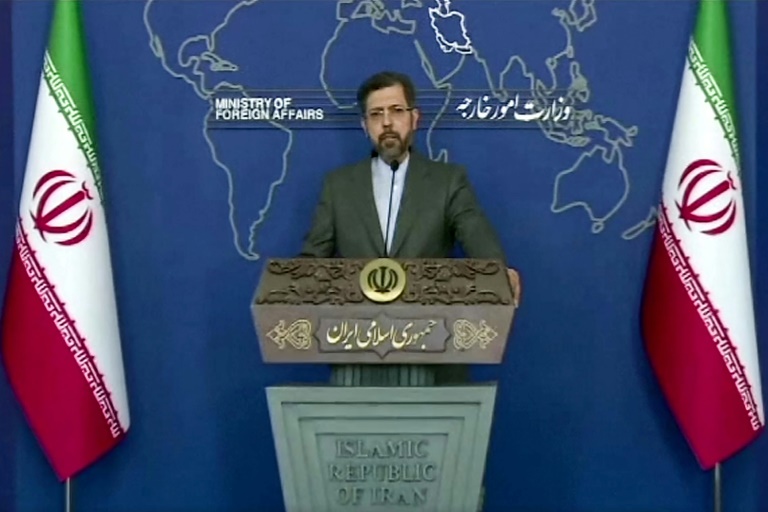
Iran says IAEA report on undeclared sites 'not fair'

Iran condemned as “not fair” Tuesday a report by the UN nuclear watchdog on traces of nuclear material found at three undeclared sites.

The comments came with talks deadlocked since March on reviving a 2015 nuclear agreement between Tehran and world powers.

“Unfortunately, this report does not reflect the reality of the negotiations between Iran and the IAEA,” Foreign Ministry spokesman Saeed Khatibzadeh told reporters, referring to the Monday report by the International Atomic Energy Agency.

“It’s not a fair and balanced report,” he said, adding: “We expect this path to be corrected.”

In the report, the watchdog said it still had questions which were “not clarified” regarding nuclear material previously found at three sites — Marivan, Varamin and Turquzabad — which had not been declared by Iran as having hosted nuclear activities.

It said its long-running efforts to get Iranian officials to explain the presence of nuclear material had failed to provide answers to its questions.

Iran and the IAEA agreed in March on an approach for resolving the issue of the sites, one of the remaining obstacles to reviving the 2015 deal. IAEA chief Rafael Grossi is due to “report his conclusions” to the watchdog’s board of governors at a meeting scheduled for next week.

Formally known as the Joint Comprehensive Plan of Action, the 2015 deal gave Iran relief from crippling economic sanctions in exchange for curbs on its nuclear activities.

The parties to the pact with Iran saw it as the best way to stop it from building a nuclear bomb -– a goal Tehran has always denied.

– Iran sees Israeli hand –

Then-US president Donald Trump unilaterally pulled out of the pact in 2018 and reimposed biting sanctions, prompting Iran to begin rolling back on its own commitments.

While most of the activities discussed in the IAEA report are thought to date back to the early 2000s, sources say that one of the sites, in the Turquzabad district of Tehran, may have been used for storing uranium as recently as 2018.

Iran saw an Israeli hand in the IAEA’s latest findings. 

“It is feared that the political pressure exerted by the Zionist regime and some other actors has caused the normal path of the agency’s reports to change from technical to political,” Khatibzadeh said.

Israel on Tuesday accused its arch-foe Iran of stealing classified documents from the IAEA to help it hide evidence of its nuclear programme.

Israel is adamantly opposed to the 2015 nuclear deal and any effort to restore it. 

“Iran stole classified documents from the UN’s Atomic Agency IAEA and used that information to systematically evade nuclear probes,” Israeli Prime Minister Naftali Bennett wrote on Twitter. 

“How do we know? Because we got our hands on Iran’s deception plan,” Bennett wrote. His tweet included a link to eight files of documents in English and Farsi, as well as photographs.

The files were part of a cache allegedly taken by Israeli agents from an Iranian warehouse in 2018.

Iran’s representative to the IAEA, Mohammad Reza Ghaebi, said earlier that the IAEA’s report “does not reflect Iran’s extensive cooperation with the agency”.

“Iran considers this approach unconstructive to the current close relations and cooperation between the country and the IAEA,” he said, adding: “The agency should be aware of the destructive consequences of publishing such one-sided reports.”

In a separate report published Monday, the IAEA estimated that Iran’s stockpile of enriched uranium had grown to more than 18 times the limit agreed in the 2015 deal.

Iran seeks the lifting of all sanctions that followed Trump’s 2018 pullout.

“The issues being discussed between Iran and the US are related to the economic benefits to Iran and removing all the elements of the maximum pressure by the US,” Khatibzadeh said. 

“The pause in the negotiations is due to the US not giving an answer to the initiatives proposed by Iran and Europe.”

Biden, Fed chair discuss US inflation at White House

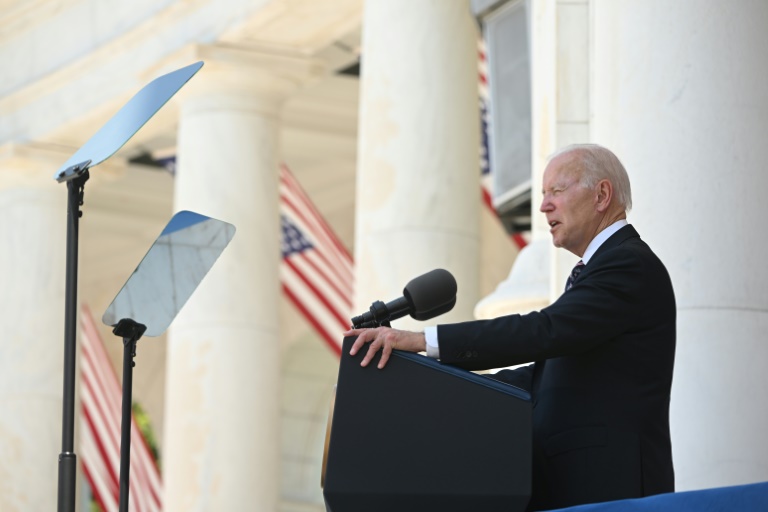
President Joe Biden on Tuesday holds a rare White House meeting with the head of the Federal Reserve, Jerome Powell, to discuss soaring inflation and White House attempts to tame the politically damaging price surge ahead of midterm elections.

In their first such meeting this year, Biden and Powell will “discuss the state of the American and global economy,” the White House said, with an emphasis on inflation.

This is Biden’s “top economic priority,” the White House said, “as we transition from a historic economic recovery to stable, steady growth that works for working families.”

Inflation of more than eight percent is casting a heavy shadow on Biden’s claims to be steering the US economy back to health after the Covid-19-induced crash.

Employment is back near pre-pandemic levels and growth is strong, but savage price increases for essentials including food and fuel are driving growing public dissatisfaction.

The Fed has raised rates three quarters of a percentage point, kicking off what central bank officials say could be a series of hikes aimed at calming down the economy, although there are fears that the unintended result may be recession.

Federal Reserve Governor Christopher Waller said Monday that he backs several more half-point rate hikes — “until I see inflation coming down closer to our two percent target.”

Biden is scrambling to ease the pressure on American consumers ahead of November midterm elections in which his Democrats are forecast to lose control of Congress to the Republicans.

Biden’s own approval ratings are barely in the 40 percent range, reflecting his inability to sell voters on his upbeat message of US economic recovery.

As the election approaches, Biden has pivoted to more aggressively trying to explain the inflation phenomenon as a byproduct of forces beyond his control.

These include the Russian invasion of Ukraine, which triggered Western sanctions disrupting the huge Russian energy industry. President Vladimir Putin’s invading forces, meanwhile, have all but put a halt to Ukraine’s important wheat exports.

Biden calls the effect “Putin’s price hike.”

Writing in the Wall Street Journal on Monday, Biden underlined the independence of the Federal Reserve, but noted that the central bank has “a primary responsibility to control inflation.”

Biden recalled that his predecessor Donald Trump frequently launched political attacks on the Fed and that other presidents had also “sought to influence its decisions inappropriately during periods of elevated inflation.”

“I won’t do this,” he pledged.

In the op-ed, Biden said his longterm plan for economic health includes easing the pace of post-Covid recovery to more sustainable levels, boosting economic productivity and reducing the federal budget deficit.

New Apple museum opens in former Warsaw factory

A new museum opening in a former metalworking factory in Warsaw brings together 1,600 exhibits linked to Apple — the result of years of painstaking efforts by a determined Polish collector.

“It is the biggest and most complete Apple collection in the world,” boasted Jacek Lupina, a 56-year-old architect, who amassed the collection spanning the entire history of the US tech giant.

The museum is housed in Fabryka Norblina, a red-brick factory from the early 19th century in central Warsaw which has been turned into a retail and entertainment space.

At the entrance is a replica of the Apple 1, released in 1976, was the first personal computer sold by the founders of the company, Steve Jobs and Steve Wozniak.

Two hundred models of the Apple 1 were produced and sold at the time for $666.66 (620 euros) each.

“My aim is for visitors to be able to see what the beginning was like — how primitive and very simple it was. The case for the Apple 1 was made of wood! Nothing like what we have today,” Lupina said.

The collector used components from the time to assemble the model and the motherboard was signed by Wozniak himself during a visit to Poland in 2018.

“He scrutinised all the soldering, the components and really appreciated the work. He also showed me the parts that he and Steve Jobs had wanted to change but never got round to,” Lupina said.

– ‘Sold the furniture’ –

The museum includes dozens of computers such as the Apple II, Lisa, iMac, Power Mac, Macbook, Mac Pro, as well as iPhones, iPods, iPads, instruction booklets, software and other objects from the Apple universe.

The walls are decorated with original advertising posters, including those from the famous “Think Different” campaign from 1997 featuring images of Bob Dylan, Pablo Picasso and Albert Einstein.

Lupina said he started collecting “just for the pleasure of seeing them” and because the products would previously have been “too expensive for a resident of post-Communist Europe”.

After some time, the collection began taking over his house on the outskirts of Warsaw — starting with his office and then the living room.

“I sold the furniture in the living room, the table, the chairs and I just left some armchairs,” he said.

In 2017, he turned his house into a museum. When he ran out of space, he found fresh premises and the new museum opened last weekend.

Lupina spent all his free time on the collection, sometimes passing entire nights following online auctions happening in different parts of the world.

It is a costly hobby, he said, adding: “I don’t have any savings or a pension, just my collection.”

2TK, Canada's migratory bird that fell for Uruguayan resort

The first cold winds announce the arrival of winter in Uruguay’s jet setters’ playground, Punta del Este.

It’s time for “2TK” to set flight from the plush seaside resort and return to Canada, a feat of endurance that fascinates scientists and delights local birdwatchers.

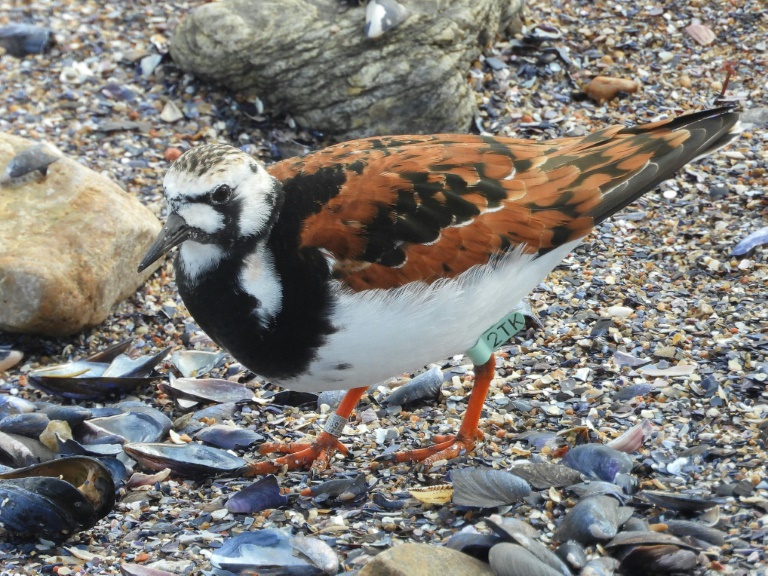
Identifiable by a plastic band on one ankle bearing the name 2TK and a metal one with nine digits on the other, this ruddy turnstone (Arenaria interpres) has spent the southern hemisphere summer on the rocks off Uruguay’s Atlantic coast feeding off mussels, alongside oystercatchers and other birds.

When the food became scarce in Canada’s artic tundra as winter swept in, the turnstone migrated 15,000 kilometers (9,300 miles) to South America.

By April, 2TK had become “fatter” and ditched his grey plumage for one tinged with brown and orange ahead of his return to his native lands to reproduce, said Alvaro Perez Tort, 48, an amateur photographer and member of the Punta del Este birdwatching society that has been documenting the bird’s trips to Uruguay since 2016.

“2TK stole my heart,” Perez told AFP.

Every year he waits for the male turnstone’s return to document him “as much as possible” to share on reportband.gov — the continental database for observing banded birds run by the United States Geological Survey.

“What’s interesting is that a banded bird has a history: there’s a city, a country or faraway place, a journey and people,” said Perez.

By photographing the bird “we feel like we’re a part” of that history, he added, noting he has seen 2TK eight times at Uruguay’s southernmost tip.

– Bird ‘jigsaw puzzle’ –

2TK is around 14 years old, according to the Bird Banding Laboratory, which organises the banding of one million birds annually in North America for conservation purposes.

He was banded in 2012 in Delaware Bay on the US Atlantic coast, an important stopover for many migratory species.

For laboratory chief Antonio Celis-Murillo, information provided by amateur birdwatchers is vital to “build the jigsaw puzzle” of each bird’s movements.

“Our work is successful thanks to the general public — every person who reports a banded bird,” he told AFP. 

“The reported information is so simple but valuable, because scientifically it tells us a lot.

“Especially those reports from South America that we lack,” he added.

These details allow scientists to plot the behavior of every species: their migration routes, where they stop, how long they stay there, how they live.

It all helps to refine conservation projects.

According to a 2019 study published in Science magazine, some three billion wild birds have disappeared from North America since 1970.

– ‘Lots of food’ –

Loss of habitat affecting all biodiversity “clearly shows its impact on migratory birds,” who face ever-greater difficulties in their extraordinary journeys, said Adrian Azpiroz, a biologist and ornithologist who promotes ecotourism initiatives.

And while turnstones are not threatened like other waders, their population is nonetheless shrinking.

Of the estimated 300,000 on the continent, only several hundred or thousand winter on the Uruguayan coast. Others prefer southern Brazil or Argentina.

Scientists believe these long-distance migratory birds have favorite winter retreats and are remarkably loyal, returning year after year — just like 2TK.

Uruguay’s many coastal lagunas are “very productive from a nourishment point of view” for waders, said Azpiroz.

That is why 2TK is likely to have traveled some 350,000 kilometers in his life — the equivalent of nine times around the planet.

That’s a truly staggering accomplishment for a bird measuring little more than 20 centimeters (eight inches).

Experts are still studying the sophisticated physiological and neurological mechanisms that allow him to recognize a location with such precision following a weeks-long air journey of thousands of kilometers.

Many Uruguayan birdwatchers like to think the same thing that attracts them to return time and again to Punta del Este is what also caught 2TK’s attention.

2TK, Canada's migratory bird that fell for Uruguayan resort

The first cold winds announce the arrival of winter in Uruguay’s jet setters’ playground, Punta del Este.

It’s time for “2TK” to set flight from the plush seaside resort and return to Canada, a feat of endurance that fascinates scientists and delights local birdwatchers.

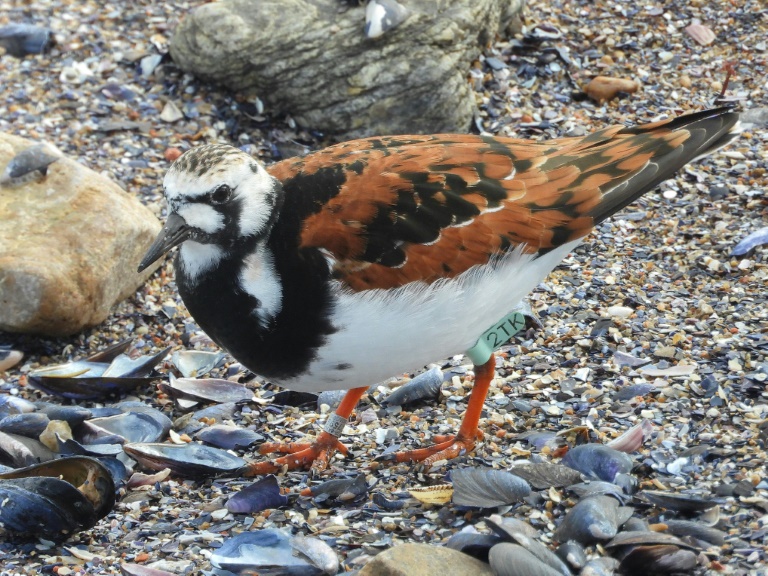
Identifiable by a plastic band on one ankle bearing the name 2TK and a metal one with nine digits on the other, this ruddy turnstone (Arenaria interpres) has spent the southern hemisphere summer on the rocks off Uruguay’s Atlantic coast feeding off mussels, alongside oystercatchers and other birds.

When the food became scarce in Canada’s artic tundra as winter swept in, the turnstone migrated 15,000 kilometers (9,300 miles) to South America.

By April, 2TK had become “fatter” and ditched his grey plumage for one tinged with brown and orange ahead of his return to his native lands to reproduce, said Alvaro Perez Tort, 48, an amateur photographer and member of the Punta del Este birdwatching society that has been documenting the bird’s trips to Uruguay since 2016.

“2TK stole my heart,” Perez told AFP.

Every year he waits for the male turnstone’s return to document him “as much as possible” to share on reportband.gov — the continental database for observing banded birds run by the United States Geological Survey.

“What’s interesting is that a banded bird has a history: there’s a city, a country or faraway place, a journey and people,” said Perez.

By photographing the bird “we feel like we’re a part” of that history, he added, noting he has seen 2TK eight times at Uruguay’s southernmost tip.

– Bird ‘jigsaw puzzle’ –

2TK is around 14 years old, according to the Bird Banding Laboratory, which organises the banding of one million birds annually in North America for conservation purposes.

He was banded in 2012 in Delaware Bay on the US Atlantic coast, an important stopover for many migratory species.

For laboratory chief Antonio Celis-Murillo, information provided by amateur birdwatchers is vital to “build the jigsaw puzzle” of each bird’s movements.

“Our work is successful thanks to the general public — every person who reports a banded bird,” he told AFP. 

“The reported information is so simple but valuable, because scientifically it tells us a lot.

“Especially those reports from South America that we lack,” he added.

These details allow scientists to plot the behavior of every species: their migration routes, where they stop, how long they stay there, how they live.

It all helps to refine conservation projects.

According to a 2019 study published in Science magazine, some three billion wild birds have disappeared from North America since 1970.

– ‘Lots of food’ –

Loss of habitat affecting all biodiversity “clearly shows its impact on migratory birds,” who face ever-greater difficulties in their extraordinary journeys, said Adrian Azpiroz, a biologist and ornithologist who promotes ecotourism initiatives.

And while turnstones are not threatened like other waders, their population is nonetheless shrinking.

Of the estimated 300,000 on the continent, only several hundred or thousand winter on the Uruguayan coast. Others prefer southern Brazil or Argentina.

Scientists believe these long-distance migratory birds have favorite winter retreats and are remarkably loyal, returning year after year — just like 2TK.

Uruguay’s many coastal lagunas are “very productive from a nourishment point of view” for waders, said Azpiroz.

That is why 2TK is likely to have traveled some 350,000 kilometers in his life — the equivalent of nine times around the planet.

That’s a truly staggering accomplishment for a bird measuring little more than 20 centimeters (eight inches).

Experts are still studying the sophisticated physiological and neurological mechanisms that allow him to recognize a location with such precision following a weeks-long air journey of thousands of kilometers.

Many Uruguayan birdwatchers like to think the same thing that attracts them to return time and again to Punta del Este is what also caught 2TK’s attention.

India growth slows on inflation, higher oil prices

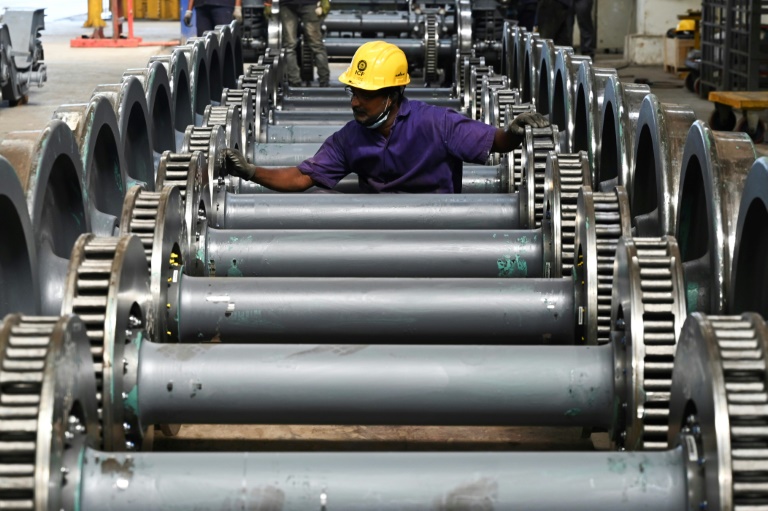
India’s growth slowed further in the first three months of 2022, the National Statistics Office said Tuesday, with inflation and higher oil prices denting a post-pandemic recovery.

Asia’s third-largest economy grew 4.1 percent, year-on-year, in the last quarter, NSO data showed.

Annual growth for the 12 months to the end of March stood at 8.7 percent.

Rising global commodity prices have sparked concern among policymakers, with India’s central bank announcing its first interest rate hike in nearly four years this month.

The country of 1.4 billion people imports more than 80 percent of its crude oil and the cost of meeting domestic fuel demand has soared since Russia invaded Ukraine in February.

India is also the world’s largest importer of edible oils, prices of which are at record highs since the conflict began.

“The pandemic may be receding, but growth has not returned,” economist Mihir Swarup Sharma of the New Delhi-based Observer Research Foundation told AFP.

“Instead, imports as a proportion of GDP — driven by higher prices for food, fuel, and other commodities — are rising.” 

Prime Minister Narendra Modi’s government this month announced tax breaks to offset higher food and petrol costs.

Higher-than-expected revenues could give New Delhi some “headroom” to cushion consumers from inflation, Sharma said.

But the $26 billion cost of the scheme will likely blow out the government’s budget deficit beyond its target for 2022-23, which it put at 6.4 percent of GDP.

Consumer inflation hit 6.95 percent in March, according to the Reserve Bank of India, which slashed its own growth forecast to 7.2 percent for the year ending March 2022.

“Alarmingly, persistent and spreading inflationary pressures are becoming more acute with every passing day,” Reserve Bank of India governor Shaktikanta Das said this month.

– Further headwinds –

India saw a dramatic uptick in economic activity in the second half of 2021 after the coronavirus pandemic sparked its worst recession since independence from Britain 75 years ago.

Extended lockdowns hit consumer spending and brought factories to a standstill during the Covid-19 outbreak, which at its peak saw thousands of people dying across the country each day, overwhelming hospitals and crematoriums.

Several Indian states briefly imposed mild restrictions on public gatherings and commercial activity after an outbreak of the highly infectious Omicron variant of the virus.

Further headwinds are likely to hit growth in the June quarter, with India this month announcing a sudden ban on wheat exports and a cap on the overseas sale of sugar.

India is the world’s second-largest producer of both crops but scorching temperatures and the country’s hottest March on record — blamed on climate change — have dented yields.

Bankrupt Sri Lanka hikes taxes

Cash-strapped Sri Lanka on Tuesday announced steep, across-the-board tax hikes to shore up revenue as the country suffers its worst economic downturn and seeks an IMF bailout.

The value-added tax (VAT) applied on almost all goods and services was raised from 8.0 percent to 12 percent with immediate effect, while corporate taxes were also increased from 24 to 30 percent.

The personal income tax exemption threshold was lowered from 3.0 million rupees ($8,330) a year to 1.8 million rupees.

The increases were a rollback of the generous cuts ordered by President Gotabaya Rajapaksa soon after he won the November 2019 elections.

Prime Minister Ranil Wickremesinghe, who is also the finance minister, said Rajapaksa’s tax cuts cost the state some 800 billion rupees ($2.22 billion) annually and widened the budget deficit sharply.

International rating agencies, as well as independent economists, have pointed to Rajapaksa’s fiscal policy as having fuelled the current financial crisis.

Wickremesinghe, an opposition legislator, was made prime minister this month.

His predecessor and the president’s elder brother Mahinda stepped down after months of anti-government protests turned deadly.

The South Asian nation is in talks with the International Monetary Fund for a bailout after running out of dollars to pay even for the most essential imports such as oil, food and medicines.

Sri Lanka has also defaulted on its $51 billion foreign debt.

Wickremesinghe said he was also removing several tax breaks granted to companies in recent years.

The government did not say how much it will raise from the new tax measures.

However, the prime minister had said they had run out of rupees to pay the salaries of 1.5 million civil servants and would have to “print money”. That would in turn fuel inflation, which is already at a record 33.8 percent.

Key Ukraine city 'divided in half' as EU oil embargo agreed

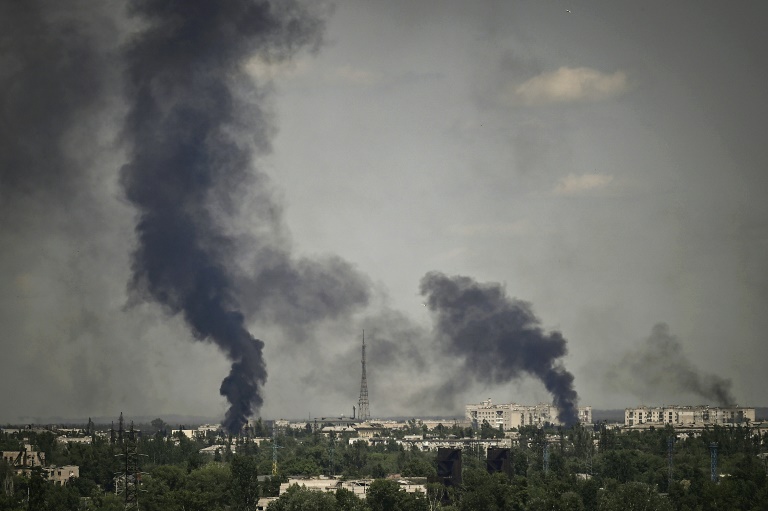
Russian forces have seized control of half of eastern Ukraine’s key city of Severodonetsk, a senior official said Tuesday, hours after EU leaders struck a watered-down deal to ban more than two-thirds of Moscow’s oil imports.

In central Ukraine, two Russian soldiers were sentenced to more than 11 years in jail each after a court found them guilty of firing artillery at civilian areas soon after Moscow’s February 24 invasion.

Severodonetsk is one of several industrial hubs that lie on Russia’s path to capturing the Donbas’s Lugansk region, where Moscow has shifted the bulk of its firepower since failing to capture Kyiv in the war’s early stages.

“Unfortunately, the front line divides the city in half. But the city is still defending itself, the city is still Ukrainian, our soldiers are defending it,” said Oleksandr Stryuk, head of Severodonetsk’s military and civil administration.

Lugansk regional governor Sergiy Gaiday earlier described the situation as “extremely complicated”, conceding that parts of the city were controlled by Russian forces.

But as Russian troops edged closer to the Severodonetsk city centre, EU leaders at a summit in Brussels were tightening the economic screws on Moscow.

A compromise oil embargo deal reached late Monday, meant to punish Russia for its invasion, cuts “a huge source of financing for its war machine,” European Council chief Charles Michel tweeted.

Hungarian Prime Minister Viktor Orban, one of the key figures who blocked an agreement by the 27-nation bloc, hailed the deal for preserving Budapest’s supply of cheap crude from Moscow.

“Families can sleep peacefully tonight, we kept out the most hair-raising idea,” Orban, whose country borders war-torn Ukraine to the west, said in a video message.

– ‘Save your lives’ –

Ukrainian President Volodymyr Zelensky had urged Europe to forge their “independence” from Russian energy. 

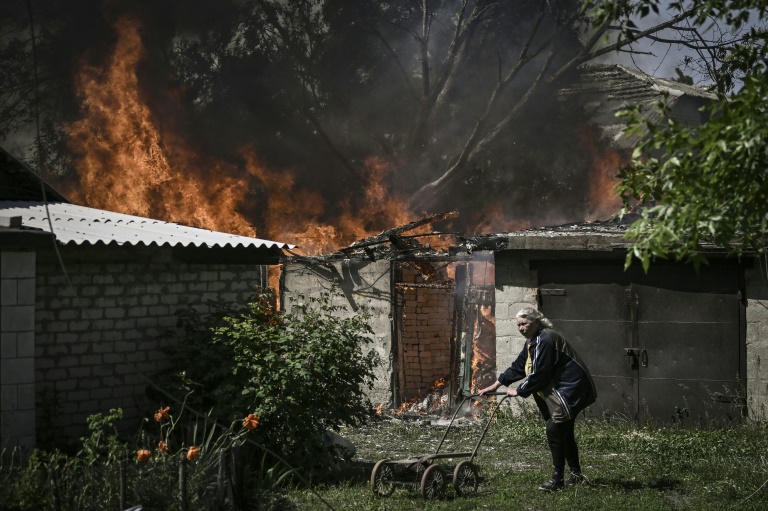
The situation on the eastern front line in Donbas has become increasingly desperate, with Ukrainian towns facing near constant shelling by Russian forces.

“We see some cars driving around with Ukrainian flags so we figure that means we are still part of Ukraine,” said Yevgen Onyshchenko, a 42-year-old plumber in a powerless apartment in Severodonetsk’s twin city Lysychansk.

“But otherwise, we are in the dark.”

A French journalist, Frederic Leclerc-Imhoff, was killed while covering civilian evacuations in the area on Monday.

An overnight rocket attack killed at least three people and wounded six in the city of Slovyansk, Donetsk regional governor Pavlo Kirilenko said Tuesday on Telegram.

“I repeat once again that there are no safe places in the Donetsk region, so I call again: evacuate — save your lives,” he said.

In the southern region of Kherson, the country’s military leadership said Ukrainian forces have pushed back, as prosecutors pressed ahead with prosecutions of captured Russian soldiers.

The servicemen convicted on Tuesday — Alexander Bobykin and Alexander Ivanov — were both handed sentences of 11 years and six months for firing Grad missiles on two villages in the north-eastern Kharkiv region in the early days of the war.

– Gas ‘quite different’ –

The verdict after the trial in the Poltava region comes one week after another court, in the capital Kyiv, gave a 21-year-old Russian solider a life sentence — the country’s first judicial reckoning on Russia’s invasion.

Ukraine’s prosecutor general was in The Hague on Tuesday meeting her counterpart from the International Criminal Court and other officials as they seek wider war crimes prosecutions.

But while Ukraine is pushing for solidarity from its allies, European leaders meeting on Tuesday for a second day played down the chances of a rapid embargo on Russian gas to follow the partial ban on oil imports.

Europe is heavily reliant on Russian gas.

“With gas it is quite different. Therefore the gas embargo will not be an issue in the next package of sanctions” Austrian Chancellor Karl Nehammer said.

The compromise oil deal hatched on Monday exempts deliveries by pipeline, after Orban warned halting supplies would wreck Hungary’s economy.

EU chief Ursula von der Leyen said the ban “will effectively cut around 90 percent of oil imports from Russia to the EU by the end of the year”.

The agreement also includes plans for the EU to send nine billion euros ($9.7 billion) in “immediate liquidity” to Kyiv, Michel announced.

– ‘Sit in the trench’ –

Michel said the sanctions involved disconnecting Russia’s biggest bank, Sberbank, from the global SWIFT system, banning three state broadcasters and blacklisting individuals blamed for war crimes.

Russia’s Gazprom, meanwhile, turned off the tap to the Netherlands on Tuesday, halting gas shipments after Dutch energy firm GasTerra ignored a demand that gas supplied from April 1 be paid for in rubles.

Danish energy company Orsted has also warned its gas shipments could be cut off when a Tuesday payment deadline had passed.

Washington, however, is taking a cautious line regarding weaponry for Ukraine.

US President Joe Biden said Monday he would not send long-range rocket systems that could hit Russian territory, despite urgent requests from Kyiv for exactly that.

Ukraine has received extensive US military aid, with legislators approving another $40 billion assistance package in May.

But front-line Ukrainian soldiers getting pummelled by rocket and artillery fire said without long-range weapons to hit the Russians, it was not enough.

“If you know you have a heavy weapon behind you, everyone’s spirits rise,” one soldier who uses the nom de guerre Luzhniy told AFP.

“Otherwise, you just sit in the trench staring at the horizon.”

burs-dk/jm

From oil to assets, Western sanctions target Russian economy

From oil embargoes to asset freezes and bans on new investment, the list of Western sanctions imposed on Russia’s economy since it invaded Ukraine keeps growing.

Here is an overview: 

– Energy –

European Union leaders agreed Monday to ban most Russian oil imports, following criticism for not acting sooner.

They reached a deal that bans oil imports delivered by tankers but exempts pipeline deliveries — and allows Hungary to keep receiving Russian crude.

European Commission chief Ursula von der Leyen said the accord will cut around 90 percent of the EU’s Russian oil imports by the end of the year.

The EU plans to cut imports of Russian gas by two thirds in the same period and ban European companies from making new investments in the sector. Purchases of Russian coal are set to stop from August.

Another highly symbolic decision was the suspension of the Nord Stream 2 pipeline, which was due to increase Russian gas supplies to Germany.

The United States and Canada have imposed their own embargoes of Russian oil and gas while Britain will phase them out by the end of the year.

– Transportation – 

The EU has closed its ports to Russian ships, and Russian truckers are also banned from operating in the bloc.

EU members as well as the United States, Canada, Switzerland, Norway and Iceland have closed their airspace to Russian aircraft and many Western airlines have halted flights to Russia.

The wider aviation industry is concerned as the export of aircraft, parts and equipment has been banned, as has maintenance work on Russian-registered Airbus and Boeing aircraft. Western insurers cannot provide coverage.

– Trade –

The EU sanctions include export bans on products such as cars and luxury watches, as well as semiconductors, chemicals and specialised catalysts to target Russia’s technology and industrial sectors.

The list of Russian products banned from the EU has been extended to include steel products, cement, rubber products and wood. 

Imports of Russian vodka and caviar have already been banned by the EU and the US.

They have also deprived Russia and Belarus of their “most favoured nation” trade status, imposing punitive tariffs on their exports.

– Financial sector –

EU leaders agreed Monday that their sixth package of sanctions will include a measure to exclude Russia’s Sberbank from the SWIFT financial messaging system.

Sberbank, Russia’s biggest bank, said it has not been affected by the measures, designed to make international payments difficult.

“We are working as normal — the main restrictions are already in place,” the bank said, referring to earlier US and UK sanctions that have already isolated its financial system. 

The US, EU and Britain have frozen foreign currency held by the Russian central bank and banned all transactions with the institution.

US credit card giants Visa, Mastercard and American Express have blocked Russian banks from their payment networks.

The US is also ending an exemption allowing Moscow to pay foreign debt held by American investors with funds held in Russia, a move that could push Vladimir Putin’s country closer to default.

– Key individuals –

Hundreds of Russian individuals have been hit by US and EU sanctions, including the adult daughters of Russian President Vladimir Putin.

On Monday the EU extended its blacklist to some 60 people, including the head of the Russian Orthodox Church Patriarch Kirill. They are now banned from entering the EU, and have their assets frozen.

Putin and his Belarusian counterpart Alexander Lukashenko have already been targeted by sanctions, as has Igor Sechin, the head of Russian oil firm Rosneft.

Close Bitnami banner
Bitnami